In Morocco, the city of Fes is known for its leather industry and if you search for Fes in Google, it is very likely that one of the images you see would be that of a tannery with a lot of pits that hold colourful liquids. Tanneries have been around in Fes ever since the city was founded in the 8th century or soon thereafter. The Medina (old town) in Fes is the oldest in Morocco and is made of some 9,000 narrow streets. For me the first stop in Fes was the Chouara Tannery, the biggest and one of the oldest among the three tanneries in Fes.
The taxi dropped me outside the door of the tannery, and I was immediately seized by a man who claimed to be from the co-operative that owned the tannery and promised to show me the tannery for free. He assigned a young guide to me, and I was sure that I would have to tip the guy as I had no intention of buying anything.
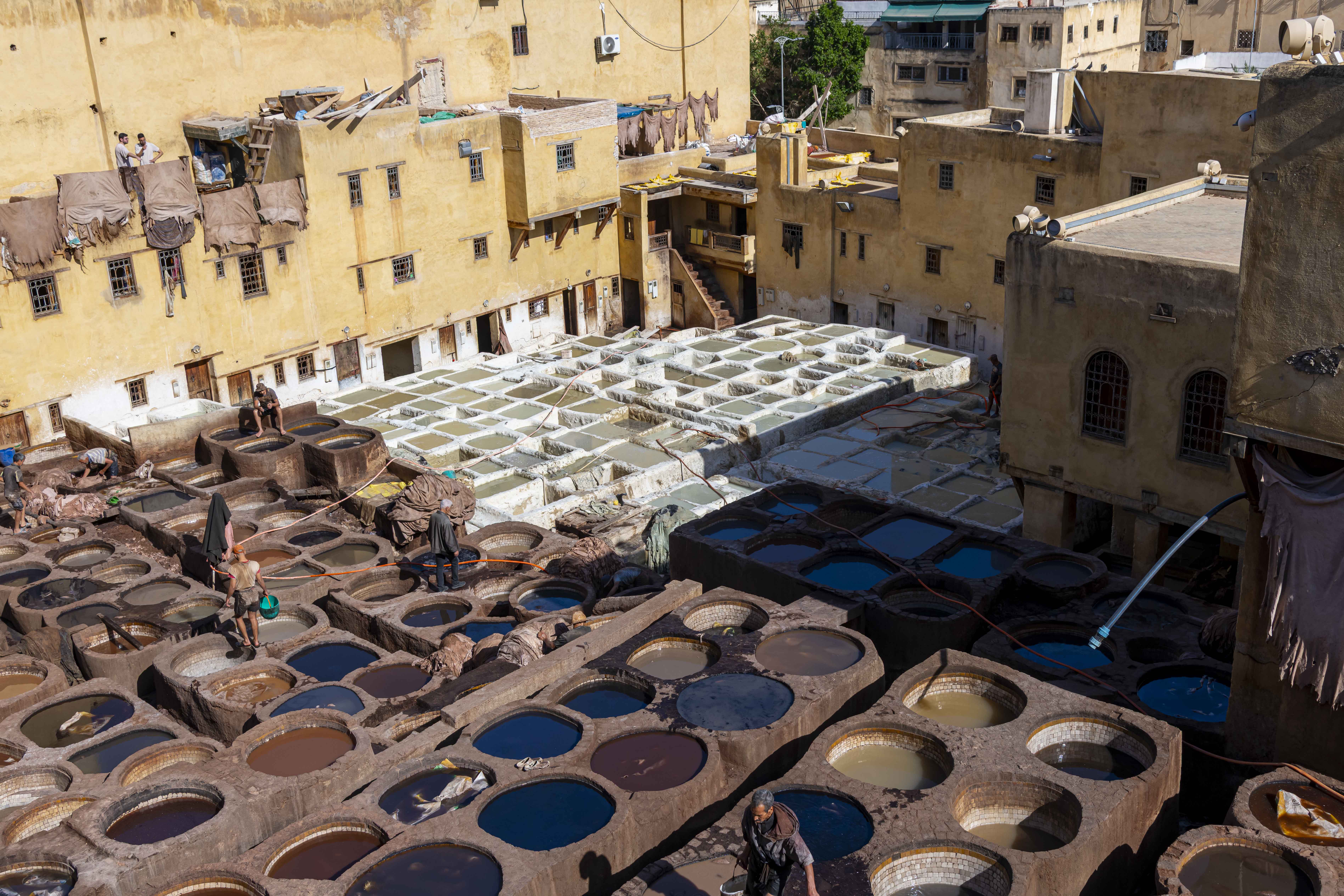
I was taken to a viewing terrace that was up three or four flights of steps, and one could see the vats filled with liquid and people working there. This is where all tourists are taken. The images of the tannery as seen on the internet look very colourful but today, there wasn’t much colour. When I asked the guide, he told me that the colour depends on the orders from the factories and currently, they didn’t have orders for very colourful stuff. I was a bit disappointed with that. I also guess that the colours are also a result of some heavy editing of the images.
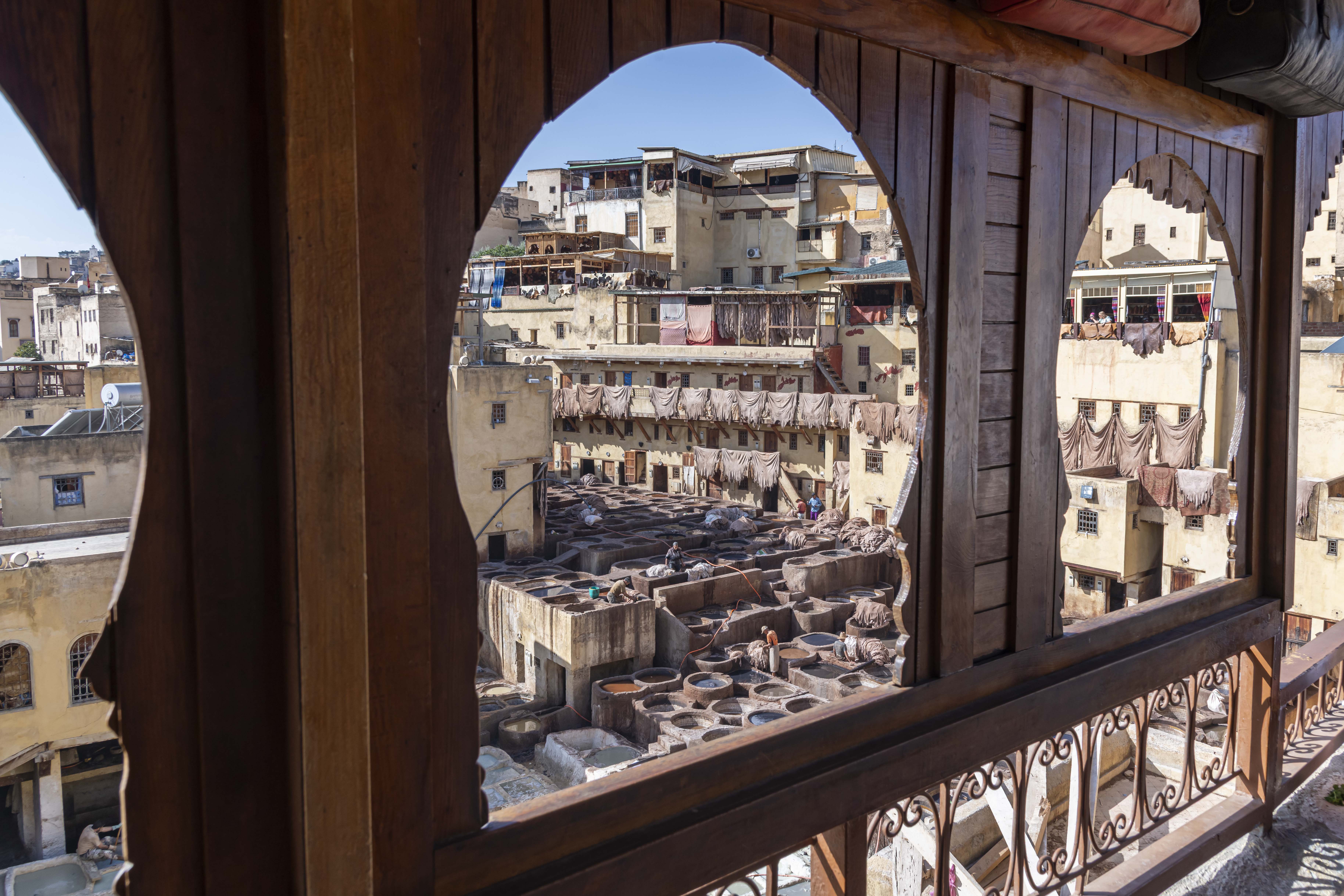
The guide told me that the tannery is a co-operative owned by about 35 families and that 350 people work there. The tannery is much bigger than just the area of the vats as there are leather storage and drying spaces as well. I was then led to the inevitable store and when I repeated that I had no plan to buy anything, the guide demanded a tip and showed me to the door.
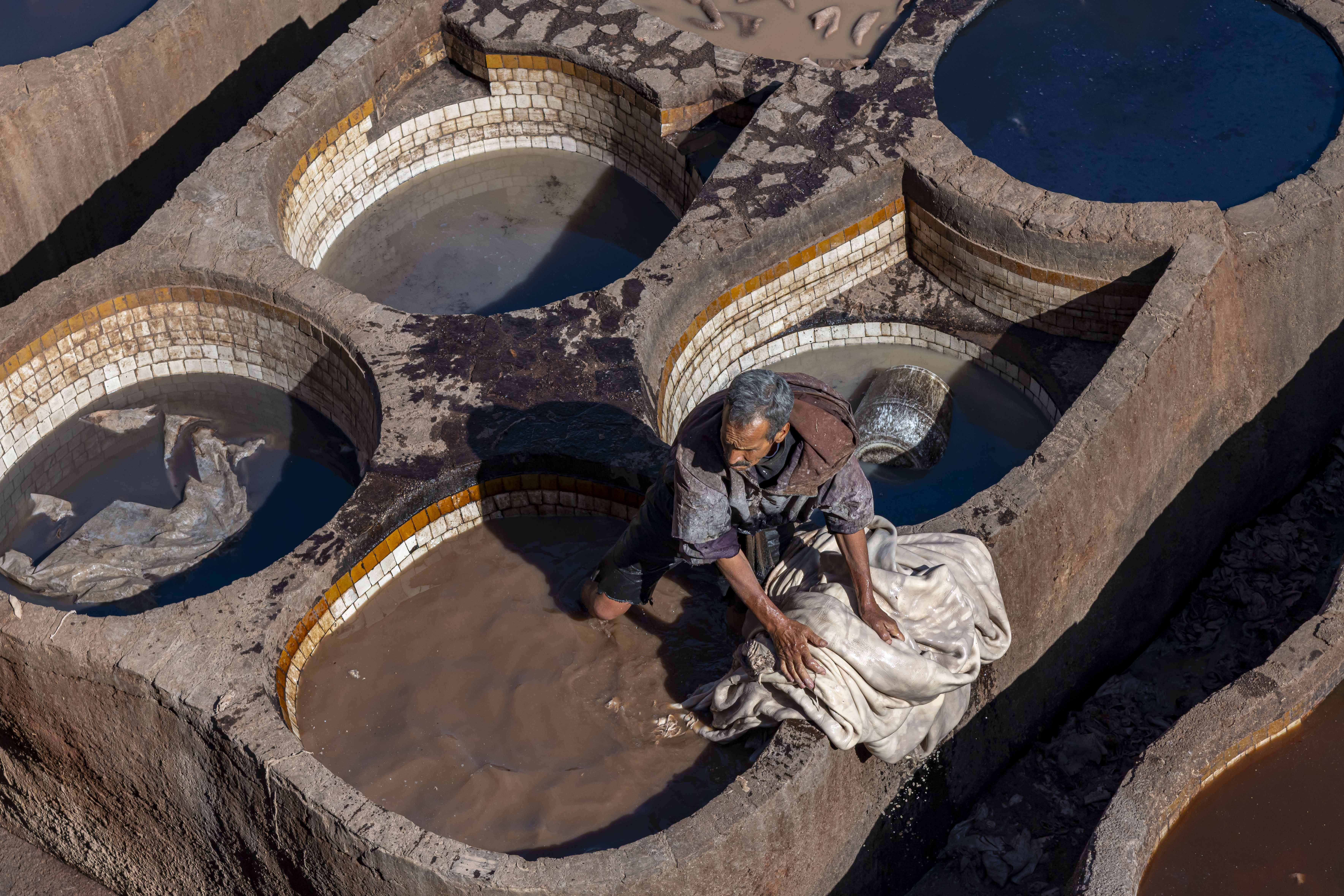
The process of tanning the leather has been unchanged for centuries and has been carried on the same way. First the skins are dropped into a vat which contains a mixture of water, salt, limestone and pigeon droppings. This softens the skin and removes any fat and hair on the hides. Pigeon droppings are used as that is very rich in ammonia. They are immersed in these vats for a couple of days with the workers popping in now and again to ensure the skins are properly immersed, by kneading with their feet.
After that, the hides are scraped and then washed in a huge wooden drum which keeps rotating, much like a washing machine. The hides are then transferred to the dyeing vats and I was told that they only use natural colours from plants, flowers and fruits though I read in the internet that Chromium is also used these days. After the necessary colours have been achieved the hides are hung out to dry and this could take three to five days. After that, the hides are sent to the factories and since many of these factories are within the medina itself, they are transported on the back of donkeys. The factories then turn out the coats, bags and belts and these appear in the shops, thus completing the chain.
I was not feeling happy with the whole process and as I stood outside, photographing the tannery and the small river beside it, another person approached me. He told me he would take me to where the work gets done.
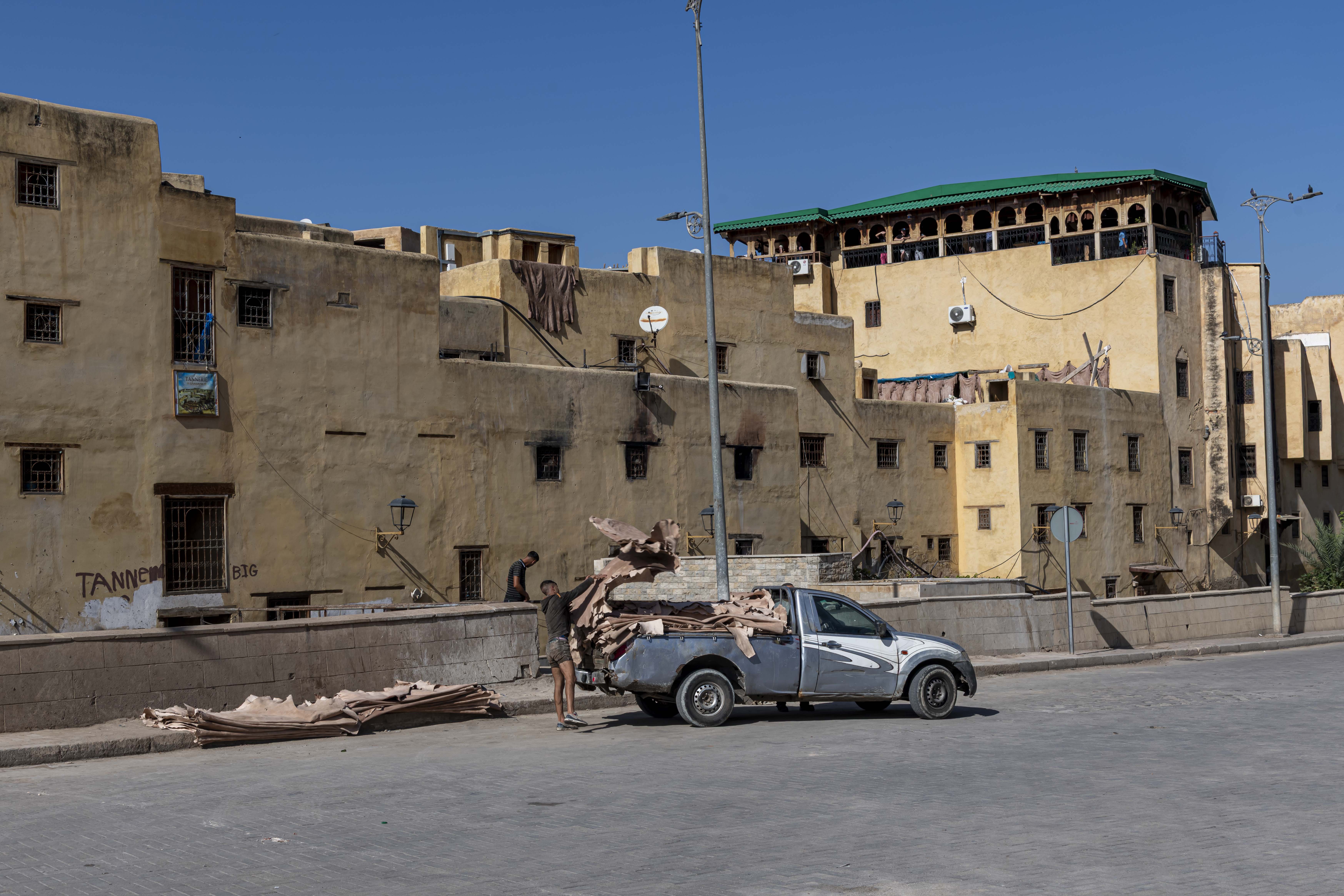
I thought this would be a good experience and went with him. We crossed the small bridge across the river, which gets polluted by the tanneries, and entered the tannery. The stench increased quite considerably within the work area, but it was not as bad as I had imagined it to be. The floors were wet and the place looked grimy, but I could not find any waste lying around.
There were only very, very few tourists that had ventured into this space, like me. The workers were all smiles and kept asking whether I was enjoying myself.
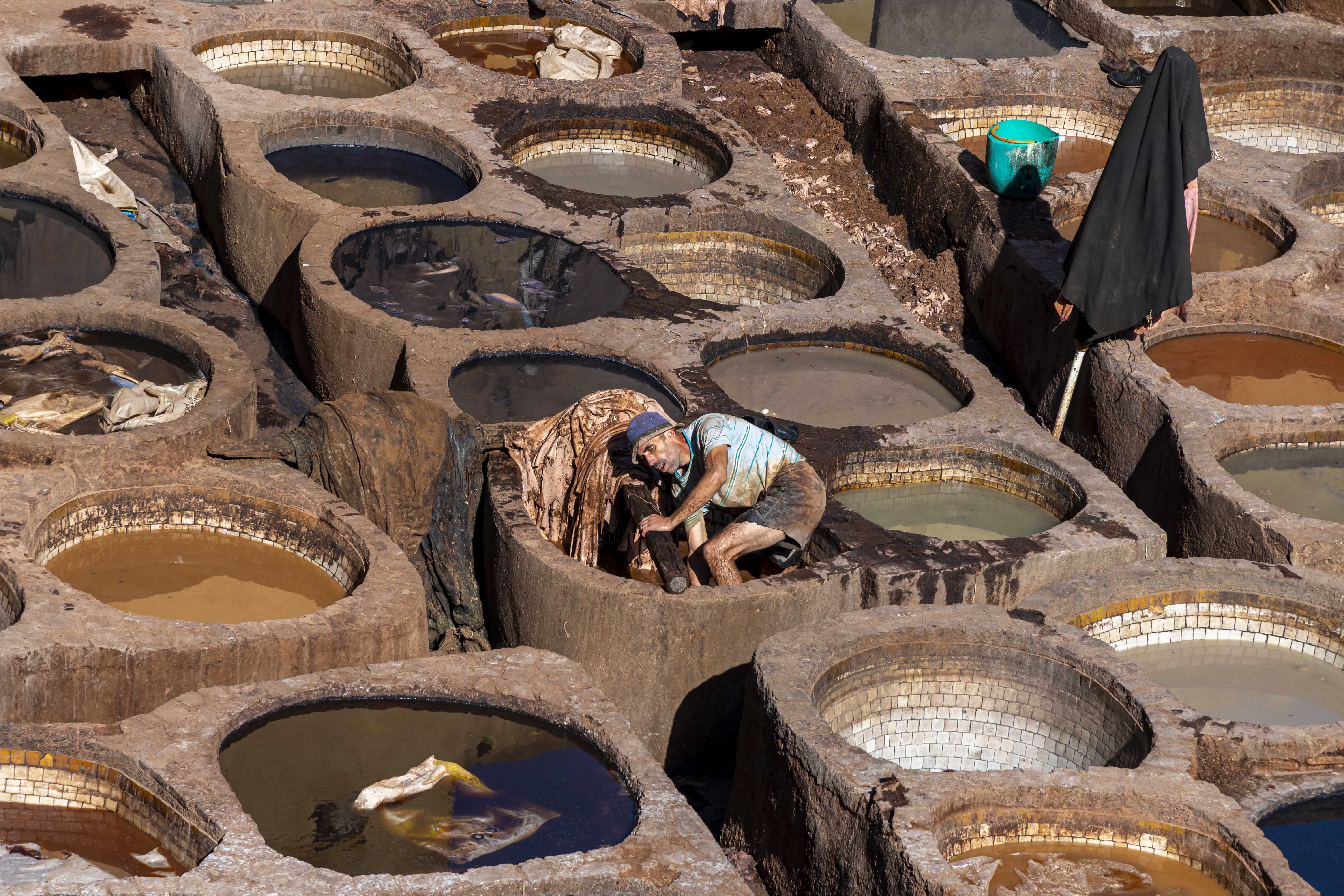
The guide led me to the vats and asked to walk on top of the vats but with care, so that I wouldn’t fall into one! This new guide was a nice guy and I think he offered this to me as a special “treat” since he saw my interest. I say this as I only saw workers walking on top of the vats and not any tourists.
The vats were about waist deep and the dyeing liquids didn’t look very viscous; for some reason, I had thought they would be so. I could see some of the hides floating in the liquid and some people were kneading, taking out the hides etc. I asked the guide whether it was hazardous to work in this job and he told me that it was bad for the skin only in the first step of the process (the white coloured vats) and that people wear gloves and boots when working in those vats. He claimed that the rest was quite safe, but I am not convinced.
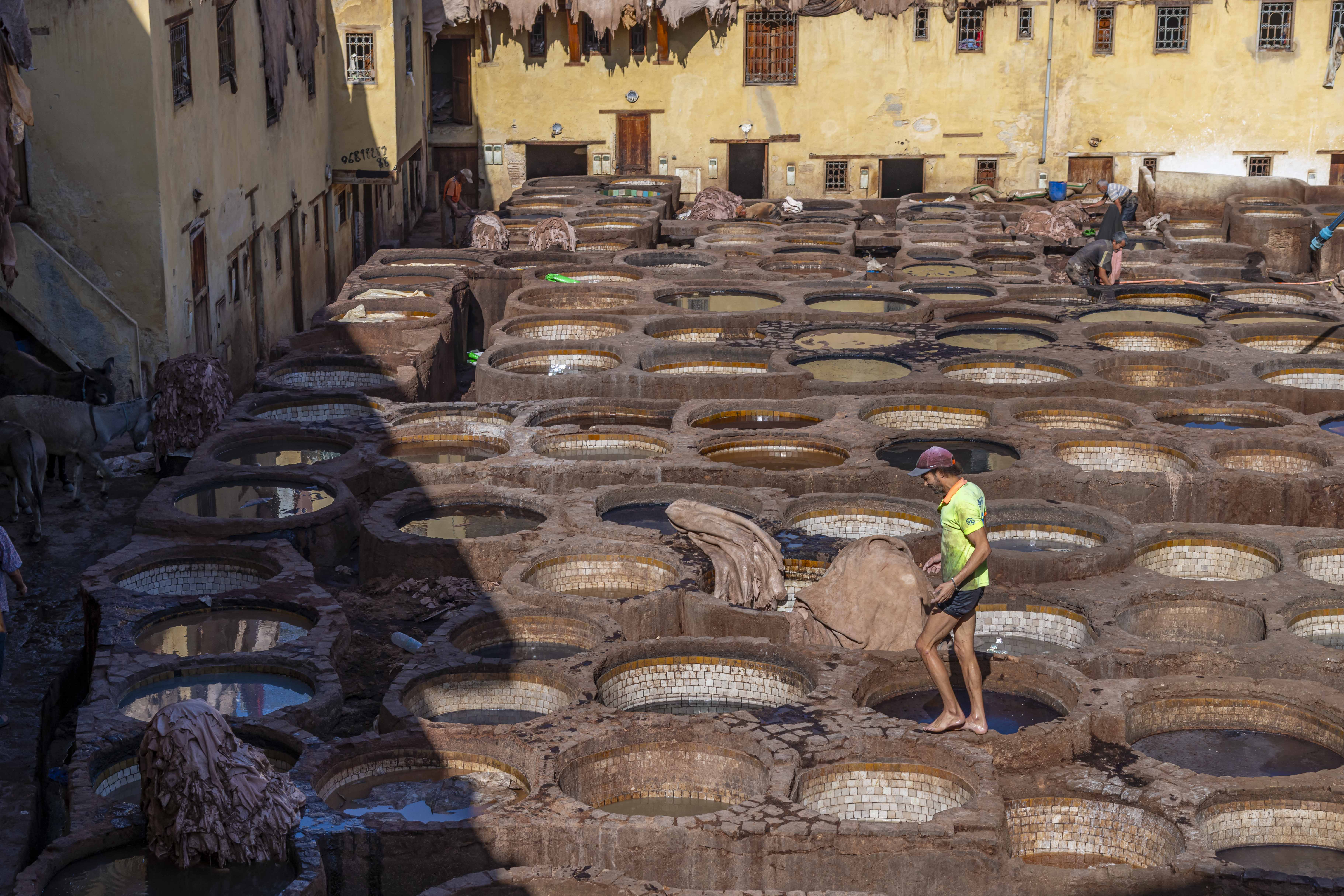
We then walked up to the area where they hides had been hung out to be dried. There were small rooms there where I could see people cutting or arranging the dried skins. It seems that the skins handled in this tannery came from goat, cow and camel.
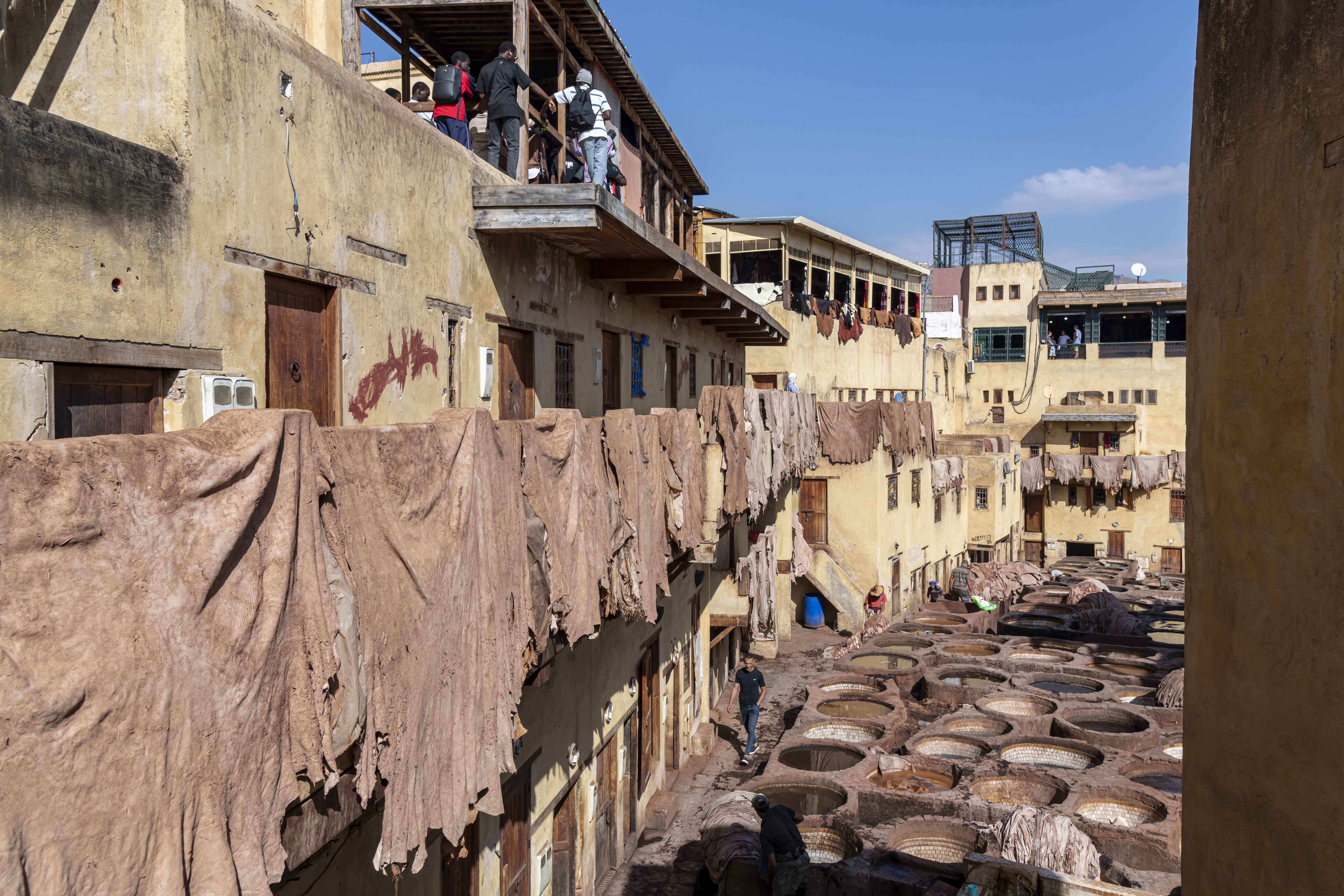
I spent some time walking around the area and photographing the tannery. I could not but help thinking about how fortunate I have been in the accident of birth. Working in this wet, polluted, stinky workplace, everyday would have a significant toll on your physical and mental health and as is often the case with such menial jobs, the remuneration would never be significant.
I could still feel the smell of the tannery even in my hotel room, at night, when I was looking at the photos. This is not a “touristy” experience but one I would definitely recommend but you have to visit the work area and not just the terraces and the shops. The tourism websites and blogs speak eloquently about the fact that Fes is still tanning leather using a centuries old process, highlighting the preservation of traditional methods. However, I felt what I had seen was the human cost that had to be paid to keep a tradition alive.

