I was walking back to my riad after a long day spent roaming the tannery and the medina in Fes. I just had 3-4 minutes of walk left when I spotted a very old palace or riad like structure with a news story from Le Monde exhibited outside. The signboard said it was Palais El Glaoui.
The place looked deserted and as I hesitatingly took a few steps inside, I saw a person smoking in a dark corner and he told me there was a 25 Dirham charge to go in. I was not sure what was inside as there was no information available. Just then a couple of tourists came out and when I asked, one of them said it was a good place for photos. So, I went in.
It turned out to be a large palace, which had obviously seen much better days. Some parts were closed off but it must have been a fantastic building, in its heydays, going by the courtyard and the rooms that one could visit even now. If it is taken up by some agency and spruced up, it will surely become a big tourist attraction. The walls are decorated beautifully and the rooms are large.
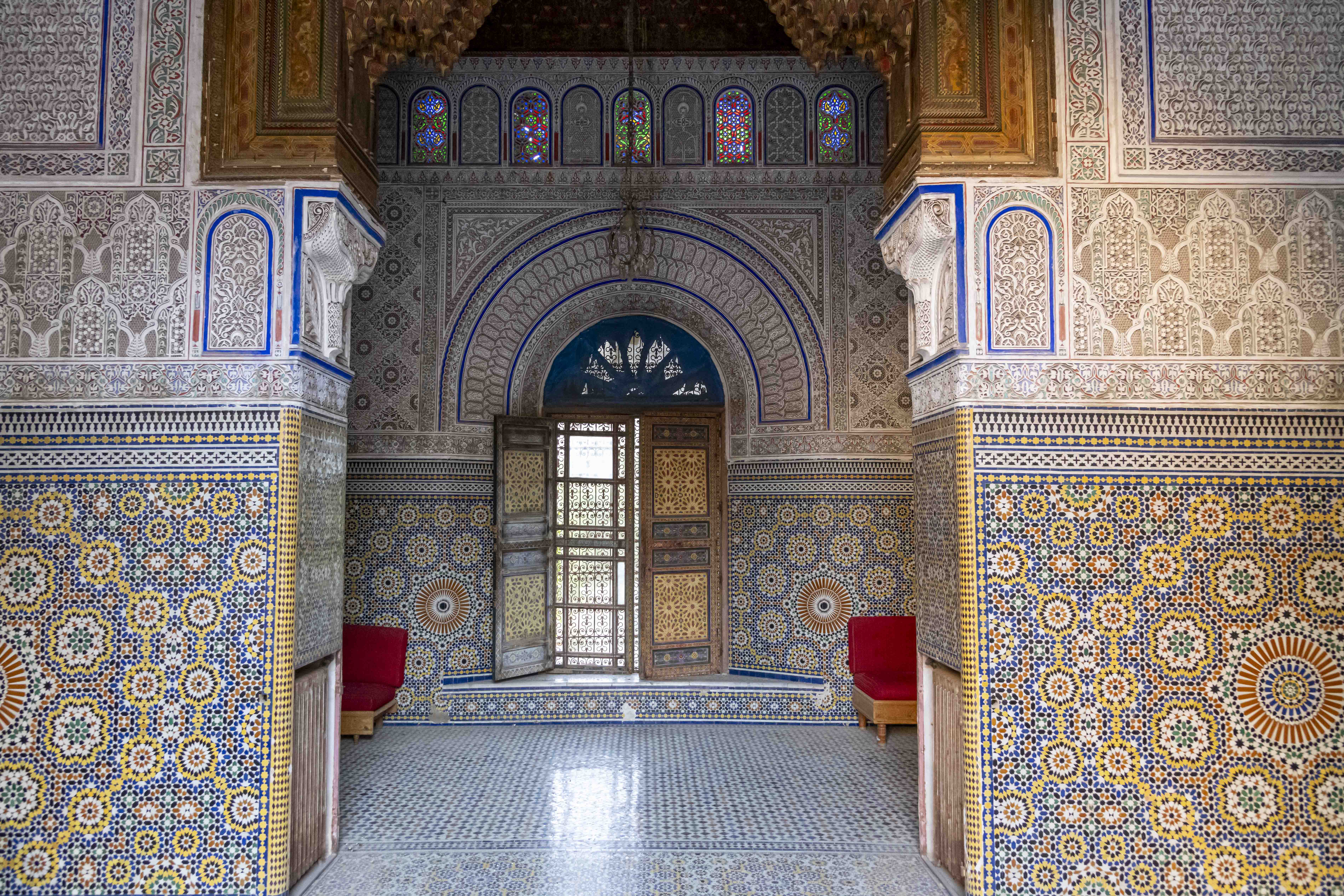
A few photos printed on normal paper and stuck on the corridor on the way out showed some glimpses of the original beauty of the palace.
As I stepped into one room, I saw a good many paintings exhibited there and I saw some in the next room too. I use the word “exhibited” rather loosely here. The paintings were just hung up in a random and shoddy manner or left leaning against the walls. The rooms were dark and I discovered two naked light bulbs that I could switch on, which gave some light. I was quite intrigued. There were some paper cuttings or text stuck on to the walls here and there, which indicated that this was indeed an exhibition at some point in time. There were photos of a man, who must have been the painter and it must have been a good show as it seemed to have received good coverage in the press. It was all in French and so I couldn’t understand anything. I couldn’t figure out why all these paintings had been left here, in the charge of a caretaker kind of person who was quite shabbily dressed and looked totally disinterested. He walked into the room as I was looking at the paintings and told me to switch off the light on my way out; at least, that is what I guess he told me. He was speaking French and couldn’t understand English. I was even starting to get irritated at this guy who seemed to be just taking advantage of a situation. He must have been appointed as the caretaker of the building, and he was just charging people to go in; this conviction was deepened by the fact that he did not give me any ticket when I paid the admission fee.
The paintings themselves were quite interesting, and all seemed to be done in a particular style. They were all made of small, colourful squares placed in some order. With the available light, I took some photos.
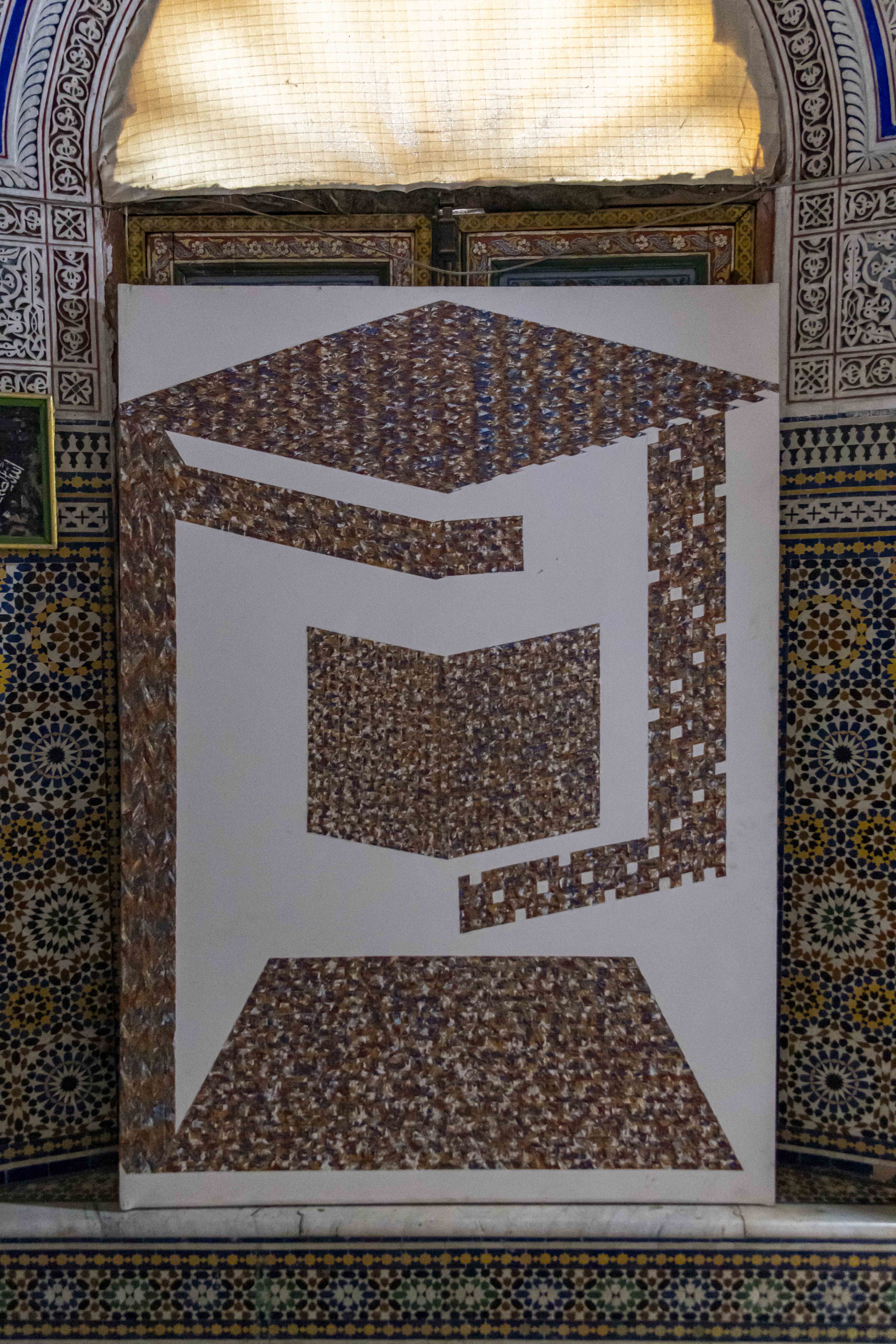
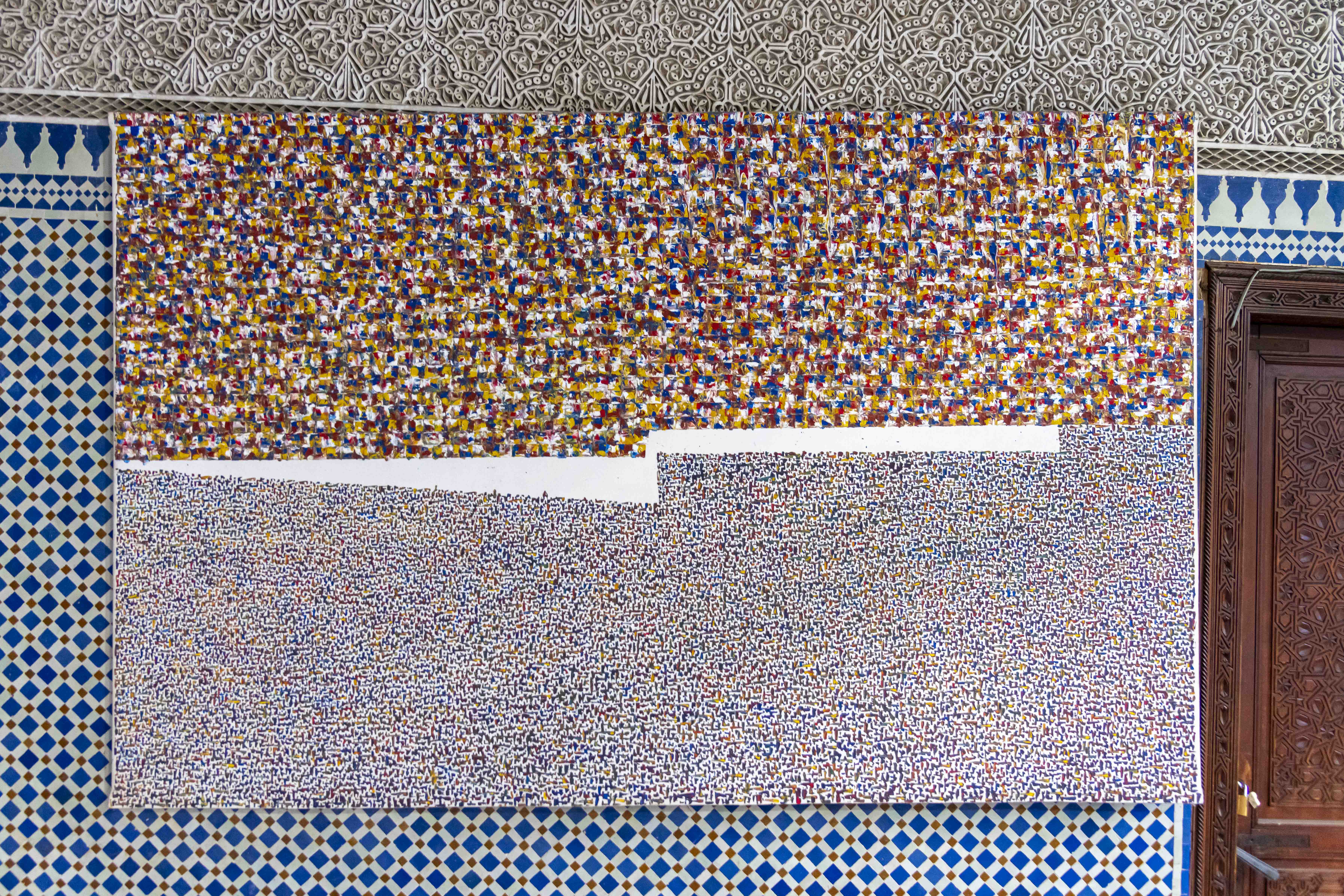
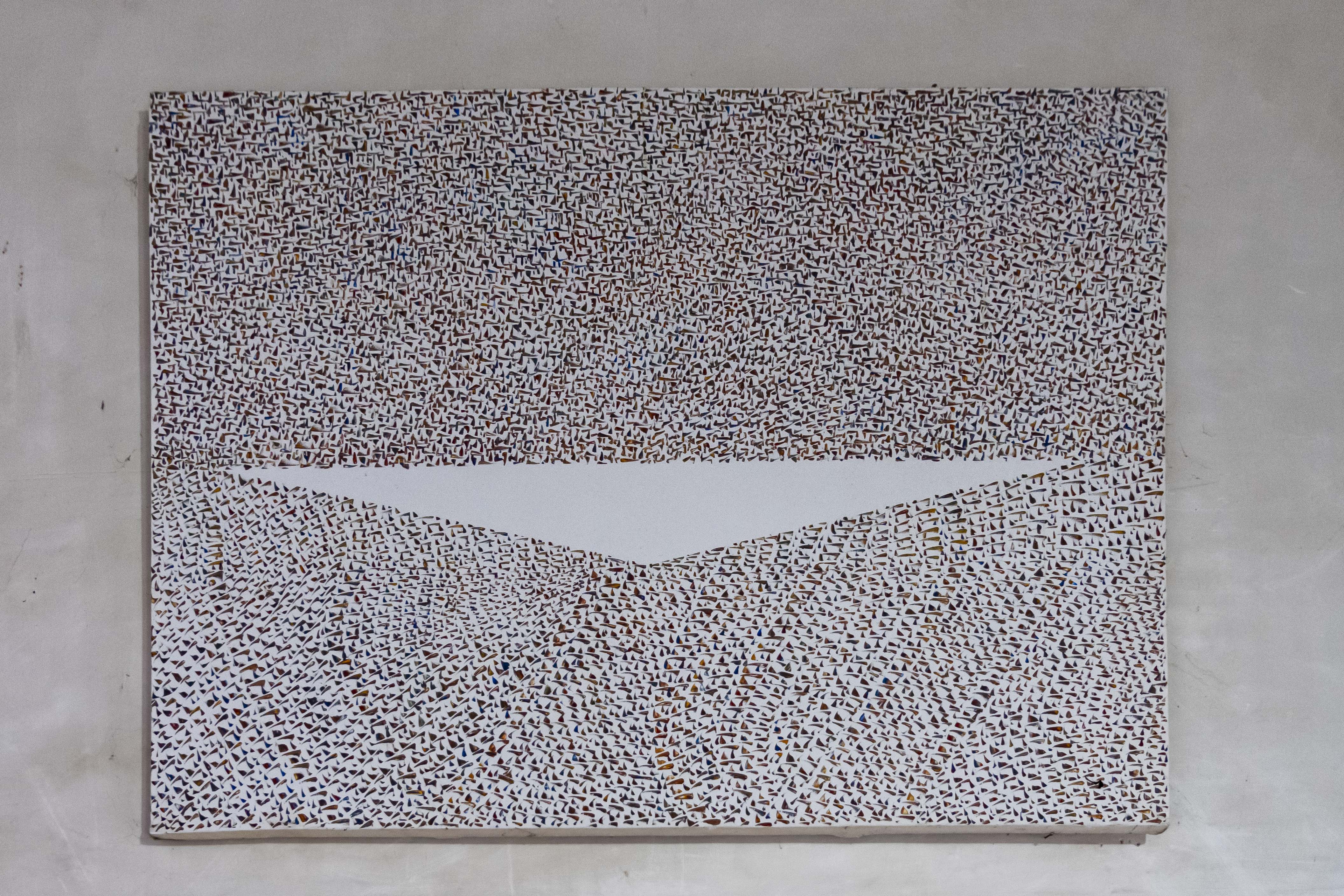
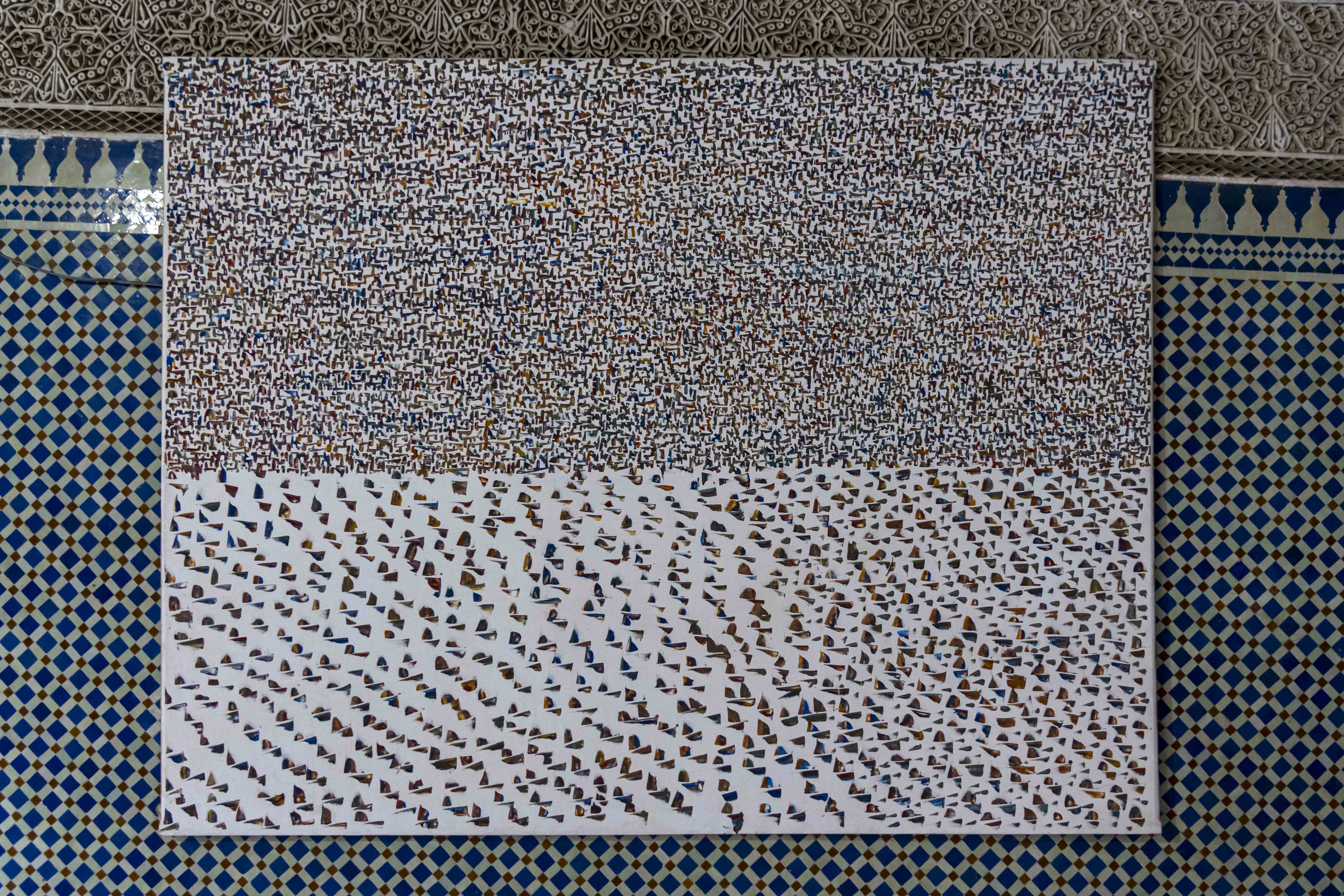
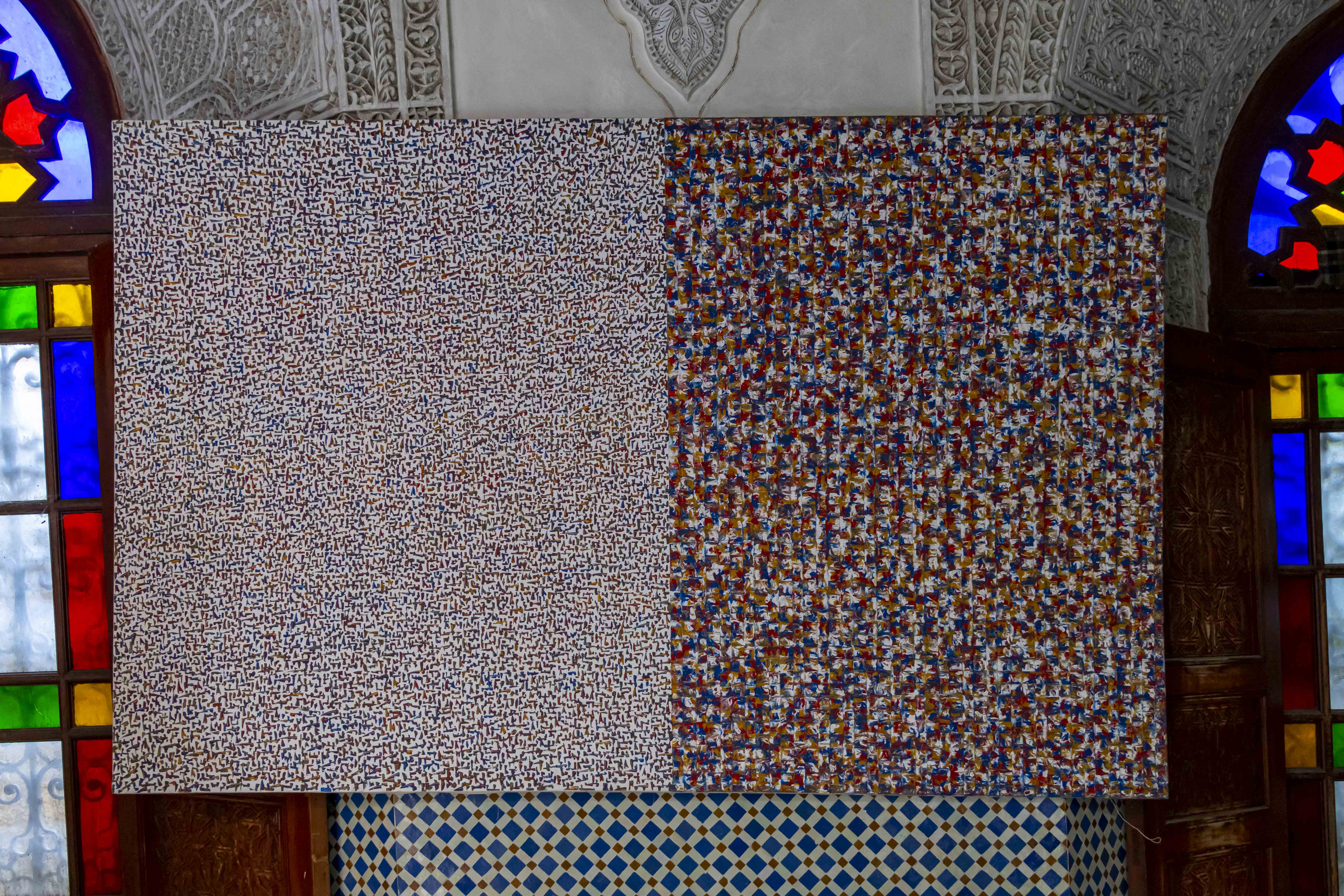
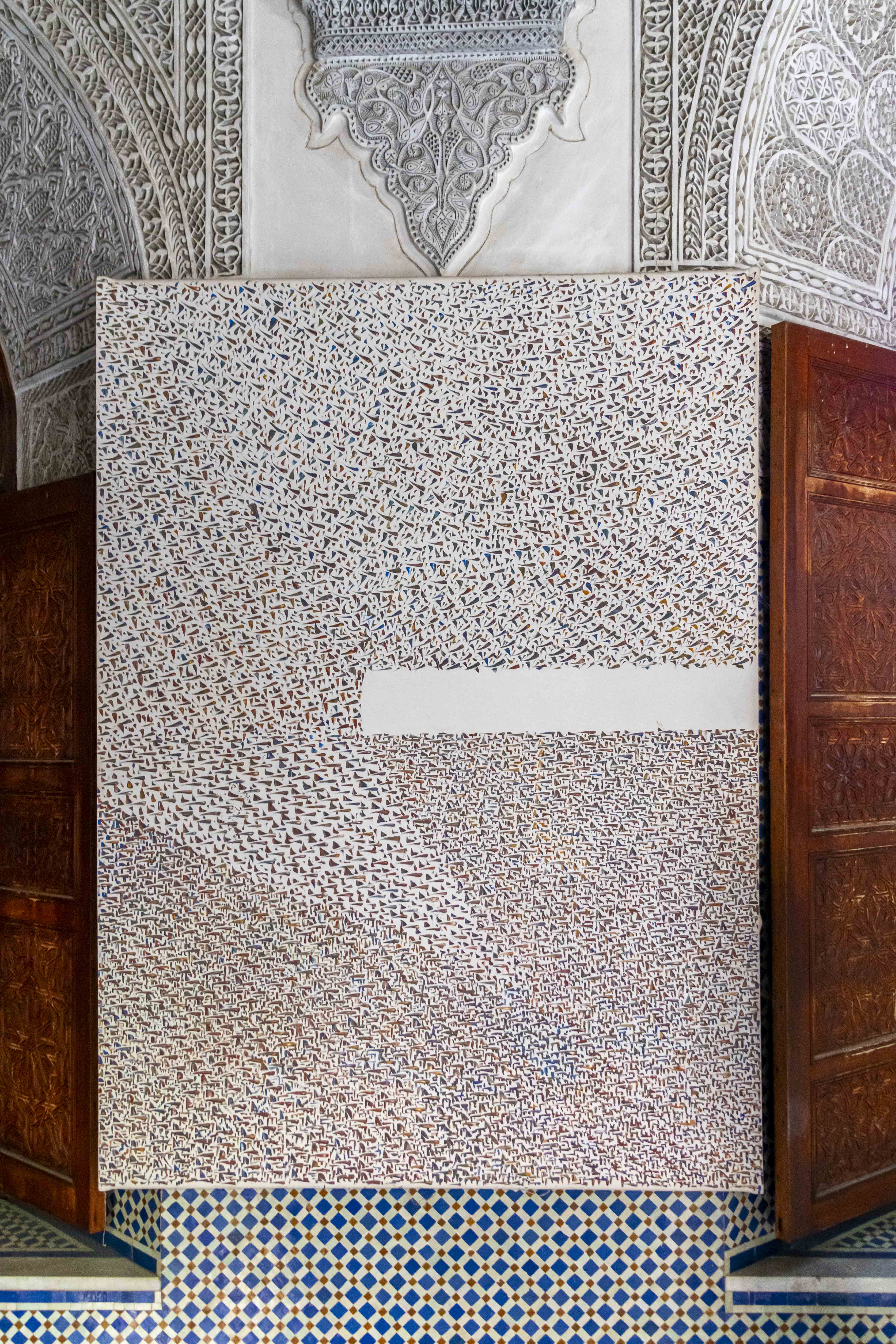
I started to look a bit more closely and soon discovered that there was indeed one note in English, which was posted 10 feet above the ground and in a dark corner. I used the flash in my mobile phone, to read what turned out to be an introduction to the artist and his work. It had been written by a person named Eric Bietry and translated by a Ridouane Said. I reproduce the note below.
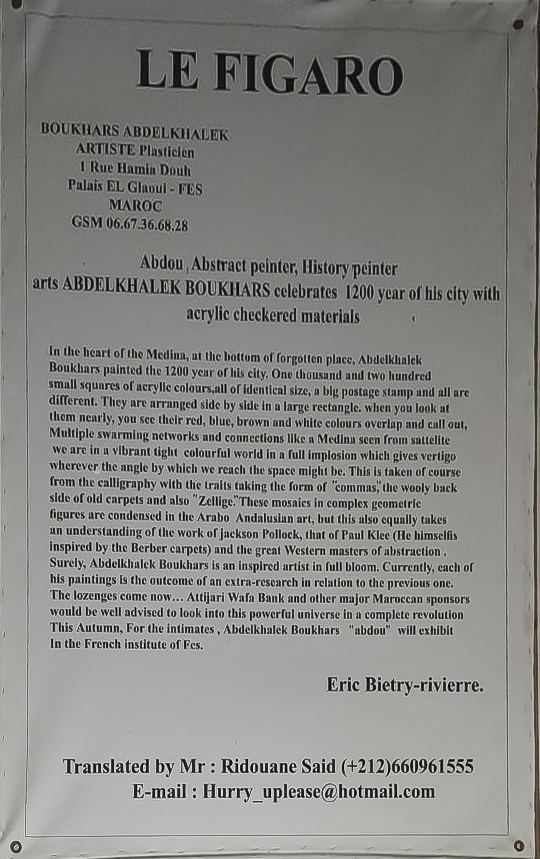
This note excited me even further and I tried to look up the painter on the internet but didn’t find anything that I could understand. There was one interview in French and some social media posts. After spending some more time looking at the paintings and the newspaper cuttings, I started to walk out of the building. The caretaker paid no heed to me and didn’t bother to acknowledge my departure. Just at the exit, where the light was better, there was another newspaper cutting stuck to the wall, with a better image of the painter. As I looked at it, I felt I had seen him somewhere. With a start, I realised where I had seen him. I hurried back to the caretaker and asked him: “Are you the painter?” He said “Oui”. I don’t have the words to describe the feelings that welled up within me as I stood looking at that forgotten painter, living in a corner in a forgotten building. I simply shook his limp hand, congratulated him on his work and left.

