Posts Tagged ‘Travel’

13 May 2013

Spain is a country with a very different or even unique history in Europe and my earliest recollections were what I had read about the Spanish Civil War or the unrest in Basque. In the last few years, I had also developed a taste for Spanish food, especially Tapas. So, this time around, we planned a holiday to Spain. However, it is impossible to cover all the important parts of Spain in 10 days and so we decided to restrict ourselves to Madrid and Andalusia, with plans to visit Cordoba, Granada, Seville and Toledo.

Spain’s history dates back to about 1000 BC when Phoenician traders arrived in the Southern and Eastern parts of Spain. Later, like most of Europe, Spain too came under the Roman rule from about 200 BC to 400 AD. Romans called the peninsula “Hispania” and as was customary of them, developed infrastructure in the country with roads, aqueducts, temples, theatres etc. They also brought in Christianity which became a very important aspect of Spanish life. Most of Spain was covered by forests at that time and it was the Romans who started to cut down the trees for timber. So, deforestation is not a new theme, it started 2000 years ago! As the Roman power waned, Visigoths – a Germanic tribe – gained the upper hand and controlled Spain till the Eighth century. Visigoths seem to have been people who were not as culturally developed as the Romans and left very little impact on the country. Their main contribution seems to have been in creating a fighting mindset, which made a few kings withstand and ultimately overthrow the Muslim invasion and rule.

The Visigoths were not very good rulers and so the country was strife torn and in generally poor shape when Tariq ibn Zayid, the Governor of Tangier, a province in Morocco, landed in Gibraltar with 10,000 troops, in AD 711. The troops were mostly of North African origin and the Moors captured most of the Spanish peninsula and the territory they controlled was called Al-Andalus. This included main cities of the time like Cordoba, Granada and Seville and even Madrid to the North. It was first part of the Caliphate of Damascus which controlled most of the Muslim world and later a Caliphate was established in Cordoba in 929 with the then ruler Abd ar-Rahman III giving himself the title of Caliph. This was the peak of the power and glory of Cordoba.

One kingdom, called Asturias, had held out against the Moors and they started what was called the “Reconquista” in AD 722, to recapture the territories lost to Muslims. This war lasted for 800 years and ended with the fall of Granada in AD 1492 when all of Spain came under Christian rule. I am not sure whether the war was fought on religious grounds or for the then rulers to gain power, but it is portrayed as a war between the believers of Christianity and Islam. An interesting point is that the Christian kingdoms were also fighting amongst themselves while fighting the Muslims. Christians gained the supremacy with the marriage of Queen Isabella, the Queen of Castile, to King Ferdinand II, King of Aragon, in AD 1469, which brought together two powerful kingdoms. They were very faithful to the Roman Catholic Church and managed to expel Muslims and Jews from the country. This royal pair is considered to be responsible for the unification and founding of modern Spain. By all accounts, they seem to have been astute rulers, who understood the great power of combining religion with the state. From whatever I read, I understood that Isabella had significant say in how the country was ruled and was not just a decorative queen. They set up the Inquisition, which led to the death of hundreds of thousands of “non-believers”. This even had repercussions in far away India (we had our own Inquisitions in Goa). When they took control of Spain, there were huge populations of Jews and Muslims in the country but in short time, they banned Judaism and persecuted Muslims and Jews so much that these religions became non-existent in the country. Fittingly, they are referred to as the Catholic Monarchs. I was amused to read that when the Moors ruled Spain, Jews flourished and that all religions were allowed to practise their beliefs and worship their gods. Christians had a bit of a tough time as they had a tax applied on them, but nothing that had any resemblance to Inquisiton, with its inhuman torture and cruelty, was ever applied. Medieval Christianity had very little tolerance as they strove to bring “light” into the life of people. The only exception seems to have been the Christian king Pedro I, who was the king of Castile and Leon from 1350 to 1369.

Ferdinand and Isabella ruled Spain together and one of their important acts was to commission the voyage of Christopher Columbus. This led to the colonization of much of the Americas and brought a lot of wealth to Spain by way of gold and silver. This wealth was soon frittered away and by the time Spain arrived on the twentieth century, it had lost much of its glory. A series of inept rulers had squandered away its strengths and the country was in tatters. In the 1931 elections, a government comprising of socialists, republicans and centrists came to power and the King left on an exile. In 1933, this government was toppled by right-wing parties but in 1936, a left-wing government took over with the Communists leading the government. However, Spain was split down the middle by this time and soon, the Civil War erupted. This was between the elected government on one hand and the right-wing groups led by the Spanish military on the other. The leader of the military was General Franco and he was supported by Nazi Germany. It is believed that half a million people lost their lives in the Spanish civil war; my own personal recollection of the brutality of that war having been acquired when I read Hemingway’s “For whom the bell tolls”. In 1939, Franco became the Dictator of Spain and he ruled till 1975. He had groomed a royal to take over power on his death and Juan Carlos I, became the ruler of Spain when Franco died in 1975. The King was a supporter of democracy and by 1977 Spain had its elections and became a democracy with Juan Carlos I continuing as the King of Spain (he is the current King as well). Somehow, I felt it a bit strange that such an important country as Spain could have remained a dictatorship till as late a period as 1975; especially in Europe; a continent that had democratic leanings as early as 1215 with the signing of Magna Carta.

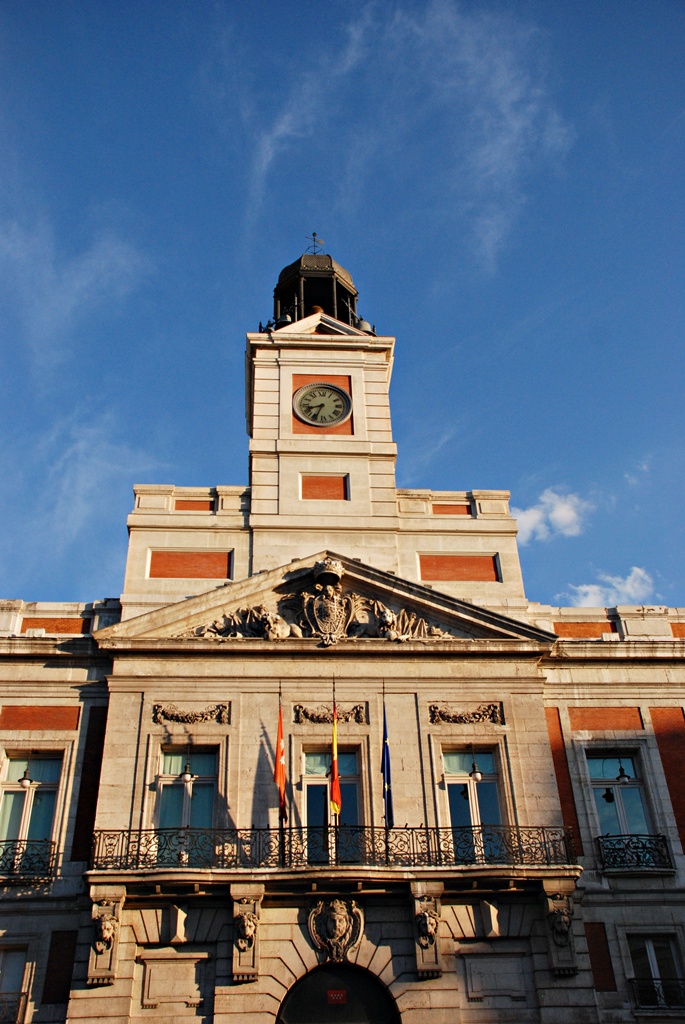
It was early evening when we got to Madrid and as it was still daylight outside, we went out for a stroll. We were staying in the city centre and so we could walk to Puerta del Sol; this is a busy plaza in Madrid and is considered the central point of Spain. Hence, this is the centre of the radial network of Spanish roads and considered KM 0. The square was very lively with a lot of people walking around. We could also see the statue of King Carlos III (called Charles III in English).
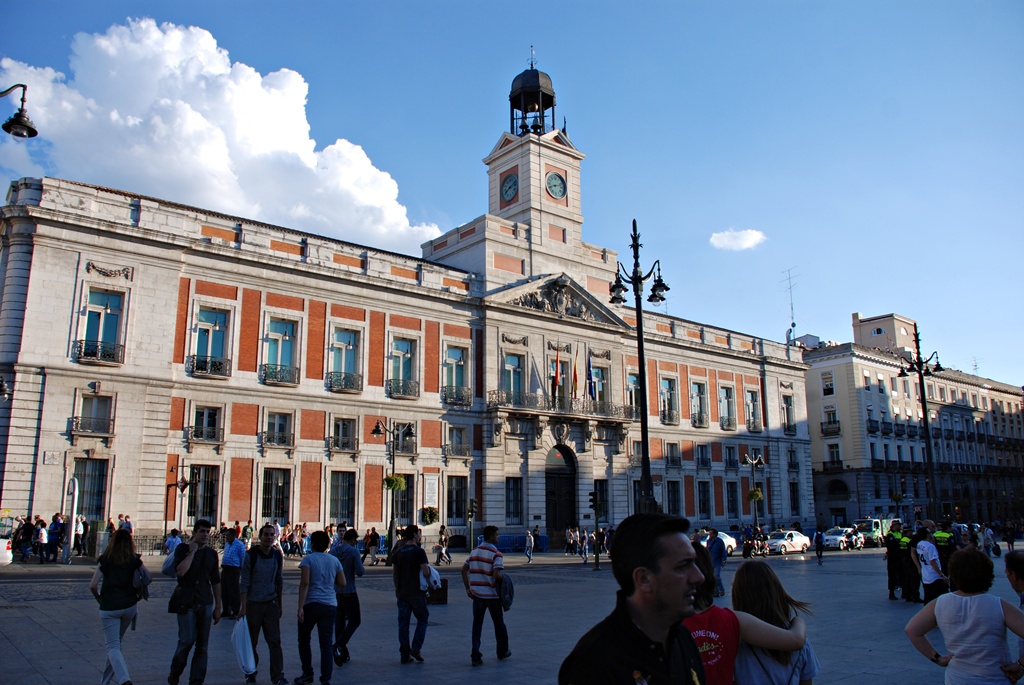
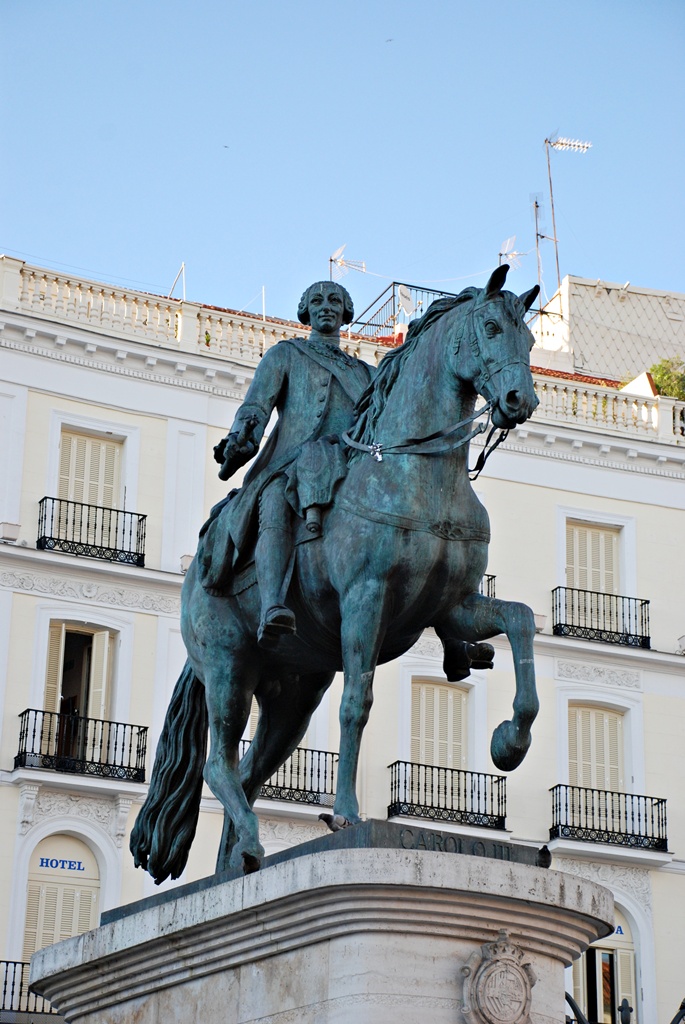
Madrid_Journal_01

Madrid_Journal_02

Madrid_Journal_04

From Puerta del Sol, Plaza mayor is a short walk away. This looks like Piazza San Marco in Venice; no, it looks like a poor cousin of Piazza San Marco. It seems this was a location where bullfights were held in the past as also executions during the Spanish Inquisition.
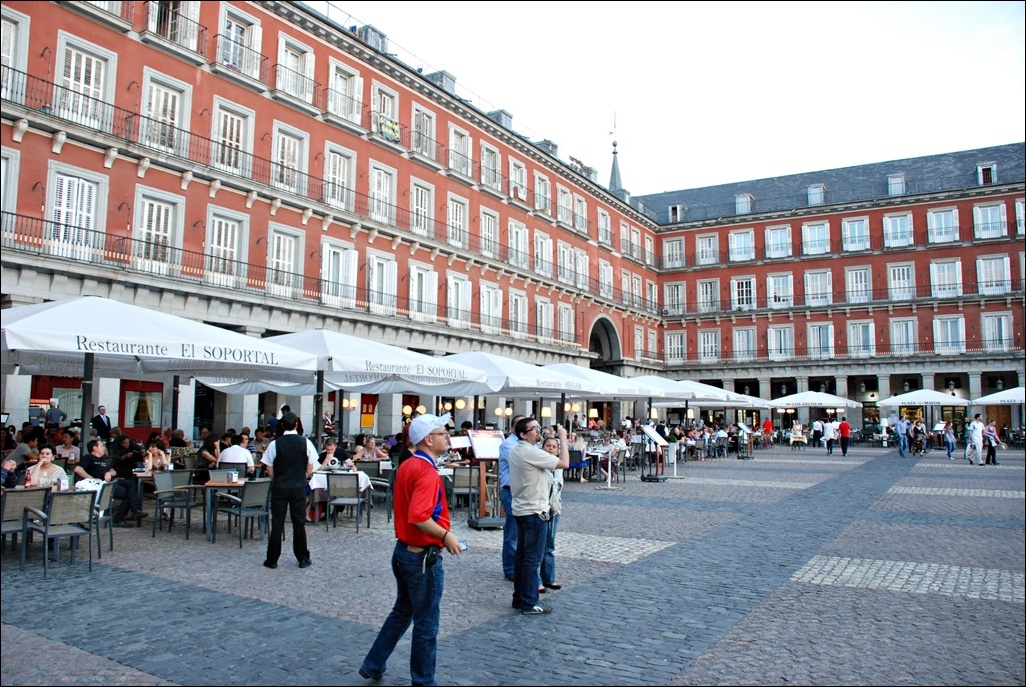
Madrid_Journal_06

14 May 2013

We set out to Musee del Prado – the most famous museum in Spain – first thing in the morning. This is a huge museum that has about 7,500 art pieces of which only about 1,500 are exhibited. Since we had only about three hours planned, we decided to focus our attention on the most important 50 paintings as defined by a pamphlet provided in the museum. These included works by Goya, Velazquez, Raphael, Titian, Caravaggio etc. What struck me about these paintings was how these artists had full mastery over lighting and composition. The masters seem to stand out in this aspect. Most of the paintings were on religious matters as the works were commissioned by the rulers, noblemen or the clergy. Hence the leeway available for the artists to paint other subjects was pretty limited. However, artists being artists, they did pull out some tricks by painting the holy figures like normal people or adding some impish point or the other in the painting, wherever they could get away with it. I think Caravaggio was a definite influence on this front. There were only few still life paintings produced in Spain at that time and this could be the reason for that; of course the Inquisition must have been going on for the most of the time and it would have been good strategy to just toe the line. Yet, there were some that were very different and what remained in my memory were the “black paintings” by Goya and “Garden of Earthly Delights” by Bosch. The latter looked almost like modern art and it is a triptych. In the third panel, there is an image of a monster that eats men in hell and I am very sure that I have seen that image used by some painter in India recently. I could not recall the exact work though. A famous painting by Velazquez, “Las Meninas”, is also part of the most important 50 and is quite interesting. This shows the image of the artist (shown holding the brush) making a painting of the king and the queen (reflected in the mirror behind the princess’ head) with the princess and her friends dropping in to visit. Photography was not allowed in the museum and the few photos given below are sourced from the internet.
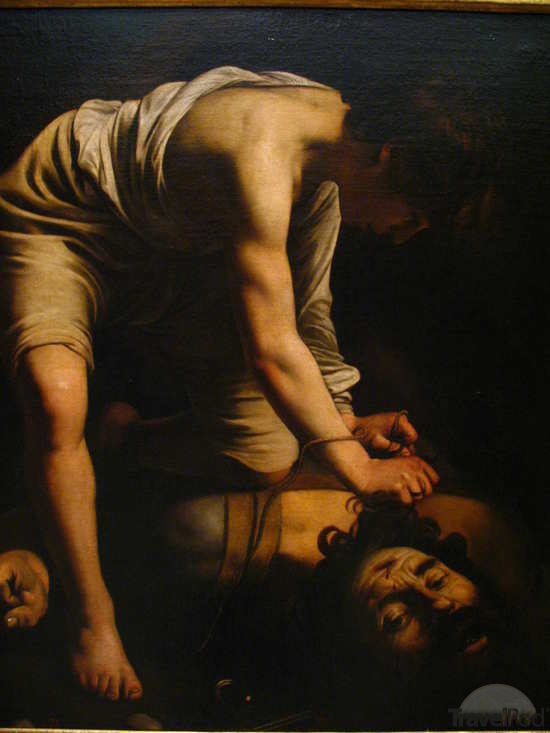
Caravaggio_David Victorius over Goliath

Caravaggio: David Victorious over Goliath; Source: Internet
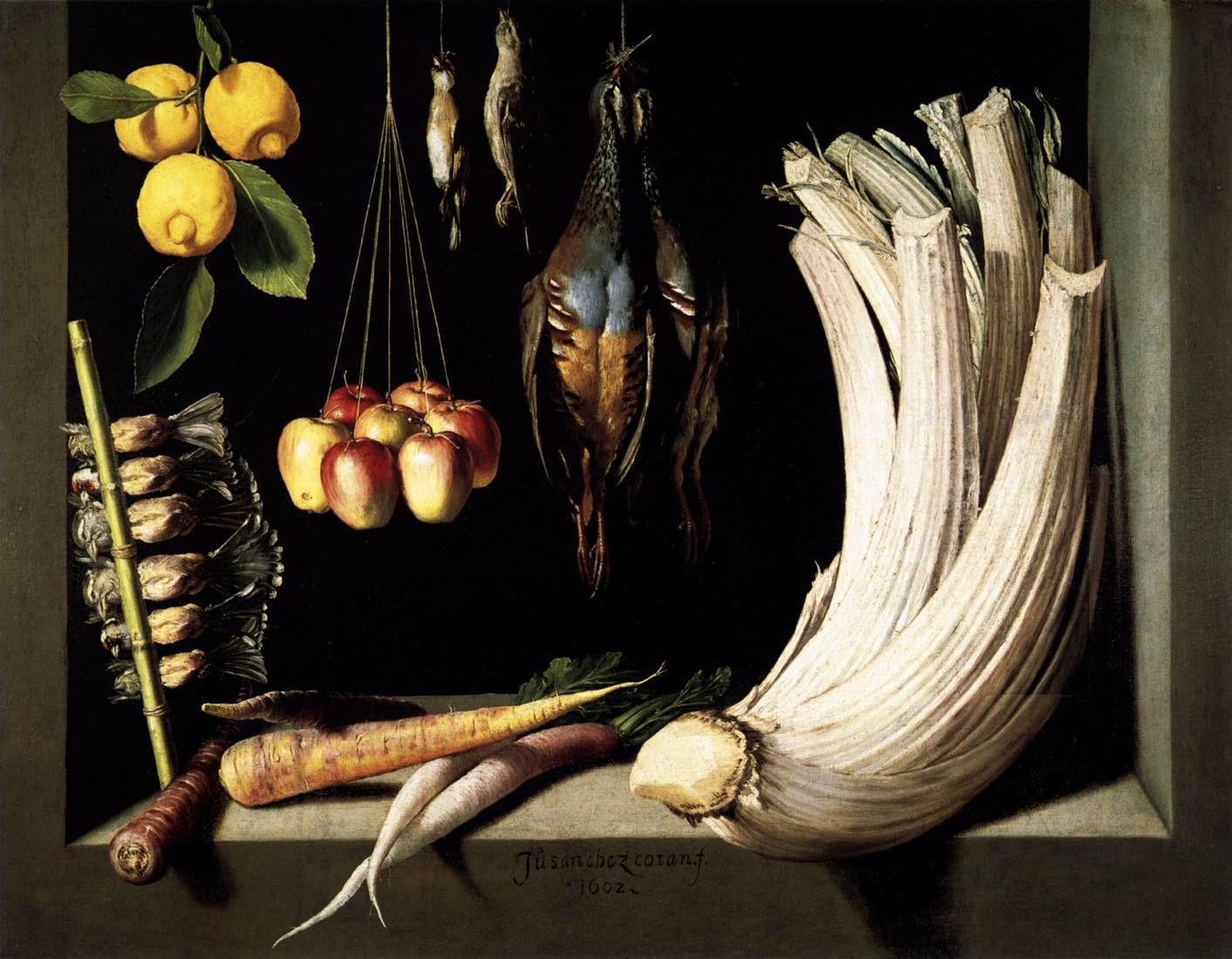
Sanchez Cotan_Still Life with Game, Fruit and Vegetables

Sanchez Cotan: Still life with game, fruit and vegetables; Source: Internet
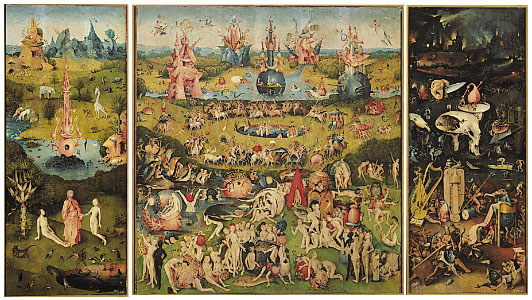
Bosch_The Garden of Earthly Delights

Bosch: The garden of earthly delights; Source: Internet
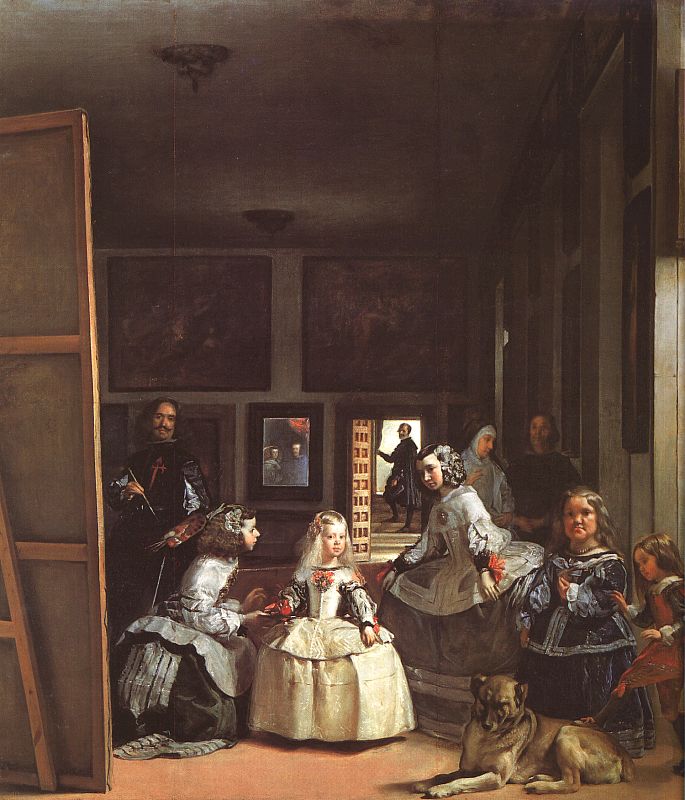
Velazquez_Las Meninas

Velazquez: Las Meninas; Source: Internet

Three hours were nowhere near enough and I could not do justice even to the 50 paintings. I would have loved to spend some more time with the black paintings of Goya; he painted these towards the end of his life and by that time, he had a pretty bleak view on humanity and the human race.
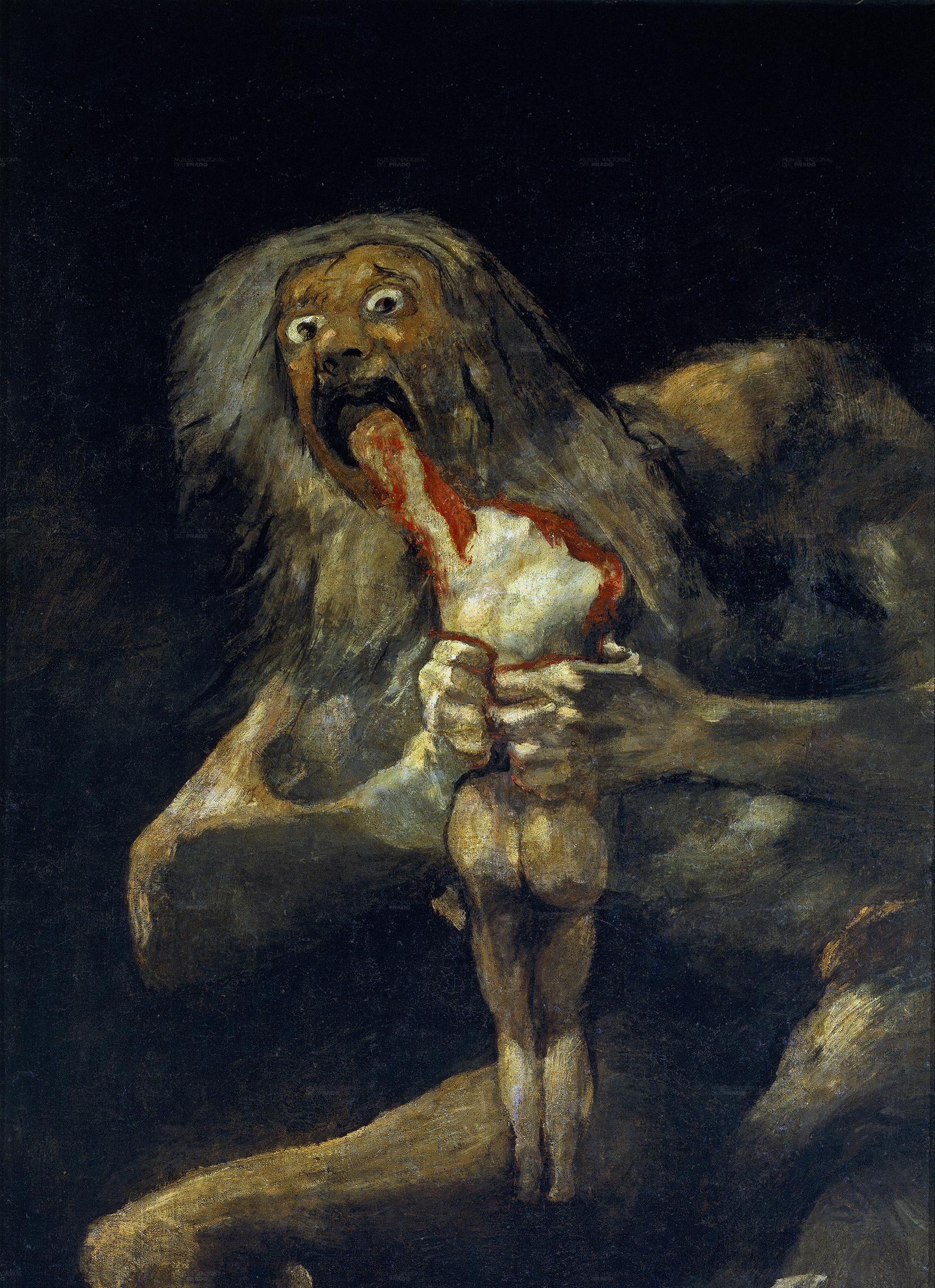
Goya_Saturn Devouring his Child

Goya: Saturn devouring his child; Source: Internet

After lunch, we set out to see the stadium of Real Madrid football club. What struck me the most was their ability to sell their history and make money off it. The various trophies won by the club were exhibited and one could also see the players’ area and also get close to the pitch. It must be awesome to stand there on the field with a stadium full of fans howling and cheering.
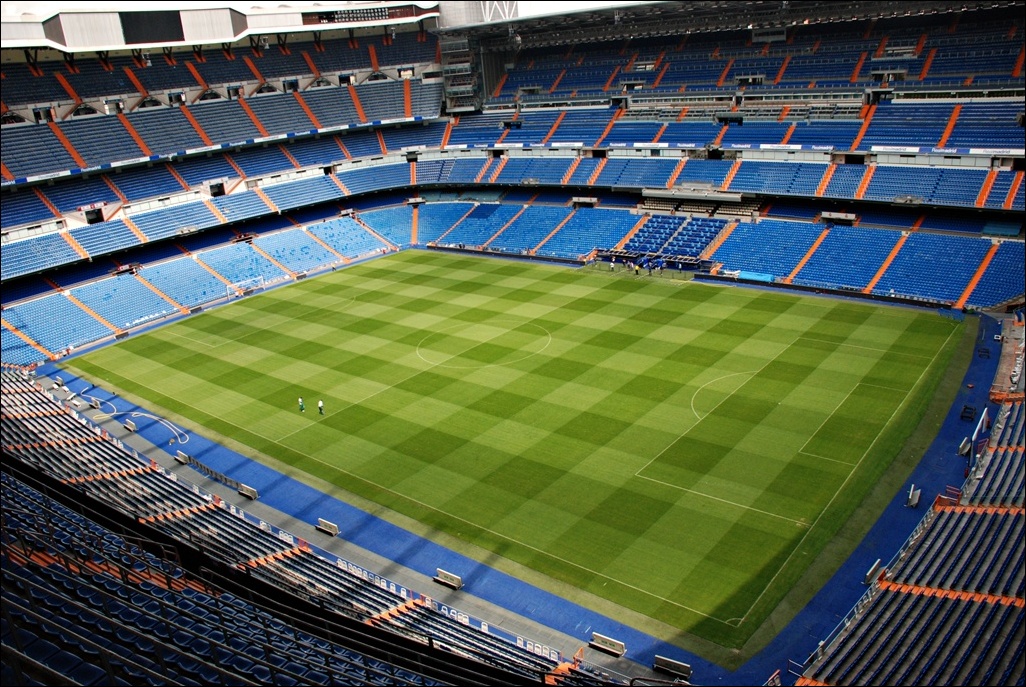
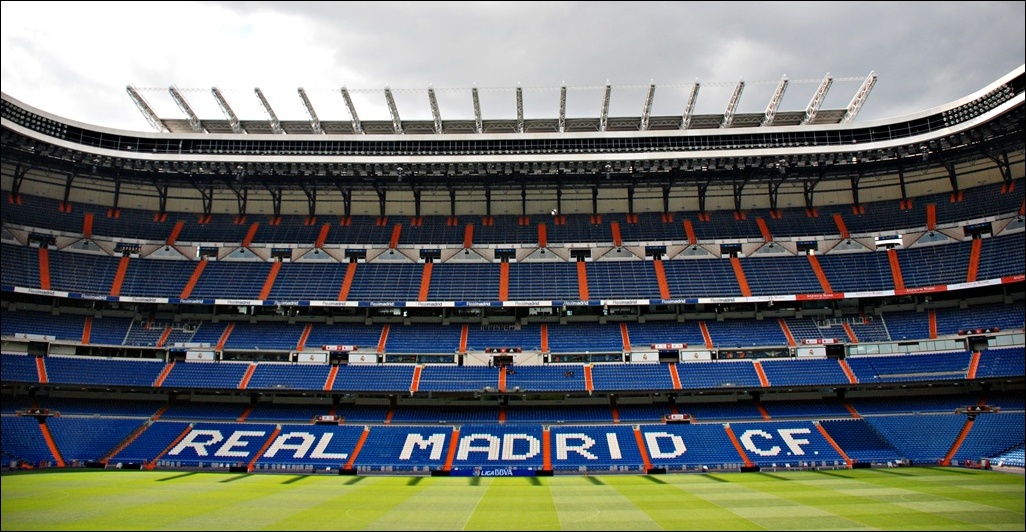
Madrid_Journal_03

Madrid_Journal_07

I got a good picture of some boots the club had used when they started about 100 years. This is my “still life”!
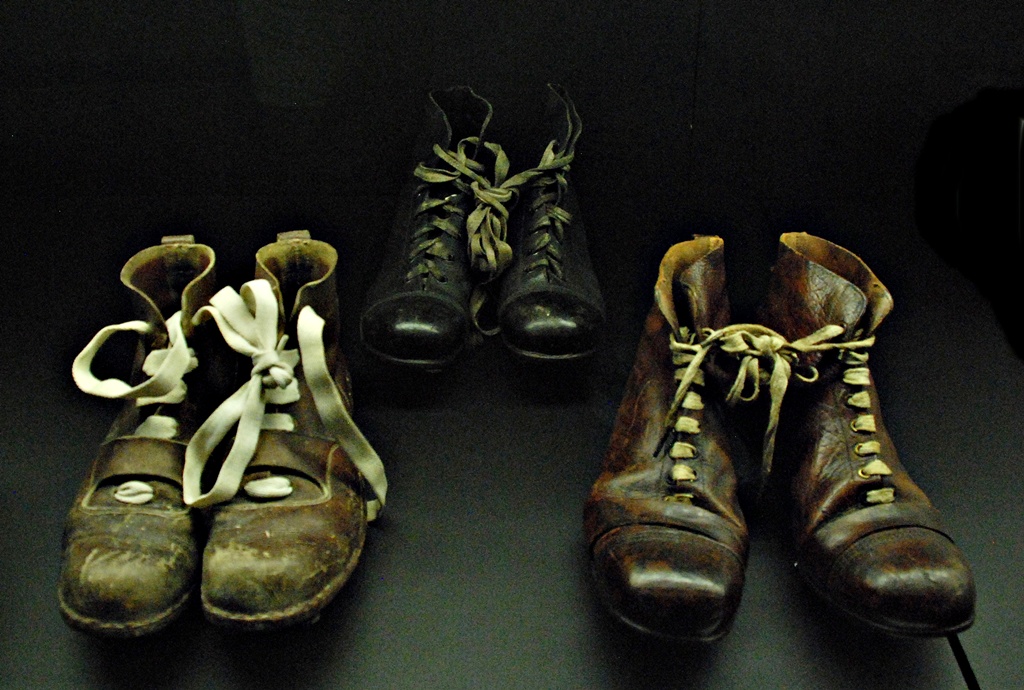
Madrid_Journal_05

By the time we were done with the stadium, it was drizzling a bit and we retired to our room.

15 May 2013

One of the most important attractions in Madrid, for me, was the Reina Sofia museum as that hosts a display of Salvador Dali’s and Picasso’s paintings, including “Guernica”. This was a keenly anticipated event and we set out for the museum in the morning. Alas, when we arrived there, we found that the museum was closed because of the local festival of San Isidro, who is the patron saint of Madrid. The museum had its weekly holiday on Monday and with this closure on Tuesday, it meant that we had miss out on it altogether. I was feeling a bit down and vowed to myself that I would make some time during my next visit to the city and make it there.

Fortunately, the palace was not closed and so we hopped on a taxi and drove there. The morning was cold and rainy and quite unlike what one expected of Spain. It is called Palacio Real (Royal Palace) and is built on the site of a 9th century fortress that was built by the ruler of Cordoba, when Madrid was still under the Moors. Later, a castle was built on this site in the 16th century and it burned down in 1734. King Felipe V ordered it rebuilt and the castle as we see it today was constructed between the years 1738 to 1755. As a result, there is not much by way of historical significance in this palace. The palace is used only occasionally for official functions as the royal family resides in another, smaller palace. This is a huge palace (supposed to be the largest in Europe by floor area) with around 3,000 rooms (thankfully, only a few are open to the public), many of which are very ornate and rich. One room called the Salon de Gasparini, stood out for its exquisite stucco ceiling and silk embroidered walls. The Throne Room was also quite impressive. Photography was not allowed inside the palace. The most interesting aspect of the palace was the variety of clocks that one found all over the place. Spanish monarchs seemed to have had a fascination with clocks and they even set-up a factory to manufacture clocks. In one room, there was a display of five Stradivarius violins. Stradivarius family made these violins in the 17th and 18th century and these are supposed by many, to be the finest stringed instruments ever made. It is amusing to think that even in this age of such technological development, instruments made three centuries ago are still unmatched. Antonio Stradivarius was the leading practitioner of the trade and his violins fetch millions of Dollars in auctions today.

There is a large courtyard as one enters the palace it offers a very nice view of the palace and a wooded area beside the palace. When looking at the wooded area, you feel that you are somewhere in the countryside and not the middle of a large, bustling city.
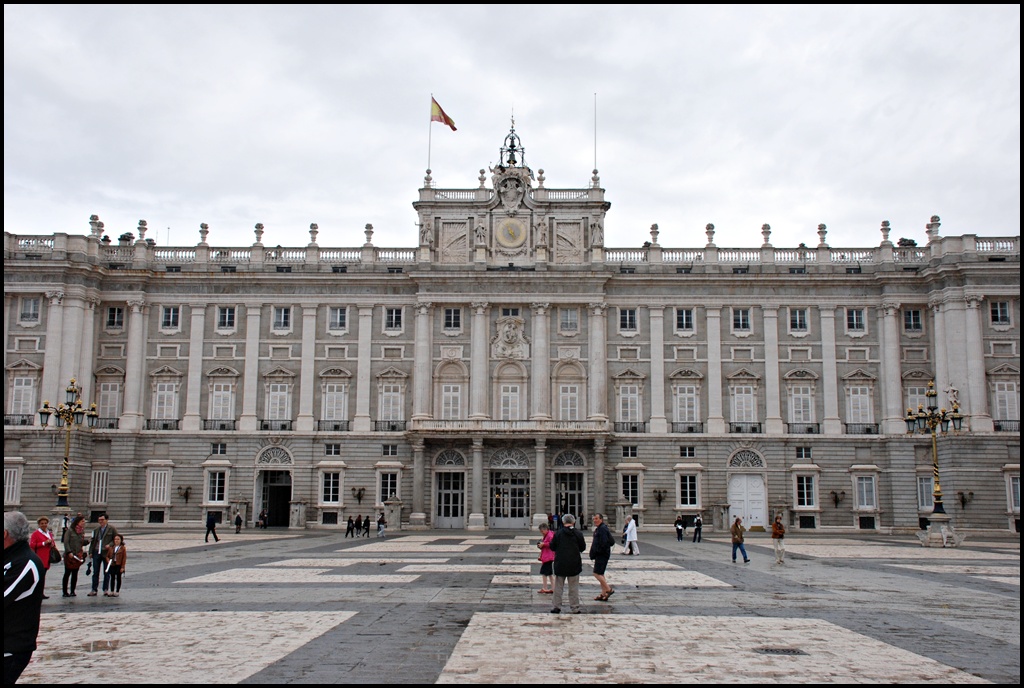
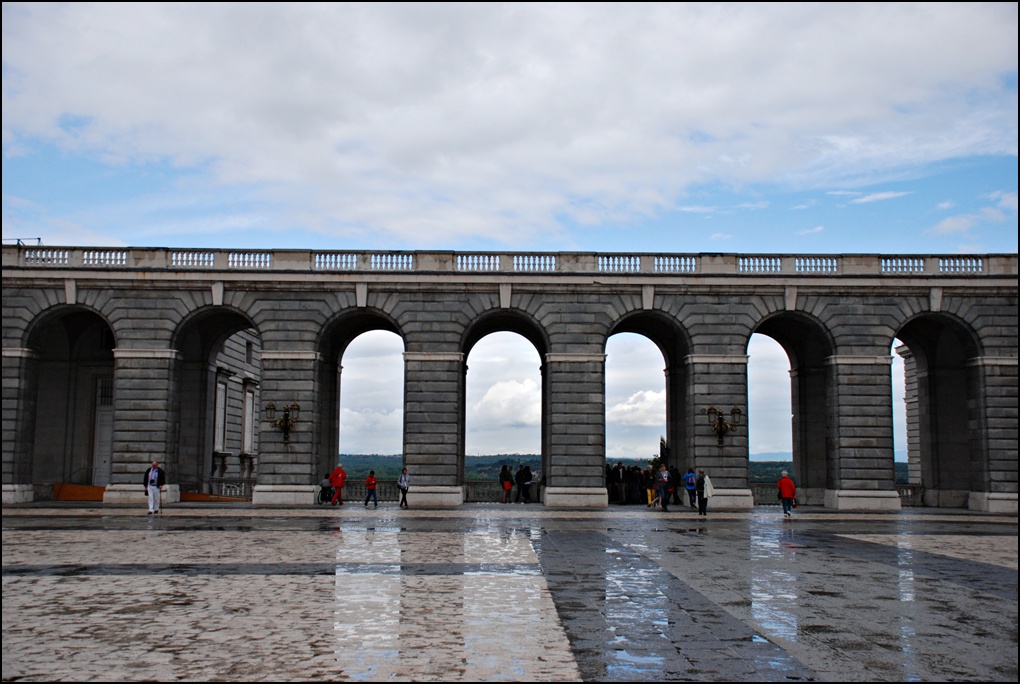
Madrid_Journal_09

Madrid_Journal_10

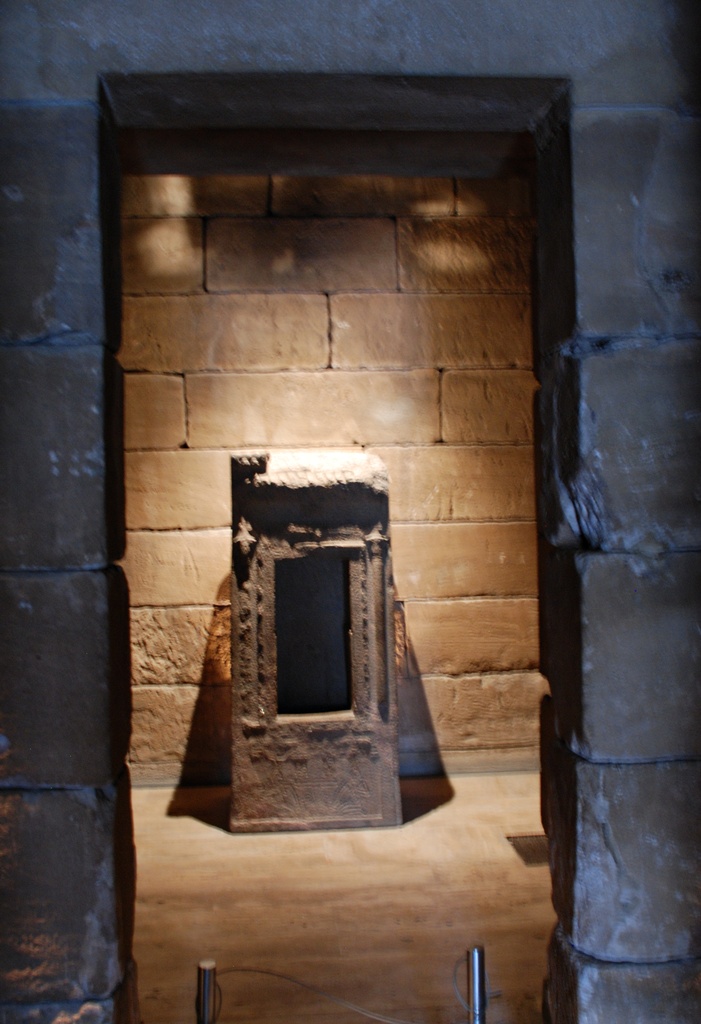
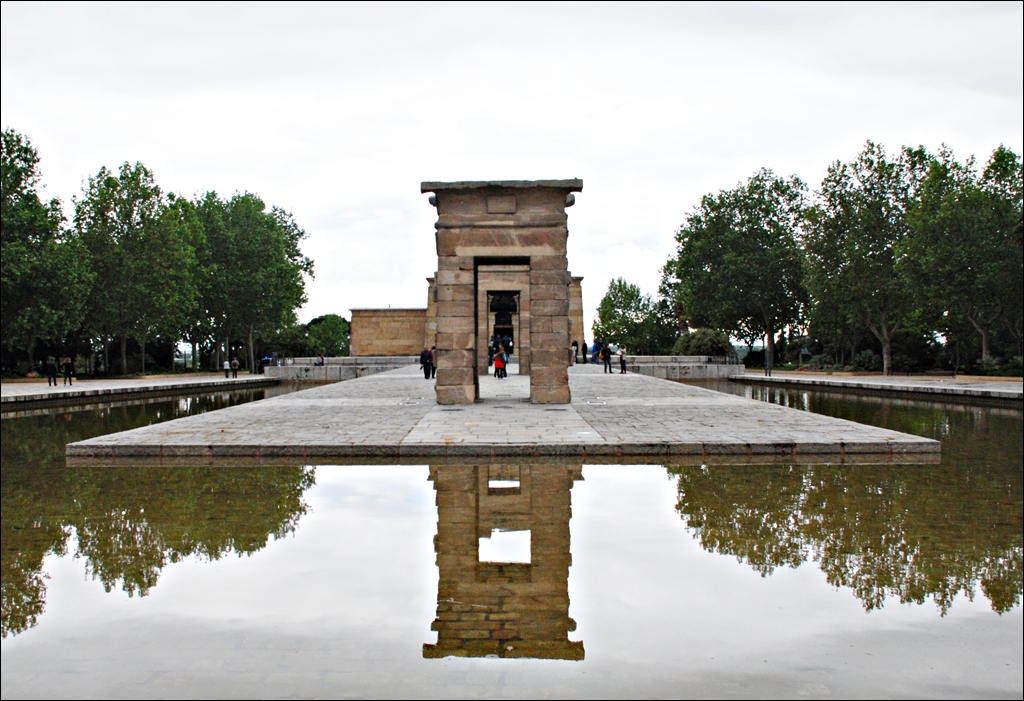
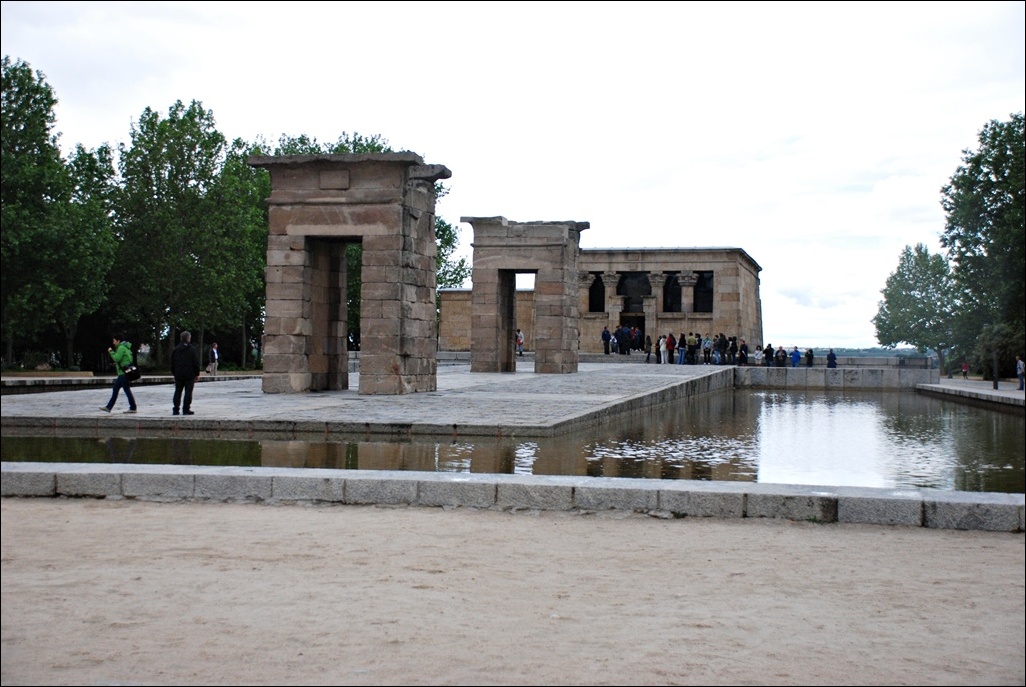
From the palace, we walked to a monument, which one can arguably say, is quite out of place! This is Templo de Debod, which is an ancient Egyptian temple that dates back to the 4th century BC. When the Aswan Dam was being built on river Nile, many temples were under the threat of being submerged in the waters and this was one such. The Egyptian government donated this temple to Spain, in gratitude for the help offered by Spain in saving the temples of Abu Simbel.  The temple was taken apart block by block and rebuilt in Spain in 1968. It stands on a beautiful park looks very beautiful, surrounded by water. There are two gateways and then the temple itself. There were Egyptian hieroglyphs on the inside walls of the temples and it led to a sanctum sanctorum. The light was very poor and so I could not get a good photograph. There was not much explanation provided and so one could not get much information on the temple. Overall, it was good to see the temple and I am sure that sunsets would be great here and when the light is right, a great photo location!
Madrid_Journal_12

Madrid_Journal_11

Madrid_Journal_08

As it was rainy and a bit cold, we went back to our hotel. With this, our tour of Madrid had ended and we were to leave for Andalusia the next day. One thing that struck me in Madrid this time as compared to my previous visits was the increase in number of people begging on the street. While this is, in no way comparable to what one sees on the streets of any average city in India, the numbers were much larger than what I had encountered any time before. A sign of the hard times that Spain is going through, I am sure. I had read somewhere that during colonization period, Spain frittered away all they wealth they plundered from the colonies, in construction. Centuries later, when Spain became part of EU and got access to large funds, construction boomed once again. Today, unemployment in Spain is at a depressing 27% and it is said that 50% of the youth are unemployed. A bad situation indeed and I hope that this great country finds its way out of these problems soon.
January 24 & 25, 2013

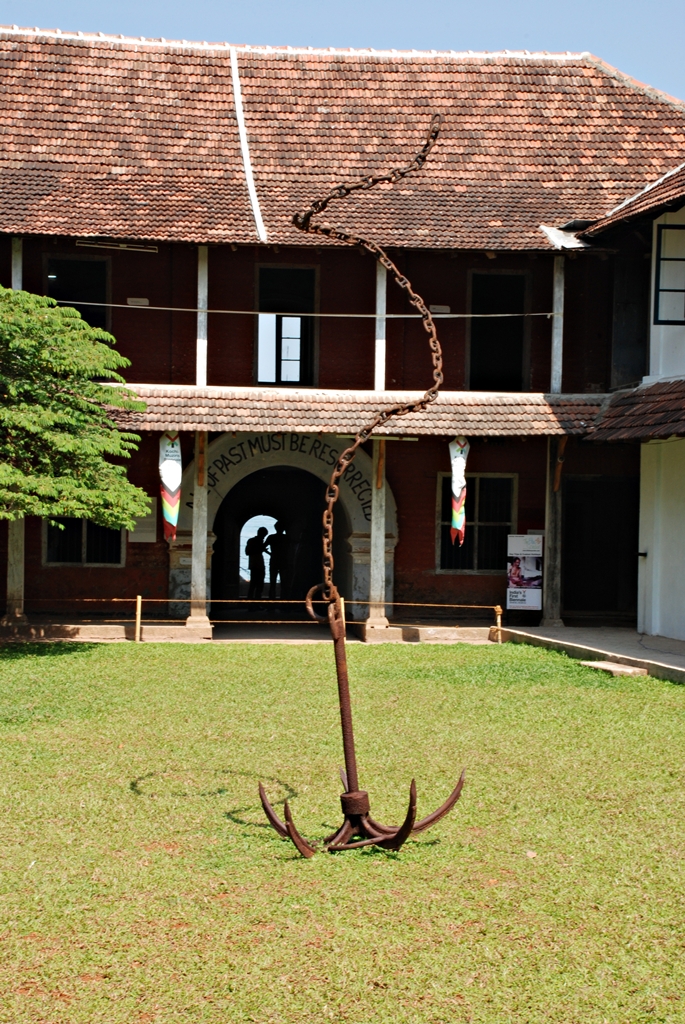
An unexpected change of plans left me with a few extra days at Kerala and off I went to Kochi, with a couple of friends, to catch up on the rest of the Biennale. I had spent about a day and a half in my earlier visit but could only see a portion of the Biennale. Since we set off early, we reached Fort Kochi by around 11 and decided to start with the Pepper House this time as we were sure that if we started with the Aspinwall House, we would spend all of our time there only. As is the proper course of action on these sort of jaunts, we started with a leisurely coffee in the quaint little café inside Pepper House. The first exhibit that catches your eye is a rusted anchor with a broken chain that reaches upwards, as if the scene is frozen, as the anchor is dropped. I felt that an anchor is something that really connects one with Kochi and Muziris with all its history of maritime trade. This is installed in the open courtyard and the position of the sun was such that the chain threw a shadow in the shape of a question mark. I am not sure whether this was intended but it was a fitting opener for the rest of the day.

Kochi_Jan13_ 002

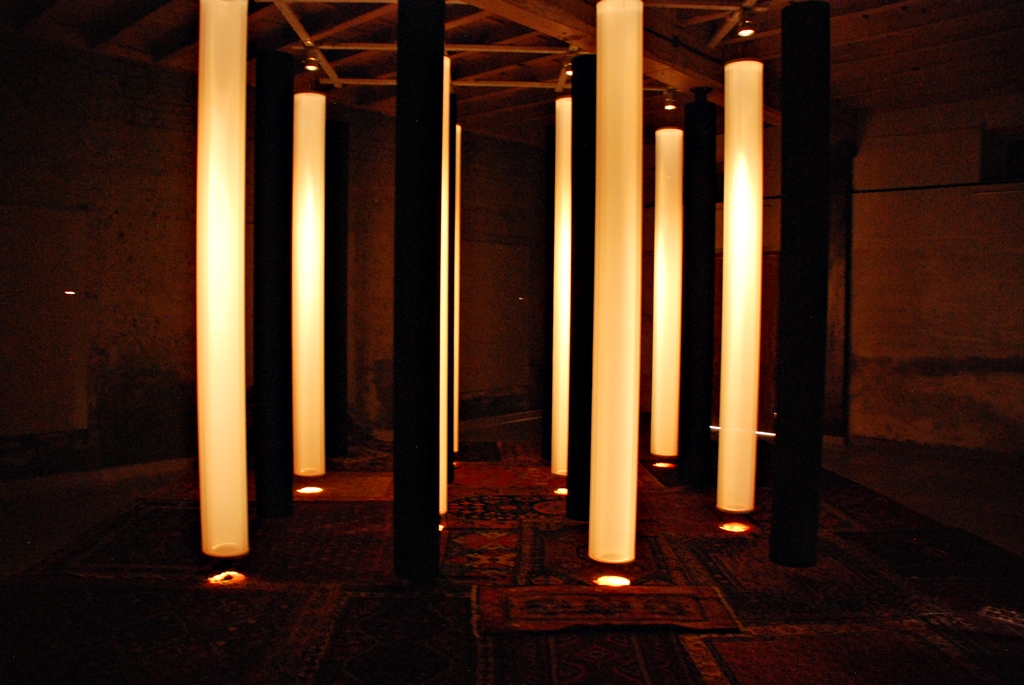
The next was an installation by an Iranian artist, Hossein Valamanesh. This consisted of many Persian carpets laid crisscross on the floor with alternate columns of black and white hung from the ceilings. The white columns were provided with internal lighting. We had to remove our shoes before we entered and that very act somehow brought a feeling that one was entering a holy or a revered space. The rugs added to that feeling. Since there was no other light in the room apart from the white columns, one’s attention was automatically drawn to the circular patches of light falling on the carpets from the white columns. I found the interleaving of the bright and the dark quite interesting and the overall feel was one of peace and quiet. Those portions of the rugs, under the unlit, black columns were not visible at all; they were in the dark, unseen and hence unsung. Sections falling under the white tubes that have been lit from above, are in glory. Funny enough, I was reminded of a young Australian Christian missionary I had met in Brigade Road many years ago, who insisted that I had to accept Christ as my god and “come into the light”. So, what shall we do with the unlit tubes?

Kochi_Jan13_ 012

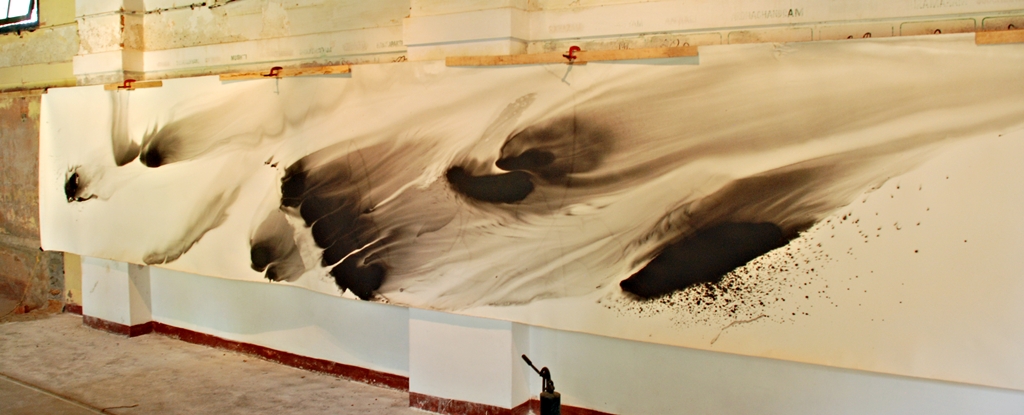
An ink painting by Clifford Charles was next. The explanation talked about the artist’s preoccupation with water as a substance. The painting itself was titled “Steps from Villa Sebollini, Belaggio” and it seems that the work was started in Belaggio and finished in Fort Kochi. Apart from the fact that I have been to Belaggio and Fort Kochi, I could not connect with the art work at all.

Kochi_Jan13_ 022

Physiognomy is the study of a person’s character or personality from his or her external appearance, especially the face. This was an ancient science, much used by the Greeks. In modern times, a Swiss Pastor by name of Johann Lavater revived this science and Lavater himself was given to the quest of reconstructing Jesus Christ’s face or his “true image”. He tried to do this by reverse engineering what the physical appearance of the face of a person like Christ could have been and then giving these instructions to various artists. The instructions themselves (a copy was displayed) were very specific. However, he was never satisfied with the images these artists produced as he felt that they were always influenced by the existing images of Christ.

In the Biennale, a Dutch artist by name of Gert Jan Kocken has retraced the steps of Lavater and has commissioned three sculptors (Vinu VV, Anoop Kottekatt & Sanul KK) to create faces based on the descriptions. The only difference being that the artists were not told that the description was that of Jesus Christ. Perhaps, the artist was trying to take away the influence that Lavater always objected to.

It was interesting to see the output of these artists. One did indeed look like the Christ we see in pictures and one looked a bit like Abraham Lincoln! I thought it would be interesting to apply this technique to the Hindu Gods and see the output. I am sure it would lead to a lot of issues. We are so bound to the images that we are used to. For instance, one is so used to the South Indian depiction of well rounded Gods and Goddesses that it is somehow irritating to see the lean frames as painted by some North Indian painters. I can only imagine the frustration that Lavater must have caused in the artists by insisting that they had to forget the image that they were used to.

cats

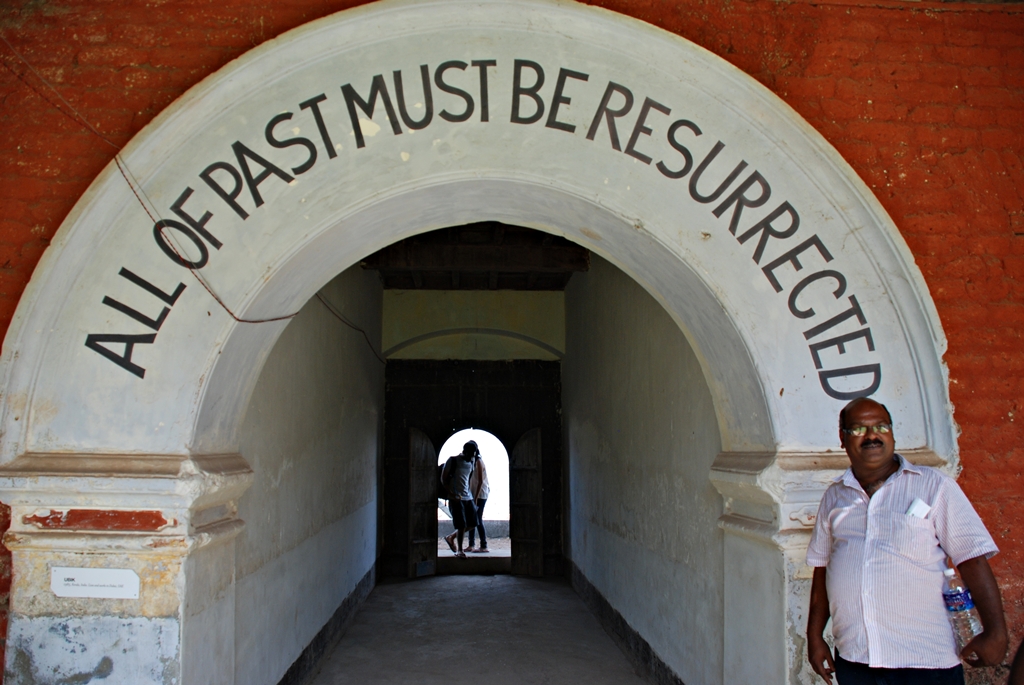
As we were going around the courtyard, we came to a doorway that led to the pier and the words “All of past must be resurrected” were painted over it. We were a bit confused at first as to whether these words were part of the building even before the Biennale started or whether it was done for the Biennale. It was only as we read the explanation provided that we realized that it was part of an installation by an artist named UBIK. As you pass under the arch, you enter a short corridor and then emerge out of an old door on to the pier, which overlooks the modern port of Vallaarpaadam. The view shifts from a dilapidated old building to spanking new infrastructure. The corridor was what I connected with. I viewed that as “transitory land”, a neither-here-nor-there position; something which I often find myself in when I look at the nostalgia tinted past and the reality of the present.

Kochi_Jan13_ 051

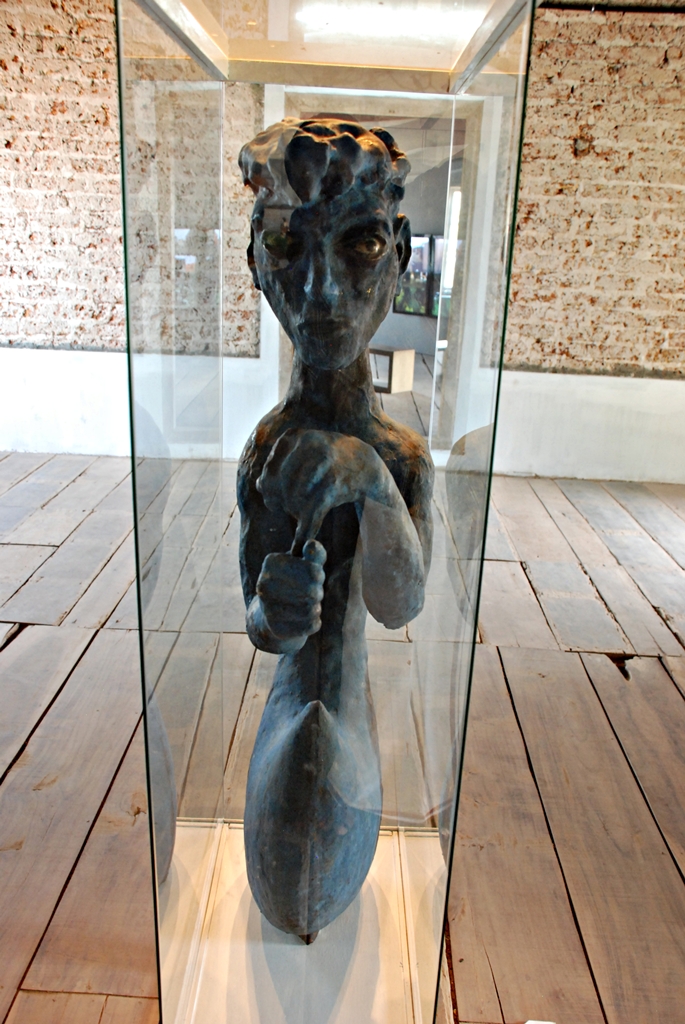
I had heard about KP Krishnakumar and a friend had spoken very highly of his work. His work, called Boatman, was displayed at Pepper House. Sculptures have never really resonated with me but I could connect a little bit more with this. It was quite expressive and the face kept drawing me back to the work.

Kochi_Jan13_ 070

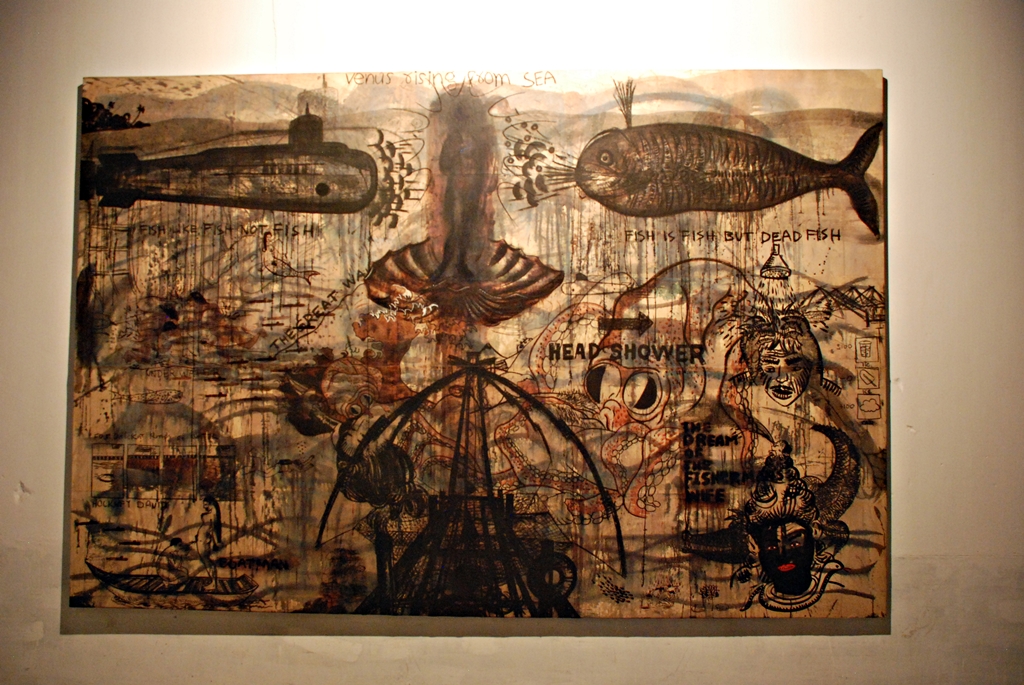
In the same room was a very large painting by KP Reji. This depicted the legend of “Thoombinkal Chathan”, a Dalit, who sacrificed himself to save a paddy field from flooding. The painting is split into three panels with a huge naval ship (looked like an aircraft carrier) in the background. While the panels on the two sides looked similar, with depictions of a green tree, children etc. the one in the centre was different with the tree looking dead with crows sitting on the branches eating dead fish. The children are obviously school-going children but they have in their hands some implements which can be tools or weapons, depending on how you look at it. There were a multitude of images in the painting and I felt that I could not understand what the artist was trying to convey fully, though I felt I got the overall gist; I felt drawn to the picture and spent a long time with it. It made me think about these myths that we repeat with admiration and pride, about the man who was brave enough to sacrifice himself for what is ostensibly the common good; but we seldom reflect on the fact that it is often for the good of the landlord only. Invariably, the ones that are the “heroes” in such stories are the downtrodden, mostly from “lower” castes. They are made into heroes for that one act, and then relegated back into their old status. Their progeny gain nothing but the right to feel proud about a story – a story that will be kept alive by the powerful as they need more such “heroes” to be ready for other deeds.

Kochi_Jan13_ 076

In the very next room was a very nice visual treat. Thirty white violins had been suspended from the ceiling in a neat row. There was also a video that showed violins exploding with the accompanying sound. This installation is by an artist named Ibrahim Quraishi. The overall visual impact was very nice and it was good feel to walk alongside these violins but I could not get what the artist was trying to convey. The long room with its whitewashed walls and the white violins gave a peculiar feel.

Kochi_Jan13_ 099

Kochi_Jan13_ 096

Next stop on the agenda was Aspinwall House and we proceeded there after lunch. Last time, I had seen Vivan Sundaram’s installation but I had not seen the video he had made using the installation. The video was made by having the camera zoom in and out and move at different angles around the installation. Water was poured onto the installation and dried black pepper seeds were floating on the water, in some of the videos. Overall, it gave me the sense of a city going under flood waters or that of small islands and the visuals were captivating. This video was arranged in three large panels and projected on to the floor. So, it gave a sense of one standing over the land and watching the happenings from a vantage point. To me, it conveyed a sense of disquiet and calamity.

Kochi_Jan13_ 141

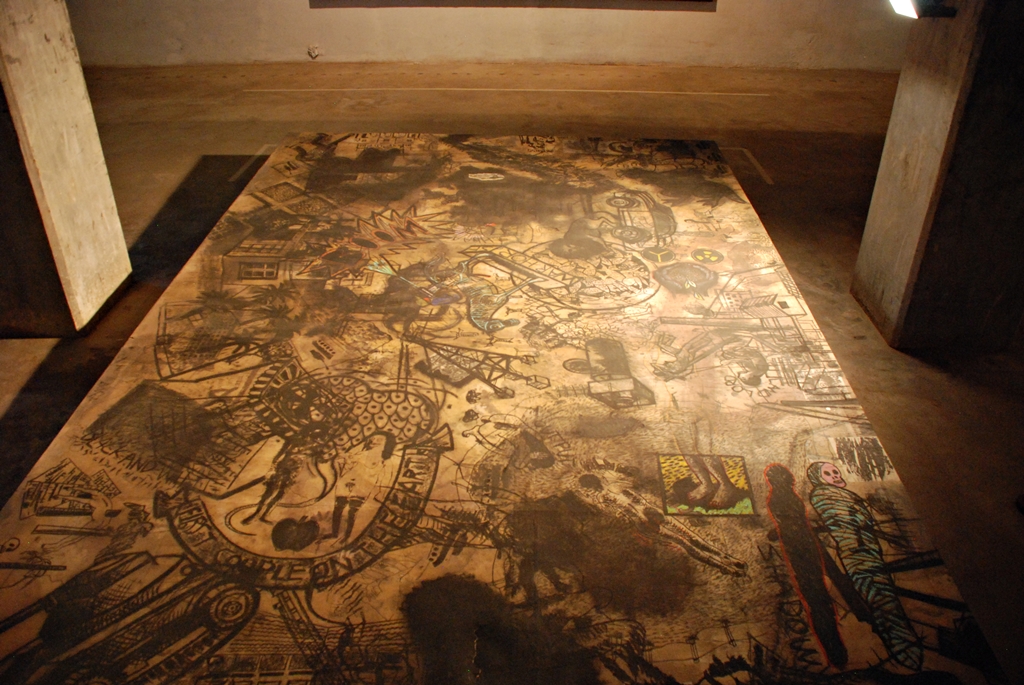
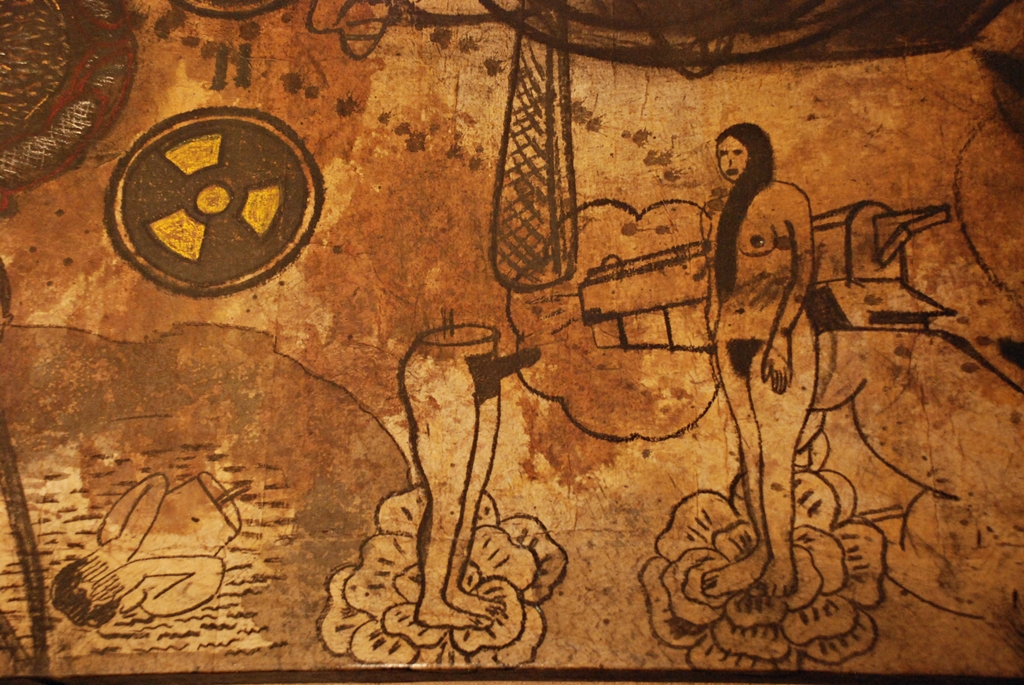
From the calamity that befell a great city, we moved on to a work depicting the five basic elements – Earth, Water, Fire, Air & Sky. The artist (T. Venkanna) is talking to us about how we abuse these five elements. There are five wooden discs suspended from the ceiling with etchings of such destructive items as battle tanks, airplanes, submarines etc. coupled with five large canvases. These are hung on walls and also placed on the ceiling and the floor. The canvases are filled up with charcoal drawings and collages of very many images. The images are pretty strong and bring out the conflicts and the acts of abuse. It conveys a sense of horror and doom about where we are headed.  Many of images were very disturbing indeed.

Kochi_Jan13_ 162

Kochi_Jan13_ 173

Kochi_Jan13_ 177

Kochi_Jan13_ 185

Kochi_Jan13_ 187

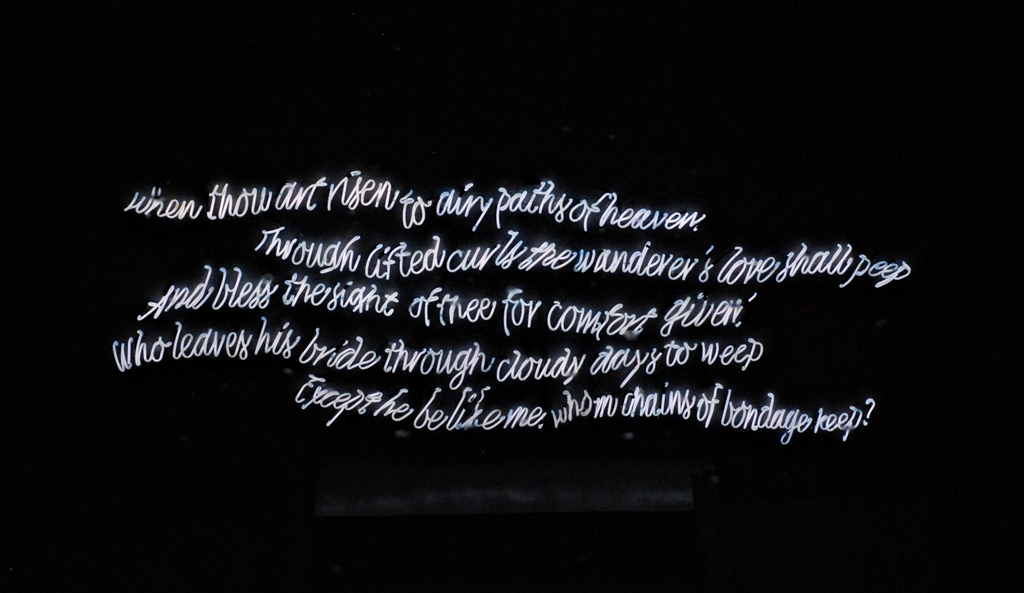
I was not going through the exhibits in any particular sequence and the next one I saw was a work involving Kalidasan’s Meghasandesam. This was by an artist Alfredo Jaar and it consisted of one verse from Meghasandesam written with neon lighting and fixed on to one wall. The room was totally dark and the floor was filled with water; a wooden walkway provided access to the room. The text was inverted and so unreadable when one looked at the wall but was reflected clearly in the water. The verse itself is English translation from Sanskrit and the work is titled “Cloud for Kochi”.

Kochi_Jan13_ 198

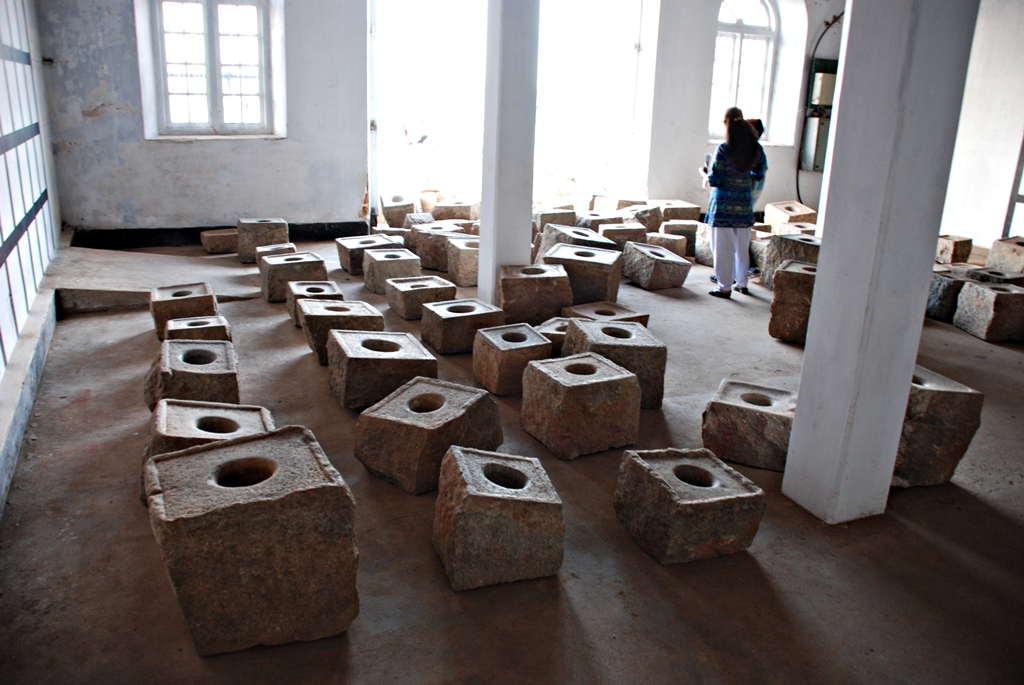
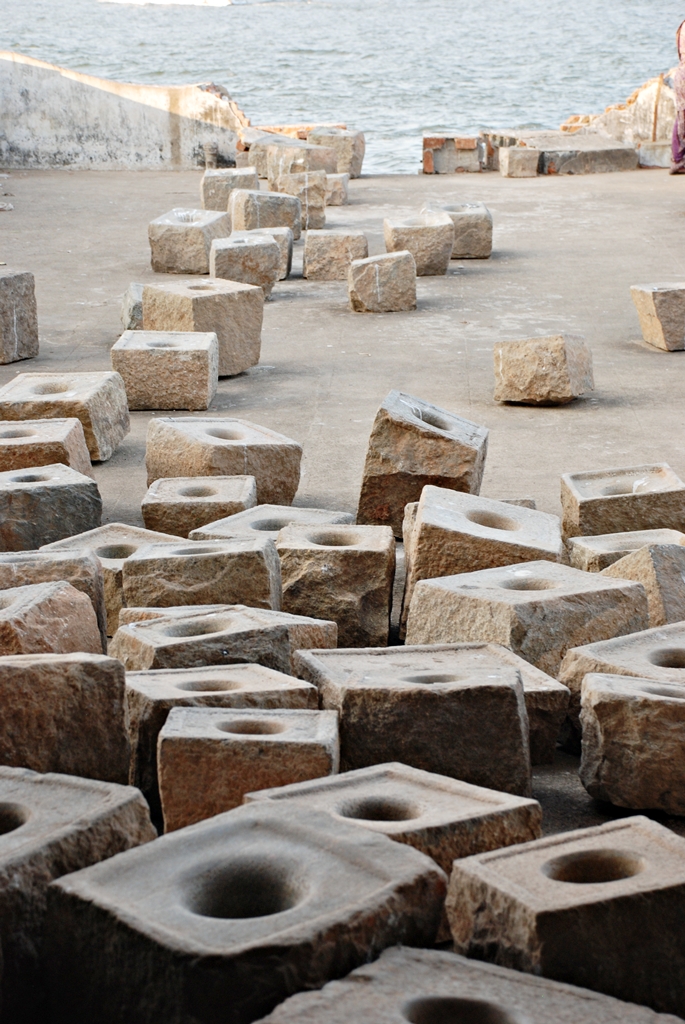
What happens to things that we have no more any use for? This is the theme of an installation by Sheela Gowda and Christoph Storz. They have collected 170 grinding stones and then strewn them around in random fashion, leading to the pier, almost as if the stones are falling into the sea. Before the days of the electric mixers, the grinding stone was an integral part of each house. Once we all adapted to the convenience of the electric mixers, these were no longer needed and thus, were abandoned. Once abandoned, these become part of urban debris and we no longer notice these stones, which were once critical for us to make food. I liked this installation quite a lot and spent some time sitting there. The obvious connect to me was to people even in our own lives, who share the fate of these grinding stones. What struck me was how these artists had thought up this connection. We also had grinding stones in our houses when we were young but I have never bothered to think about what happened to those later. There was also a grid of black and white on one wall in the room in which the grinding stones were lying. Items are relevant only when they are able to fulfill their utilitarian role, a rather black-and-white concept.

Kochi_Jan13_ 248

Kochi_Jan13_ 253

Kochi_Jan13_ 255

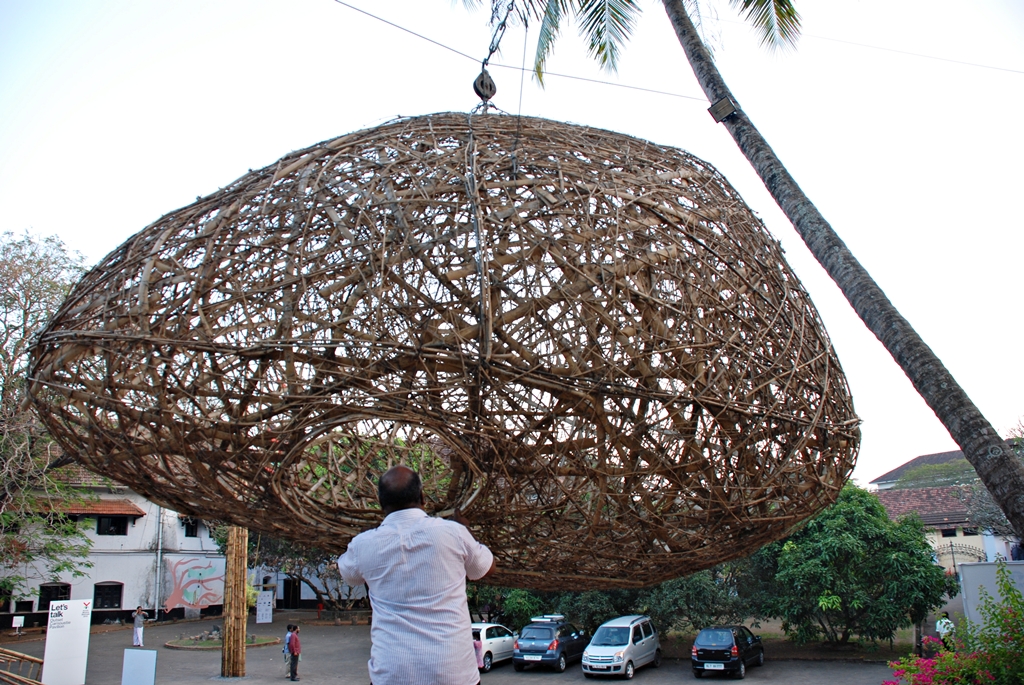
The first sight that greets you as you enter Aspinwall House is an installation by Srinivasa Prasad – a  cocoon suspended in mid-air with steps made of gunny sacks leading up to it. The cocoon itself is made of bamboo, wire and thorns and there is an opening in the cocoon into which, one can insert one’s head. Supposedly, you leave bad memories and thoughts in the cocoon. Finally, the cocoon is supposed to be taken down and burnt, erasing all those bad thoughts. How fortunate, if it were so easy! Out of curiosity, I went up the steps and tried to leave some thoughts in the cocoon but my thoughts seemed too wedded to me.

Kochi_Jan13_ 278

Kochi_Jan13_ 283

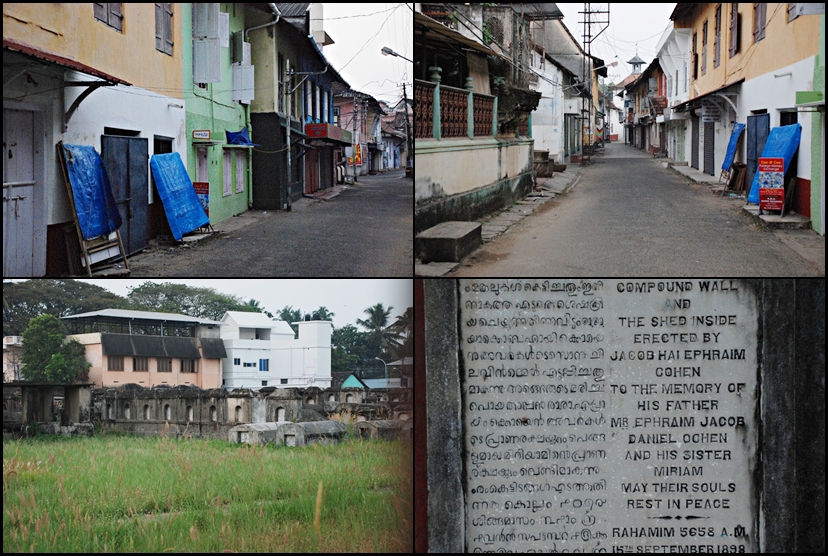
By this time the day was gone and we were pretty tired as well. The next day morning, we got up very early and decided to have a drive around Fort Kochi and Mattancherry taking in the early morning sights. We wandered around the deserted streets leading to the synagogue. I have been there before but had not got a chance to go inside the synagogue. It was odd to walk around a part of Kerala where you could see Hebrew writing and Star of David on the walls. There is also an old burial ground here. There was a plaque set into the wall of the cemetery that spoke about who had erected the wall – the Malayalam used was a bit odd, perhaps because it was written more than a century ago.

cats_1

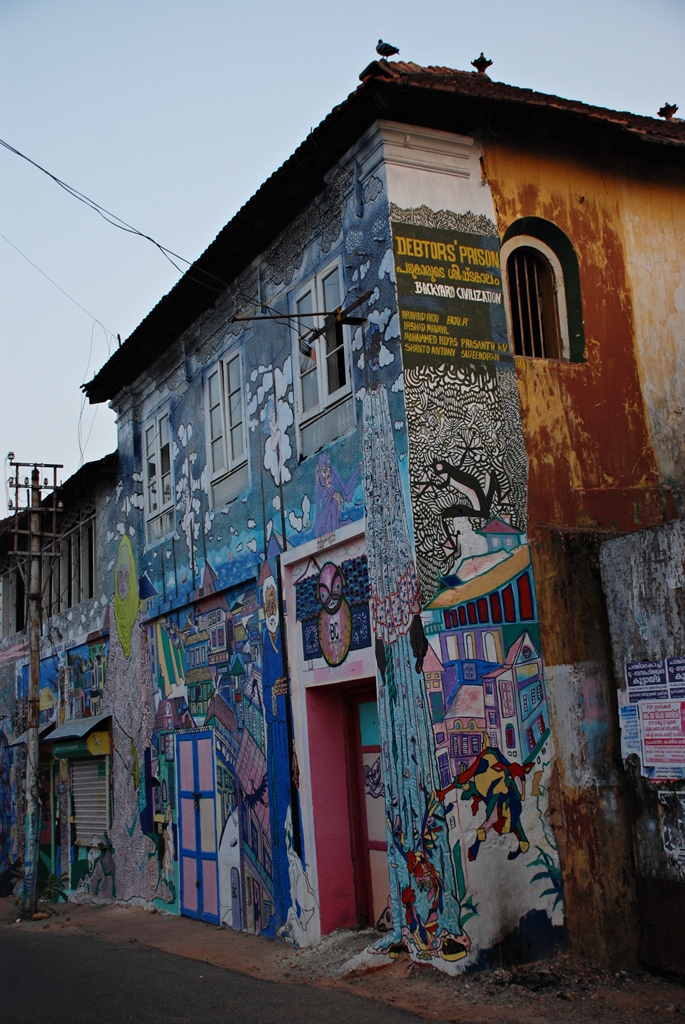
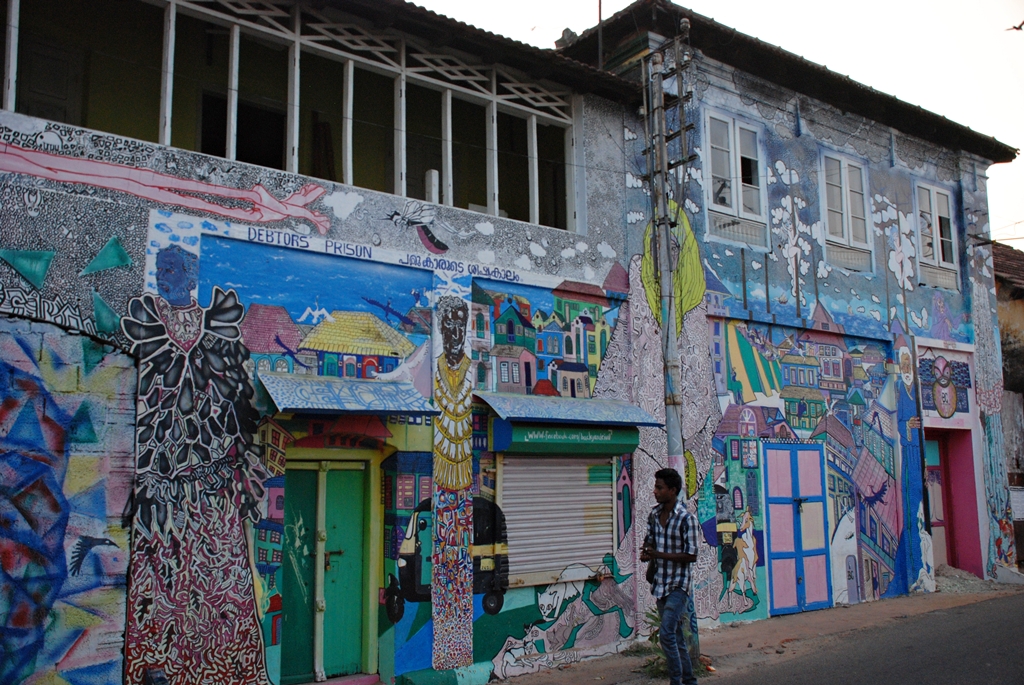
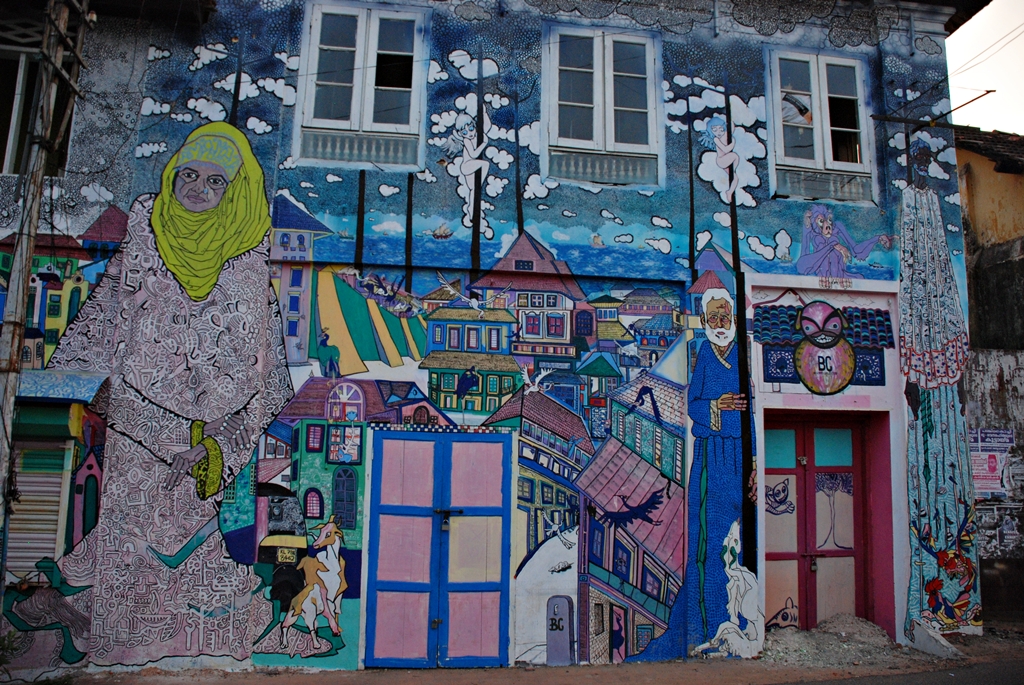
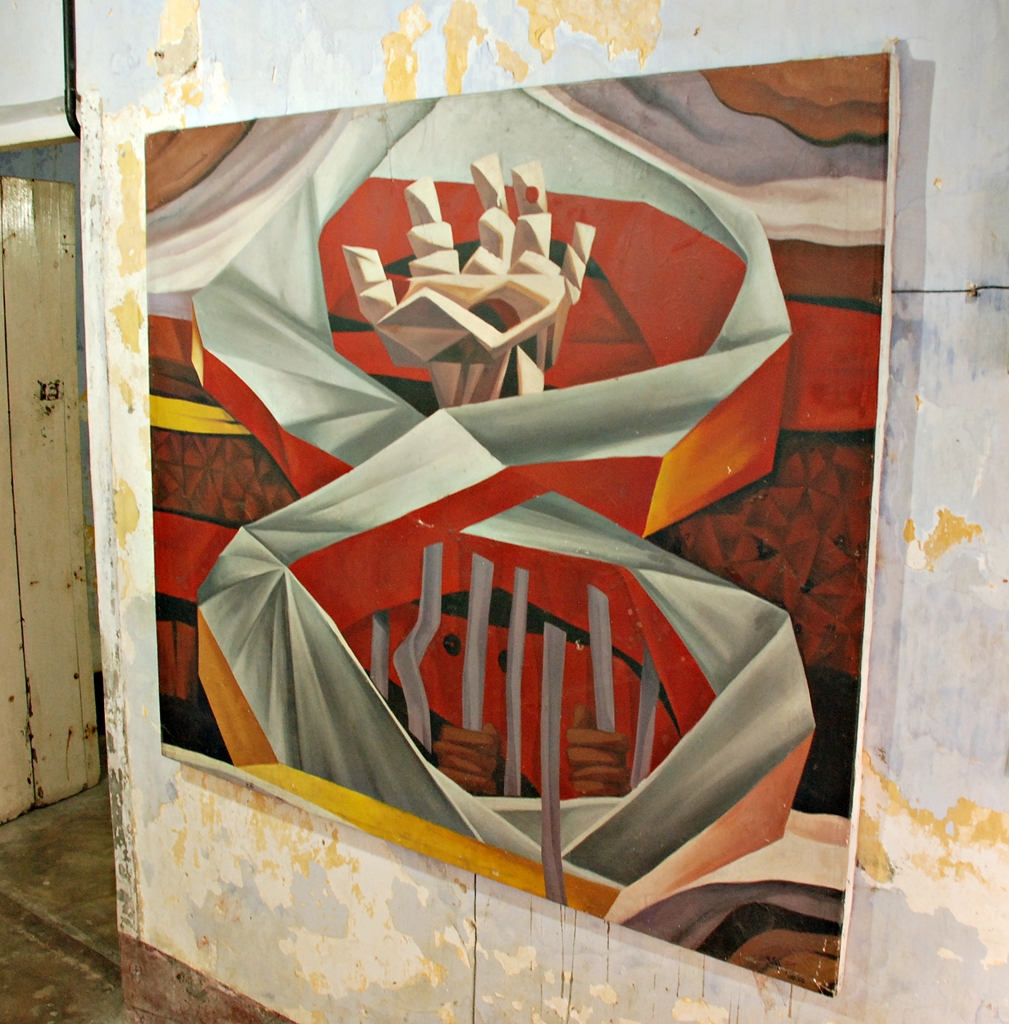
We saw a building in Fort Kochi with a beautiful mural painted on it. The work was titled “The Debtor’s Prison”. Curiously, it had Kamala Suraiyya’s image also in it. I am not sure whether this was done as part of the Biennale but it was quite an interesting work.

Kochi_Jan13_ 342

Kochi_Jan13_ 351

Kochi_Jan13_ 356

Kochi_Jan13_ 360

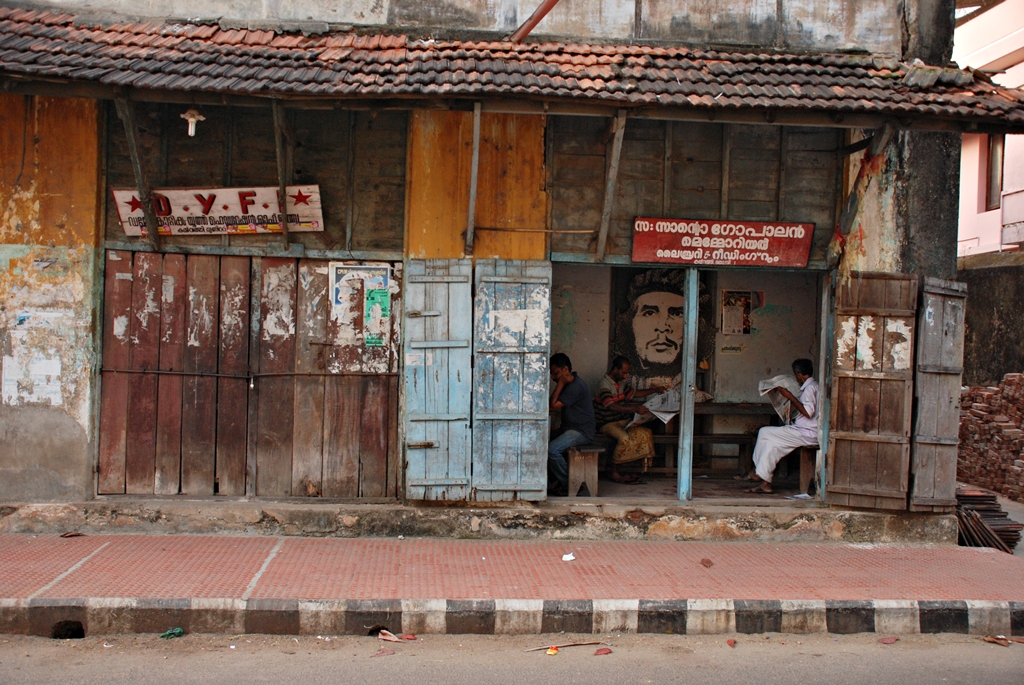
Further along the road, we saw a reading room that is quite characteristic of Kerala. It reminded me of a work that I had seen during my previous visit to the Biennale.

Kochi_Jan13_ 365

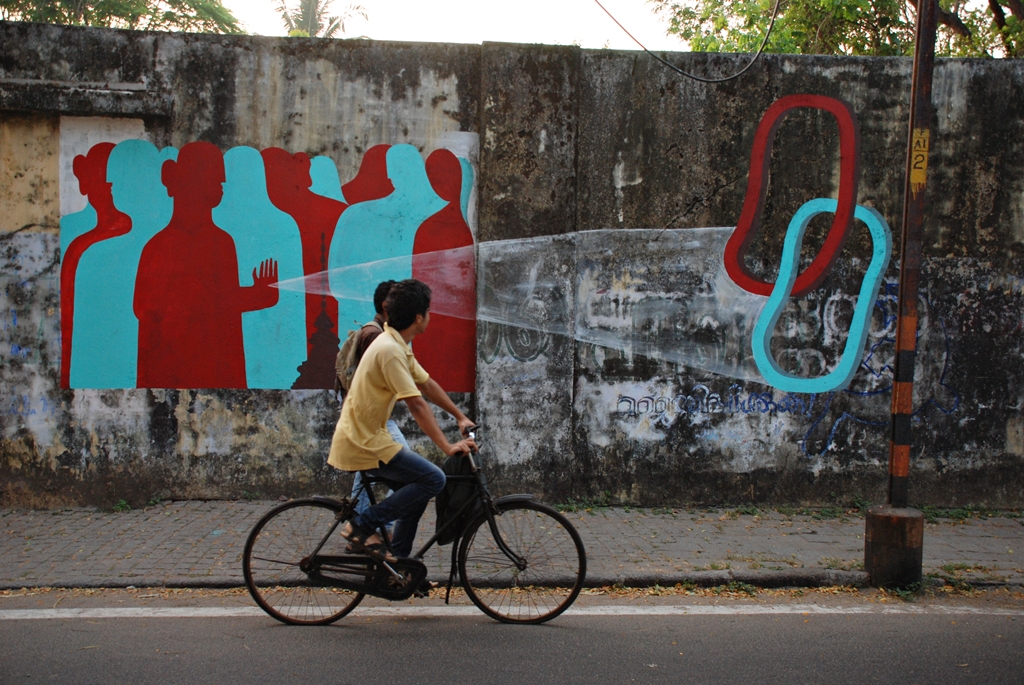
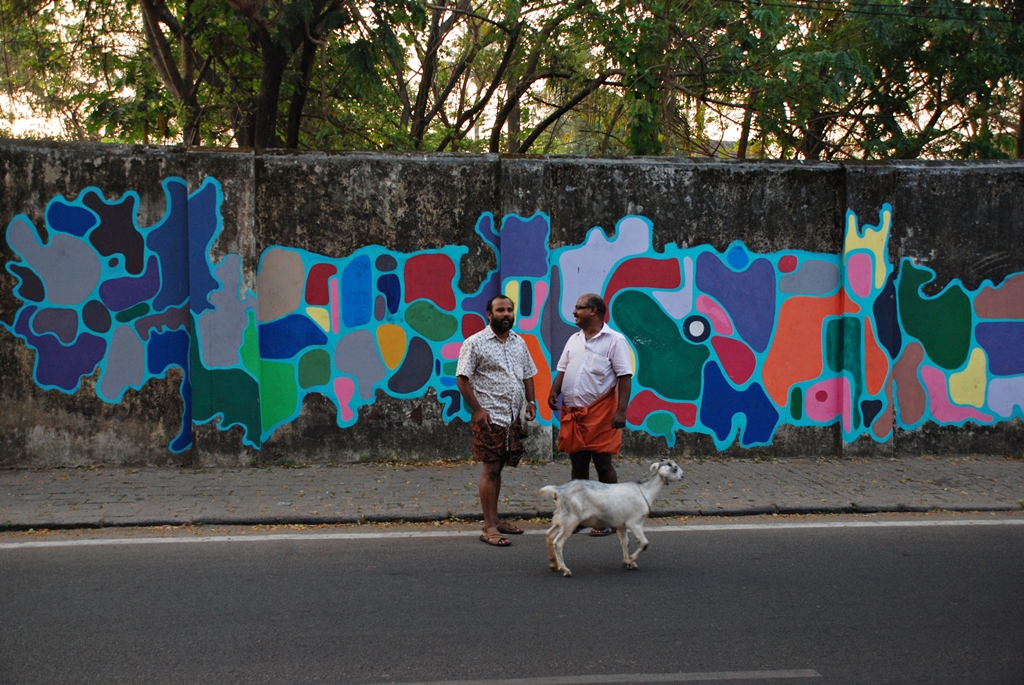
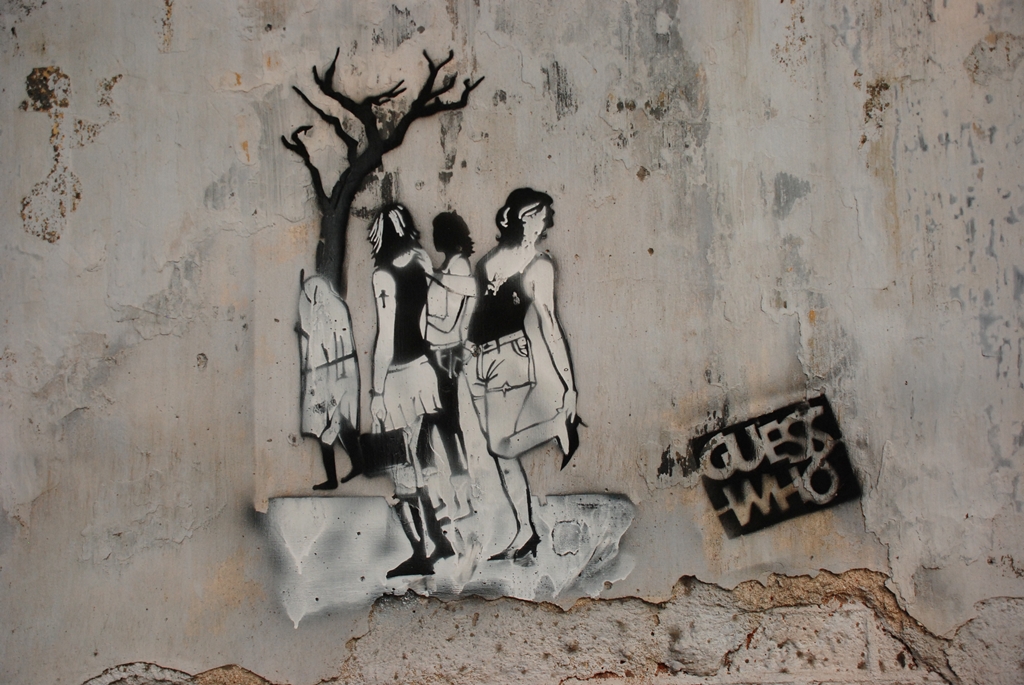
There were many paintings on the walls along the street. I guess most of those were done by people in connection with the Biennale. Some of the graffiti style paintings reminded me of similar work I ahd seen in the streets of London.
Kochi_Jan13_ 371

Kochi_Jan13_ 382

Kochi_Jan13_ 389

Kochi_Jan13_ 406

Kochi_Jan13_ 411

Kochi_Jan13_ 413

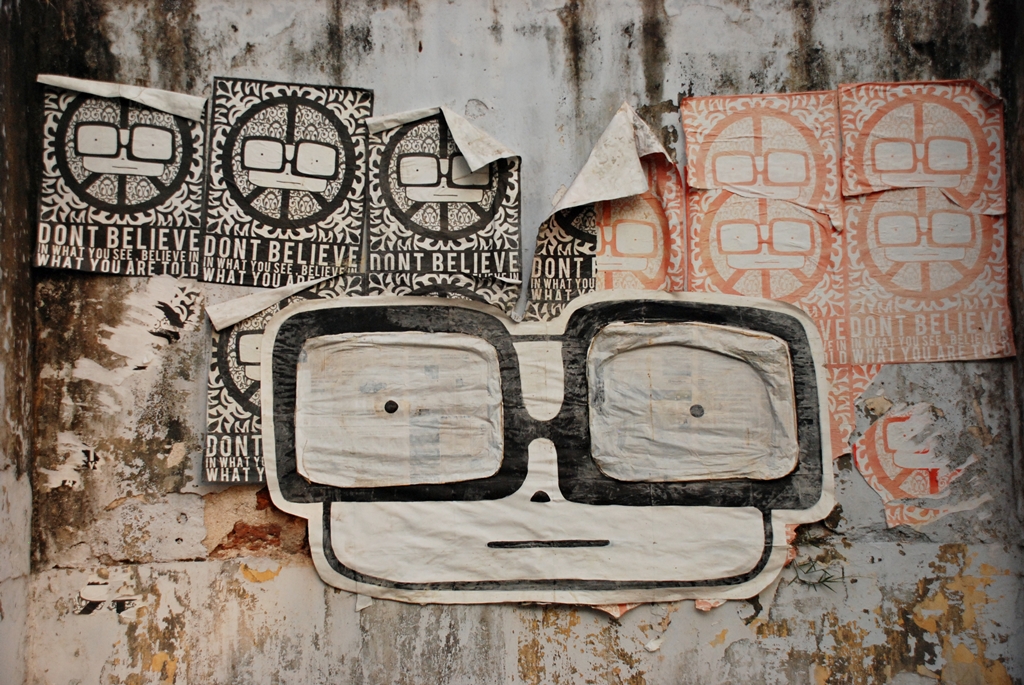
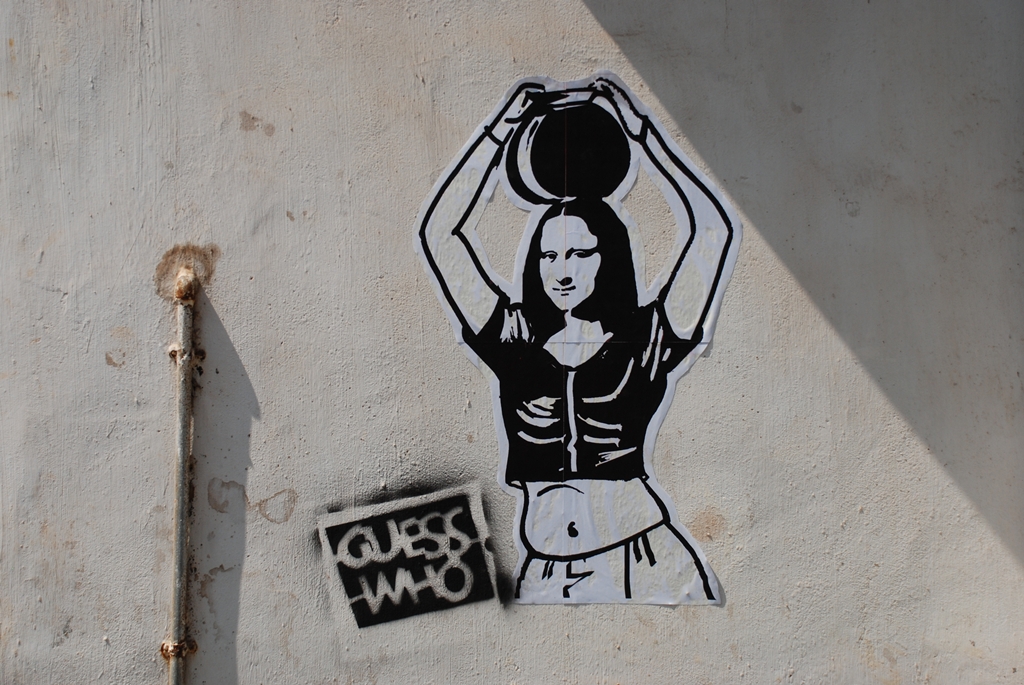
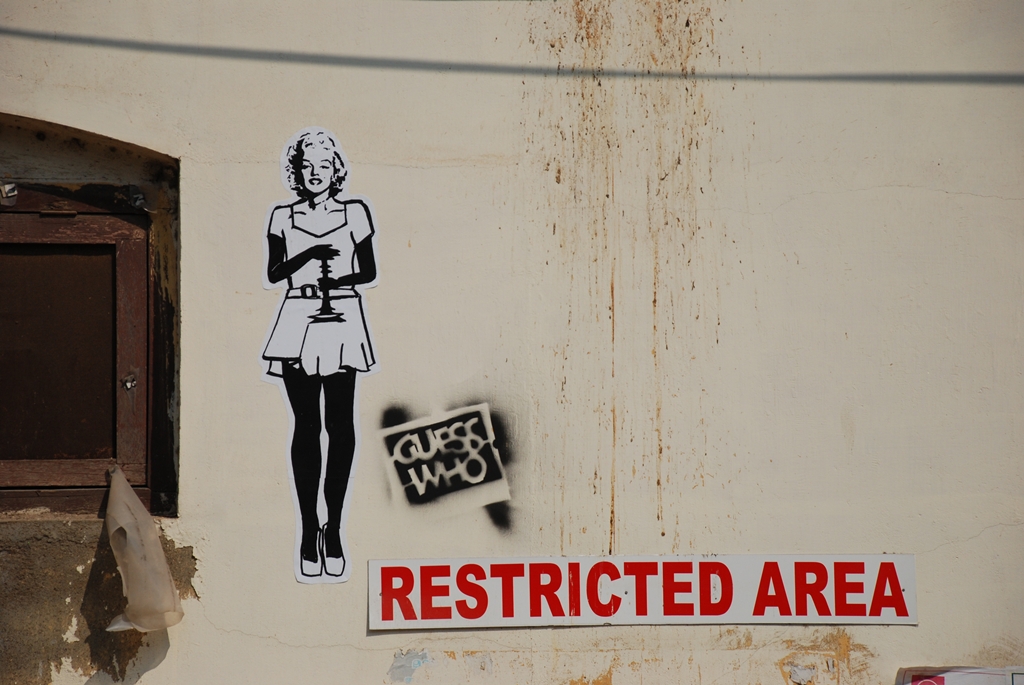
Opposite to these paintings we noticed a series titled “Guess Who” and the images were just fantastic. A poster exhorted one to not believe what one saw but to believe what one was told. The pictures were quite eye catching and later on, we saw some more such images near other venues of the Biennale. There was no indication as to who the artist was, but it has obviously been done by someone who wanted to set people thinking. I could not make up my mind on whether this person was for or against the Biennale.

Kochi_Jan13_ 404

Kochi_Jan13_ 400

Kochi_Jan13_ 393

Kochi_Jan13_ 394

Kochi_Jan13_ 397

Kochi_Jan13_ 421

Kochi_Jan13_ 496

The early morning outing was quite a nice experience and the overall ambience of Fort Kochi and Mattancherry with all those old buildings and all the art work around can only be experienced and not explained.

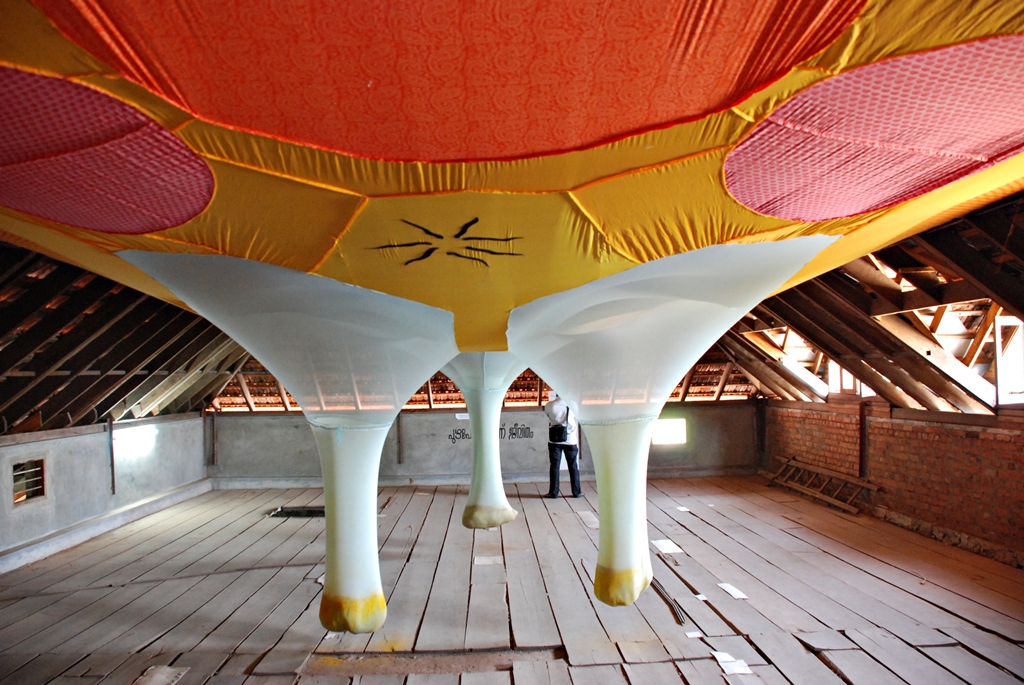
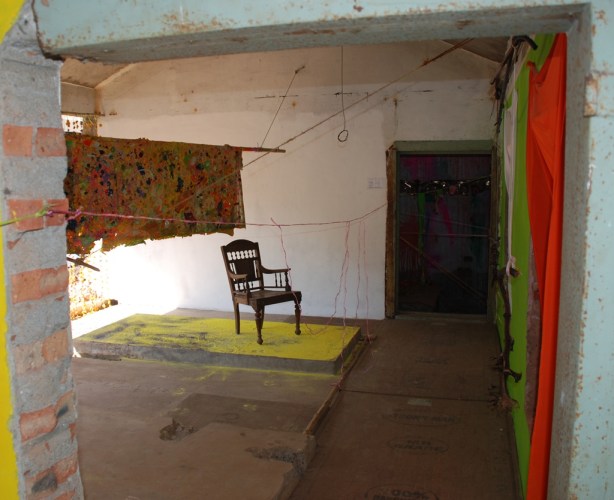
Moidu’s Heritage is yet another endearing venue and we started there in the morning. In the attic there is an installation by a Brazilian artist called Ernesto Neto titled “Life is a river”. It is made up of cotton fabric and sacks of spices are hung in the fabric. Overall, it had conveyed a strange, colourful picture. From some angles, it looked like the udder of a giant cow. This was totally beyond my abilities of comprehension and I drew a total blank. The overall experience was enjoyable but I could not fathom what the artist meant or how the installation connected with its title.

Kochi_Jan13_ 439

Kochi_Jan13_ 442

Since I had not been able to make it to the synagogue last time I was in Mattancherry, I went there to have a look around. Unfortunately, it had slipped my mind that it was a Friday and so, once again, I could not get inside the synagogue. I saw that there was a KMB venue – Mandalay House – on the street leading to the synagogue and I dropped in. It was a venue dedicated to the struggle of the Burmese people against the military dictatorship there. The “8888 Uprising” started on 8th August, 1988 and was put down brutally by the military junta. Sitt Nyein Aye, who was a student and a celebrated artist in Burma, had taken part in the uprising and had flee to India in the aftermath of the struggle. He made a painting with the figure 8, while at Manipur, in 1990. The painting was remade in 2000 and when the organizers of KMB were looking at this painting, they discovered an amazing fact. In their own words: “When we began working on the exhibition, we realized this painting needed restoration as it had a small tear in it. Two conservators Harriet Pearson and Mark Coombs, then living in Bombay, began studying the work. The identified other things, like older re-touchings, splashes of dirt and water that discoloured the red layers, and bird droppings. This led us to ponder the peculiar history of this work. How it had been painted in a small border town, two years after the uprising, and how later, Sitt Nyein Aye had used it in demonstrations and protest marches on the streets of Delhi. This work was never meant for the wall. It had had a life on the streets. That the conservators decided to let the work be, deciding to mend the tear, but leaving this surface intact as a testimony of its history, is a credit to them.” To me, it became much more than a painting when I read this explanation. It was a piece that embodied the resistance of a people denied freedom in their own land, a symbol of the undying human spirit, an object to be revered.
Kochi_Jan13_ 517

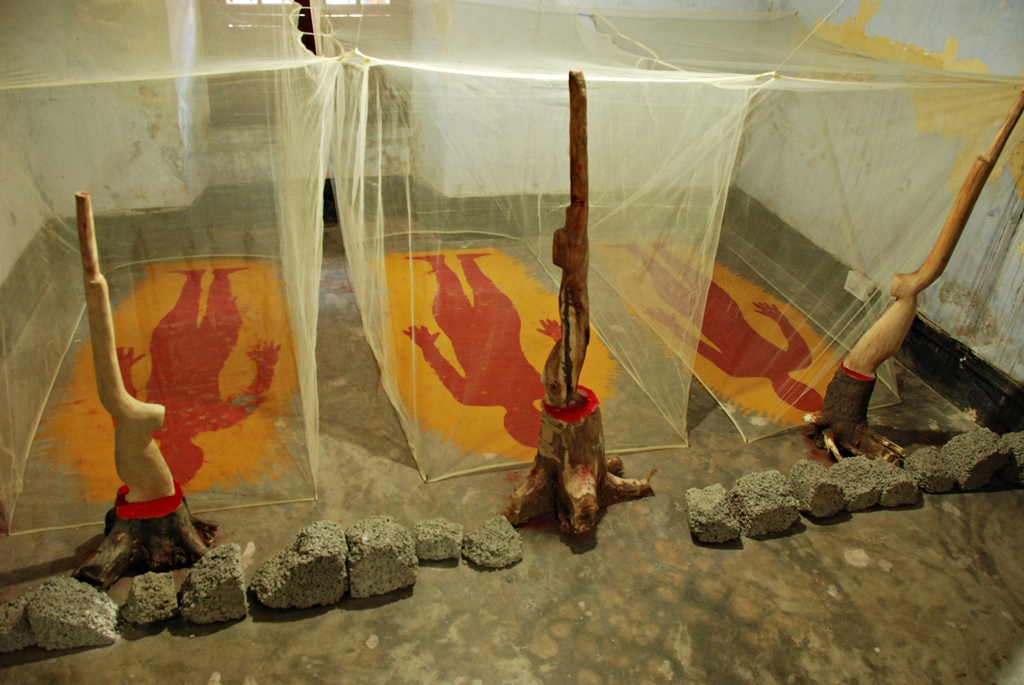
The whole of Mandalay House was dedicated to the Burmese struggle and in the next room was an installation by Htein Lin, called “Dream of a gun-tree revolution”. It seems many Burmese students had crossed into India with the hope that the Indian government would support an armed struggle and give them weapons. Instead, they found themselves in refugee camps with all the associated ills; food was scarce but for some reason they got a lot of turmeric powder. They kept asking for guns but supposedly, the Indian government just kept sending mosquito nets so that they could sleep well. Some students even made guns out of tree limbs for training. Ultimately, the government never sent arms and the idea of the “gun-tree revolution” fizzled out. The installation was amusing with its mosquito nets, wooden rifles etc. Yet, what it showed was the death of a dream. Of course, it is worth pondering whether it was proper for the Indian government to send them arms!

Kochi_Jan13_ 536

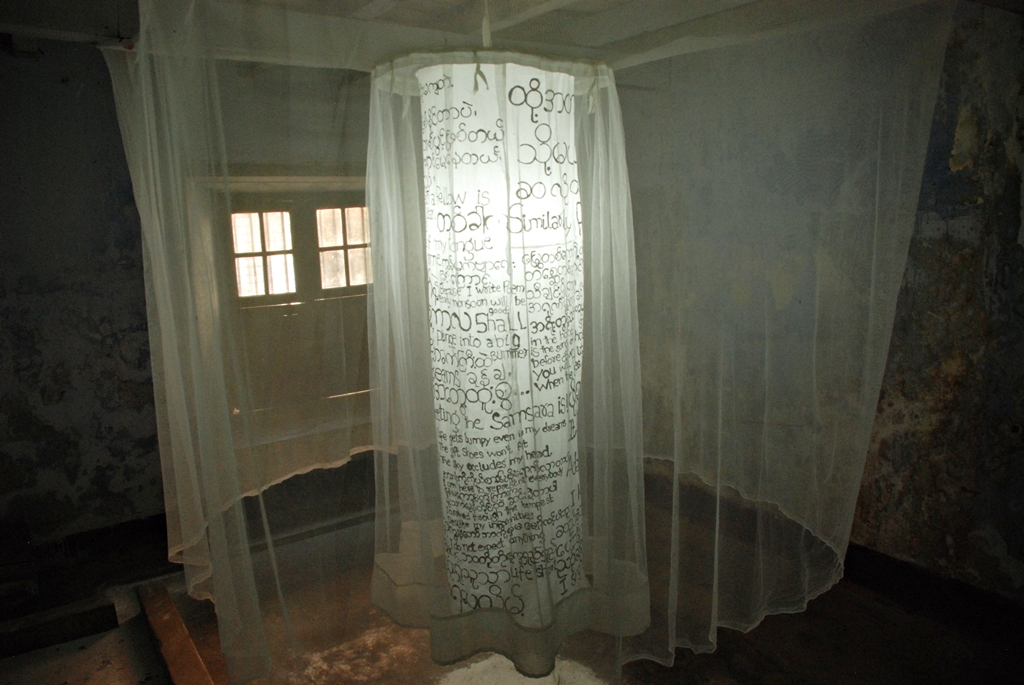
Htein Lin seems taken up by nets. The next installation was dedicated to a book called “Bones will crow” – an anthology of contemporary Burmese poems published in 2012. It is supposed to be a meditative space with text and drawings on the nets, the point being that these stories will not die and will be told, however much they are oppressed.

Kochi_Jan13_ 528

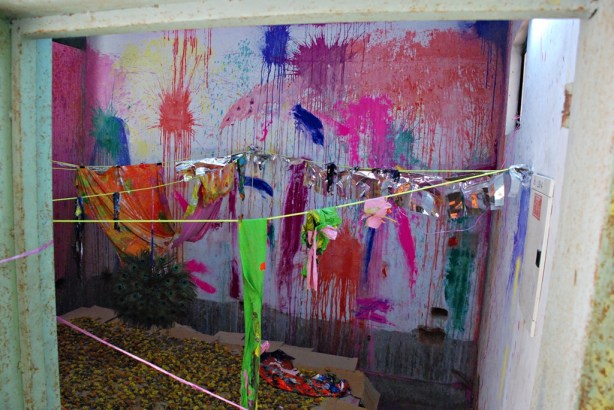
After this, I went back to Aspinwall House as I had seen photos of a fun-looking installation by Zhang Enli that I wanted to see. This was a couple of rooms, the walls of which were painted with water colours. There were some windows through which you could see into the other room. The colours used were bright, fun colours and the feeling was one of gaiety and light-heartedness.

cats_2

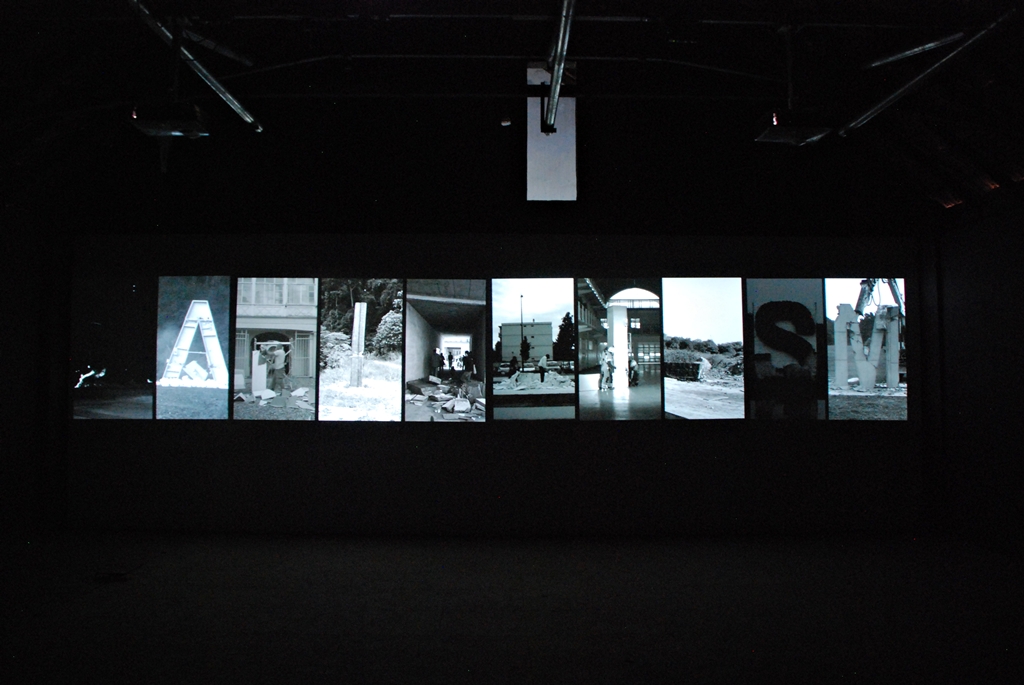
I had been told to watch a video installation by a path breaking Spanish artist, Santiago Sierra. This was titled “Destroyed Word”. This work took two years to make and was made across 10 countries. Each letter of the word “KAPITALISM” was constructed in one country and so it tool ten different countries to make up the word. The materials used were relevant to that country. Each letter was installed and then destroyed using different means. The video showed the destruction of all the letters simultaneously, thus showing the destruction of the word itself. The travails that capitalism is going through currently must have prompted the artist to create this work. Or did he mean that Capitalism leads to globalization and thus the loss of the “indigenous relevance”? I am not sure whether Capitalism would be defeated that easily – it will adapt and move on, with all its cunning. The new avatar is “Conscious Capitalism!” An oxymoron?

Kochi_Jan13_ 596

There were still some more venues to be visited and some more works to be seen even in the venues I had visited. However, all good things come to an end and so too, my visit to Kochi-Muziris Biennale. To me, this was a great event which provided a fantastic opportunity to view many world-class art works. A point that needs particular mention is the selection of venues. Most of the venues were rickety old buildings which conveyed great character. Indeed, these buildings are remnants from a time when commerce was centred around maritime trade in Kochi. I doubt whether the ambience would have been as appealing as this had the venues been sleek, modern buildings.

In these times, as our society seems to fall lower and lower in matters of ethics and values, I feel that art has a great role to play. This problem can only be solved through an improvement in our overall culture and art and the awakening it creates, is one part of the solution. An event like Biennale is a dire need in Kerala today and to organize such an event, despite all the challenges, is a wonderful achievement that needs to applauded. Bose Krishnamachari and  Riyaz Komu deserve rich praise for staying the course and going through with the event and for all the wonderful work in the curation, selection of venues etc. The Kochi-Muziris Biennale was a cherished experience for me and I thank the organizers for this; it is my fervent hope that the event would be back in this wonderful location in two years’ time.
After much debate and discussion, the Kochi-Muziris Biennale (KMB) opened on December 12, 2012. I had been following the news and had decided to make a visit. A few months back, I had visited one of the sites of Sydney Biennale and was curious to see how we would fare.

Art and its modern movements had been largely alien to me in general. I was always a bit curious on what these scribbles and strokes were about and it started getting the better of me four or five years back. At that time, I connected back with an old friend, Jayaraj, and I had frequent discussions and arguments with him and his wife, Sripriya, about the art pieces that we saw when we visited museums like Tate Modern. I started from whether these could be called works of art in the first place. Soon, Jayaraj introduced me to one of his artist friends, Murali Cheeroth and Murali too became a victim of my constant barrage on this matter. Through these discussions and the patience of the trio, I started to realize how art has become much more socially and politically committed and relevant in these modern times. I started to realize why it is important to know the various happenings in the society that the artist lives in and his or her reactions to those, their political positions etc. to fully understand their art. I started to realize why it is important to have clarity on my own thoughts and positions to better appreciate modern art. I also started to understand that seeing more and more art and assimilating what one can, is very important.

The main venue of KMB is Aspinwall House, in Fort Kochi. This is set in a very picturesque location, by the water. Such old abandoned venues are perfectly suited for this sort of an event that invites participation by the public. The first exhibit that we viewed was a video installation by Justin Ponmany called “Done and Dusted”. I cannot say that I understood much of this despite the introduction provided at the door of the hall. So, I started out right, being bewildered!

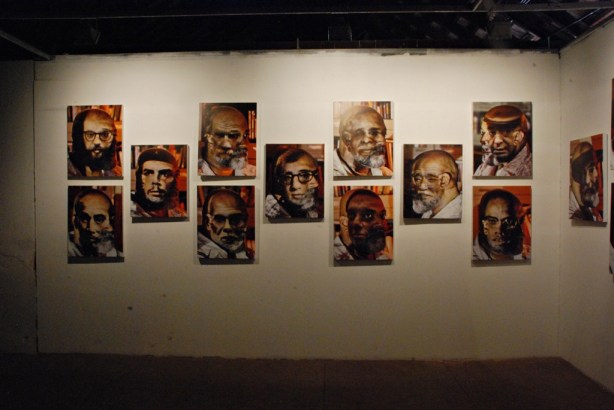
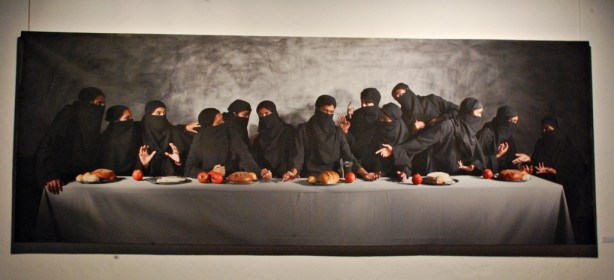
In the very next hall were two photographs by Vivek Vilasini. The first was a series of photographs which had Vivek’s own face juxtaposed with faces of famous personalities like Gandhi, Che Guevera, Sree Naryana Guru, Mother Teresa, Ambedkar, Vaikkom Muhammad Basheer, VKN etc. The whole impact was quite interesting and it was well exhibited. It made me reflect on the various influences in my own life. The next was titled “Last Supper – Gaza” and the visual impact itself was quite stunning; not to speak of the emotions and thoughts it stirred up. I could not but marvel at the imagination of the artist and his ability to bring together these thoughts of conflicts and brutality into a frame that denotes such tranquility.

 Kochi Biennale_Dec 2012_ 076

Kochi Biennale_Dec 2012_ 060

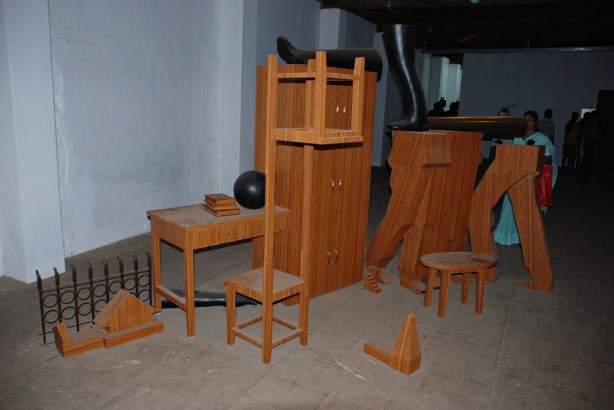
Next was an installation by Sumedh Rajendran, which I have to confess I did not understand at all. It had various legs, tables, inverted chairs etc. but I could not get what was intended and hence did not enjoy this much.

Kochi Biennale_Dec 2012_ 081

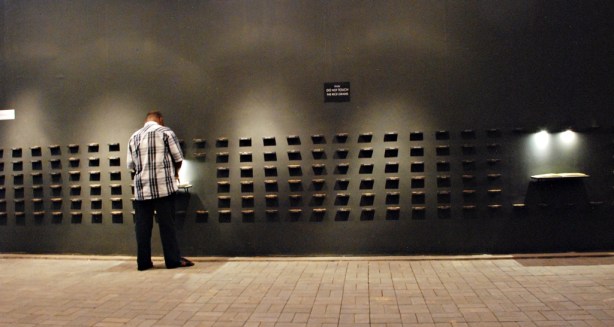
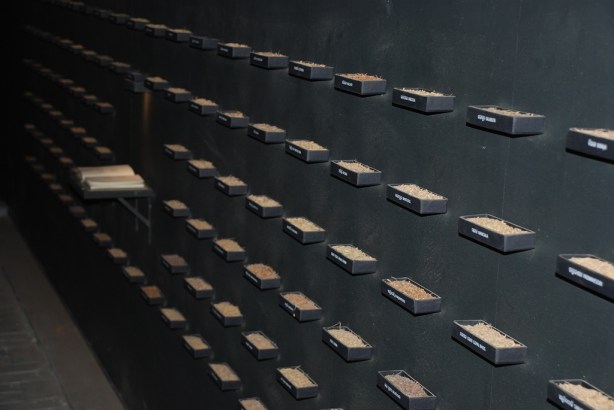
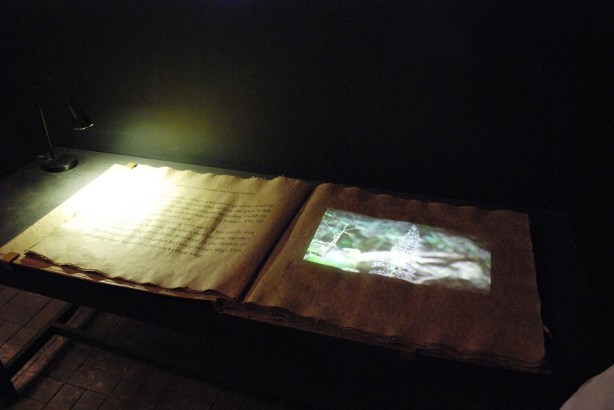
The next section was taken up by Amar Kanwar. I had heard of him but was not very familiar but Murali had recommended it highly and had insisted that I spend enough time on this. The installation is titled “The Sovereign Forest” and it consists of very many things including two movies, books, a seed collection and some photographs. The central theme is about destruction and displacement that happens when large factories and other projects take up the fields owned by indigenous people and it is based on stories from Orissa. As one enters the room, what strikes the eye is a collection of rice seeds. This is arranged in small, open boxes fixed to the wall. 266 varieties of indigenous rice seeds found in Orissa are exhibited here. I guess some of these are extinct while some are still cultivated. If we continue the way we are, most will soon be extinct.

Kochi Biennale_Dec 2012_ 095

Kochi Biennale_Dec 2012_ 087

There are three large books on hand made paper with writing on one page and video projection on the other side. I had never seen a piece like this and it was very interesting. I wanted to go through all the books but could not finish even one book as there were a lot of people around.

Kochi Biennale_Dec 2012_ 101

The story captured in the book “The Counting Sisters and Other Stories” is connected with the movie “The Scene of Crime”. The movie itself is 42 minutes long and I watched it two times. The quality of the video and the shots are amazing. There is no dialogue or narrative apart from the few short sentences that appear from time to time. The sound track is original with sound as present in the scenes being recorded, with no music added. Scenes move along slowly with small gaps between different shots; yet it is a very gripping movie with a powerful story. It reaches deep inside you and disturbs and evokes thoughts about how to have a balanced concept on development. The injustice of and trauma caused by what passes for “development” comes through very clearly. The rape and destruction of our land and our people by the custodians themselves, is hard to digest. What came to my mind was the statement made by the Chairman of Vedanta a few days back on how India could increase its GDP by a few percentage points if it were to “liberalise” its mining laws – the very same Vedanta which has often been accused of completely unfair practices and abuse of the people of Orissa. Even to my untrained eye, it was evident that Amar Kanwar is at a different league as an artist and my friend, who was with me, remarked that he is actually an activist. His socio-political commitment and position appealed to us. There was another short video called “A Love Story” and that also had a similar tale to tell. How soon before the images and sounds that we know of and are familiar with, are gone?

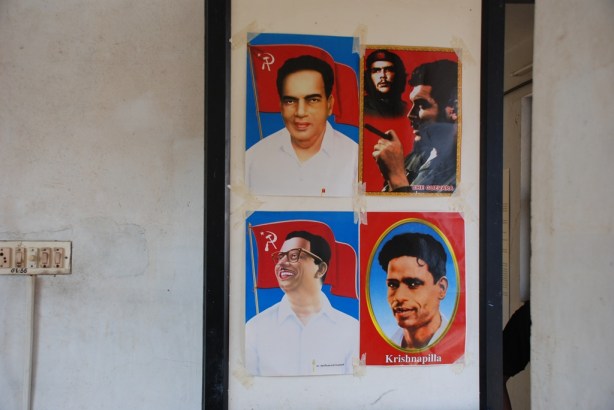
Next, we saw an installation by a South African artist, Clifford Charles, called “Talking Skins”. It was spread over five rooms and each room had a theme of its own. One room was a replica of reading rooms managed by the Communist Party that are seen in many parts of Kerala and one was called “Absence of Labour” and the other three experimented with colours, memories, our sense of protection etc. This one also stumped me and I was totally out of my depths here. I guess my sense of aesthetics needs more work.

Kochi Biennale_Dec 2012_ 109


Kochi Biennale_Dec 2012_ 114


Kochi Biennale_Dec 2012_ 117


Kochi Biennale_Dec 2012_ 123

Kochi Biennale_Dec 2012_ 126

By now, we were starting to run out of time and it was pretty evident that we would have to pick and choose what we could look at before the end of the day and there were three more artists that we wanted to see – Vivan Sundaram, Subodh Gupta and Tallur.

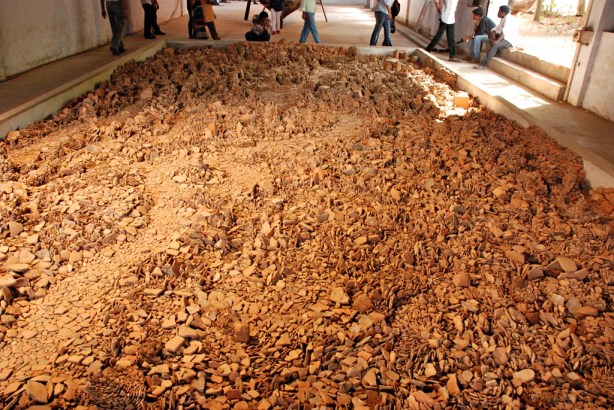
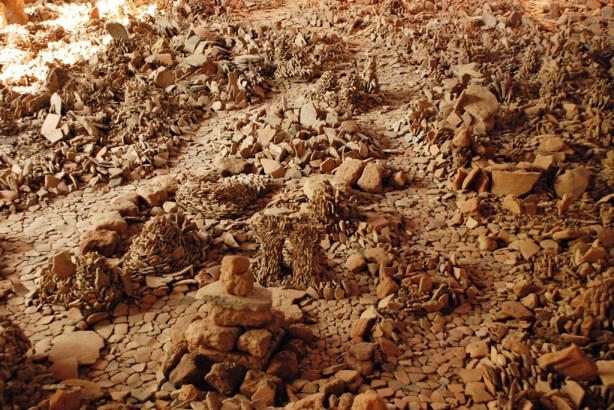
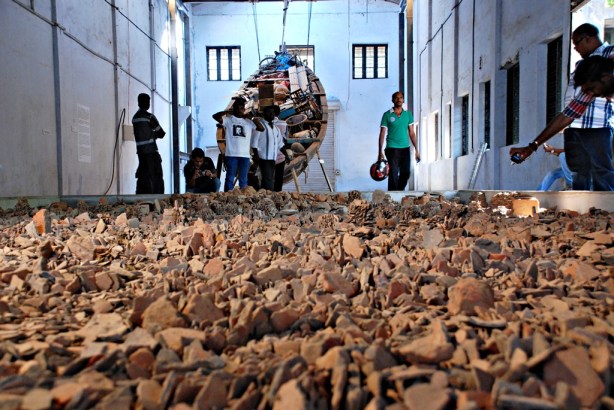
Muziris was an ancient seaport in Kerala that dated back to 1st Century AD. Muziris was a very important town in its time and three major world religions – Judaism, Christianity and Islam – arrived in India through this port. Muziris was destroyed in a major flood in river Periyar in 1341 AD and the exact location of the town was forgotten later. Vivan Sundaram has created a miniature city using thousands of small clay tile pieces dug up from the archaeological site of Pattanam, which is currently believed to be the site of Muziris. This is a large installation laid out in a rectangle of about 25 feet by 10 feet and what struck me first was the enormity of the artist’s imagination. Each piece is not more than two or three inches long and to contemplate such a large installation made of these small pieces, does require a special mind. The “city” has nice boulevards, circles, temples, orderly spaces, clutter, everything. I felt the structures were European, perhaps to show the connection between Muziris and Europe.

Kochi Biennale_Dec 2012_ 140

Kochi Biennale_Dec 2012_ 171

I tried to get a “low” shot by placing the camera almost at the level of the tiles and that image was somehow disturbing to me.

Kochi Biennale_Dec 2012_ 133

I felt that there is more to this work than what I could comprehend and this definitely calls for a revisit. Towards the end of the day, we also saw a video on this work but by that time, I had “art deluge” and so I could not concentrate on that; again, one for the next visit.

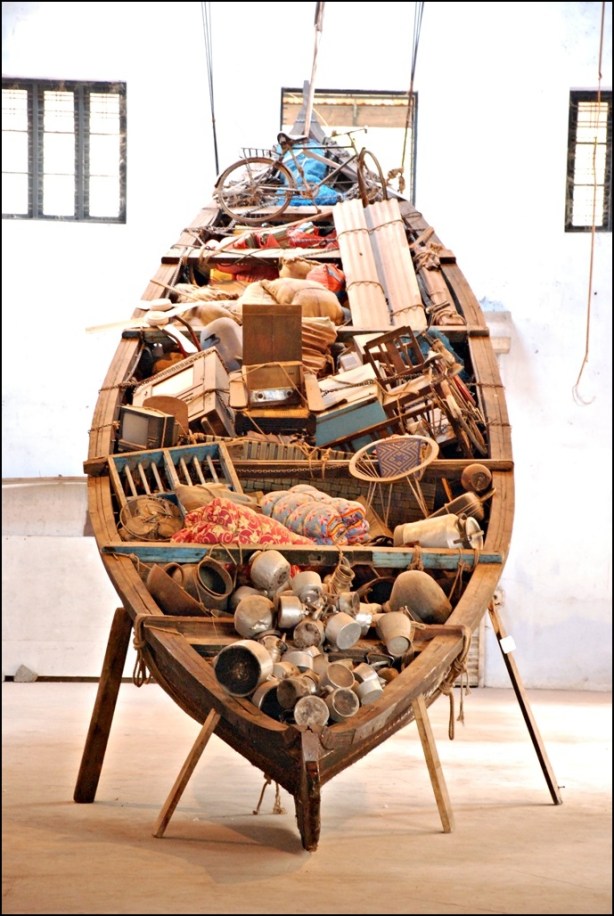
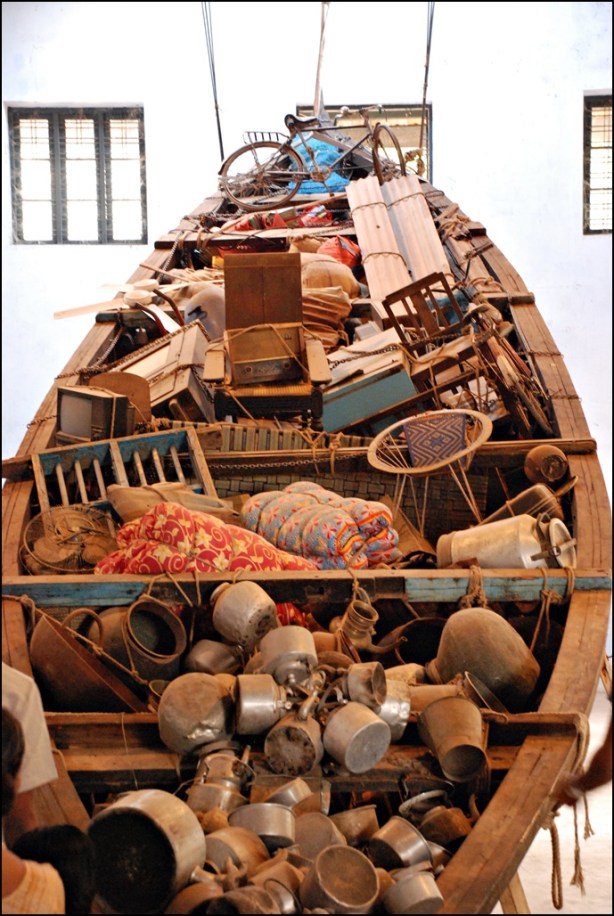
After looking at this city, which was lost in flood waters, you look up to see a massive boat – an installation by Subodh Gupta. It is very difficult to explain the exact feeling that one gets when you see the continuity of the two installations. A city, which one deems to be “permanent” is lost and we take refuge in a boat, which is at best a transitory location. All our material possessions are crammed into the boat. In the boat, we try to create a place of refuge. It conveyed many things to me – our tendency to withdraw in times of hardship, our unwillingness to let go, how we carry on with all baggage from the past and much more. The overall impact was quite significant and we spent a lot of time in that room. The boat is a regular fishing boat and looks quite large, especially within the confines of the room.

Kochi Biennale_Dec 2012_ 144

Kochi Biennale_Dec 2012_ 174

The connectivity between these two pieces of art is stunning and it is very evident why these two artists are so highly respected.

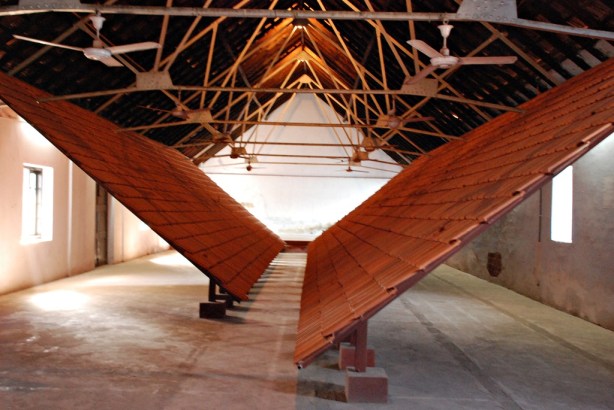
The last one for the day was an installation by Tallur LN. I had seen an image of this installation in a magazine and was shot from the exact same angle as the photograph below.

Kochi Biennale_Dec 2012_ 202

I could not at all comprehend what this was about and hence had wanted to see it. The explanatory note posted near the installation spoke about how man’s innermost desire is about conquest and that is evident even in the practice of Hatha Yoga, which is about conquering one’s body and mind. The note then went on to speak about how missionaries of Basel Mission set up tile factories to provide employment for the people they converted into Christianity. Later, these tile factories came under the British Government; at the same time, they set up a museum in Bombay and they wanted to create an ethnological collection there and Hatha Yogi figures were also made for the museum. After I read this note and saw the installation from a different angle, it became very interesting. I felt that this observation by the artist about man’s preoccupation with conquests and conquering is very profound indeed and various thoughts crossed my mind as I walked around the piece.

Kochi Biennale_Dec 2012_ 190

Kochi Biennale_Dec 2012_ 193

Unfortunately, we ran out of time and we were tired as well; though our hearts and minds were full. There is much more to be seen and I would definitely want to go back and spend a couple more days at KMB. The curators, Bose Krishnamachari and Riyaz Komu, deserve credit for putting such a great event together, with so little support from the Government. The opportunity to see the works of so many world class artists in one location is very rare and is indeed a boon for all of us.

I have written only very little about the thoughts, feelings and emotions that passed through me as I watched the art works; I would need many, many pages if I were to do that. Vivek Vilasini brought thoughts about the influences in my life, Amar Kanwar made me think of the dichotomy between development and nature, Vivan Sundaram and Subodh Gupta about the permanency of the transitory and vice versa, Tallur about our deepfelt need for conquest and so on.  It is quite possible that the thoughts and ideas that came to my mind had no connection with what the artist intended but that is fine as what counts is my interpretation and the value I derive from the experience; that is the beauty of art and the space it provides. KMB was a very singular experience indeed and I hope to return to view the rest of Kochi-Muziris Biennale 2012.

21 October 2012

We flew into the Port Blair airport a few minutes late and so it was a mad rush to catch the catamaran ferry but we made it in time. The ferry trip lasted about an hour and a half and was very comfortable and we arrived at Havelock quite rested and relaxed. It was half past four by the time we checked into our resort (Barefoot) and it was twilight already. Andaman Islands are about 10 degrees east of India’s time meridian and so the sun rises and sets very early here. The resort looked very comfortable and we spent the rest of evening just exploring the place.

22 October 2012

We got up fairly early and went to the beach, which was just a few minutes’ walk away. The beach was totally deserted and looked lovely with very nice, white sand. I clicking away like mad and as usual, only a few came out well.


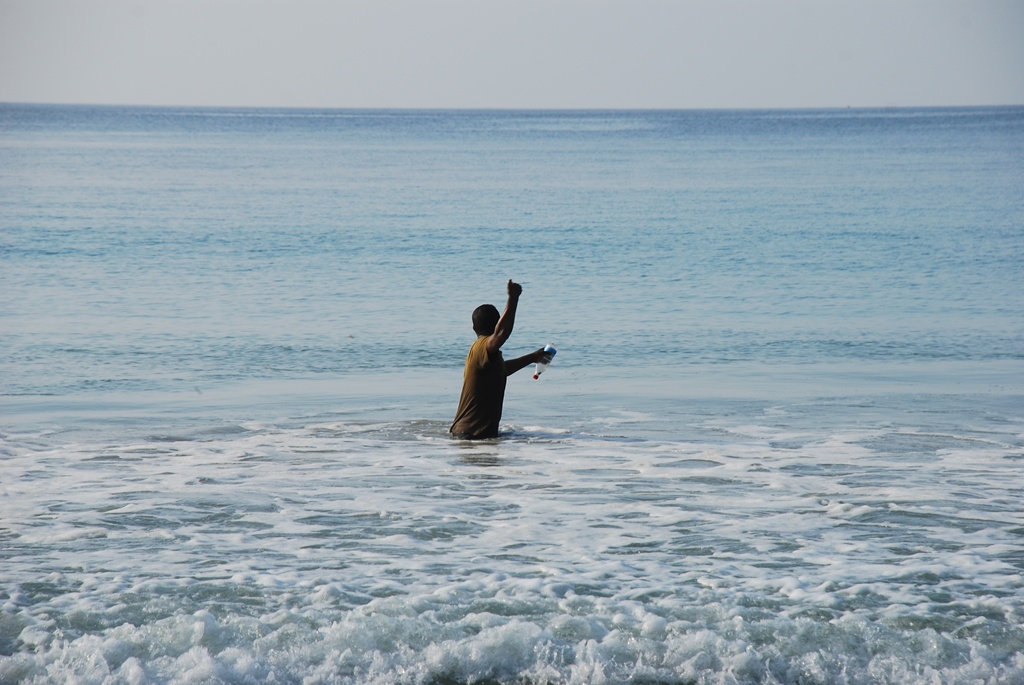
The beach was very clean and the water was very nice too. This is said to be the best beach in Havelock Island and bagged the award for the best beach in Asia in 2004. In Havelock, beaches are numbered and this the No. 7 beach, also known as Radhanagar beach. As I was walking on the beach, I saw a person fishing, by just standing on the water and casting his line out. It was a bit surprising to me that one could catch fish so close to the beach and he said he does get some.

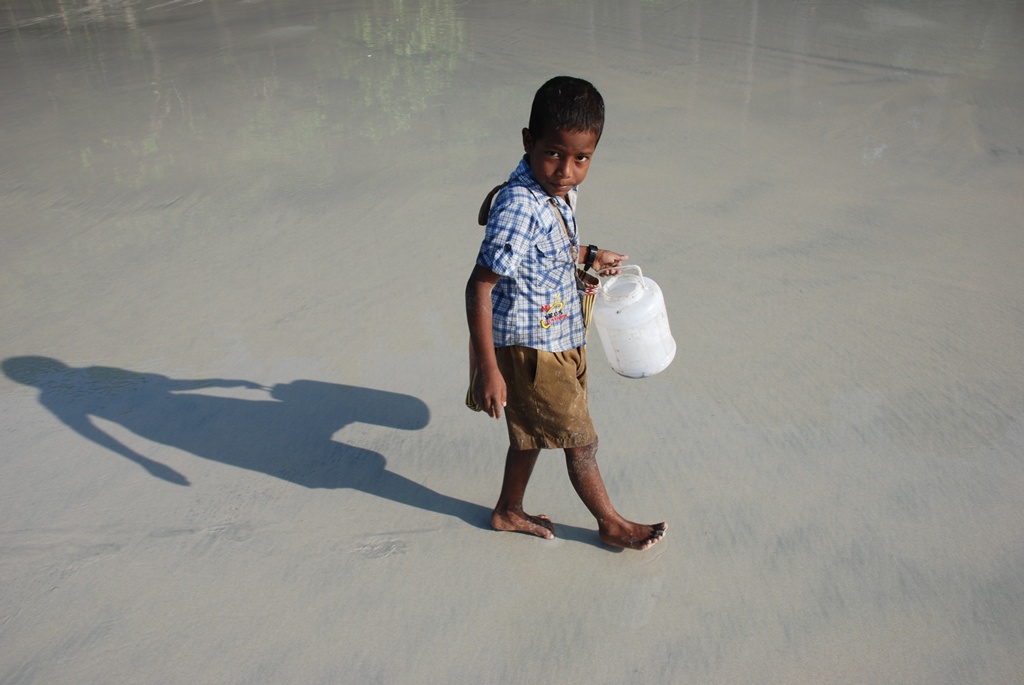
His son had the job of preparing the bait and he was busy killing small fish and other stuff one finds on the beach and putting them into a container. His name is Sagar Malik and he told me that the container was for the bait and the bag for the fish his father would catch. He is in class four and goes to a school nearby.

Sekharan was not feeling very well in the morning because of his fever and so he and I went to the Primary Health Centre in Havelock in the morning. Half a litre of saline had to be injected into him and so I spent a good bit of time there. The PHC itself looks quite neat and one wing is modern. The ward looked very primitive but was kept reasonably clean. It is in such a situation that one starts to think differently about how life can be in what is considered as paradise on earth. In this island of 10,000 inhabitants (tourists not included), there is but one PHC with one or two doctors. For people like us who are so used to meeting specialists at the drop of a hat, this is a different experience indeed. I was very impressed with the doctors and the nurses who have to be able to cope with many emergencies. They have to be really jack of many trades as the nearest specialist is at least 90 minutes away by boat. Being a government facility I am sure that they would also be short of funds and supplies but I was very impressed about their attention to our case and the care they took. My respect for nurses and doctors in the government service went up a few notches, especially for those that are willing to serve in such places as these.

While waiting at the PHC, I met an old gentleman by the name of Sarkar. He was about 65 years old and was at the PHC because his wife had suffered a heart attack about a week back. He told me that this was her third attack and he did not expect her to survive and so he was just waiting for the end. I was touched by how he stated it as a matter of fact. I felt this was not because of want of affection but because he was a very practical sort of person; he looked like a survivor to me. He told me he had been married for forty years and had three children, all of whom were away from home. He was originally from East Pakistan (Bangladesh of today) and came to Calcutta fin 1971 or studies. During his graduation days, he was disturbed the inequalities that he saw – both economic and casteist – and was attracted to Charu Majumdar and his brand of Naxalism. Later on, he got a job with Bangladesh government and later, moved to Andamans and started a tailoring business. He did not look very well off but there was a quiet confidence and conviction when he spoke. The conversation was very lively and he was very well informed on the latest issues including nuclear power and matters associated with that. The nurse was disturbed that he wanted to go out and buy his ration when his wife was lying in such a state when the end could be any time. The response was that life has to go on but the nurse could not come to terms with it. Somehow, I felt a lot of respect for this old man who seemed to take life as it comes and looked unafraid and unbowed at what was being thrown at him.

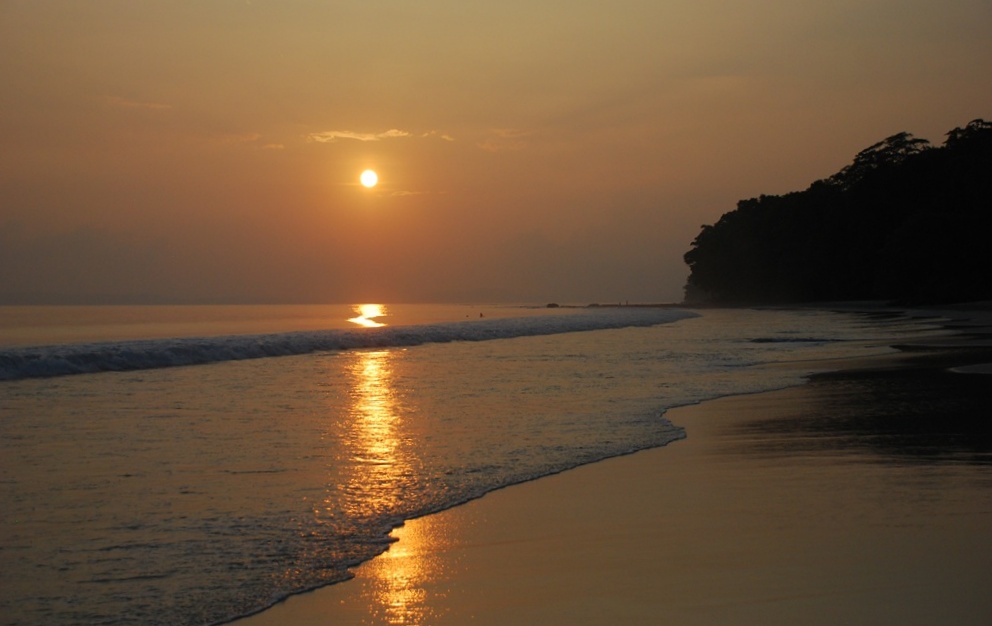
The evening was spent at the beach watching a glorious sunset. This is indeed the best beach I have been to and it is amazing how clean and good it is. Even I, who is not too much of a beach person, was highly impressed.

23 October 2012

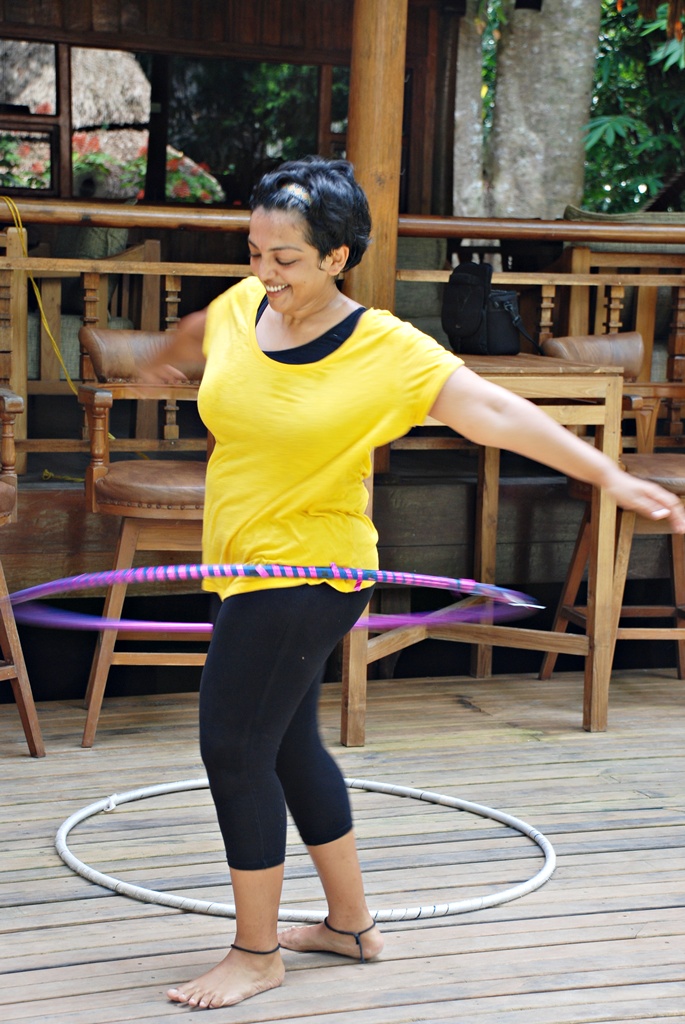
We spent the morning hanging around the resort and taking it easy. There were a few shops around the public beach area and we went looking to see what they had to offer but there was nothing interesting. At the resort, there was a lady named Christabel performing with hula hoops. She was very good and more importantly, seemed to really enjoy the dancing. It was very enjoyable to watch and many of us also joined in with Athira and Bindu being the standout performers in our group, after some coaching. She is from Pune and is spending some time at Barefoot. I was very impressed with how she seemed to really be committed to her dance and how she seemed to enjoy it. To be able to immerse oneself fully into one’s art is a great ability.

We had planned a trek in the jungle after lunch but it was just seven of us as the trek was expected to be a bit taxing. In reality, it exceeded expectations and we were just glad that the really young had stayed back at the resort. We went up a hill called Japanese hill, which was used as an observation point by the Japanese during the Second World War.

The hill was quite high and the climb was very steep and through thick forest. It was impossible to make out the path and we would have been totally lost, but for the guide.


It was quick march but Bharath and Adityan handled it very well. The descent was tougher but the trek was very enjoyable indeed. As we walked through the forest, I could only marvel at the skill of the indigenous people who thrived in such circumstances. We all felt very happy that we had taken the time off for this trek and arrived back at the resort, happy but tired.

24 October 2012

We had planned to do snorkeling before lunch but we had to cancel it as Bharath was not feeling well. Some of our group could make it and they reported that it was fun. We spent the entire morning lazing about in the resort. It was also drizzling on and off and every looked even more green and clean after the rain.

After lunch, we caught the ferry back to Port Blair and by the time we arrived, it was evening and the sun had set.

25 October 2012

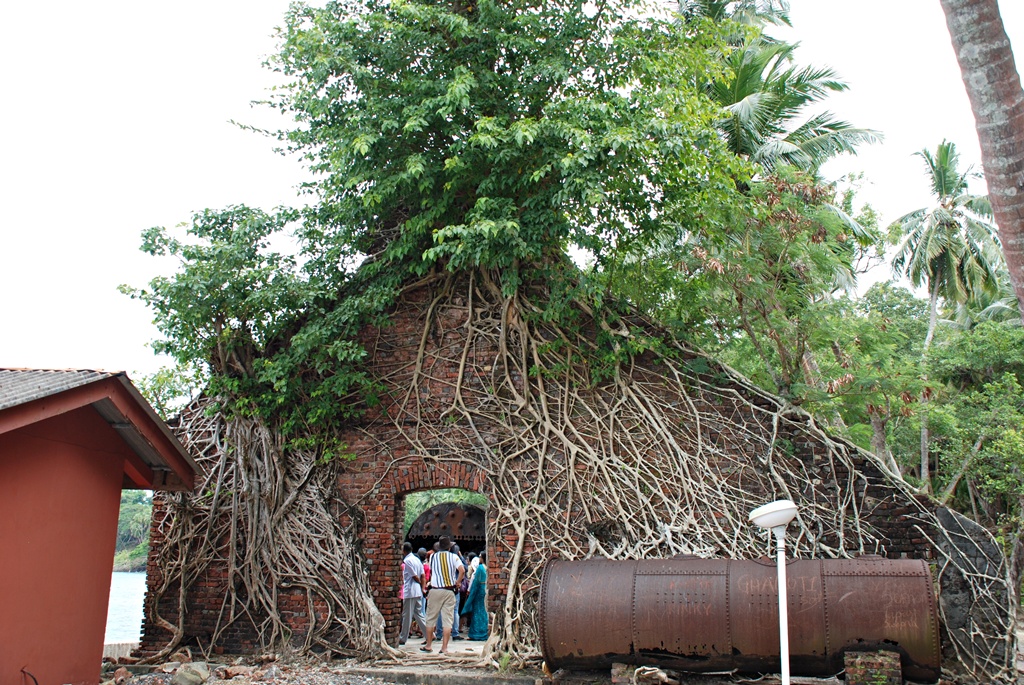
We visited Ross Island in the morning. Ross Island was the head quarters of the British in Andamans and it is just 20 minutes away by boat from Port Blair. It had all facilities for comfortable living with bazaar, bakery, church, tennis court, swimming pool etc. This island was captured by the Japanese during the Second World War and they tore down many of the buildings to use the materials for constructing military establishments. Netaji Subhash Chandra Bose visited Ross Island at that time and the Indian tricolour was hoisted for a few days. After the Japanese surrendered, the British did not return to Ross Island and it was abandoned.

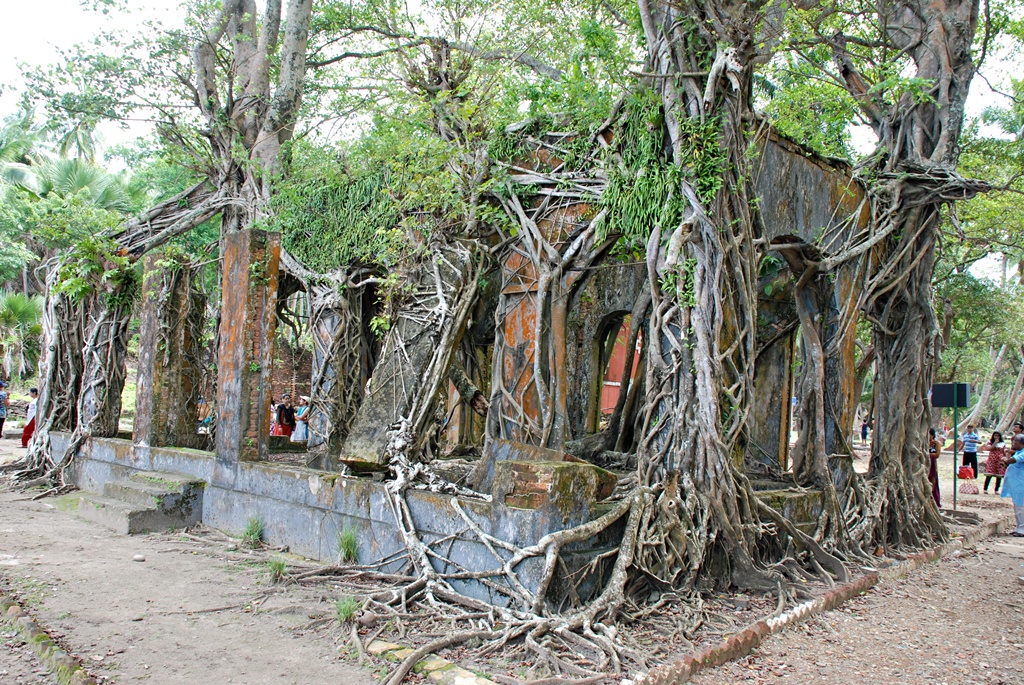
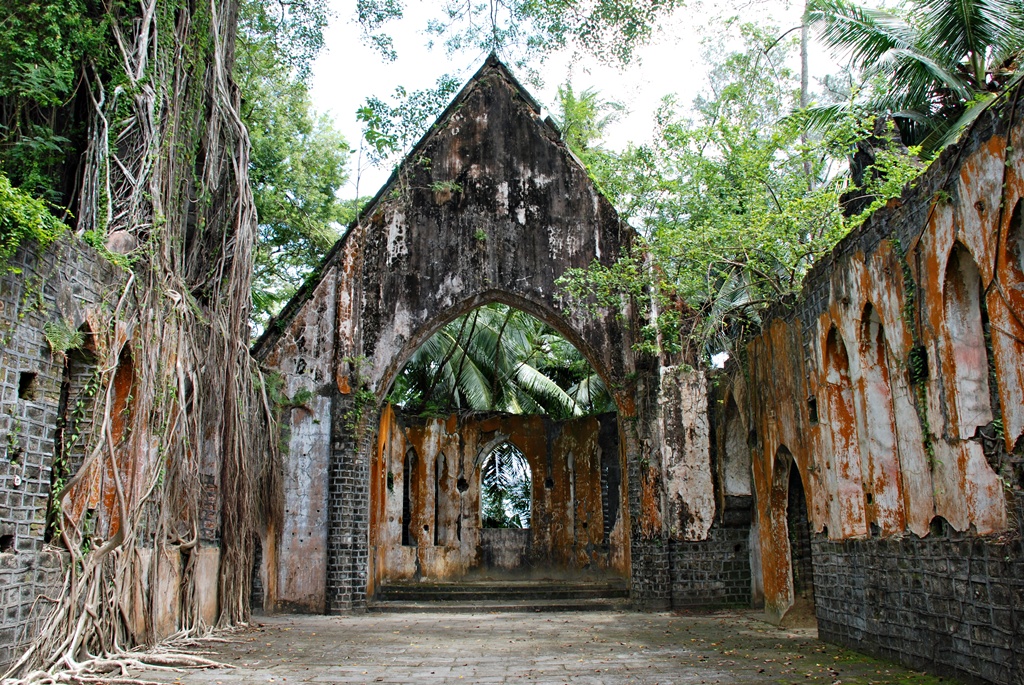
As happens in such situations, nature has reclaimed its property. Now, there are huge trees and with strong roots that have totally taken over the dilapidated buildings. Many of the buildings are covered by the aerial roots and it is a very strange sight indeed.

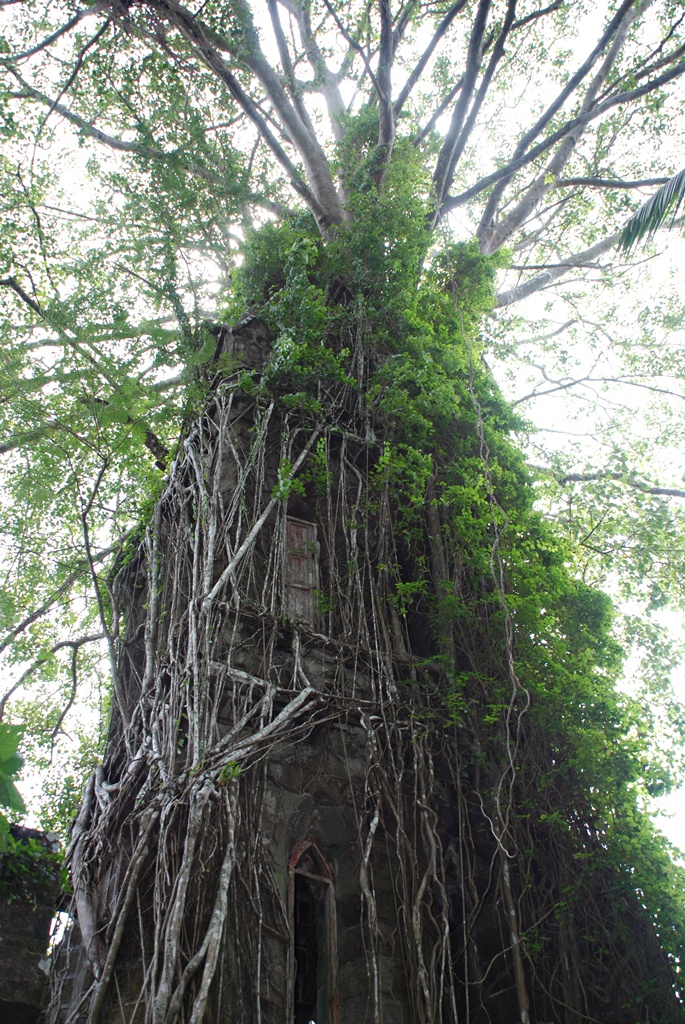
There is a very nice looking church on the highest point in the island. The roof is gone but the walls are still intact. The bell tower is still standing but a huge tree is growing on top of the bell tower and its roots have reached the ground after traversing the entire height is the tower. My estimate is that the tower is about 60 feet tall. It almost looks like the tower was built into the tree like a tree-house. The wooden doors in the tower are still visible and intact.

The whole island is a reminder that nature will win in the end and to keep it at bay is a constant struggle. This is a location that can be developed very well as a tourist location but our inability to showcase what we have is very frustrating indeed. If such a location were in any western country, this would have become a world famous tourism spot.

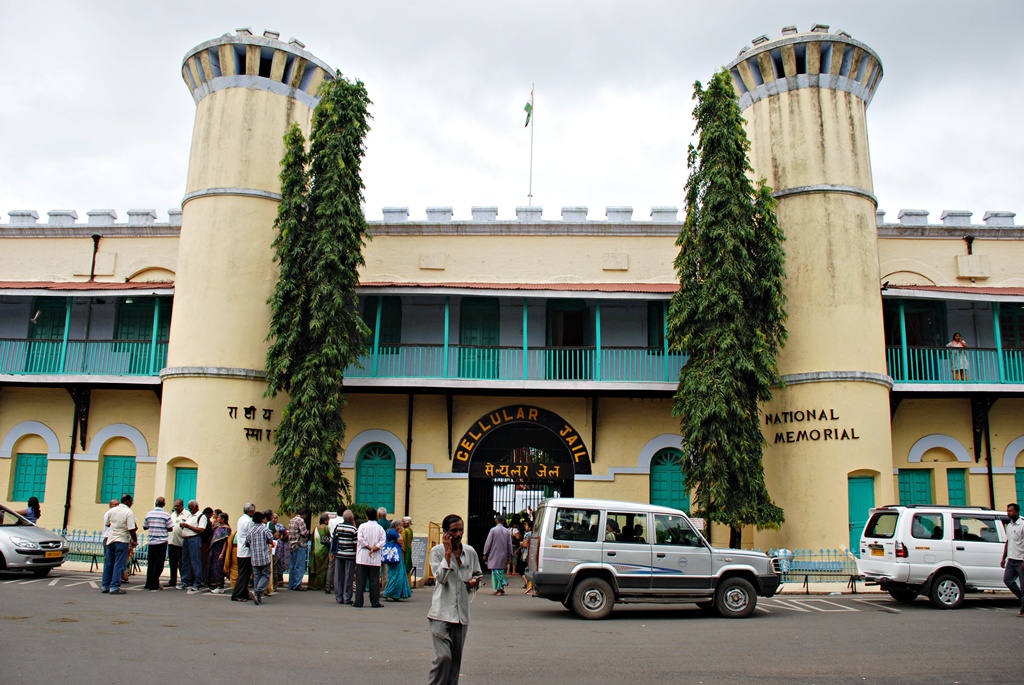
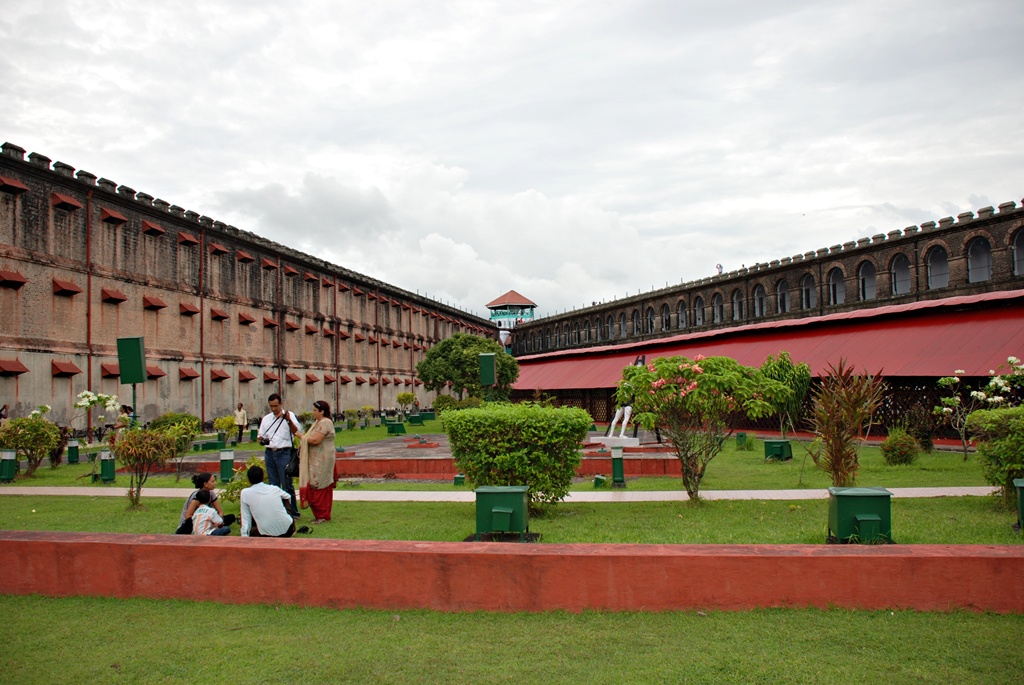
The next stop was the most famous tourist location in Port Blair – Cellular Jail. Andamans was originally developed as a penal colony by the British after the First War of Independence in 1857. Prisoners were first housed in a jail in Viper Island but later a stronger and larger jail was built in Port Blair, called Cellular Jail. This jail is built in the form of a hub with seven spokes. Each of the spokes contained cells for prisoners and were quite long. Today, only three of the original seven wings are still standing.

We had taken a guide and he explained about the gallows and how the prisoners were forced to do a lot of hard work. This jail was built mostly for political prisoners who were exiled from the mainland and after their jail term was over (if it got over and if they were alive after that, I mean), the prisoners were settled in Andamans itself and were not allowed to return to mainland. The most famous personality that was jailed here was Veer Savarkar and the cell where he was incarcerated for ten years can still be seen. I had read that there was a unit of the Communist Party in the jail but the guide seemed unaware of it. The jail is so constructed that one inmate in a cell cannot see into another cell. Each cell looks out to the back of the cell in the next wing and the ventilators are very high and covered with a shade. Isolation seemed to have been an important need of the jailers.

So many lives and dreams have been lost within these walls; so many have given up all they had so that India could become independent. As I stood in the jail I could not but feel that we have not justice to that legacy. We have not used our independence responsibly or wisely and so we still are not fully free; the colour and language of the oppressors have changed, that is all.

Andamans is a testimony to the struggle that India has gone through. It has been inhabited for thousands of years and it was a colony of the Tamil Chola dynasty about thousand years ago. Later, it became a base for the Maratha kings and then the Danish took over. Later on, they sold it to the British. British used it primarily as a location for punishing Indian independence fighters. To be deported to Andamans was considered to be for life and no one returned. No one ever managed to escape from Cellular Jail and most died within those walls. So, to me, Andamans is a reminder of the countless sacrifices and commitment of our ancestors to our country. I could only hang my head in shame as I walked out of Cellular Jail…..


4 June 2012

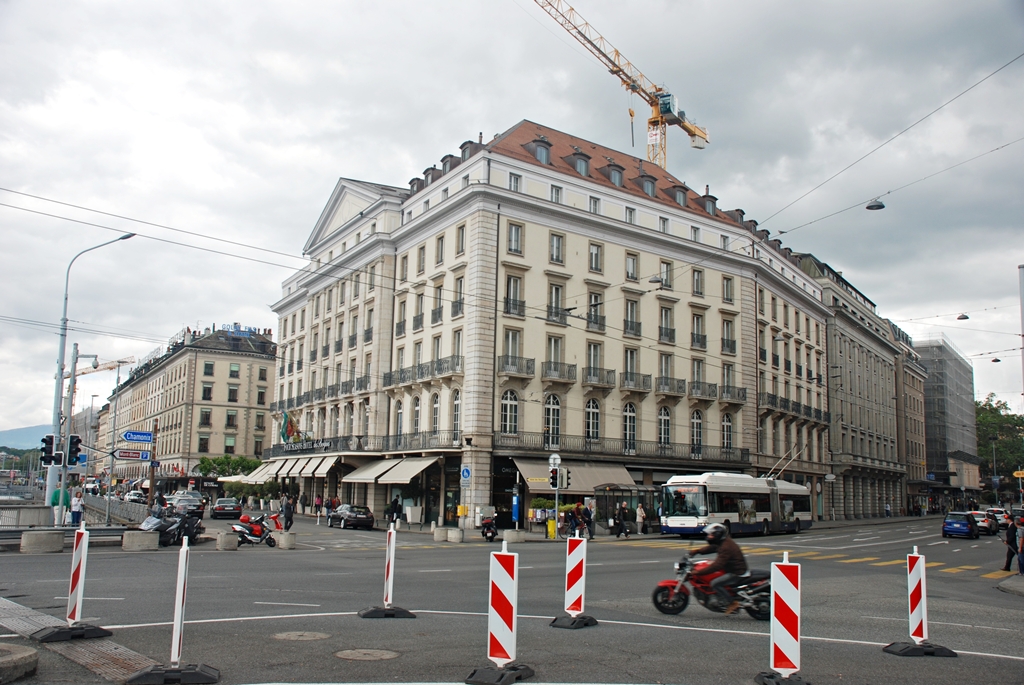
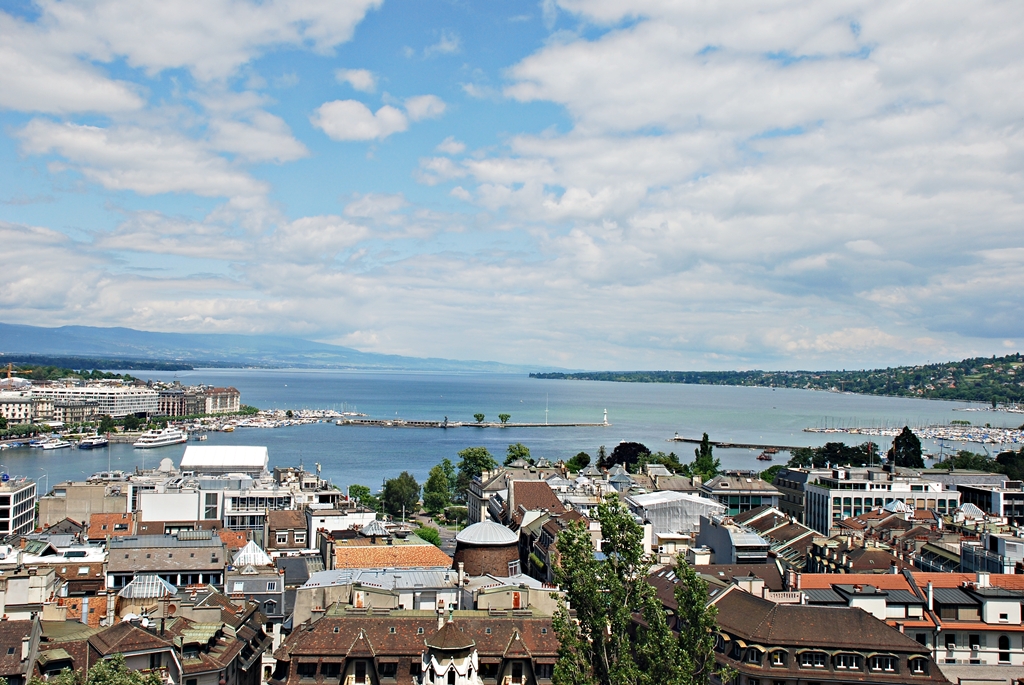
My business in Geneva got over early and I decided to use the opportunity to have a look around. Geneva is a very tourist friendly city. In fact, the city authorities provides all those that stay in hotels with a pass that allows free transport in public transport like trams and buses. This is the first first time I have seen such an arrangement in any city and I have to say that once you get used to the transport systems, this is very convenient especially  as taxis are very expensive.

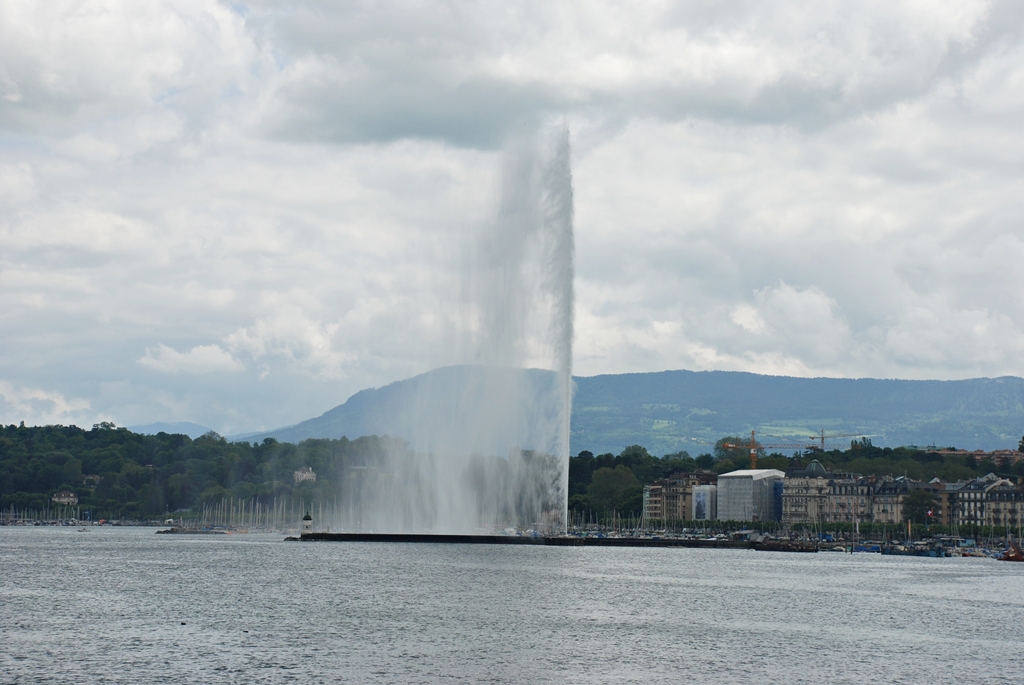
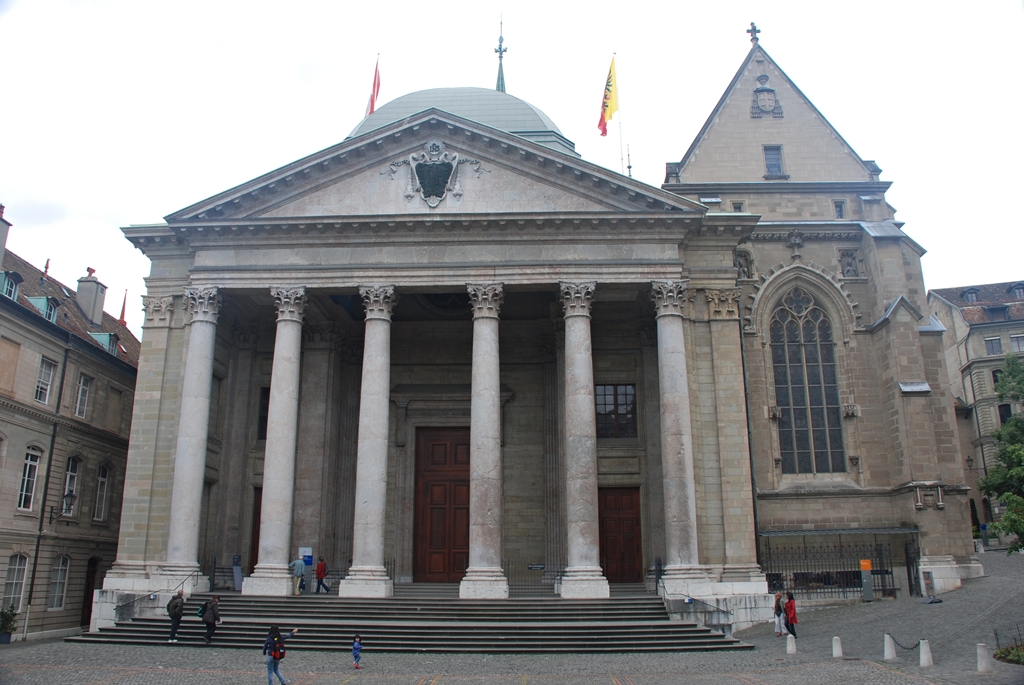
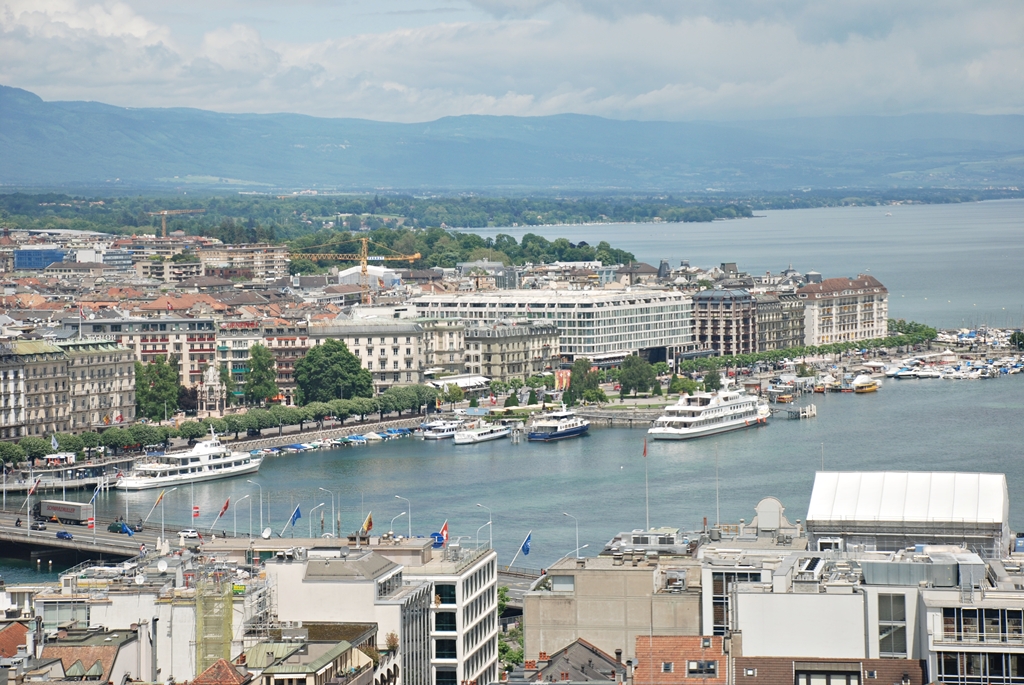
I have found that the cathedrals in most cities have good stories and so my first port of call was the Saint Peter’s Cathedral. It was within walking distance of my hotel and so I decided to walk there. On the way I passed by Lake Geneva with its iconic fountain that rises 140 metres into the air. It pumps out water at the rate of 500 litres per second.

Geneva itself looks like any other Western European city – quite organised and orderly.

Just past the lake is the famous flower clock, which is a symbol of the great watch making traditions of Geneva. It was rather busy with many tourists (including Indians) posing in front of the clock. It was a bit of a wait to get a moment with no one blocking the view!

I was particularly interested in the Cathedral as Geneva has a history of having been the protestant equivalent of Catholic Rome. In 1536, a person named John Galvin arrived in Geneva. He was fleeing the persecution of Protestants in France. St. Peter’s at Geneva has been a Christian place of devotion since 4th Century and John Galvin tried to bring in Protestantism but was expelled from Geneva in 1536. However, he made a triumphant return in 1541 and Protestantism ruled in Geneva till 18th Century. The French influence won over then and Geneva returned to Catholicism. Geneva is a city that speaks French even now and all the road signs are in French.

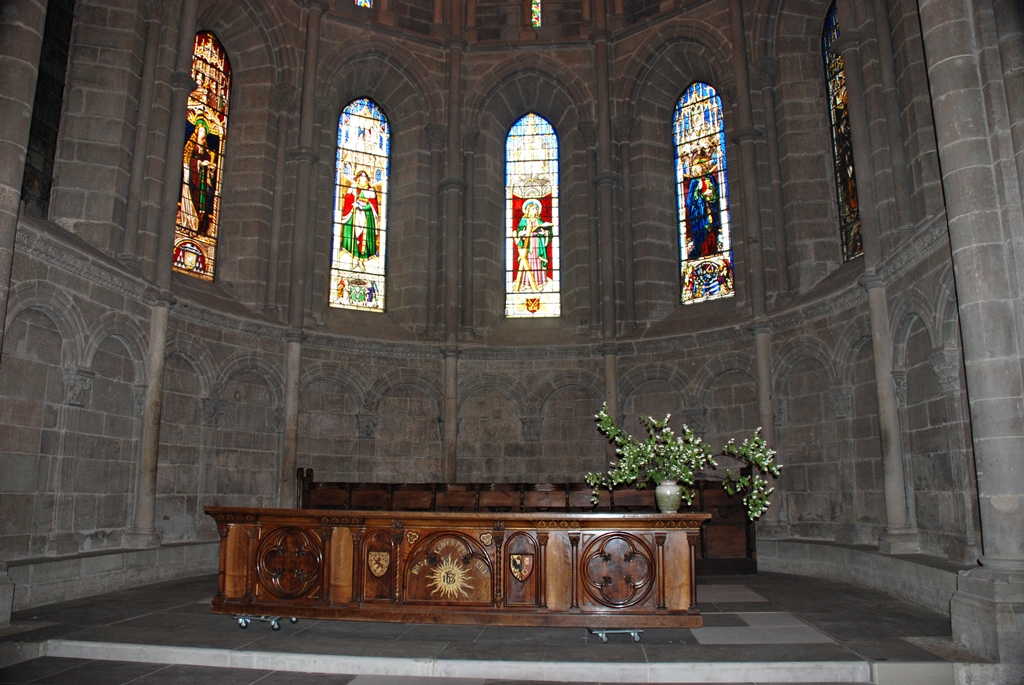
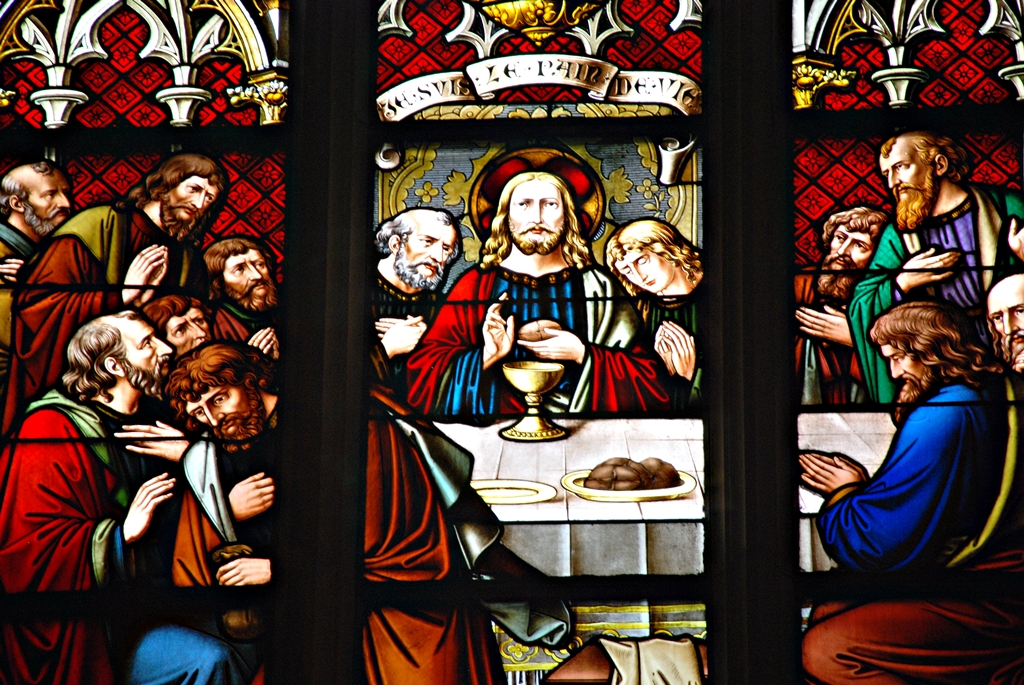
St. Peter’s Cathedral stands on a hill, as is the case with most places of worship. I have noticed this with Hindu temples as well; devotees have an urge to build the edifices for their gods at the highest points in their settlements. The Cathedral itself is a Gothic style building and resembles many others that I have seen in France and Italy. However, the interiors are not very rich, probably because of its Protestant past.

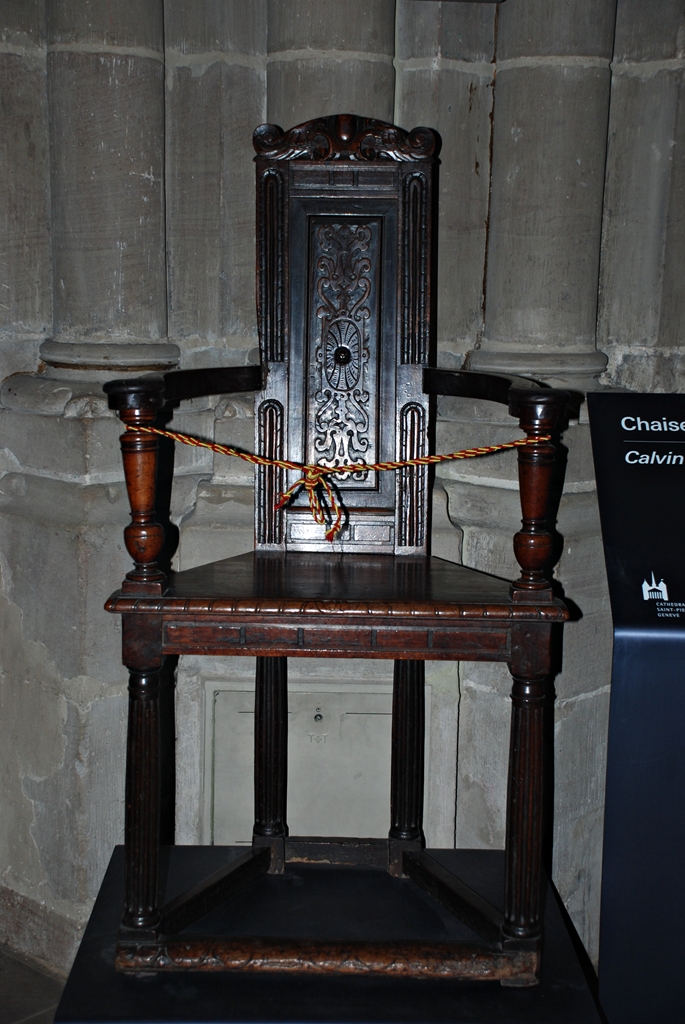
John Galvin preached from this Cathedral and the chair he used is still kept here. In keeping with the Protestant traditions, it is a simple, practical chair with no decorations.

There are two towers in the Cathedral – the North tower and the South tower. The North Tower offers panoramic views and is accessed through a steep flight of steps and you can then cross over to the South Tower. There are two big bells in The North Tower called “La Clemence” and “La Bellerive” and the former is rung for significant events in the city. These are very big bells and there are five smaller bells in the South Tower.

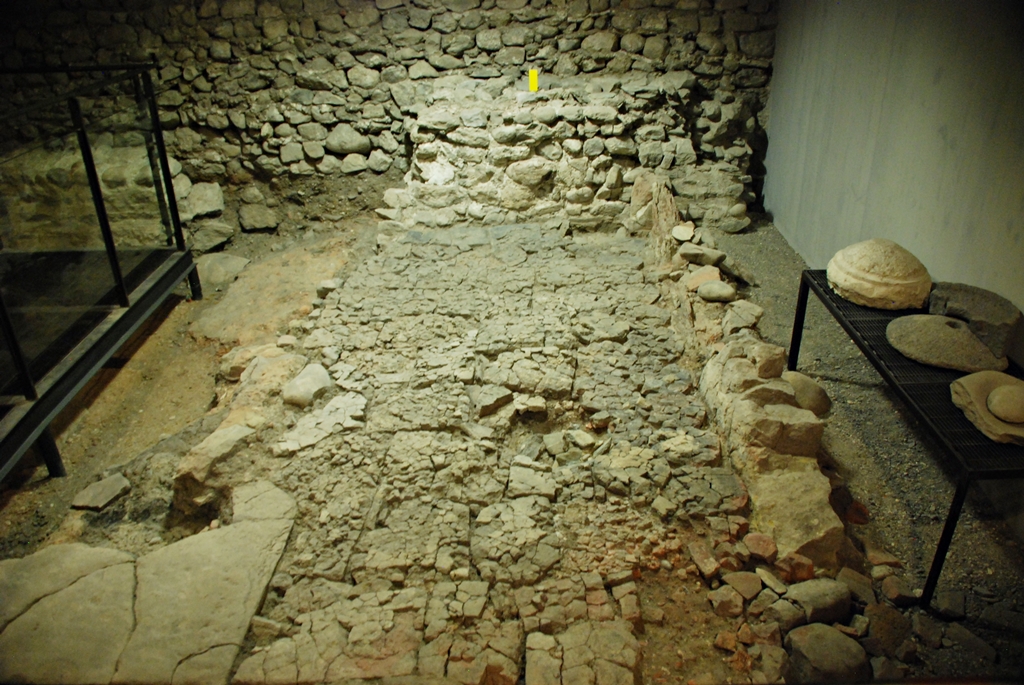
Until this time, I was not very impressed with the Cathedral as it was rather spartan because of the Calvinist influence. It looked like any other large church but not as ornate as one finds in places like Italy. I had read that there was an archaeological site which had been excavated under the church. I was in two minds on whether to look this up or not as I felt I may be squeezed for time for the next item on the agenda, a visit to the United Nations building in Geneva. In the end, I decided to give it a shot, especially as I was finished with the cathedral rather quickly; what a fortunate decision that was!

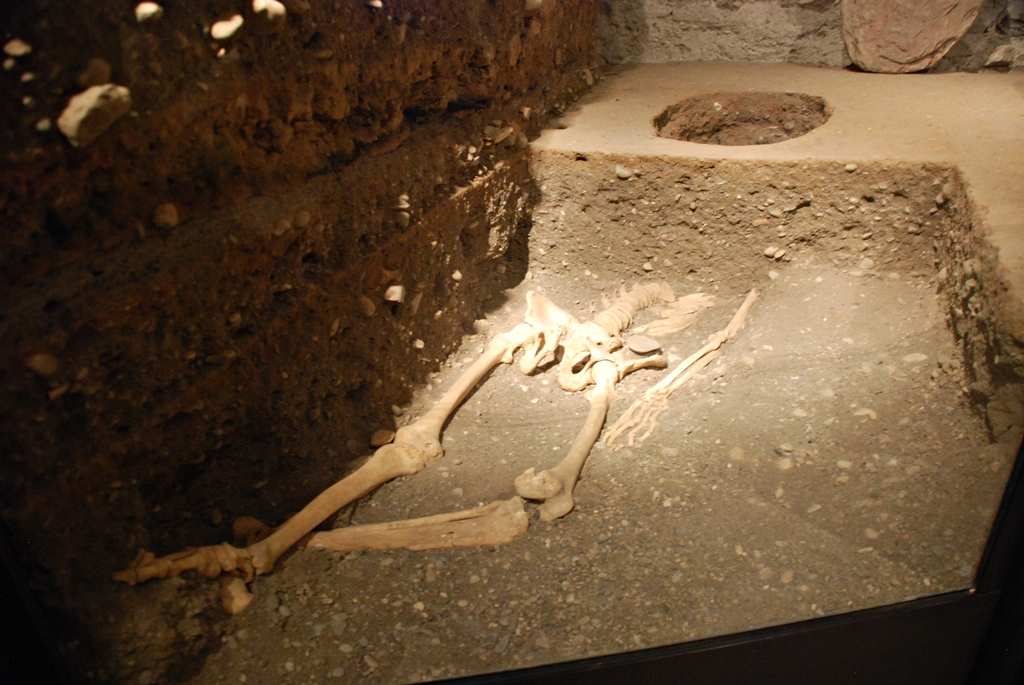
In 1976, the Cantonal Archaeological Service started excavating the site under and around the cathedral. This provided a wealth of information about the city and the site on which the current cathedral stands. This information is arranged as an exhibition, spread over 3,000 square metres.

Geneva first started as a settlement on the shores of Lake Geneva and the first traces of human presence go back to 11,000 BC in the Palaeolithic period. The Allobroges (Celts) ruled Geneva from around 330 BC till they were over thrown by Julius Caesar in 58 BC during his Gallic campaign. From then on, Geneva remained a Roman town till about 400 AD and then became a Christian community.

The site on which the cathedral stands today became a sacred spot at around 100 BC when an important Allobrogian chieftain was buried here in this site overlooking the lake, the port and the bridge over the  river Rhone. He must have been an important chieftain and that must have been why a monument was built for him. The skeleton can be seen even today and it was a strange feeling to look at the skeleton of a person that lived more than two thousand years ago. It was also interesting to think that the same spot remained a place of worship despite it having passed through different belief systems – the Allobrogians, Romans and the Christians. The skeleton does not have a head as that must have been removed to take to another place of worship.

I have always been curious about the practice of burying the bodies of famous people in churches. This site started out as the burial ground of an Allobrogian chieftain and later on, a Roman crypt was built here. Later on, when Christianity arrived, there was a cult of relics and more bodies were buried here. So, I guess this interest to bury their important people in places of worship or converting the tombs into places of worship was something that was carried over from Pagan beliefs to modern day religions.

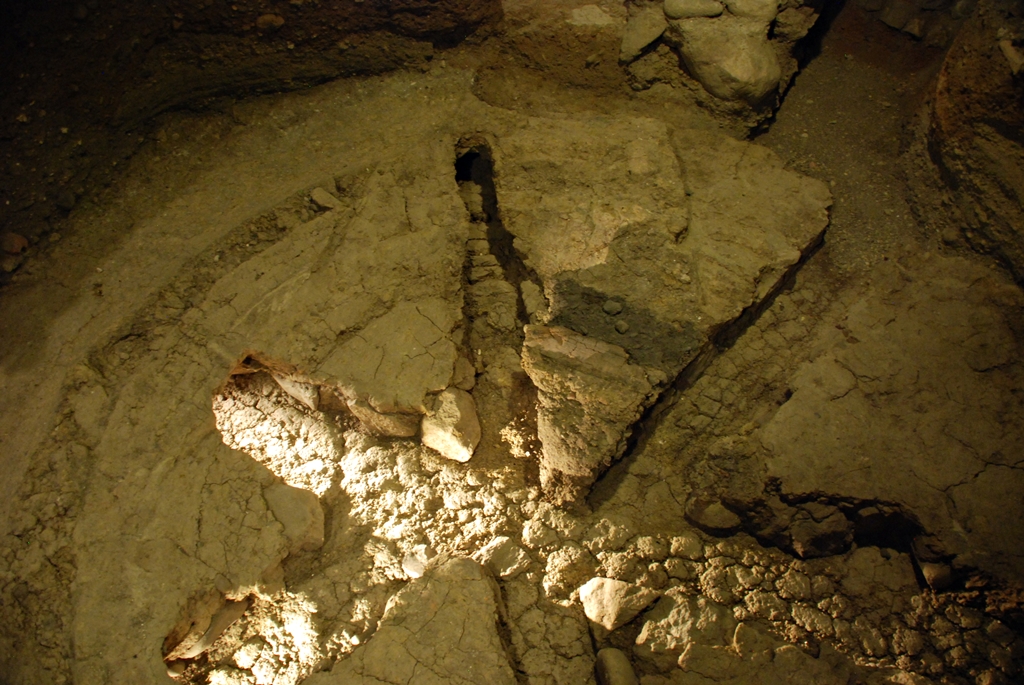
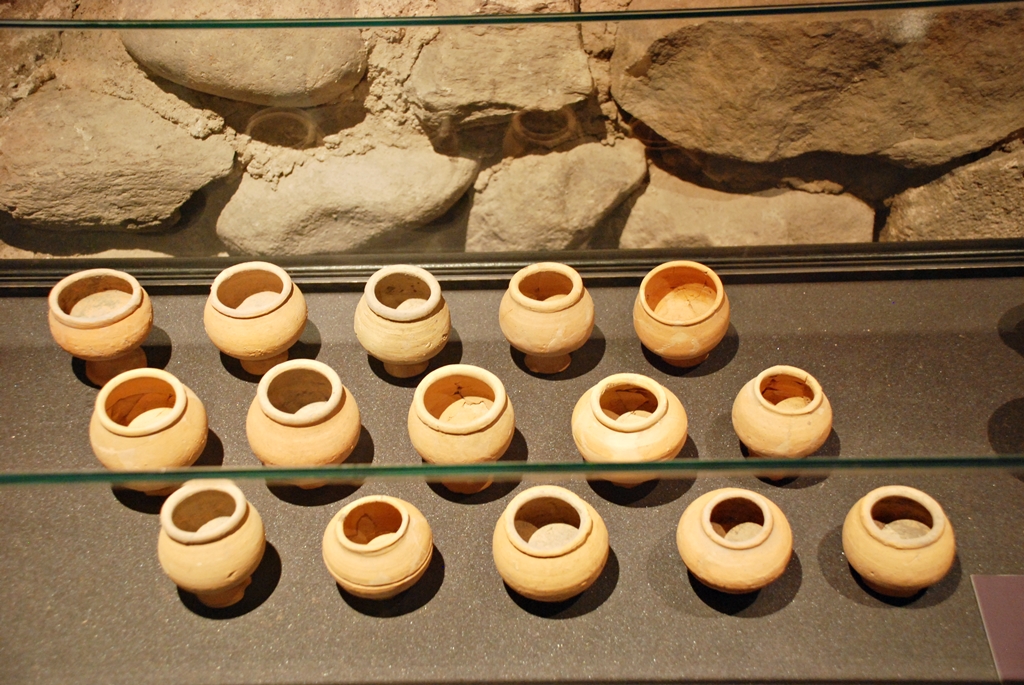
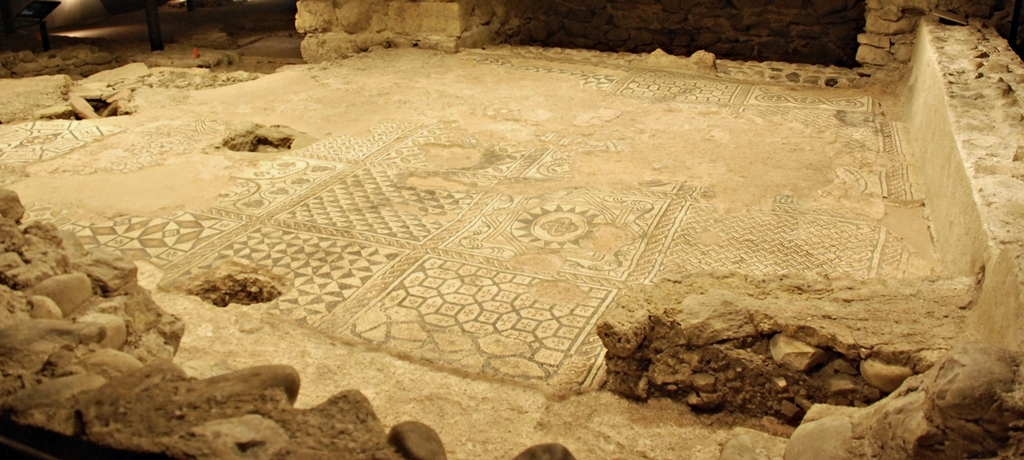
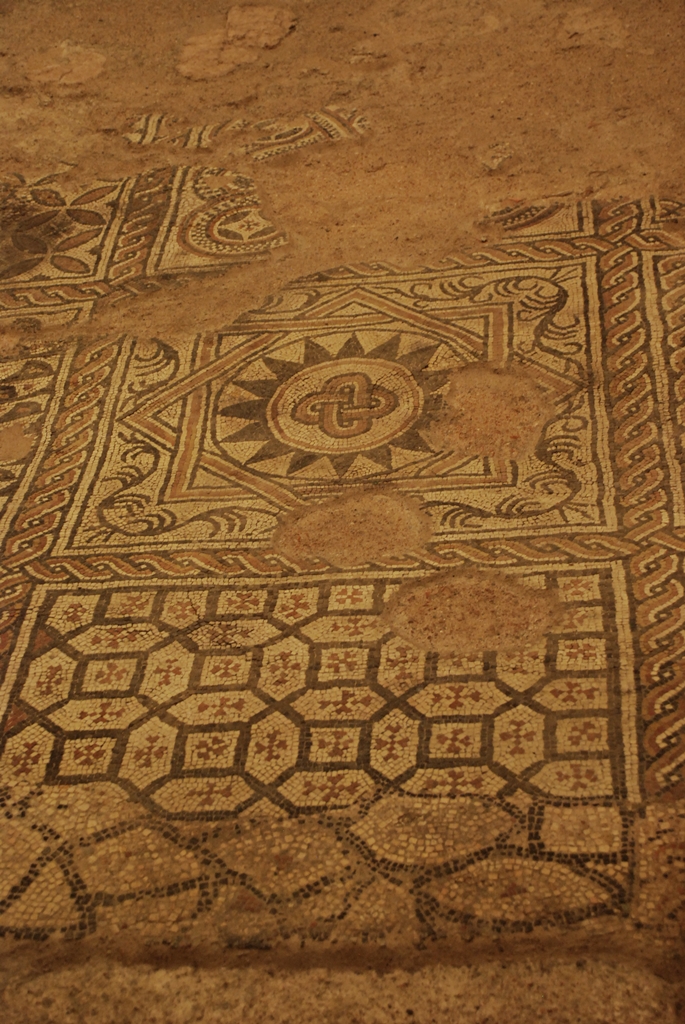
The excavations themselves were quite interesting. The site started out as a single small building and developed later on into a complex with multiple buildings meant for different purposes like worship, living etc. Over a period of time, these all finally got incorporated into the very large building we see today. Given below are some of the interesting sights from the excavations.

Mould used for making the “La Clemence” bell, fifteenth century

Pots from second century

Heating room for corn processing, third or fourth century

Mosaic on the floor of the reception hall dating back to AD 400

Mosaic on the floor of the reception hall dating back to AD 400

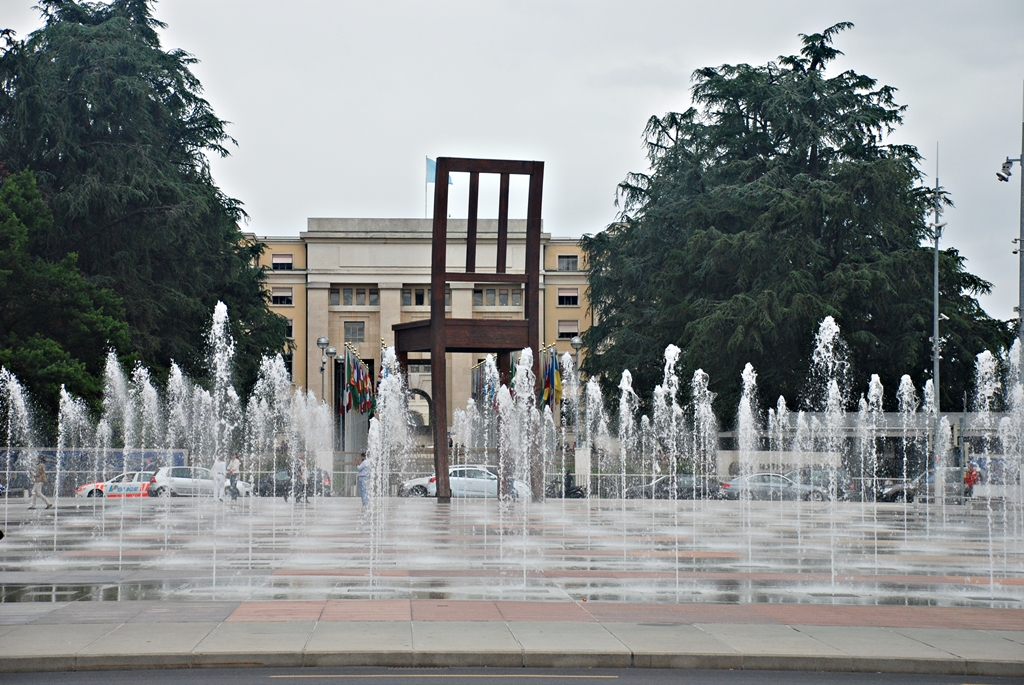
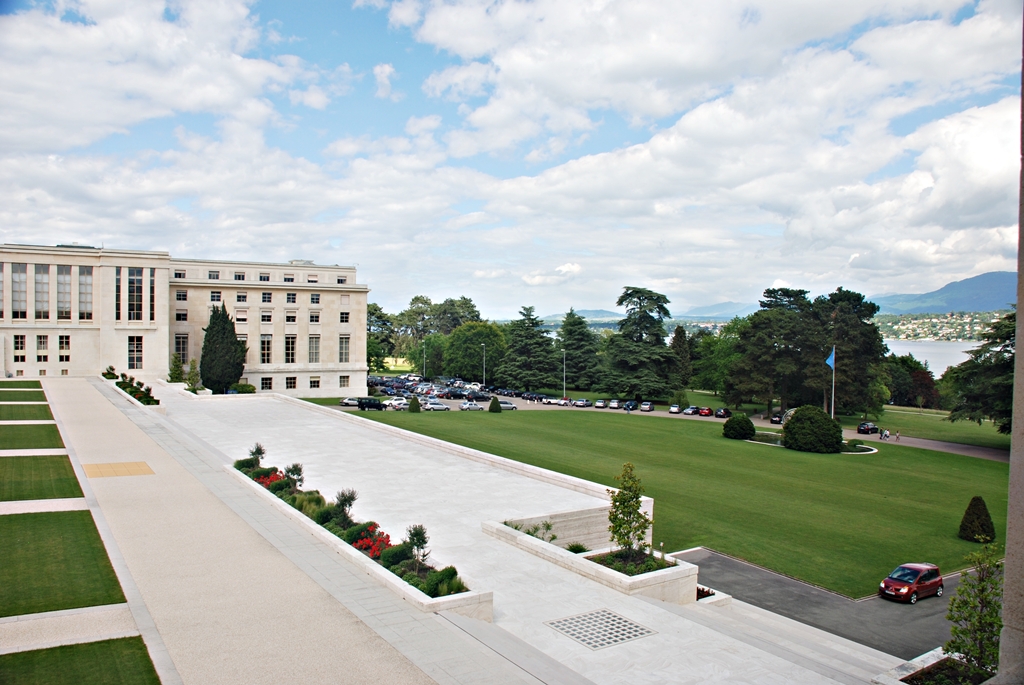
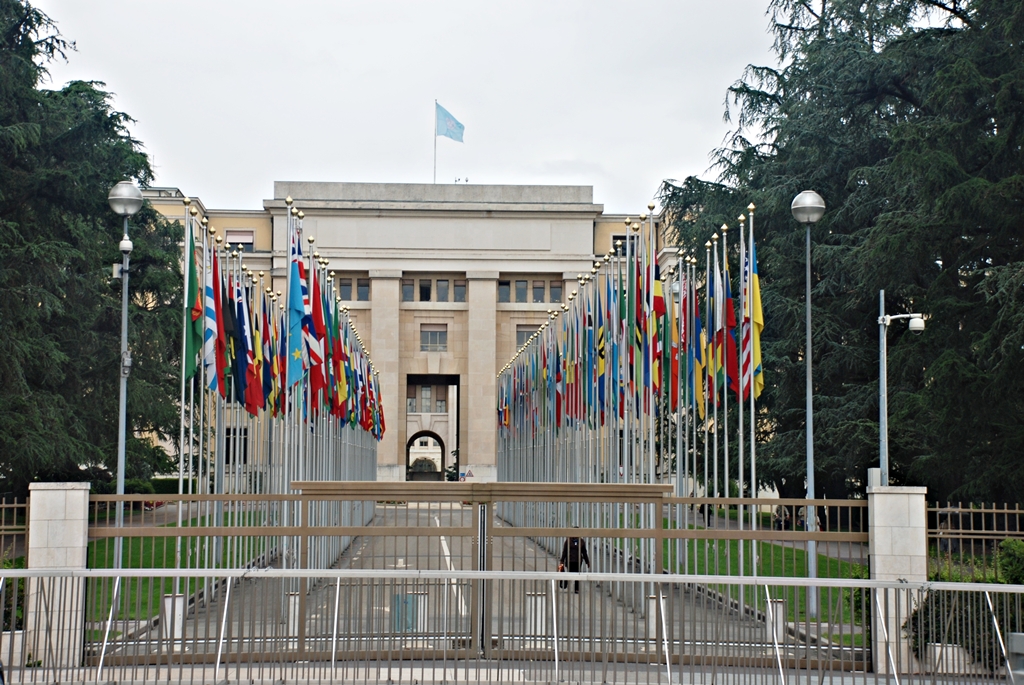
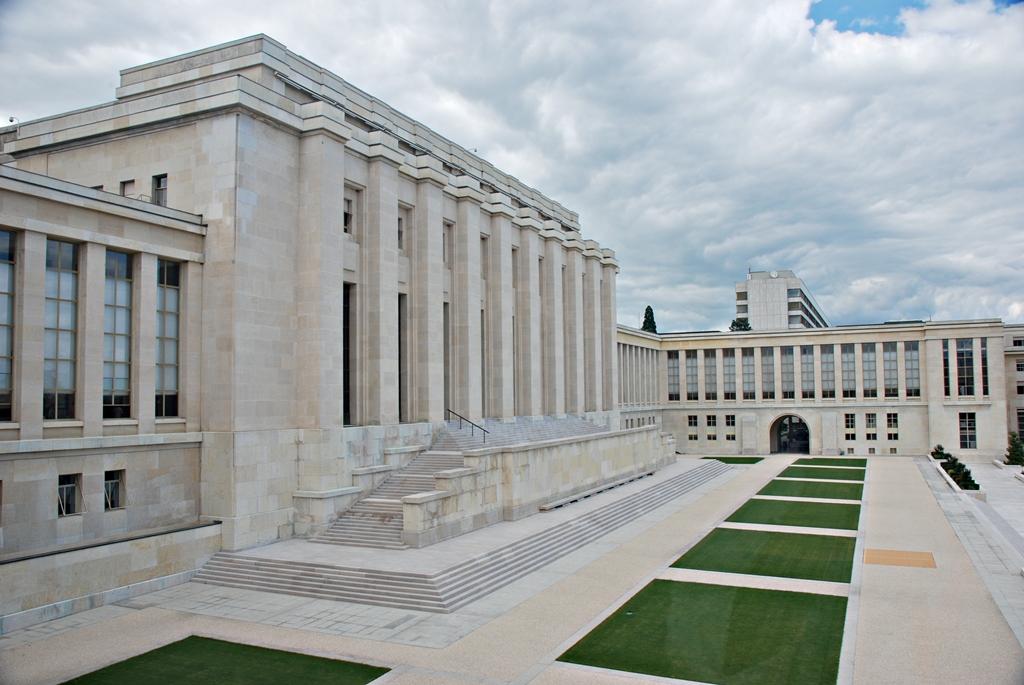
My next stop was the United Nations building. This building was originally built for League of Nations between 1929 and 1938 and is called Palais des Nations. It was expanded in 50s and 60s and there are two parts to the building now. The building itself looks impressive form the outside. The view with the flags all lined up was very nice indeed.

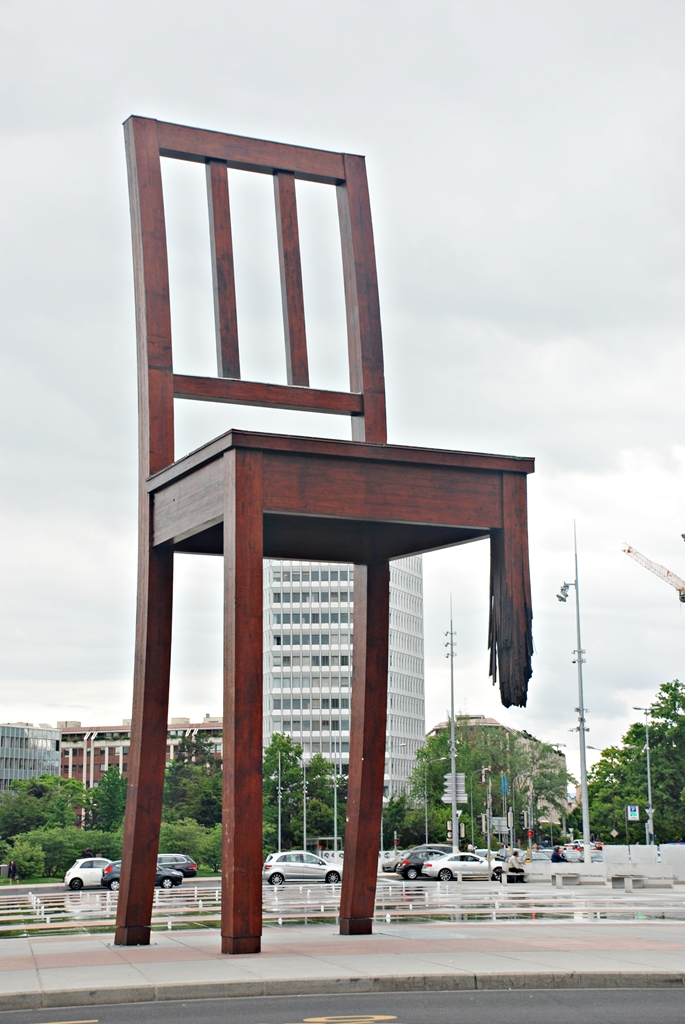
Right outside the main entrance to the Palais des Nations is a huge sculpture of a broken chair. This is a huge wooden chair with a broken leg, constructed out of 5.5 tons of wood and is 12 metres high. Swiss artist Daniel Berset was the sculptor. It was a project of Handicap International and was conceived as a reminder to the devastating effects of land mines and cluster bombs. It was first erected in 1997 and was intended to remain for three months till the signature of the Ottawa Treaty. However, as is often the case with UN, the signing of the treaty got delayed and about 34 countries including India are yet to sign it. The sculpture became very popular with the public and it remains there even today, even after having been temporarily removed in 2005 to allow remodeling of the Palais des nations.

I felt that this was a very aptly conceived sculpture which effectively conveyed the damage that land mines cause. These mines are often using during a war and rarely removed after the war is over and these lethal devices stay active and trigger off when some unsuspecting soul steps on those. The damage that results is often the loss of a limb. The broken chair conveys this message very strongly.

Access to the building was reasonably easy and I was in time to join the guided tour. We started off by seeing a couple of meeting rooms and the walking through some corridors that were filled with a lot of art work. All of those have been donated by various countries.

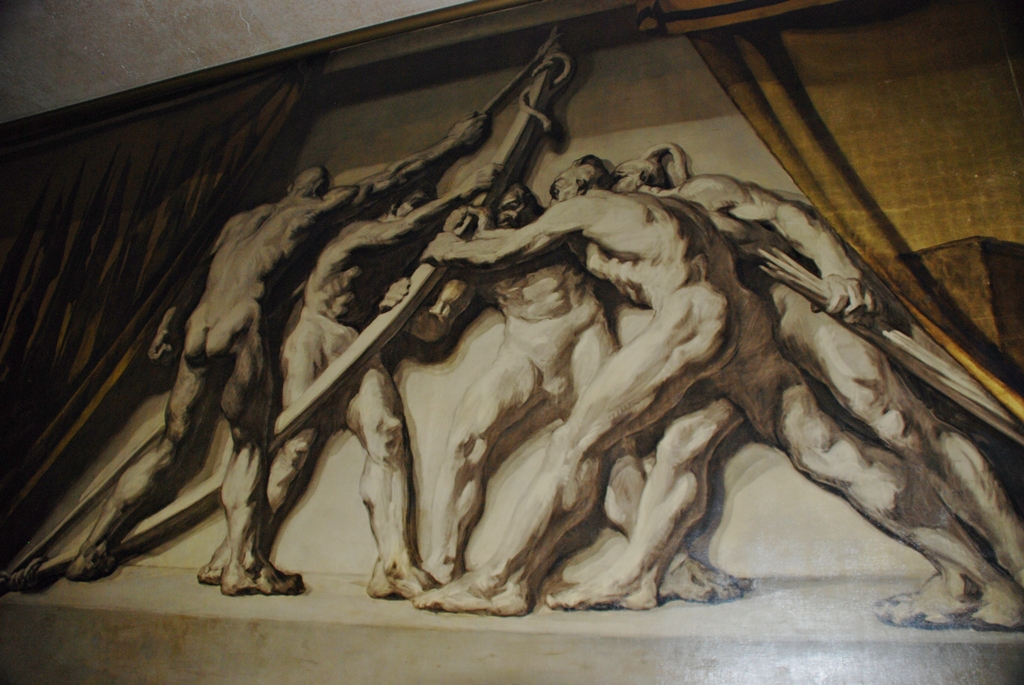
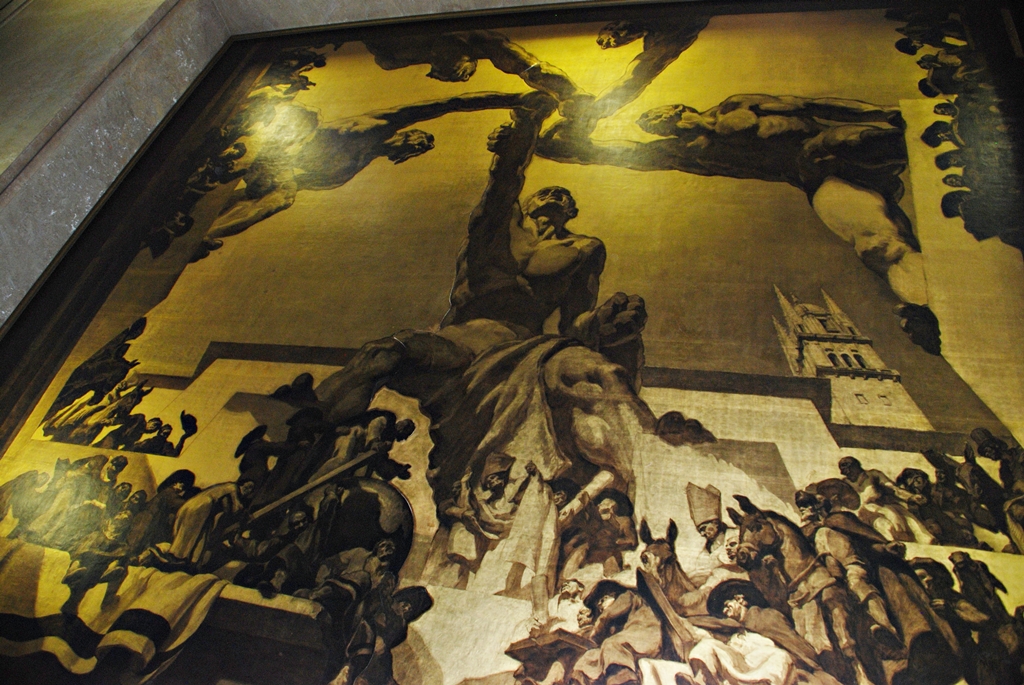
The League of Nations part was more impressive than the sections added later. The main attraction was the Council Chamber of League of Nations. The most impressive aspect of the room is the gold and sepia murals painted on the walls and ceiling. This was a gift from the Spanish government and was painted by the famous Catalan artist Jose Maria Cert between March 1935 and May 1936. It depicts the progress of mankind through health, technology freedom and space. The guide explained it as a series and pointed to a picture as the culmination of the series. This shows five muscular men, representing five continents (wonder which one of the inhabited continents they left out), coming together and holding a weapon (a bow).

I felt it rather odd that a room dedicated to the promotion of peace would have people holding a weapon together instead of destroying it. So, I looked it up on the web and found that the culmination of the series is actually that of the five giants holds their hands together in triumph.

Interestingly, one person in the tour asked the guide whether the diplomats that sit in this room and take decisions know the meaning of this art work. She was at a loss for a proper response on that one and after a momentary silence, said that she expected them to know as they were diplomats!

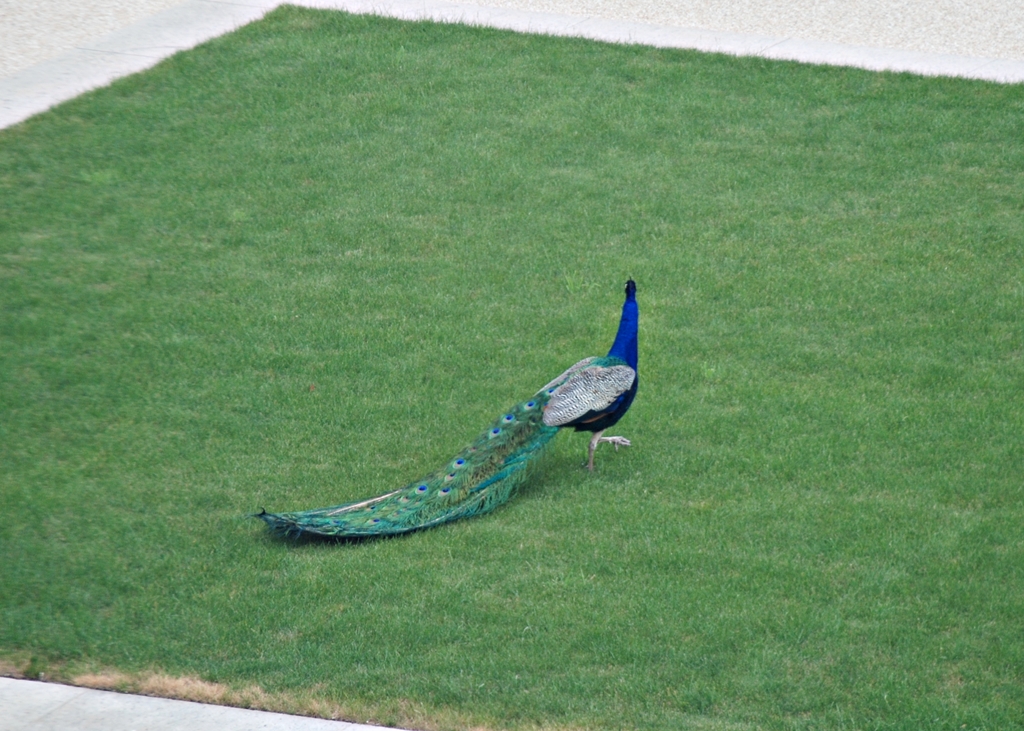
The views as one looked out of the corridor connecting the League of Nations building to the new building were very good. We also a saw a peacock on the lawns and that elicited a lot of excitement from the group.

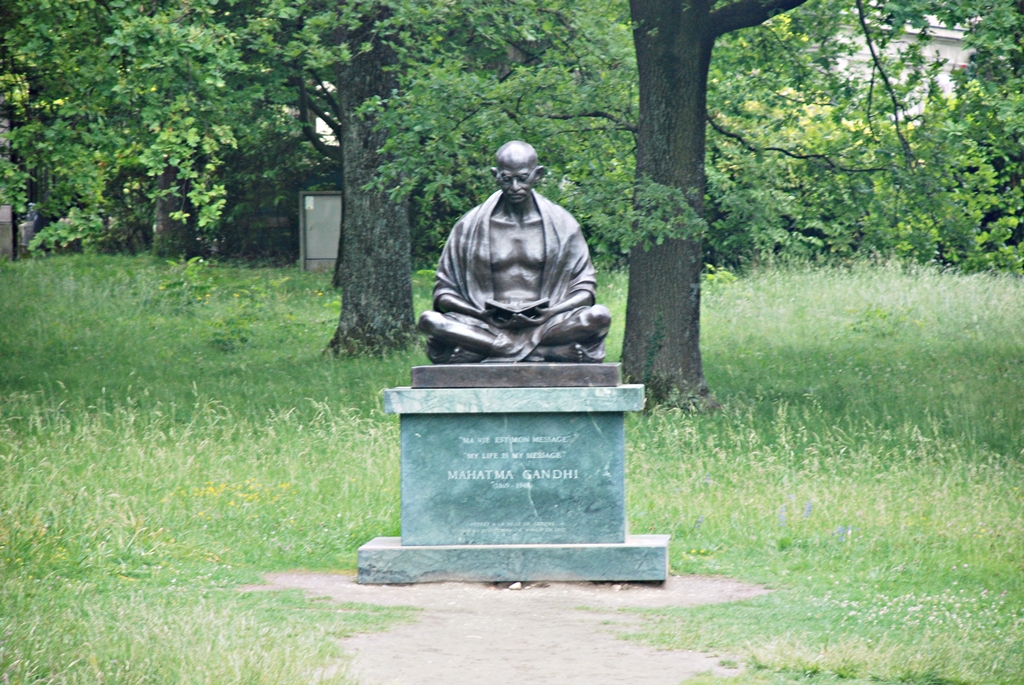
The tour was soon over and I walked back to the entrance to catch a bus. I was walking past the park that surrounds the building and suddenly, I saw a statue of Gandhi. It was a solitary statue in the midst of nothing – looked forgotten and lost. This struck me a bit and I stood there for a few moments looking at it. Gandhi, arguably the biggest promoter of peace ever, the man who showed that empires could be defeated without resorting to violence, the man whose messages are perhaps the most relevant today in a world tottering on the brink because of greed and hatred, sits forgotten in the very place that supposedly works towards promotion of world peace!

As in any old city, there is an old town in Geneva too and that is around the Cathedral area. I went back there to have a walk around the place. After sauntering around a bit, I dropped into an English pub. There were not many customers there and I struck up a conversation with the bartender, Phil. A couple I had met at the UN building had told me that they had just come from a visit to CERN (European Organisation for Nuclear Research), where the research on the Higgs-Boson particle was progressing. When we were talking, I told Phil that I would have liked to visit CERN. He then told me that he was doing his research for his Ph.D. thesis at CERN! He is from Boston and having finished his Masters there, is doing research at CERN. He was not on the Higgs-Boson project and was involved in research on metrics and measurement, related to nuclear particles. It was nice to talk with Phil and as I left I could not but be impressed with this chap who was working as a bartender to fund his studies.

3 June 2012

As my business tour extended over a couple of weekends, I was searching for ideas on places to go near Geneva, when a colleague suggested Chamonix and a close look at the Mont Blanc peak in French Alps. I looked it up on the web and found the place interesting as there was the easy option available of seeing the Alps at close range! So, off I set off on a coach from Geneva to Chamonix on a Sunday morning, a journey of about 90 minutes. Within 20 minutes of setting off from the bus station, we crossed into France. I was thinking that this border must have seen a lot of action during World War II with prisoners escaping from France and other countries trying to get into neutral Switzerland. With the SCHENGEN visa norms, the bus did not even stop at the border crossing.

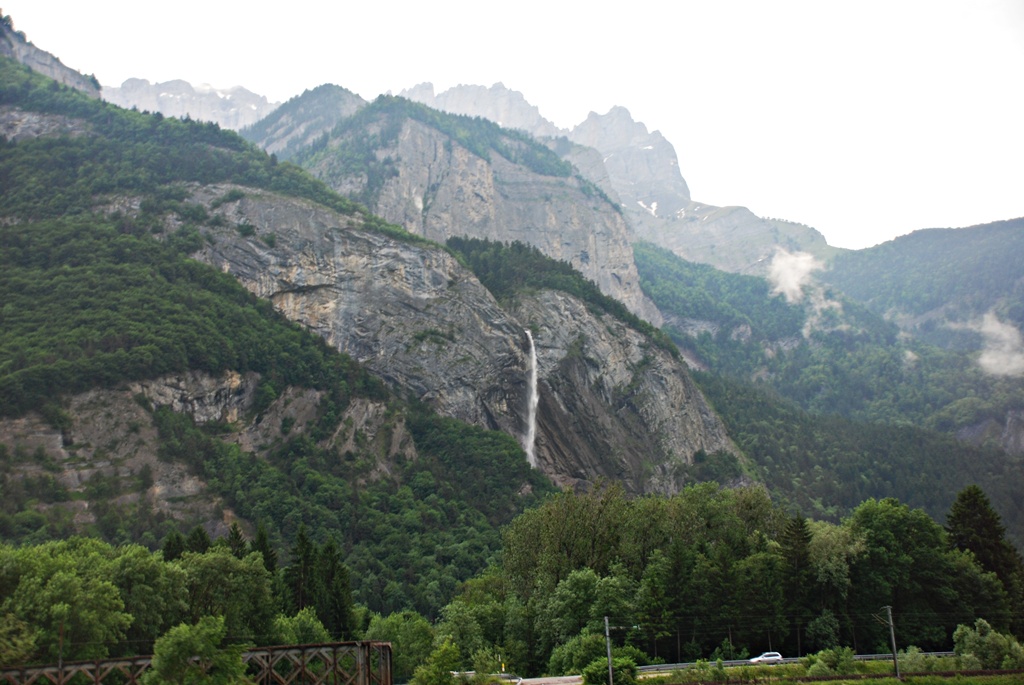
The road itself was quite scenic and we passed some nice looking farms and soon started getting glimpses of the mountains.

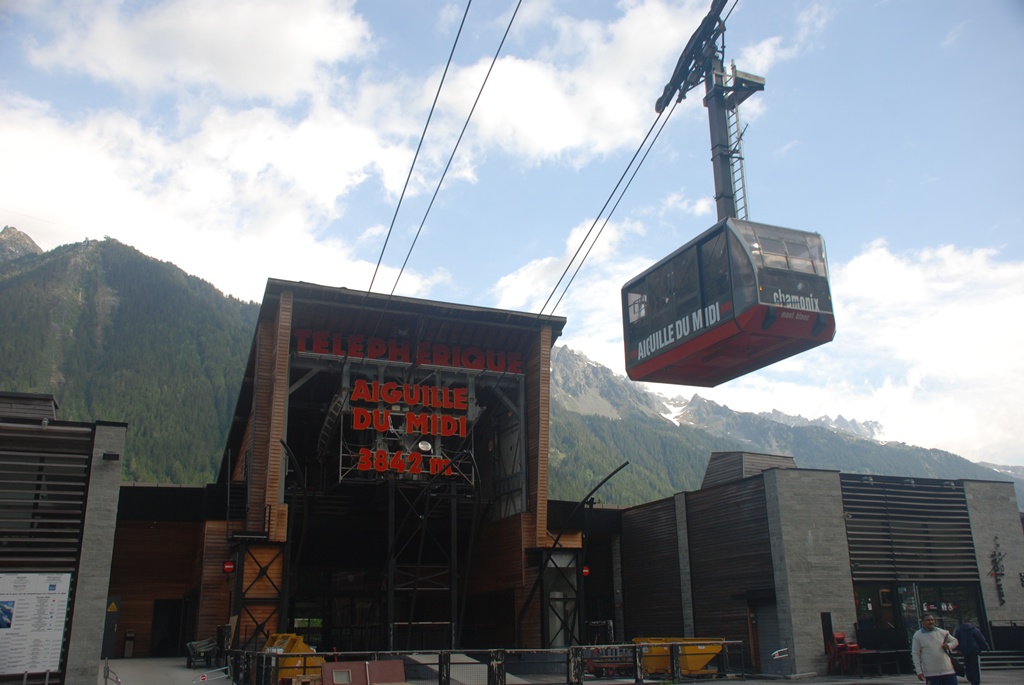
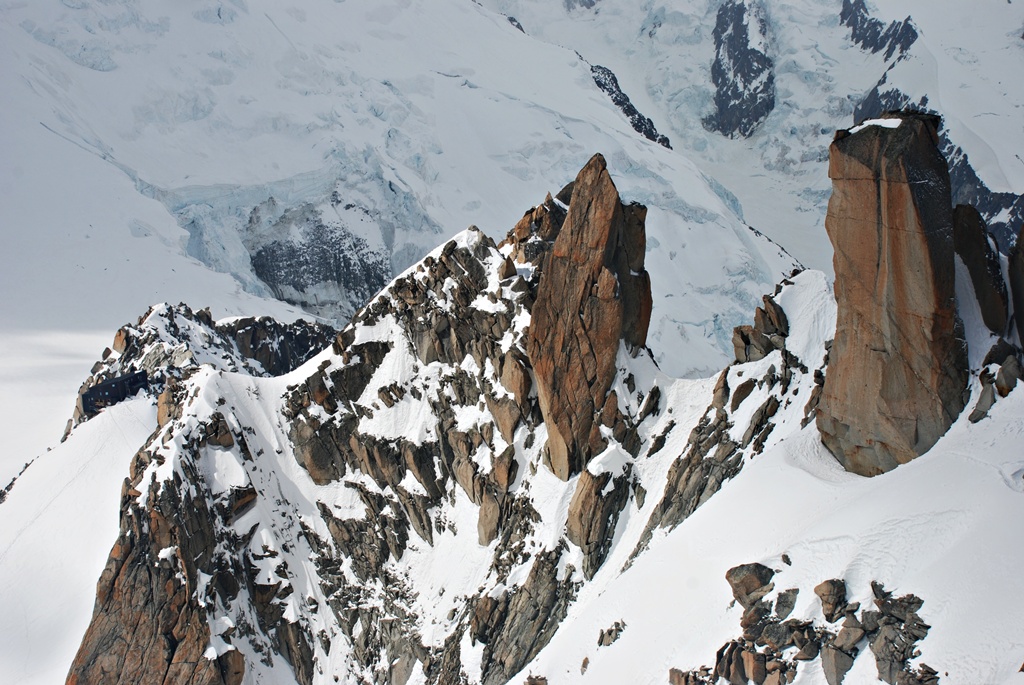
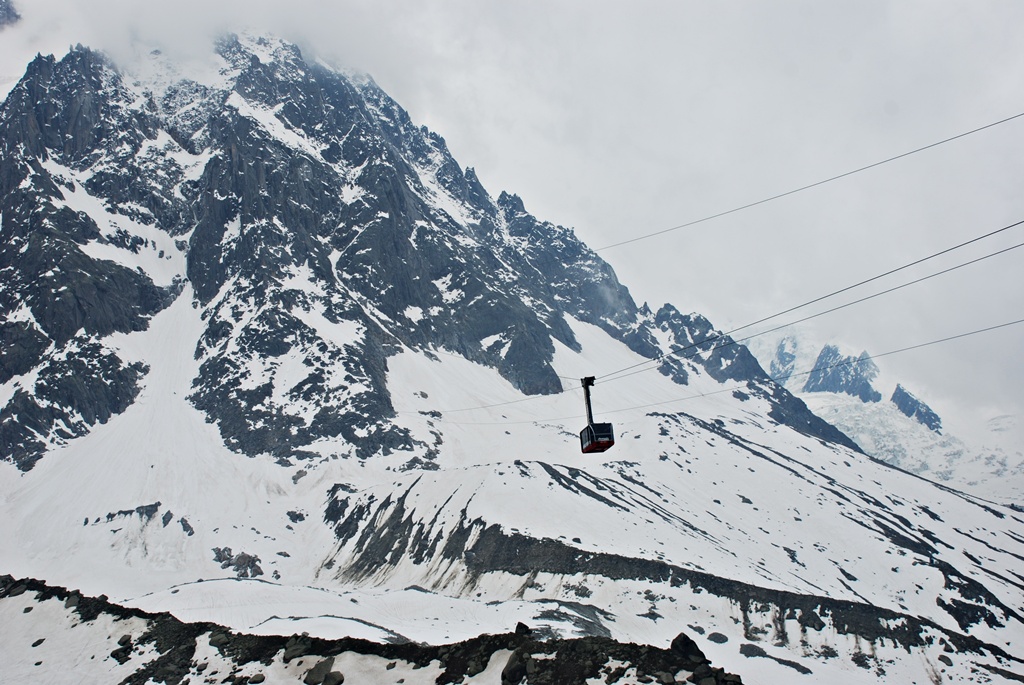
The plan was to get to Chamonix and then take a cable car upto the top of a peak called the Aiguille du Midi, which is at a height of 3842 metres. The cable car was built in 1955 and at that time, was the highest cable car (or Téléphérique as the French call it) in the world. The ride is completed in two sections – first to an interim point and then on to Aiguille du Midi; the second section has no support pillars in between.

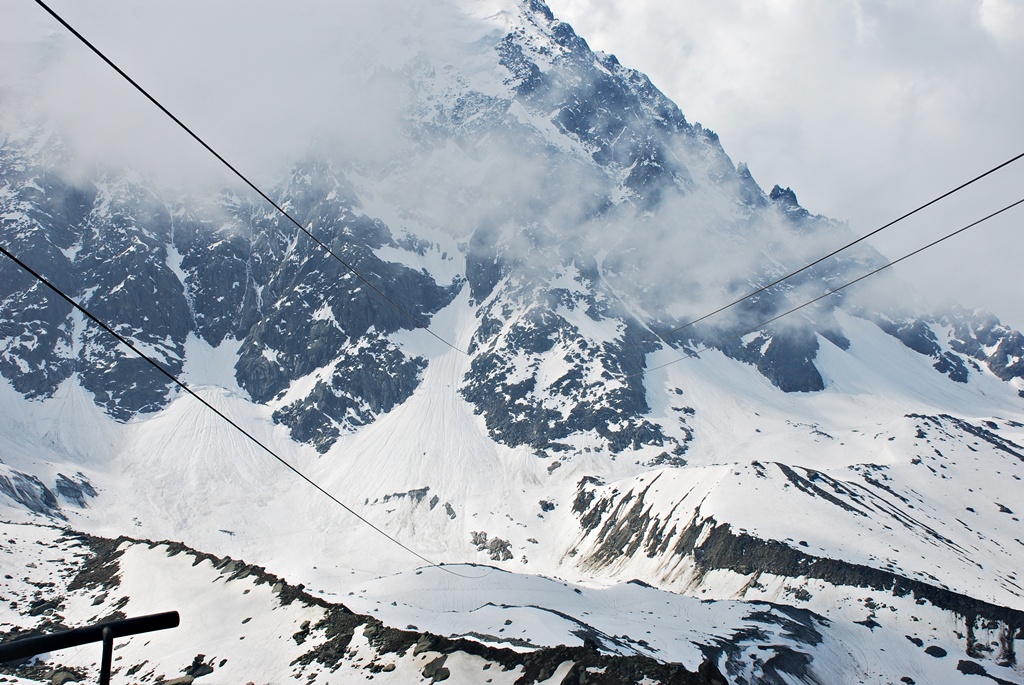
There were good many tourists that day and we were a bit squeezed in the cable car. As soon as we left the ground, fantastic views started opening up and cameras were clicking away regardless of the fact that most of us only got reflections of the flash from the glass walls of the cable car!

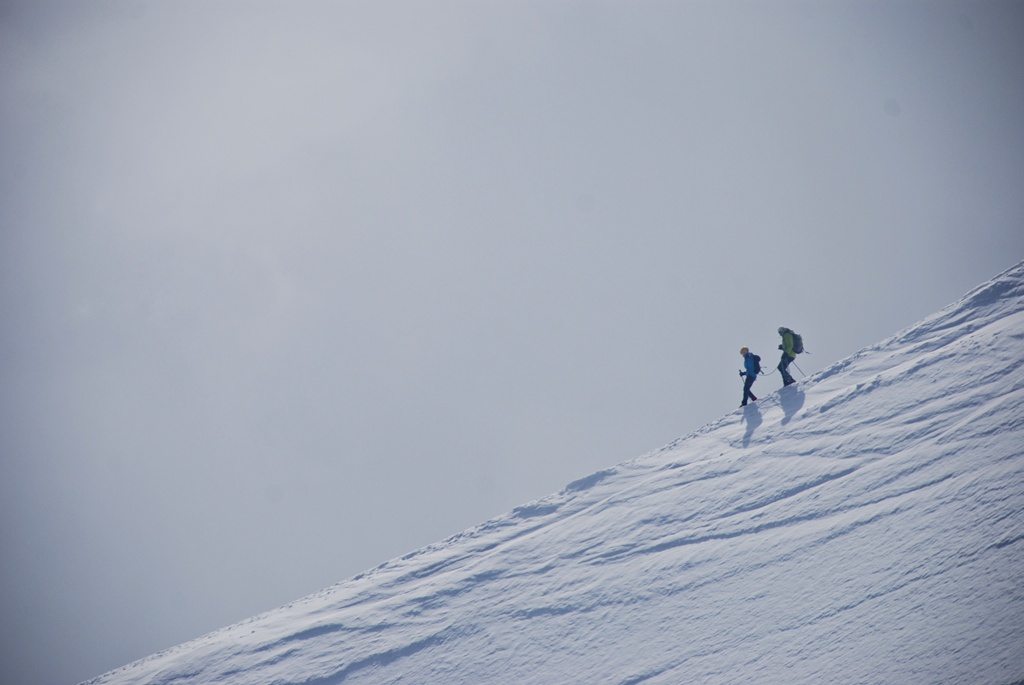
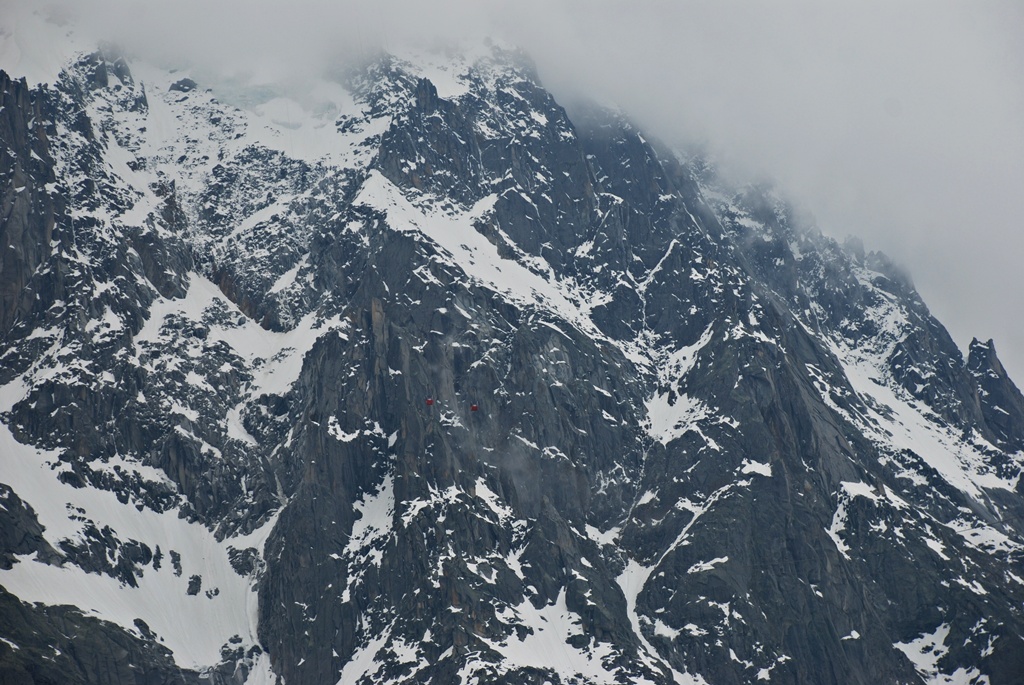
As we approached the summit, we saw two climbers starting off on a trek. It was an awesome sight to see two lonely figures on the vast expanse of snow.

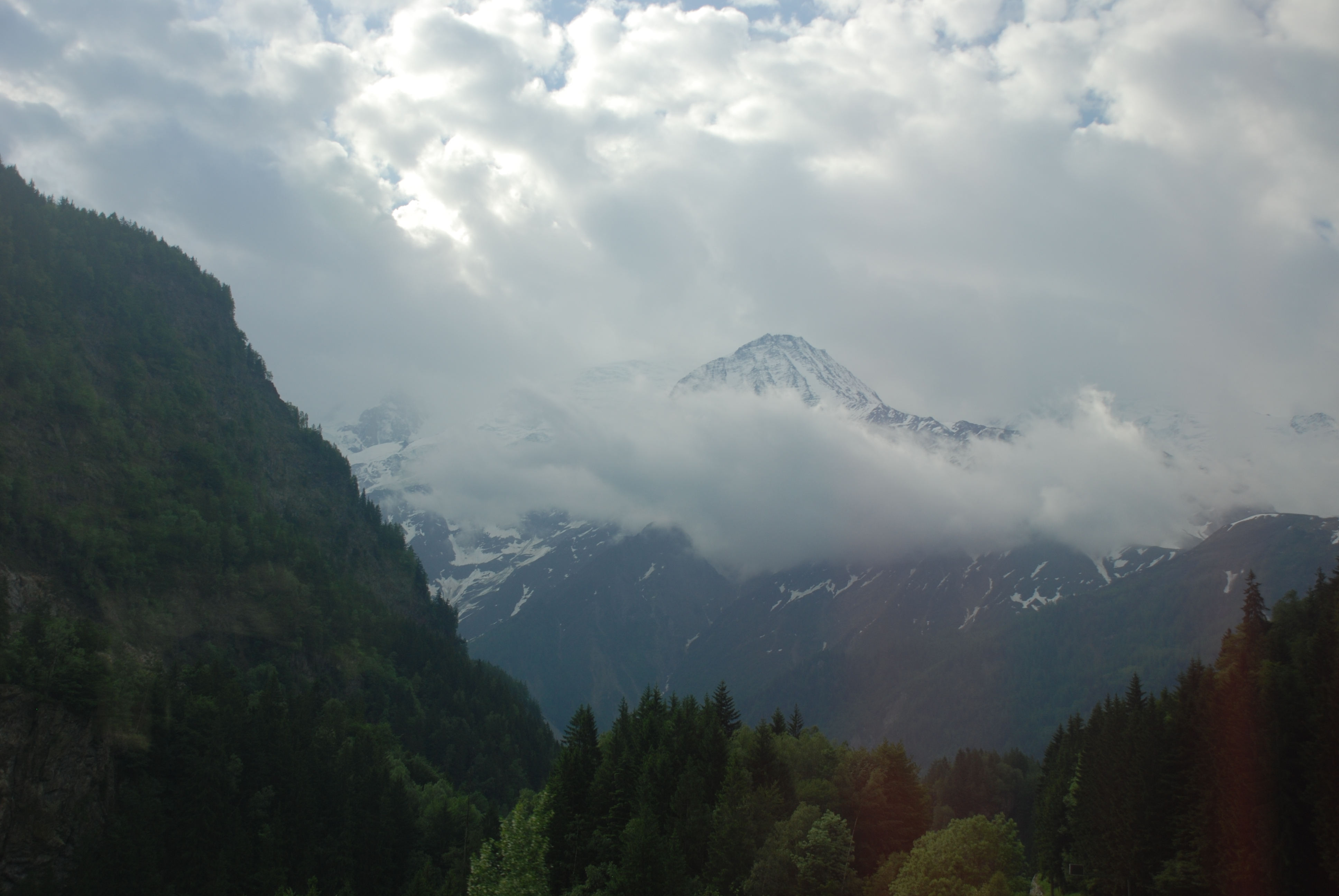
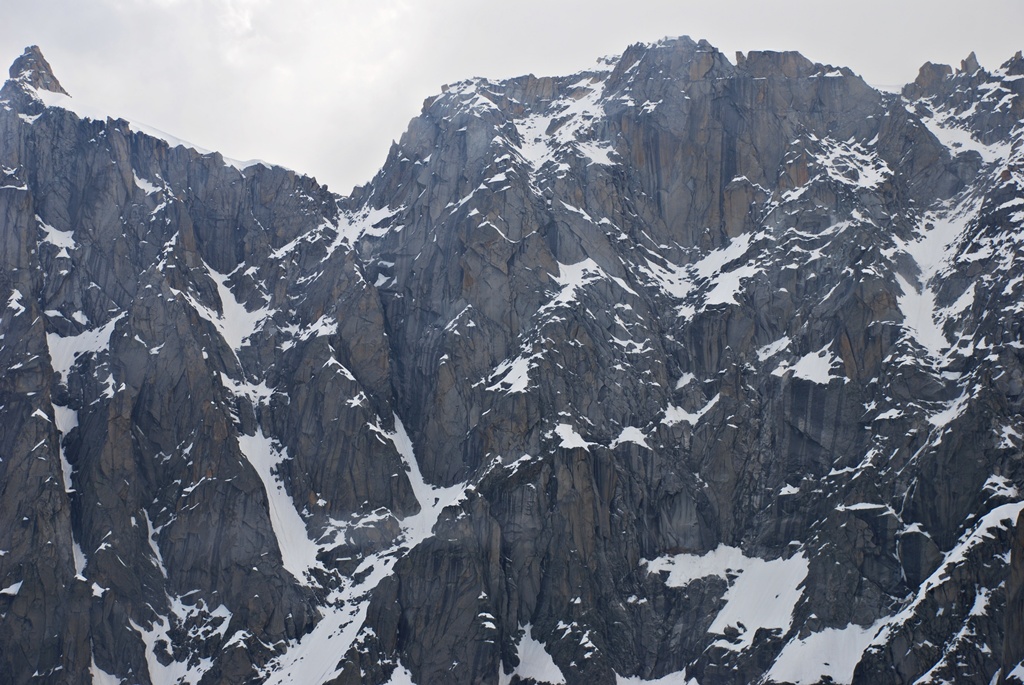
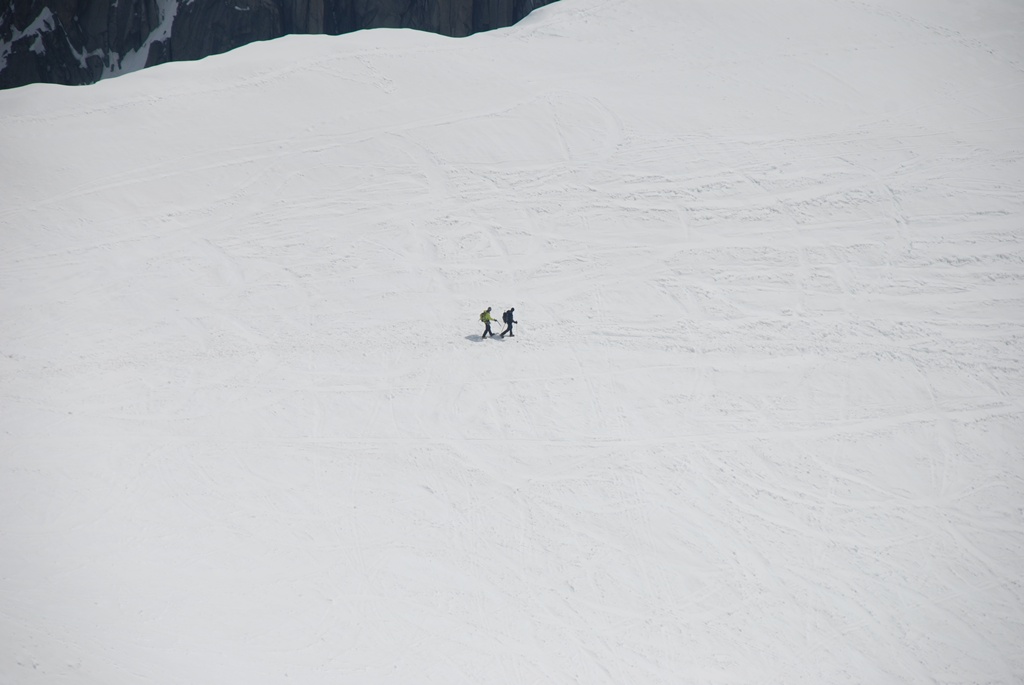
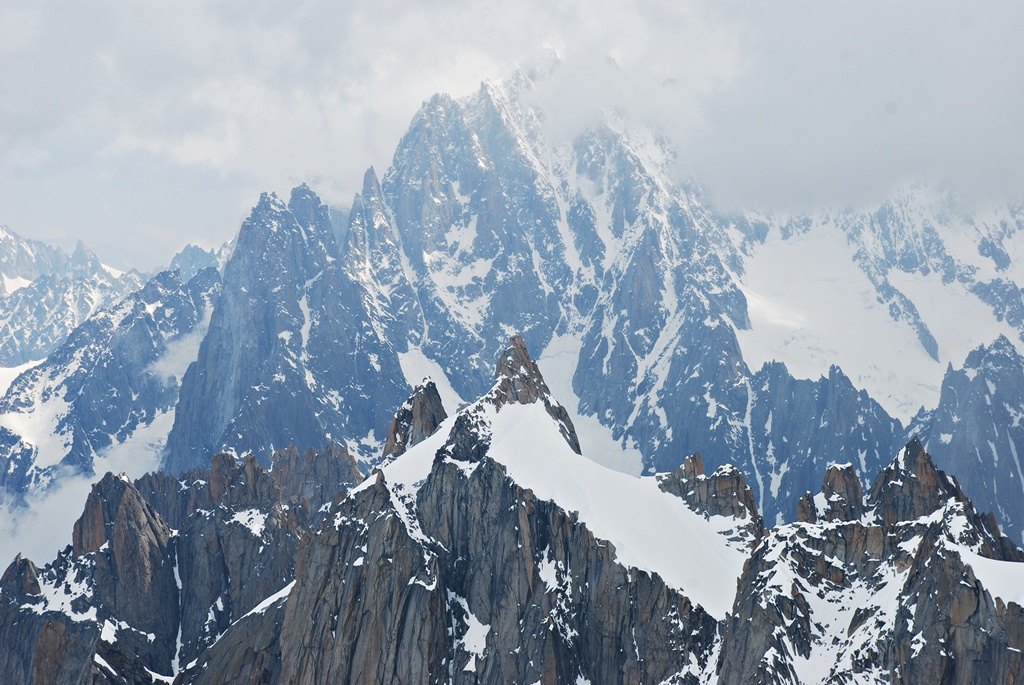
At the summit of Aiguille du Midi, there is a cafeteria and various viewing decks. It was very windy and the weather was not very good. Mont Blanc itself was shrouded in clouds and so we could not get a view of that but still the views all around were just fantastic. I moved out to a platform all by myself and as I stood there taking the views, I spied the two trekkers down below – two specs on a snow shelf.

I had never understood what made people want to climb mountains and trek across them; someone in the cable car had called them as “adrenaline junkies”. However, as I stood there in the Alps with all its majesty, I also wanted to go on such a trek, camp out and lose myself in this beauty; and I am no adrenaline junky. I could sense the excitement and fun and challenge of the climb; there is a sheer exhilaration in this. These mountains are such a draw!

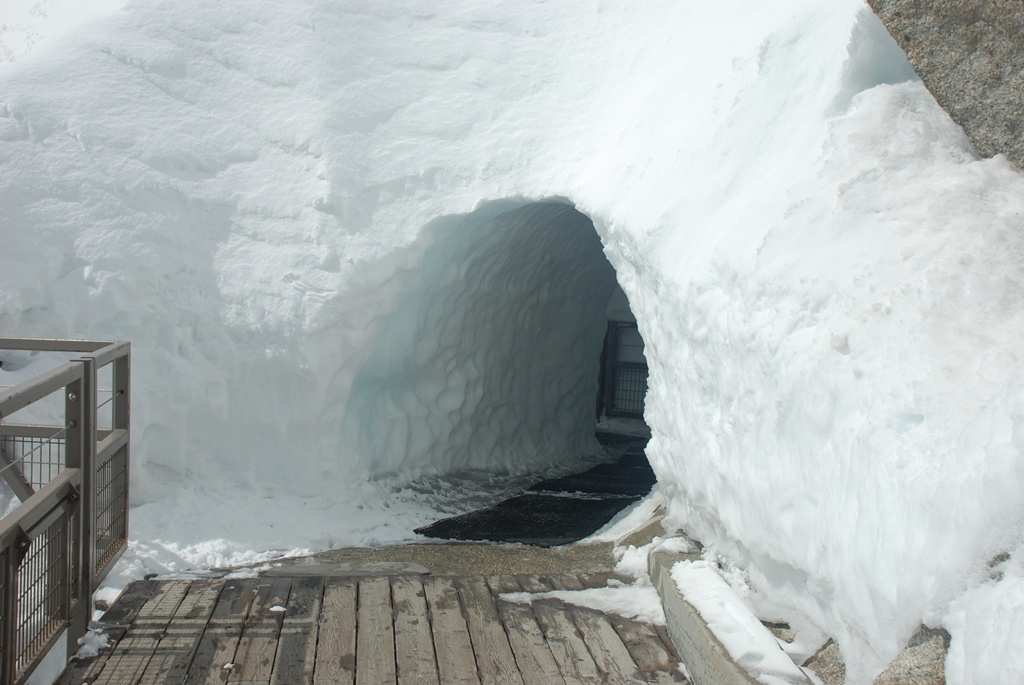
Vallee Blanche is a famous ski route in Chamonix and many trekkers start their journey to Valle Blanche from Aiguille du Midi. There is a short tunnel dug out of ice that leads onto a ridge on the face of the peak and the trek starts from there.

When I went through the tunnel and on to the ridge, I met two climbers who were about to set off on a trek to Vallee Blanche. I wanted to have a chat with them to understand how they would figure out the route, where they would stay the night, how they would locate crevasses and steer clear etc. Unfortunately, I found out that all my English was of no use in this remote corner of France. I understood that they were going to Vallee Blanche and planning to stay the night in a tent. They seemed very enthusiastic and were quite friendly. I waved them off on their trek and went back through the tunnel.

Later on, I mentioned this incident to the colleague who had referred this site to me and he narrated an incident of how he had gone on this very same climb sometime ago and how they had a narrow escape after one of them fell into a crevasse. That was scary stuff indeed and I toned down my climbing ambitions to a more gentle trek – maybe I can do that one day!

I went to another of the viewing terraces to try and have a look at Mont Blanc but it was still clouded over. I kept clicking away but was once again reminded of my acute lack of photographic skills as I looked at the results.

On the way back, I stopped at the midway point and walked around. As I sat on a rock looking at the Aiguille du Midi, I thought how it might have been when the first climb was done in 1818. What hardships and challenges must they have gone through! The mountain was very imposing and even looked a bit ominous; it somehow reminded me of a strong beast. The cable car was coming down and it so tiny against the backdrop of the massive mountain and was, in a way, a reminder of how puny we are when pitted against nature.

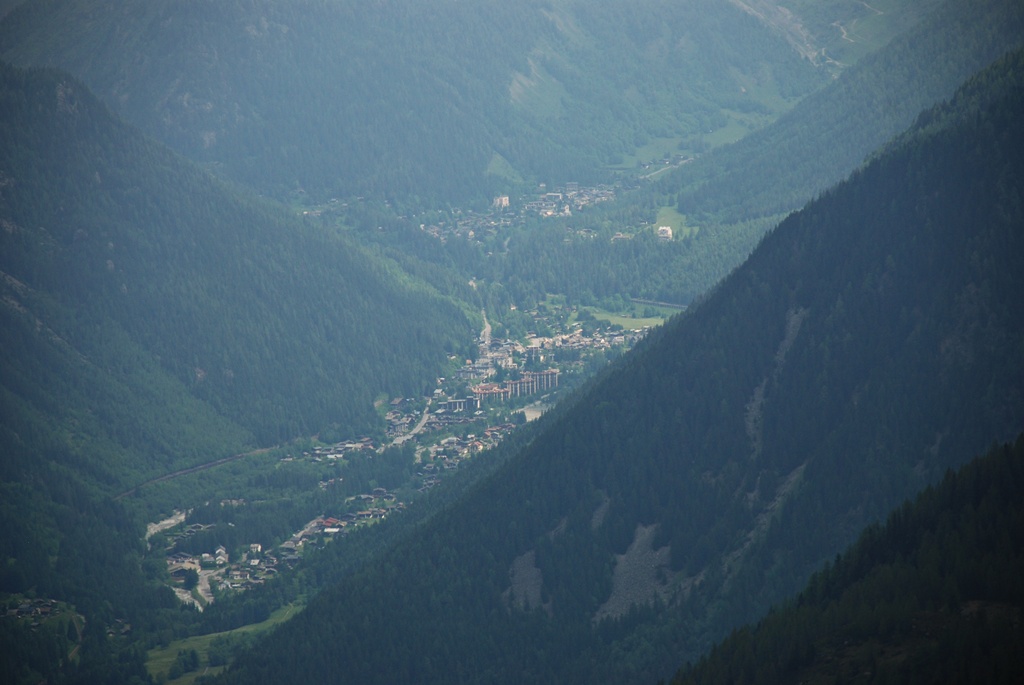
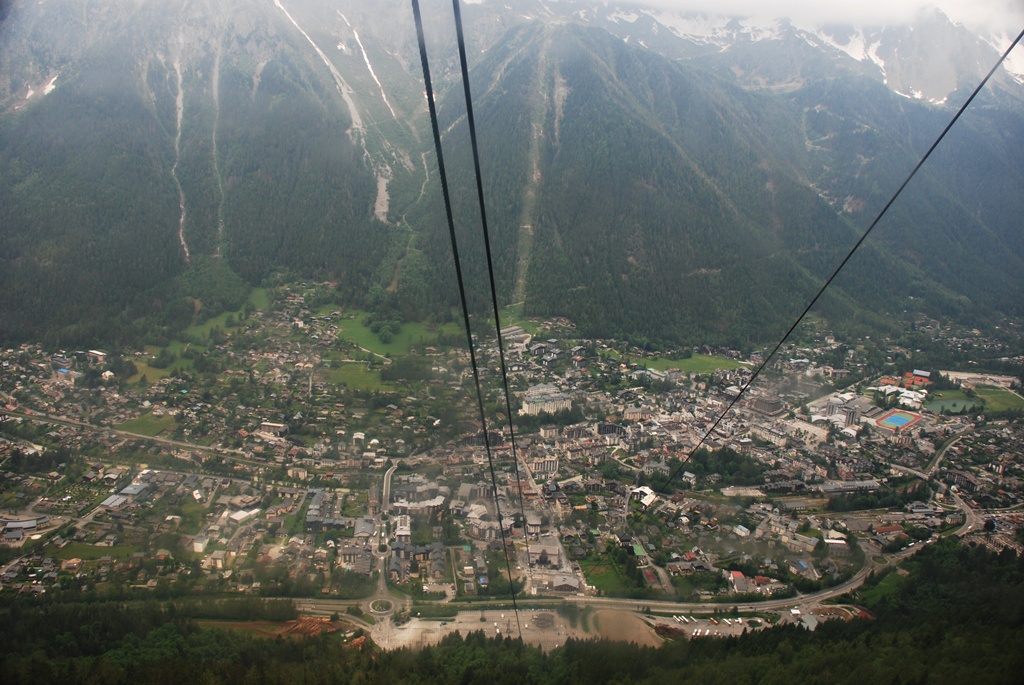
Chamonix is in a valley with mountains on both sides and we had a good view of it as we came down in the cable car.

The village itself is fairly small and is nice and cozy. It has quite a long history and the first mention of the valley dates back to 1091. Early settlers were some Benedictine monks but the living conditions were so harsh that the valley was very sparsely populated. In the 1700s, interest picked up in Alpine climbing and with that Chamonix started to grow. In 1760, a Swiss aristocrat named Horace-Benedict de Saussure offered a reward to the first person to scale Mont Blanc and he himself made an unsuccessful attempt in 1785. In 1786, two Chamonix men, Michel Paccard and Jacques Balmat achieved the climb and Chamonix was established firmly on the Alpine map. Winter Olympics was conducted at Chamonix in 1924.

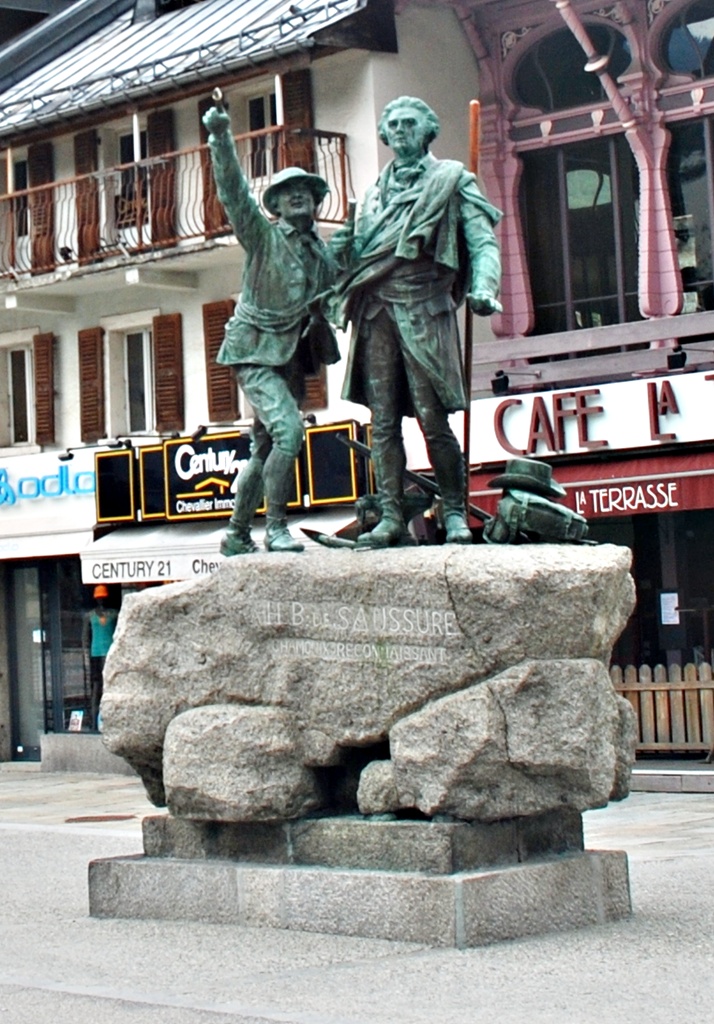
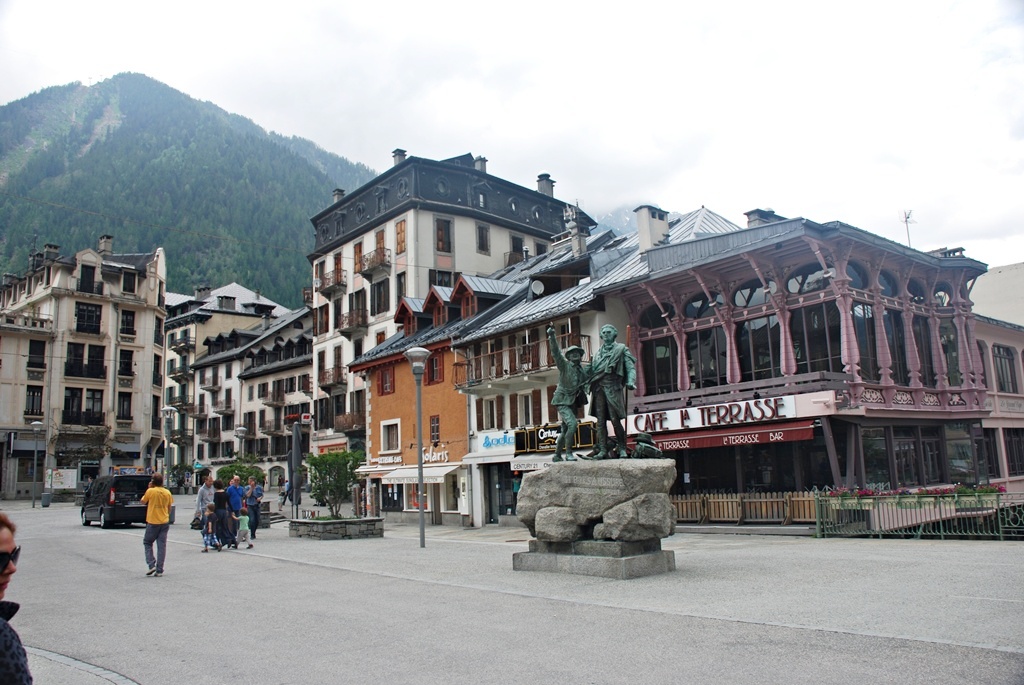
In the square in the town, there is a monument to Horace-Benedict de Saussure, with Jacques Balmat next to him, pointing to Mont Blanc.

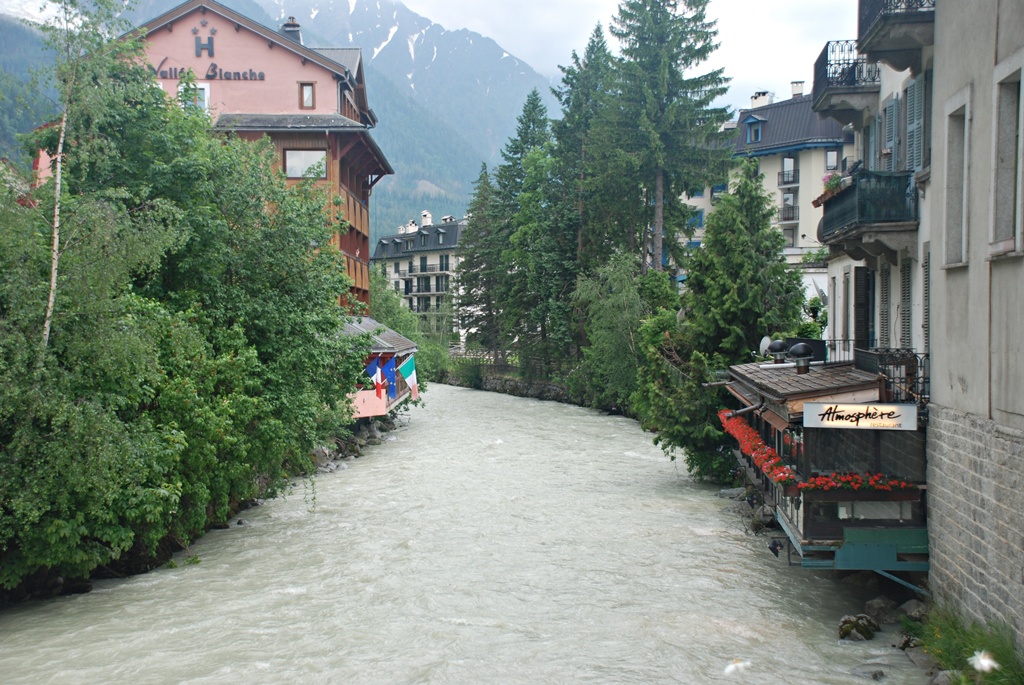
There is a river called Arve that passes through Chamonix. This fast flowing river receives it water mostly from Alpine glaciers like the Mer de Glace (which was the next item in my itinerary) and flows right onto Geneva. In my mind, I had thought that rivers and streams that are fed by melting snow would be pristine and clear and I was surprised to learn that the water is generally very muddy when the snow melts and true enough, the water looked anything but clear.

We had planned to have lunch in the village and I found myself looking forward to it. A Hungarian lady from our group was seated next to me. Her name was Catalin and we fell to talking about Hungary and I used the opportunity to ask her about life during the Communist regime and now. She was about 35 when the regime fell and she remembered that time very well. Her view was that they are better off now, even if they are exposed to the perils of globalization and the attendant issues like unemployment, depression etc. When I asked her what the main difference is, she said it is the freedom they enjoy now, which was never the case earlier. I was reminded of a very similar comment made by a taxi driver in Bucharest when I asked him a similar question.

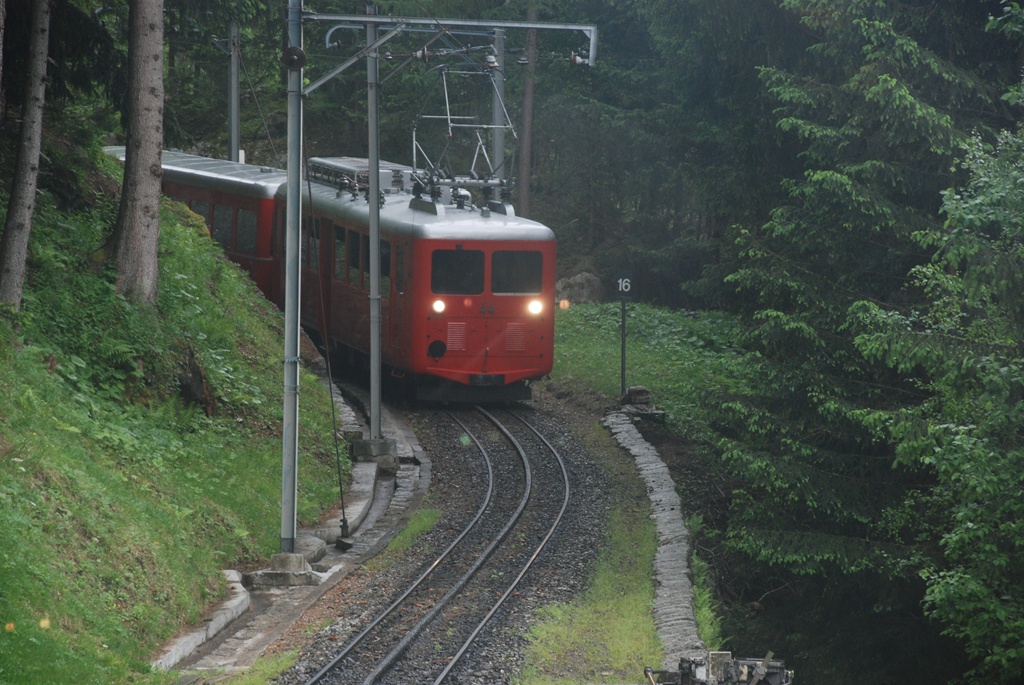
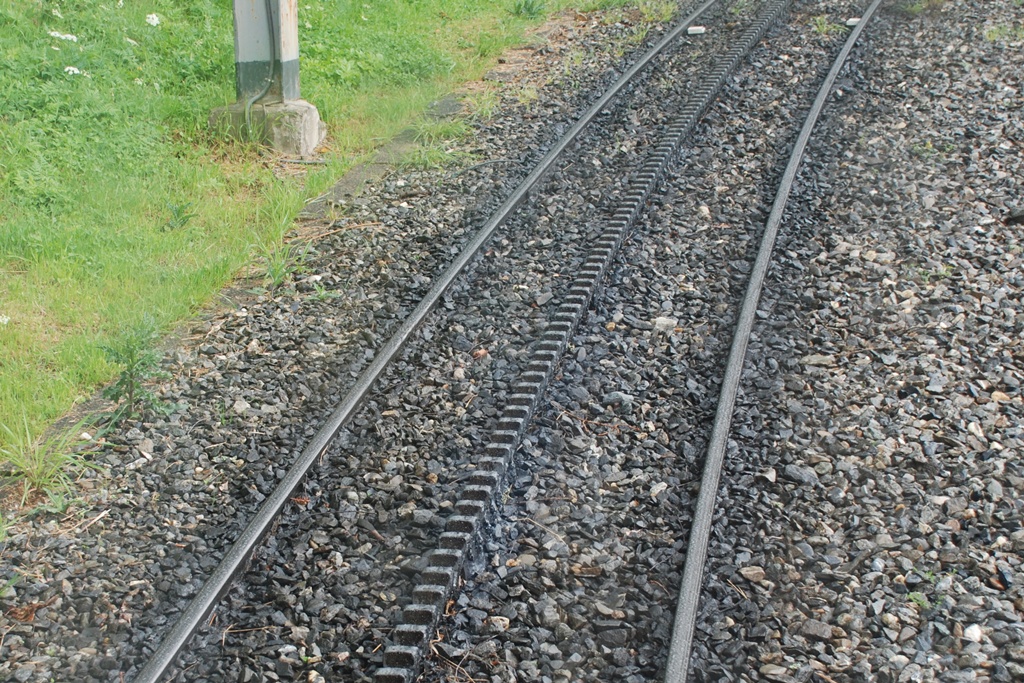
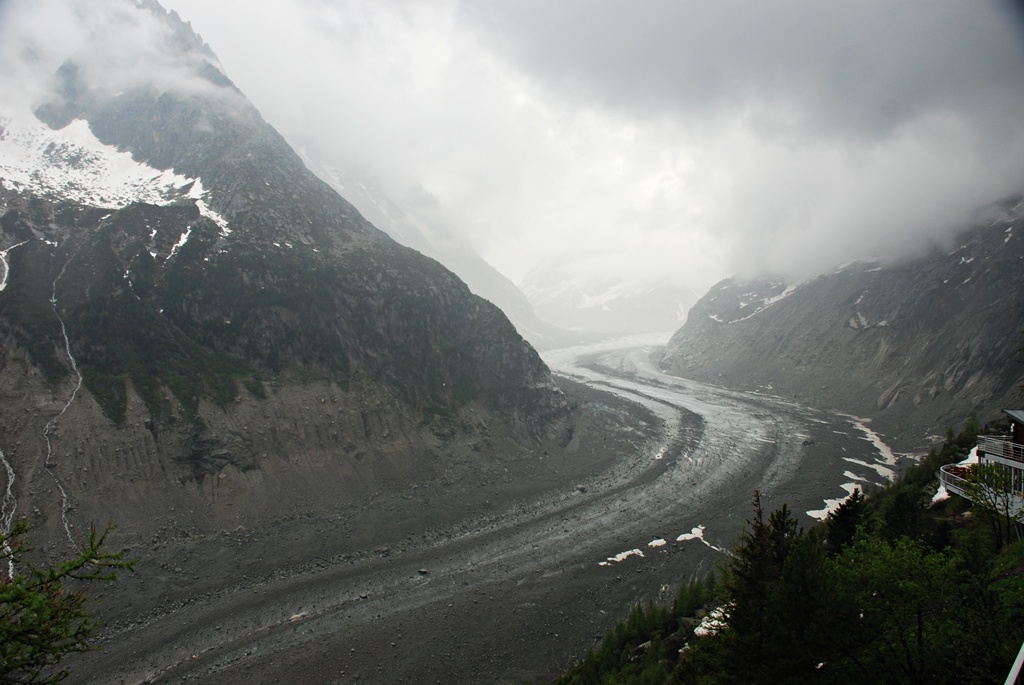
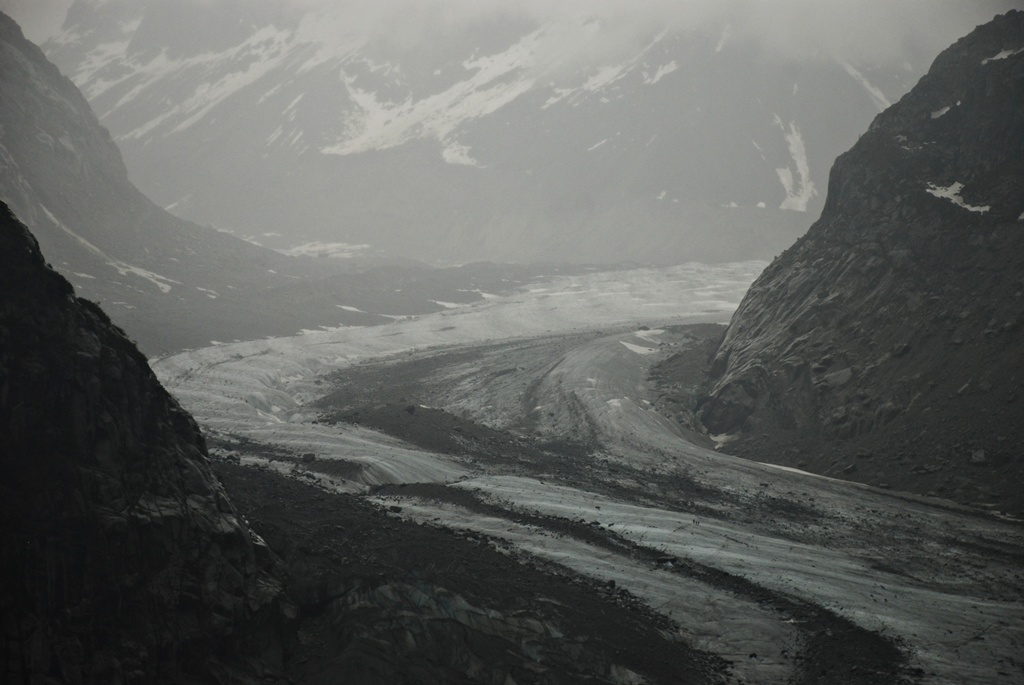
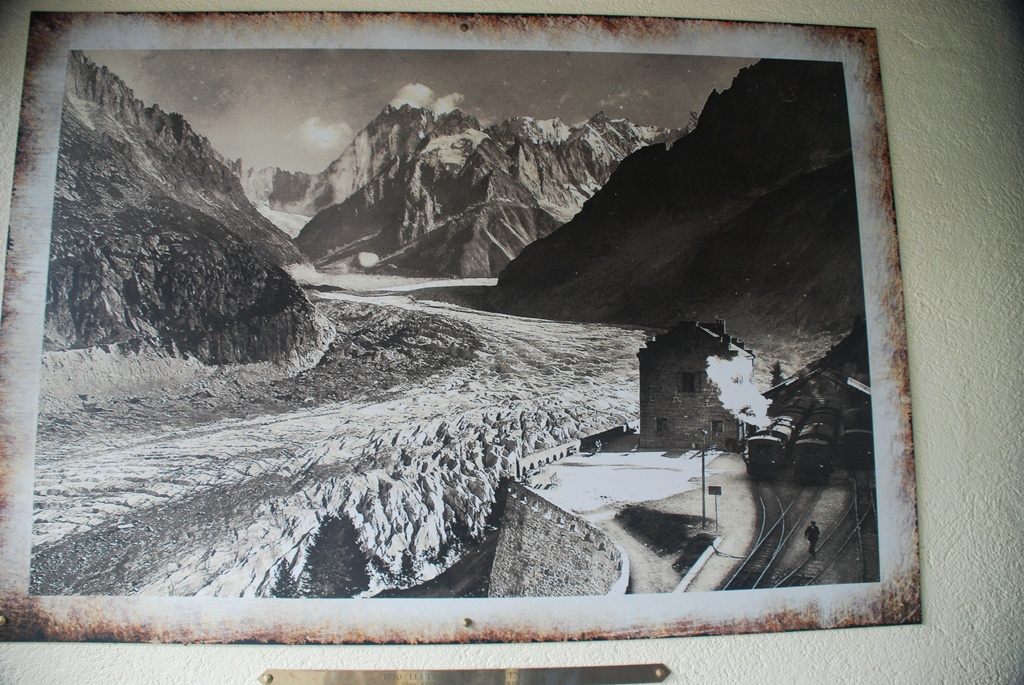
Right near Chamonix is the biggest glacier in France, called Mer de Glace. This glacier can be viewed from a place called Montenvers, which is at a height of 1,000m from Chamonix. The glacier has a surface area of 40 square kilometres and a length of 7 km. A rack and pinion train takes you upto Montenvers and the distance is covered in 20 minutes. The rack runs between the tracks and this helps the train to make the steep climb.

The train moves up the mountainside through pine trees and tunnels carved out of rock. It was conceived in 1892 and became a reality when the first train steamed into the station at Montenvers, in 1909. A slight drizzle had started by the time we got to Montenvers and so, I did not get much time to look at the glacier. Here again, I was surprised as I was expecting an expanse of sheer white but was greeted by something that looked more grey than white.

There is an ice cave that leads into the innards of the glacier but that was closed for some maintenance. Here also I met a few people who had just come after trekking the glacier. They were part of a group that was going to scale a peak and this trek on the glacier was a kind of training in preparation for that climb.

The glacier has a thickness of 120m at its centre but has been reducing in thickness by about 3 to 4m every year since 1988. The glacier is advancing at a pace of 120m every year but shrinking by 125m each year as well. So, it is shrinking faster than it is growing. It was sad to think that this glacier might be gone in the near future; such are the effects of global warming. There is a photo at the station which shows the position of the glacier in 1909 and one can easily make out the difference in height between then and now.

With that somber thought, we trained down and got on to the coach to get back to Geneva.

27 May 2012

The sun was shining nice and bright as we set off for Dover. As I was already familiar with the GPS from the day before, we got on to the motorway without much incident. The scenes along the road were quite pleasing with nice pastures and farms. A bit into the journey, we saw the signboard to Canterbury and decided to stop there on the way. Canterbury is very famous for its cathedral and held an intrigue because of Canterbury Tales, even if I have not read it. Unfortunately, when we arrived at the Cathedral, it turned out that access to most parts of the Cathedral was closed due to some service going on and would open only after lunch. However, that would have interfered with our Dover plans and so we decided to give that a miss and I could just a couple of shots from the outside.

We walked around the town and it was obvious that most of the shops catered to tourist trade. However, the walk itself was interesting as there were many nice looking old houses in the town.

There was one particular house that was tilted to one side and my friends who are experts in architecture told me that this would have happened with age and it seems this happens with many old houses. If I were not with them, I would have thought that the house was constructed so!

After a refreshing cup of coffee, we were soon hurtling towards Dover. Dover is on the seaside and I had read about the white cliffs of Dover when I was young. In one of the books we had on the Second World War, I had also read of the evacuation of Dunkirk and the role Dover played in that. Hence, I was very eager to get to the castle.

The castle was built between 1179 and 1189 by one of the most powerful monarchs in Europe at that time, Henry II. The castle has since expanded and covers a large area now. The castle itself stands on an old Roman location where they built a lighthouse in the first century and it can be seen even today. Dover itself was seen as the “key to England” and withstood many attacks from the Romans, Normans, French and finally the Germans. The French coast is just 60 kilometres away, across the channel, and is visible on a clear day from the castle. It seems that all it took for a shell that was fired from Calais in the French coast to reach Dover was 70 seconds!

The castle itself is preserved pretty well and the building called the Great Tower forms the core of the castle – it has multiple levels with a hall for gatherings, living area of the King, a small chapel etc. The rooms are very colourfully decorated and I am not sure whether this is a modification of the modern times or whether this was so in the early days. Generally, I have seen that Europe is rather drab in its colours and lack the vibrancy that we see in India. There were a couple of actors dressed up as the King and the Queen, conducting a mock court for the tourists and I thought that was rather tacky.

In one of the rooms, I saw a coat of mail, shield and a sword. All this was so very heavy that I was quite surprised at the strength of the men that would have worn those. I lifted up one arm of the coat of mail and that itself was too heavy for me. Someone said that the knights had to be lifted on to the top of their horses after they had worn all this armour, as it was impossible for them to get up there by themselves!

Right outside the main castle is the old Roman lighthouse and a small church alongside it. It is an old church that has served the military for many years. The interiors of the church were quite sparse and there were many flags inside.

Given the strategic significance of Dover, it was but natural that it became an important military location. In 1940, when France fell, about 400,000 Allied forces got stranded at Dunkirk in France; they had the Germans behind them and the English Channel ahead of them. Speaking at the House of Commons, Winston Churchill said that the “whole root and core and brain of the British Army” was stuck at Dunkirk and they faced death or capture by the Germans. An evacuation was ordered and it started on May 27, 1940 and ended early in the morning on June 4, with the rescue of 338,226 soldiers. While it was an evacuation and so a retreat, Dunkirk was still regarded as a victory as the British Army would have been crushed had they failed to rescue those troops.  Many German commanders considered that Germany’s biggest mistake in the Western Front was its’ inability to stop the Dunkirk evacuation.  It was on June 4th, after the evacuation, that Churchill made his famous “We shall fight on the beaches” speech.

Vice Admiral Bertram Ramsay lead the whole exercise from the dynamo room (hence the operation was called Operation Dynamo) in the naval headquarters, located in the tunnels under the Dover Castle. It was a large scale logistics operation conducted under extremely dangerous conditions. The whole nation was focused on Dunkirk and many civilian ships and even small fishing boats (it seems the smallest one was but 18 feet long) took part in the exercise and that was why it was successful.

The tunnel system under the castle is very extensive and Admiral Ramsay had his headquarters there. We took a conducted tour through the tunnels and saw office rooms, living quarters, telephone equipment room, repeater station etc. It must have been quite an effort to spend days in there with a war going on. Unfortunately, they do not allow any photography in the tunnels as the fire sensors are supposed to be quite sensitive and might give off alarms when the camera flashes go off. As we walked through those tunnels, exactly 72 years after the day the evacuation started, I could not but feel the tension and the pressure that must have gripped the people that lived there at that time. War causes so much suffering and sorrow – yet, we are forever in wars!

The view of the sea from the battlements was quite nice and we could indeed, see France in the distance. Dover castle is quite different from the many other castles I have seen as it looks very functional; probably because it was used even as close as fifty years back.

Since we were standing on the cliffs themselves, we could not see much of the white cliffs except what we could see by looking up. These cliffs are largely of chalk. During the cold war period, the British Government equipped the tunnels to be a base and retreat for the leadership, in case of a nuclear attack. However, it was found later that radiation would have seeped in through the chalk cliffs and hence the location was abandoned.

21 May 2012

As it often happens, the places that are the closest are often the ones that are farthest! This has been so with me, in the case of Tippu’s Fort which is located at Palakkad. Palakkad is but 15 Kim’s from my hometown, Chittur, but I have never visited the fort after my schooldays; which, admittedly, was way back. So, I had decided that I would make it to the fort this time around when I went to Chittur.

The fort has been restored quite recently and some of the ramparts that had fallen down have been rebuilt. It dates back to medieval times and was renovated by Hyder Ali (Sultan of Mysore) in 1766, when he was invited there by the king of Palakad to help against an invasion threatened by the Zamorin, the king based in Calicut. Hyder took advantage of the opportunity, realizing the strategic significance of Palakkad. The fort changed hands a few times between the British, Hyder Ali and his son, Tippu Sultan till 1790. The British controlled the fort from 1790 onwards and used it as their base. Even today, the fort is known as “Tippu’s fort” even if Tippu held the fort only for a few years and was not the one that built it. When I thought about it, I was happy that there were at least some monuments left as remembrance for this brave and patriotic son of India.

I have felt that Tippu Sultan has often been sidelined and his role in history underplayed, by vested interests. He was one of the very few kings in South India that realised the threat the East India Company and the British posed. His wars with the British have been well chronicled and even though he succumbed in the end, he remained a thorn in the side of the mighty British for many a year and that too when all the rulers of the neighbouring kingdoms had meekly surrendered, out of cowardice and for personal gains. He had the vision of free India and fought for it, ultimately giving his life. As a true hero, he fell in battle, fighting till the very end.

Yet, he is painted as a religious fanatic, one who was only interested in converting Hindus to Islam. No matter that the first sight that greets you as you walk into his fort in Palakkad is a Hanuman temple – one of the most powerful Hindu gods. This temple is a big favourite with devotees even today. It also does not seem to matter that the very famous Srirangam Temple stands within Tippu’s fort and stronghold at Srirangapatnam and I cannot imagine that it would have been a huge effort for him to mow it down. It is obviously of no significance that it was Tippu that sent money to help the Kanchi Mutt after that Hindu monastery was ransacked by the Hindu Maratha rulers. The list goes on and I am just writing what I have seen and heard and by no means am I an expert. I am sure that his armies would have raped and plundered as is the wont of victorious armies but then, which victor has ever held his forces back after a battle? Even today, in our “cultured” ways, the spoils of war go to the victor.

The fort itself stands on a small hill and there is a large moat surrounding it. In my childhood, I had heard stories that only Tippu’s horse could leap over the moat and when I looked at the size of the moat, I realised that it was just that, a story, given the size of the moat.

There is very little water in the moat today and you enter the fort through a small bridge.

The fort itself is very functional and is built with large granite boulders and limestone. It is of rhomboidal shape shape and has seven bastions with very thick walls. There does not seem to have been much effort spent to make it beautiful in any way. At the main entrance, I saw some decorations on the wall above the door and that was pretty much the only decorative piece I saw in the entire fort.

As you enter, on the right, there is a small idol of Hanuman set into the wall. This has now become a very famous temple and there were many devotees even at mid-morning, when we went in. I was not allowed to photograph the temple itself, in keeping with the recent form of intolerance which denies entry to non-Hindus to temples. I also noticed that the temple itself had a “saffronised” look with the imagery and colours used and even with name of Ram, written in Hindi. Perhaps this is a good indication of who controls this temple and I felt one could easily transport this temple to North India and it would fit in there very well.

In the centre of the fort, there are a few buildings and this must have been where the people that stayed in the fort lived. The buildings do not look as old as the fort and must have been constructed during the times of the British. There is a very well maintained lawn with a couple of large trees.

There is also a stepped well on one side of the courtyard and I learnt from the Information Centre that this well was dug later.

The Information Centre is hosted in an interesting stone building with 28 pillars, which was also constructed later. Unfortunately, there is not much information provided about the fort or the battles that were fought there or the people that lived there. There are some photographs of the restoration and of other places of tourist interest in Kerala.

One of the buildings houses a jail and that was of personal interest to me as my father was imprisoned here for two weeks in 1961 when they were agitating for the implementation of the Land Reforms Act in Kerala. I guess the jail must have been in the same old shabby condition even 50 years back.

There is a walkway that takes you around the wall of the fort and there were some good views all around. One could see that the fort offered a very good defensive position. I was quite disappointed that there were no markings or indications of any of the places of interest within the fort or any details provided about its history. There is a small board at the entrance with a few lines on it but that hardly does justice to the place. It was equally disappointing that there was no mention of Tippu or Hyder or anyone else that lived there. But, the people of Palakkad still honour that valiant son who was the first to rise against the British in South India and call it Tippu’s Fort…..


I started off a little before lunch in the Jeep and the destination was the Pegasus camp about 60 km away from Bangalore. This was the first time that I had dared to take my 1967 model Jeep outside the city since I bought it. So, it was with some apprehension that I set off and it looked others too had the same apprehension as Sandhya kept calling me in between to check whether all was fine. In the end, I felt I should have been more confident of the Jeep – it was a smooth drive all the way through. Driving on the countryside with a Jeep, which is partially open is so much more fun even in the summer. You felt a bit more in touch with the surroundings and not cocooned.

The camp is in the middle of nowhere with the nearest village being a small one called Kallukote. I have always been struck by how pronounced the change is between Bangalore and the rural areas surrounding it. Just 50 km off Bangalore and you are in real rural heartland. Probably I feel this more because in Kerala there is not that much difference between cities and the rural areas.

I was driving along in good cheer and stopping to take photographs once in a while. The land looked well irrigated and most of it was under cultivation. It was good to see land being put to good use and not being barren. As I stopped for one such photo break, I saw a sight that I had not seen since early childhood – a man ploughing his land using bullocks. He was kind enough to allow me to take photos of him. His name was Vasanthappa and he said he grows maize in his fields. It was quite amazing that within 50 km of one of the largest cities in one of the largest economies of the world, a man was still ploughing his land using a technique which was centuries old. I guess a tractor must have been beyond his means.

Very near the camp is a Lakshmi Narasimha temple and there is a medium size hill (about 700-800 ft high) right beside it. There was a villager standing near the temple and he told me that they had another temple right on top of the hill. He showed me a post right on the top where he said a lamp was lit on particular days. I was curious and wanted to go up the hill.

So, I went to the camp, freshened up and came right back. There was a rough, rocky road cut into the hill side and my Jeep would have gone up that track, steep as it was. However, since I have no experience with such riding and as I was aapprehensive of causing some damage to the vehicle, I parked it near the temple and proceeded up the hill on foot. As I started walking, I realised that I was alone on the hill. It was a bit of an odd feeling, it was so silent and still all around. The path was reasonably easy, though a bit steep and I was at the top in about 20 minutes and what a sight it was!

The temple itself was a very small but what attracted me more were the steps that led up to it and a drawing of Hanuman done with charcoal or something like that, on a rock. The image, the steps and the tree beside it all combined to provide a nice ambience. The highlight of the whole experience was, of course, the simplicity of everything. Simple lives, simple beliefs, simple temples, simple gods…..

The post that the villager had shown me was driven into a rock and was almost at the highest point.

The views all around were fantastic with majestic hills looming in the distance. There were many small villages to be seen but most of it was agriculture land.

I sat there for sometime absorbing the stillness and the quiet. It actually takes effort to get used to that. One is far more comfortable with all the noise that one is surrounded with, in the city. It was a bit eerie to think that I was all alone on that hill. It was a very nice feeling and needless to say, was the highpoint of the day. I will be back here soon….

15 March 2012

It was a bright day awash with sunlight when we landed in Brunei (or more properly, Brunei Darussalam), which is located on the north western tip of the island of Borneo. This was a my first trip to this country, one which had made me curious for a long time because of its much talked about wealth. Bandar Seri Begawan is the capital of the country and is a small town and so we reached the hotel very quickly from the airport.

Brunei was once a much larger country, which also included the provinces of Sabah and Sarawak which are now in Malaysia. It was ruled by the British as a protectorate and became a free country in 1984. It is now ruled by the Sultan and its rich petroleum resources have made the Sultan one of the wealthiest men in the world. The population is around 400,000 with more than half of the population living in the capital. Brunei is considered a developed country and ranks fifth among the countries of the world when measured by GDP per capita.

I had a couple of hours free between lunch and dinner meetings and decided to take a walk around town. The hotel was smack in the middle of town and so access was easy. My first impression of the city was that it looked like a mini version of Kuala Lumpur with smaller buildings and lesser crowds; possibly the language being Malay also contributed to this feeling of similarity. There were good many cars on the roads but very few people. In fact, I got a feeling that there are more cars in BSB than people; later, I was told that Brunei ranks first on number of cars per capita (but a quick look in Wikipedia puts Brunei in the 8th spot). I shudder to think what this must be doing to the environment. However, one has to also admit that they have done a very good job in maintaining the green cover in the city and one could see trees everywhere.

The city itself was very clean and it was a pleasure to walk around. The first location I got to was the Independence Square. This is where official functions are held and it is bigger than a football field. There is a lovely grass field in the centre and I saw a few people using the facility for catching up on their exercise.

A short walk from there brought me to the Omar Ali Saifuddien Mosque. This is named after the 28th Sultan and the hotel web site claimed it to be one of the most magnificent mosques in South East Asia. Unfortunately, I could not go in and take a look as it was closed to tourists on Thursdays and Fridays. The mosque does look quite beautiful from the outside.

Alongside the mosque is a lagoon and on it is a replica of a 16th century barge and there is a walkway between the mosque and the boat. It looked quite beautiful and I was curious about why there is a boat attached to a mosque but I could not ask anyone and so that remains unanswered.

My hotel was situated right next to a small canal and when one crossed the bridge, there was a market selling various items such as vegetables, fruits etc. I had noticed this when I set out from the hotel and had planned to visit it on the way back. On the way back, I popped in there and was surprised to find that most of the stalls had closed down even if it was still broad daylight. Even as I walked through the market, no one made any effort to sell anything to me; I mean even the stalls that were open. There were some water taxis available from near the market and they offered to take me to the Water Village, which, it seems, is called the Venice of the East. I was a bit suspicious of this claim based on what I had read on the internet and so declined the offer.

I wandered around a bit more and came to what seems to have been the old customs house and a jetty. The water village (called Kampong Ayer) was visible across the lagoon and it consists of small shops built on stilts. It reminded me of the sea village I had seen in Phukhet, but that was on a much larger scale than this.

By this time, dusk was setting in and I strolled back to my hotel. There were still many other points of interests like the National Mosque, Museum etc. but those will have wait for another day and another trip.

One point that struck me about the city was that it was very quiet and relaxed. There was no hustle and bustle and nobody seemed to be in any hurry. Everyone seemed relaxed and contented. Later on, when we went out to dinner with our host, Chin Toon, he told me that he found the quality of life in Brunei to be superb. He is a Malaysian businessman but likes the life in Brunei as it offers him “the best balance between work and family”. I could understand his point perfectly and anyone that visits Bandar Seri Begawan would have no difficulty in agreeing with Chin Toon.