Posts Tagged ‘Photo journal’

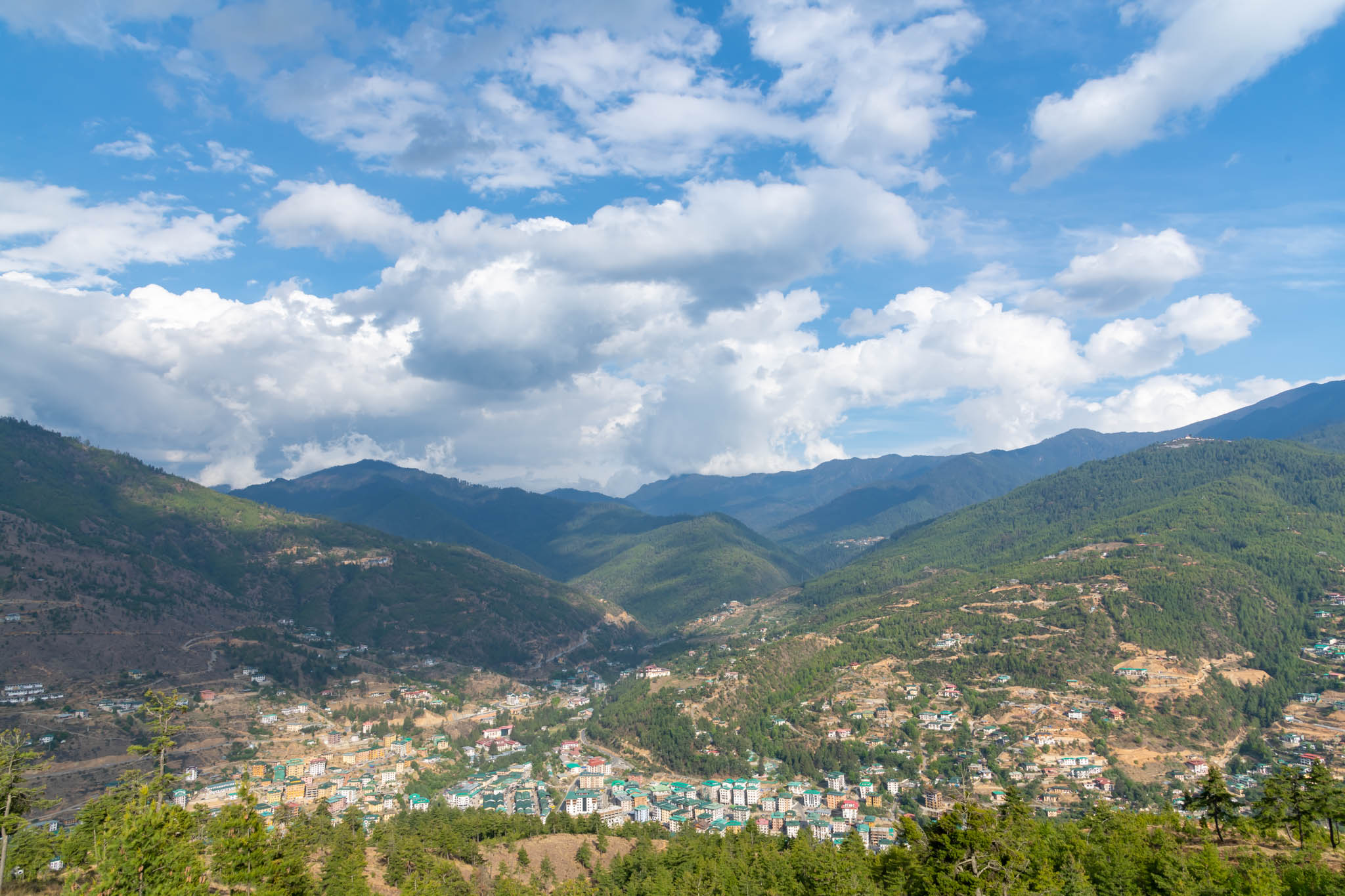
A country that has intrigued me for years but one I have had no reason to visit in any official capacity – Bhutan. Suddenly the stars aligned, and Sandhya and I set off to visit Bhutan in the last week of April; 26th, to be precise. As first-time visitors, we planned a leisurely itinerary and limited our trip to the oft-visited touristy districts of Thimphu, Punakha and Paro. 

The first visual that comes up when one thinks of Bhutan is the Tiger’s Nest monastery and indeed Bhutan is all about monasteries and the wonderful natural beauty of the Himalayan countryside. As Sonam (our guide) mentioned on the first day itself, if you are looking for nice cities and modern amenities, Bhutan is not for you; nor will you find art galleries and such or locations with deep historical significance (except monasteries). Yet, the overall charm that Bhutan weaves over you is just exquisite. 

It is indeed well known that Bhutan accords greater priority to quality of life than mere economic progress and so they track Gross National Happiness as their Key Performance Indicator than GDP, as almost all other countries do. I was curious, and a wee bit skeptical, on the applicability of this concept on the ground. Just a few days there, even as a tourist, helped me understand what a difference it has made for the country just because they kept GNH as their most important focus from the 1970s. This is not to say that Bhutan has not seen its fair share of repression, human rights violation and ethnic cleansing and that too, as close as the nineties. The Lhotshampa people who constituted between 25-35% of the population had been uprooted and most of them expelled from Bhutan as part of the ethnic cleaning in the nineties. Bhutan is a monarchy still even though they have been transitioning slowly to a democracy with a Parliament and a Constitution. The King is the most powerful political figure even now and is the final authority in matters like national security. The day-to-day administration is handled by the Parliament, and I understood that the King could be impeached with a two-thirds majority in the Parliament. The King seems to be very well respected, and you can see his photographs everywhere; the next most visible person being the Jé Khenpo (Chief Abbot), the highest religious post in Bhutan. I was a bit cautious in my discussions with Sonam on Royalty and politics, especially as he seemed very loyal to the King, and I need to mention the caveat that we didn’t go into Southern Bhutan (where the Lhotshampa issue happened) or have exchanges with many local people. Yet, overall, people looked happy and content.

This could be because of their significant to commitment to Buddhism (people are very religious) and also because the government follows policies to ensure that everyone gets a chance to come up. For instance, free education and health are provided by the government and that too at all levels (not just schools). Sonam said there is not a single beggar (and we didn’t see any) in Bhutan and that if someone doesn’t have land or a house or children to look after them, the King will provide for them. Wherever we went, people looked quite happy and friendly. They were courteous and happy to pose for photos and all, the only hurdle being that of language as elderly people didn’t seem to know English. Another indicator of being content and patient was seen on the roads where people drive with consideration for others and there was almost no honking or disrespectful behaviour and this even though the roads are twisting and turning all the time because of the terrain. We didn’t see many bikes around even in the city and Sonam said most people have cars. Of course, it is not overcrowded like Kerala or most of the Indian cities as there are just seven hundred thousand people in Bhutan, which has an area of about 38,000 square kilometres.

If there is any significant wealth inequality in Bhutan, it isn’t evident. Sonam said that there are not many people in Bhutan who are very rich and nor are there who are very poor; most people are in the average bucket, he said. By the look of the towns we visited, it looked to be true. The whole country is very clean and well maintained but you do not see many swanky buildings around. Restaurants are all kind of in the mid-range and you don’t see very expensive ones and even the five stars (food, not accommodation) weren’t expensive as compared to India. Similarly, the cars are mostly Maruti or Kia or Honda or the odd Toyota and I probably saw only one BMW and one Mercedes during the entire trip and those two were both Government owned cars. Going from India where inequality is so evident and in your face, this is a wonderful change and the awareness, that no one is deprived, itself lifts you up. In addition, the Bhutanese are quite connected with nature, and they are quite tuned into environment protection. Bhutan is a carbon negative country, and it seems their Constitution stipulates that sixty percent of the land area of the country must be under forest cover all the time – the current cover being 71%. To me, this kind of summed up why the Bhutanese are happy, and I attribute that to the policies of their King and the Government and to how the people practice their religion. The operative word being “practice” as I have seen other Buddhist countries that are totally strife torn and nothing like Bhutan.

Bhutan’s policy is to make tourists spend money and not on increasing the number of tourists. Hence, the 50-minute flight from Calcutta to Paro costs 4-5 times the amount you spend for a similar flight between two Indian cities. Of course, there are only two airlines that are allowed to fly into Bhutan – one owned by Bhutanese government and the other by a Bhutanese businessman.  Every visitor to Bhutan must be accompanied by a guide and they must hire their own transport. I felt these restrictions have been devised to generate local employment. Further, every Indian tourist must pay a tax of Rs. 1,200/- per day and this goes up steeply to USD 200 for people from other nationalities. Same is the story with hotels where Indians get a preferential rate (which itself is much higher than what you spend in India for similar class hotels) as compared to other nationalities. 

We landed in Bhutan on a bright sunny day after a short flight from Calcutta. We were greeted in traditional style by our guide and the driver by draping the “khadar’ on us. It is a long piece of white cloth made of silk measuring about 6 ft by 1 ft. This seemed to be a very touristy thing and we were greeted similarly in all hotels that we stayed. Paro Airport is the only international airport in Bhutan, and it is a nice and small airport and so you are out of the place in a jiffy. As per our itinerary, our plan was to go to Thimphu from the airport, a drive of about an hour and a half. Our first port of call was a coffee shop, and that building was our initiation into traditional Bhutanese architecture. Straightaway, I fell in love with the buildings in Bhutan. One of the items on offer was butter tea and I pounced on the opportunity to taste it since I have read about it many times in travelogues of Himalayan travellers. Sonam had warned that it might taste like soup, and I didn’t believe him; turned out he was right. 

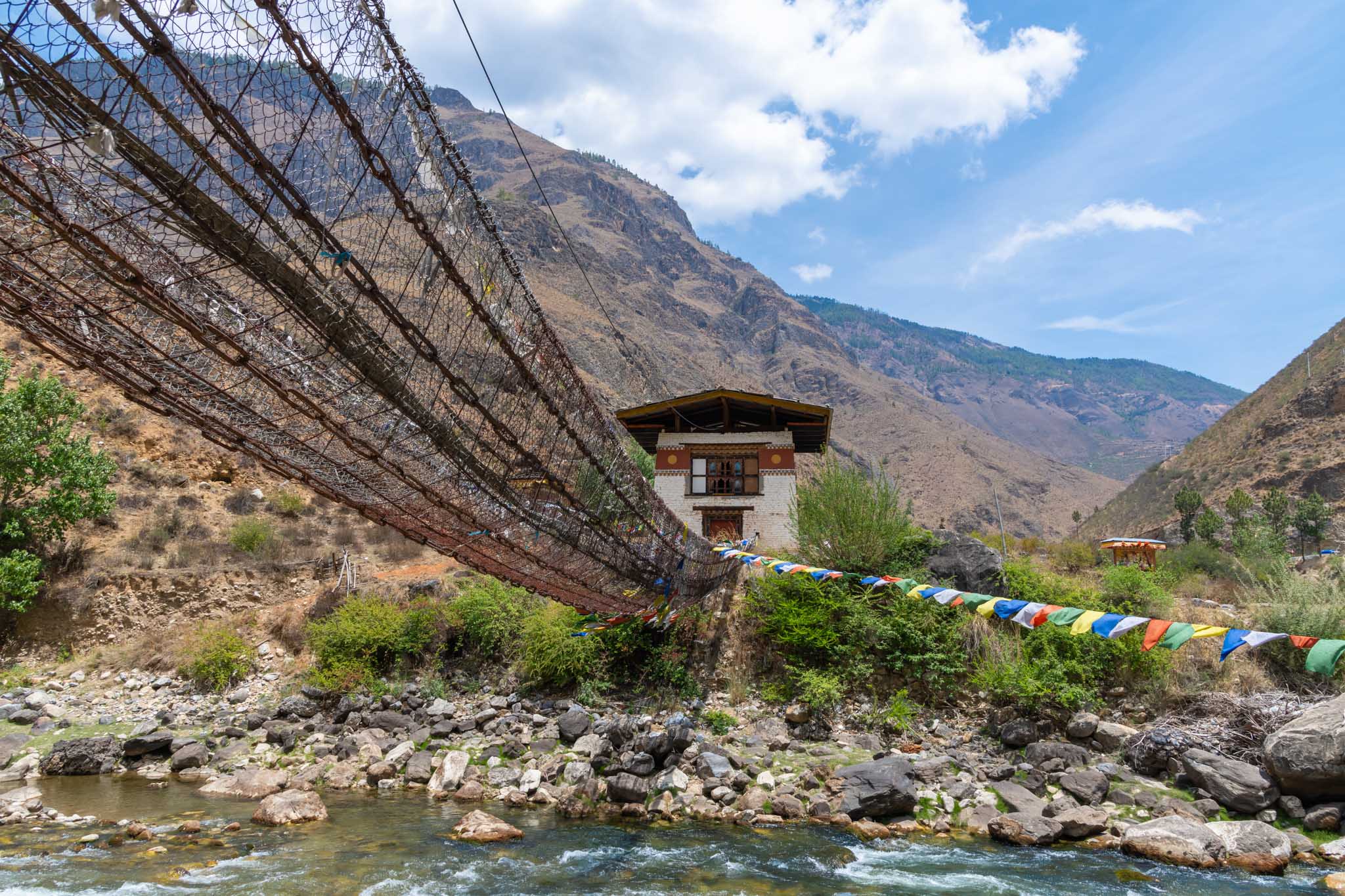
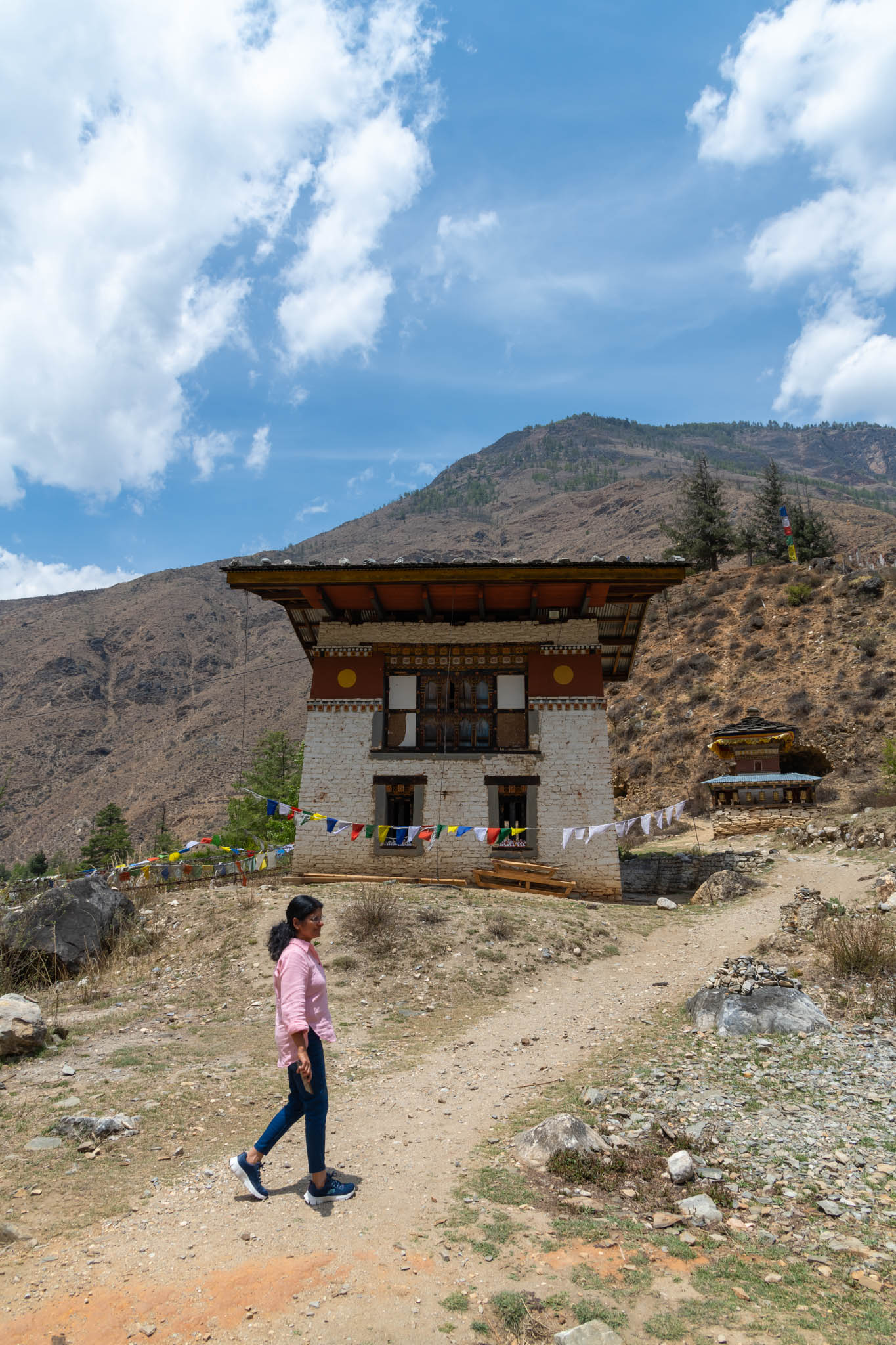
Within half an hour of leaving the café, we reached Tamchog Lhakhang – a temple dedicated to the 13thcentury Tibetan saint Thangthong Gyalpo. It seems that travellers were finding it difficult to cross the river and so Thangthong Gyalpo built a bridge using hand wrought iron chain links. The iron used was very durable and the bridge survived till 1969, when it was washed away in floods. The current bridge that we see was rebuilt in 2005 using some of the old materials. Gyalpo was a blacksmith and an architect, and he built many such bridges in different places in Bhutan. The iron chain link bridge cannot be used anymore and there is a foot suspension bridge that can be used to cross the river, to go the temple located on the other side. This is a private temple, and we did not visit as Sonam said we would visit enough and more temples in the days to come!
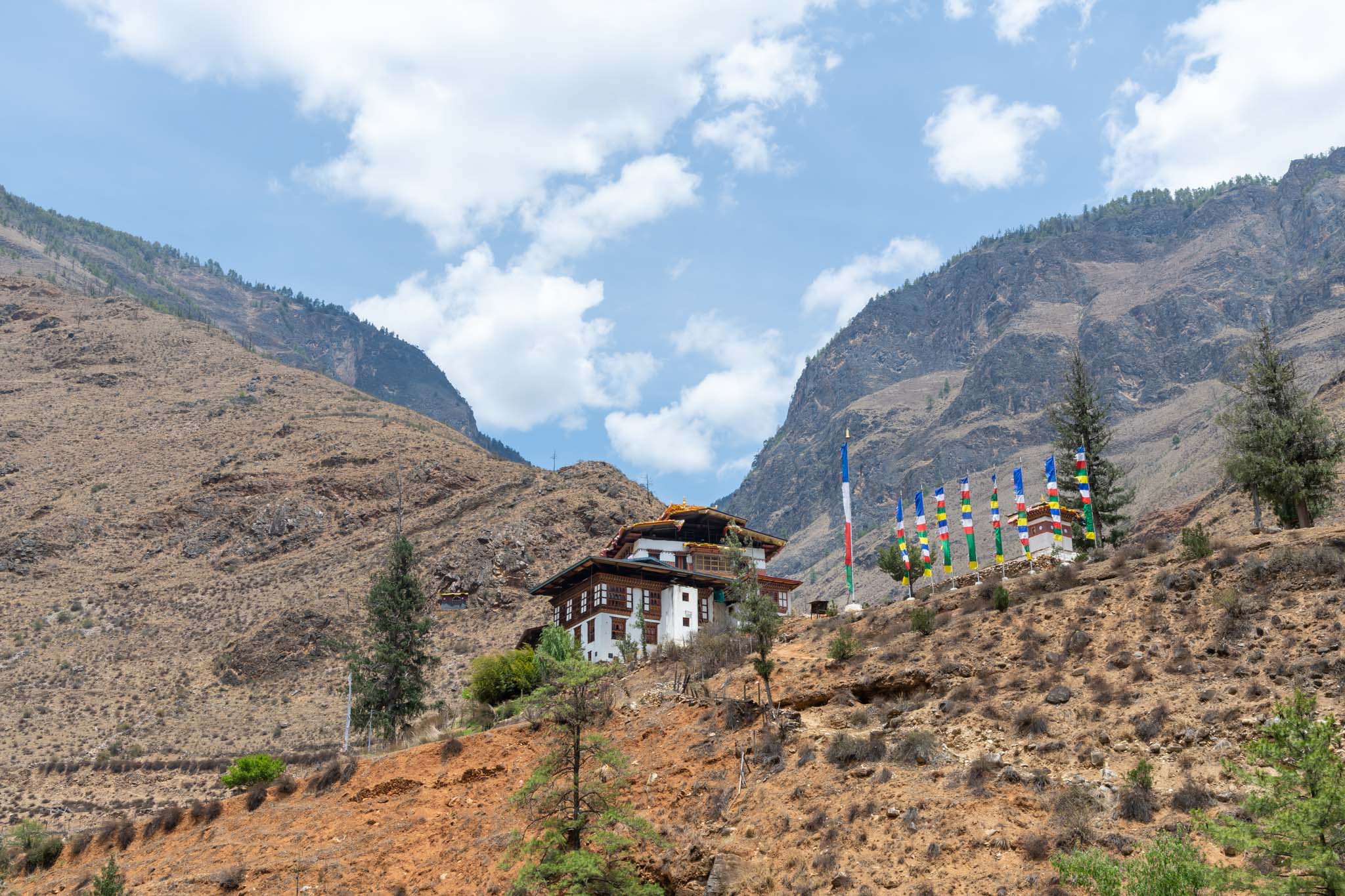
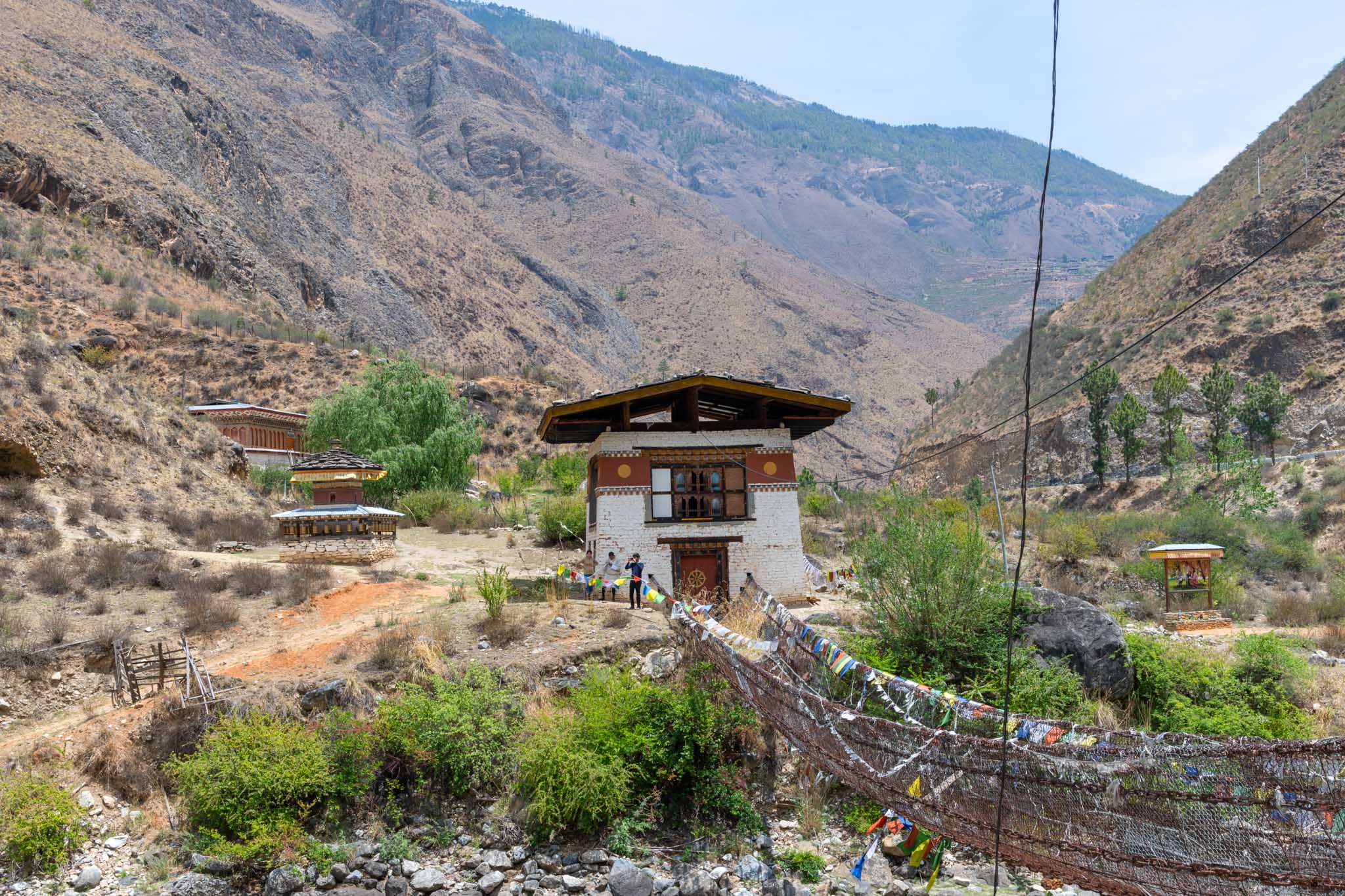
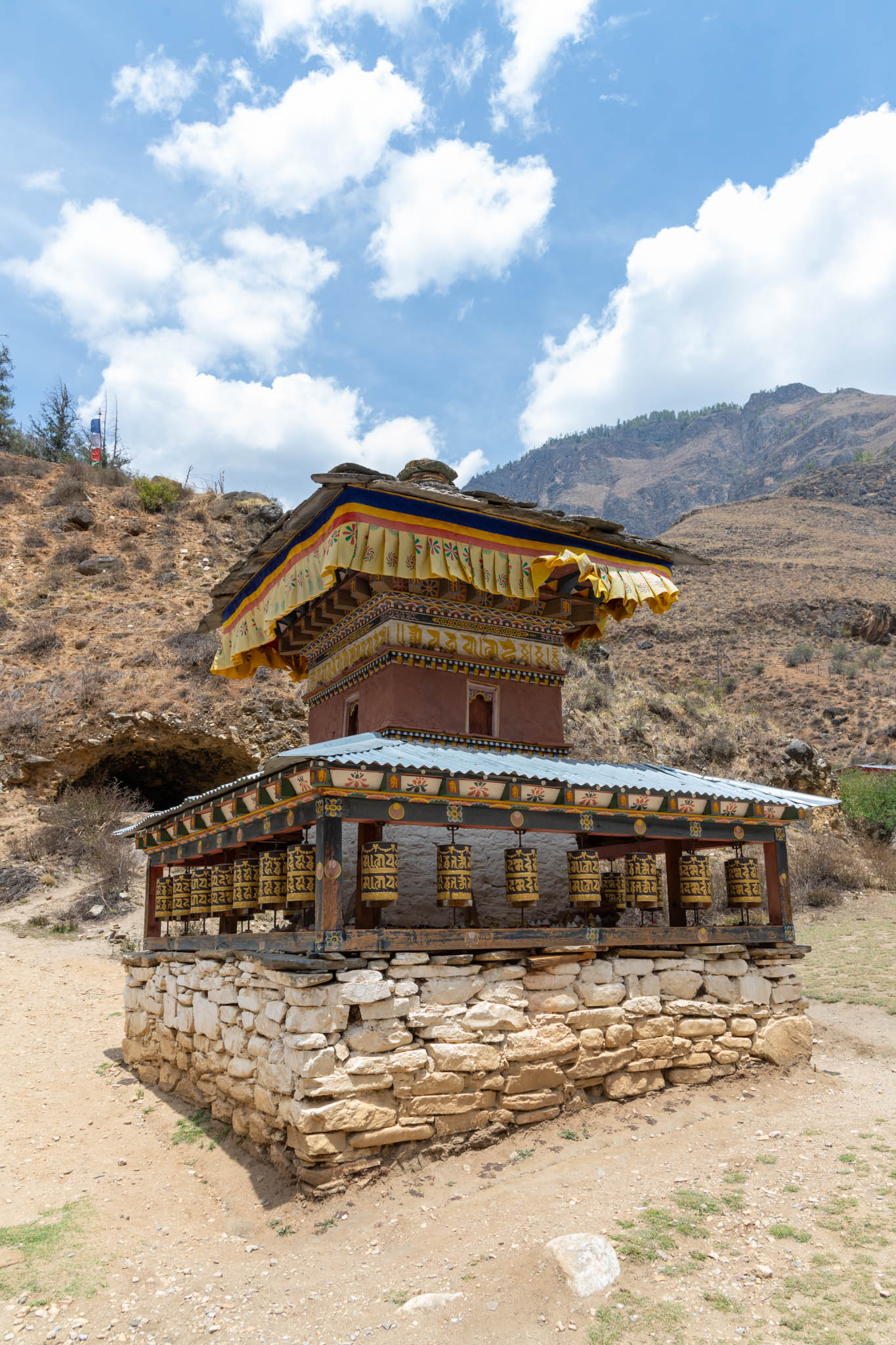
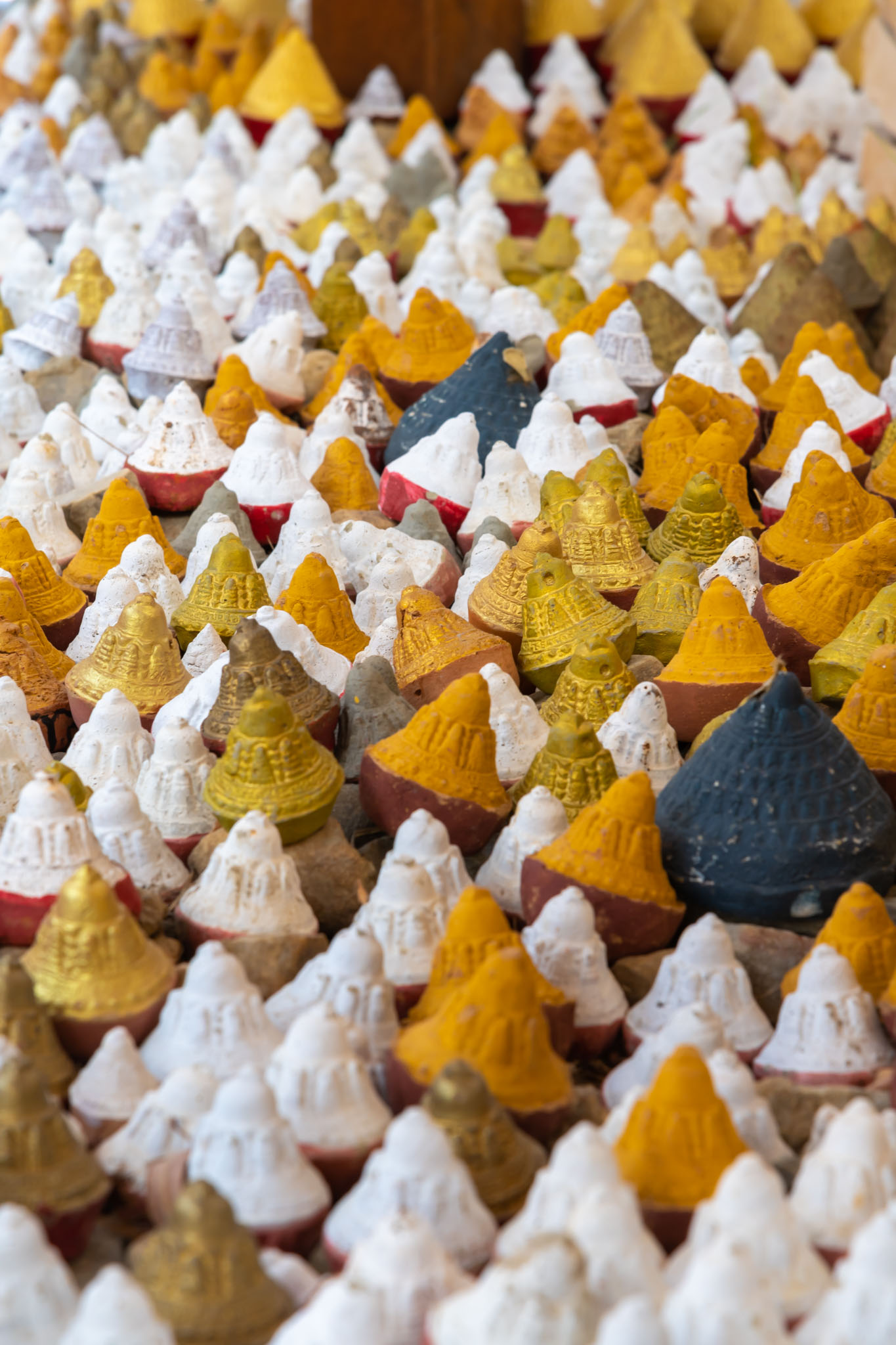
Near the temple there is a small room with some prayer wheels. On the floor, we found a lot of cone shaped objects. Sonam told us that in their version of Buddhism, there are a lot of rituals to be conducted after death. One of those is to create 108 such small cones (he referred to them as tcha tcha) which are made by mixing the ash after cremation with clay and then these votives are placed in different locations that have positive energy – for instance, a cave overlooking a river. The number 108 is special for Buddhists as that represents the 108 negative characters in humans – such as greed, anger etc.  

It seems another practice is to make 108 white prayer flags and place these, in memory of the dead person, in a site overlooking the river, mostly in hill sides. You can see such memorial prayer flags in many different places of Bhutan. Once the flags start to tear, they are taken away.
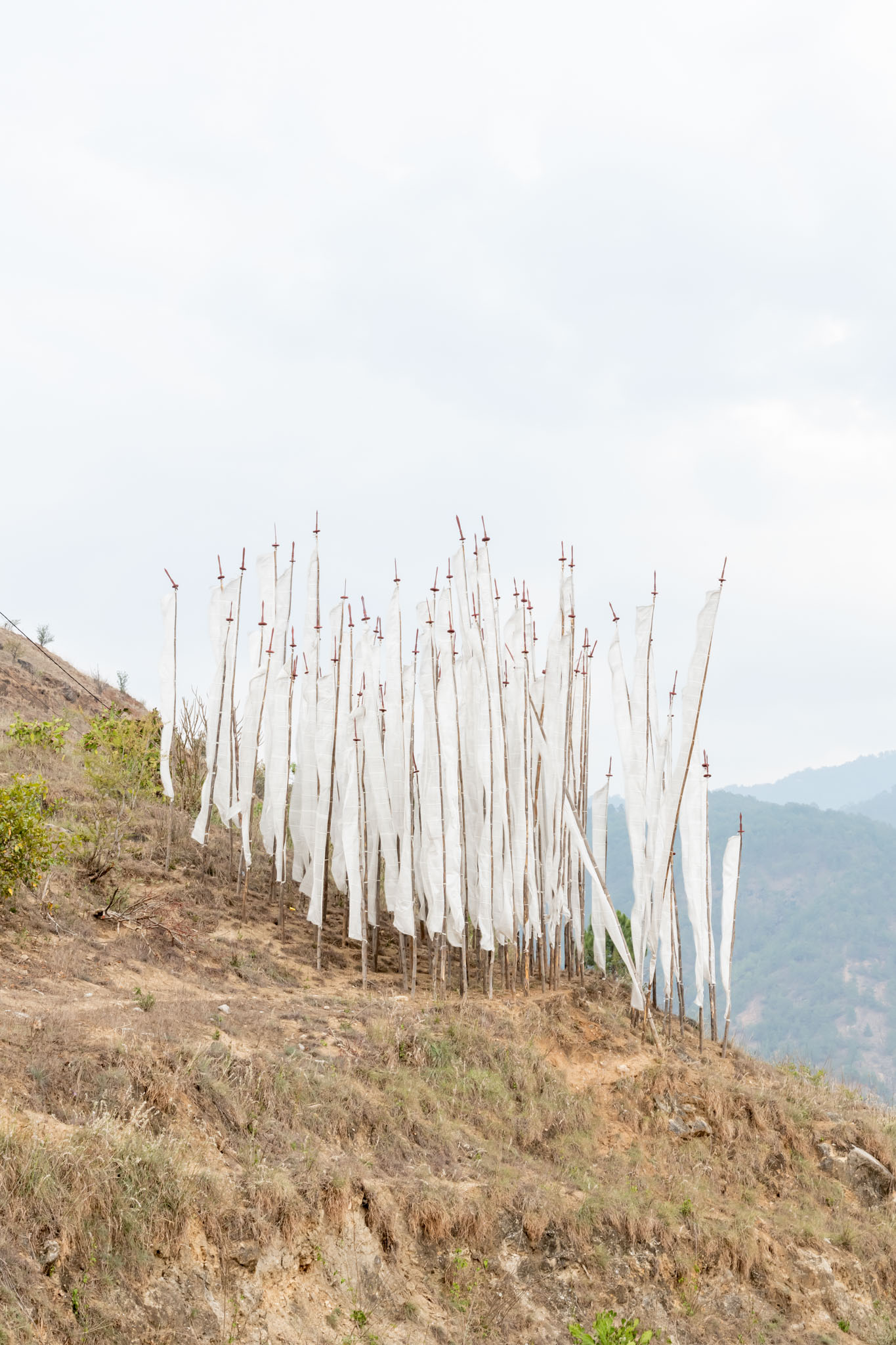
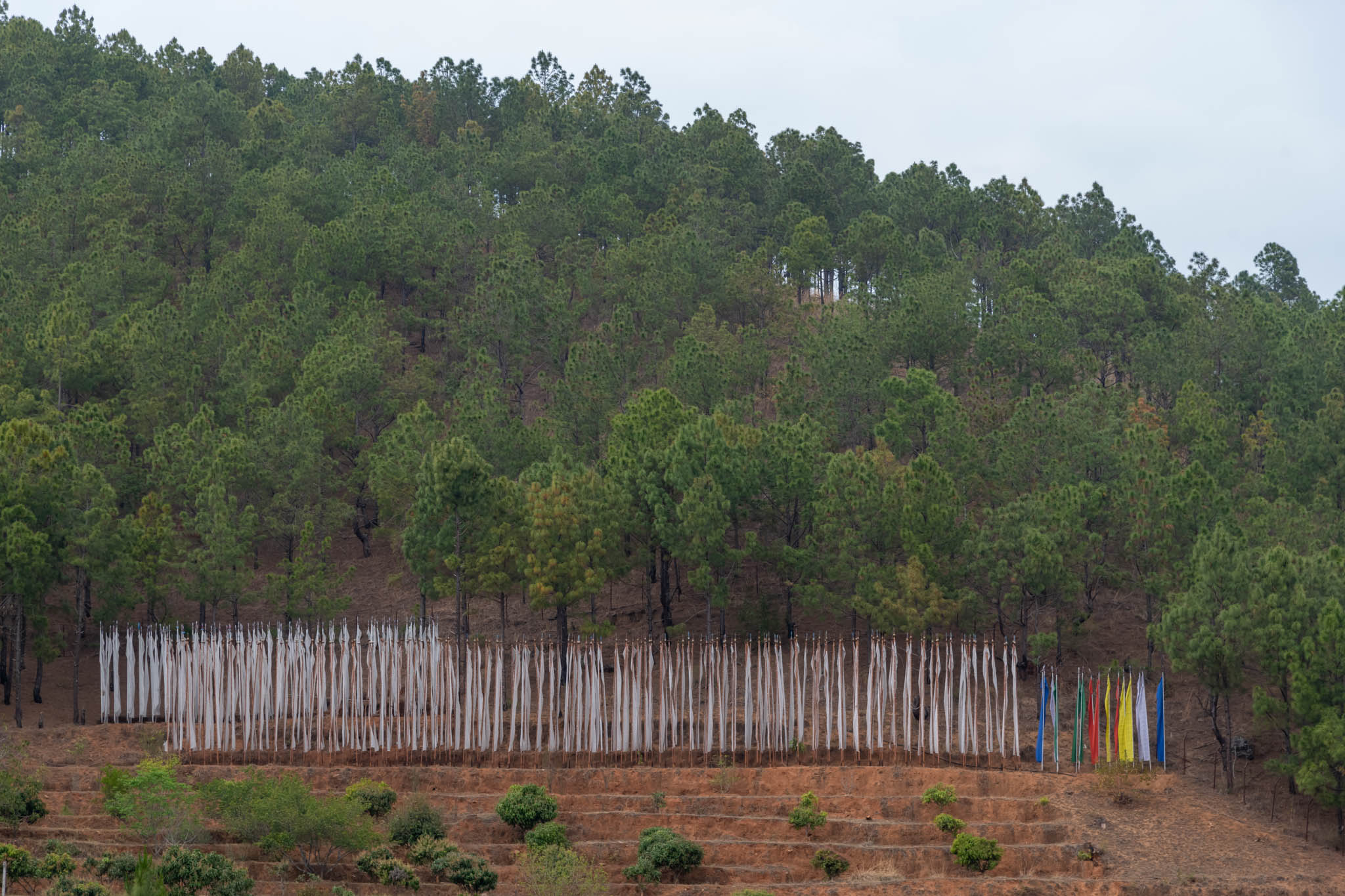
Sonam told me that Buddhism has too many rituals to be followed after death and that it is very expensive. He was even opining that some people are becoming Christians because of this exorbitant expense! Currently 85% of the population are Buddhists, with 12% Hindus and 3% Christians, with freedom of religion being guaranteed by the King. The version of Buddhism followed in Bhutan is Vajrayana Buddhism.

By and by we reached Thimphu and after the usual welcome ceremony, we headed out for lunch. There we discovered a Bhutanese curry Emadatshi – made with chilli and cheese – which was just wonderful with red rice. Red rice is grown in the Thimphu area, and it is a bit smaller and tastier than the variety we get in Kerala. 

After lunch, we visited the Memorial Stupa in Thimphu, which is also known as Thimphu Chorten. This was built in 1974 in memory of the third King of Bhutan who passed away in 1972, and it was renovated in 2008. Most stupas contain relics of holy men but this one doesn’t, and it only has a framed photograph of the third King. The building is quite beautiful and nicely decorated.

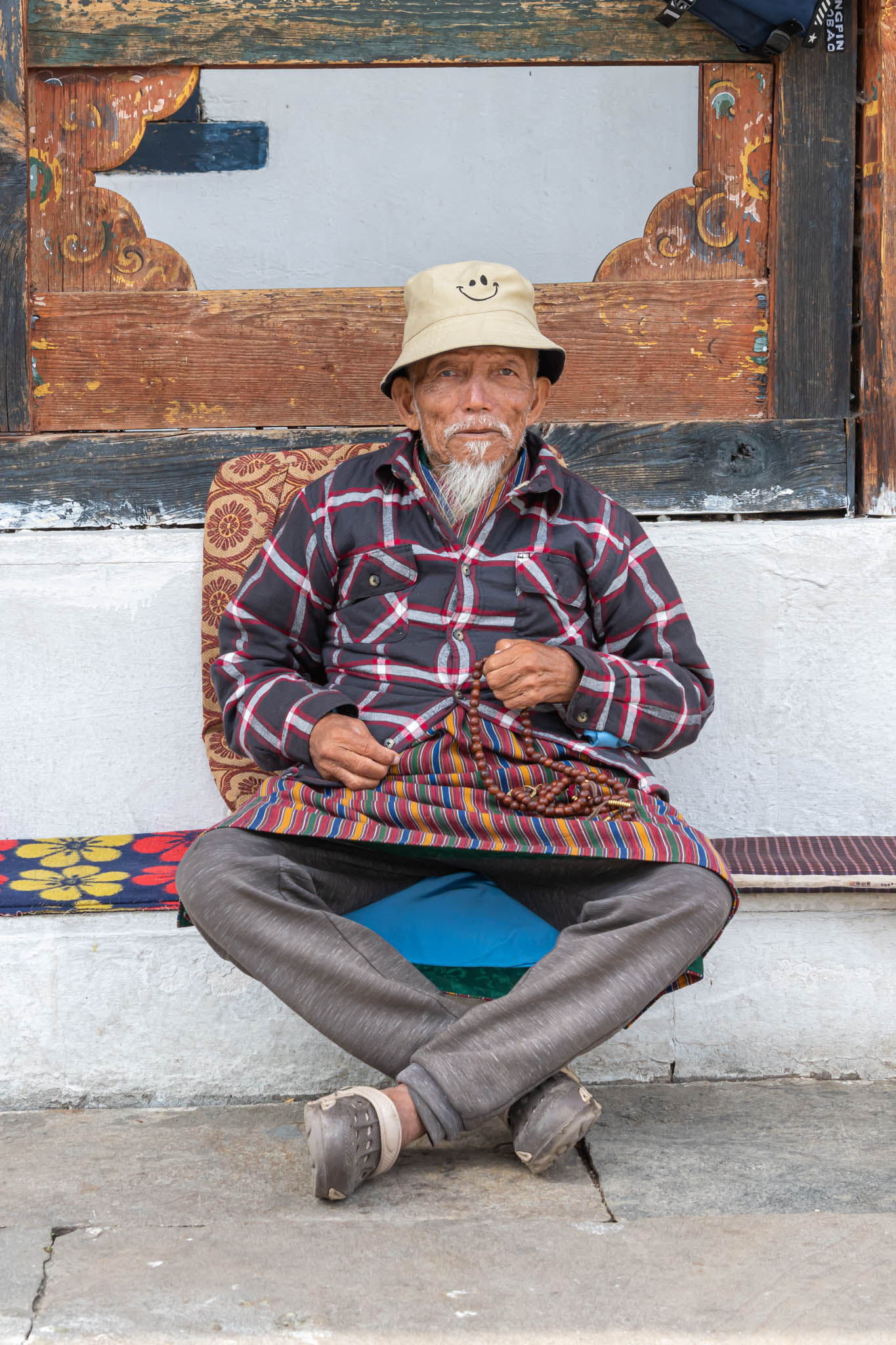
It is located centrally within the city and so accessible to all. It seems that old people spend a lot of their time in this place, praying and prostrating before the idol.

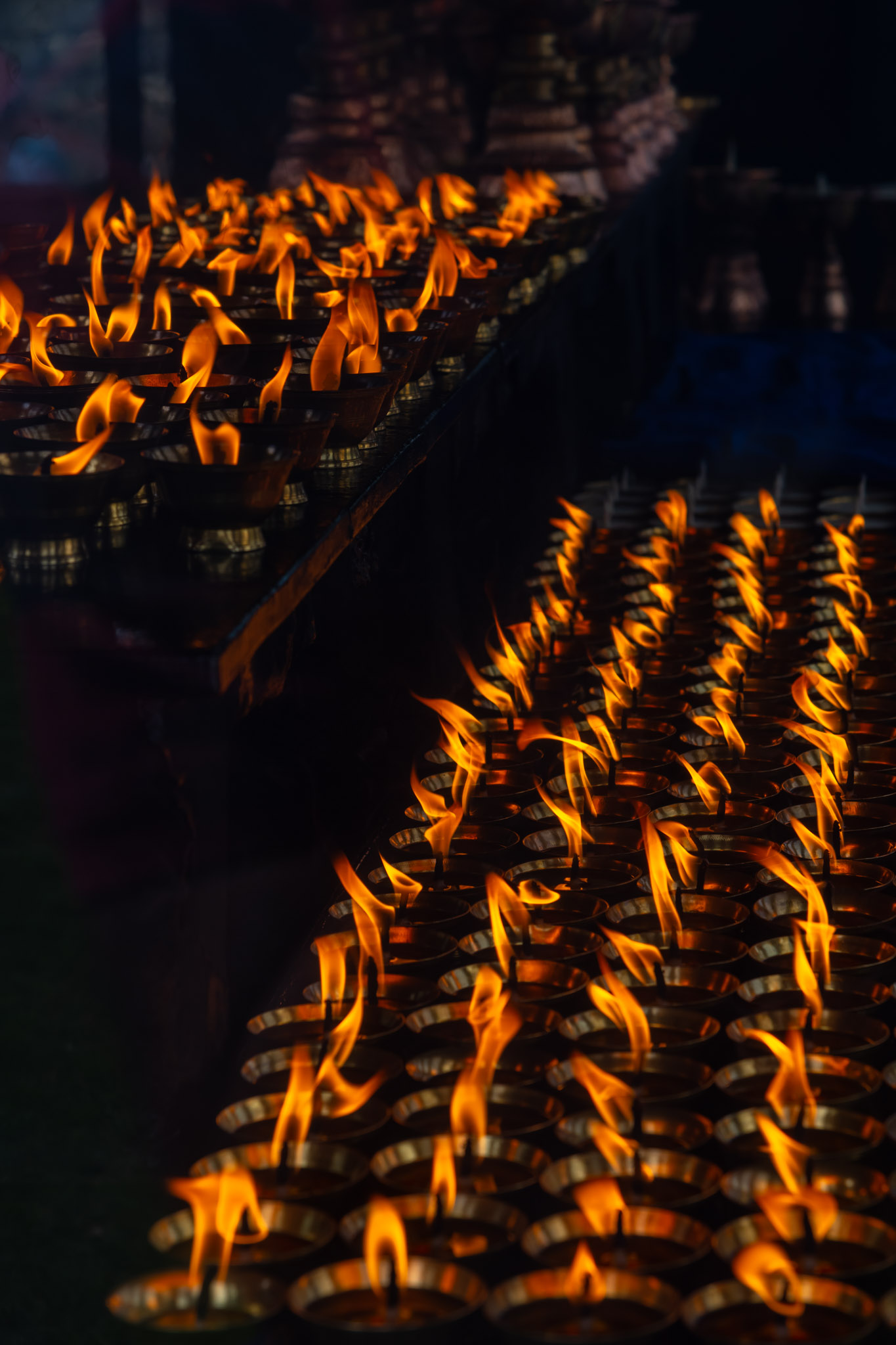
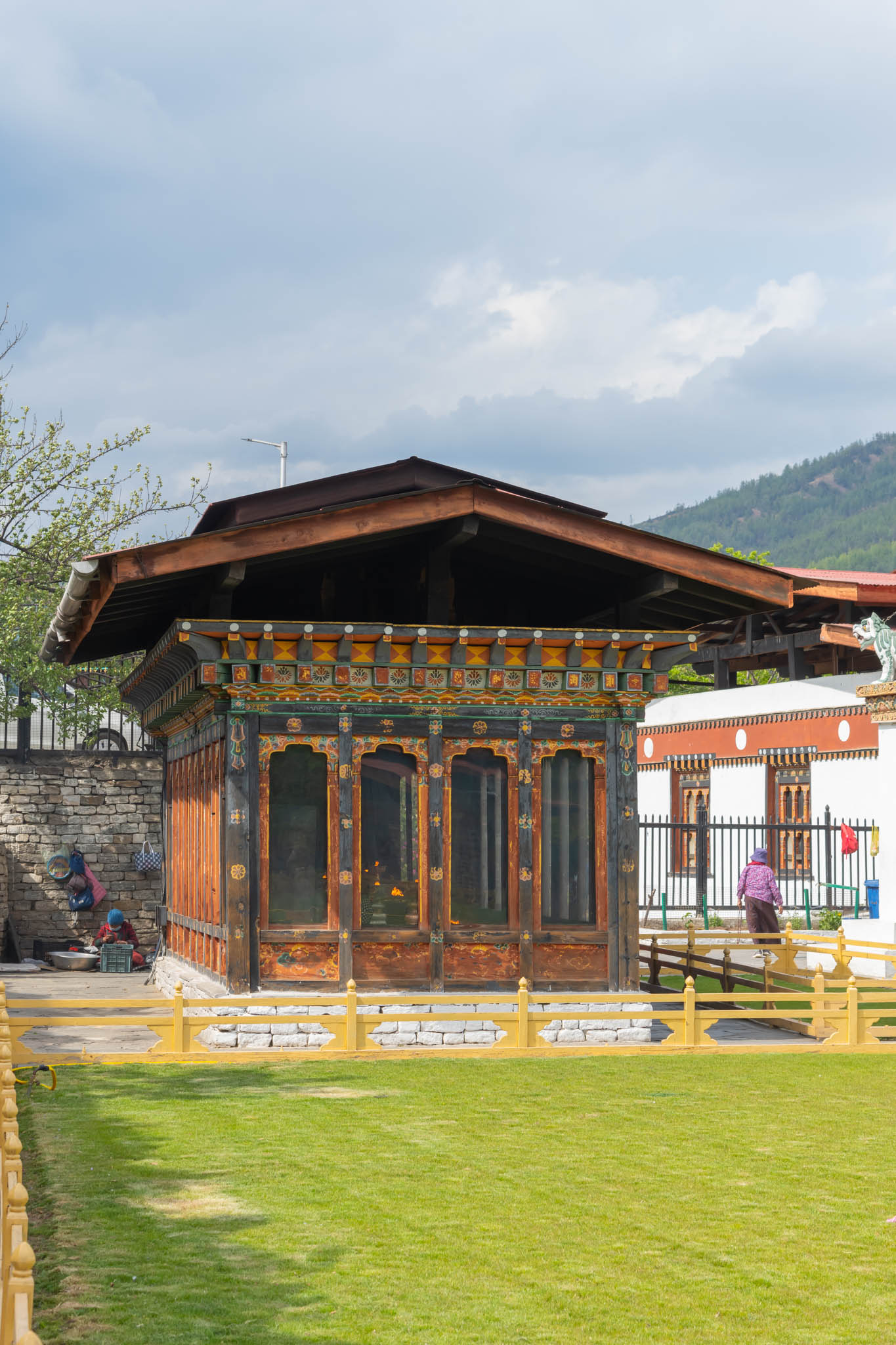
There is a room with giant prayer wheels and another glass walled room for butter lamps. Lighting butter lamps is an important part of worship, and you can see butter lamps in most monasteries and temples and often, these cause fires resulting in extensive damage to the building itself. 
Photography is not permitted inside any temple and so we couldn’t capture any of the nice idols or paintings inside. The inside walls of temples are decorated with good many paintings depicting important incidents and people associated with the faith. The main idol and other idols take up a lot of space and is generally tall. The main idol inside this Chorten is that of Padmasambhava who brought Buddhism to Bhutan in the 8th Century. He is shown in many forms and good many are the ‘wrathful’ forms that he took on, to fight evil spirits. It is interesting that each male idol has a female figurine sitting on its lap, in what is almost a position of coitus. Sonam explained that the male is not complete without the female and that is why they are always shown as a pair. 

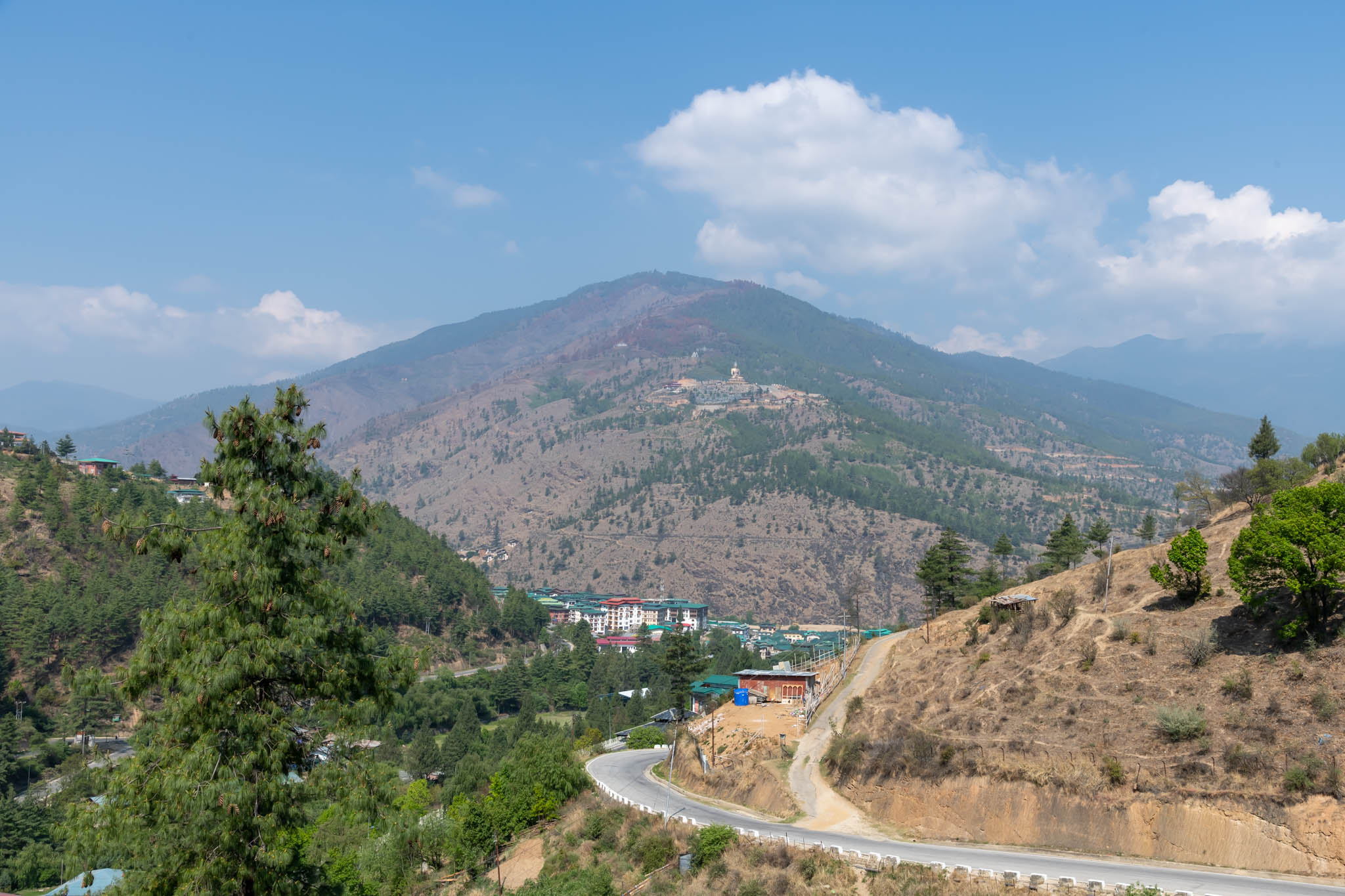
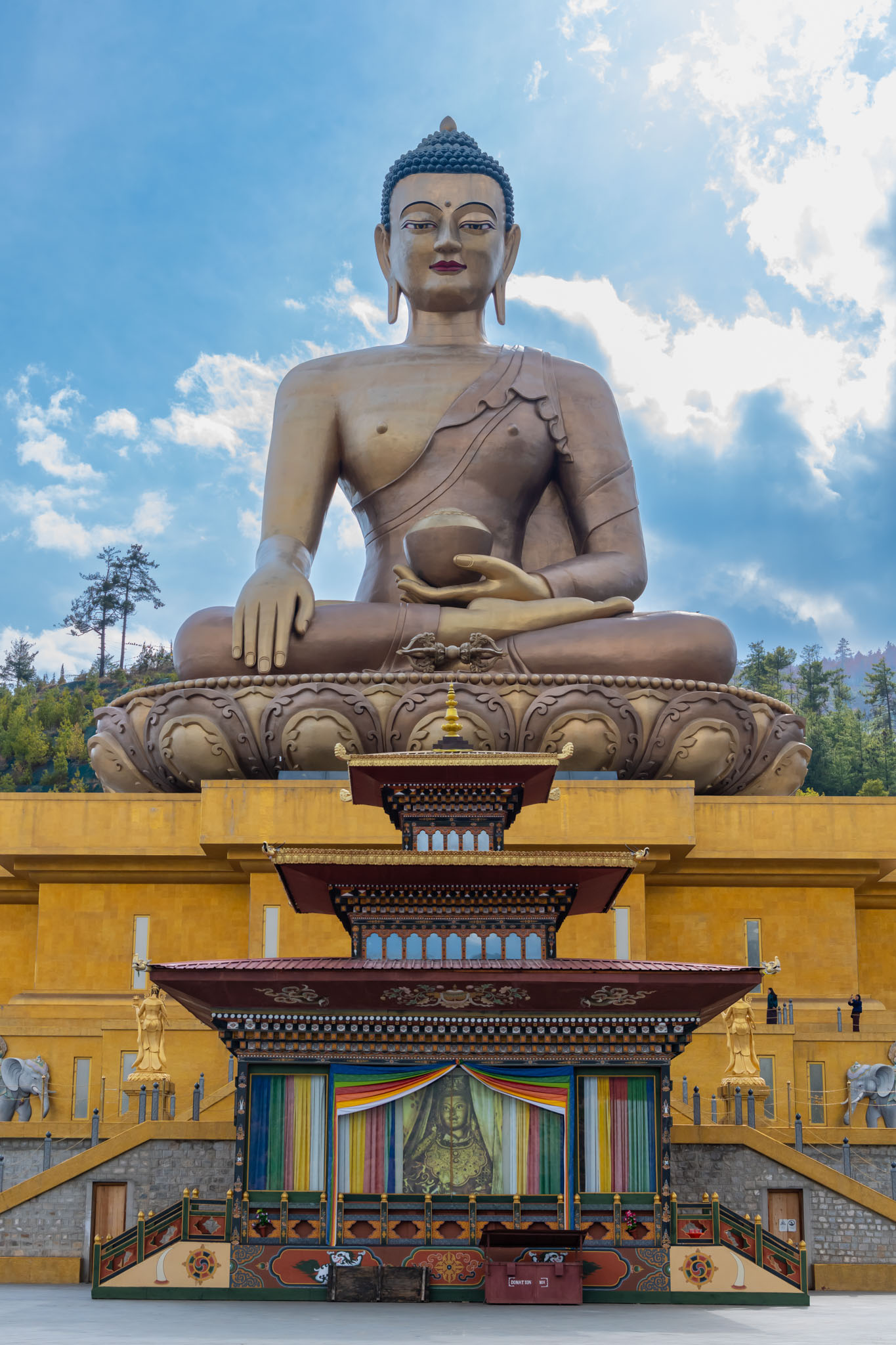
Next was a visit to the Buddha Dordenma statue, said to be the largest Buddha in a sitting posture, located on a hill that overlooks the Southern approach to Thimphu. This statue is made in bronze and inside it there are 100,000 smaller statues that are 8-inch tall and another 25,000 that are 12-inch tall. The statue was made in China and the whole project that started in 2006 and finished in 2015 and is said to have costed about USD 100 million. The statue towers over Thimphu and you can see it even from the road to Punakha. 

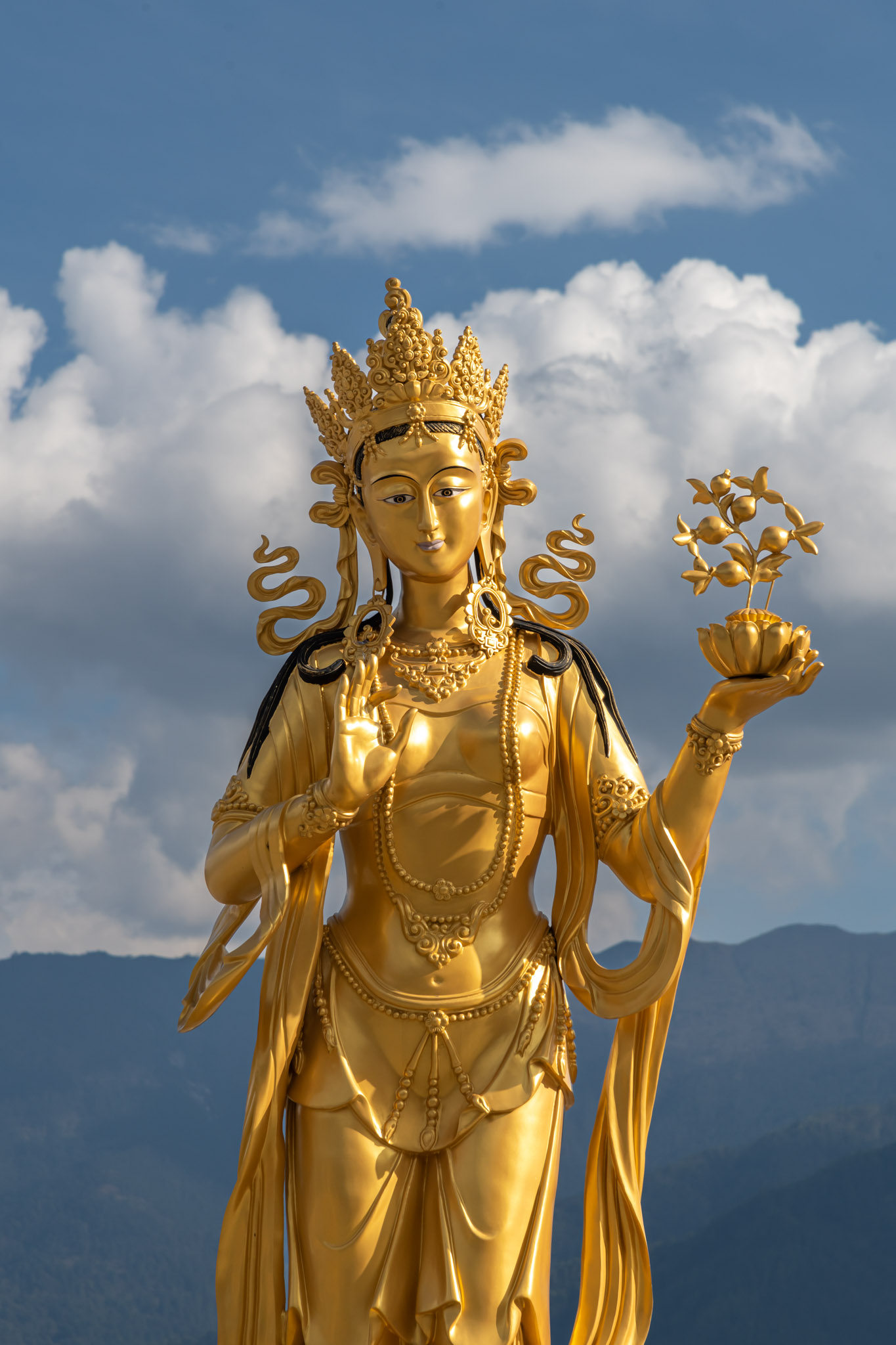
On the top of the hill the structure stands tall and, on the courtyard, there are statues of many Taras (angels). The views from the courtyard are quite nice and on a clear day, it is simply breathtaking. 
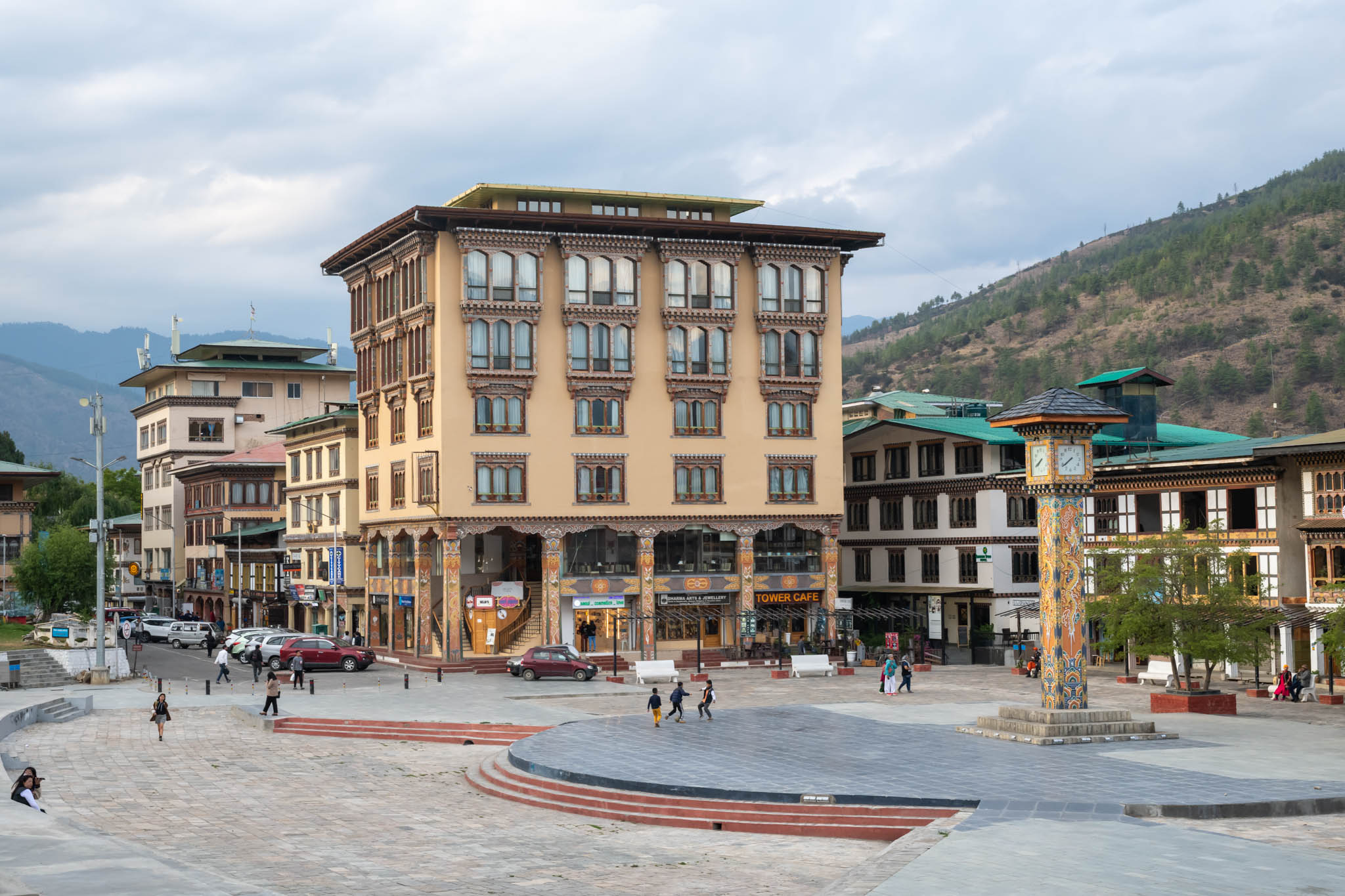
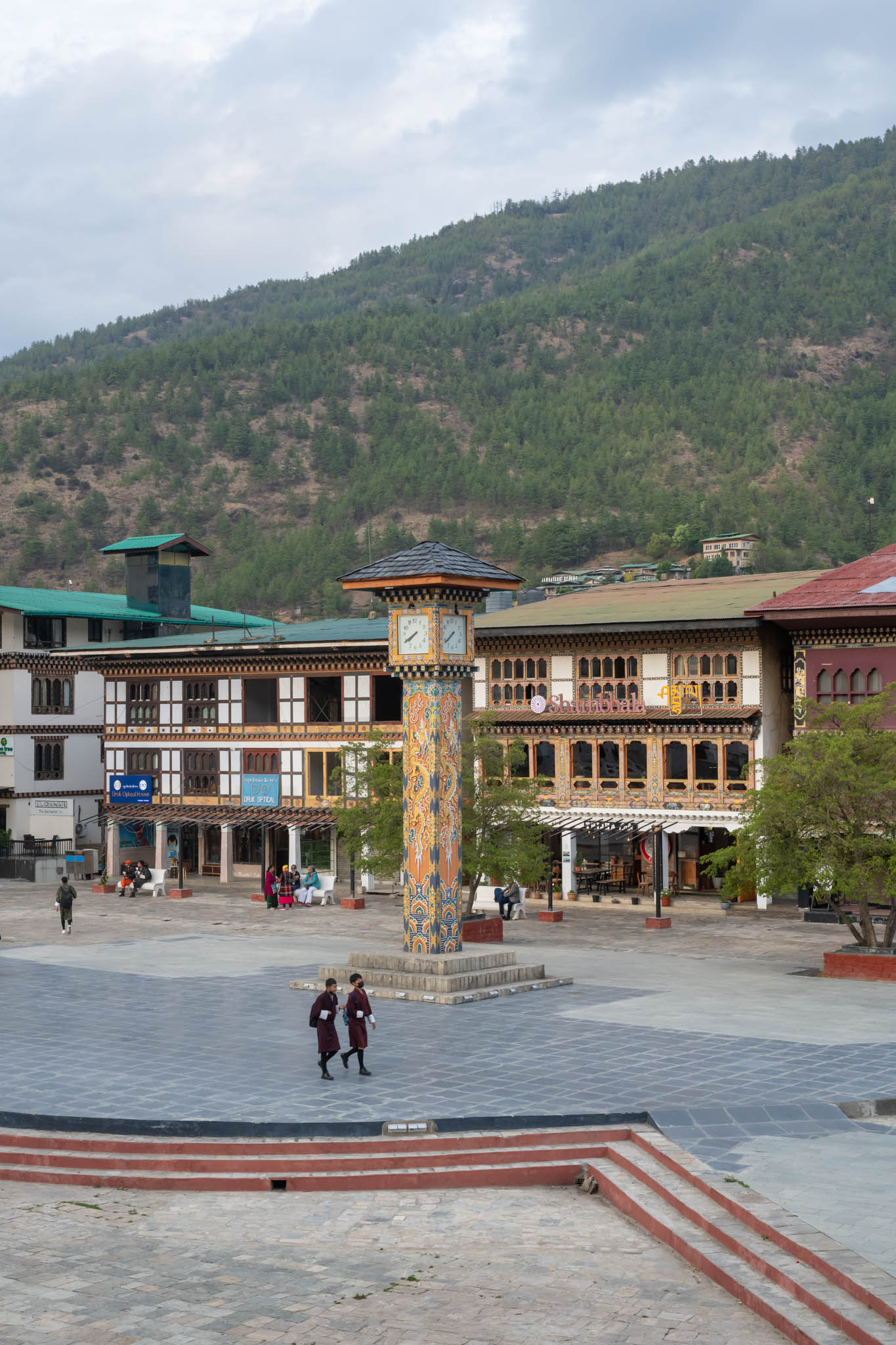
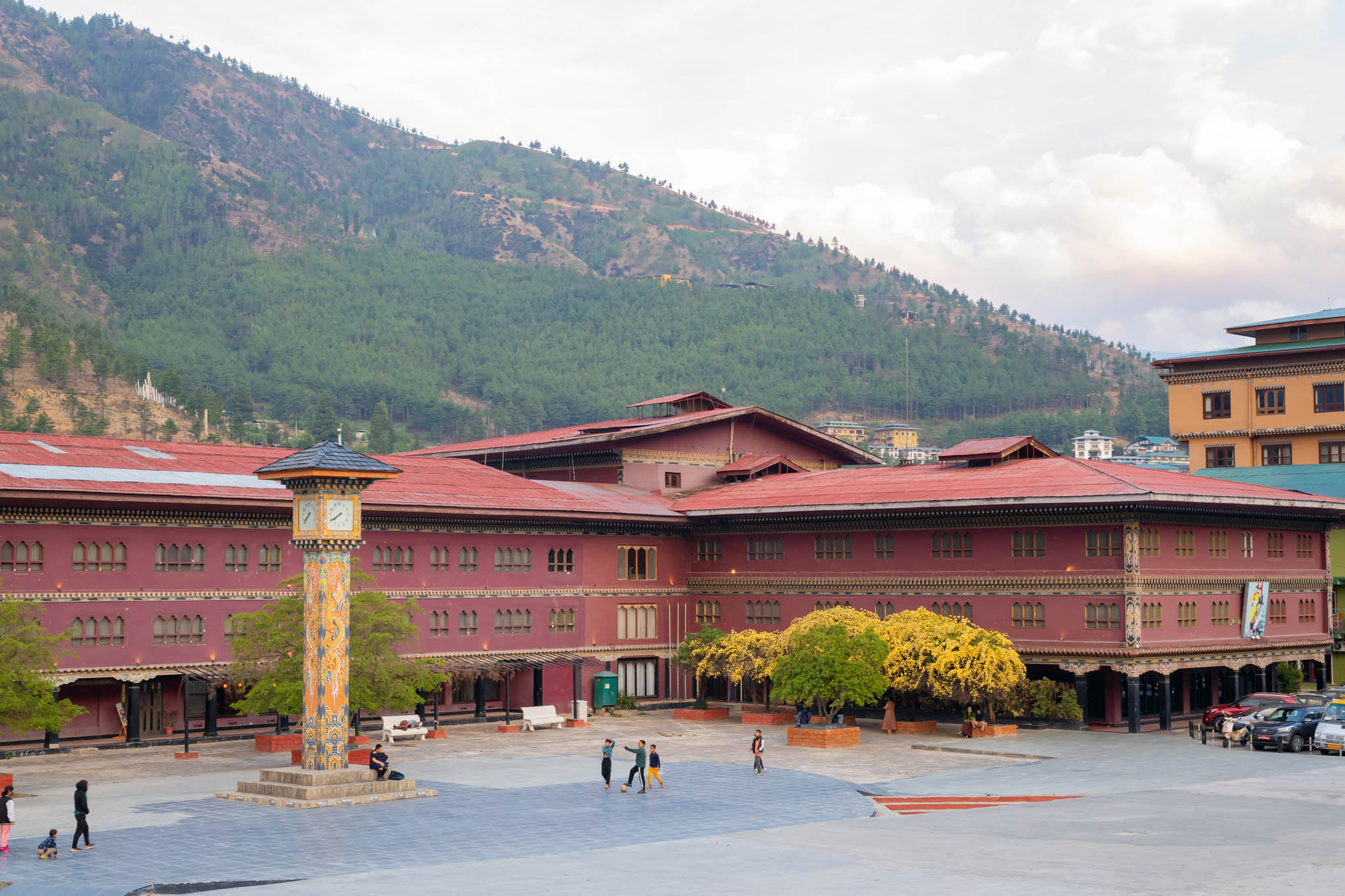
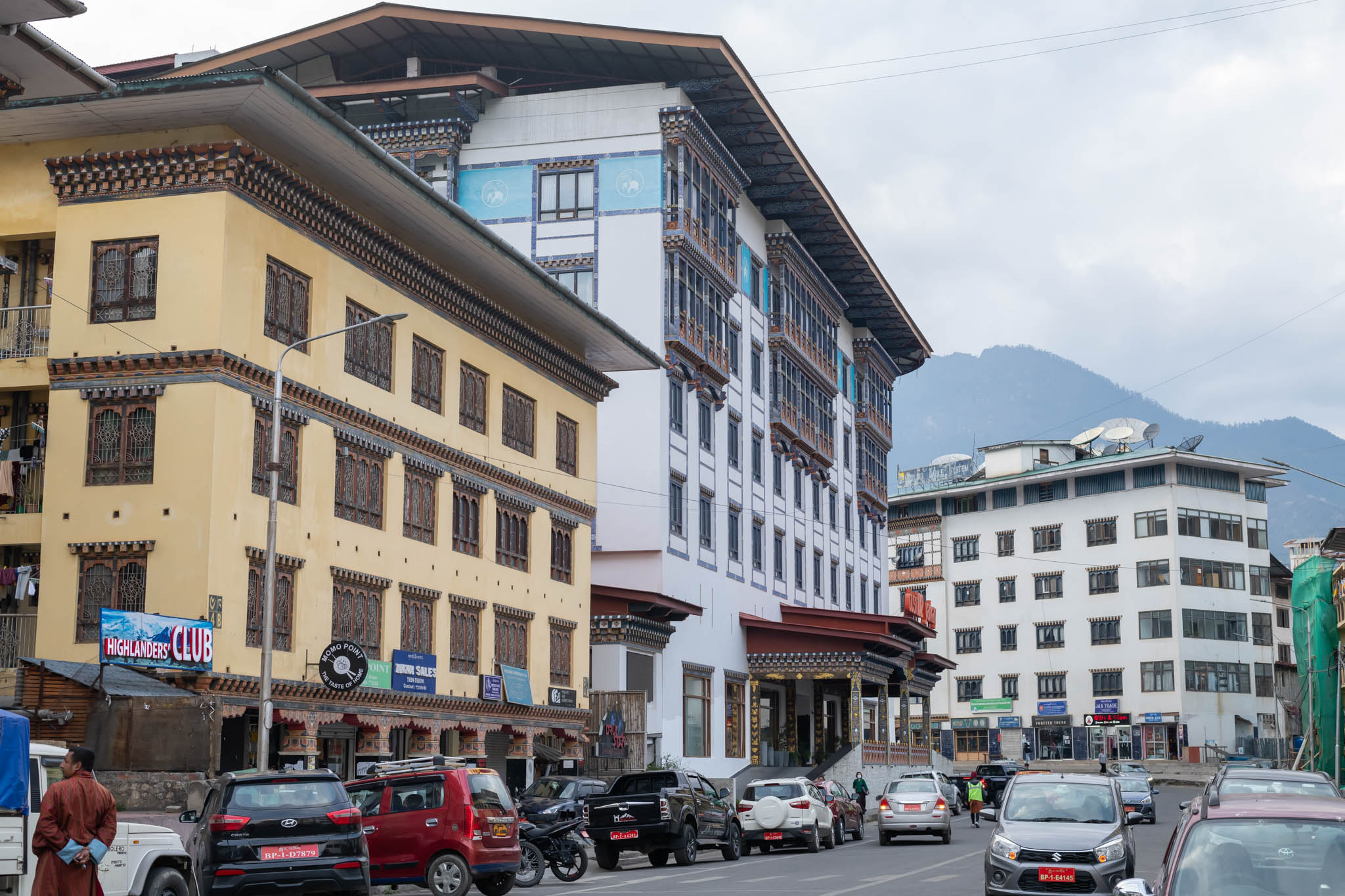
With that we ended sightseeing for the day and came back to the hotel. Since our hotel was centrally located in the city, we ventured out a bit later to see the town. Thimphu is a very quiet place with hardly any sound of traffic as the number of cars are quite low to start with and Bhutanese obviously do not labour under the misapprehension that the horn is some sort of a communication device and entertainment piece all rolled into one, as Indians do. There are no traffic lights in Thimphu (and so the whole country) and there was only one traffic island with a policeman whose gestures were more like that of a dancer. There is a central square called the Clock Tower Square which is very beautiful and there are some cafes which are ideal locations to drink a leisurely coffee and watch life go by. 
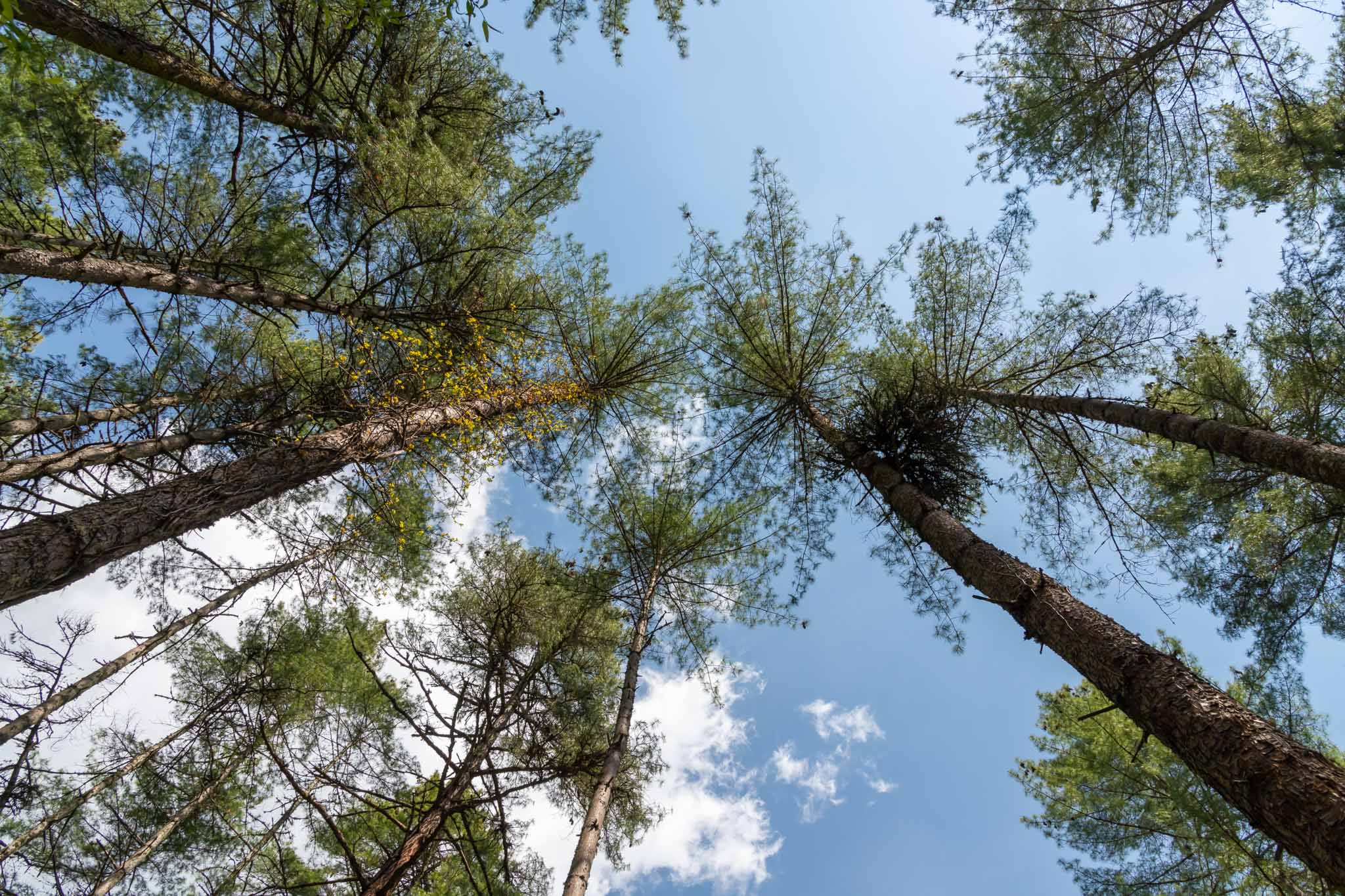
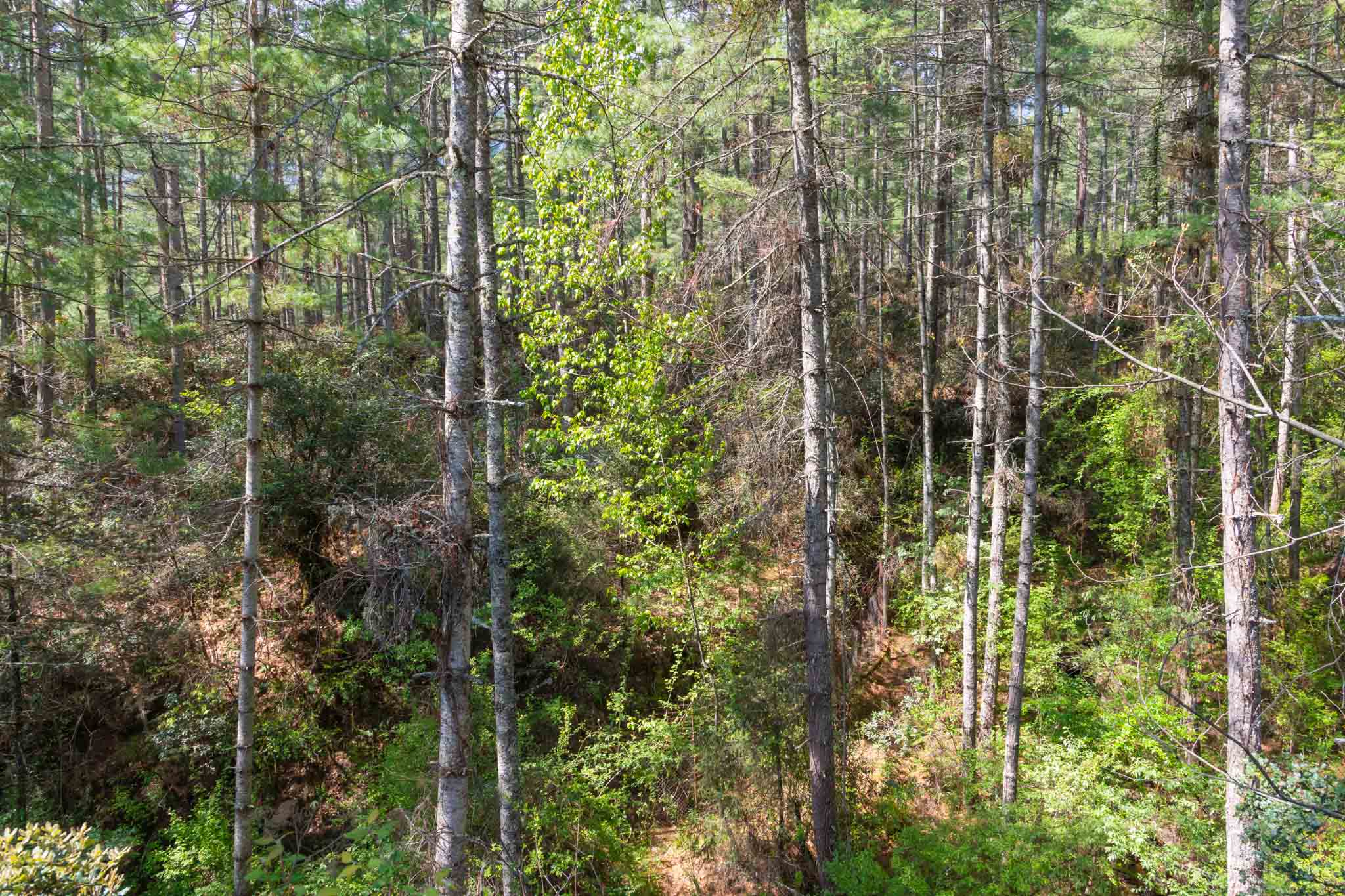
Next day started with a visit to a Takin reserve. Takin is the national animal of Bhutan and Bhutanese believe that this animal (that resembles a cross between a goat and an antelope) was created by the Divine Madman (more on him later) to convince other monks about his powers. The reserve itself is not much to write about and what I found interesting were the pine trees and that grew abundantly in the reserve. I didn’t take any photos of the Takin but did take a few of the pines!
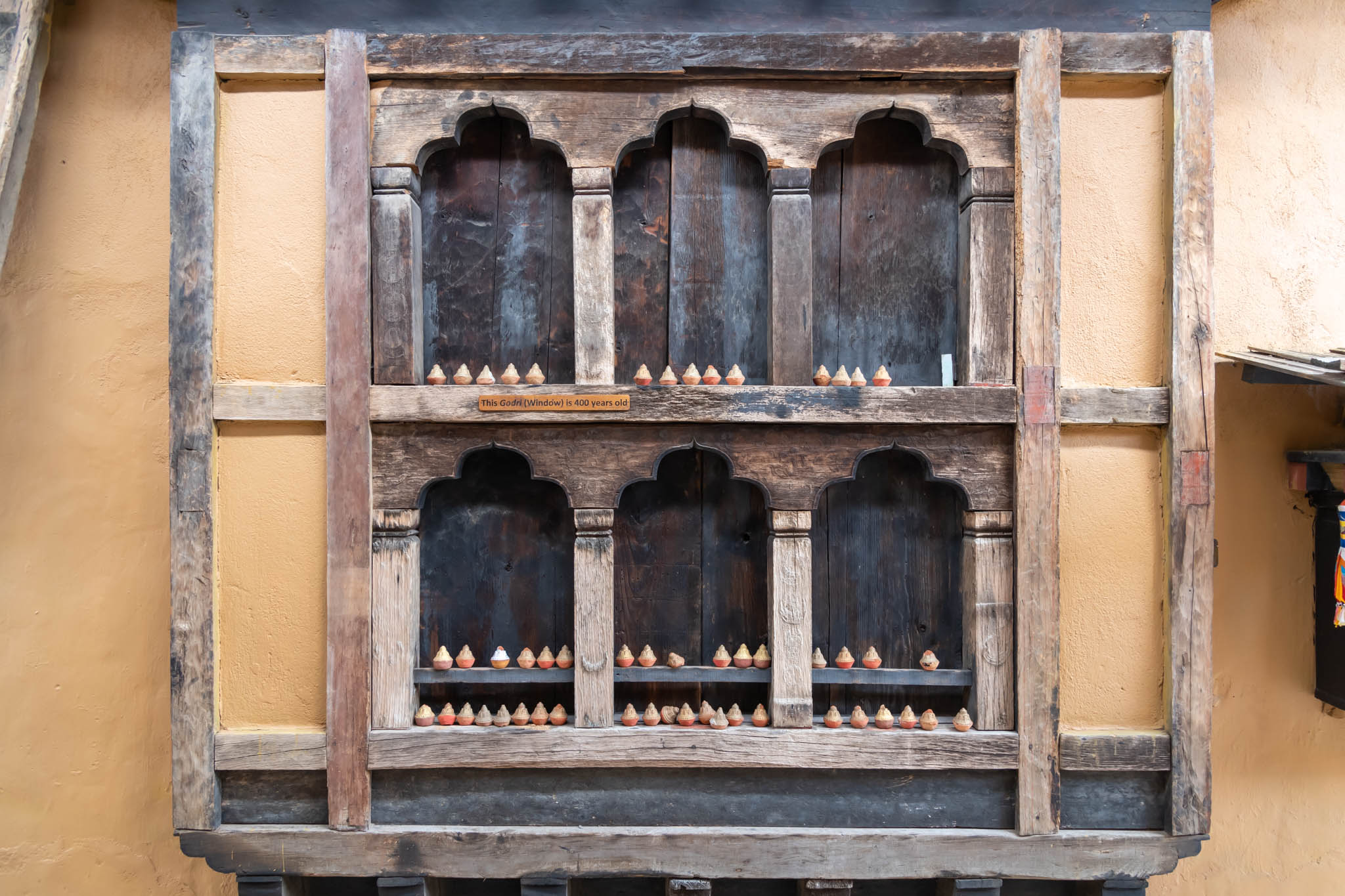
Next, we visited a place called Simply Bhutan where they gave us a taste of the local liquor (Ara) and Bhutanese lunch. Since this was a complete tourist trap, I don’t think there was anything genuine about the whole experience there. The only thing of interest is a four-hundred-year-old window that had a nice feel to it. 
We also visited the National Institute for ZorioChusum, where they teach the thirteen traditional arts and crafts in Bhutan, Folk Heritage Museum (where a traditional house is preserved as such) and the Royal Textile Academy. There was nothing of great significance in these places. At the traditional house, I noticed that the prayer room is as big as the only other room they have in the house. When I asked Sonam, he said that every Bhutanese house has an altar and a temple kind of room in their house and if it is a two-bedroom flat, one bedroom is dedicated for this; such is the importane they accord to that room. They pray every day and on holidays, people visit monasteries and temples. In short, they are a very religious people. I was a bit surprised to note that even young people are as religious, given that they are comfortable to be in relations like living together as opposed to traditional marriage. 

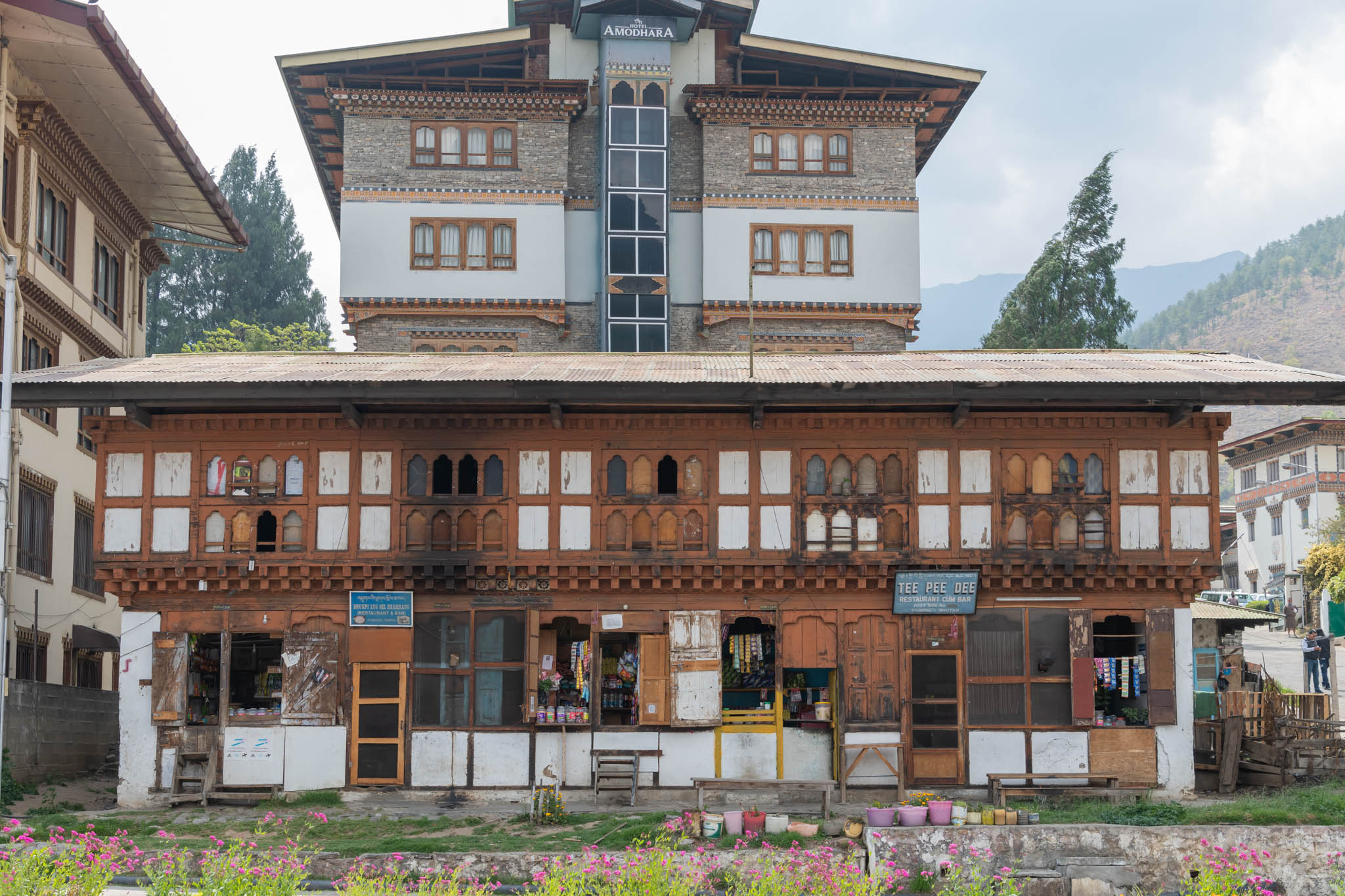
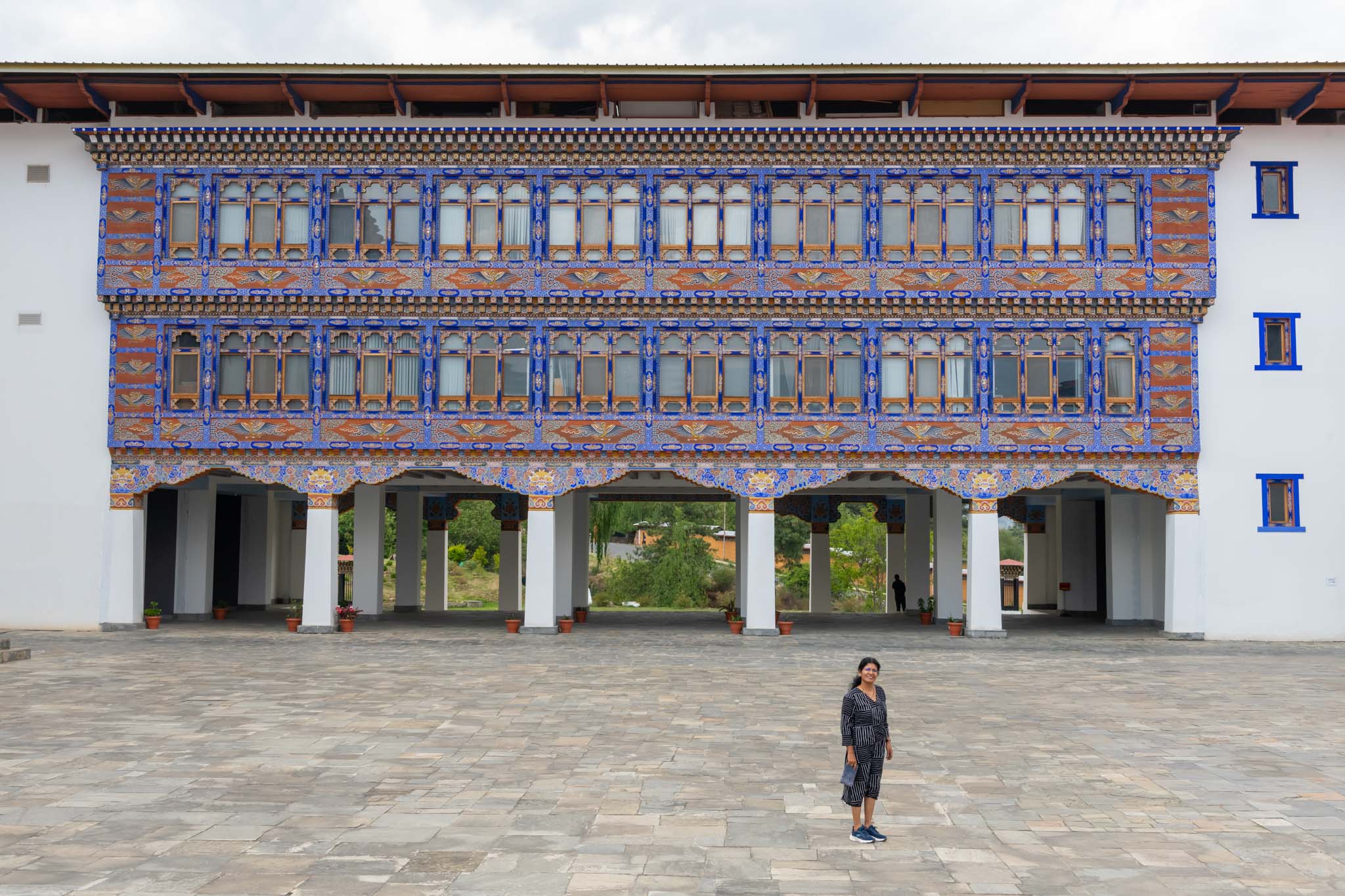
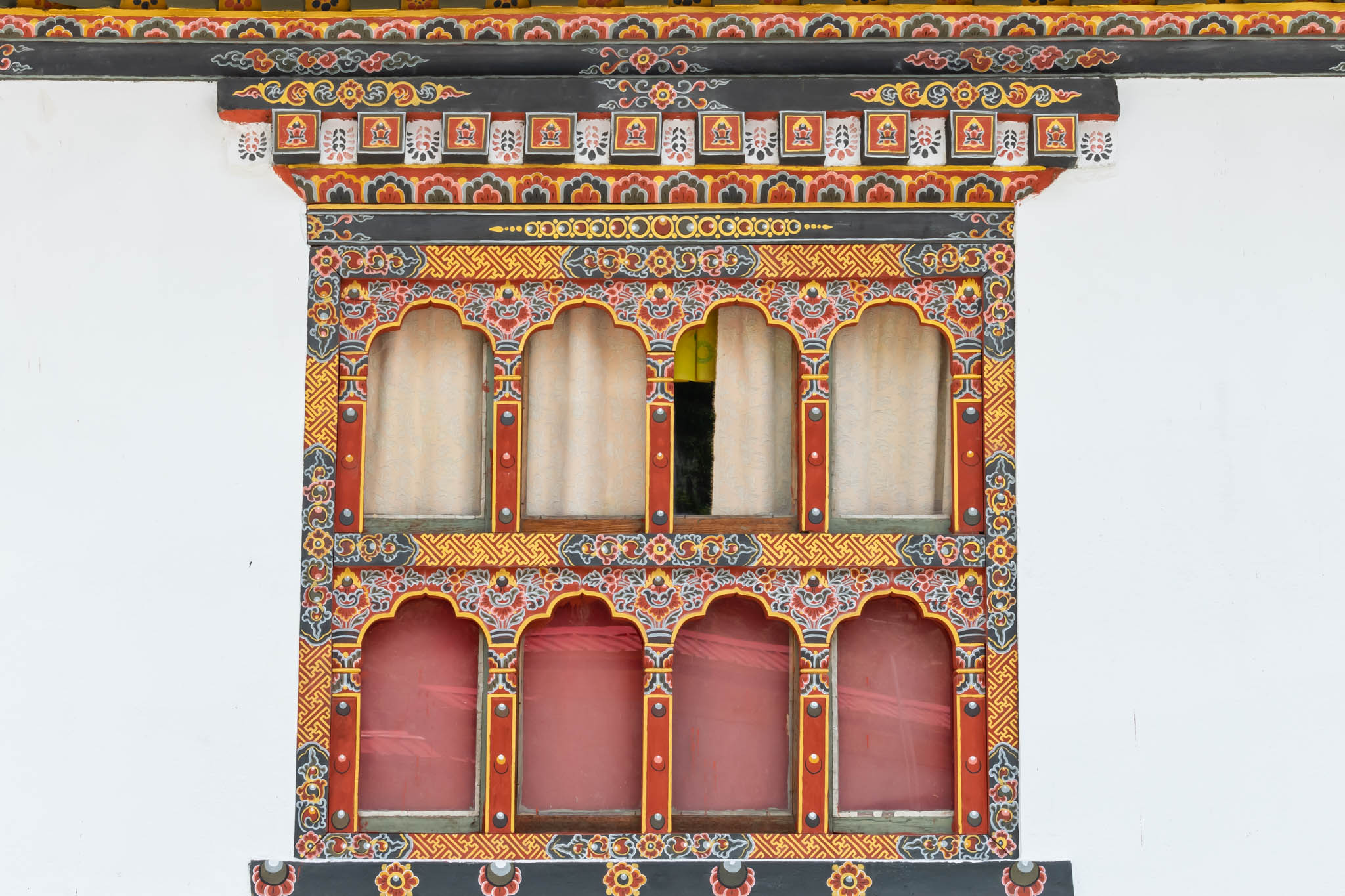
Windows in Bhutan are very beautifully and intricately painted. It seems that houses have to maintain a particular exterior design as per building rules. So, everywhere you turn, you are greeted with beautiful buildings with wonderful windows. Even the roof colour is regulated with government buildings having red roof and others having blue or green colour. The courtyard inside the Royal Textile Academy is just brilliant with windows set out in blue. 
On Sonam’s advice, we skipped the Tashichho Dzong (seat of the government and King’s Palace) as he felt it was not worth the time and effort. We were also a bit tired with the not-so-interesting visits that day. Overall, Thimphu could have been finished in a day as there is nothing much to see there. However, the leisurely pace was relaxing. 
Pattadakkal and Badami have been on my list of places to visit for a long time and after the unprecedented and completely unanticipated experience of the world shutting down, I thought a road trip was in order and set out from Bangalore on the afternoon of the first day in October. After a rather long drive that involved torrential rains and me losing my way, I eventually arrived at Badami. This is a very small town with limited options for accommodation and completely centred around the attractions such as the Cave Temples, Fort, Mahakuta Temple and Banashankari Temple. 

Badami is located in Bagalkot district in Karnataka and was the capital of the Chalukya dynasty between the 6th and 8th centuries AD. It was known as Vatapi at that time and there are some inscriptions that show that King Pulakeshin-I made some fortifications on the hill nearby, in the 6th Century. Sandstone cliffs surround Badami on three sides and that is possibly why Chalukyas chose Badami as their capital and moved there from Aihole. The Chalukya empire was at its peak during the reign of King Pulakeshin-II and it extended from Kanchi (Tamil Nadu) to the banks of the Narmada river and from Orissa in the East to the West Coast. A guide told me that the classical song “Vatapi Ganaptim Bhaje” is connected with Vatapi (Badami) and an internet search (Wikipedia) confirmed that. Muthuswamy Dikshithar wrote this song and it is dedicated to the icon of Ganapati that the Pallavas brought from Vatapi after they defeated the Chalukyas in battle. Pulakeshin-II was killed in that battle.

Supposedly, the name Vatapi changed to Badami over the years because of the almond colour of the sandstone rocks that you find everywhere in Badami. Truly, these rocks are of a beautiful reddish-orange colour and stunning to behold. 

I was mostly interested in the Cave Temple and the Fort and set out early in the morning to view the Cave Temple. I knew that early in the morning, light would not be enough for any photography inside the caves but my plan was to enjoy the caves in relative peace before the crowds started coming in (especially as it was the Dussehra holidays) and come back later for photography. That proved to be a wise decision as there were very few people in the Caves at that time and the ambience was so very charming and relaxing. 

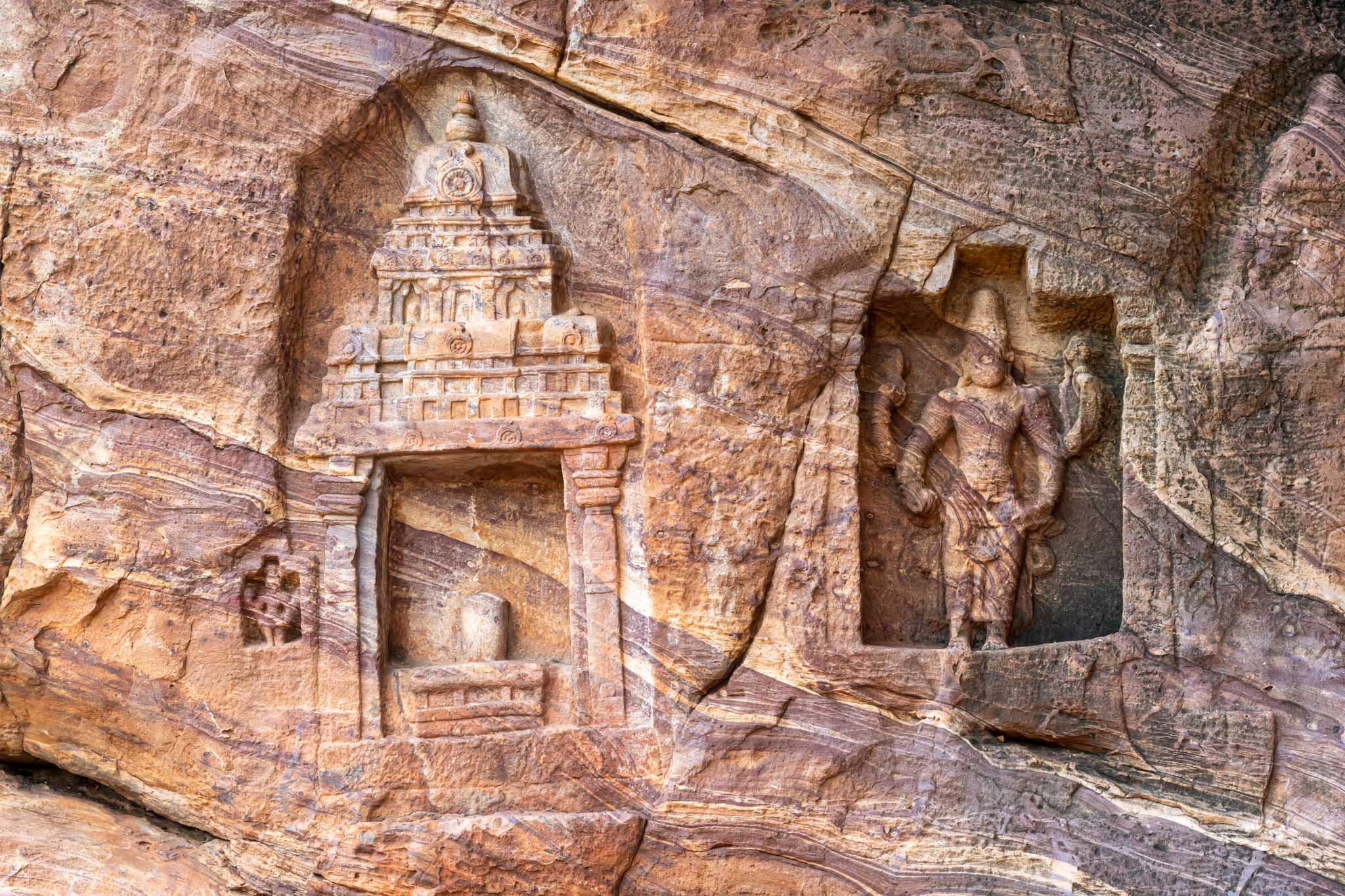
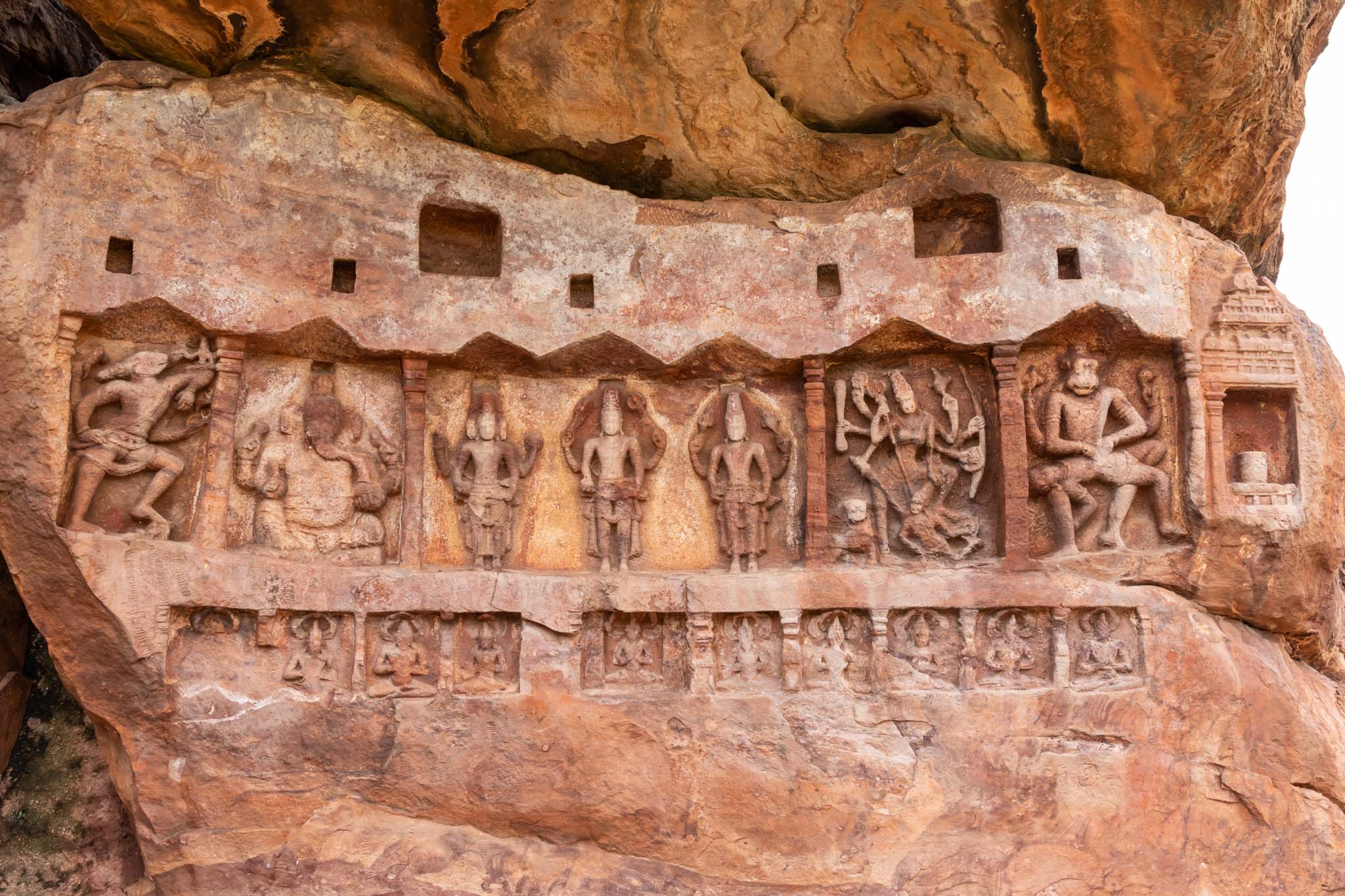
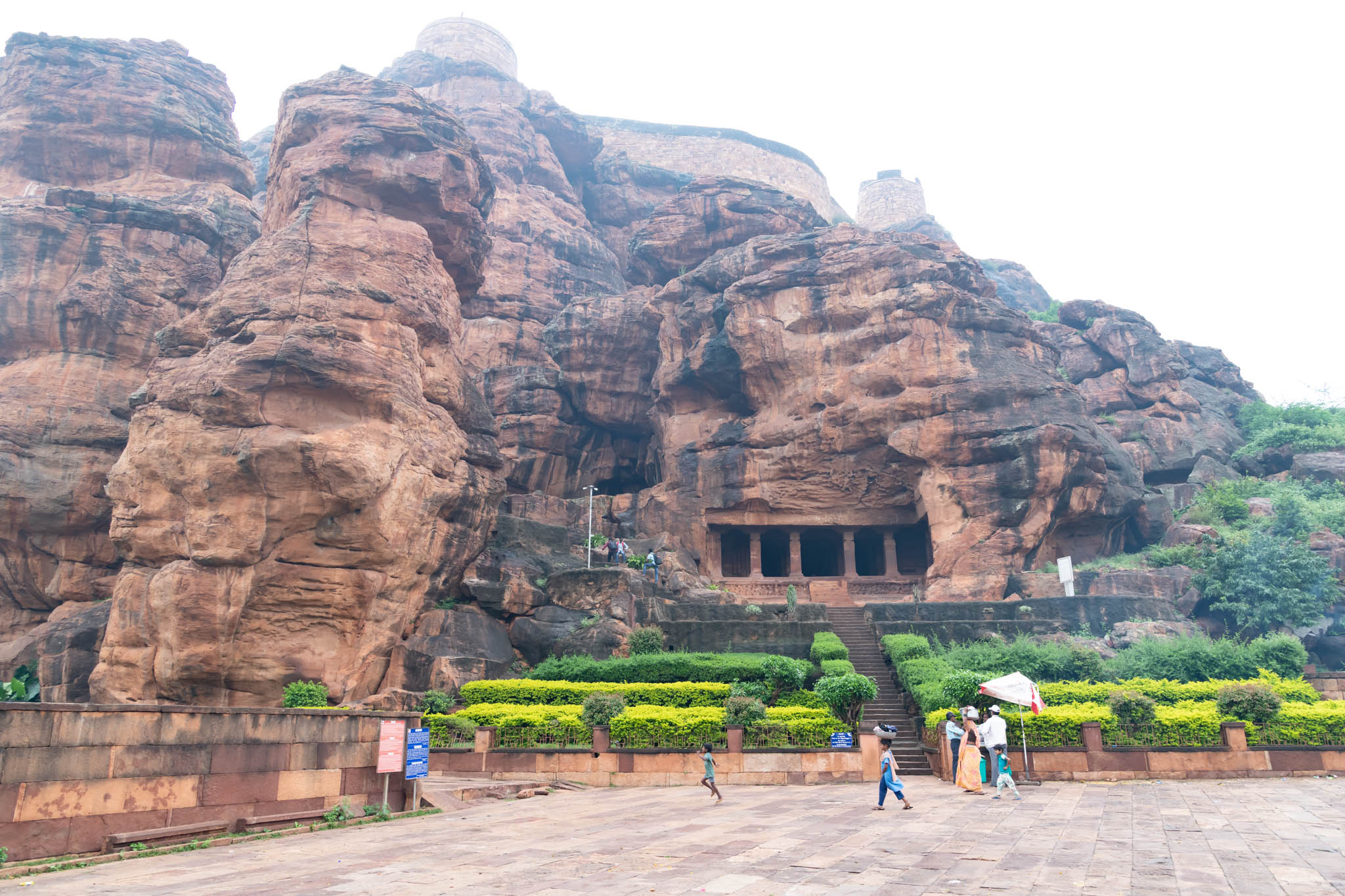
The caves have been carved out from a small hill and there are steps that lead up to the caves. There are basically four caves – the first one being dedicated to Shiva, caves two and three to Vishnu and the last one to Jain Theerthankaras. The Chalukyas were Vaishnavites but they constructed Shaiva and Jain temples as well. 

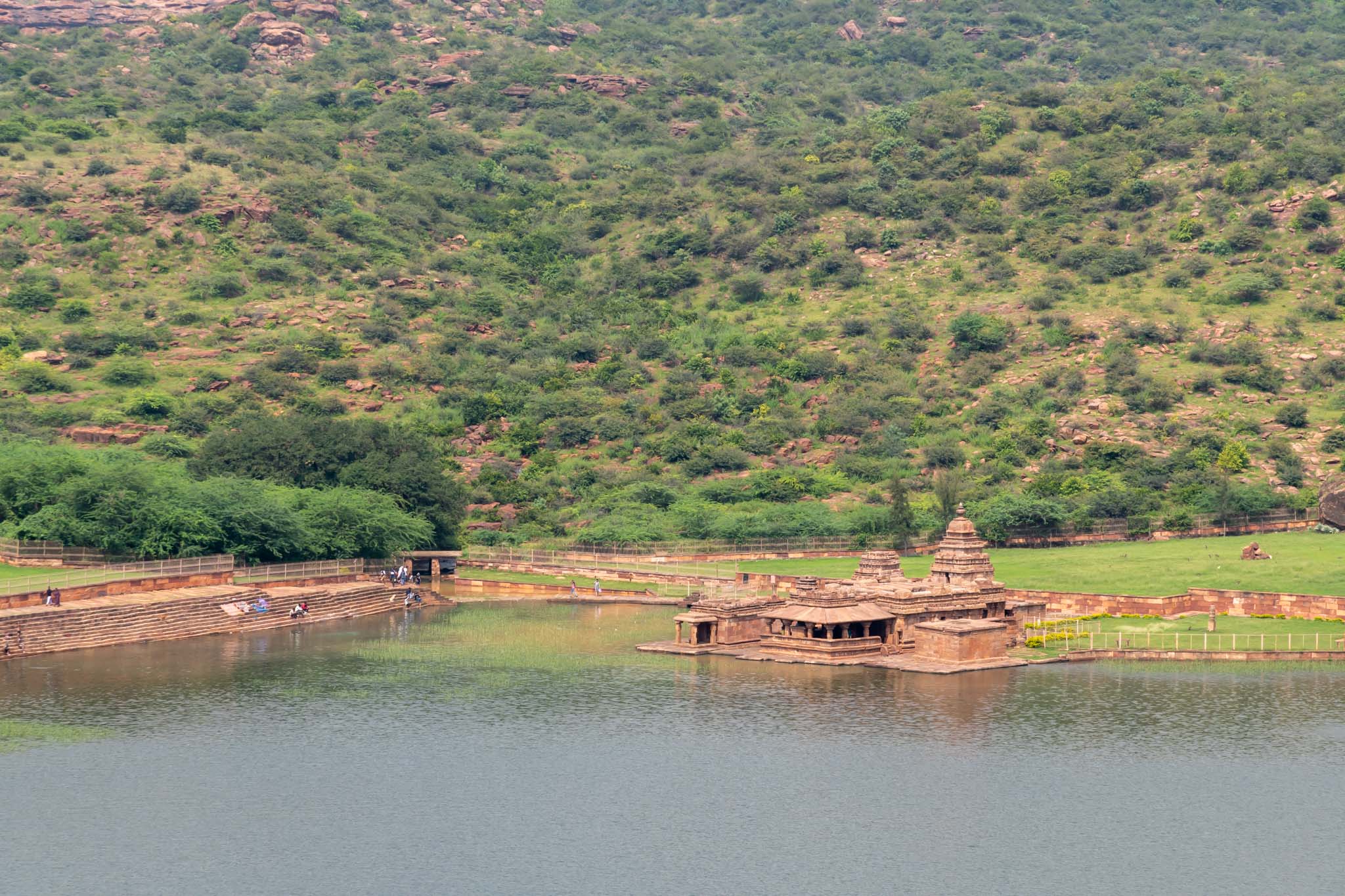
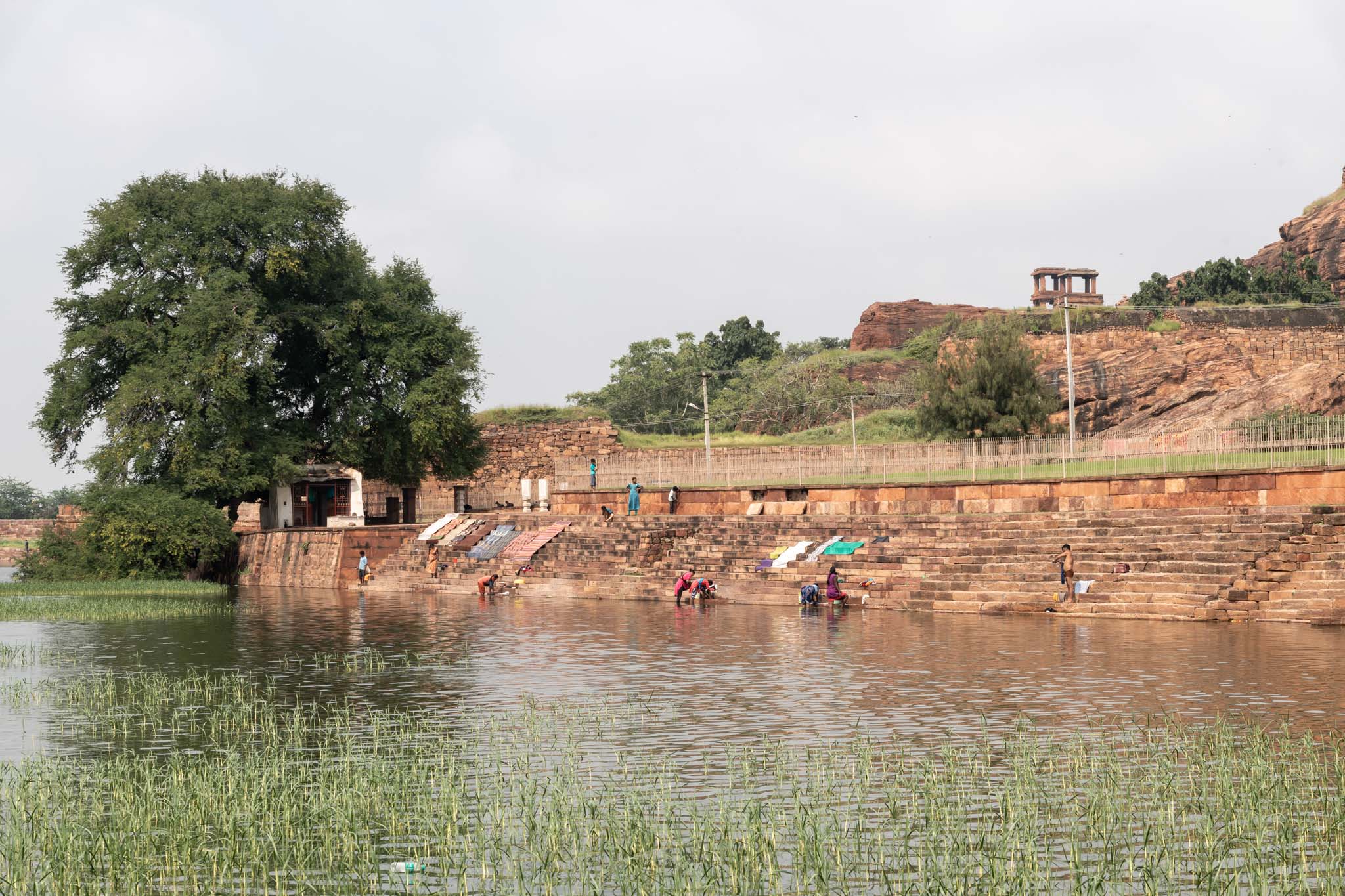
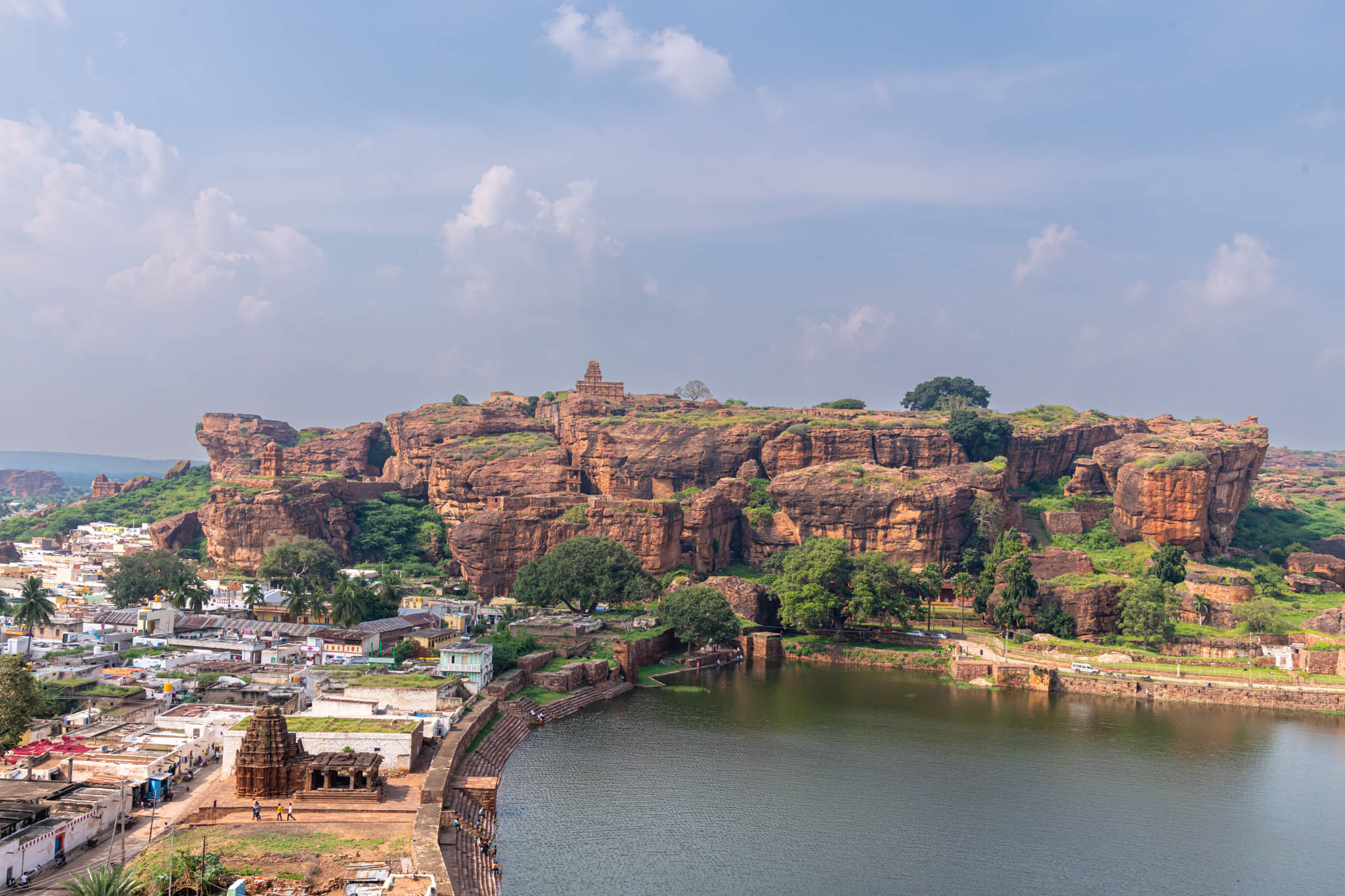
Right next to the Caves is a huge lake called Agastya Lake and this was probably the water source for the capital. The lake is named after Sage Agasthya and there is a myth that the lake was brought to Earth from the heavens by Garuda and hence the water has the power to cure illnesses and cleanse all sins. Wiki says that the lake is man-made and is from the 7th Century. The lake is used quite a lot by the citizens for their everyday life and I could see many people bathing and washing clothes. From the Caves, you get a beautiful view of the Bhoothnath Temple on the shores of the lake and the Fort on top of the hill. 

After breakfast, I set out to visit the Fort and Bhoothnath Temple. Autorickshaws ply from the Cave Temple and they take you through very narrow roads inside the village to the foot of the hill and the lake. The surrounding areas of the Cave Temple and the lake are rather dirty with pigs roaming around everywhere. However, the Archaeological Society of India is doing a good job in maintaining the monuments themselves as they are all very clean.

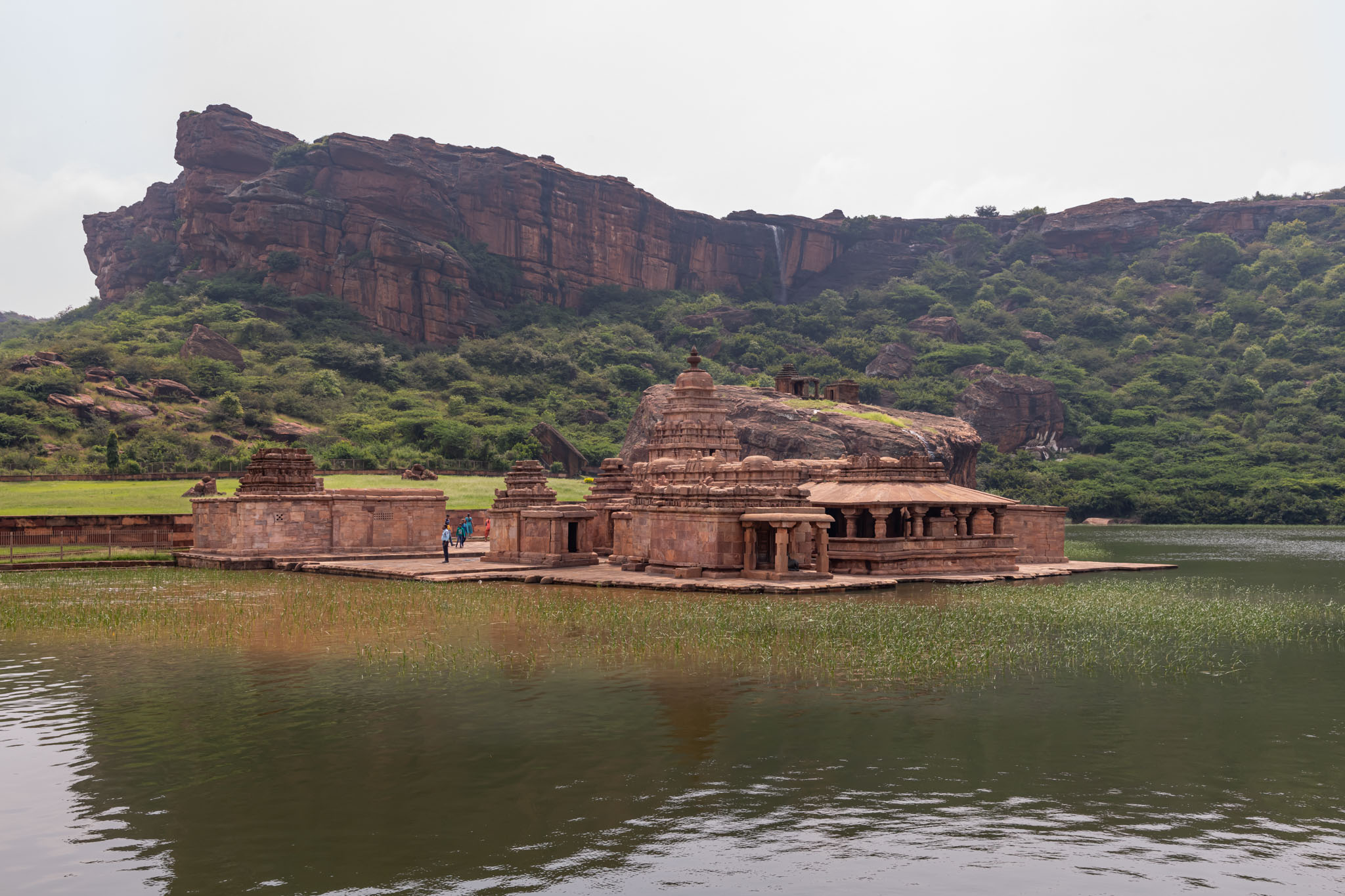
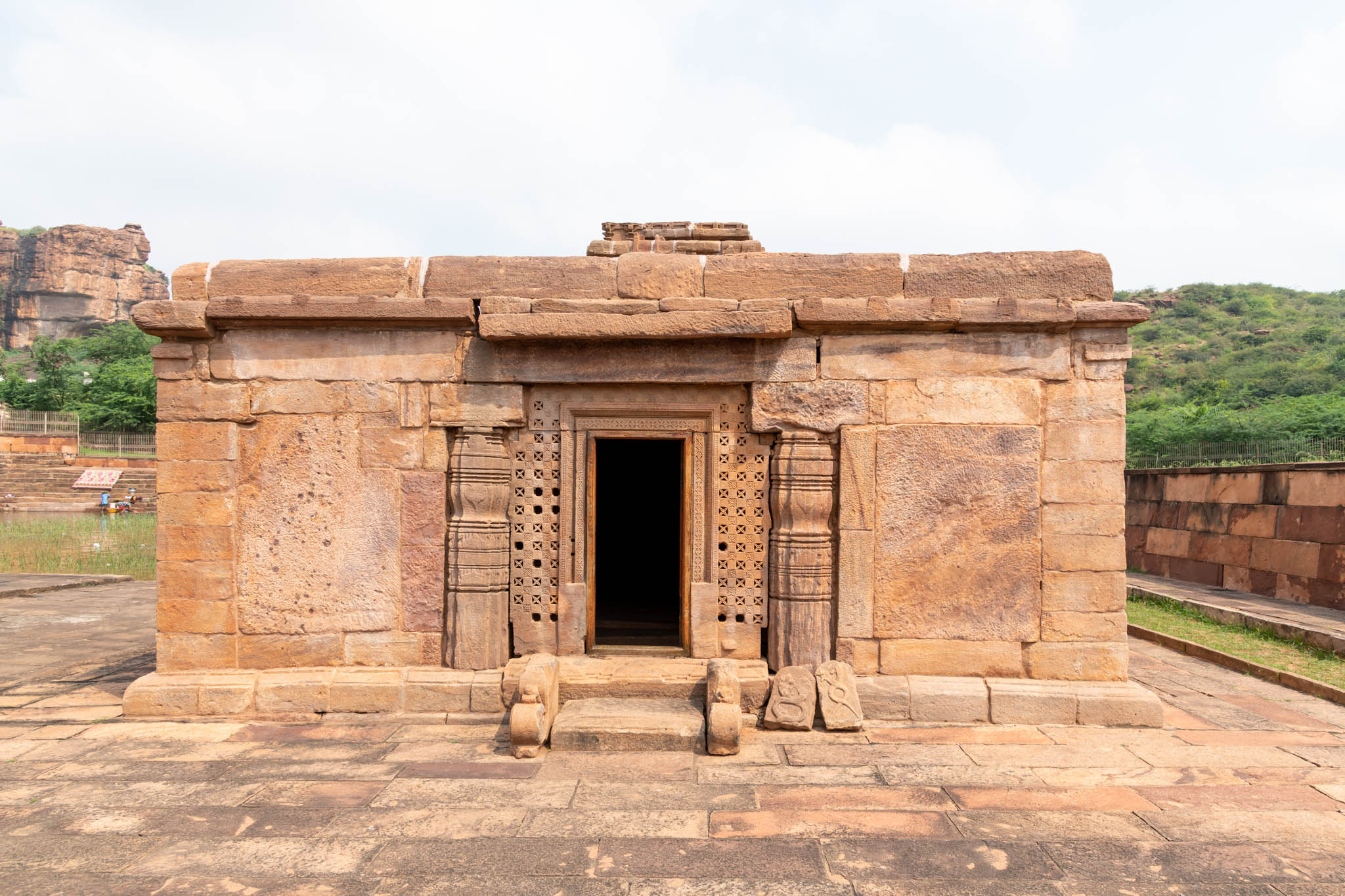
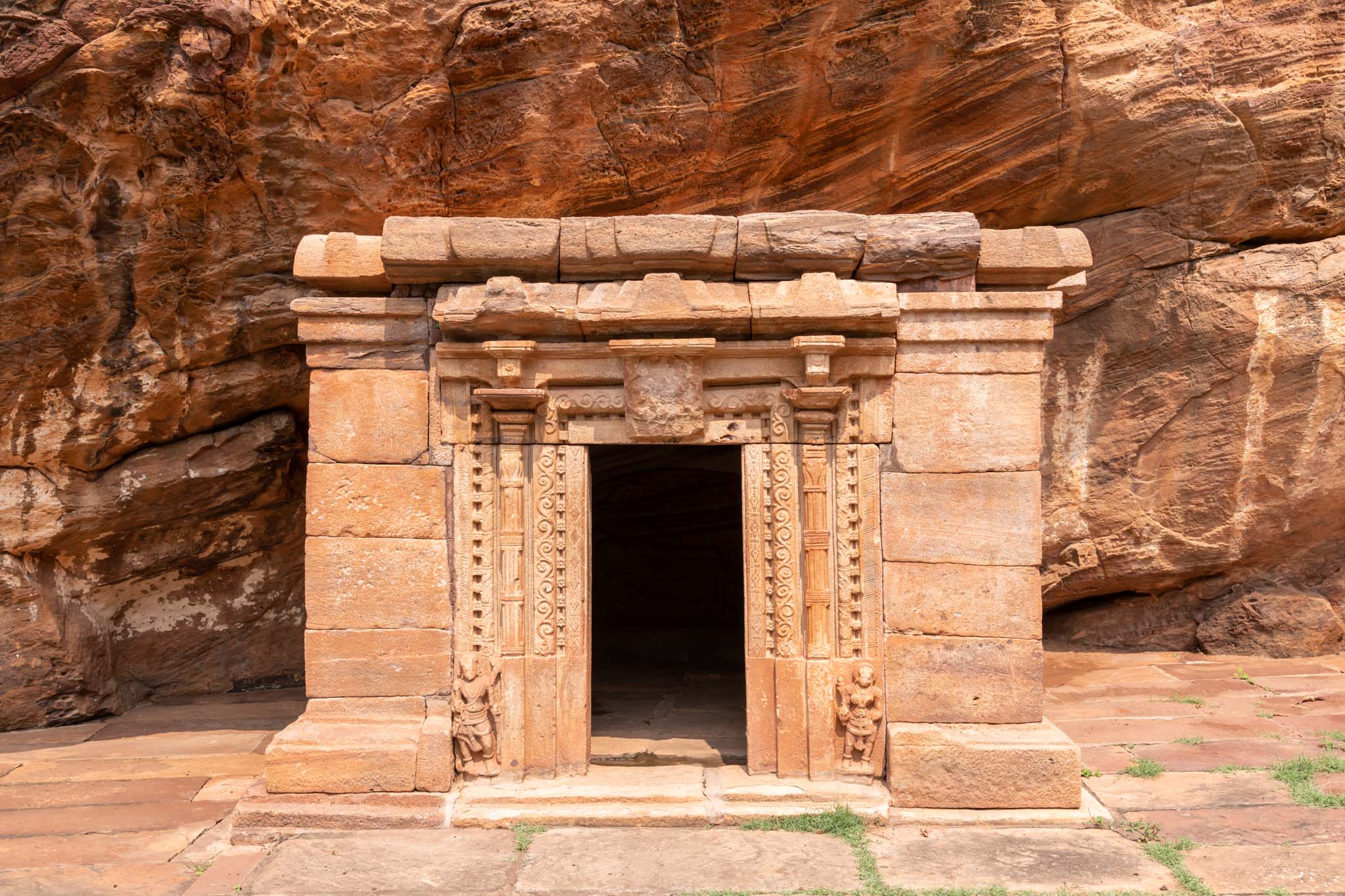
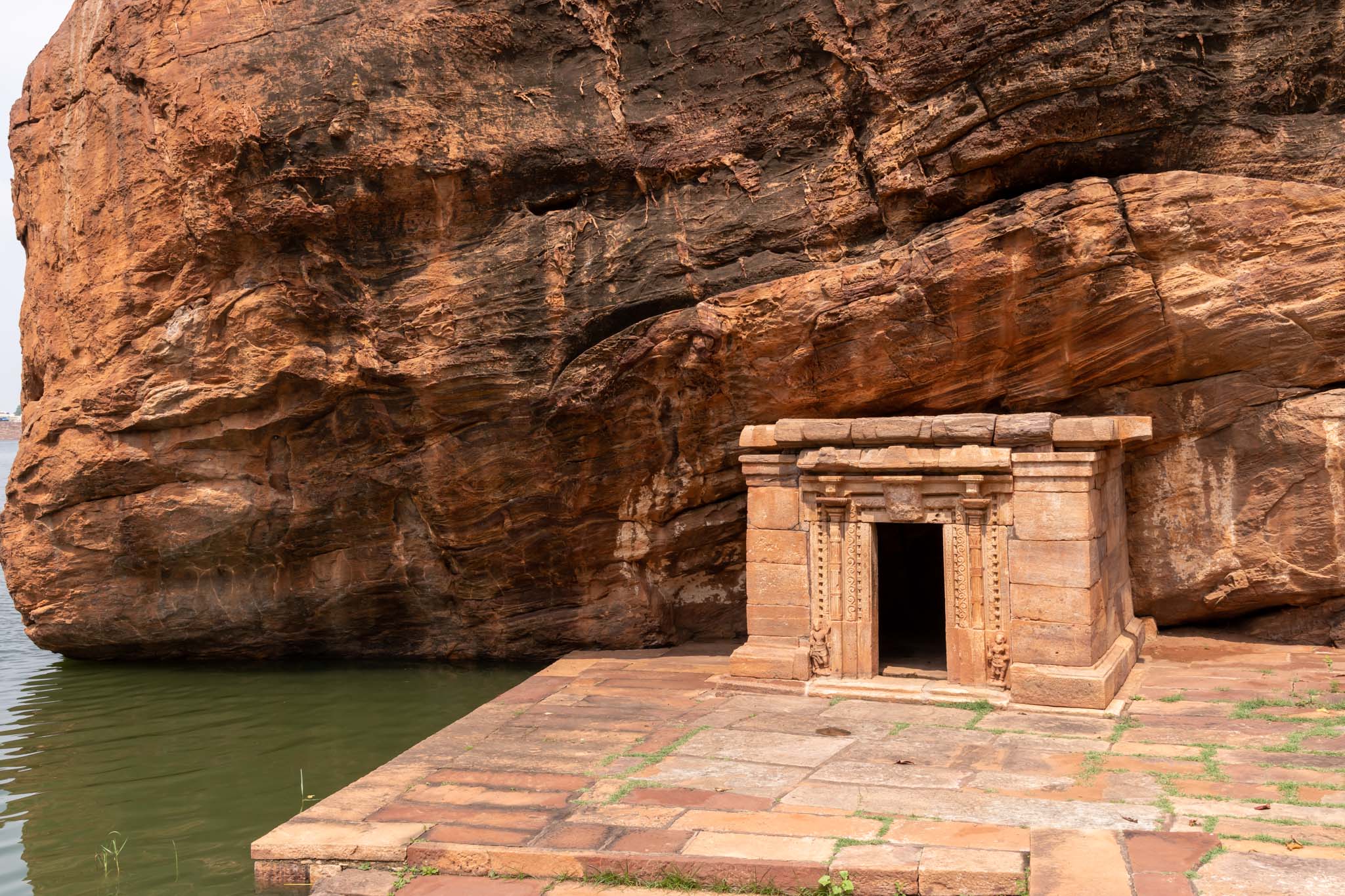
My first stop was at the Bhoothnath Temple. There are two, one small one close to the hill and another a bit far away at one side of the lake. In reality, these are temple complexes as there is more than one temple in any given location. However, none of these temples are used for worship now and are maintained by ASI. This means that these temples don’t have the normal eye sores that you see in temples that have active worship, such as bright, glitzy boards, steel bars and such. 

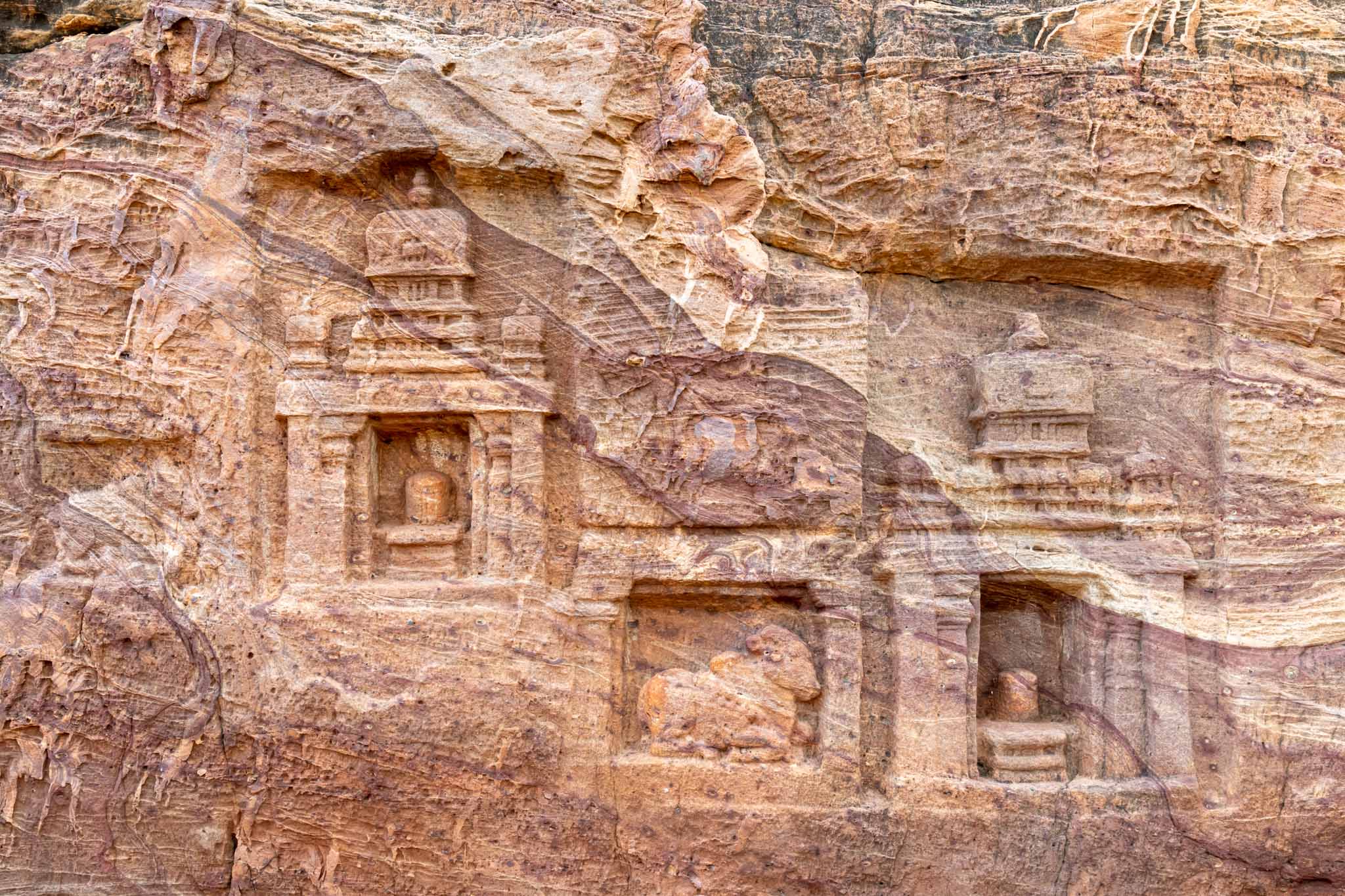
Bhoothnath Temple was quite deserted when I got there except for the guard that ASI had posted there. The temple is almost at water level and so, would definitely be flooded when water rises in the lake. There are three or four small temples in this complex and the carvings on the walls are intricate and amazing. There are some carvings done on the surrounding rocks as well. The colour of the rocks add to the beauty of the temples and with the designs used, they are just mesmerising. 
Behind the temple, the rocks rise up and there is a nice waterfall flowing down from the top. I am sure it would look majestic when there is enough water.

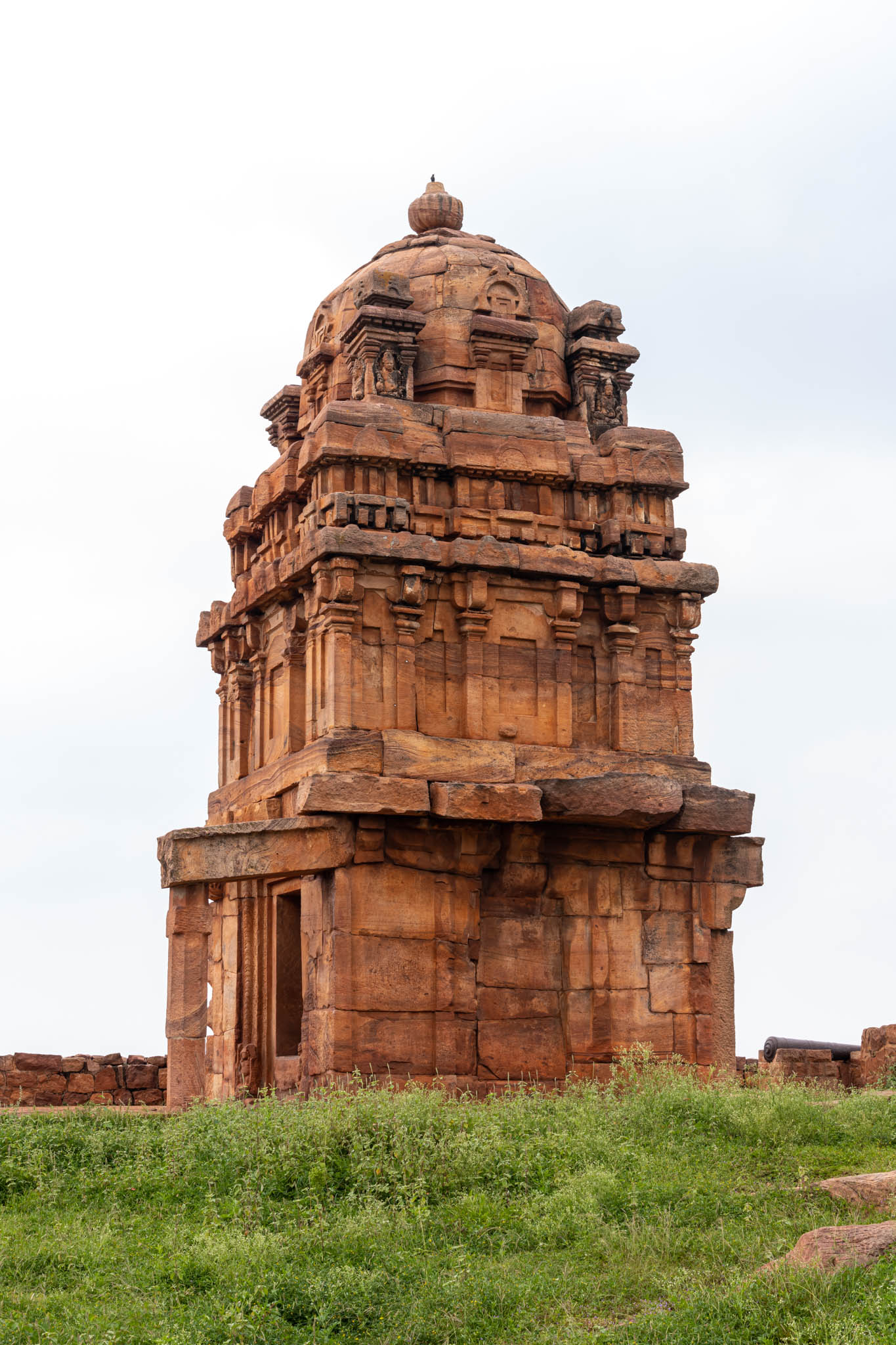
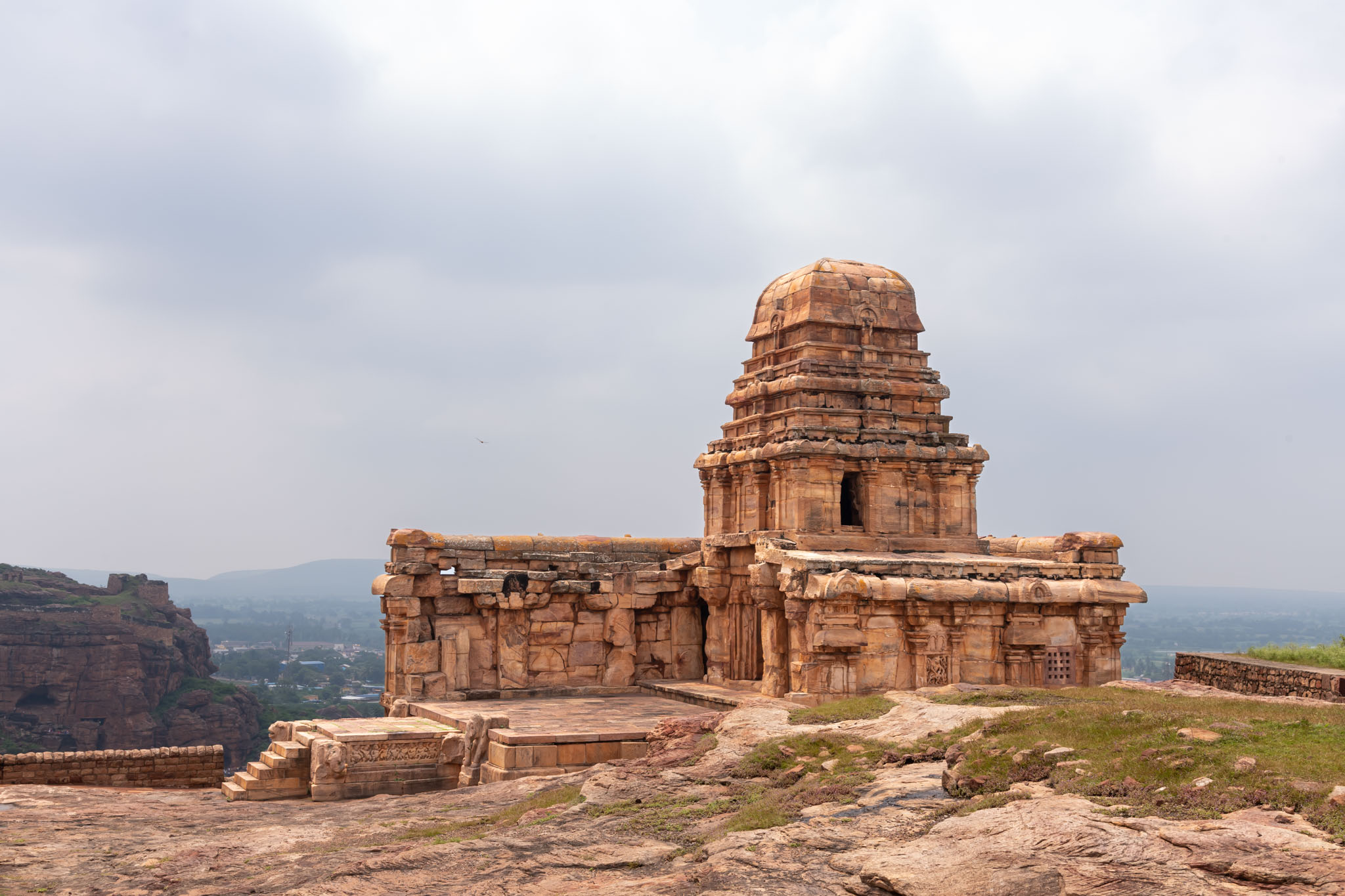
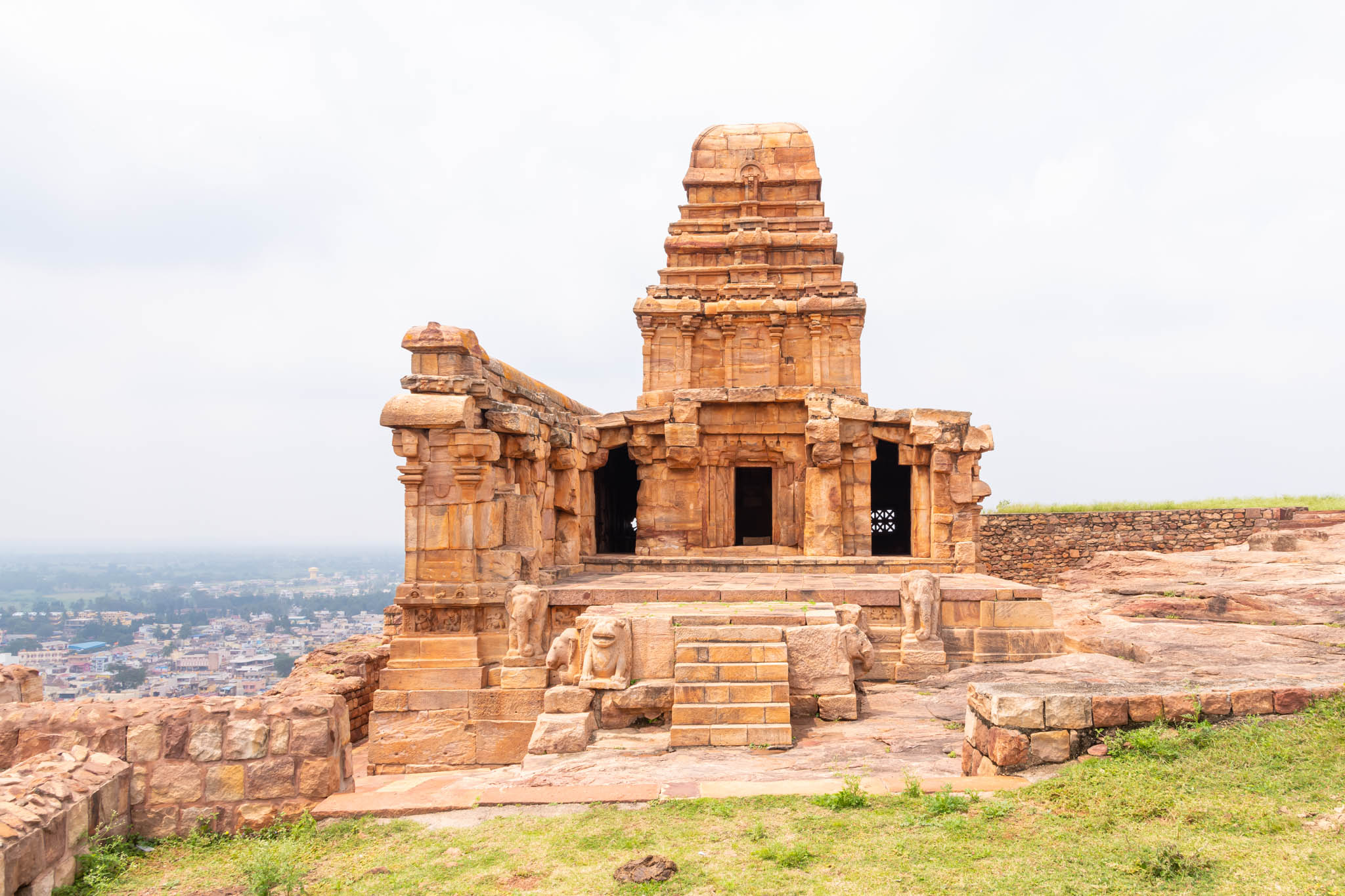
Next stop was the Fort. This was the abode of the Chalukyas and was built in 542 AD. It was destroyed by the Pallavas when they defeated the Chalukyas in battle. When Badami came under the rule of Tipu Sultan, he rebuilt some of the fortifications. You can walk up the hill using a paved pathway that has many steps. It is not a difficult climb at all and as I mentioned earlier, ASI has maintained it quite well. There are not many buildings left standing and the two important ones are two temples – Lower Shivalaya and Upper Shivalaya. The idol of Vatapi Ganapati was originally located in Lower Shivalaya before the Pallavas carried it away. 

Lower Shivalaya

Upper Shivalaya

Granary on top of the hill

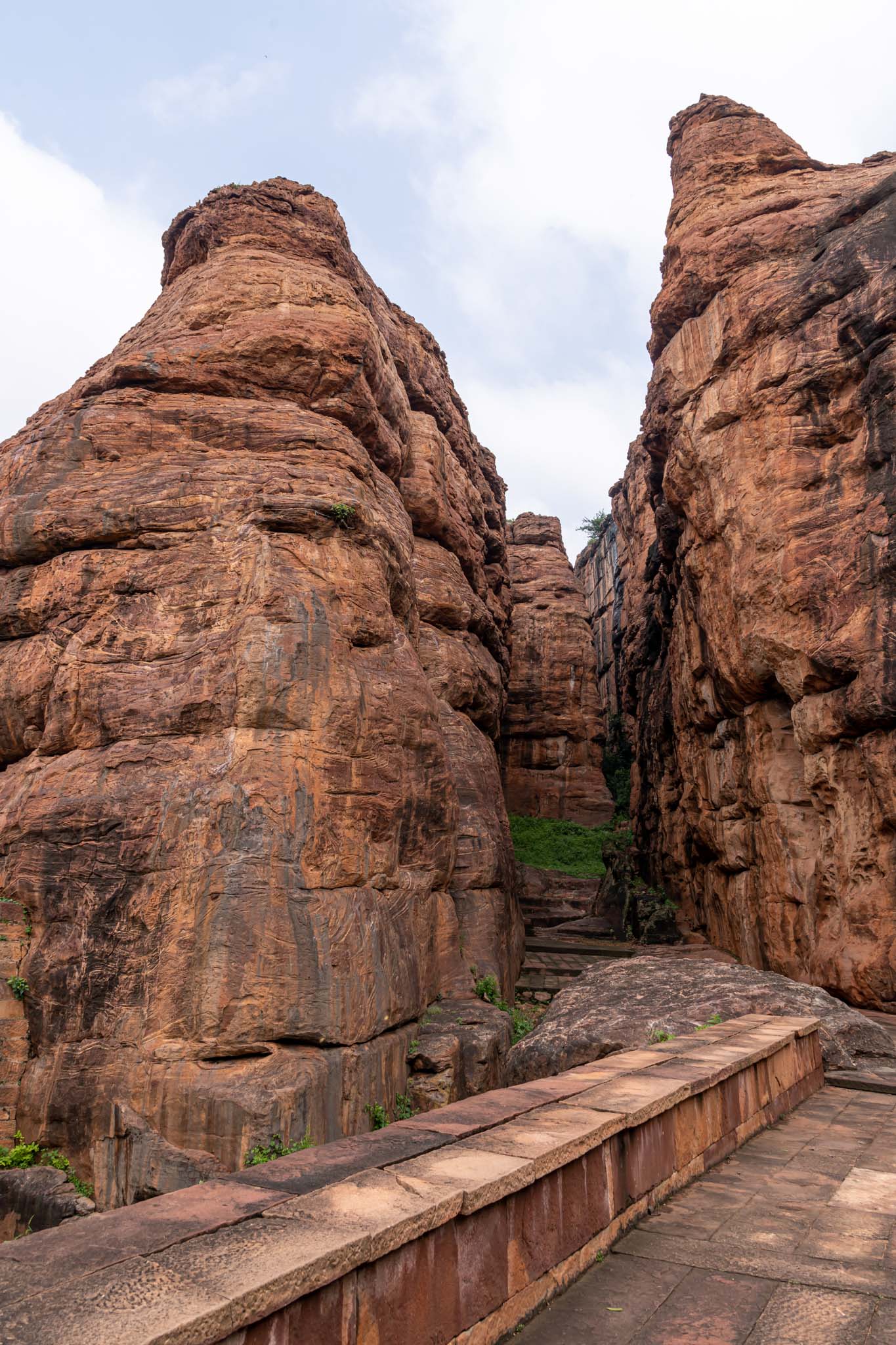
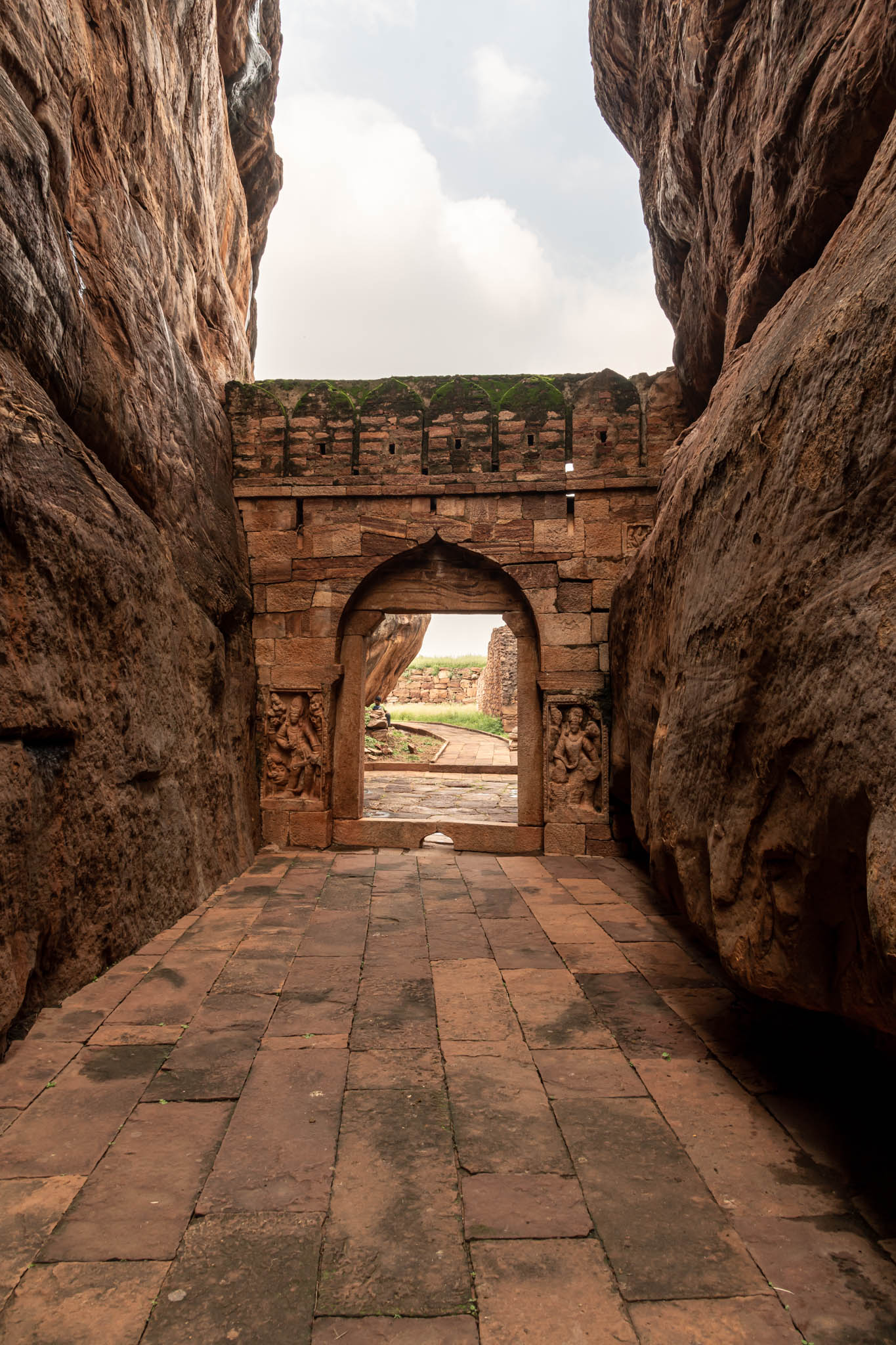
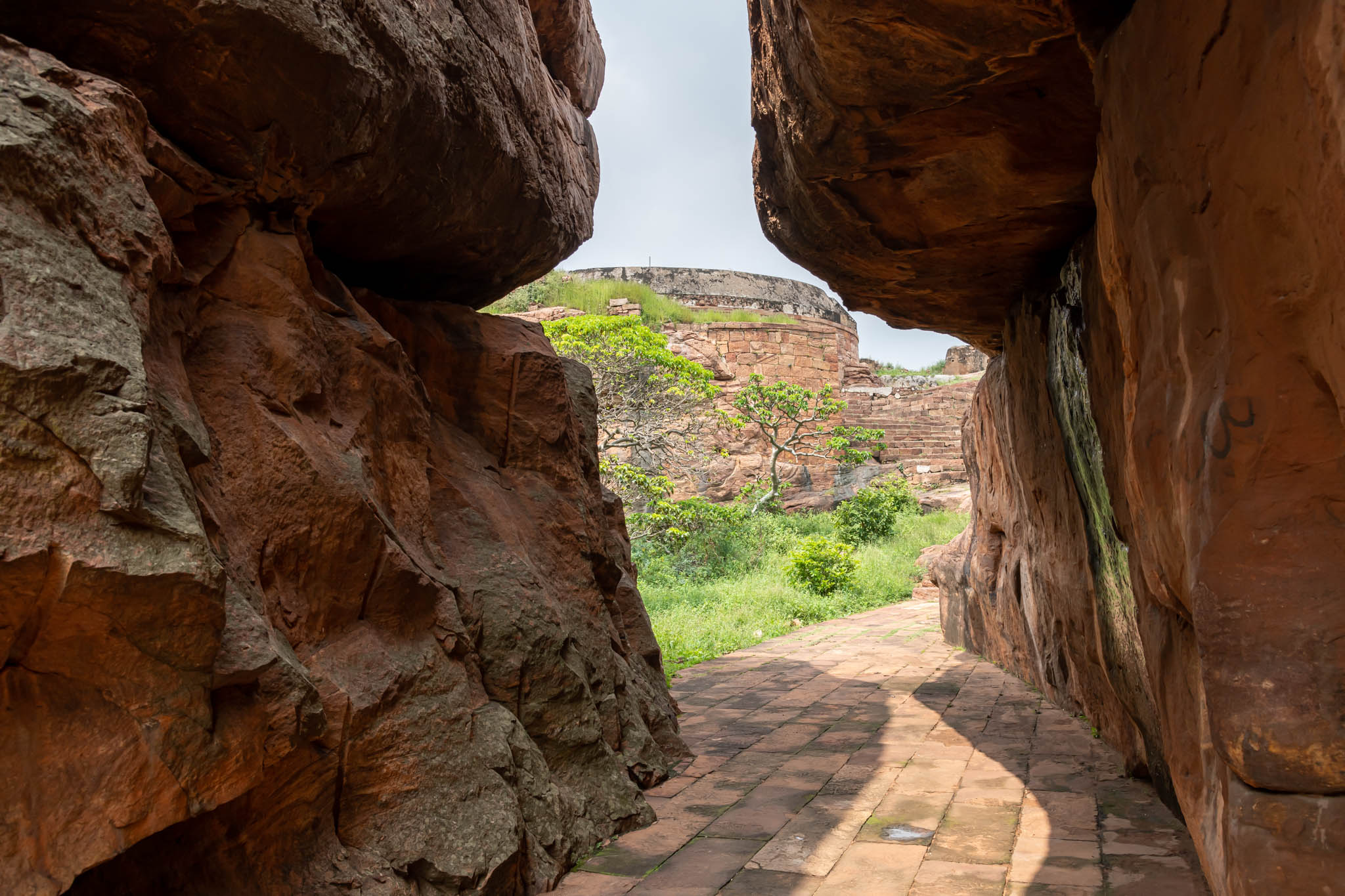
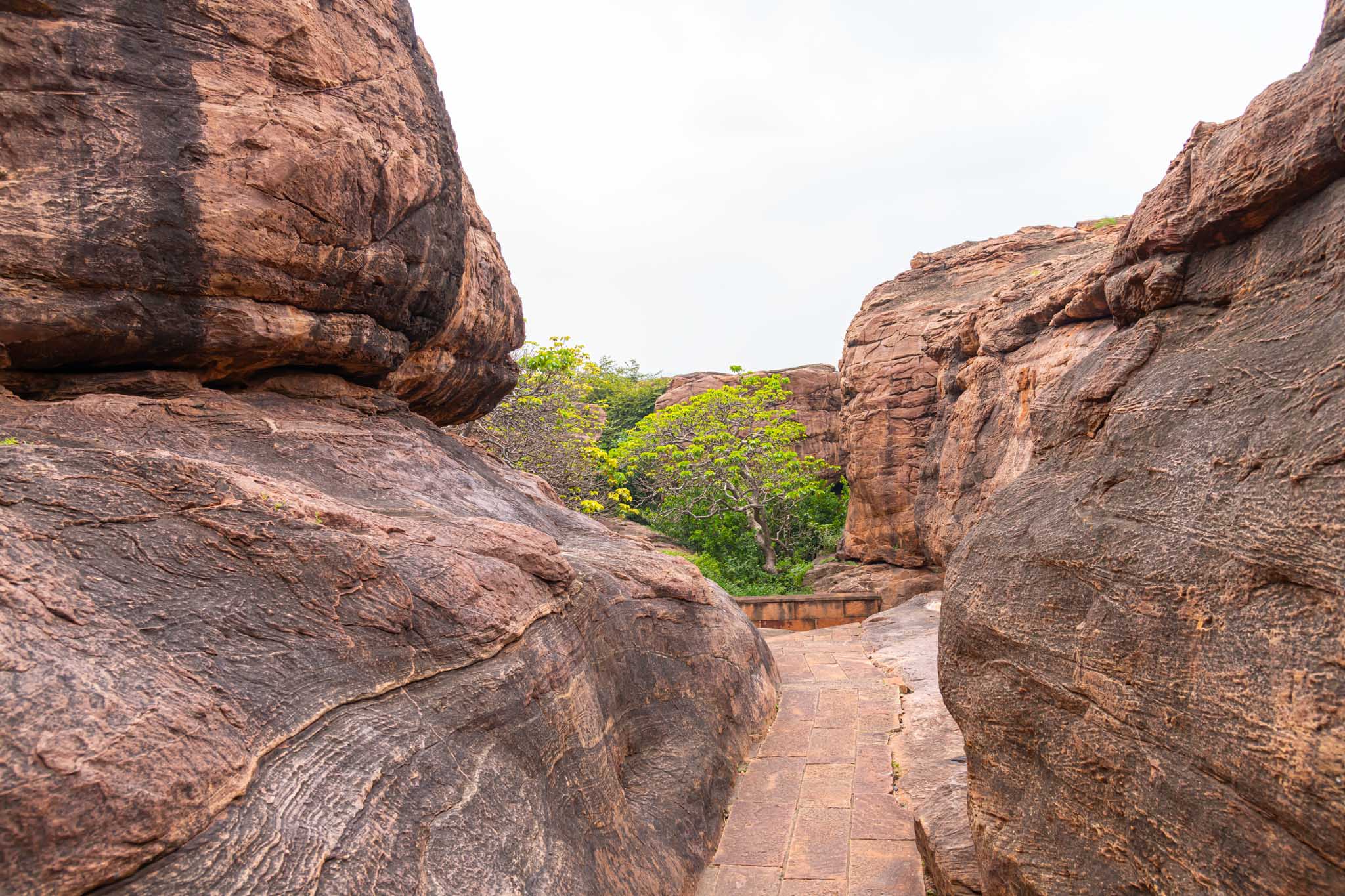
There are some doorways along the path and it is very evident that the fort could be defended very easily by a handful of soldiers, given the structure of the pathway. The time eroded rocks on both sides add significantly to the experience. 

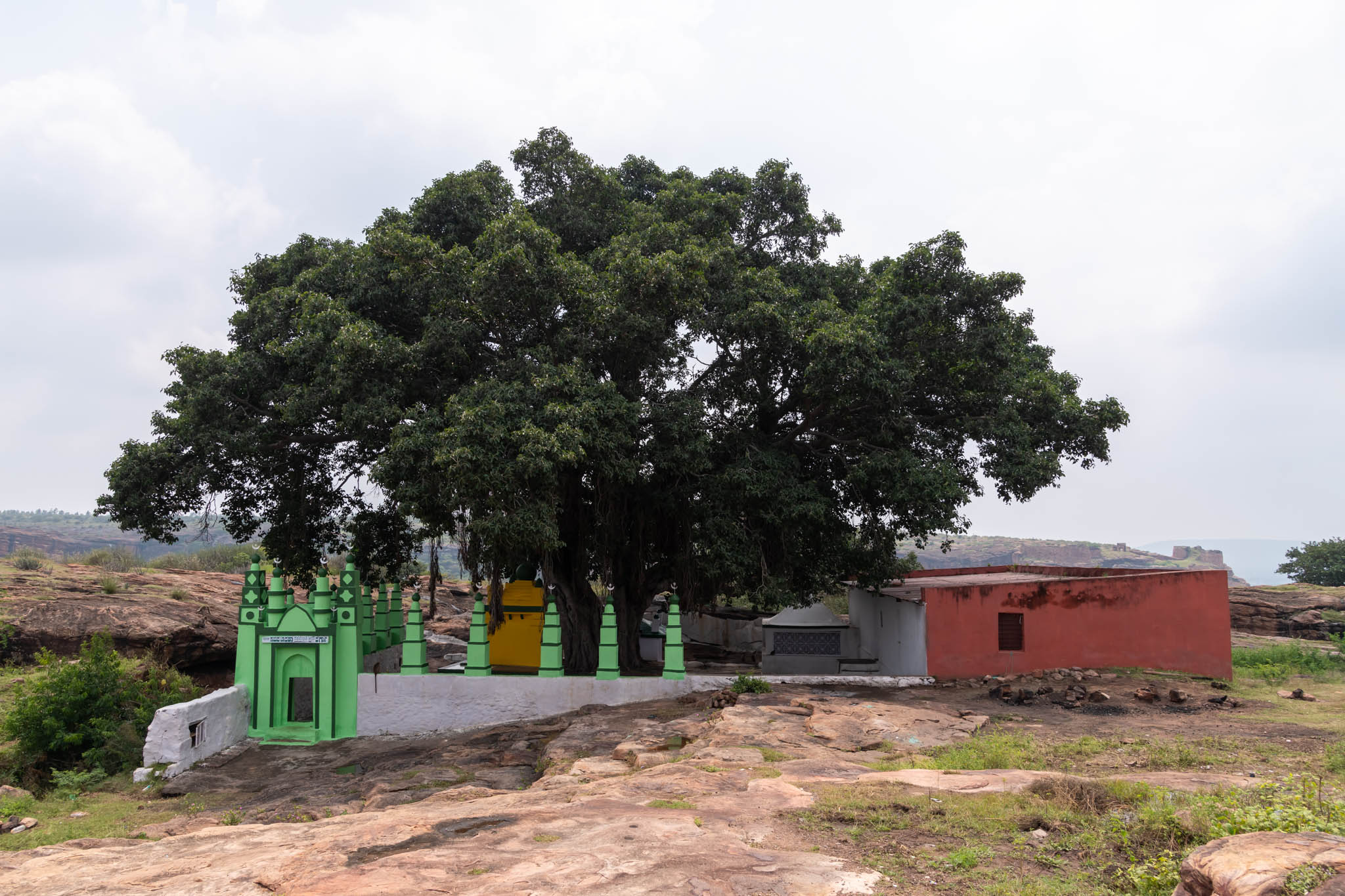
On the top there is a round structure that had cannons installed for defence. Given the style of the architecture, I guess this must have been constructed during the time of Tipu Sultan. At the top of the hill, very near to Upper Shivalaya, there is a Durgah that has the tomb of Sayyid Hazrat Badshah (I couldn’t find out who this person was). 

By this time, it was past noon and I headed back to the Cave Temple. After the fall of the Chalukyas, Badami came under the Deccan Sultanate and later Tipu Sultan and there are some evidences of Muslim rule, such as the Durgah mentioned above. Yet another is the charming Markaj Jumma mosque, built by Tipu Sultan, that is right next to the Cave Temple and hosts the tomb of Abdul Malik Aziz, a governor of Badami.

As is often the case with Archaeological sites in India, one will not be able to understand any detail about the caves if one doesn’t engage a guide. Sure, there are some small boards put up outside but those don’t have enough information and are often quite confusing. This is a real pity as most people do not or cannot engage a guide and so miss out many of the wonders and these sites are often so rich in history and culture. It would be great if the ASI can introduce a relatively cheap method like audio guides so that people can immerse themselves into the great experience that these amazing sites can provide. Since I knew that a guide is more or less mandatory if one were to try and get some understanding about the caves, I engaged one. Of course, these guides do also add some “interesting” bits from their side as well and I have often heard the same sight being explained in two different ways by two different guides; all the more reason for audio guides!
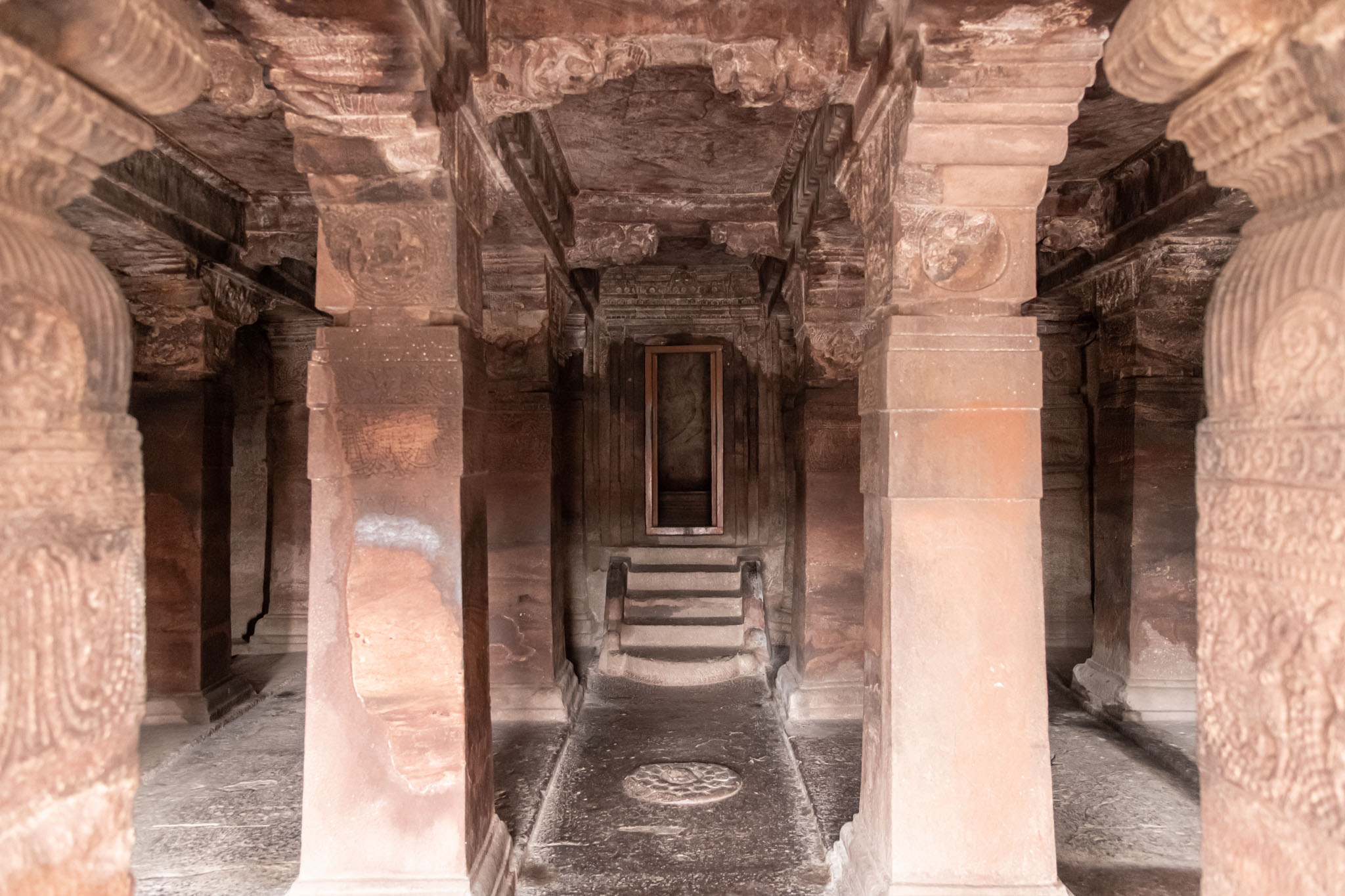
All the four caves have been carved out of rock and there are no joints anywhere in any of the pillars or statues. In other words, nothing has been worked upon outside and then brought here and fixed. It is assumed that each cave might have taken 12-15 years to finish. Data is available only about the third cave, which is the most ornate, as there is an inscription on one of the pillars in it. This cave took 12 years to finish, from AD 576 to 588. The first cave that was excavated was Cave-1 and then Cave-2 and so on. 

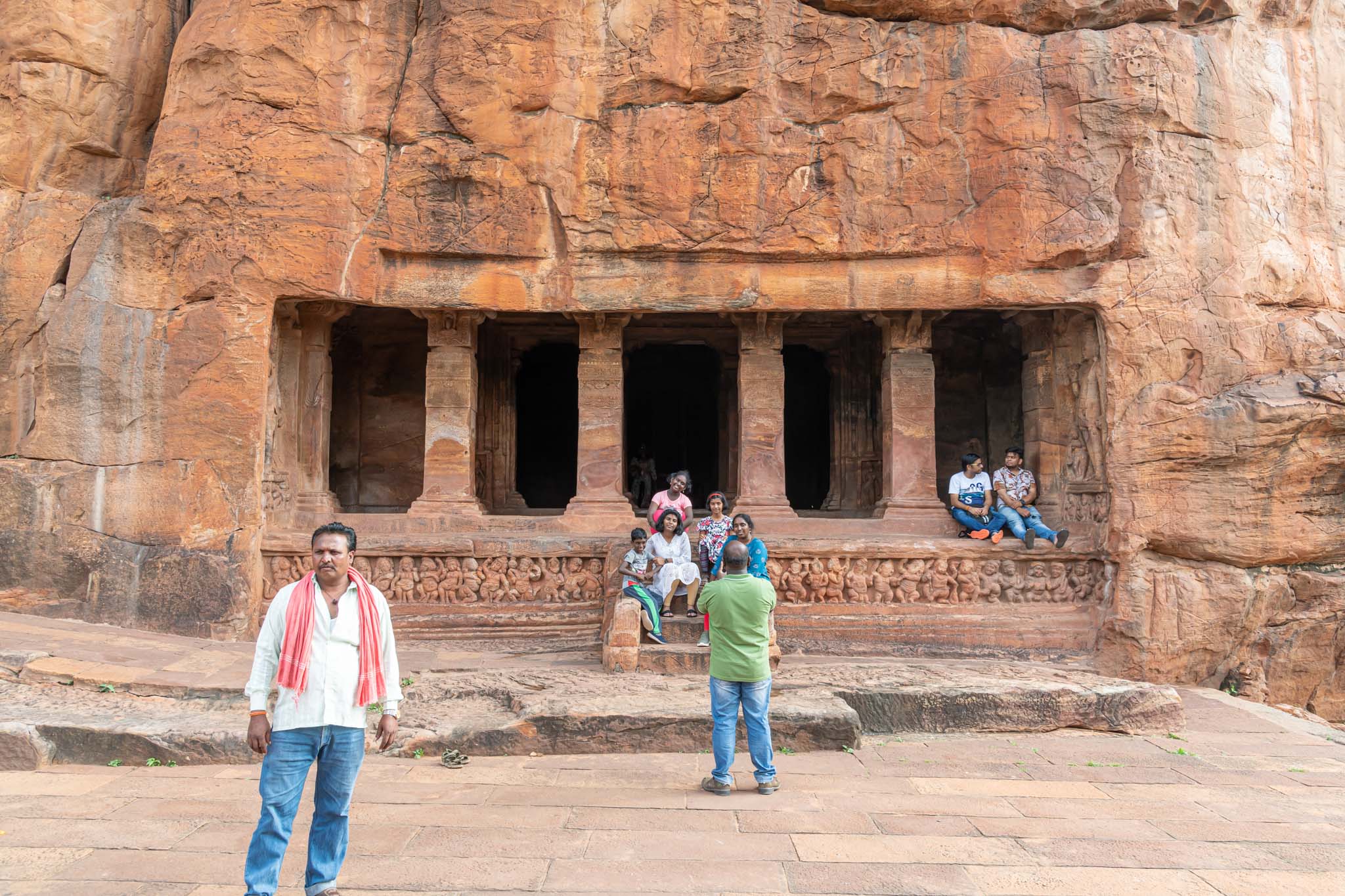
By the time I got back, there were a lot of people visiting the caves, as can be seen from the photo below, which shows the façade of the first cave. This cave is dedicated to Lord Shiva. 

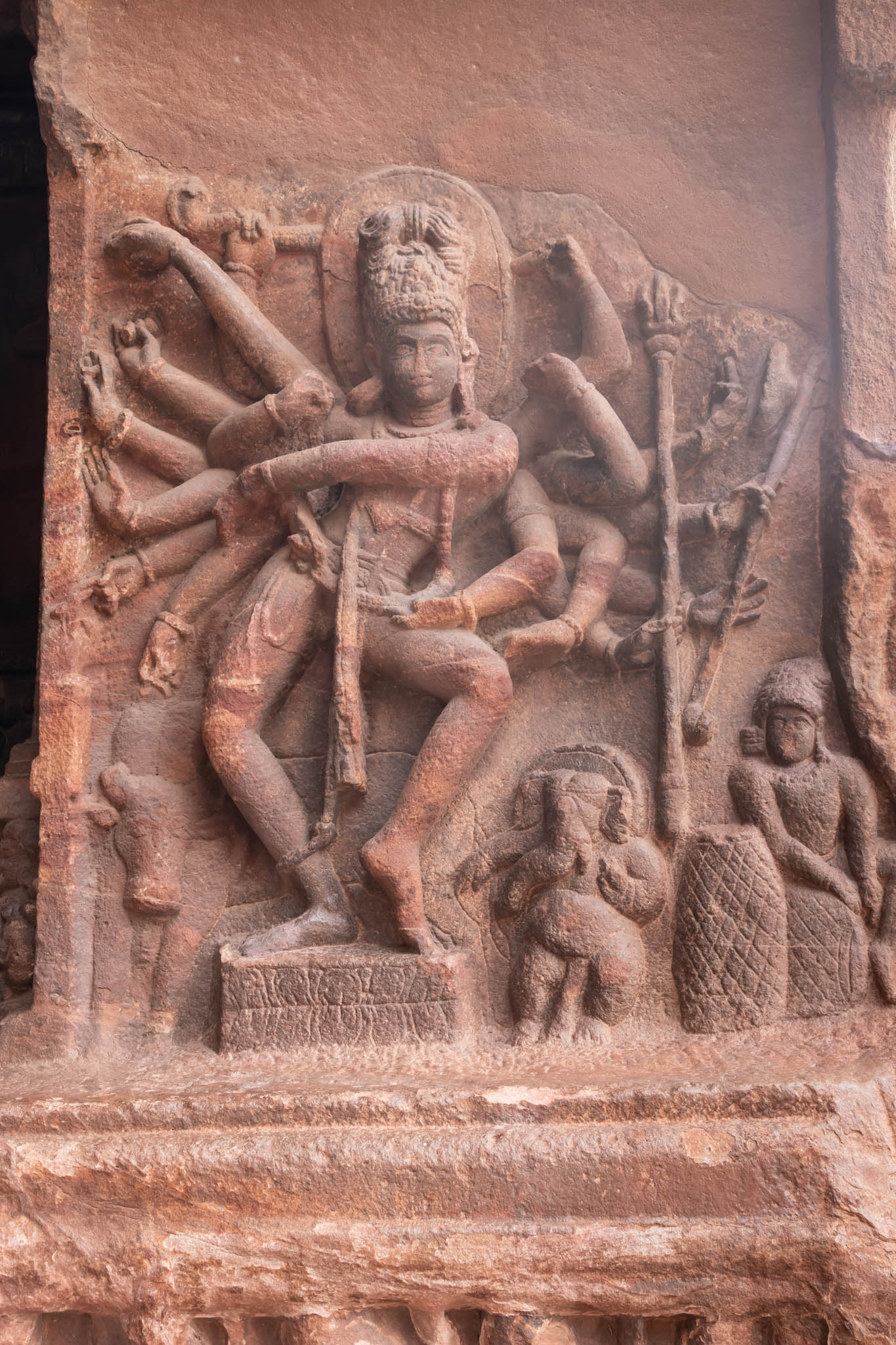
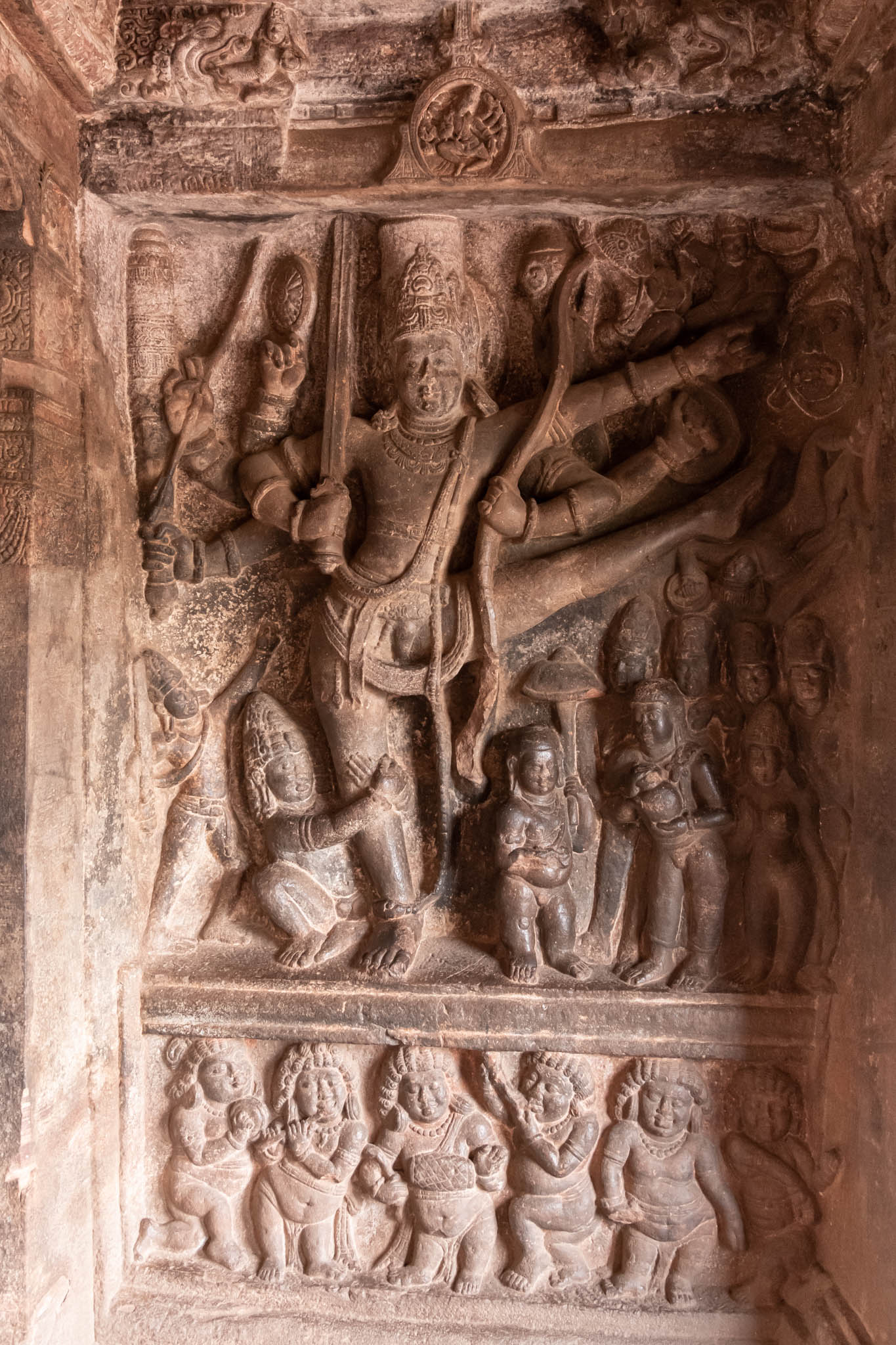
Dancing Shiva statue with eighteen arms with Ganesha and Nandi shown nearby

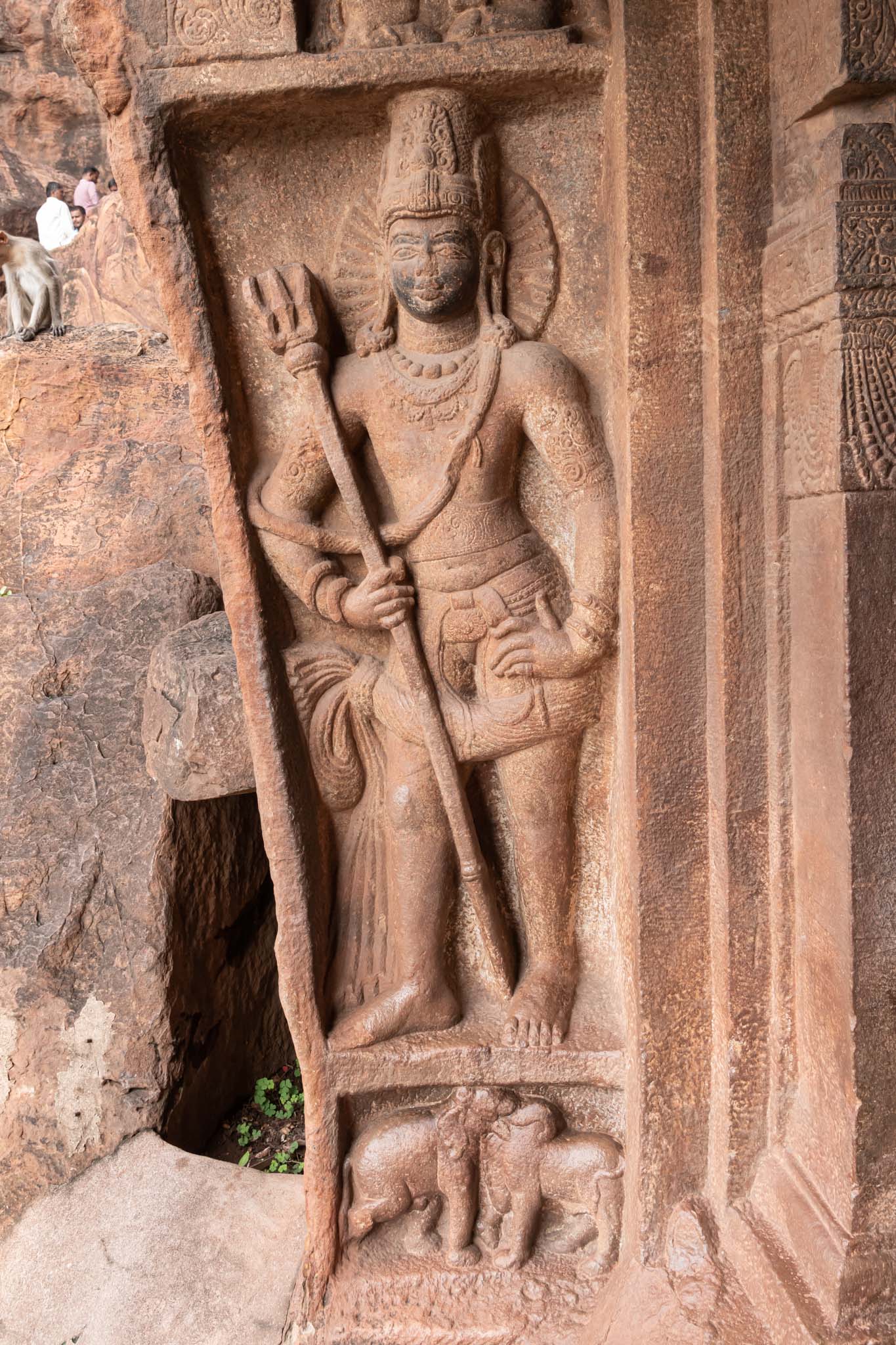
Dwarapalaka

Harihara – Vishnu and Shiva coming together, with symbols of Shiva shown on the right side of the statue (such as Nandi) and those of Vishnu on the left side

Mahishasuramarddini

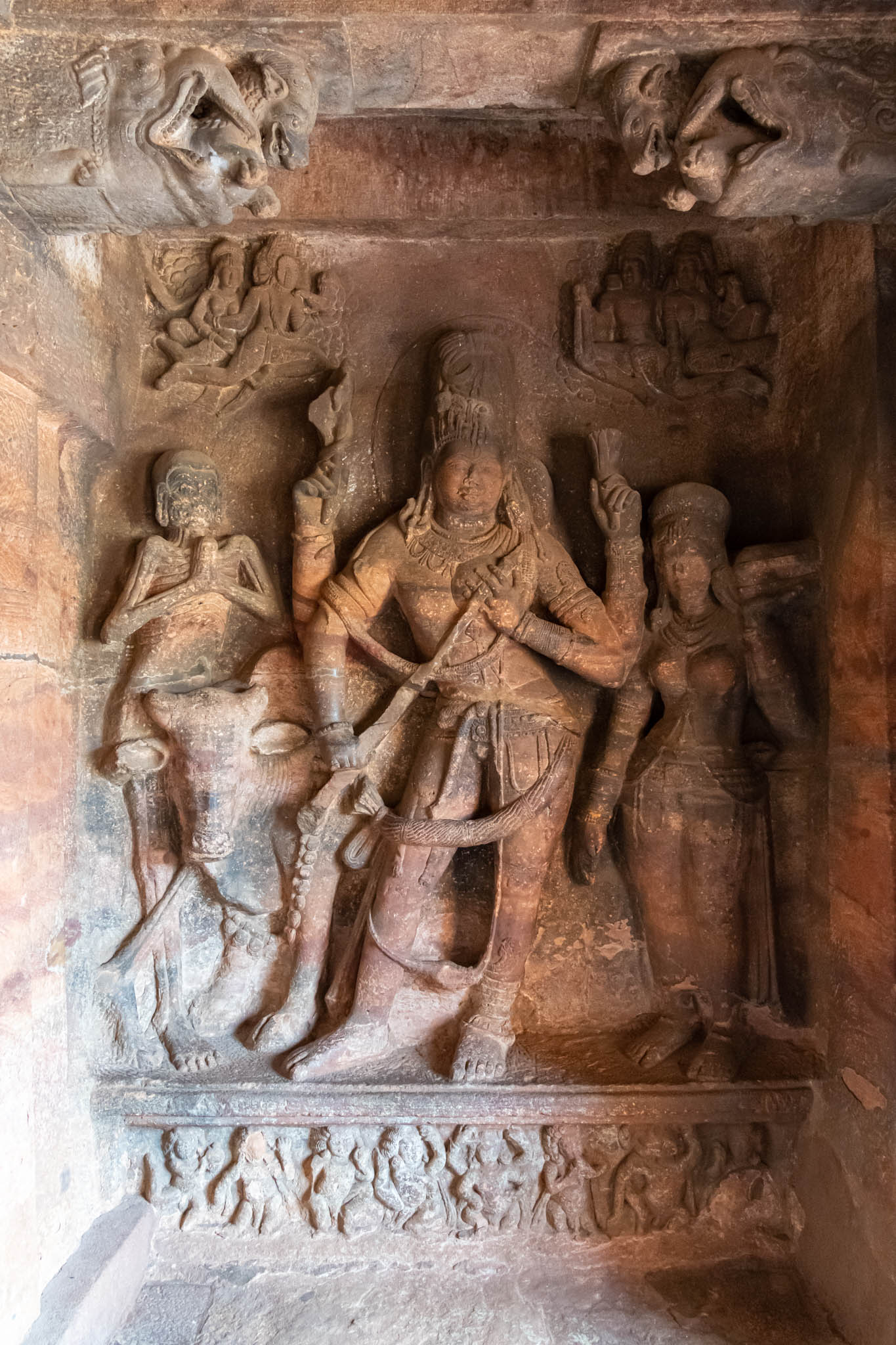
Statue of Ardhanaareeshwara with Sage Bhrigu (the skeleton like figure) and Nandi shown on the side of Shiva and a female consort on the side of Parvati. The guide told me that Bhrigu had become skeleton like after he was cursed by Parvati but that was not how I remembered the story and internet too confirmed that it was Lakshmi who cursed Bhrigu to be doomed to poverty. According to the puranas, Bhrigu had set out to find who among the three gods – Brahma, Shiva and Vishnu – was the greatest and when he arrived at Kailasa, Nandi did not let him enter as Shiva was busy making love to Parvati at that time. The enraged sage cursed Shiva that he would only be worshipped as a Lingam (phallus) along with a Yoni to depict Parvati. Perhaps, it is this story that the sculptor wanted to convey through this work. This story about Bhrigu is quite interesting and once again points to the richness of the Puranas which often did not follow any hierarchy with Sages being superior to Gods themselves, at times, while the Sages spent their lives worshipping those Gods. They provide so many such sly entry points to paths that lead to the questions on what is supposedly the main theme.

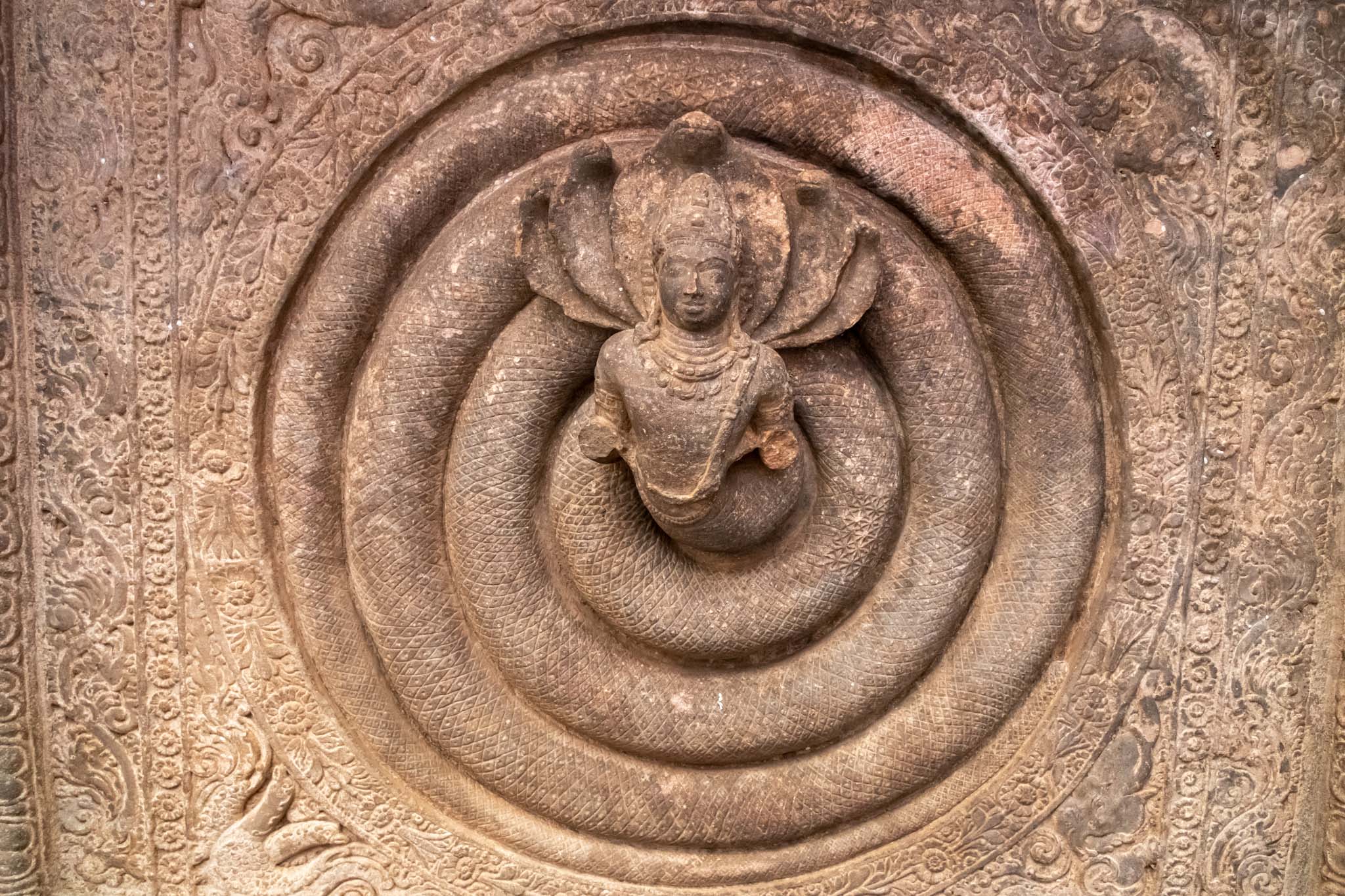
Adisesha shown with five heads in the ceiling of Cave-1

This Nandi has been brought from outside and is the only structure in the caves that has not been carved out of the rock and is free standing

Shivalinga in the sanctum sanctorum of Cave-1; however there is no worship in the temple

A climb up a small set of steps takes one to Cave-2, which is dedicated to Lord Vishnu.

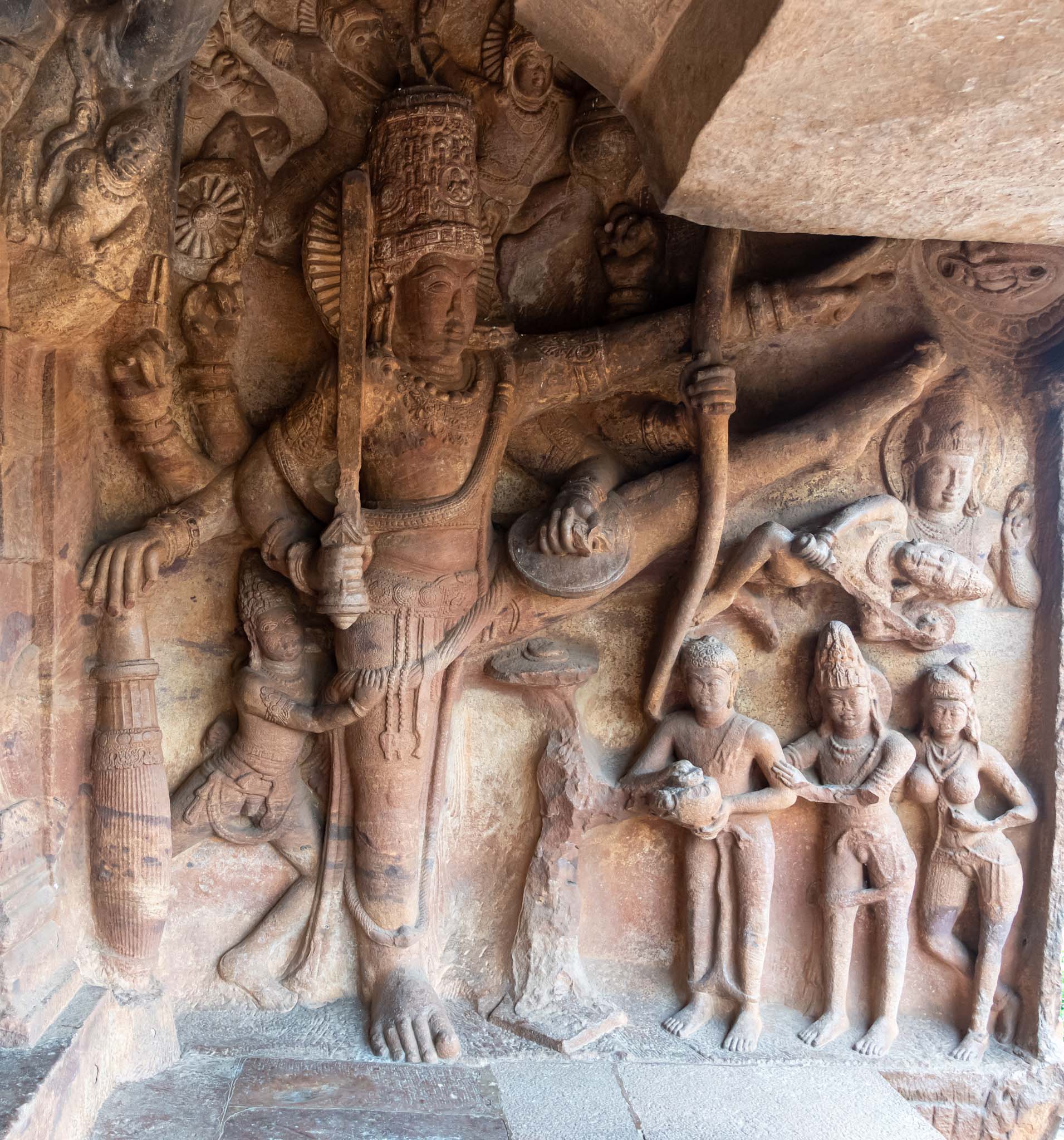
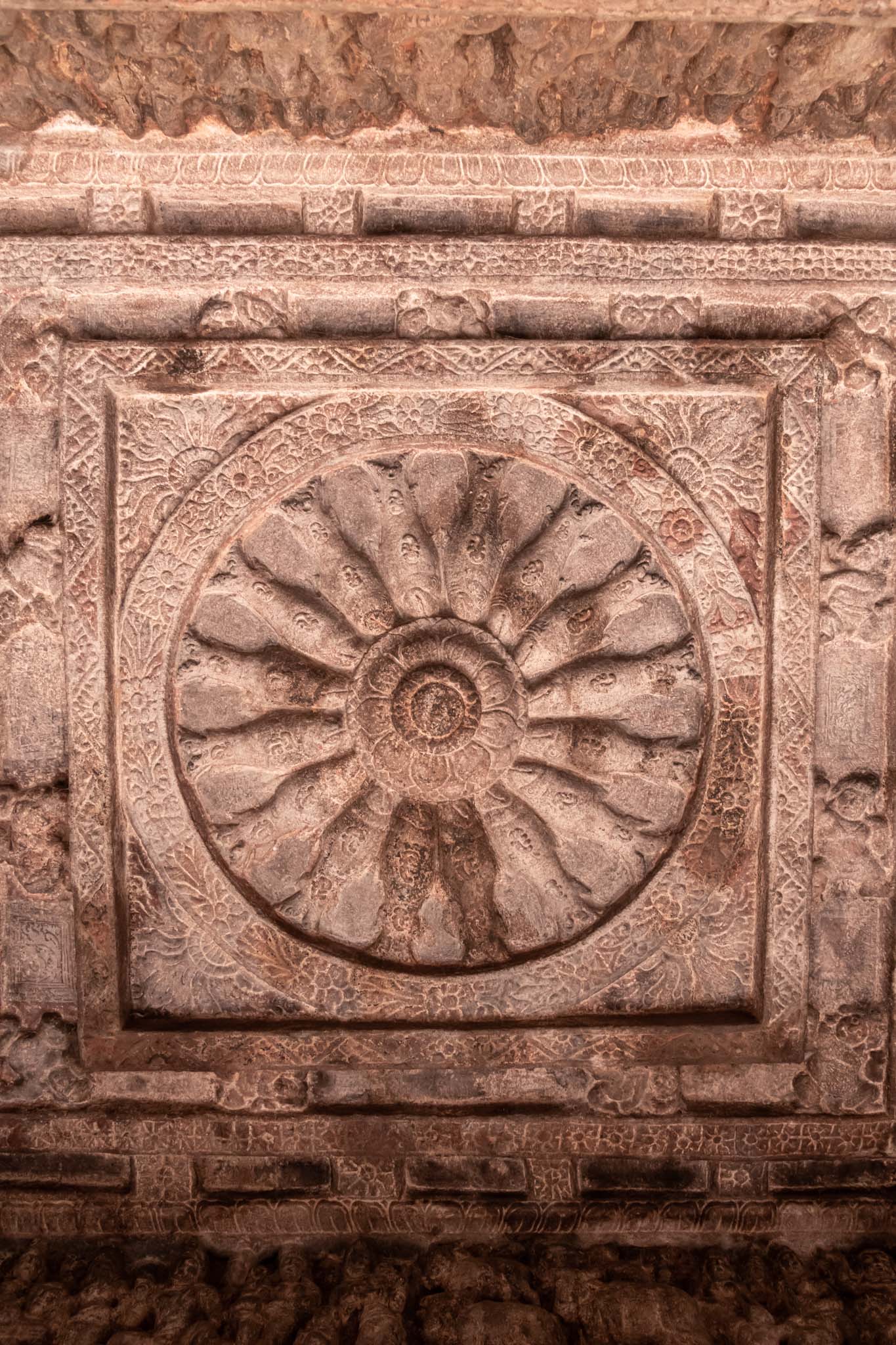
Statue of Trivikrama is seen at the entrance to the cave and Vamana can be seen holding an umbrella. There is intricate work in the ceiling with a design of four swastikas joined together in a never ending pattern and also a circle with twelve fishes in it. One can only marvel at the effort and care that must have been put in, to carve these out of rock. One mistake and the piece would go bad and there was no opportunity to replace the piece as everything was carved out and nothing was joined. There is no idol in the sanctum santorum of this cave and same is the case in Cave-3 as well.

Cave-3 is also a few steps away from Cave-2 and this is the cave with the most intricate carvings and its history is fairly well documented because of the inscription mentioned earlier. 

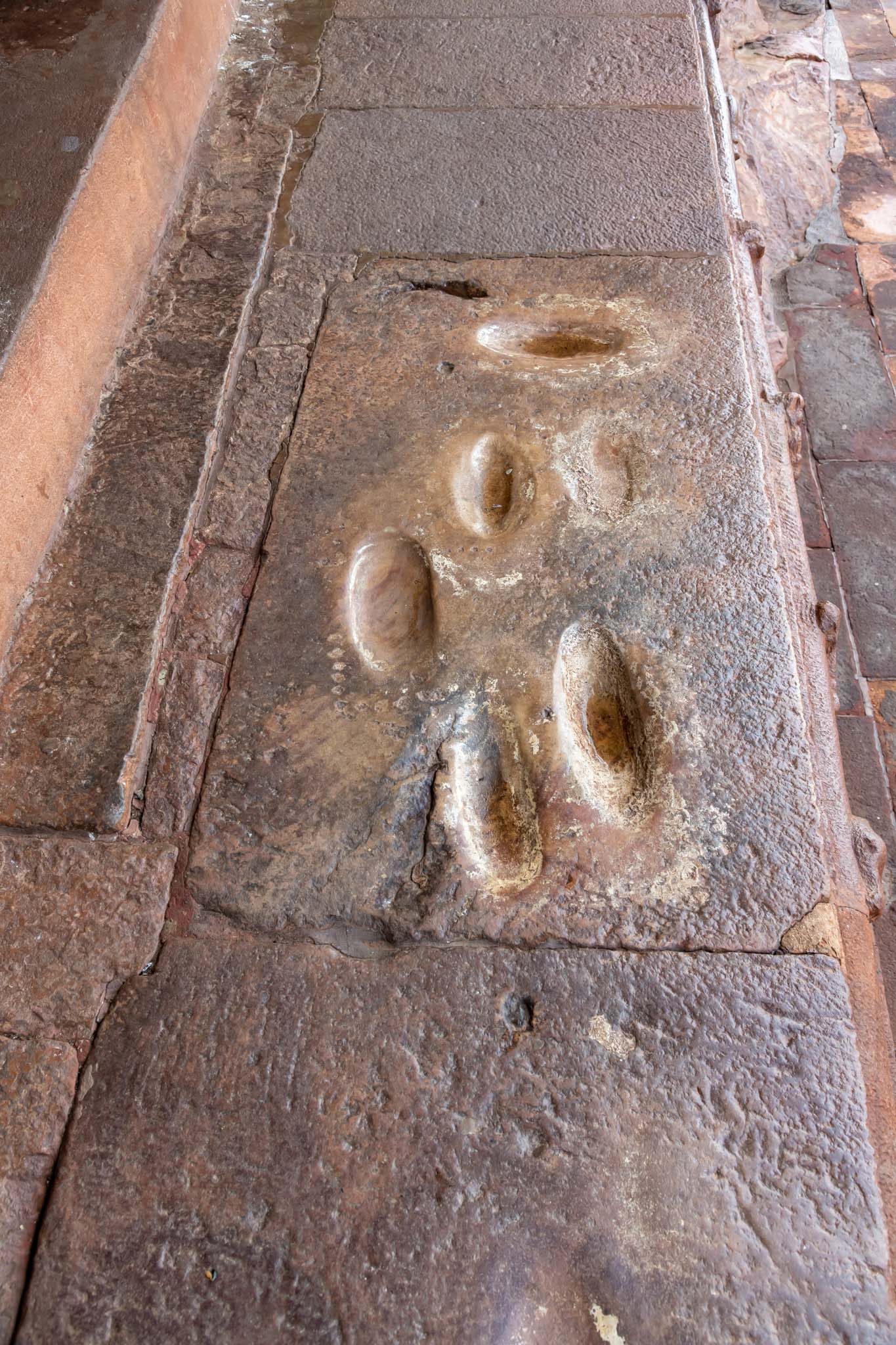
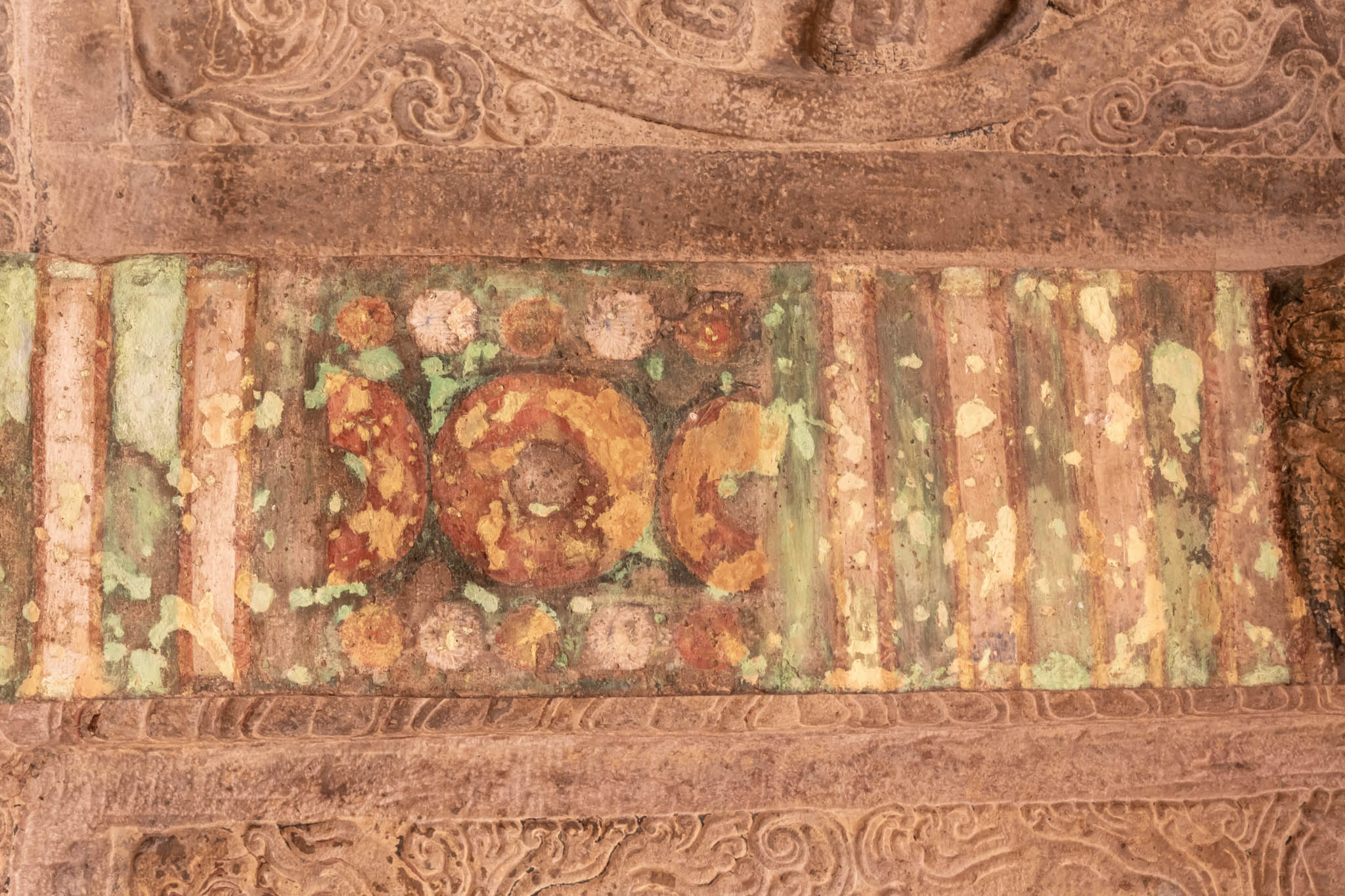
It seems that most of the sculptures were painted in the olden times but almost all of the colour has been lost. They must have used vegetable dyes and this must be why the colours were lost over time. In cave 3, we can see some notches on the floor and the guide said this was the palette for mixing the paint but I am not too sure. Currently you can see some colour only on one small section of the ceiling in Cave-3. 

Remnants of paint on the ceiling

Trivikrama statue in Cave-3

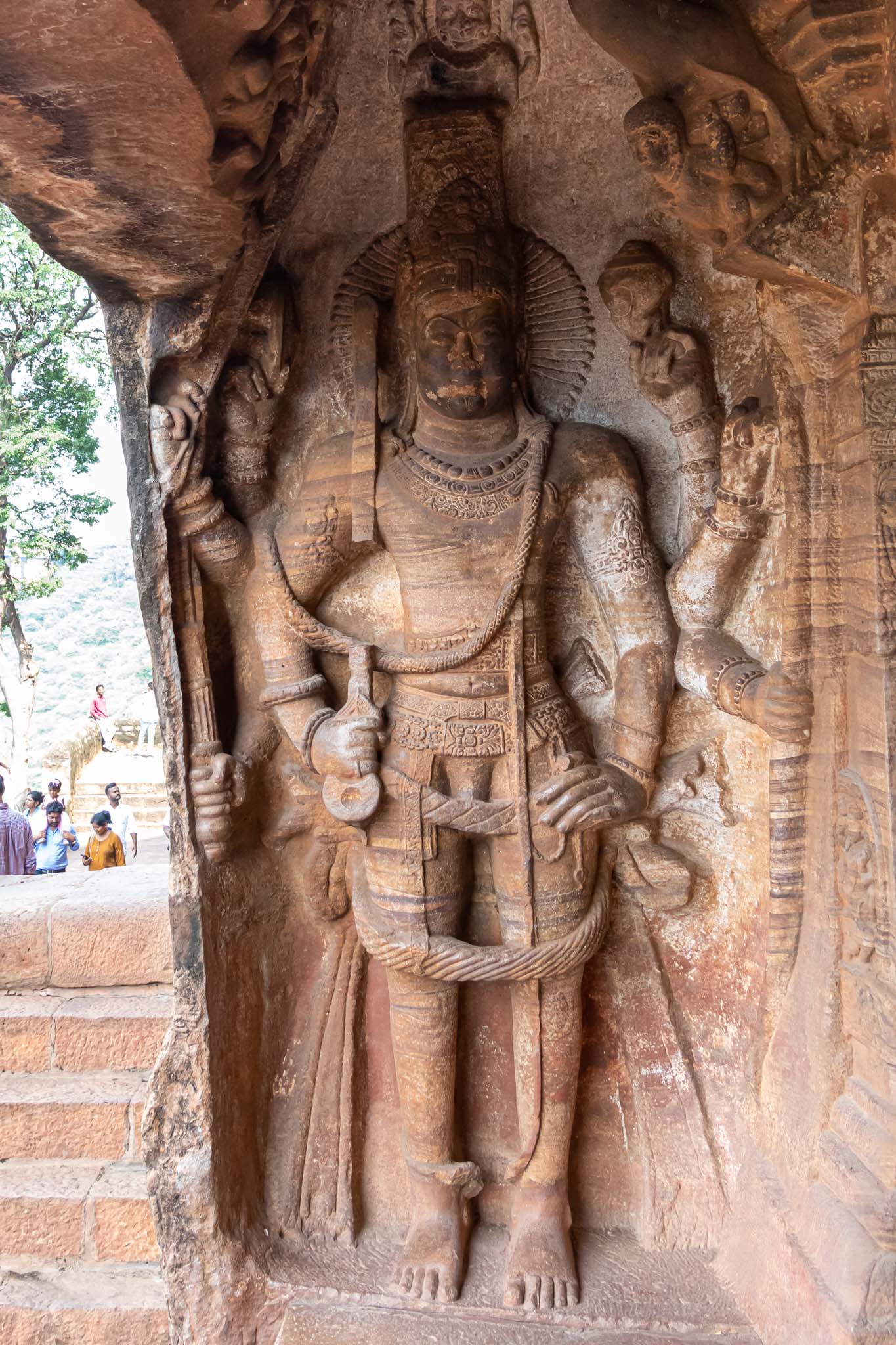
Eight armed statue of Vishnu as dwarapalaka

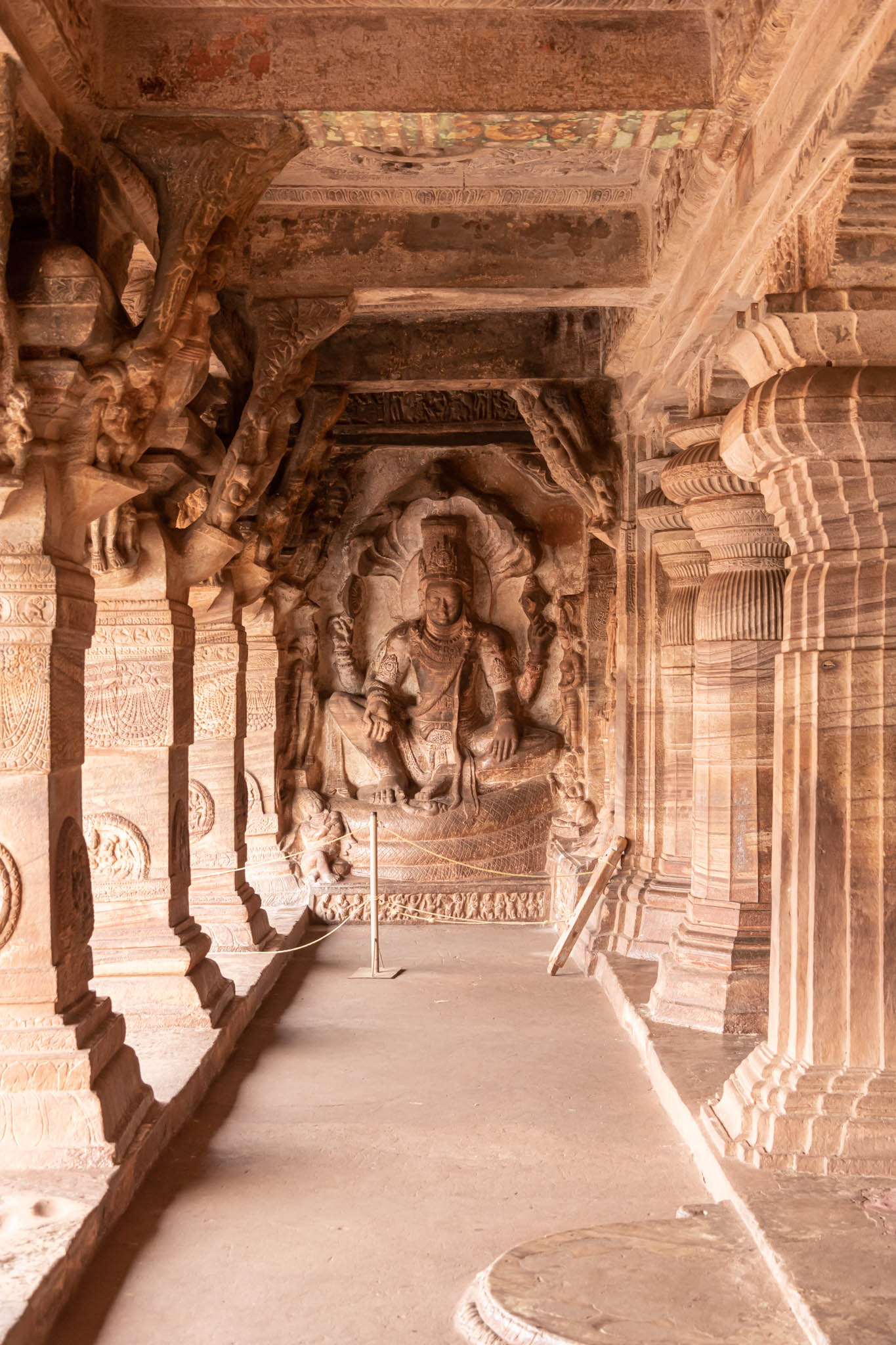
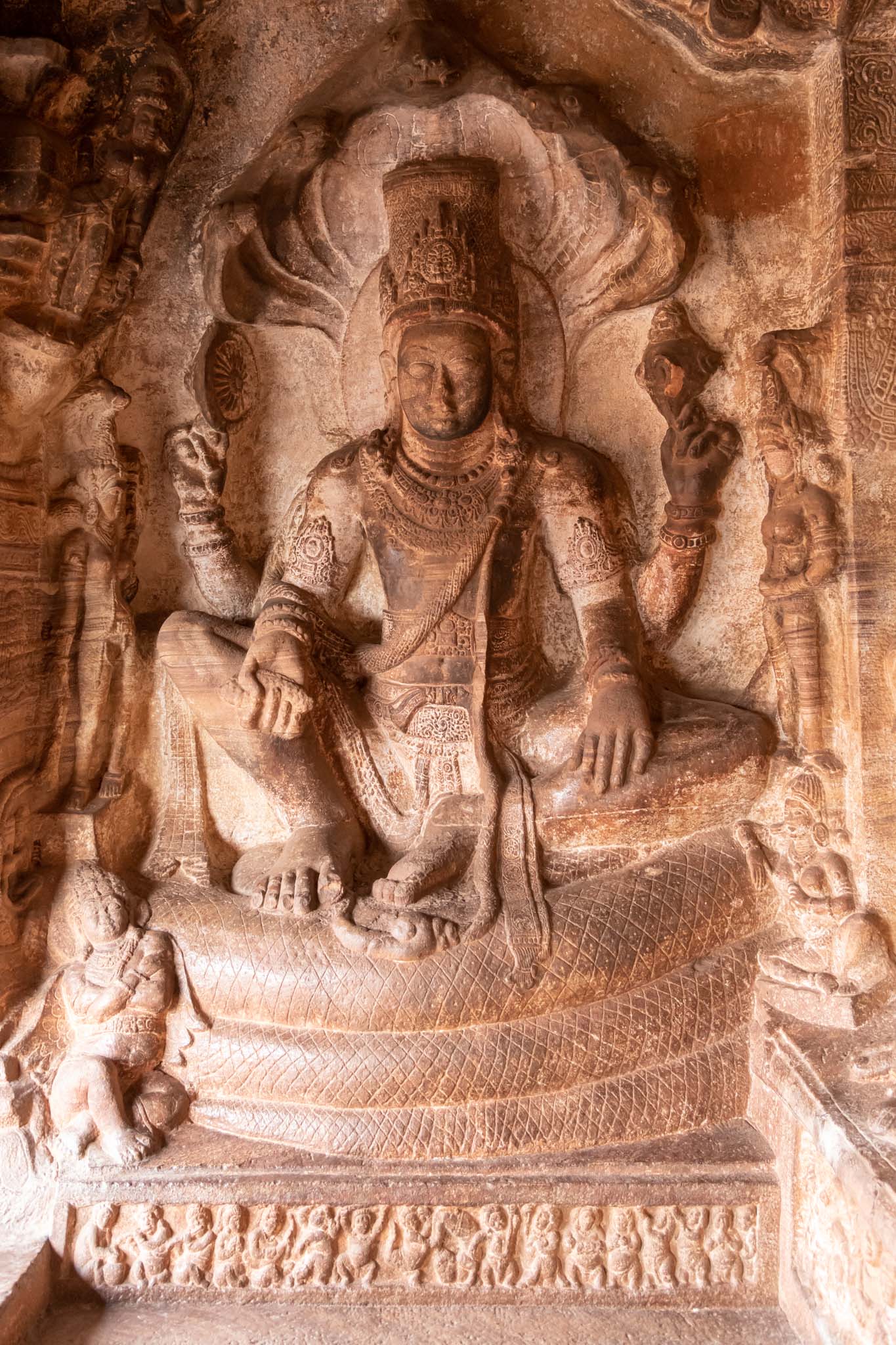
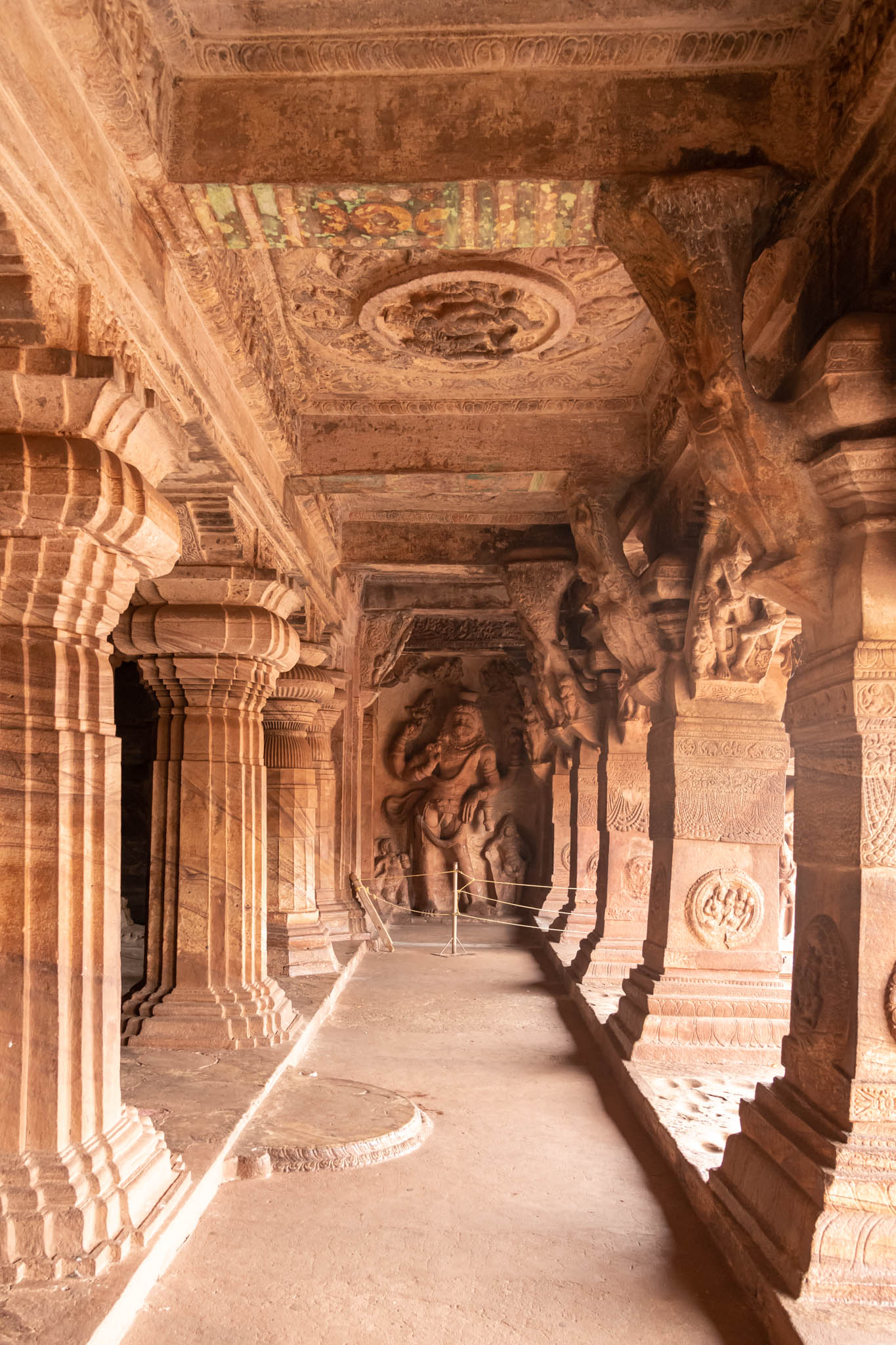
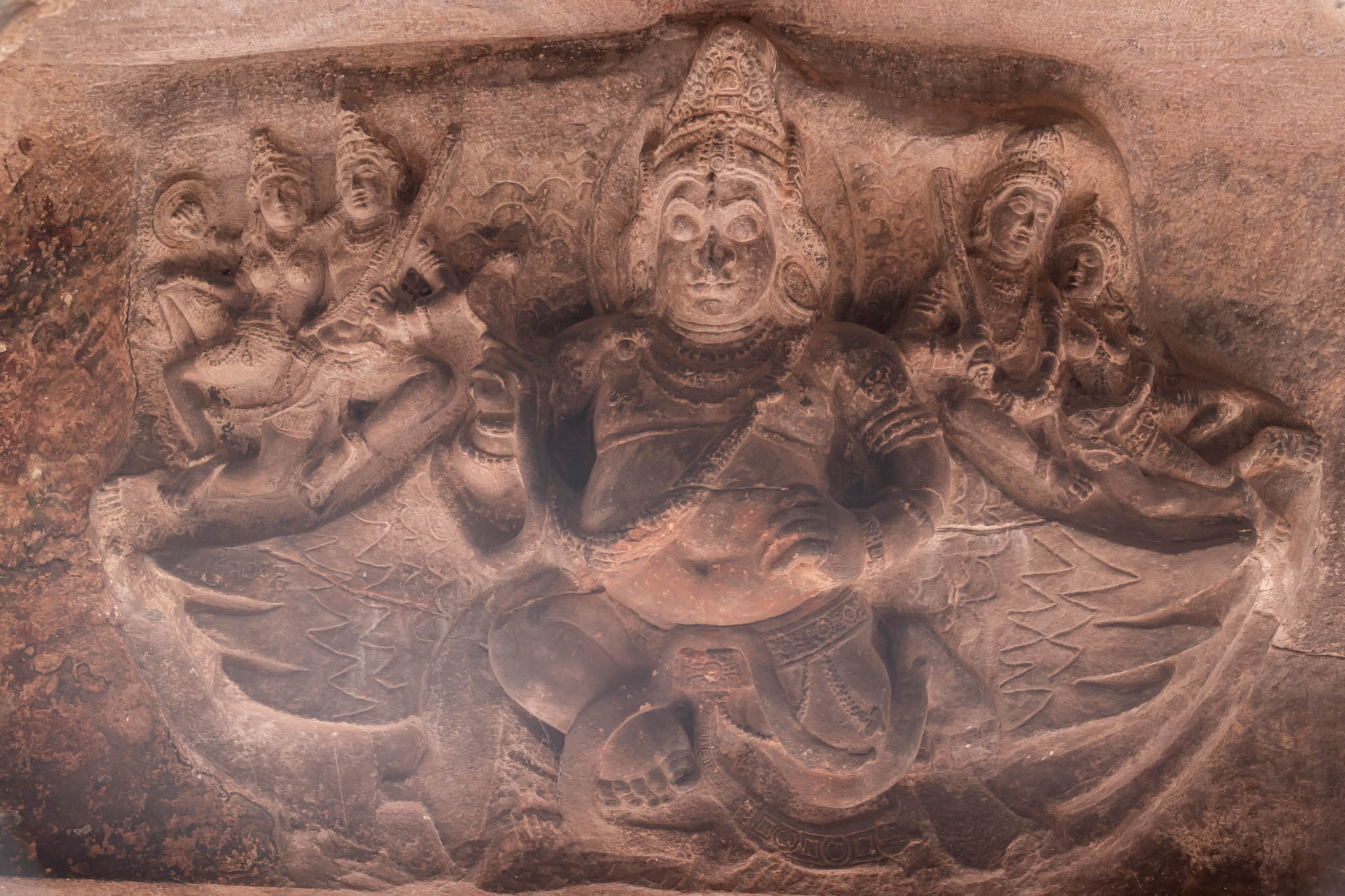
There are two very large, beautiful statues at each end of the corridor as we enter the cave; that of Vishnu seated on Seshnag (Anantha) and of Prasanna Narasimha at the other end. Supposedly, the pose of Vishnu sitting down on Anantha is very unique as he is normally shown as reclining on the coils of the snake. 

Vishnu seated on the serpent Anantha

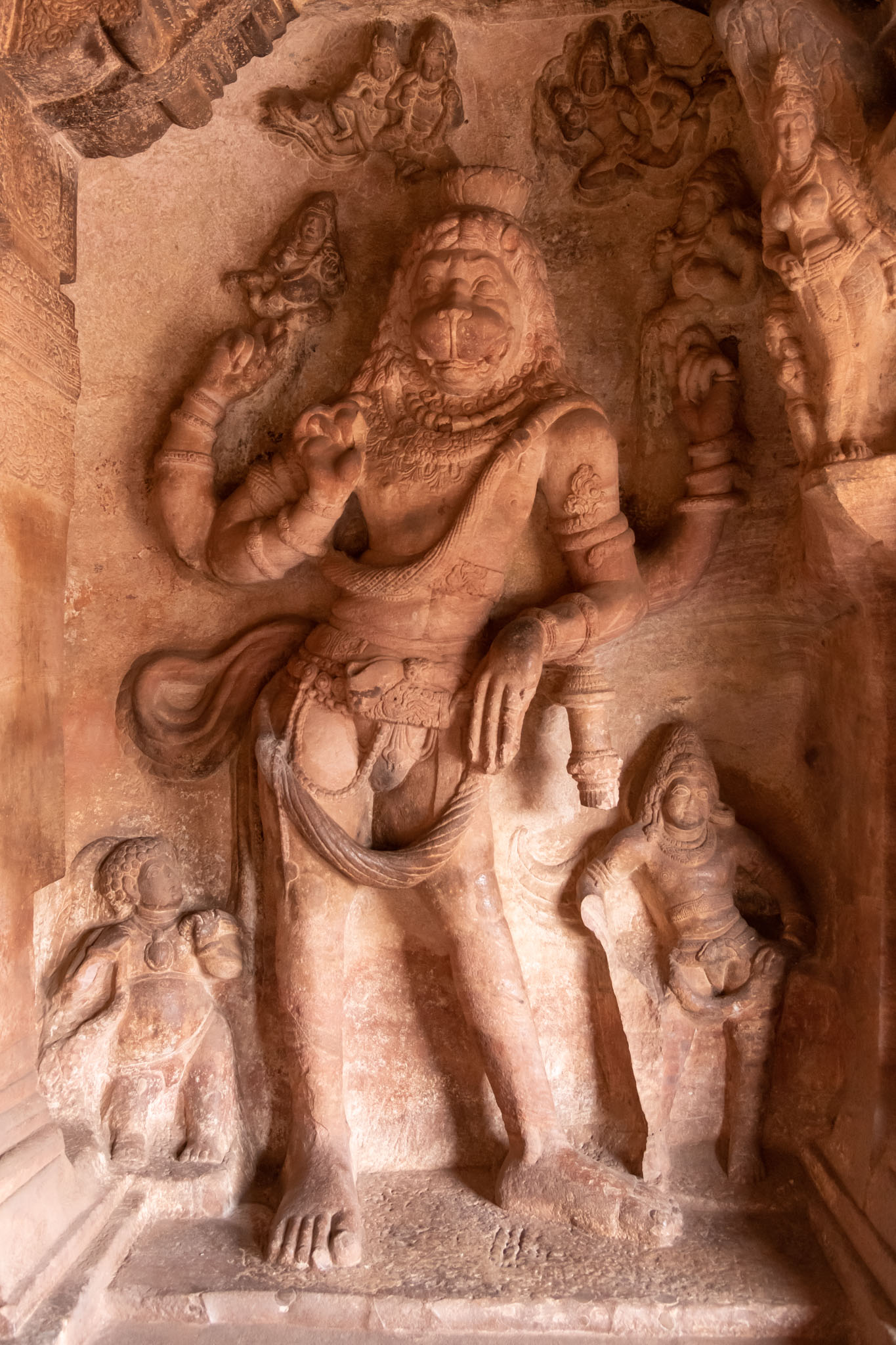
Prasanna Narasimha

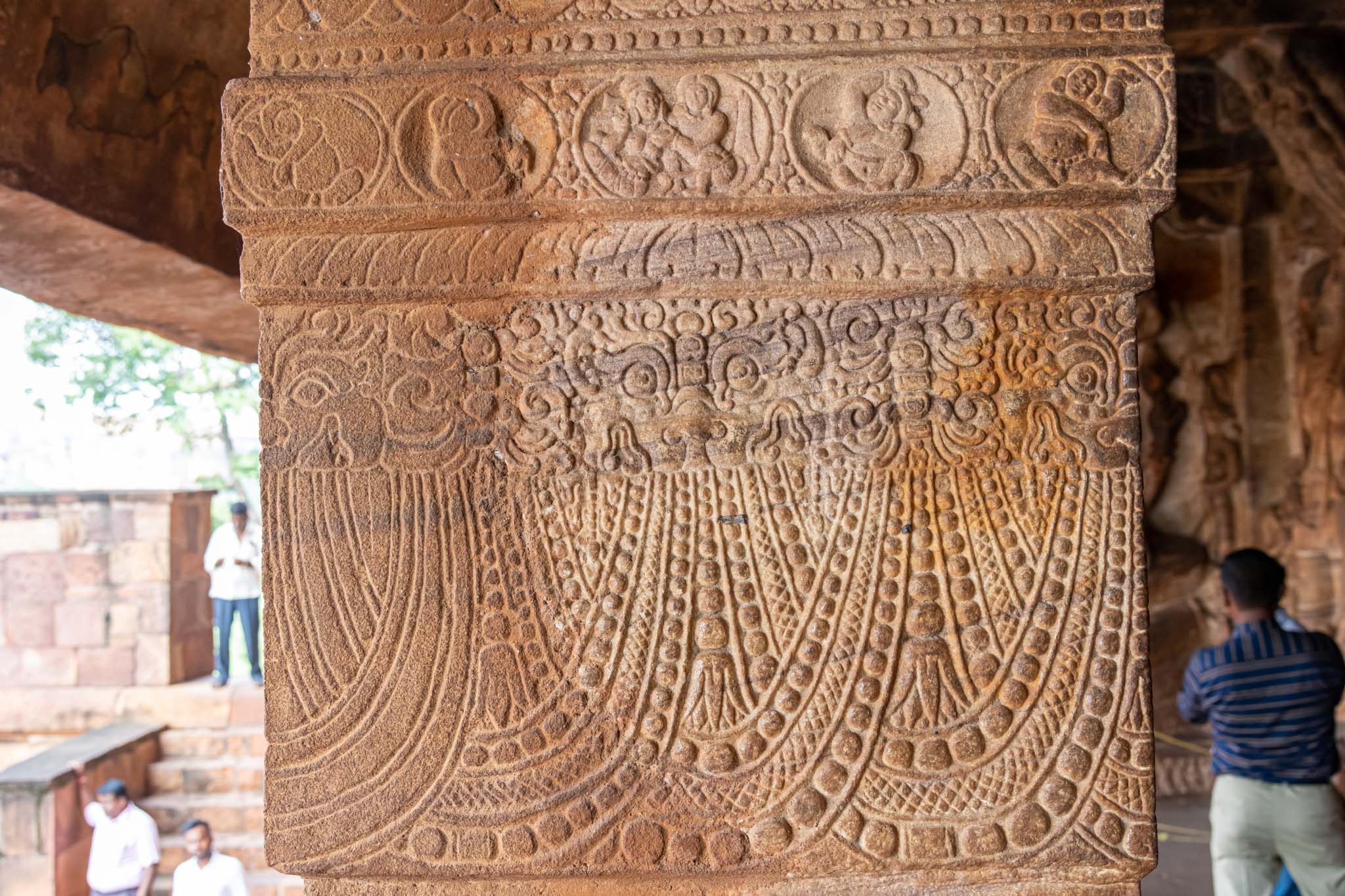
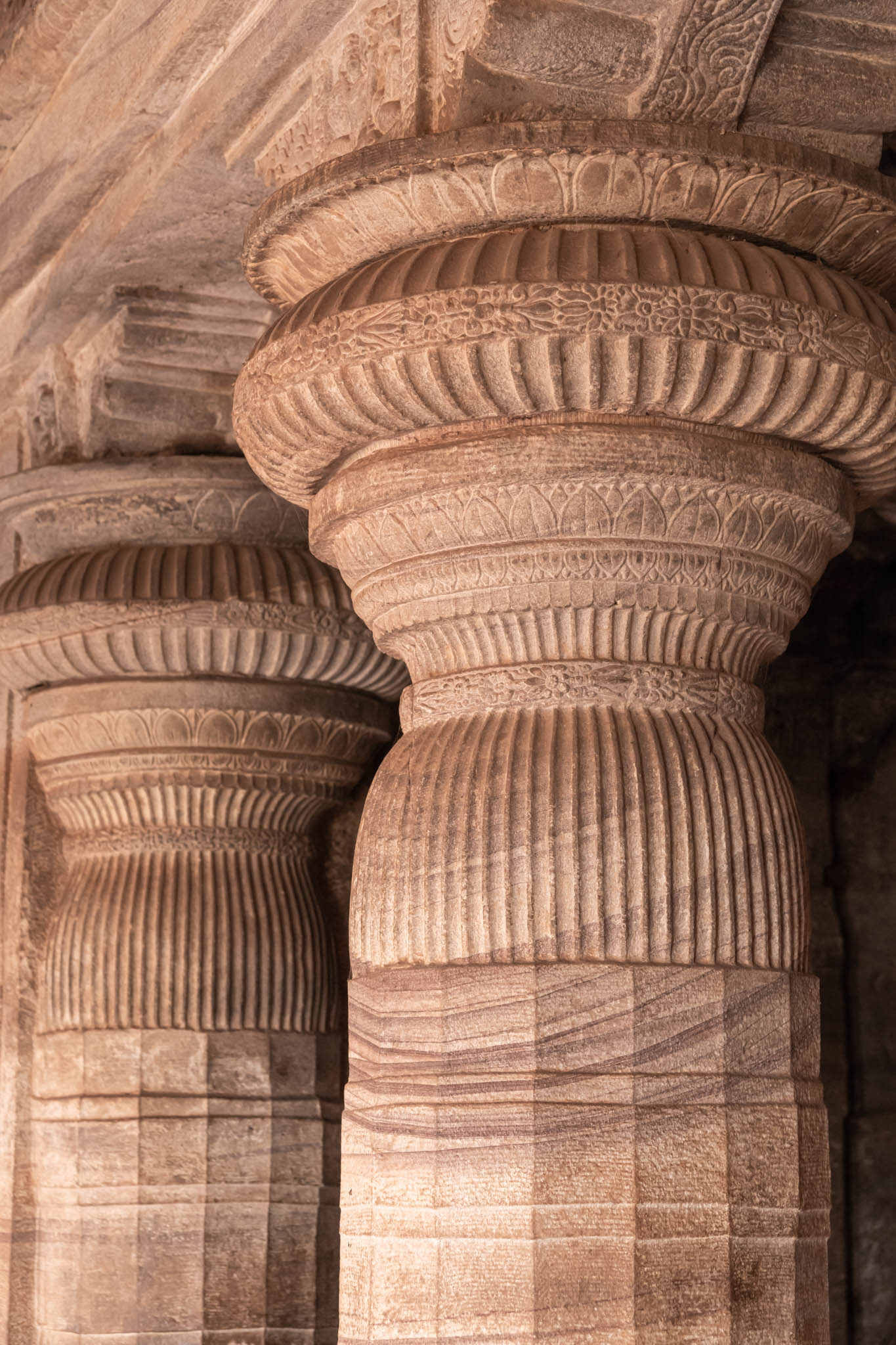
The quality of the work in this cave can be seen from the fantastic designs on pillars and also from the beauty of the statues. Some of the statues are carved out like stays to the ceiling on top of the pillars and you can see hollowed out spaces as well. They had even carved out some work on the inside of the awning of this cave as well. One can only marvel at the patience and the dedication of these sculptors. Each of these caves took more than 10-12 years to complete and I wondered at what would have been the motivation of kings to support this work over such a long period; especially when you consider that average lifespan at that time must have been around 50 years or so. Maybe it was a desire to leave something for posterity to remember them by. 

Ornate designs on pillars

Work on the awning

There is also one statue that is a kind of social commentary. Here a couple is shown in an inebriated state, particularly the lady. She has had too much to drink, her dress is falling off and she is vomiting, with a dog eating the vomit. This statue has been kind of damaged a bit and so I thought the guide was making the story up till I went to Aihole and heard the very same story from another guide there and saw the same work on a pillar inside a temple; that one is much clearer and the story is quite evident. This just goes to show that women drinking alcohol was common in ancient India and it is indeed strange and comical that the self-declared custodians of Indian culture are completely scandalised if they hear of any woman having a drink in modern India. I had read somewhere that what these fellows are peddling as Indian moral values are actually Victorian values and morality and I am inclined to believe that, given their general ignorance and biased interpretation of history. 

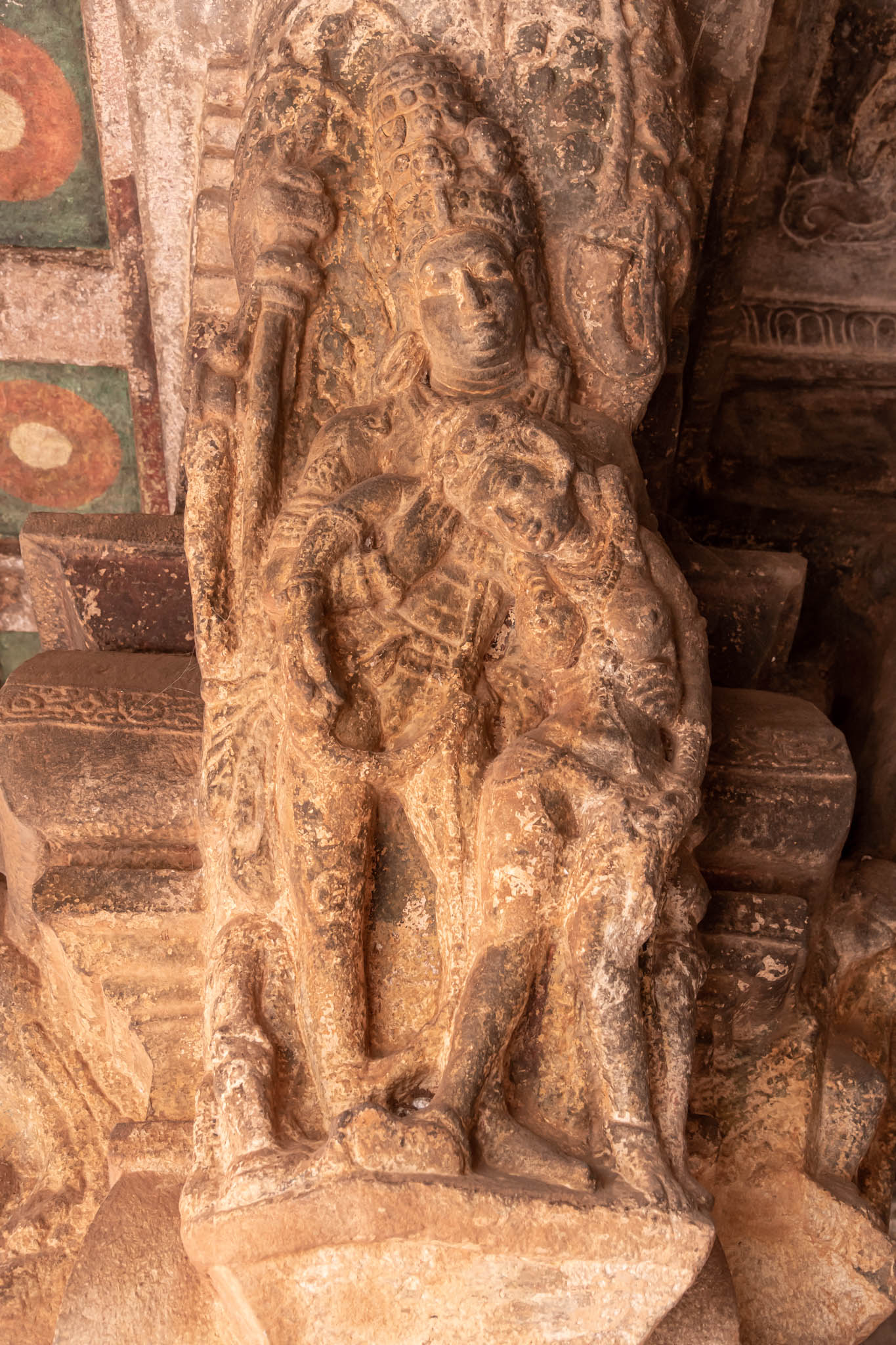
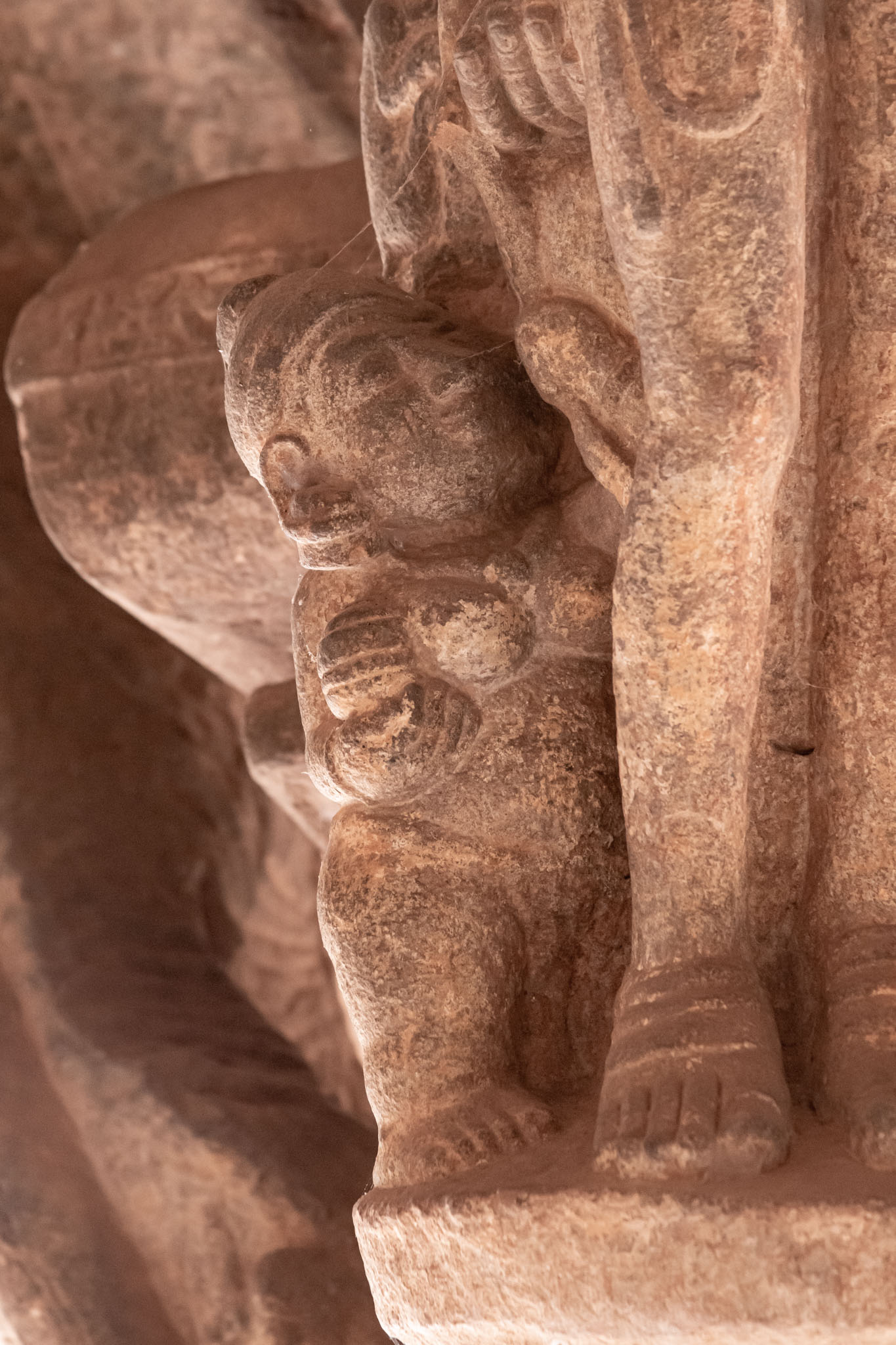
There is also a statue which plays a trick with the angle of view. When you look at the statue from one side, it is that of a dwarf.

The same statue when viewed from an angle behind the dwarf, looks like a monkey with the earpiece of the dwarf resembling the snout of the monkey.

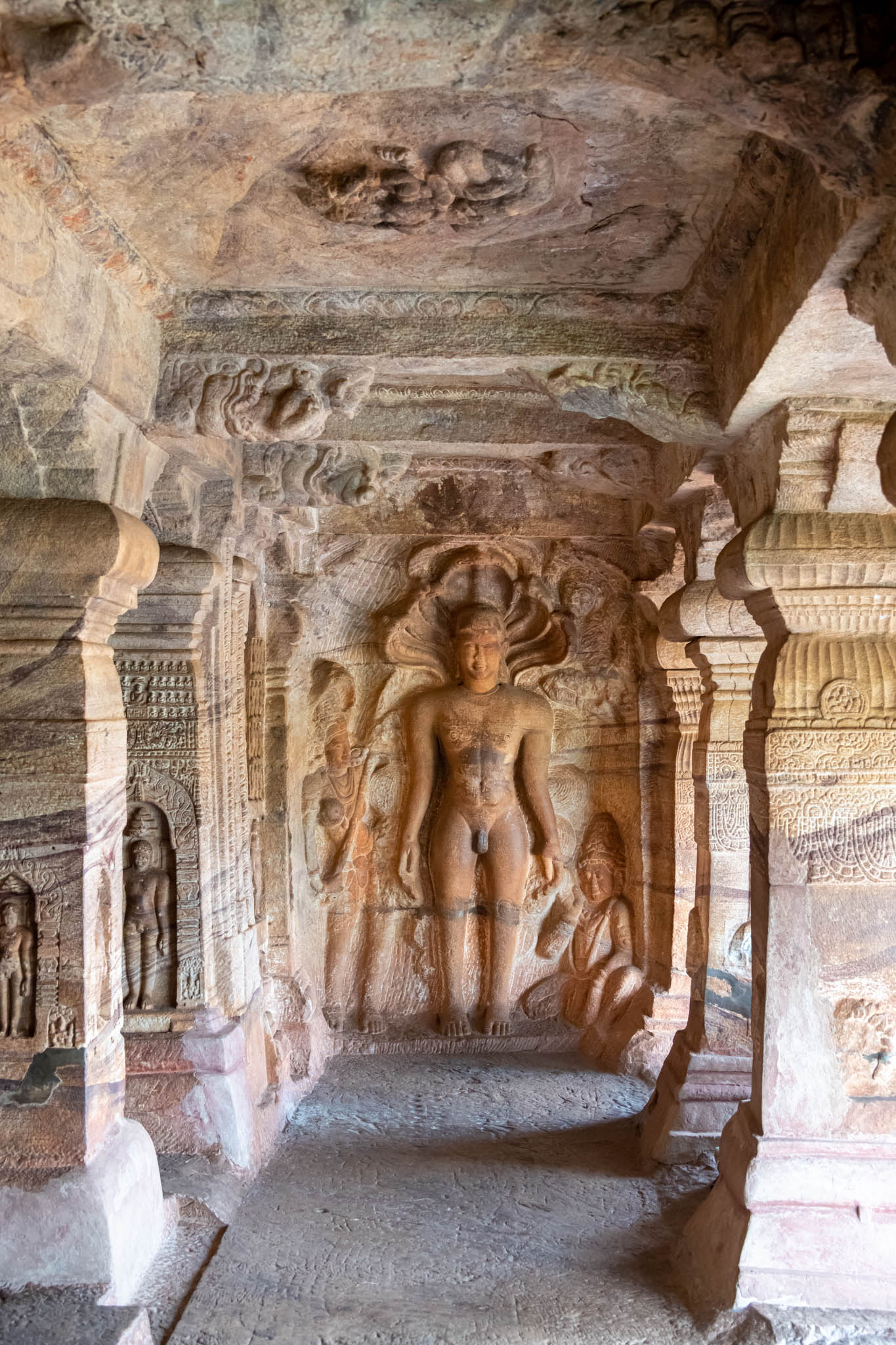
The last stop was Cave-4, which is kind of separate from the three caves. It seems that in olden times, a wall separated this cave from Cave-3. It is almost unfinished and there is not much by way of intricate designs here though there are some large statues.

Statue of Bahubli

Status of the twenty third Thirthankara

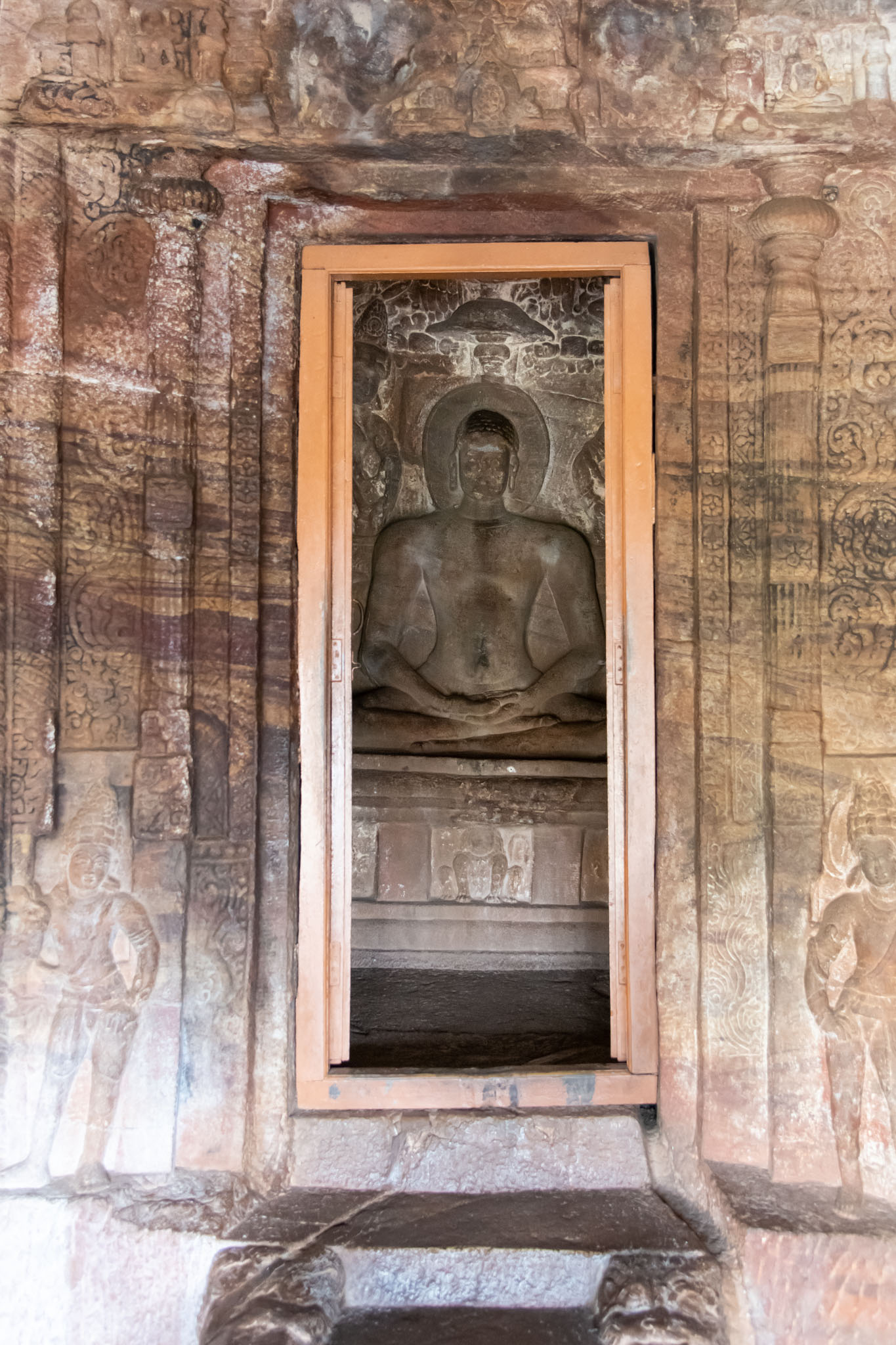
Idol of Mahaveera, the twenty fourth (last) Thirthankara, in the sanctum sanctorum 

I spent more than four hours at the cave, walking to and fro and gawking at all the work. The interiors of the caves were generally plain and most of the work was in the corridors. The beauty of Badami cannot be described in words, at the very least I am quite incapable of it. I was very glad of my initial visit early in the morning as it provided me an opportunity to immerse myself into the ambience without all the disturbance from large numbers of tourists that appeared after lunch. I would definitely recommend Badami and one should spend at least a day here, just to visit the Caves and the Fort. There are also other attractions like Mahakuta Temple and Banashankari Temple. I did go to Mahakuta Temple and that is quite nice too but it is no match to the wonders of the Caves. 

Moscow has been a very familiar name since childhood and one had heard about the Red Square, Kremlin etc. from a young age. In November 2019, I had an opportunity to spend a couple of days at Moscow. The fascination with the USSR and consequently Moscow, had started with some of the Soviet publicity books that I had read when I was young. Kerala, with its Communist roots, was always interested in the USSR and the stories of the October revolution, Lenin etc. were quite commonplace.

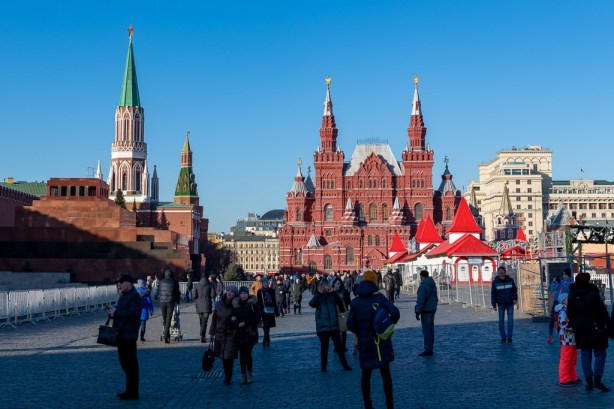
Naturally, my first port of call was the Red Square. Given the Communist history of Russia, my impression was that the origin of the name Red Square must have been connected somehow with the revolution. However, I understand this is not the case. This has been the main commercial square in Moscow since many centuries and it has been called so since 1662 or so. It separates the Kremlin (palace of the Tsars and currently of the Russian President) and the historic merchant area. This has been a very important location in Russian history and many ceremonial activities including coronation of the Tsars took place in the Red Square.

This rather large square borders the Kremlin on one side and the main attractions are the most famous icon of Russia, the St. Basil’s Cathedral, Lenin’s mausoleum etc. There is a very large department store (called the GUM) that occupies one side of the Red Square where the erstwhile commercial quarter was located. This store is more than a hundred years old, I understand.


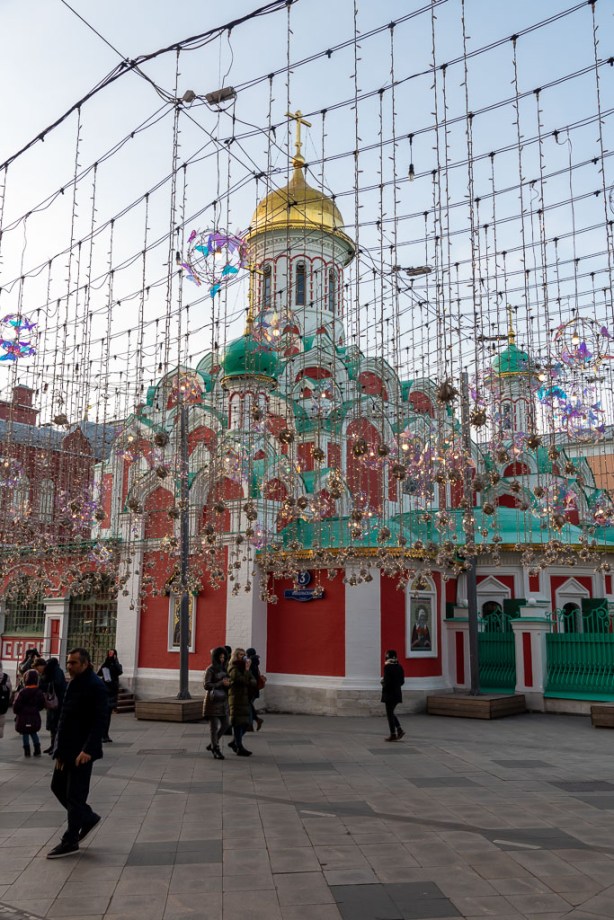
On one side of the Red Square is the Kazan Cathedral. After defeating the Polish army in 1612, Prince Dmitry Pozharsky entered the Kremlin through the Red Square and in commemoration of that success, he built this Cathedral and consecrated it in 1625. The original building was of wood and burned down in a fire in 1632 and was rebuilt using brick and consecrated in 1636. It was considered as one of the most important churches in Russia and on the anniversary of liberation of Moscow from the Polish forces, the Tsar and the Patriarch of the Russian Orthodox Church used to lead a procession around the Red Square. As part of removing religion from public life, Stalin ordered the demolition of the church in 1936 and a temporary building to host the offices of the Communist International was constructed on the site. After the fall of USSR, this was the first church to be reconstructed (1990-1993) and has been made to look like the old church.


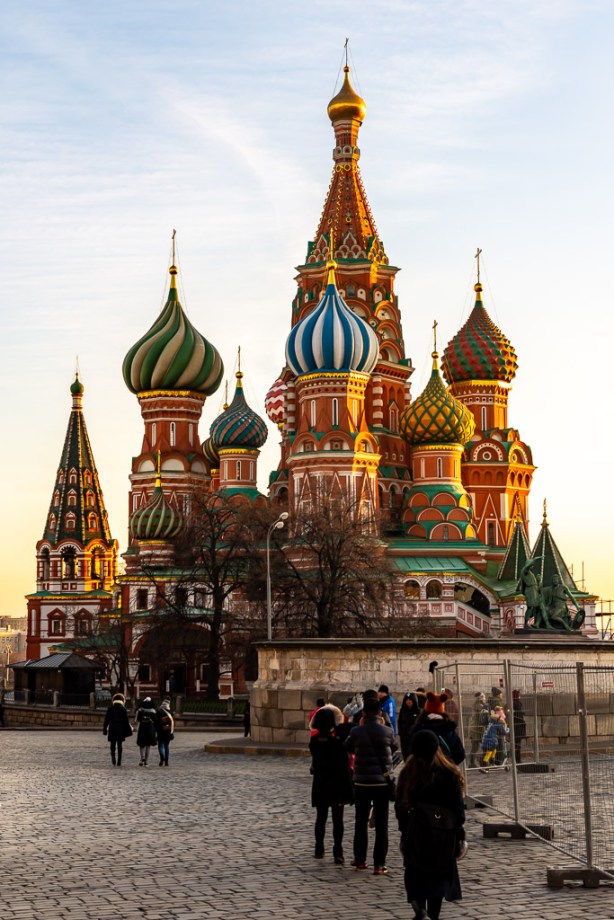
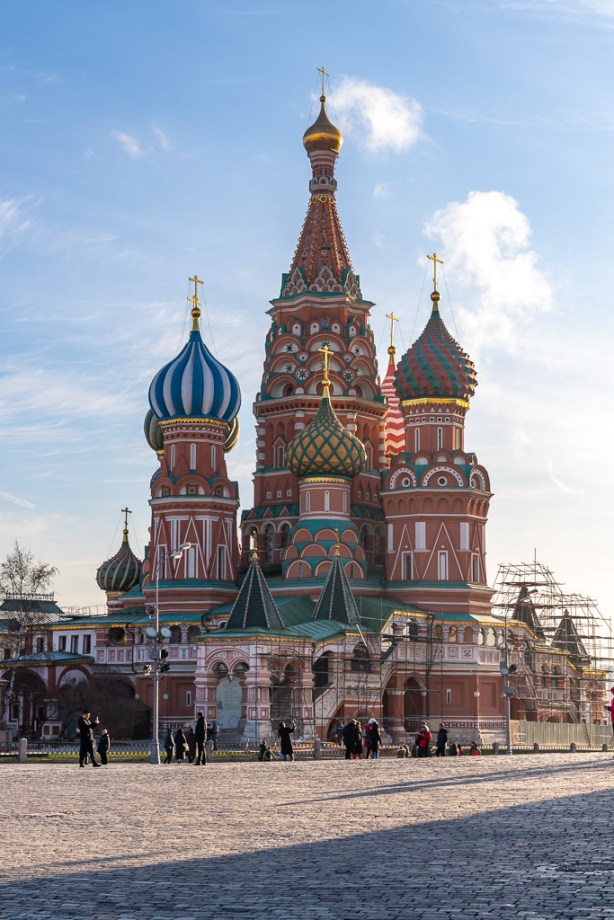
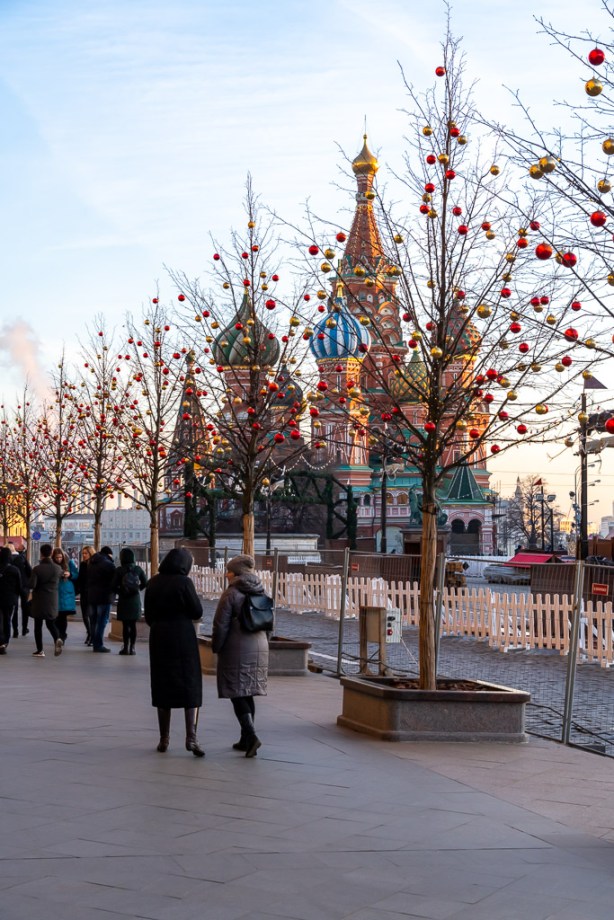
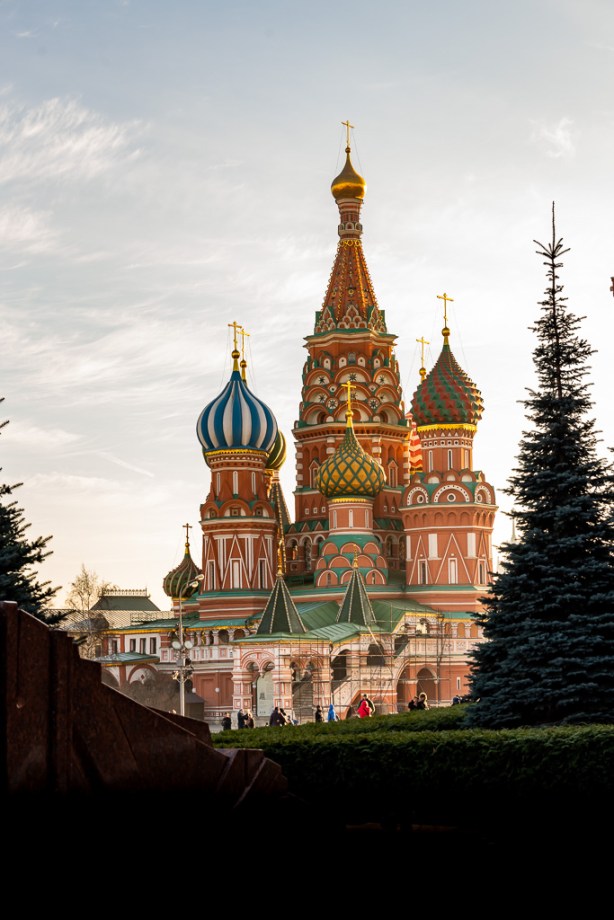
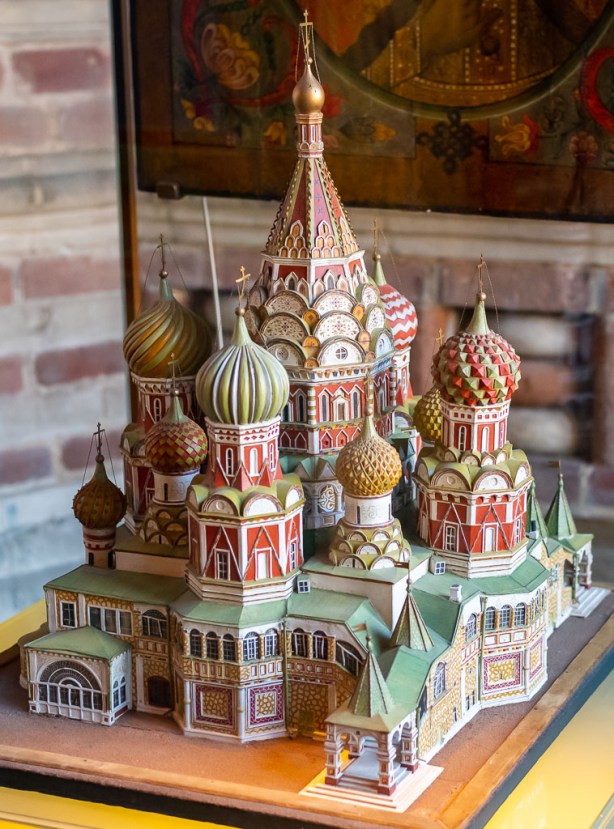
St. Basil’s Cathedral is arguably the most reproduced image from Moscow and is regarded as a cultural symbol of the country. It is now a museum. its original name was The Cathedral of Vasily the Blessed. Ivan the Terrible, the first Tsar of Russia (1547 to 1584), constructed this church to celebrate the capture of two cities – Kazan and Astrakhan. The construction took six years from 1555 to 1561 and it had nine chapels with eight chapels around the central ninth one. A tenth chapel was added later, in 1588, to honour a local saint named Vasily (Basil in English). In the Soviet era, this church was taken over by the state and converted to a museum and all religious activities stopped. After the collapse of USSR, some church services have been resumed since 1997.

This building has a very unique architecture and resembles a fire rising up to the sky. Supposedly, there is no other building with a similar architecture in Russia. I read somewhere that an old mosque in the captured city of Kazan may have been the inspiration for this architecture and to the untrained eye, the building does look more like a mosque than a church, with its massive domes.


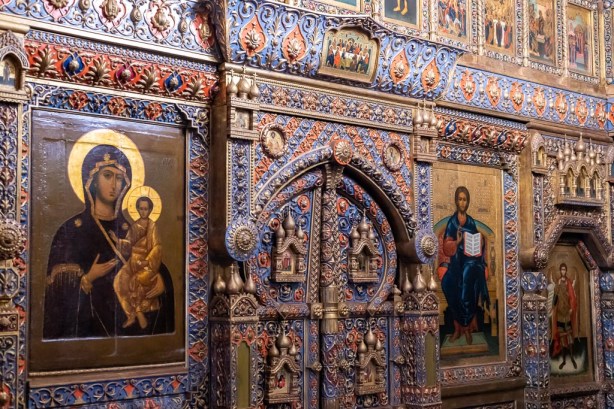
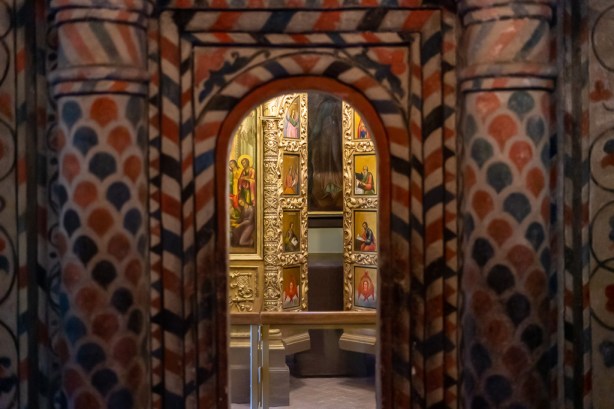
The interior of the Cathedral is very beautiful and richly decorated with icons, altars and nice paintings.


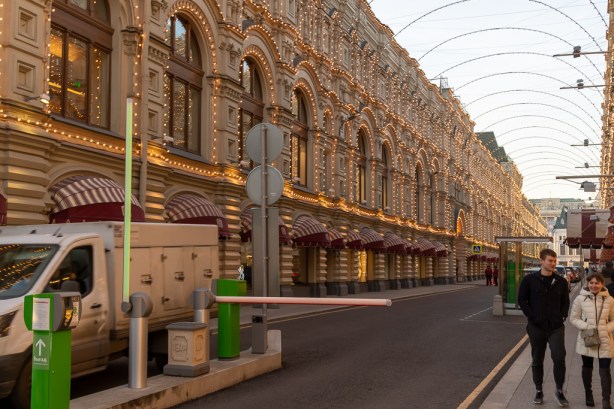
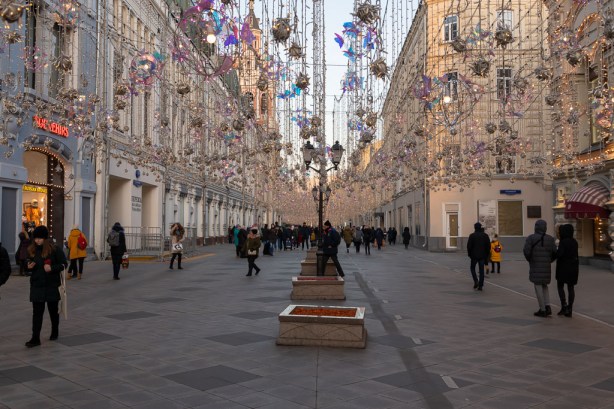
The GUM department store is a very impressive looking building and the roads outside were all decorated, possibly in anticipation of the New Year and Christmas (Russian Orthodox Church celebrates Christmas on 7th January).


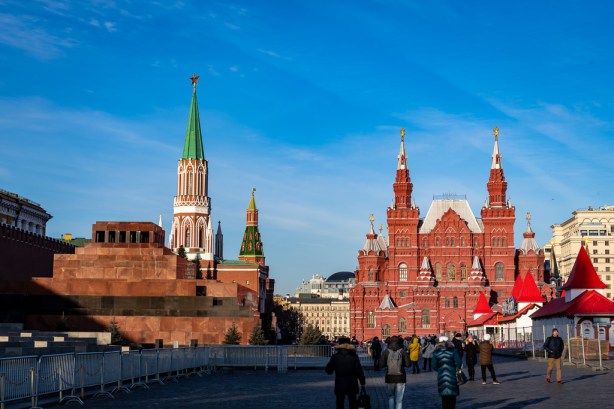
The next day morning, I decided to visit one of the most popular monuments in Russia – Lenin’s Mausoleum. It seems this monument attracts the highest number of visitors in a year. Lenin’s body has been embalmed and displayed here since his death in 1924; except for a brief period during the Second World War when the body was moved to a city in Siberia as it was feared that the Germans might capture Moscow. The mausoleum stands on one side of the Red Square; the square, squat red marble tiled building on the left side of the image below. When I arrived, there was a queue waiting for the museum to be opened; Mercury had fallen below zero and it was extremely cold, with a wicked wind, but people waited patiently.


After Stalin died in 1953, his body was also embalmed and displayed right next to Lenin’s. However, Stalin’s body was removed in 1961 as part of the de-Stalinization drive and buried in the Kremlin wall along with other leaders. Photography was not allowed inside the Mausoleum and so I could not take a picture of the body. It looks as if Lenin is sleeping on his back, with a blanket covering the lower half of his body. It looks very life like and you wouldn’t think almost a hundred years have passed since his death.

Two thoughts crossed my mind as I stood there looking at the great leader’s body. This was a man who had changed the world and made a new order of society and politics possible. John Reed, an American Journalist and Communist, was a witness to the October Revolution and he saw the whole event unfold, from close quarters. In about a year from then, he published his book “Ten days that shook the world”, which is an eyewitness account of the revolution. This was an unbiased account as it was published in 1919, before the people that came to power after the revolution had any opportunity to influence what was written. As you go through the book, it becomes very evident that the two people that made the revolution possible were Vladimir Ilyich Lenin and Leon Trotsky. It is also equally evident that Josef Stalin did not have much of a role in the revolution. In the whole book, he is just mentioned in two places and that too as passing references. From the two, the body of one lies preserved in all this grandeur as a sign of respect and gratitude of the state while the other, Leon Trotsky, lies buried in a small grave in a non-descript cottage in Mexico City; after he was murdered by the KGB agents sent by the usurper, Stalin.


The second thought was about the seeming absurdity of making a shrine out of a Communist leader’s dead body. In a strange way, I was reminded about the relics and preserved dead bodies of Christian saints. I am sure that the state benefits from the symbolism of Lenin’s dead body but somehow I felt it was not in keeping with what this great leader stood for. After all, he was the proponent of a philosophy which was rooted in logic and not symbolism.

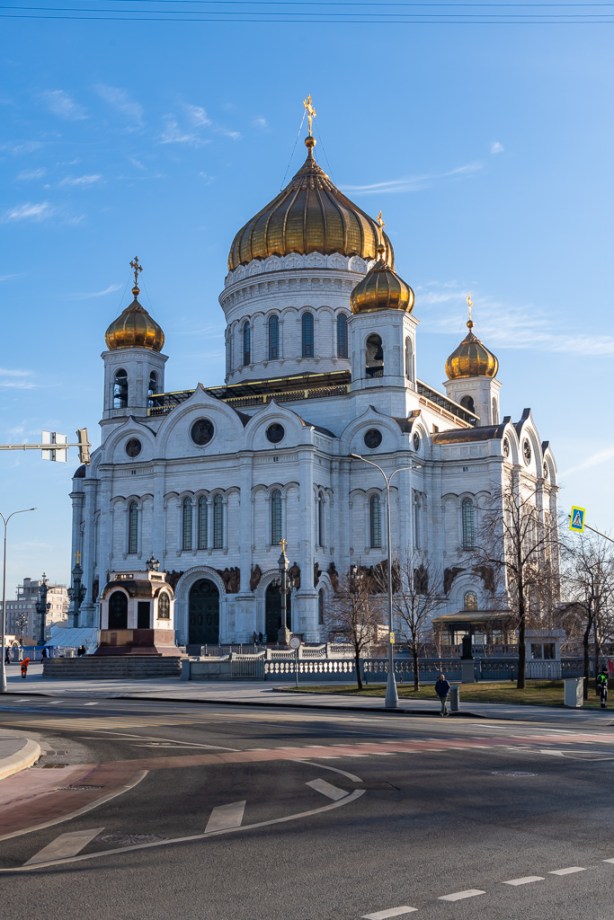
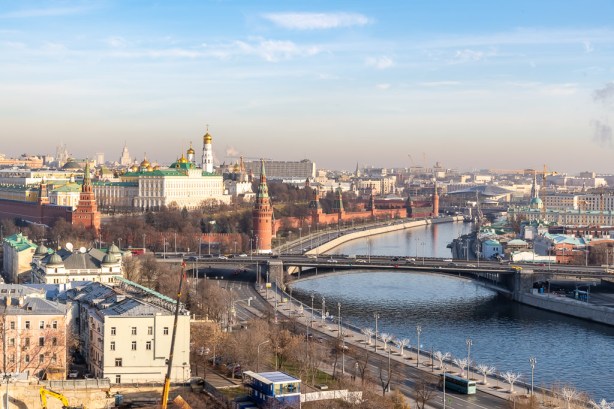
Next stop on the agenda was The Cathedral of Christ the Saviour. This church was built in the nineteenth century and was demolished in 1931 on the orders of Stalin. It was rebuilt between 1995 and 2000, after the fall of the USSR. It is an imposing building and stands right on the banks of the Moscow river. You can walk up to the terrace there are some very beautiful views of the Moscow city from there.


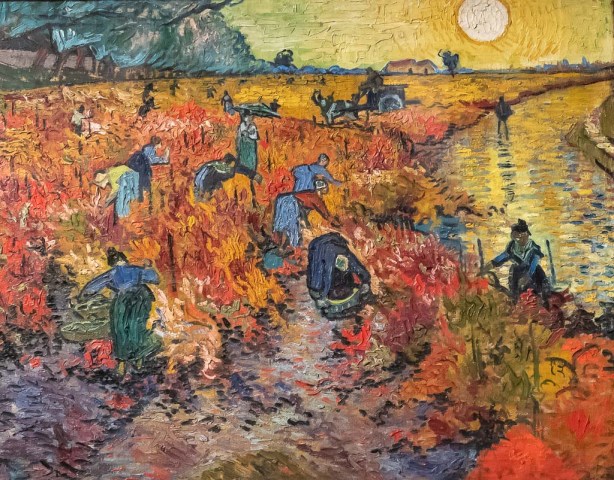
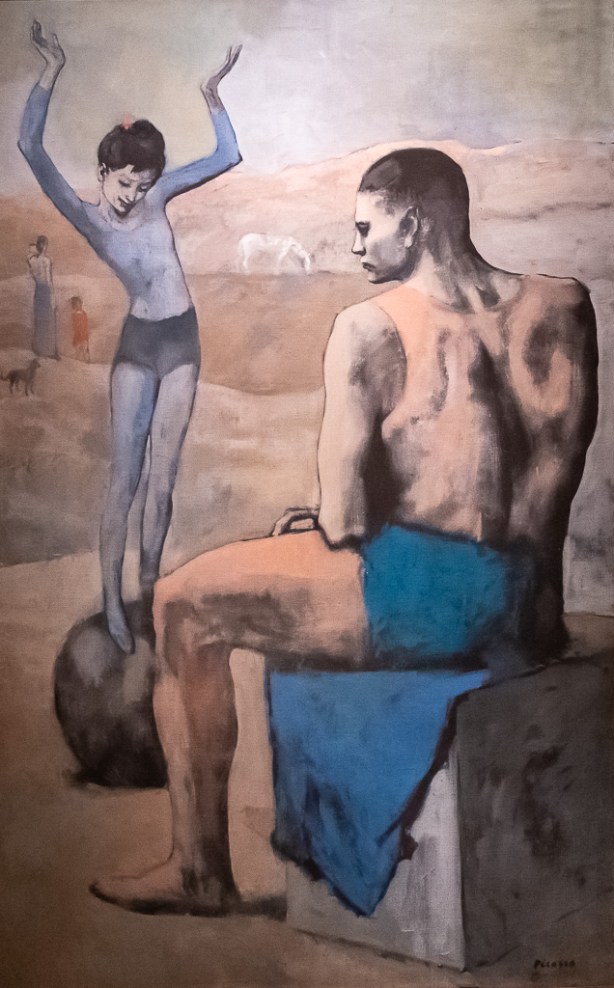
The Pushkin State Museum of Fine Arts is just a short walk from the Cathedral. It has the largest collection of European art in Moscow and is a visual treat. There were works by many masters like Van Gogh, Cezanne, Picasso, Monet, Gauguin etc.

Solomon and the Queen of Sheba: Hans Vredeman De Vries

View of the old market in Dresden: Bernardo Bellotto

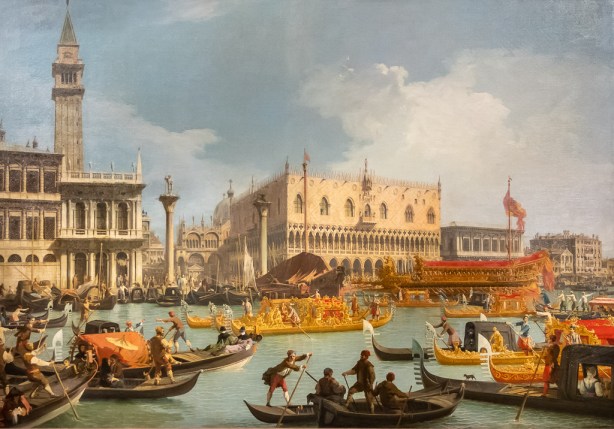
Bucentaur’s return to the pier by the Palazzo Ducale: Canaletto

View of the Grand Canal in Venice from the Fondamenta Del Vin: Michele Marieschi

The bridge across the Marne at Creteil: Paul Cezanne

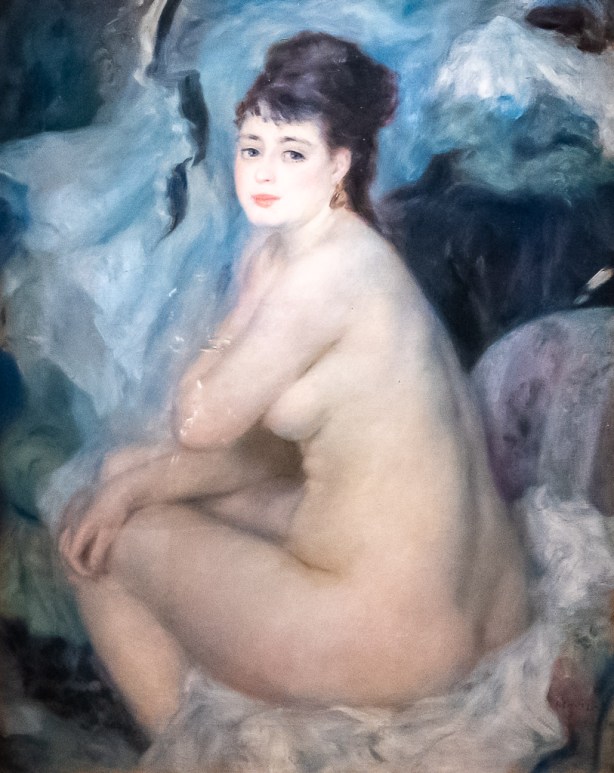
Nude woman sitting on a couch: Pierre Auguste Renoir

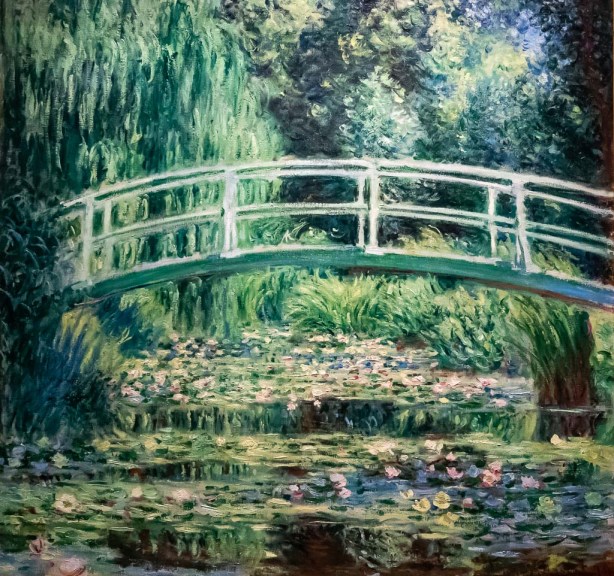
White water lilies: Claude Monet

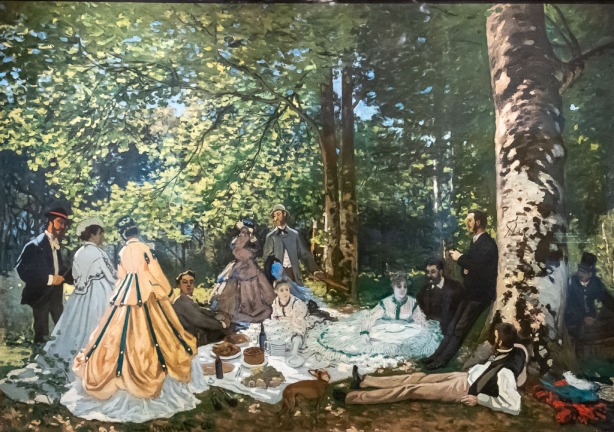
Luncheon on the grass: Claude Monet

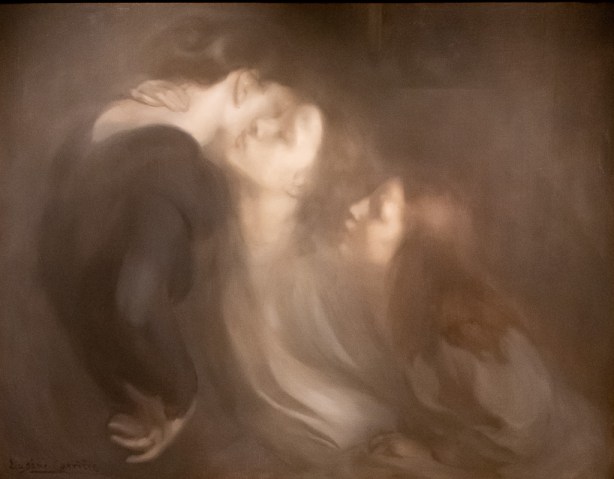
A mother’s kiss: Eugene Carriere

Girls on the bridge: Edvard Munch

Young acrobat on a ball: Picasso

Spanish woman from Majorca: Picasso

Old jew and a boy: Picasso

Jaguar attacking a horse: Henri Rousseau

The muse inspiring the poet: Henri Rousseau

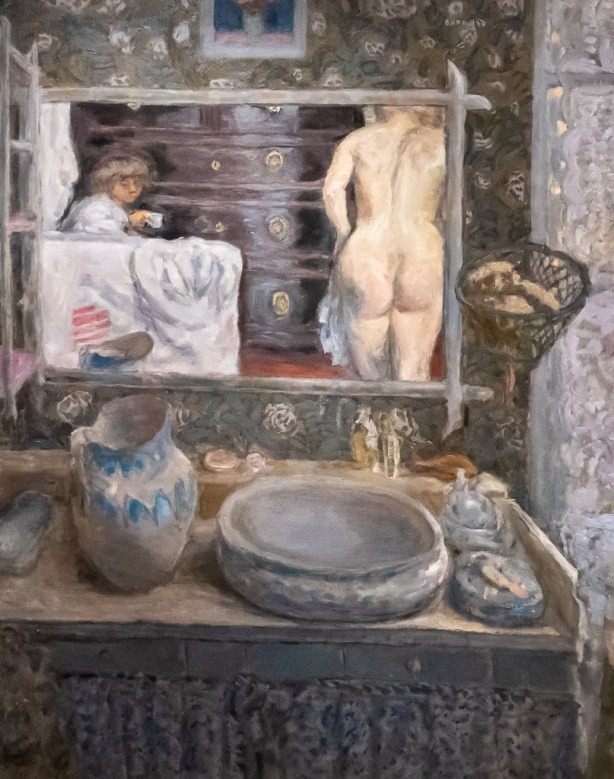
Mirror above a washstand: Pierre Bonnard

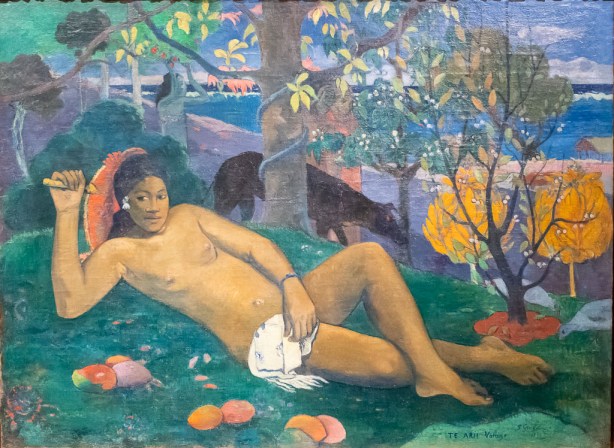
The King’s wife: Paul Gauguin

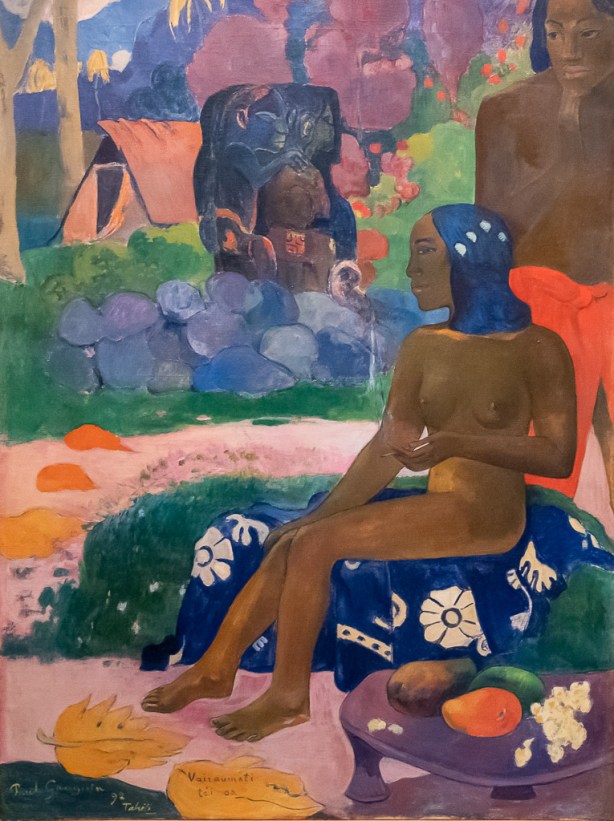
Her name was Vairaumati: Paul Gauguin

Gathering fruit: Paul Gauguin

What, are you jealous: Paul Gauguin

The ford: Paul Gauguin

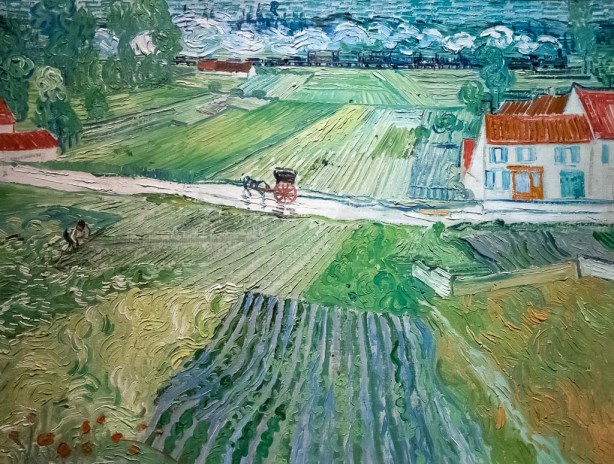
Landscape at Auvers after the rain: Van Gogh

The red vineyard at Arles: Van Gogh

The prison courtyard: Van Gogh


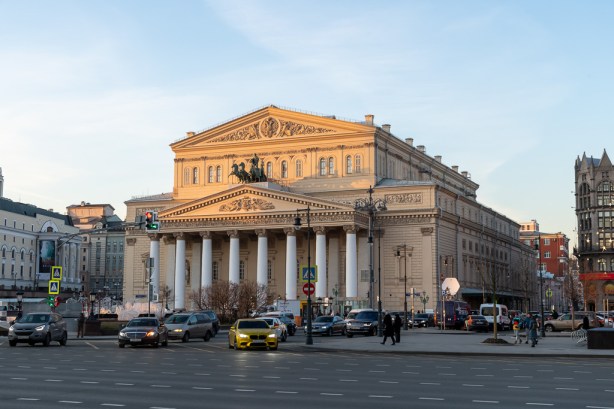
Bolshoi Theatre is a very well known Russian icon with the Bolshoi Theatre Company having been founded in 1776. The company operates in various cities in Russia and the building in Moscow itself is very well known and is even featured in the Russian One Hundred Ruble note. I was staying very near the Theatre and used the opportunity to watch a short performance. This was on one of the side stages and not the main one and was an orchestra. It lasted for about 40 minutes and was quite enjoyable.


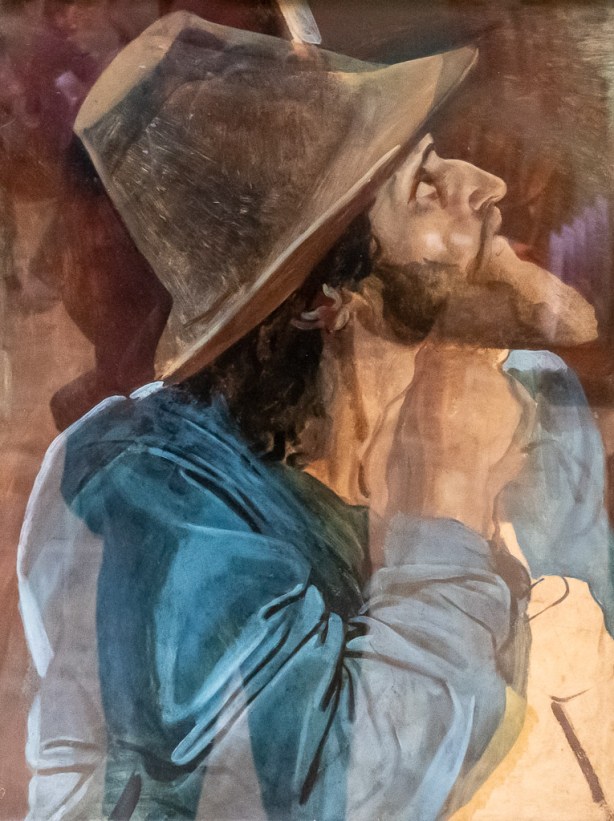
The State Tretyakov Gallery has the best collection of Russian fine art and was started by a merchant from Moscow by name of Pavel Mikhailovich Tretyakov in 1856. Having seen some works by Nicholas Roerich in the gallery in Mysore; I was quite keen to visit this collection of Russian art. I found that many of the works from the 19th Century had very relevant and interesting social themes; especially those by an artist named Vasily Grigorevich Perov. Interestingly, the Gallery did not have many works from the Soviet era; not sure why.


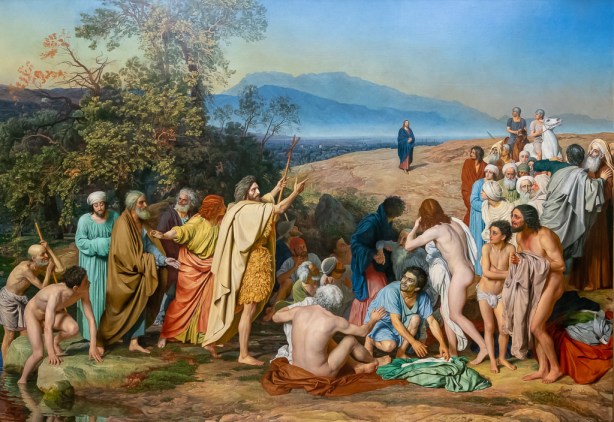
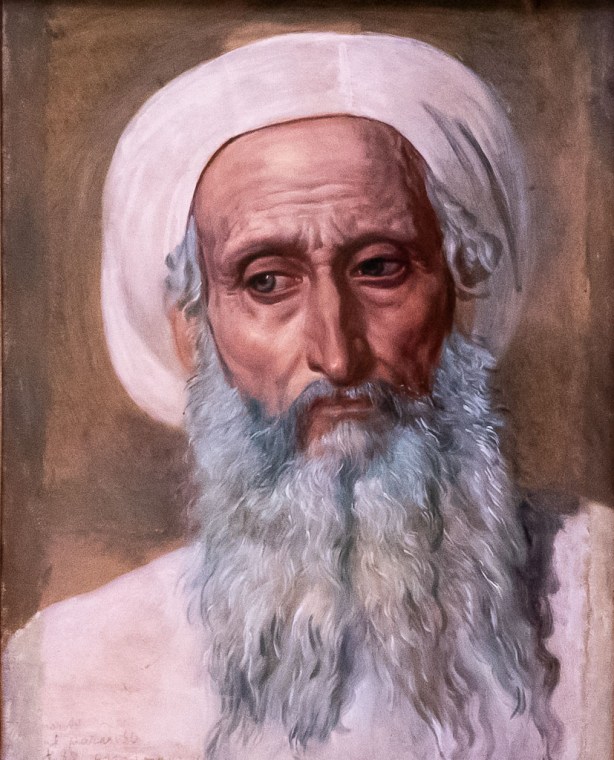
This painting is titled “The appearance of Christ to the people” by the artist Alexander Ivanov. It is a huge work measuring 5.40m x 7.50m and this was the most important work in the life of Ivanov. It took him twenty years to finish this painting and he died within a few months of finishing the painting. John the Baptist is the central figure in the painting (wearing an animal skin) and points to the Christ who appears in the distance. Ivanov has painted himself into the portrait as the wanderer with a staff, sitting right in front of John the Baptist. The artist made several small works, probably as studies for the painting, and these were also exhibited at the museum.
 

This piece by Konstantin Flavitsky is titled Princess Tarakanova and is based on the story of a young woman named Tarakanova from Italy, who claimed a right to the Russian throne. Catherine II lured her to Russia and imprisoned her in Petropavlovskaya fortress in a cell that was known to flood every time the waters in the nearby river rose. The painting shows a desperate Tarakanova standing up on her cot as the flood waters have reached almost up to the bed. There is no evidence of whether Tarakanova was indeed killed like this but the painting caused a lot of public outcry and Ivanov was later forced to announce that he had made up the subject from a novel.

I liked this painting (The Unequal Marriage by Vasily Pukirev) quite a lot and it seems it was received with a lot of enthusiasm when it was painted as it did not stick to conventional subjects used till then, but instead chose to show a social issue that was common at that time – old, rich men marrying young women who are unwilling, but are forced into the marriage. A young man, supposedly, the girl’s lover, looks on from the back.


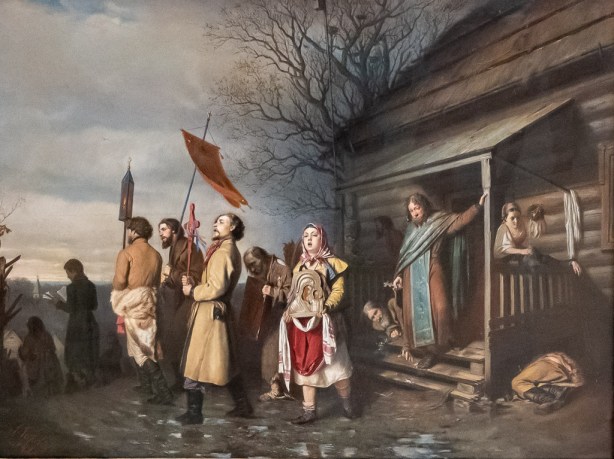
Painting titled “Easter Procession in a Village” by VG Perov. I quote from the description provided by the museum: “In the early 1860s, Perov created a series of anticlerical paintings. Its main theme was the clergy that forgot their duty. A bored and drunken procession carrying icons and gonfalons is passing by the viewer. The peasants with half-closed eyes are wading towards a precipice as if they were blind. Their leader, a drunken priest, who has crushed an Easter egg underfoot, has abandoned them. Not far from him we see a woman holding an icon whose image is effaced. Farther off there is a poor man carrying an icon upside down. But the All-Seeing eye on the gonfalon is there as a reminder that these people won’t escape the Supreme Judgment. The dull landscape, dissonant movements of the participants in the procession and bleak dawn emphasise the ugliness of the whole scene. The painting was removed from an exhibition of the Society for the Encouragement of Artists in St Petersburg on grounds of it being an “immoral” work. Its reproduction in the press was banned, and P.M. Tretyakov was advised not to show it to visitors.”


This painting titled “Troika” by Perov was the one that touched me the most. It was painted in 1865 and in those days, peasants used to migrate to the city in search of work, because of extreme poverty and their children used to work as apprentices. Perov used three such children as his models in this painting. The boy in the middle was living with his mother and he had no father; they were very poor as well. Shortly after modelling for the painting, the boy contracted some disease and died. The mother was distraught and heart broken and she sold all her belongings and took the meagre amount she had to Perov and asked for him to sell the painting to her as she wanted to be able to see her boy whenever she wanted. By that time, Perov had finished the painting and it was displayed at the The Tretyakov Gallery. Perov took the mother to the gallery and showed her painting.

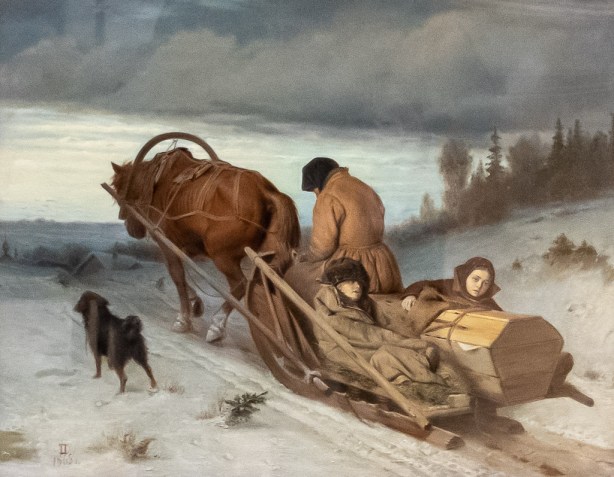
Funeral Procession: VG Perov


Yet another work by Perov that speaks about the social issues of the time: “Tea-party at Mytishchi near Moscow”. I quote from the description provided by the museum: “Ordinary on the face of it, the scene of tea drinking under the shade of a tree is transformed by Perov into an accusatory picture that deals with an acute social issue. The table turned cornerwise to the viewer with a samovar on it halves the small canvas, which is almost square-sized. The world of the painting’s characters also breaks into two parts: on one side, we see a fat, well-fed priest, on the other side – a poor old man and a boy. The impression of social drama is reinforced by the Order of the Hero of the Crimean War on the old man’s chest. At the same time, the idyllic background landscape and the circular rhythm of the painting’s composition embody the idea that justice and harmony lost should be restored in the world.”


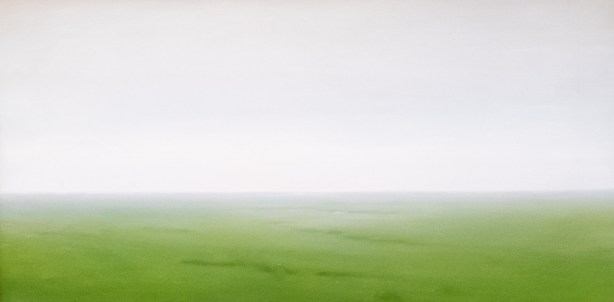
This painting is titled “Landscape Steppe” and is by an artist named Arkhip Kuindzhi. This work was so very different from the other paintings and I was curious to note that it was painted between 1890 and 1895. I am not sure whether there were many paintings in this style at that time. I was reminded of a photo by Andreas Gursky, which is among the most expensive photos ever sold, having fetched a sum of $4.3 Million in 2011.


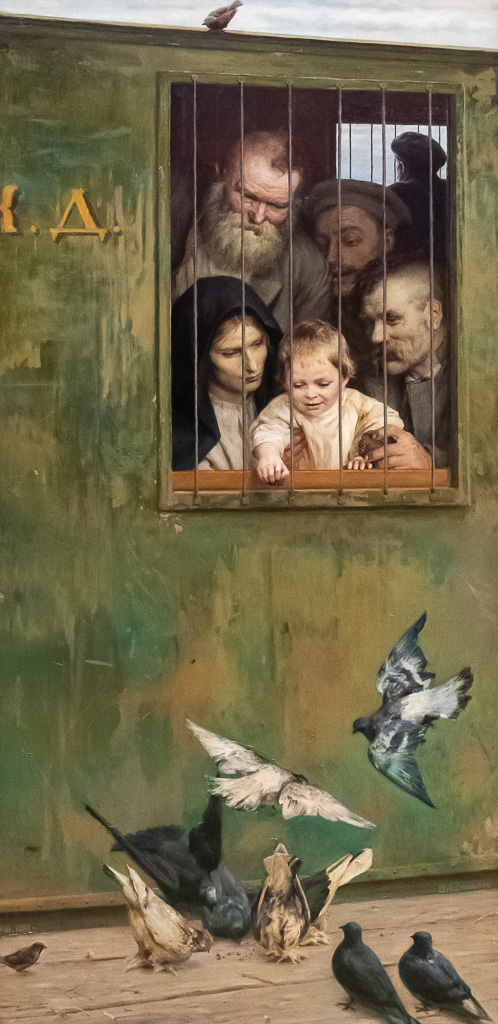
This work titled “There is Life Everywhere” by Nikolai Yaroshenko was yet another image that I liked a lot. I quote from the description provided by the museum: “ The topic of social contradictions was one of the most important for Yaroshenko. This painting was inspired by Leo Tolstoy’s story What Men Live By. The artist originally planned to title his work as Where There Is Love, There Is God. Prisoners have huddled up together at the window of a convict car to feed pigeons. The painting’s idea was to show humanity maintained in inhuman conditions. The central group reminds the Holy Family. Like many other Wanderers, Yaroshenko used parallels with the Gospel to enhance the social resonance of his canvas. “This speaks so much to the heart,” said Leo Tolstoy about this painting.”


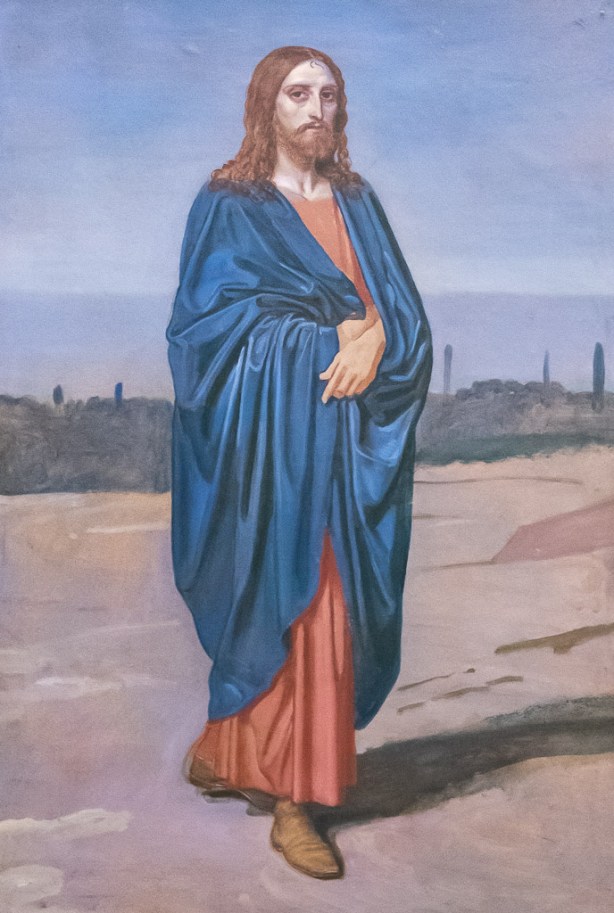
This painting “Christ in the Wilderness” by Ivan Kramskoi immediately catches the eye because of the very desolate nature. I quote from the description provided by the museum: “The artist looks upon the Sacred history in the context of the issues of his day. Gospel themes and images served at the time as a way to express ideas of what was good and just. Christ’s personality was understood as the “perfect human being” embodiment; the life journey of a progressive person was a reflection of His earthly path. Kramskoi wrote: “…There is a moment in the life of every human being, who is created in the image of God however slightly or greatly, when they are in a quandary – whether to take the ruble and deny the Lord or not to yield a single step to the evil.” The painting took on a topical nature thanks to the resemblance of Christ’s pose on Kramskoi’s canvas to the pose of Fyodor Dostoevsky in the famous portrait by V.G. Perov. Both paintings were made in 1872 and both were shown at the very same travelling exhibition. Eternal, panhuman problems are the central theme of the painting.”


This is a huge work titled “The Princess of a Dream” by an artist named Mikhail Vrubel. It measures 7.5m x 14m and was painted in 1896 with the help of two others. It speaks about a love affair between Geoffroy Rudel and Princess Melisandre. Supposedly, Rudel heard about the beauty of the Princess and travelled across the sea to meet her. Unfortunately, he contracted some illness during his voyage and died at the time of their first meeting and with this, the Princess became a nun. I am not sure whether this is fiction or true story. I was not very exposed to Russian art in the past and Tretyakov definitely set that right. It was quite a beautiful experience.

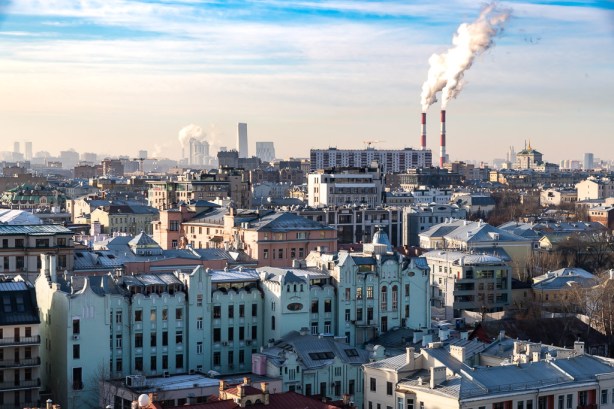
Moscow has very wide roads and walking around the city itself is a pleasure. I was staying close to the Red Square and many buildings around that area were very impressive. There is some more to see in Moscow and two days were not enough. I hope to be back one day.


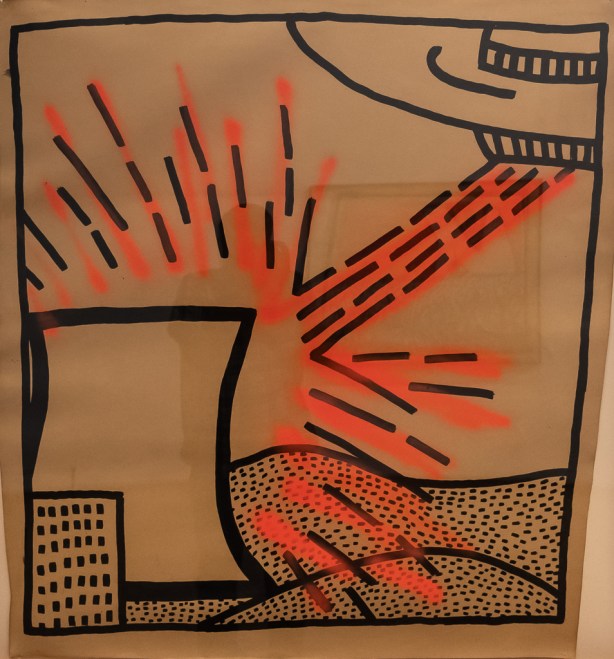
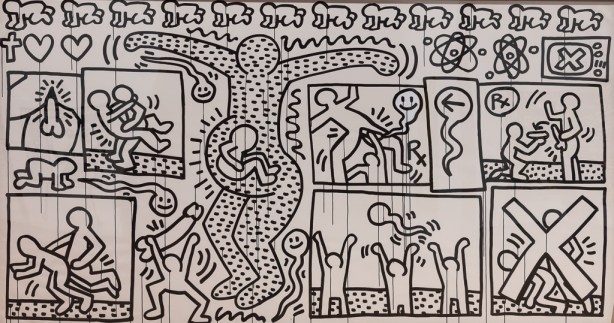
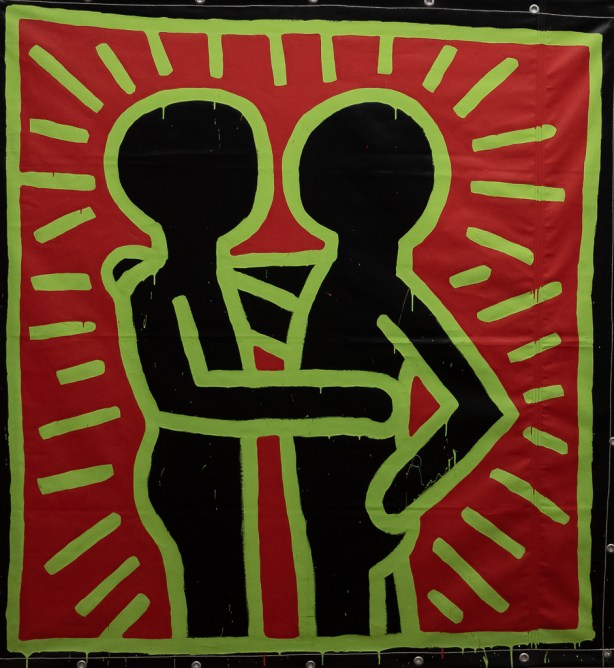
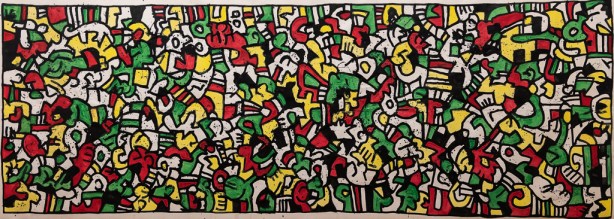
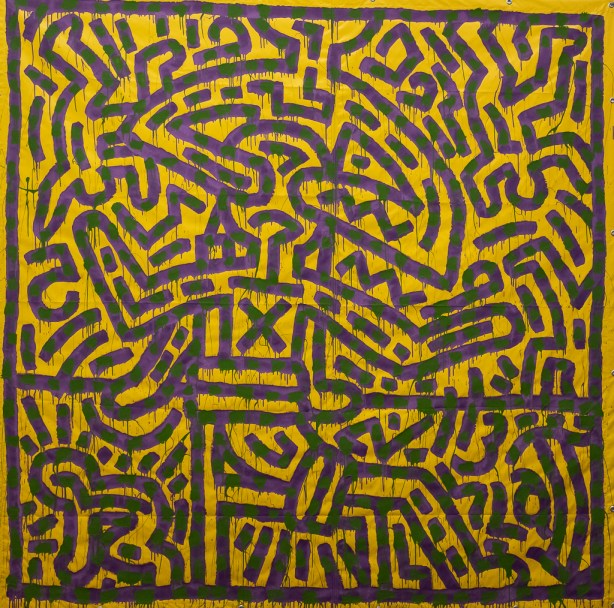
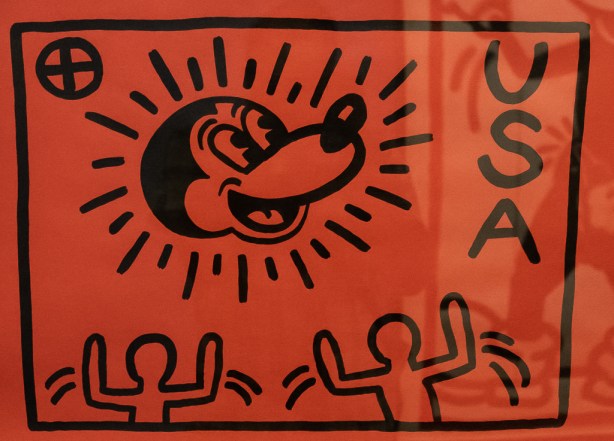
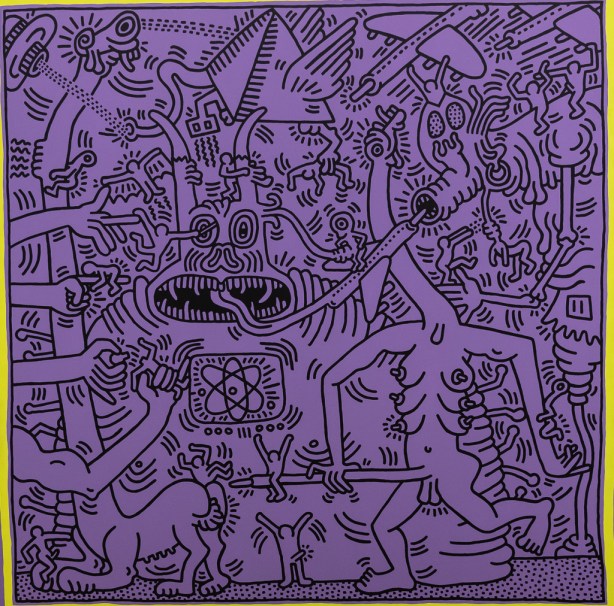
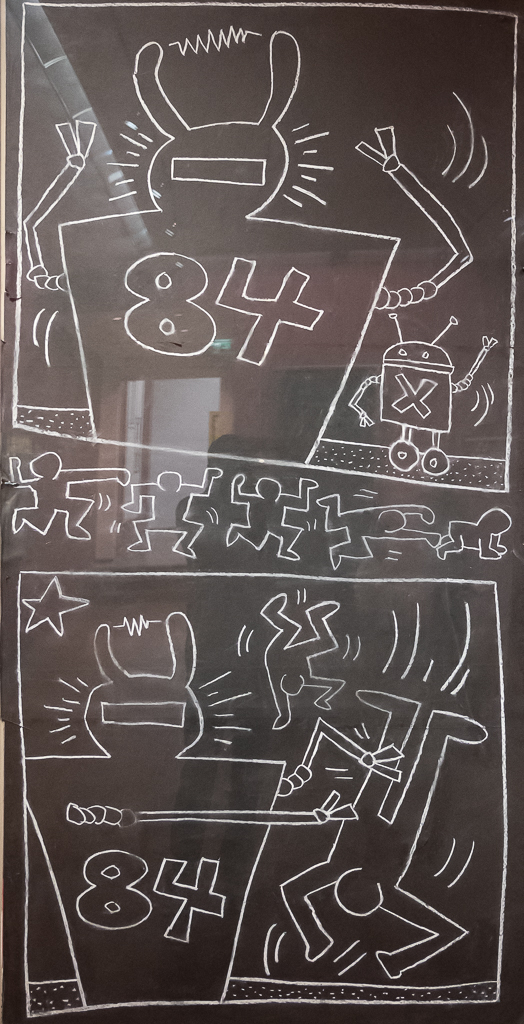
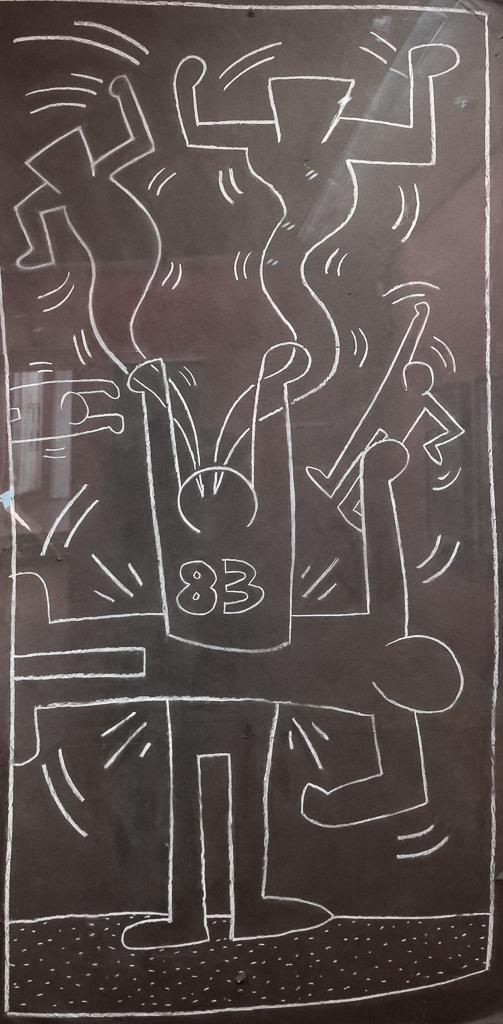
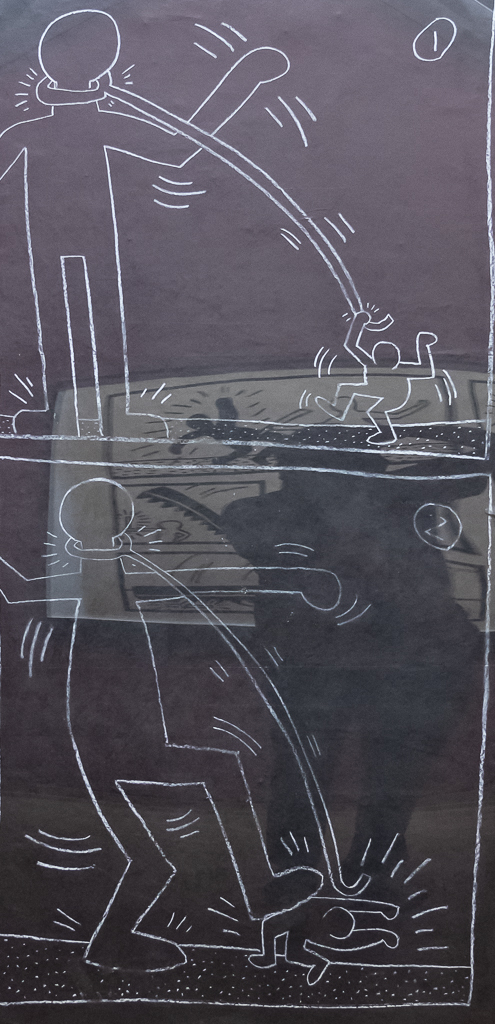
At the Albertina Museum in Vienna, I came across an exhibition of the works of an artist, whom I had not heard of earlier. Of course, that only points to my lack of familiarity with the art world and Keith Haring – the artist featured – is pretty famous for his work. The show was titled “Alphabet” and it was so named as Haring had developed a pictorial “alphabet” for his work. He was of the view that art is for the public and wanted everyone to understand what he was drawing about. For him, art was a political activity and that was very evident from his work.

Haring was born in Pennsylvania in 1958 and lived but a short time before his death in 1990 from AIDS related complications. Yet, within these 32 years, he achieved great fame as an artist and produced a huge number of drawings and paintings. He had his first solo exhibition when he was just 20 and had more than 500 exhibitions between 1982 and 1989.

He was always bothered about the treatment meted out to minorities and people who were “different” – he himself was gay – and his work reflected this. He was a bit ambivalent in his approach towards money and did not like the idea of making art so that they could be hung in galleries with the viewership limited to a few; however, he considered it important to earn enough money as well. He was very critical of capitalism and its impact and was well aware of its connection to racism and suppression. War horrified him and he was also against nuclear reactors as he was aware of the horrors of the Three Mile nuclear accident, which occurred near his hometown in 1979.

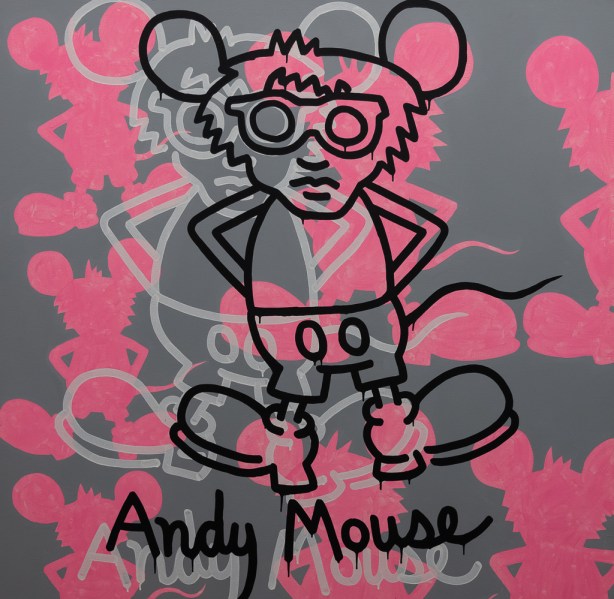
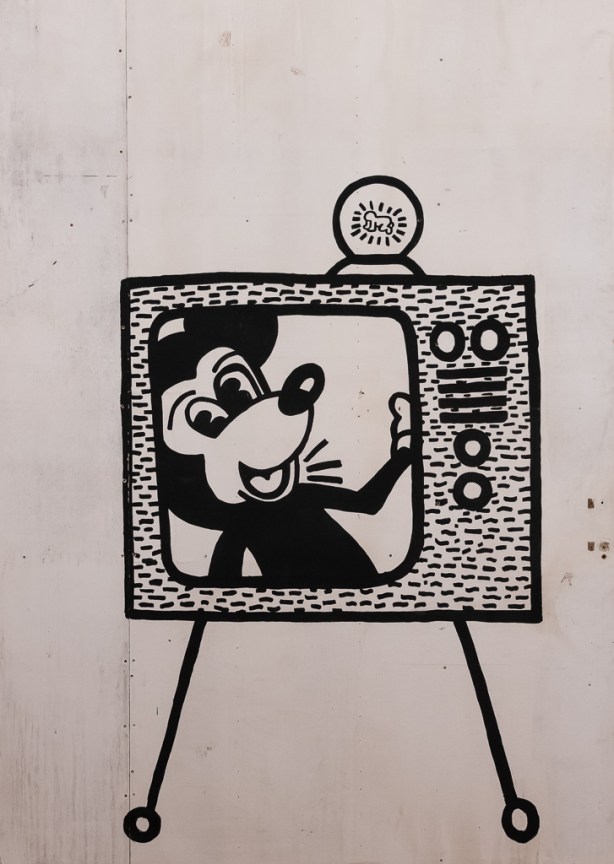
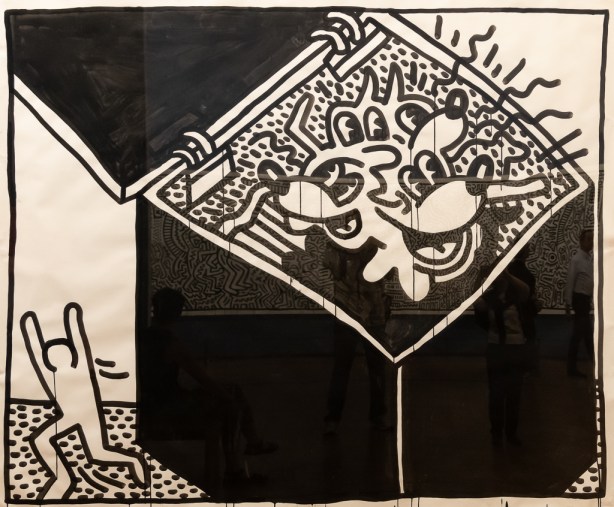
Legendary artist Andy Warhol was a close friend of Haring’s and he considered Warhol as someone who had beaten capitalism at its own game. Yet, he also considered Warhol as the consummate form of the artist as a businessman and that was not a position he appreciated. Haring tried to move away from being an artist for the elite and wanted to create art for the public. Mickey Mouse was one of Haring’s oft used motifs and his ambivalent position towards Andy Warhol might have been the reason for this painting.


At times, he collaborated with other artists and one of the first pieces in the exhibition was a miniature Statue of Liberty which he had made in collaboration with the artist LA-II (Angel Oritz). This work is considered to be Haring’s criticism of the American promise of equal opportunity for all – take note of the black bulb instead of the torch.


There were about 100 works in the exhibition and good many of those are reproduced in these pages.


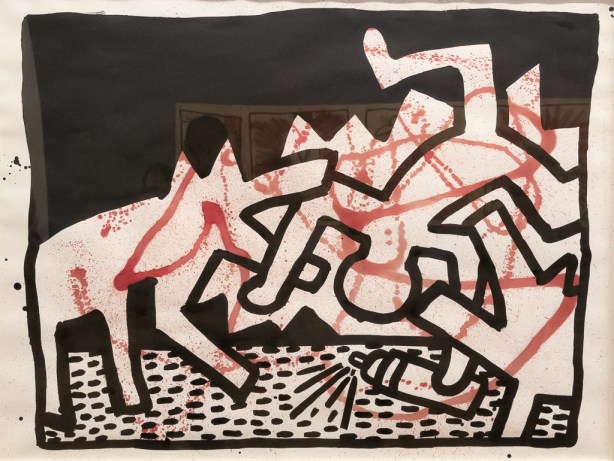
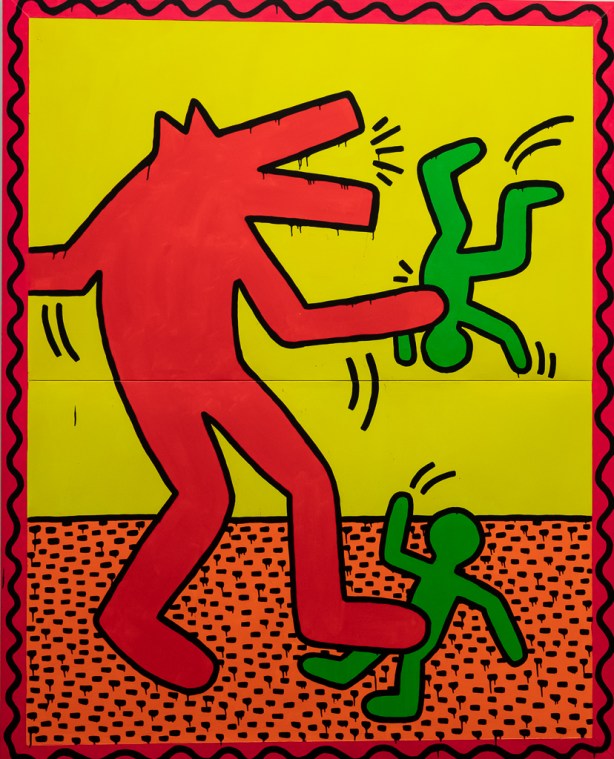
He tried to develop his own pictorial language, which he wanted everyone to understand. He borrowed some of the common motifs like the Egyptian god Anubis and the Golden Calf. He also developed his own symbols like the dog, the radiant baby etc. The meaning of these symbols depended on the context in which they appeared. For instance, the dog could be a symbol of justice or protector but could also be an attacker. In his own words: “The dogs really were representational of human and animal. In different combinations they were about the difference between human power and the power of animal instinct. It all came back to the ideas I learned from semiotics and the stuff from William S Burroughs – different juxtapositions would make different meanings.” In the image below, we see the dog attacking a street artist and there is blood all around.


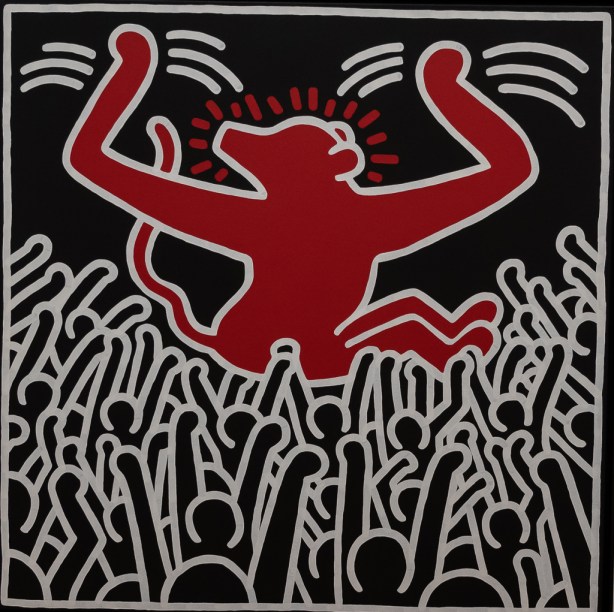
The Golden Calf is generally understood to represent idol worship and Haring used it to show mass hysteria and manipulation. I felt that Haring might have had a field day as an artist if he were to live in present day India.


He borrowed the happy Porky Pig from Looney Tunes and used it as a reference to consumerist society and the growing alienation from nature. In 1978, he wrote alongside a drawing: “Everyone knows where meat comes from, it comes from the store”.


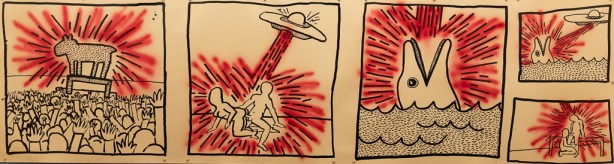
The flying saucer was a symbol that Haring used to depict the other – those outside the “normal” contours of the society – and he considered that these others could strengthen and empower people and society.


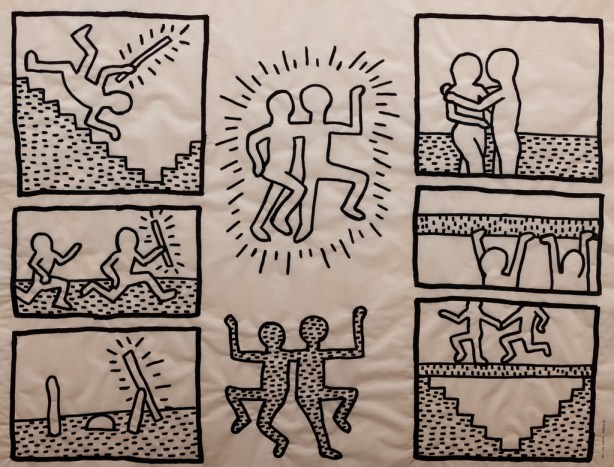
He tried to communicate through imagery that could be more easily understood and produced a huge amount of drawings. He drew on paper, plastic sheets, tarpaulins; anything that he could lay his hands on. Most of it was about celebrating life, empathizing with the sidelined and the marginalized, protesting against oppression, consumerism, mass culture etc. Good many of this was in the public space, on walls etc.


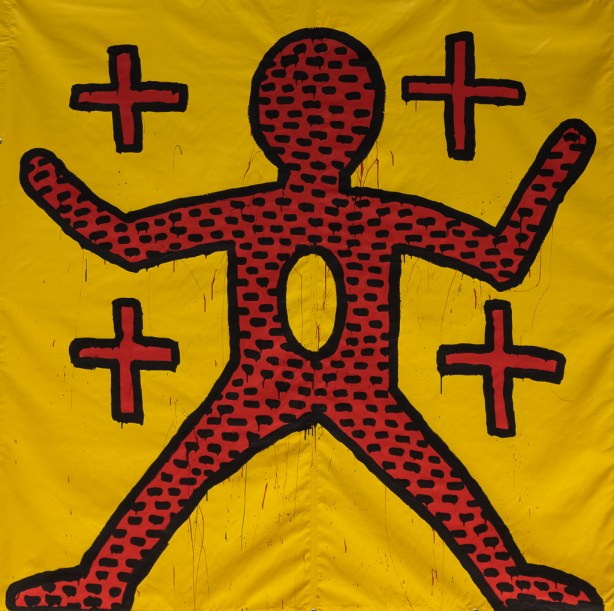
In 1980, John Lennon was shot dead and Haring responded to Lennon’s death with the image of a man with a hole in the middle. In Haring’s own words: “Actually, this image of a man with a hole in his stomach came after I heard of John Lennon’s assassination…I woke up the next morning with this image in my head…and I always associated that image with the death of John Lennon”. This image may also be taken to symbolize the emptiness within modern man.


In his early days, he also tried the abstract language as shown in the painting below.


However, he soon abandoned this because: “The abstract paintings would not make any sense if they were painted in public space. It was first when I started to draw images which could be read as signs that I went into public space. Because these paintings made sense in the streets – all people, all languages could read them. After studying the theory of communication, information and drawing and how meaning speaks through signs and how this language – because that is what it is – works – I chose a primitive code.”


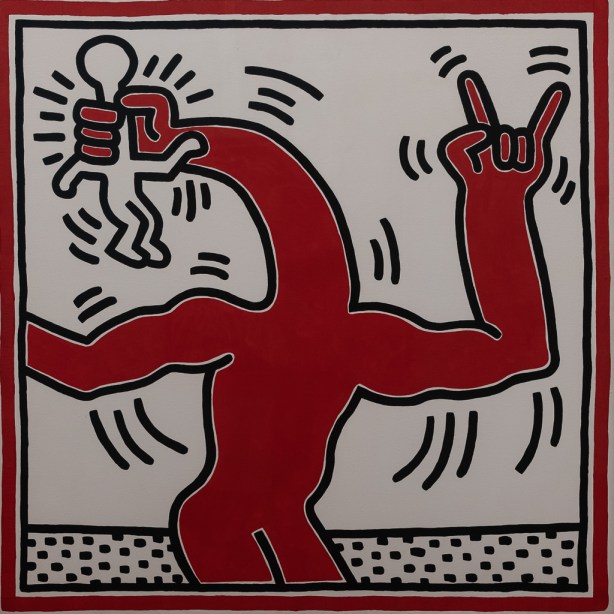
The radiant baby was another of Haring’s most used symbols. He considered babies were always connected with positivity. He said: “Babies represent the possibility of the future, the understanding of perfection, how perfect we could be. There is nothing negative about a baby, ever. The reason that the ‘baby’ has become my logo or signature it is the purest and most positive experience of human existence.” This statement immediately brought to my mind a passage I had read in the autobiography of Elie Wiesel titled “Night”. Wiesel was a survivor of Auschwitz and in the book he talks about how he witnessed live babies being thrown into fire by the Nazis, at the concentration camp. The contrast between how artists like Haring viewed and valued human life and how the fanaticism makes one such values was a telling point.


A light bulb as a motif for ideas.

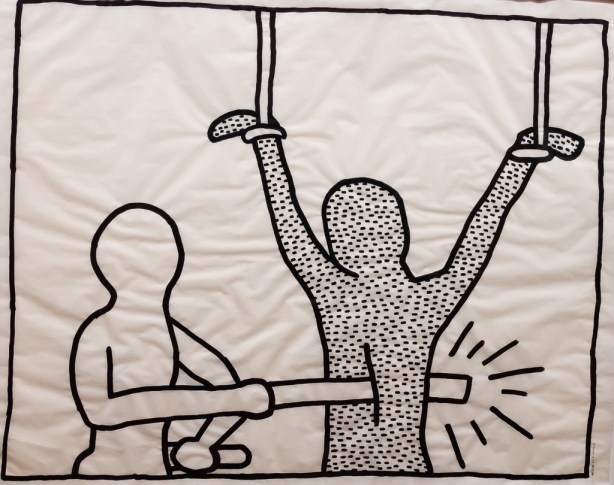
Torture


A self-portrait

Haring was against organized religion and in his work, crosses were used by people to commit to murder or people lost their lives on them. “You can only help and encourage people to live for themselves. The most evil people are the people who pretend to have answers. The fundamentalist Christians, all dogmatic ‘control religions’ are evil. The original ideas are good. But they are so convoluted and changed that only a skeleton of good intentions is left.”


This painting has a mistake which turned out to be a major hit. When Haring was painting this on a wall, he made a mistake in painting the first eye too far to one side and realized that he was going to be left with a lot of unexplainable empty space. To get over the problem, he painted a third eye – his only intention was to fill up the space. He was later amused to hear about people interpreting the third eye as Haring’s allusion to surveillance, consciousness etc. He had meant nothing of the sort – a classic case of a work going beyond the creator once he or she was done with it.

In addition to the barking and the biting dog, Haring also used a form like that of Anubis. According to Egyptian mythology, Anubis (the dog-headed god) was entrusted with weighing of the heart during the judgment of the dead; thus controlling the fate of the dead person. Here is an image which alludes to the dance of death and how everyone is equal before death.


Haring considered his work to be political. He says: “Most of my political concerns and social concerns came from my life experiences. Partly being born in the late 1950s and growing up in the 60s and sort of being around that counter culture but not being able to participate. Definitely being very affected by that and being at an age at the time when I think I was most impressionable, like seeing the Vietnam War when I was ten years old, seeing race riots in television and reading Life magazine.”


Sometimes, human shapes are depicted with dotted bodies. This can indicate otherness – skin colour, homosexuality, illness such as AIDS etc.


For this painting, I found the note provided by the curator to be quite interesting. “The caterpillar is the actual feeding stage of the butterfly and has to shed its skin several times before achieving its final size. Only after metamorphosis does it transform into the butterfly, whose beauty solely serves the purpose of procreation and the fades. In Haring’s art the caterpillar thus stands for both transformation and metamorphosis and for greed and a craving for food, which is why in some of his works it is depicted as a monster. With a computer replacing its head, the caterpillar turns into a technological ogre. In Haring’s art computers and robots describe the prevalent fear of new technologies, the space age, Silicon Valley, and the potential control of machines over humans. As early as 1978 Haring gave much thought to the subject of computers and to what they mean for our daily lives: “The silicon computer chip has become the new life form. Eventually the only worth of man will be to service and serve the computer. Are we there? In a lot of ways we are.””. To me, it was amazing that he had thought of this man-machine conflict so long back.


The Golden Calf is replaced with the red monkey to warn about mass infatuation and hysteria.


Towards the end of his life, Haring was sure he was going to contract AIDS as several of his partners had died because of the disease. His art also reflected this preoccupation and danger of the monster.


In this work, a deadly monster is shown as grabbing its victims while offering its orifices in deadly invitation.


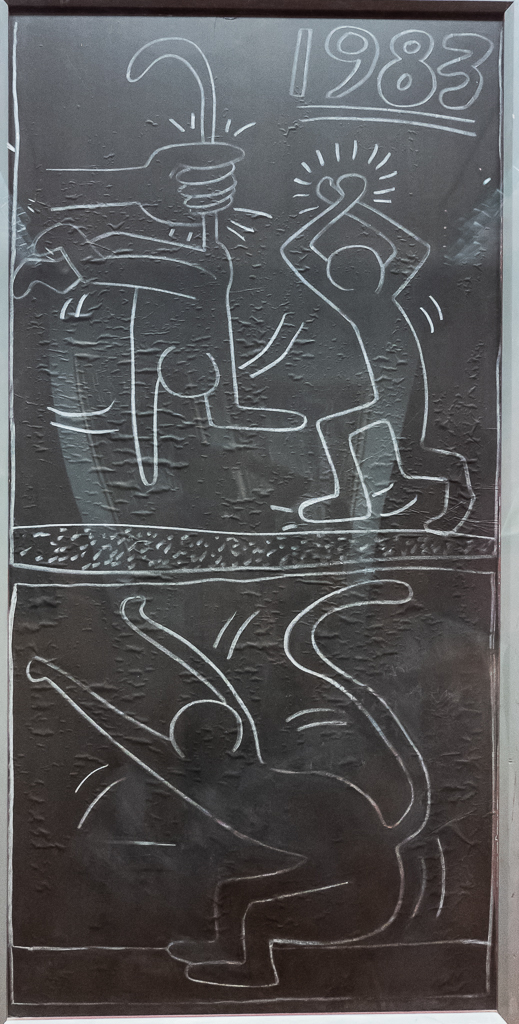
Between 1980 and 1985, Keith Haring started making drawing on the unused billboards in the subway. Such advertisement boards were covered with black paper and he drew with chalk on the black paper. He is believed to have made between 5,000 to 10,000 such drawings but most of these have been lost. This was an illegal activity and was he would have been arrested if caught making the drawing and so he had to work very quickly to avoid getting caught. He considered this as the perfect laboratory for him to experiment on the ideas he was thinking of. Soon, the public started noticing these drawings and started to carry them home as collectibles. This prompted Haring to stop this activity as he wanted his work to be with the public, and be accessible to them, than be in collections.


I have generally not been to appreciate this type of art, which looks quite undeveloped and primitive, almost like a child’s drawing. Yet, Keith Haring captivated me; maybe because of his stance and politics in his works, maybe because of what I could sense of him as an individual by seeing his art; maybe I was amazed that such type of art could earn such international acclaim in such a short time. I am not sure, but the fact remains that I spent a good amount of time looking at his work and felt good to know of Keith Haring, his life and art.


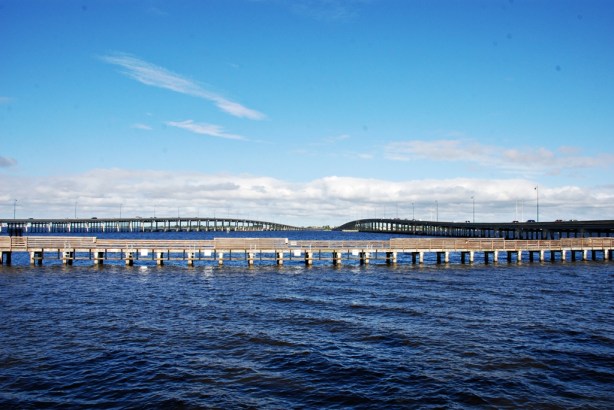
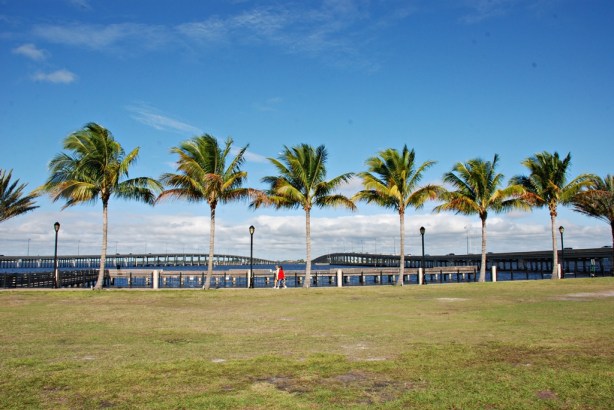
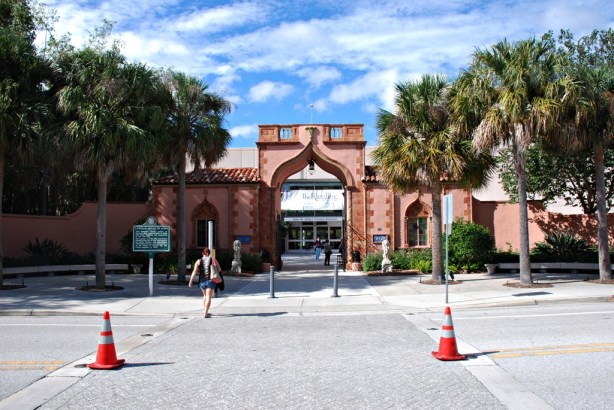
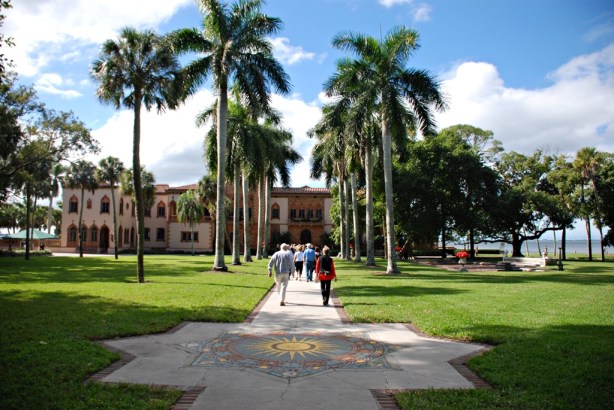
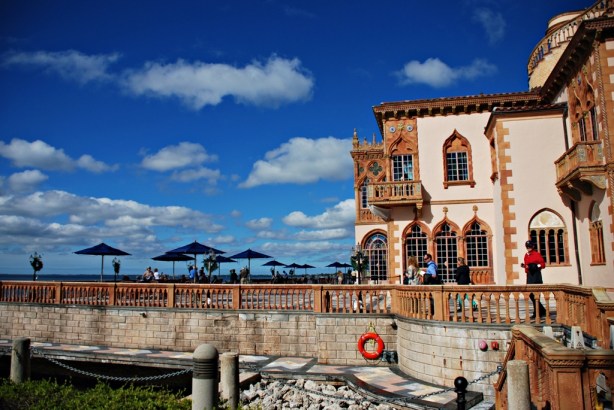
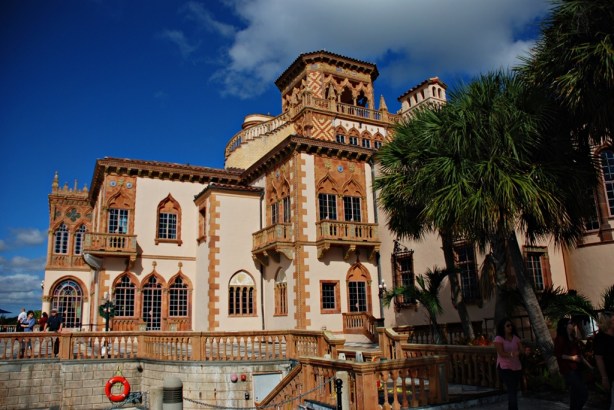
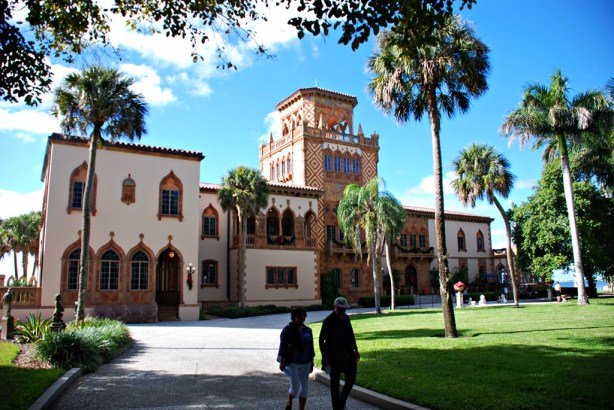
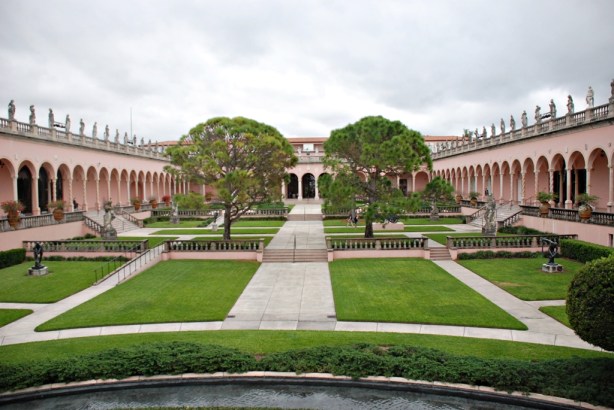
Last month, I found myself in Miami with a couple of days to spare. I was looking for something different apart from the beaches and entertainment parks of Florida and so, I decided to drive to the west coast of Florida and I chanced upon a town called Punta Gorda and dropped anchor there. Punta Gorda is a nice, small town right on the bay. About an hour’s drive from Punta Gorda is Sarasota and while looking through the images in TripAdvisor, a building in Sarasota caught my eye as it looked kind of out-of-place in Florida and I decided to go there. Further showed this to be the Ringling Museum complex and I set out in the morning on a beautiful sunny day.

DSC_0013

DSC_0025

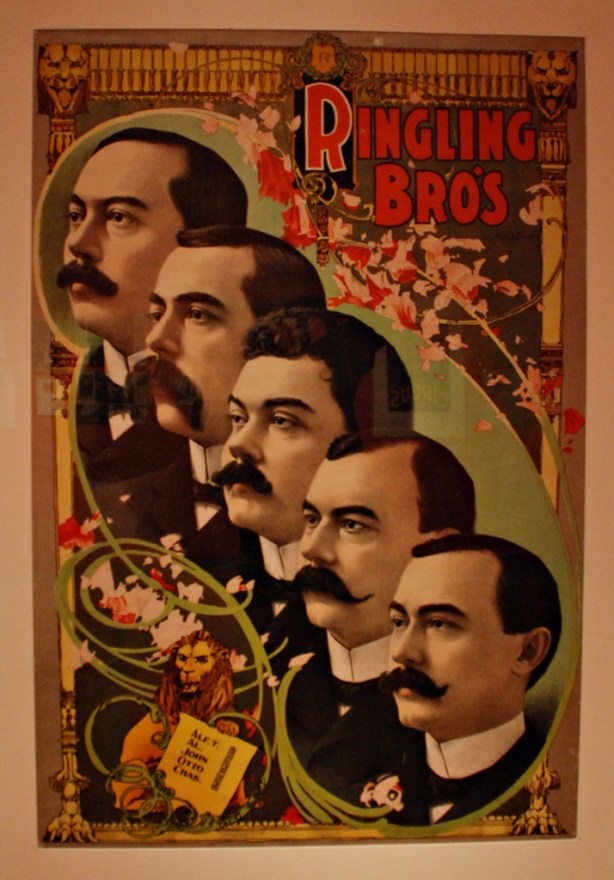
I was not much aware of Ringling before the trip though I had heard of Barnum Bailey Circus. John Ringling was born into a family of seven brothers and a sister in 1866 in Iowa. He along with four of his brothers started the Ringling Circus and then they acquired the Barnum Baily Circus to become the largest travelling circus in the US and they called it the Greatest Show on Earth. John turned out to be the most famous of the five brothers and also ventured into areas like real estate development and eventually became one of the richest men in the world at the time. So, when I drove there, I was expecting to see the house of a rich circus man and spend some time in a leisurely manner.

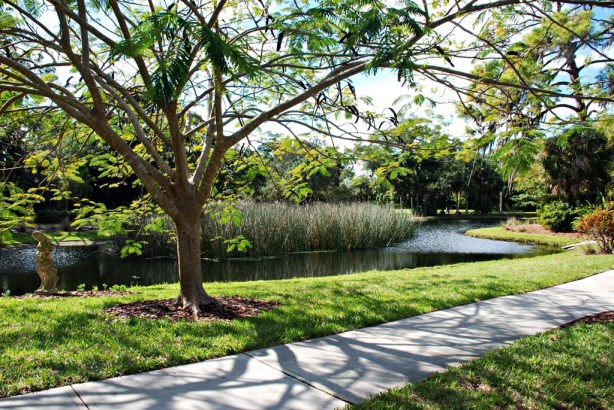
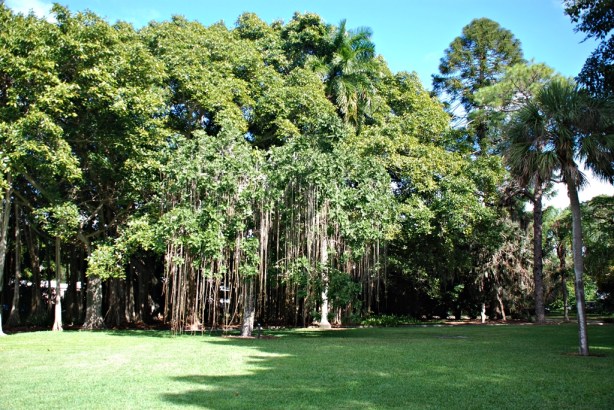
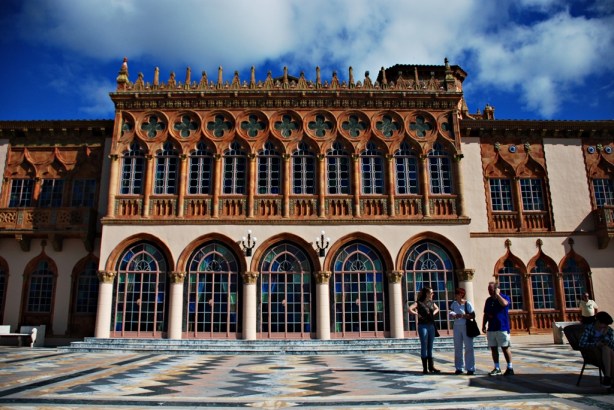
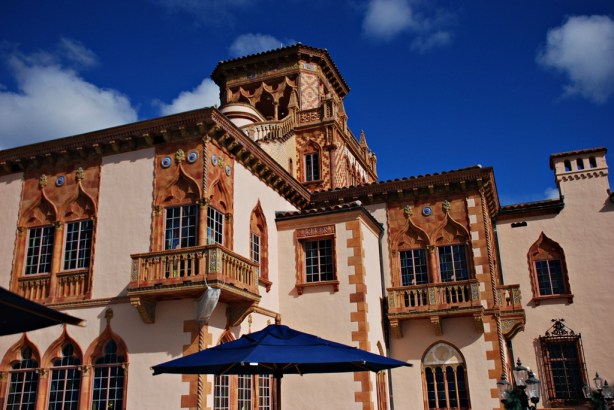
The house stands on 66 acres of land and is built in the Venetian Gothic style and is named “Cà d’Zan”, which means House of John in Venetian dialect. The grounds are beautiful with many wonderful trees and small ponds.

DSC_0027

DSC_0031

DSC_0115

DSC_0224

DSC_0296

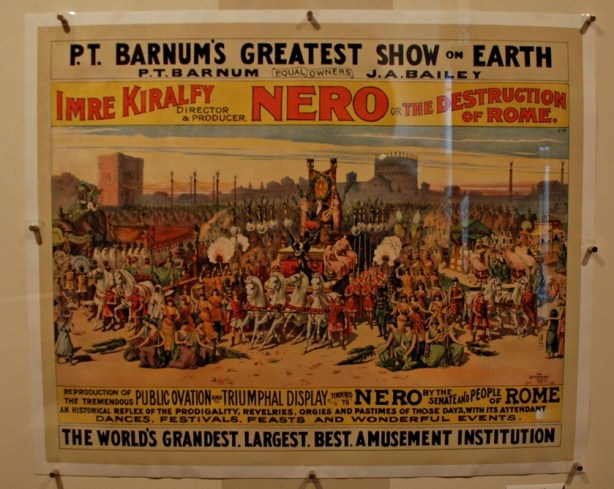
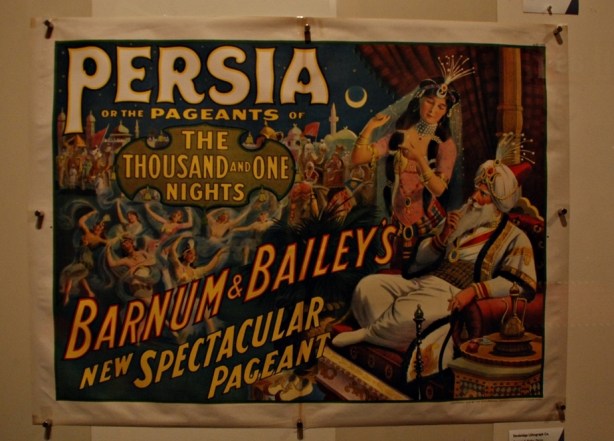
There are three main attractions to visit – the Circus Museum, Cà d’Zan and the Museum of Art. I started with the Circus Museum. First off, what struck my eye were a series of posters that were quite nostalgic. The Circus museum took me right back to my childhood when the circus was a rare occurrence and a visit was always a keenly awaited event. I think I have only been to the circus twice – it was a different world of amazing, hair raising acts and exotic animals. Of course, at that time, I was too young to realise that life for those performers was totally unlike the glittering visual they presented. Of course, in today’s world where visual treats and images are dime a dozen, the circus has lost out. It is no longer possible to hold interest and cause excitement and amazement through such acts as trapeze or motorbike riding within a globe or jeep jumping or a parade of wild animals. To me, the circus represented an era gone by. Such were the thoughts that flashed through my mind as I walked through the museum. The third face in the poster below is John Ringling.

DSC_0220

DSC_0037

DSC_0041

DSC_0043

DSC_0045

DSC_0046

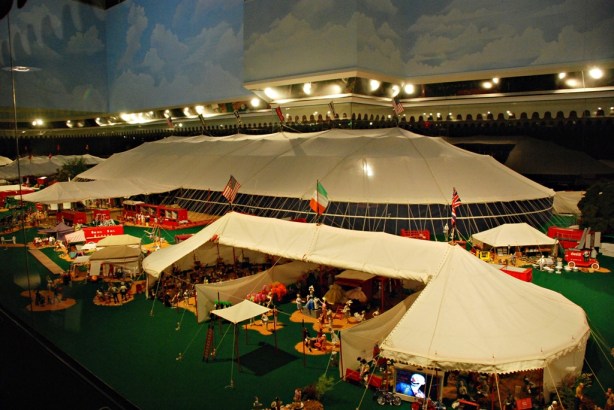
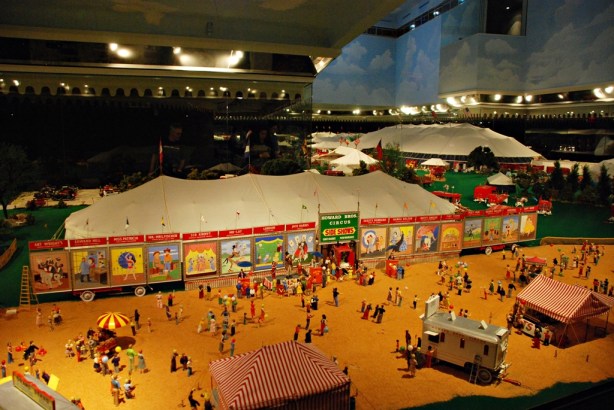
Perhaps it was this foresight that the circus would soon die out which caused the artists and sculptor Howard Tibbals to create a miniature replica of the Ringling Bros. and Barnum & Bailey Circus, which was the largest circus in the world at the time. This replica is available for view in the Circus Museum and is indeed a grand sight. Till then, I had no idea of the scale of size of this circus. I was thinking of something slightly bigger than the “Gemini Circus”, the whole of which fitted into 3 or 4 trucks. What I saw at the Tibbals exhibit was a circus that owned trains so that it could transport itself to various palces. The “Big Top” or the performance tent had three rings, four stages, a hippodrome track and the show lasted two and a half hours with about 800 artists participating and it could seat 15,000 people! The show was so large that it owned trains that were used to transport all the material, animals and people. The logistics behind the whole show must have been amazing. I read that the Big Top consisted of six centre poles, seventy four quarter poles, one hundred and twenty two sidewall poles, five hundred and fifty stakes and twenty six thousand yards of canvas and what was amazing was that they could erect this tent within four hours!

DSC_0064

DSC_0074

DSC_0078

DSC_0081

DSC_0082

DSC_0096

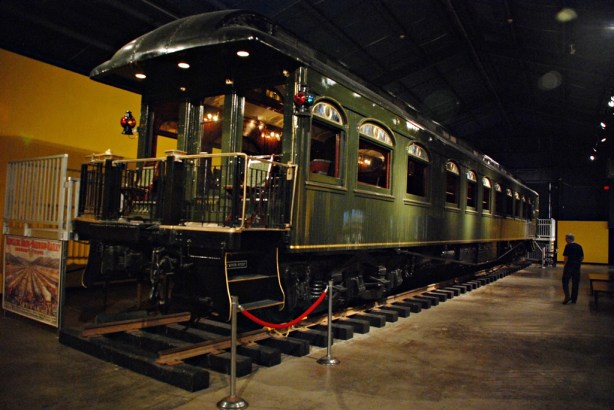
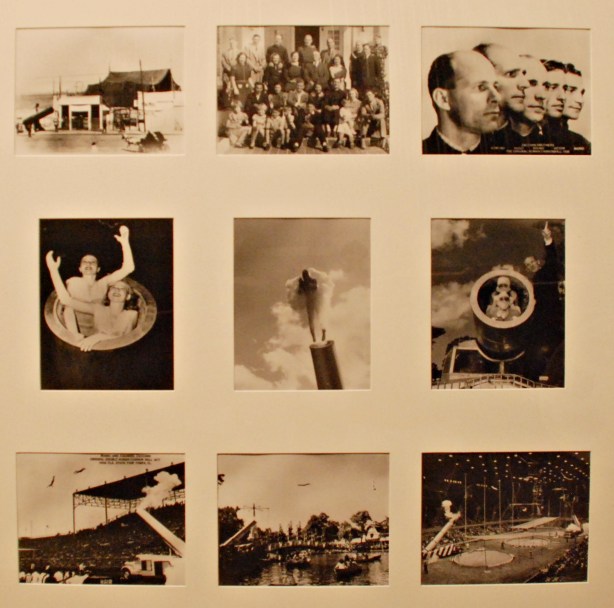
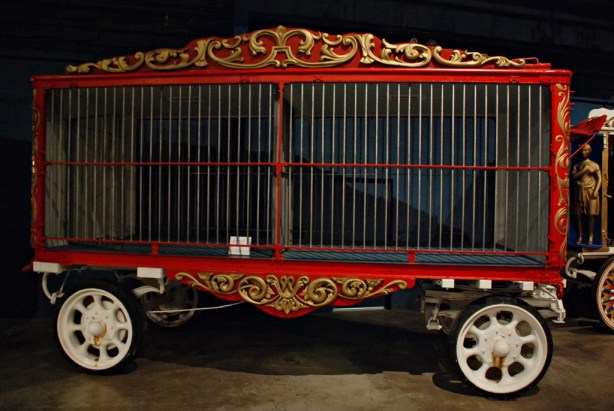
There is also an exhibition of some of the real objects that were connected to the show like a human cannon, various cages used to transport animals and the private rail coach (named Wisconsin) that the Ringlings used when they travelled along with the circus.

DSC_0217

DSC_0193

DSC_0199

DSC_0204

DSC_0205

DSC_0207

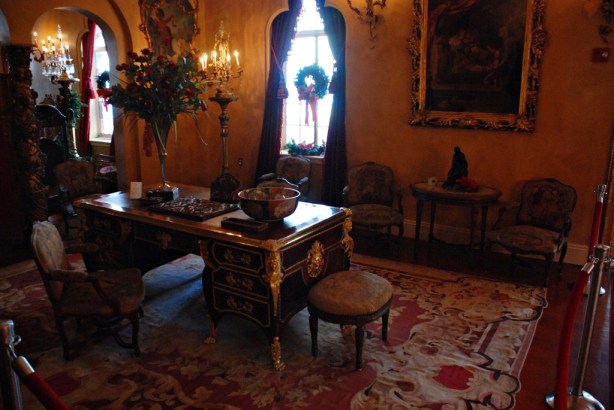
Cà d’Zan was finished in 1927 and looks quite beautiful. It sights right on the sea and there are steps leading to the water. The interior is quite rich and ornate with all the conveniences that the time provided.

DSC_0114

DSC_0121

DSC_0122

DSC_0130

DSC_0131

DSC_0146

DSC_0155

DSC_0161

DSC_0165

DSC_0175

DSC_0179

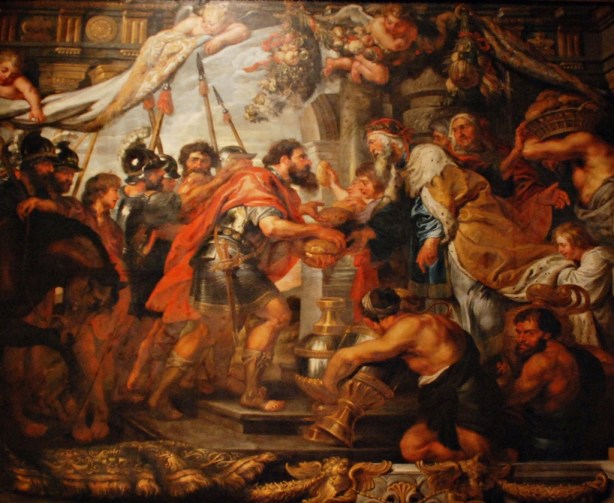
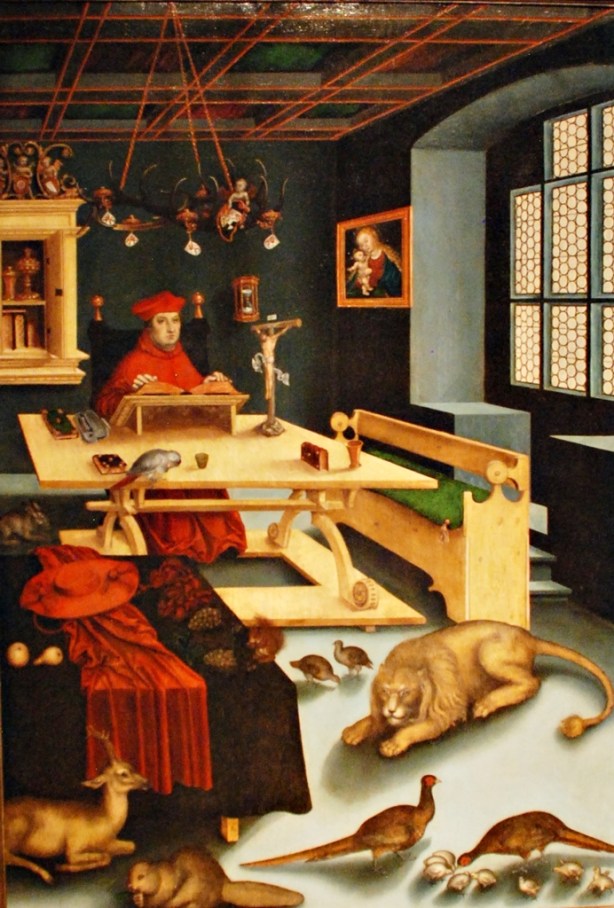
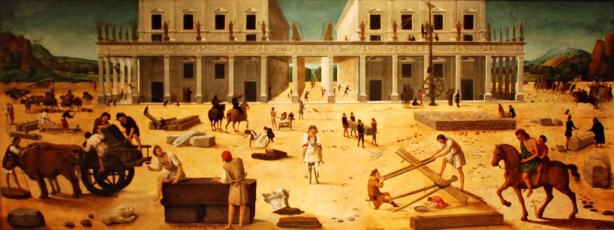
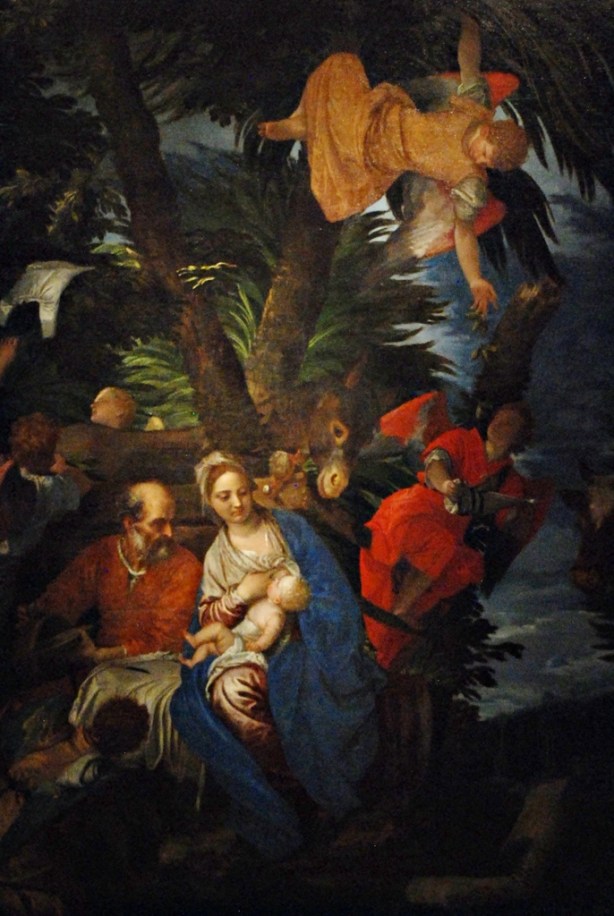
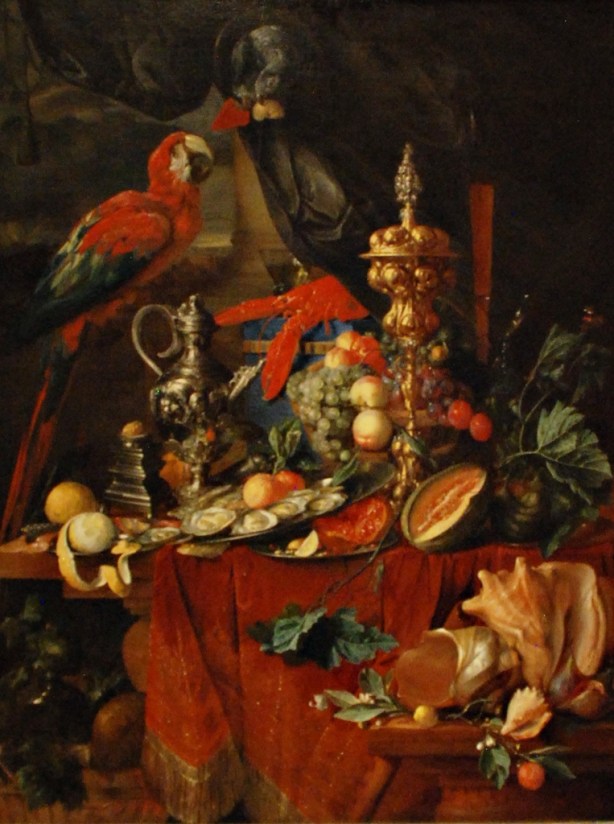
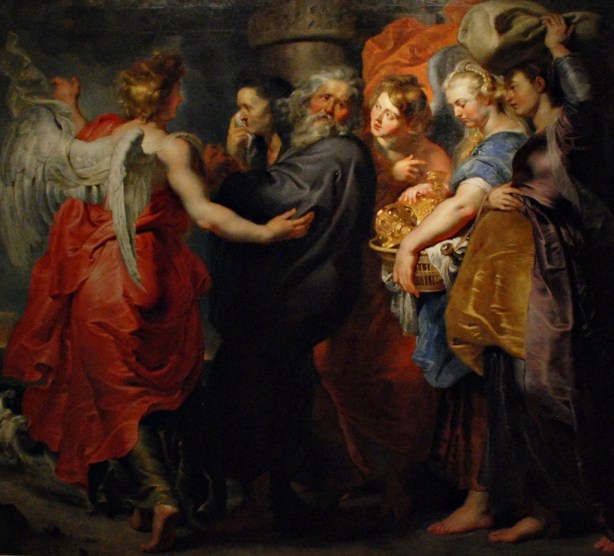
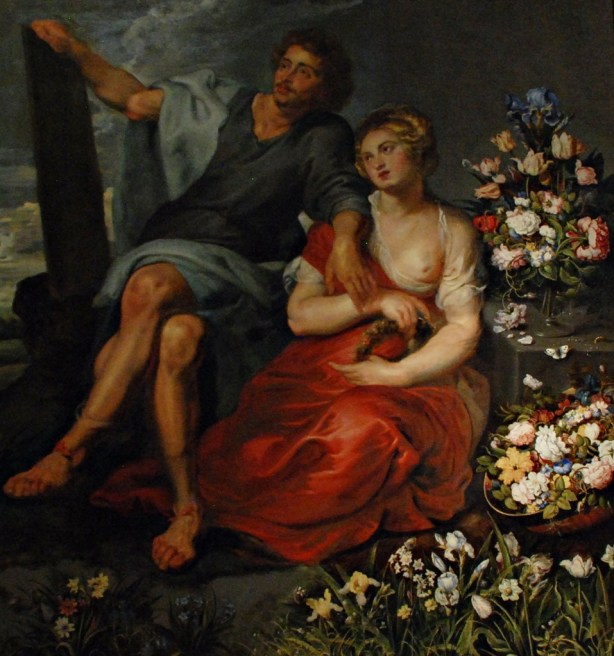
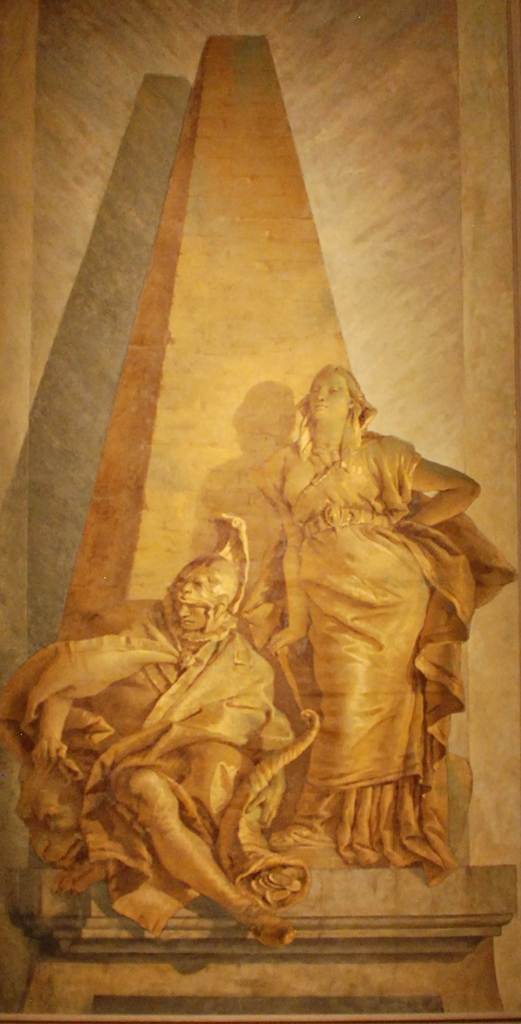
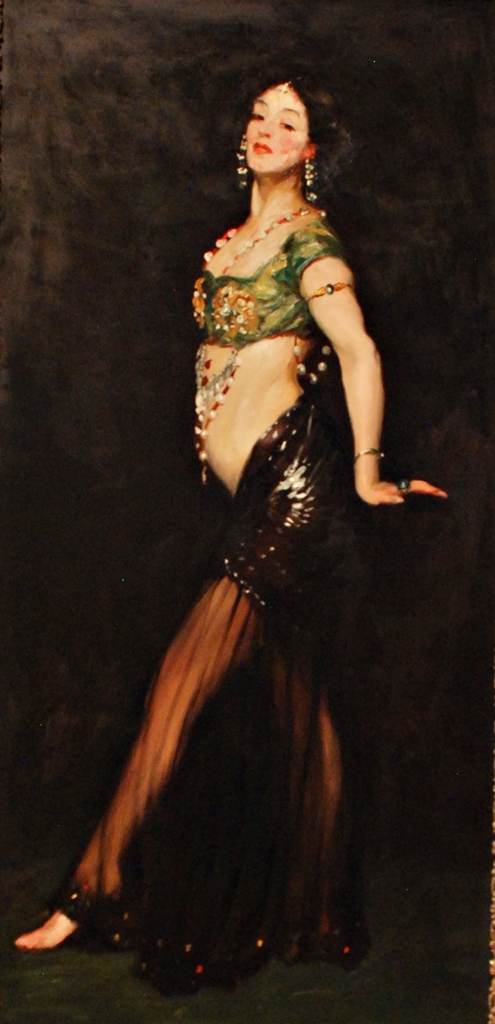
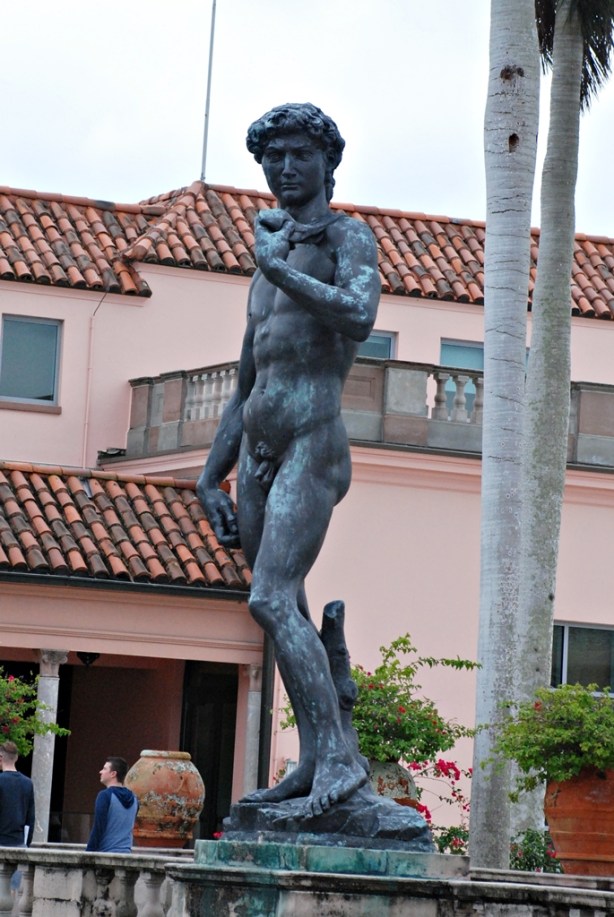
After a leisurely lunch at the café, I strolled across to the Museum of Art. Till then, I was thinking of the whole affair as the house of a very rich circus man who had an interest in art and nothing much beyond that. However, I soon got to know that this tale had some other interesting angles. John Ringling and is wife Mable wanted to build an art gallery to build up an awareness of art and culture in the people of the locality. It was not meant to be a museum for the viewing pleasure of a few rich people but was meant to bring the masters to be available for the public. The museum was set up with twenty one galleries and John Ringling gifted this museum with more than 400 art pieces along with an endowment of $1.2 Million to the State of Florida upon his death in 1936. There were works from masters like Peter Paul Rubens, Paolo Veronese, Diego Velazquez, Giambattista Tiepolo, Lunas Cranach the Elder etc. In the courtyard is a 19th century replica of Michelangelo’s David.

DSC_0229

DSC_0231

Peter Paul Rubens: Meeting of Abraham and Melchizedek

DSC_0237

Lunas Cranach the Elder: Cardinal Albrecht of Brandenburg as Saint Jerome

DSC_0241

Piero di Cosimo: Building of a Palace

DSC_0246

Paulo Veronese: Rest on the flight into Egypt


DSC_0248

Franceso del Cairo: Judith with the head of Holofernes


DSC_0249

Antonio de Bellis: The flaying of Marsyas by Apollo


DSC_0251

Jan Davidsz de Heem: Still Life with Parrots


DSC_0274

Peter Paul Rubens: Flight of Lot and his family from Sodom


DSC_0280

Peter Paul Rubens and Osias Beert: Pausias and Glycera


DSC_0282

Giambattista Tiepolo: Glory and Magnanimity of Princes


DSC_0287

Robert Henri: Salome


DSC_0262

DSC_0272

John Ringling was one of the richest men in the Roaring Twenties and like many of his peers, he too thought that the good times would continue for ever. However that was not to be and the Great Depression arrived. Ringling suffered huge financial losses and he lost his wife Mable also in 1929. When John died in 1936, the man who was once the one of the world’s richest men had a princely sum of $311 in the bank! What struck me was that he had managed to fight his creditors for many years and hold on to his house and the art museum with its priceless works and finally willed it to the state so that all could benefit from it. John Ringling, obviously, was no ordinary circus tycoon.


3 January 2016

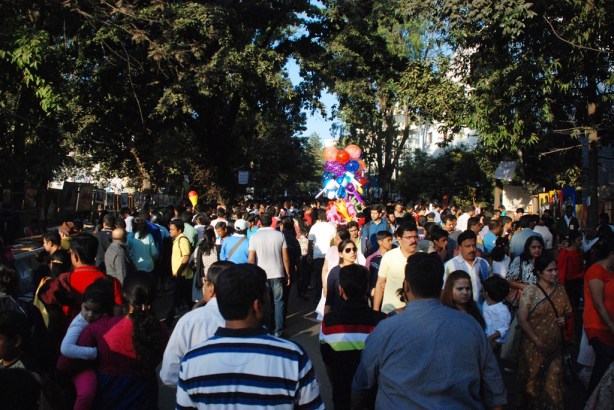
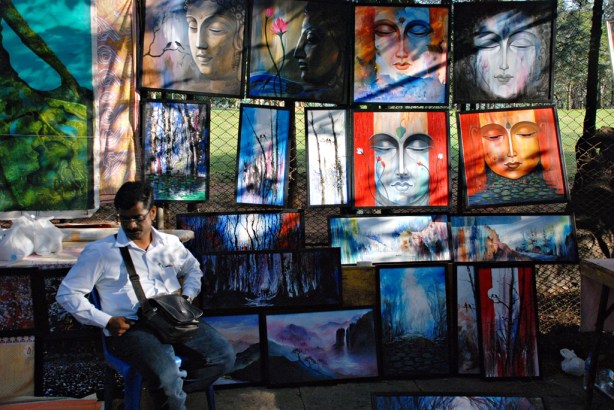
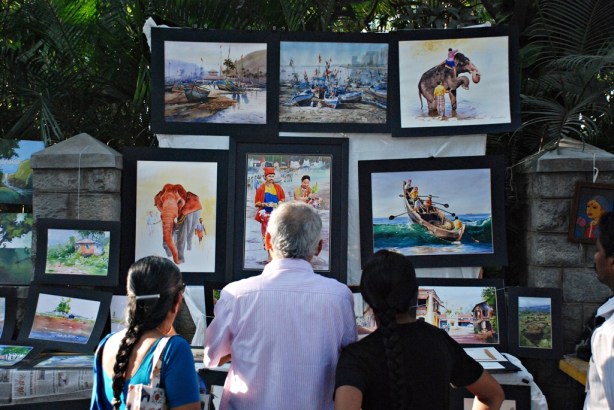
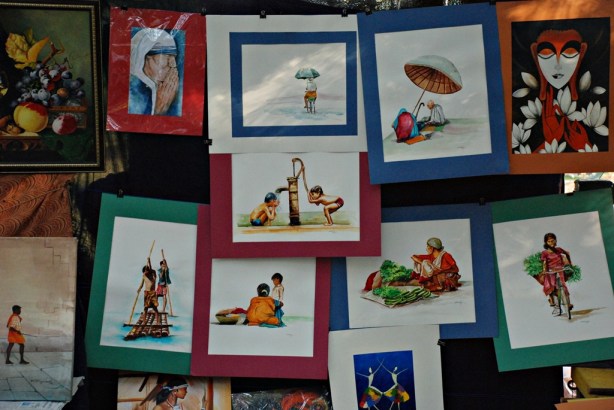
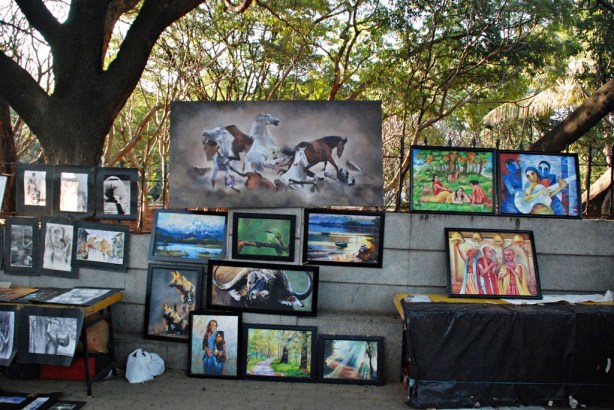
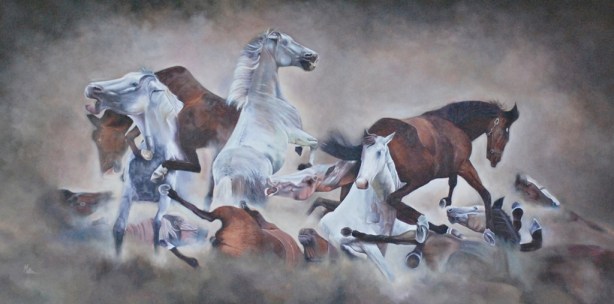
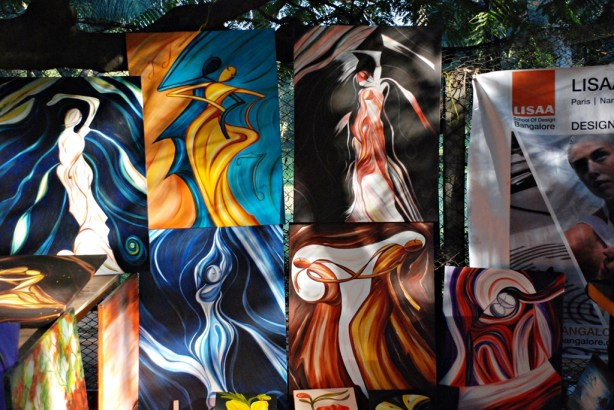
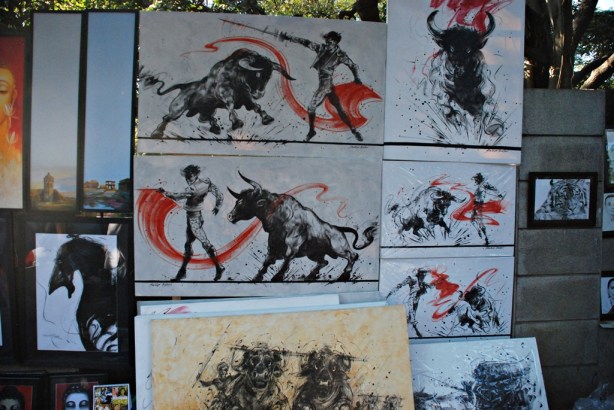
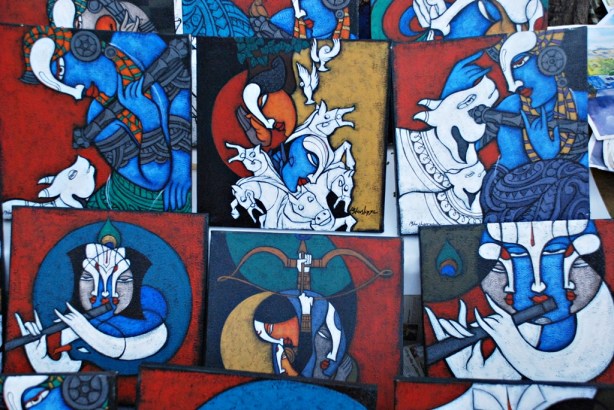
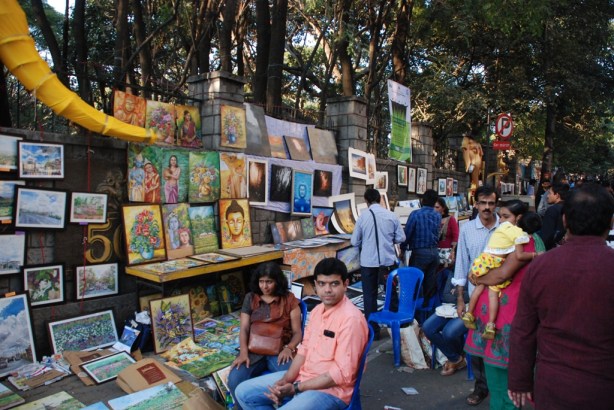
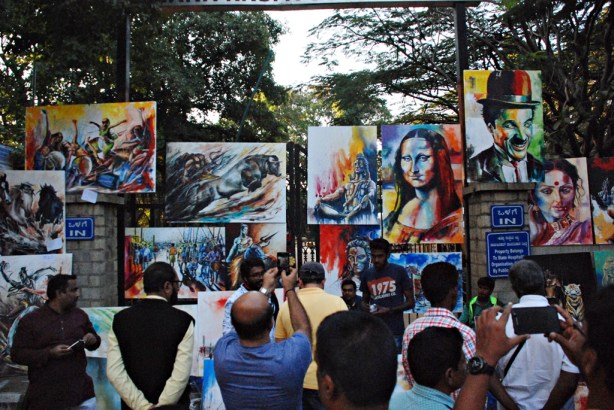
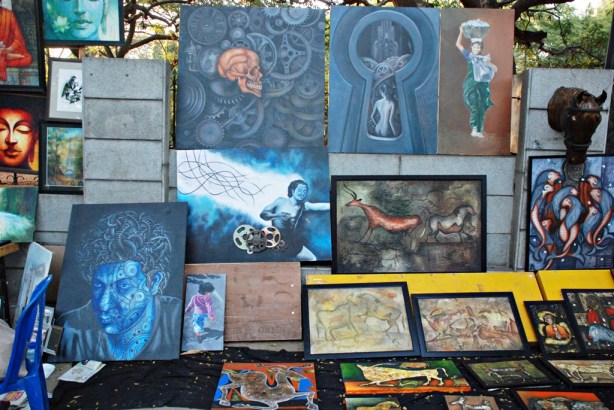
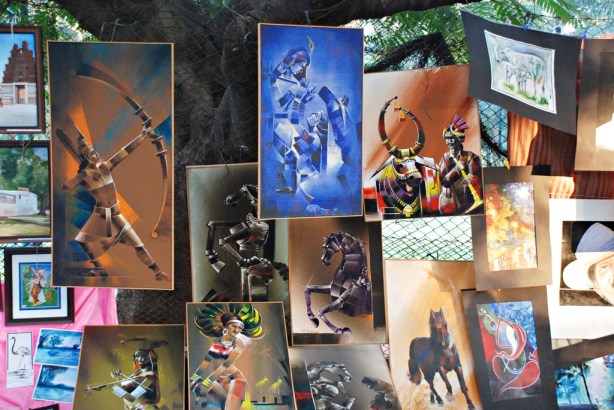
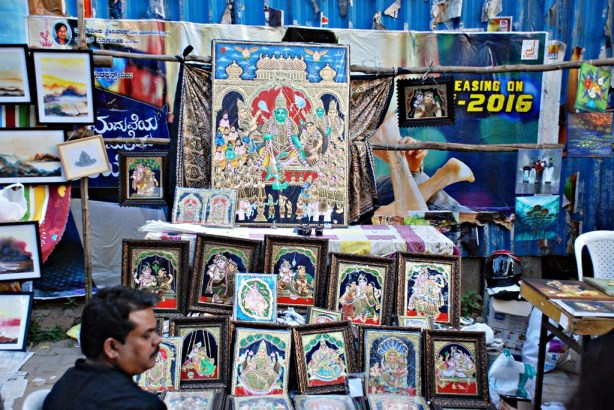
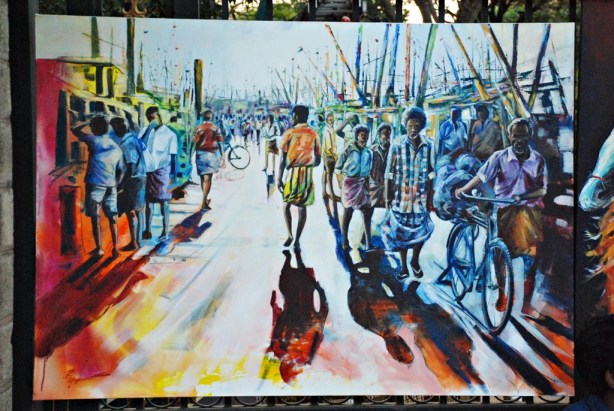
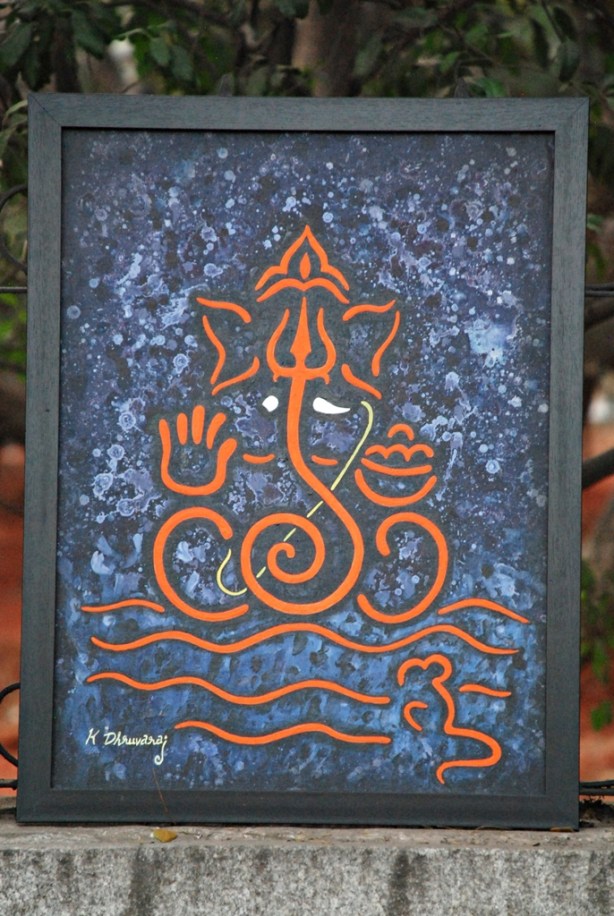
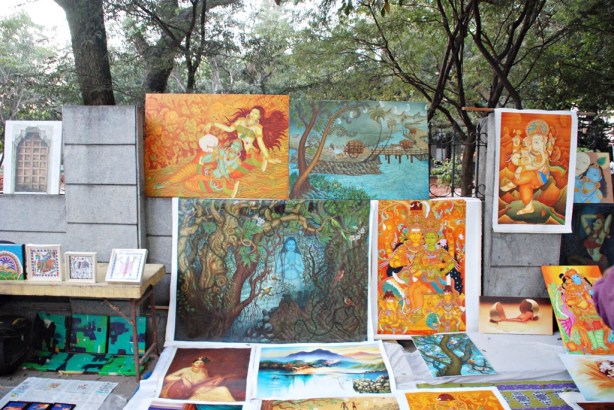
Chithra Santhe is an annual exhibition of paintings organised by the Karnataka Chitrakala Parishath. However, it is no ordinary exhibition; it is not held in any air-conditioned gallery but is an open air event held in a location created by blocking off the Kumar Krupa Road! You can see paintings everywhere you look and the variety is just incredible. You can find anything from abstract to Tanjore paintings and murals. Most people are likely to find a piece of art that attracts them and also fits their wallet.

I had visited the event four years back and had the good fortune to be at Bangalore while the event was on this time. However, we had not factored in the growth and so, were a bit short on time. While walking around, I heard an announcement that about 1,300 to 1,500 artists are participating in this year’s event. The crowd had also grown as compared to our last visit and I was very happy to see that even if it meant constant jostling and shouldering to cut through.

DSC_0590

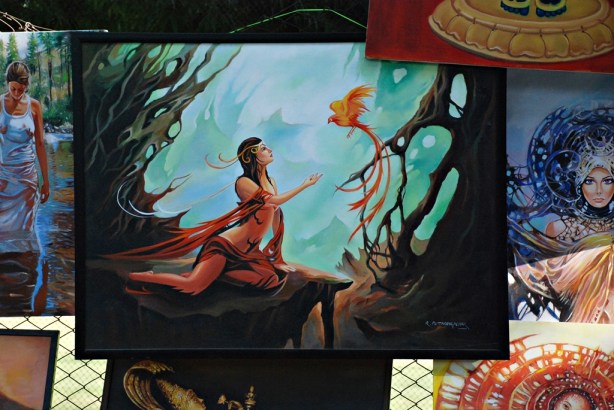
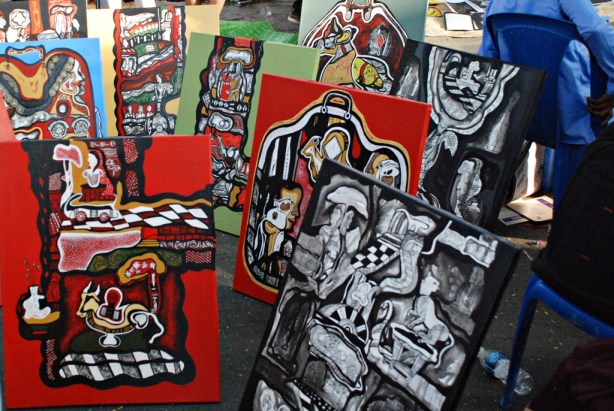
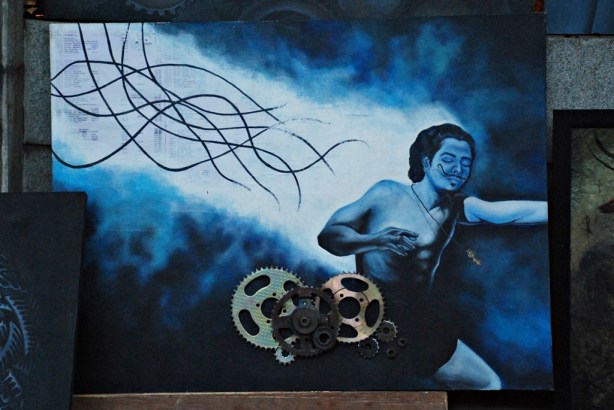
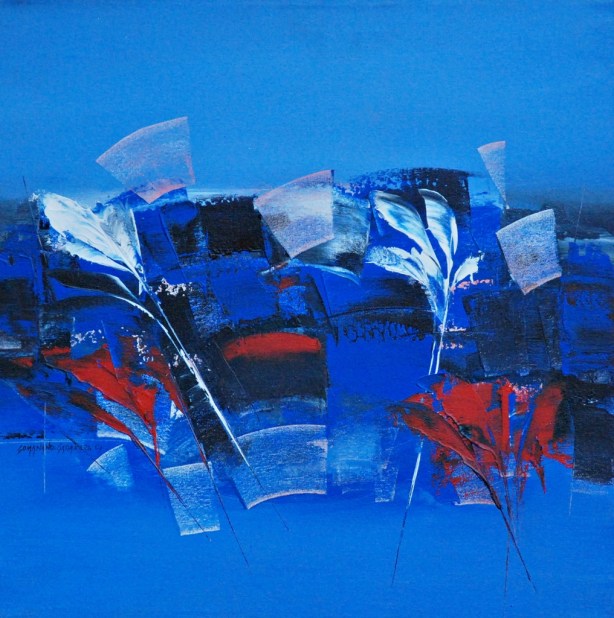
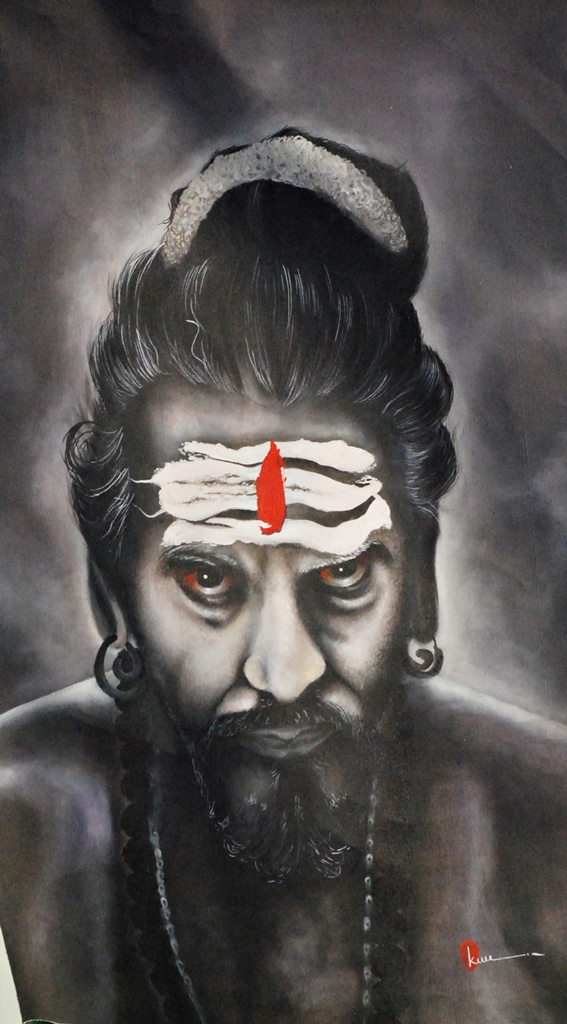
Most of the paintings were well crafted with most of the subjects being traditional. There were only very few works that could be classified as modern art as most paintings were focused on being pleasing to the eye. I do, however, feel that such events are very important in developing a culture of appreciation for the arts. The Chitrakala Parishath deserves a huge round of applause for organising the event. This is the 13th year of the Santhe and I would recommend this as a “must visit” event.

DSC_0540

DSC_0542

DSC_0544

DSC_0547

DSC_0549

DSC_0551

DSC_0557

DSC_0558

DSC_0559

DSC_0562

DSC_0564

DSC_0565

DSC_0567

DSC_0571

DSC_0582

DSC_0583

DSC_0586

DSC_0587

DSC_0589

DSC_0599

DSC_0602

DSC_0604

DSC_0605

DSC_0606

DSC_0611

DSC_0613

DSC_0615

DSC_0616

DSC_0620

DSC_0621

DSC_0626

DSC_0629

DSC_0633

DSC_0635

DSC_0636

DSC_0638

DSC_0640

DSC_0642

DSC_0644

DSC_0647

DSC_0649

It has been 46 years since a great novel shook up Malayalam literature – so much so that many critics consider that year as the start of a new era in the genre of Malayalam novel. Yes, I am talking about OV Vijayan’s Khasakkinte Ithihaasam. I was in my late teens when I first read the book and I dismissed it offhand as a book with a defeatist attitude. That was my first brush with the Ithihaasam. Then, over the years, something drew me back to it; there was something magical and surreal about it, which kept making me go back to it. Slowly, over my many re-readings, I somehow fell in love with the book and my appreciation of Vijayan grew each time I took up the book.

Vijayan’s imaginary Khasak was modelled after a real village named Thasrak. This village is just about 15 kms from my hometown Chittur, yet I had never visited the place. Vijayan visited and lived in Thasrak for a short time in 1957 and his novel is based on the lore and people of Thasrak. As I planned a trip to Chittur this time, I decided that I must visit Thasrak.

In preparation, I took up the Ithihaasam once again for yet another reading.  As always, it was provided a different reading experience this time too and new gems popped out of the book and delighted me.  The blue veins of Maimuna continued to excite me, the plight of Kuttaadan Poosaary continued to amuse, the fate of Allaapicha Mollaakka continued to haunt, Ravi’s feather like existence was still beyond me, Chandumuthu with her repeated question tugged at some corner of the heart but what stood out for me this time was the scene of Allaapicha Mollaakka making Kunhaamina promise not to join the new school, which he deemed as competition to him. He first makes her take an oath in the name of Sheikh Thangal, the most revered Islamic figure in Khasak’s lore and then, “to seal all holes”, the Mollaakka asks Kunhaamina to swear by Mariamma, a Hindu Goddess. It is expressed beautifully in the novel in Vijayan’s fantastic language.

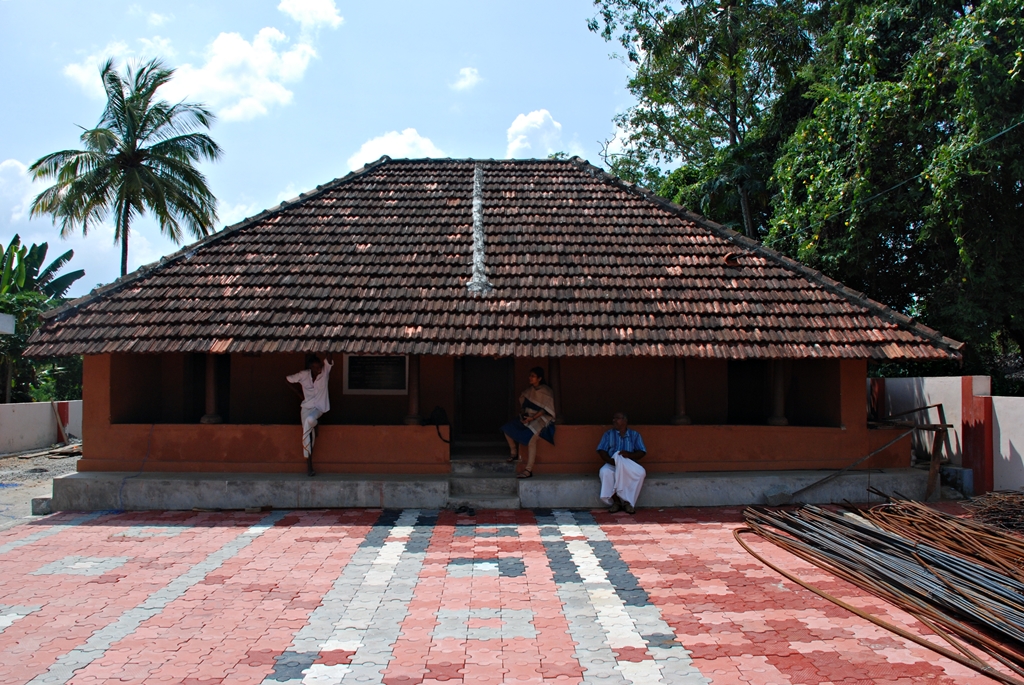
For many a year, Thasrak and its role in Malayalam literature was forgotten by the authorities. A couple of years ago, they woke up and decided that something ought to be done. They laid siege to the Njattupura (a small building used to store paddy) that Vijayan had lived in when he was in Thasrak. In the novel, Ravi has his school in the Njattupura. The building itself is said to be more than a hundred years old and thankfully, the mud building is preserved as such. However, an eyesore of a gate has been erected and the courtyard paved with interlocking tiles. The net effect of such changes is to subtract from the overall experience and not to enhance it.

DSC_0142

DSC_0200

We met an elderly gentleman named Majeed there who takes care of the Njattupura and shows visitors around the place. He told us that he was four years old when Vijayan visited Thasrak and he told us that almost every one of the characters have passed away, except Maimuna who he said, is in Coimbatore. Going by her age in the novel, she must be pretty old now. He was quite helpful and talked about how the times have changed. He said that Vijayan used to sit in the verandah and sketch. I asked him how he felt of a novel being written about his village and his friends and relatives, especially as I had read that some of the locals had been some reservations on how some people were characterised in the novel. His response was that in any story, some embellishments are to be expected and the Ithihaasam should also be viewed from that perspective.

DSC_0153

DSC_0162

He took us to the Arabikkulam (a pond) where Sheikh Thangal, the legendary military commander of Khasak, had thrown the heads of his enemies after beheading them. It is completely covered with weeds now and needs to be restored.

DSC_0185

DSC_0187

Right next to the pond is the new mosque. We were told that Allaapicha Mollaakka’s mosque had stood at this very site earlier.

DSC_0209

We walked back to the Njattupura and we could see some of the famed palm trees of Khasaak in the distance. Legend has it that the trees bent down so that the tappers didn’t have to climb up the trees to tap them.

DSC_0182

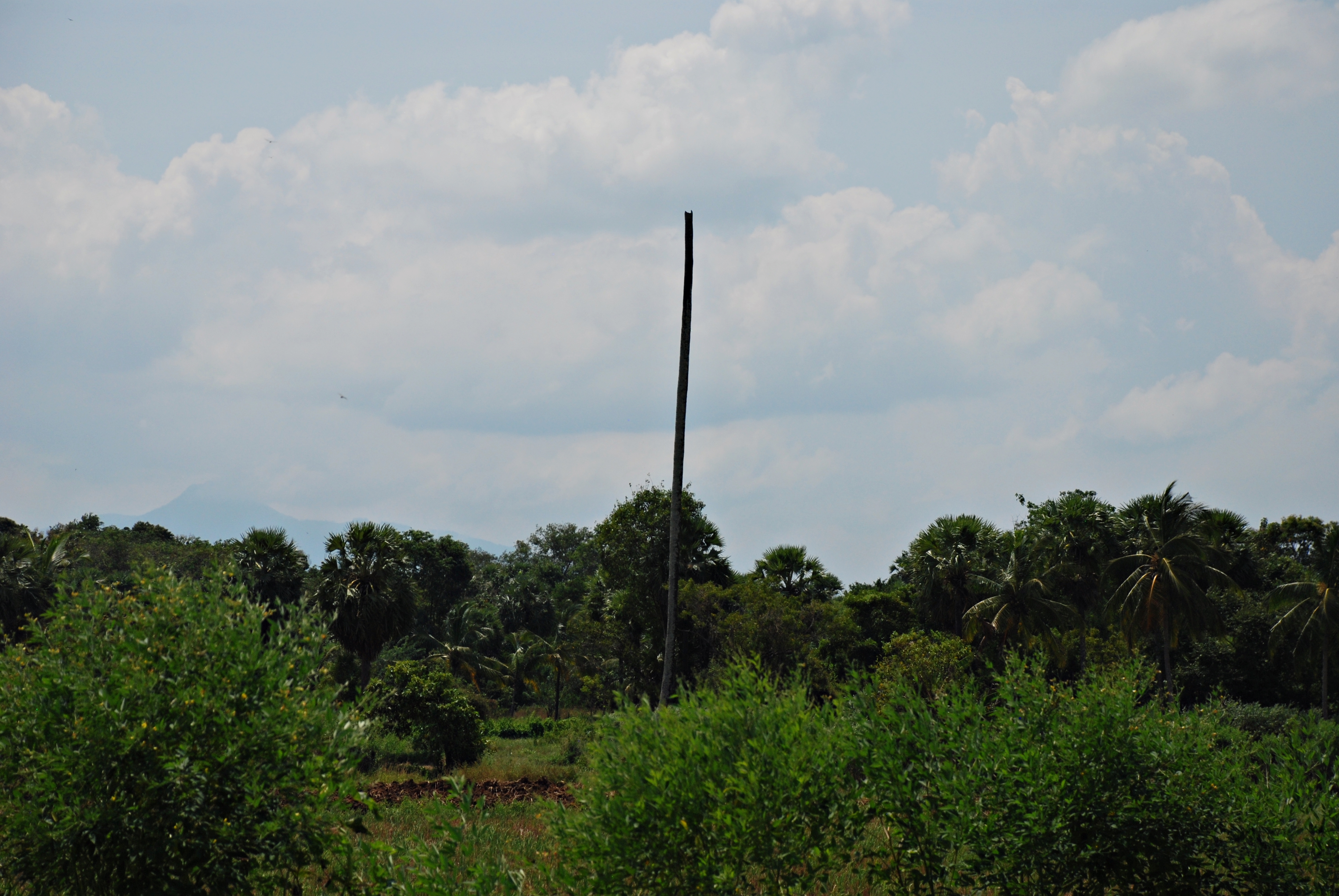
A visit to Thasrak is a fulfilling experience overall, if you have read the novel. The authorities, as always, could have done a much better job at preserving the ambience of a location that is so important to Malayalam. As I left Thasrak, the two images that stuck in my mind were the closed door of the Njattupura and a headless palm tree. They reminded me of the irreparable loss we have suffered as a society – never again would there be a novel like Khasaakkinte Ithihaasam and even more sadly, never again would we have that innocence in our society wherein a Muslim priest makes his student take an oath in the name of a Hindu Goddess or vice versa.

DSC_0198

DSC_0194


Note: Khasakkinte Ithihaasam has been translated into English by OV Vijayan himself and is available under the title “The Legends of Khasak”.

Some days back, I found myself in Santo Domingo, Dominican Republic with a day to spare. This is where Christopher Columbus set foot first when he discovered Americas. The city of Santo Domingo itself was founded by Bartholomew Columbus, his brother. It is the oldest continuously settled European city in the New World and hence has the first Cathedral, Monastery, University etc. As is the case with many old cities, Santo Domingo too has a new face and an old face. If we one were to restrict one’s movements just the new parts of the city, one would have no clue of its wonderful history. The new areas look like any other mid-sized South American / Central American city with its rich and poor neighbourhoods, commercial complexes and hotels. The more interesting area is the old city, known as Zona Colonial (Colonial Zone), which was the original Santo Domingo. This was where I decided to spend my day.

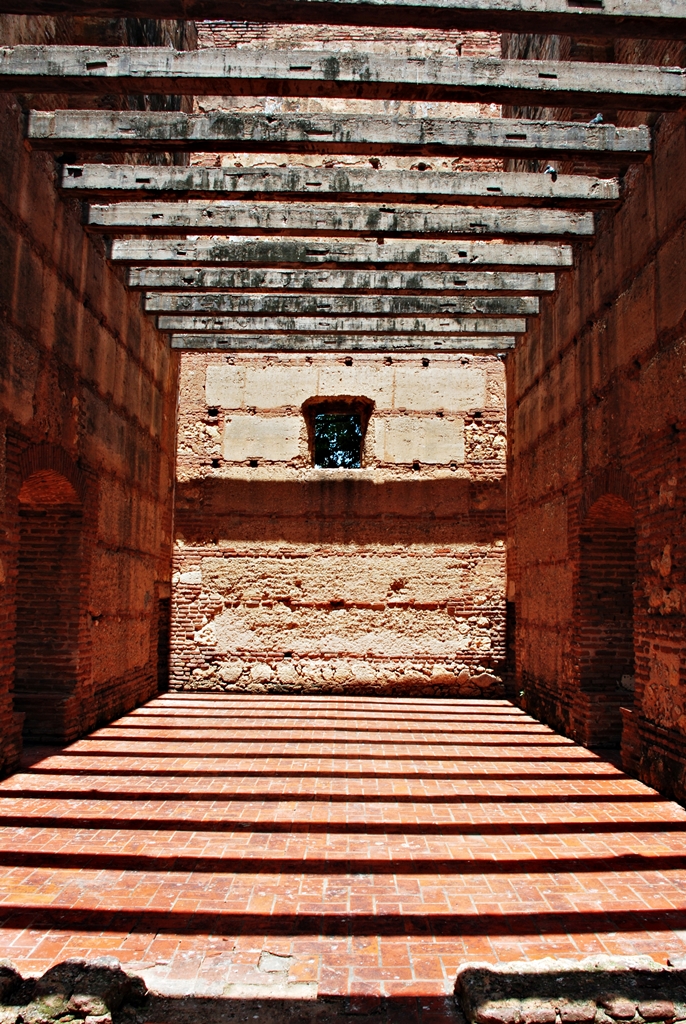
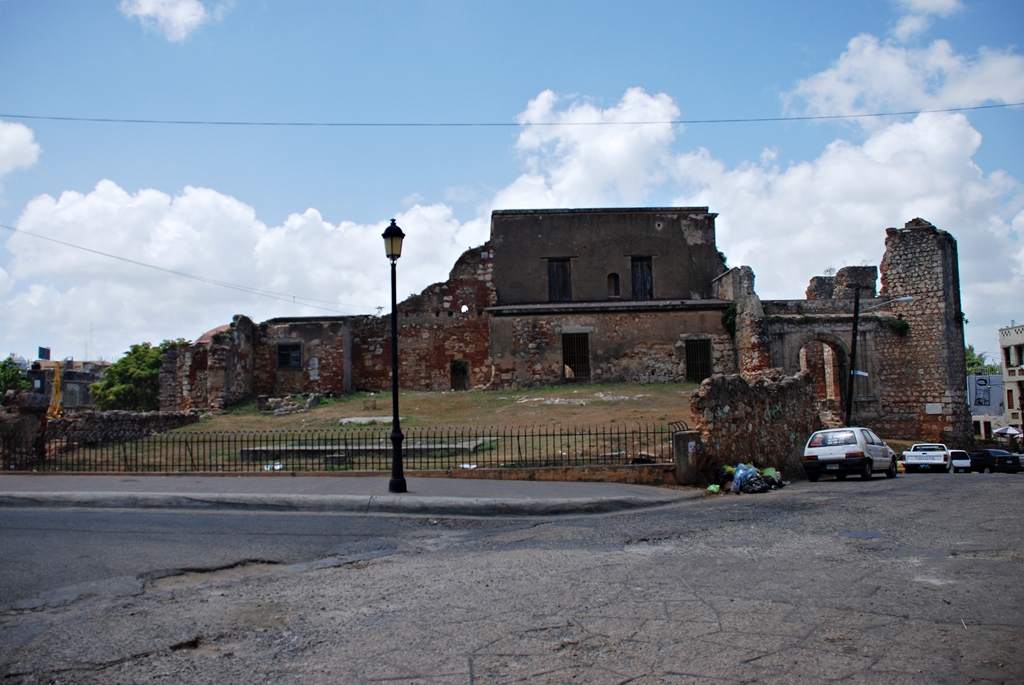
First stop was the ruins of the oldest hospital in America, the Hospital San Nicolás de Bari. There was absolutely no information displayed whatsoever in the premises and later, from Wikipedia, I learnt that this hospital was built in the 16th Century and could accommodate about 70 patients on completion. The ruins are quite beautiful with its red brick construction.

DSC_0216

DSC_0226

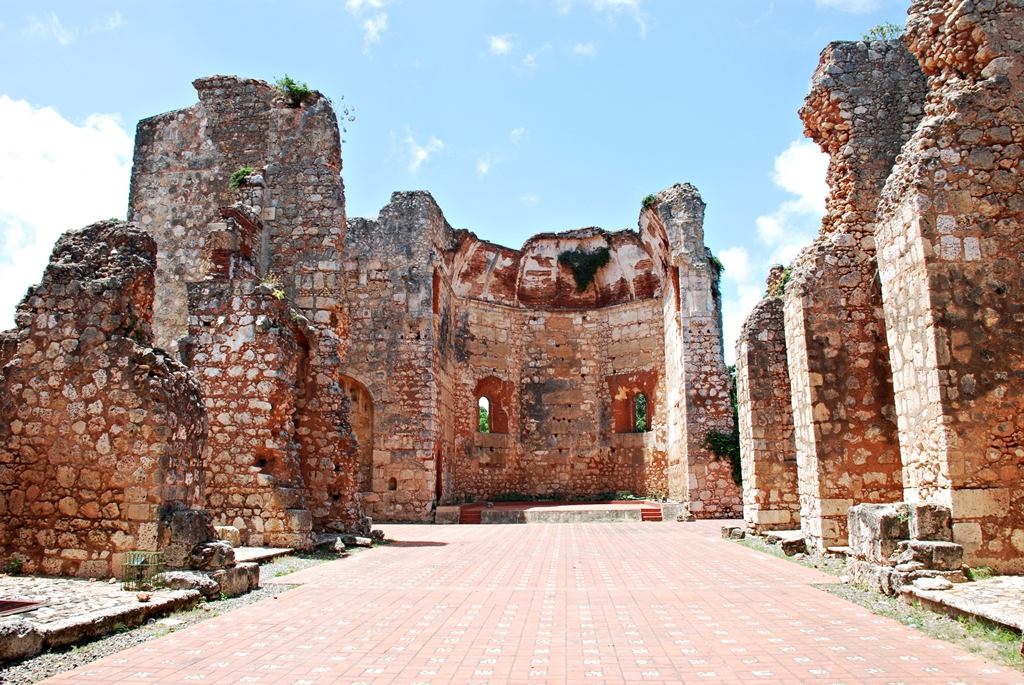
A short walk up the hill from here, are the ruins of the first monastery in America, the Monasterio de San Francisco. Unfortunately, there is no entry into the ruins and I could only see it from outside. This was also built in the 16th Century. Supposedly, the remains of Bartholomew Columbus were discovered here later.

DSC_0236

DSC_0240

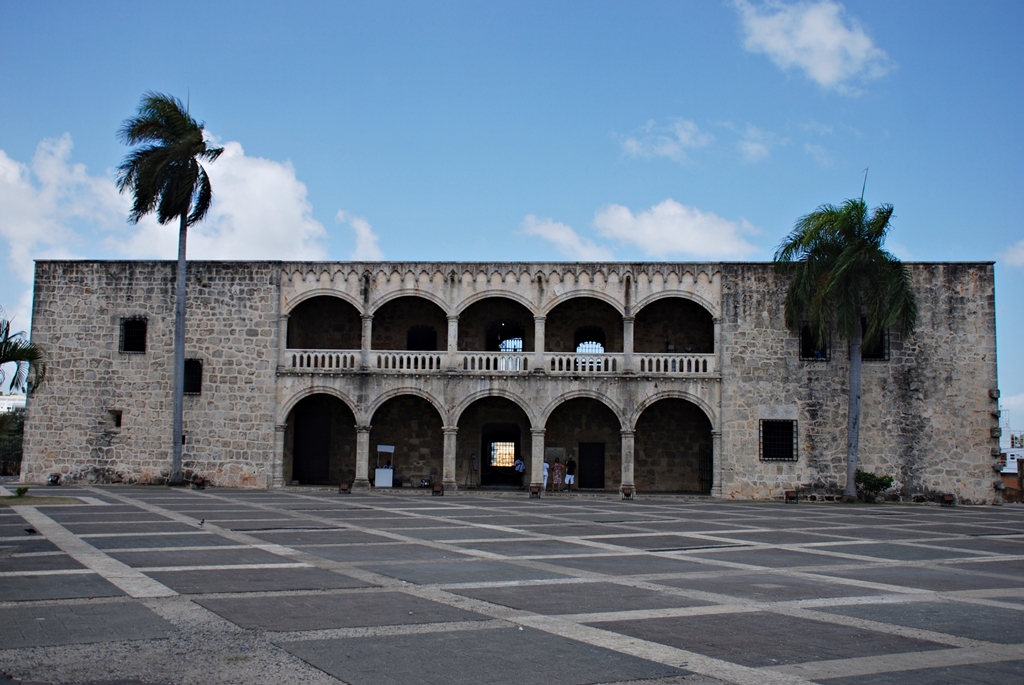
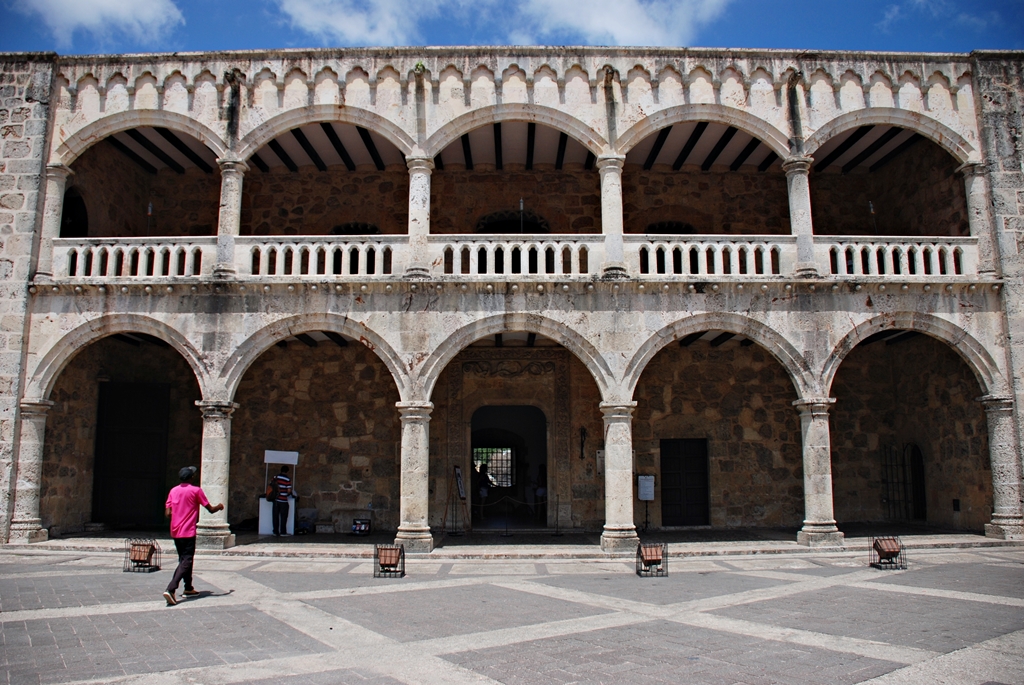
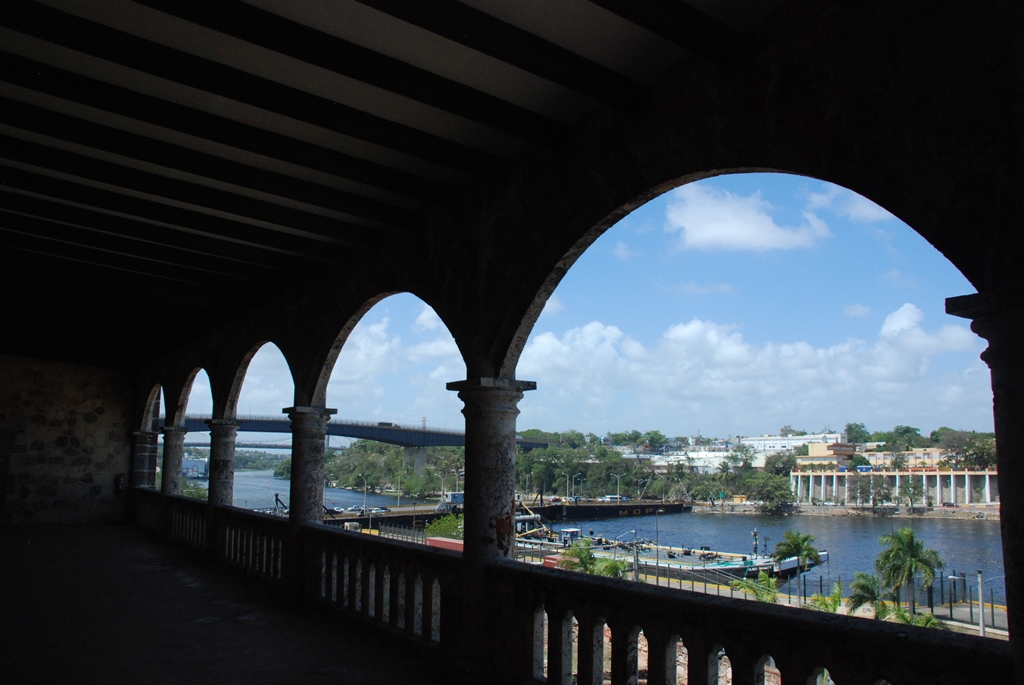
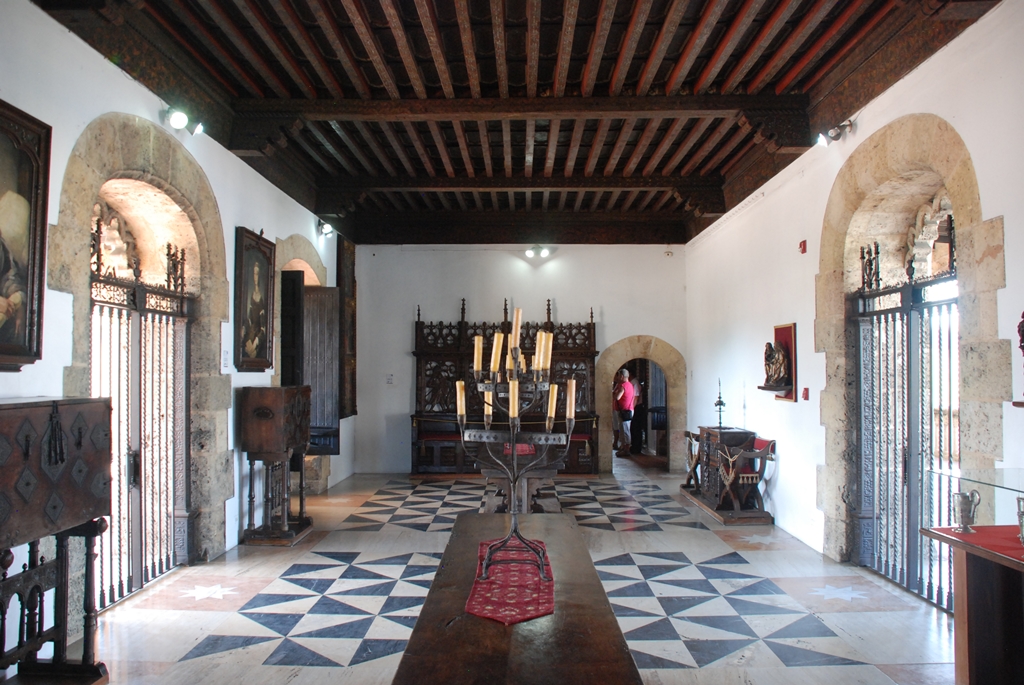
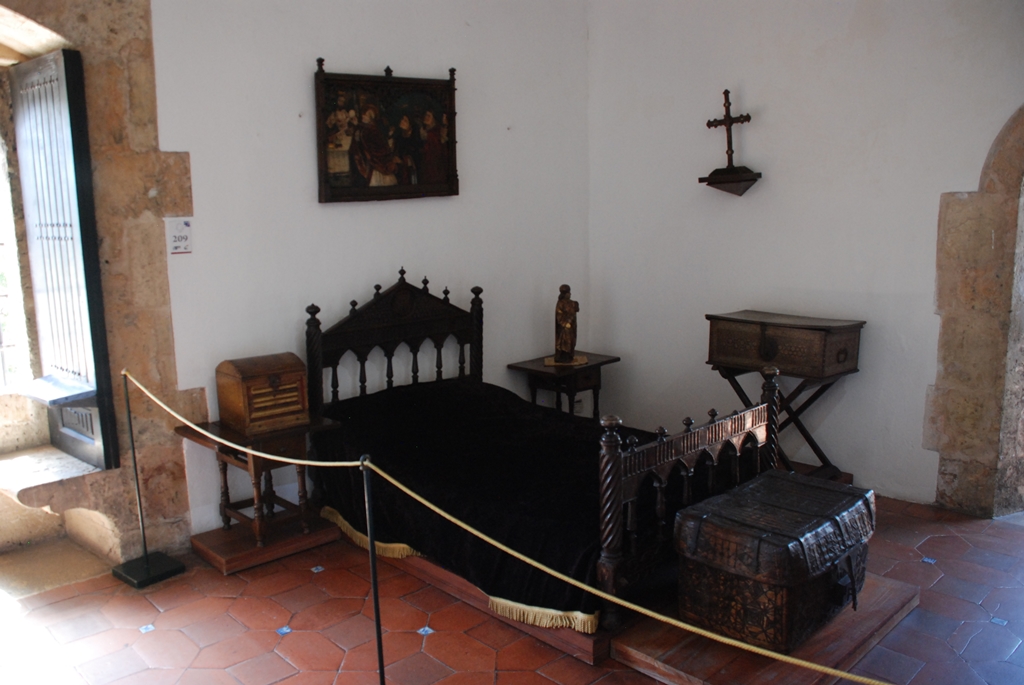
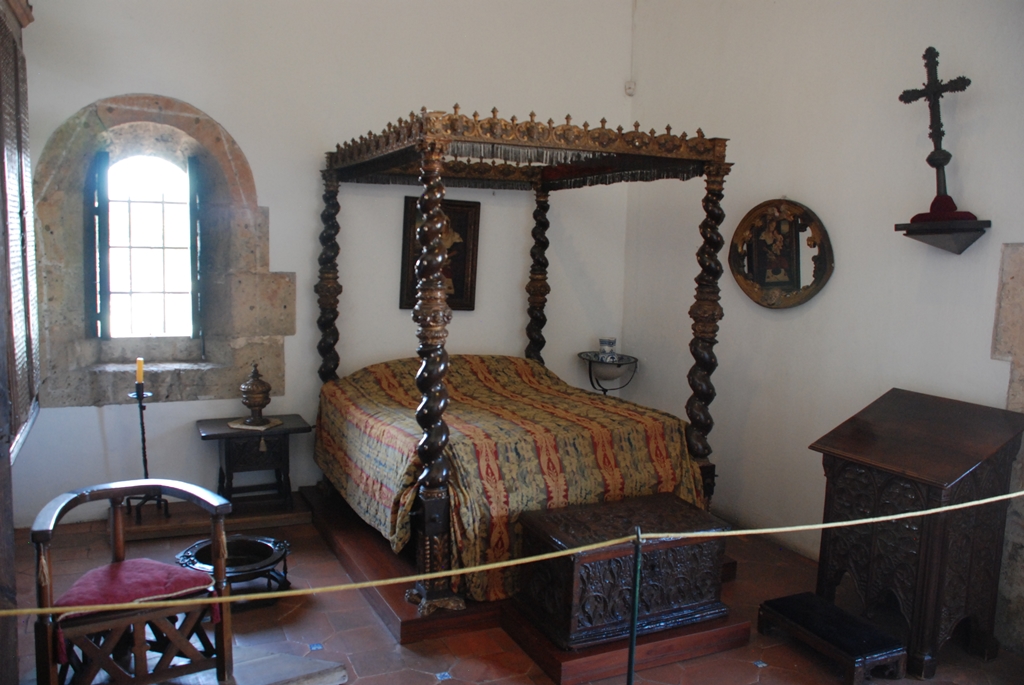
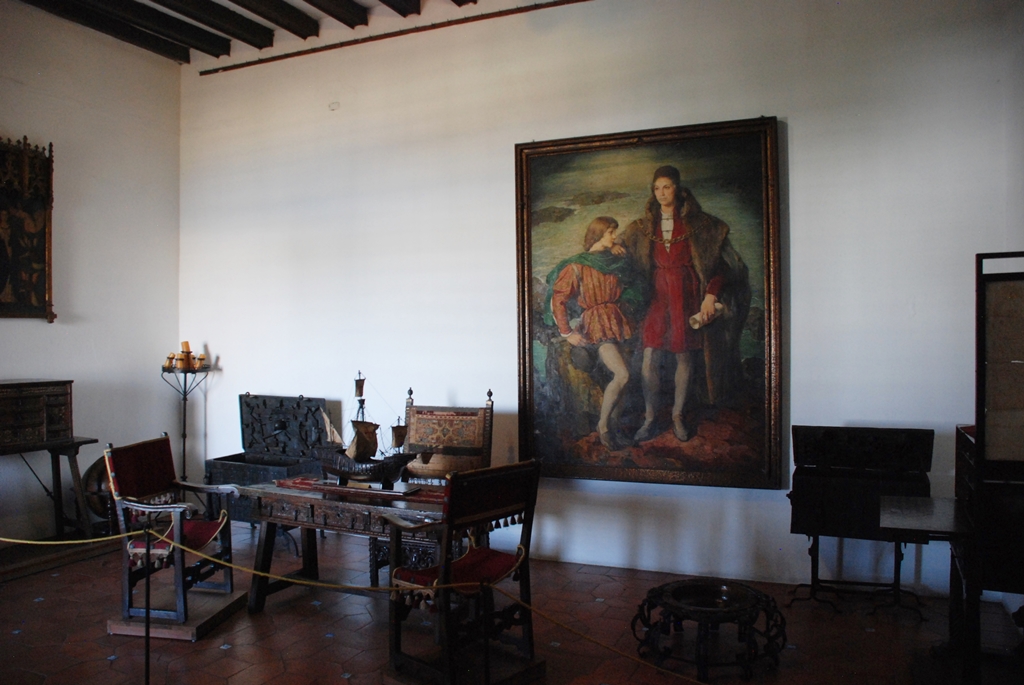
A short walk down the hill is where the Palace of Diego Columbus, son of Christopher Columbus stands. Christopher Columbus had fallen out of favour with the Spanish Crown in 1500 and all his titles and privileges were taken back from him. Diego Columbus tried to win back these favours and was appointed as the Governor of the Indies (as Columbus always maintained that he had actually reached India) in 1509. He set us his base in Santo Domingo and built his residence, the Alcázar de Colón, between 1510 and 1512. The building itself is well maintained and is actually very small. The audio guide kept referring to it as a palace but is just about the size of an old landlord’s house like a naalukettu. There are many articles displayed in the palace but most are replicas.

DSC_0252

DSC_0256

DSC_0295

DSC_0334

Beds of Diego Columbus and his wife Mary of Toledo; it seems in those days royalty slept in a semi-reclined position and not flat on their backs!

DSC_0302

DSC_0301

Sitting room with painting of Christopher Columbus and Diego Columbus

DSC_0306

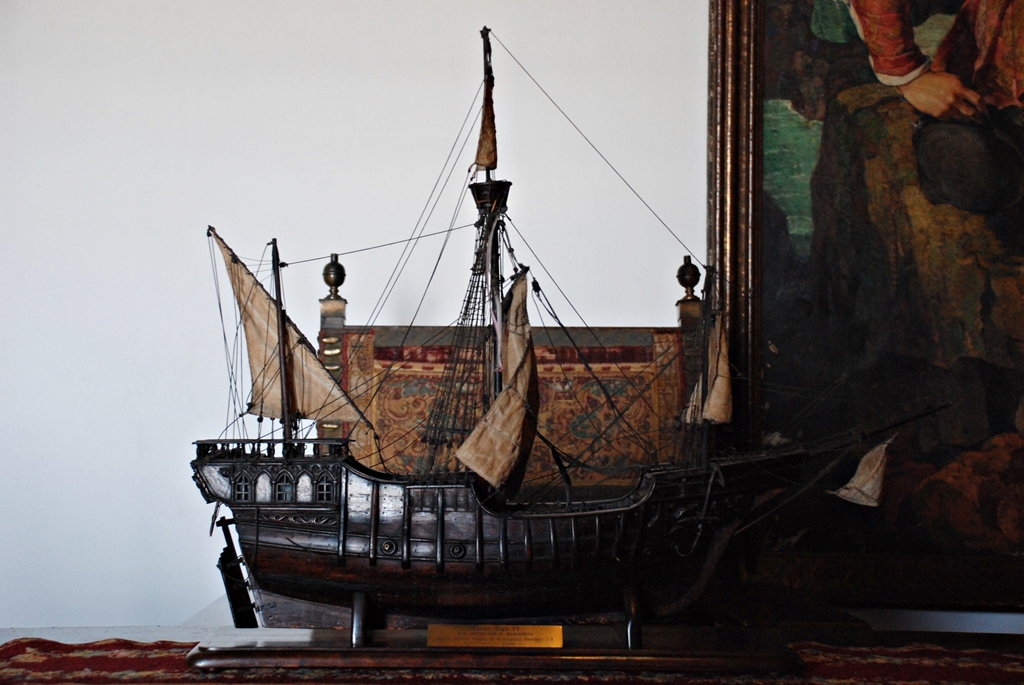
Replica of the ship Santa Maria, the flagship of Columbus’ first journey to the Americas

DSC_0316

Portraits of the Catholic Monarchs who sponsored Columbus’ exploratory journey with the hope of getting wealth from prospective colonies

DSC_0320

DSC_0318

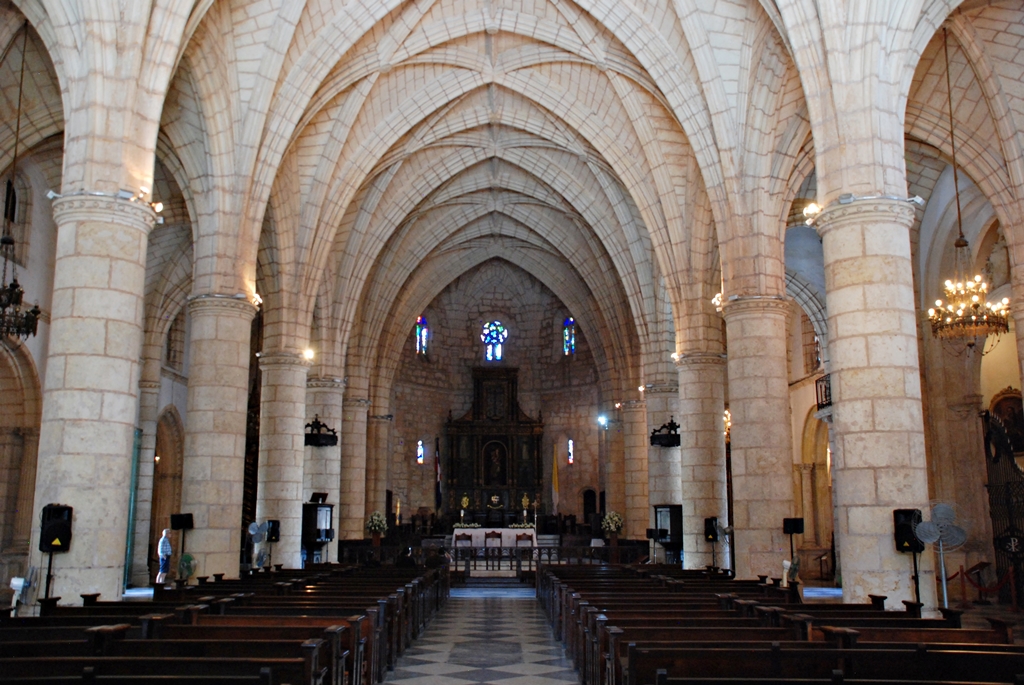
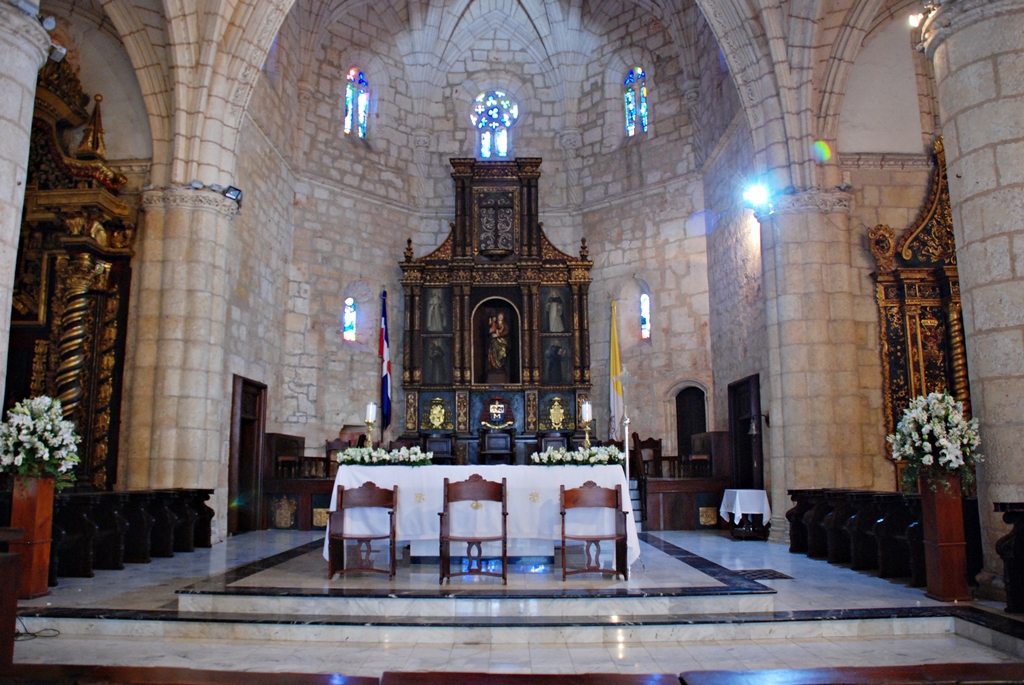
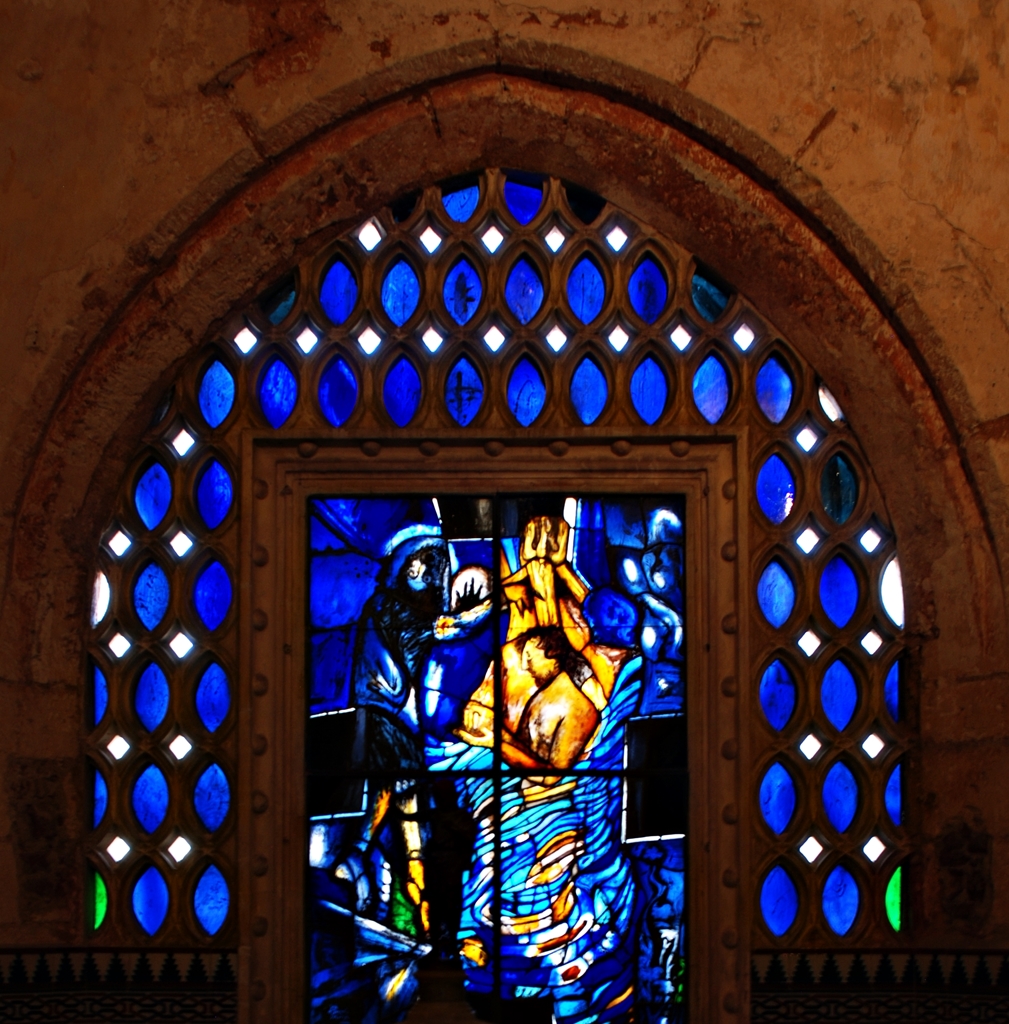
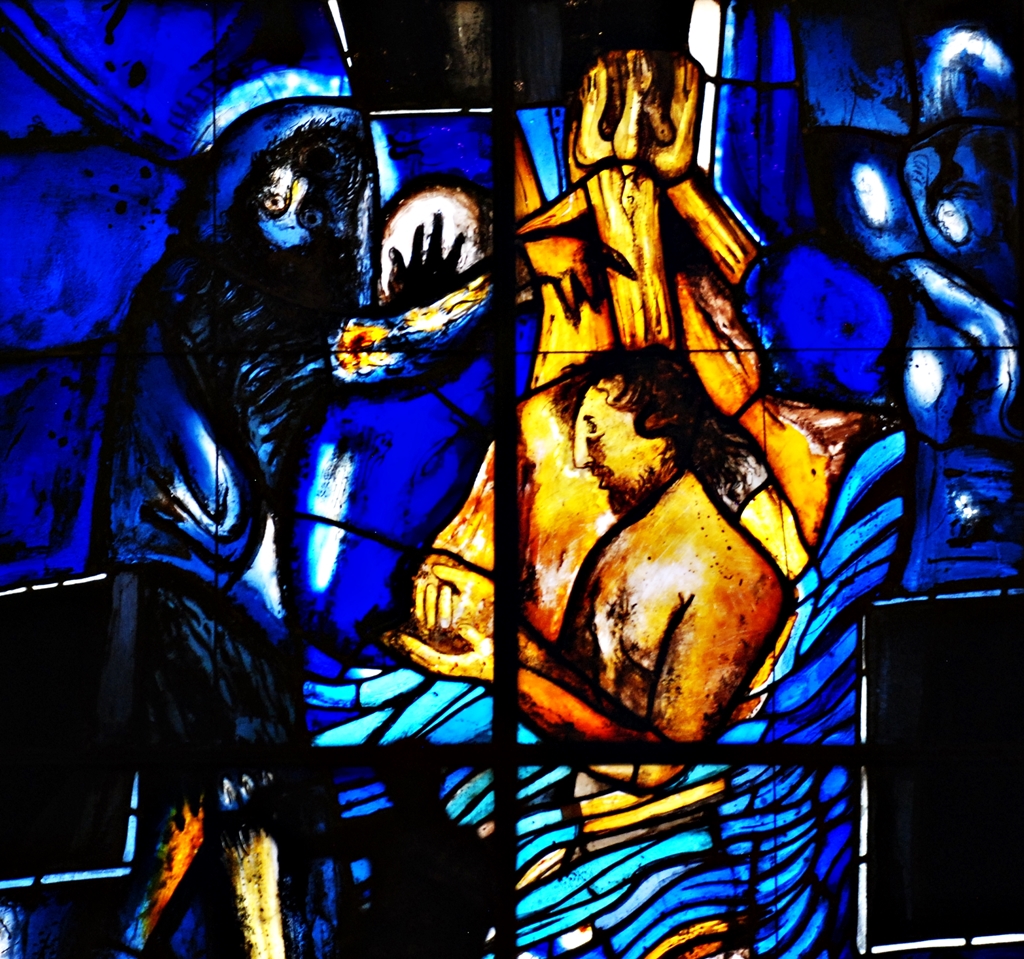
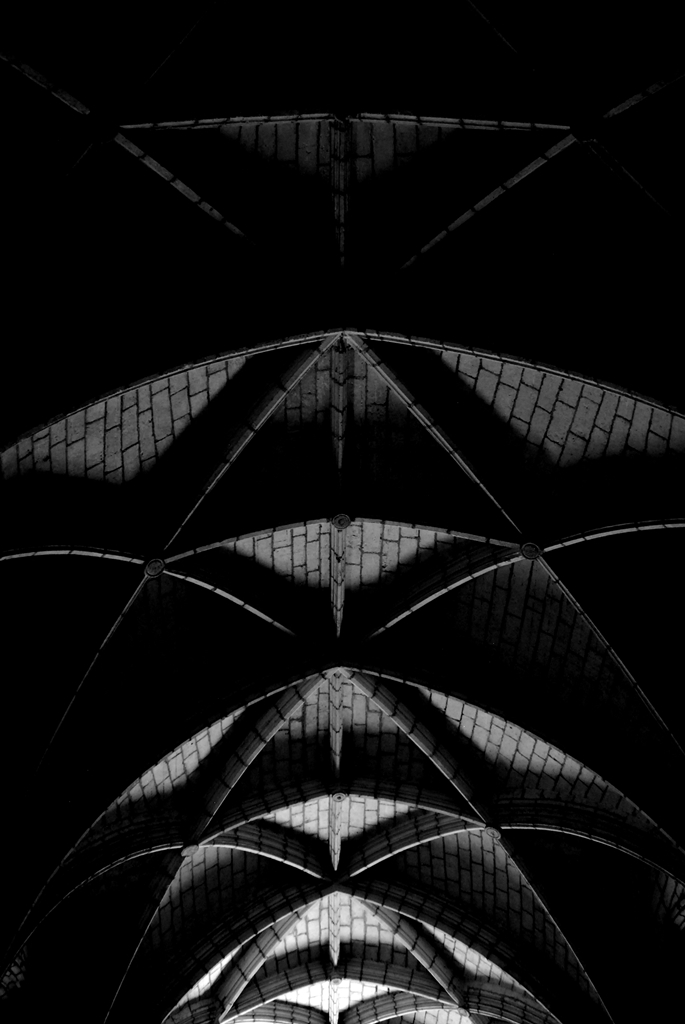
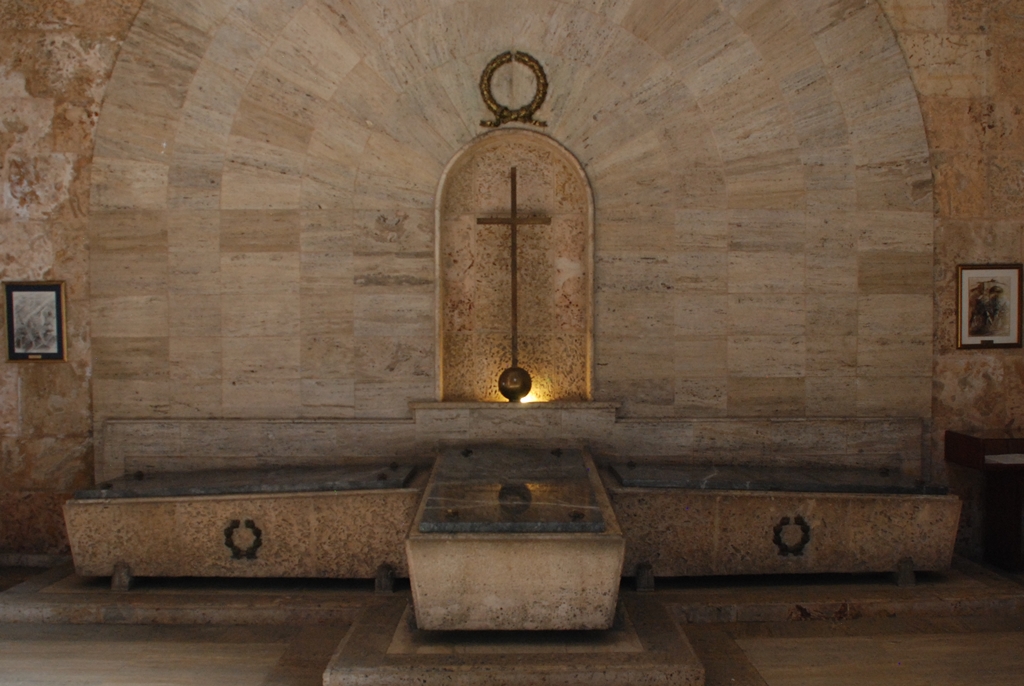
The Catedral Primada de America is the first Cathedral in America and as most of the colonial buildings in Santo Domingo, was built in the 16th Century. The construction was started by Diego Columbus but was finished by its first bishop, Alejandro Geraldini. The ashes of both Christopher and Diego Columbus were buried under the crypt of this Cathedral. Later, Columbus’ remains were moved to a lighthouse built in his memory. When visiting Seville, I had heard that Columbus’ remains were finally brought to Seville and cremated in the Seville Cathedral. The cathedral is quite impressive and has many chapels inside with some beautiful stained glass and wonderful Gothic arches. Francis Drake – pirate to the Spanish and a knighted hero to the English – used the Cathedral as his quarters and ransacked the place during this campaign.

DSC_0432

DSC_0410

DSC_0386

DSC_0394

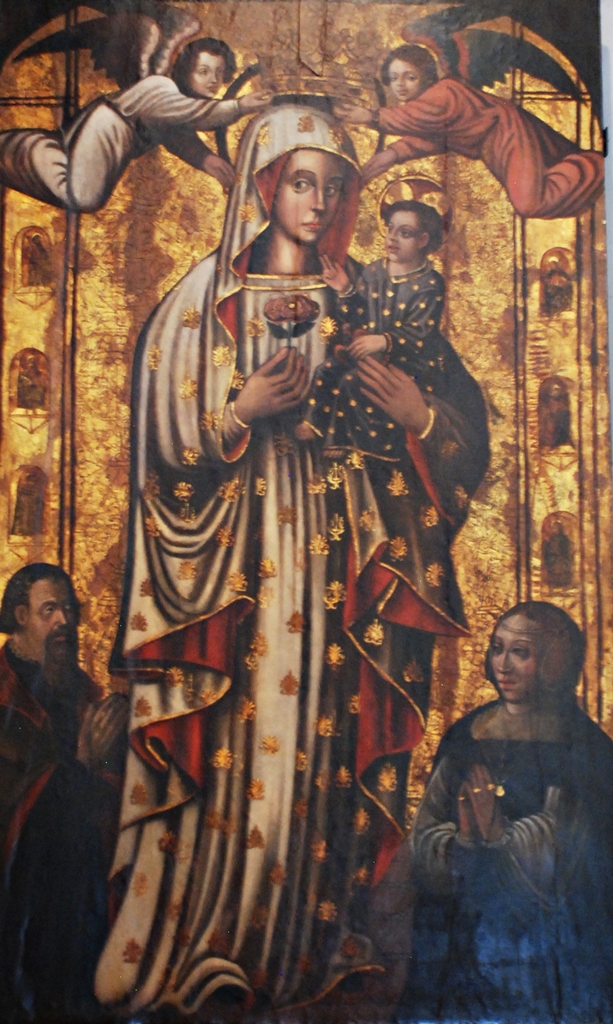
Oldest European painting in the country, which was rescued miraculously from a ship wreck

DSC_0450

There was a small group of tourists in the Cathedral and once they left, it was quiet empty and peaceful and I spent some time sitting there and looking up at the majestic arches and the altar. As I looked the play of light, bright light coming from the outside and becoming dimmer and dimmer as it neared the altar, I was reminded of an encounter I had with a passionate Christian many years ago. He wanted to me become a Christian and come into the “light”. I was amused by the thought that light was actually receding as it reached the altar…..

DSC_0412

In the Colonial Zone, the country has a memorial for its honoured citizens called the National Pantheon of the Dominical Republic. This was on old church and they still have service there once a month. A guide pointed out some graves but I could not remember any names as I was not very familiar with the history of the country. What impressed me was that he mentioned some of the people were honoured because they had worked hard to bring education to the masses. If a country respects such people, it surely is in the right path. As can be expected, the Pantheon also has an eternal flame in the memory of the Unknown Soldier. This seems to be a universal practice across the world.

DSC_0510

DSC_0496

DSC_0493

DSC_0481

Fort Ozama stands on the banks of the river Ozama and is the oldest fort in the country. My guide insisted there is a lot of history there but I do not know whether it was his difficulty to explain it in English or my inability to understand what he said, it didn’t really sound too deep. The fort was used as prison during the times of Rafael Trujillo, the cruel dictator who ruled Dominican Republic from 1930 and 1961. Incidentally, Trujillo had renamed Santo Domingo as Ciudad Trujillo, but after his death, the name Santo Domingo made a comeback. Trujillo is rumoured to have been responsible the death of about 50,000 people. He made several modifications to the fort as well. The fort itself is reasonably well preserved and looked quite a functional one with its various turrets and rooms. There is an old naval school building also on the grounds but that was closed.

DSC_0568

DSC_0525

DSC_0527

DSC_0563

With the fort, my tour of the Colonial Zone was finished. I spent some time wandering around the streets. There were many nicely painted houses and the whole ambience reminded me of the Jew Town in Mattancherry, Kochi.

DSC_0574

DSC_0577

Many of the electric poles had street art painted on them and that I thought that was a very nice idea!

Street Art_SD

I had been to Mexico City in May but had forgotten to write about an interesting opportunity I had, to look up their history. Recently, I came across my notes and so, this is a delayed post from the visit on 22nd May, 2014.

I had heard about some pyramids near Mexico City, in a place called Teotihuacan and that had intrigued me quite a lot, especially as I had thought that pyramids were to be found only in Egypt. There are operators that run daily tours to Teotihuacan and the site itself is only an hour’s drive from the city. The tour also included a couple more sites en route and the first stop was at the “Plaza of the Three Cultures” (Plaza de las Tres Culturas).

This plaza is in the city itself and has three cultures – Aztec, Spanish and the modern Mexican – represented there by way of buildings. You can see the ruins of an Aztec, a Franciscan church built in the early seventeenth century and a modern apartment complex – the last being an eye sore.

DSC_0005

DSC_0020

DSC_0026

The next stop was the Basilica of our Lady of Guadalupe or the Virgin of Guadalupe. This Basilica is a very important shrine for Catholics and has an interesting story behind it. On December 9, 1531 a peasant of Aztec origin, by name of Juan Diego, was walking on a hill by name of Tepeyac. He saw a maiden there, who spoke to him in this native Aztec language and asked for a church to be built for her at that site. From the conversation, Jan Diego understood that this was Virgin Mary herself and rushed to the Archbishop of Mexico City to convey the news. The Archbishop was sceptical and asked Juan Diego to return to the spot and collect evidence from the lady about her identity. Juan Diego went back to Tepeyac Hill and conveyed this to the lady; she then asked him to gather some flowers from the top of the hill. Normally, the hill would have been barren in December but to his surprise, Juan Diego found some roses there and more surprising was that those roses were not the variety that grew in Mexico but those that were found in Castile in Spain. The lady arranged the flowers in Juan Diego’s cloak and he took it back to the Archbishop and when he opened the cloak there, the roses fell out and on the fabric, the image of the Virgin could be seen. This was proof enough for the Archbishop and a church was built, in due course of time. The original cloak is still preserved in the Basilica. It was interesting to me that such stories seem to be common across the world. Many are the stories I have heard in India about how one god or the other appeared to some king or a pious individual and asked for a temple to be built. In any case, this is one of the most sacred sites for Catholics in Mexico and Juan Diego was canonized in 2002.

DSC_0075

DSC_0092

Mexico City was essentially a large lake that the Spanish dried out and they constructed buildings on the lake bed. However, they did not fully appreciate the issue of building on soil which is not very firm and so many of the buildings from the Spanish colonial era are sinking. The original Basilica was also sinking and a new and far more modern version was built between 1974 and 1976 with stronger foundations. This building is quite interesting and does not resemble a typical church and looks from the outside, like a museum. All the glass work on the building has been made by Indians and the light inside is very strange and the overall feel was very, very different from the other churches I have been to.

DSC_0077

DSC_0100

DSC_0096

Before we reached the pyramids themselves, there was the customary stop at some tourist traps. There, we were shown how important the Maguey variety of cactus was, to the indigenous people. A short grows from the centre of the cactus and when this is cut out, a bowl shaped area of formed and every day, each cactus produces around 4 litres of juice for six months in a year. This juice, when fermented, becomes an alcoholic drink. I tasted it and found it quite like toddy, which we get from coconut trees. At the tips of the leaves of the cactus, you can find a very sharp and sturdy black coloured needle and the needled has a kind of string attached to it and can be used to sew clothes together. From the inside of the leaf, a very thin layer can be removed and it can be used like paper or papyrus. Overall, the Maguey cactus is a very useful tree and almost all of it can be used, much like the coconut tree.

DSC_0114

DSC_0117

DSC_0120

Teotihuacan city is estimated to have been built in BC 100 and it lasted till AD 550, when it was destroyed and burnt down. The major monuments were under constant construction till AD 250. It pre-dated the Aztecs and in its prime, was supposedly the most important city in pre-Colombian Americas. The major sights today are the Pyramid of the Sun, Pyramid of the Moon, Avenue of the Dead, The Citadel and the Temple of the Plumed Serpent. These pyramids are built on a geological fault line running from San Francisco to Guatemala and since the architects wanted the buildings to last for eternity (as they were built for the gods) the pyramid structure was adopted and it is earthquake tolerant.

The Pyramid of the Sun is the largest structure in Teotihuacan and faces west. Unlike the Egyptian pyramids, the pyramids in Mexico are temples, not tombs. The Pyramid of the Sun represents the god of life and has areas that resemble eyes, nose etc. of a face. It was not clear what the pyramid was originally called this name was given by the Aztecs, that came later.

DSC_0155

This Pyramid is about 246 feet high and is the third tallest pyramid in the world but is only half as tall as the Great Pyramid in Giza. The steps were a bit steep and each step was quite big and so the climb was a fairly rigorous affair. At the top, there was an altar but I could not find any trace now. One can see a major portion of the site from the top with views of the buildings that existed there, pyramid of the Moon etc.

DSC_0166

DSC_0170

DSC_0189

The Pyramid of the Moon is dedicated to the Great Goddess of Teotihuacan but I could not find much more details about it from the guide. It was interesting to me that there was a concept of a Goddess but all I could find was some information from the internet, which I am not reproducing here. The Pyramid of the Moon was quite beautiful and the walk leading up to this pyramid is called the Avenue of the Dead. I couldn’t get any information as to why it is called the Avenue of the Dead – it was lined with small pyramids with square platforms at the top on either side.

DSC_0185

DSC_0209

DSC_0218

DSC_0226

On one building on the Avenue of the Dead, is a mural depicting a Puma with large claws. Supposedly, this was part of what was called The puma Complex, but further details were not available.

DSC_0258

Next stop was the Citadel, which was the nerve centre of life in Teotihuacan. In those days, there was no currency and trade was completely based on barter system. This raised the issue of how to fix the relative value of commodities being bought and sold and this lead to many quarrels. To settle these quarrels, judges were appointed, who were specialised in the important commodities. These judges could not marry and thus were expected to be corruption free. They sat atop some platforms on pyramid like structures and these structures had no roofs to enable easy connectivity for the judges with the gods.

DSC_0327

DSC_0329

Just after the Citadel, is the most beautiful structure in Teotihuacan – the Temple of the Plumed Serpent. This is partly ruined but you can still make out some very beautiful sculptures on the side of the pyramid. Some of these looked quite exquisite and I spent a long time looking at those figures.

DSC_0303

DSC_0305

DSC_0313

DSC_0315

DSC_0316

These pyramids are quite majestic and beautiful and these are perhaps the first temples I have seen which have no concept of entering into the structure itself. You just walked on the structure and the altar was on top of it. It seems the ancient people believed that time had a cycle of 52 years and the gods needed to remain strong after each 52-year cycle for the universe to remain intact. Hence, each ruler build a structure over an existing pyramid after a 52-year cycle, thus completely cutting off any access to the earlier structure and this is how pyramids grew in size as well. The Pyramid of the Moon had at least six such renovations.

Somehow I felt that I could not find out enough information about Teotihuacan and that there is much more to be learnt here. So, may be, I will be back one day!


During a recent trip to Mexico City in May 2014, I found myself with a couple of days to spare and I set off to the Coyoacan neighbourhood of Mexico City to have a look at the Frida Kahlo Museum, otherwise known as the Blue House. Another interesting spot in the area is the house where Leon Trotsky spent his last days and I planned to visit that as well. I had read a bit about Frida Kahlo and was curious to see her house and works and so preferred that over other attractions like the National Gallery.

The house looked plain enough from outside though it was apparent how it got its name.

DSC_0594


Thankfully, they allowed photography inside the house and had an audio guide as well. The moment I set inside, I felt that I am at a place with a different feel to it. The colours were bright and it felt as if you yourself were in the frame of a painting! I do not know whether it was because of the reading I had done on Frida, which made me understand her as a very intense person, I could feel a strange energy in the house and even in the grounds.

DSC_0374

DSC_0379

DSC_0582


This was where she was born, lived most of her life and died. She had a bad accident when she was quite young and that affected her mobility in her later life and she was often sick as well. She married the famous artist Diego Rivera and they had a tempestuous relationship. Each had various affairs on the side and separated once but remarried after a short while. The house had actually been bought by Diego Rivera to help Frida’s father tide over some financial difficulties but the house is quintessentially Frida. After she died,  a grief stricken Diego decided to make it a museum for her and even though he himself was a famous and important artist in his own right, the place has been maintained as a memorial to Frida Kahlo.

As one set foot inside the house, the first sight is a beautiful fireplace designed by Diego Rivera. Both Frida and Diego had a deep interest in the folk art of Mexico and the design of the fireplace brings out this aspect. The flooring was of a bright yellow, in keeping with the rather bright blue outside. I was wondering how it would be to be surrounded by such bright colours all the time, especially when I contrasted with the pastel shades that I am used to at home.

DSC_0388

Various finished and semi-finished paintings were displayed in the room. Frida was always deeply unhappy about her inability to be a mother and that often affected her works. For instance, the wife of the Mexican President commissioned her to do a painting and she did a still life. However, it was done on a specially made frame the shape of a womb and the fruits were also representative of female genitalia. The President’s wife reportedly refused to pay for the painting!

DSC_0488


There is another unfinished work titled “Frida and the Cesarean”, which also depicts the deep frustration she had on this matter.

DSC_0397

Frida’s father was a photographer and was a big influence in her life. There is a painting in the front room itself.

DSC_0389


Both Frida and Diego were taken up by Marxism and invited Trotsky to Mexico. Trotsky and his wife stayed with them at the Blue House initially and the later on shifted to another house nearby. The photograph below shows Trotsky with Frida and Diego.

DSC_0506


After Trotsky’s death, Frida and Dieg became Stalin’s followers. There were a couple of works that showed her involvement with Marxism.

DSC_0405                                                                                     “Marxism will bring health to the sick”


DSC_0418                                                                                                                    “Stalin and Frida”

Frida was emotionally quite high strung and was physically unwell as well, many a time. Yet she had a strong will and fought to overcome her adversities. Many of the luminaries of the time were frequent guests of Frida and Diego and they had affairs with some of them as well. Diego’s affairs were all very public whereas Frida was more discreet. I read that Frida was always tormented by Diego’s unfaithful nature but I was a bit amused by that as by all accounts, she herself had enough affairs on the side (supposedly she even had one with Trotsky) as well!

There were many finished and unfinished paintings and sketches all around the house and even the unfinished works held some sort of attraction for me. Overall, I felt strangely drawn to some energy that this woman had left in the house and her works even after sixty years of her death.

DSC_0470                                                                                                                   “Long Live Life”


DSC_0475                                                                                                              “Colour Palette”


DSC_0458                                                                                                          “Pedregal Landscape”


DSC_0468                                                                                                                  “The Brick Kilns”


DSC_0424                                                                                       “Portrait of Arija Muray” (Unfinished)


DSC_0455                                                                                                                           “Ruin”


DSC_0449                                                                                                                              “Head”

The house is full of bright colours and beautiful objects. There were many traditional utensils and in the kitchen, they used traditional methods for cooking.

DSC_0544

DSC_0534

DSC_0547


Frida’s studio is on the first floor and I heard in the audio guide that Frida was so unwell many a day that she had to be carried up. The studio itself is brightly lit with sunlight streaming in from all sides.

DSC_0552

DSC_0554


Her bedroom is filled with many objects and there is a small ante-chamber that had a day-bed.

DSC_0557

DSC_0571


Inside the bed room is an urn designed in the traditional Mexican tribal style. This contains the ashes of Frida and to me it somehow was a bit strange and unsettling to think that her ashes were there inside that urn.

DSC_0569

There were a few of Diego Rivera’s works also in the museum.

DSC_0527                                                                                                                “The Porter”

DSC_0510                                                                                                                  “Landscape”

DSC_0514                                                                                             “Landscape with Locomotive”

DSC_0519                                                                                                      “The Seated Woman”

DSC_0523                                                                                                           “The Alarm Clock”

I stepped out once again in to the garden for a final look around and spent a few minutes contemplating on the life of this very gifted artist and wondered whether she would have been happy in her life. Intense people are often quite unhappy when they are down and reasonably high when they are feeling happy. In the house is a photograph of Frida Kahlo and I felt it captures her intensity very well.

DSC_0532


Perhaps, these extremes are reflected in her work and in the house itself!

DSC_0581

DSC_0585

DSC_0574

With these thoughts, I bid adieu to the Blue House and walked to the Trotsky Museum, which is quite close to the Frida Kahlo Museum.

If Frida’s house is painted blue, Trotsky’s is all painted red from the outside.

DSC_0691

There is a small but nice garden in the house and the house itself is quite small and very modest. One would never expect that a man like Leon Trotsky, who was a key actor in an event that changed the course of the world – the Russian Revolution – would have lived here.

DSC_0686

DSC_0675


In 1929, Trotsky had a fall-out with Stalin and had to leave Russia. Stalin, was of course, in a drive to remove that could be a potential threat to him and his hold on power. Trotsky and his wife lived in different parts of Europe till 1937 and they went to Mexico on the invitation of Frida Kahlo and Diego Rivera. They even stayed with them will 1939 and then moved to another house in 1939. In May 1940, an attempt was made on Trotsky’s life, but he survived. The bullet holes from that assassination attempt can be seen on the walls even today. However, a second and successful attempt was made on August 20, 1940 and Trotsky was killed while he sat working on his desk.

DSC_0604                                                                                          Photo of Trotsky reading a book

DSC_0639                                                                                                               Dining room

DSC_0625                                                                                                                           Kitchen

DSC_0654                                                                       Trotsky was working on this desk when he was killed

DSC_0638                                                                                                                    Office

DSC_0665                                                                             Bullet marks from the first assassination attempt

DSC_0667                                                                                                            Trotsky’s clothes

DSC_0681                                            Trotsky and his wife (who passed away in 1982) are buried in the grounds of the house.


In these very humble surroundings, lived a man who dedicated his life to the uplift of the working classes. He was the founder of the Red Guard and I thought about what I had read in John Reed’s “Ten days that shook the world”. In those days when the revolution was actually carried out, two men stood out as the key leaders who made a difference. Without them, the Bolshevik Revolution would definitely have failed. They were Lenin and Trotsky. It was evident that Trotsky had the same impact as Lenin and it must have been true because the book was written in 1919, well before any propaganda regime took over. Stalin is mentioned only twice in the book (and one is just in a list of members in some committee) whereas Trotsky is a presence throughout. Sure enough, Stalin banned the book and any mention of Trotsky soon became anathema in Soviet Russia.

There is a large painting just at the entrance of the museum and it depicts a meeting as part of the VIII Congress of the Soviets of Russia that was held in December, 1920. Lenin and Stalin are both present whereas Trotsky is absent, quite curious as Trotsky would definitely have been present, given his stature in the party. However, a closer look shows an empty chair with a green cap on it – just the one that Trotsky used to wear!

DSC_0688

To me, this painting captured all that went wrong with a noble Revolution. Ultimately, man is greedy and power corrupts; even Stalin, who was a participant in the Revolution himself, was not above it. How right was George Orwell when he wrote in “Animal Farm” – “All animals are equal; bust some animals are more equal than others”.