3 June 2012
As my business tour extended over a couple of weekends, I was searching for ideas on places to go near Geneva, when a colleague suggested Chamonix and a close look at the Mont Blanc peak in French Alps. I looked it up on the web and found the place interesting as there was the easy option available of seeing the Alps at close range! So, off I set off on a coach from Geneva to Chamonix on a Sunday morning, a journey of about 90 minutes. Within 20 minutes of setting off from the bus station, we crossed into France. I was thinking that this border must have seen a lot of action during World War II with prisoners escaping from France and other countries trying to get into neutral Switzerland. With the SCHENGEN visa norms, the bus did not even stop at the border crossing.
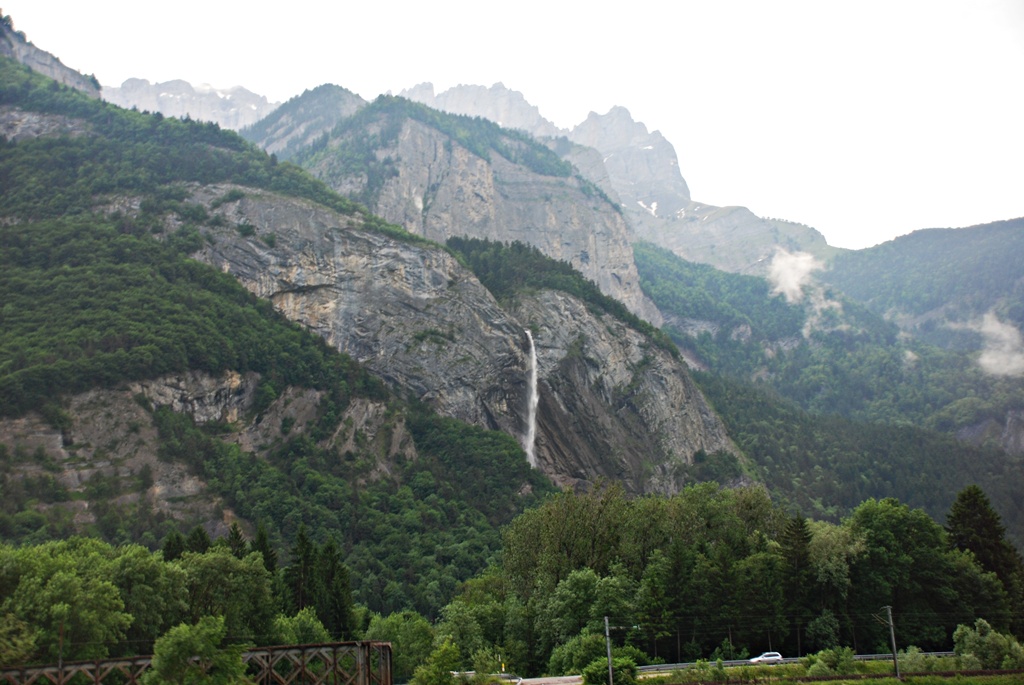
The road itself was quite scenic and we passed some nice looking farms and soon started getting glimpses of the mountains.
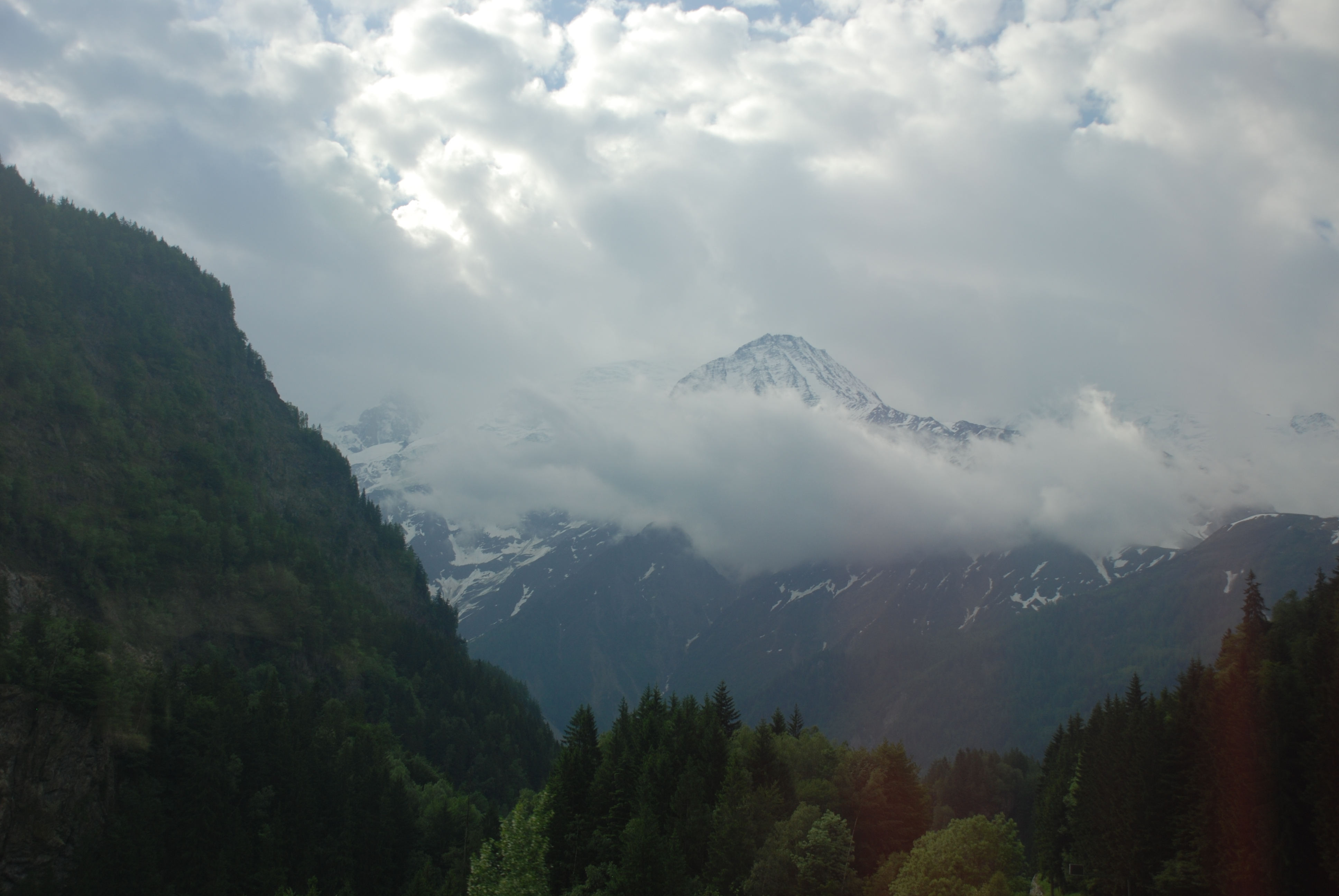
The plan was to get to Chamonix and then take a cable car upto the top of a peak called the Aiguille du Midi, which is at a height of 3842 metres. The cable car was built in 1955 and at that time, was the highest cable car (or Téléphérique as the French call it) in the world. The ride is completed in two sections – first to an interim point and then on to Aiguille du Midi; the second section has no support pillars in between.
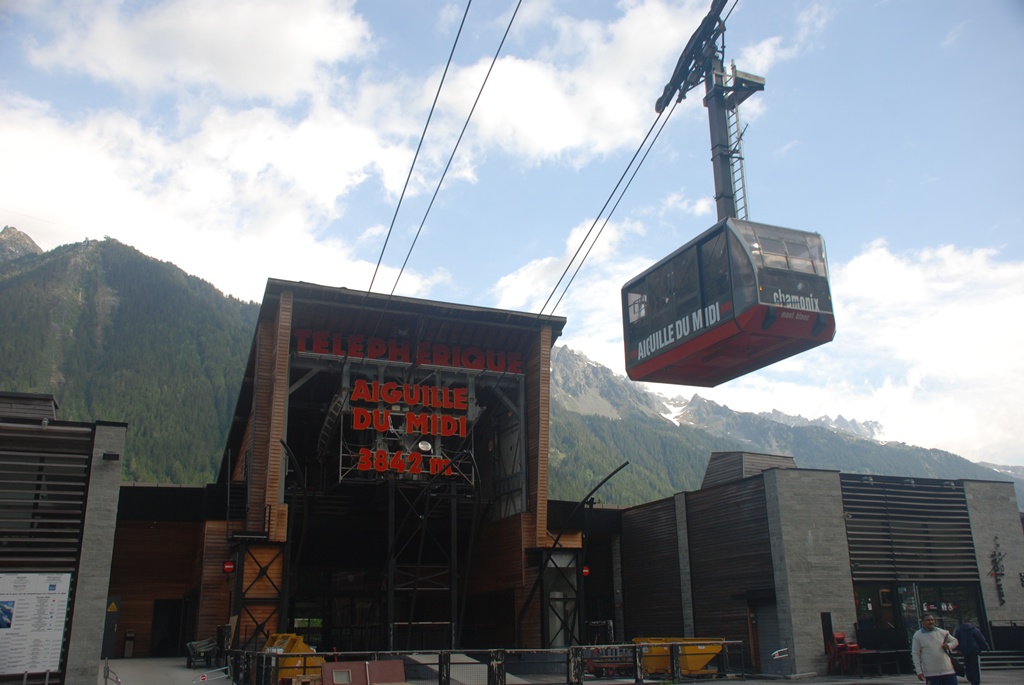
There were good many tourists that day and we were a bit squeezed in the cable car. As soon as we left the ground, fantastic views started opening up and cameras were clicking away regardless of the fact that most of us only got reflections of the flash from the glass walls of the cable car!
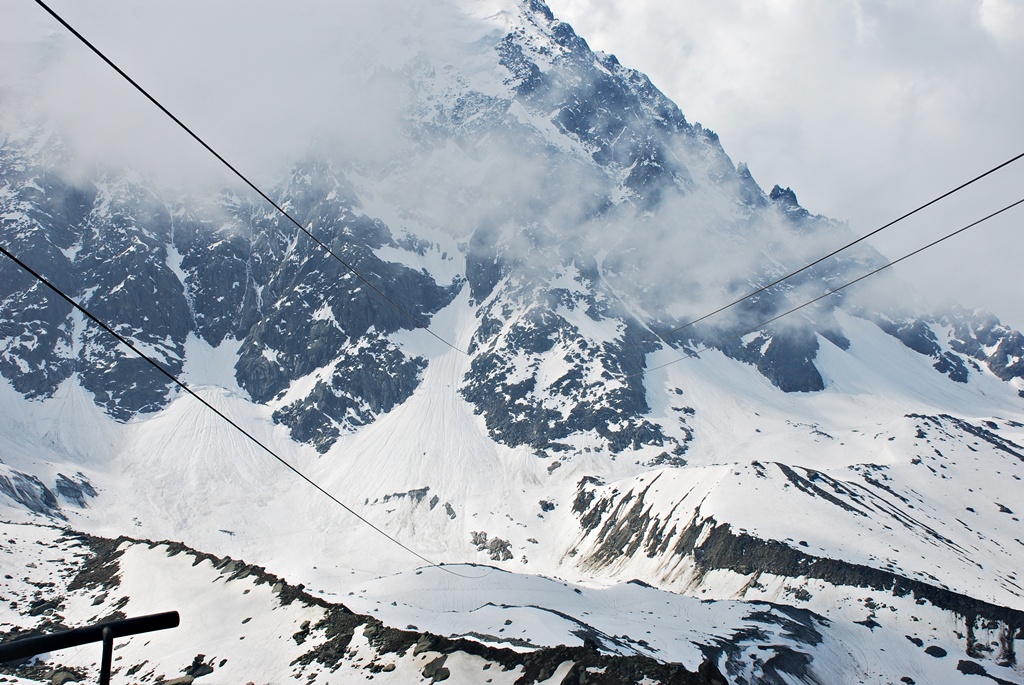
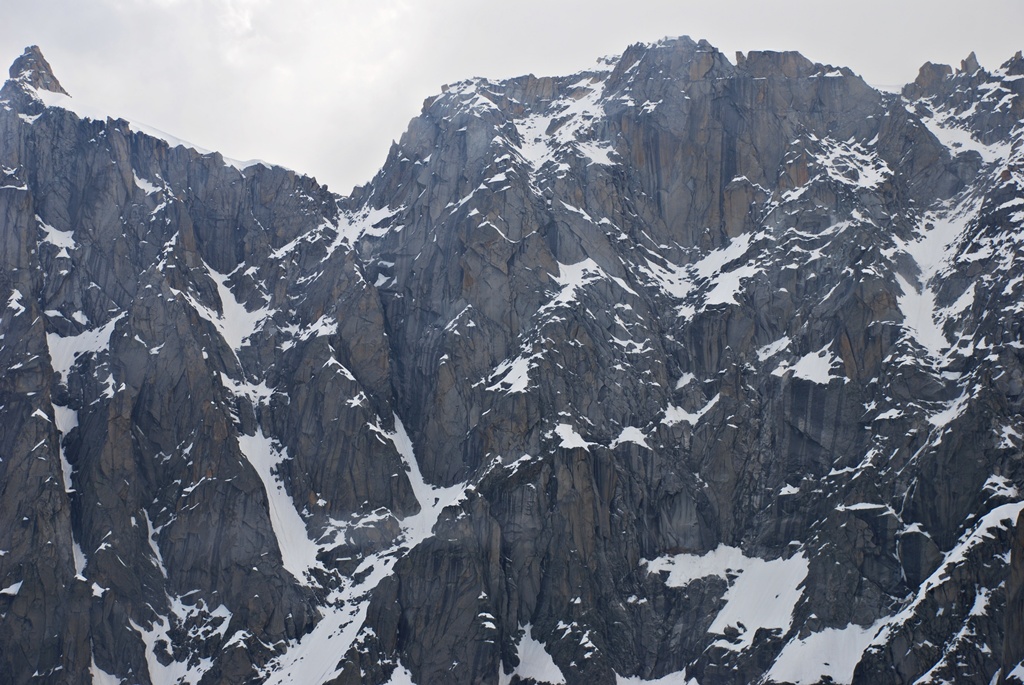
As we approached the summit, we saw two climbers starting off on a trek. It was an awesome sight to see two lonely figures on the vast expanse of snow.
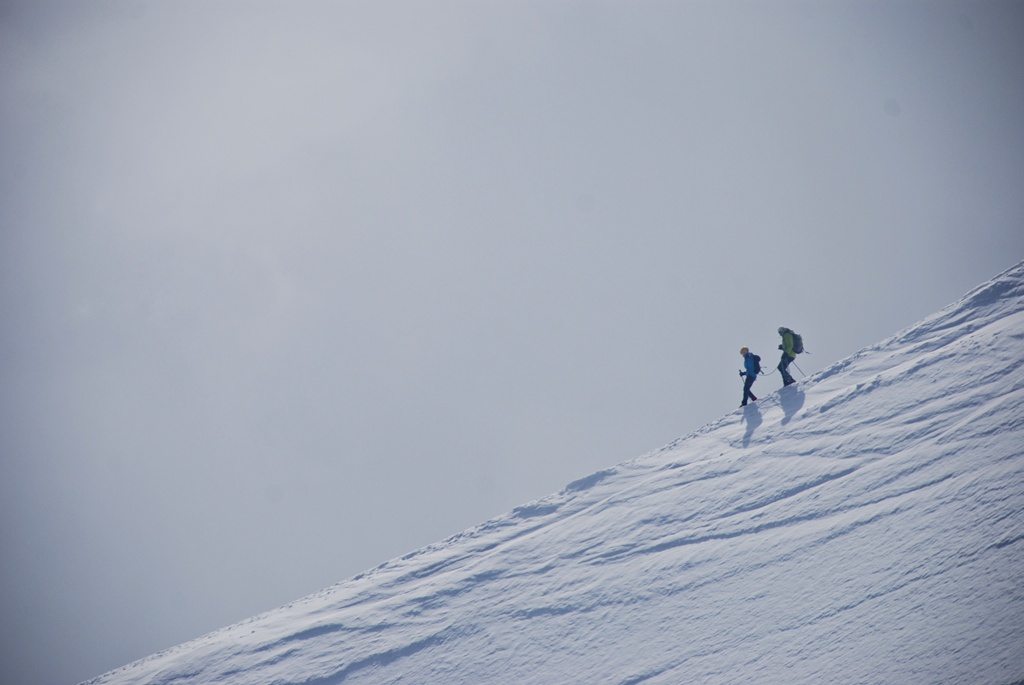
At the summit of Aiguille du Midi, there is a cafeteria and various viewing decks. It was very windy and the weather was not very good. Mont Blanc itself was shrouded in clouds and so we could not get a view of that but still the views all around were just fantastic. I moved out to a platform all by myself and as I stood there taking the views, I spied the two trekkers down below – two specs on a snow shelf.
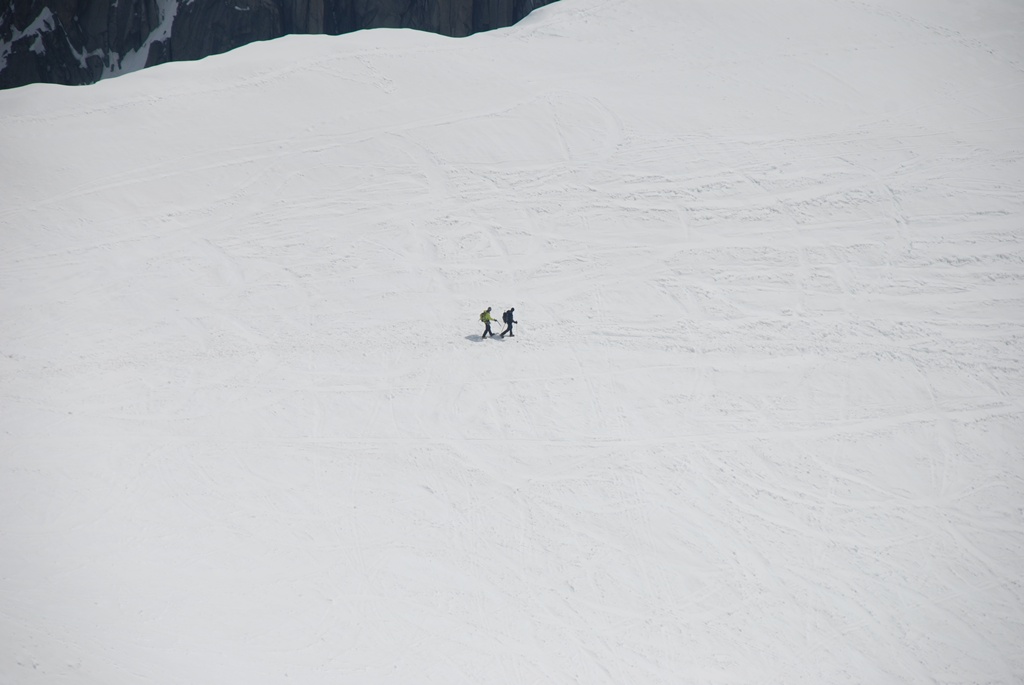
I had never understood what made people want to climb mountains and trek across them; someone in the cable car had called them as “adrenaline junkies”. However, as I stood there in the Alps with all its majesty, I also wanted to go on such a trek, camp out and lose myself in this beauty; and I am no adrenaline junky. I could sense the excitement and fun and challenge of the climb; there is a sheer exhilaration in this. These mountains are such a draw!
Vallee Blanche is a famous ski route in Chamonix and many trekkers start their journey to Valle Blanche from Aiguille du Midi. There is a short tunnel dug out of ice that leads onto a ridge on the face of the peak and the trek starts from there.
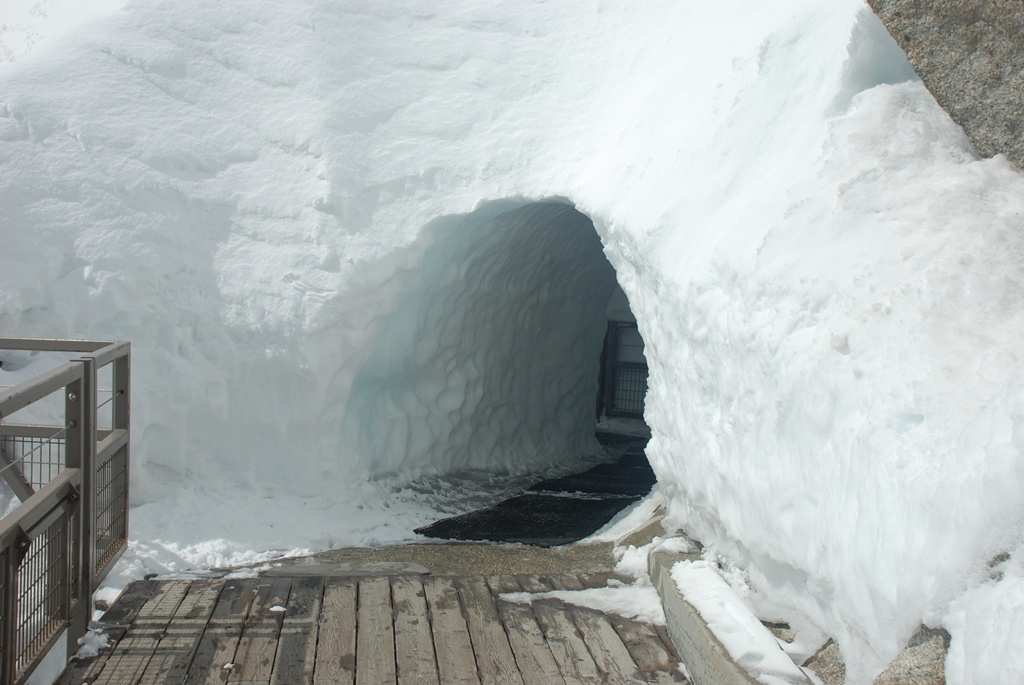
When I went through the tunnel and on to the ridge, I met two climbers who were about to set off on a trek to Vallee Blanche. I wanted to have a chat with them to understand how they would figure out the route, where they would stay the night, how they would locate crevasses and steer clear etc. Unfortunately, I found out that all my English was of no use in this remote corner of France. I understood that they were going to Vallee Blanche and planning to stay the night in a tent. They seemed very enthusiastic and were quite friendly. I waved them off on their trek and went back through the tunnel.
Later on, I mentioned this incident to the colleague who had referred this site to me and he narrated an incident of how he had gone on this very same climb sometime ago and how they had a narrow escape after one of them fell into a crevasse. That was scary stuff indeed and I toned down my climbing ambitions to a more gentle trek – maybe I can do that one day!
I went to another of the viewing terraces to try and have a look at Mont Blanc but it was still clouded over. I kept clicking away but was once again reminded of my acute lack of photographic skills as I looked at the results.
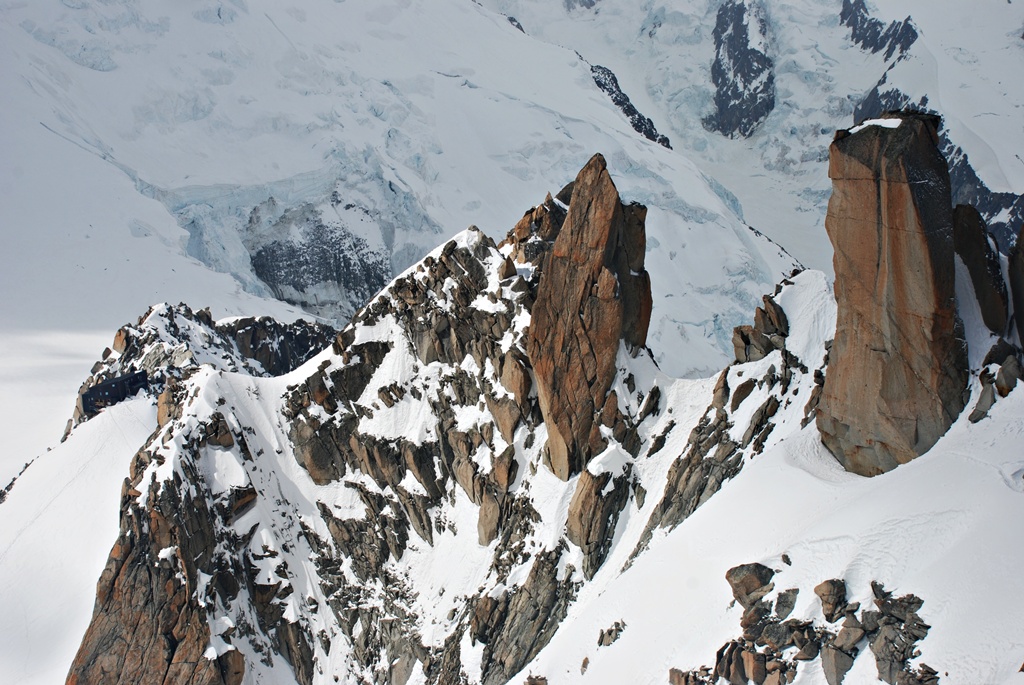
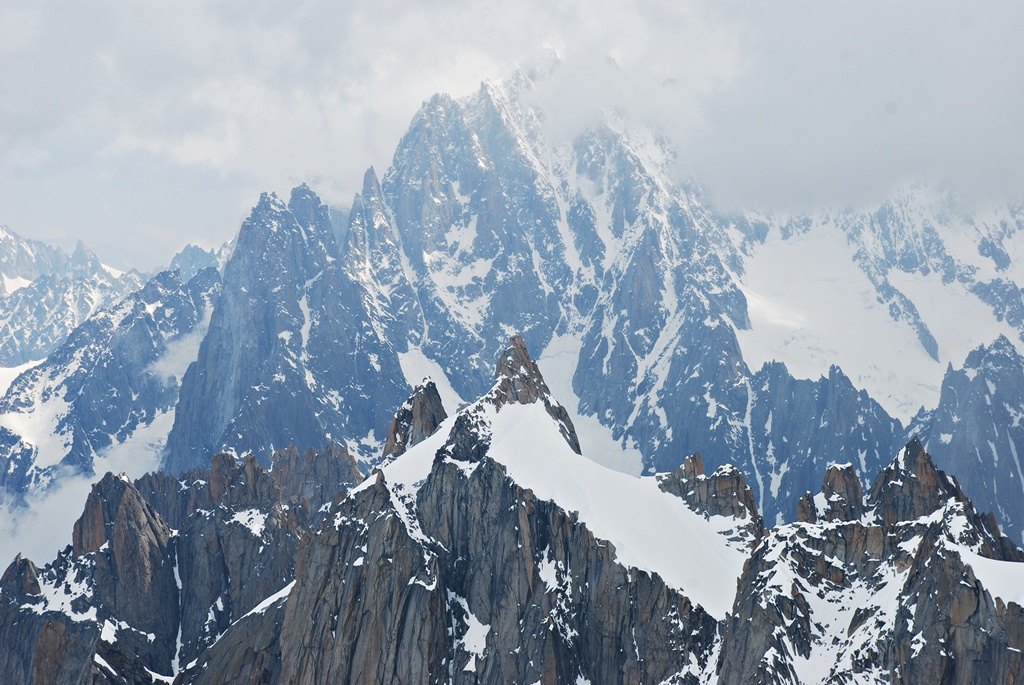
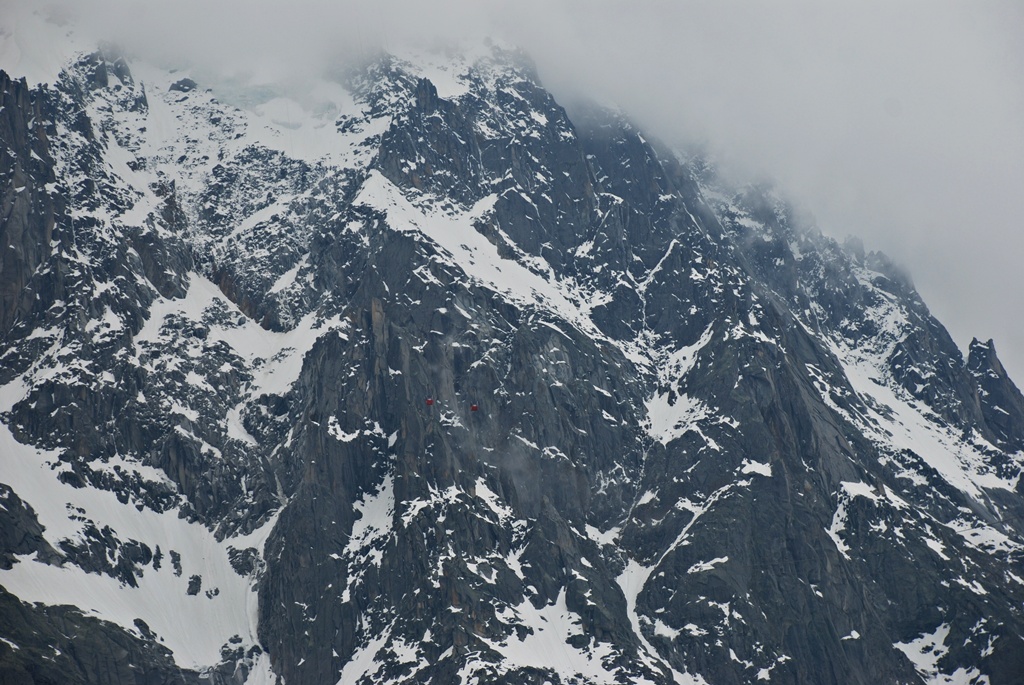
On the way back, I stopped at the midway point and walked around. As I sat on a rock looking at the Aiguille du Midi, I thought how it might have been when the first climb was done in 1818. What hardships and challenges must they have gone through! The mountain was very imposing and even looked a bit ominous; it somehow reminded me of a strong beast. The cable car was coming down and it so tiny against the backdrop of the massive mountain and was, in a way, a reminder of how puny we are when pitted against nature.
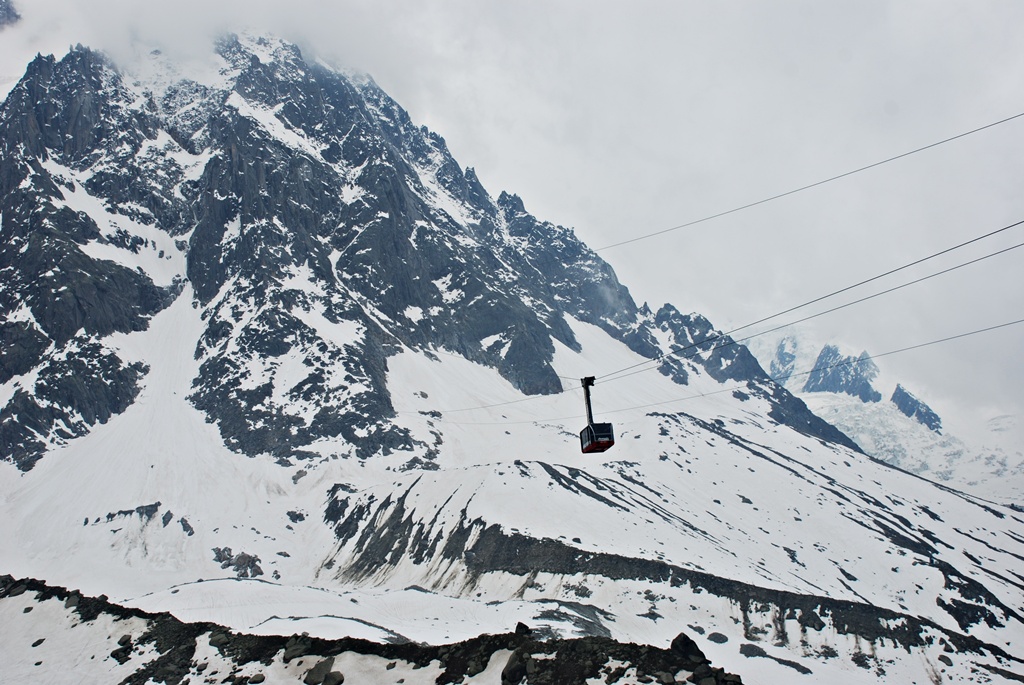
Chamonix is in a valley with mountains on both sides and we had a good view of it as we came down in the cable car.
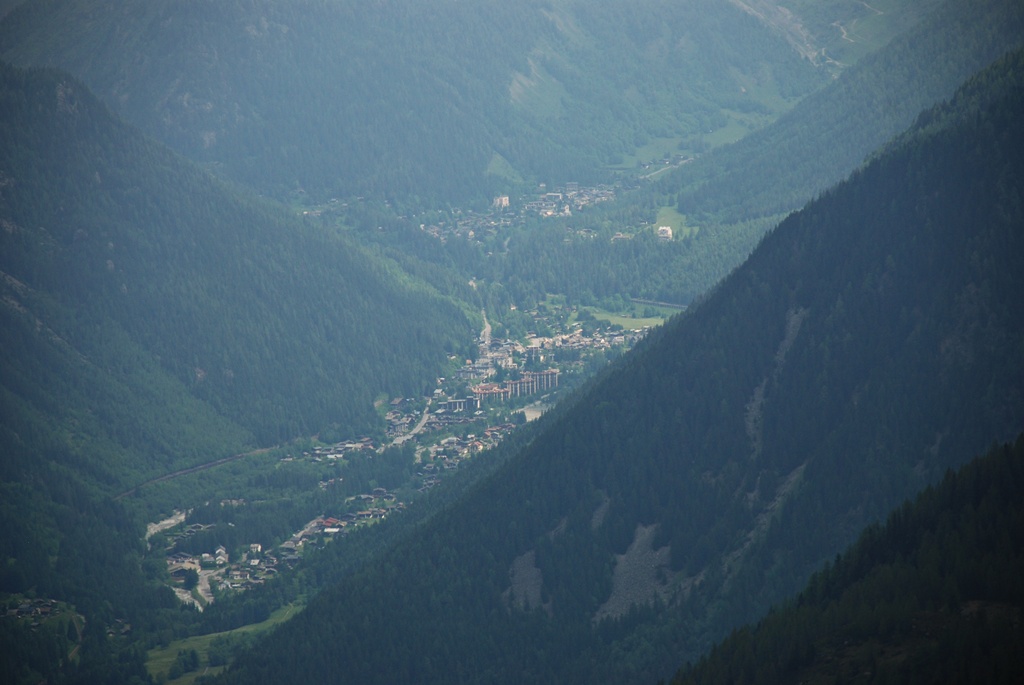
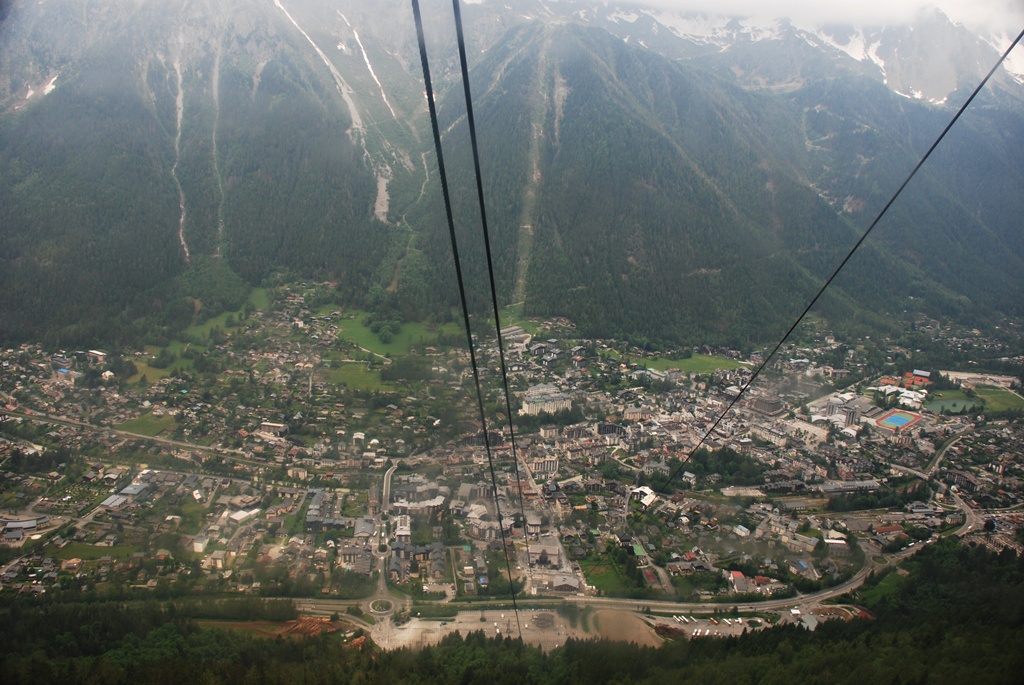
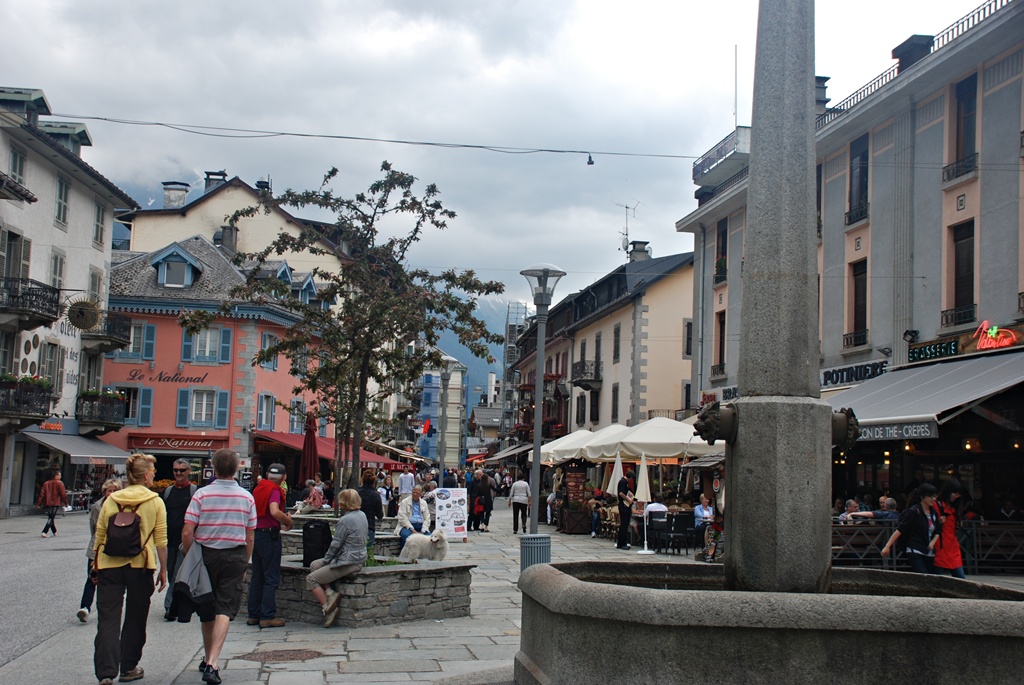
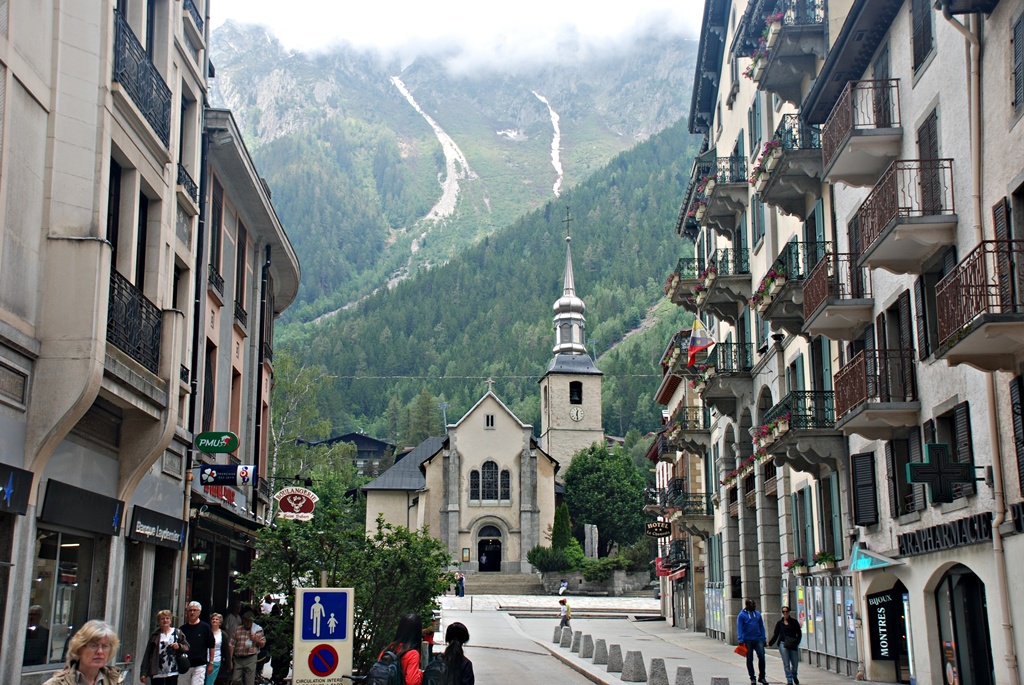
The village itself is fairly small and is nice and cozy. It has quite a long history and the first mention of the valley dates back to 1091. Early settlers were some Benedictine monks but the living conditions were so harsh that the valley was very sparsely populated. In the 1700s, interest picked up in Alpine climbing and with that Chamonix started to grow. In 1760, a Swiss aristocrat named Horace-Benedict de Saussure offered a reward to the first person to scale Mont Blanc and he himself made an unsuccessful attempt in 1785. In 1786, two Chamonix men, Michel Paccard and Jacques Balmat achieved the climb and Chamonix was established firmly on the Alpine map. Winter Olympics was conducted at Chamonix in 1924.
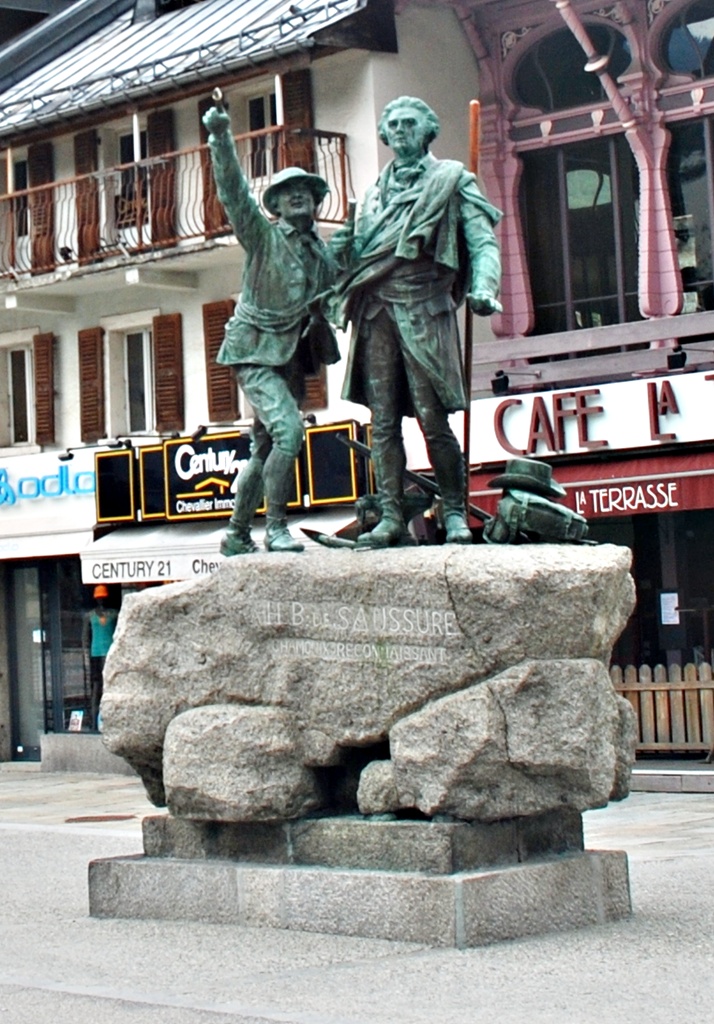
In the square in the town, there is a monument to Horace-Benedict de Saussure, with Jacques Balmat next to him, pointing to Mont Blanc.
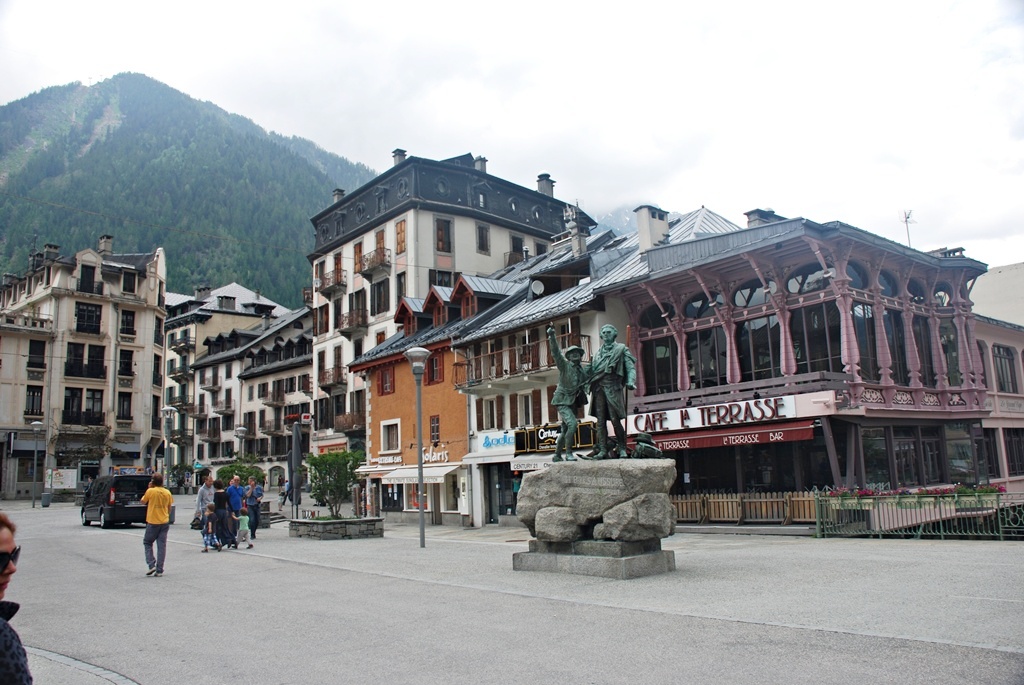
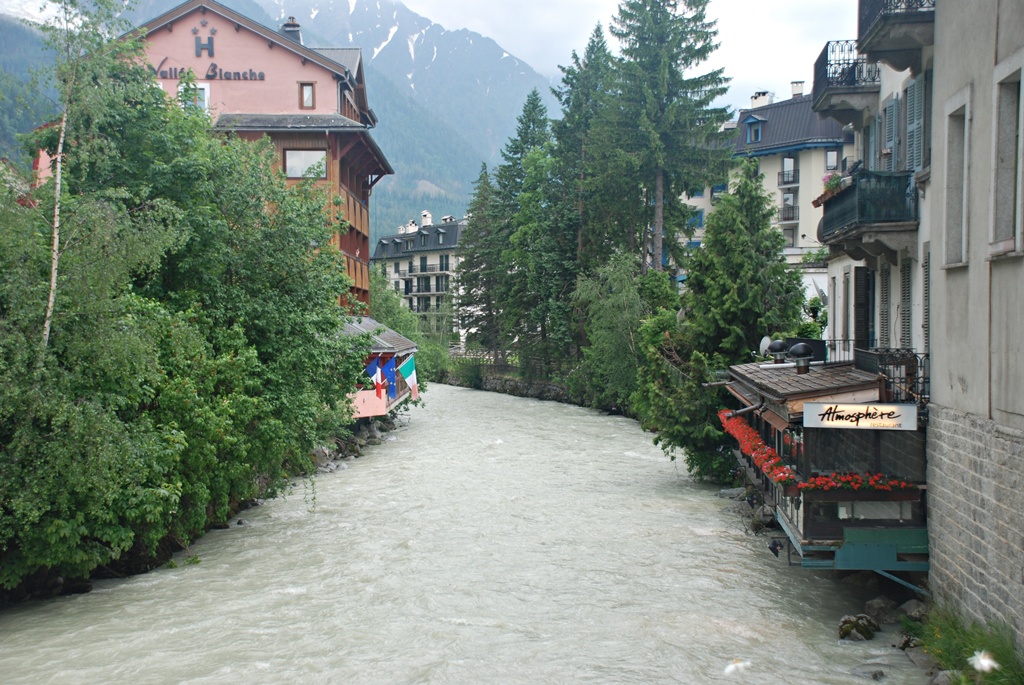
There is a river called Arve that passes through Chamonix. This fast flowing river receives it water mostly from Alpine glaciers like the Mer de Glace (which was the next item in my itinerary) and flows right onto Geneva. In my mind, I had thought that rivers and streams that are fed by melting snow would be pristine and clear and I was surprised to learn that the water is generally very muddy when the snow melts and true enough, the water looked anything but clear.
We had planned to have lunch in the village and I found myself looking forward to it. A Hungarian lady from our group was seated next to me. Her name was Catalin and we fell to talking about Hungary and I used the opportunity to ask her about life during the Communist regime and now. She was about 35 when the regime fell and she remembered that time very well. Her view was that they are better off now, even if they are exposed to the perils of globalization and the attendant issues like unemployment, depression etc. When I asked her what the main difference is, she said it is the freedom they enjoy now, which was never the case earlier. I was reminded of a very similar comment made by a taxi driver in Bucharest when I asked him a similar question.
Right near Chamonix is the biggest glacier in France, called Mer de Glace. This glacier can be viewed from a place called Montenvers, which is at a height of 1,000m from Chamonix. The glacier has a surface area of 40 square kilometres and a length of 7 km. A rack and pinion train takes you upto Montenvers and the distance is covered in 20 minutes. The rack runs between the tracks and this helps the train to make the steep climb.
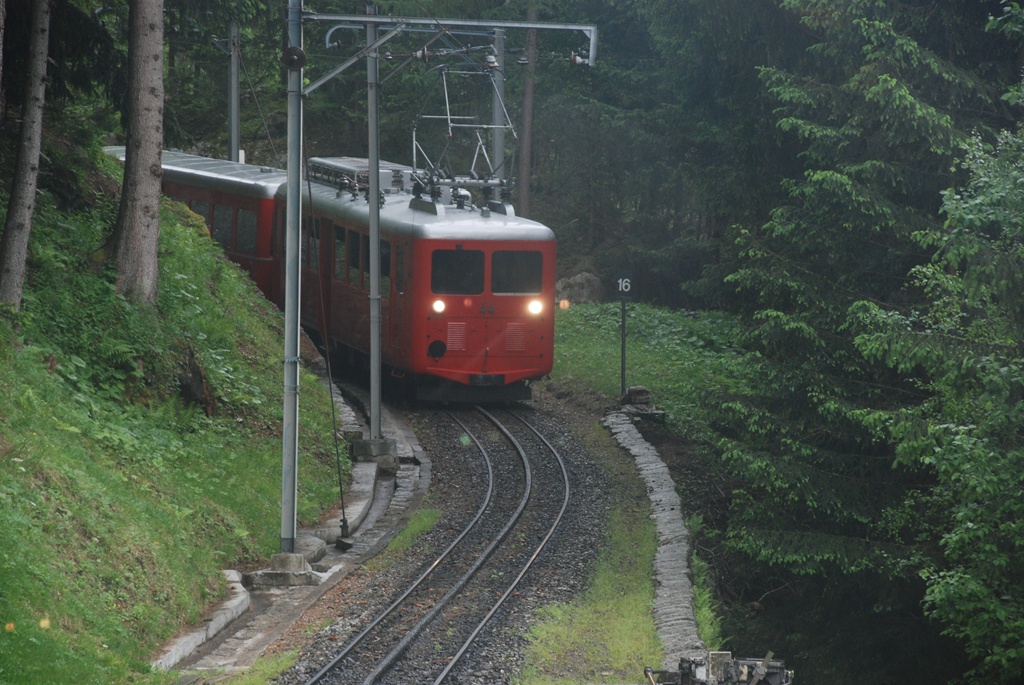
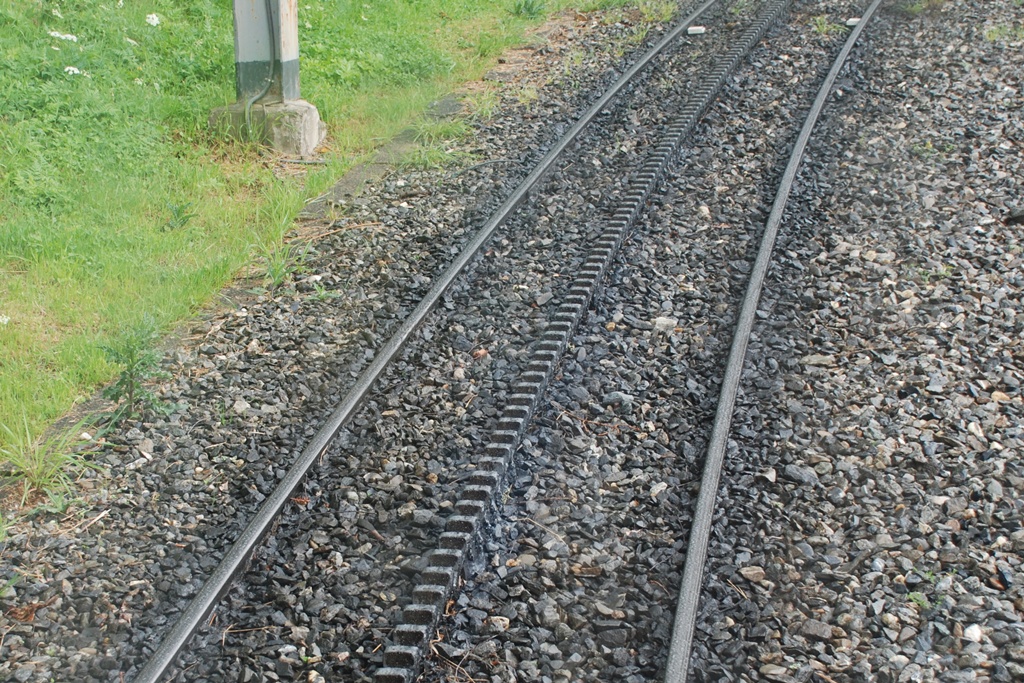
The train moves up the mountainside through pine trees and tunnels carved out of rock. It was conceived in 1892 and became a reality when the first train steamed into the station at Montenvers, in 1909. A slight drizzle had started by the time we got to Montenvers and so, I did not get much time to look at the glacier. Here again, I was surprised as I was expecting an expanse of sheer white but was greeted by something that looked more grey than white.
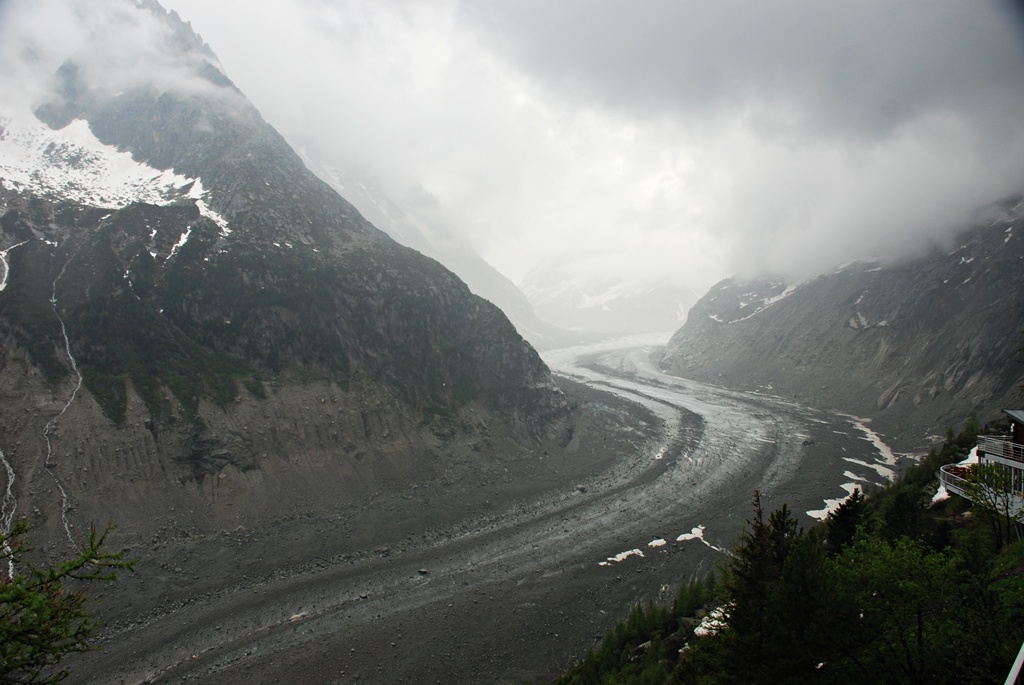
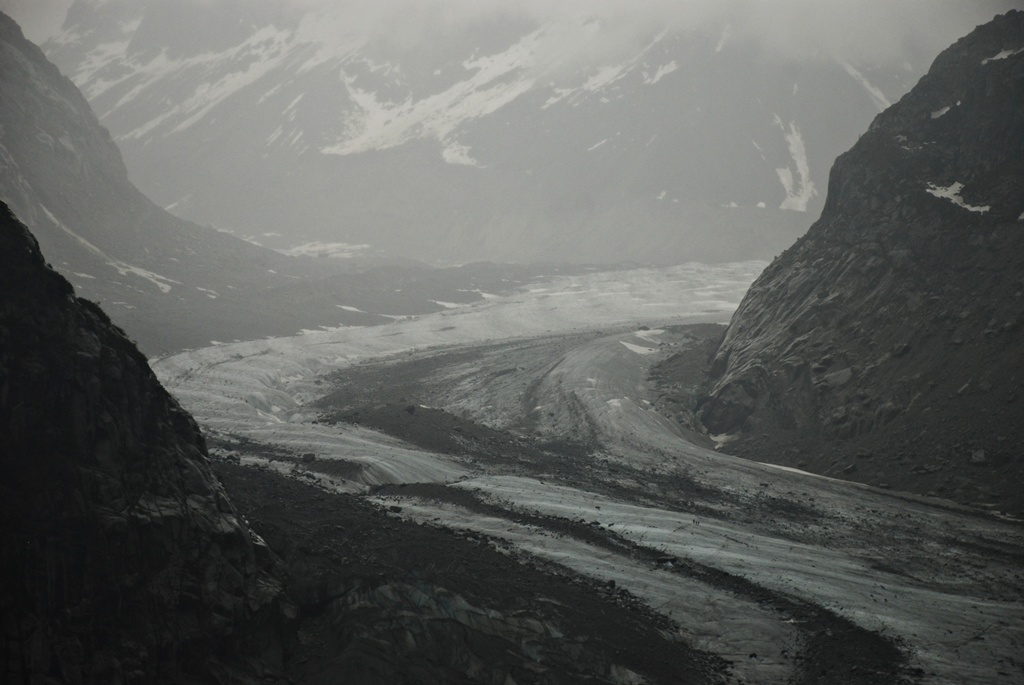
There is an ice cave that leads into the innards of the glacier but that was closed for some maintenance. Here also I met a few people who had just come after trekking the glacier. They were part of a group that was going to scale a peak and this trek on the glacier was a kind of training in preparation for that climb.
The glacier has a thickness of 120m at its centre but has been reducing in thickness by about 3 to 4m every year since 1988. The glacier is advancing at a pace of 120m every year but shrinking by 125m each year as well. So, it is shrinking faster than it is growing. It was sad to think that this glacier might be gone in the near future; such are the effects of global warming. There is a photo at the station which shows the position of the glacier in 1909 and one can easily make out the difference in height between then and now.
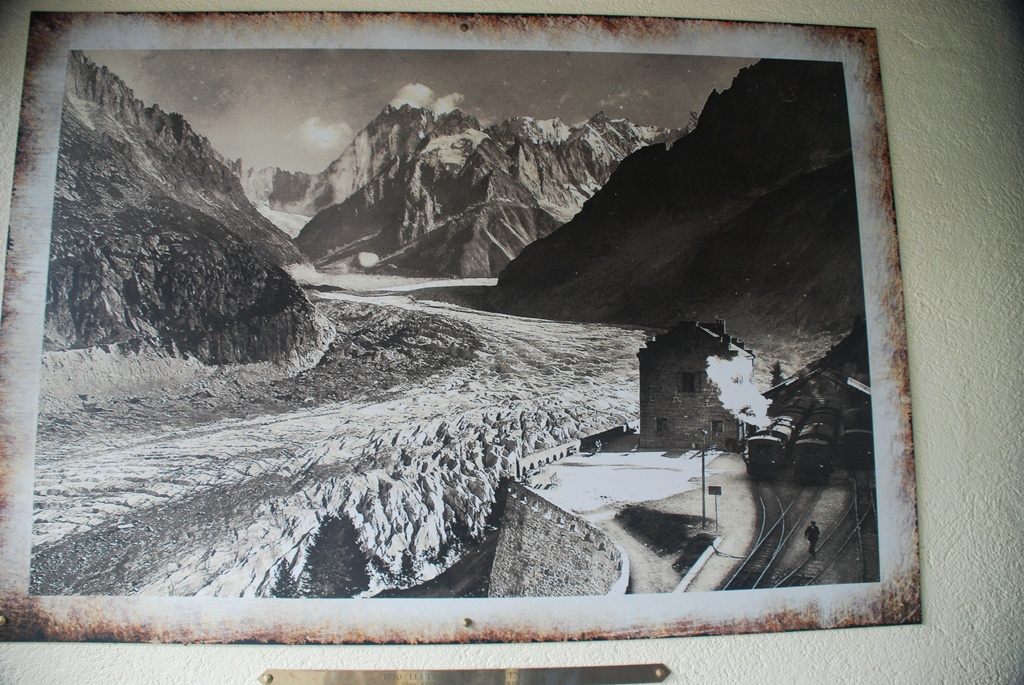
With that somber thought, we trained down and got on to the coach to get back to Geneva.
 Kaazhchakal