“I first met him in Piraeus. I wanted to take the boat for Crete and had gone down to the port.” Thus starts the legendary work Zorba the Greek. A book that captured my imagination and caused me to wonder at the character and the author alike. My favourite of all that I have read of Nikos Kazantzakis. Yet, this was not his first book that I had read, and there is an interesting incident that led me to Zorba. In early 2001, I had been to Cyprus to meet a client and for some reason, we started talking about philosophy and the client (Costas) told me there was a Greek writer he respected quite a lot who turned to Zen Buddhism in the later part of life. I asked Costas whether he was talking about Kazantzakis, and he literally stood up in astonishment, that someone from such a distant land as India knew of Kazantzakis. I told him that I had read The Last Temptation of Christ and Report to Greco and explained to him that in my state Kerala, good many people knew Kazantzakis and his works, most of which had been translated into Malayalam. I also narrated to him the law-and-order situation that happened when a play based on The Last Temptation of Christ was staged at Thrissur. When Costas took me to meet his CEO, I was introduced as a man who had read Kazantzakis and the CEO asked me whether I had read Zorba and I hadn’t, at that time. Thereupon, Costas was given the responsibility to ensure that I was gifted a copy of Zorba the Greek before I left Cyprus and that was how I came upon Zorba.
When we planned a trip to Greece recently, one of the important points in the itinerary was to visit Crete and go to Heraklion, Nikos Kazantzakis’ city. I wanted to reread Zorba one more time before I visited Crete but that was not to be. Kazantzakis was born in the city of Heraklion in Crete in 1883 and his roots went back to a village called Myrtia, which is near Heraklion. He was deeply spiritual and a free thinker and this meant he was often in conflict with the Greek Orthodox Church. The church did not appreciate Christ Recrucified and The Last Temptation of Christ and many from the clergy wanted him to be excommunicated, though that didn’t happen. While this was going on, it seems that Kazantzakis wrote to the Church as follows: “You gave me a curse, Holy fathers, I give you a blessing: may your conscience be as clear as mine and may you be as moral and religious as I.” What a man!
He passed away in Germany in 1957 and it was his desire to be buried in Heraklion. The clergy with their narrow mindset declined to give space in any cemetery for him. Thus, he was laid to rest near the old Venetian city walls of Heraklion, atop a hill. It is amazing how often religious leaders completely lose track of what they are supposed to propagate in the first place – love and humanity.
We arrived at the location of his grave at around noon, and it was totally deserted. We parked at the base of the hill and walked up; I had doubts on whether the place was closed. There were no directions and we saw one building first with its gates shut and that didn’t look like what we were searching for. We walked past the building and soon came upon the solitary, simple grave.
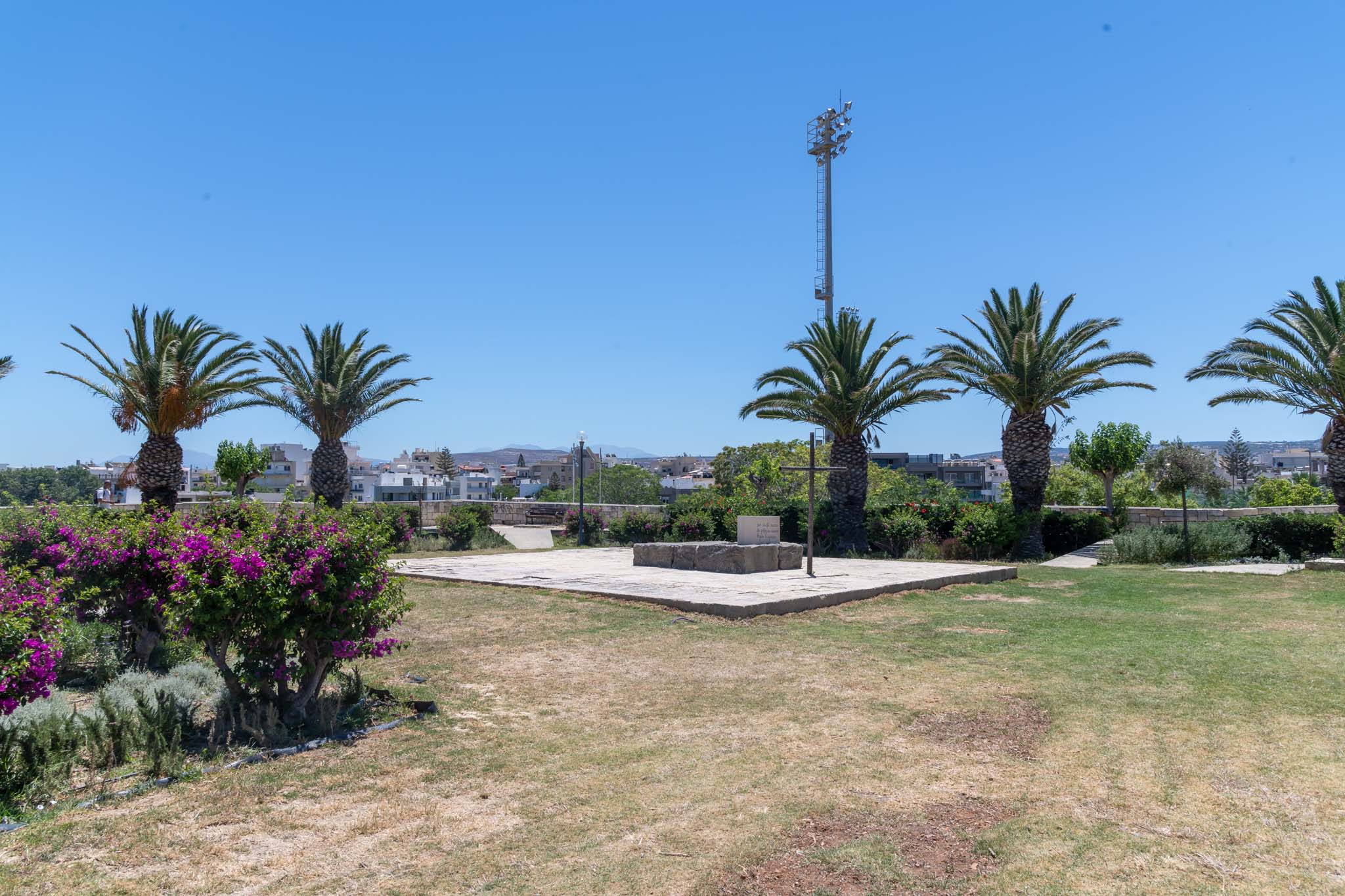
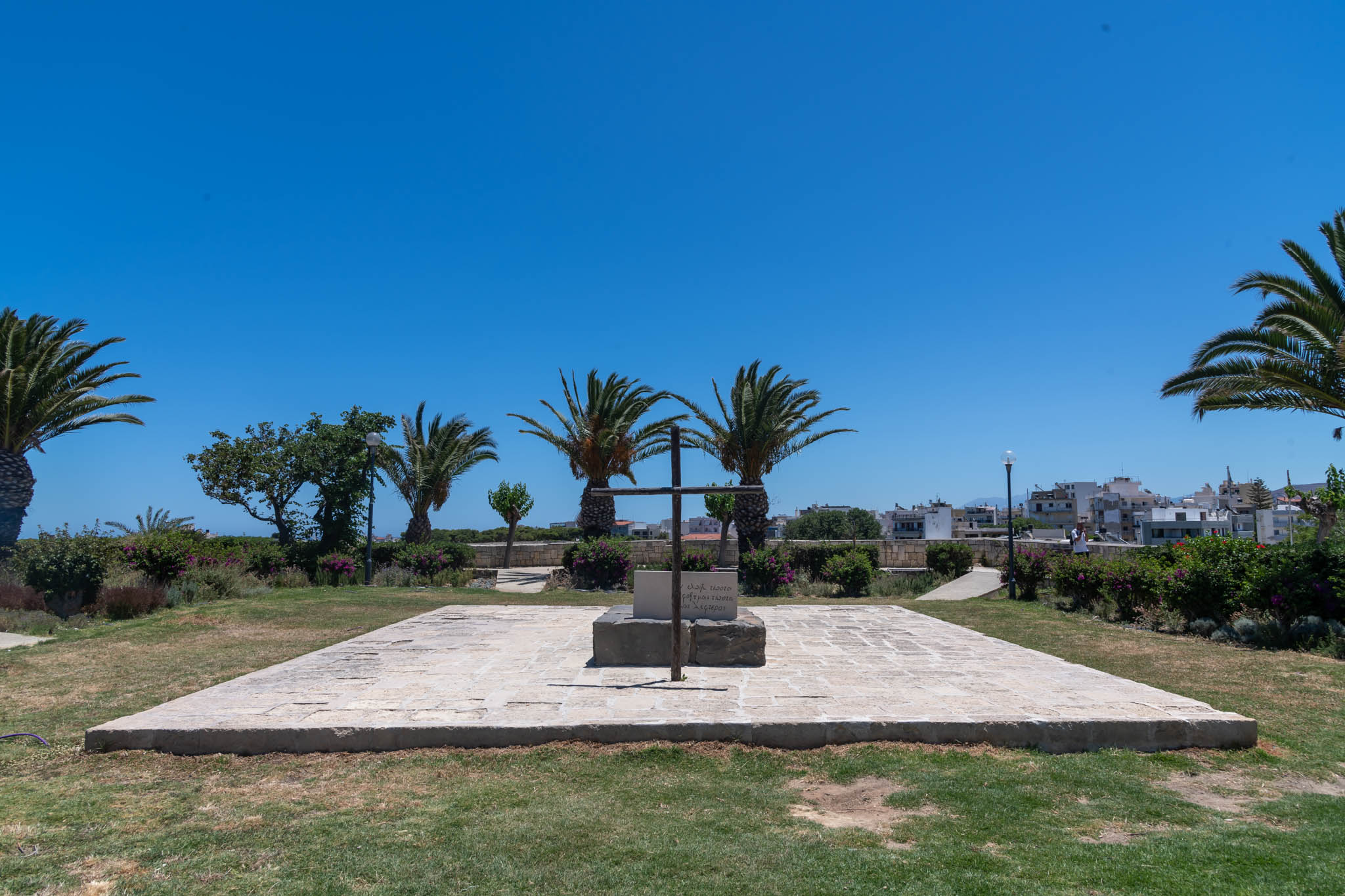
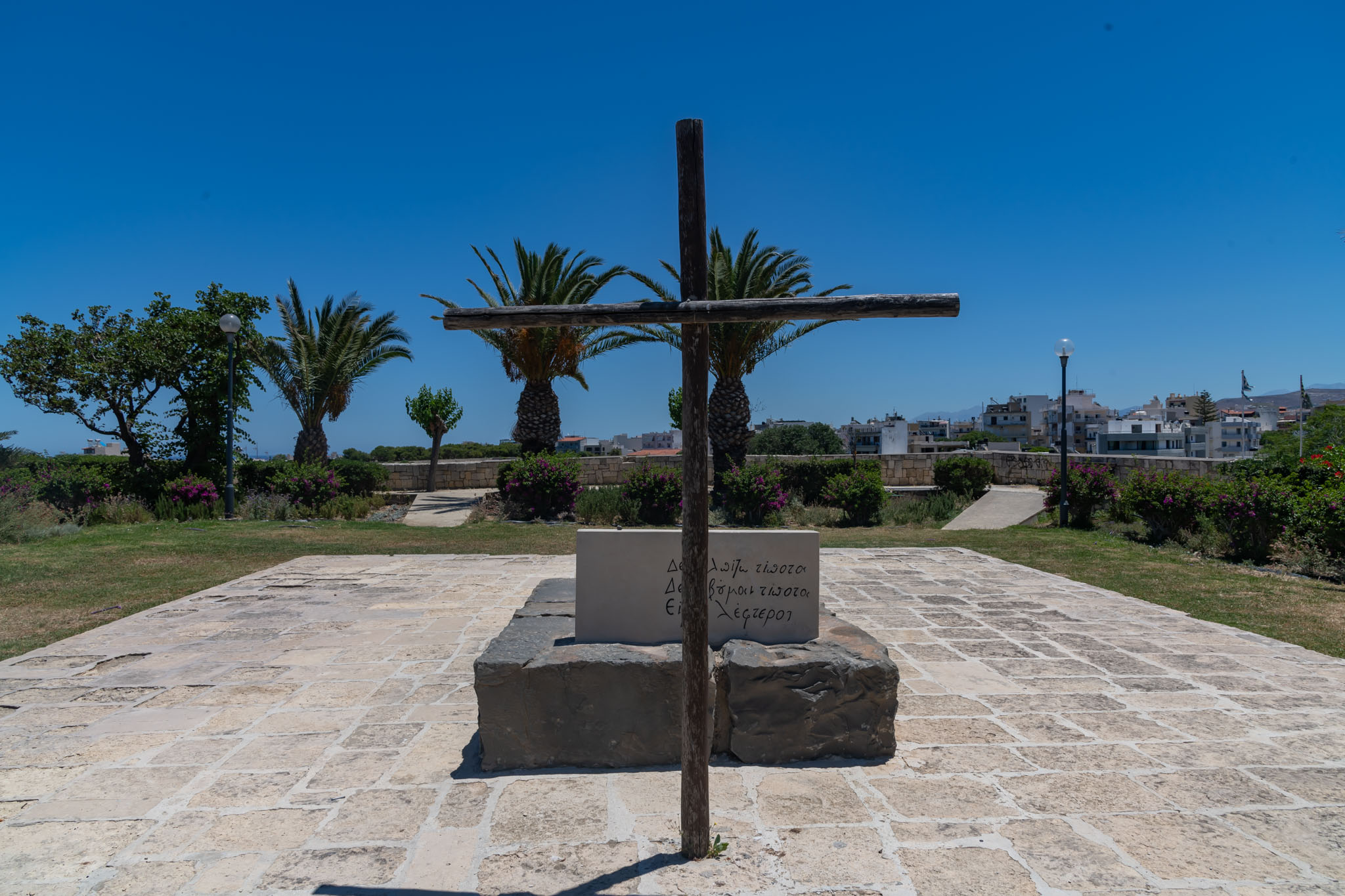
On the grave is written “I hope for nothing, I fear for nothing, I am free”, according to his wish.
Someone had left a copy of an English edition of Zorba on the grave, and I stood there in the scorching sun and read the first few pages from the book. Somehow, it felt like an apt gesture. Earlier in the trip, we had been to the port of Piraeus in Athens to catch a boat to Hydra and as I read the first couple of lines, I felt like I was there in the little café that rainy morning.
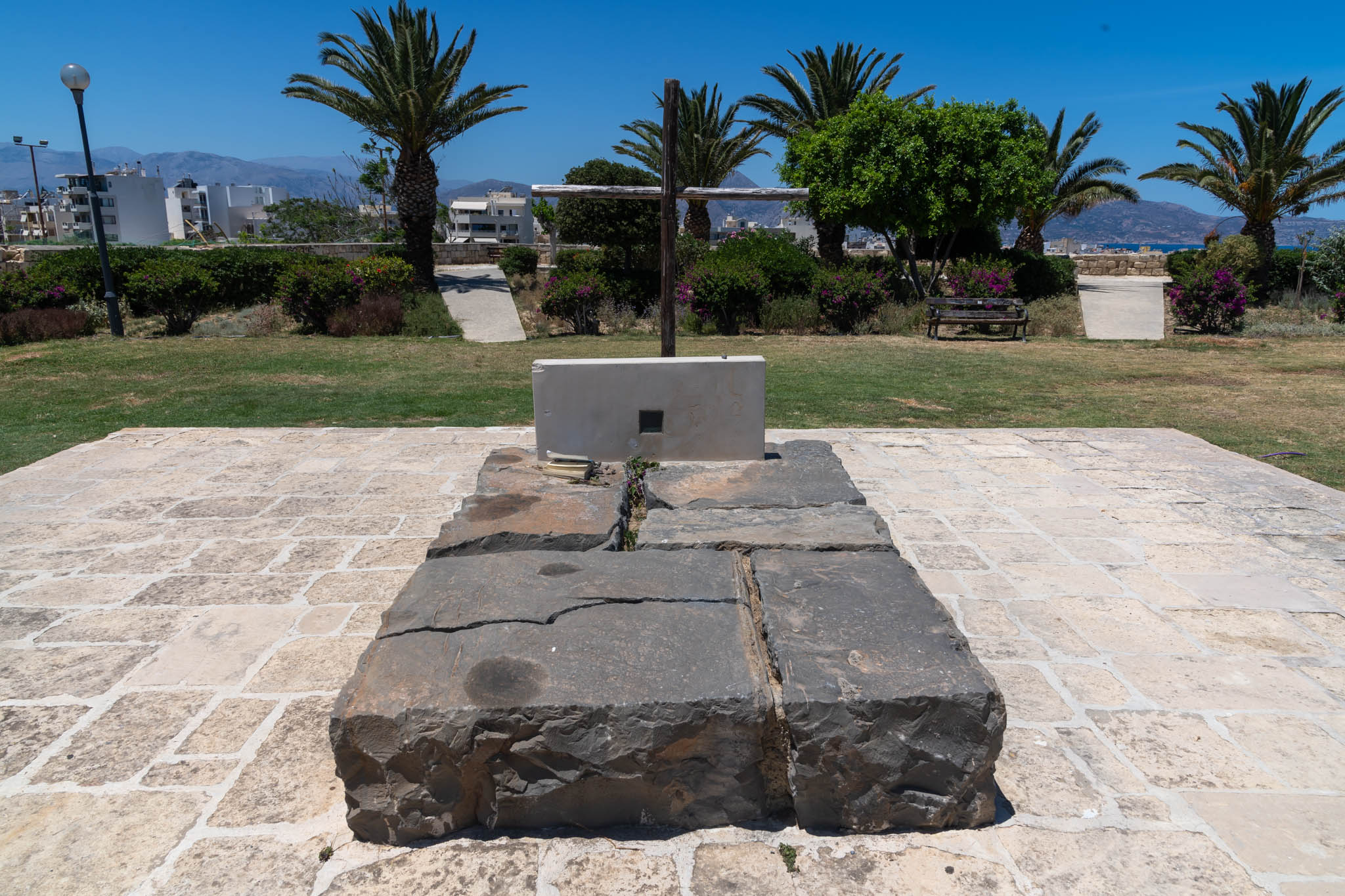
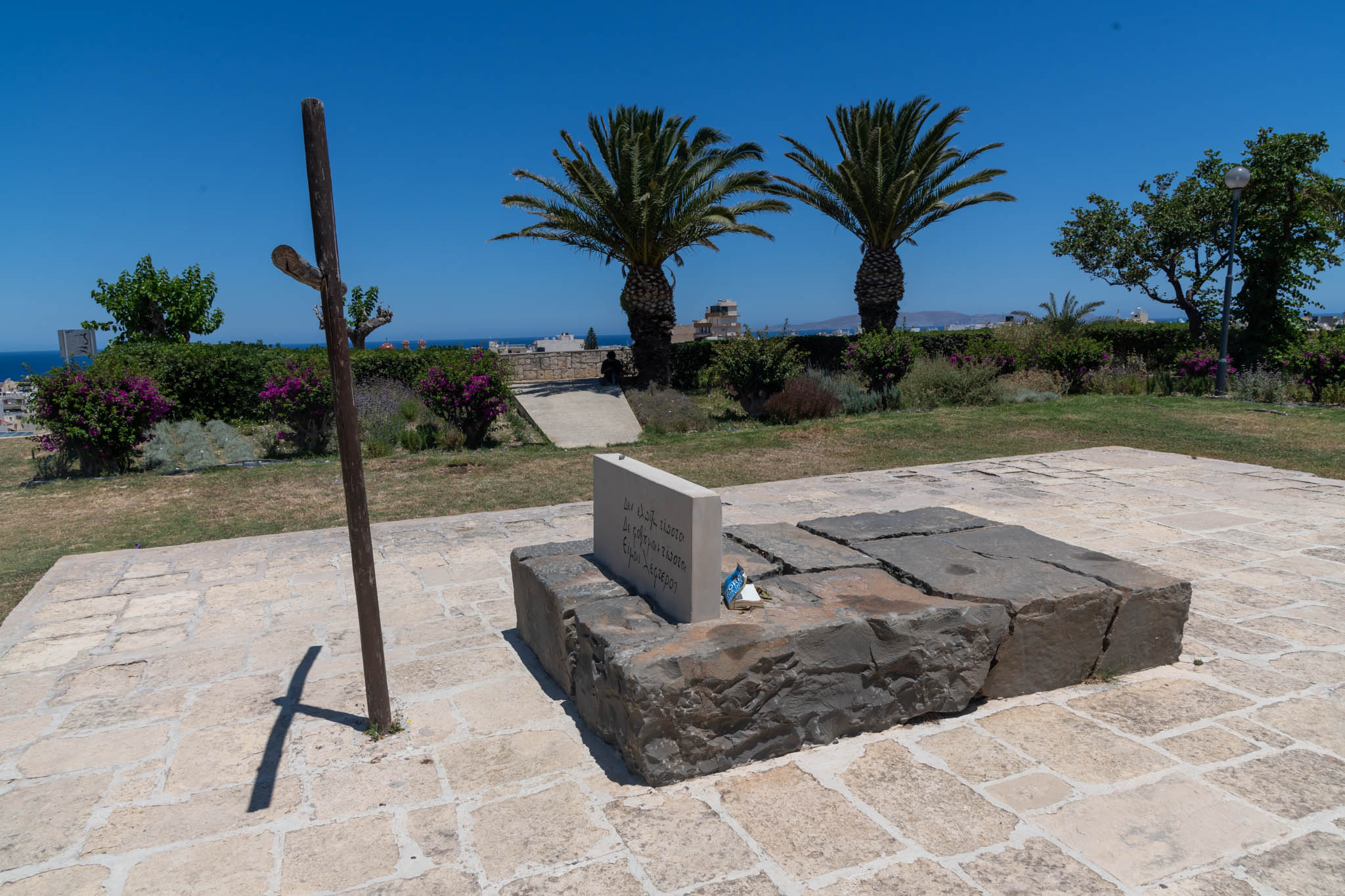
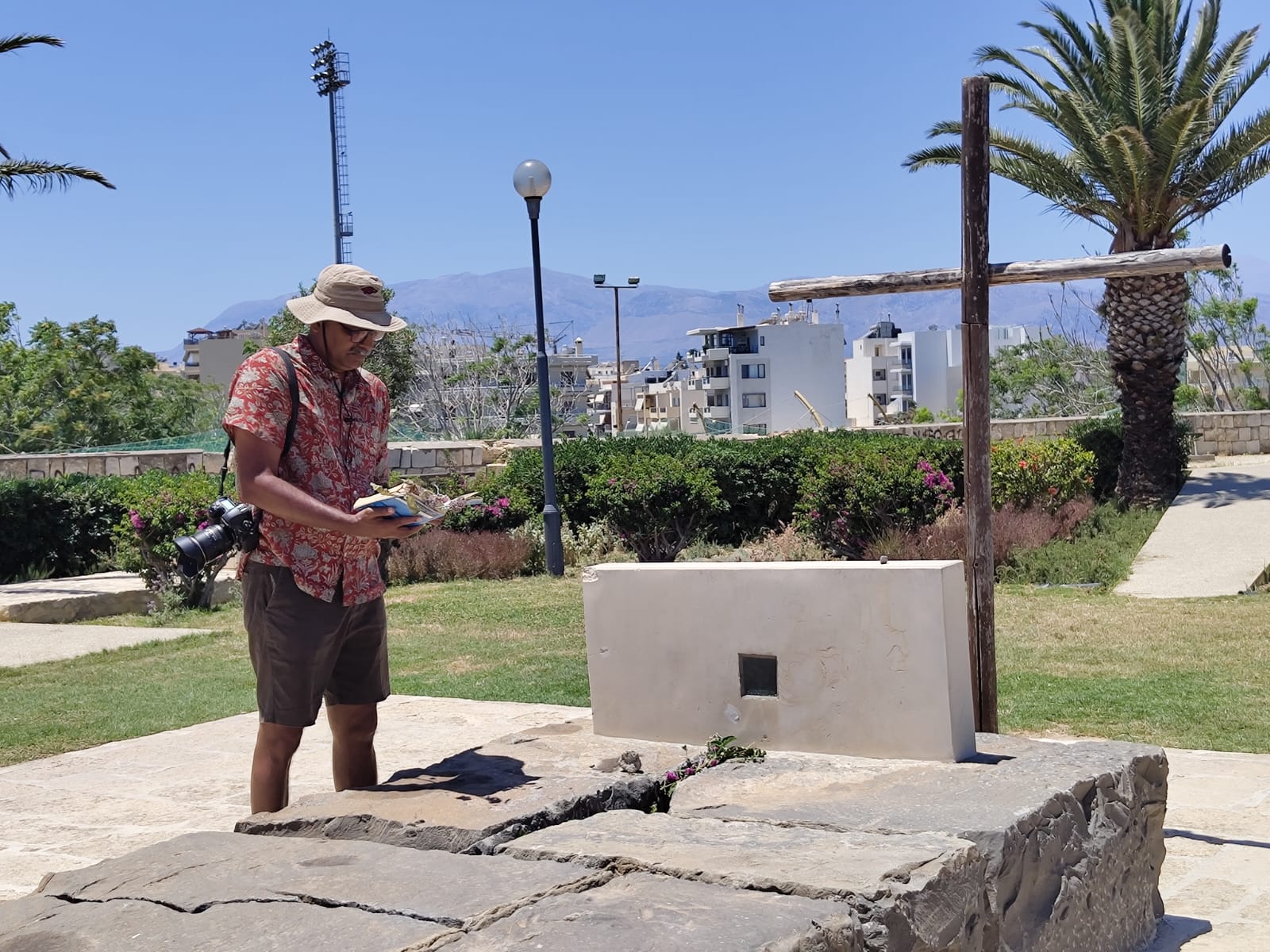
Photo: Sandhya
We spent a few minutes on that lonely hilltop, and I felt that Kazantzakis would indeed have preferred to have been buried there instead of a cemetery; the word freedom makes more sense there.
After a brief stop at Fort Koules (a Venetian fort built to protect the harbour), we set forth to the Nikos Kazantzakis Museum. This is in the village of Myrtia about 18 km from Heraklion. It was a pleasant drive through deserted, winding roads passing through small Greek villages. This museum was set up by Yorgos Anemoyannis, a Greek set designer, who was a cousin and friend of Kazantzakis, in 1983. He was helped quite a lot in his efforts to collect manuscripts and other display material by Eleni, Kazantzakis’ second wife. Anemoyannis converted his own house and purchased another small adjoining house that belonged to a relative to create the museum. The museum is managed by Nikos Kazantzakis Museum Foundation which is a non-profit private entity supervised by the Ministry of Finance and the Decentralized Administration of Crete. It stands on a small square with the essential coffee shop at hand.
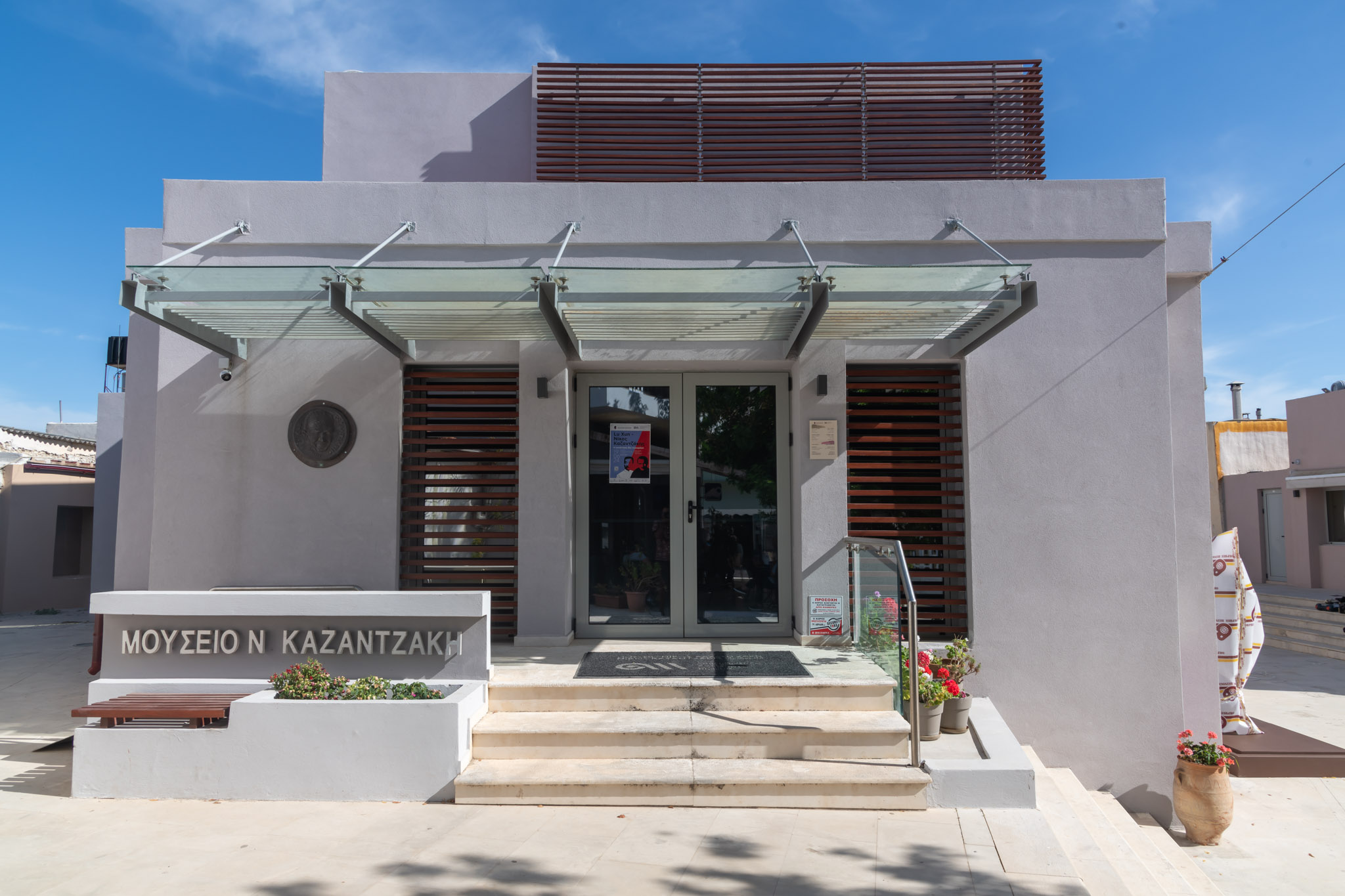
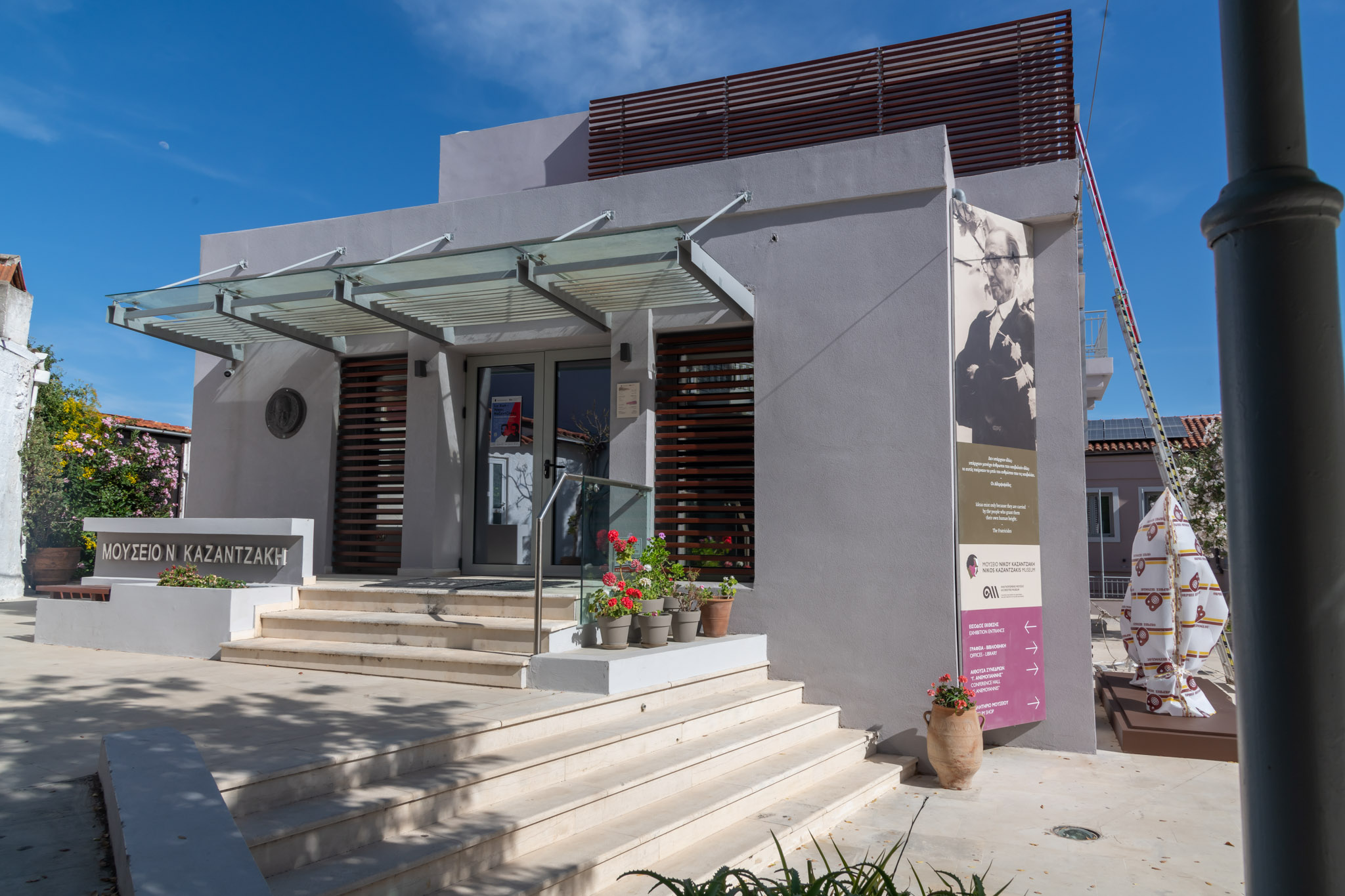
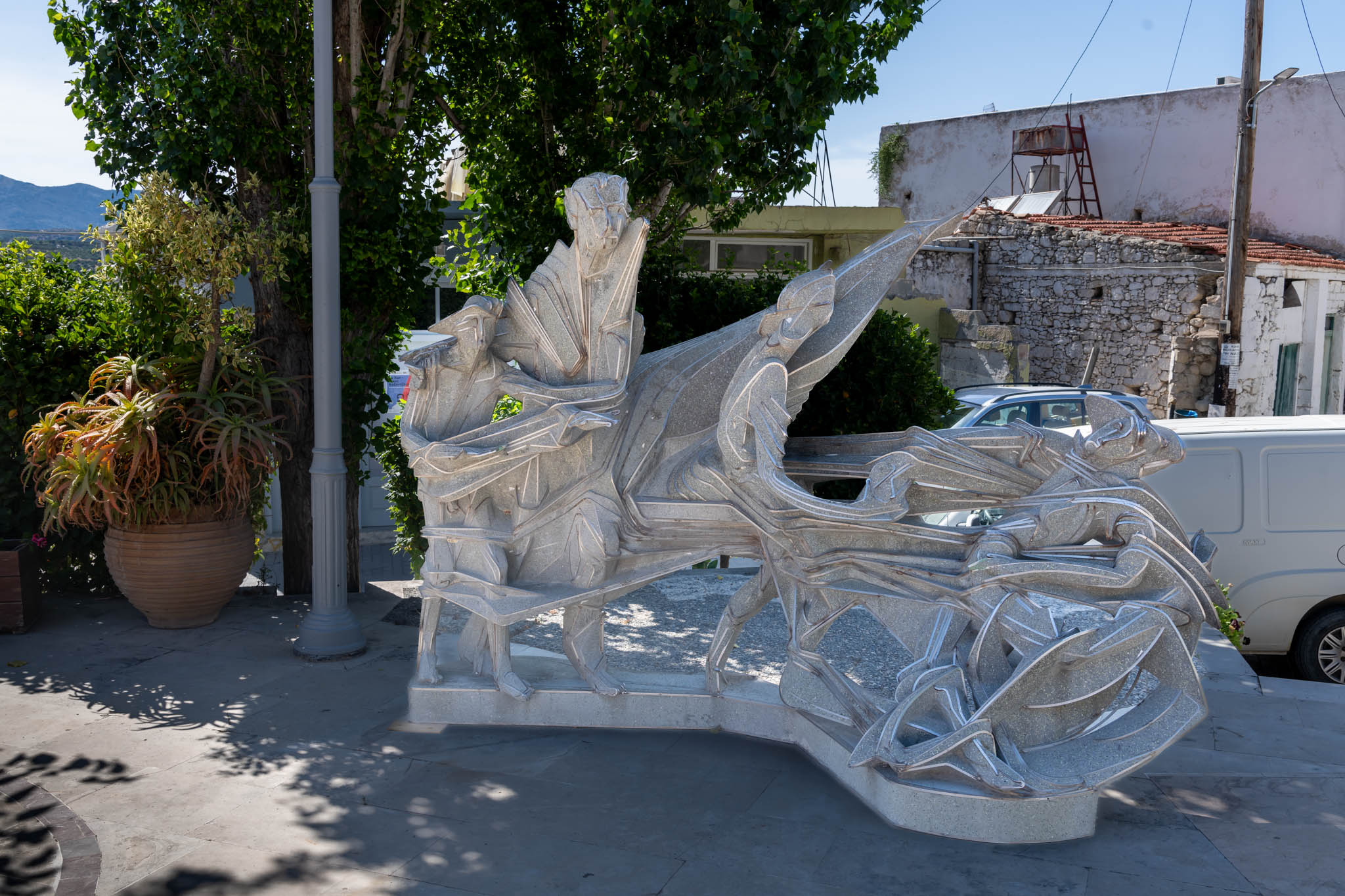
Kazantzakis was an admirer of the Chinese writer Lu Xun and it seems their styles were a bit similar, to the extent that they were called “Chinese Kazantzakis” and “Greek Lu Xun” by some friends. There is a museum in China set up in the memory of Lu Xun and these two museums collaborate with each other, facilitating a virtual meeting as Kazantzakis and Lu Xun never met in their physical lives. This sculpture installed in the square was donated by the Chinese museum.
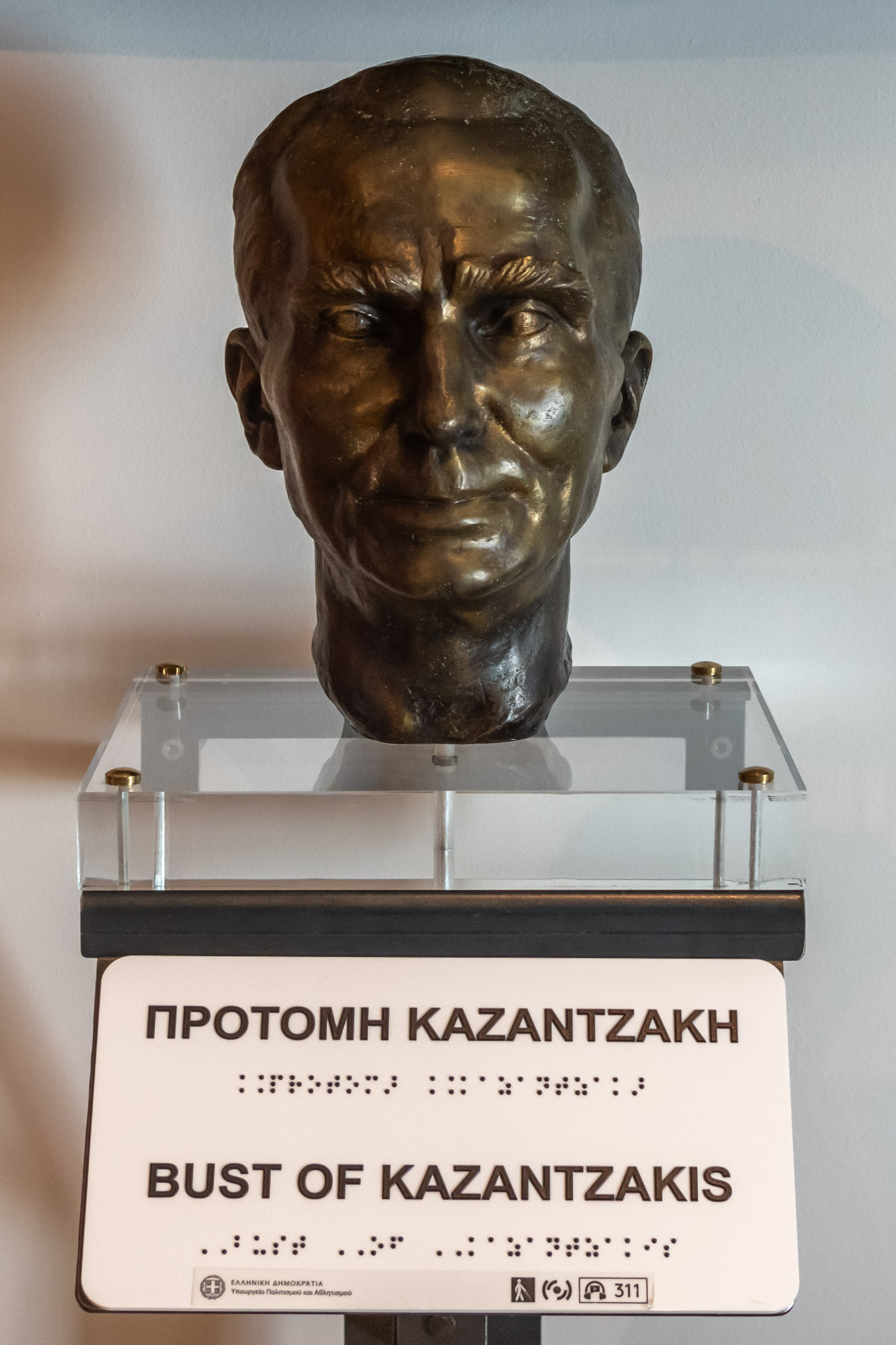
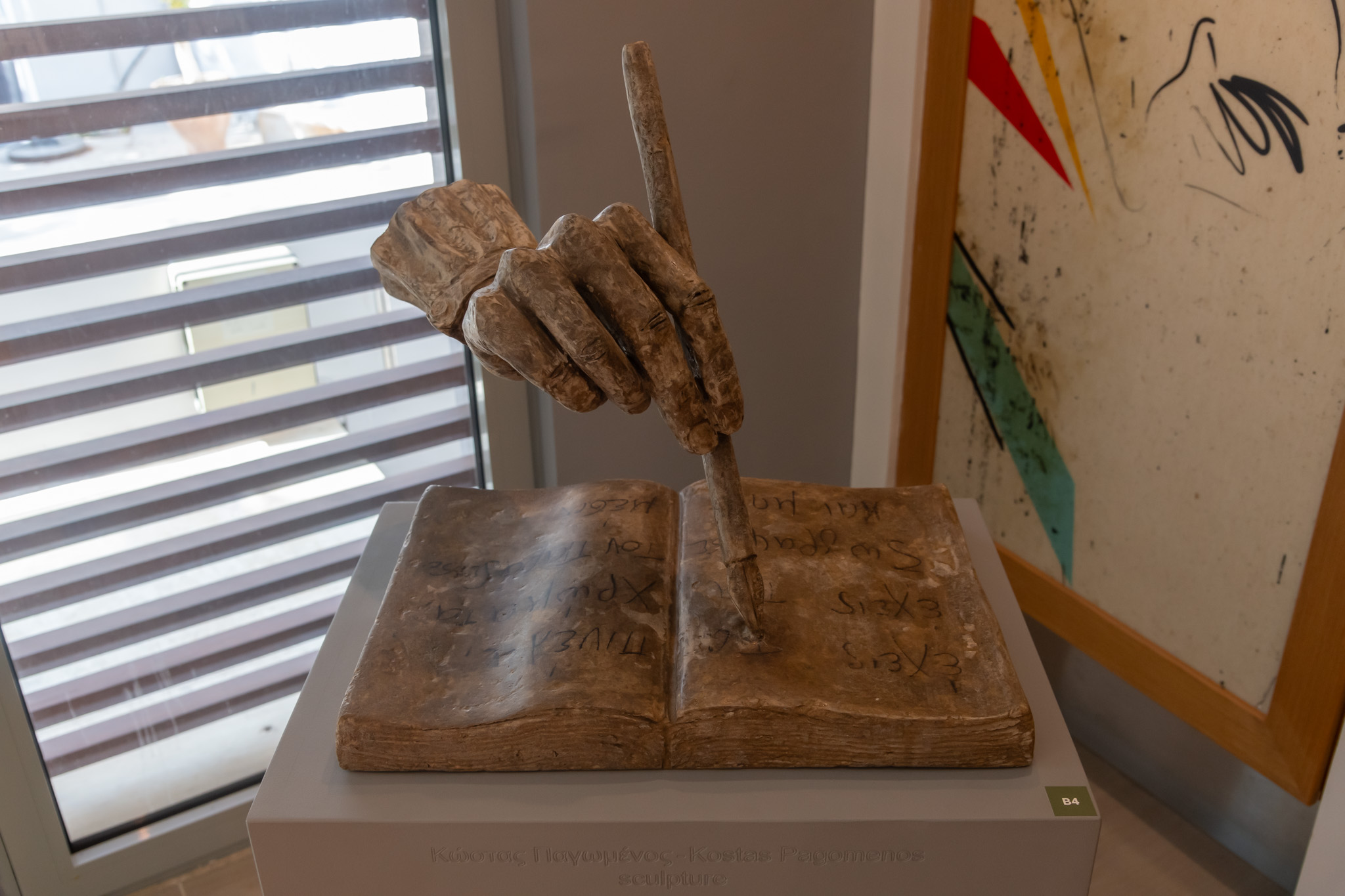
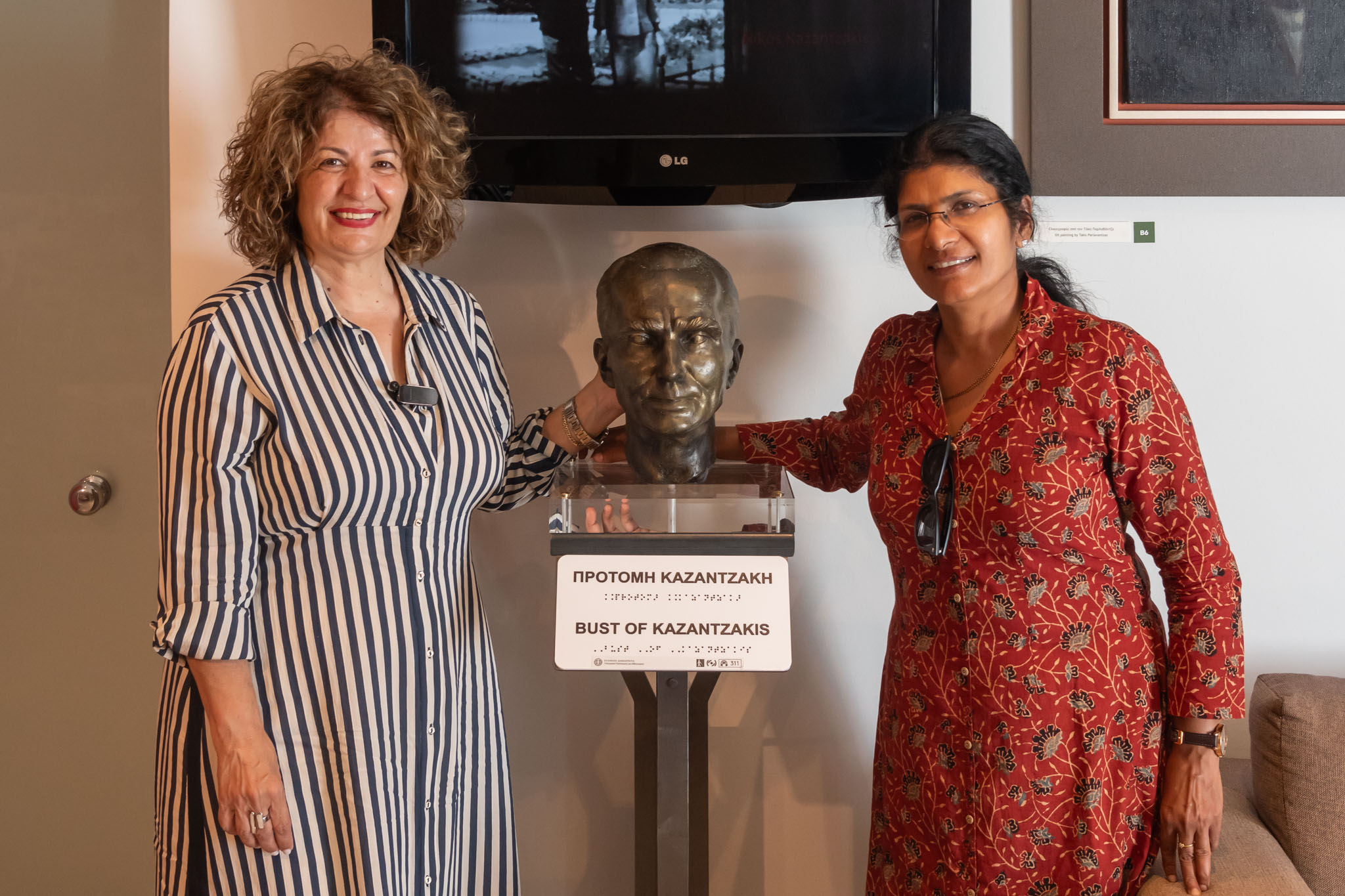
As you enter the museum, you are greeted by a bust of Kazantzakis and a sculpture of a hand holding a pen.
There is a small theatre inside where a 20-minute video on Kazantzakis was played. From the video, I learnt that the last published work of Kazantzakis is titled “Aniforos” and that it was published in 2022! It seems the book was written in 1946 but never published. On enquiry, I was told that the English version is yet to be released.
The museum has a lot of first edition copies, letters, personal effects of Kazantzakis displayed. I read the following in the museum: “Odysseus, he who sailed upon the octameters I was writing, had to be made to view the abyss with such a Cretan Glance without hope and fear, but also without insolence as he stood proudly erect on the brink of the precipice (from Report to Greco). The “Cretan Glance” with which all of Kazantzakis’s heroes are endowed is a particular moral stance, best summed up as the absence of fear and hope in the face of futility, the abyss and death. Kazantzakis conceived of it in a vision, while leaping at the Minoan bull leaping fresco, and believed that it resulted from the synthesis of diverse cultures and opposing perceptions.”
It was quite a coincidence that I had been to the Minoan site where this fresco had been discovered (Palace of Knossos) earlier in the day where a replica of the fresco can be seen even now.
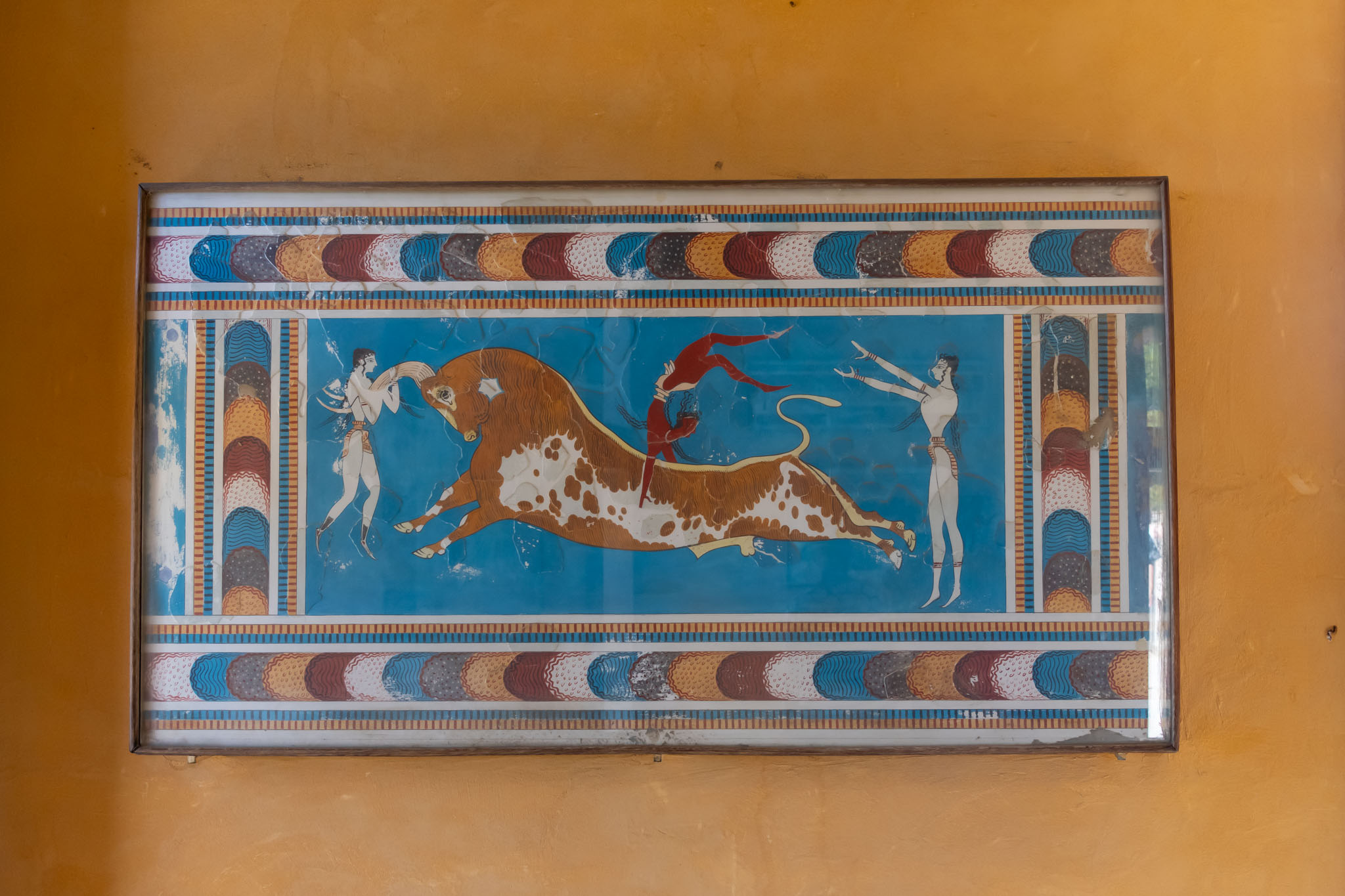
This fresco is supposed to date back to 1450 BC, and this was an important sport for Minoans. In this, a man faces a raging bull and then somersaults over its back to land on his feet behind the bull. As I was looking at the fresco, I was struck by the similarity of this sport to Jallikkettu from Tamil Nadu. In both, man is trying to establish his victory over a strong animal, the bull. But we digress, let us get back to the museum.
Kazantzakis worked on a sequel to the Odyssey from 1924 to 1938 and he considered this to be his magnum opus. It has 33,333 lines and follows the structure of Homer’s Odyssey but is about a final journey undertaken by Odysseus after the end of the original work. His most famous works were all published after this – Zorba the Greek (1946), Christ Recrucified (1948), Captain Michalis (1953), The Last Temptation of Christ (1955) and Report to Greco (1961). In 1947 he moved to Antibes in France to concentrate on writing and as can be seen from the above, his output was prolific. Zorba got him international acclaim and I was struck by the fact that Kazantzakis was already 63 by the time it was published!
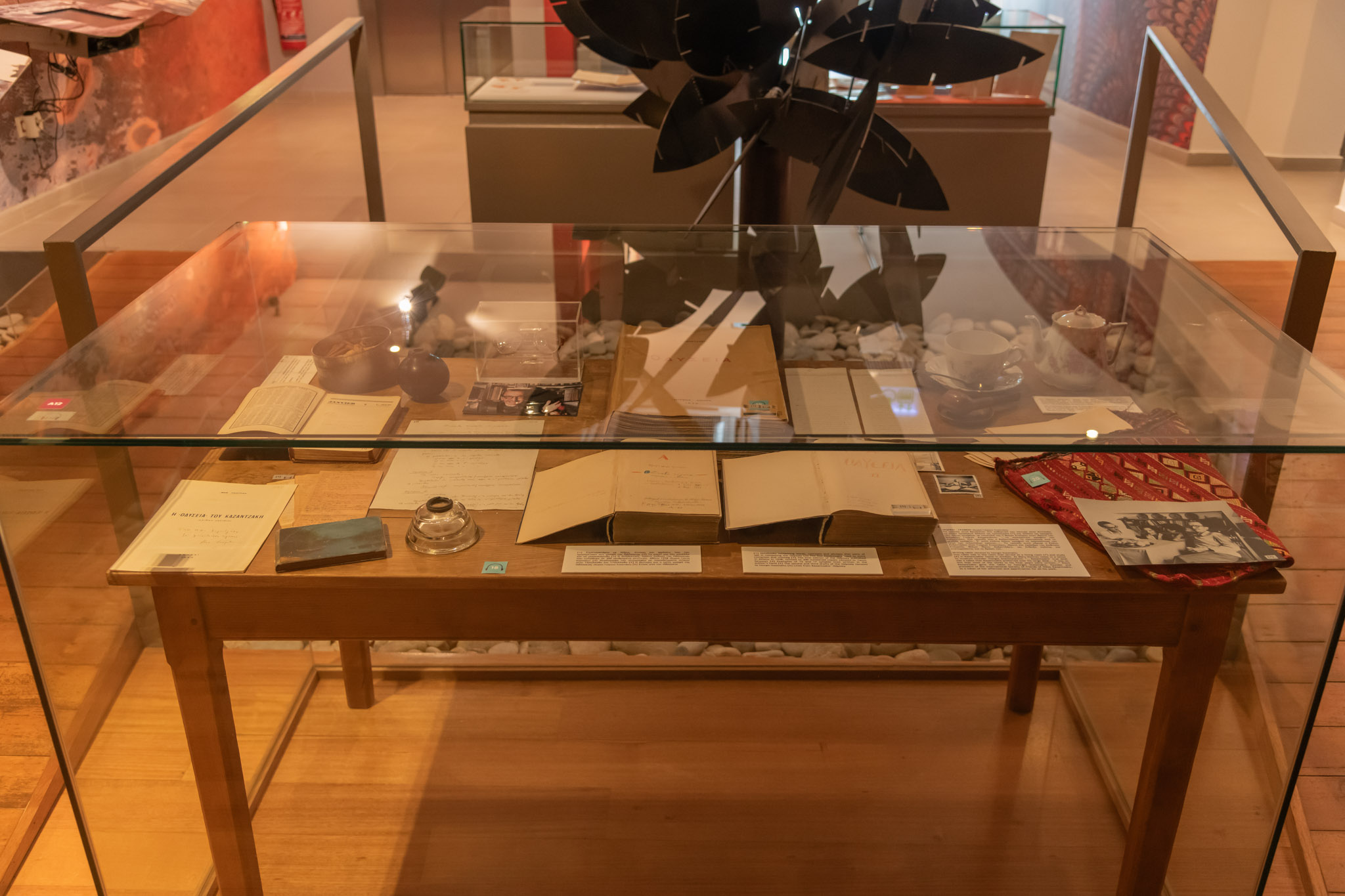
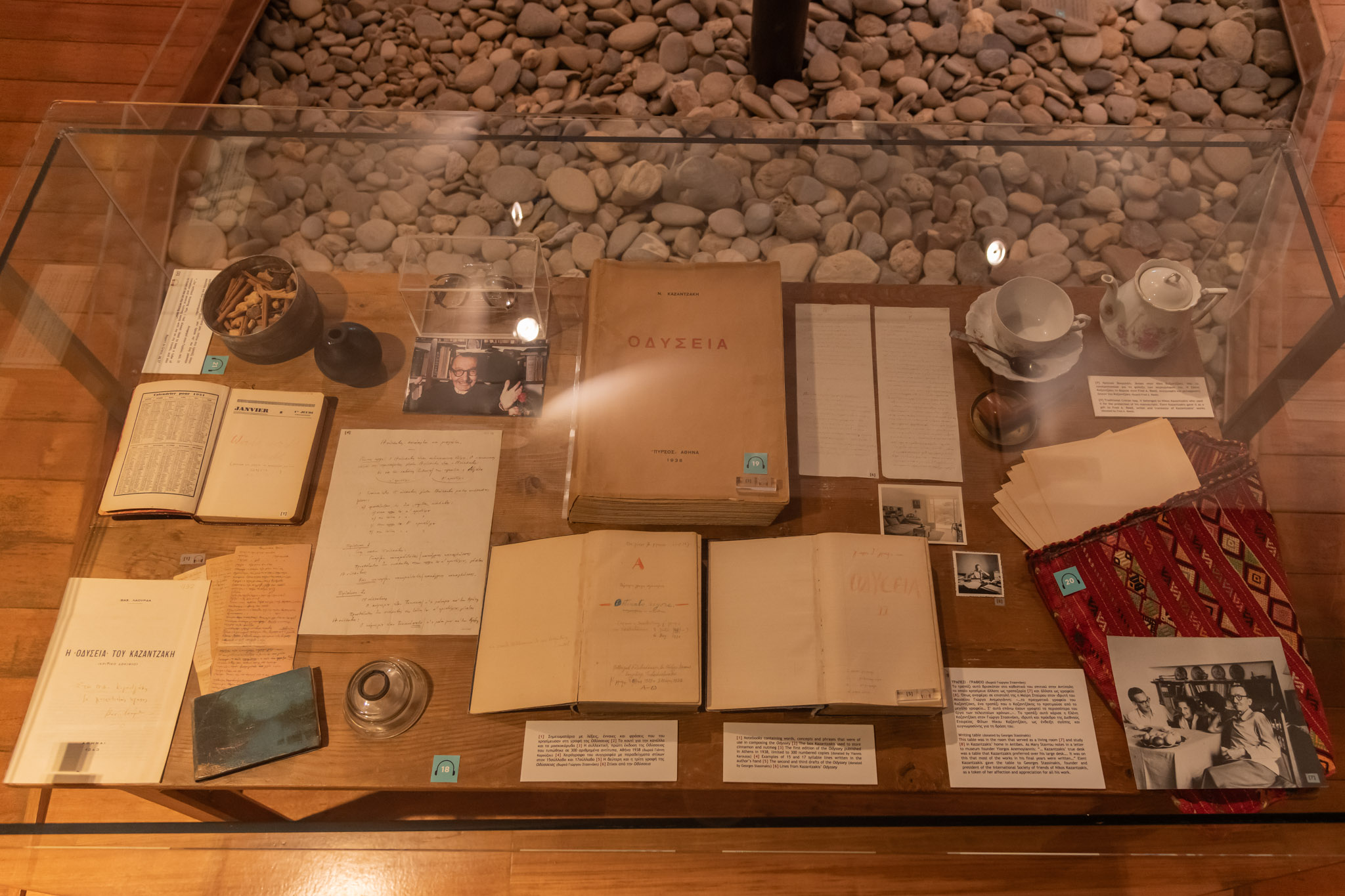
Even though he had a large desk at his house in Antibes, he preferred the table in the living room as his space to write and this table is displayed at the museum and on it, you can see the first edition of the Odyssey published in Athens in 1938 and limited to 300 numbered copies, notebooks containing concepts, words and phrases used in Odyssey and a box Kazantzakis used to store Cinnamon, Nutmeg etc.
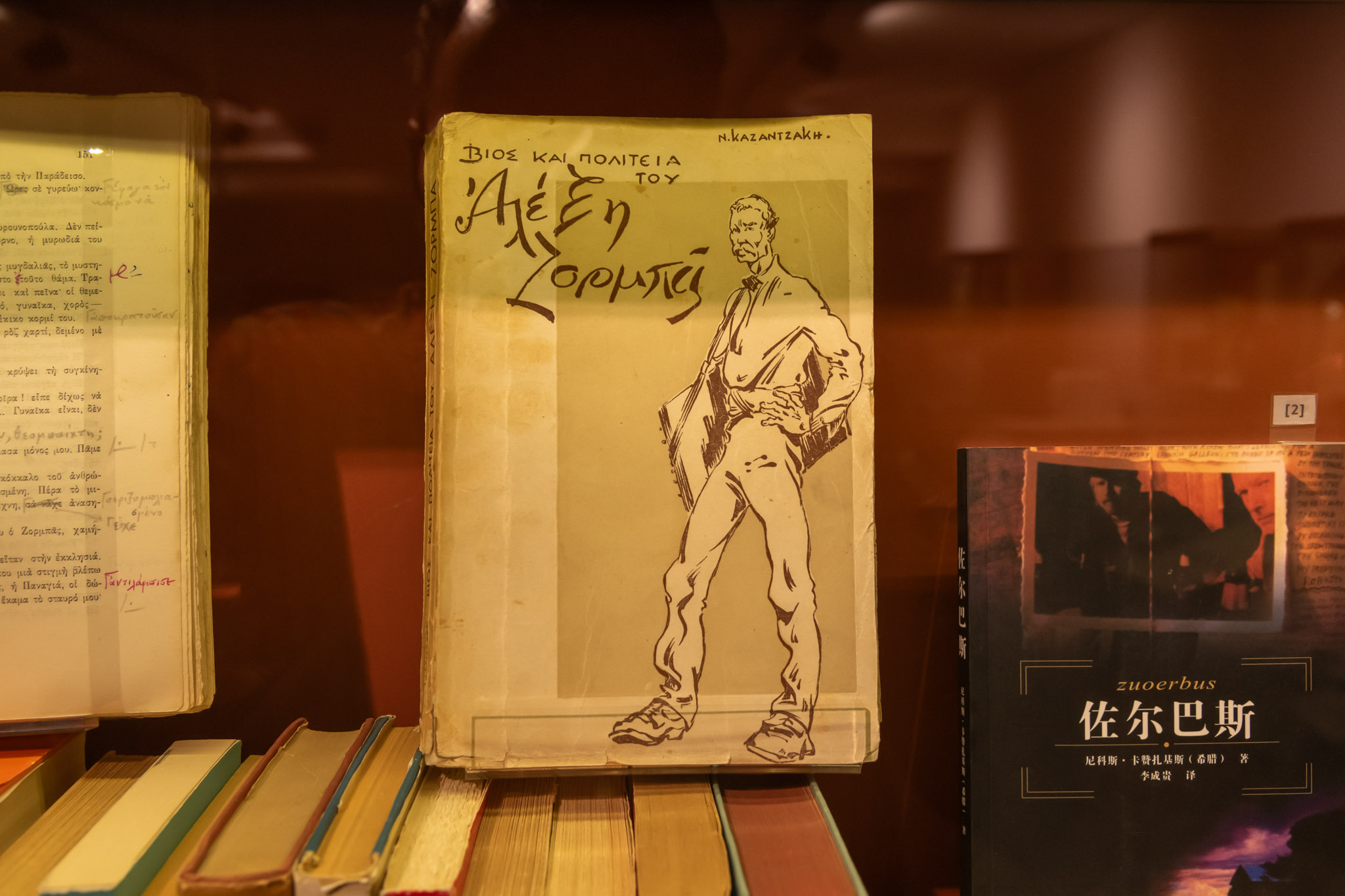
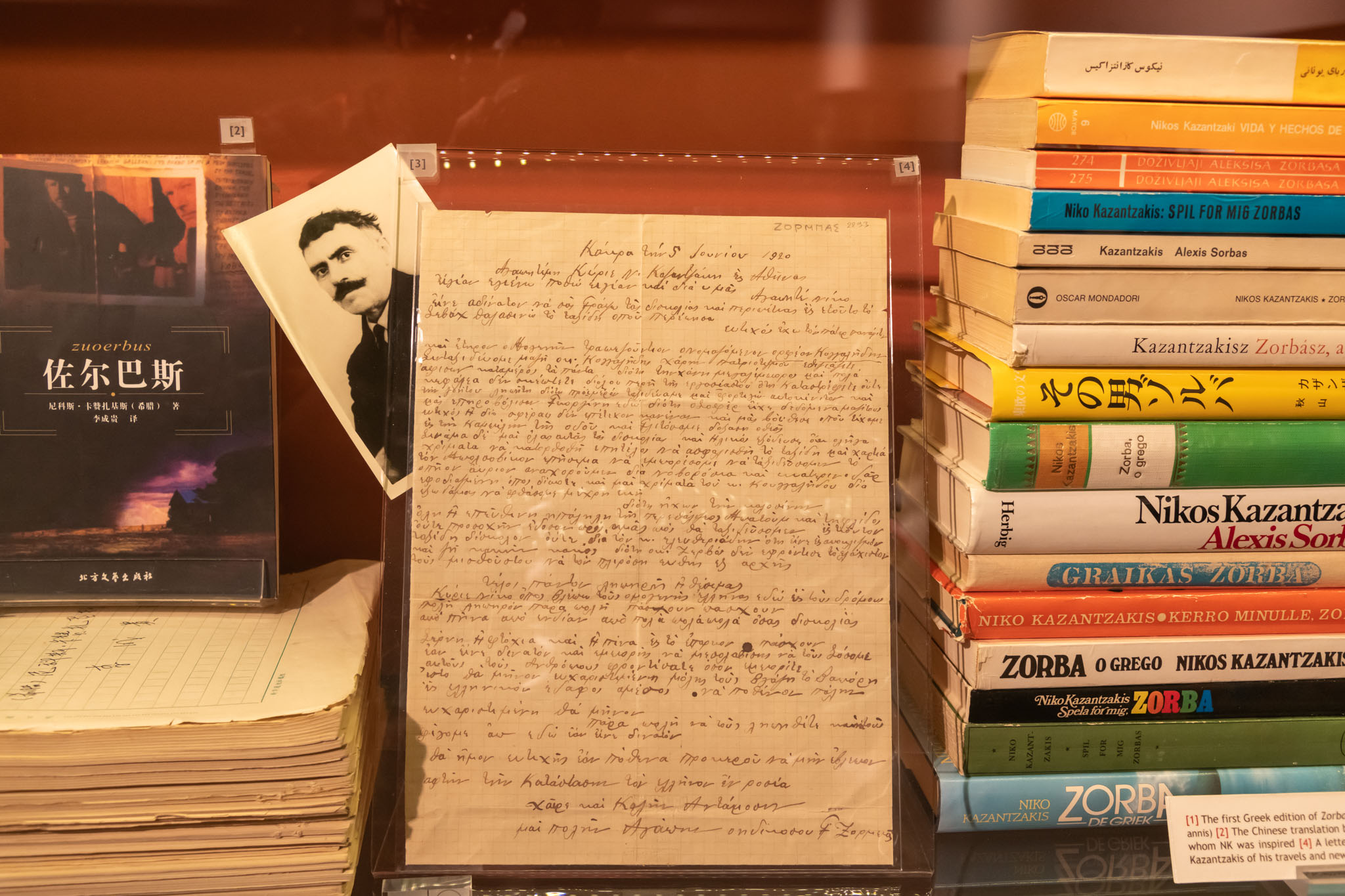
Yet another display is the first Greek edition of Zorba the Greek (which was originally titled Life and Times of Alexis Zorbas) along with a photograph of Yiorgis Zorbas, who inspired the character, Alexis Zorbas. However, it seems that Yiorgis Zorbas and Alexis Zorbas were actually poles apart in character! Yiorgis Zorbas was a friend of Kazantzakis and a letter he sent to Kazantzakis from Cairo in 1920 about his travels, is also displayed.
Yet another display that caught my attention was a notebook with notes for The Last Temptation of Christ (in Kazantzakis’ handwriting) and the first edition of the book.
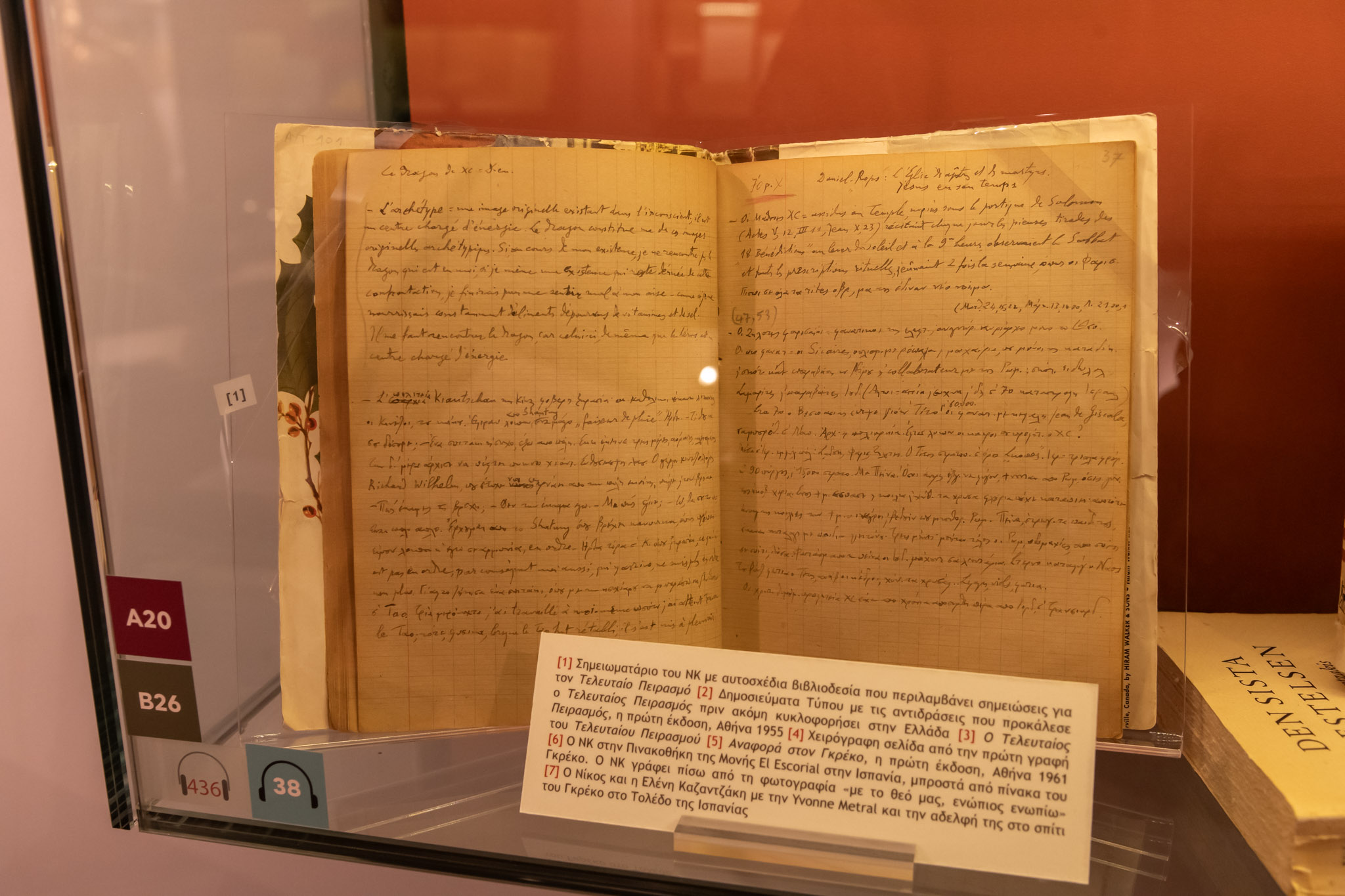
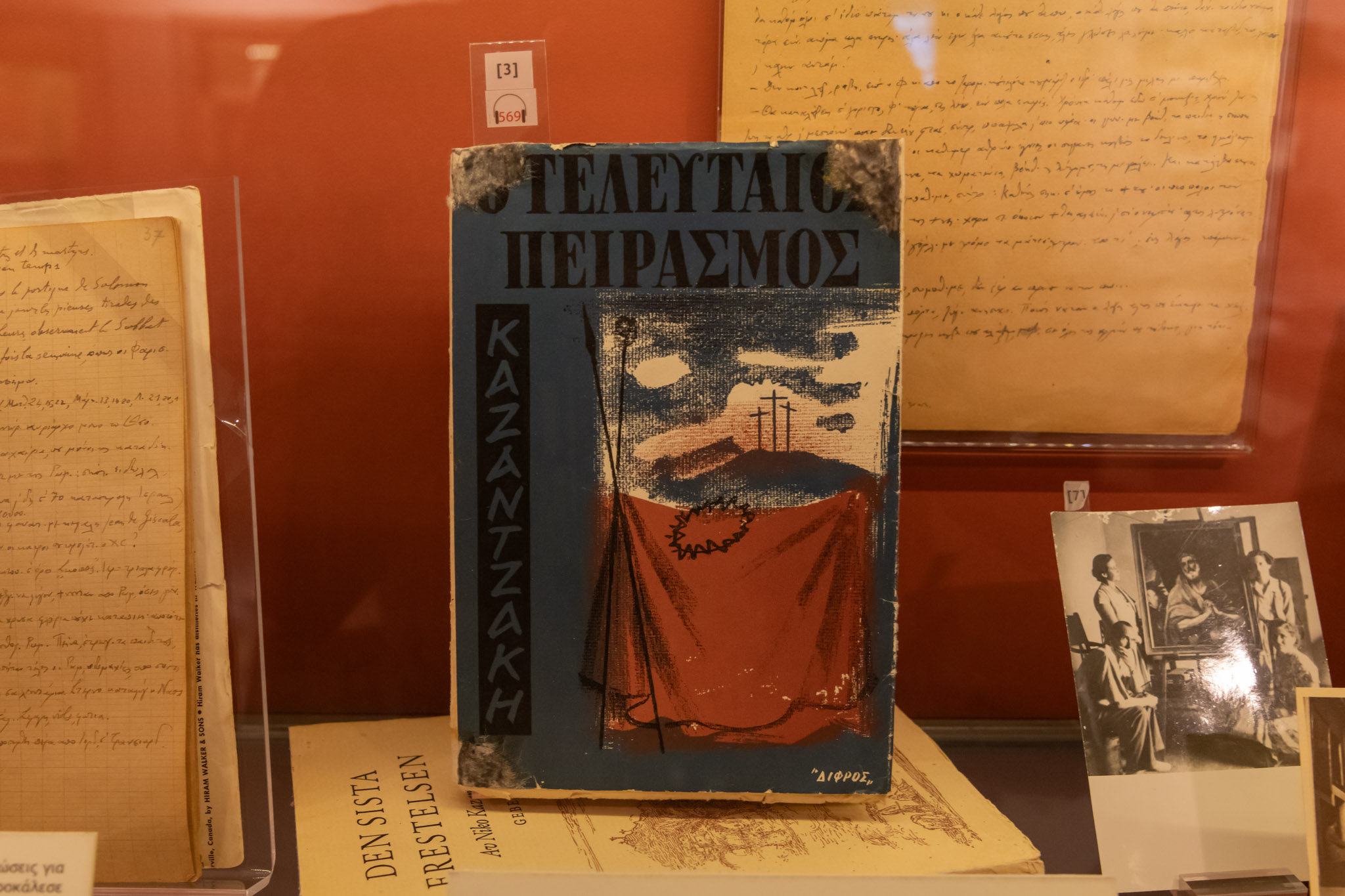
The museum is not very large in size, but it is has a lot of memorabilia connected with Kazantzakis and one can easily spend 2-3 hours there. This is a tremendous initiative to honour a great writer and thinker.
To our good fortune, the Director of the museum, Ms. Marilena Milathianaki, was present when we visited. She was pleasantly surprised to see visitors from India and she said that it is very seldom that they get Indians coming over. In general, it is difficult to reach the museum as it is far from Heraklion and there is hardly any public transport (she said there is only one bus per day) and so you need to have some private means of transport to be able to visit. She spoke to us about their collaboration with the Chinese museum and even invited us for a function that was to take place on the 19th of June wherein a new sculpture was being unveiled with some talks and a musical program. Unfortunately, we were leaving on 19th morning and hence couldn’t accept her invitation.
It was very educative and interesting to talk to her and she was also excited to hear about Kazantzakis’ popularity in Kerala. We congratulated her on the important work that they are doing, and she invited us to visit again whenever we are in Crete again. We parted with this gracious lady after taking a photograph.
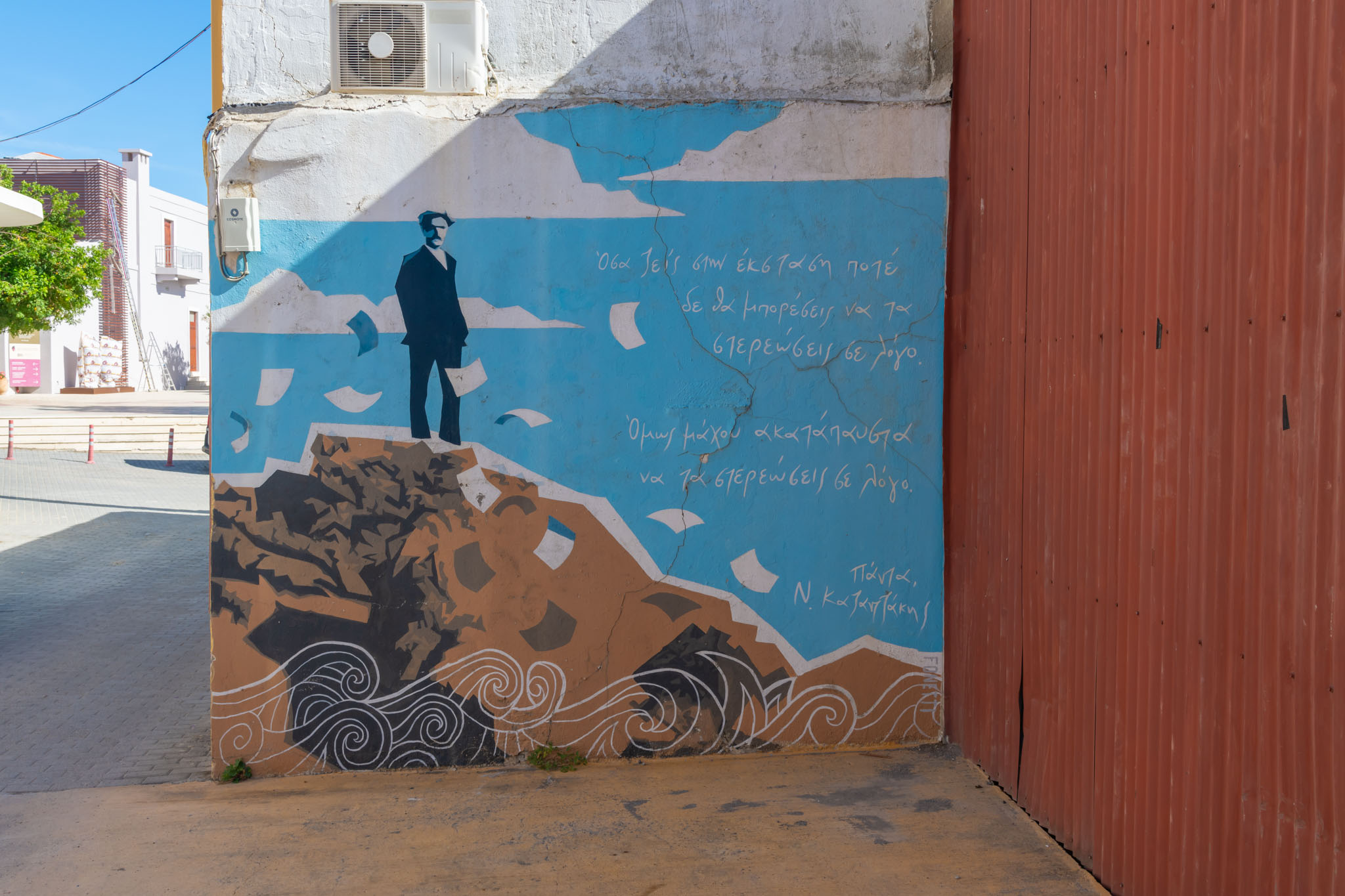
To me, this visit was the highlight of the entire trip to Greece. I felt that the Government should do more to ensure that the museum is easily accessible to the public and enlarge it; maybe they will, one day. Heraklion should be proud to be known as Kazantzakis’ city and I think they realise it, as the airport is named after him. As I walked back to our car, I turned back for a last look at the museum and saw this fantastic mural. Kazantzakis standing tall on the Cretan coast!
 Kaazhchakal