Posts Tagged ‘Europe’

Well, not footloose really, as I had planned everything for the trip – cities to visit, what I would see, where to stay…and booked everything as well. You see, I am not the guy who would just pick up a backpack and figure out stuff as it comes. I have been told that the uncertainty is fun; perhaps it is. But to me, it is a bit stressful. So, I started out after charting out everything but with a willingness to change, if the need arose. 

The focus of the trip was to visit some cities in Eastern European countries that I had not visited in the past (Prague, Bratislava, Budapest, Zagreb, Split, Ljubljana, Cesky Krumlov, Tallinn, Riga and Vilnius) as well as some cities in Northern Europe (Helsinki and Copenhagen) and then end with a drive in the Scottish wilderness. The expected duration was six weeks, and this would be the longest solo trip I had been on, so far. Of course, about 10 days after I started, Sri joined for a few days and then she left. Then Jay and Sri joined me in the last few days at Scotland. That was welcome as it broke the “monotony” of the solo trip. 

I started my trip in Amsterdam as my SCHENGEN visa was issued by The Netherlands. A chance encounter in a tram sent me to the contemporary art museum there and that seemed to set the tone for the whole trip as I only visited contemporary art museums and photography museums in all the cities I visited and not a single museum that showed traditional or classical European art. In most museums I visited, I felt the art is evolving. To my untrained eye, it looks a bit behind the times, though each museum had some brilliant work or the other. Of course, the issues they are focused on, are different. In the countries that used to be within the Iron Curtain, they are coming to terms with freedom and the issues caused by Capitalism. In the Northern cities like Helsinki, climate change is a real existential issue. At the Helsinki Biennale, I watched a brilliant video titled “Teardrops of our grandmother” by Jenni Laiti & Carl-Johan Utsi, which clearly brings out the issue they face because of climate change and glaciers melting. A sentence from the film stuck with me – “we should not live at a pace faster than that of the land and the body”. 

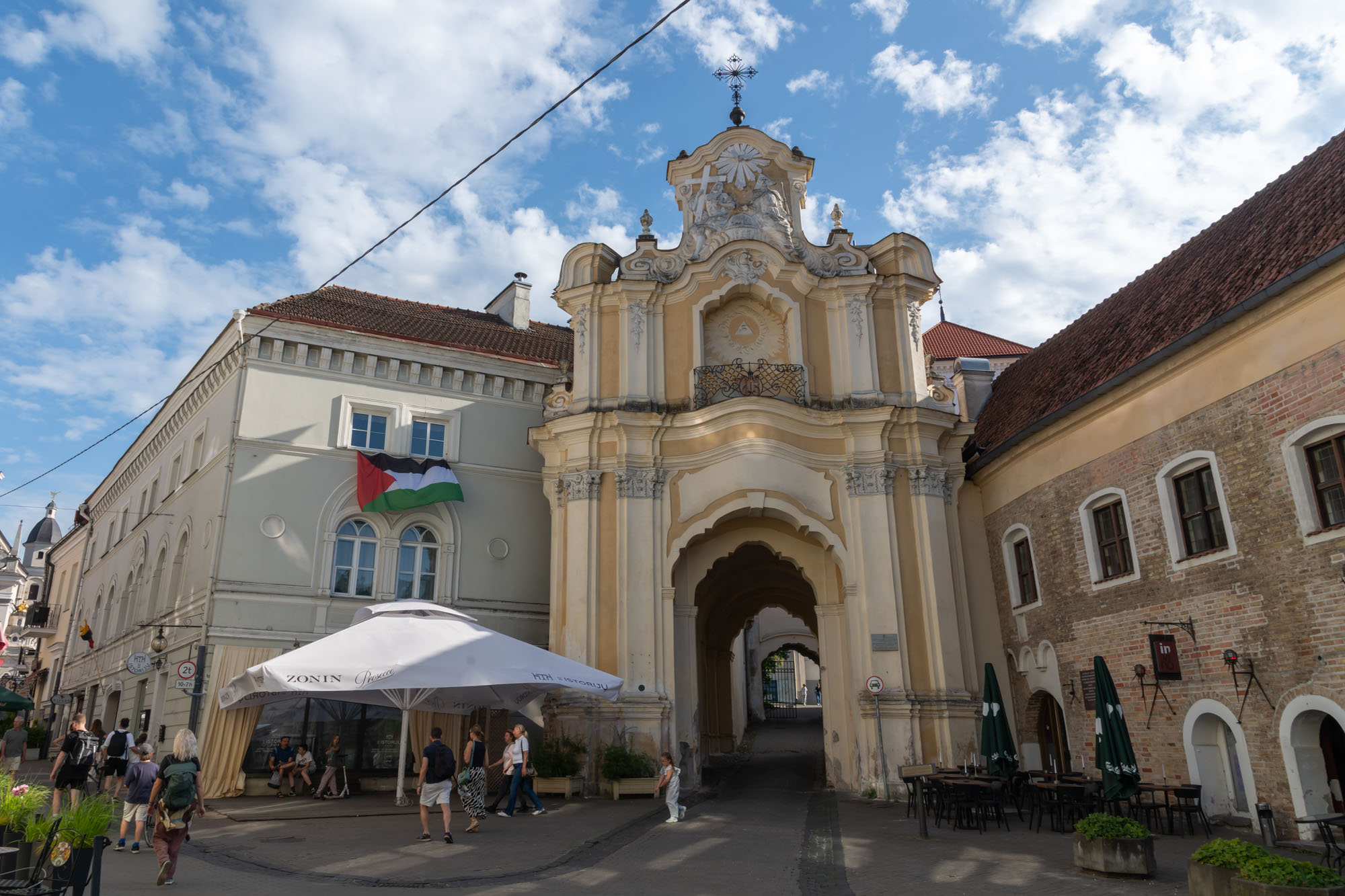
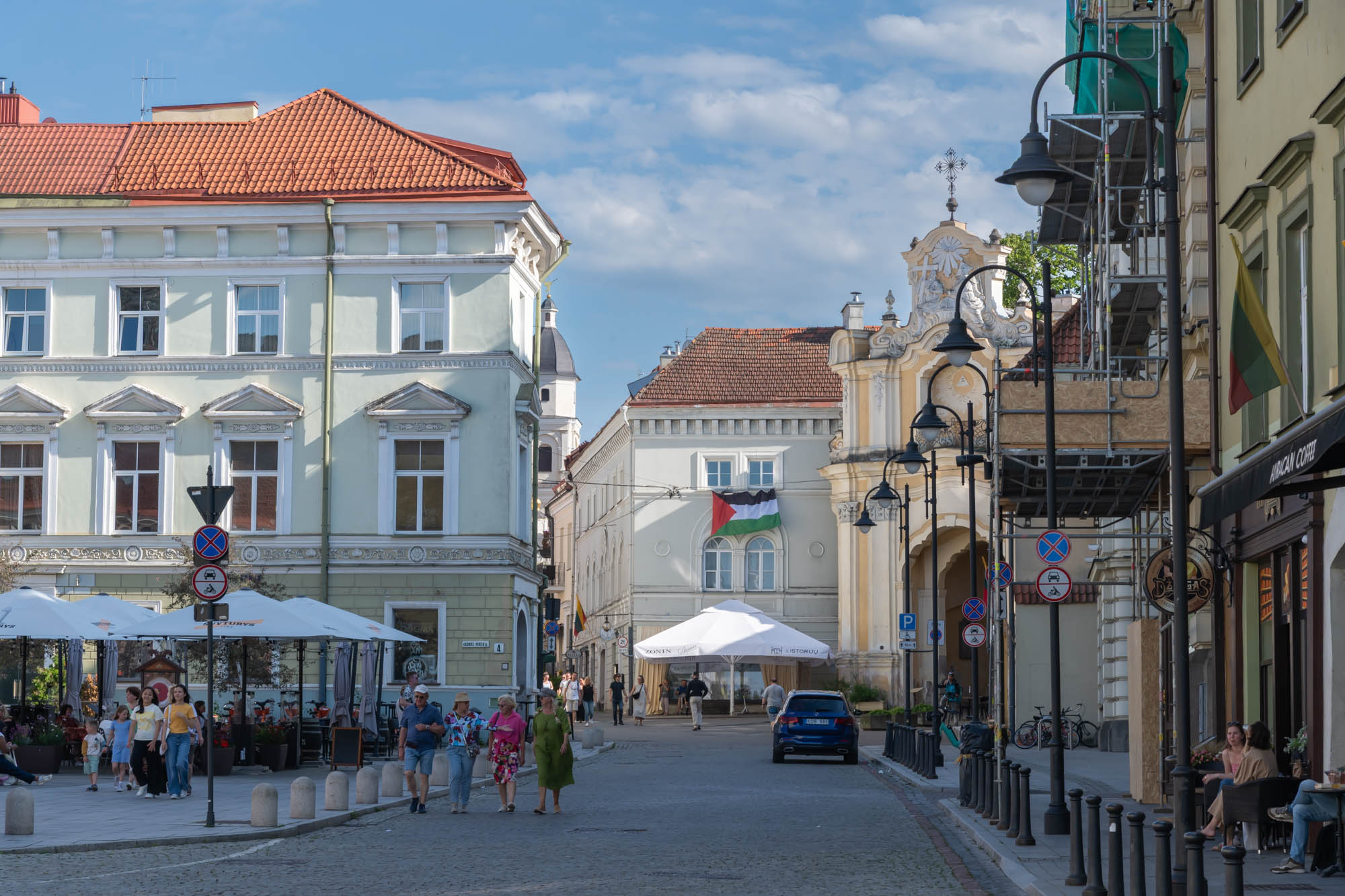
Europe’s official response to the Palestine issue has been downright deplorable and while you did find some instances of public support being displayed for the Palestinians (like the Ukranian church in Vilnius flying a Palestinian flag), the museums were noticeably silent on the issue, which is a shame. 
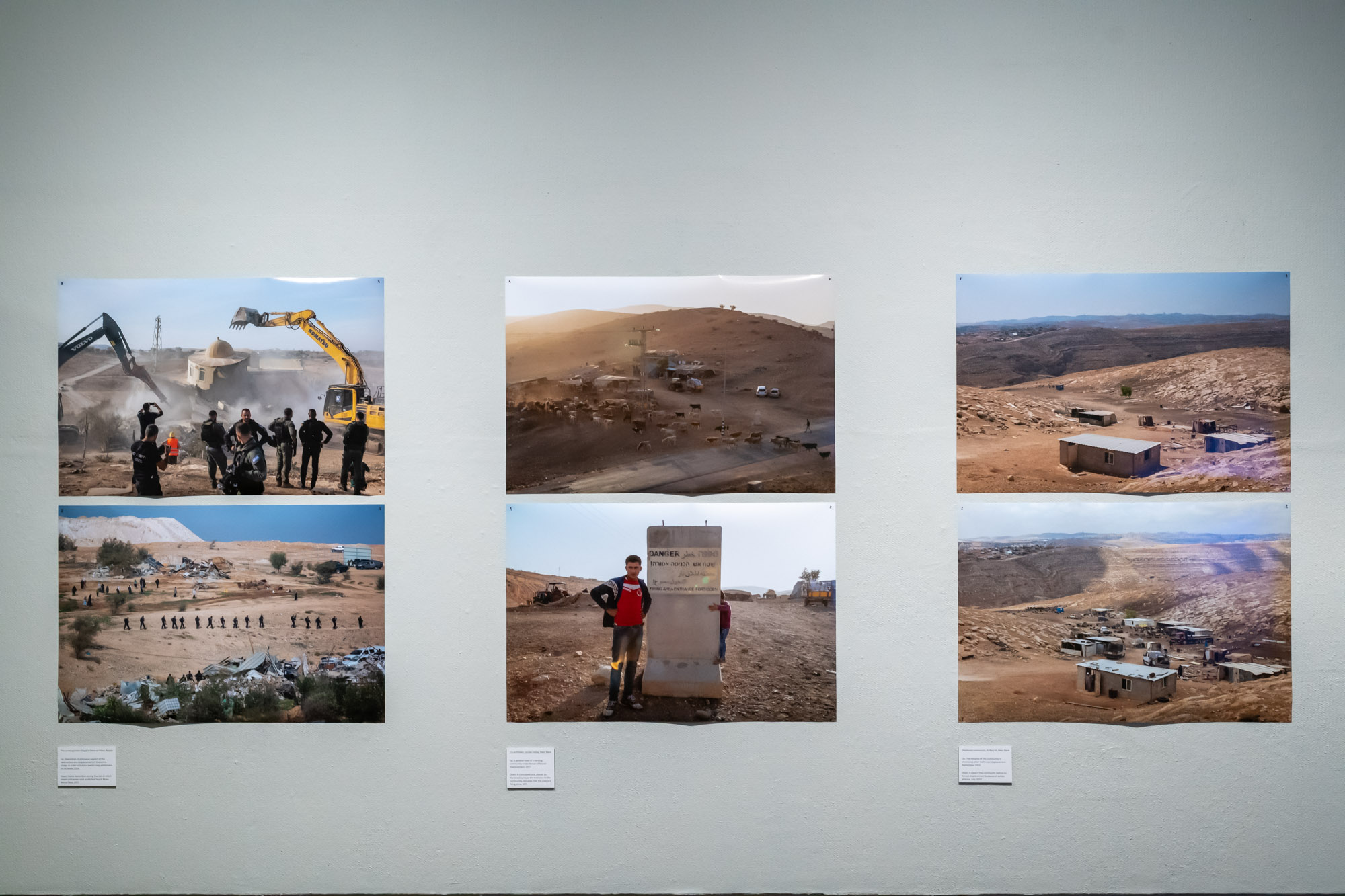
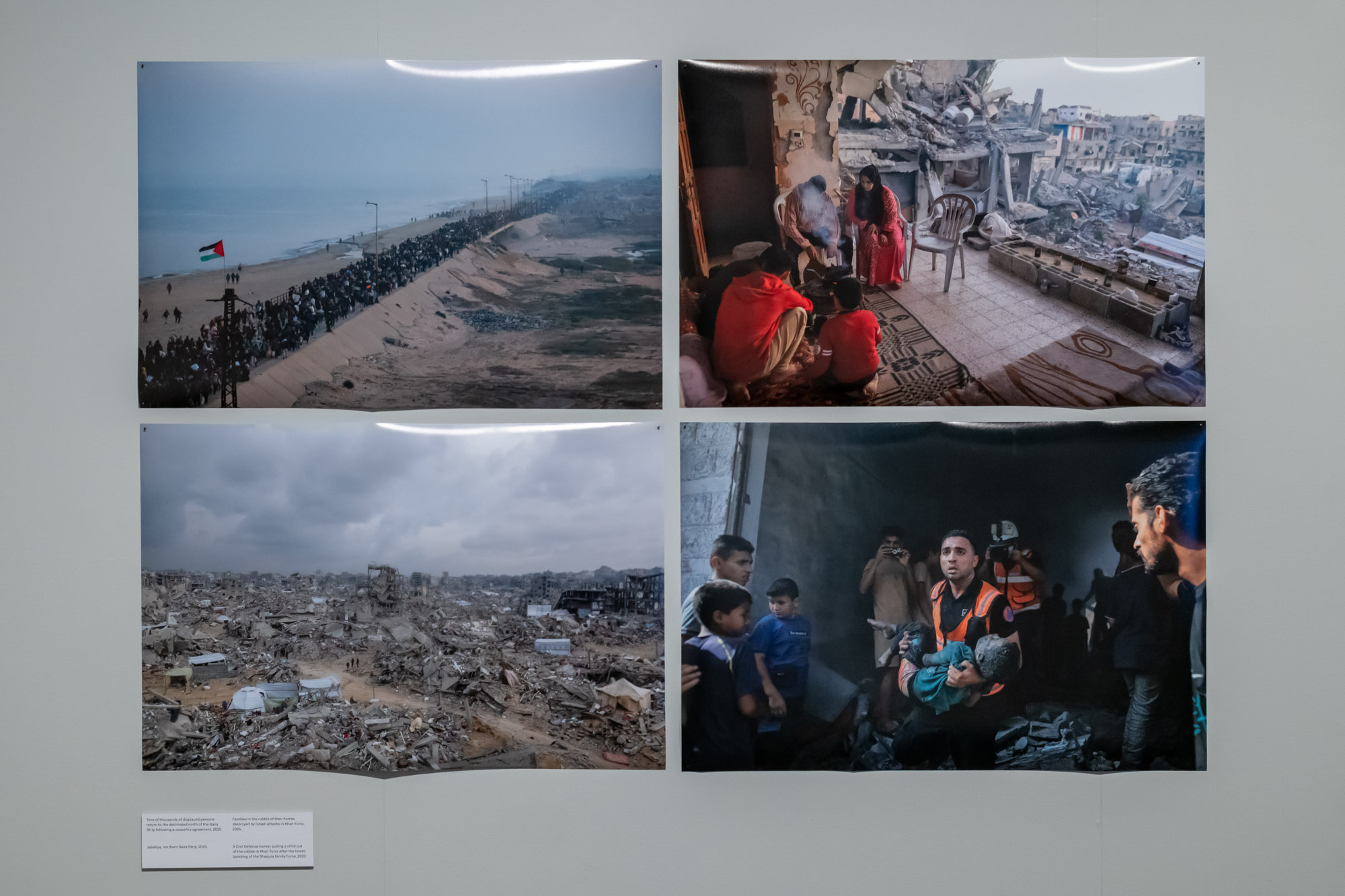
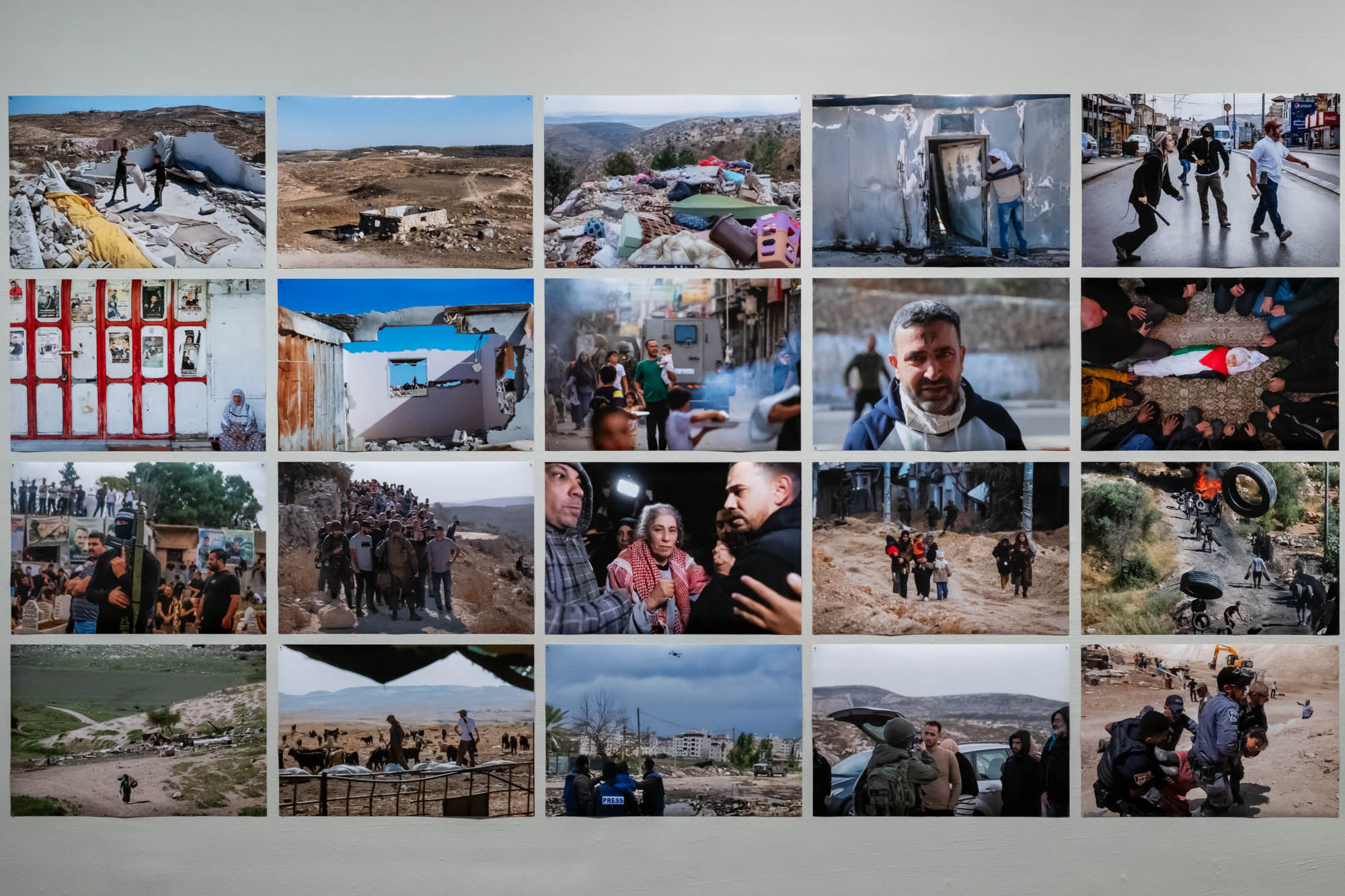
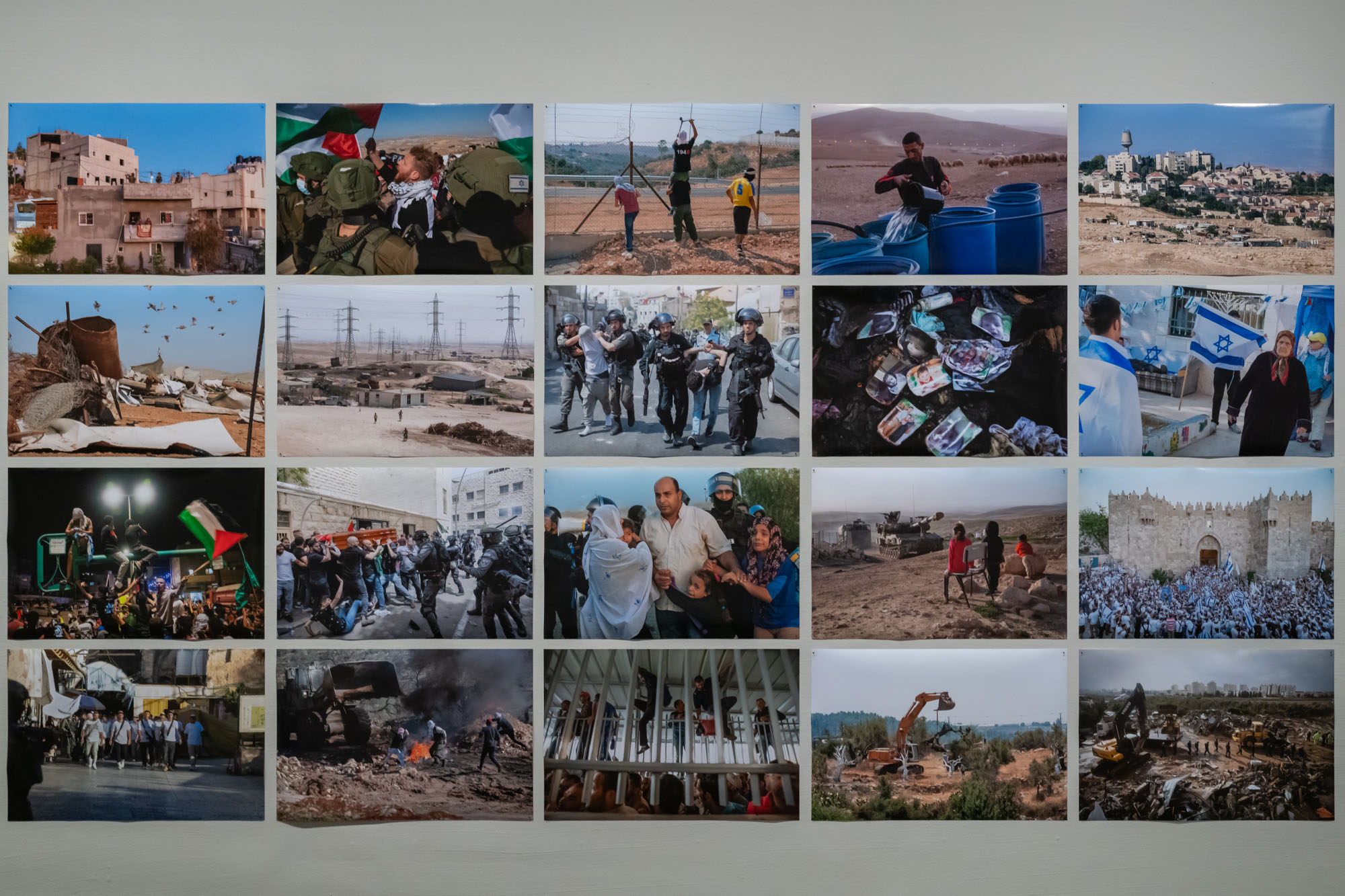
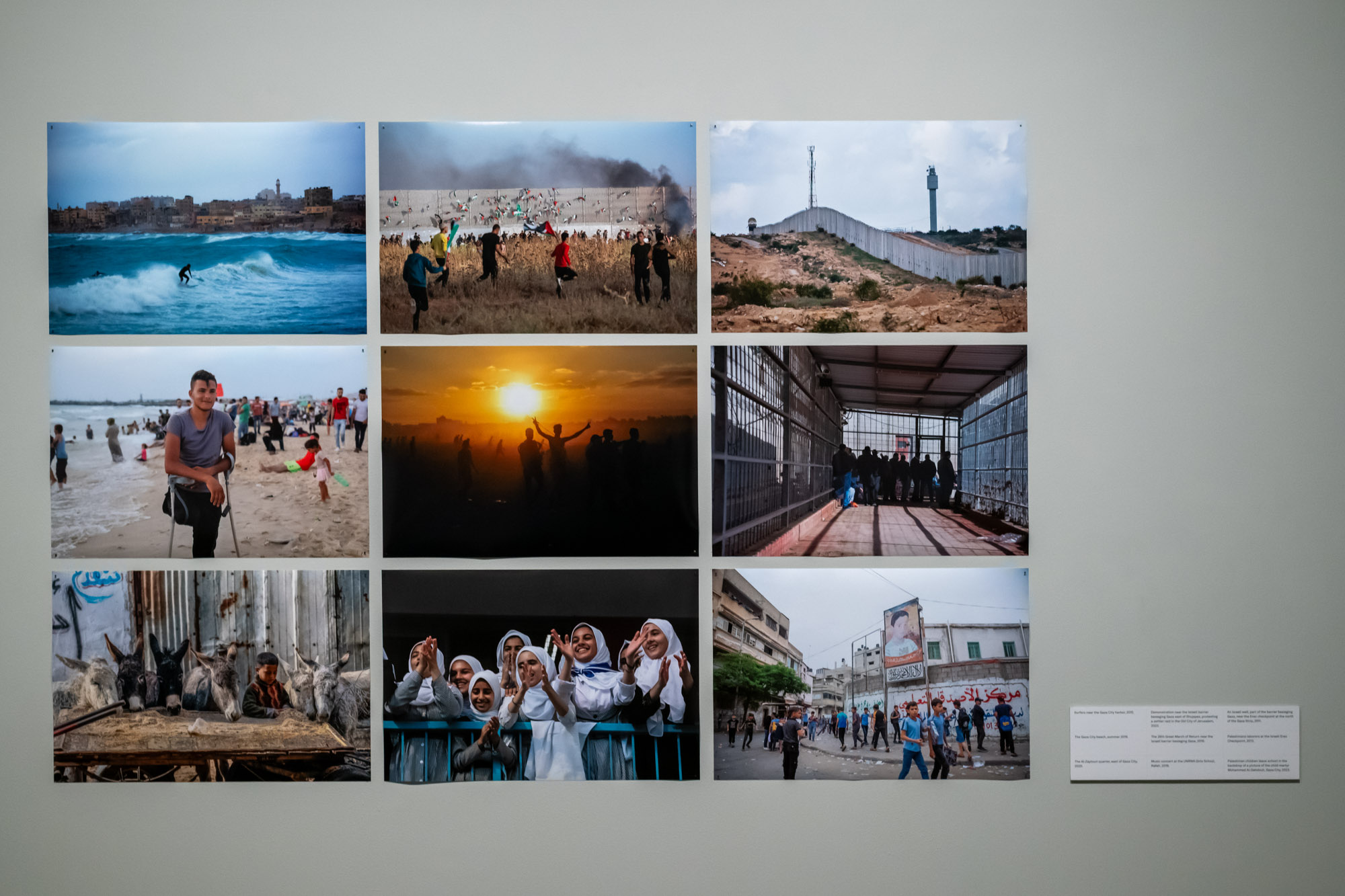
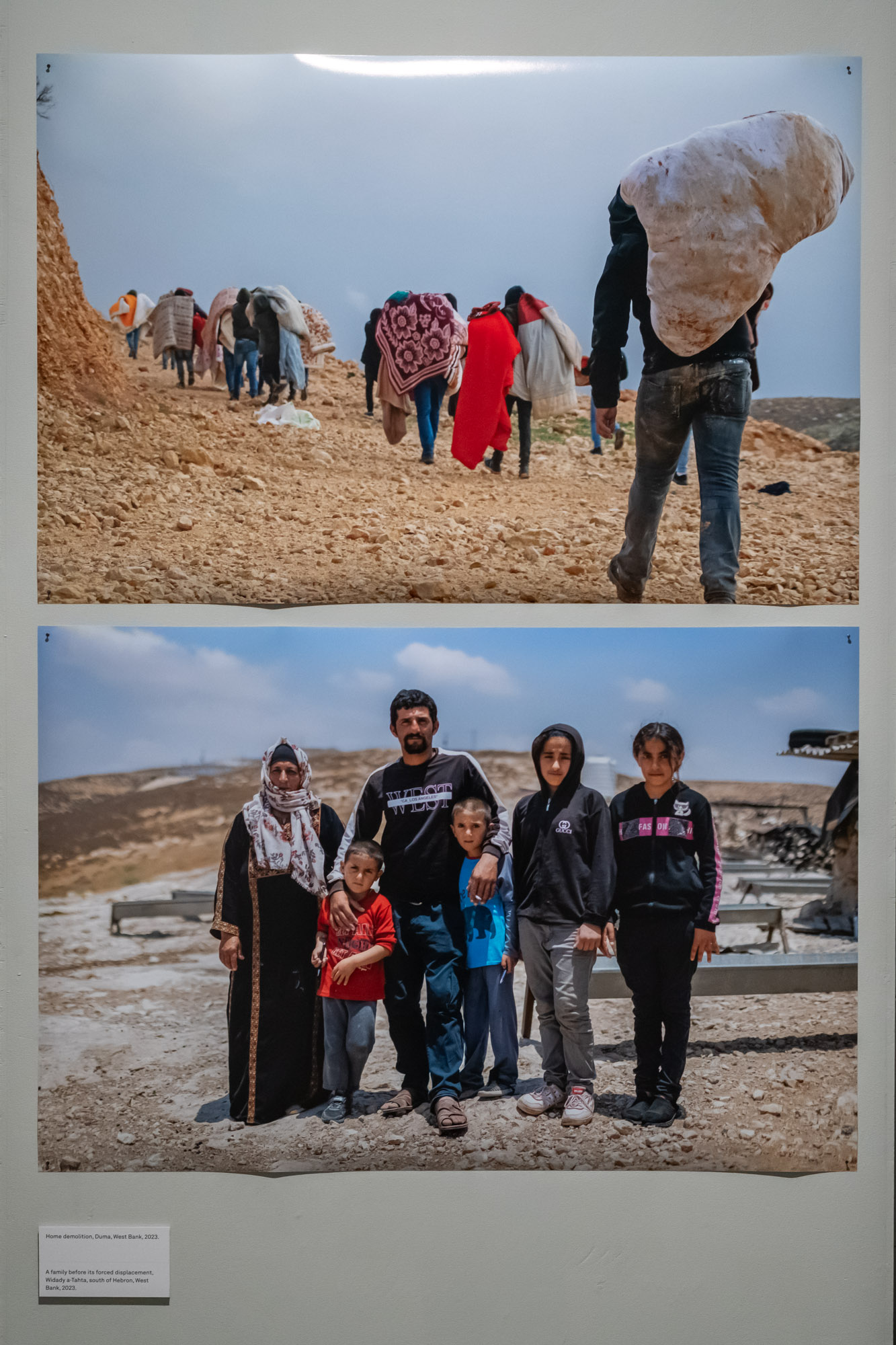
A welcome surprise was The Finnish Museum of Photography in Helsinki, which had organised an exhibition of photographs taken by a photography collective called “Activestills”. They have been documenting Israeli colonial violence and Palestinian resistance since 2005. 
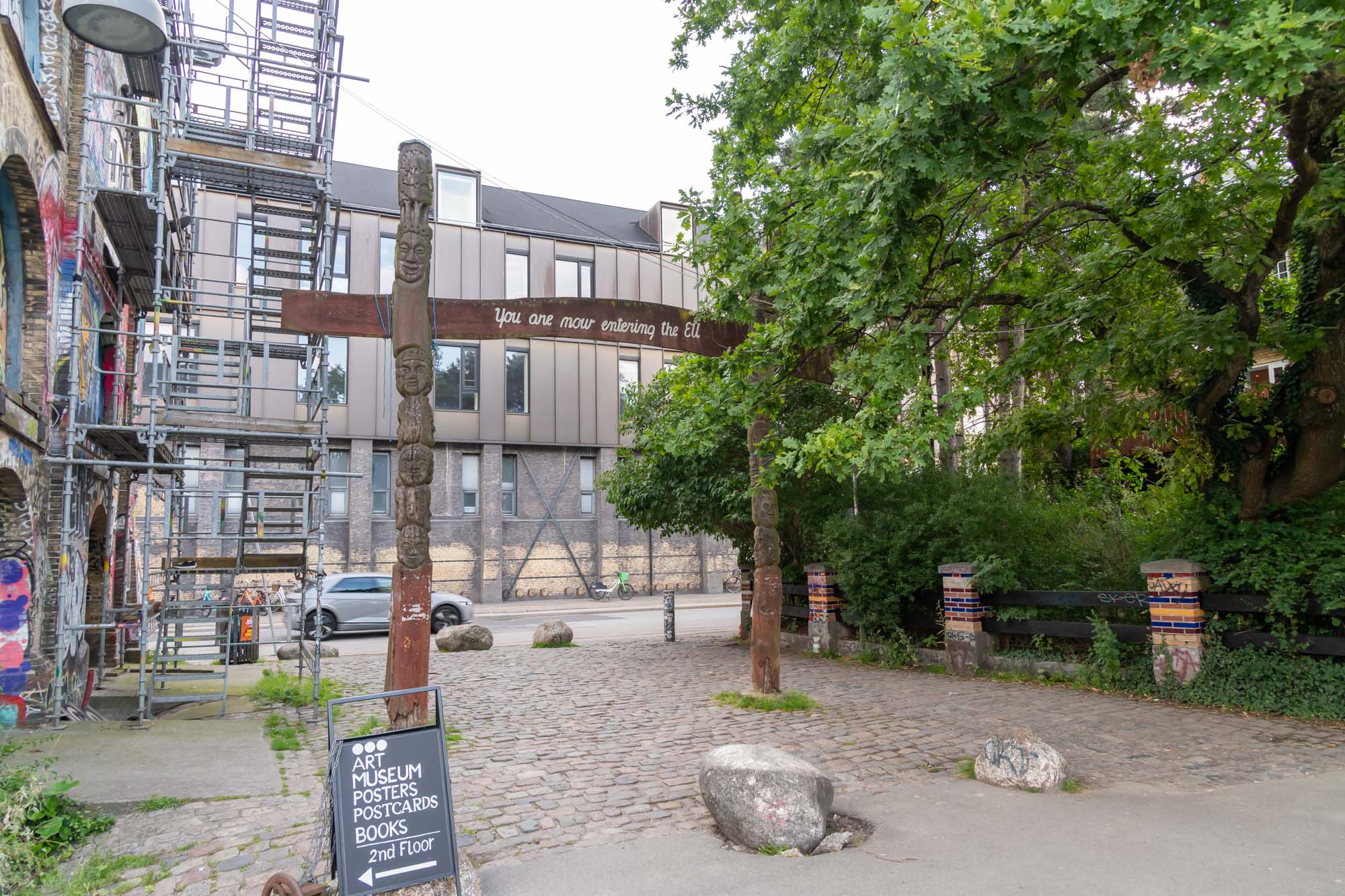
Later, when I was walking in the “independent region” of Christiania in Copenhagen, I met a gentleman with the Palestinian shawl Keffiyah draped around his shoulders. He said that he lives in Copenhagen and walks around like that quite often. It seems when he did that in Germany, he was warned by a friend to take it off as that could get him arrested. It seems he also got beaten by the police once during a protest, while he had the Keffiyah on him. He showed me various photos he had taken about protests in Denmark related to different issues. We talked a little bit about the rise of right-wing politics and such; two souls sharing their pain.

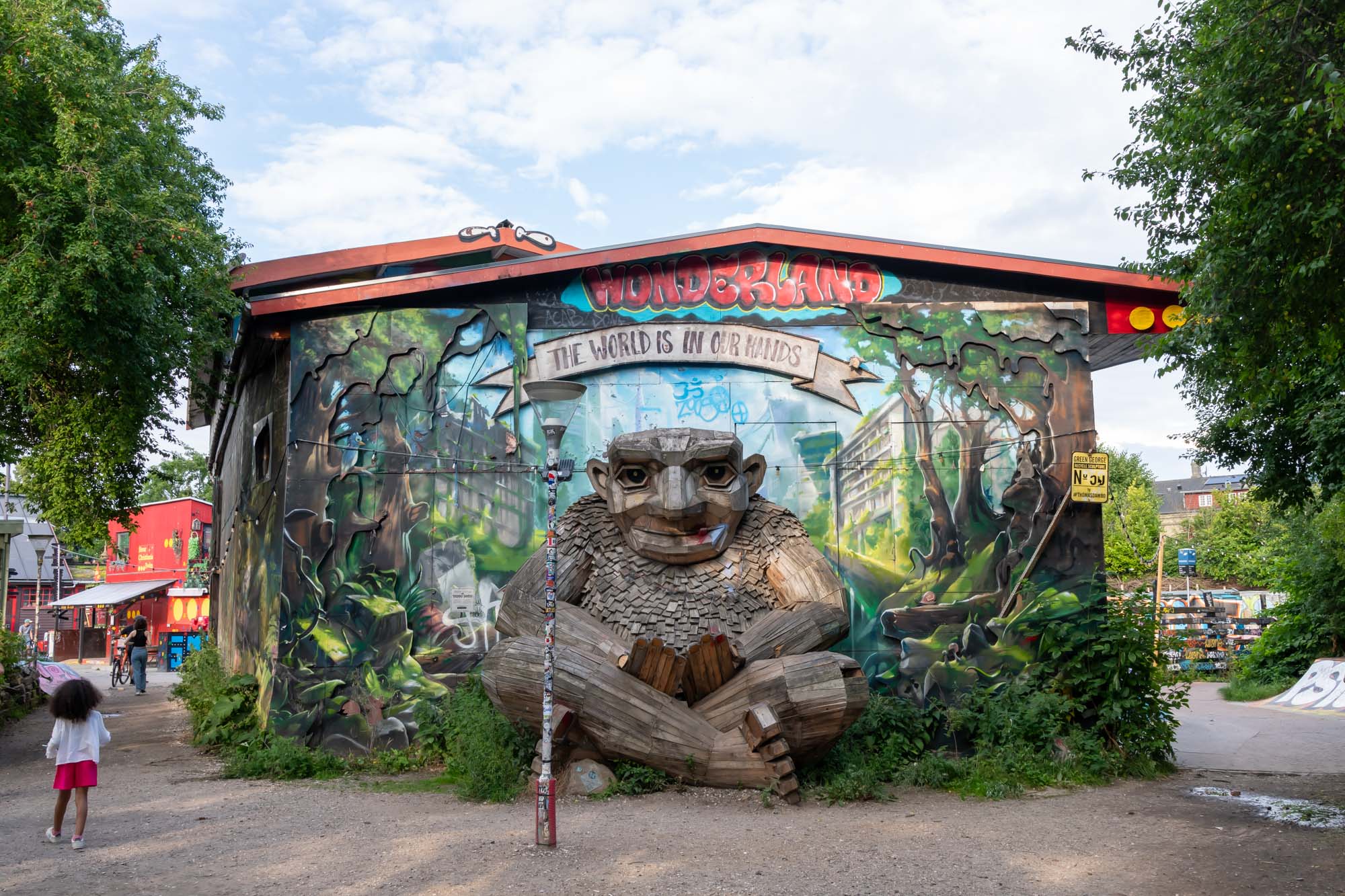
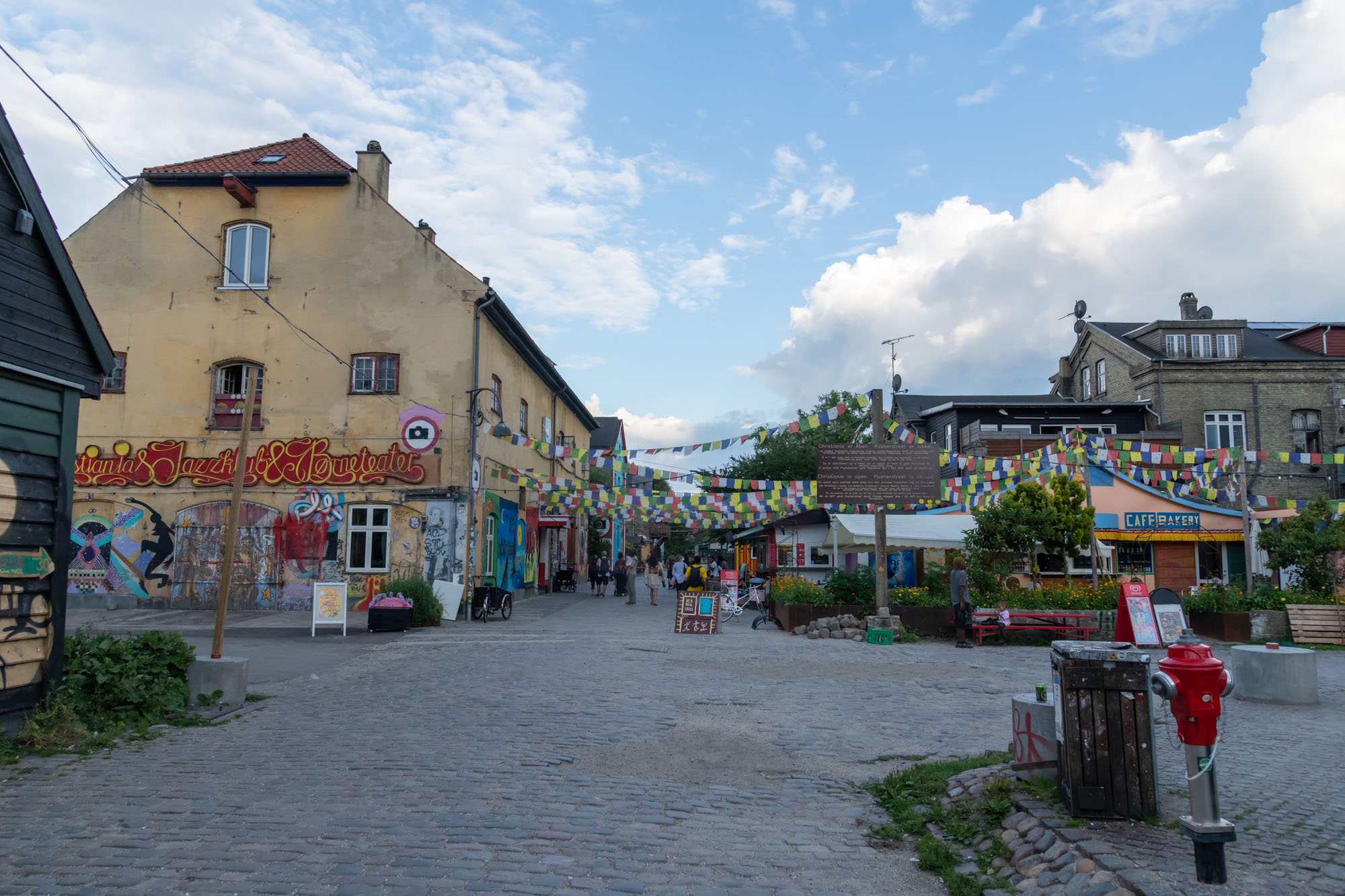
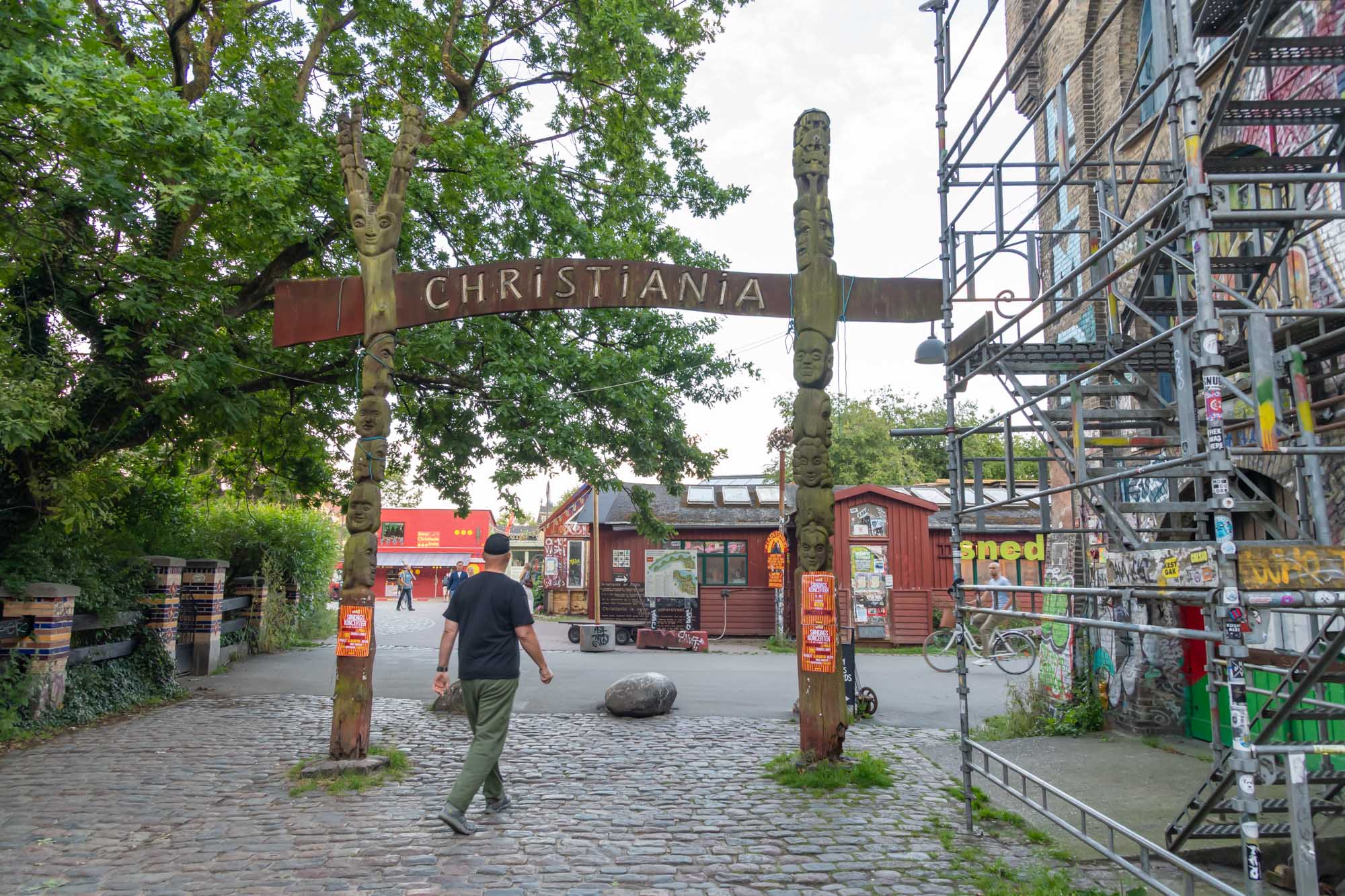
Christiania or Freetown Christiania is an anarchist commune that started in 1971, squatting on an old military base. It was a space for an alternate model of living and the place had its own currency and rules. The idea was to be a community that had space for all and be away from exploitation and discrimination. Over the years, some gangs started to dominate Christiania, and it became a paradise for drug peddlers with the main street being called Pusher Street. From the early 2000s the government started a push to bring Christiania under its control and now, it has more or less succeeded. Some of the erstwhile squatters in Christiania have bought their properties and now there is a move to evict all squatters. Cannabis and drug peddling is still going on, though much less visible now. There are about 800 to 1000 residents in Christiania now, spread over an area of about 19 acres. 

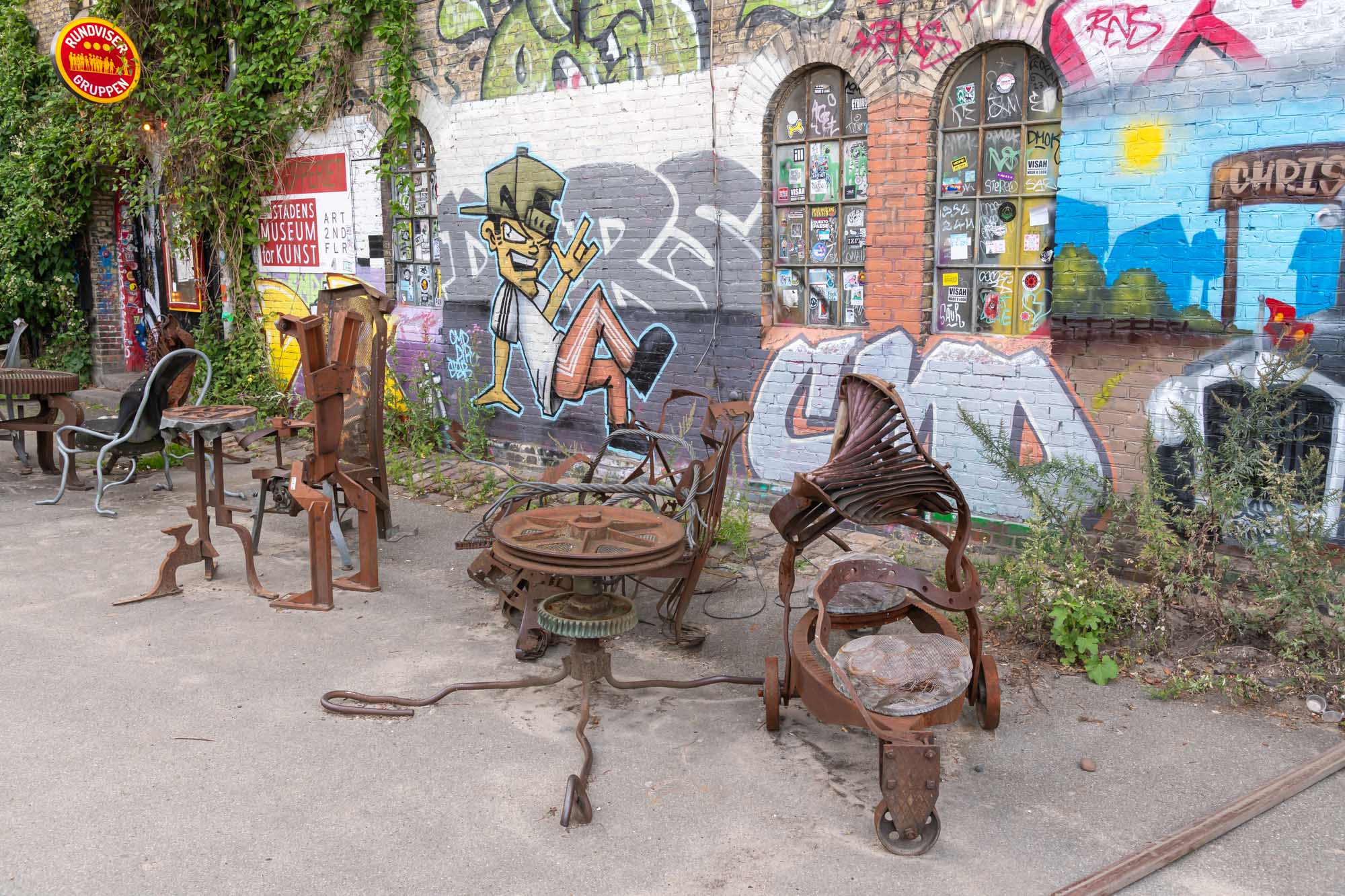
Today, Christiania has become a tourist attraction, and you find tourists walking around the place with little regard for the people that live there or their principles. These are people with an independent mindset and against the exploitative systems of capitalism and big corporations. Privacy is a very important concern for them. I had done my research before going there and so I was mindful that people would be wary of cameras there. I saw some furniture made of machine parts, which I wanted to photograph. There were a couple of people sitting near those and I asked one guy whether he was comfortable with me photographing the furniture. Something in the way I asked him, or my manner seemed to appeal to him, and he started talking to me. He told me that most of the tourists are a problem as they never spend anything in the place to support the local economy but were simply voyeuristic and looking at the residents as if they were some museum pieces. I agreed with him, and he told me he was speaking with me as he didn’t find that in me. Right then, an Indian family walked by with the man holding up a GoPro type camera and recording everything around him. Even I found it irritating and the gentleman I was speaking with (let us call him X), did not like it at all. However, he was polite in how he told the guy to not record. The man stopped his recording, but I found him doing it again later in another part of Christiania.

I spoke for quite some time with X and his friend, and he took me inside his workshop and showed me stuff he was working on. They told me that they are very sad at Christiania being gentrified and when I asked him whether the earlier model of a free town was workable, they were quite sure it was. They said the drug trade didn’t bother anybody, and people were using it on their freewill but then drugs weren’t the mainstay or the fundamental reason behind the commune. The idea was to have an alternate lifestyle, which was not dictated by the corporations. Christiania used to produce many goods that were consumed by the local people, and the economy was doing well. Sadly, corporations are taking over now and people who had been squatting there for 30-40 years are being kicked out. X himself has been staying there since the last forty years. 

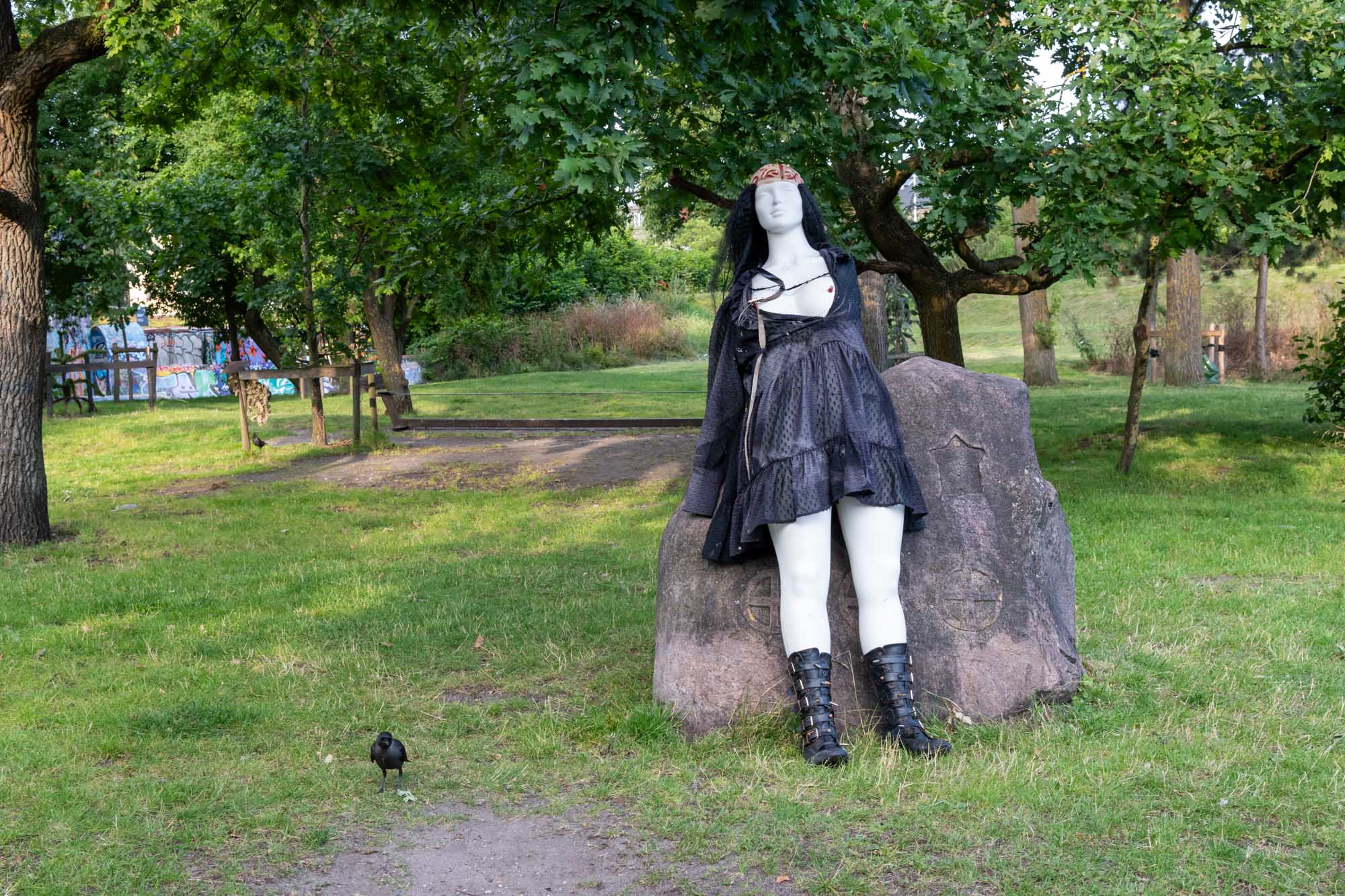
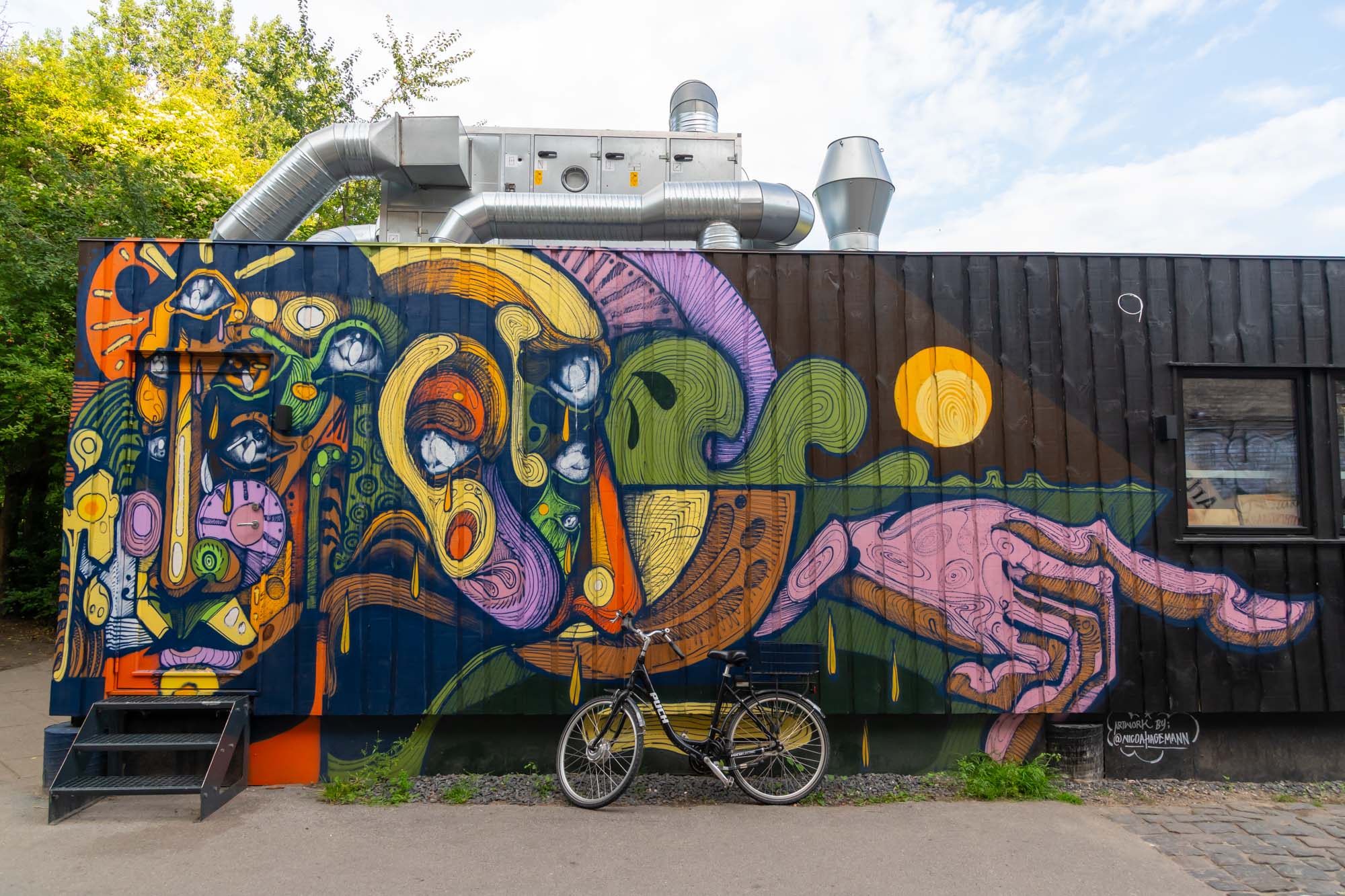
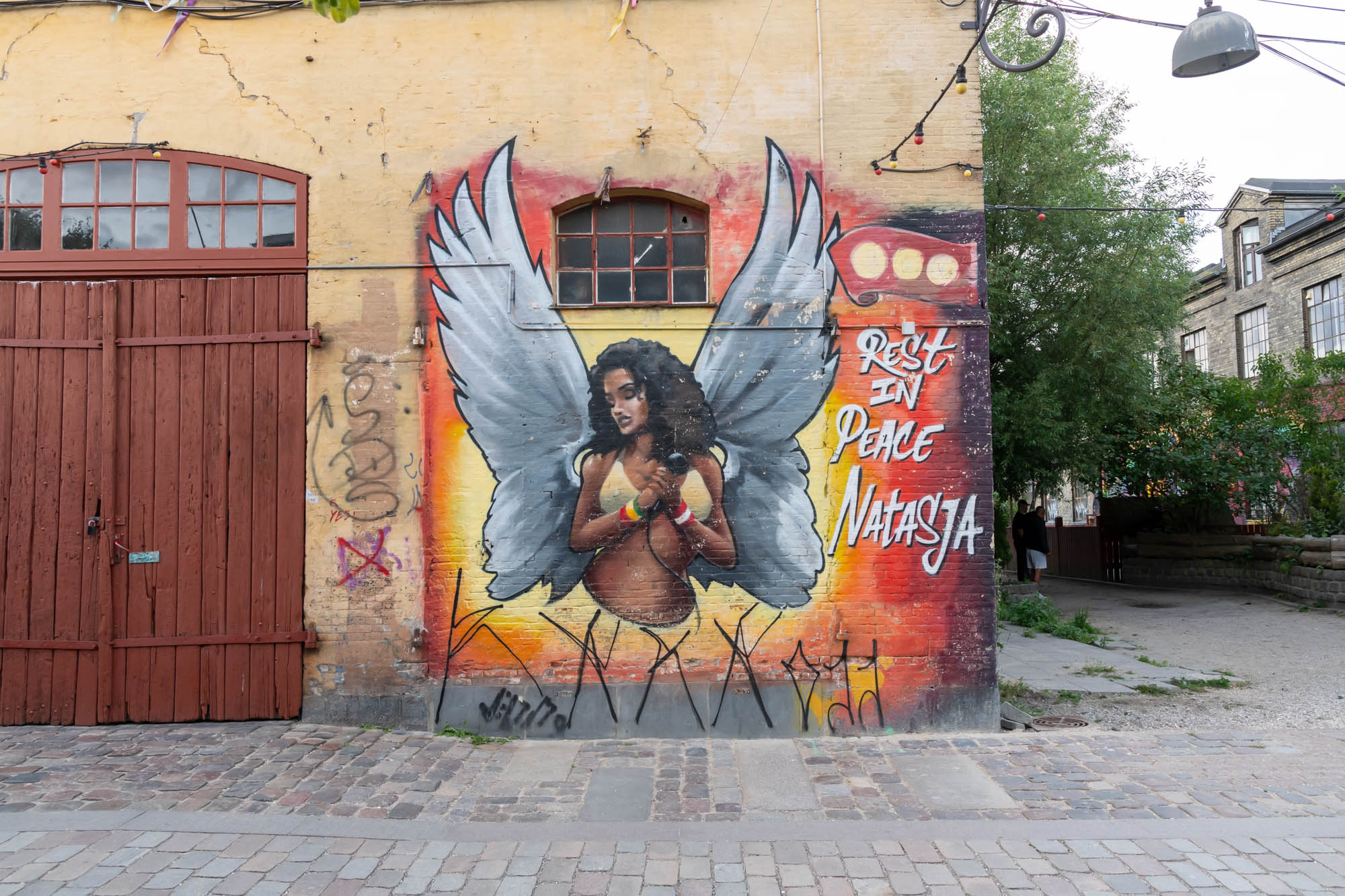
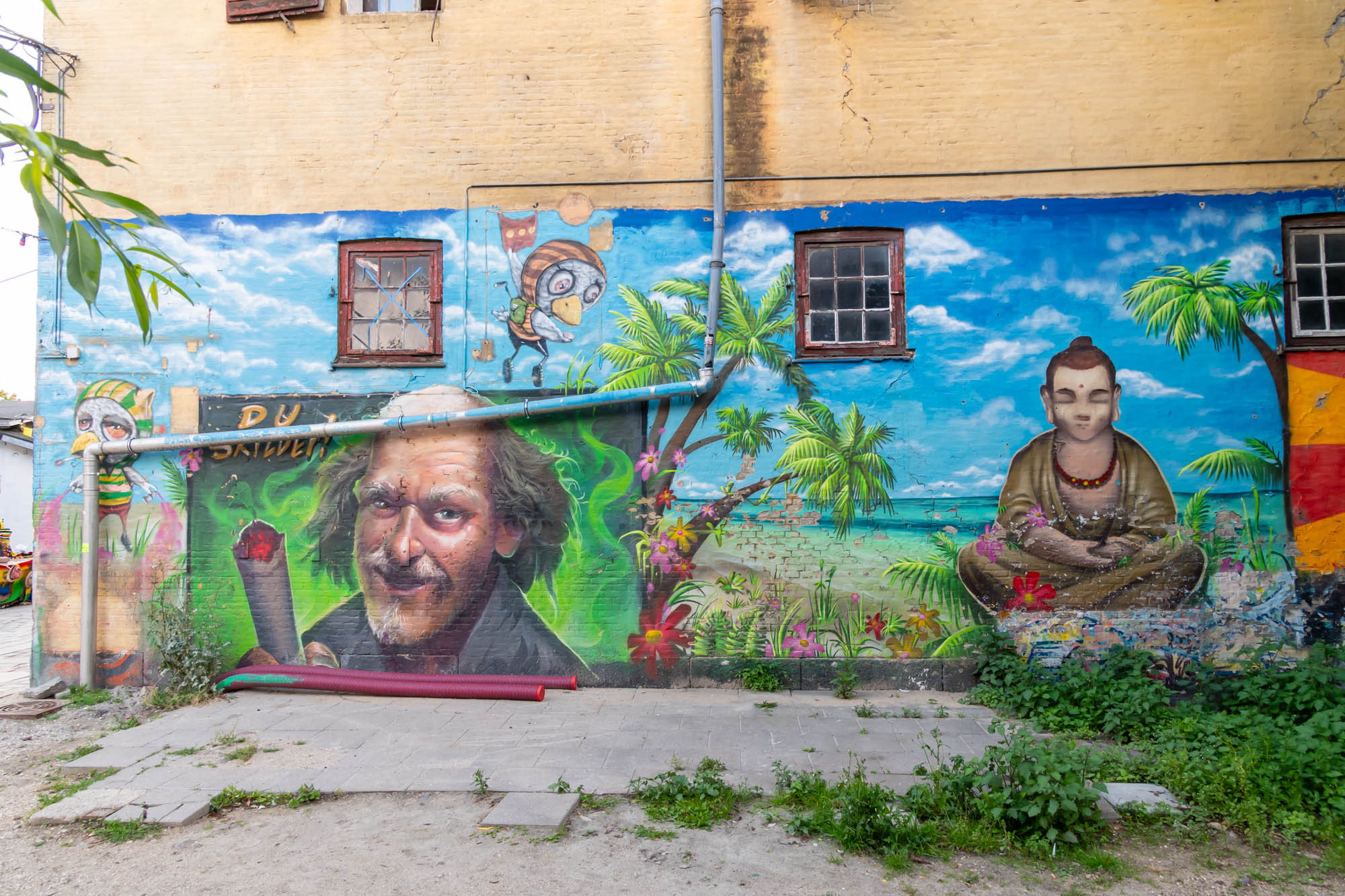
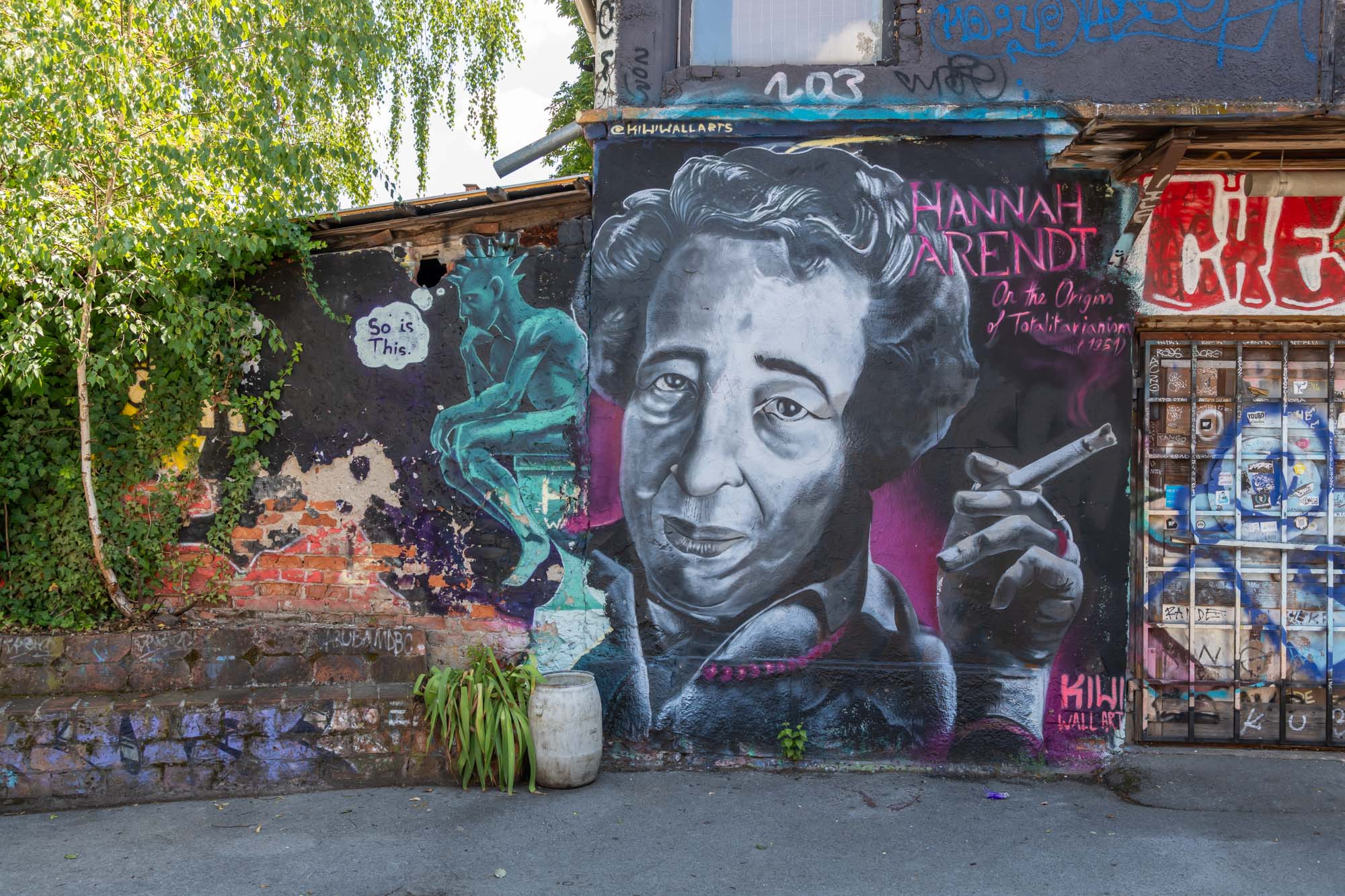
I had beer at their local brewery (yes, they brew their own, with hemp in it) and roamed around for a bit and left. As could be expected, there was a lot of graffiti and the whole place was interesting. I would have wanted to go back and spend more time there with more conversations, but I couldn’t find the time. Personally, my view is that communities like Christiania cannot hold on in these times. 
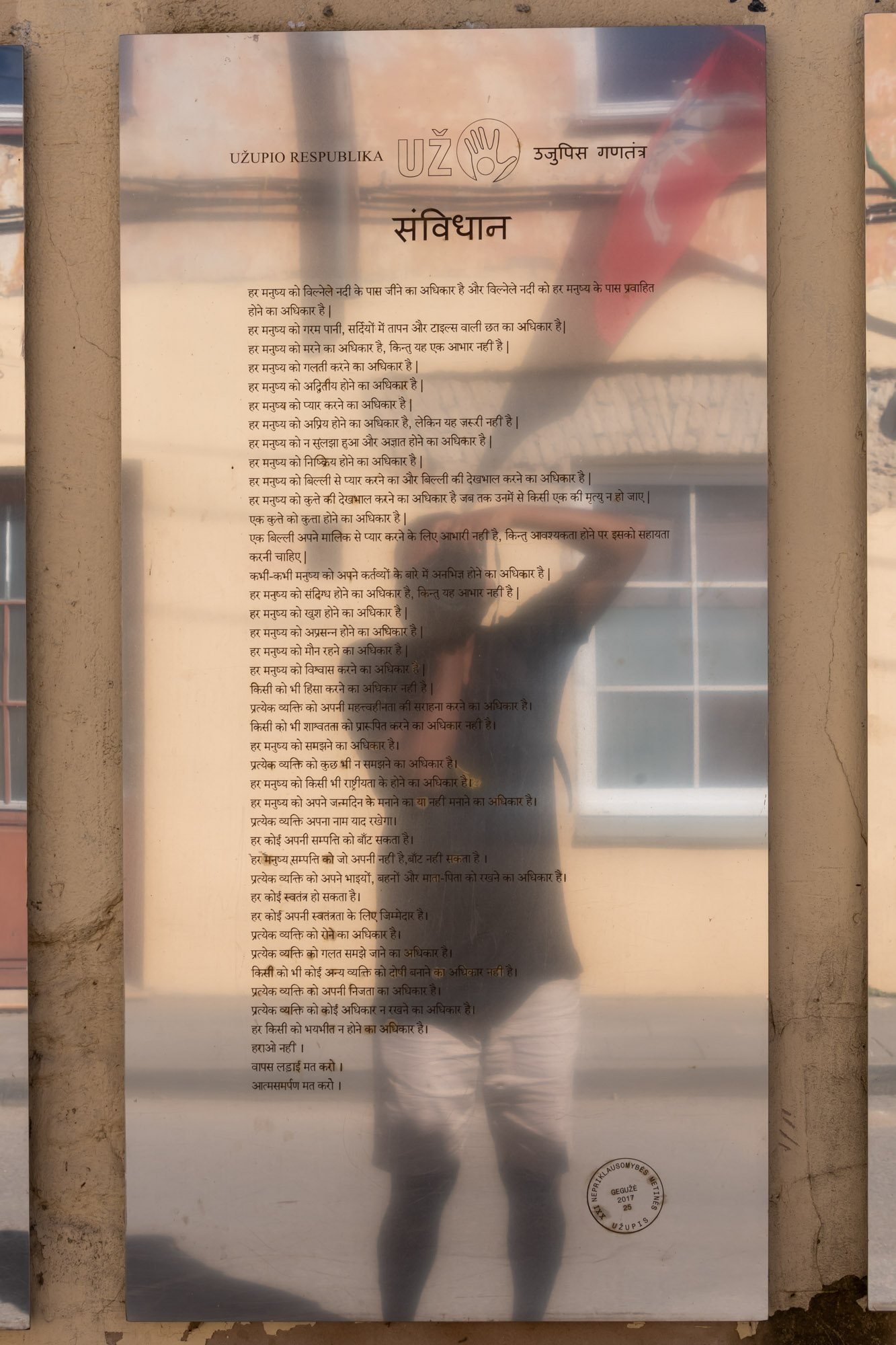
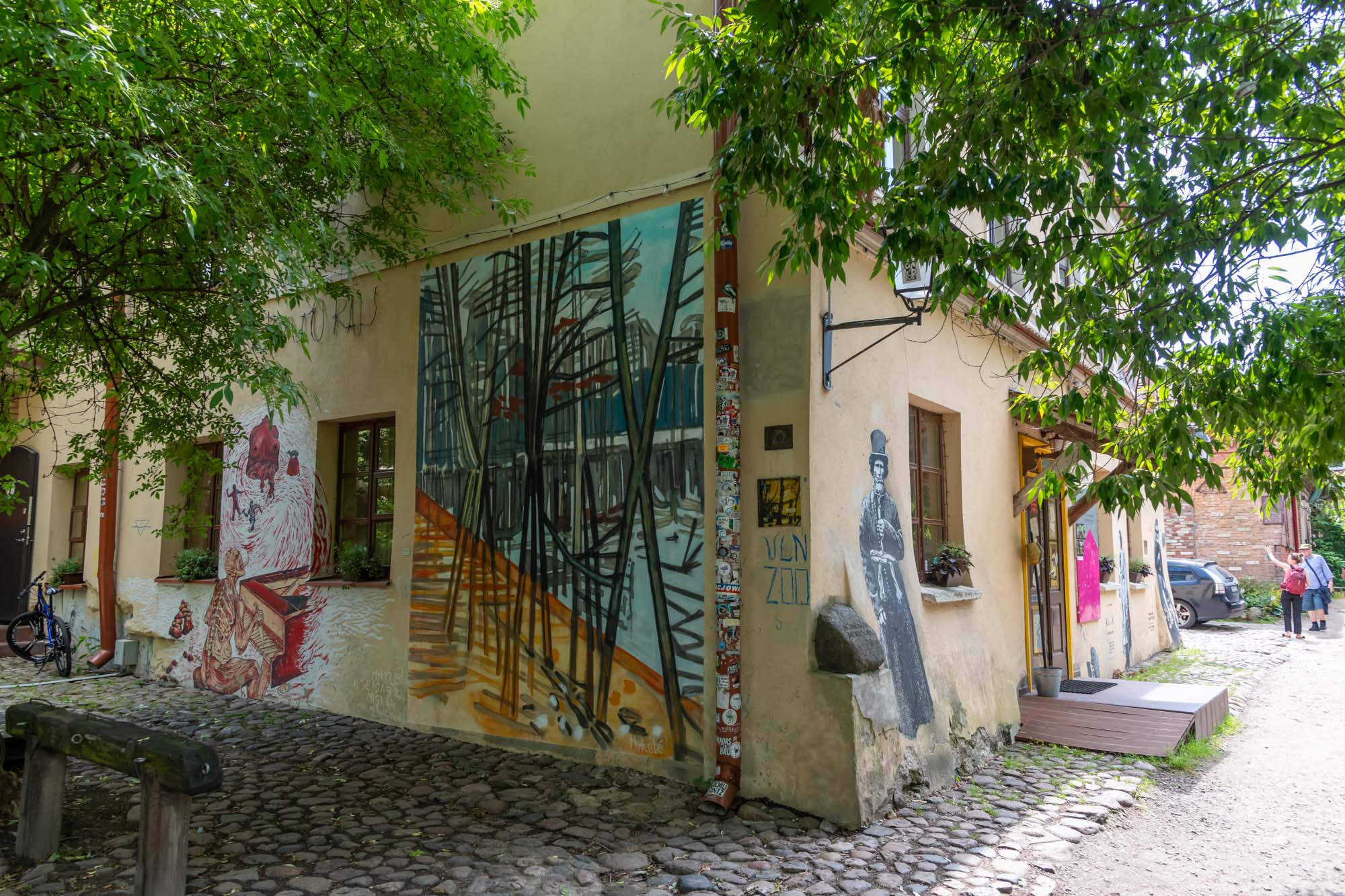
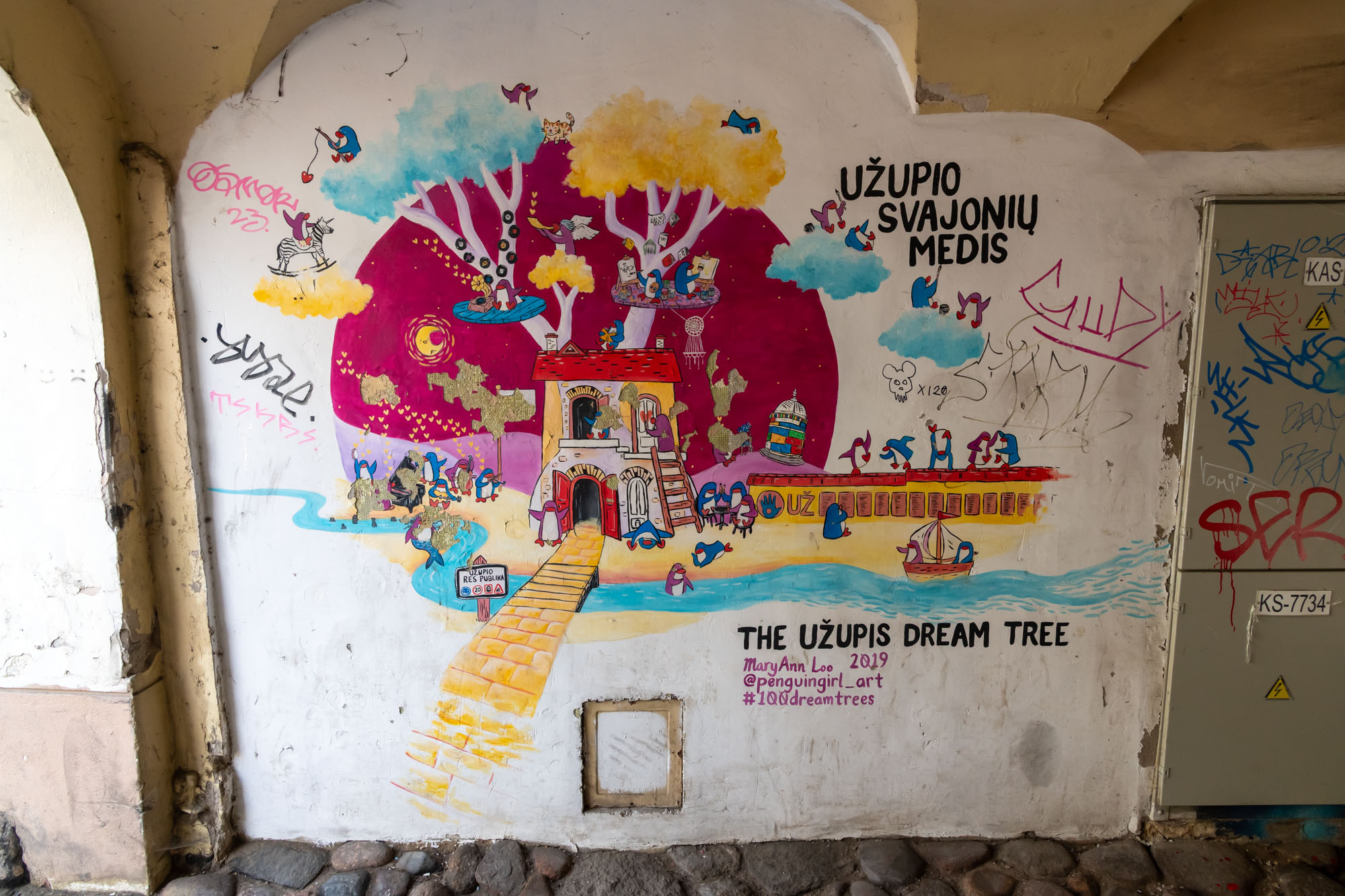
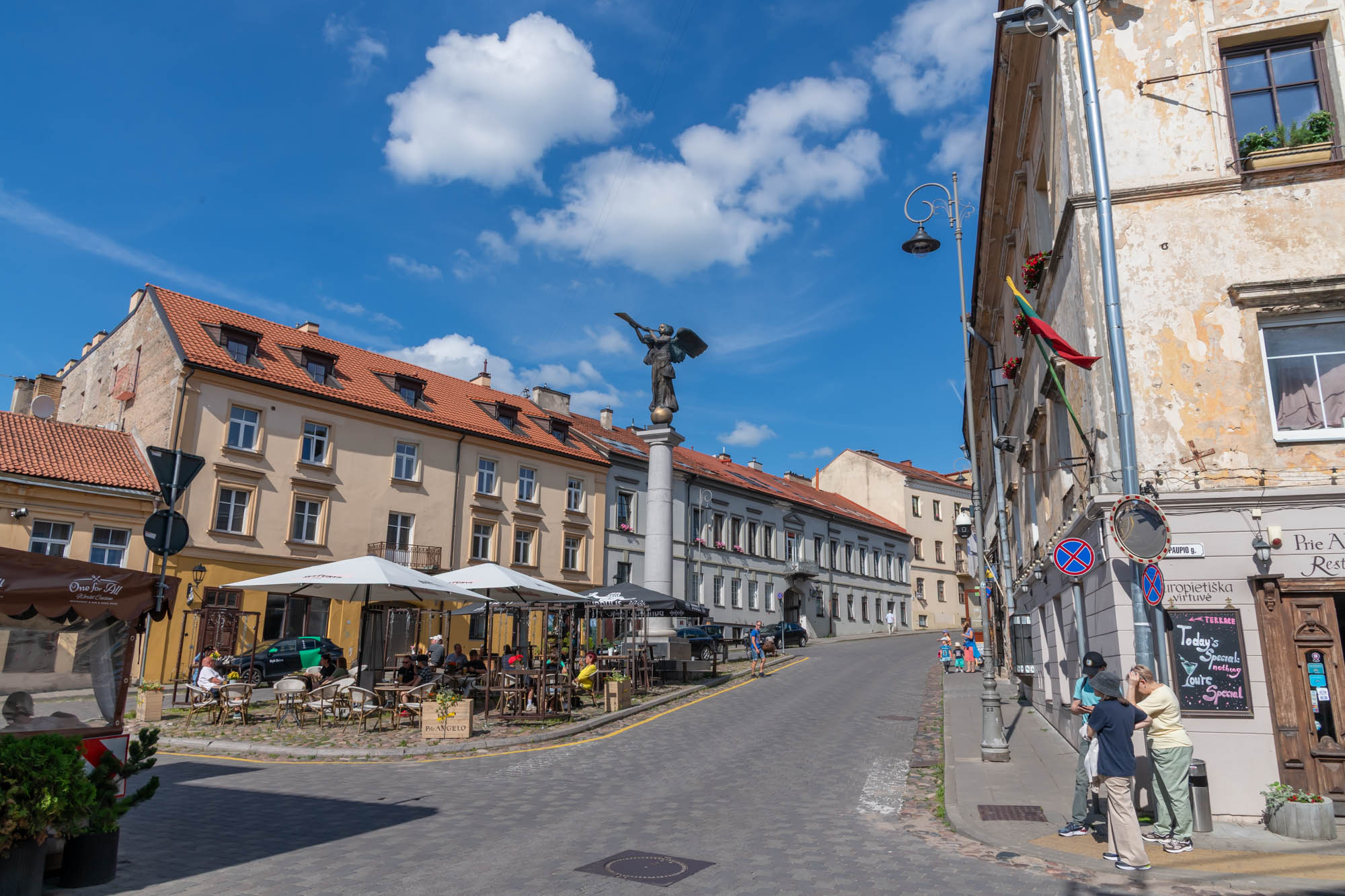
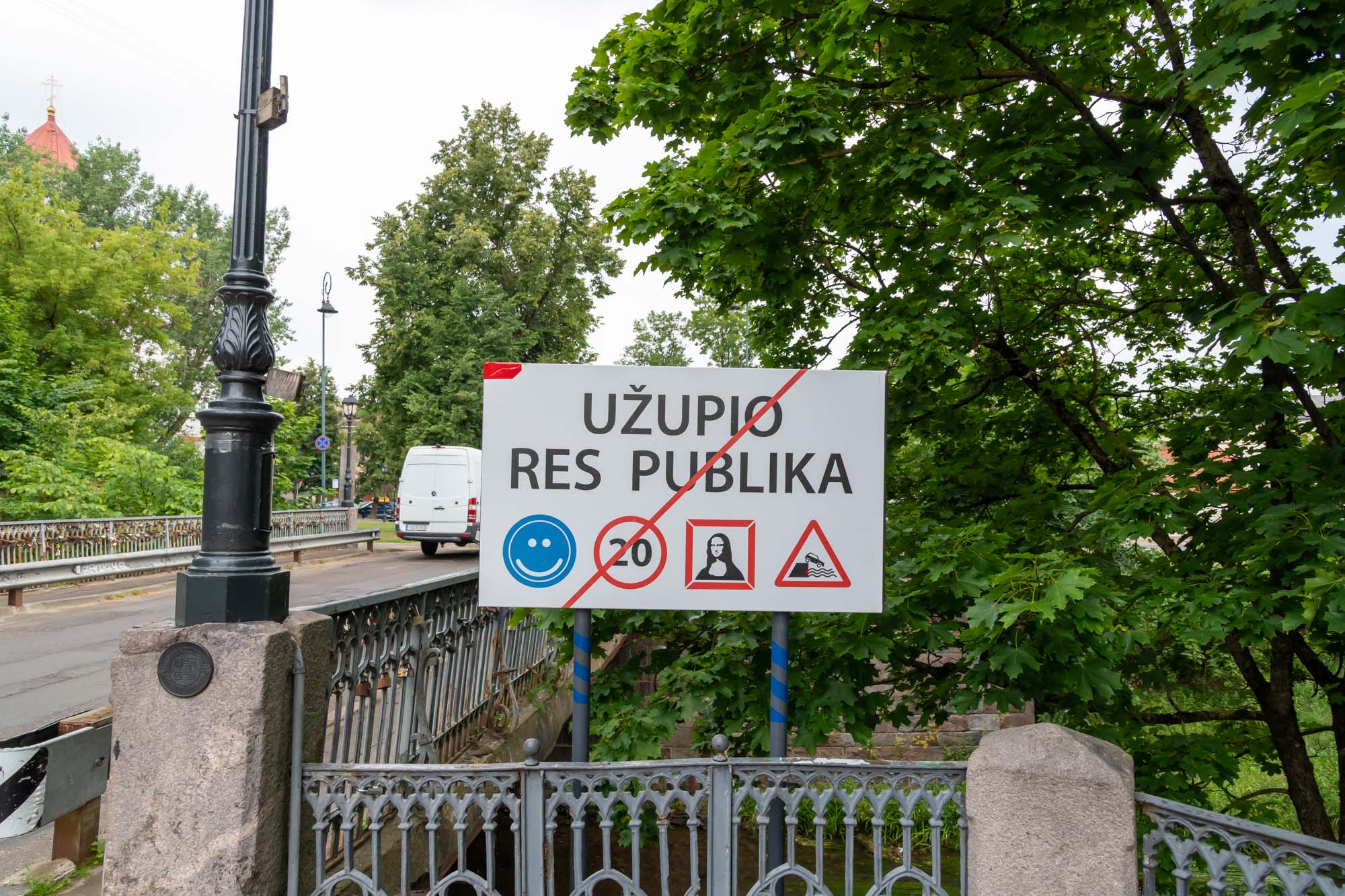
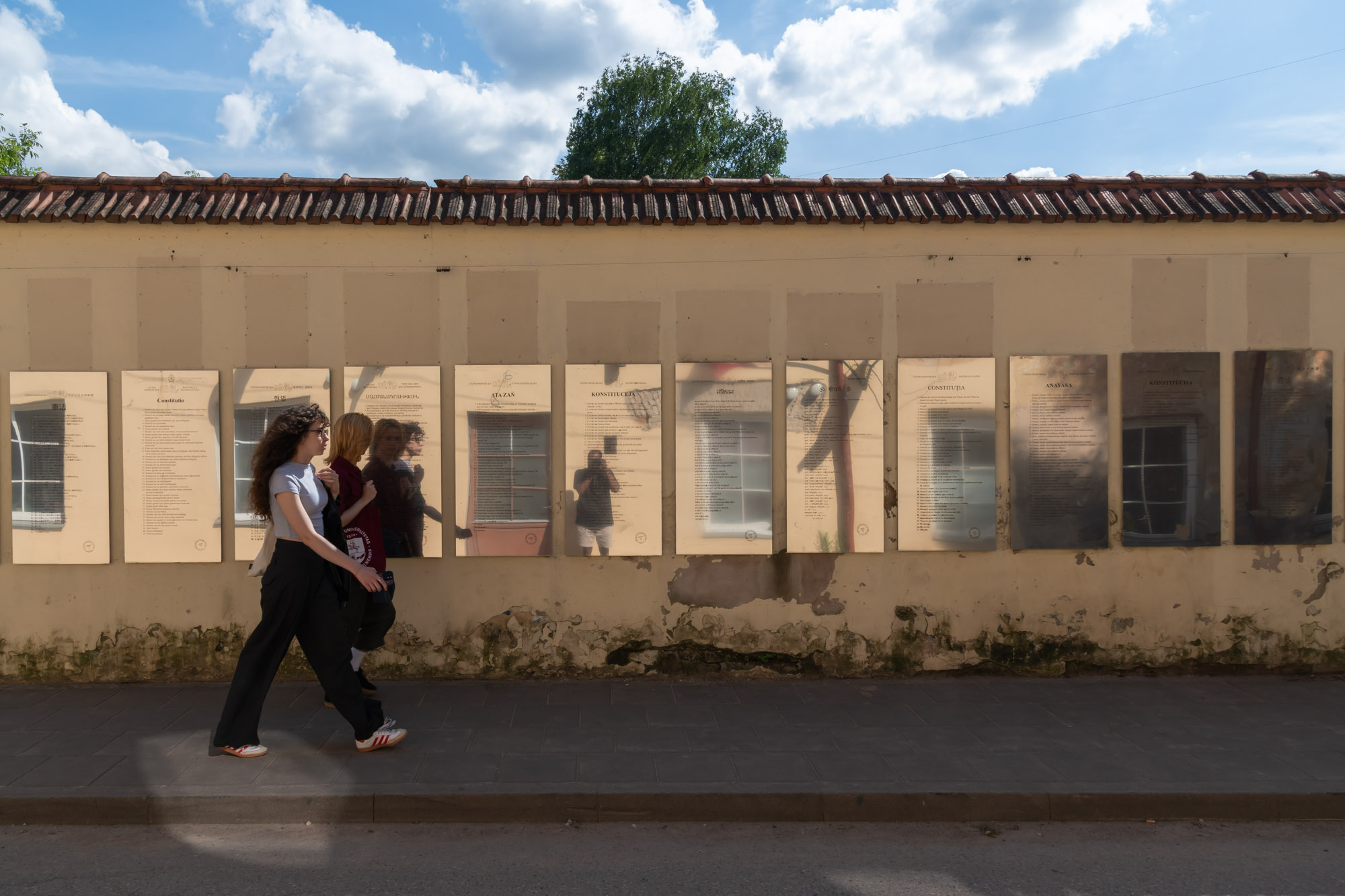
When I was in Christiania, I was reminded of the Republic of Uzupis, which I had visited just a week back. That was another free “country” with their own constitution and all, smack in the middle of Vilnius, the capital of Lithuania. The Constitution was displayed in many languages in a particular location, including in Hindi and Sanskrit! 
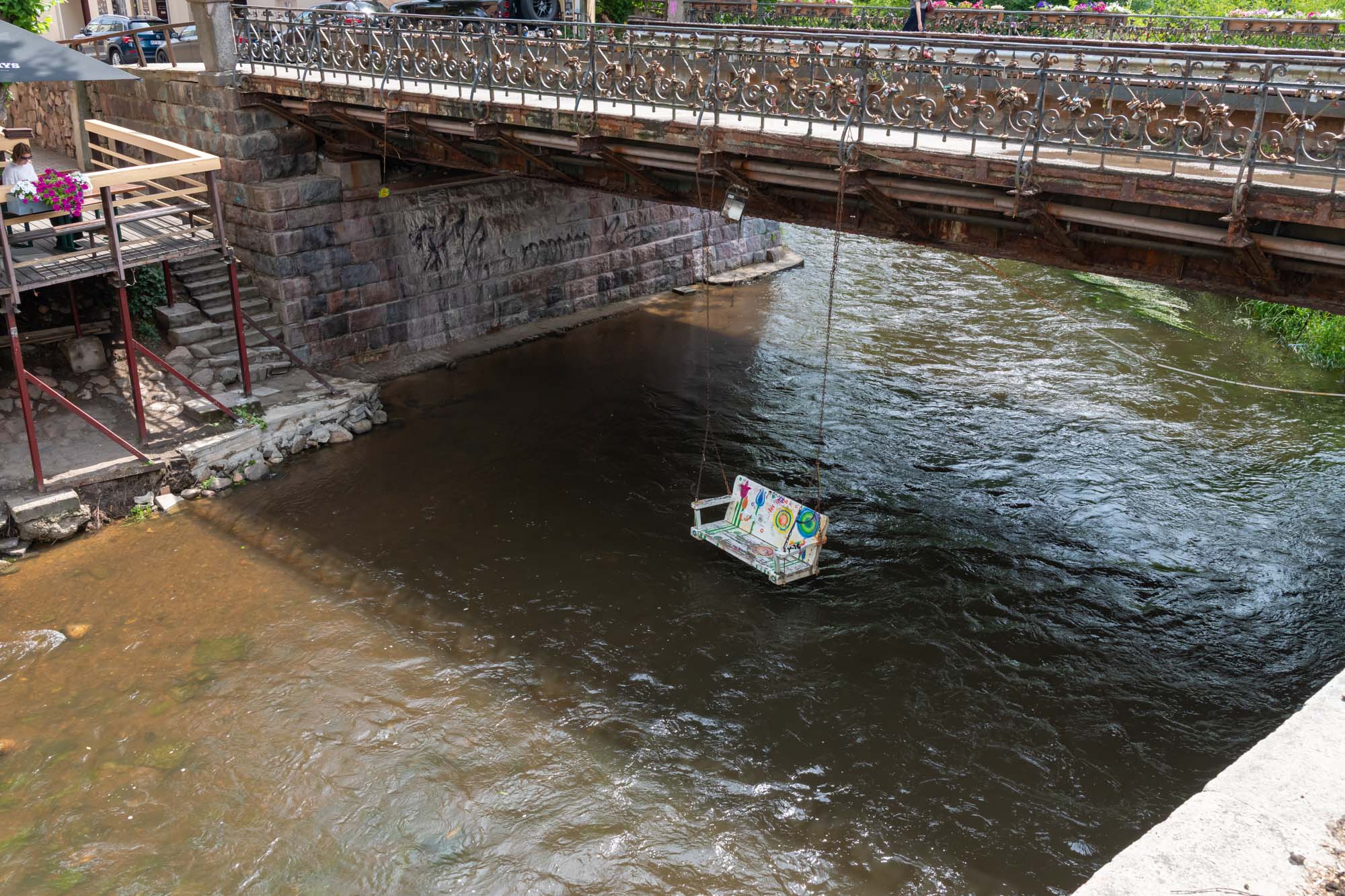
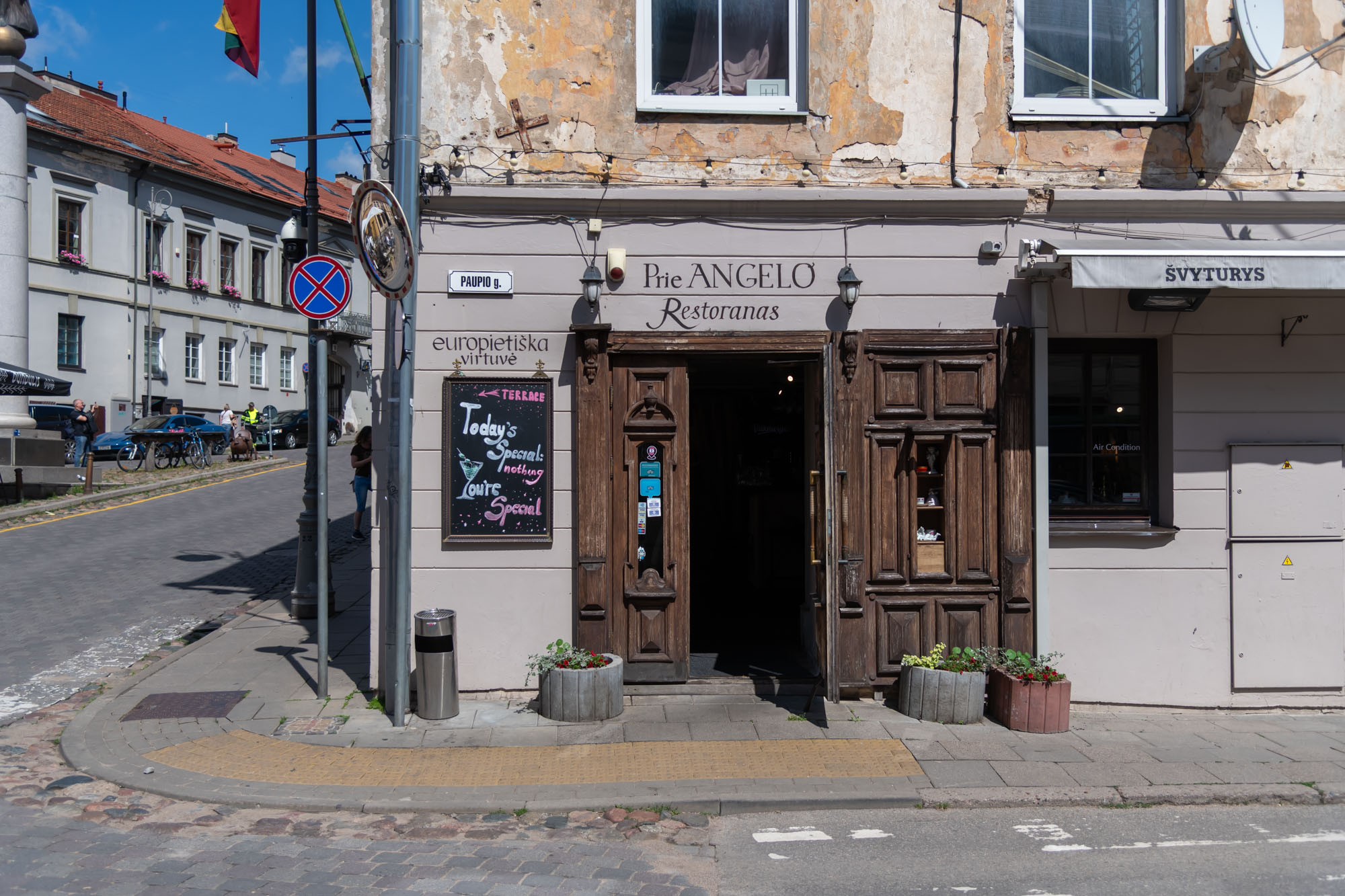
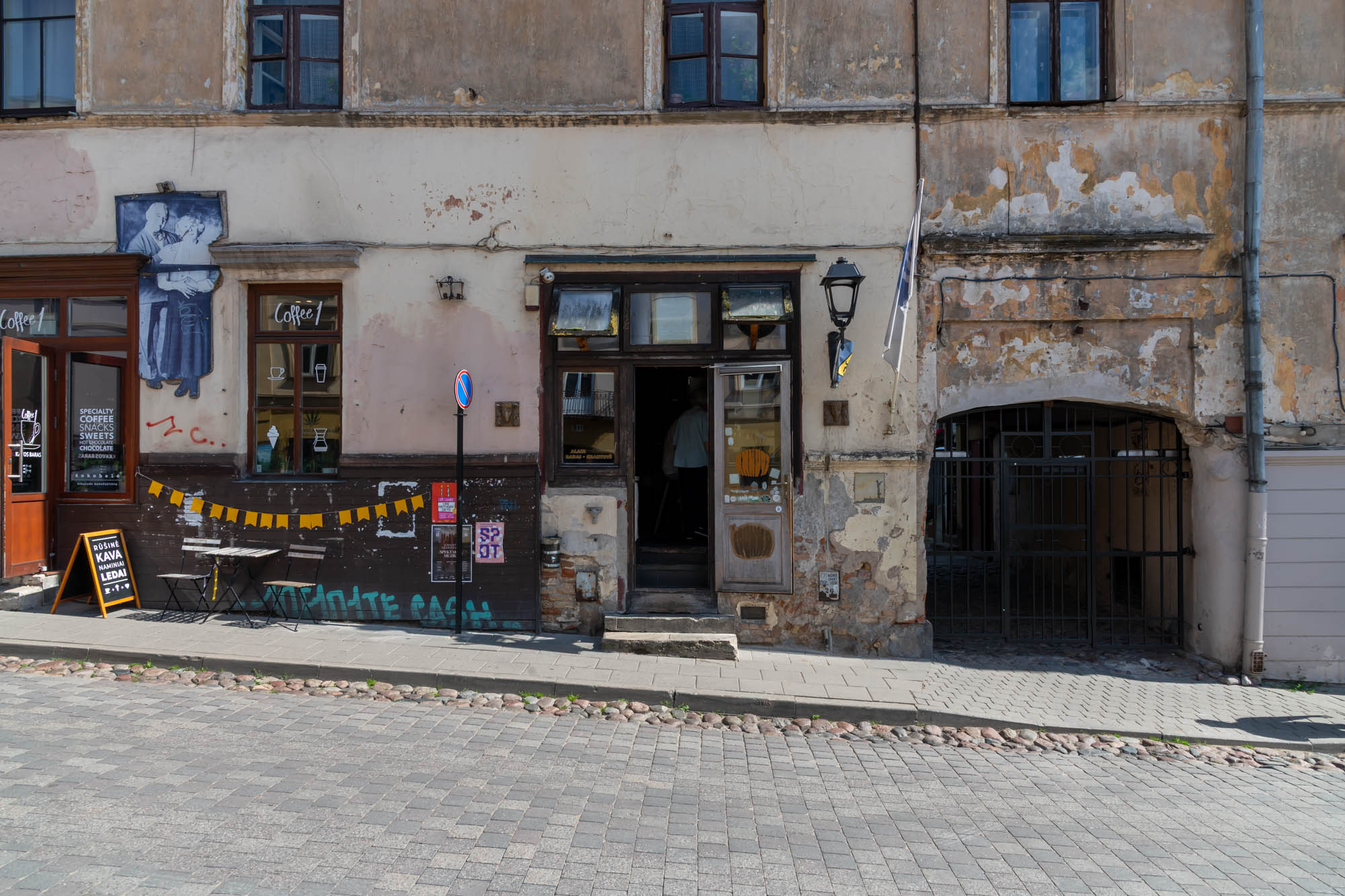
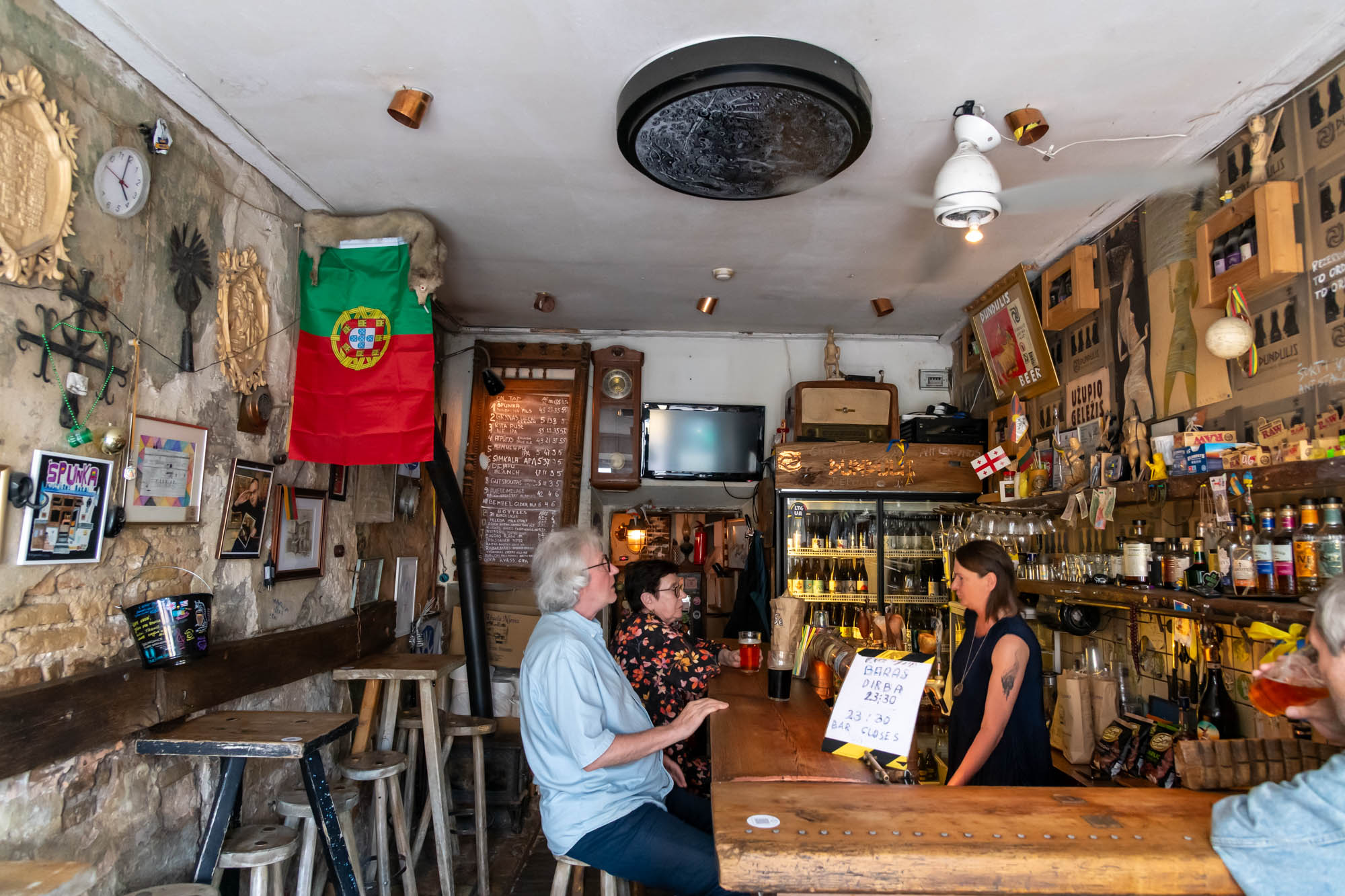
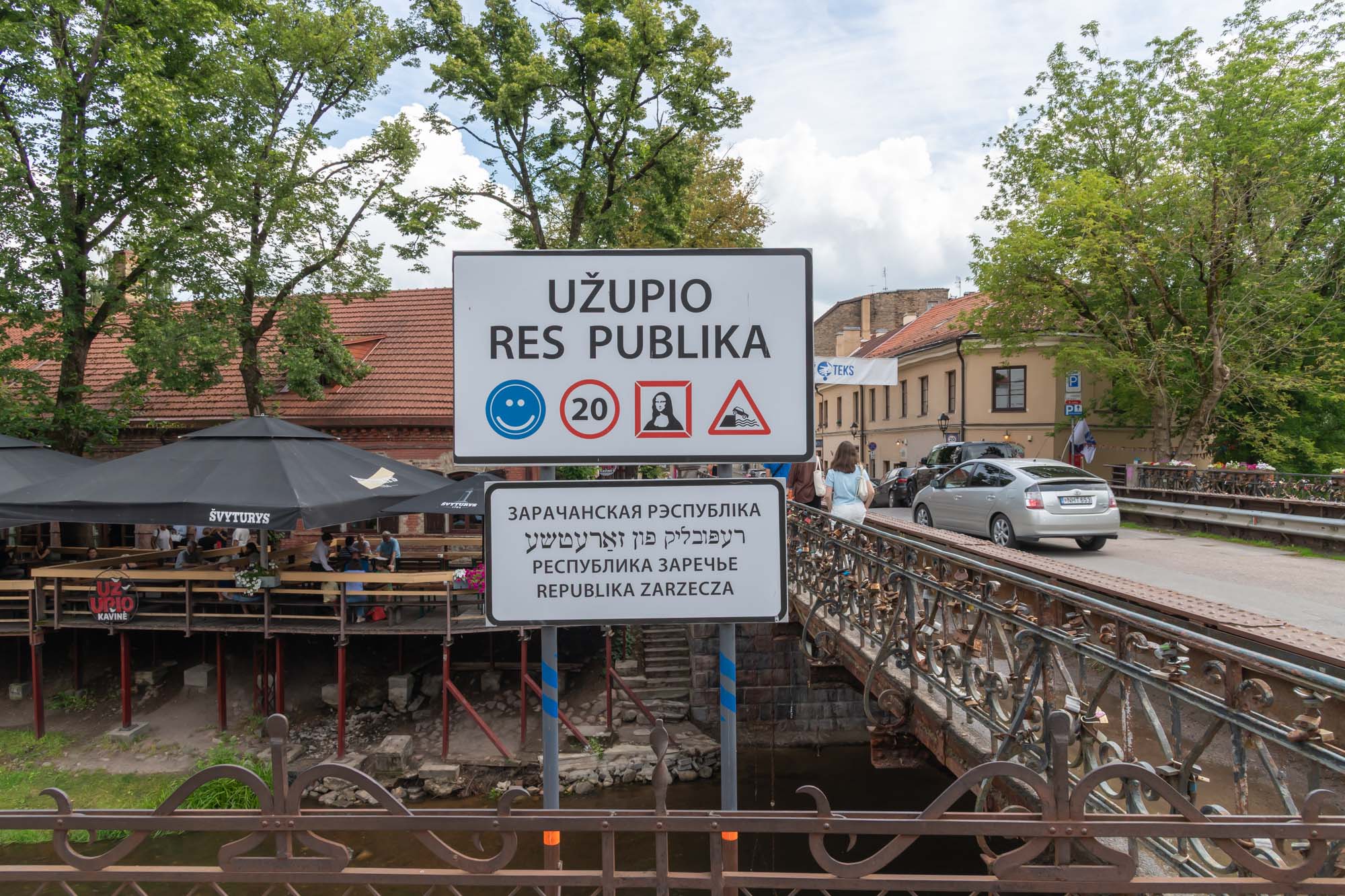
Uzupis too had its currency once and was an alternate community, mostly of artists. Nowadays, it is a proper touristy place, and I saw a lot of expensive cars around. It all looked very genteel and orderly – there was only one bar I found that looked like it was from the old times. That was a nice place and everyone who came there seemed to know each other. 
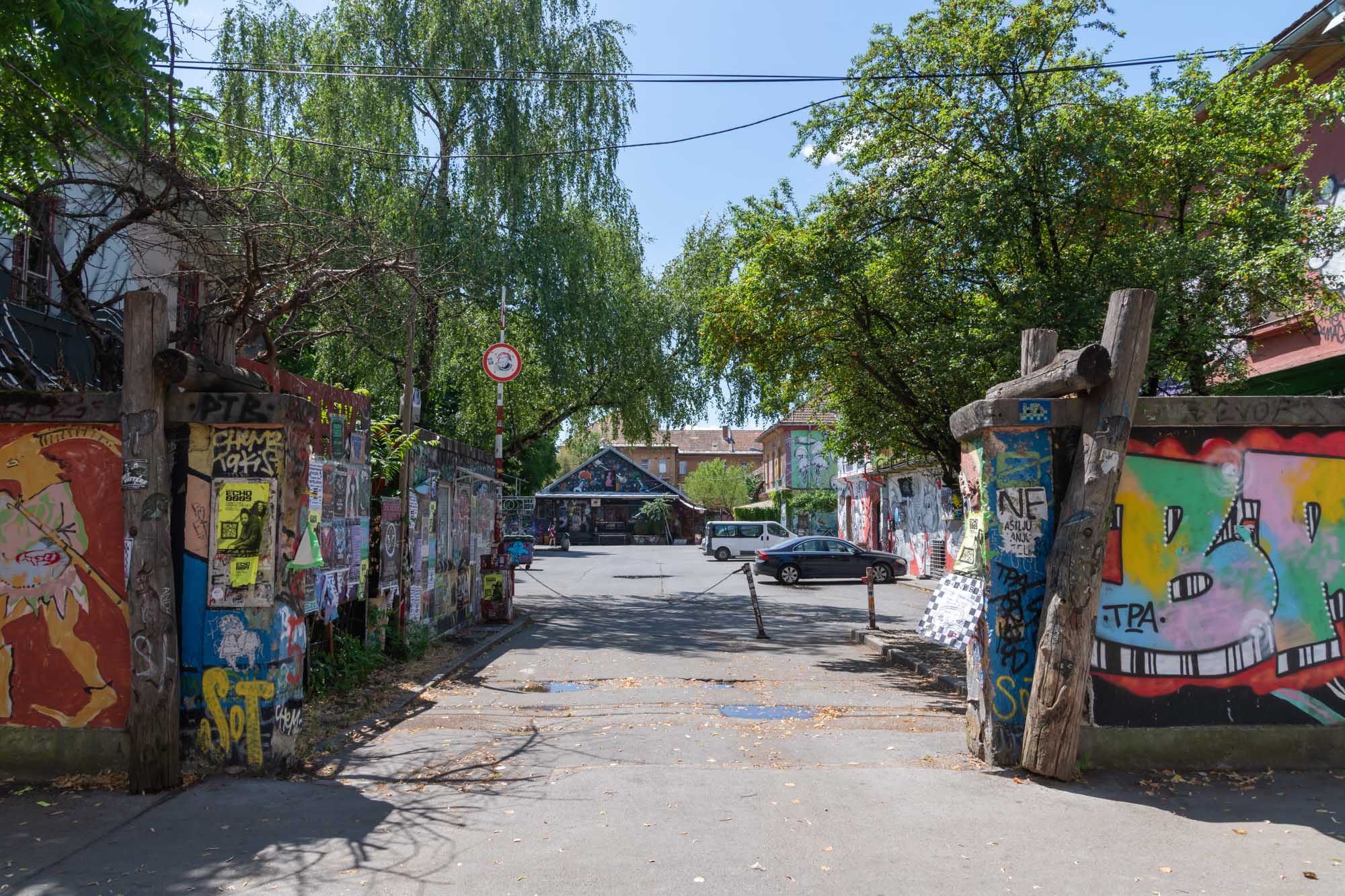
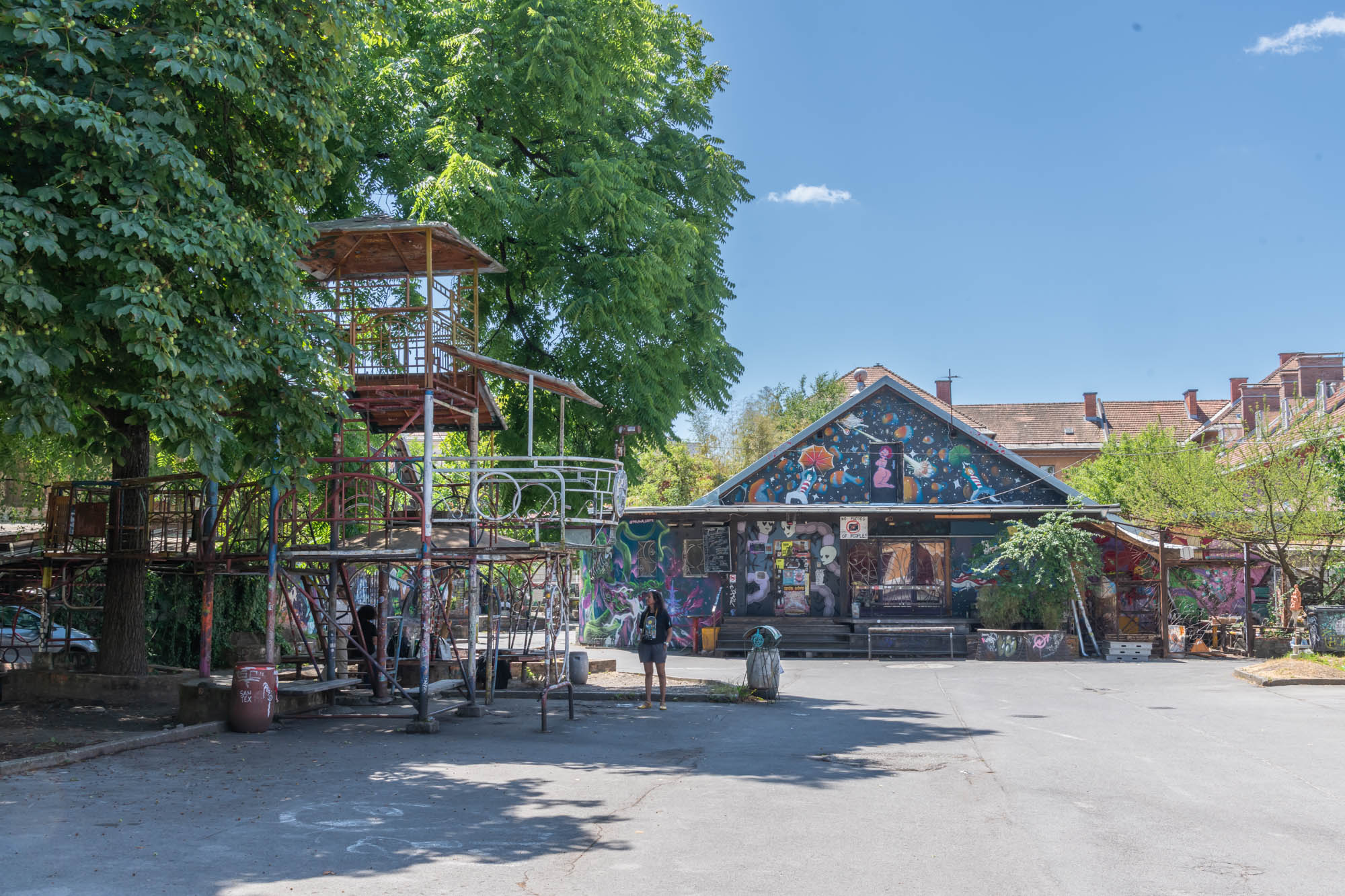
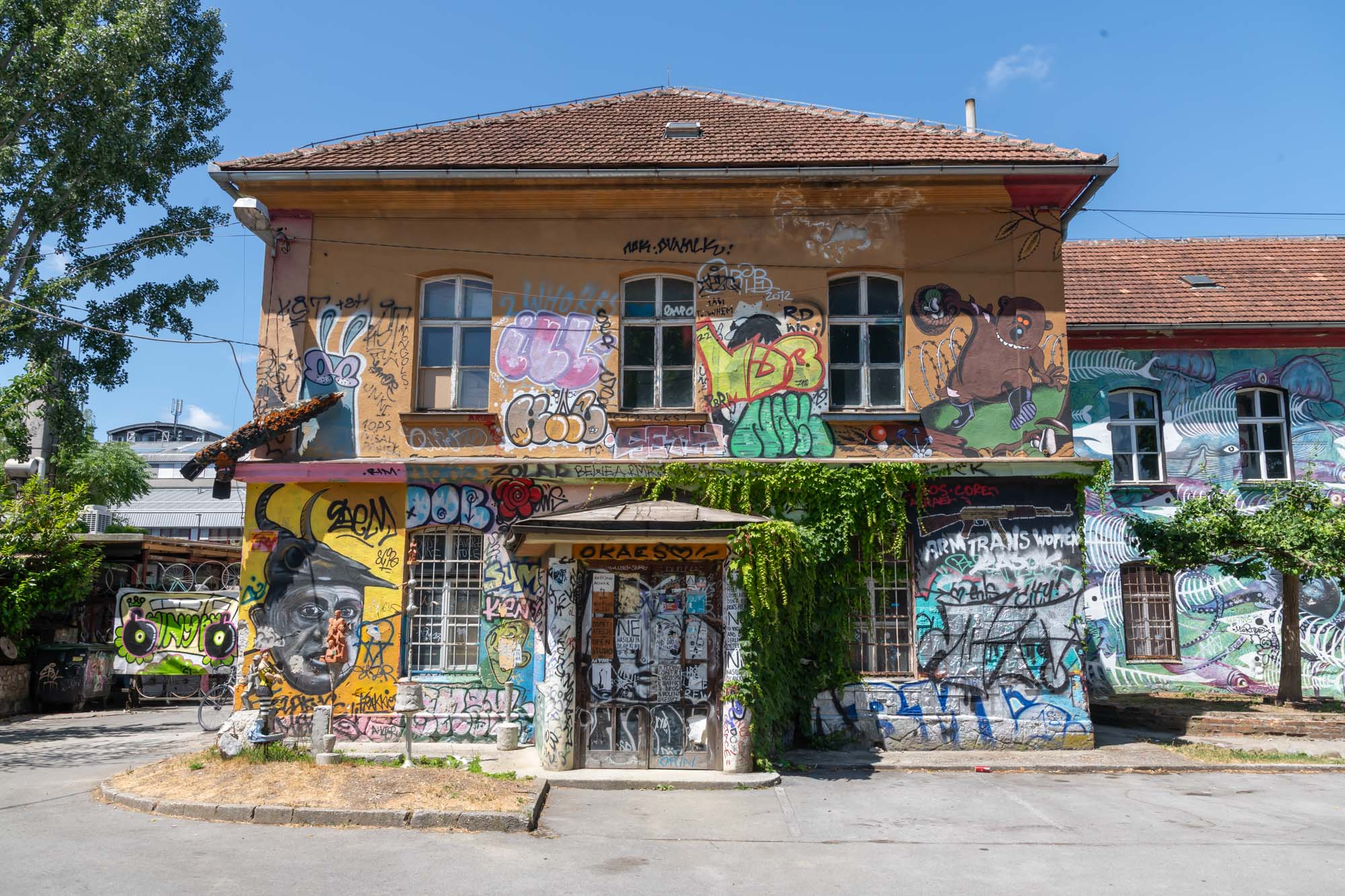
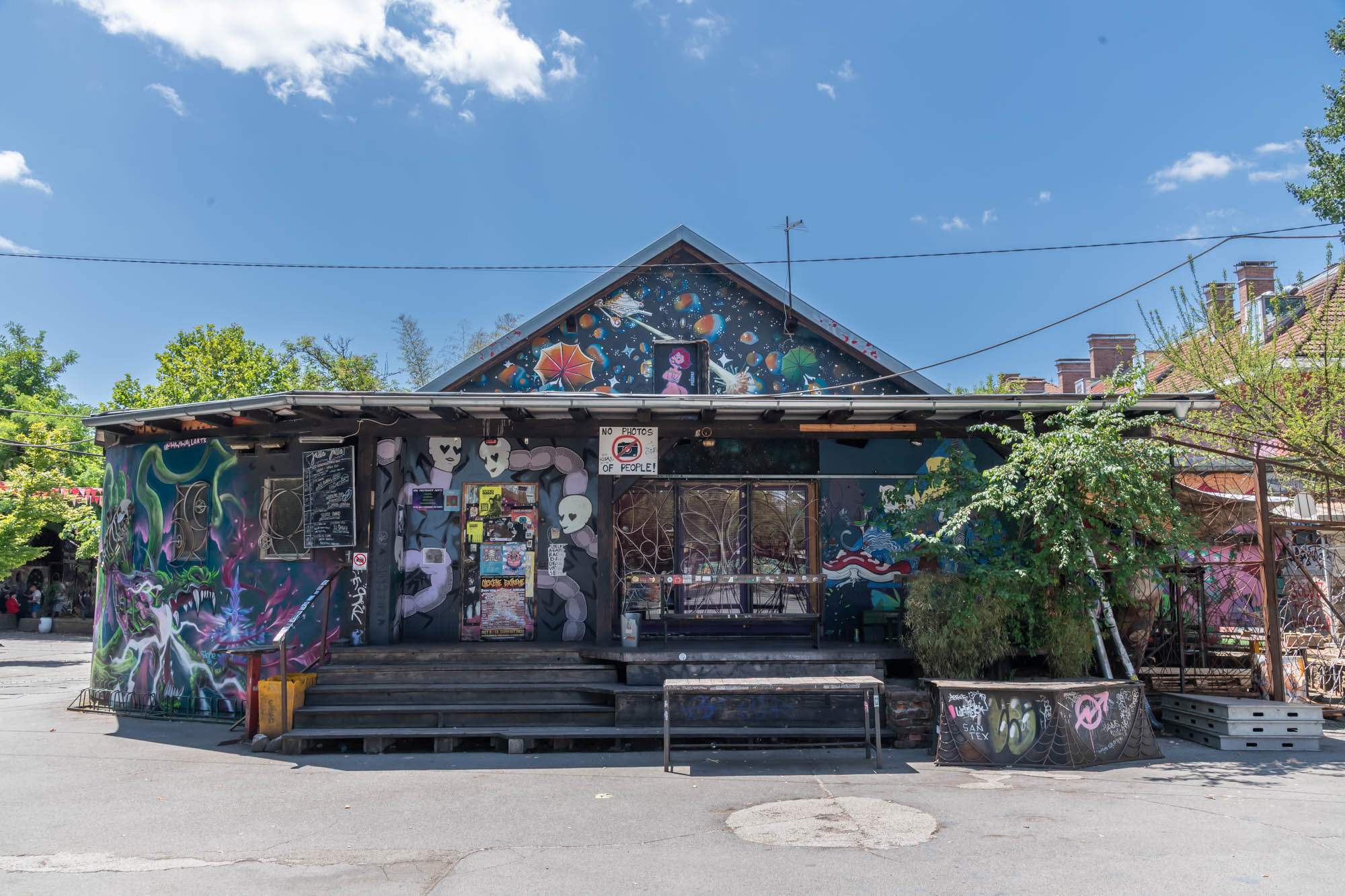
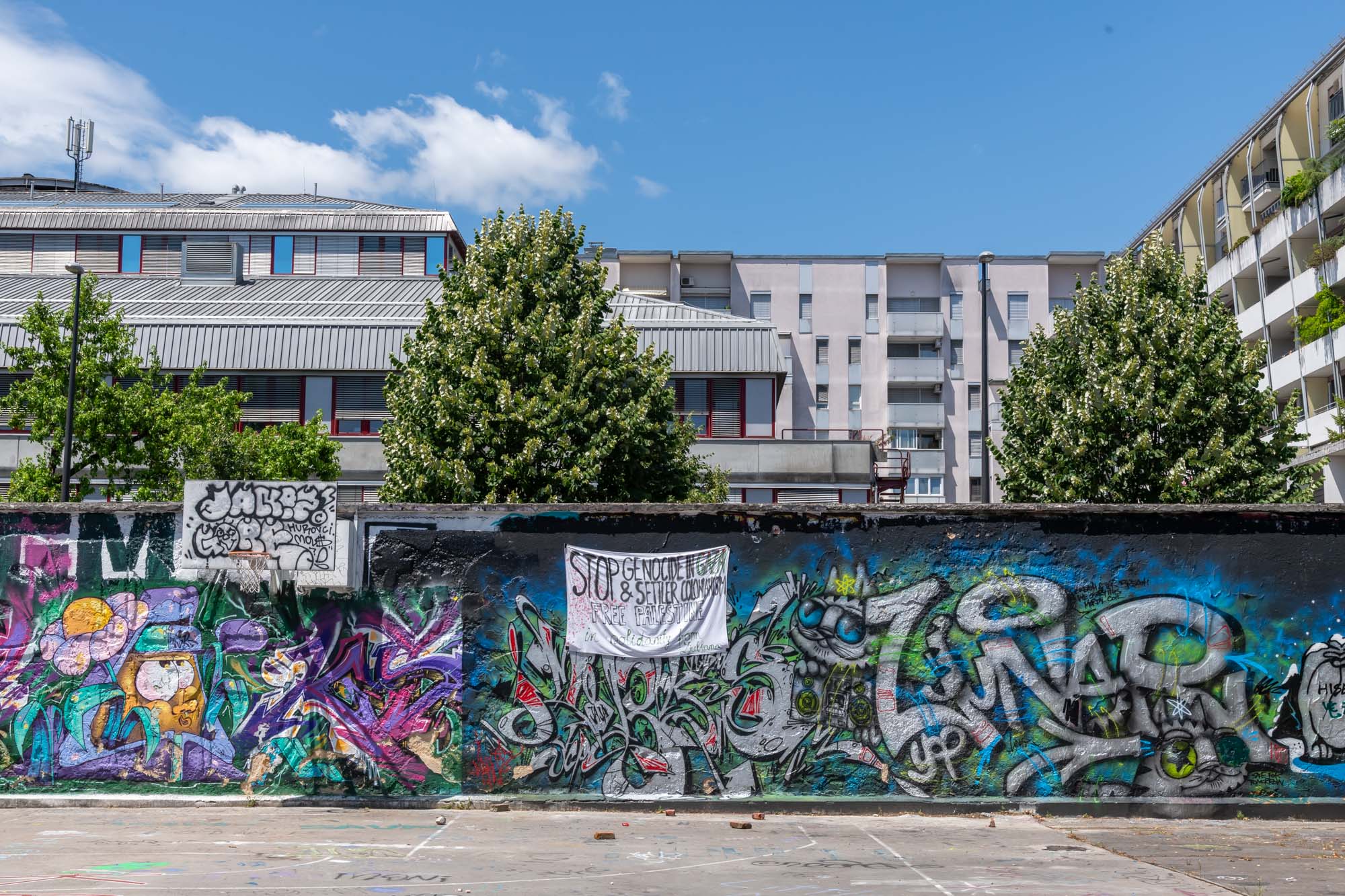
There is a similar, though much smaller, space in Ljubljana called AKC Metelkova mesto, which is an autonomous cultural centre. It is much smaller in size and is basically an old military site that squatters have taken over. It is still of dubious legal status though it has been recognised as a national heritage site since 2005. I spent some time there and the rebellious nature of the space is quite evident. 

I wasn’t aware of these kinds of spaces and alternate communities before this trip. The hollowness and exploitative nature of Capitalism have spawned these initiatives. Not everybody is willing to go along with the flow, and some show the mettle to be different.

I was looking forward to visiting the Baltics ever since I read about their independence movement. Estonia, Latvia and Lithuania had won their independence when the Soviet Union crumbled. One of the key activities in that movement was the “Baltic Way” which was a human chain that was formed on 23 August 1989, which stretched for 690 kilometres, from Tallinn to Vilnius. The total population of these three countries at that time was about 8 million and it is estimated that 2 million of those participated in this! It was held to mark the 50thanniversary of the Molotov-Ribbentrop Pact wherein Poland, Finland, Estonia, Lativa, Lithuania and Romania were divided (illegally) between the Soviet Union and Nazi Germany and occupied. 

In Tallinn, I met with a lady who had participated in the Baltic Way, as an eleven-year-old child. She remembers going on a bus with her parents and that there were big traffic jams and a lot of people. Estonia won its independence in a truly non-violent fashion with its Singing Revolution. People came together and sang songs and when I asked the lady why the Russians did not do anything violent, she said it was perhaps because the Soviet Union was crumbling and the Soviet soldiers in Estonia at that time were from places like Belarus, who had no particular affinity towards Russia or any stake in attacking Estonians fighting for their independence.

It seems matters got very tense just before the day independence was declared as Russian tanks moved into Tallinn and the borders that were open before were declared closed. There was much talk that the Soviet Union would regain control, and the situation would be back to what it was. So, there was much fear of retribution among those that were involved in the uprising. This lady’s brother had gone to Finland to take part in some competition and that was when the borders were closed, leaving him stranded. She said that was very traumatic and even now, tears started rolling down her cheeks when she narrated the story. She said she gets emotional every time she tells the story. Thankfully, the situation was resolved soon, and Estonia got its independence, and her brother was back home. I noticed that the family ties in Estonia are quite strong indeed and it can be understood from the story above. The weather was nice and there were a lot of people walking and relaxing in the gardens and most of them had kids around them. 

When I was talking to this lady, I realized that there was a lot of fear around Russia. The trauma of the days under Soviet Union seems to be so strong that those memories make them quite fearful again. I sensed this in Riga when I was talking to a guy who runs a café. During the conversation, he mentioned that the people in Baltics keep to themselves and don’t talk to strangers. I asked him why this was so, and he said perhaps it was a habit they developed during the Soviet days. In those days, it was best not to stand out or be noticed and you never knew whether any given person was a snitch or not. Hence, people pretty much kept to themselves and was apprehensive of speaking their mind, even amongst friends. 

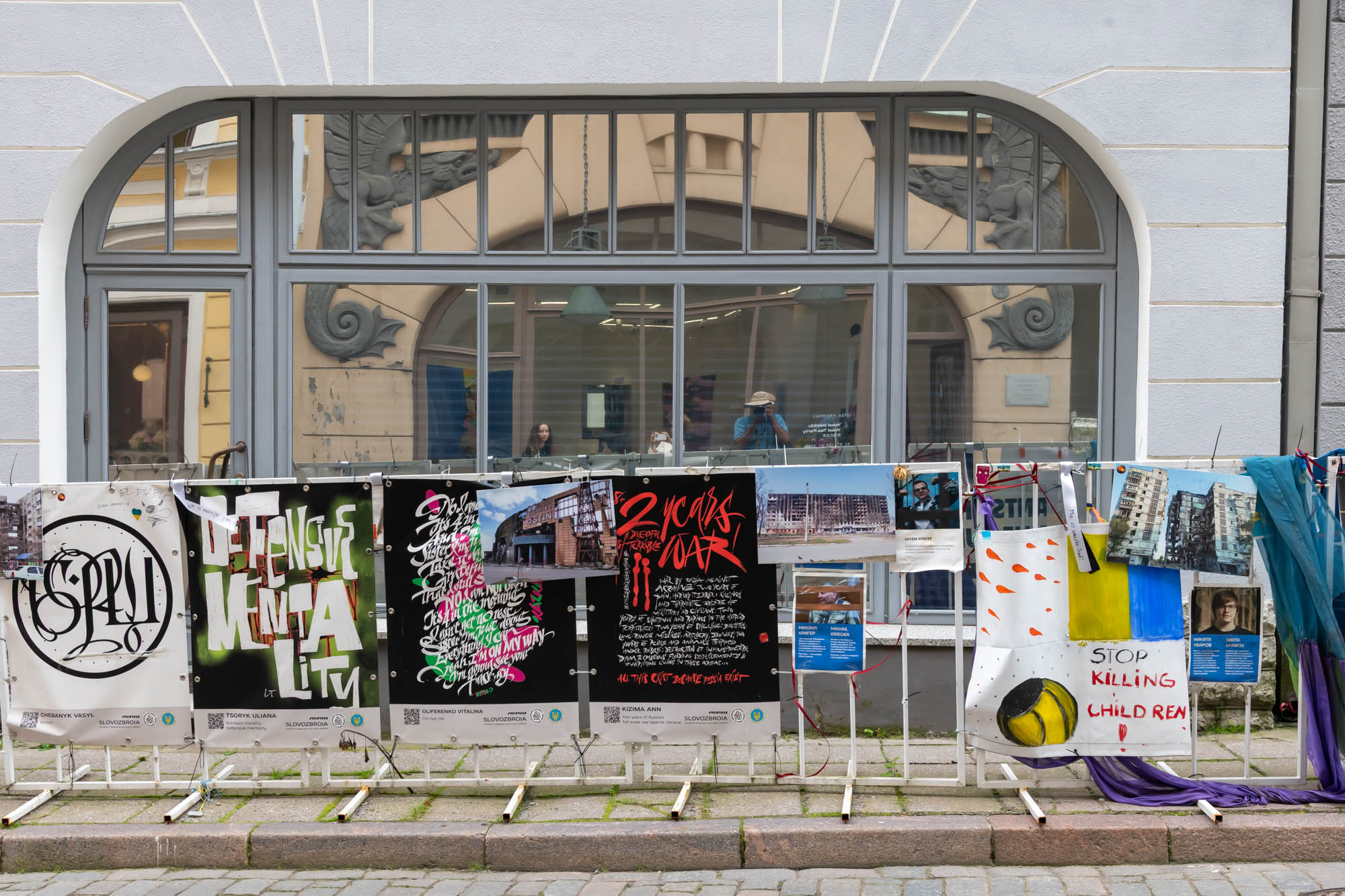
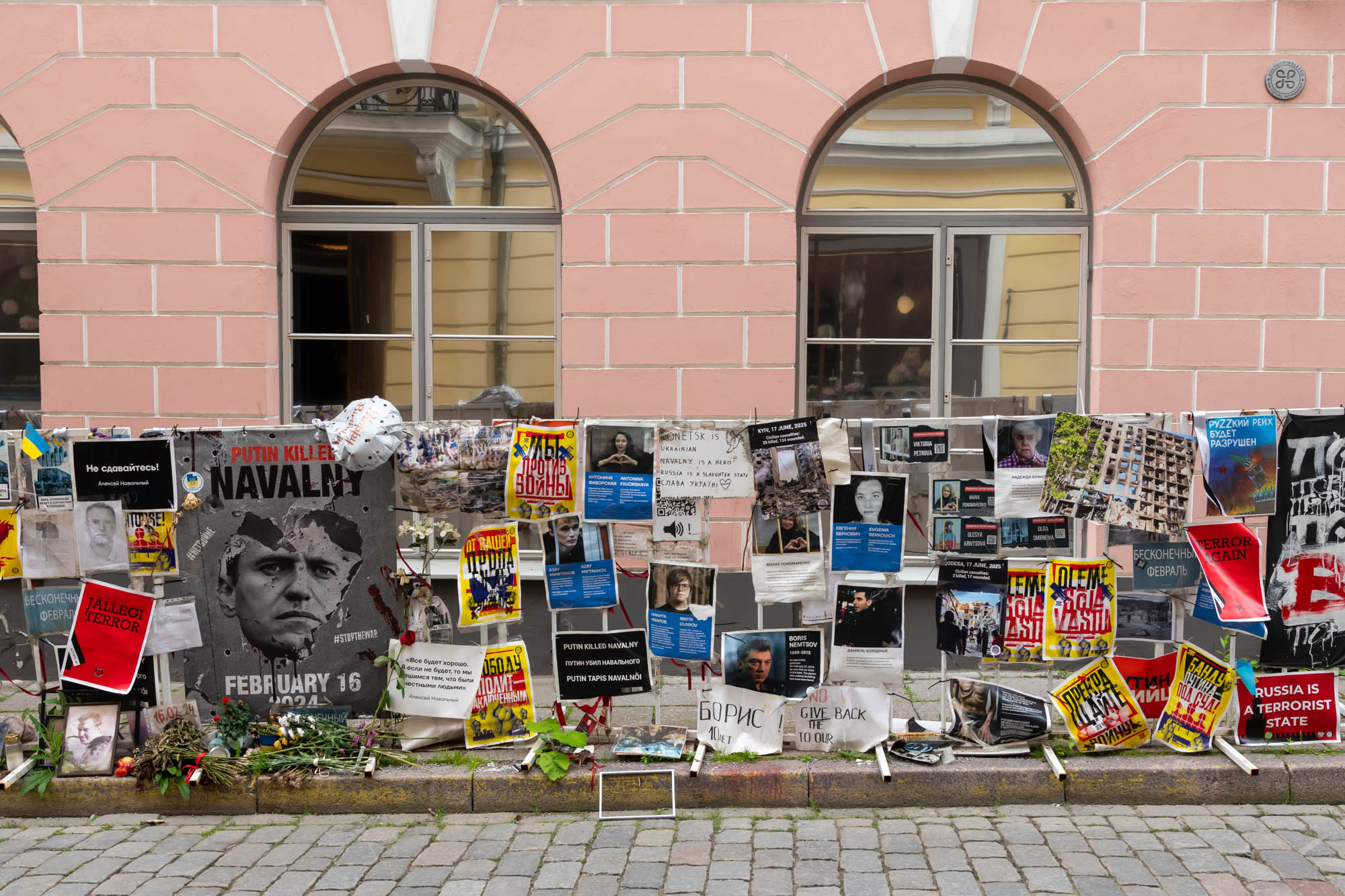
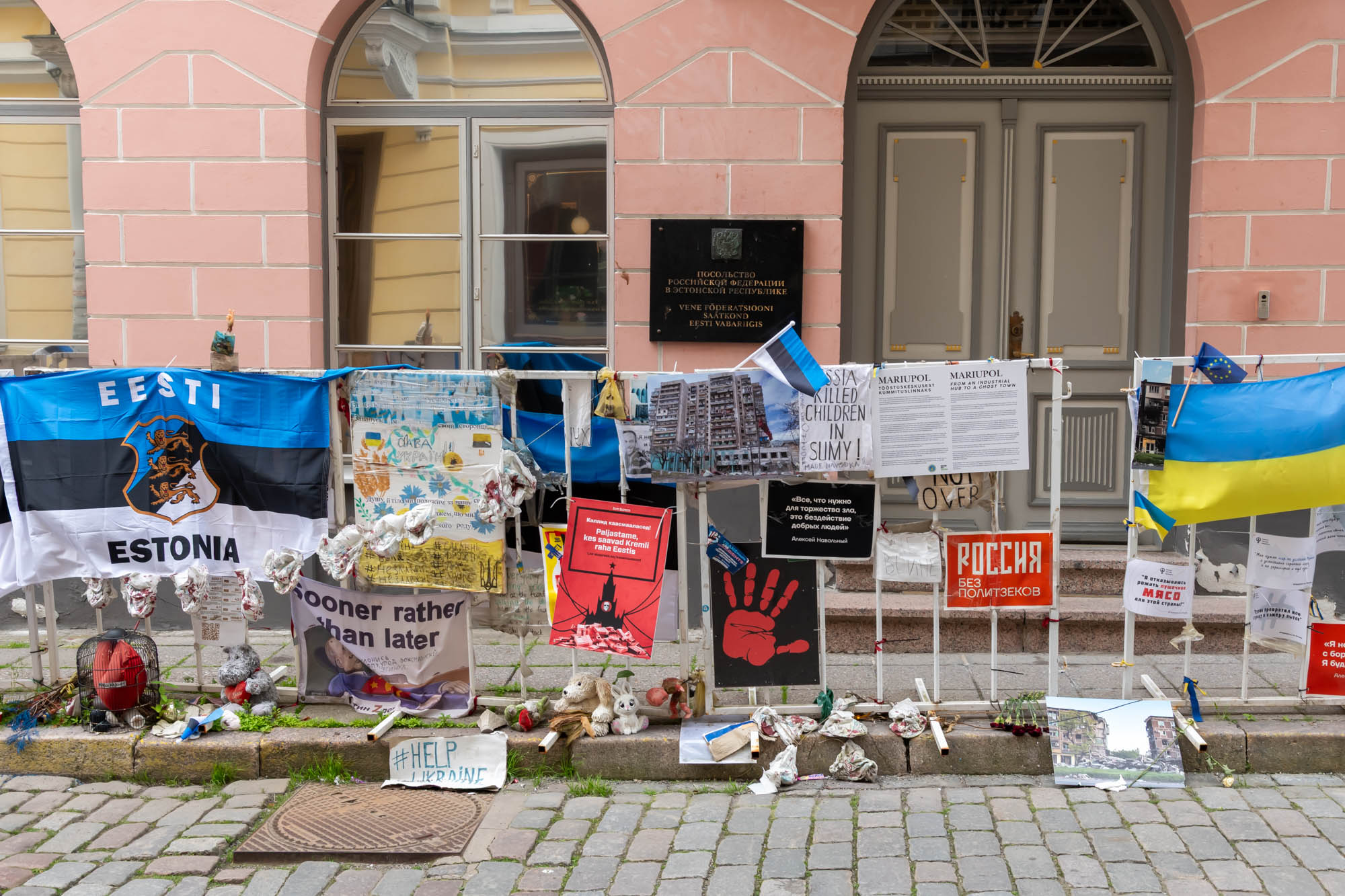
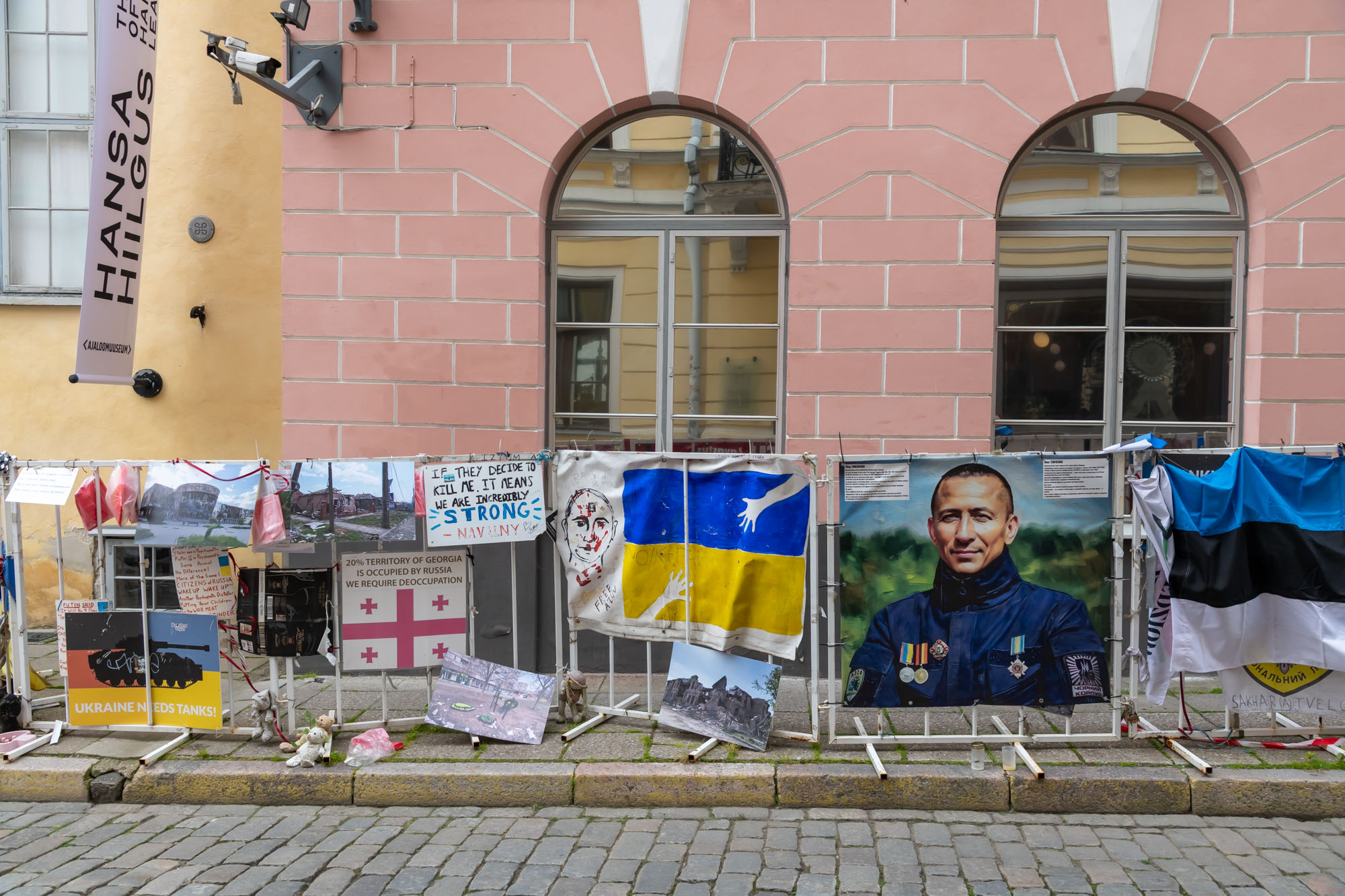
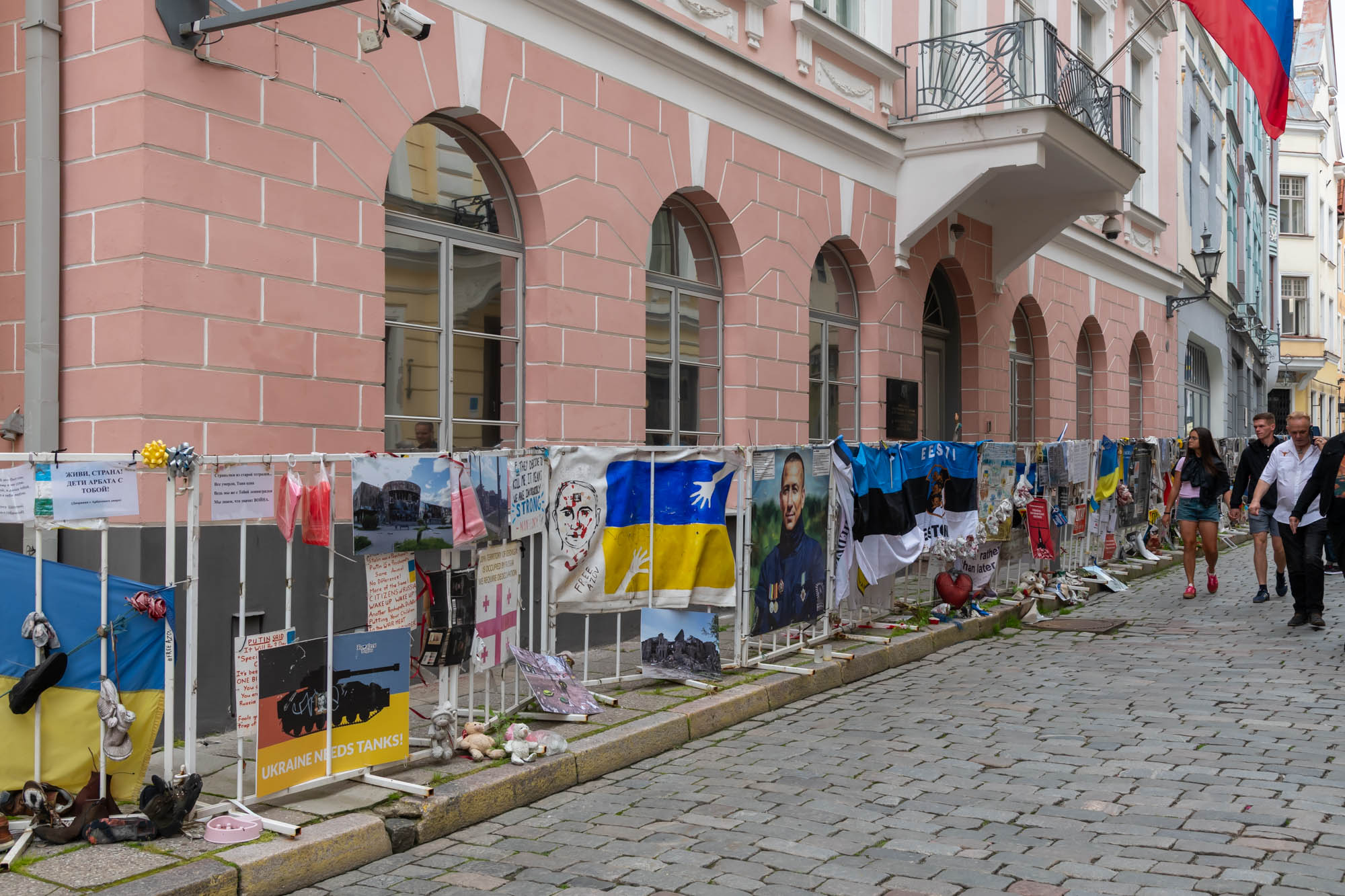
In Tallinn, I came across a protest against Russian aggression. This was a kind of exhibition just outside the Russian Embassy in the old town.
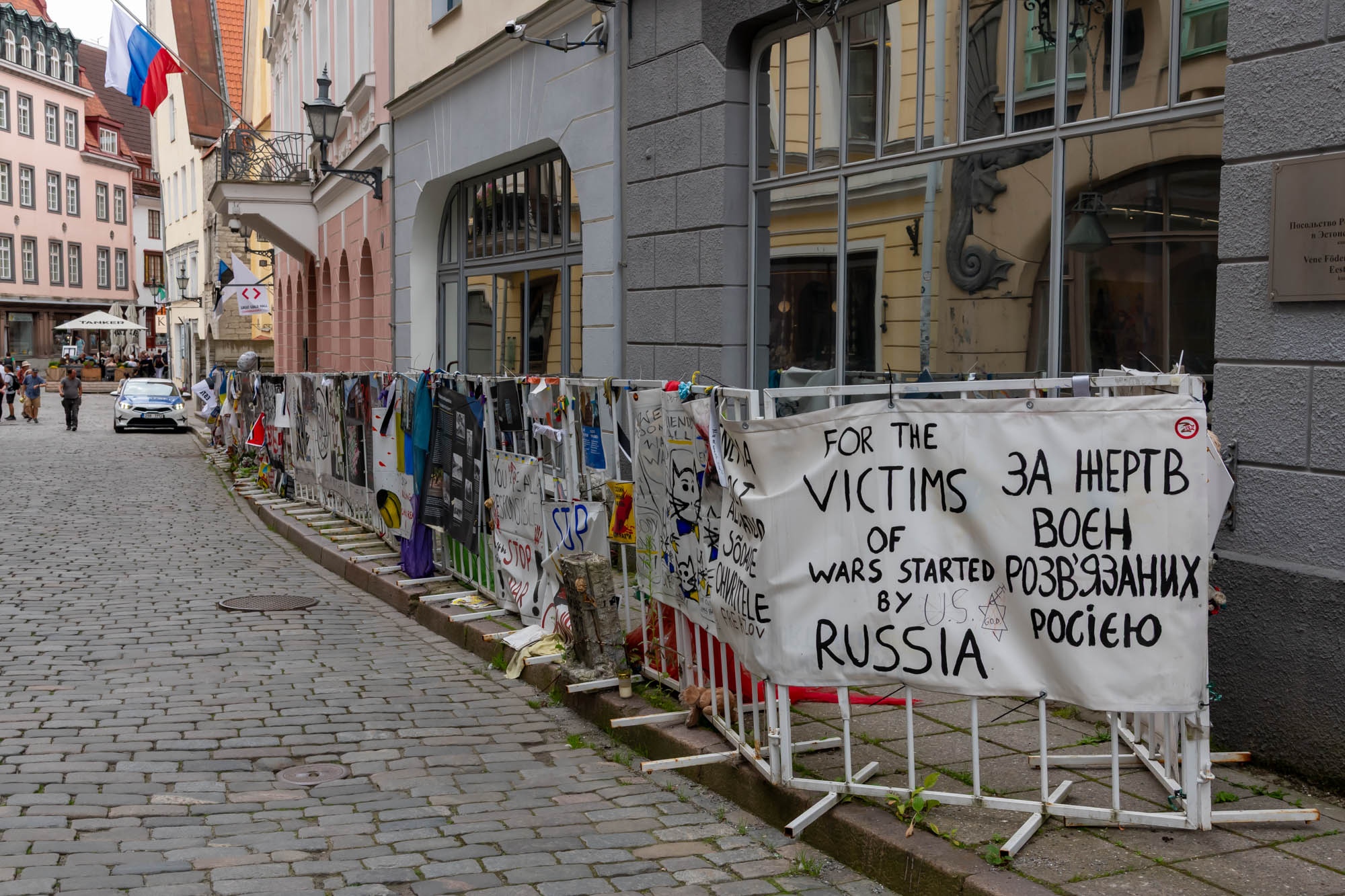
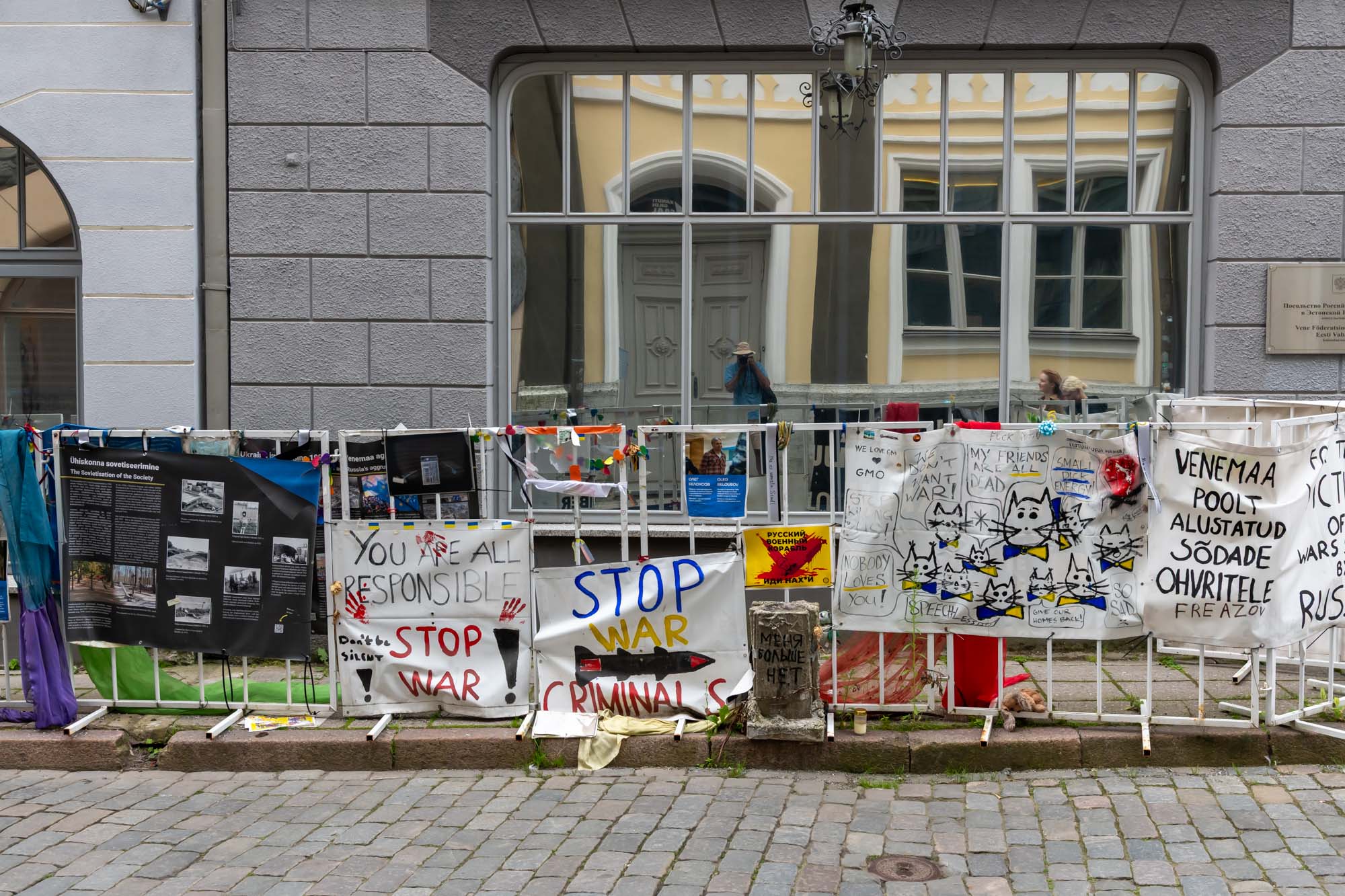
This fear seems to be burnt deeply into them and added to that, they say that the Russian psyche has always been an expansionist one, which believed in the superiority of Russia and everything Russian, right from the Czarist period. They view the current conflict in Ukraine as evidence of this expansionist mindset. When I was talking to a professor in the Czech Republic, she too expressed the same point, and she told me about how Finland was building a wall across the 2000 km long border with Russia. She was of the opinion that it was very likely that Russia would attack a small country like Estonia within a couple of years to see how far they could push NATO. The lady I met in Tallinn told me that investment into Estonia had slowed down because of this fear that Russia might attack them. I have no idea whether this was the opinion of just a few people but all the interactions I had with people seemed to support this view. This was kind of a surprise to me as I wasn’t aware that there was such a fear around current day Russia.

Music has been big in Estonia and as I mentioned before, even their independence movement was anchored on singing. They have a big music festival that is held in Tallinn every two or three years; unfortunately, I missed it by three or four days. The festival is held in the same ground where the Singing Revolution began and since there was tight security in place for the festival, I couldn’t get to see the ground. Musicians come from all over Estonia and a hundred thousand people were expected to come to watch them play – this is almost ten percent of the country’s population! In preparation for the festival some bands were performing in the main square in Tallinn’s old town. Their music was quite wonderful, and people were enjoying themselves. 

In Prague, a great attraction for me was the Clementium which had started as a Jesuit college in 1556. The college merged with the Charles University in 1654. It was well known for its astronomical research, and the tourism website says that Albert Einstein taught there. The Clementium today has a great old library with about 27,000 printed books. Arguably, it is one of the most beautiful libraries in the world with its wonderful Baroque styling. Public is not allowed inside the library for fear that the precious books may get damaged. We could get a peek through the door, and it was simply breathtaking.
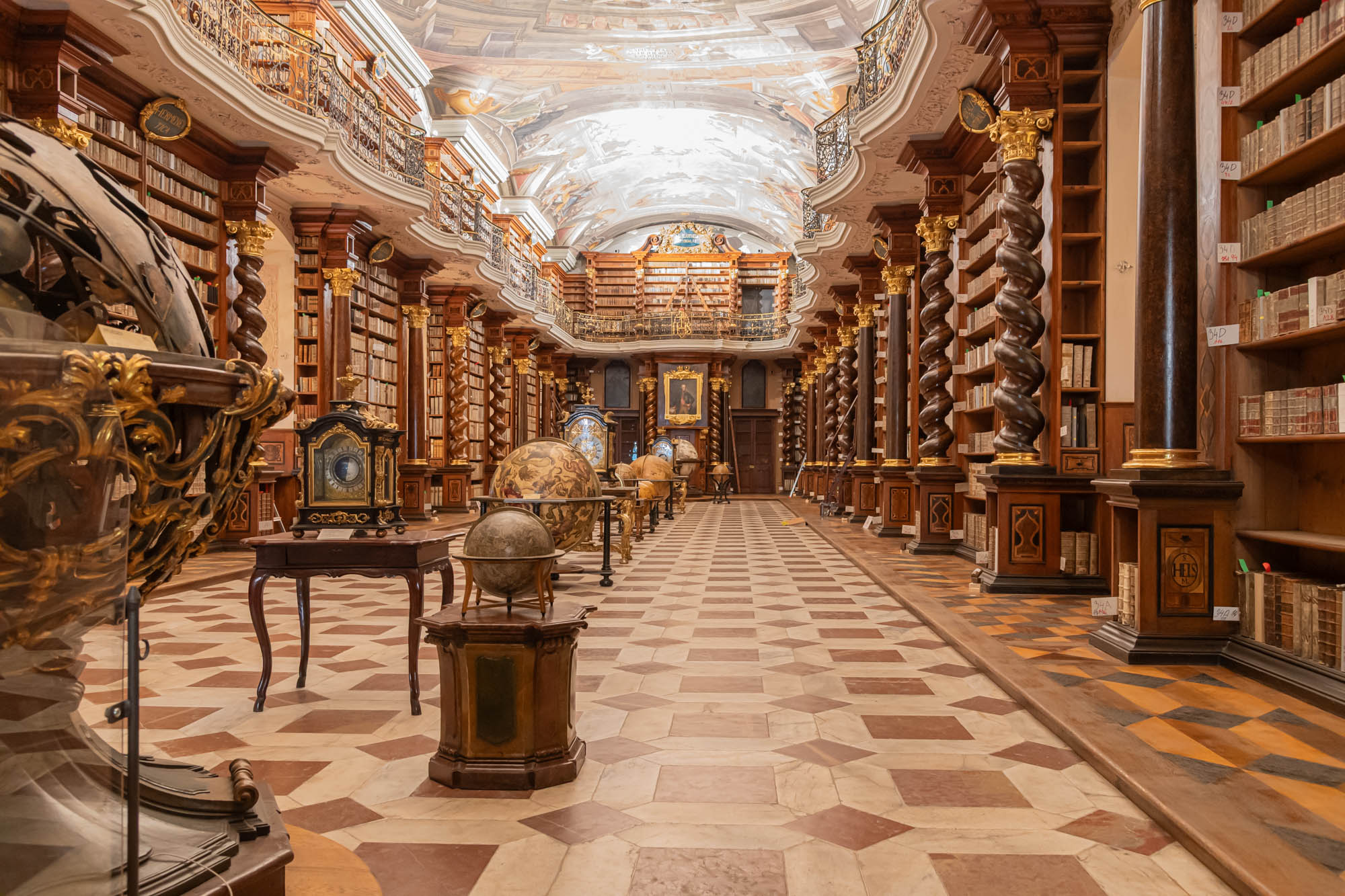
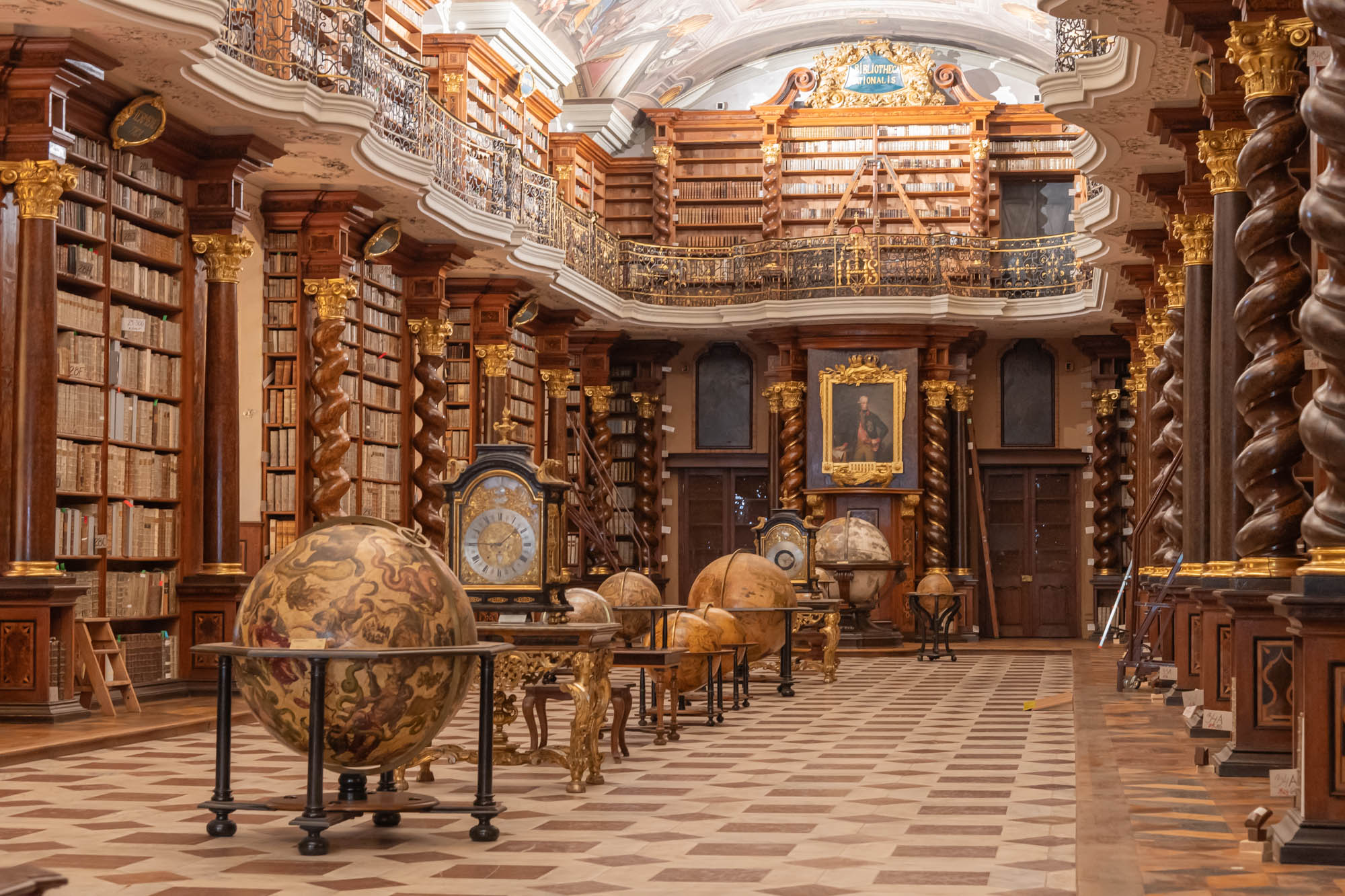
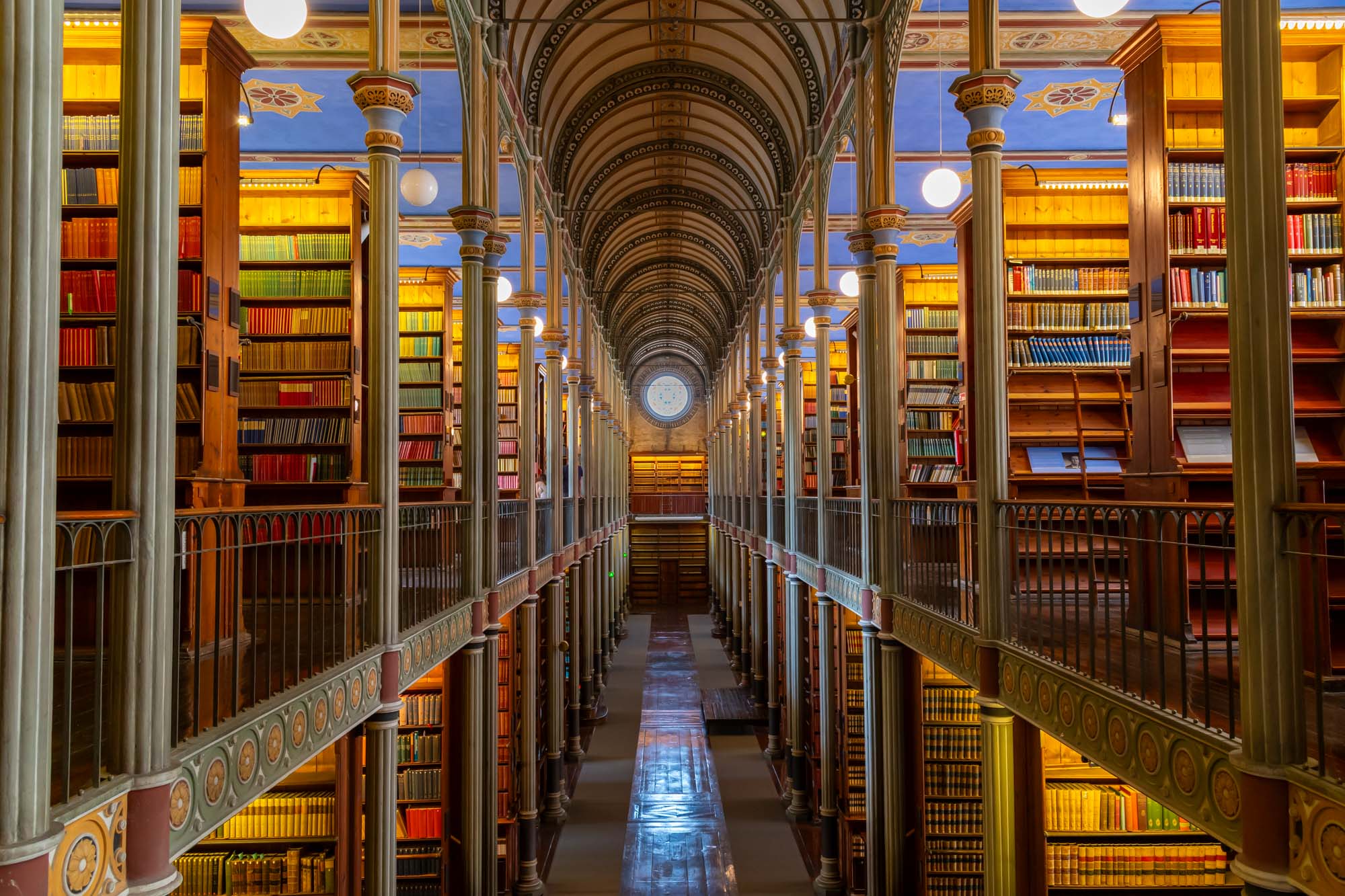
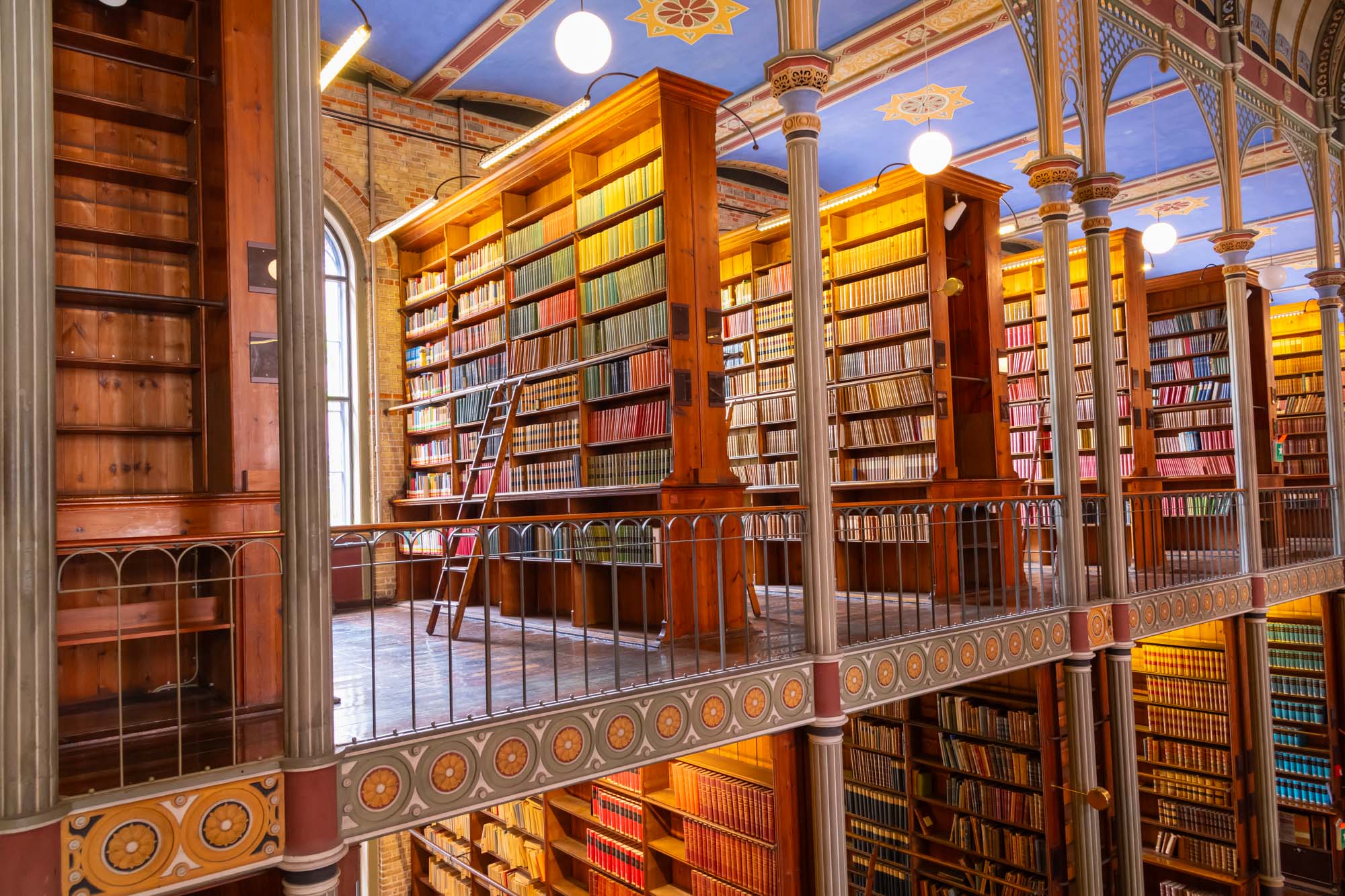
Copenhagen has understood that old libraries can be a big tourist attraction and so when the old University of Copenhagen library closed in 2009, after five hundred years of history, they decided to convert it to a kind of art installation. So, in this library, you have books arranged very aesthetically and it is quite a sight indeed. There are a hundred and twenty-five thousand books in this library now. One of the staff in the library conducts a guided tour and as she explained, the book covers have been designed to make them look attractive when displayed and the books per se are not of any great value. They are arranged kind of randomly as I found out, when I took down a couple of books. The visual impact is quite stunning, and you can happily send a couple of hours in this library, as I did.
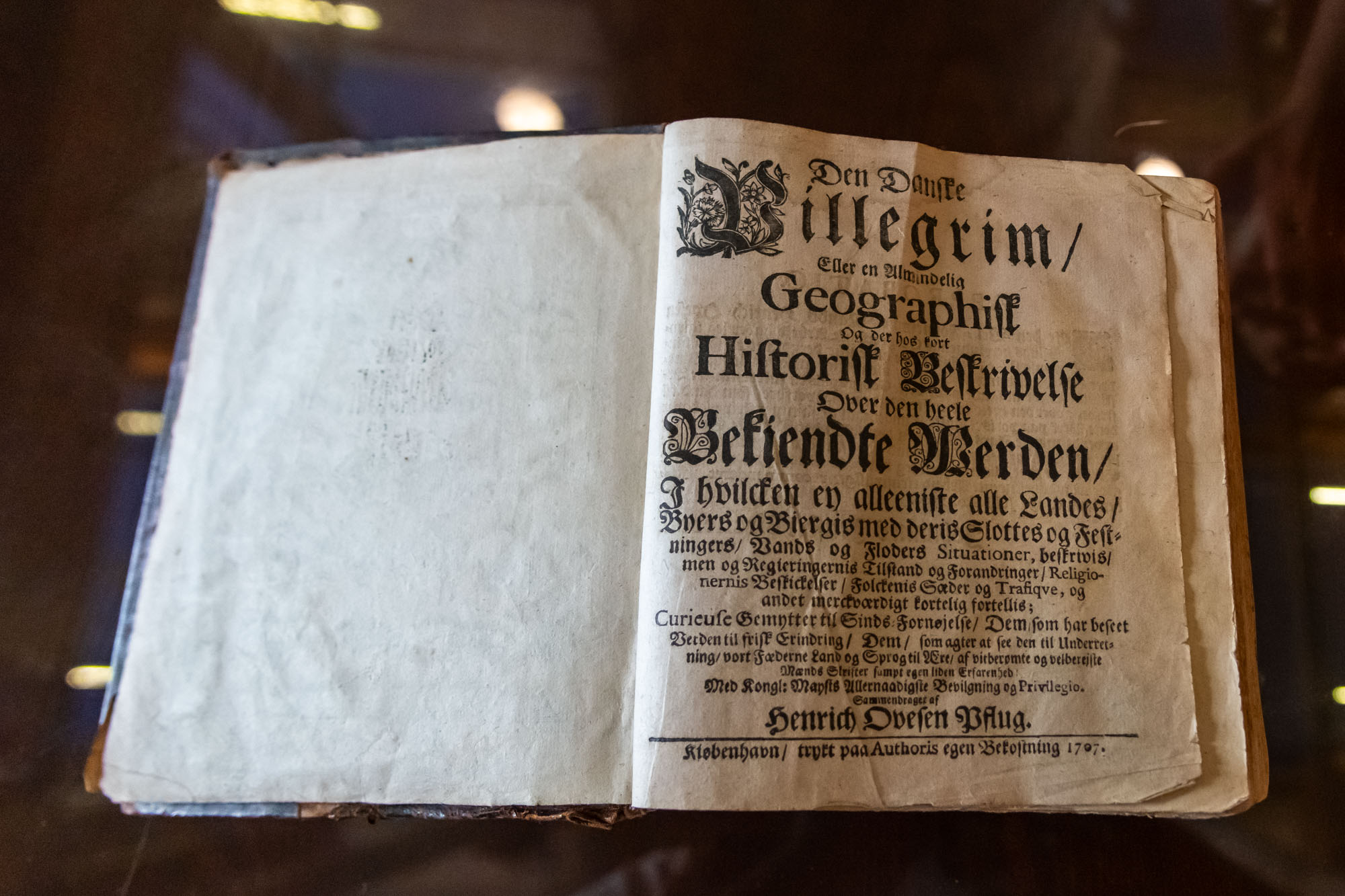
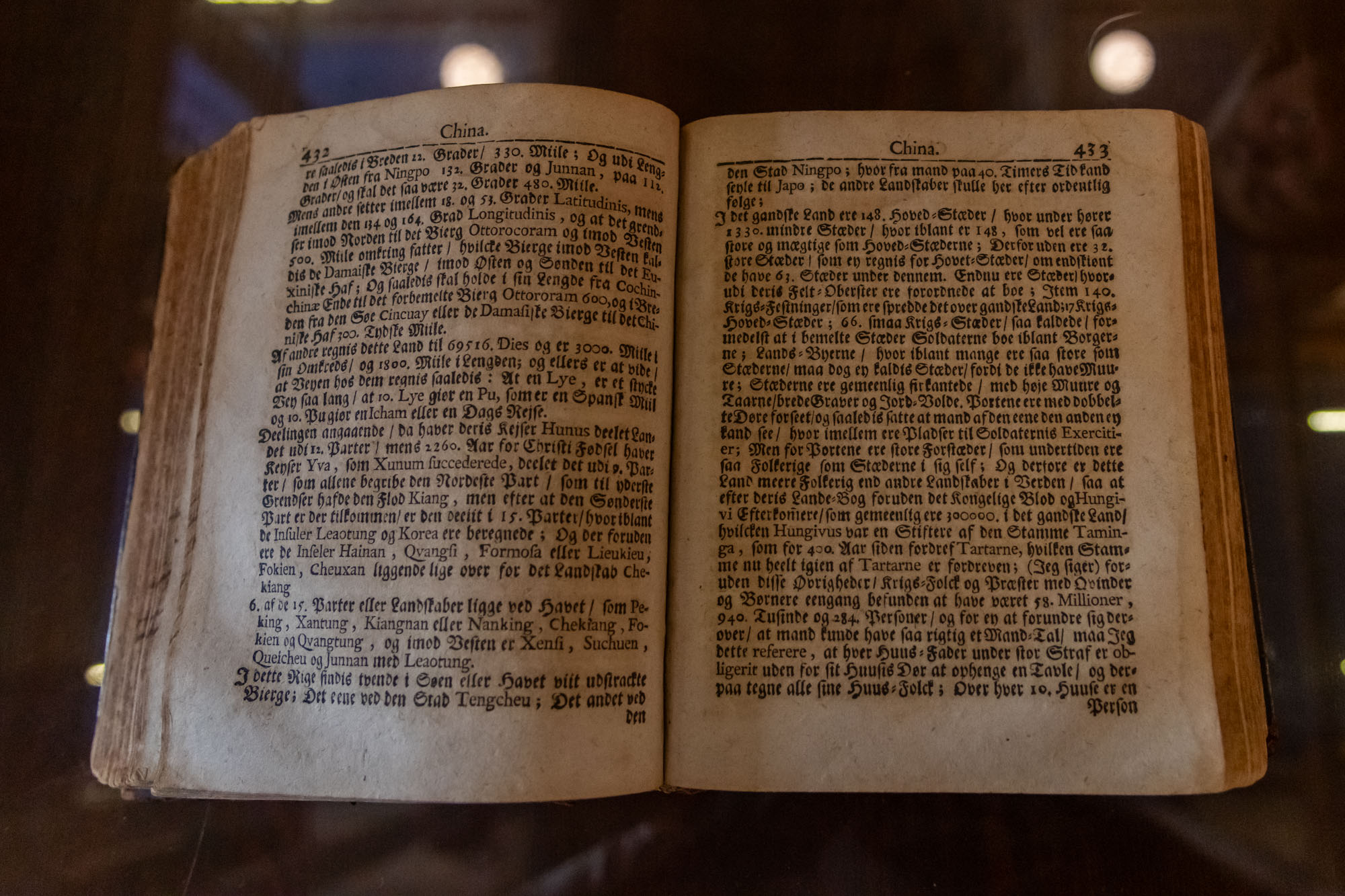
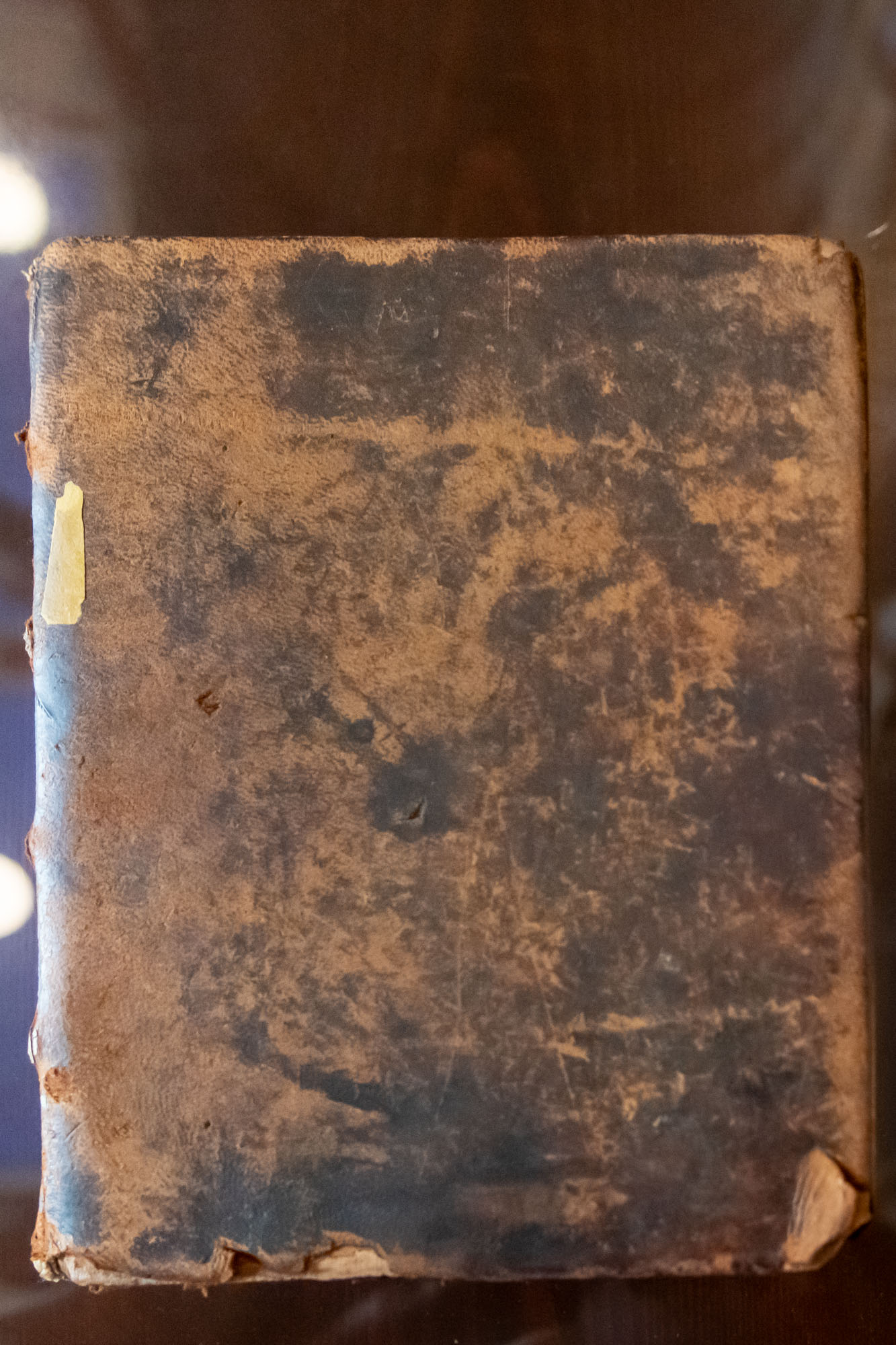
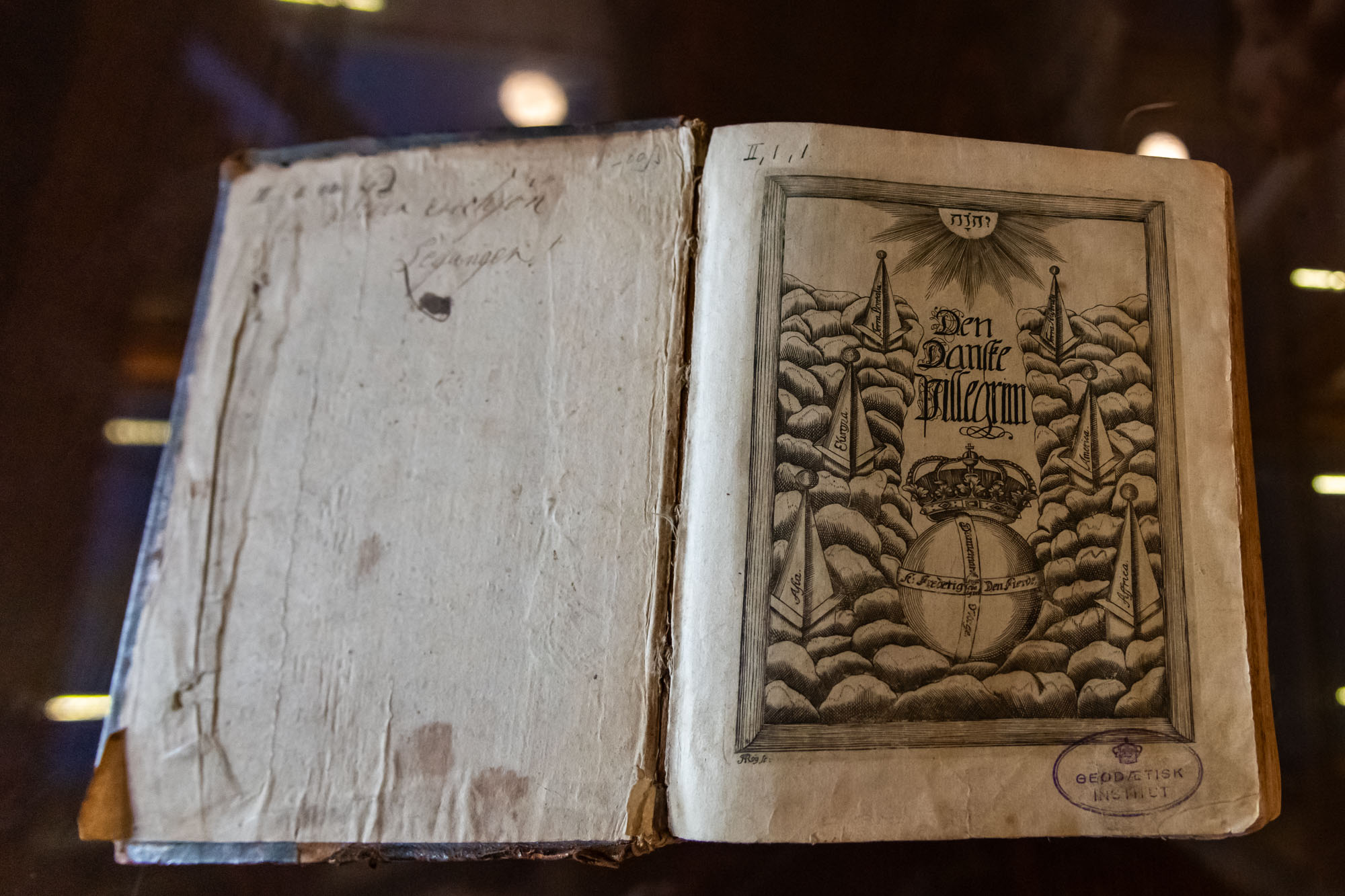
Perhaps because of my obvious interest in the library, the guide told me that she could show me the oldest book in the library. It is from 1707 and the title in the first page reads “Danish Pilgrim” and the one in the second page reads “Geographical and Political Description of the Whole Known World”. Supposedly, it is a collection of random details about various places. For instance, it might speak about the natural aspects of a location and be silent about its trade and commerce and vice versa about some other place. It seems this is a printed book and not a hand-written one. The guide handed over the book to me and when I leafed through the pages, I found a chapter on China but there was no information on India. The family of the person whose name is scribbled inside the cover did some research and found that he was the captain of a ship. This book must have belonged to him. This was a very special experience for me as this is the oldest book I have held in my hands! It was almost like touching history and going back three centuries!
One of the most interesting aspects of European cities is the presence of public spaces. You find squares large and small scattered everywhere across the cities. Some are old and some are new, but they are there, and everyone has access to those. They are maintained well with seating provided and people use them well. Since I was travelling in summer, I saw many people always gathered in these squares, especially in the evenings. They were friends and families, connecting and having a good time. Some of the squares are very large and would be ideal places for public gatherings and demonstrations. In Helsinki, I noticed that there would be a café selling drinks like beer, wine, coffee etc. in the square and I saw many people coming there to socialize, after dinner. In some places, there were free concerts and such other events. Overall, there was a lot of life around these public spaces, and I feel this is one significant thing we are missing in our cities. We used to have such spaces before but now with our uncontrolled “development” most of these have been lost. There would be a few parks here and there but that would be about it and even those won’t be available in the newer areas. In smaller towns, especially in Kerala, the athanis around temples or aaltharas, which play this role, are still present but they are mostly male dominated spaces and even these are changing in character today to become even more exclusive. 

Getting around most of these cities is quite easy as the public transport is pretty good. I had a car with me in some cities like Budapest and I found that to be a liability as parking was a hassle and a bit expensive. Most cities seem to have made parking very expensive to discourage people from using cars; maybe it also an avenue for the city council to generate income. Buses, trams and metros were very convenient, and you could buy daily tickets or trip tickets. The whole experience of buying these tickets was also very, very seamless through their app or website or simply tapping your credit card on the machines inside the vehicles. In most cities, they seem to rely on people’s honesty in buying tickets as you could just hop in and hop out without having to present the ticket. There is random checking, of course, and the fines are quite hefty. Cars are needed if you want to go to the countryside but otherwise, in cities, the public transport was more than enough. Moreover, these days, with Google maps available, you really don’t need to be familiar with the city as the app will guide you perfectly. Of course, this means that you need to have mobile connectivity wherever you go. 

One thing I noticed was that the use of taxis has come down drastically, over the years. Even when using taxis, people are using ride hailing apps like Uber or Bolt. I went to Helsinki from Tallinn by ferry and from the port, out of curiosity, I decided to take a taxi. I had seen that my hotel was only three or four kilometres from the port. Taxi drivers were calling out and competing for passengers and with that itself my antennae went up. Sure enough, even before the taxi and left the compound of the port, the meter was showing 25 Euros! I pointed this out to the driver and then the discussion started with us finally settling on 30 Euros for the whole drive; my feeling was that the correct rate would only have been 15 or 20 Euros. 

This incident was the only negative experience in the whole trip that lasted 45 days and in general, travelling in Europe was a smooth experience. People were friendly and trusting. One day, in Ljubljana, we were eating at a temporary local market set up in a square and we wanted a glass of wine. The vendor had stepped out and his friend was minding the cart, and he didn’t know the price of the wine we wanted. He just poured us the wine and asked us to come back and pay later. We could have just walked away without paying but he trusted us. In interior Scotland the roads are very narrow and sometimes, you have to wait at a particular spot so that the vehicle coming against you can pass. People waited patiently and politely and waved at each other when they passed. There was no honking and light flashing. In fact, the attitude around flashing one’s headlight best describes the difference. In India, when we flash our headlight, we intend to convey to the other driver that we are going, and she or he should wait; it often is a contest of who flashed first. In Europe (and many other countries including US), when they flash their headlight at you, they are conveying that they will wait, and you can go ahead. One is about me, and the other is about you. Such small, everyday instances make or break your experience. 

As mentioned, there is hardly any abrasive experience when travelling in Europe. This is not the situation when we travel around India. The traffic is violent, there is much haggling, pushing and shoving which basically leaves you exhausted. I was just wondering how Europe got to be like this. In the medieval times, Europe was one of the most violent places in Earth with their inhumane colonization and such. Even if you look at the nature of the punishments they handed out like “hung, drawn and quartered”, it was just horrible. In those times, violence was an everyday event as well, as I understood. I was curious on how such a violent people become so peaceful. This is not to say that there are no violent crimes in these places; there are. I am talking about the small incidents in everyday life. 

Of course, I mean only the people in their everyday lives and not nation states, which continue to be violent as we can see from their behaviour in Iraq, Palestine, Ukraine and such other places across the world. I don’t have an answer to this question, and I did discuss this with a couple of people. The only theory I could come up with was that maybe the people have made the state the owners of violence and decided to move away from it in their individual capacity. Of course, it might only be a thin layer of veneer that covers the underlying violent nature. Whatever it be, it makes everyday interactions a bit less stressful. I guess it must have something to do with education and culture. For instance, every city, big or small, has museums, theatres and such other cultural institutions. They take care to ensure that school children have exposure to these from a very young age. I am not sure what they are doing right or whether it is intentional; but is sure seems to have an effect. 
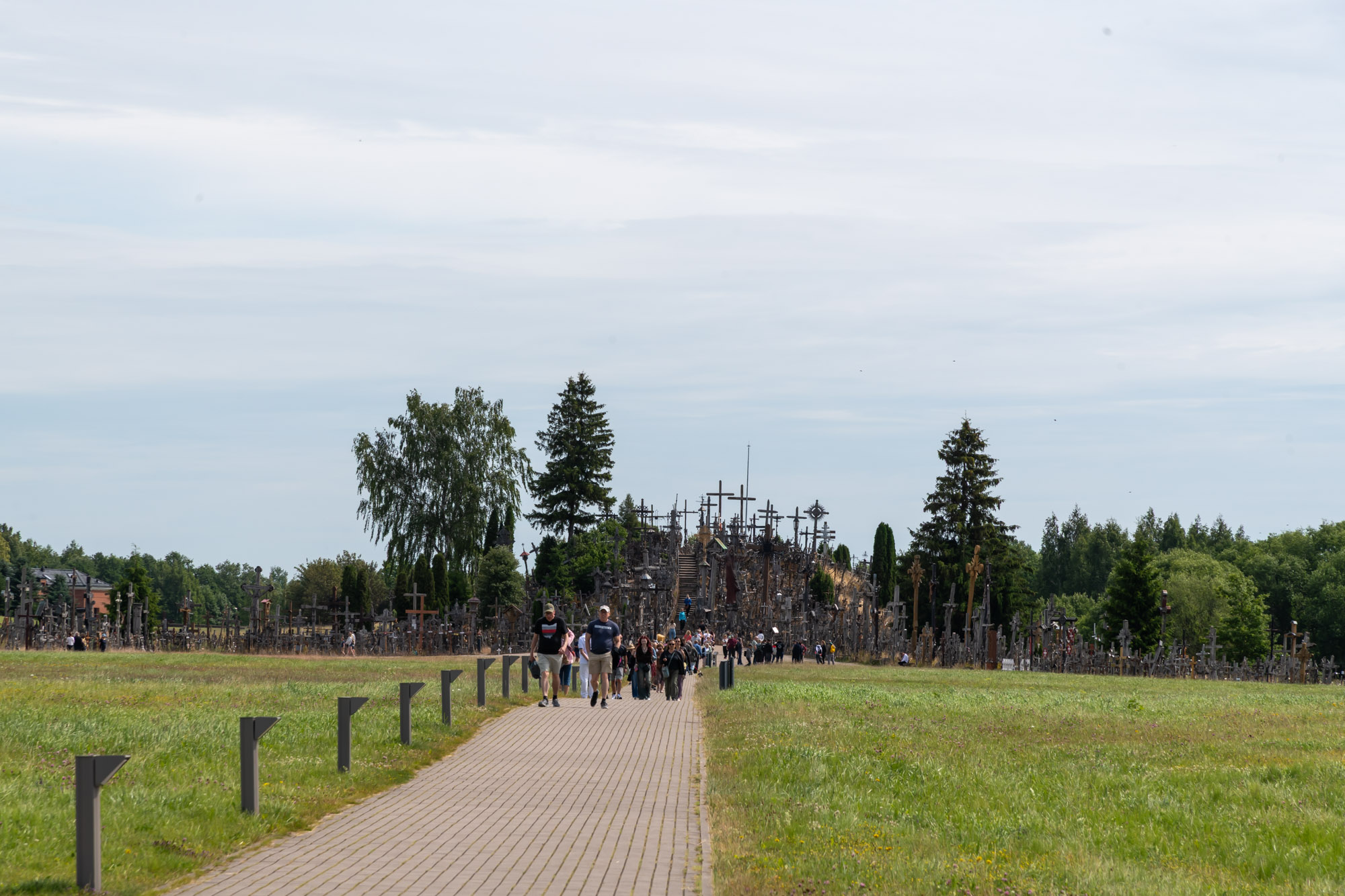
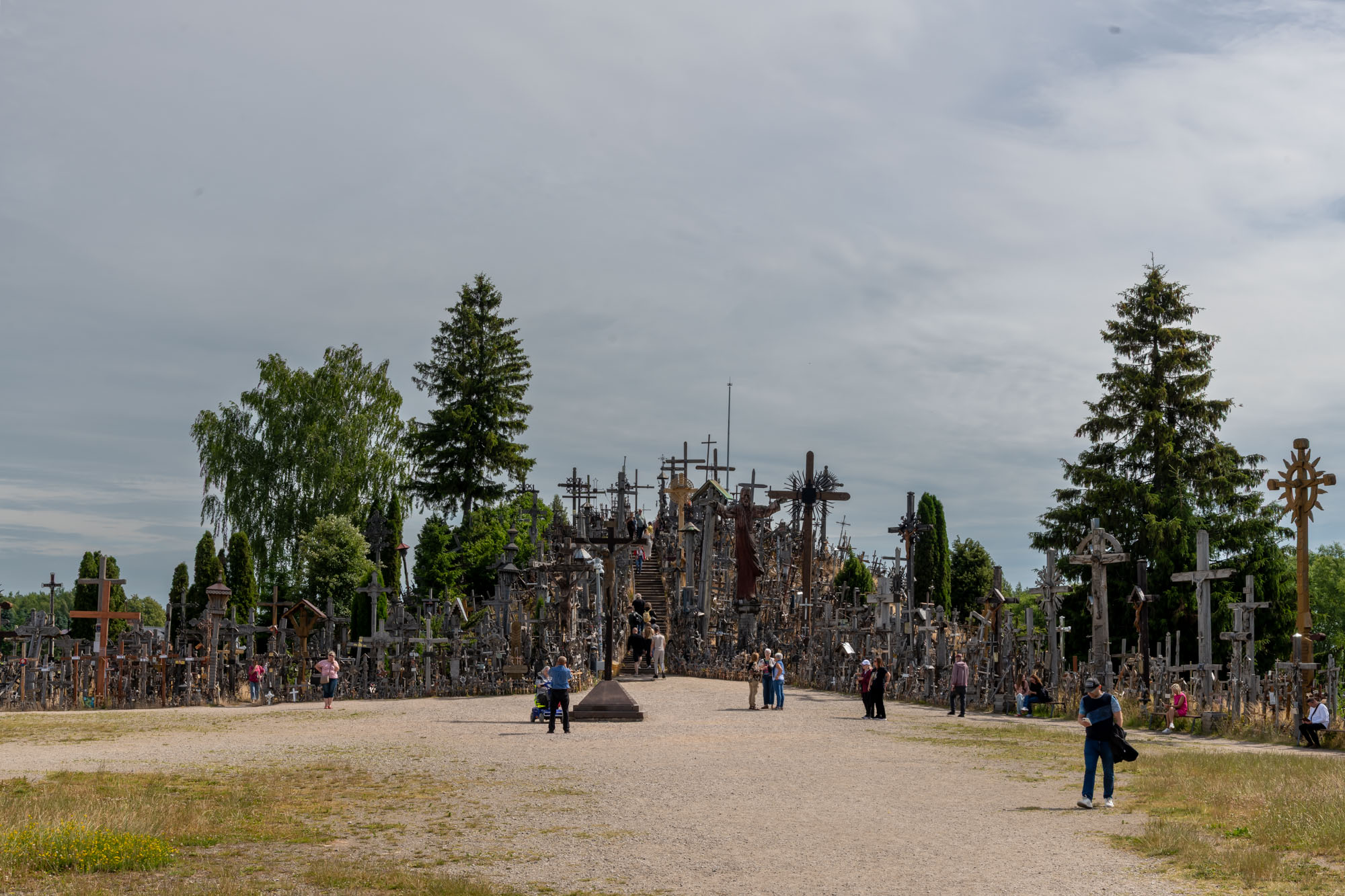
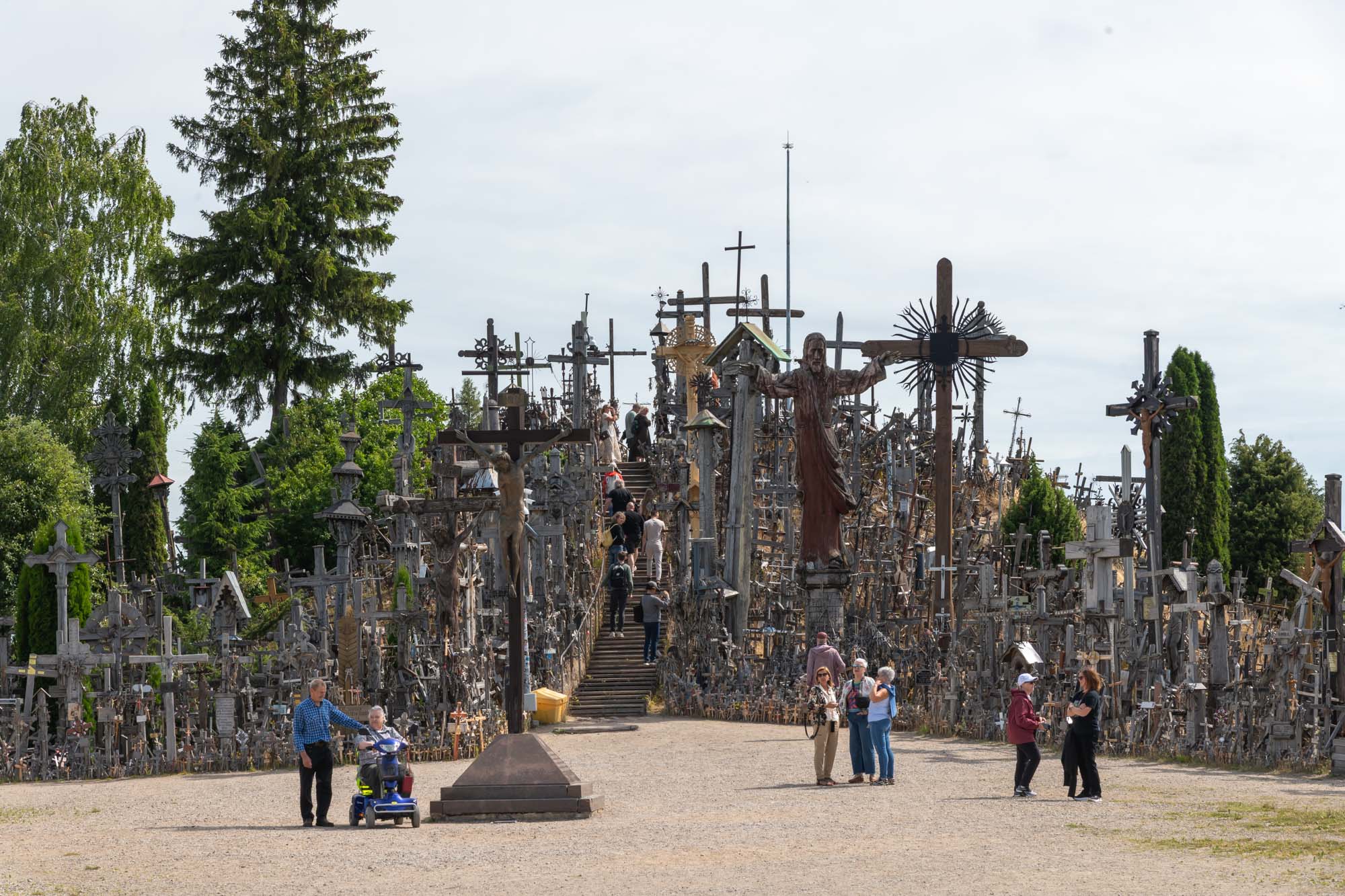
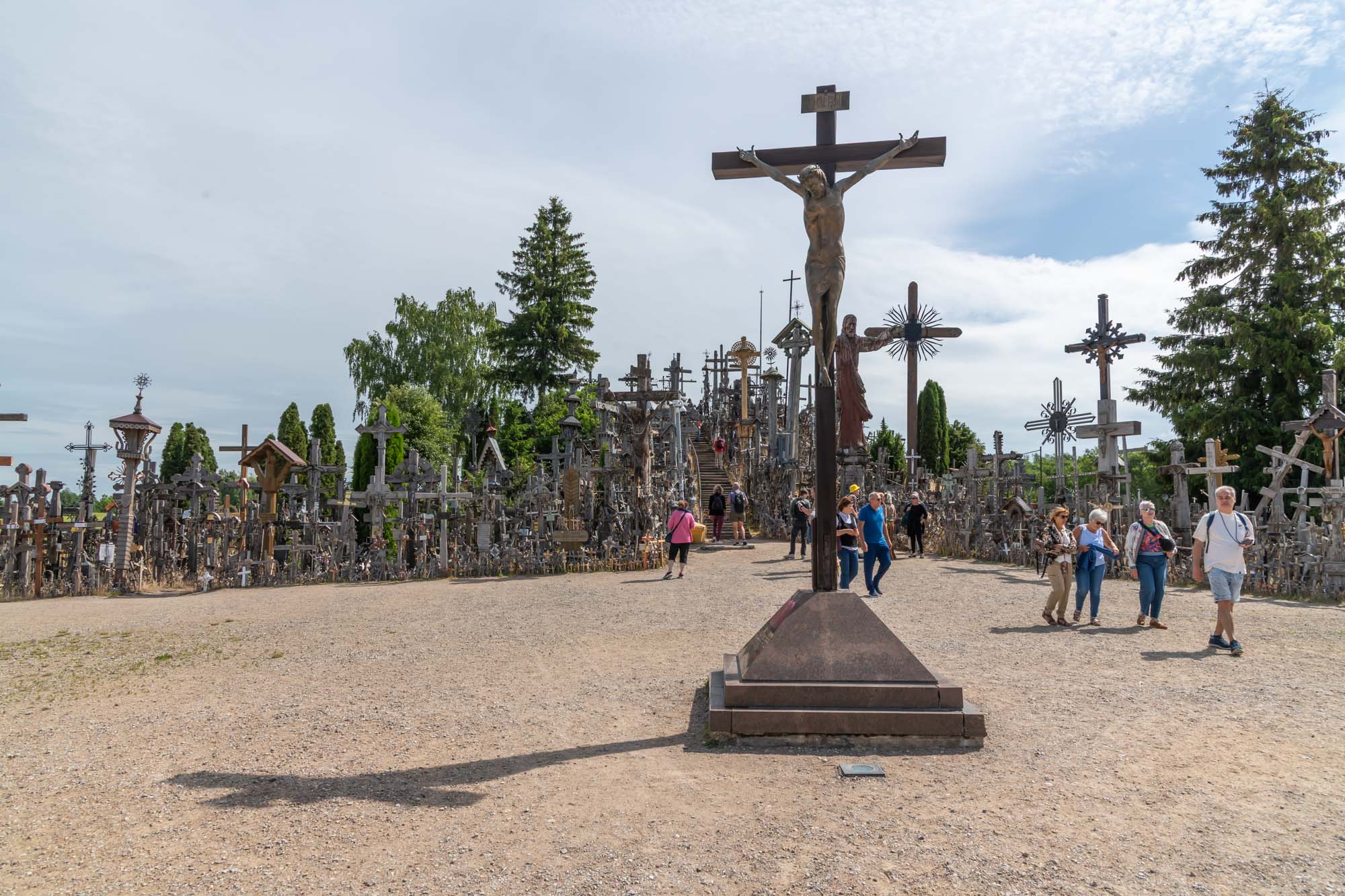
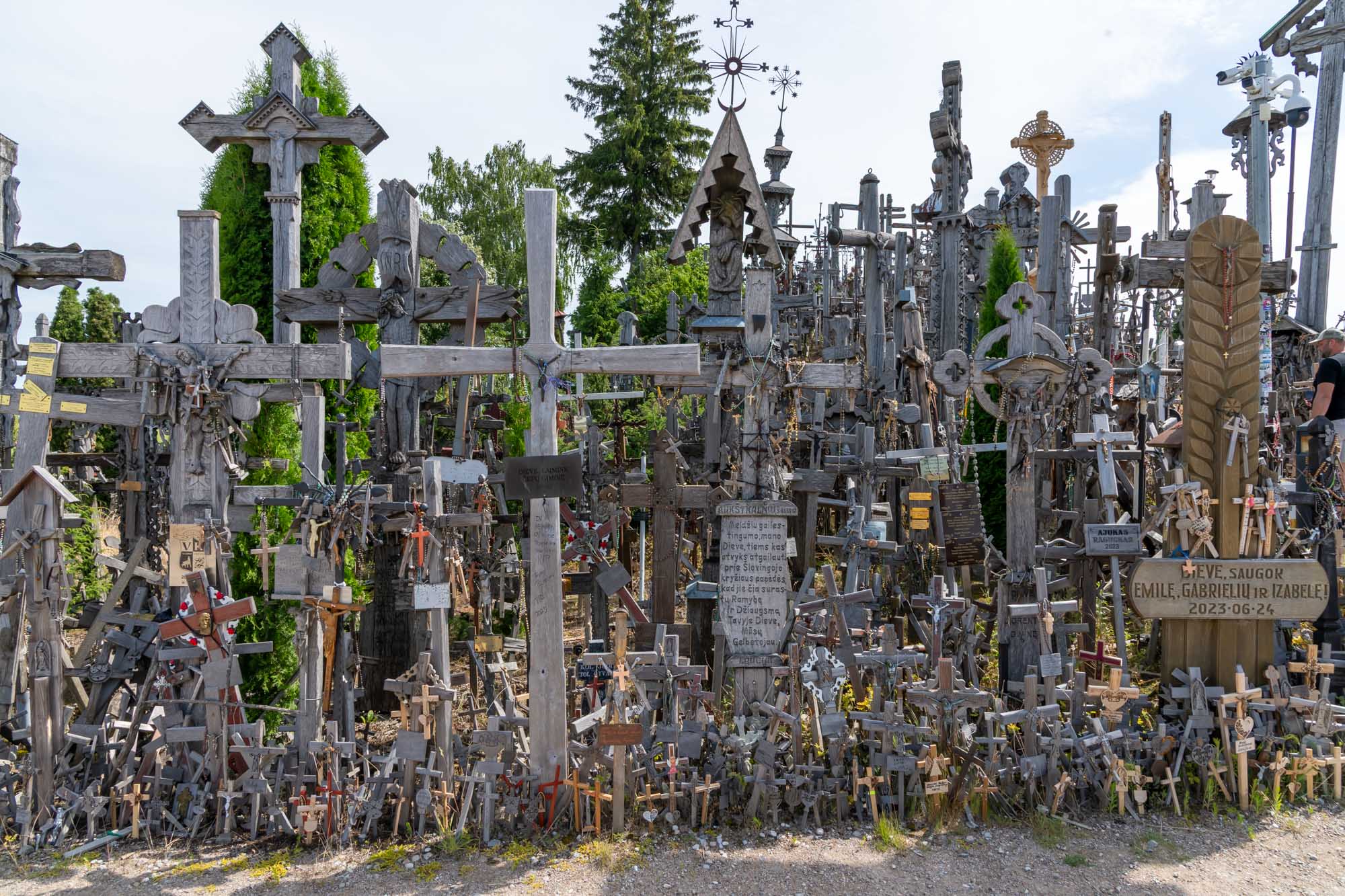
Yuval Harari sees religion as something that can cause people to come together and co-operate. An example of that theory is the site called the Hill of Crosses, which is situated in Lithuania and is just a small deviation from the Riga – Vilnius route. I had come across this site during my search and it was easy enough for me to visit as I was driving from Riga to Vilnius. 

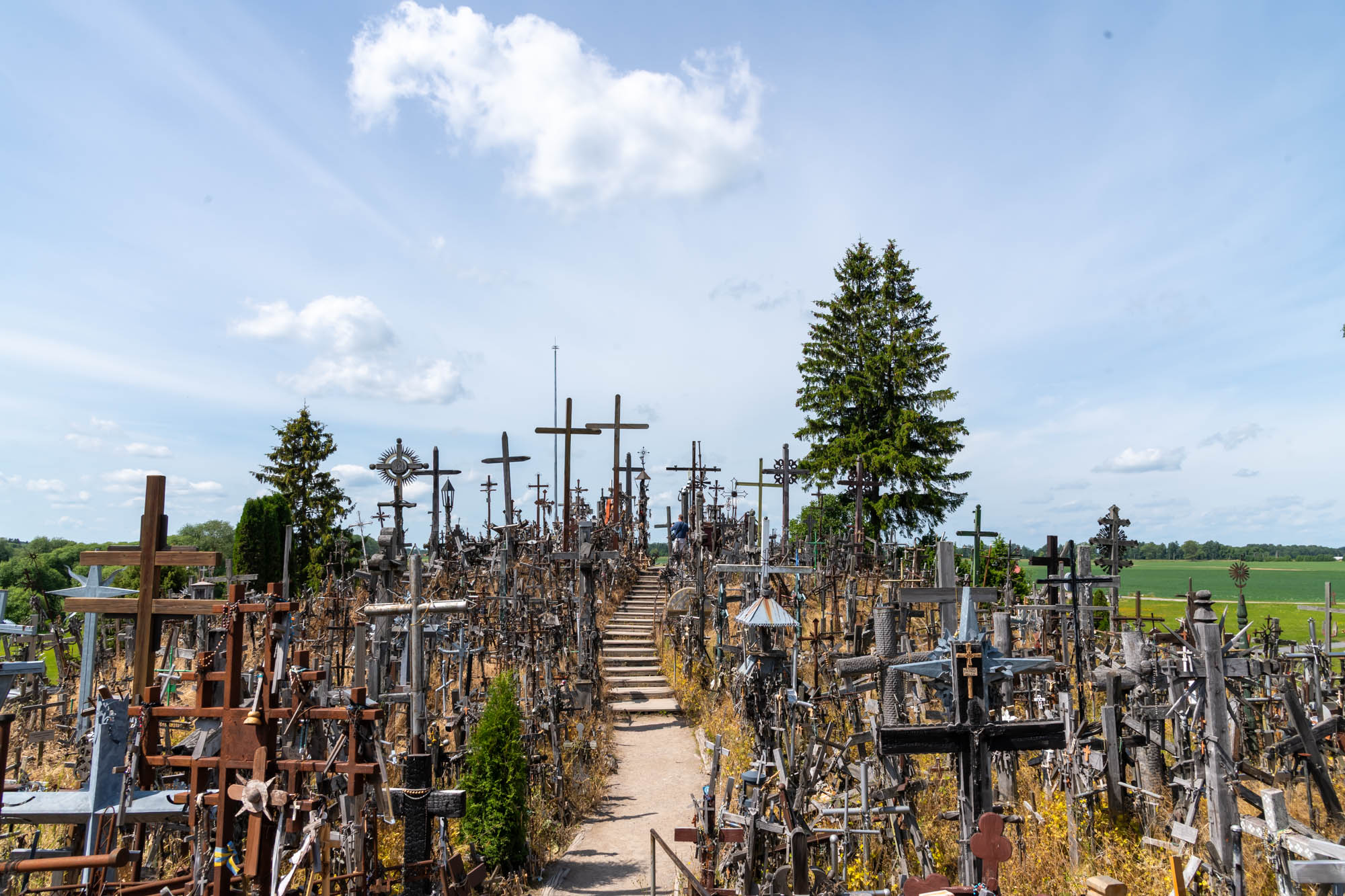
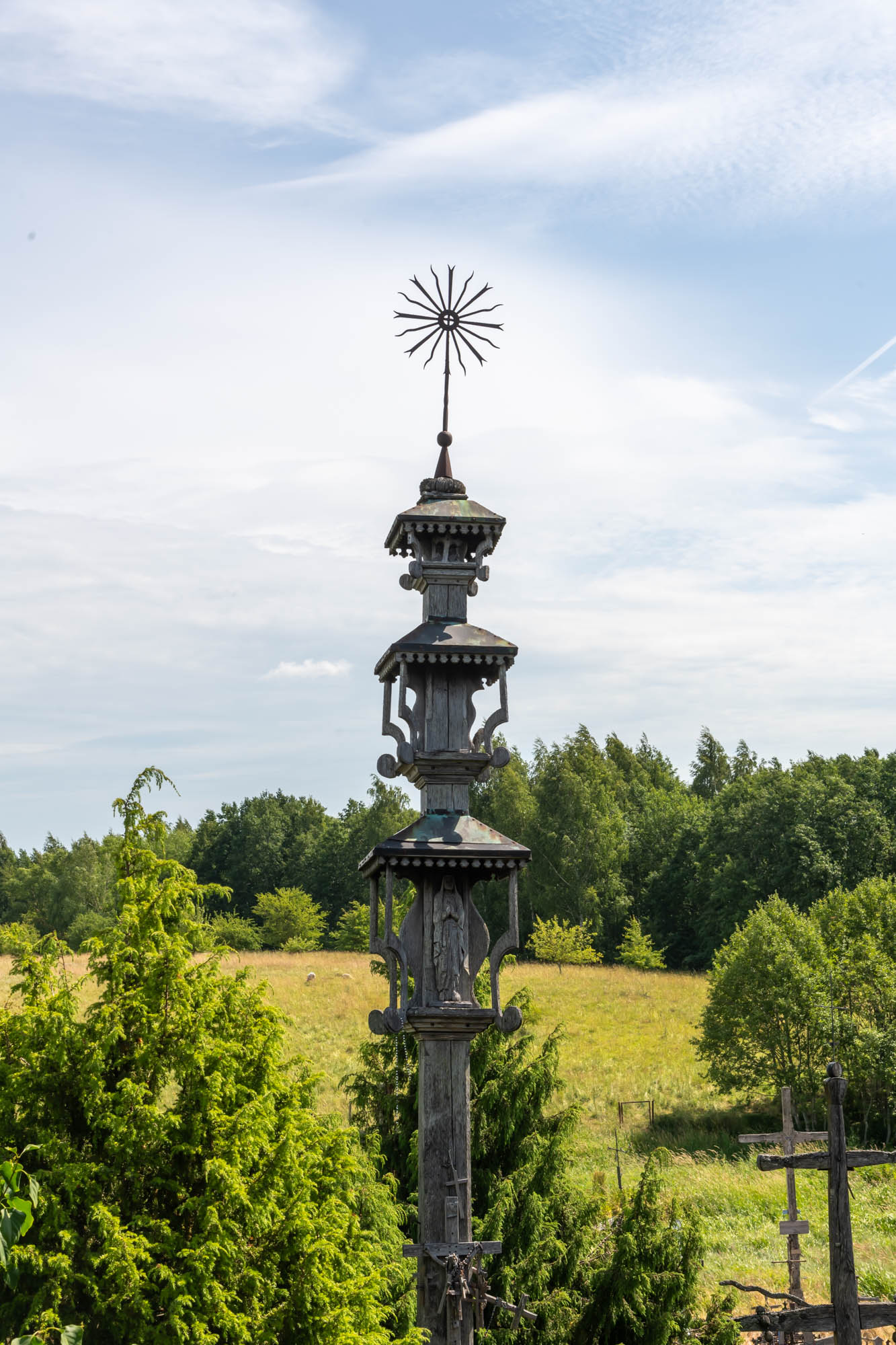
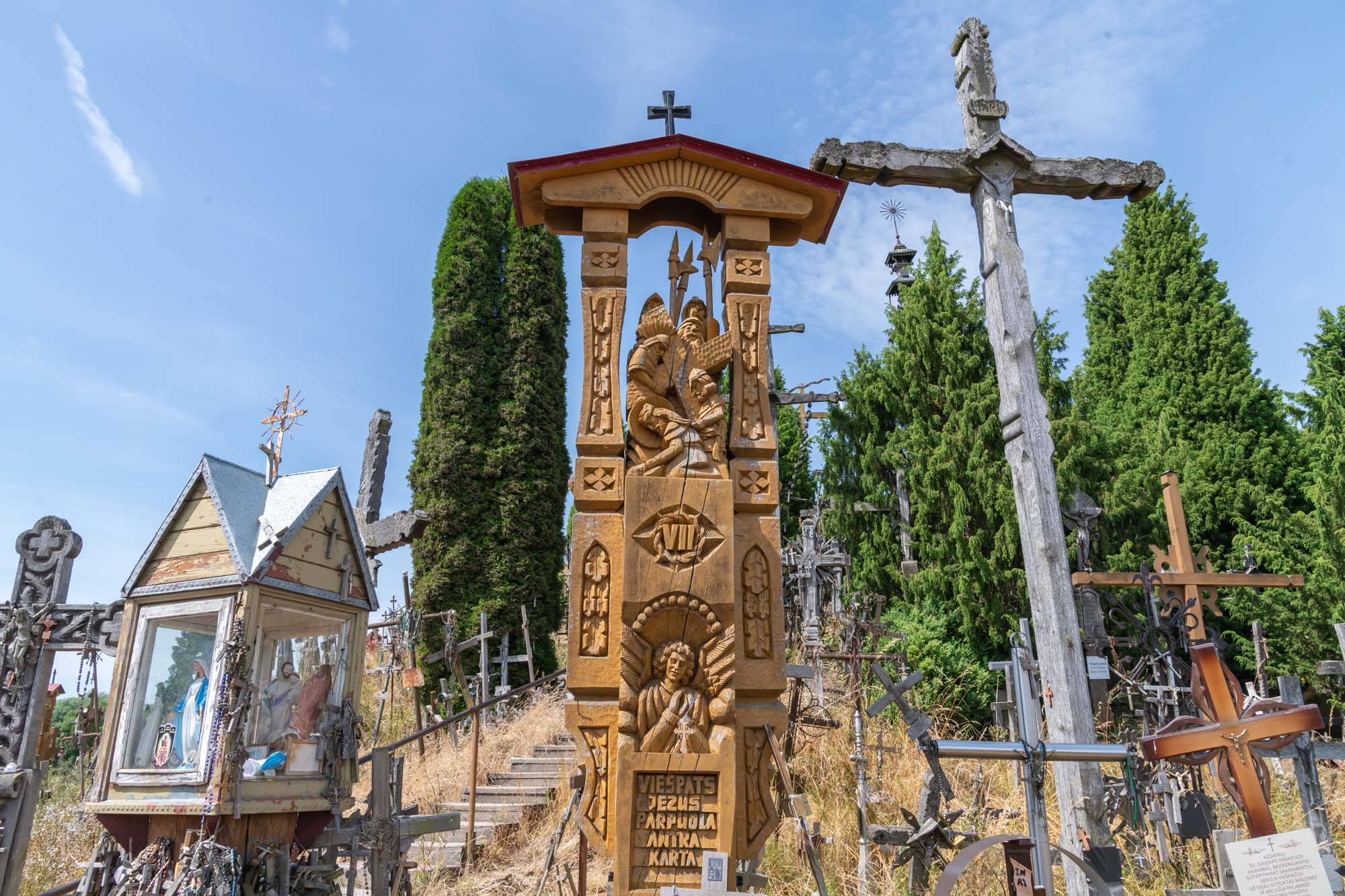
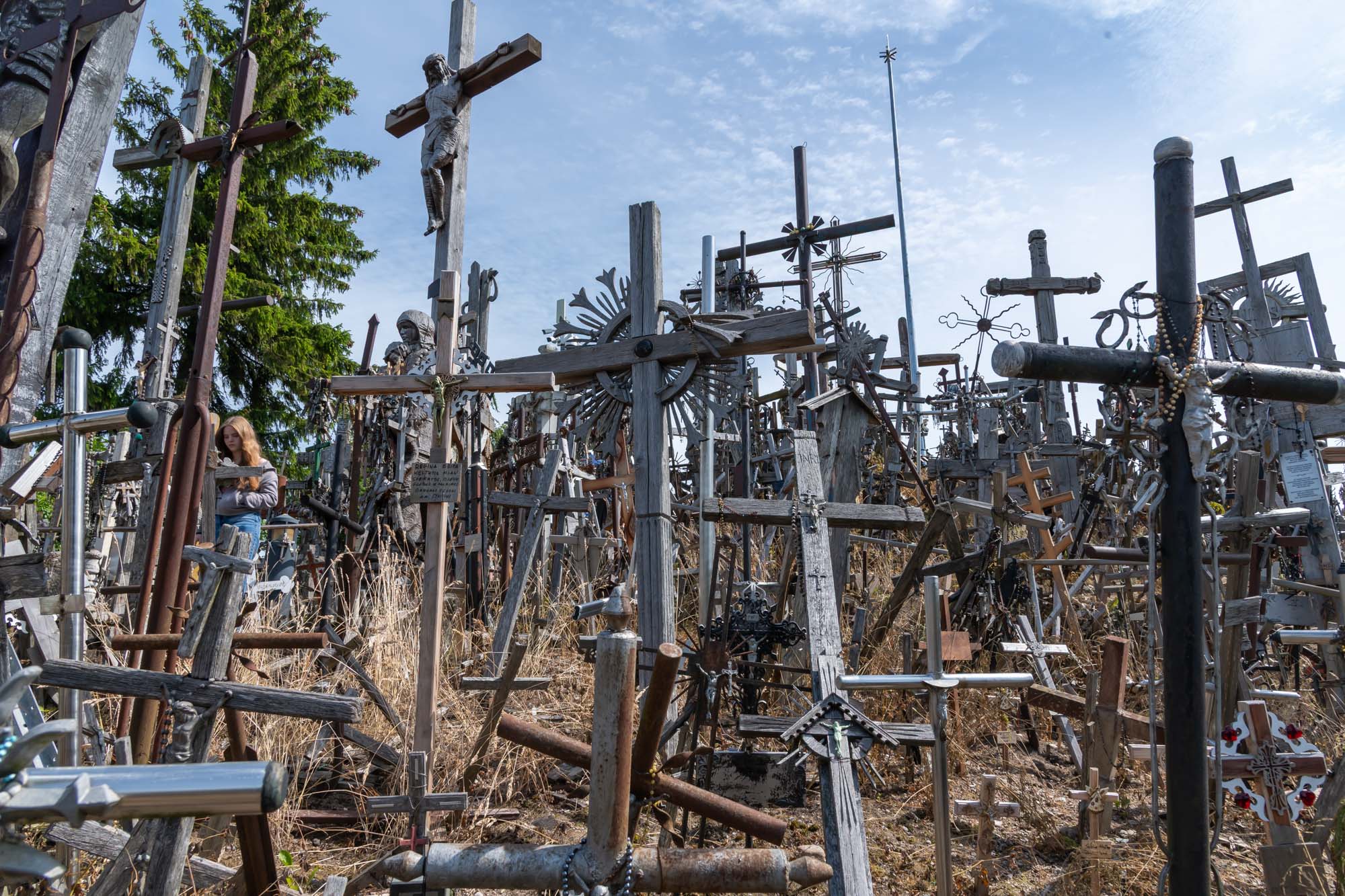
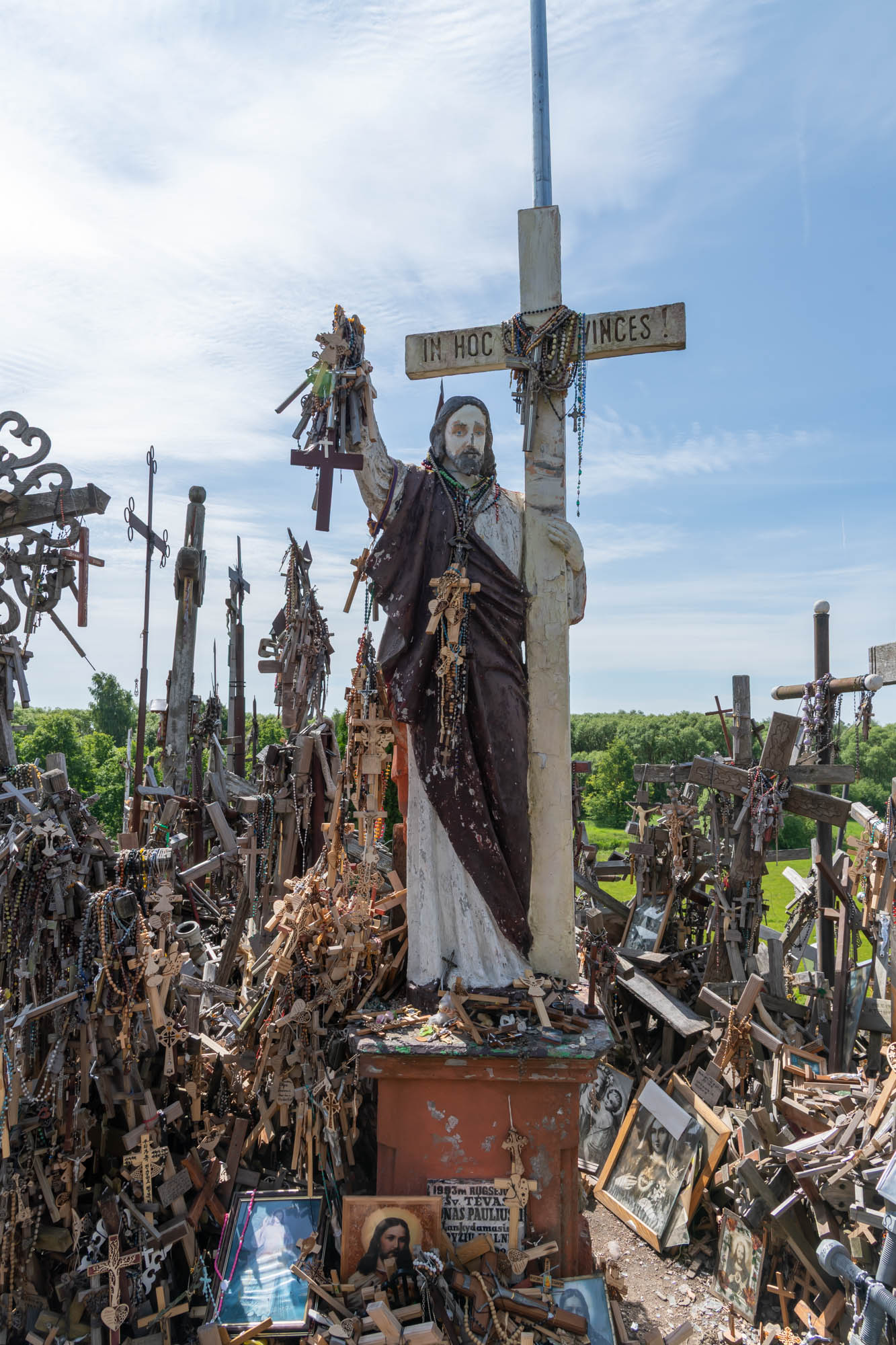
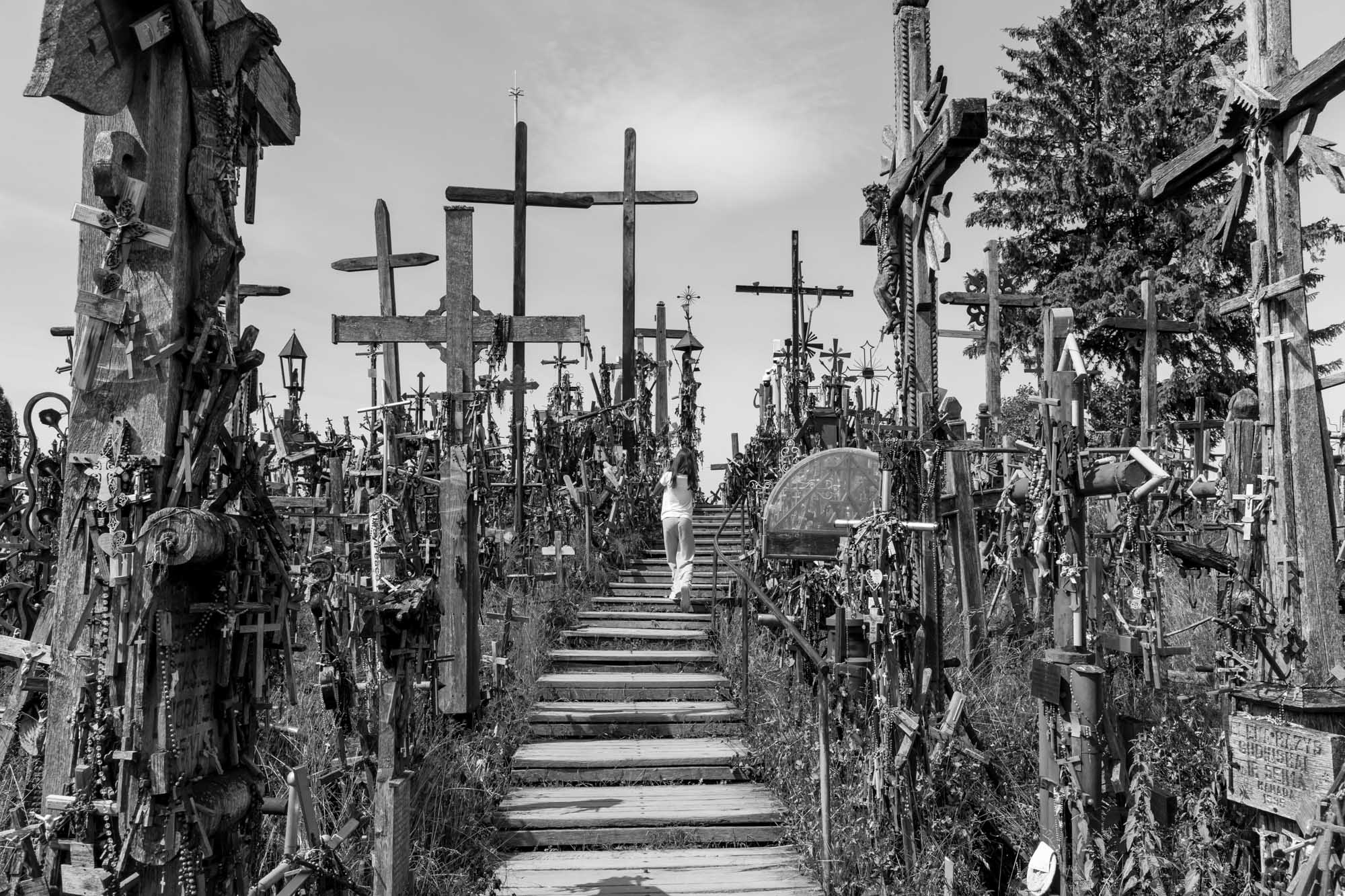
The name is actually a very truthful description of what it is – a hill full of crosses. It is full of crosses of all sizes and even some statues, rosaries etc. The actual number of crosses here is not known, with some estimates mentioning 150,000 as the number, which has increased form the estimate of 55,000 in 1990. Today, any visitor can choose to install a cross in the hill (provided it is less than a certain height) and you can see many vendors selling crosses on the way to the hill. 

It is not clear as to how the practice of erecting crosses on this small hill began but it is believed that the first crosses started appearing after the rebellion of the Lithuanian and Polish people against the Russian empire in 1831. Lithuania was part of the Russian empire then. The 1831 revolution was unsuccessful, and families started outing up crosses on the site of an old hill fort, in memory of their loved ones that died in the revolution and whose bodies could not be found.

Lithuania became a free country in 1918, and the Hill continued to flourish. However, Lithuania became a part of the USSR in 1944 (what the Lithuanians call as Soviet occupation) and under the Soviet regime, religious freedom was not allowed. Priests and practitioners were persecuted and naturally, the Russians did not have any liking for the Hill. Visiting the Hill and erecting crosses there was declared illegal and could result in penalties and jail. The KGB was alert to the possibilities that the Hill presented and supposedly, they bulldozed it three times. Roads were blocked and access to the Hill denied.

Yet, people continued to bring crosses to the hill surreptitiously. For, to them, the Hill became a symbol of resistance. It was their site of protest against the occupation by Russia. Thus, a religious site transformed into a site of resistance. 

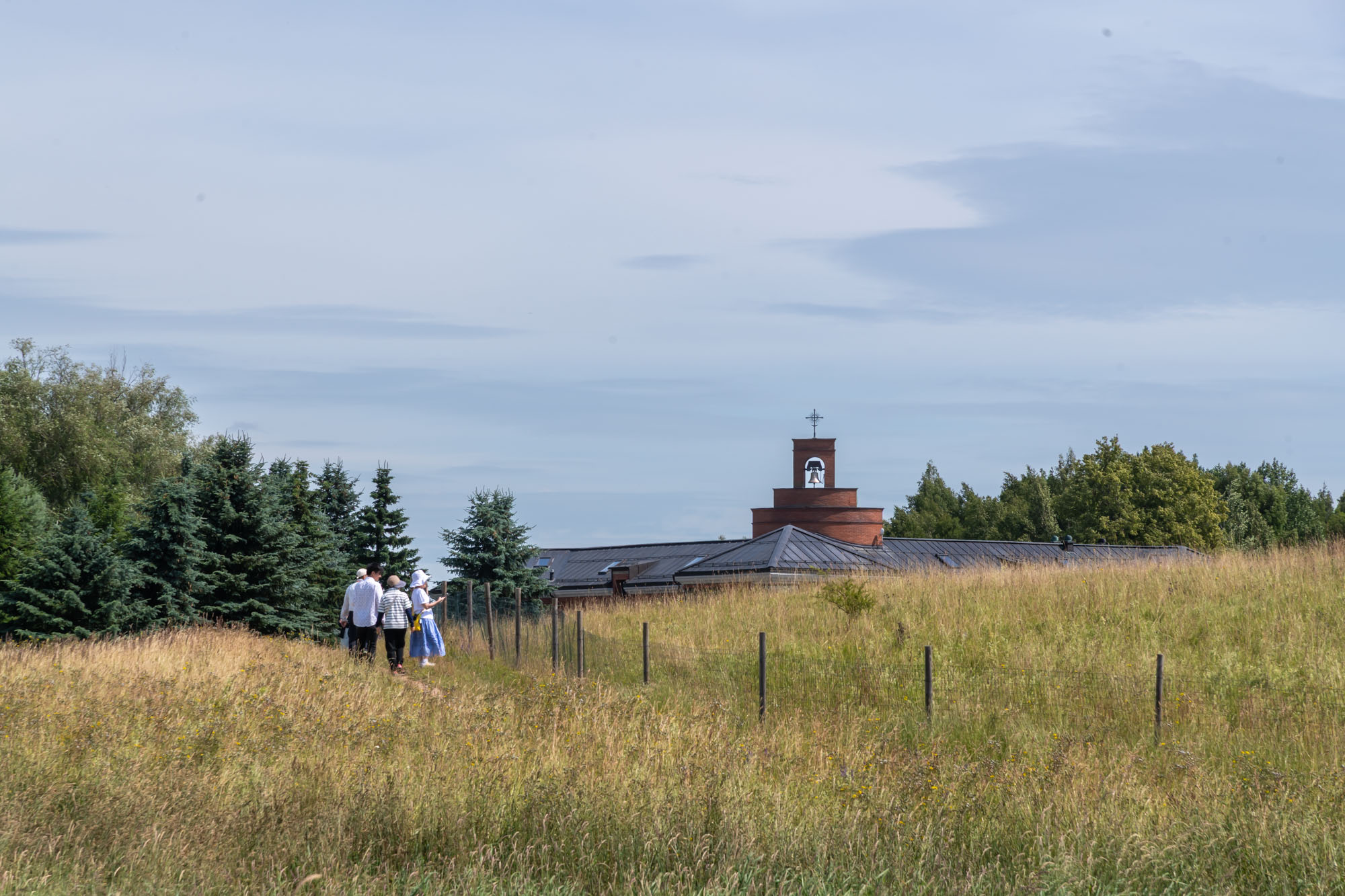
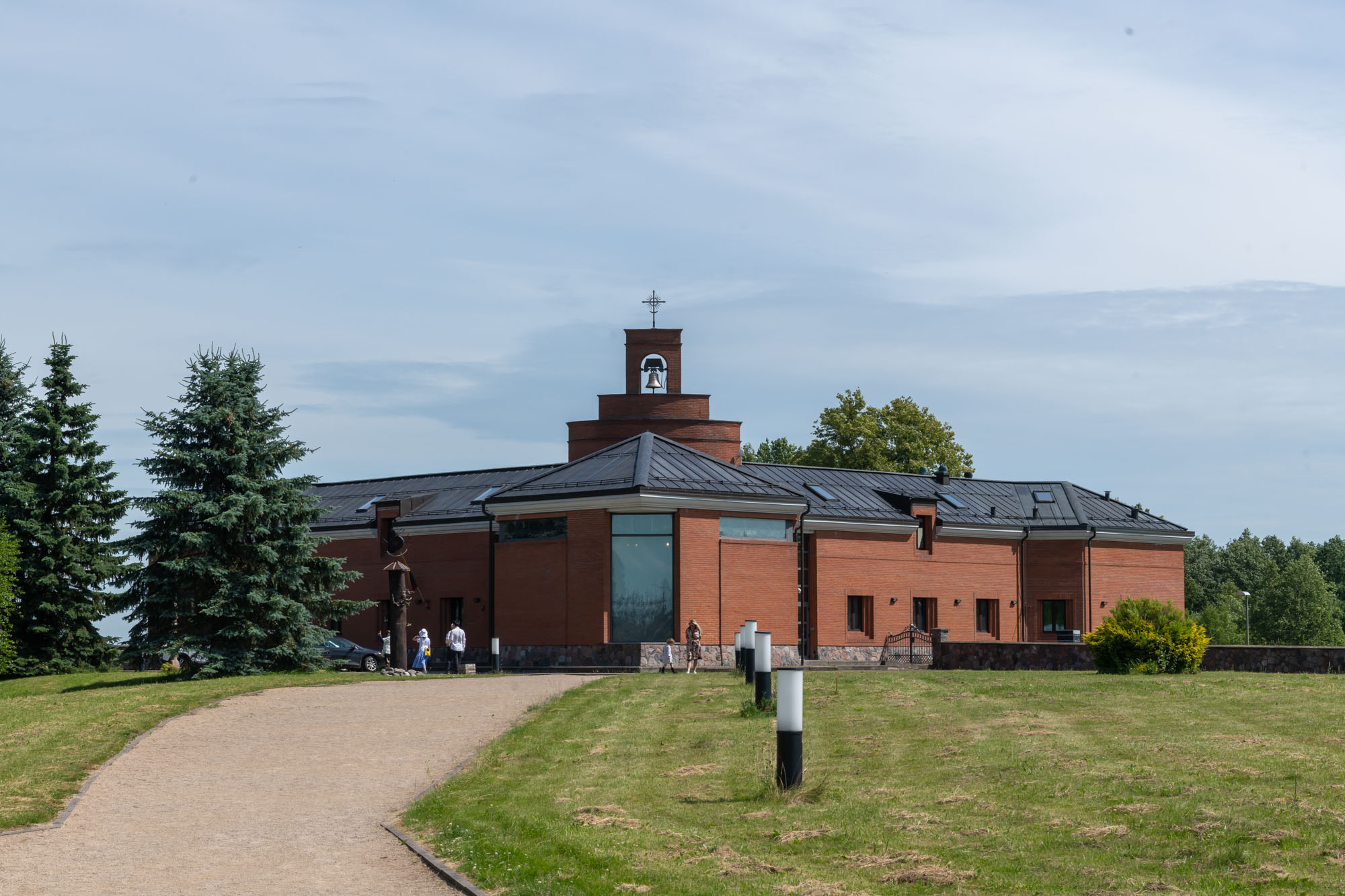
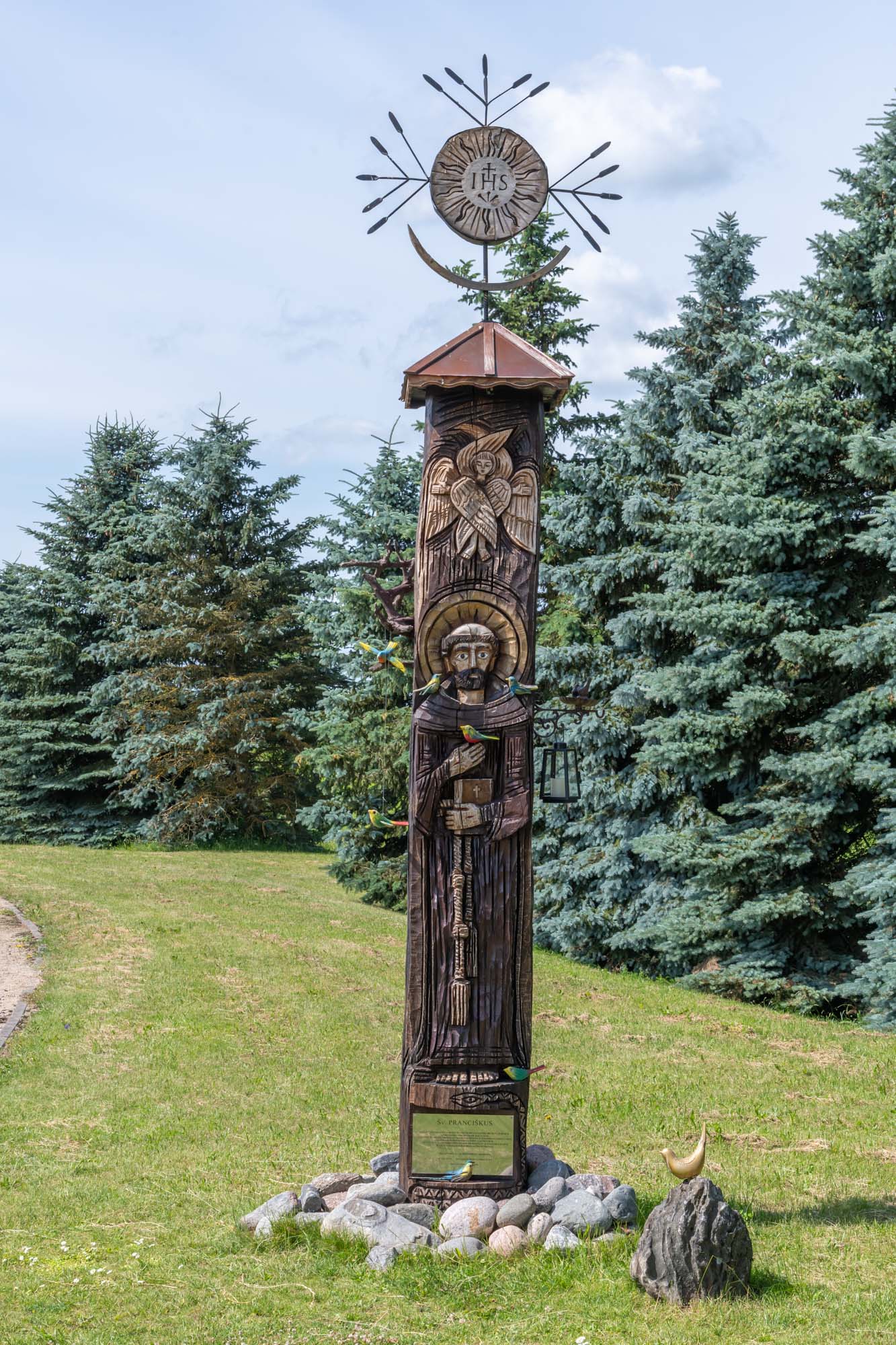
After Lithuania became a free country in 1990, Hill of Crosses started flourishing once again. In 1993, Pope John Paul II visited the Hill and conducted a mass here. On his suggestion a monastery of the Franciscan order was set up behind the hill, at a short distance.

The Hill is not a beautiful or peaceful site, by any stretch of imagination. The crosses stand out everywhere and are even jarring to the eye. Yet, you find the spirit of a people here and you can feel it when you stand in that jungle of crosses. 

It is indeed true that you can never kill an idea using force; it will survive, as these crosses and the Hill have. 

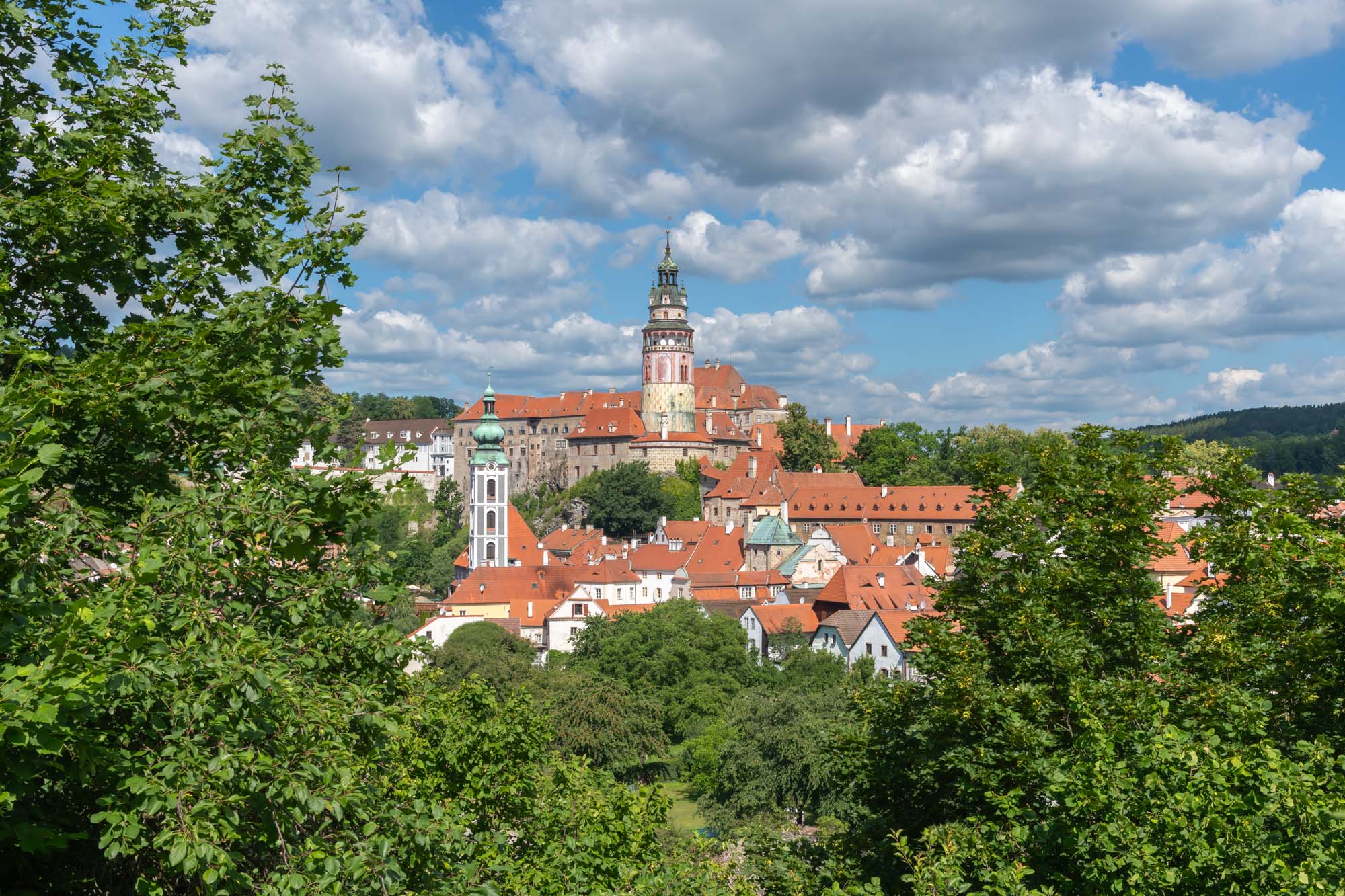
Having travelled around Prague, Budapest, Ljubljana and all and after having looked at many castles and churches, I was contemplating whether I should give Český Krumlov a miss and spend an extra day in Prague. I had read that the main attraction in Český Krumlov was the castle and that it is the second most visited destination in Czech Republic after Prague. In the end, I decided to go to Český Krumlov and what good fortune that I took that call!

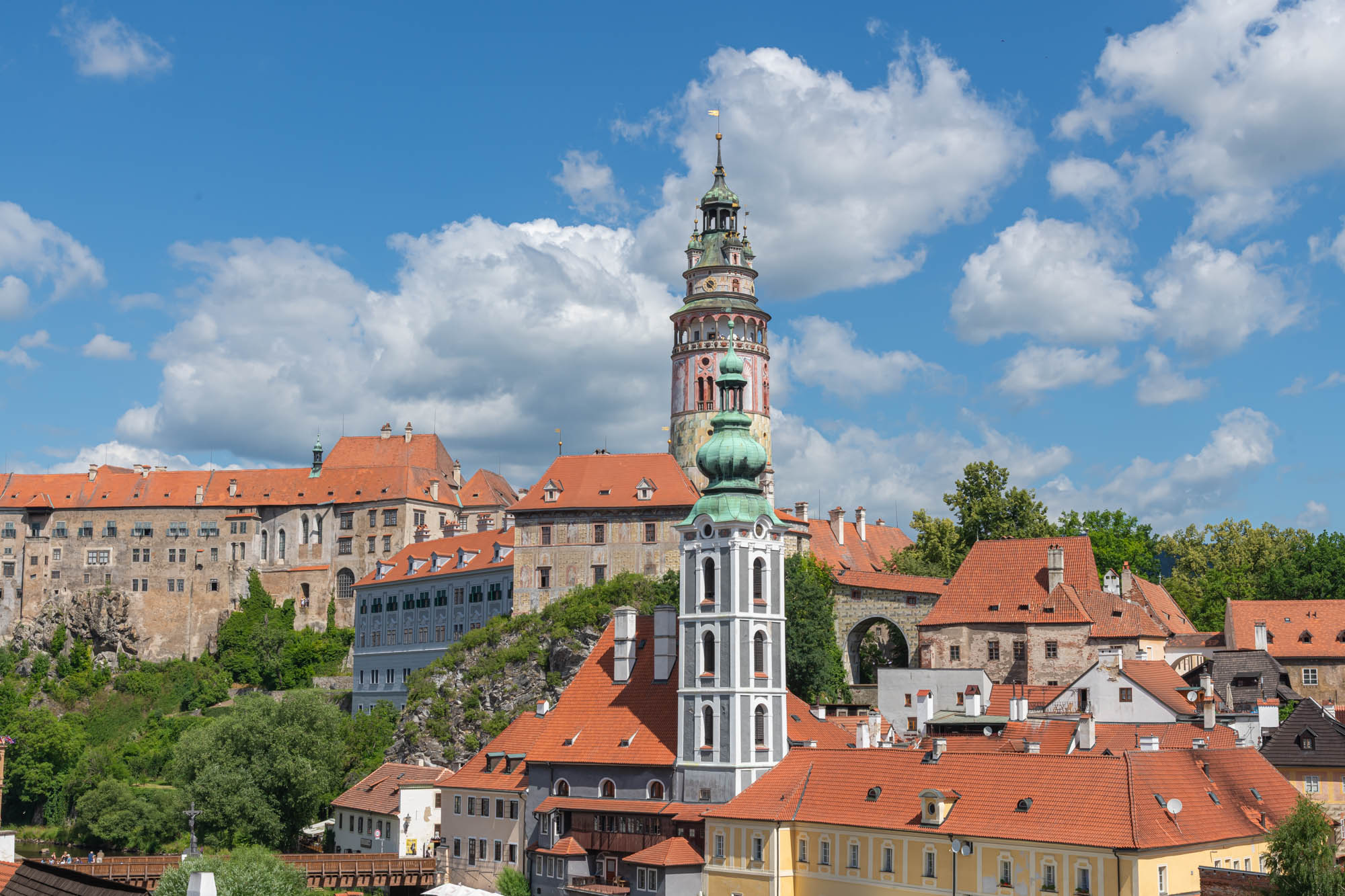
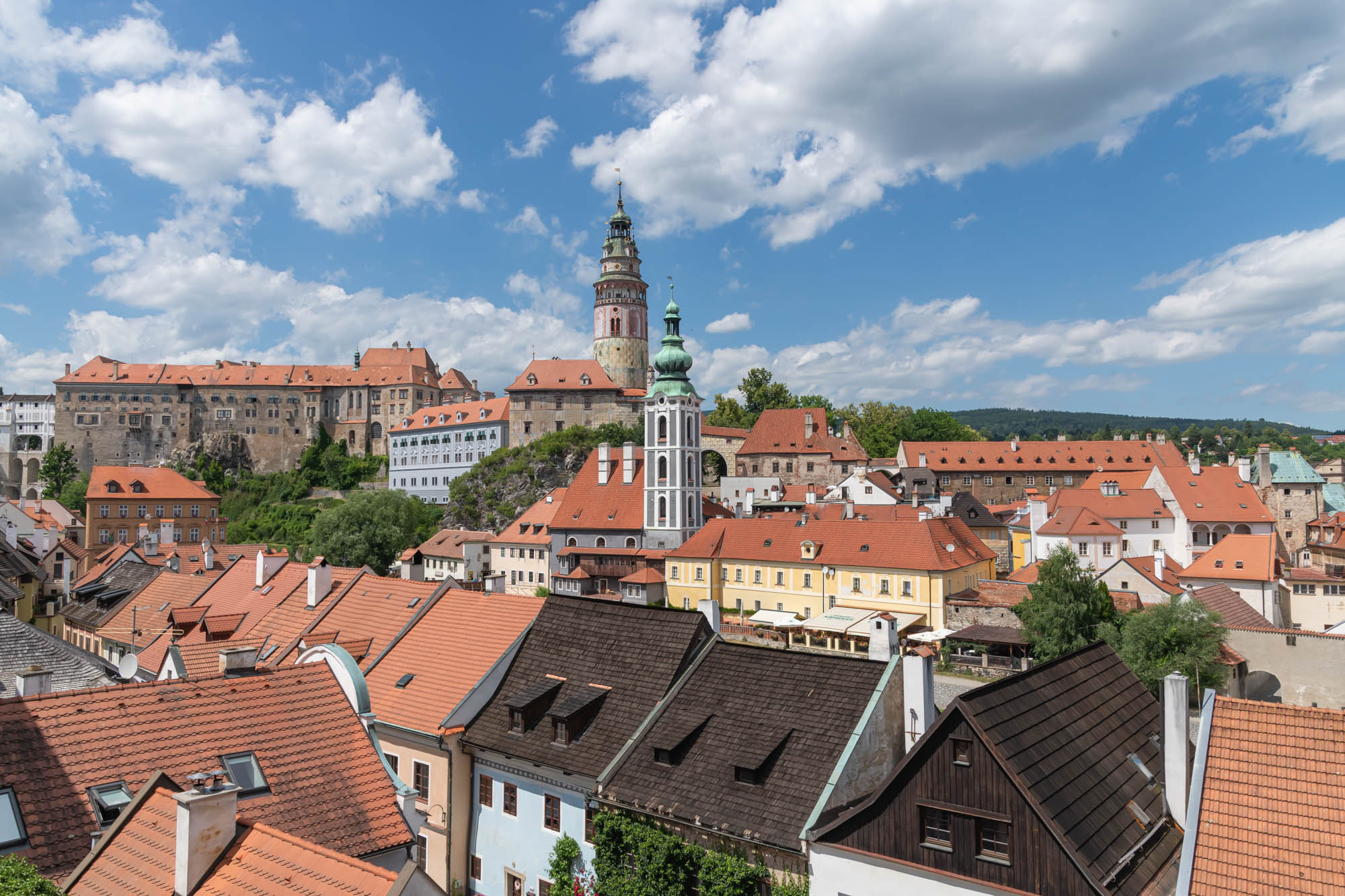
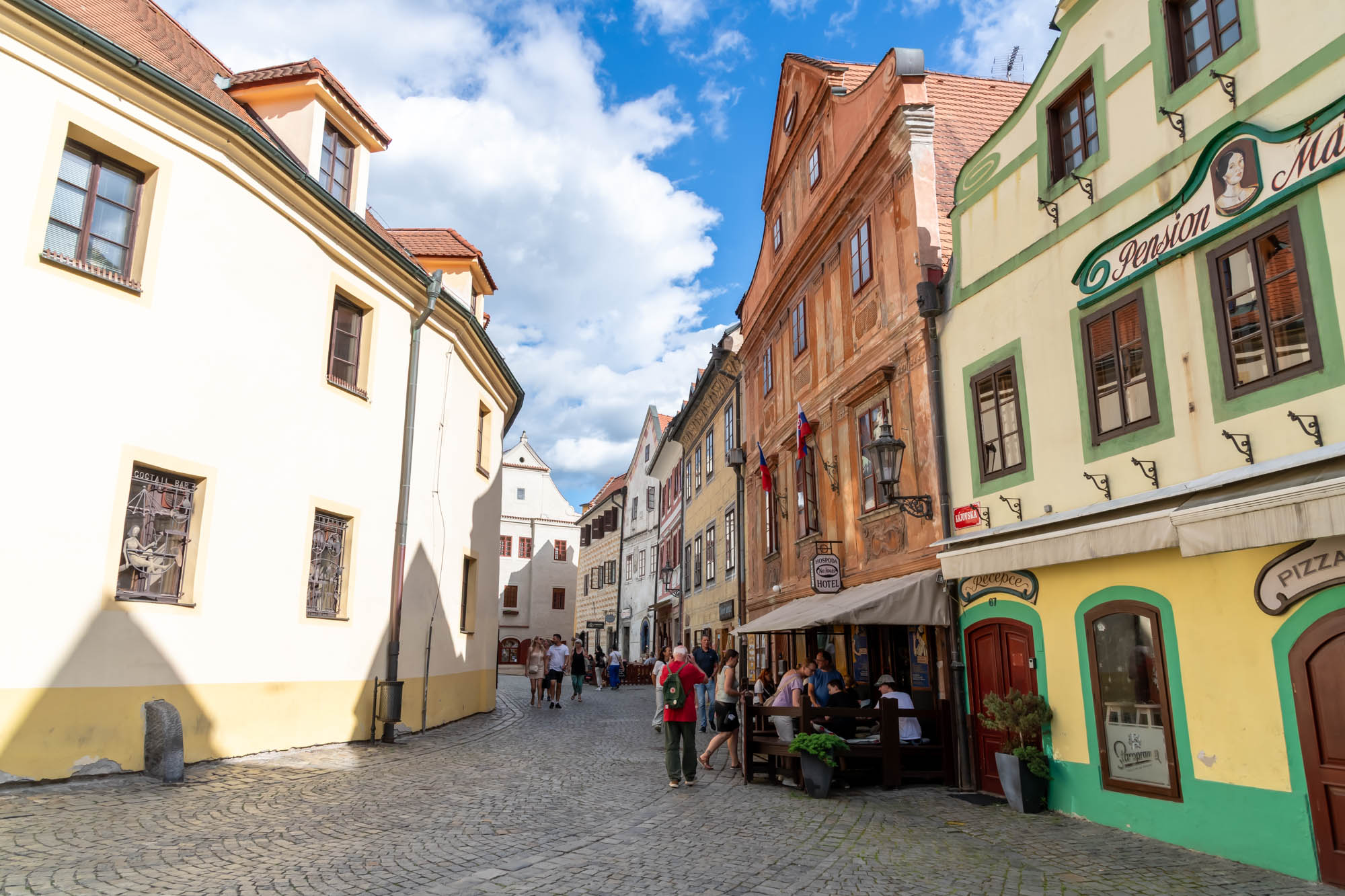
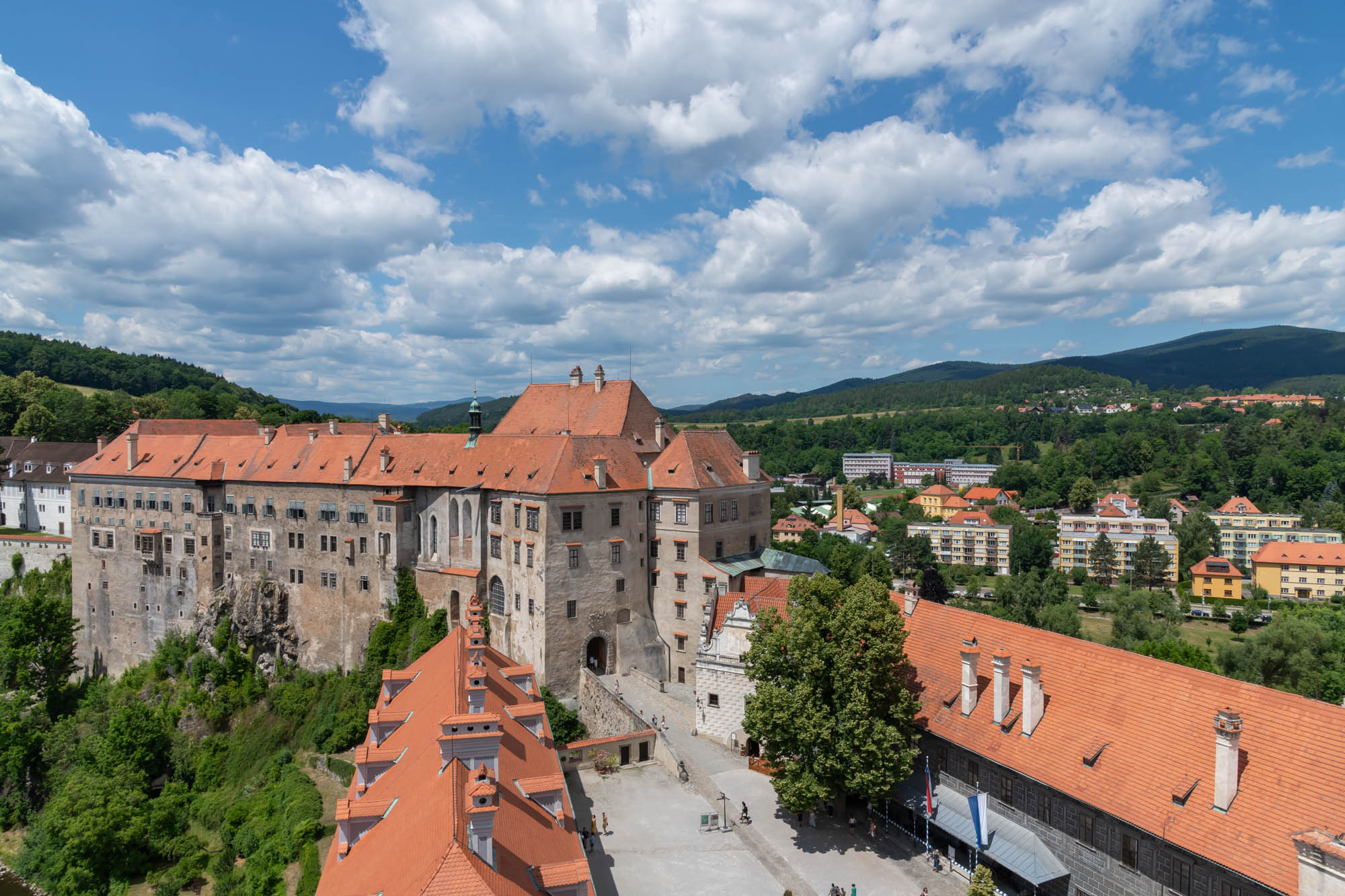
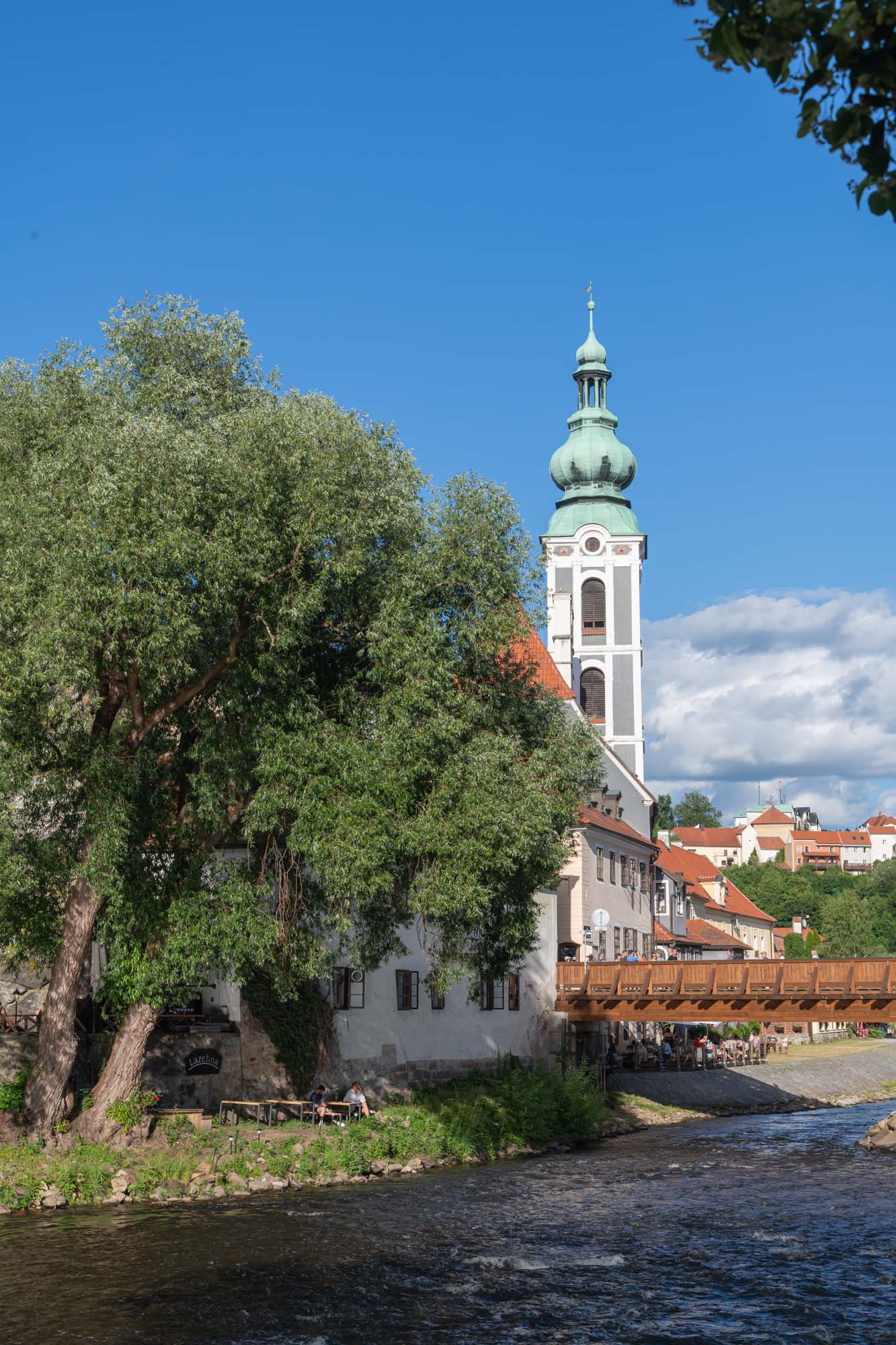
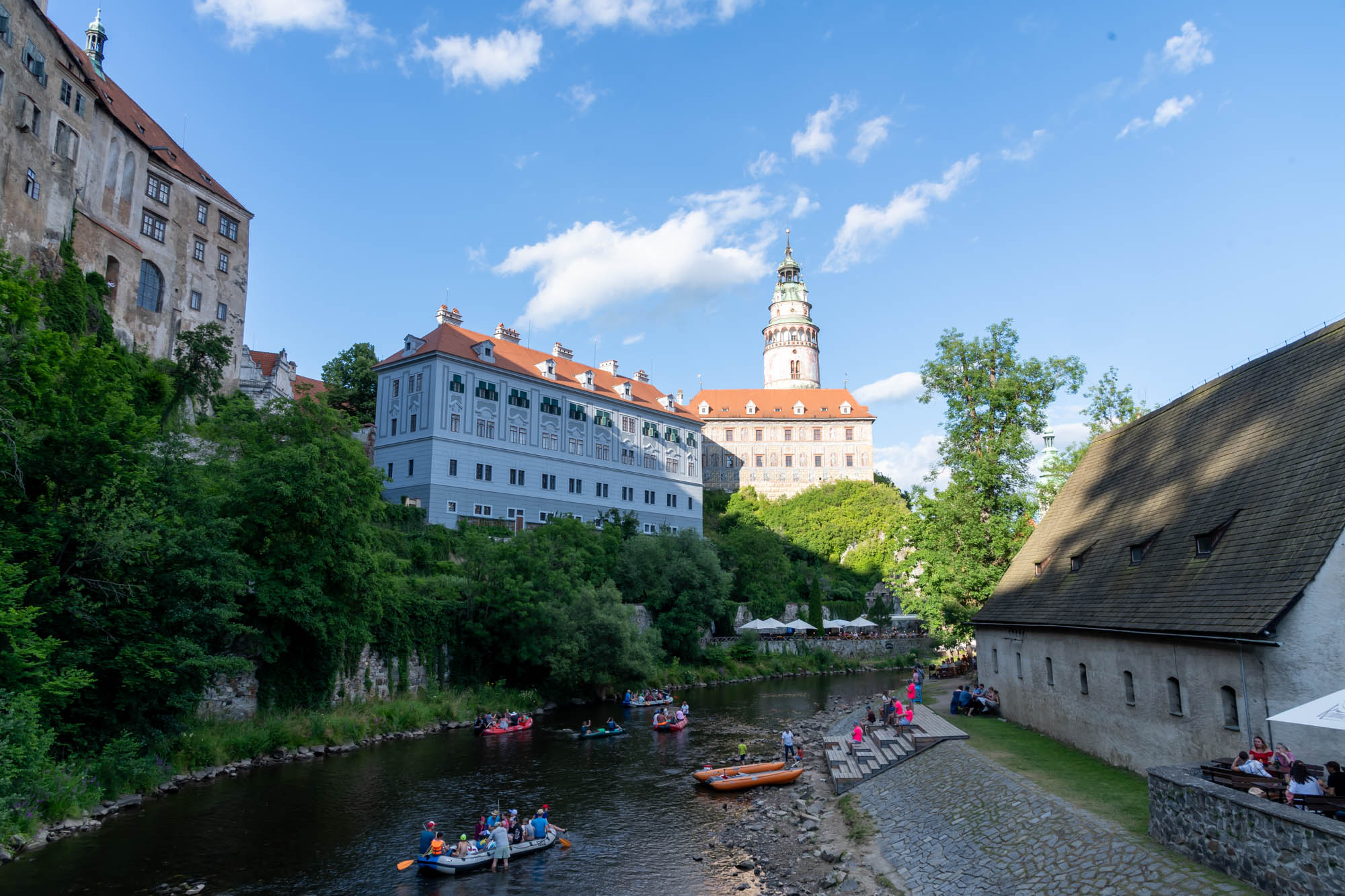
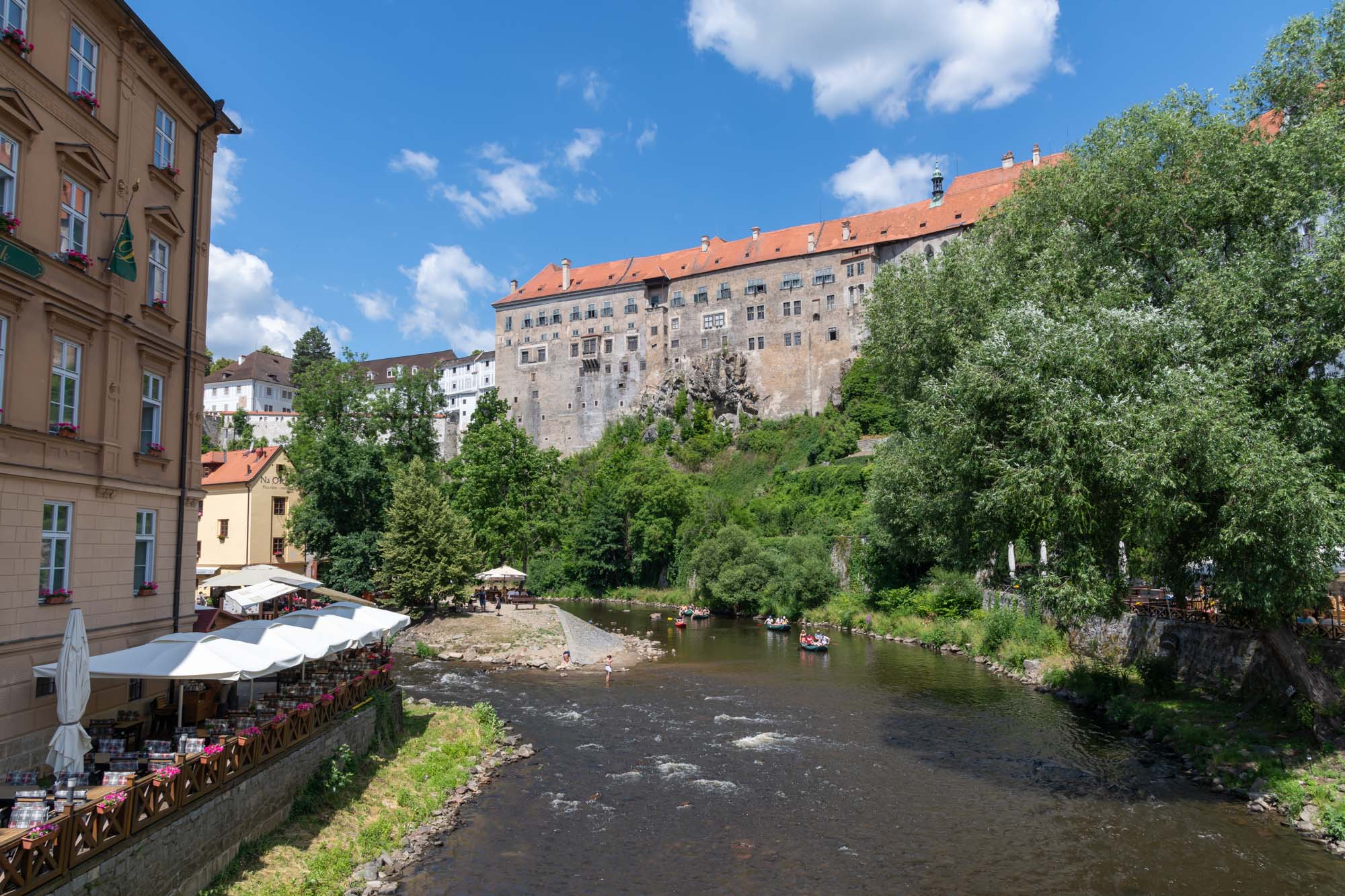
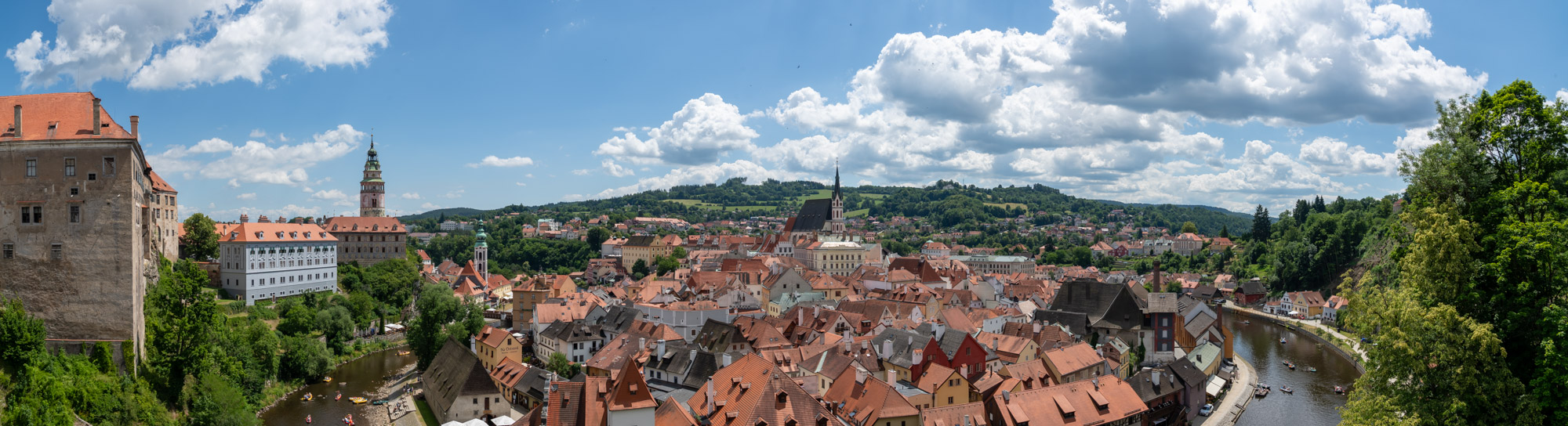
Český Krumlov is about 2 hours’ drive, South of Prague. However, I went to Český Krumlov from Ljubljana. The sky was a bit overcast when I arrived, but the sun started shining soon. The old town and the castle looked so beautiful. The old town has been preserved very well with help from UNESCO. During the Communist times, the heritage had been ignored and good amount of it had fallen into disrepair. But now, the town looks like something out of a fairy tale; well, most of it.

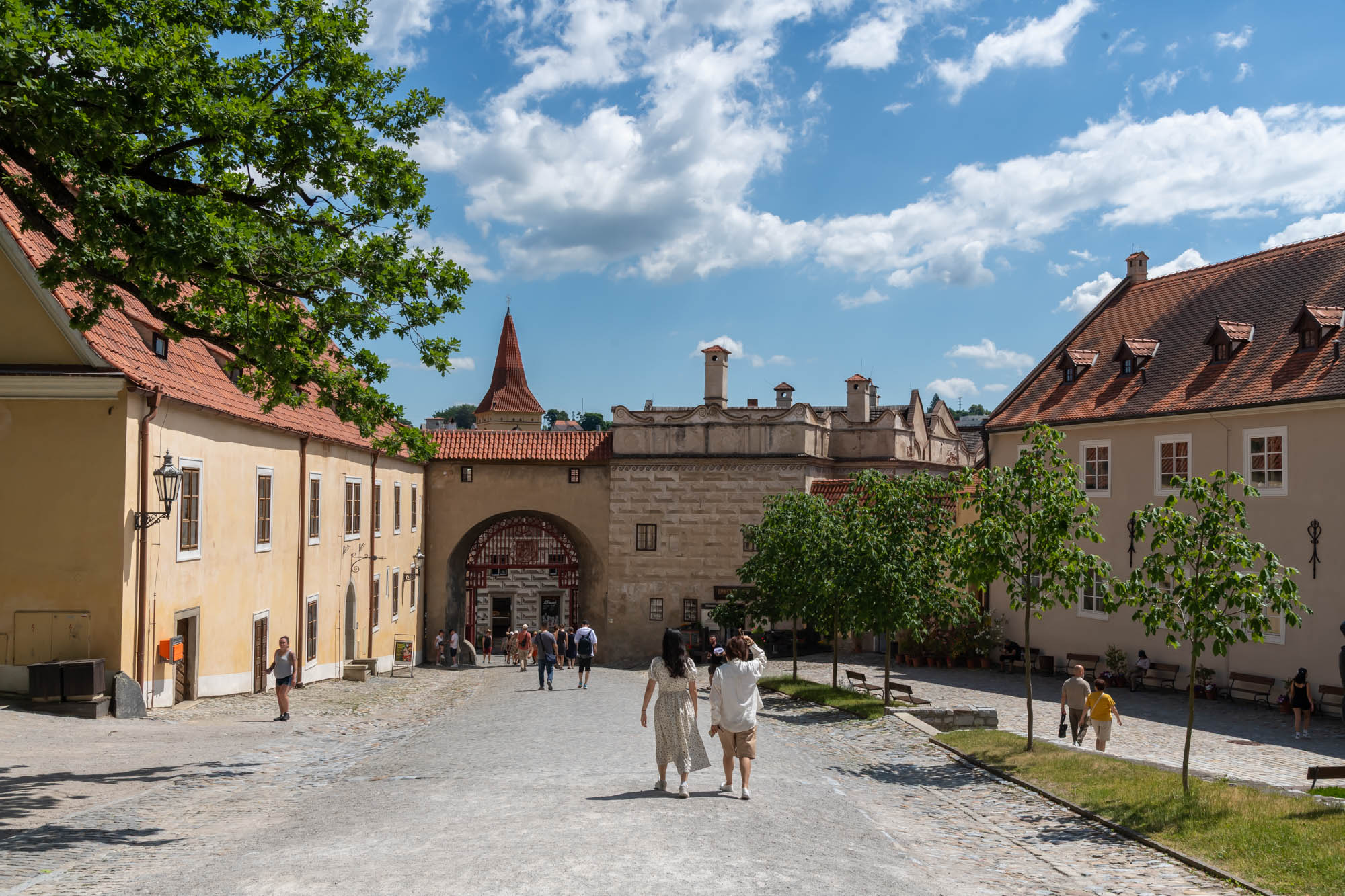
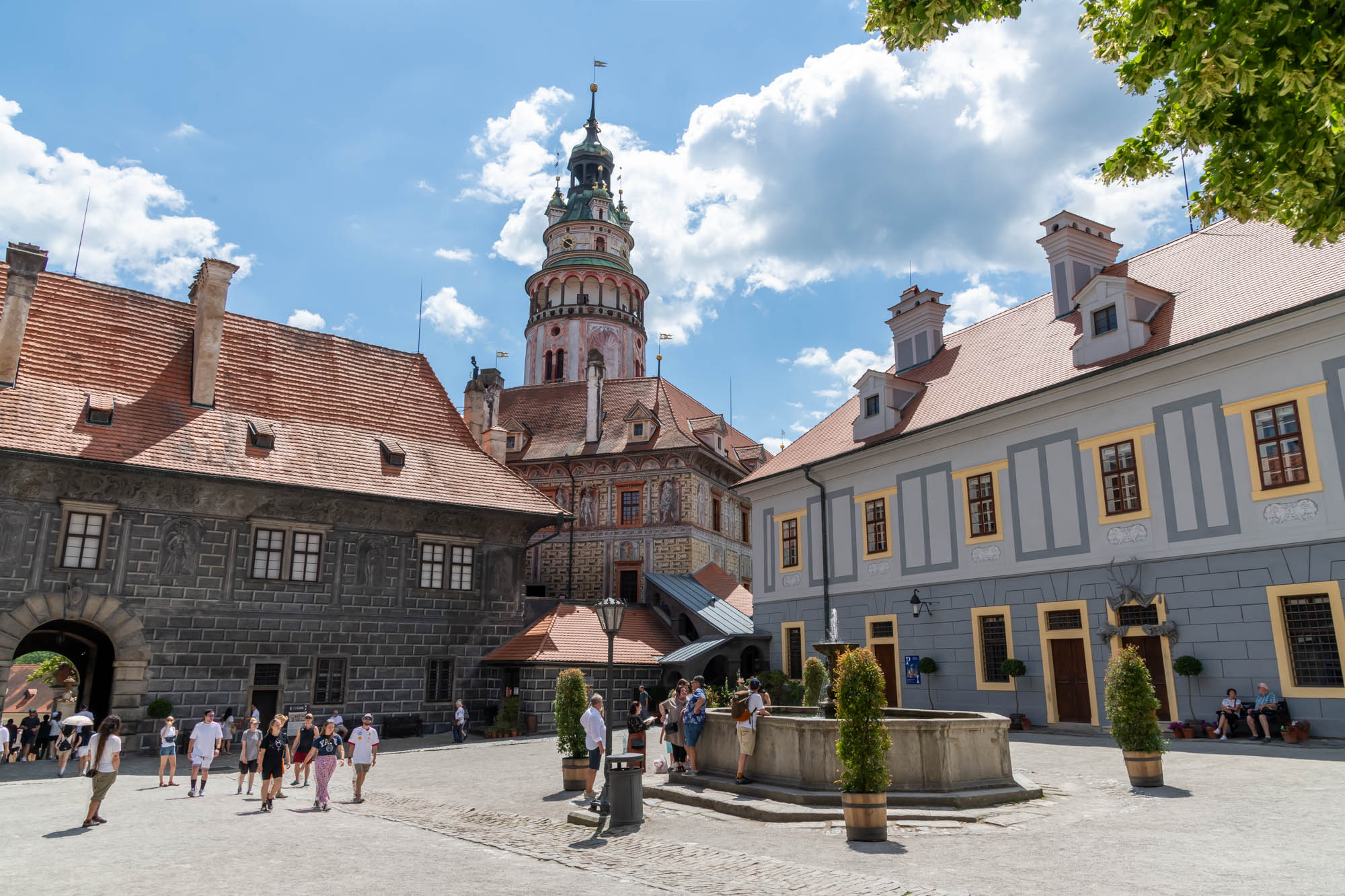
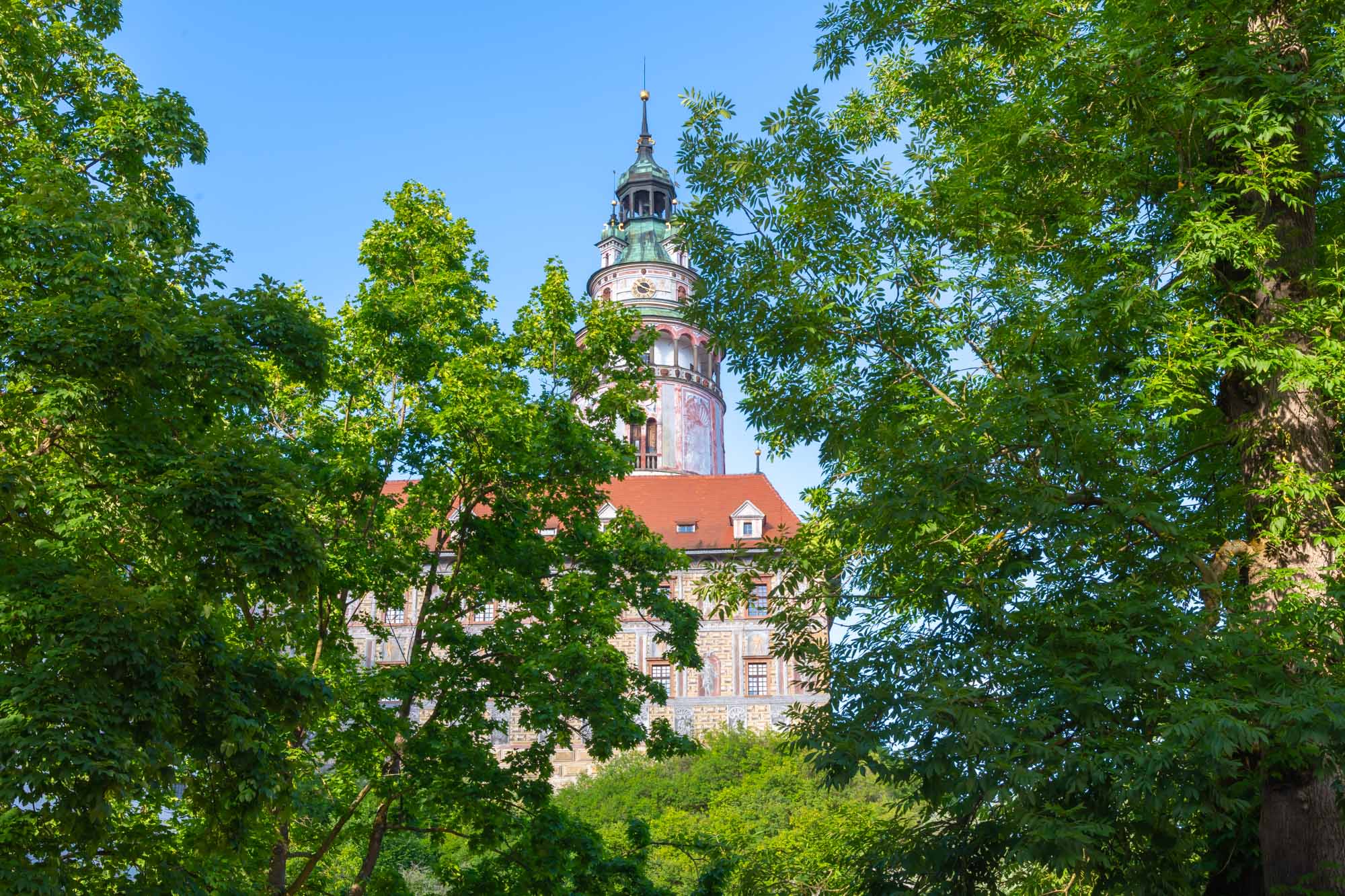
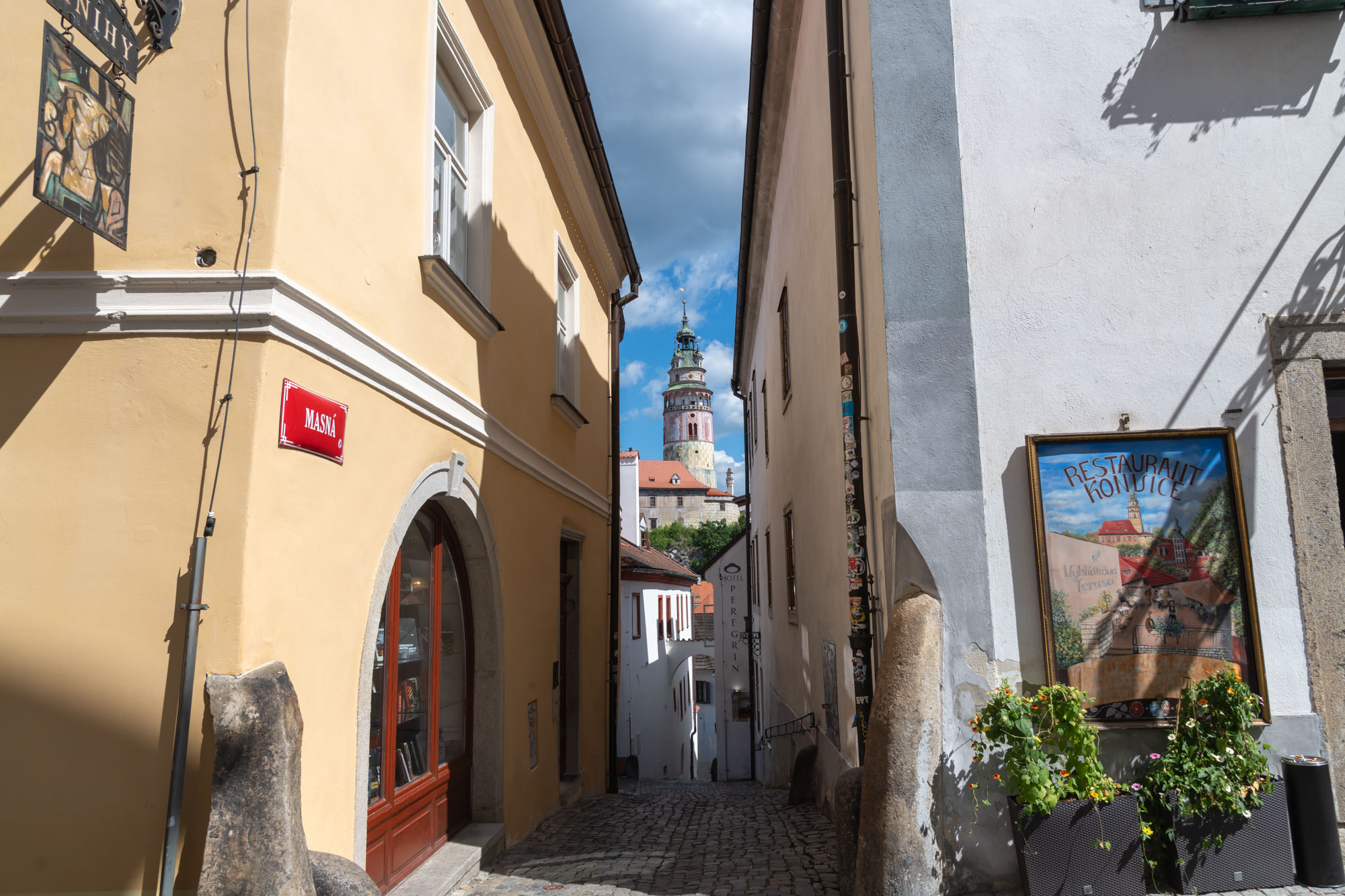
As you walk into the cobble stone paved old town of Český Krumlov, you get a view of the castle tower and from then on, you are in love with this little town! 

It is located on the banks of the Vlatava river, just like Prague is. Given its location by the river, this area has been permanently inhabited since the Older Stone Age and it seems the river was given its name by the Celtic settlers who were here in the 4th century BC. The castle was founded around 1250 AD by a local noble family called Vitkovci. There are records of the presence of Czech and German nationalities from that time on. In AD 1302, the Vitkovci family became extinct, and the castle was passed on to the Rosenberg family. They promoted trade (carp being a major export) and Český Krumlov was flourishing as gold was also found nearby. From 1719 to 1947, the castle was with the House of Schwarzenberg. In 1938, it was annexed by Nazi Germany and after the Second World War, it was part of the Communist Czecholsovakia. In 1992, after the Velvet Revolution, Czech Republic was born, and Český Krumlov is one of its crown jewels in the Bohemian region.

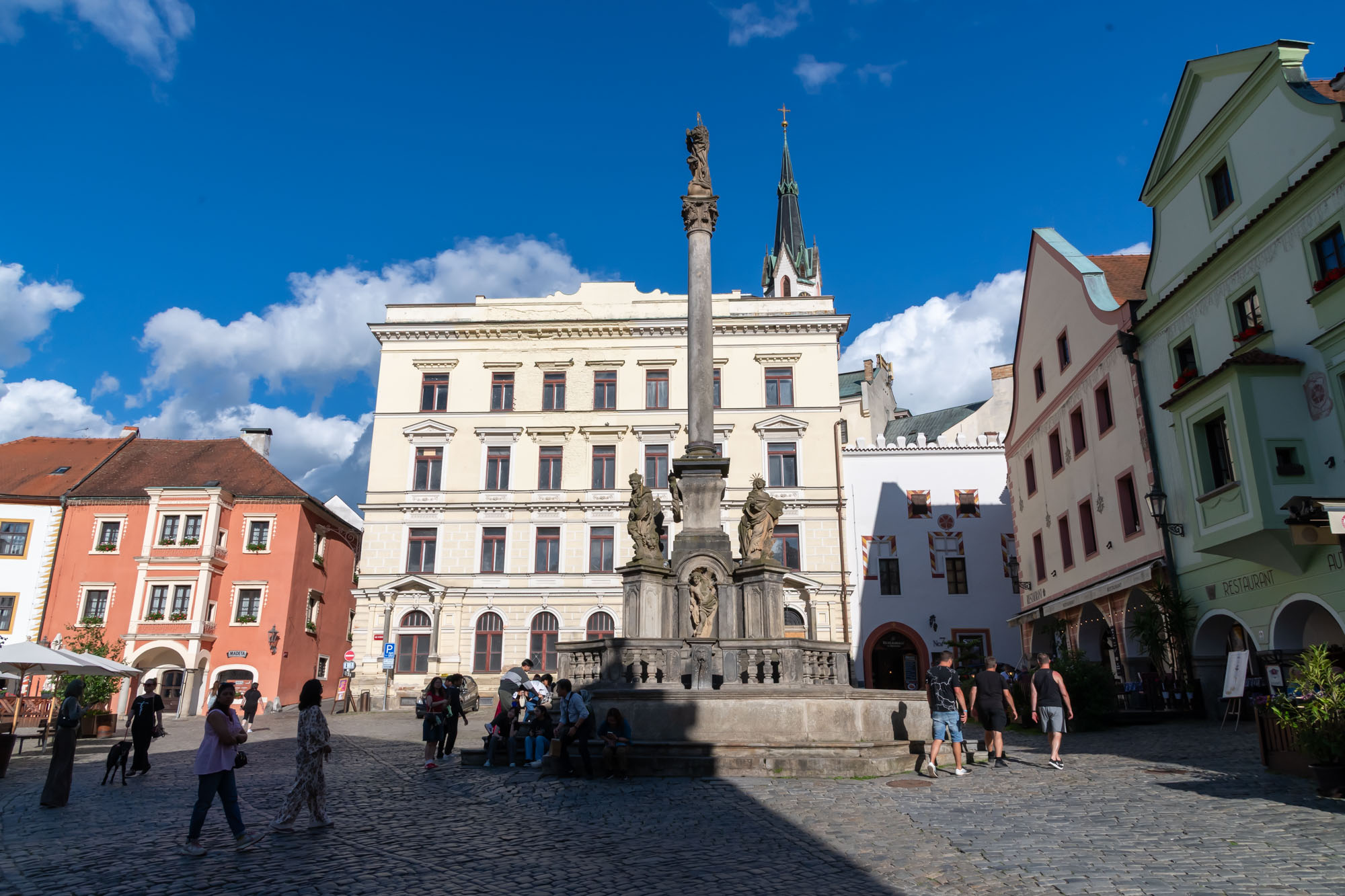
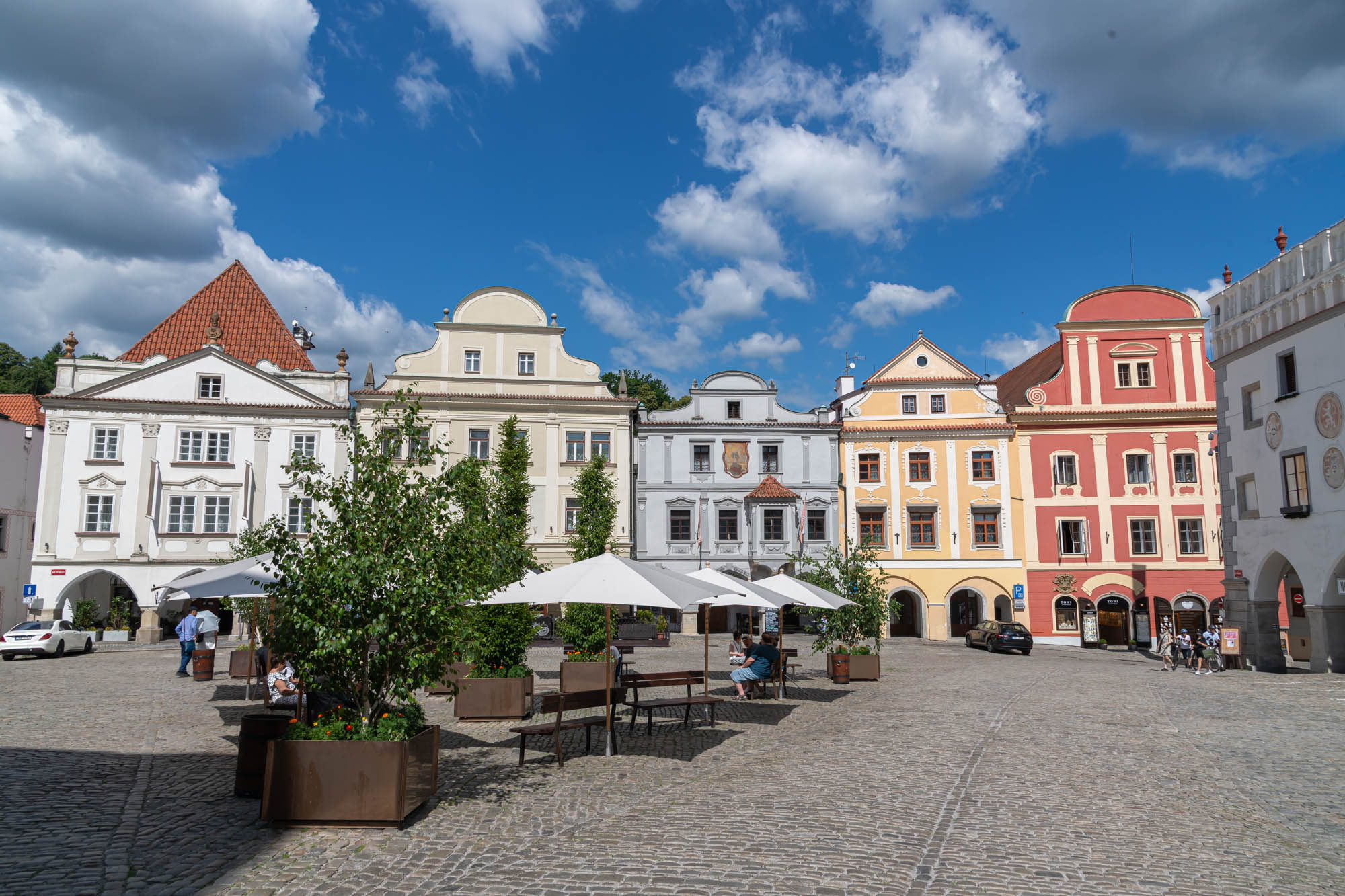
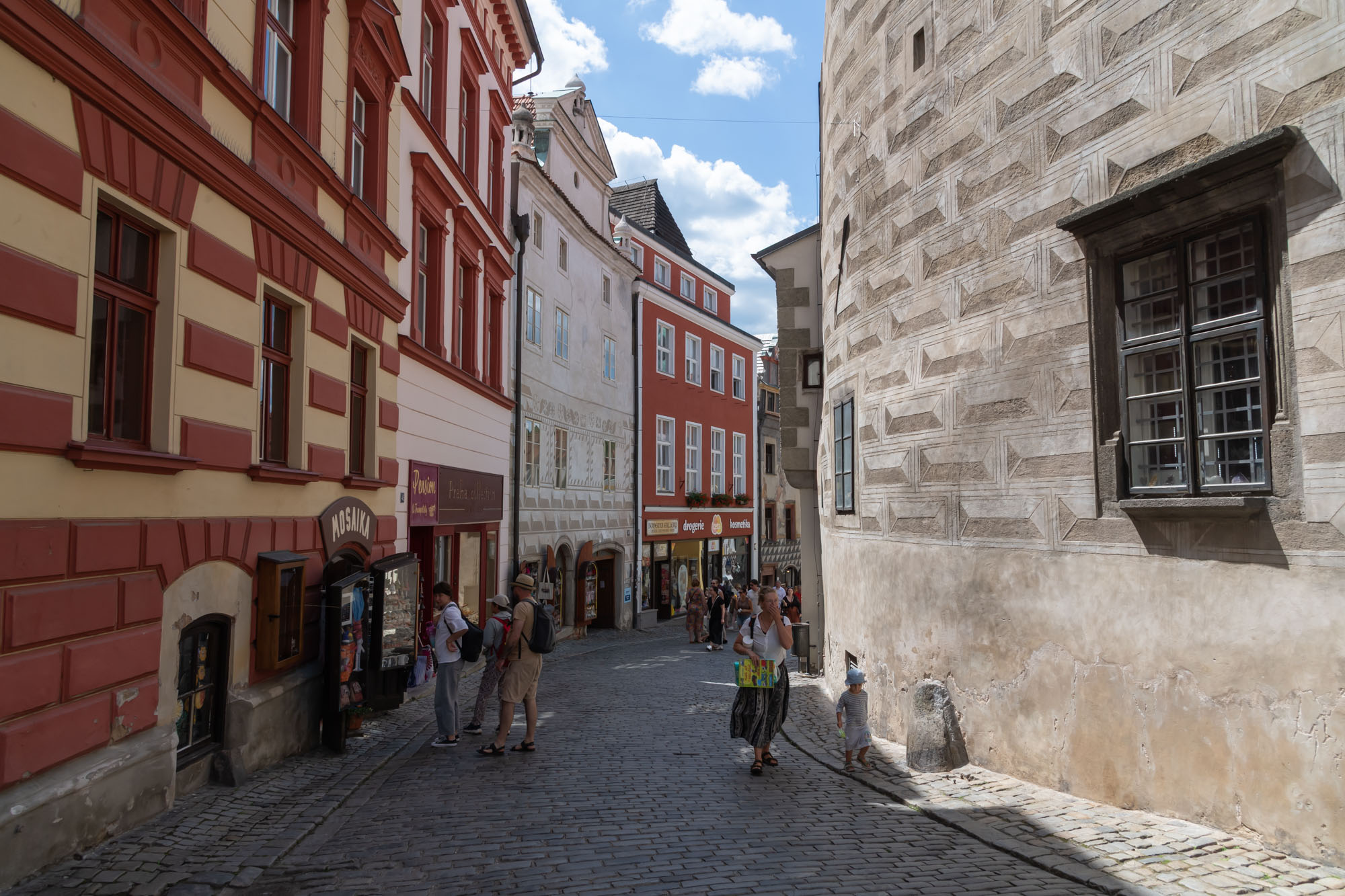
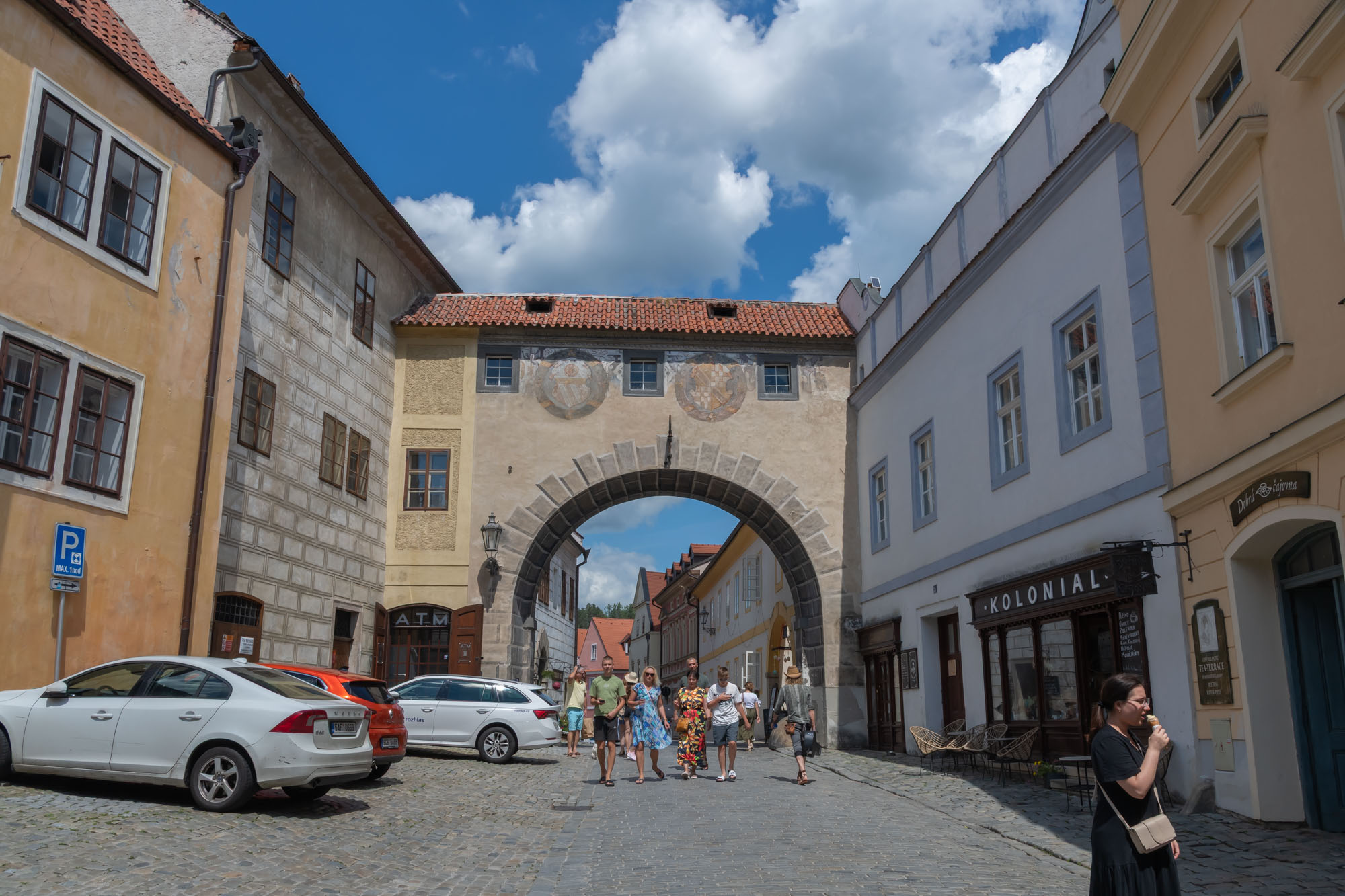
The entire old town area is paved with cobble stones and wonderful buildings line the street. The square is just amazing and when the light was proper, it was glowing! 

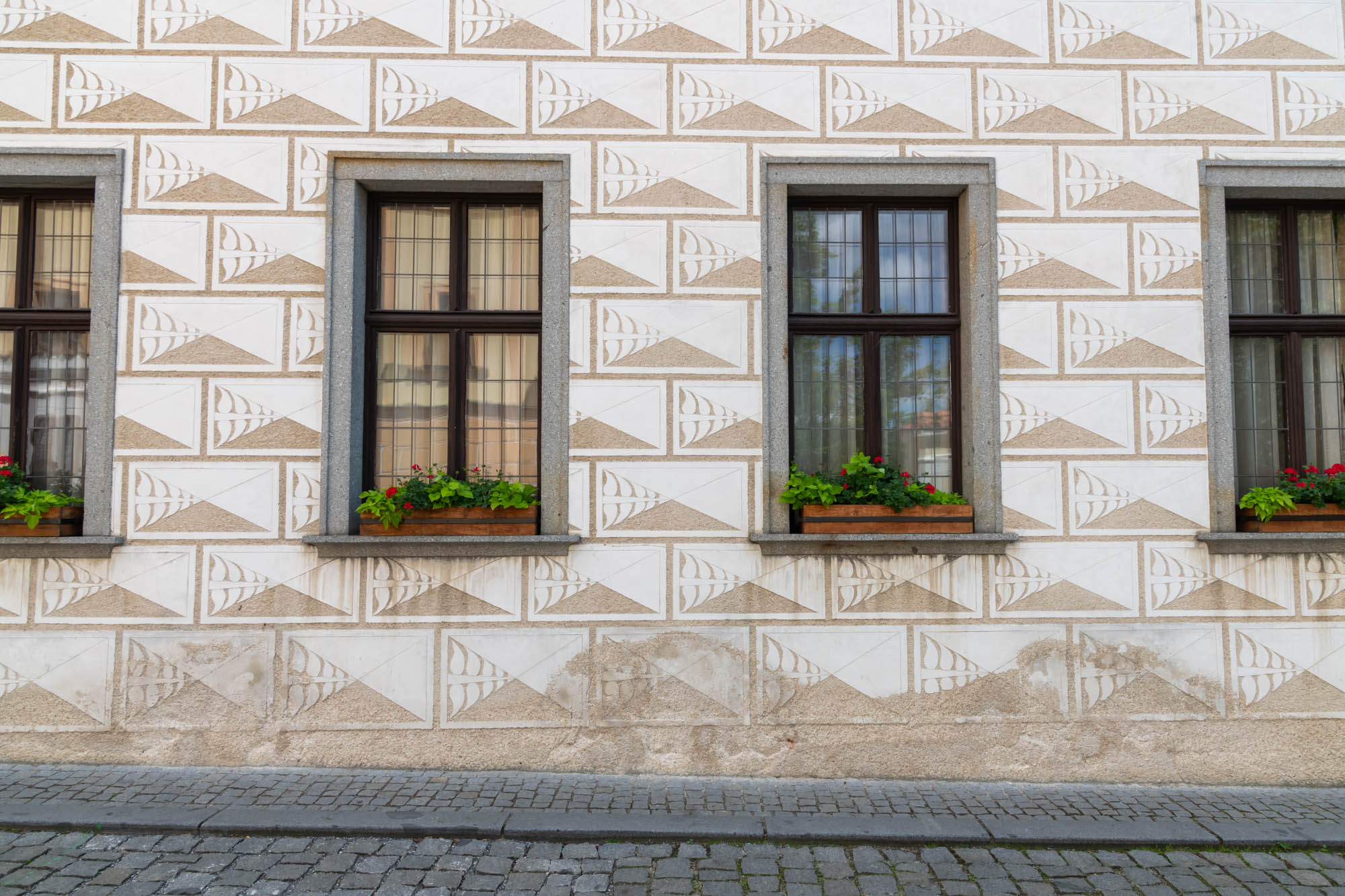
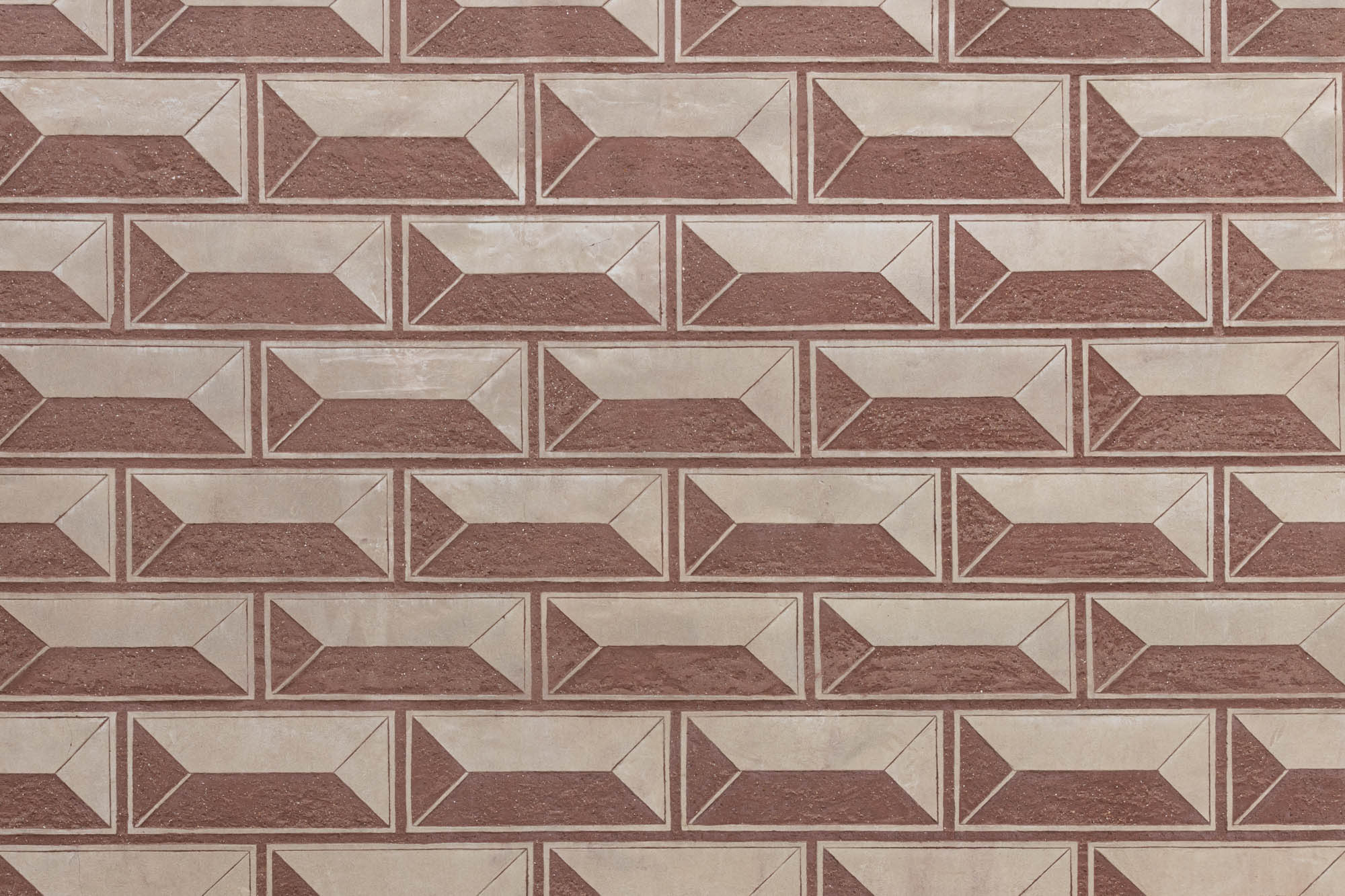
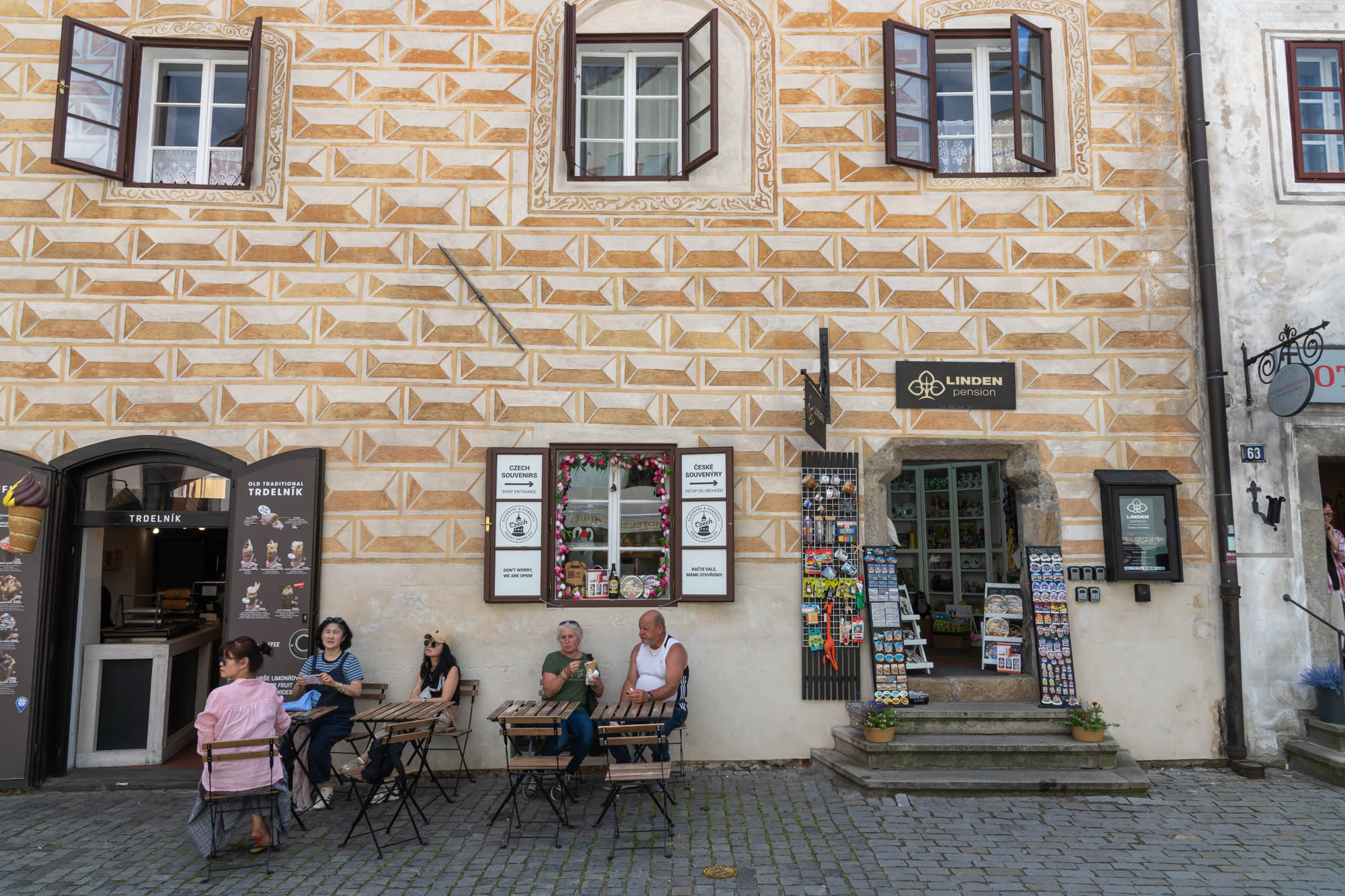
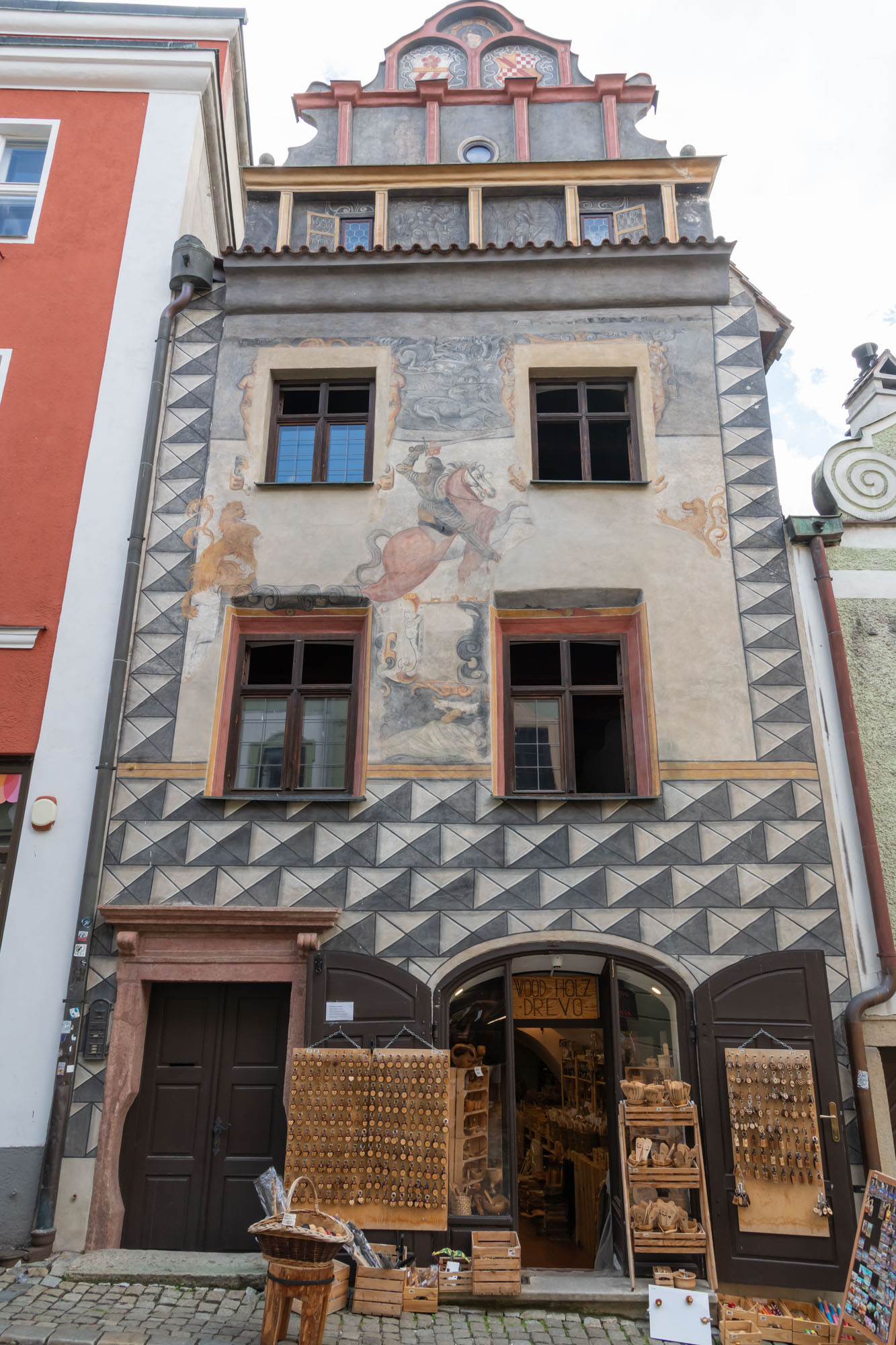
I had signed up for a walking tour and the guide explained that there are two styles of architecture (or more precisely, wall décor) used in the buildings in town. One is called the “sgraffiti” in which two layers are plastered on to the wall and then parts of the top layer are scratched off to make a design. This was a labour intensive and thus expensive affair. I could see this style in numerous buildings across town.

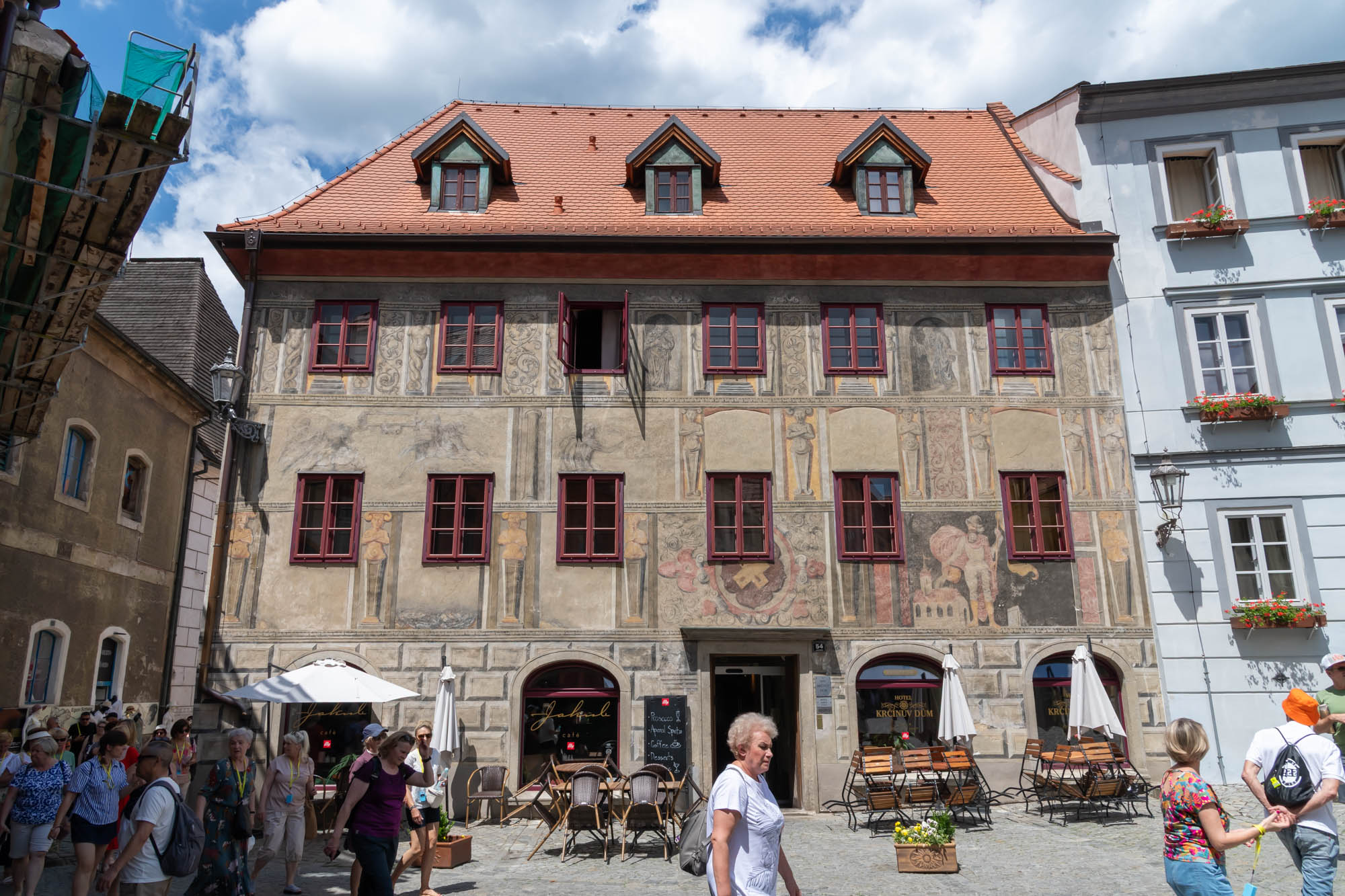
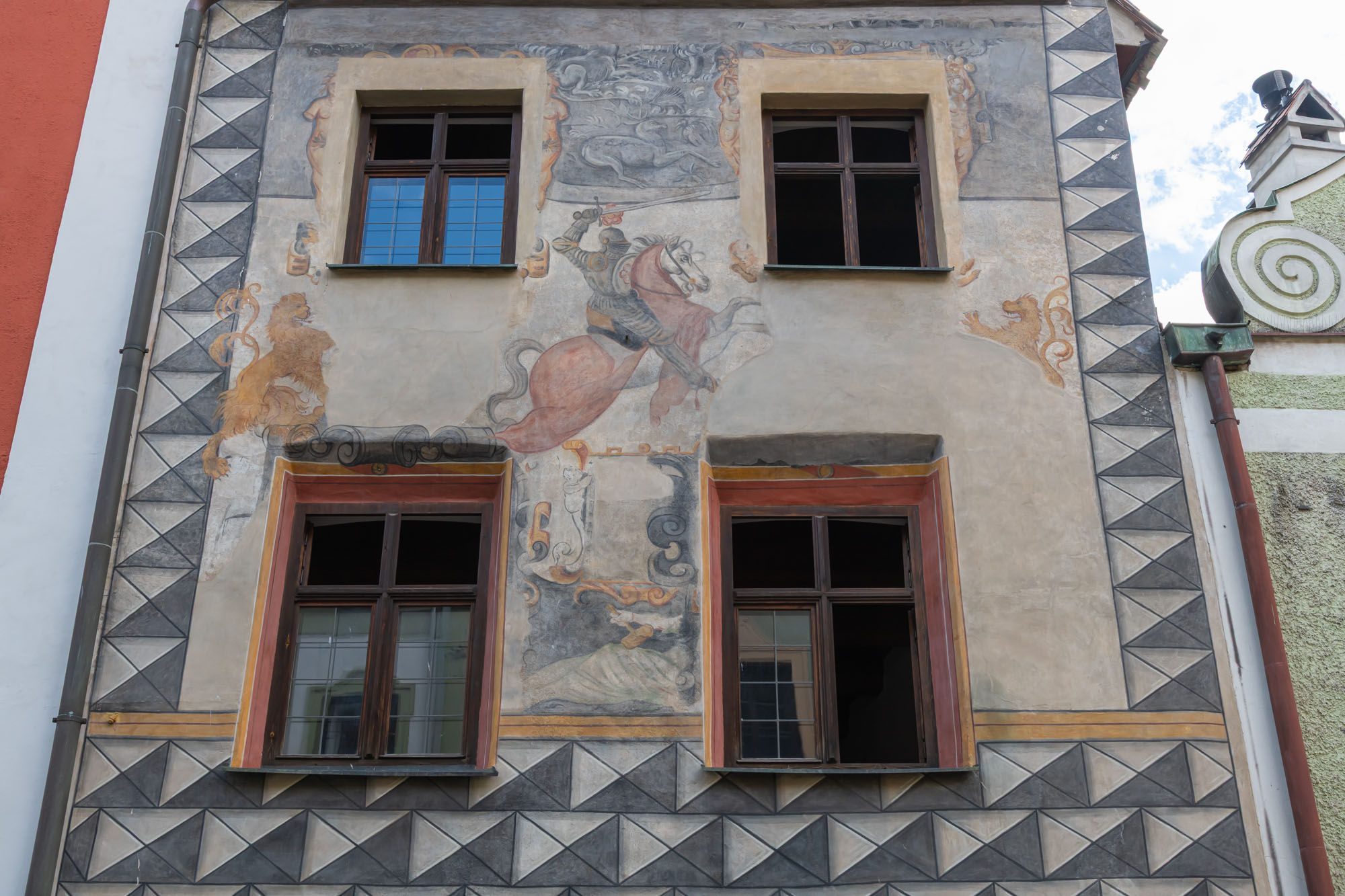
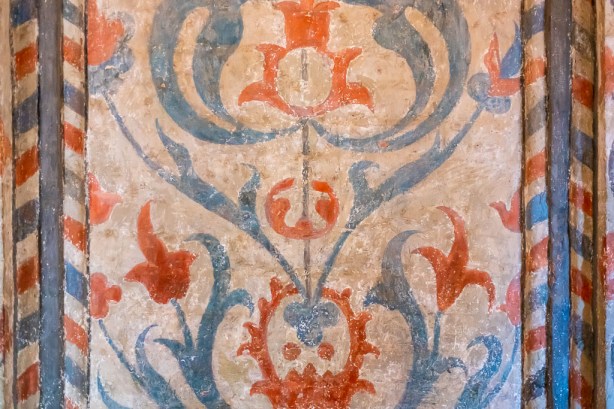
The other style is called “fresco” wherein the paint is applied while the plaster is still wet so that the colours penetrate the plaster and become permanent. An example of this is given below.

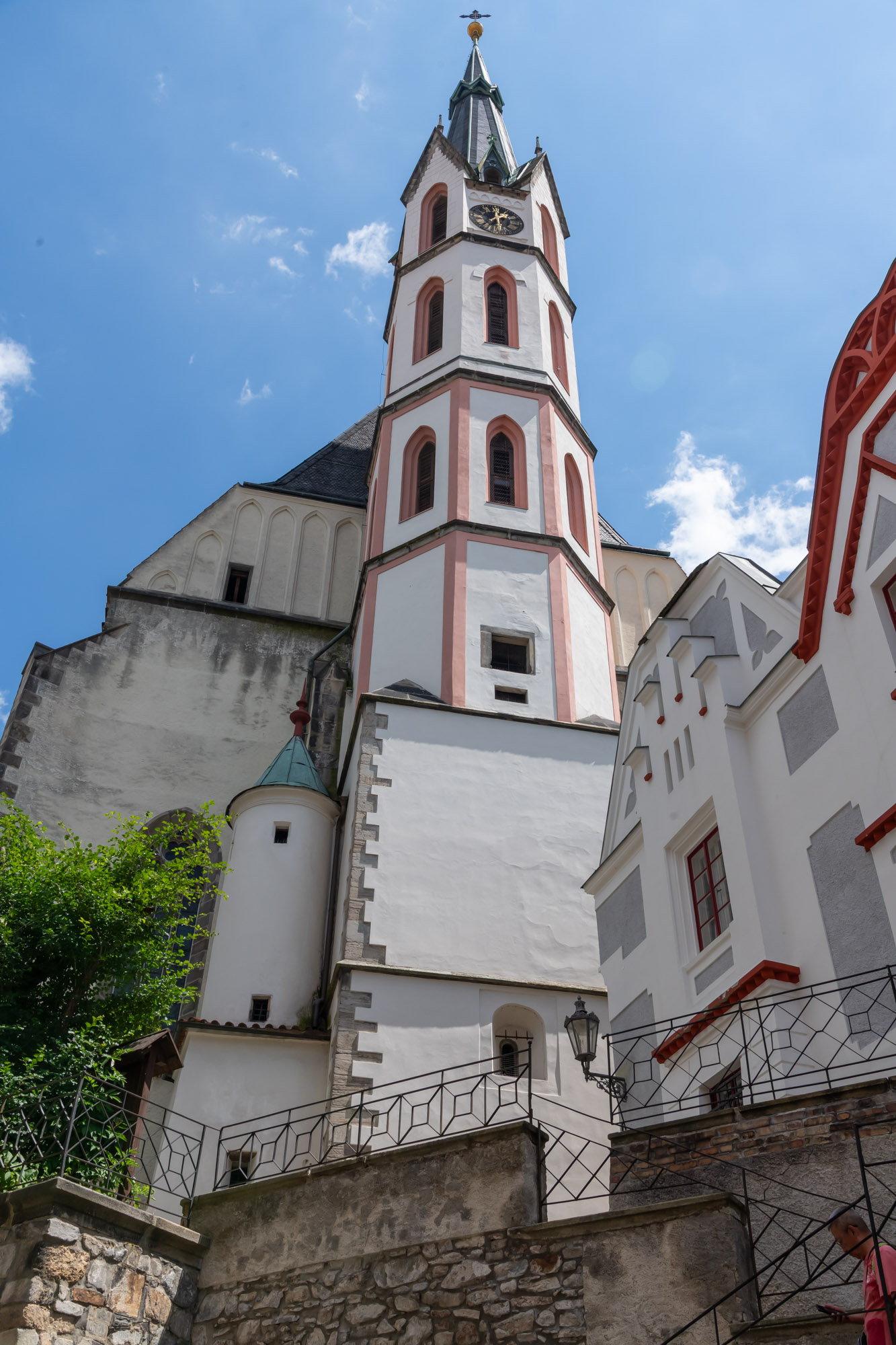
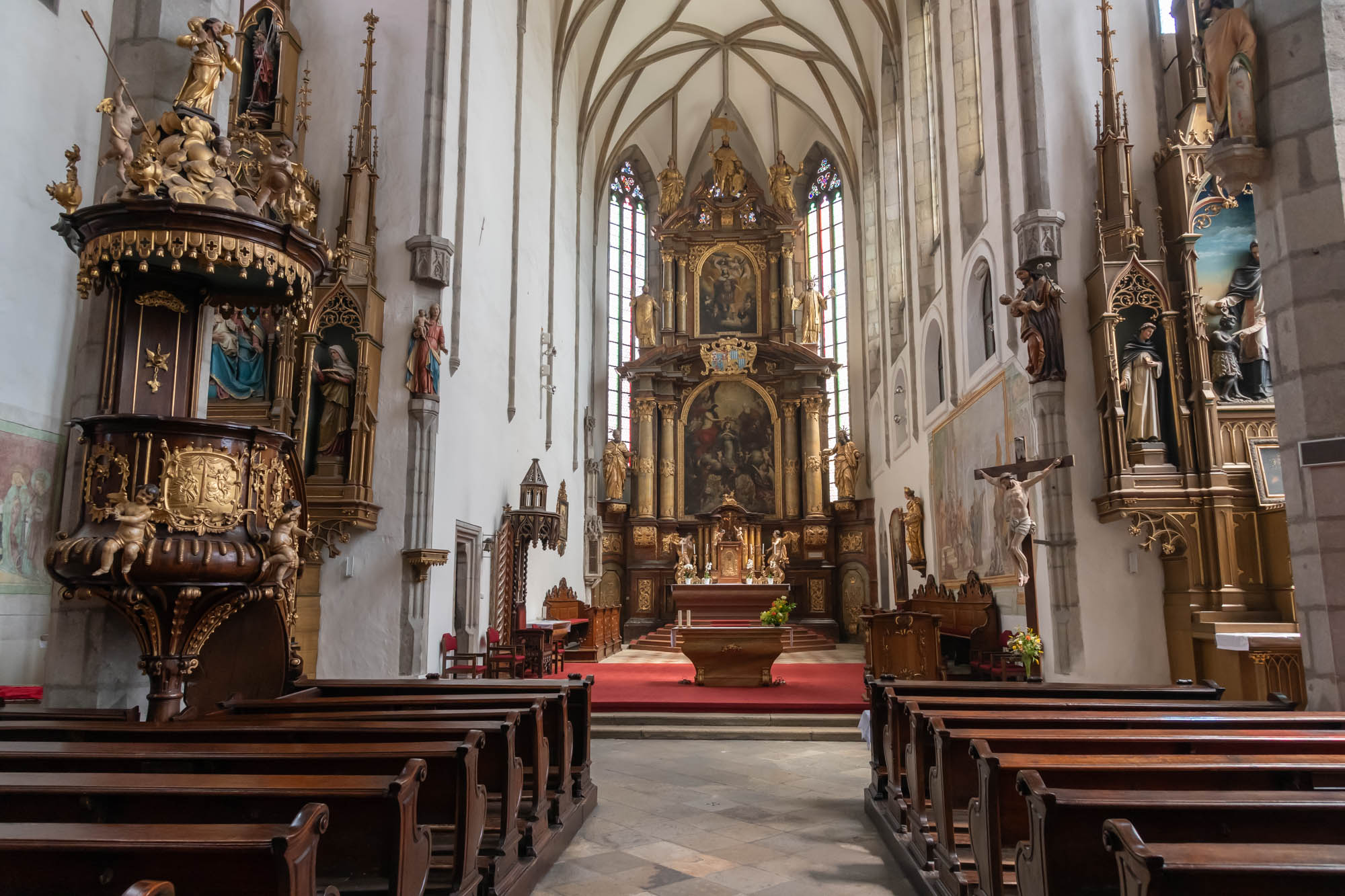
The St. Vitus Church in Český Krumlov dates back to the 14th century though the present building is from the 15th century. Since it stands on a narrow street, I could not get a proper picture of it. 

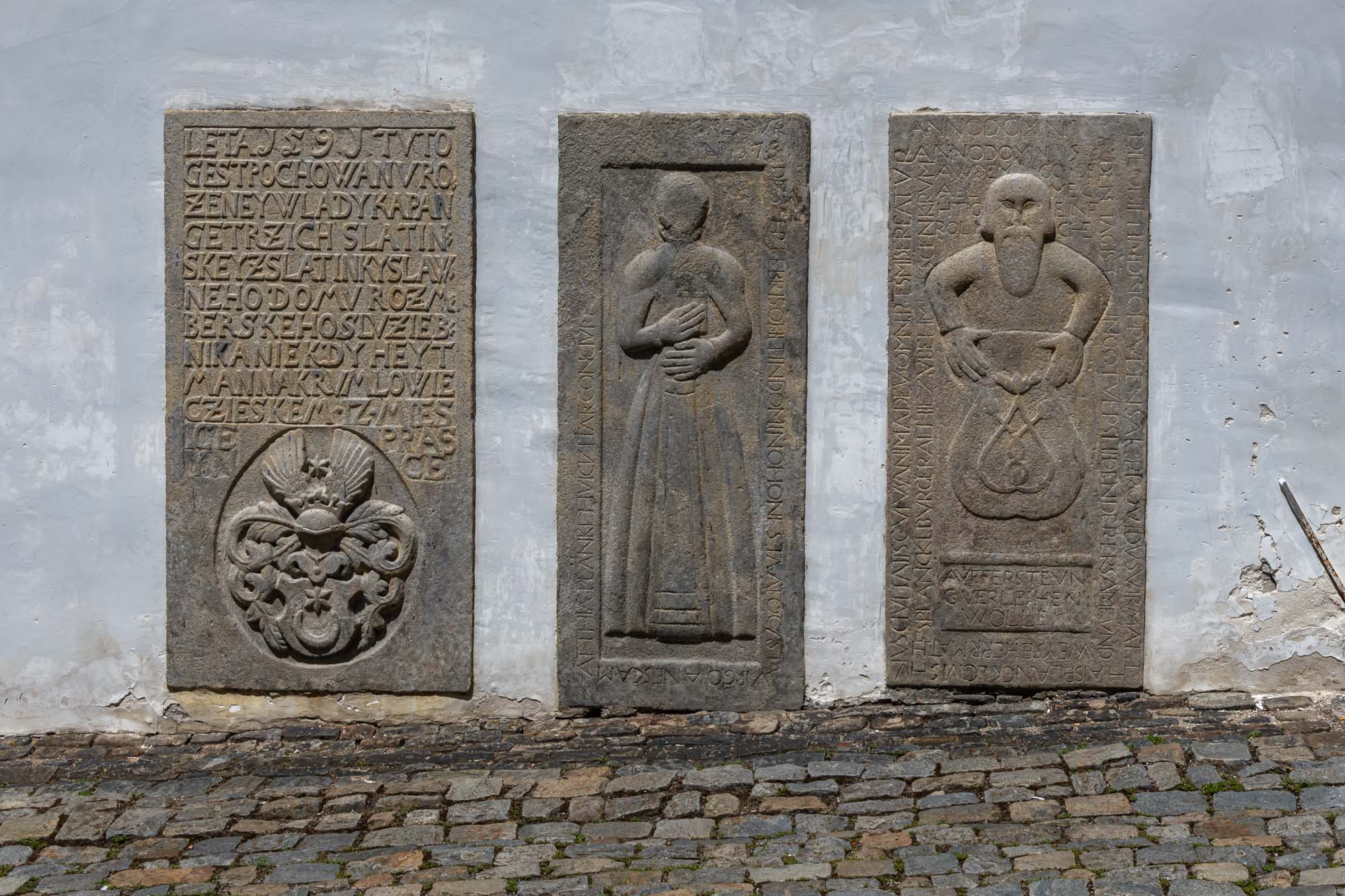
The guide told us an interesting story about the church. Supposedly, the church was built on a location where a baker lived with his family, and he was not willing to give up his house for the church. After much negotiation, he agreed, under the condition that a mass be said every week for him and his wife, after their death. The priest did this religiously after the baker died but the new priest that came when the old priest died, wasn’t aware of the contract and didn’t continue this mass for the baker and his wife. The baker’s ghost was none too impressed with this breach of contract and started causing all sorts of troubles. This caused the priest to conduct some research into old documents, and the contract was unearthed. He restarted the mass and lo and behold, the ghost was pleased, and all was back to normal. For good measure, a tablet of the baker and his wife was also erected near the church. 

The interior of the church is quite simple and you can see a fresco there which dates back to the 15th century.

The guide pointed out that in the image, the cross was more like a “T” and not a real cross. Someone from the group asked her as to why that is so, and she said that she believes the whole idea of the cross was something invented by the Christians much later. Czech Republic is not very religious, and the guide seems to be a representative sample indeed. I mentioned to her privately that in Kerala we have images of the cross from 6th or 7th century. 

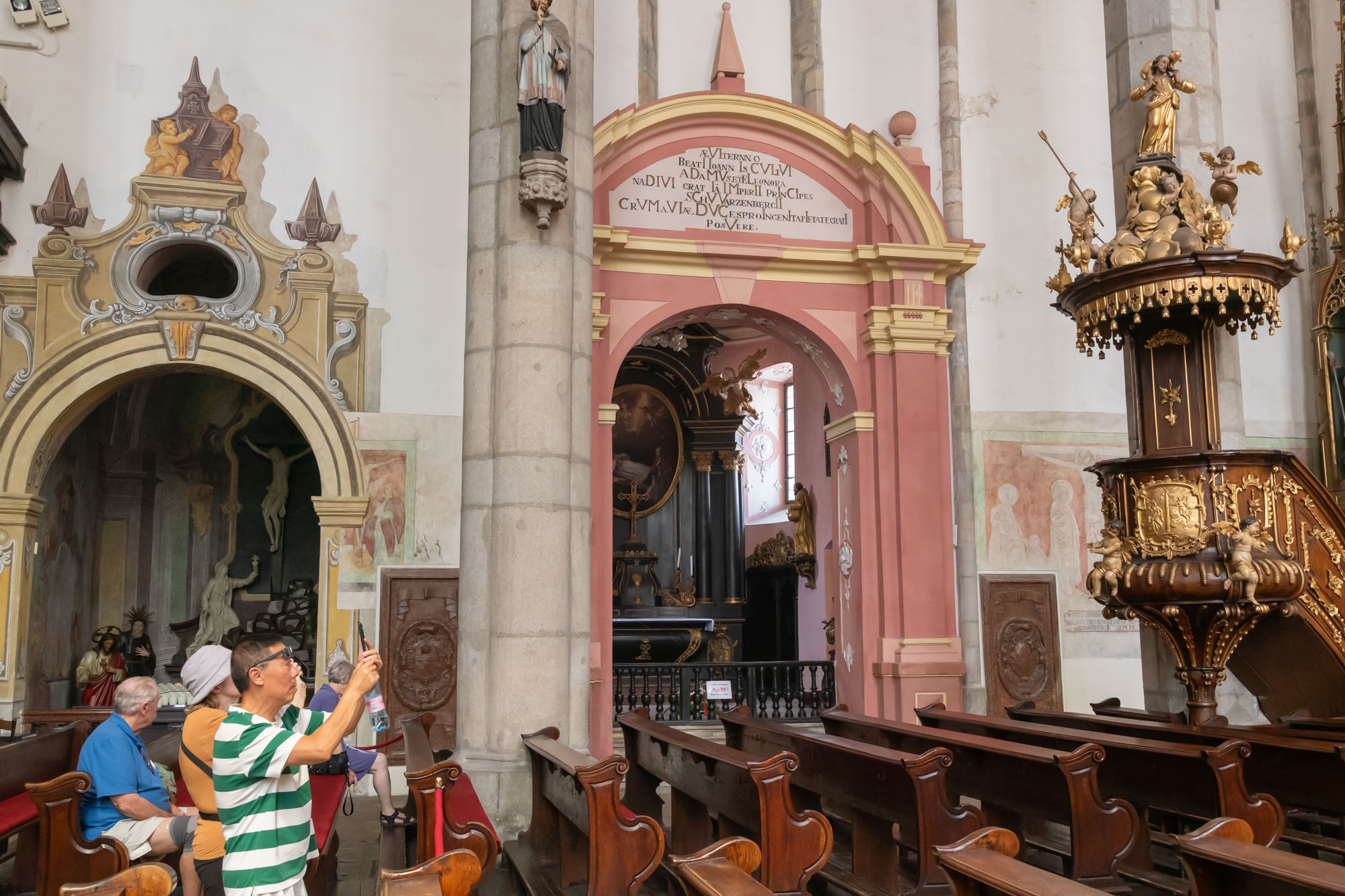
Inside the church there are a couple of chapels, and the guide told us that the Schwarzenberg family had a practice of extracting the hearts when someone from the family died and then burying the heart in the pink-coloured chapel. The guide also told us that the only body buried in the chapel was that of the “Vampire Princess” of the Schwarzenberg family – Eleonora von Schwarzenberg. It seems she used to keep wolves in the castle with her, as she thought wolf milk would help her to get pregnant. These wolves used to howl at night, and the locals connected this to her being a vampire. To top it all, when she died and they did an autopsy on her body they found that she was pregnant with a “vampire” child. The guide said that this was basically a tumour and since people weren’t familiar with such things at that time, they thought it was a vampire child. Her heart was also buried in the chapel and in addition, the body was also buried in the same chapel “deep under heavy stones” so that the vampire would not come out!

The whole town was rebuilt in the Renaissance style in the 16th Century by one of the most prominent members of the Rosenberg family – William. He was very much in love with Renaissance and everything connected with it. It seems he also brought a trumpet player from Italy and the trumpet player has been reproduced on the wall of one of the buildings in town.

William was very influential, and he married four times but remained childless. For his third marriage to Anna Maria of Baden, he invited guests from all over Europe. They were so many that all could not be accommodated at the castle, big as it was. Hence, some houses nearby were used to accommodate some guests, and these houses were painted afresh. One such original fresco is surviving even now. During the Communist times, there was no attention paid to maintaining these heritage sites and often they were painted grey. You can see that some parts of the fresco have been damaged beyond repair.

The castle stands on a small hill (as it the case with most medieval castles) and it is so big that the family that owned it at the end found it too expensive to maintain or modernize. So, they built a smaller palace a few kilometres away and settled there, at the beginning of the twentieth century.

You can see that the walls are just painted normally as the family didn’t have the money to have it done in the sgraffiti style, according to the guide. 

It seems there is a Baroque theatre inside the castle, but I couldn’t see it as you can visit it only as part of a tour and the timings didn’t suit me. This is one of the only surviving Baroque theatres in Europe, where plays are still conducted. There is a very nice sundial on one of the walls of the castle.

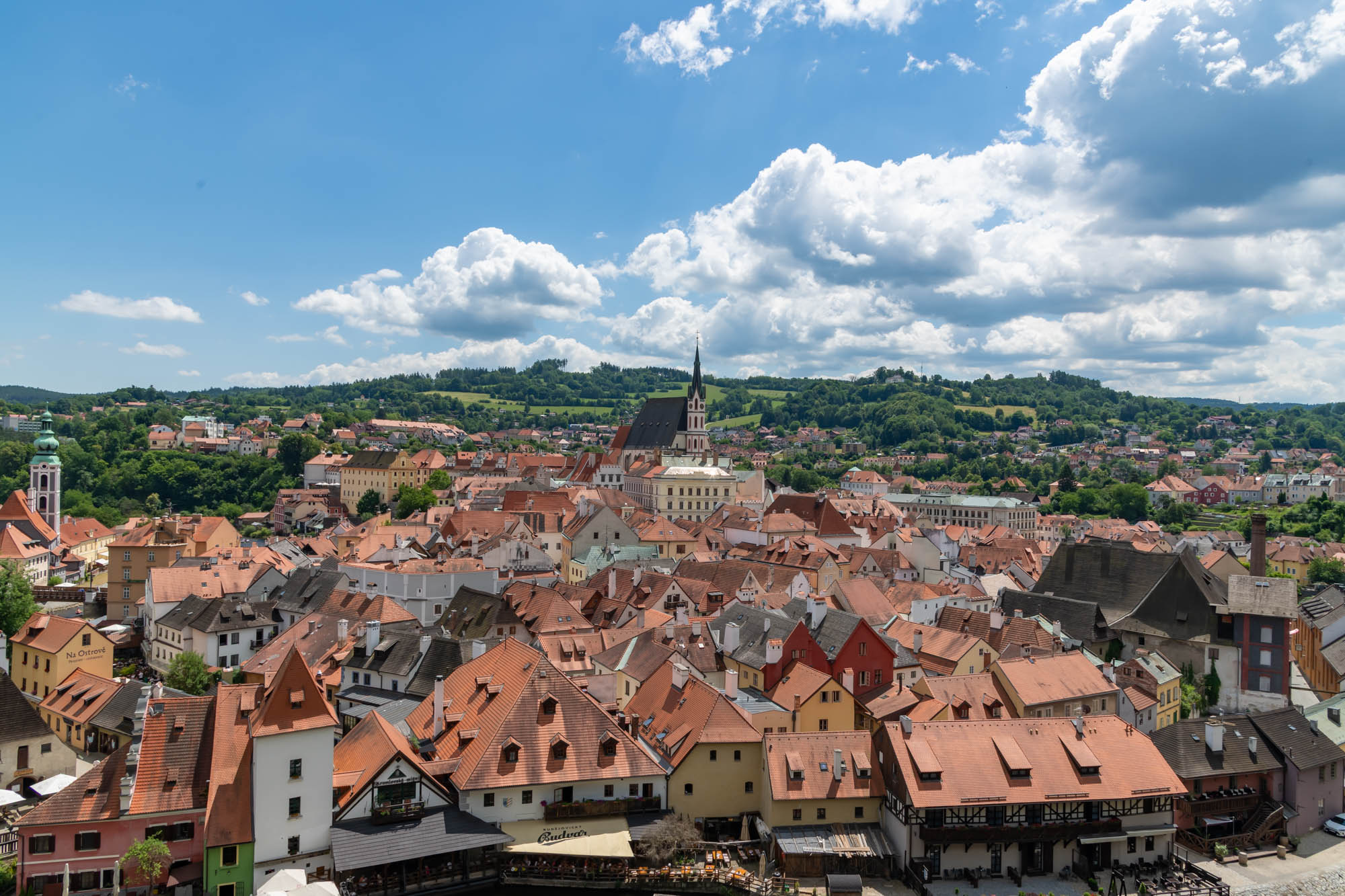
The views of the old town from the castle are quite stunning.

There is a tower in the castle, which provides some great views of the castle itself.

As mentioned, Český Krumlov lost its sheen during the Communist times and the buildings were not maintained properly. After the gold mines ran out, graphite was discovered, and pencil factories were functioning in the area (they still are). After the formation of Czech Republic in 1992, UNESCO stepped in to help revive the buildings and the town became a very popular tourist destination and tourism provides sustenance for the town now. However, it also seems to have brought its own tension between locals and the effects of tourism. I could sense a level of bitterness in the comments of our guide, who said it is impossible for locals to live in Český Krumlov now, as everything has become more expensive because of tourism and UNESCO has so many stipulations that they cannot make even very minor modifications to their houses to make them more comfortable. I have seen such tension in other places as well and tourism often has a very disastrous effect on locals, while it also helps their economy – the balance is very fine and difficult. 

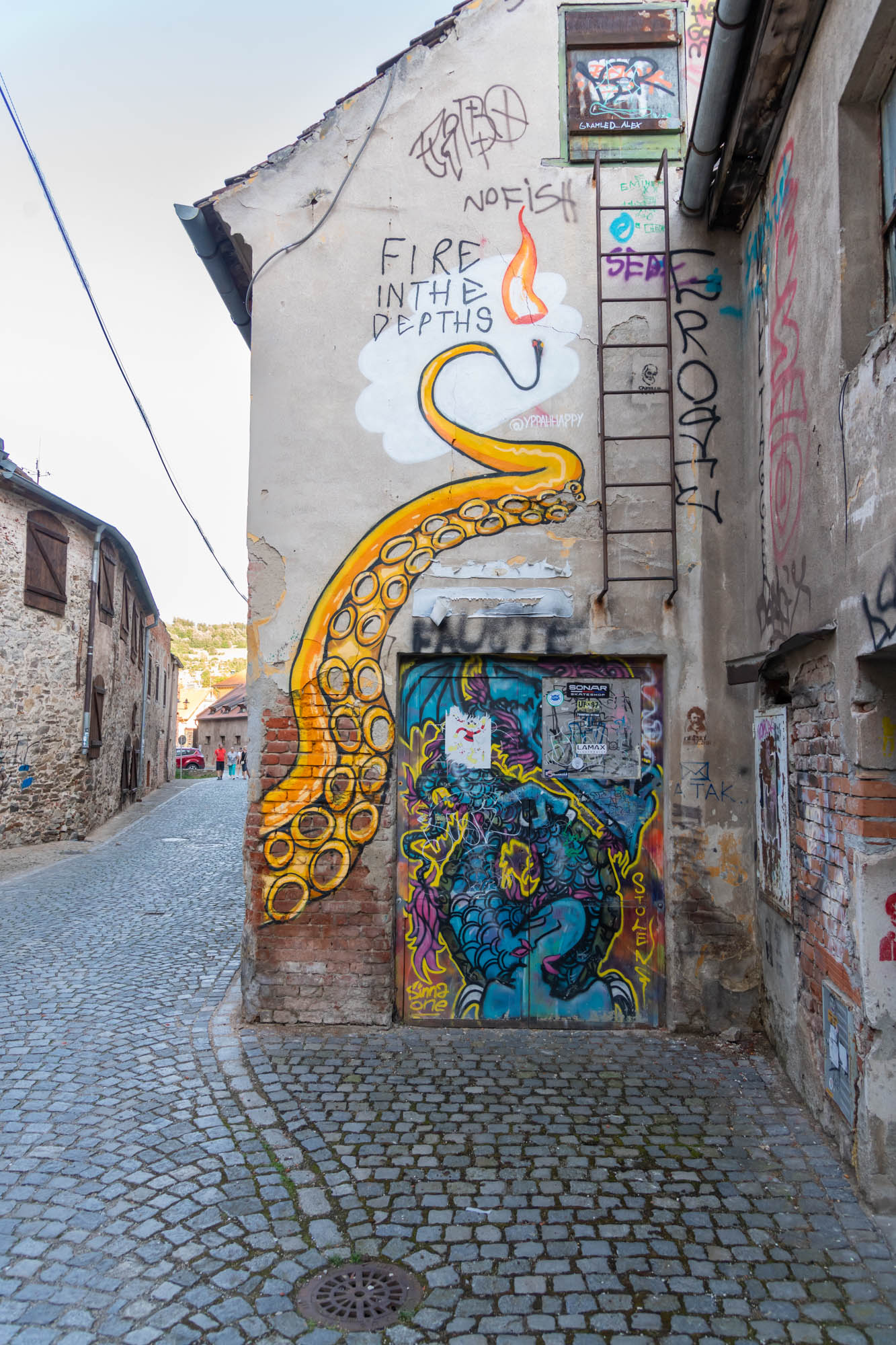
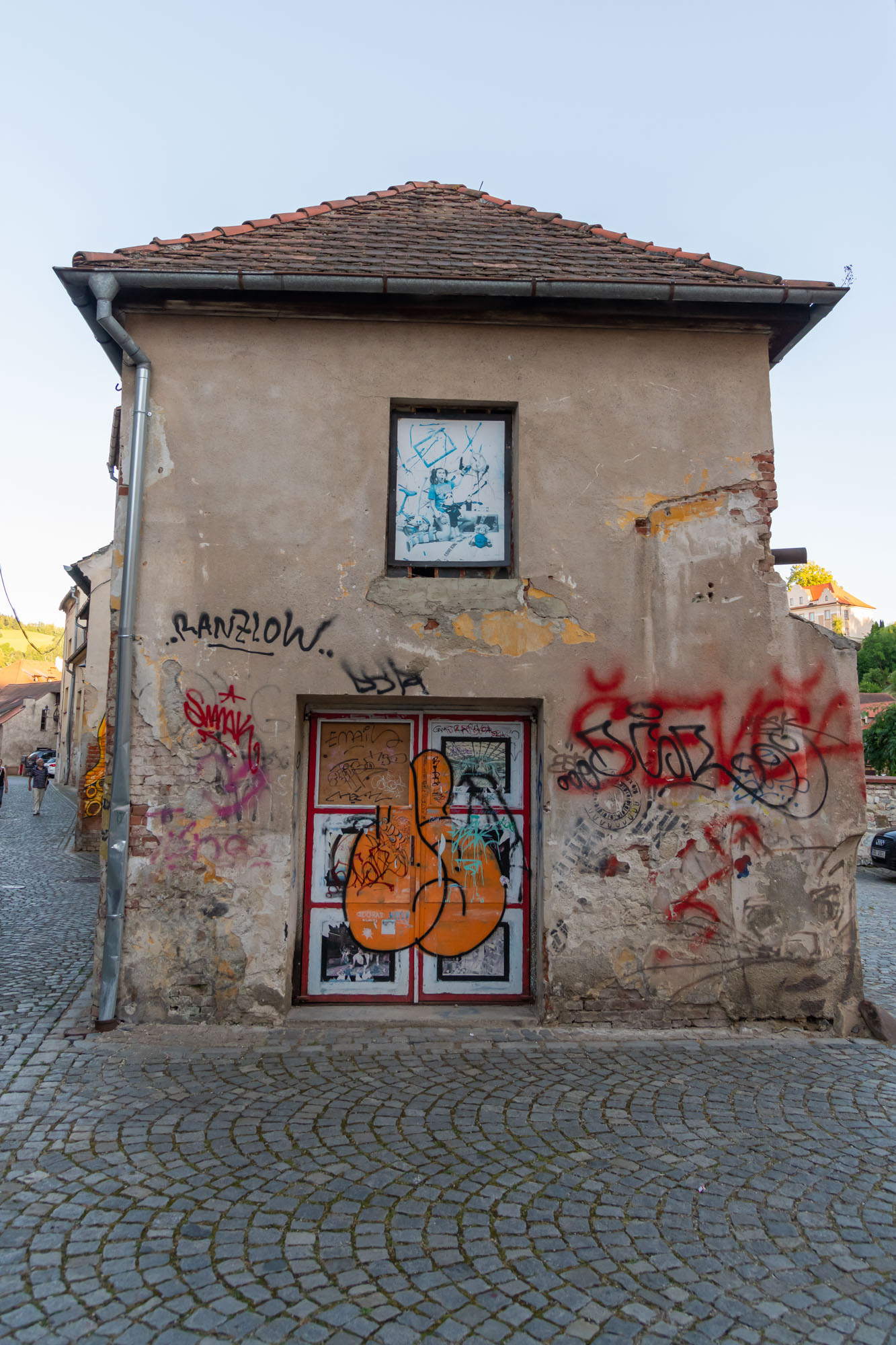
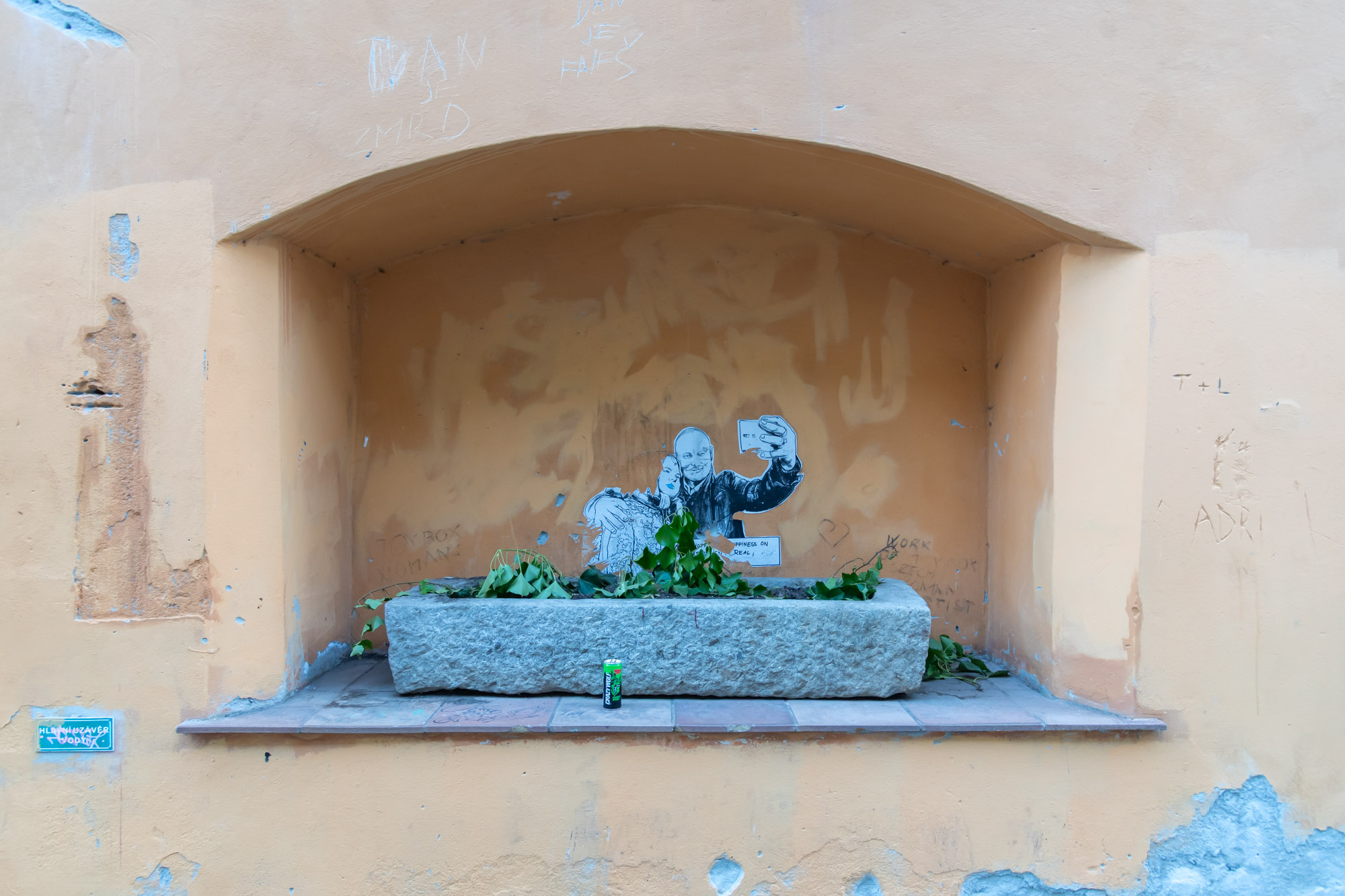
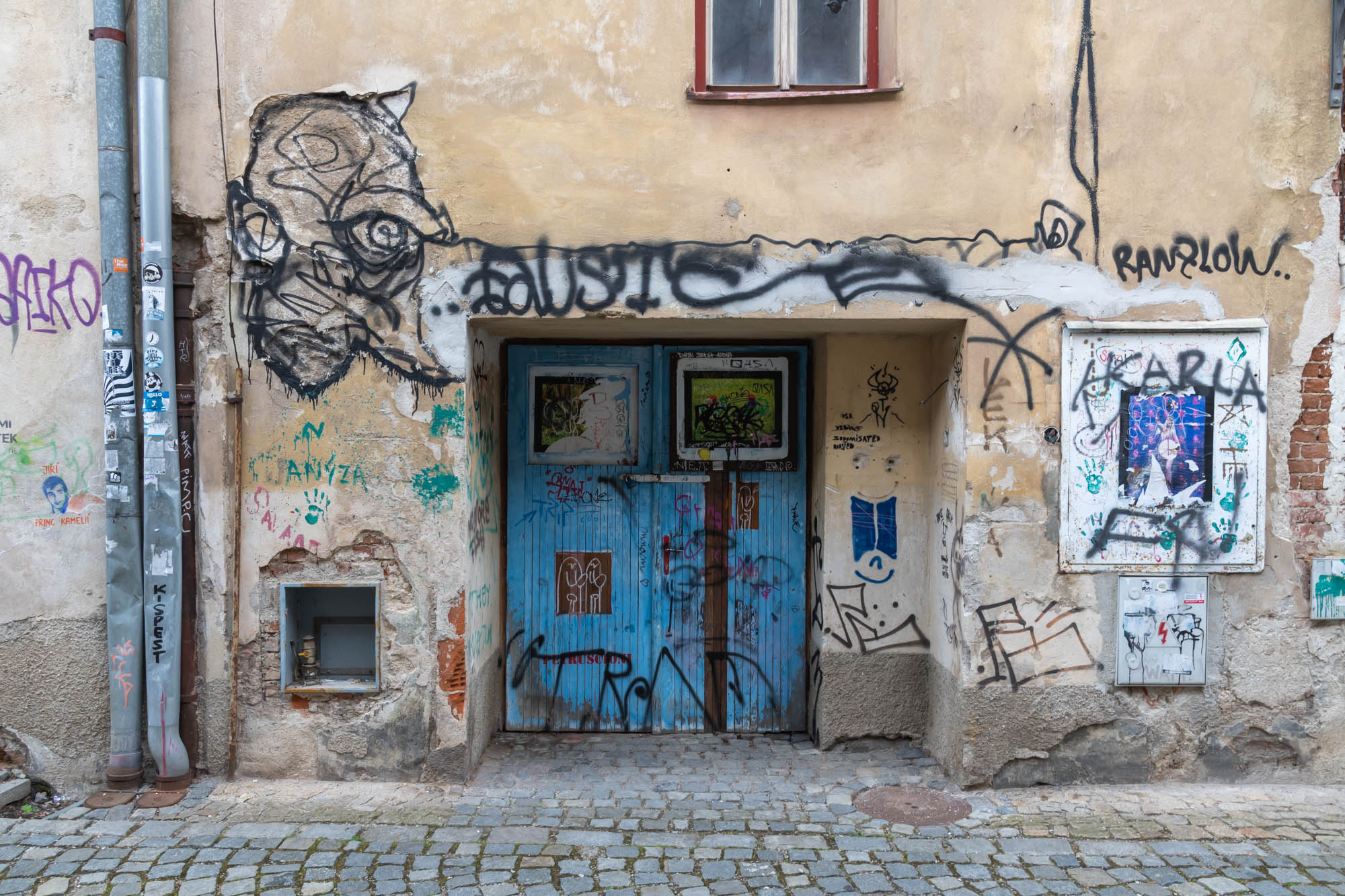
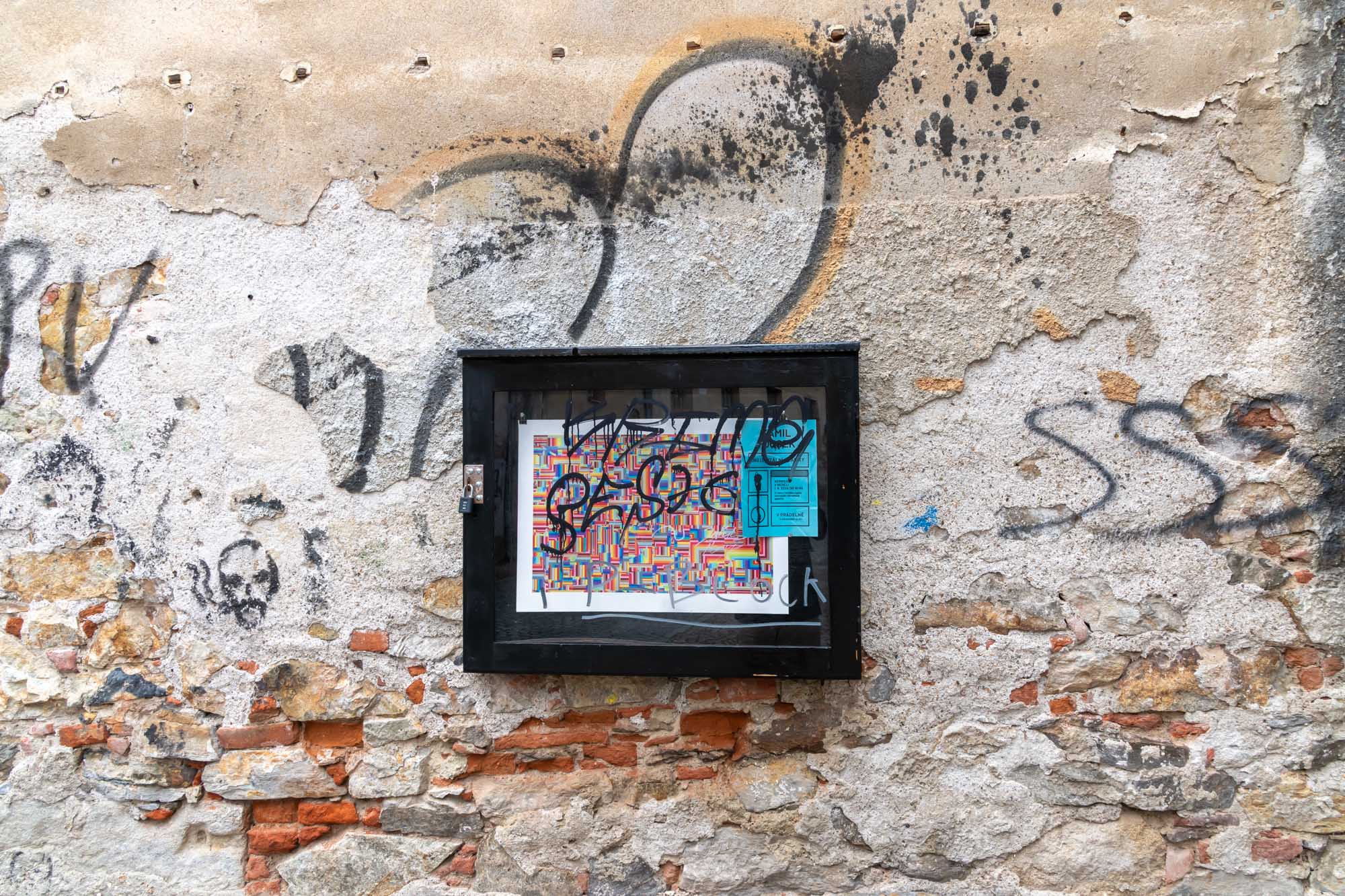
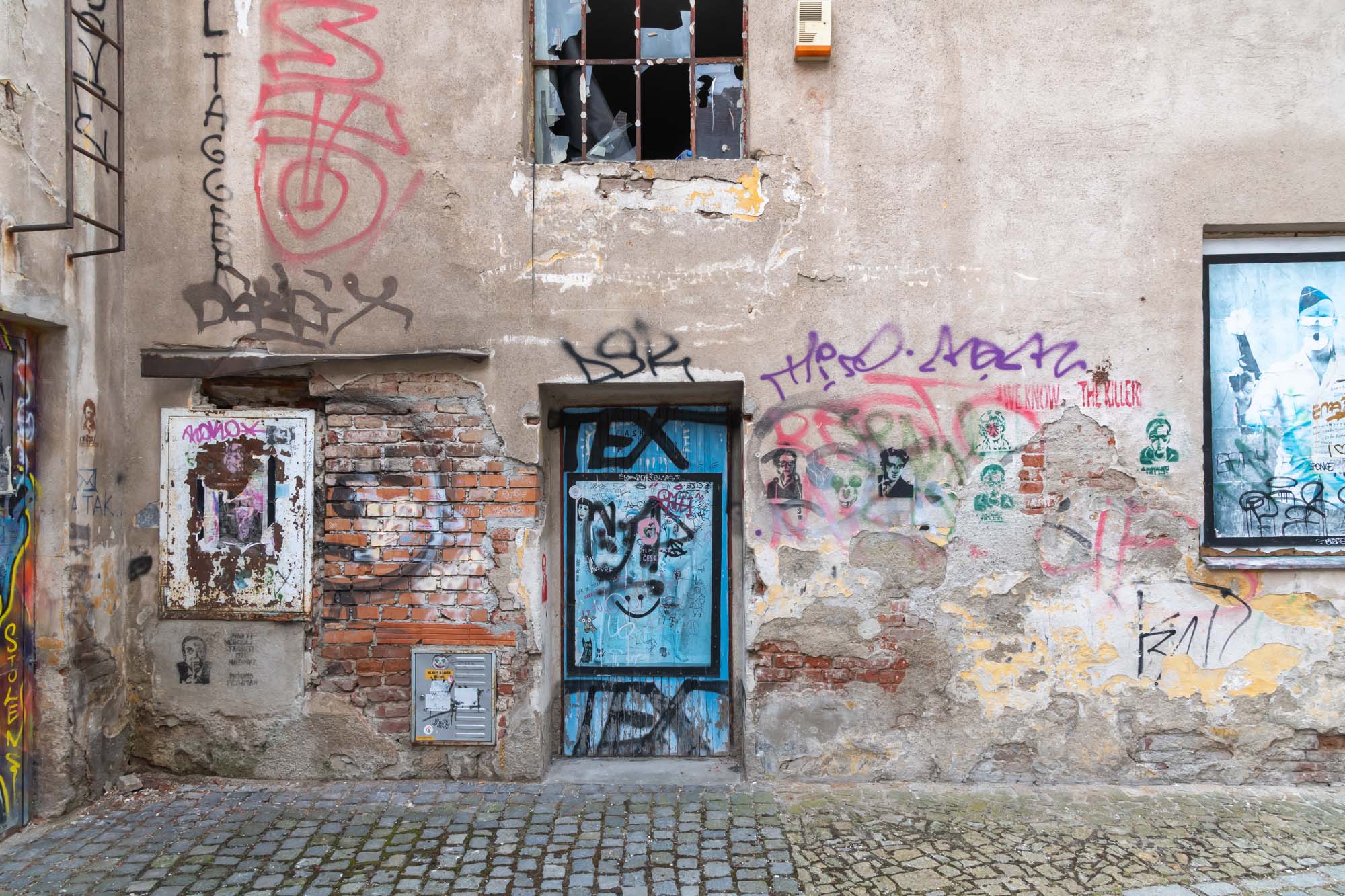
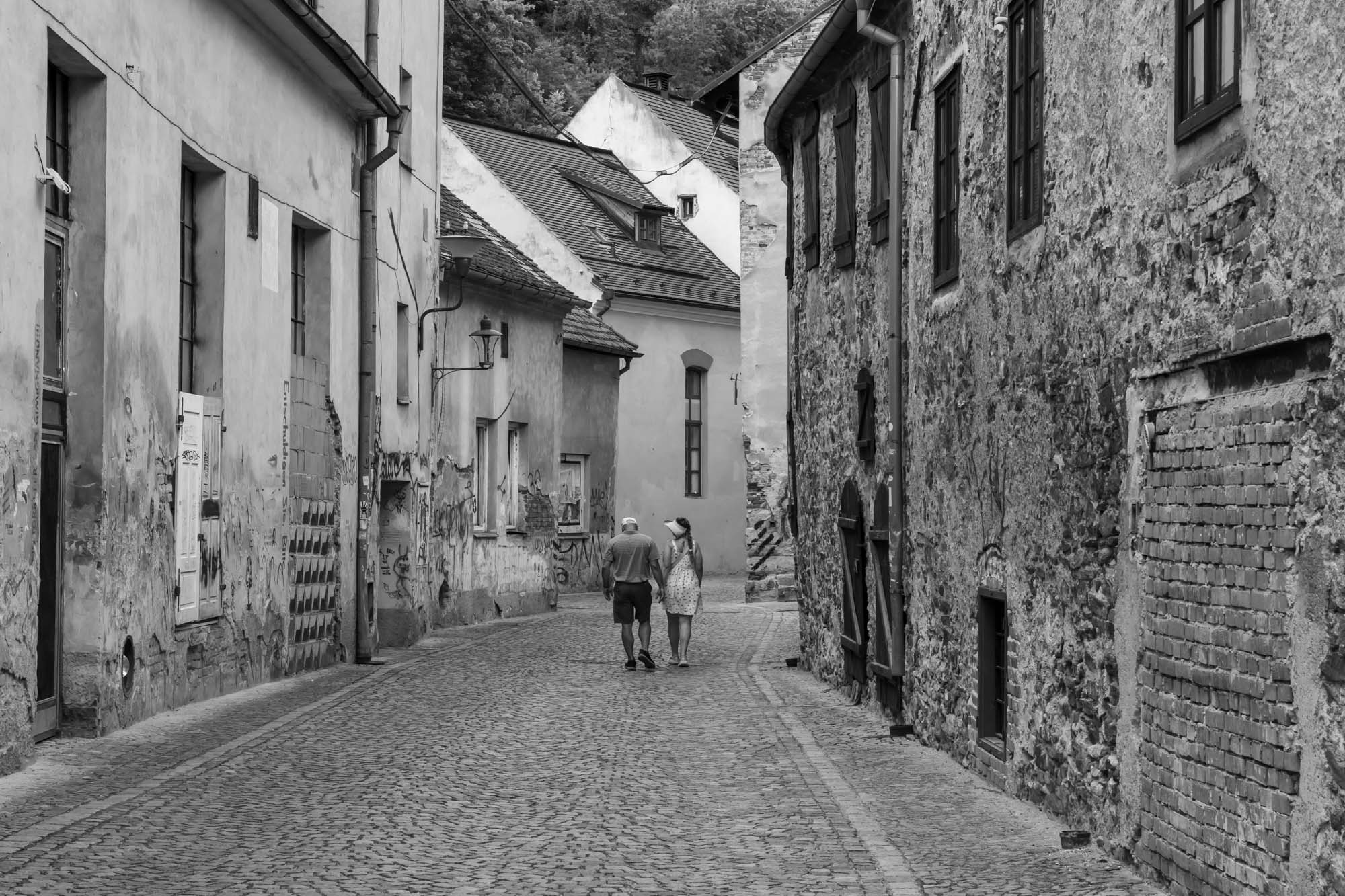
Understandably, the walking tour took us only to the touristy parts of the town and when I was wandering around, I found an area filled with graffiti. 

There are a couple of museums also in town, including an Egon Schiele Museum, but I did not get the time to visit those. I spent only one night in the area and ideally, I should have spent two days there. The beauty of this town is really captivating!

I was wandering around Prague yesterday when I stumbled upon the Banksy Museum (The World of Banksy), on my way to see the rotating Kafka head. A museum for the works of Banksy had never entered my imagination as it feels like an oxymoron. This is housed in a 15th century church and on the doorway, it is mentioned: “Just like Banksy usually presents his art at unusual places, our exhibition also takes place at an unusual location – a church right in the heart of Prague. Czech priest and church reformer Jan Hus used to preach here in the 15th century. The church and adjacent monastery were later disestablished during the reforms of Emperor Joseph II in the 18th century. In its most recent history, the church building served as a warehouse and a nightclub. Now, after centuries, it finally hosts another reformer – Banksy!”. I had to go in!

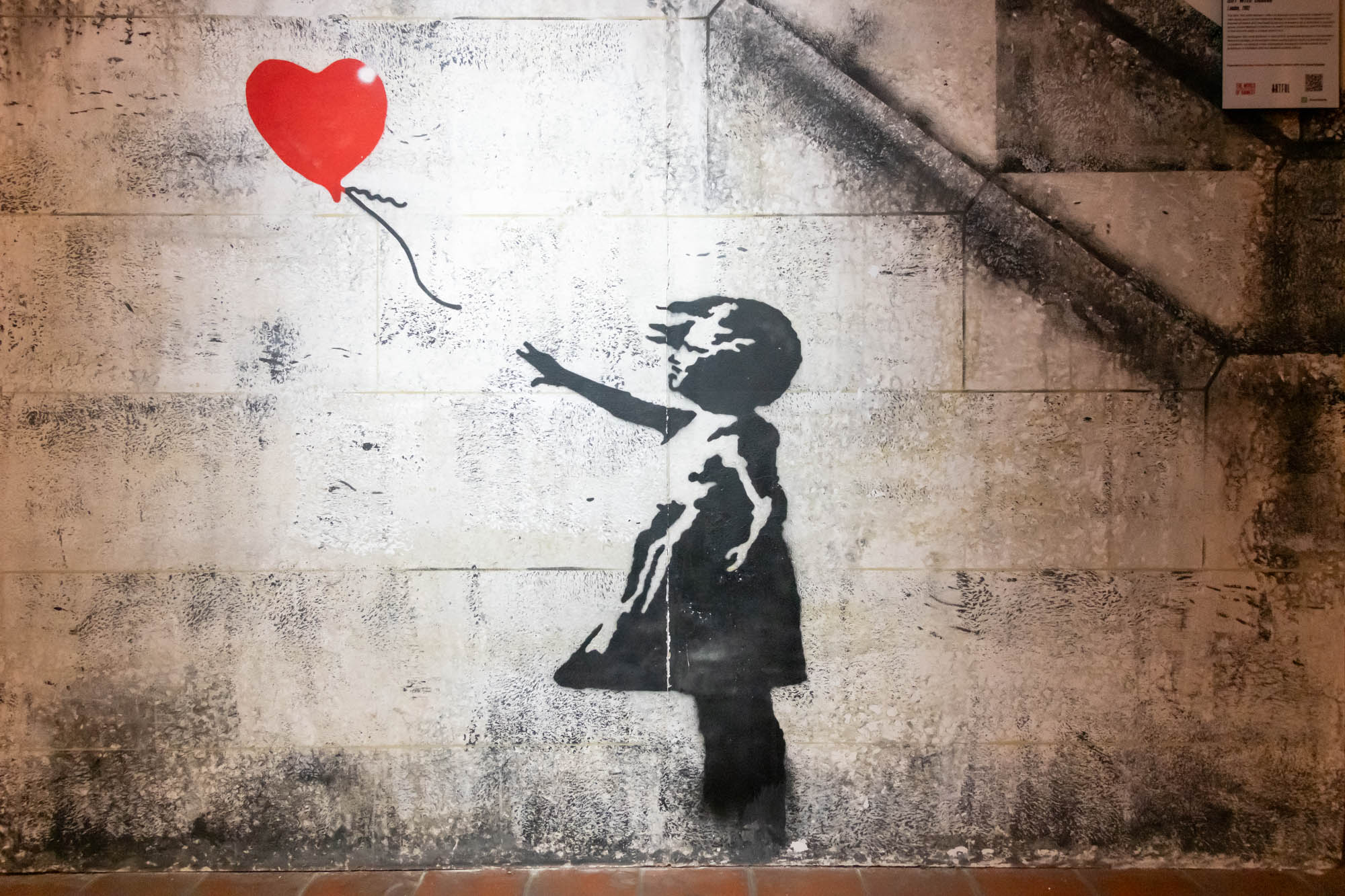
There are several works of Banksy organised inside the museum, and I guess most, if not all, are replicas. There are many videos as well and it was indeed a very good experience to see many works by Banksy at the same location. The show starts with the famous girl with a balloon, and I am reproducing some of the works that I could photograph. 

“Girl with Balloon” is one of Banksy’s most known works and was painted on the stairs near London’s Waterloo Bridge in 2002. This work announced Banksy’s arrival into the world of graffiti, and he has been instrumental in increasing the power and impact of the medium. 

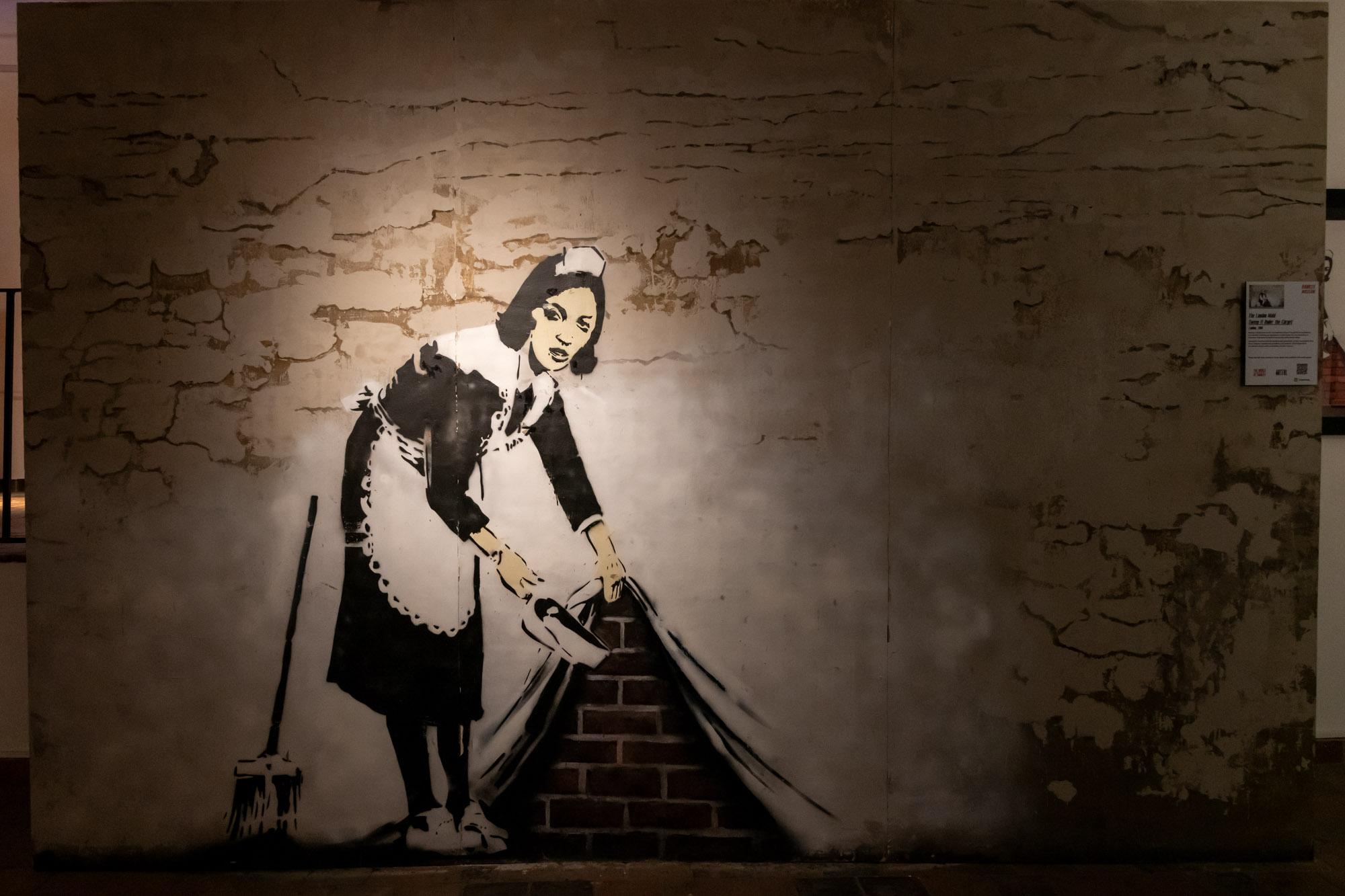
“Sweep It Under the Carpet” from 2006. In the make believe world that we live in, which is becoming more and more about just appearances and covering up, this work needs no explanation.

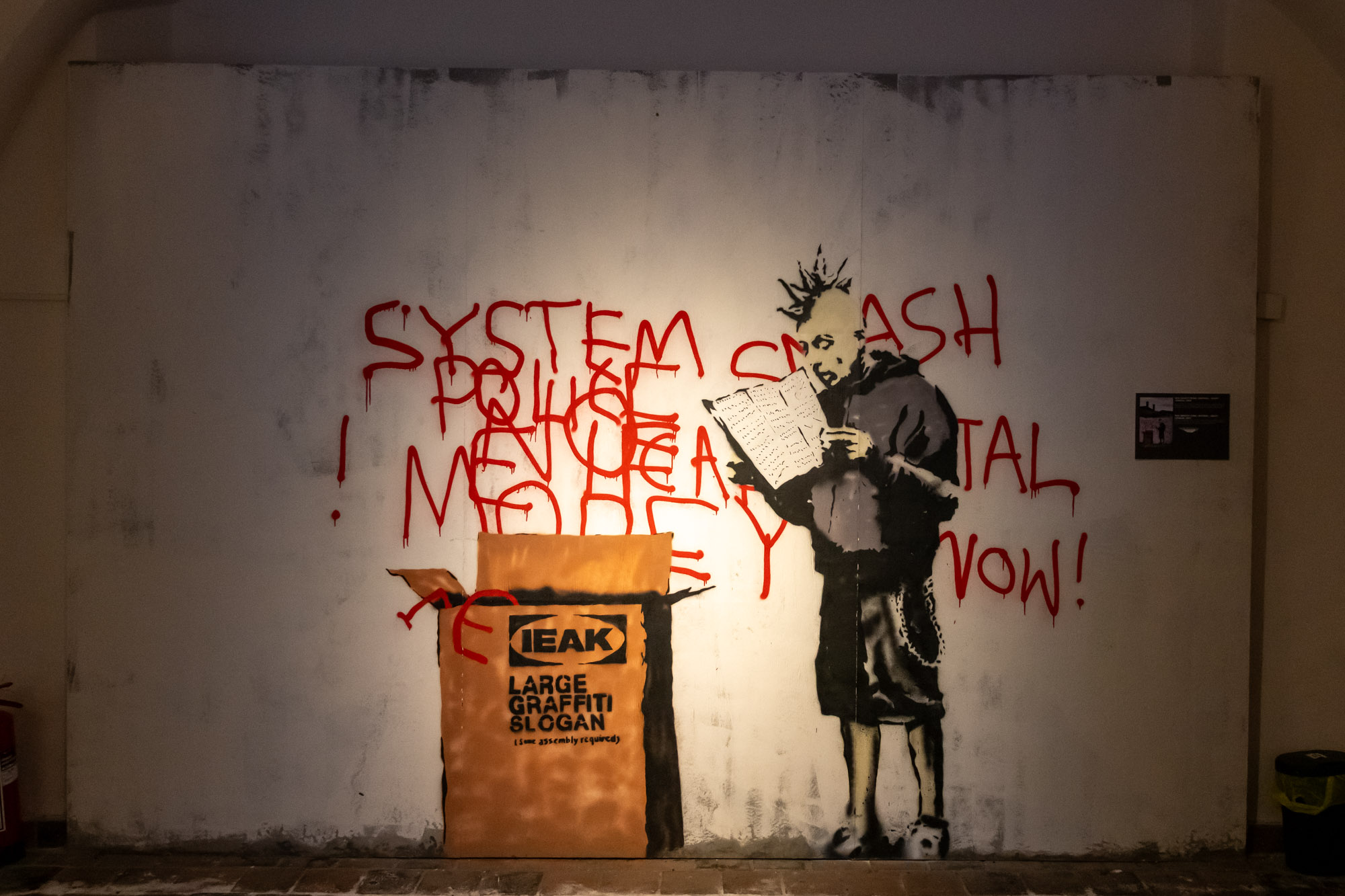
We live in the era of DIY where we can just assemble everything ourselves with the set of instructions provided. Ironically, even art seems to be headed in that direction!

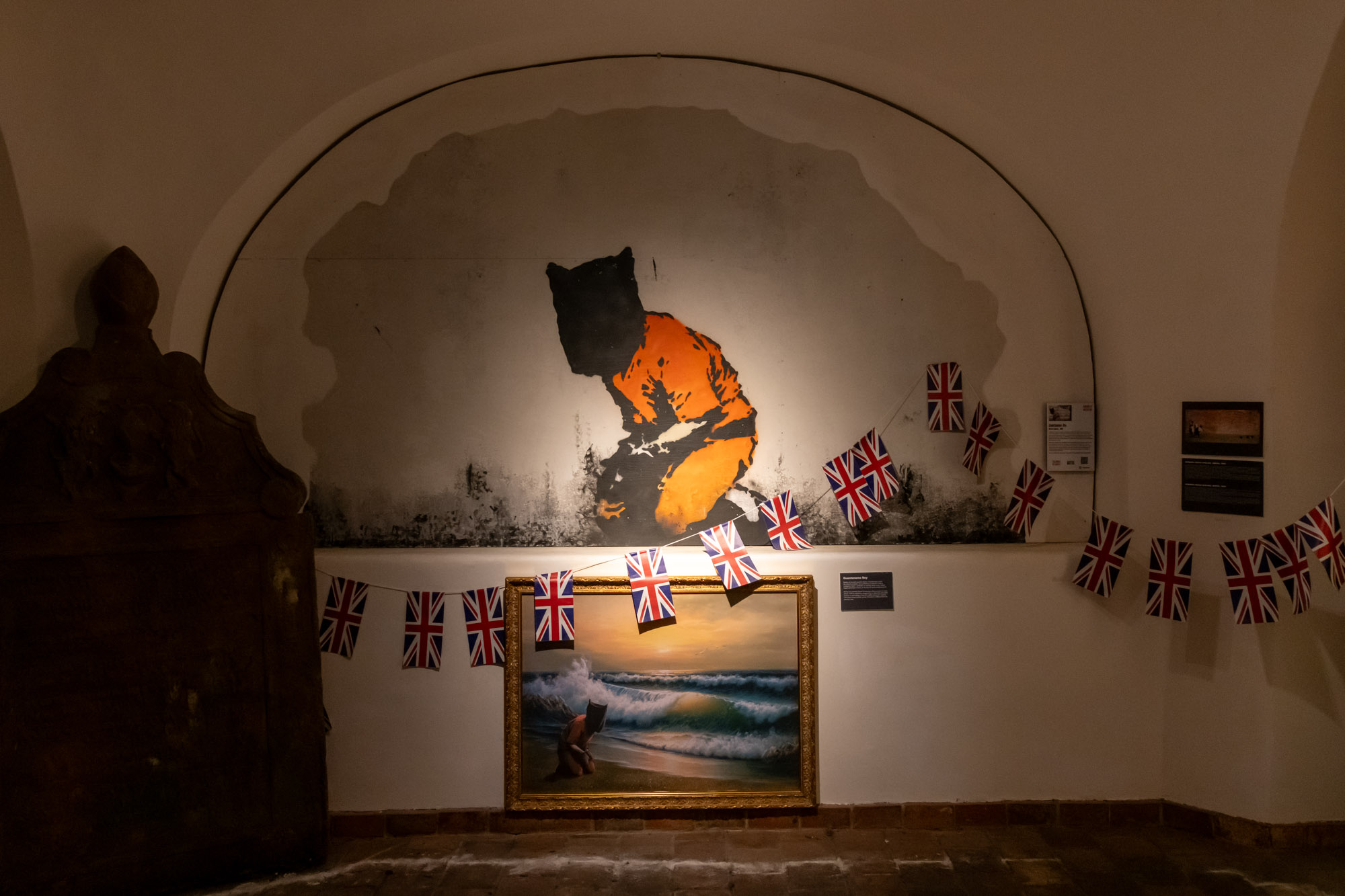
A work related to Guantanamo Bay; in the painting, the prisoner is placed on an idyliic seashore. 

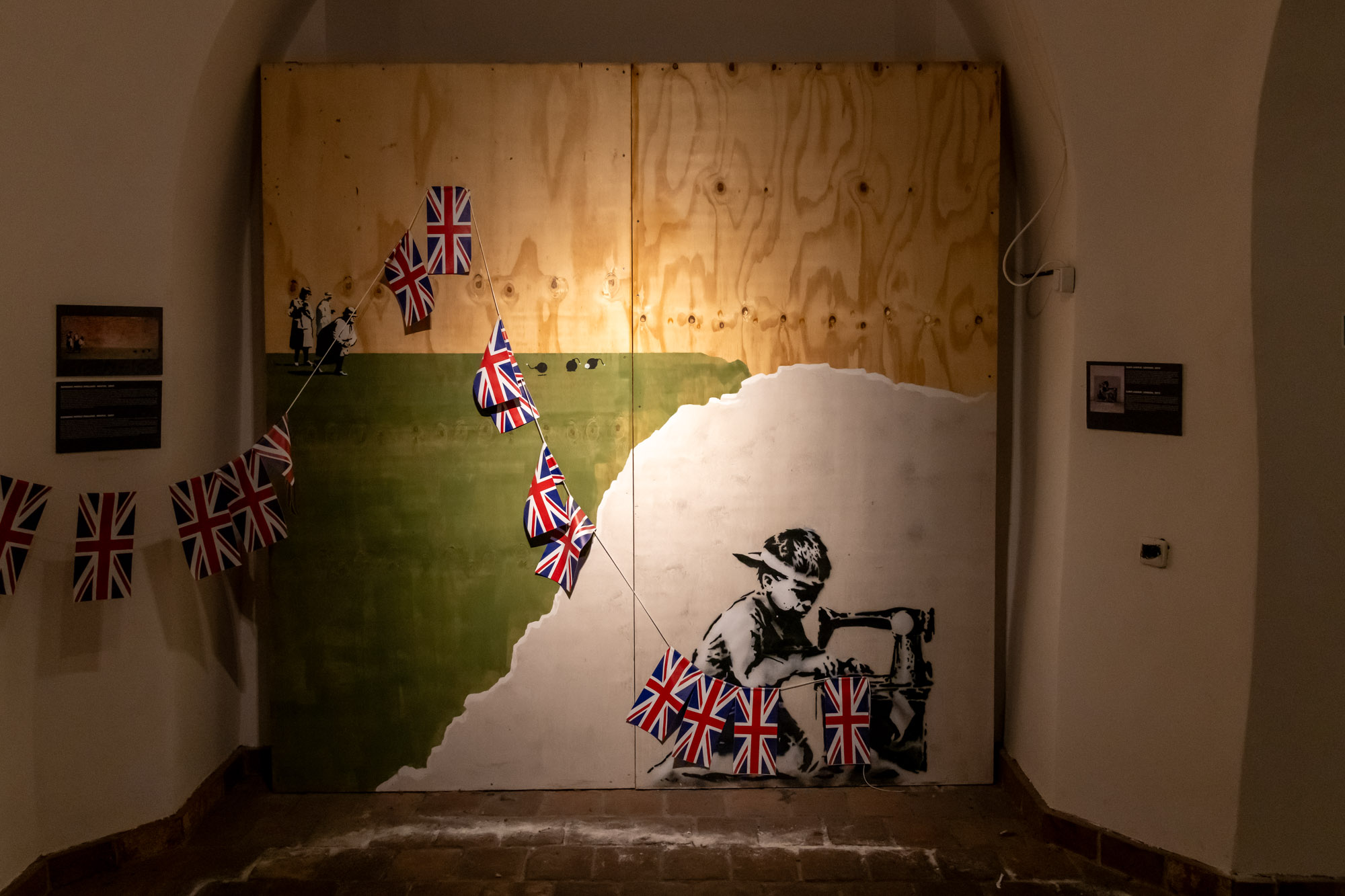
This was to expose the issue of using child (often slave) labour, so that the twin celebrations on the 2012 Olympic Games and Queen Elizabeth’s Diamond Jubilee could go on in all its pomp and gaiety. 

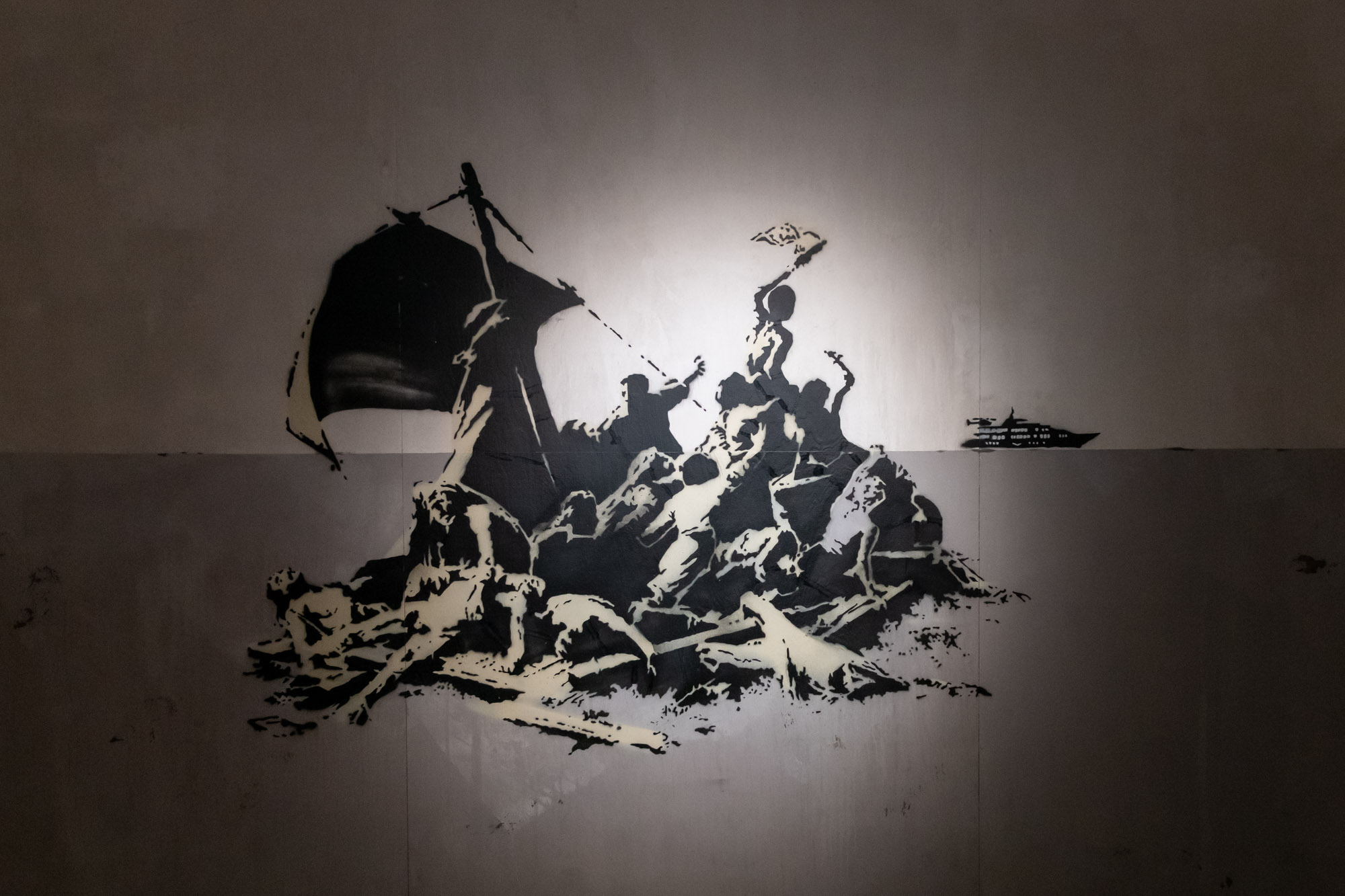
This is an artistic parody of Théodore Géricault’s “The Raft of the Medusa”. While Gerricault painted the plight of a bunch of shipwrecked soldiers, Banksy that projected that idea on to our times of the have and have-nots, with a luxury yacht thrown in.

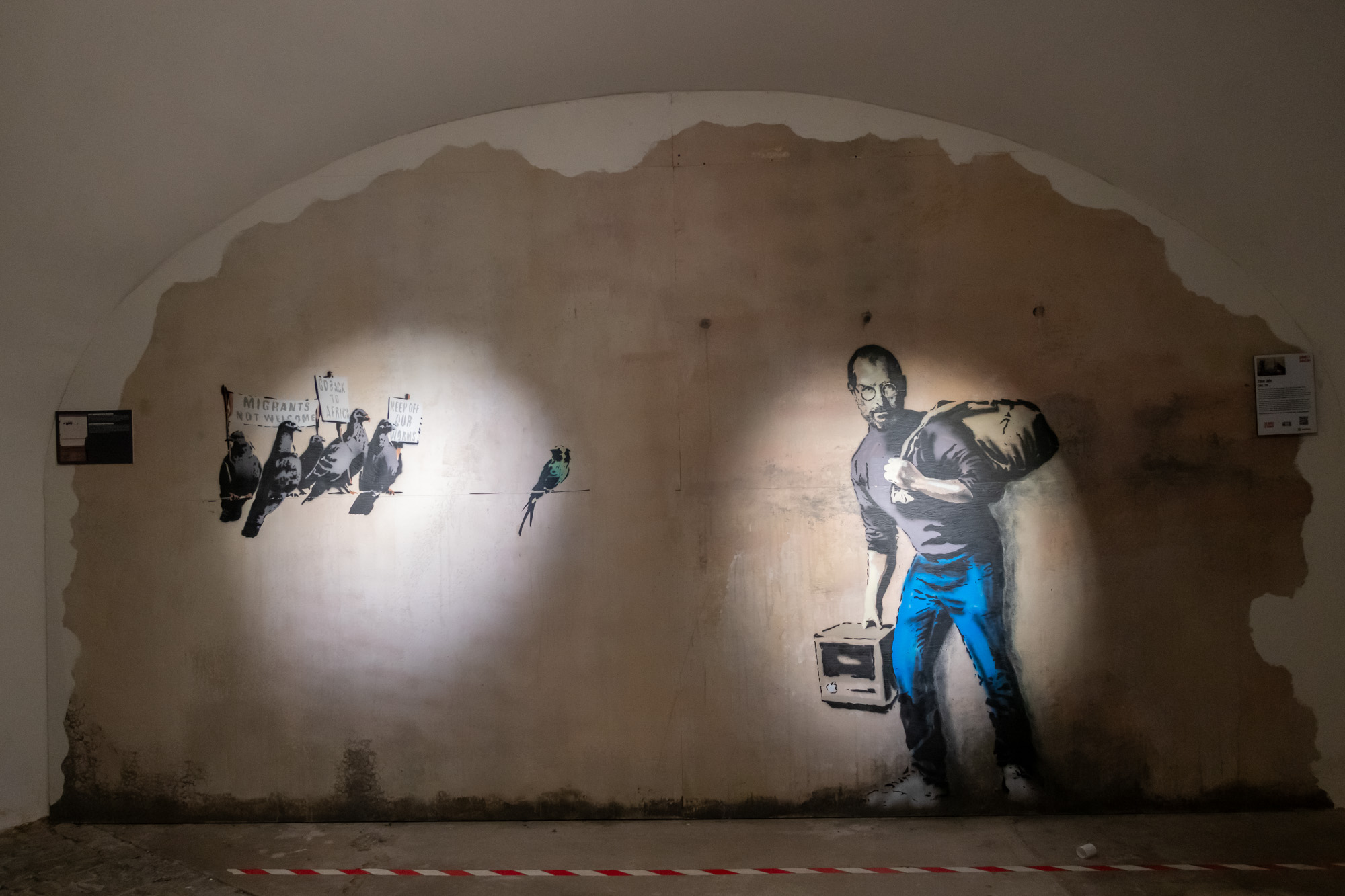
This artwork was executed in a refugee camp called “The Jungle” that existed in Calais in France between January 2015 to October 2016. In this mural, which was unveiled on 11 December 2015, Steve Jobs is shown carrying a typical black garbage bag as is often carried by refugees, slung over his shoulder and the original Apple computer in this other hand. At a time when the refugee crisis was at its peak with many countries looking down upon immigrants, Banksy was reminding the world that the founder of the most valuable company in the world, was himself the son for an immigrant from Syria. The sad truth is that this artwork is even more relevant today, than it was in 2015.

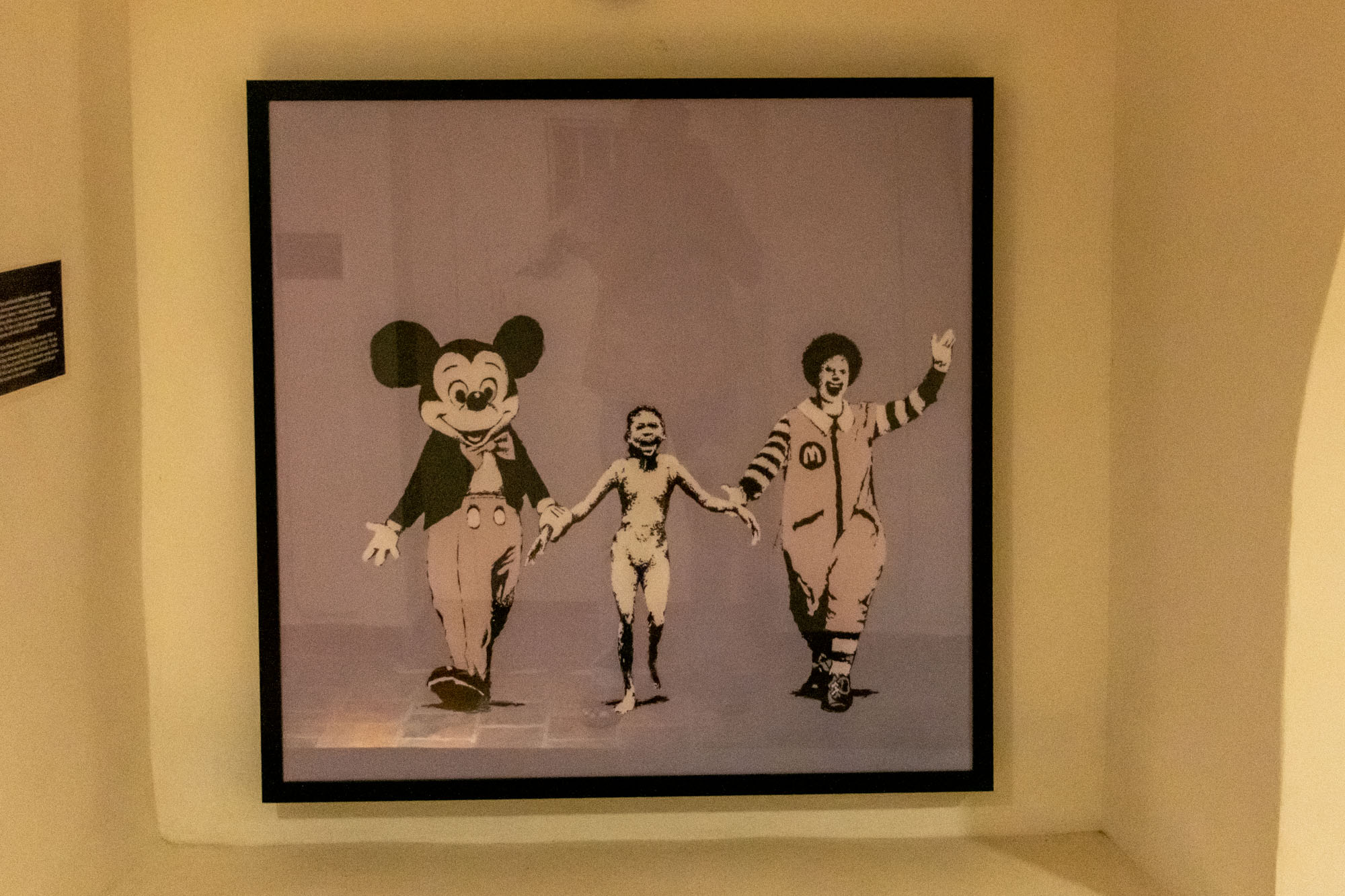
Capitalism, unabated.

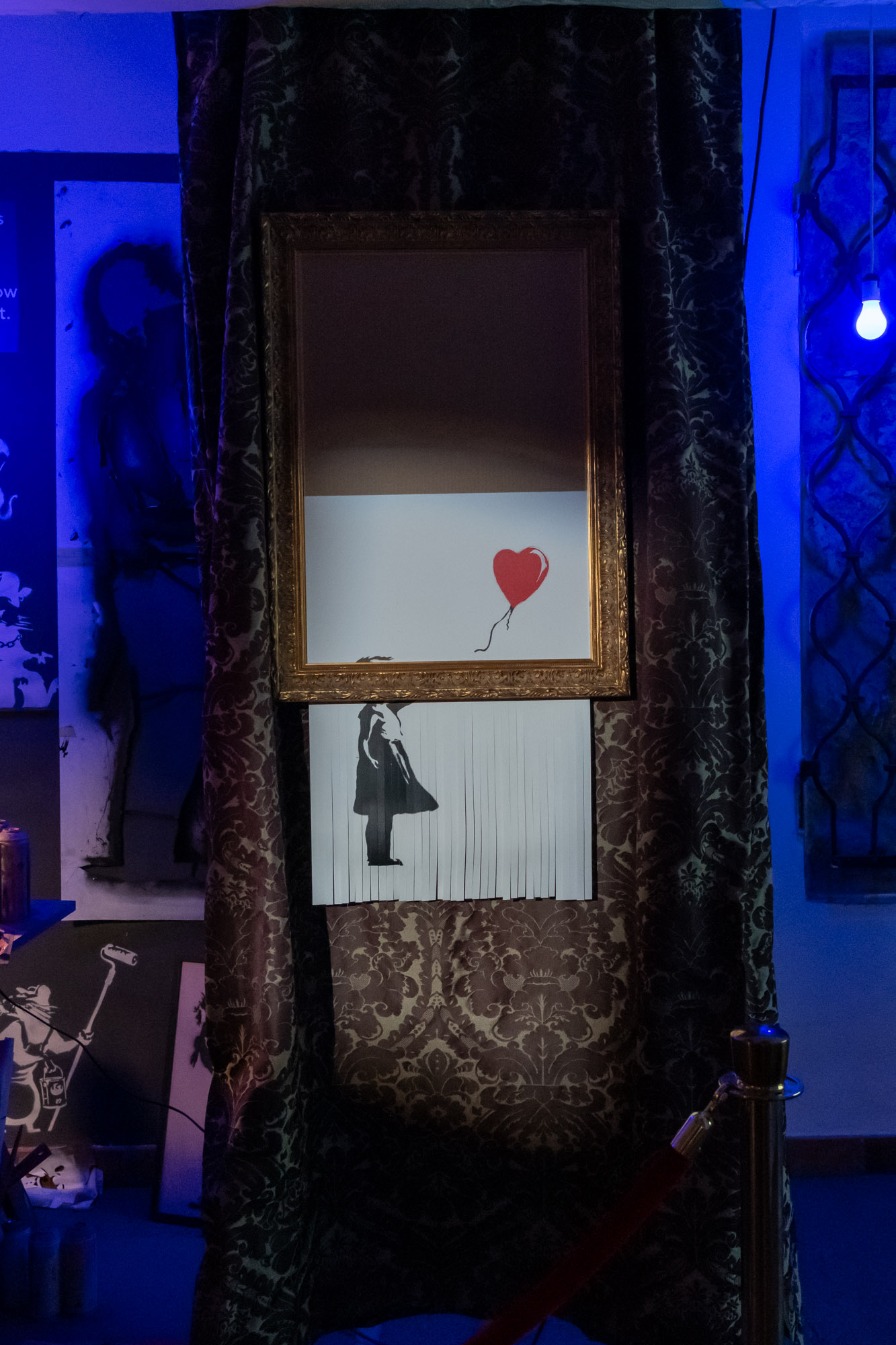
On 5 October 2018, the “Girl with Balloon” went up for auction in Sotheby’s as a framed artwork and it sold for a record-breaking (for Banksy) price of GBP 1,042,000/-. Immediately after the final bid was accepted, a mechanical paper shredder hidden in the frame started destruct the painting, much to the dismay and horror of a room full of bewildered art collectors. The shredder malfunctioned when it was about half-way through and so the painting was not fully destroyed. It seems that Banksy had gifted this artwork to a friend in 2006 and he had installed the shredder then itself with a plan to destruct it, should it ever be sold in an auction. 

Three years later, this artwork, which was partially destroyed, was renamed as “Love Is In The Bin” and was sold at another auction at the same Sotheby’s for a yet another record-breaking price of GBP 18,582,000/-. 

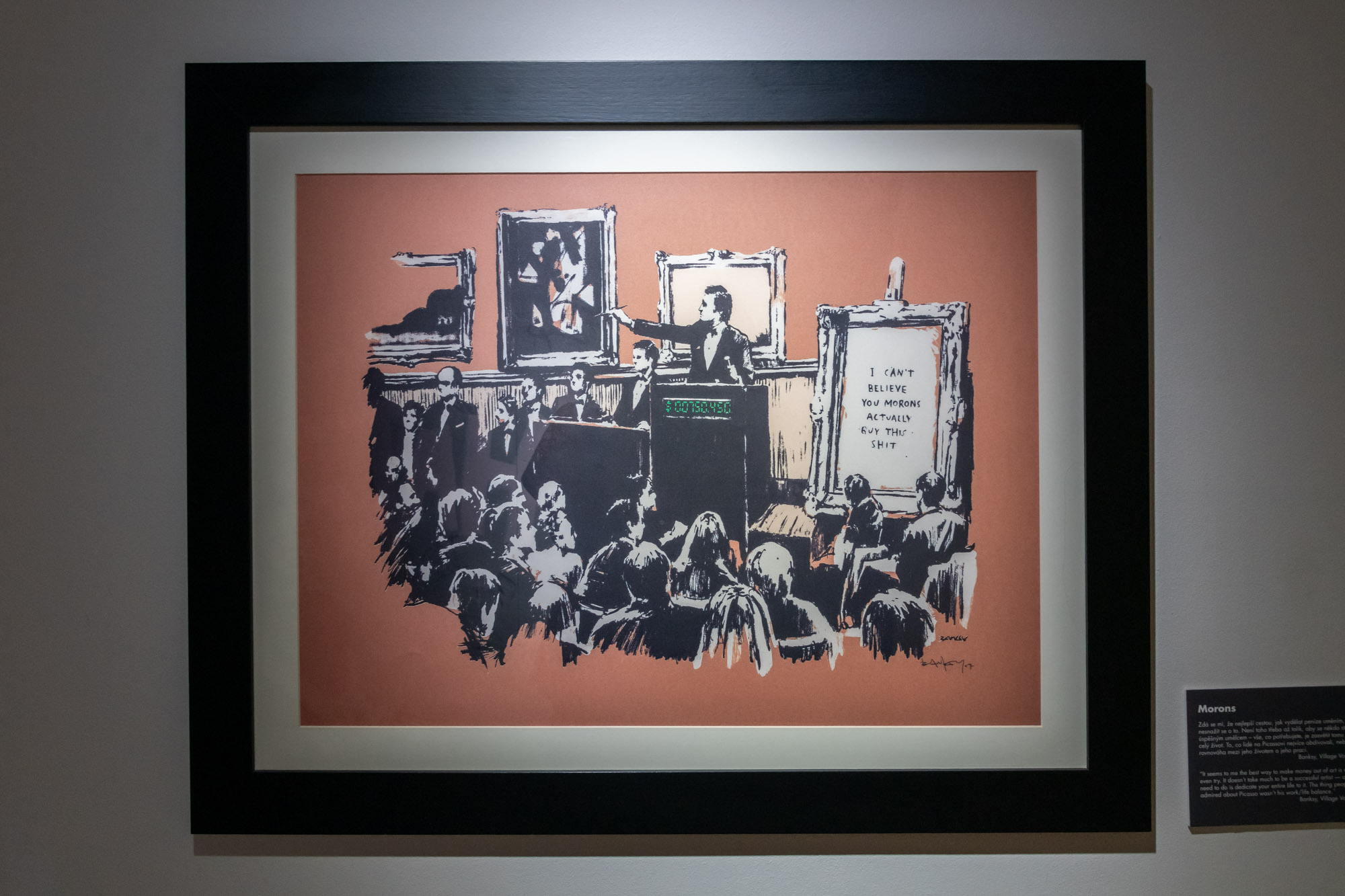
Here Banksy is seen mocking the art collectors who buy artworks at astronomically high prices. I was tempted to compare this work with what happened with the Girl with Balloon. I had read about the incident at the time and wondered whether the purchaser would agree to buy it now that the work itself was damaged. It just showed how little I understood the brains of the moneyed that operate in the art world. After the event, there were some negotiations, and the buyer agreed to pay the full price. Sotheby’s labelled the whole episode as “the first artwork in history to have been created live during an auction”. It sems market watchers had speculated then itself that the self-destruction would increase the value of the painting. Looks like they were right because the artwork appreciated in value from 1 Million to 18.5 Million in just three years; a return in investment that even the best investors can only dream about. So, they are not “morons” as Banksy states in his work. This ability to pivot and take on challenges and convert them into opportunities is a unique aspect of capitalism. 

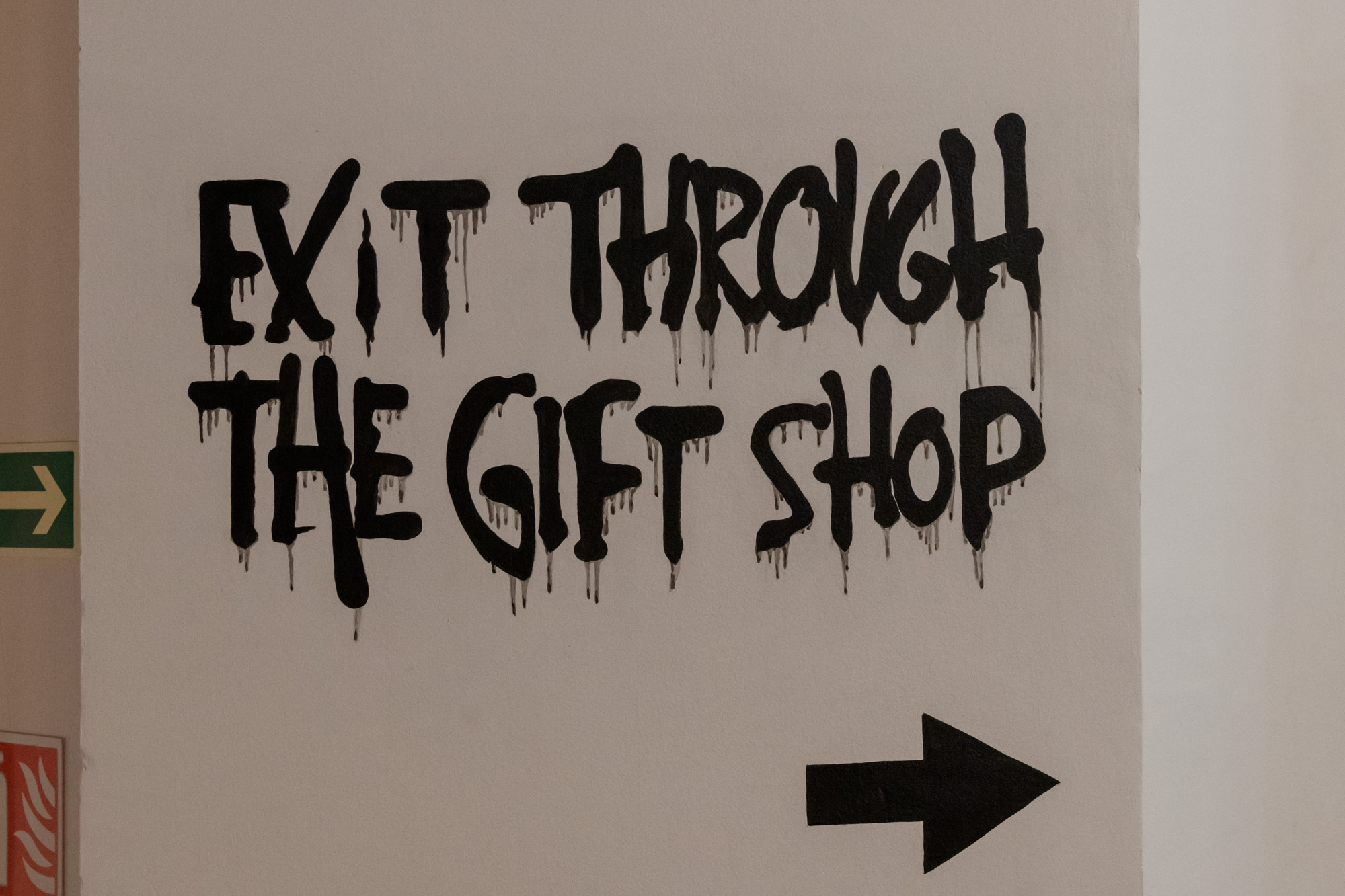
No, this is not an artwork artwork (yes, this is a Banksy work, but here it is actually meant to be functional)! The Banksy Museum is no different from other museums in this aspect and they too force the visitor to move through a shop, hoping to monetise the viewer’s receptive state of mind, coming after watching the exhibition. Banksy is a genius, and I felt this was an insult to him. Or maybe, as a friend remarked, when I sent him a photo of this, “That is the actual Banksy work there”. 

Yesterday, a chance encounter in the tram, enroute to the Van Gogh Museum resulted in me changing plans and heading to the Stedelijk Museum. This is a museum dedicated to modern art and is right next to the Van Gogh Museum, in Amsterdam. I have seen many Van Goghs in different museums and so I thought it would be good to check out what the Stedelijk had in store. 

They have three sections dedicated to period upto 1950, 1950-1980 and 1980 onwards. A large painting and an installation by Anselm Kiefer greet you as you enter the museum. These fantastic works speak about the futility of war and are just phenomenal. However, this piece is not about these works or the museum itself. There are many interesting pieces in the museum, and you can easily spend hours there. 

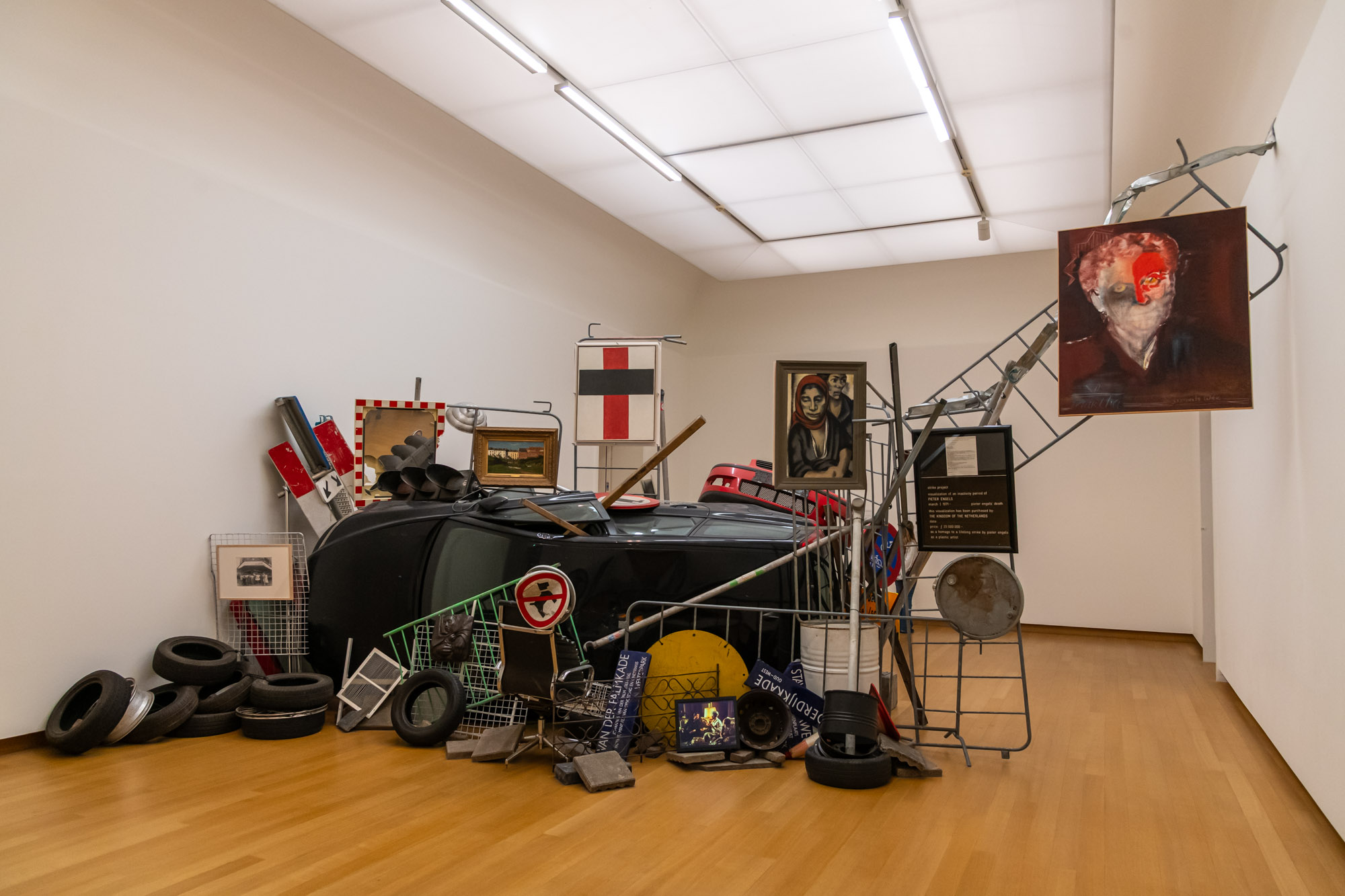
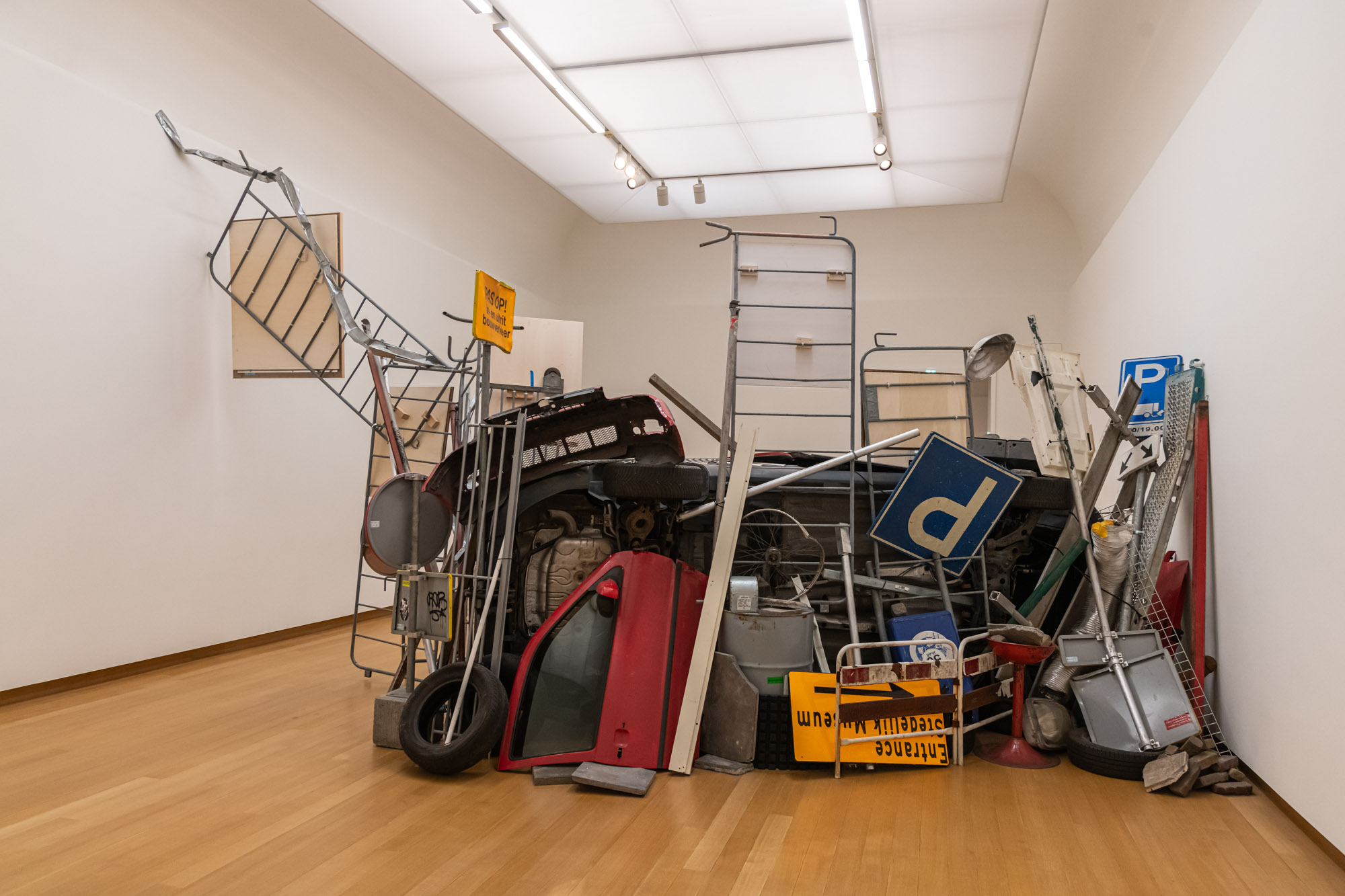
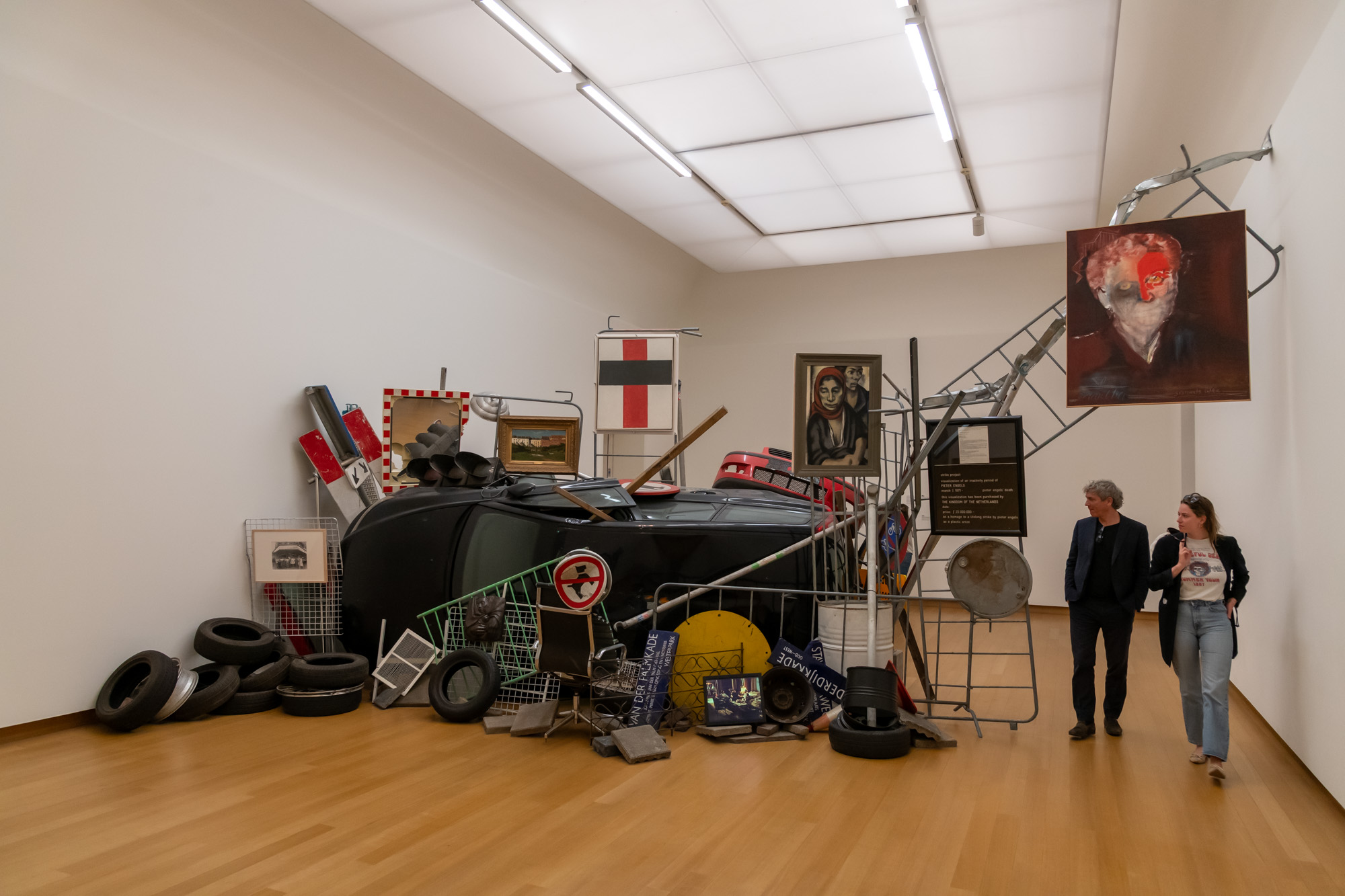
For me, one installation stood out and that was the central attraction for me in my visit to the museum. This was “Bakunin’s Barricade” by Ahmet Ogut. I wasn’t familiar with him, and a quick look on the internet made me realise that my lack of familiarity was clearly a pointer to my awareness about the art world. He is a Kurdish conceptual artist who studied art in Istanbul and Amsterdam and works mostly in Amsterdam now. 

In 1848, there were Socialist uprisings in German states and it spread to Dresden in May 1849. The Municipal councillors in Dresden revolted against the King and with the help of the Municipal Guards, prepared themselves to stop the expected Prussian intervention. About 108 barricades were set up across the town. Mikhail Bakunin, the famous Russian anarchist was involved in this uprising, and he came up with a suggestion that they could place paintings from the National Museum in front of the barricades to protect them. His theory was that the Prussian soldiers would not dare to destroy those important works of art. However, there was not much support for this idea, and it was not carried out. 

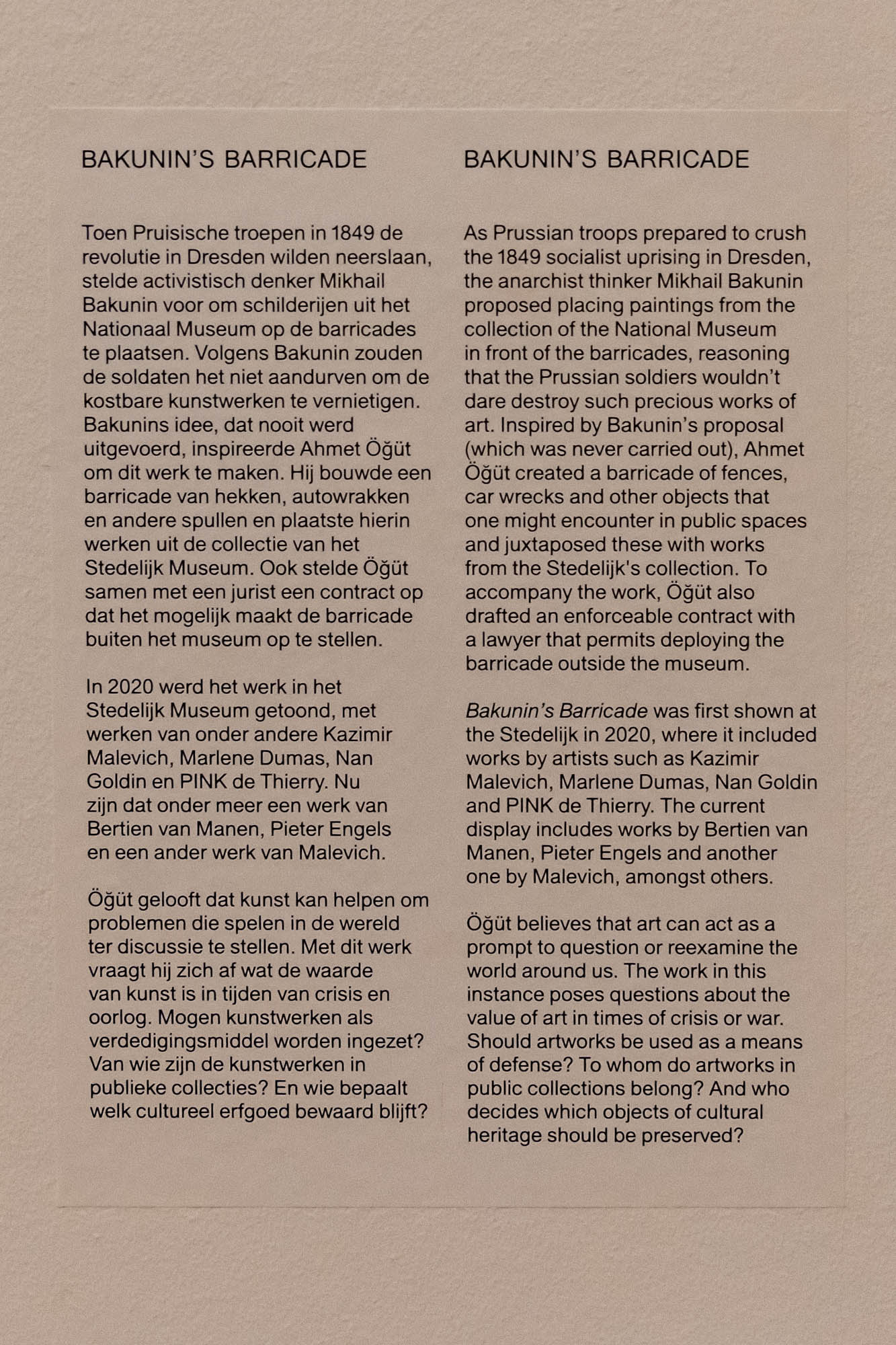
Ahmet Ogut has taken inspiration from this event and made his work, Bakunin’s Barricade, as part of an exhibition titled “In the Presence of Absence” in 2015. The Stedelijk Museum procured this artwork in 2020 and as part of the procurement, a contract was signed between the museum and Ogut, and in the contract, it was mandated that the installation should be permitted to be deployed outside the museum, should anyone ask for it. The installation is a barricade as one that would be made by protestors in the streets and in front of the barricade, are works from famous artists like Kazimir Malevich, Marlene Dumas, Nan Goldin, PINK de Thierry and others. Ogut has recreated Bakunin’s idea in this installation. 

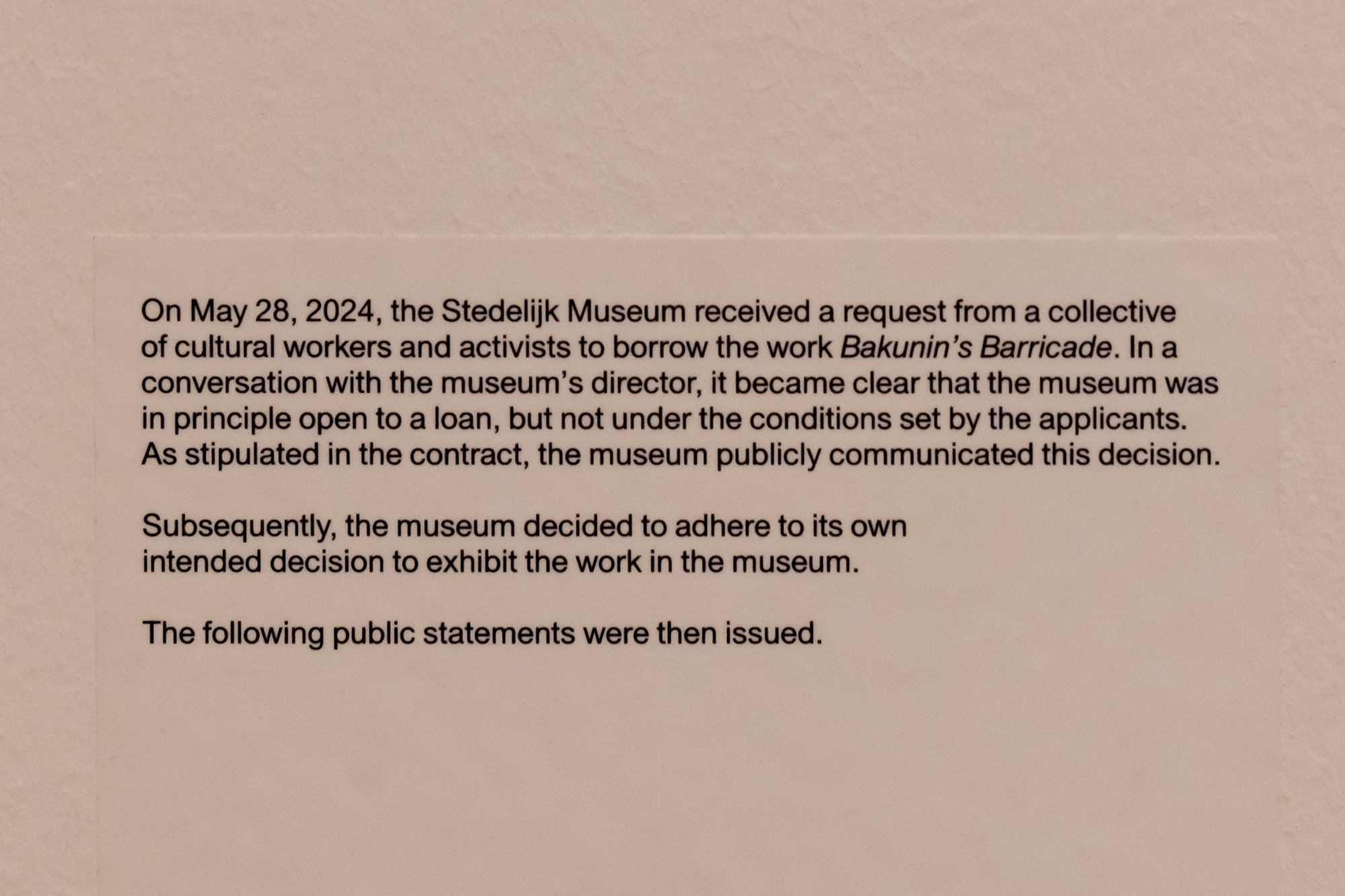
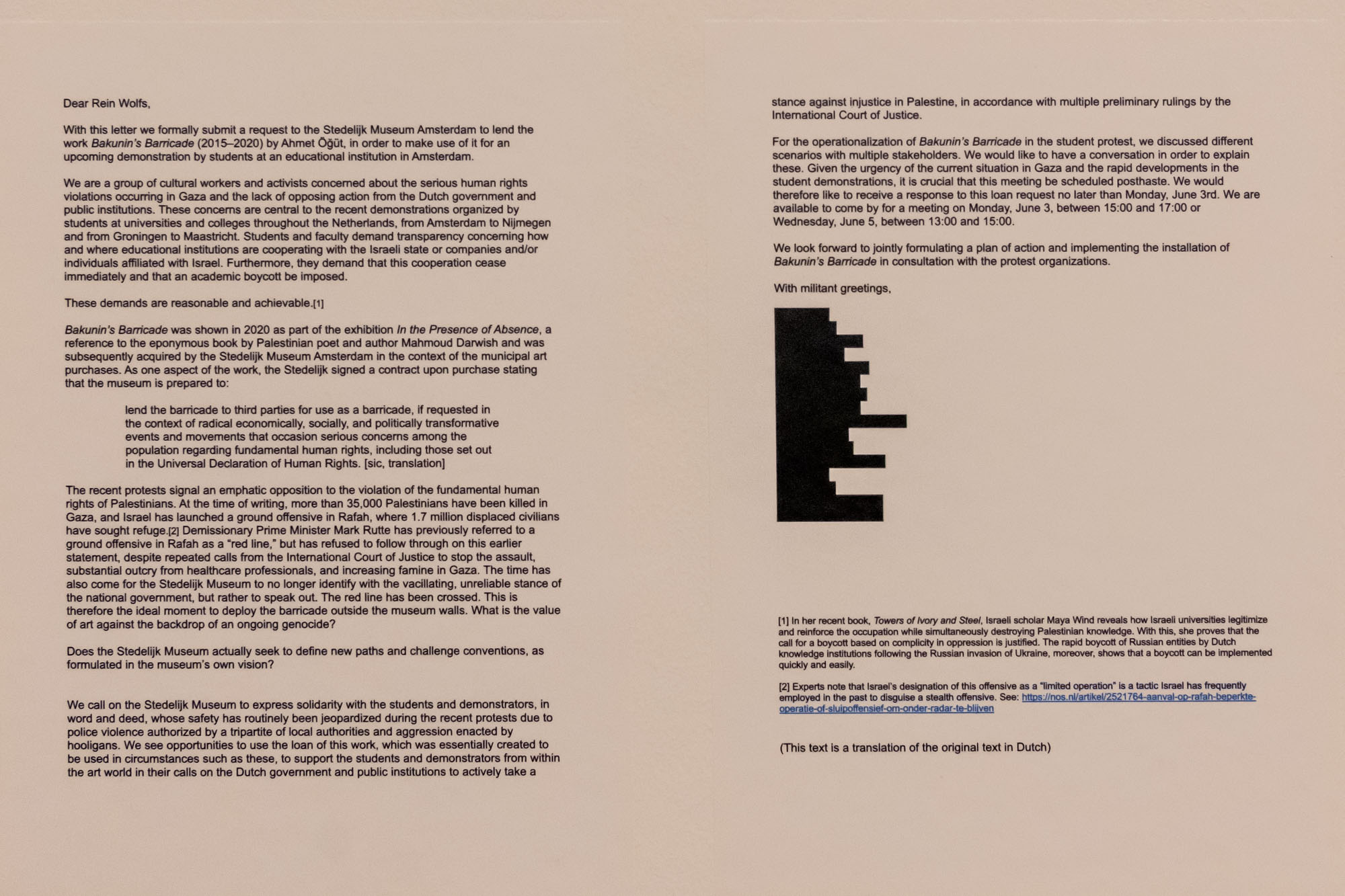
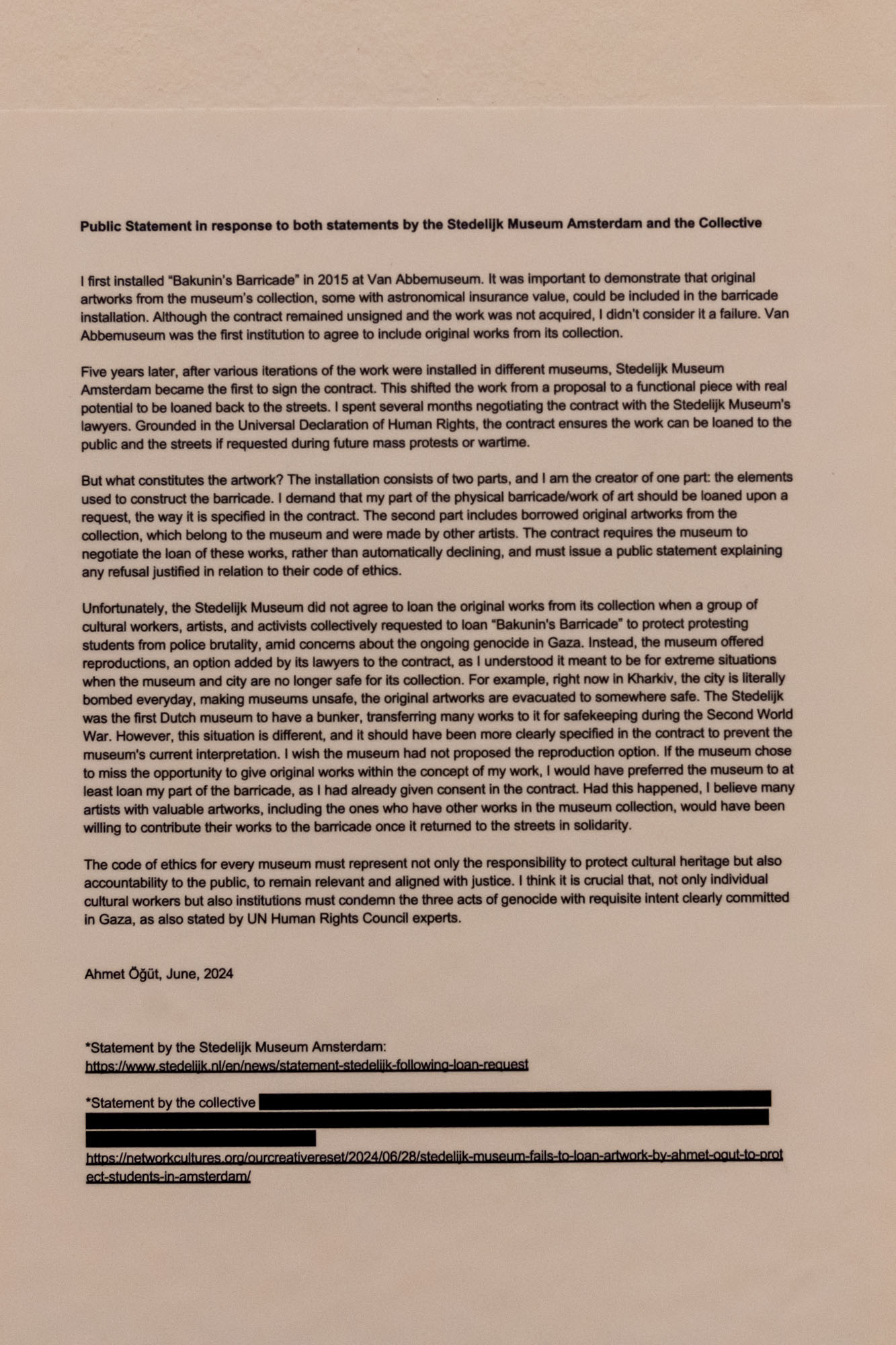
On 28 May 2024, a group of activists planning a protest against the human rights violations in Gaza, asked the museum to lend the artwork to them for using in a demonstration by students. They wanted Ogut’s artwork to play the role it was supposed to. The museum authorities were in a fix! They had signed a contract which specifically mandated that they should honour such requests, but it looks like they never expected anyone would actually make such a request. The contract also had a clause that the museum could decide, on a case-to-case basis, at their own discretion on whether a specific request was to be honoured or not. After mulling over the matter, they took a position that they could not take the risk of lending original artworks to be put on the barricade, as they might be damaged, but offered to provide replicas. Obviously, this was the same as refusing to lend the artworks as Bakunin’s whole premise was that government authorities would not destroy the barricades because the art works were original and thus precious. Nobody would have bothered about replicas. The museum authorities took the position that they had a responsibility to the people to protect original art works and could not jeopardise the safety of the art works by lending them to the protestors. 

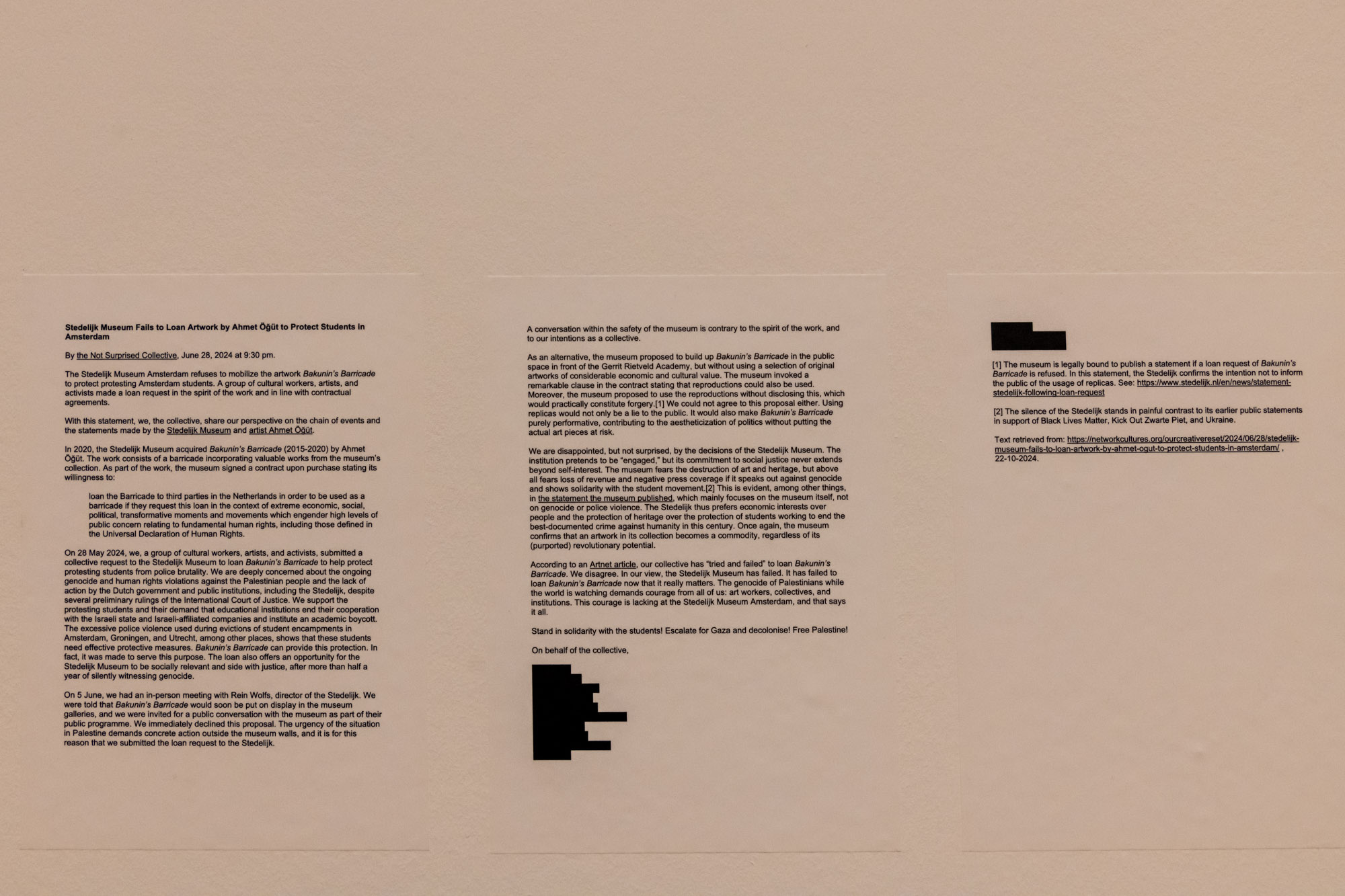
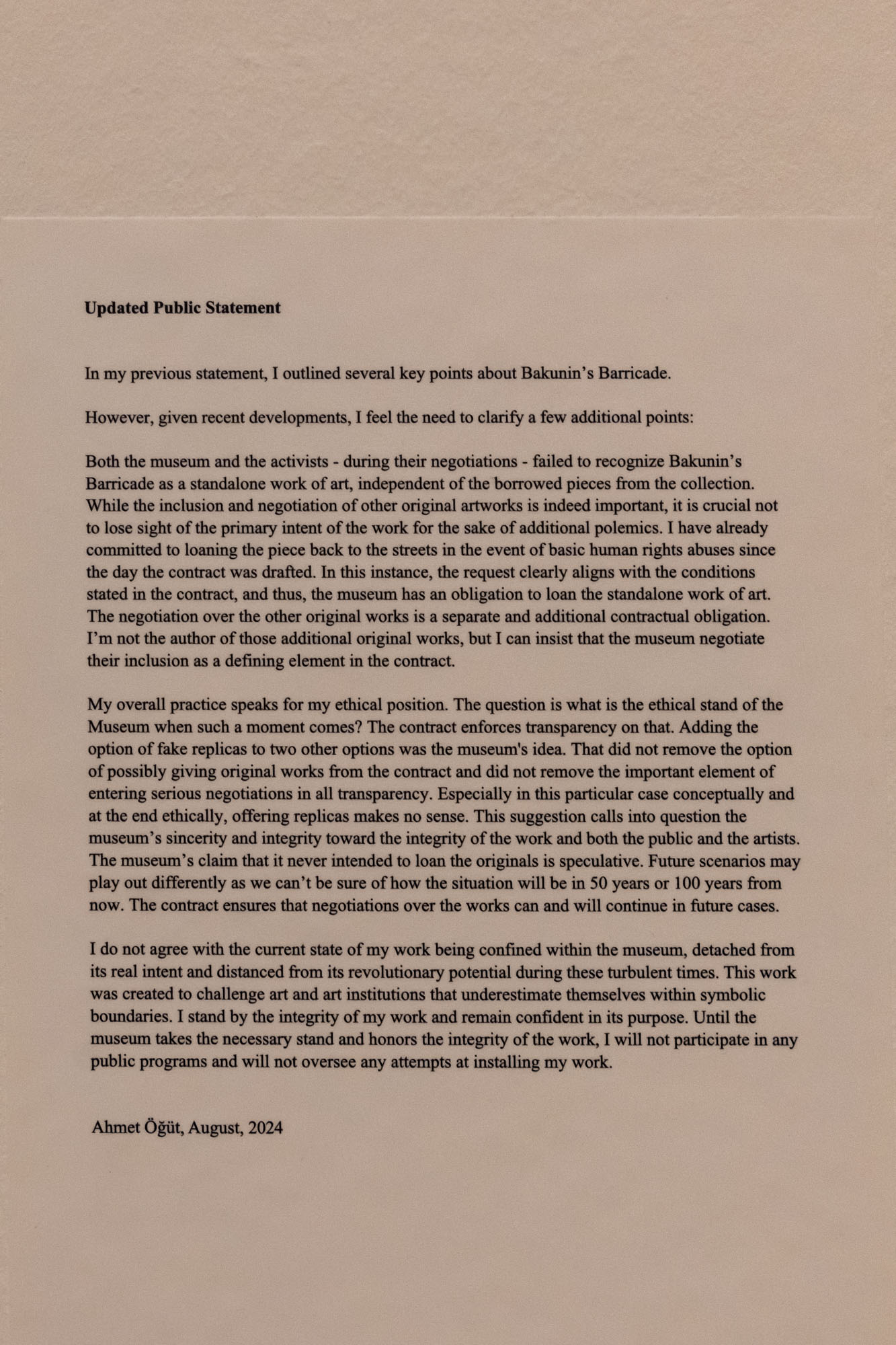
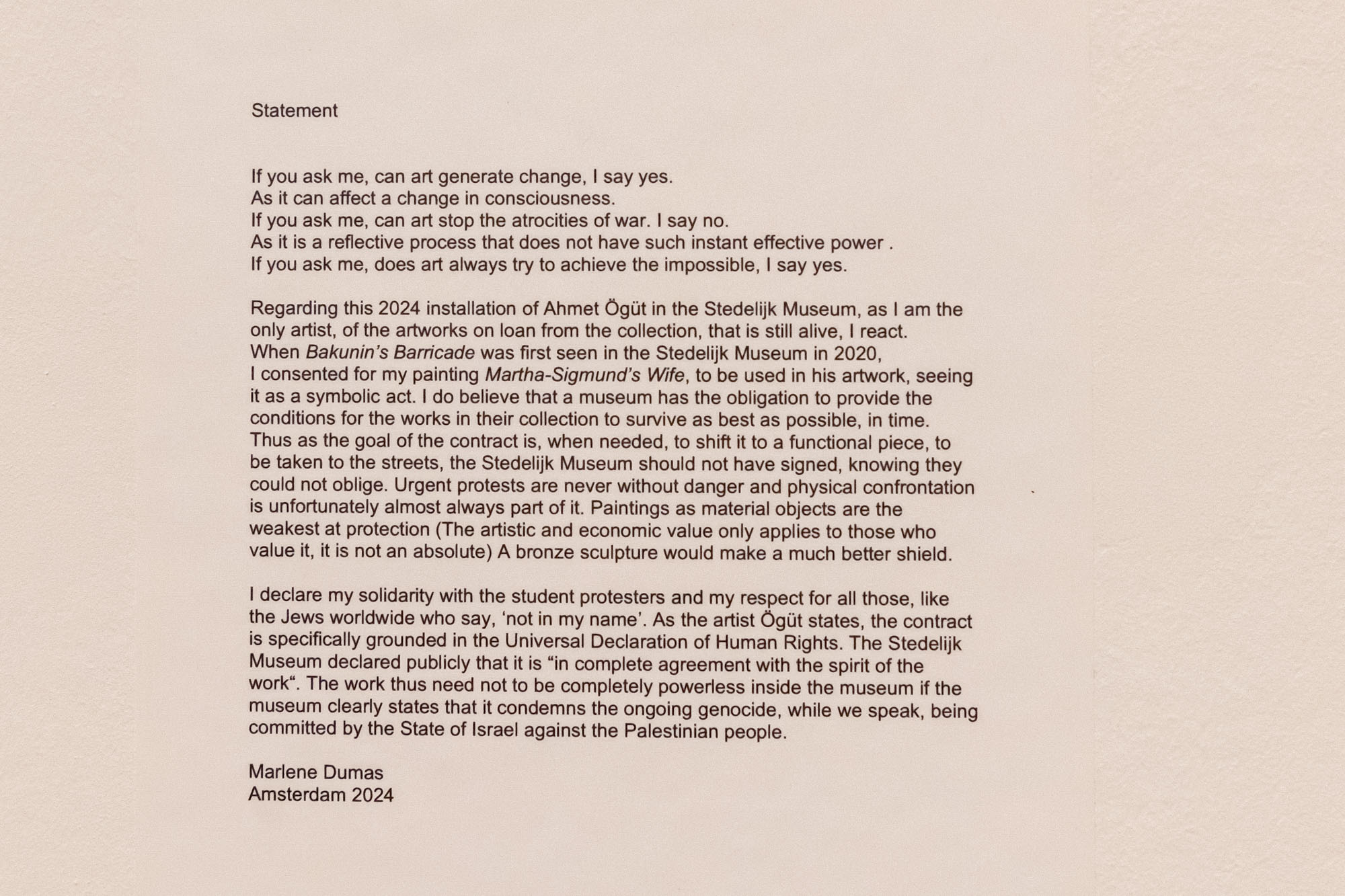
The protestors and Ahmet Ogut himself were not impressed; Marlene Dumas also was not convinced by the position taken by Stedelijk. The question that came up was why the museum had signed such a contract in the first place, if they had no intention of honouring it, especially when the request was made for an event to protest against the genocide in Palestine. Ogut contended that if the Museum did not want to lend artworks of others, they could have lent his work, just the Barricade. He felt that once other artists saw his Barricade being lent, they would have come forward and given their works as well. He condemned the position taken by Stedelijk and announced that he would not take part in any program nor oversee the installation of the Barricade elsewhere, till the museum changed its position. The group of activists didn’t mince their words and accused Stedelijk of preferring “economic interests over people”.

The museum authorities have now displayed all of this as part of the installation. The letters sent by the activists, the response by the museum, statements by Ahmet Ogut and Marlene Dumas are all displayed. In the audio commentary, the museum director asks a question to visitors on what they would have done, in this situation.

I found this to be a very remarkable artwork altogether. Firstly, the fact that an idea proposed and abandoned more than 175 years ago found relevance in a contemporary political action, is just astounding. Even more is the vision of Ahmet Ogut in coming up with this artwork and then inserting that clause in the contract. It speaks volumes of his genius and his politics. Clearly, the museum was caught totally unawares and I also suspect that the cause itself – that of protesting against Israel’s genocide – had something to do with the decision to not lend the artwork. 

The most intriguing aspect was the museum itself deciding to curate and present this issue in front of the public. In nine cases out of ten, museums would have just kept silent and hoped that the controversy would just die down over time and go away from public memory. However, in a very clever (or should I use the word cunning) move, the museum itself has chosen to project the issue and keep it in the public discourse. I found that quite unusual and interesting. I tend to agree with the position taken by Ahmet Ogut in this issue and the museum should have lent at least his work; but these days, integrity and justice are two concepts that are felt more by their absence than by their presence. 

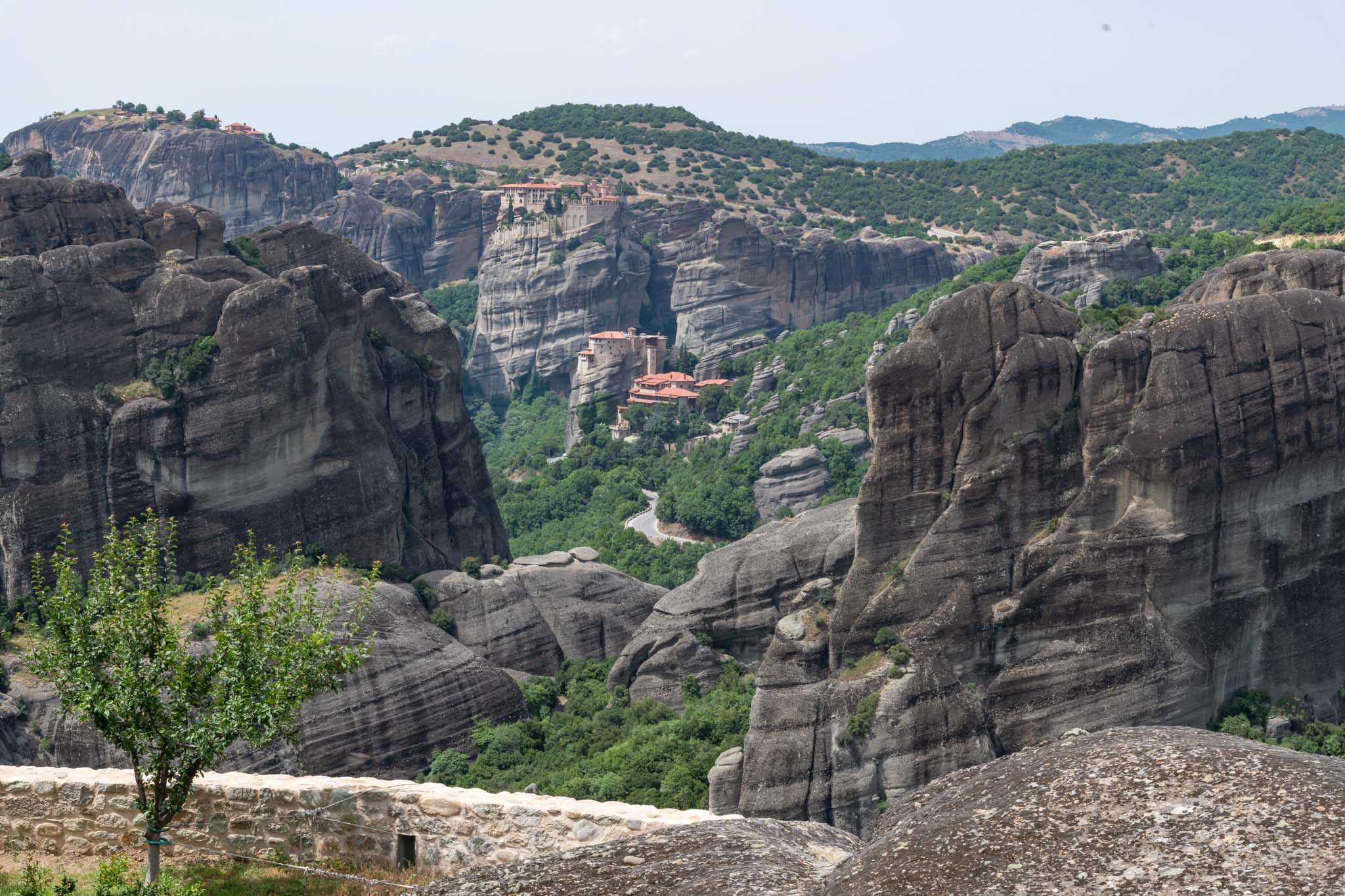
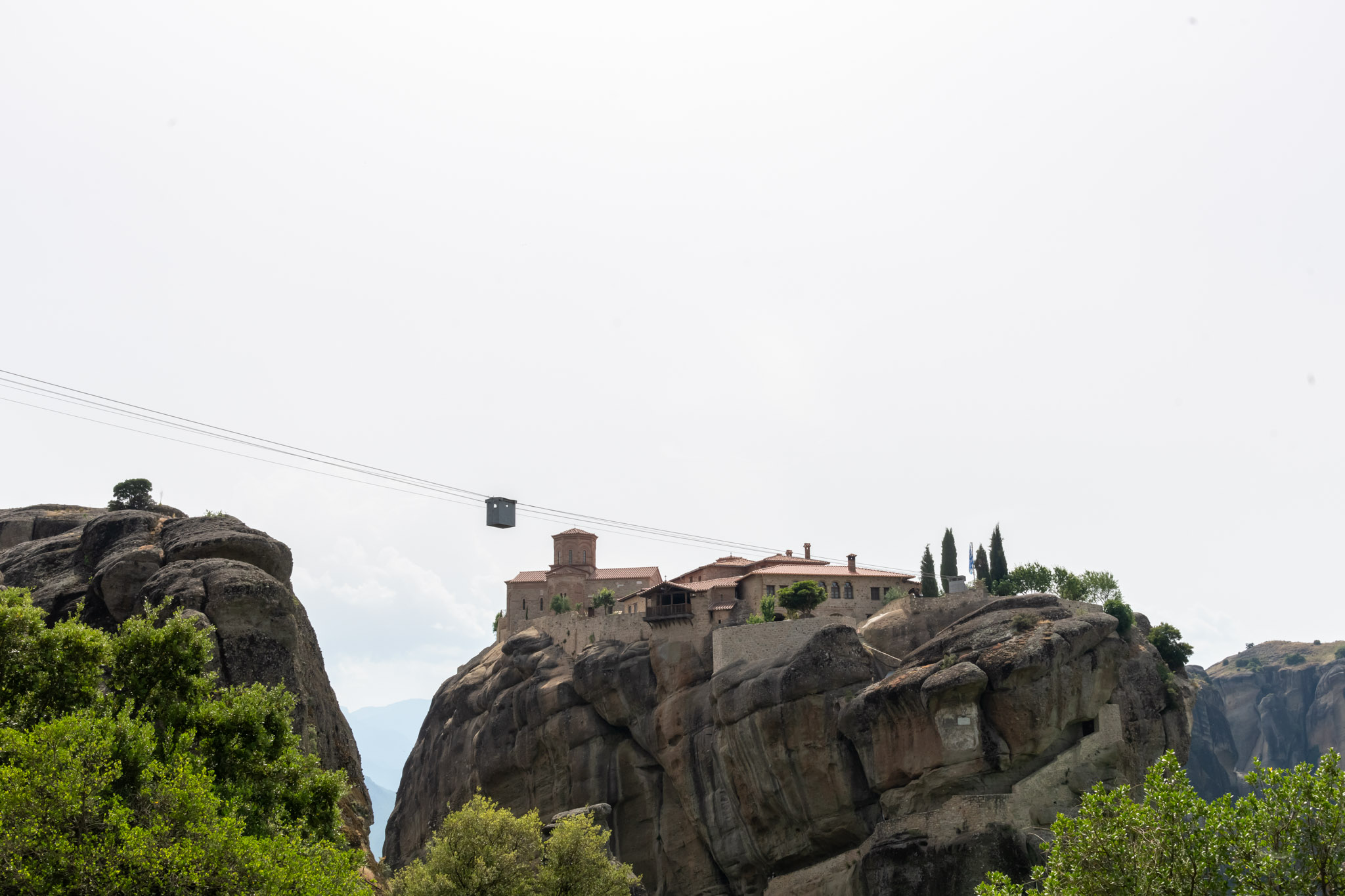
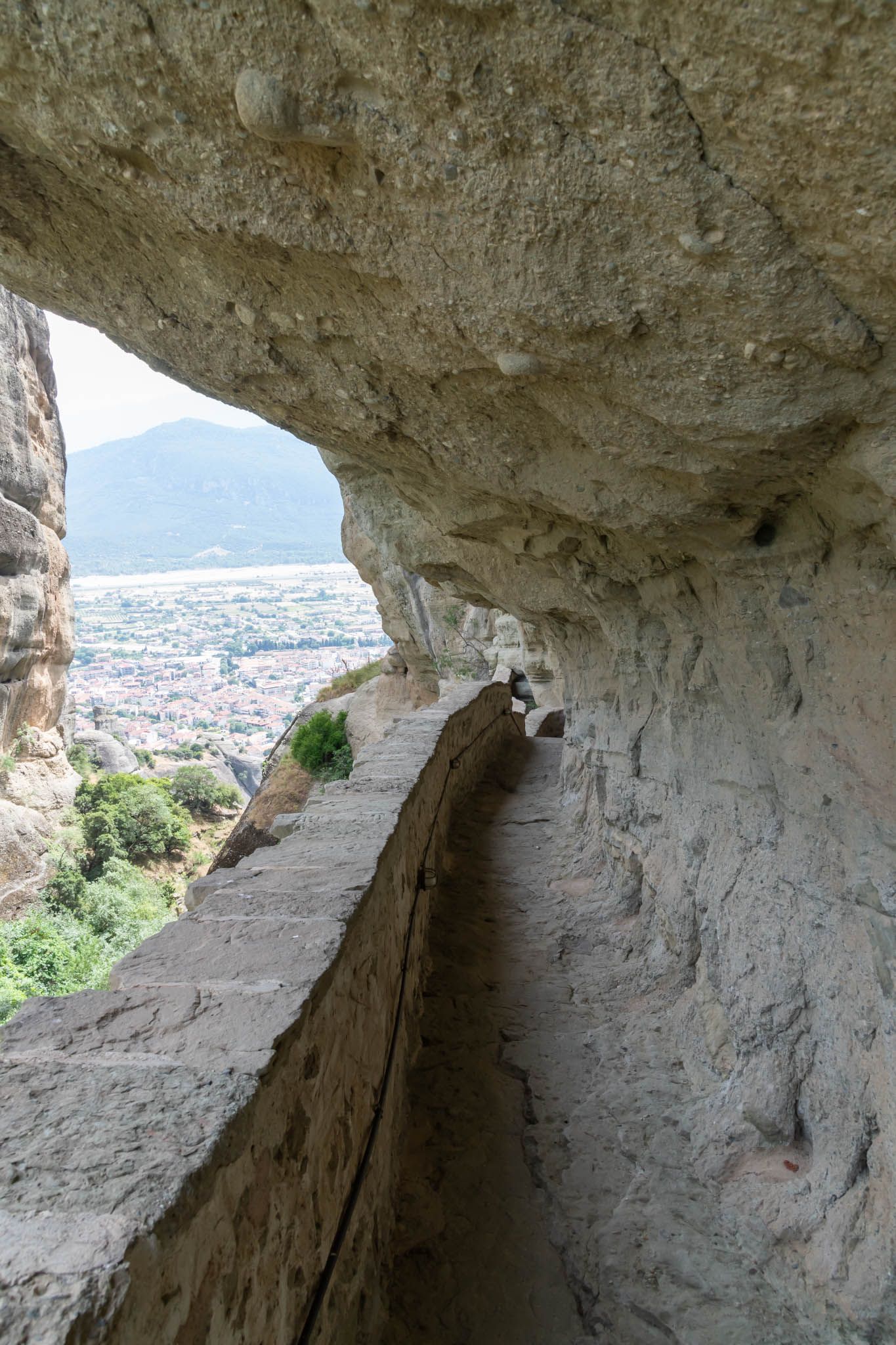
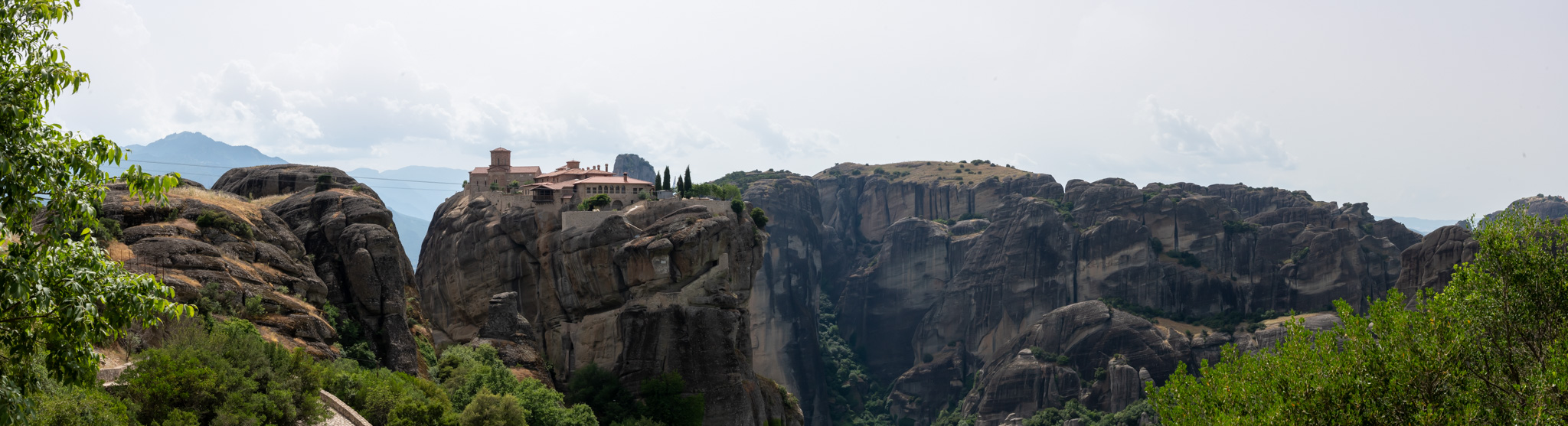
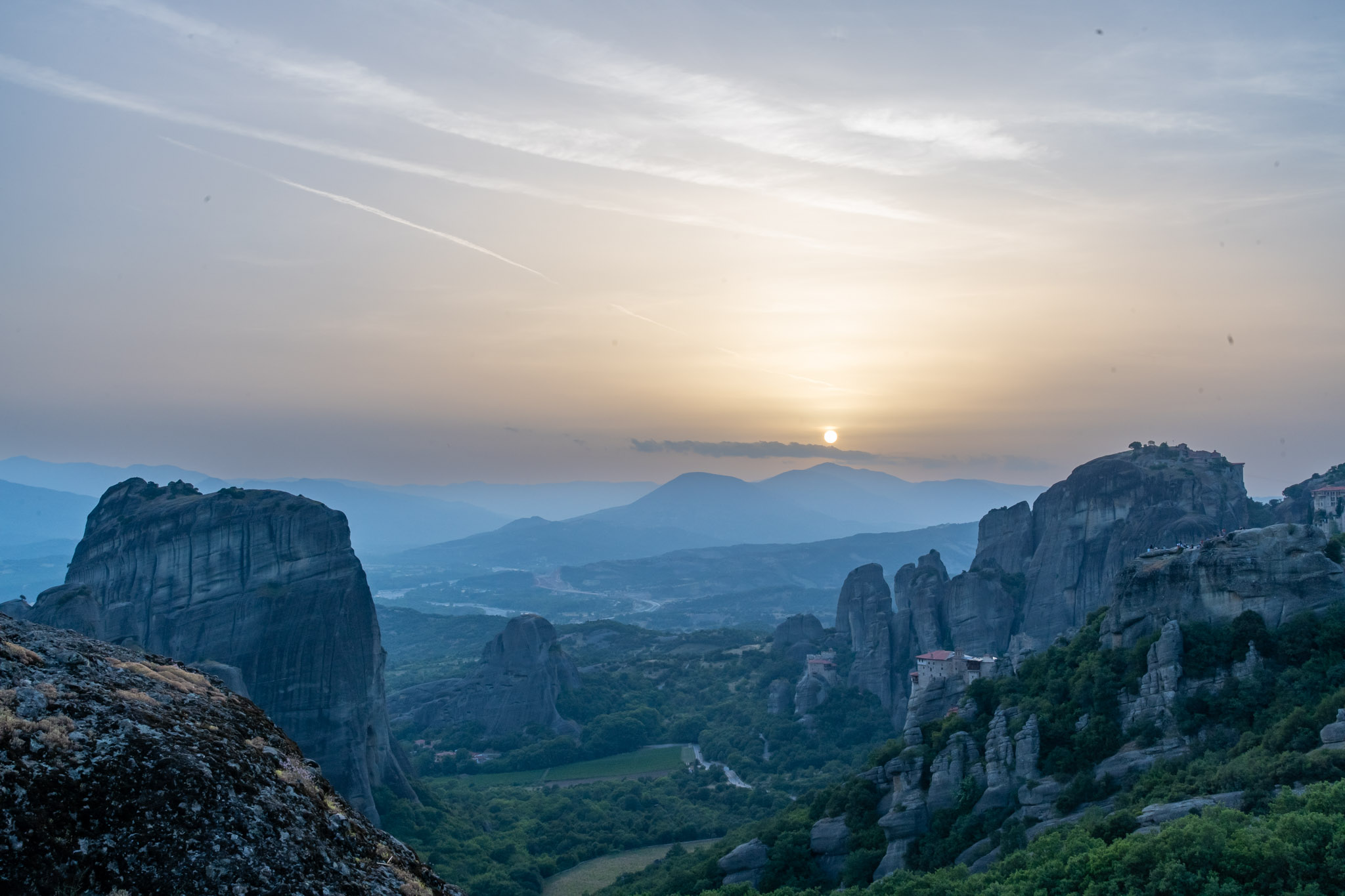
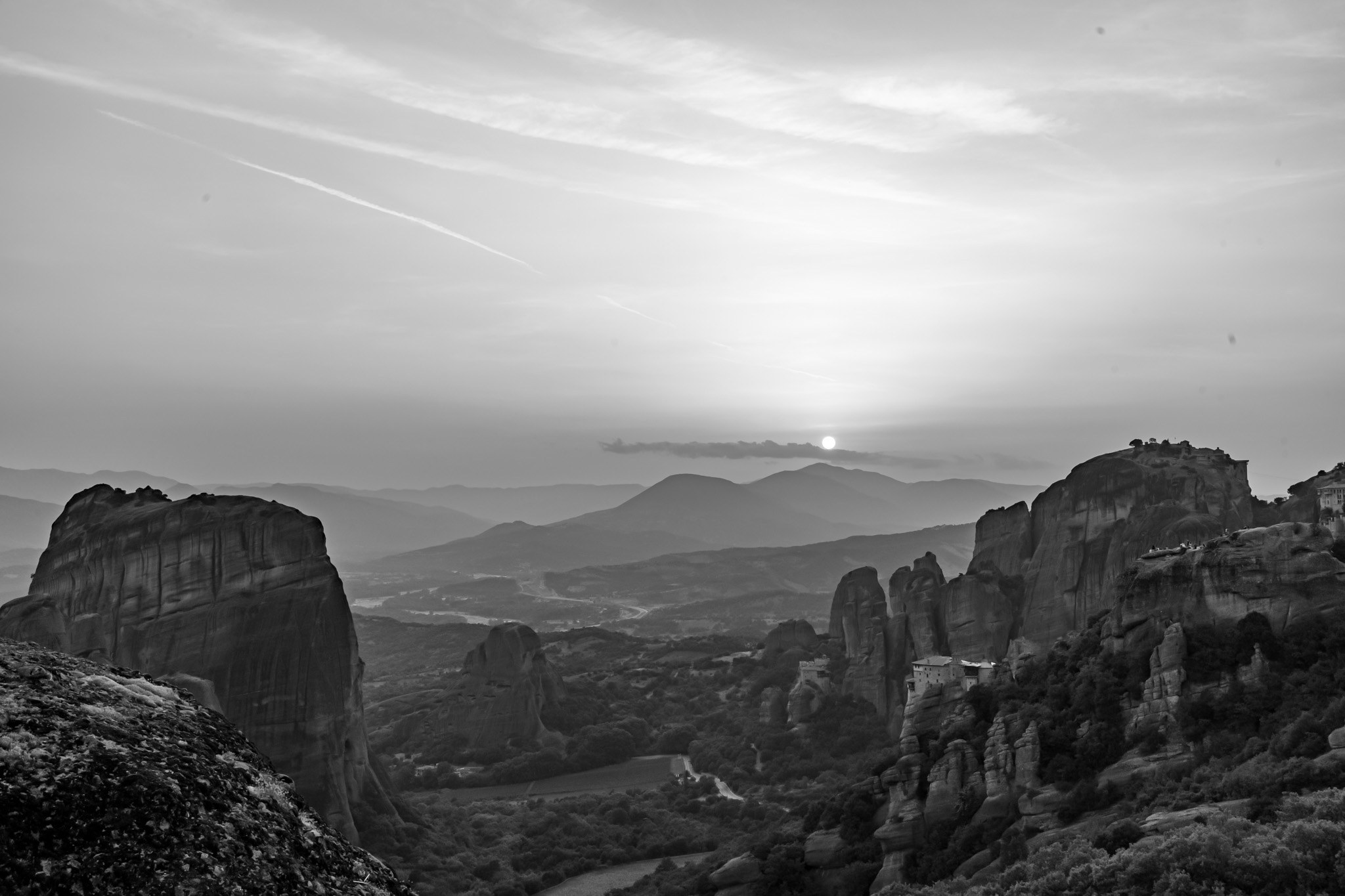
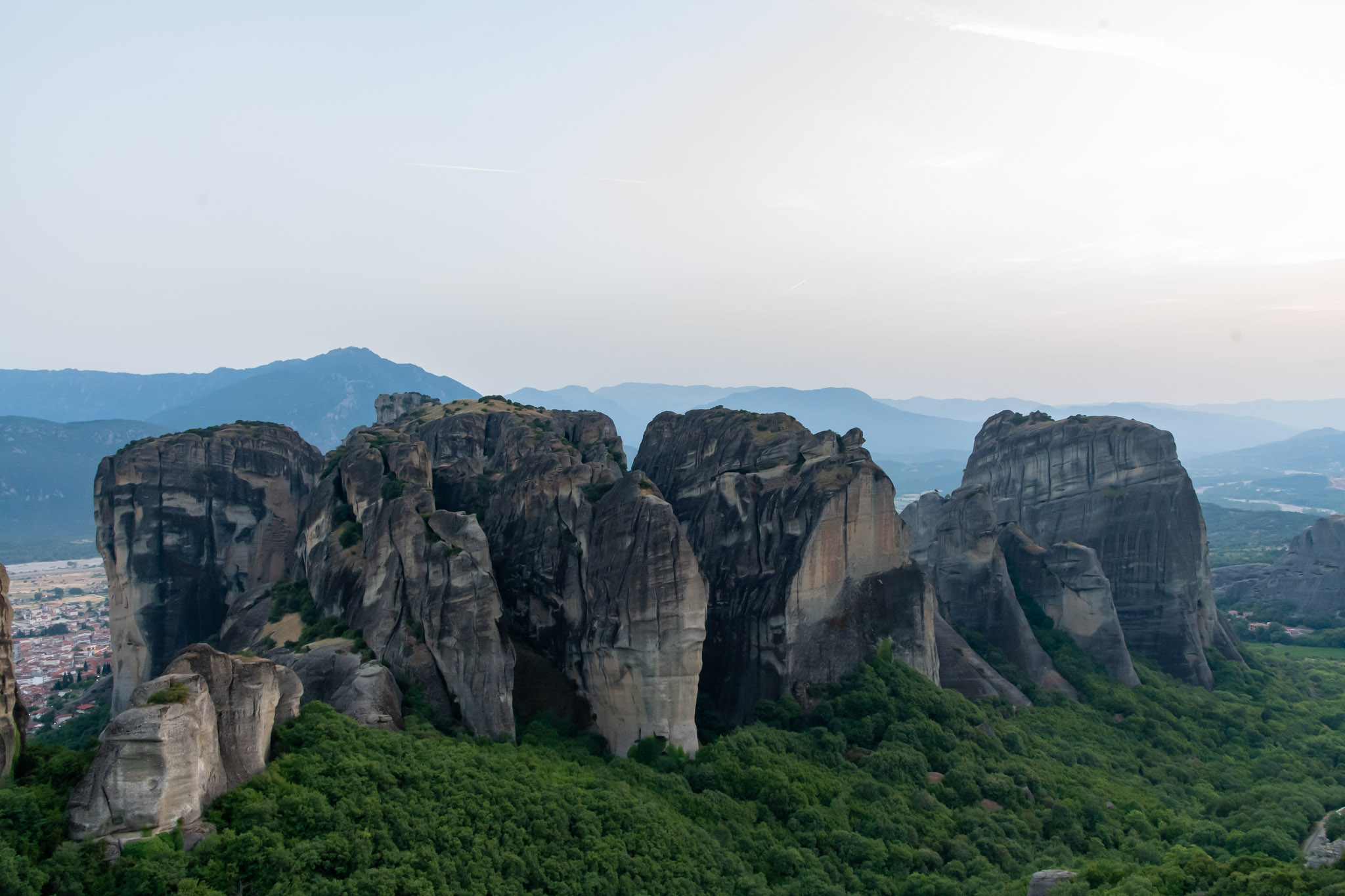
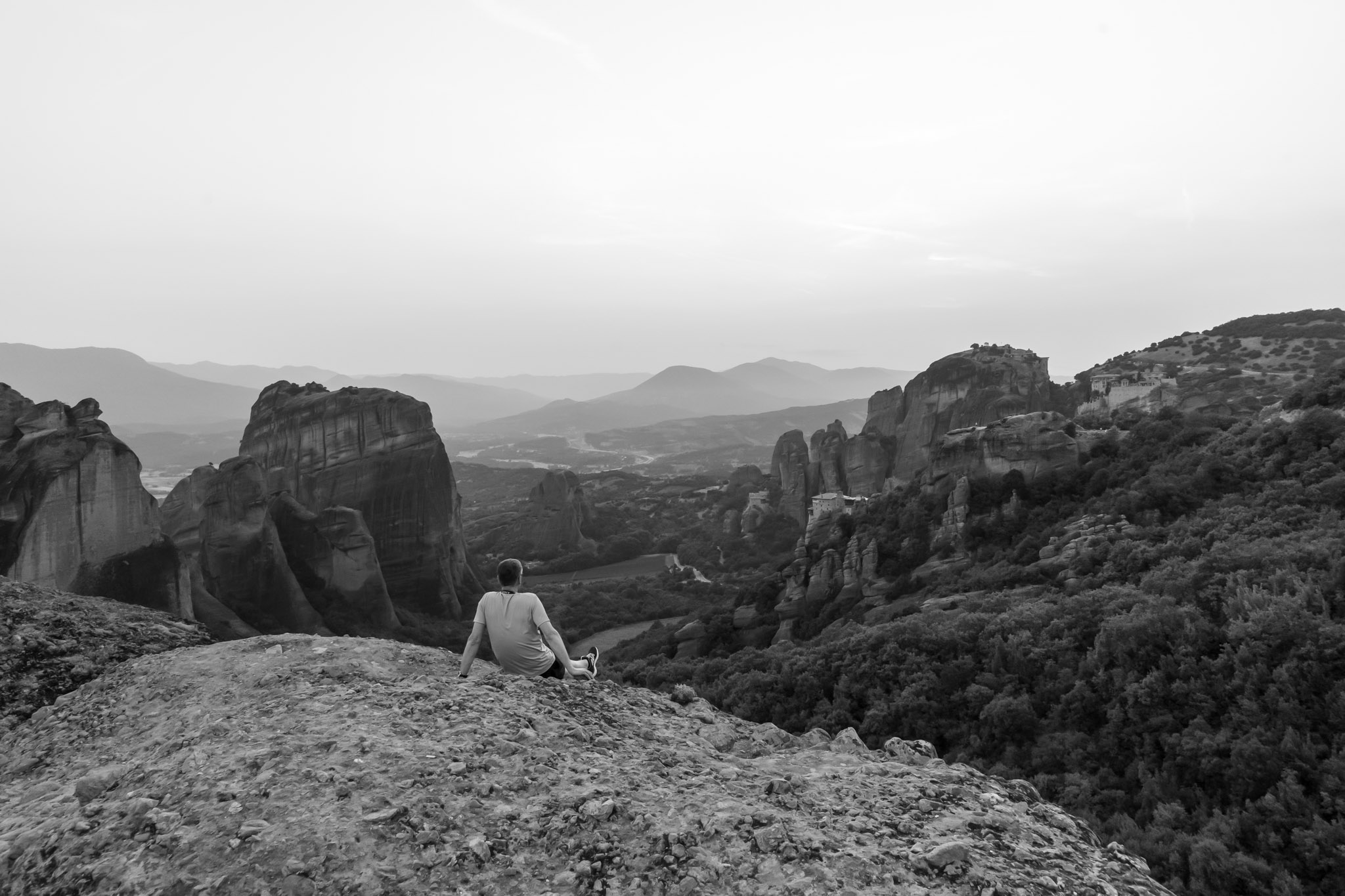
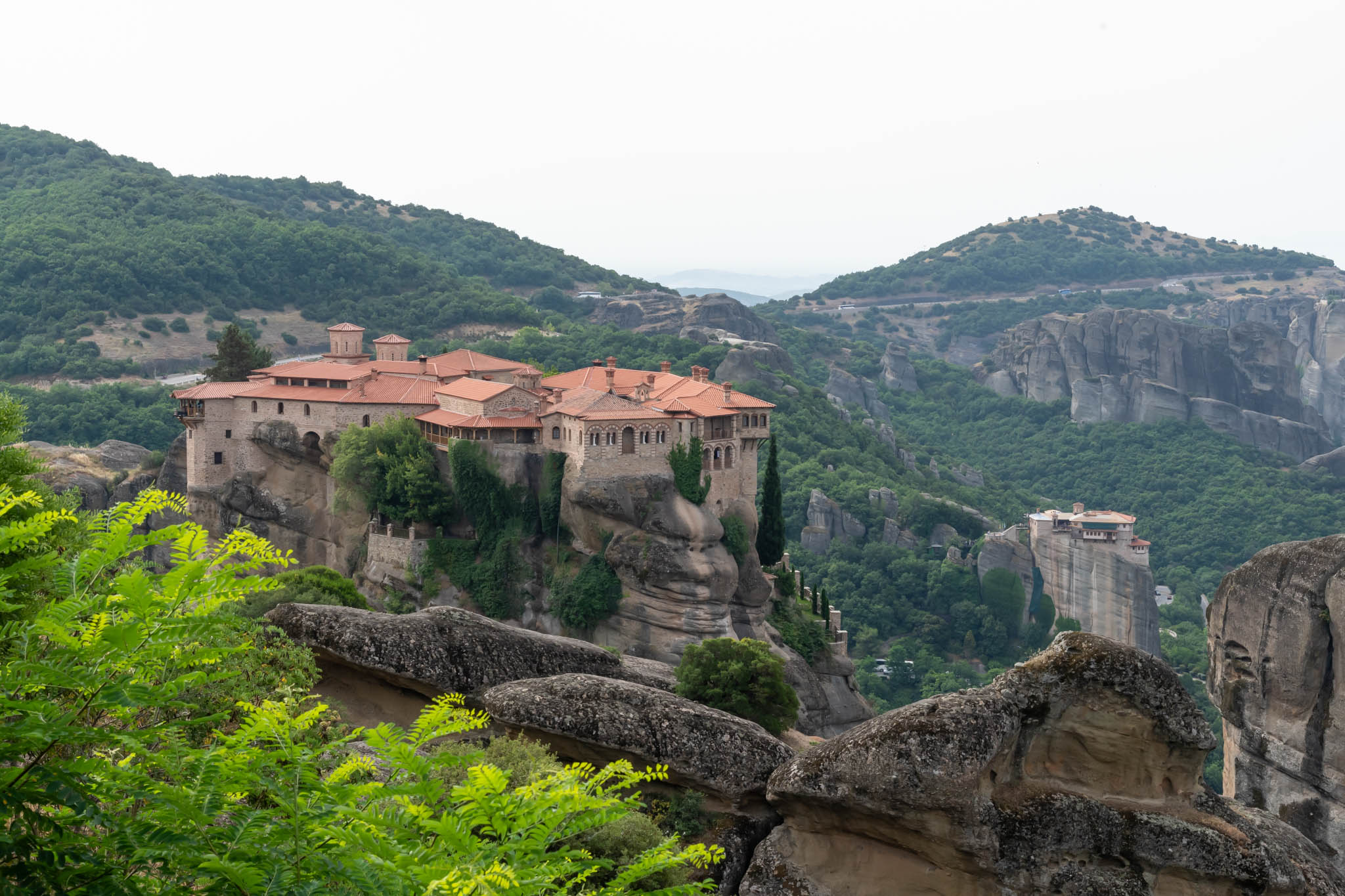
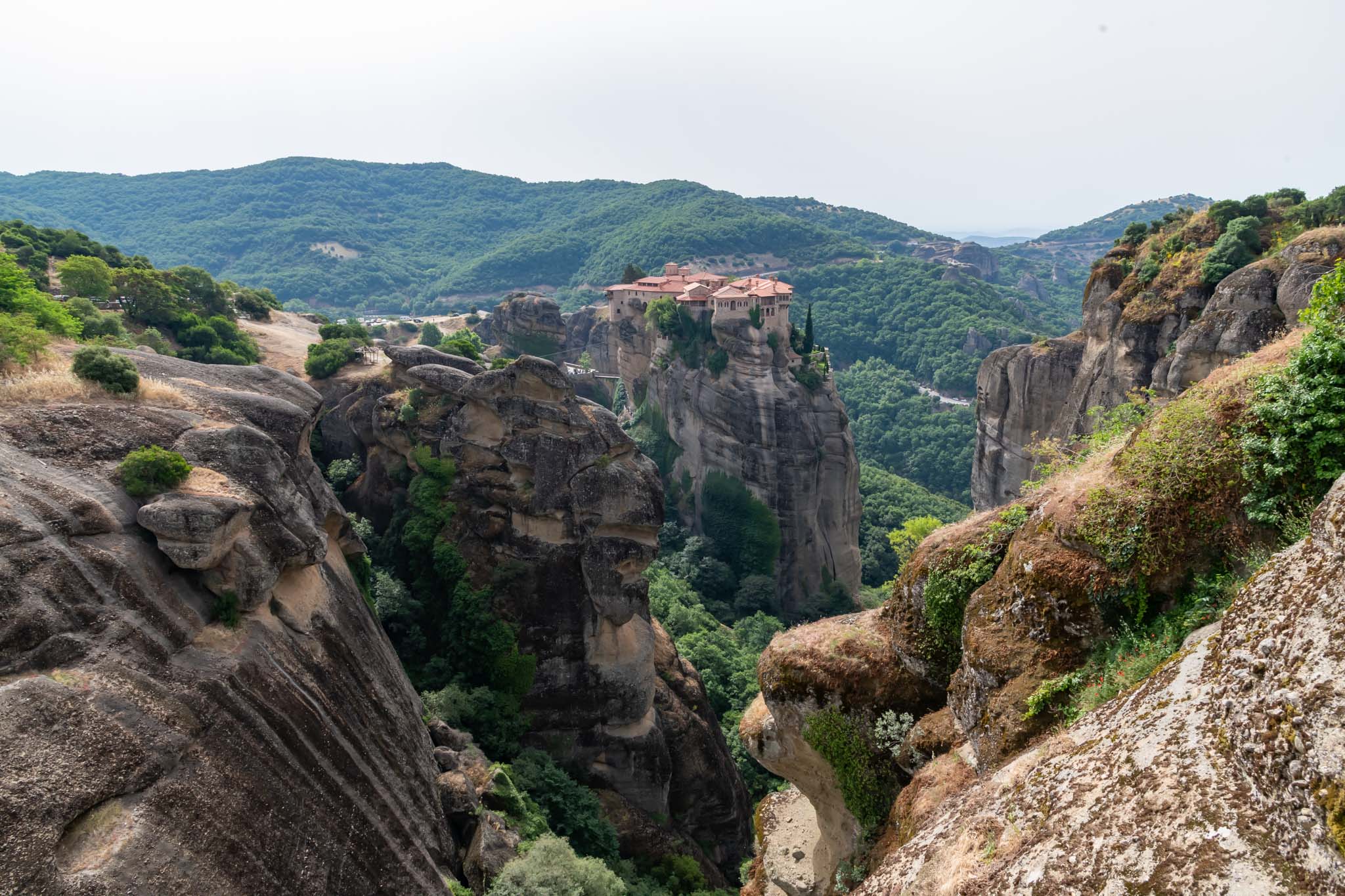
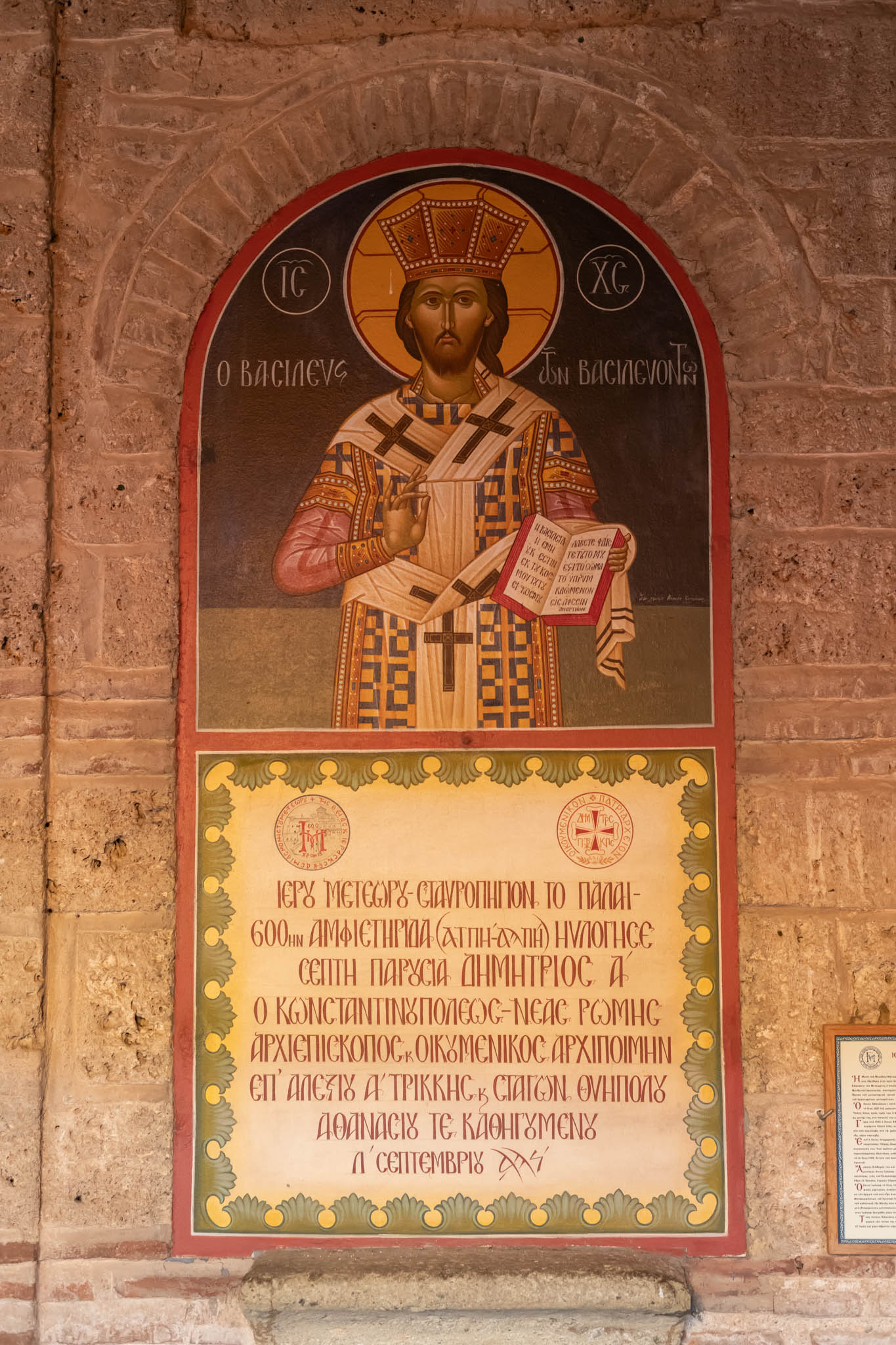
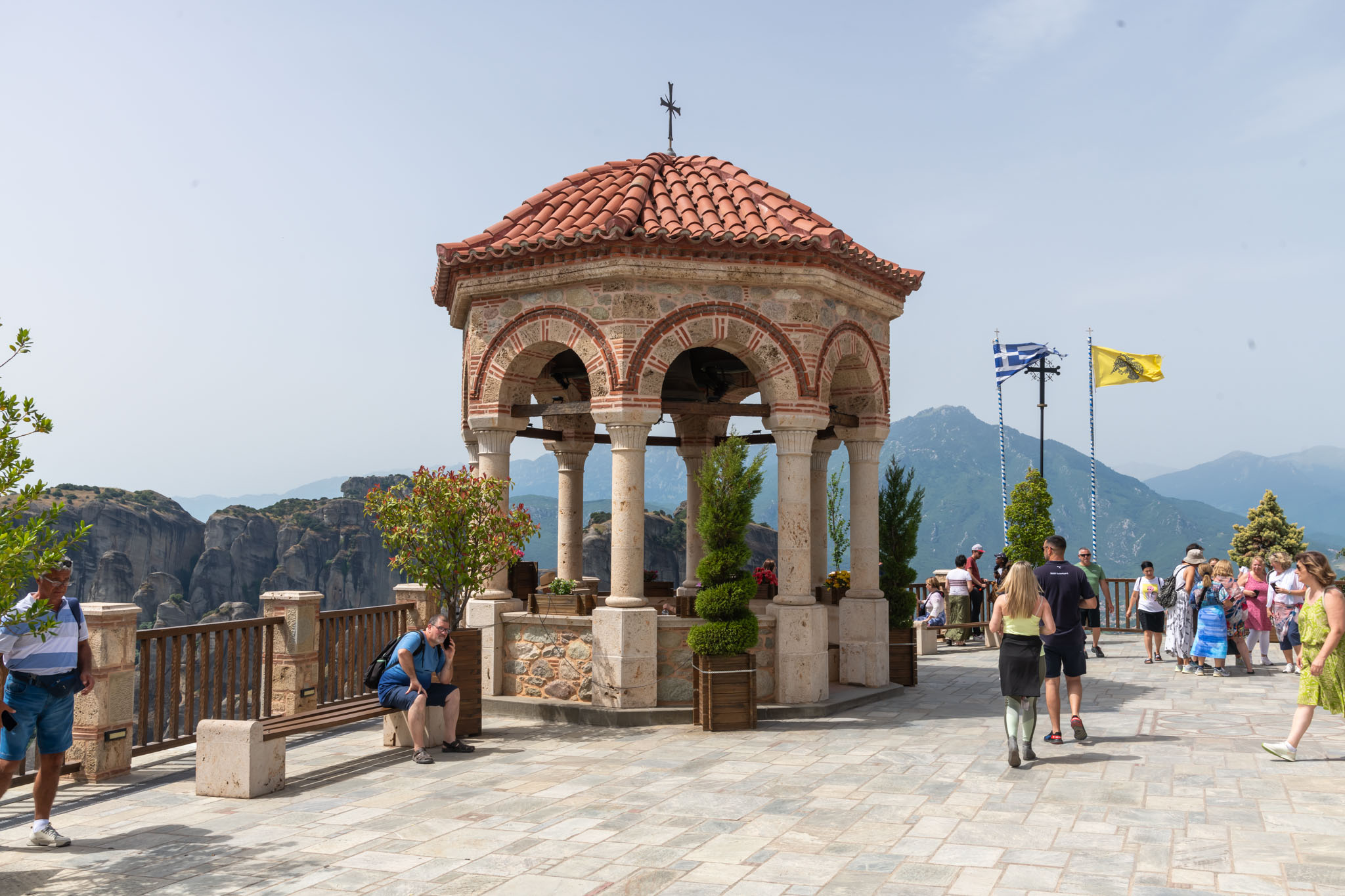
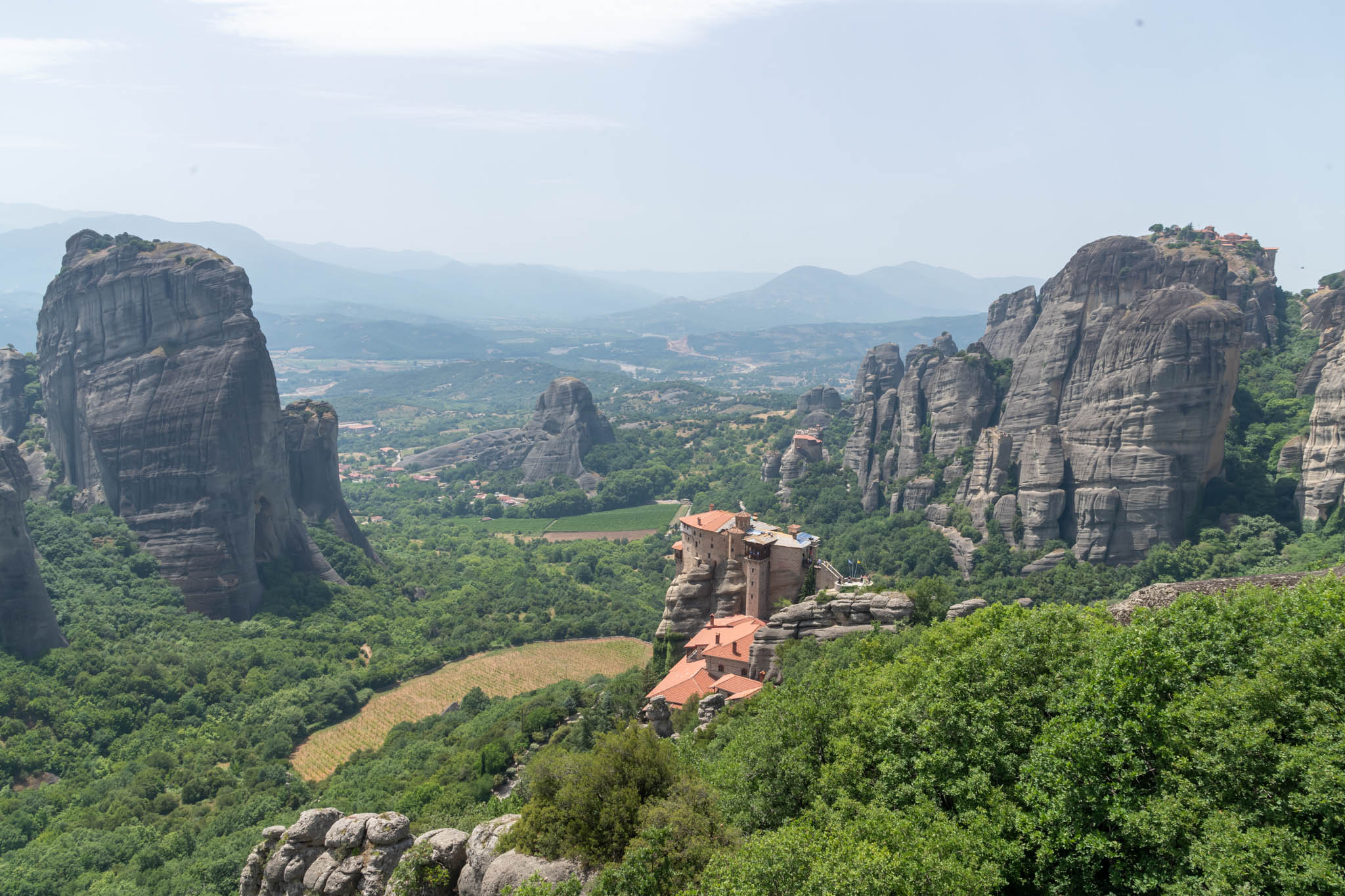
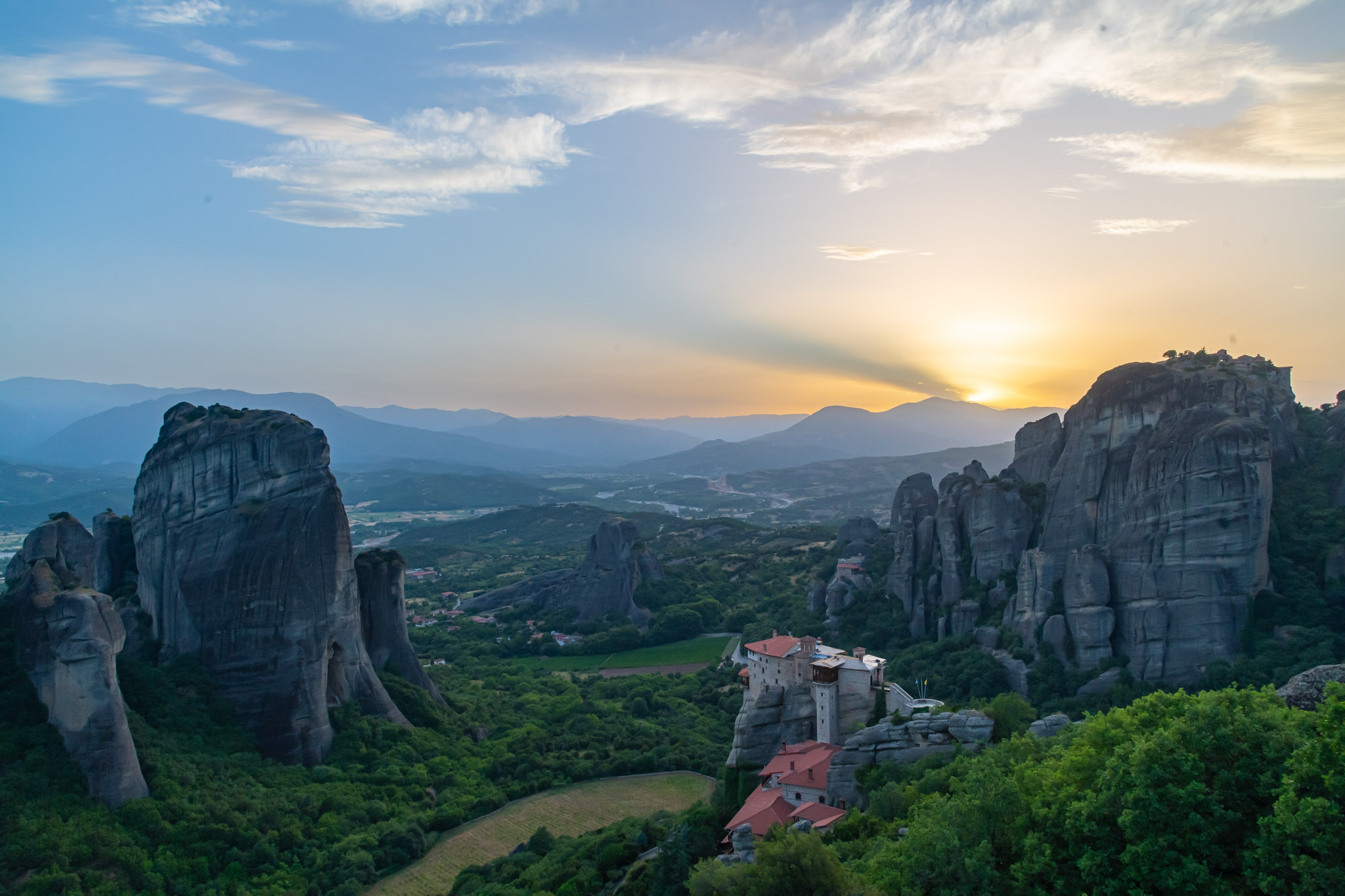
Floating Monasteries! What image does that phrase bring up, when you close your eyes? I actually pictured medieval buildings floating in air. Needless to say, this caught my fancy, and I decided to include it as part of our itinerary during our visit to Greece. I am talking about Meteora, which literally means “suspended in the air” in Greek; the land where twenty four monasteries were built on inaccessible peaks. Monks started settling in this region of Thessaly from the 11th century itself; some records says that monks with climbing skills had been living in rock caves since the 9th century. In the 14th and 15th centuries, these Christian monks faced increasing persecution as the Ottoman empire expanded and, in this period, these monasteries were built on inaccessible locations so that the monks would have a safe haven. How they managed to build in such places, is quite beyond me.

The town nearest to Meteora is Kalabaka, which is about three and a half hours’ drive from Athens. Kalabaka is basically a small, quaint one street town with some nice restaurants. There are day trips by bus from Athens but since we prefer to explore on our own and wanted more flexibility, we decided to rent a car and drive. We started from Athens by mid-morning and arrived at Kalabaka by around 3 pm. While there were twenty four monasteries that were set up during the medieval period, only six are operational now and they house about 17 monks and 40 nuns. The monasteries are all set up to handle the tourist traffic and you don’t see any monks or get to see the areas that they use regularly. These monasteries are closed on different days of the week and our plan was to spend the afternoon of Sunday and full day Monday at Meteora and cover the important monasteries, as all but one of the monasteries were open on those days. An additional point to be considered while planning the itinerary is that the monasteries close by 3 pm or 4 pm. On the day of arrival, we had planned to go to the Holy Trinity Monastery and so we rushed there, soon after check in.

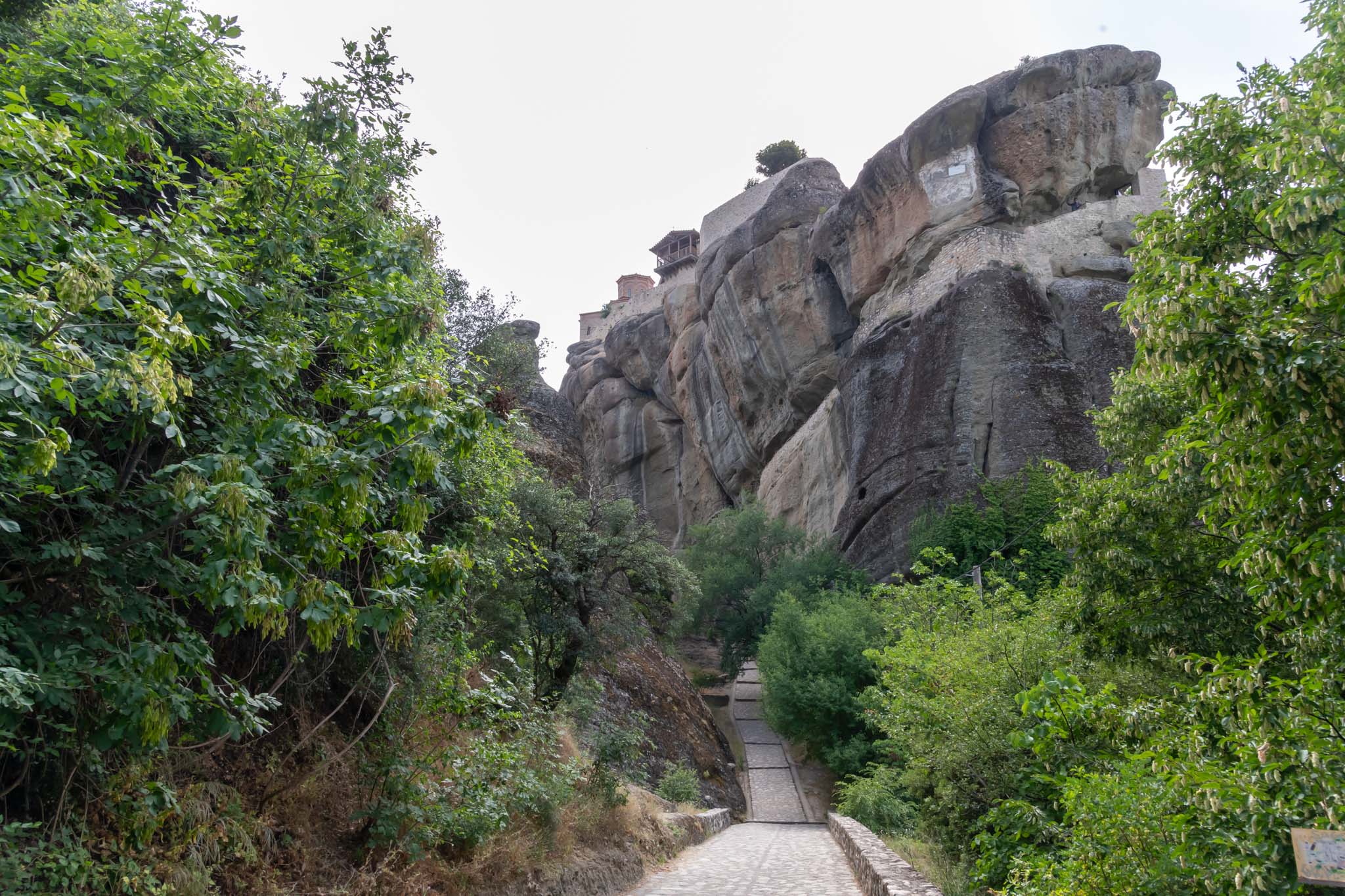
This monastery is also known as Agia Triada and is a difficult to access as it involves climbing up some 140 steps. It was set up in 1475-76 according to Wiki though local legend says that the monk, Dometius, the founder of the monastery, arrived at the site in 1438. During the initial times, it could only be accessed by ropes. This was the case with most monasteries, and it was only about 90 years back or so that the Greek government made roads that could help with the access to these monasteries. 

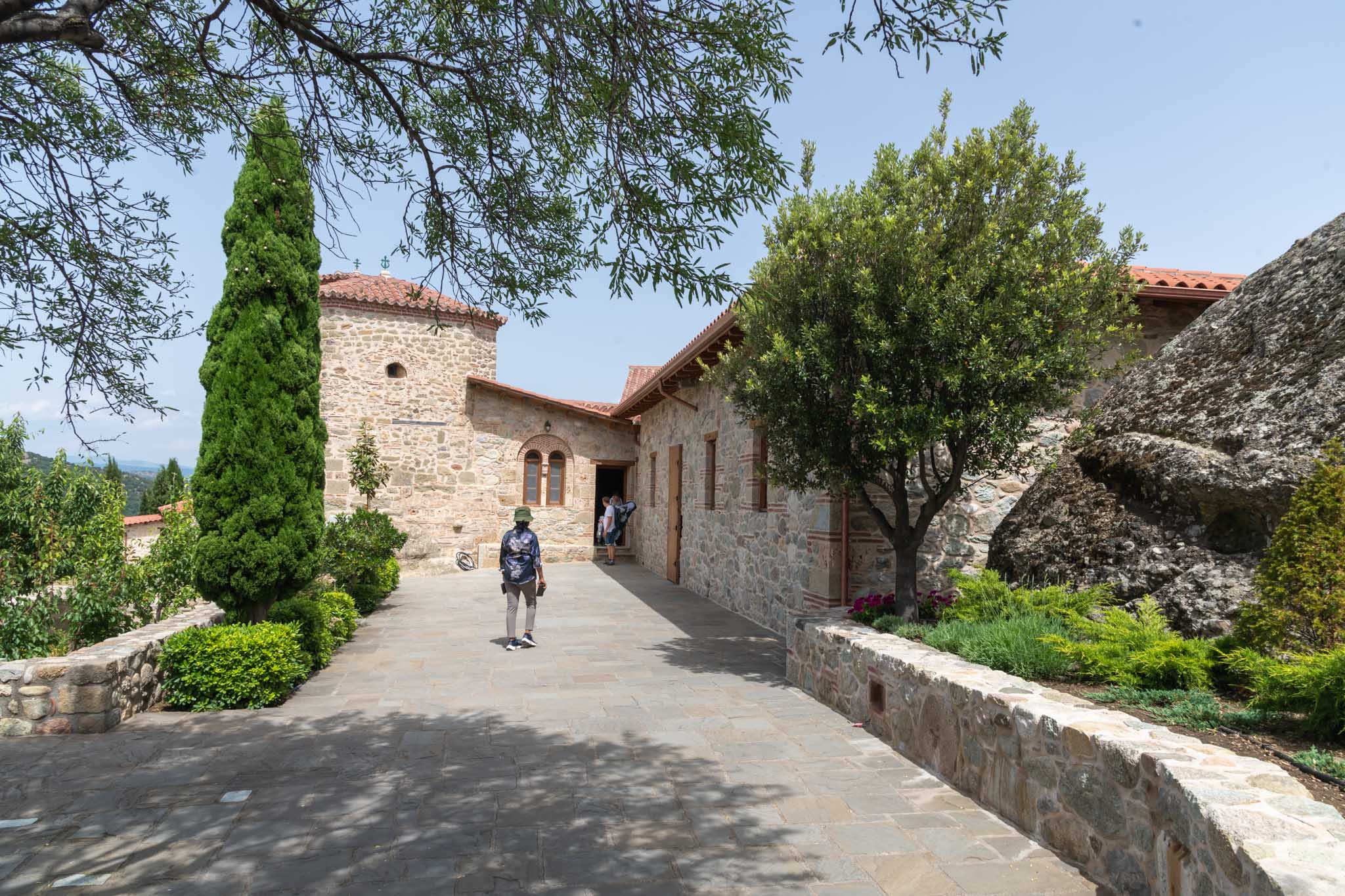
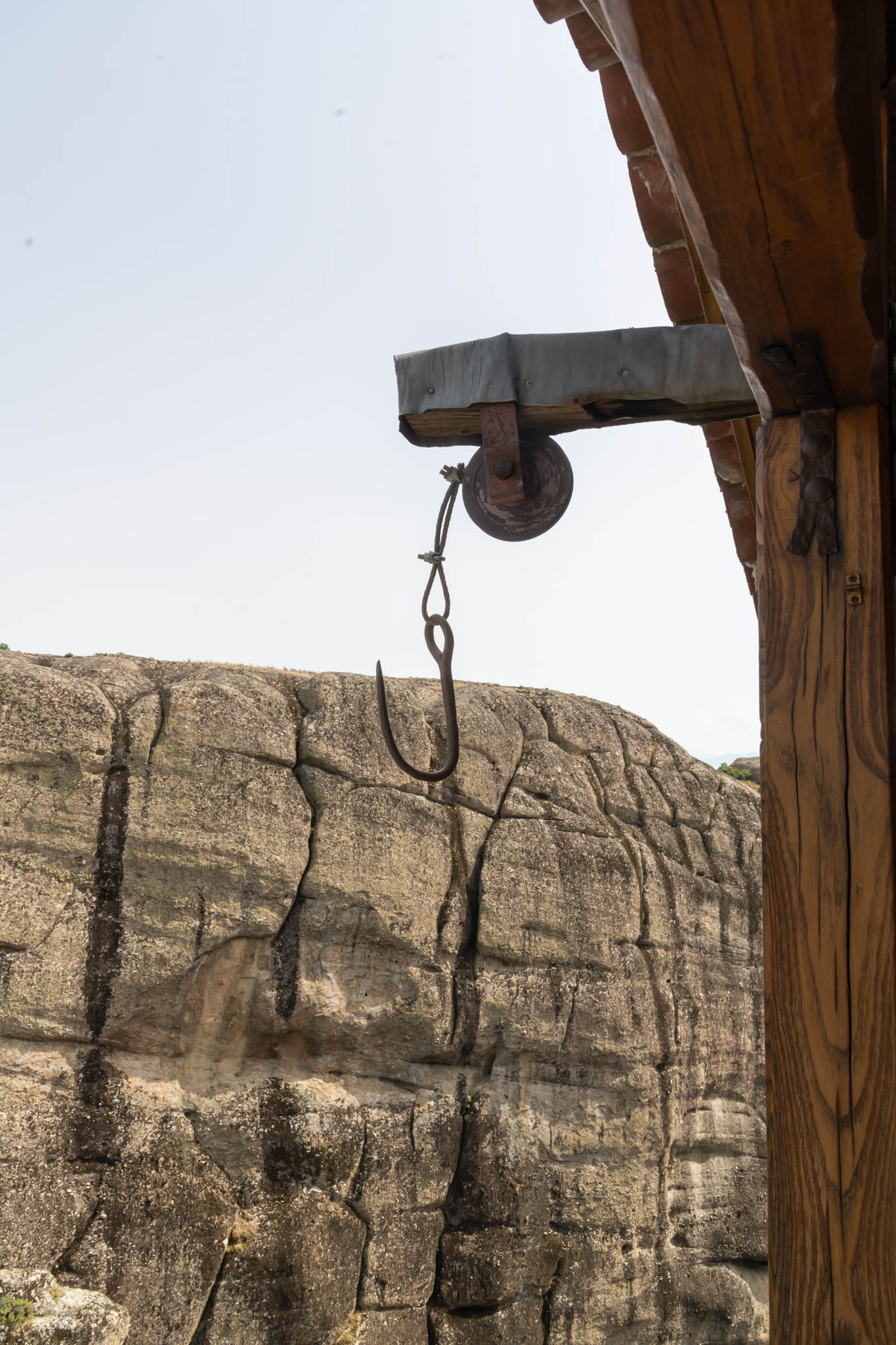
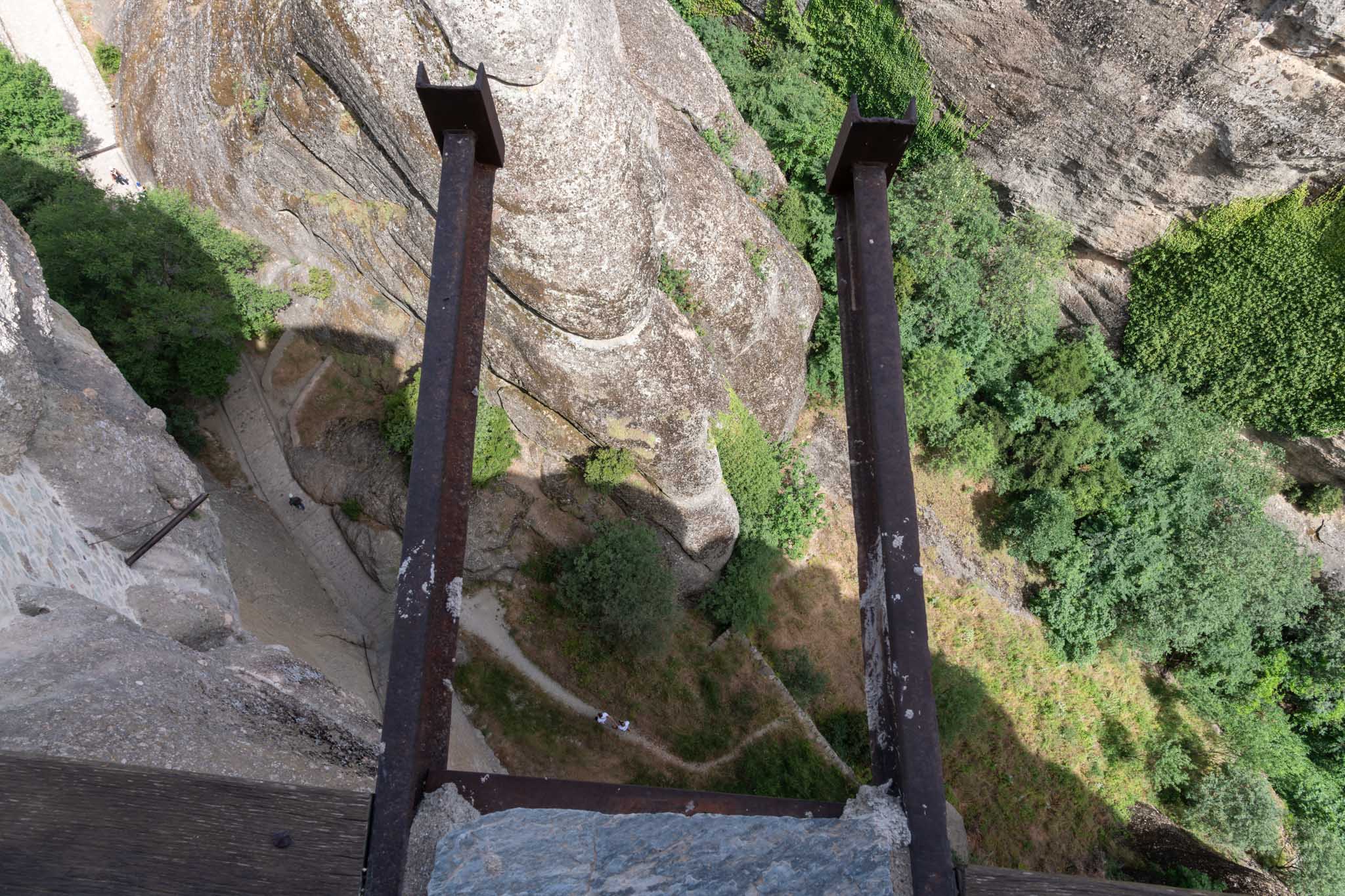
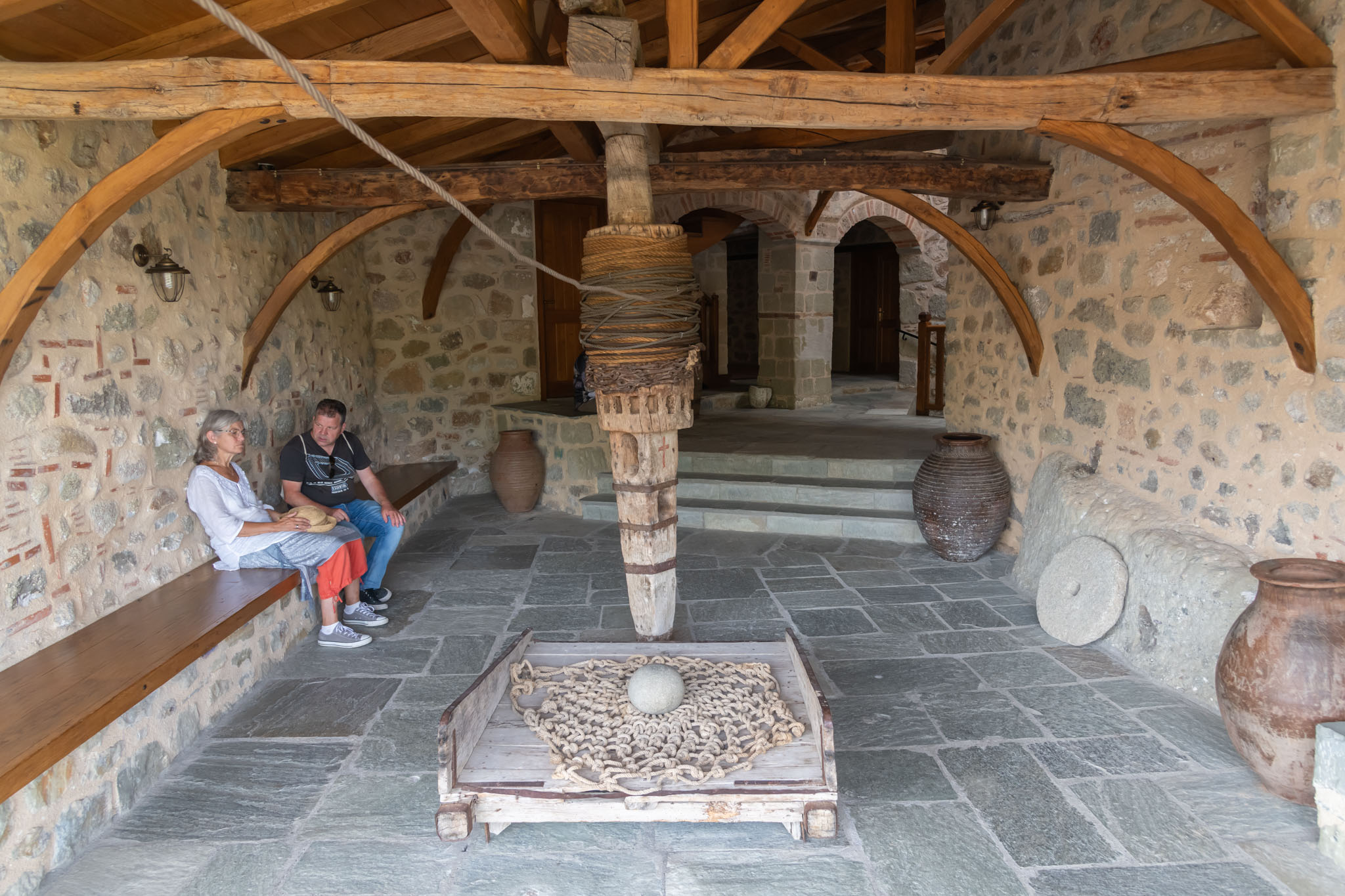
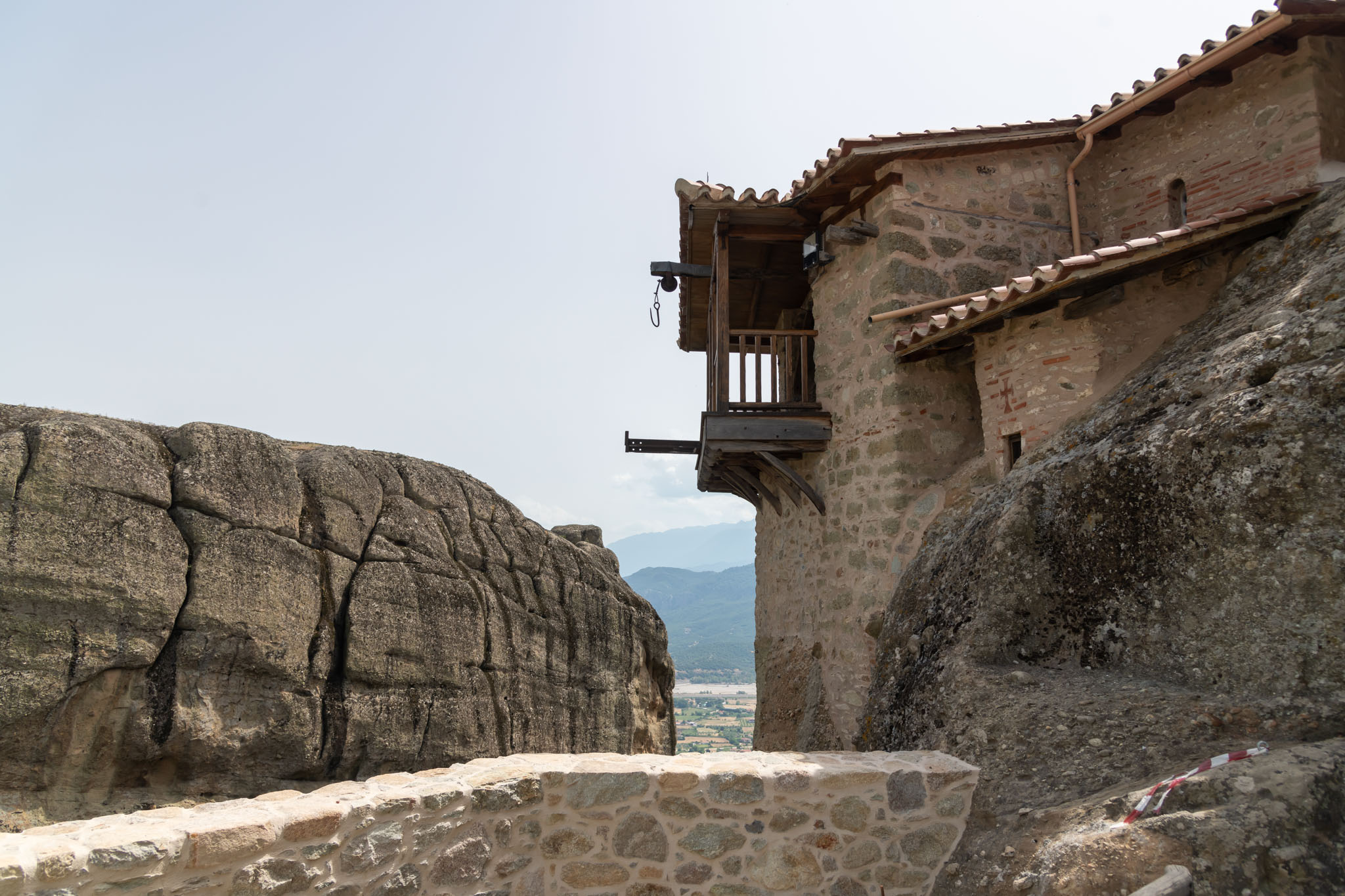
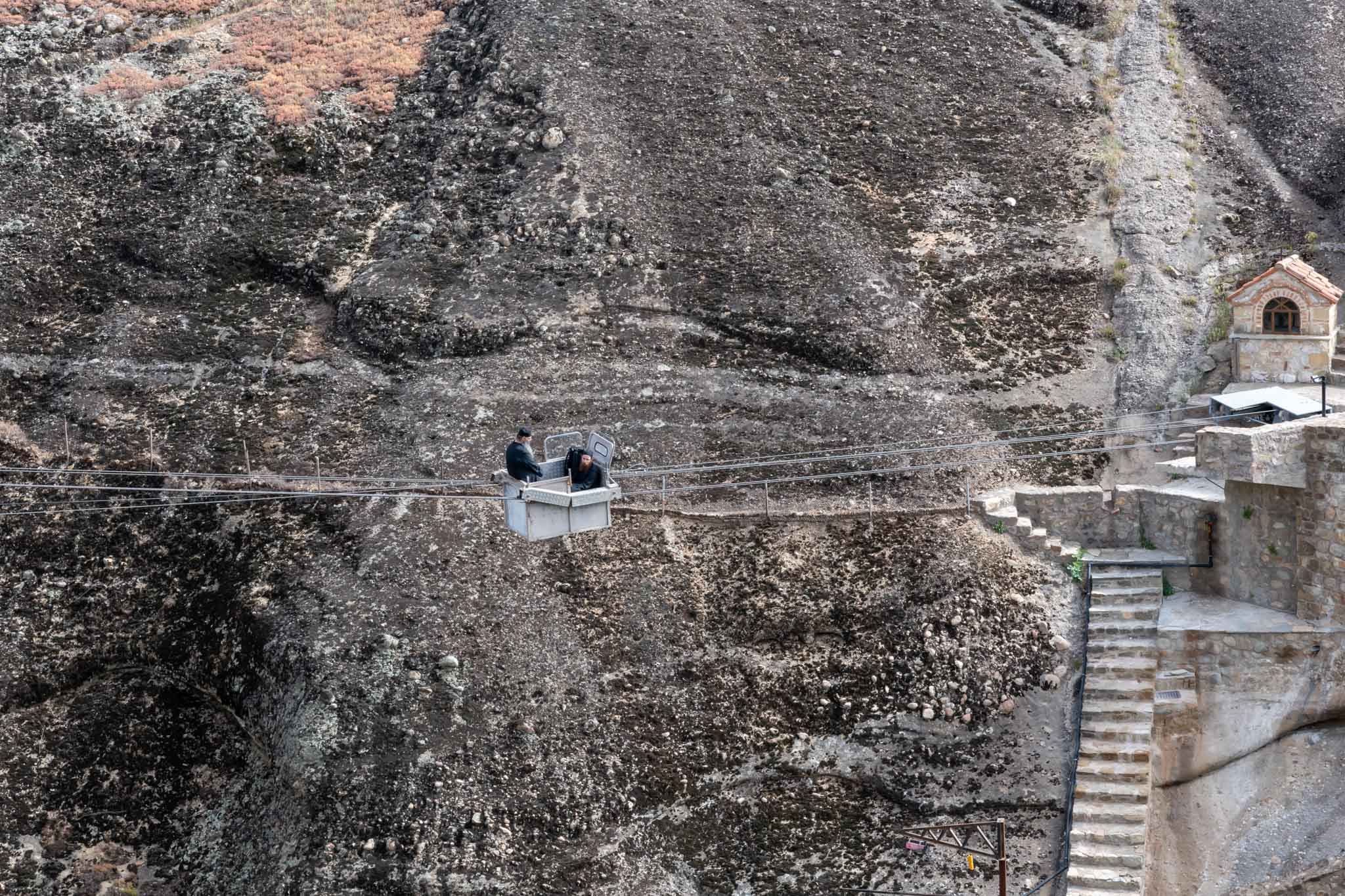
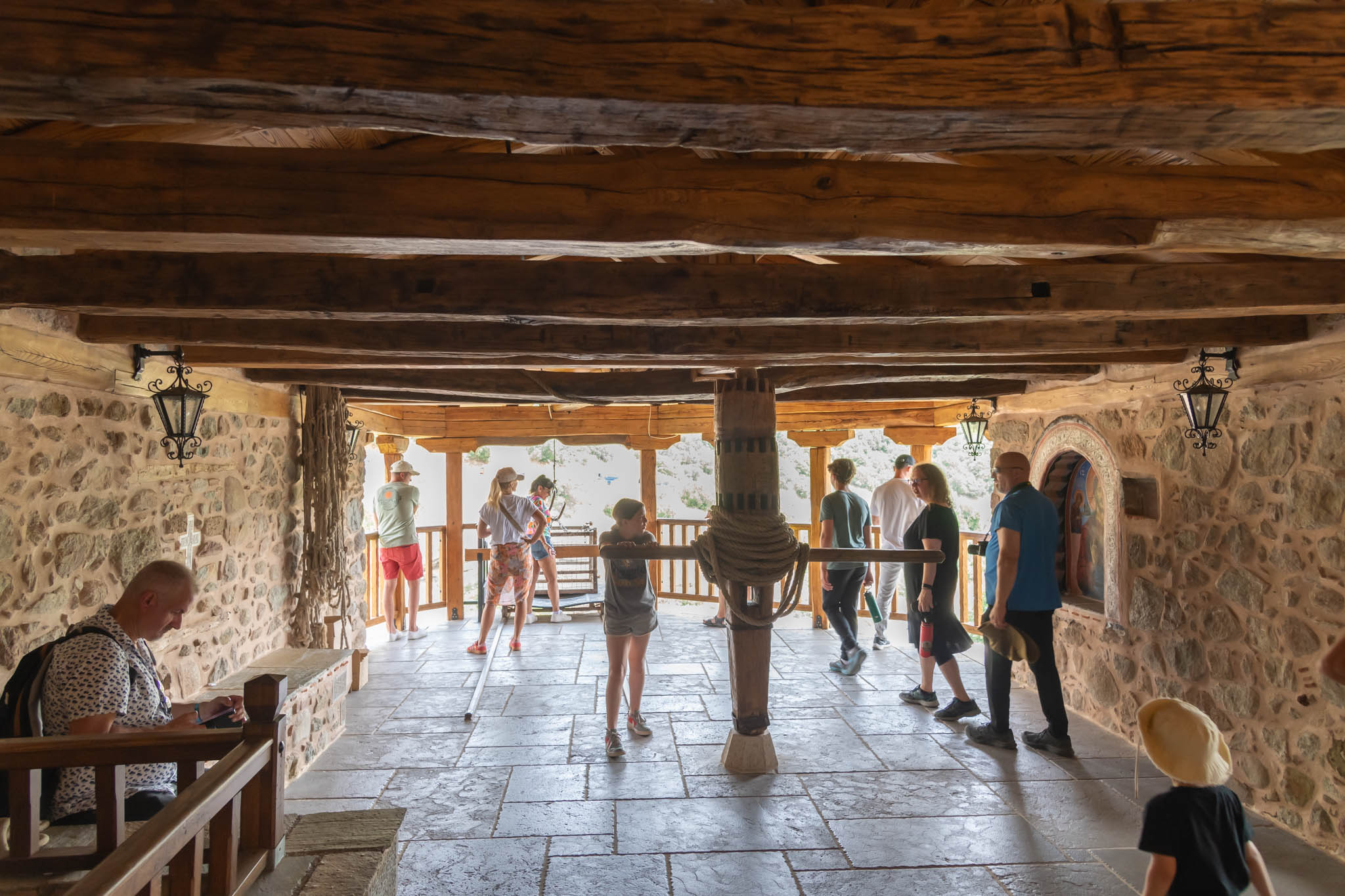
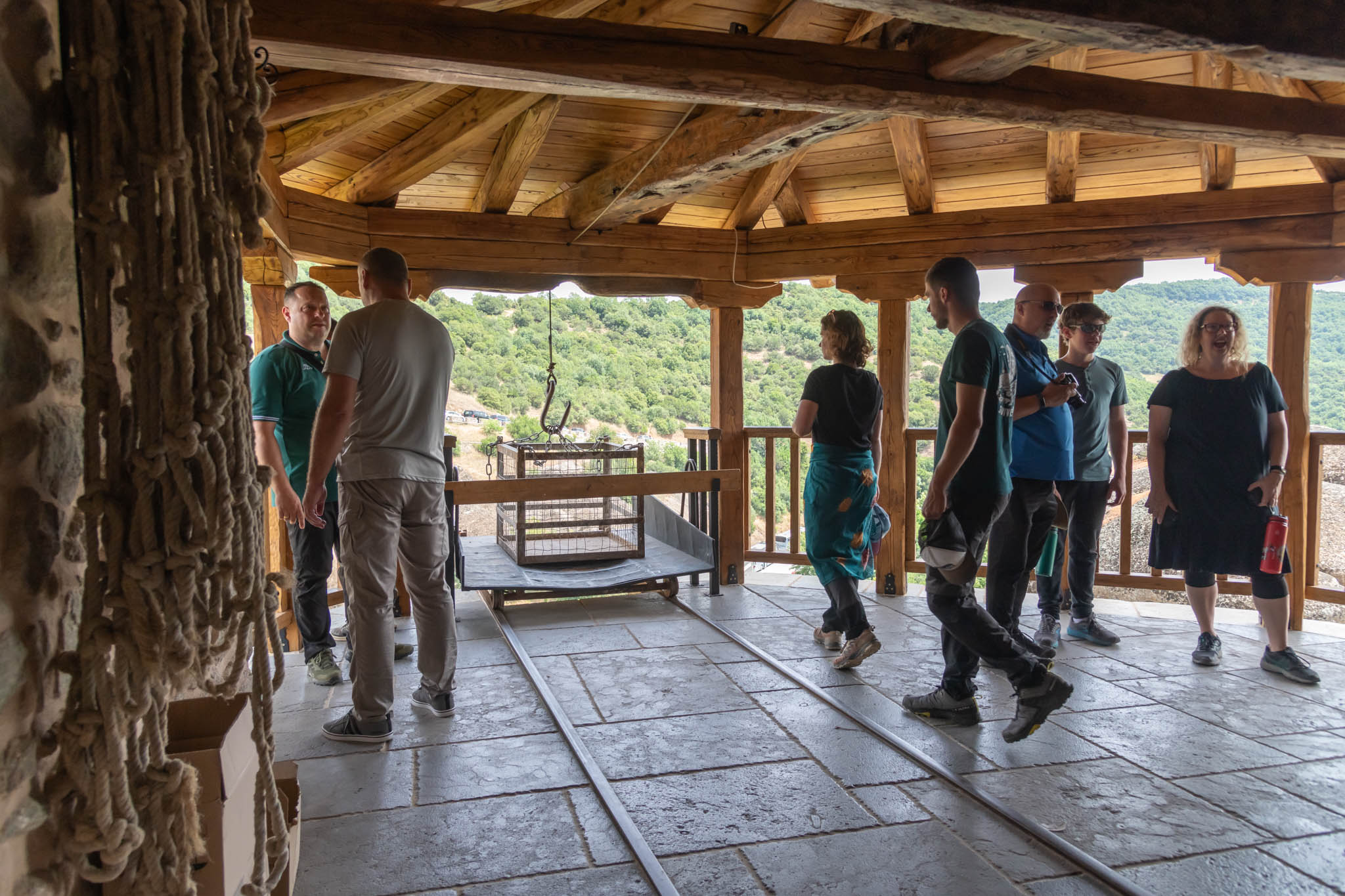
We made the climb up the 140 steps without too much trouble and there is a small courtyard on top and a chapel. The views were just breath taking and I don’t think I am capable of describing it. On the top, we found the arrangement used by monks in earlier times to haul up people and material. There is a large pulley like attached to a rope that passes over a hook dangling over a sheer drop, right to the bottom. People and material were then carried up in a rope net; the steps we used were added much later. Of course, prior to this arrangement, access was possible only through rope ladders and whenever the monks faced any threat, they simply pulled up the rope ladders and secured themselves. Some of these rocks are about 400 metres high and going up and down must have taken some effort! These days, there is also a small cable car type of arrangement from the car park directly to the monastery. This is used for transporting goods and the monks that can’t make the climb. 
The Monastery of Holy Trinity was featured in the 1981 James Bond film “For your eyes only” and couple of other films as well. 

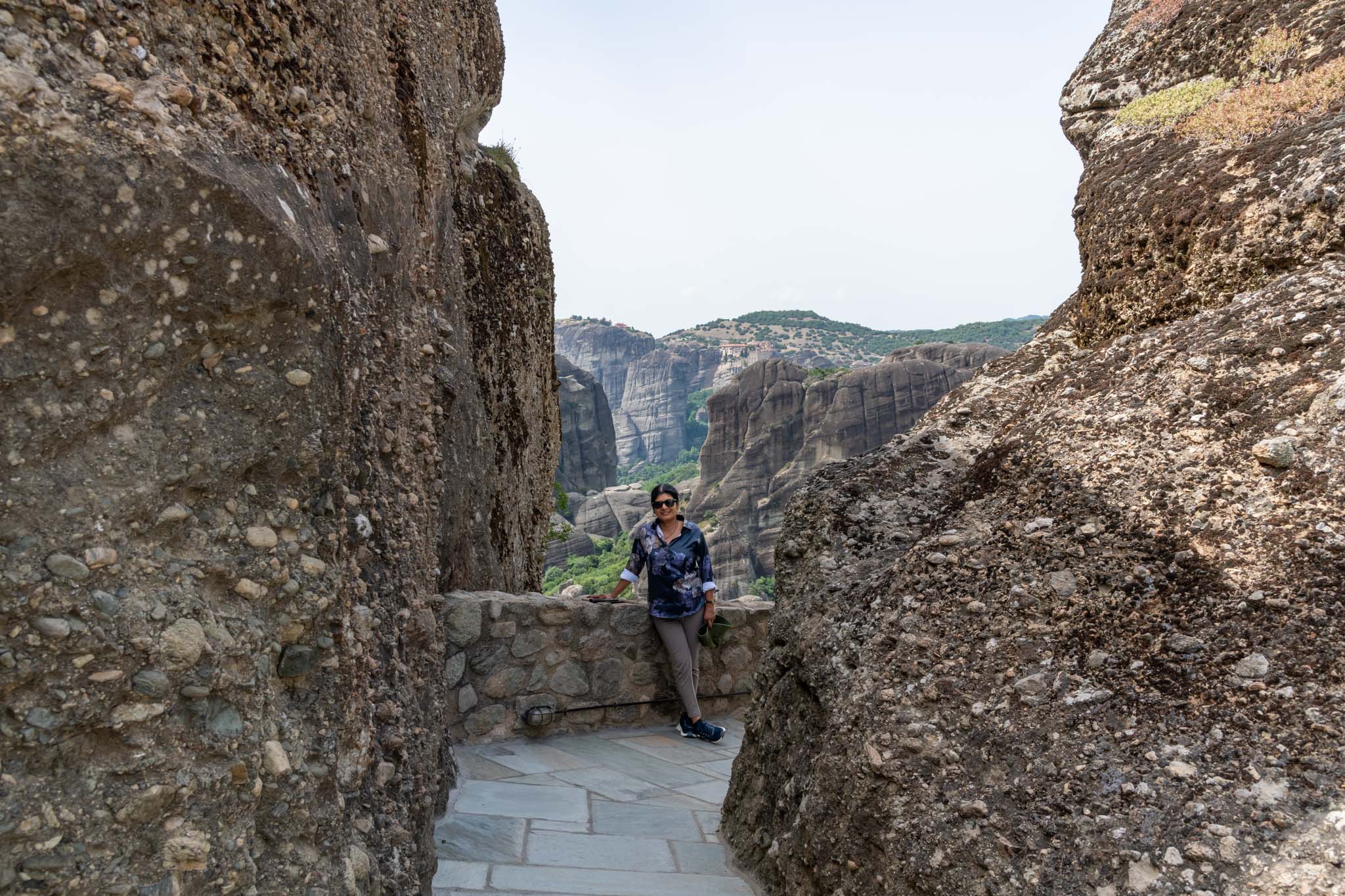
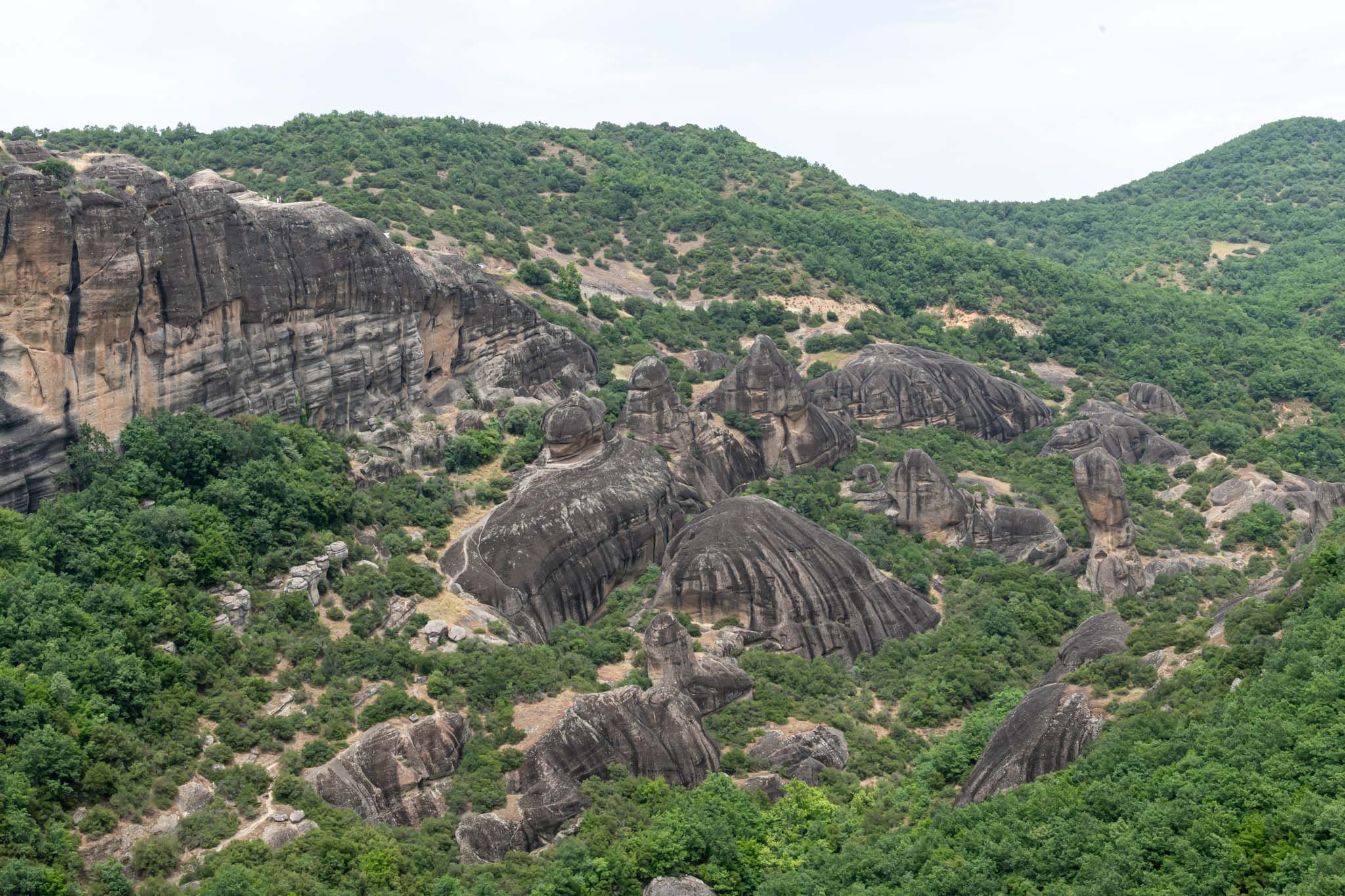
You can see many unusual and thus interesting rock formations as you drive around the mountains in Meteora. Wiki says that about 60 million years ago, a series of earth movements caused the seabed to go up, creating a high plateau. The rocks are mostly sandstone. There are many trails one can take in Meteora but we didn’t try any because of lack of time. There are many rocks that can be accessed from the road, or the car parks and climbers would really love it.

As can be expected, such a location has great sites to watch the sunset and there is enough information to be found on where to go, on the internet. After finishing the Holy Trinity Monastery, we went to Sunset Rock and the sunset was just amazing. It was so peaceful and quiet. No wonder that the monks came to this area, meditation comes rather naturally here. We made best use of our two evenings at Meteora and visited two spots and spent time there. There was a reasonable crowd in each location, and you had to arrive a bit early to get the best spots.
One interesting aspect I noticed is that there is no railing or any such protection anywhere. You are expected to behave reasonably and sensibly and watch out for your own safety. The drops are rather sheer and deep and a fall could definitely be fatal. On the second day evening, someone lost a bottle or something like that and it caused a little bit of consternation among those present – guess it struck everyone that it could be you instead of the bottle, if you aren’t careful!

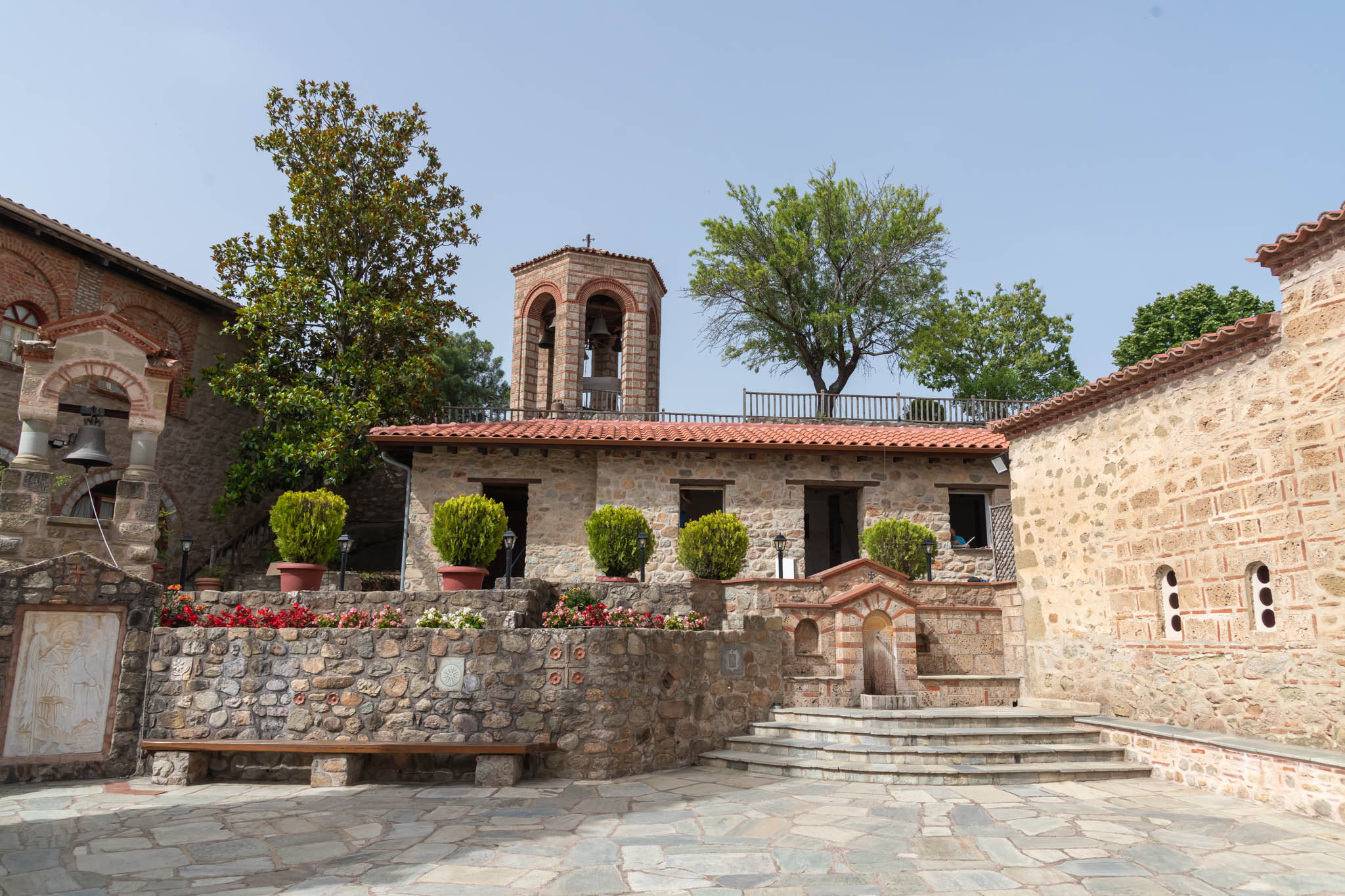
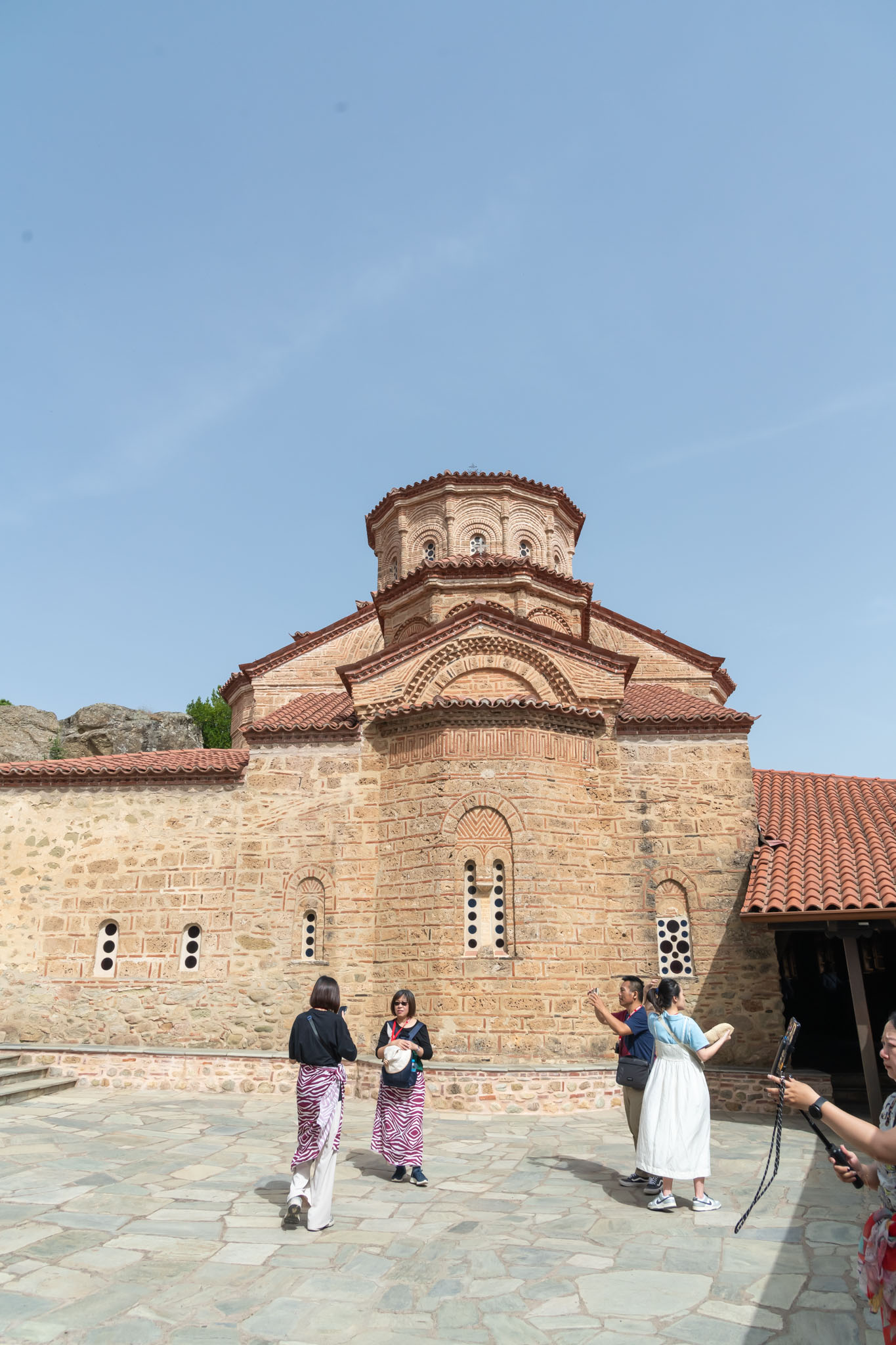
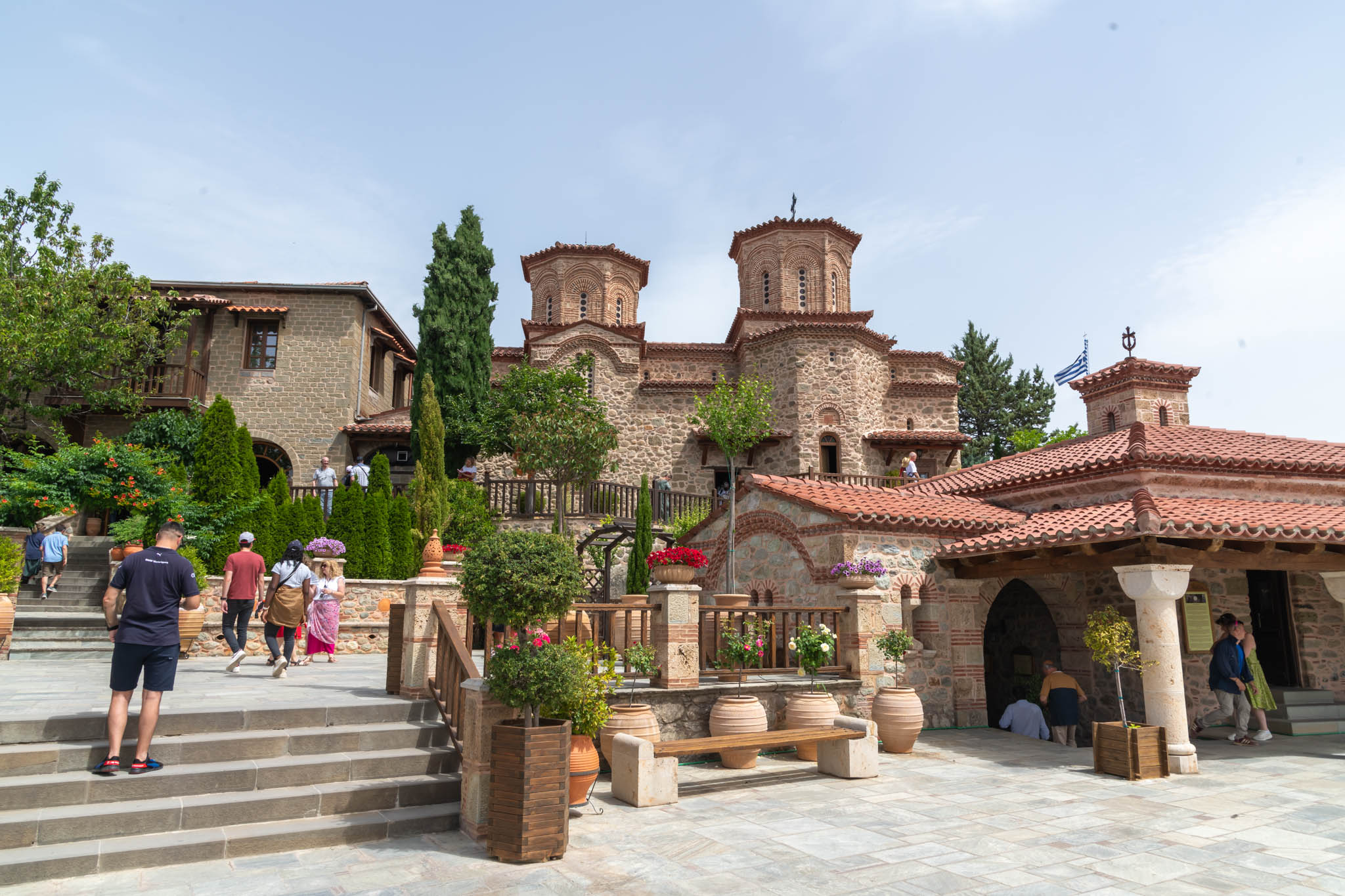
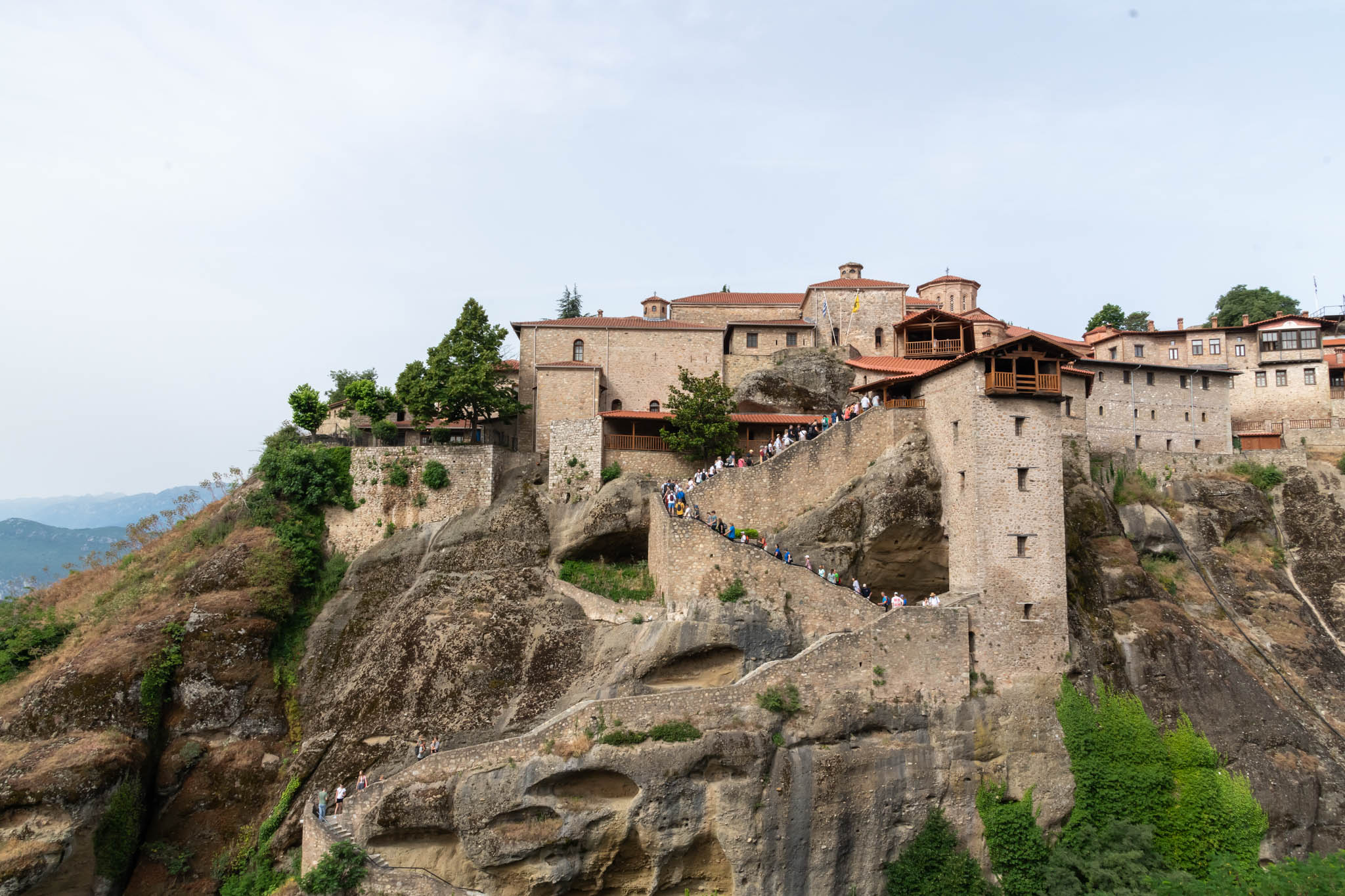
Next day morning, we set out to see the most famous of the Meteora monasteries – The Great Meteoron. It is the oldest and largest of the monasteries and was founded in 1356. We arrived early, as soon as the monastery was opening up, as this place could get crowded as the buses from Athens started arriving. Even then, we had to wait for a bit. This is quite a steep climb (more than 300 steps) and we overheard a Malayali family discussing the climb and in the end, the elderly parents decided to not attempt it. This monastery also has a cable car from the car park area, but I guess it is only for official use. We made it to the top without any trouble and the climb itself is worth it because of the views, especially that of the Monastery of Varlaam, which is quite nearby.

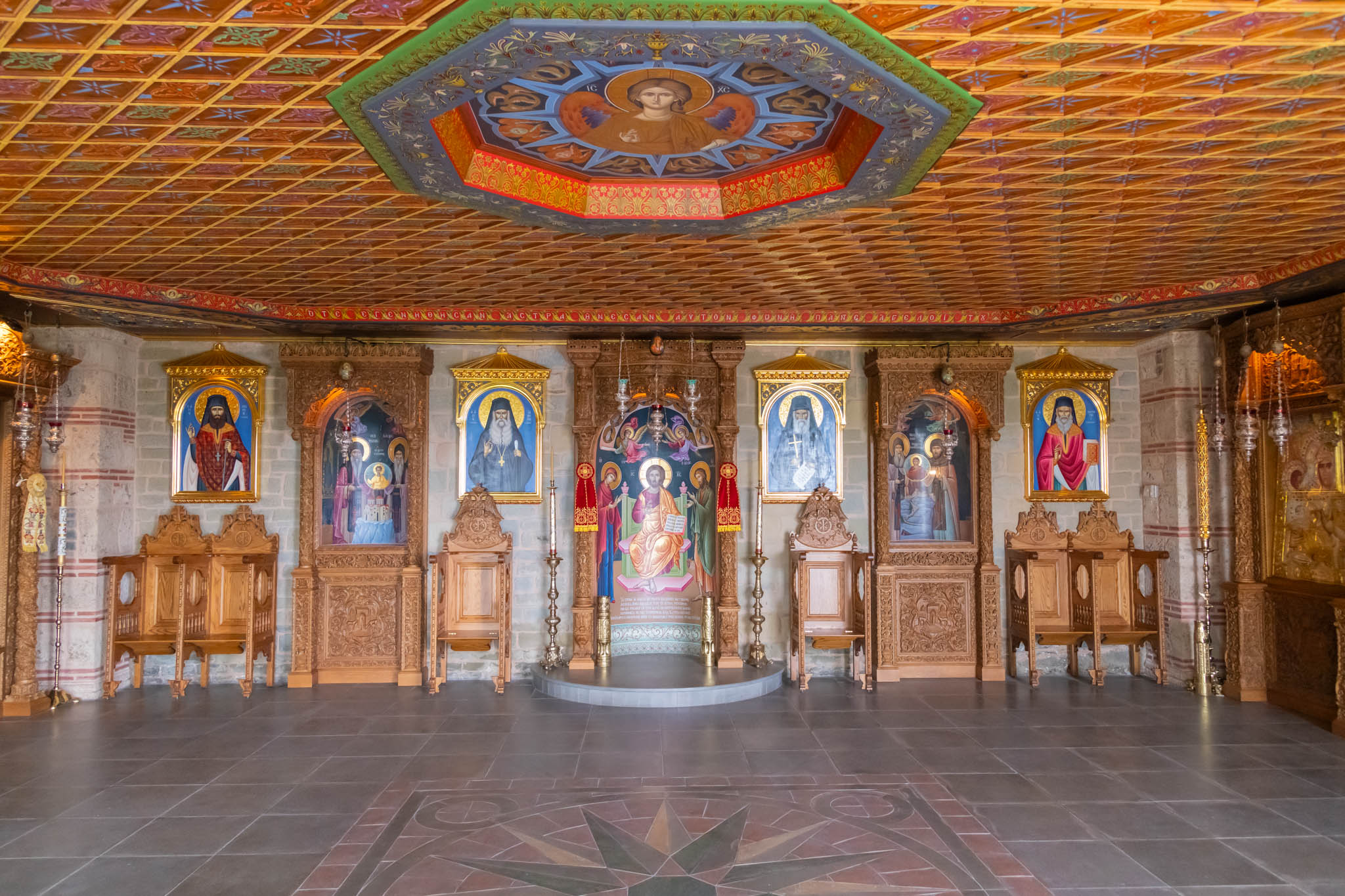
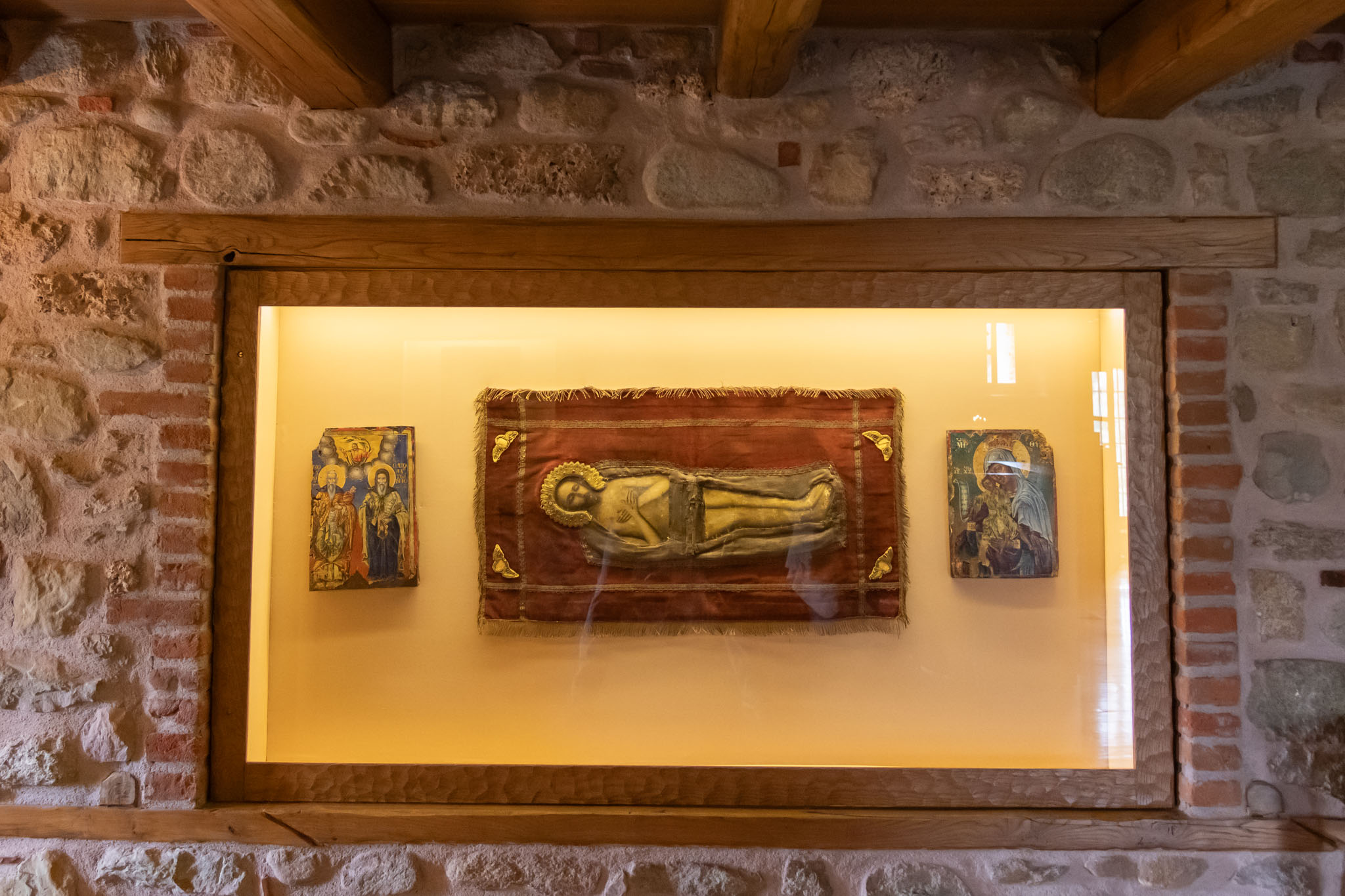
There are many buildings at the top including a beautiful church, courtyard, kitchen etc. Some of the areas have restricted access and there is no photography allowed inside the church (the image below is one I found on the internet), which is quite a pity as the interior of the church is quite rich and beautiful. There is also a museum inside the monastery and supposedly, the library at the Grand Meteoron is the largest in Meteora and it has about 1350 codices. 

Note: This photo of the interior of the church is sourced from the internet and not taken by me.

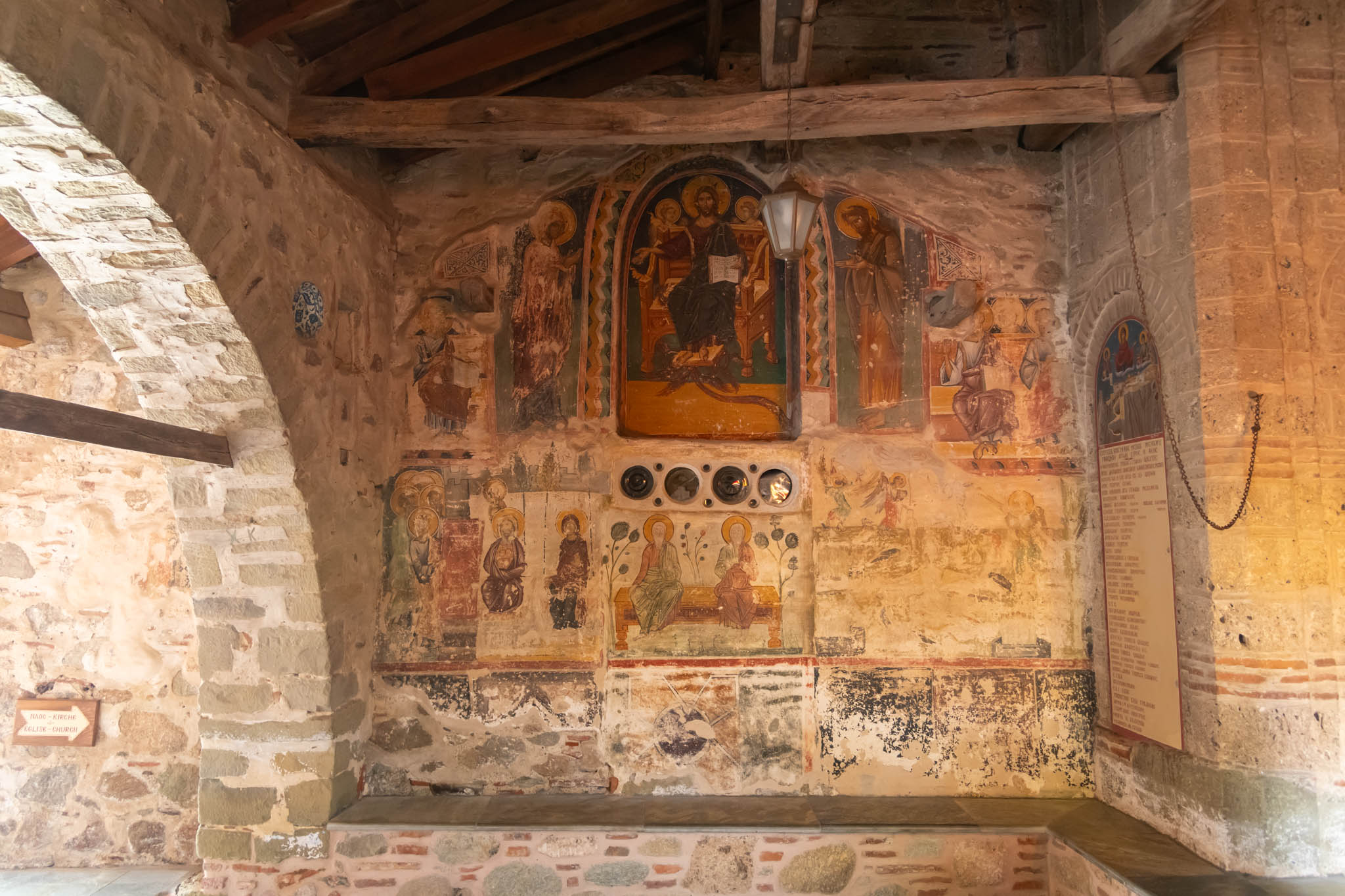
The courtyard had some beautiful frescoes and the rope net arrangement was seen here as well. 

View of Monastery of Varlaam from the Great Meteoron.

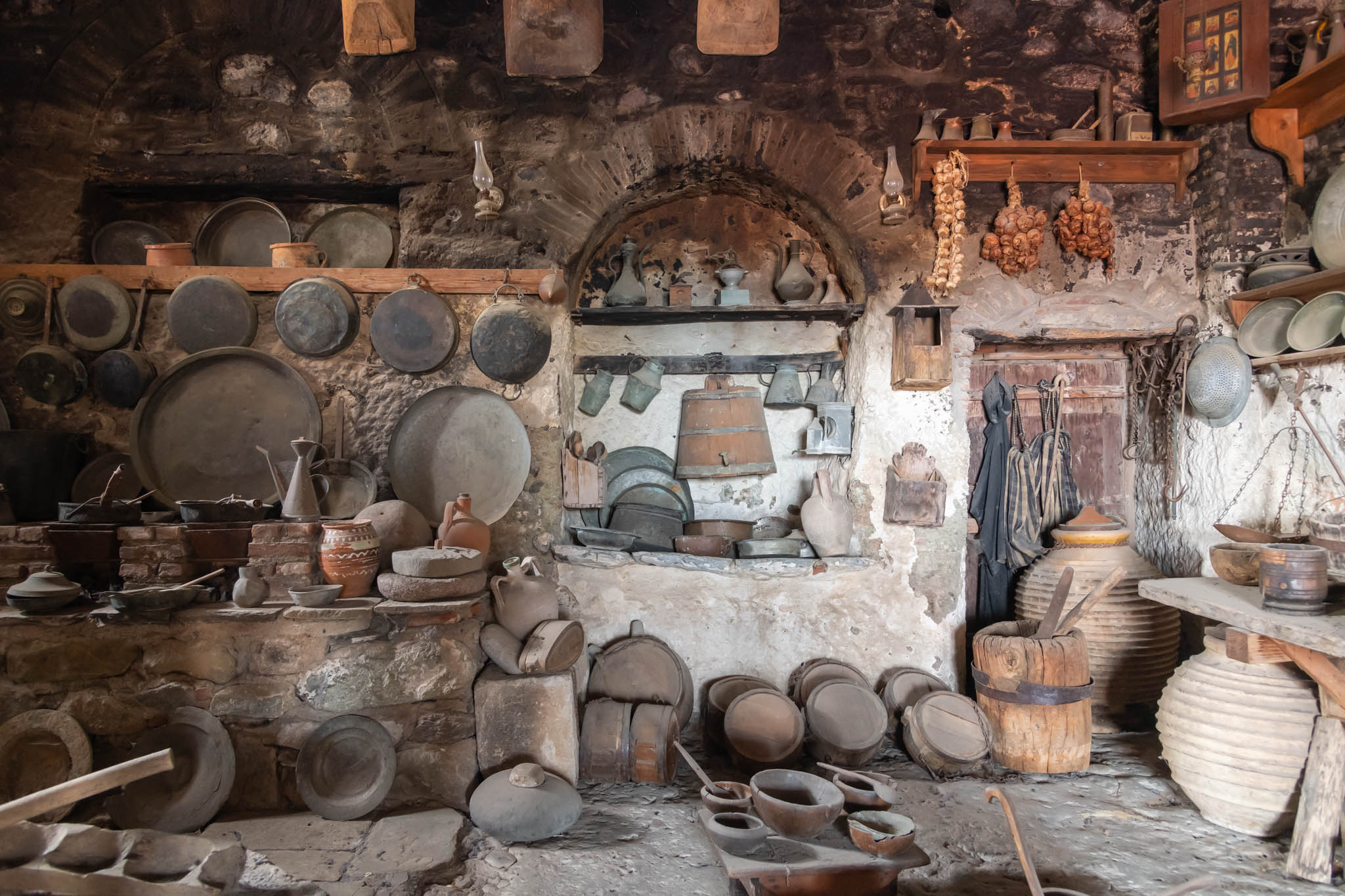
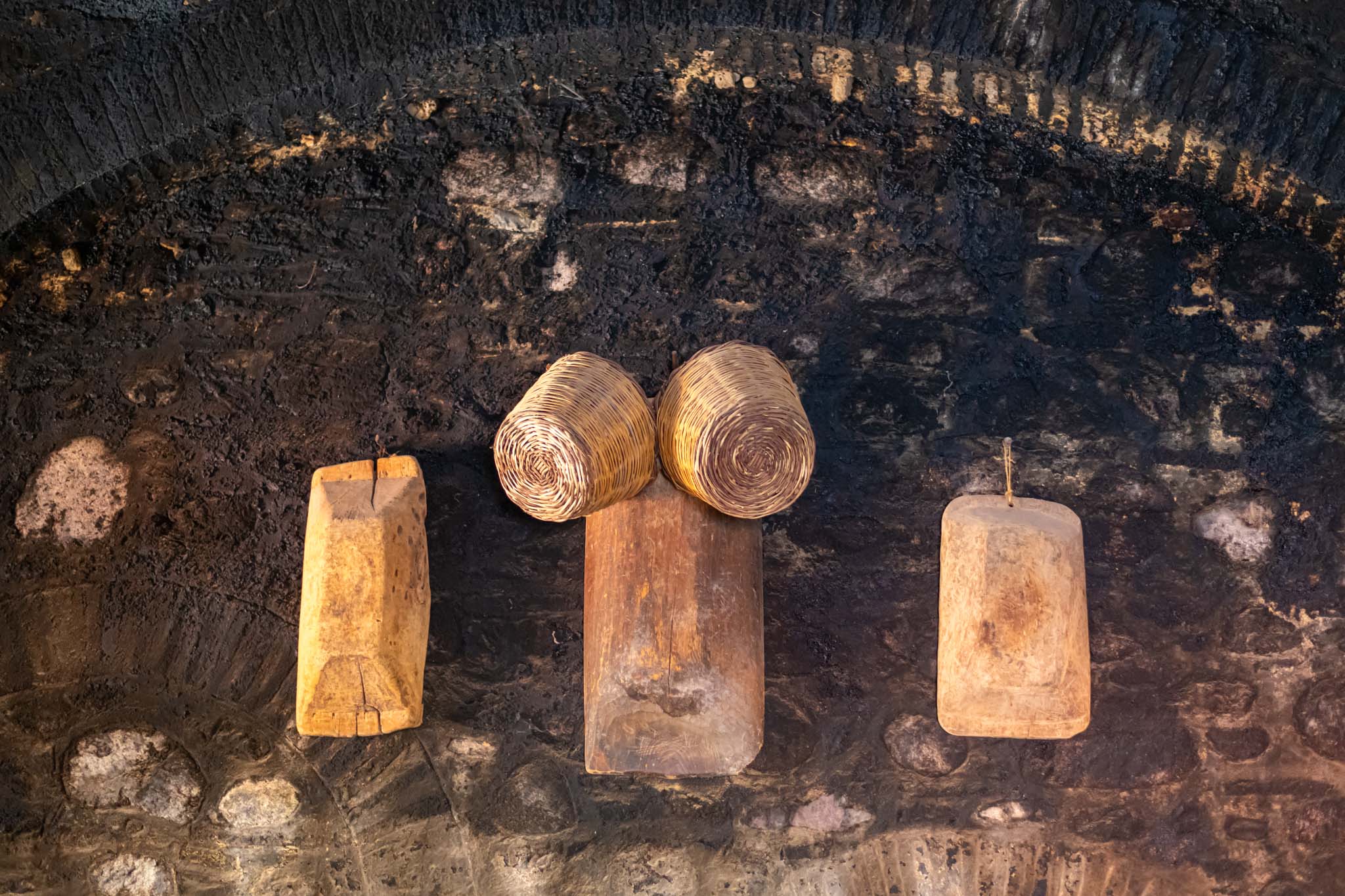
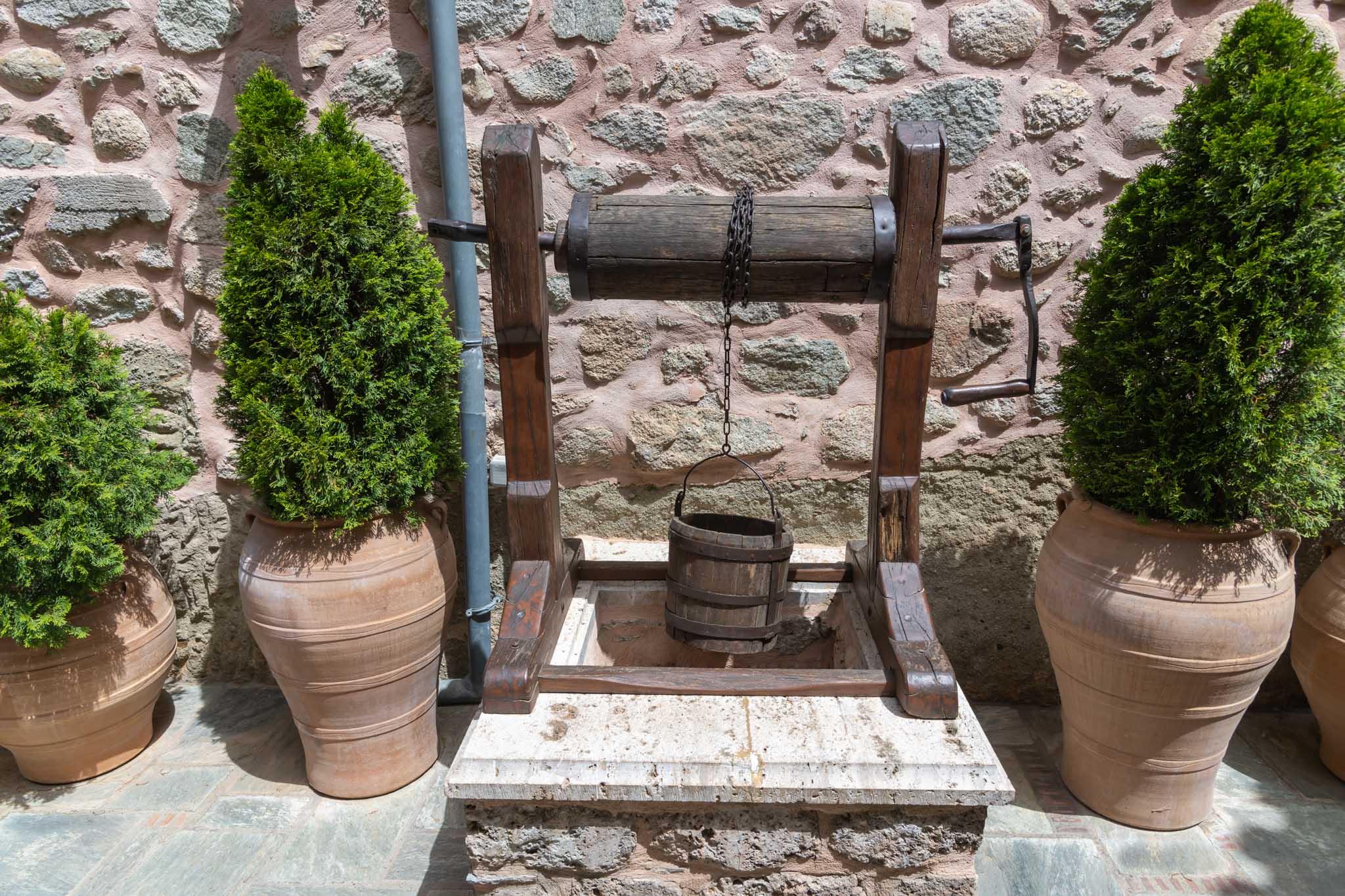
The kitchen was pretty large and had all kinds of utensils, baskets and all preserved as it might have been in the olden times. 

The Great Meteoron left us in awe, and we all felt it was well worth the effort. It was quite hot in Meteora in June and the sun was doing its best to make it even more uncomfortable. Next on the list was The Monastery of Varlaam. It is the second largest monastery in Meteora and was founded in the mid of the 14th century by a monk named Varlaam. After Varlaam died, the rest of the monks deserted the monastery, and it was abandoned for a century of so till two monk brothers named Theophanes and Nectarios reactivated it. 

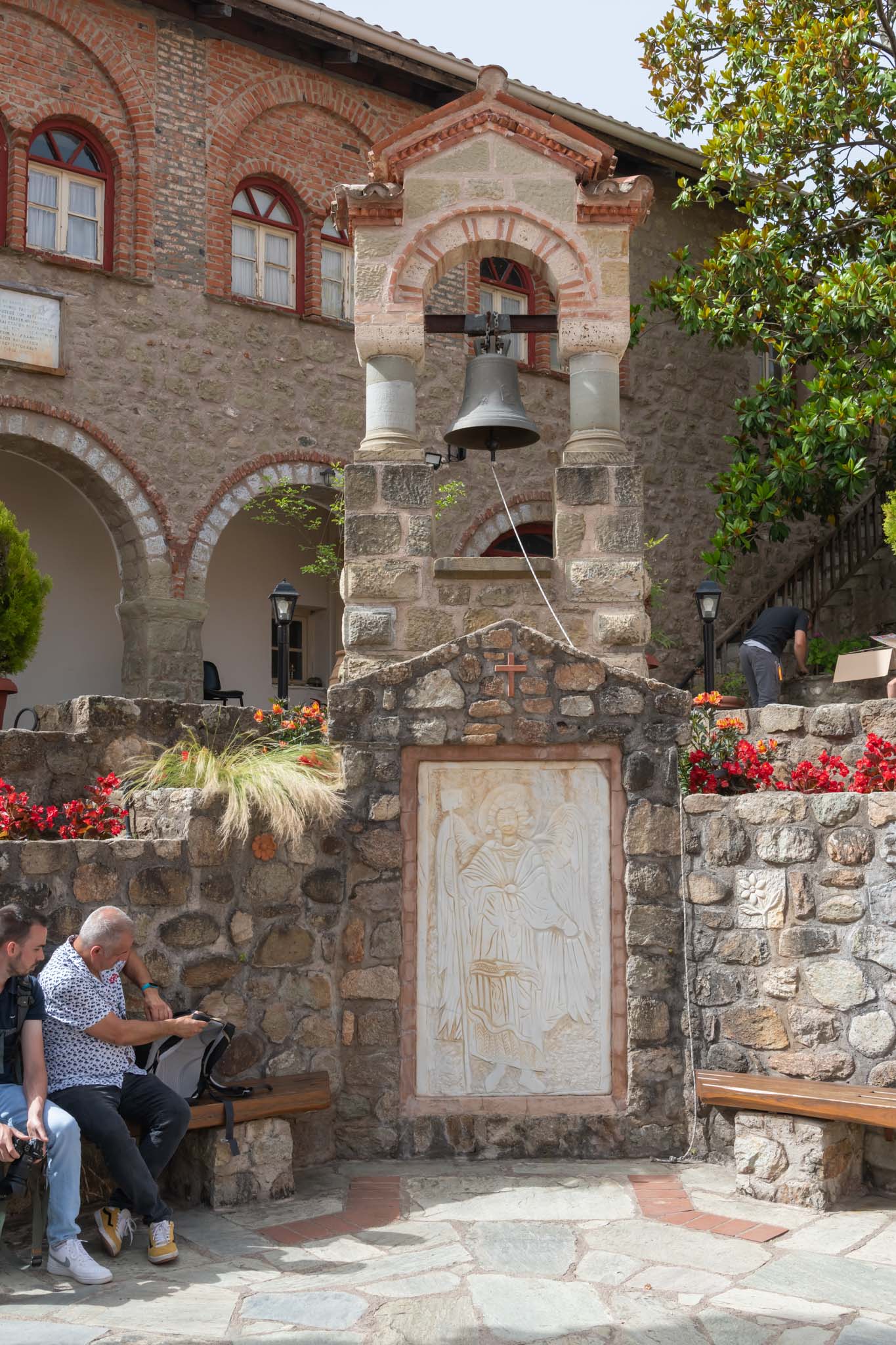
This is a beautiful monastery, and you have to go up some 200 steps or so before you step into a wonderful courtyard. 

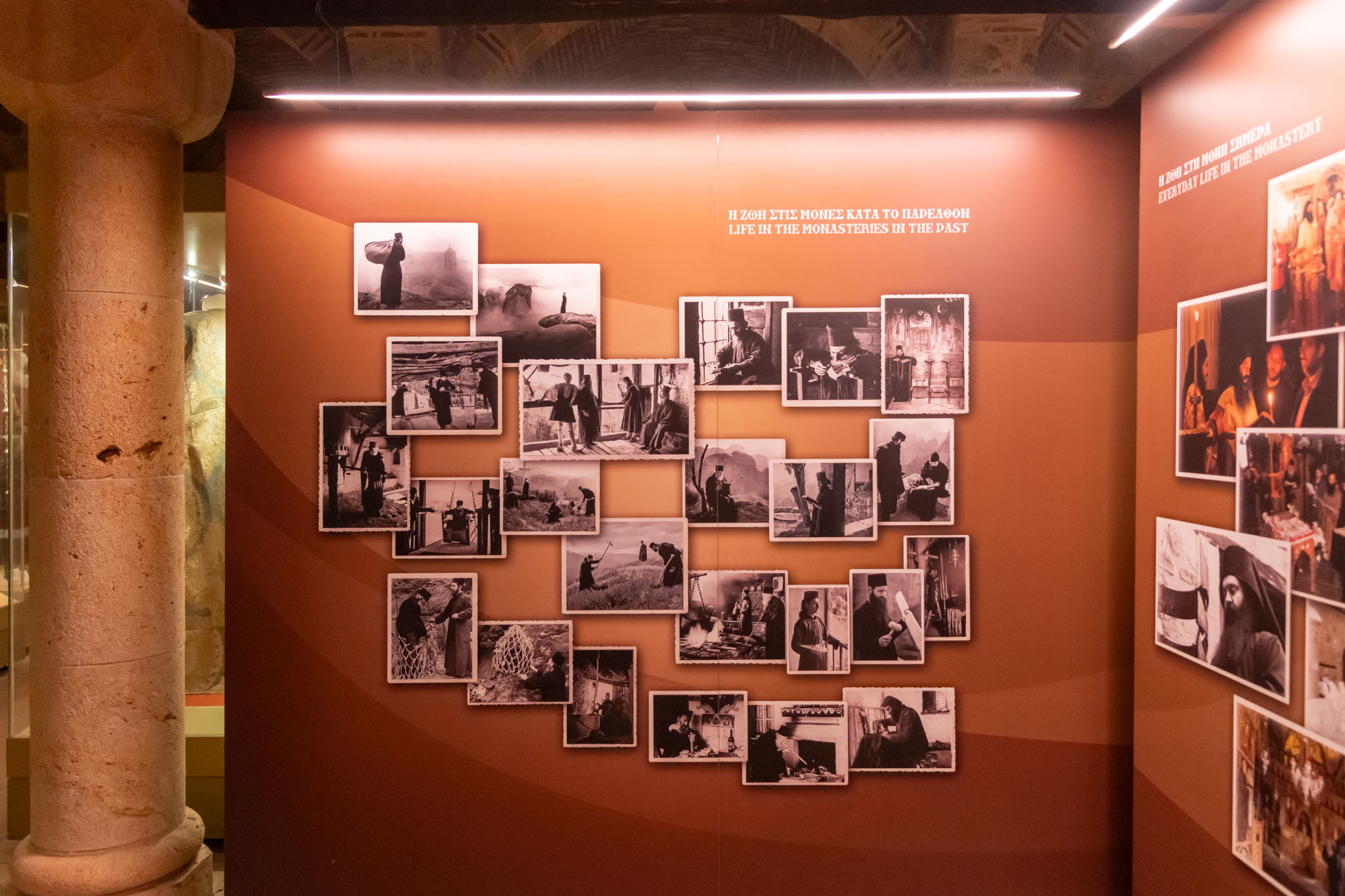
There is a small museum that brings out how life was, for the monks in the olden times. I found that quite interesting. I tried to imagine myself as a monk here, without the tourists milling around, contemplating the mysteries of the universe and time. If there is a ranking of locations suited for such an activity, this must definitely be one of the top-ranking ones.

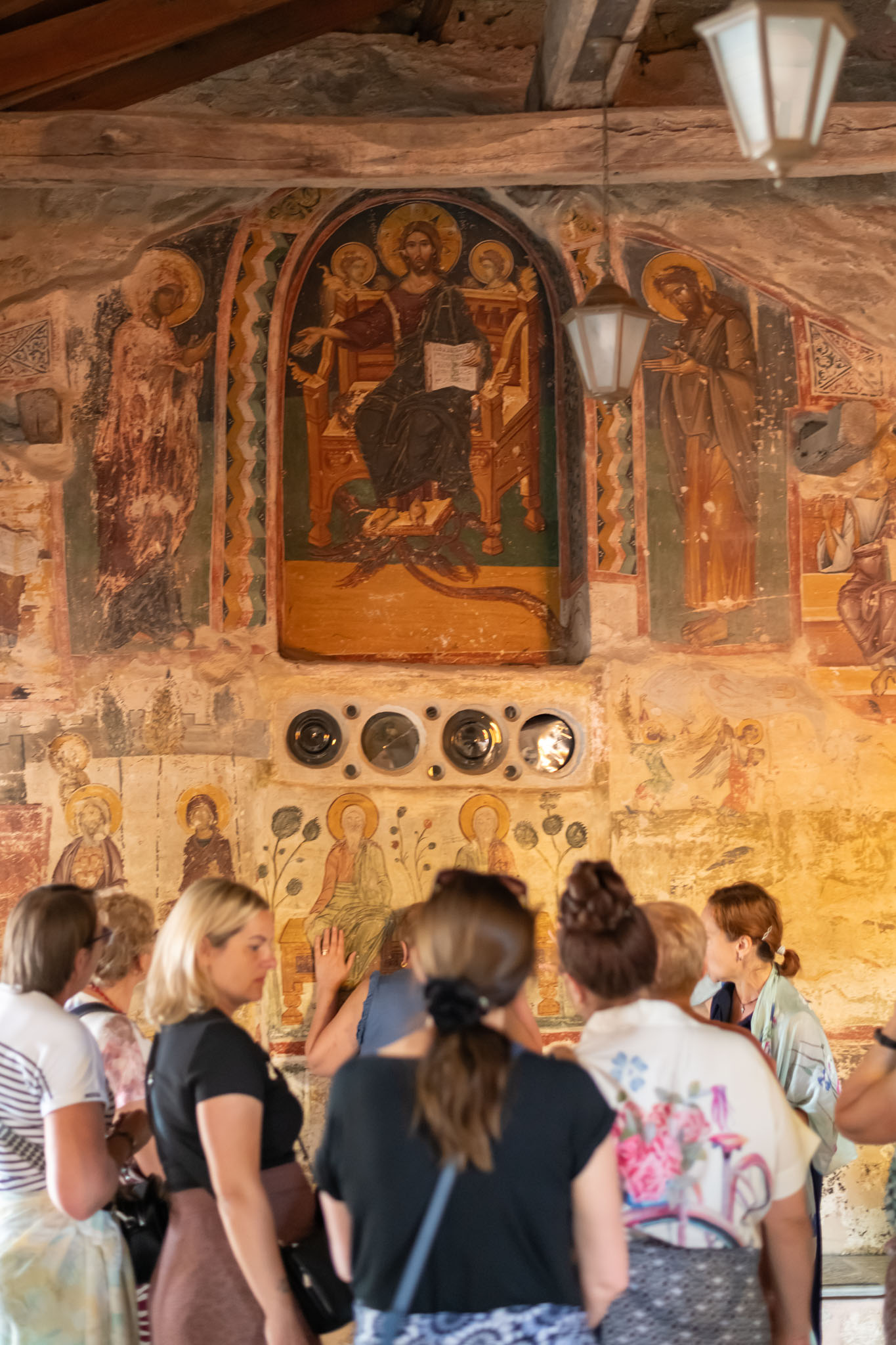
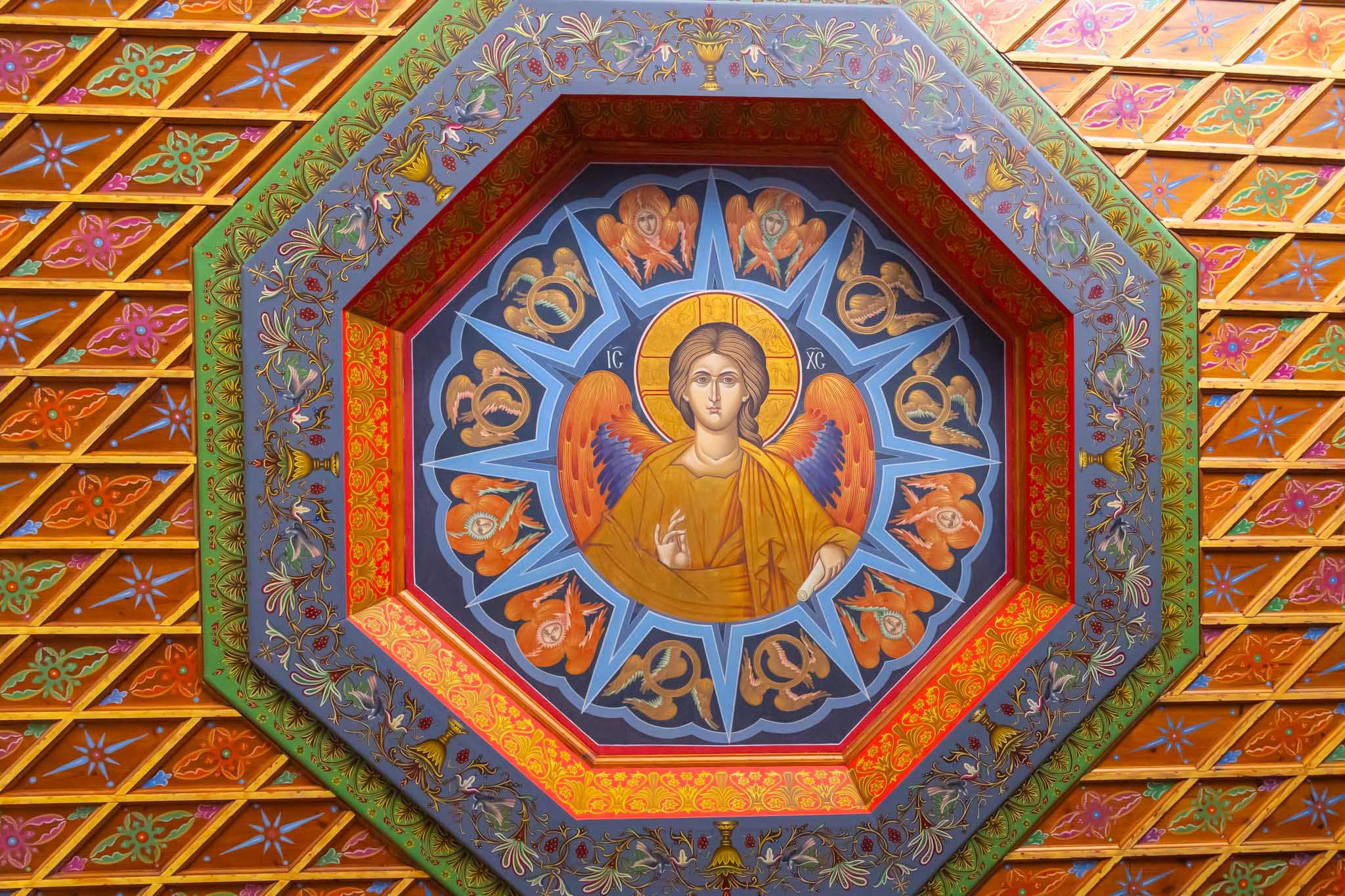
There is also a small room with beautiful frescoes and a fantastic ceiling.

Here too, photography is banned inside the church – which is quite a pity – and I reproduce an image I found from the internet.

Note: This photo of the interior of the church is sourced from the internet and not taken by me.

One key attraction at the Varlaam is a wooden barrel that was used to store rainwater. This is a huge barrel which can hold up to 12,000 litres. It is made entirely of wood and the locking system to make the planks watertight is quite clever. 

The lift arrangement used in other monasteries was found here as well.

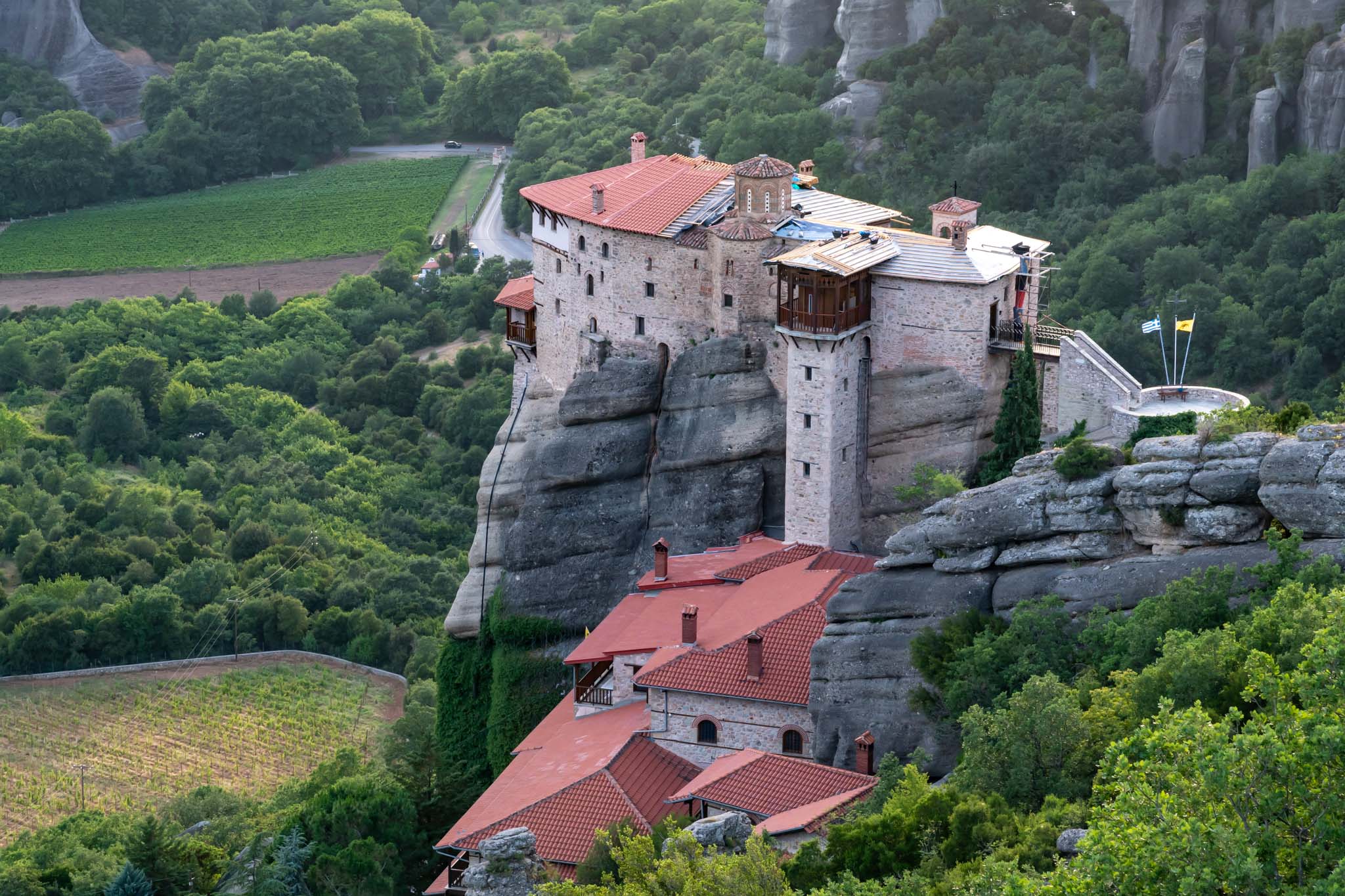
After lunch, we proceeded to the Monastery of St. Barbara or Roussanou. This is a small monastery, occupying the whole of the rock it stands on and was built in the 14th century. These days it is occupied by nuns and about 15 nuns live here. It is very easily accessible from the road and from the other side, there is a wooded path that leads to a bend further up the road. The Malayali family we had seen at The Great Meteoron came here as well and a nun came out to meet them. So, I assume a Malayali nun has made it to this remote monastery. We didn’t see them afterwards and so couldn’t check the veracity of this assumption.

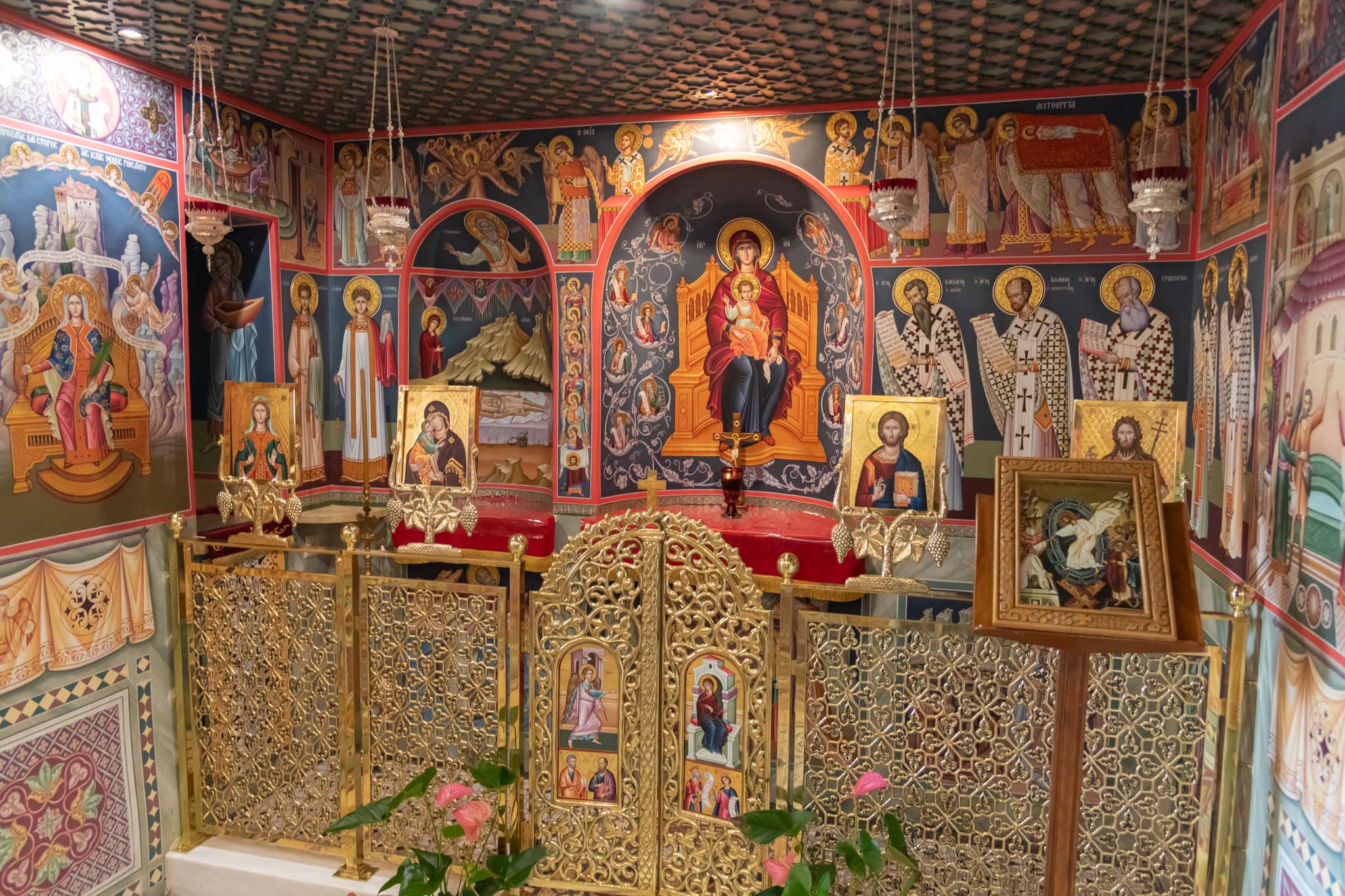
Photography wasn’t allowed inside the monastery, but I wasn’t aware of this and clicked a few photos before the clerk alerted me. 

It has a nice small chapel and some displays in a room outside. The pathway through the woods, behind the monastery, is quite enjoyable.

This was the fourth monastery we visited, and we didn’t have enough time left, to visit the remaining two. The two days involved a lot of going up and down steps and we were happy we could handle it without any trouble. 

Meteora is a magical place indeed and I wasn’t disappointed that the experience didn’t do justice to the image that came into my mind when I heard of this place the first time. The town of Kalabaka is pretty nice too and I can easily see myself spending a week here trekking to the various monasteries and taking life easy, in between. It was our last evening at Meteora and we soaked in one more sunset before we said goodbye. 

Moscow has been a very familiar name since childhood and one had heard about the Red Square, Kremlin etc. from a young age. In November 2019, I had an opportunity to spend a couple of days at Moscow. The fascination with the USSR and consequently Moscow, had started with some of the Soviet publicity books that I had read when I was young. Kerala, with its Communist roots, was always interested in the USSR and the stories of the October revolution, Lenin etc. were quite commonplace.

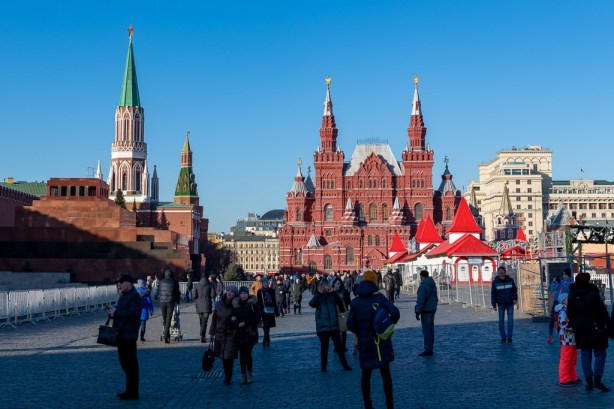
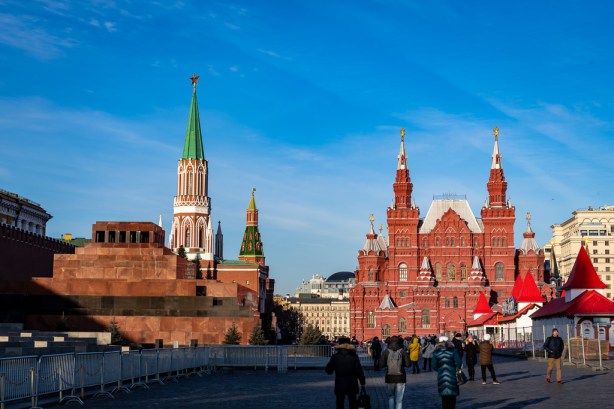
Naturally, my first port of call was the Red Square. Given the Communist history of Russia, my impression was that the origin of the name Red Square must have been connected somehow with the revolution. However, I understand this is not the case. This has been the main commercial square in Moscow since many centuries and it has been called so since 1662 or so. It separates the Kremlin (palace of the Tsars and currently of the Russian President) and the historic merchant area. This has been a very important location in Russian history and many ceremonial activities including coronation of the Tsars took place in the Red Square.

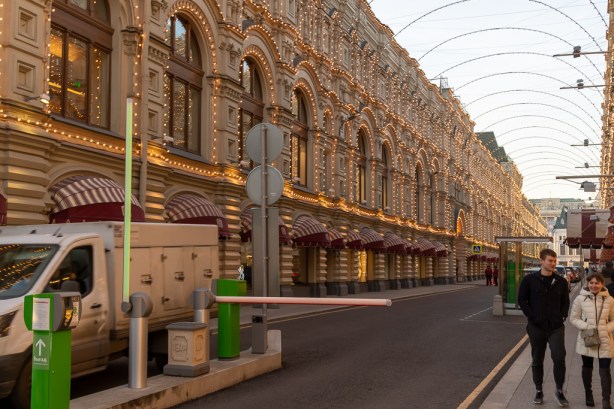
This rather large square borders the Kremlin on one side and the main attractions are the most famous icon of Russia, the St. Basil’s Cathedral, Lenin’s mausoleum etc. There is a very large department store (called the GUM) that occupies one side of the Red Square where the erstwhile commercial quarter was located. This store is more than a hundred years old, I understand.


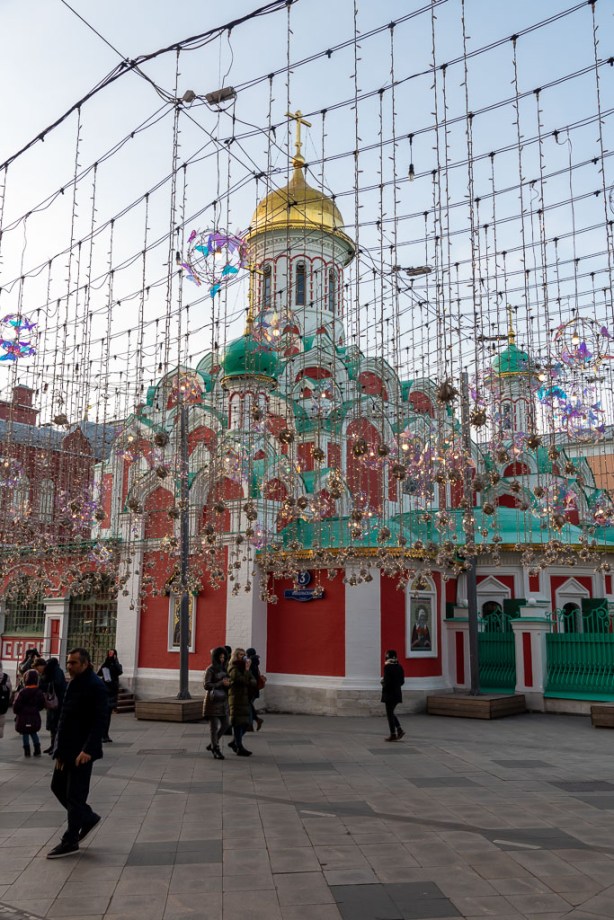
On one side of the Red Square is the Kazan Cathedral. After defeating the Polish army in 1612, Prince Dmitry Pozharsky entered the Kremlin through the Red Square and in commemoration of that success, he built this Cathedral and consecrated it in 1625. The original building was of wood and burned down in a fire in 1632 and was rebuilt using brick and consecrated in 1636. It was considered as one of the most important churches in Russia and on the anniversary of liberation of Moscow from the Polish forces, the Tsar and the Patriarch of the Russian Orthodox Church used to lead a procession around the Red Square. As part of removing religion from public life, Stalin ordered the demolition of the church in 1936 and a temporary building to host the offices of the Communist International was constructed on the site. After the fall of USSR, this was the first church to be reconstructed (1990-1993) and has been made to look like the old church.


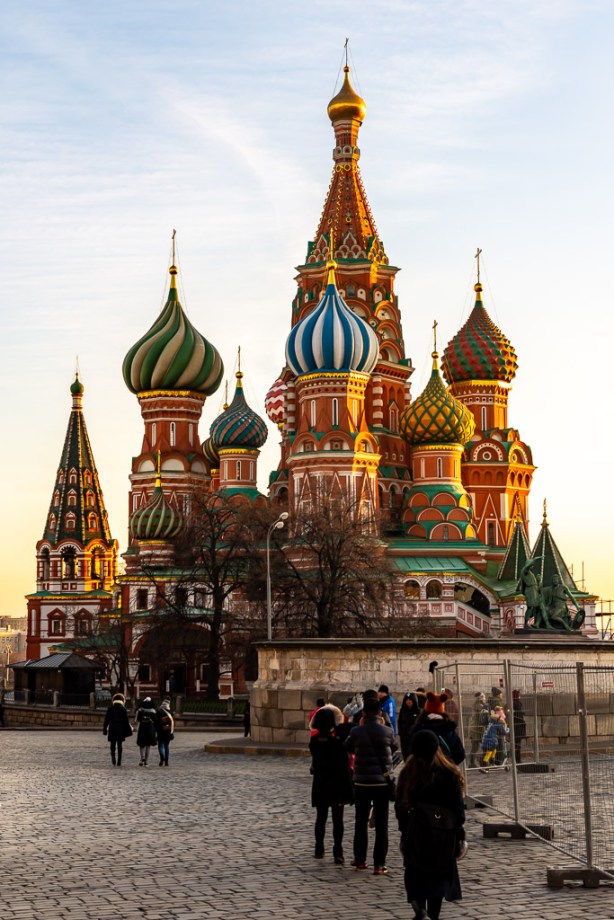
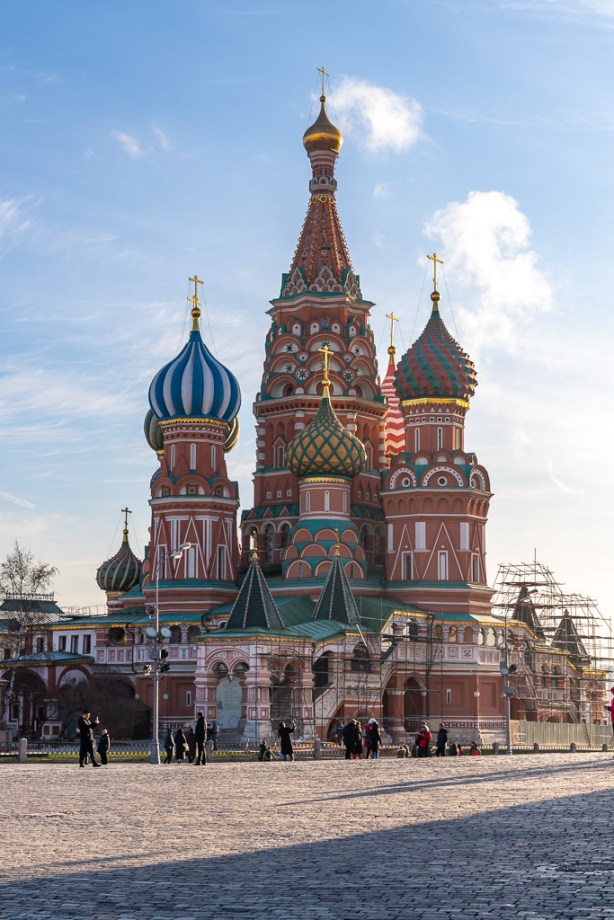
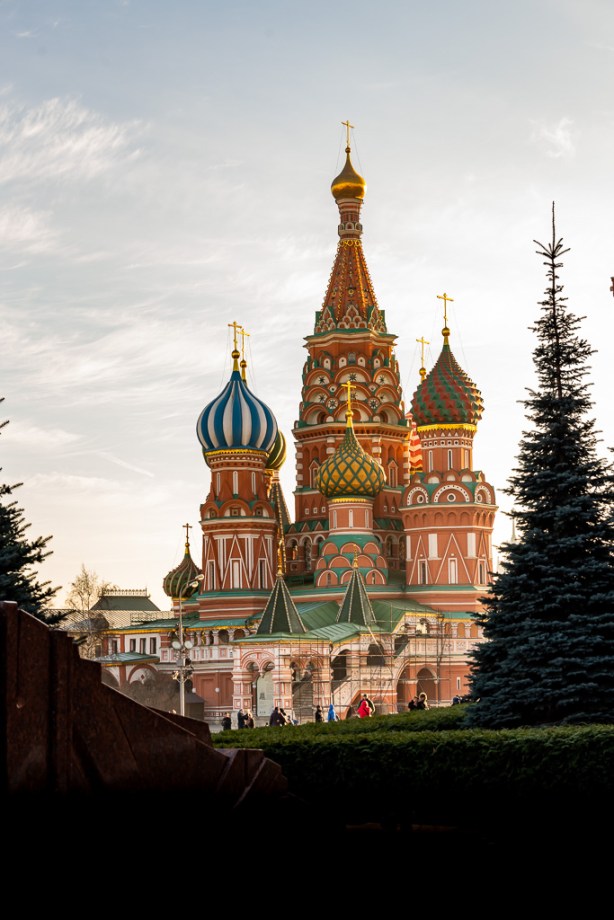
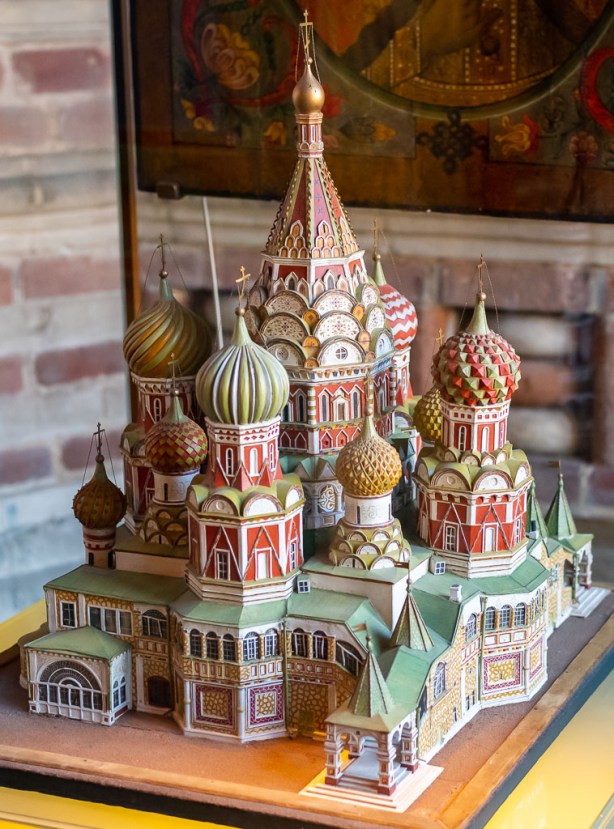
St. Basil’s Cathedral is arguably the most reproduced image from Moscow and is regarded as a cultural symbol of the country. It is now a museum. its original name was The Cathedral of Vasily the Blessed. Ivan the Terrible, the first Tsar of Russia (1547 to 1584), constructed this church to celebrate the capture of two cities – Kazan and Astrakhan. The construction took six years from 1555 to 1561 and it had nine chapels with eight chapels around the central ninth one. A tenth chapel was added later, in 1588, to honour a local saint named Vasily (Basil in English). In the Soviet era, this church was taken over by the state and converted to a museum and all religious activities stopped. After the collapse of USSR, some church services have been resumed since 1997.

This building has a very unique architecture and resembles a fire rising up to the sky. Supposedly, there is no other building with a similar architecture in Russia. I read somewhere that an old mosque in the captured city of Kazan may have been the inspiration for this architecture and to the untrained eye, the building does look more like a mosque than a church, with its massive domes.


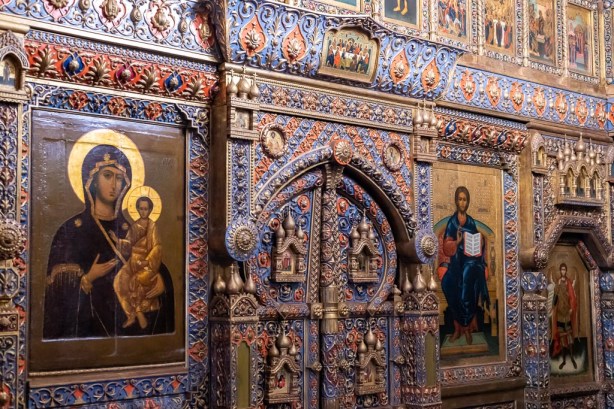
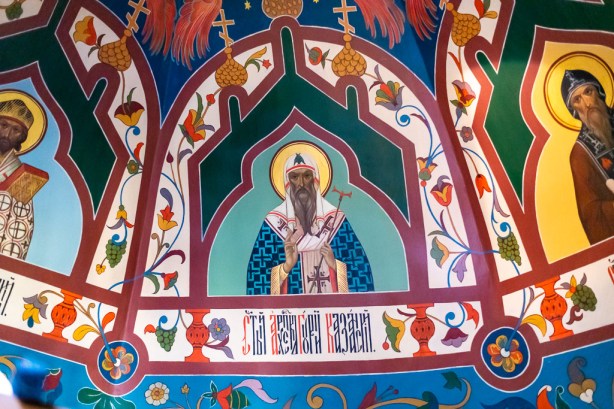
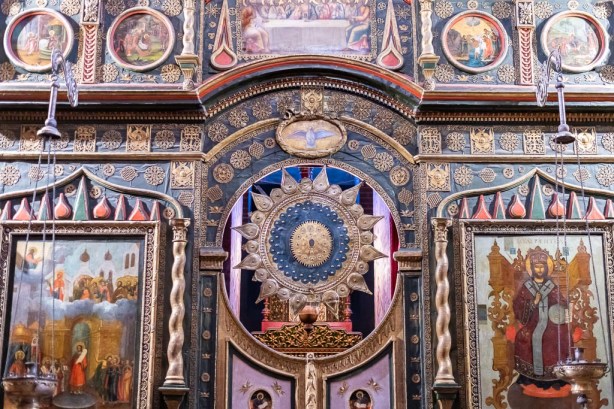
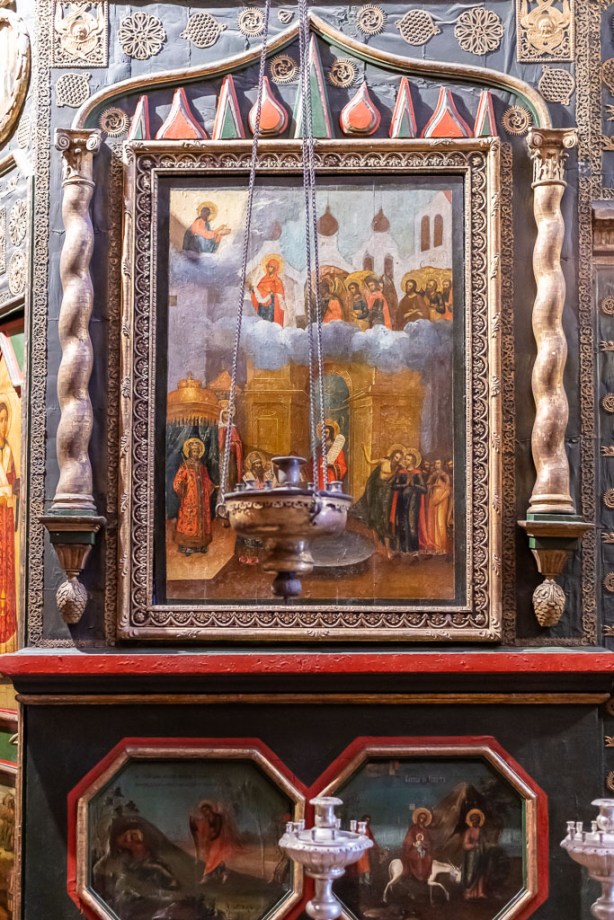
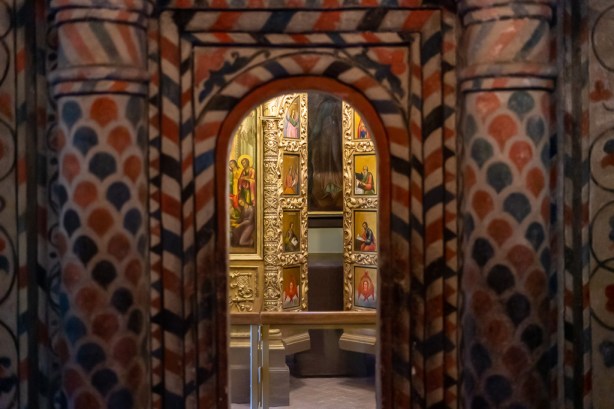
The interior of the Cathedral is very beautiful and richly decorated with icons, altars and nice paintings.


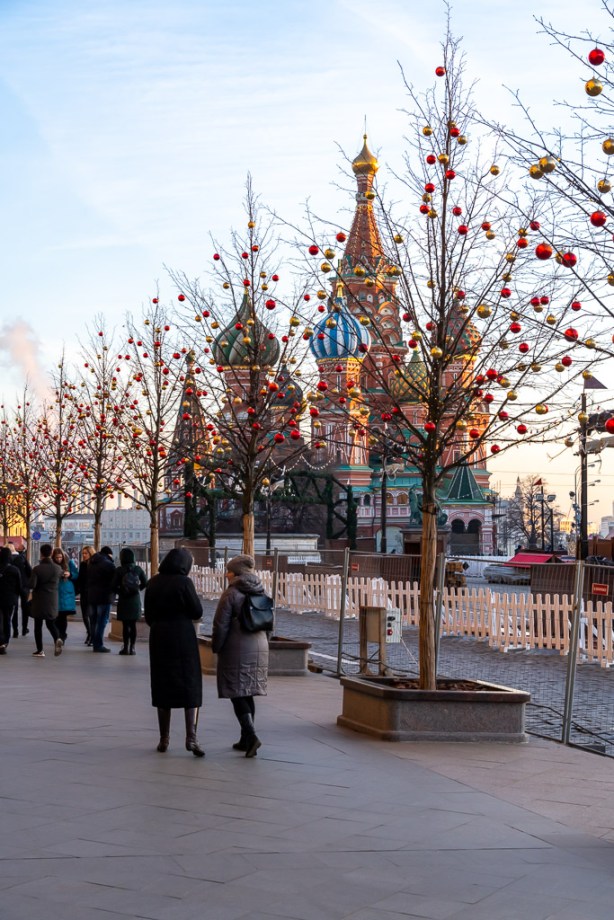
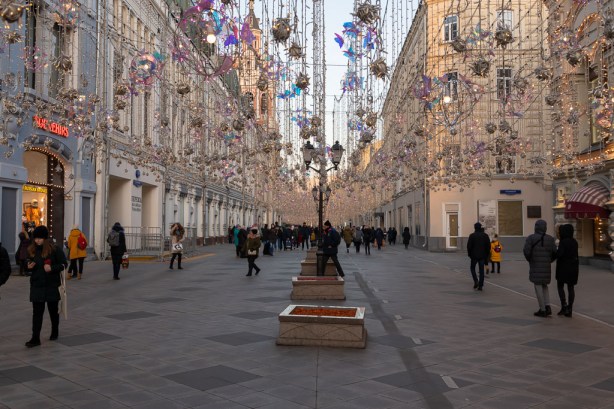
The GUM department store is a very impressive looking building and the roads outside were all decorated, possibly in anticipation of the New Year and Christmas (Russian Orthodox Church celebrates Christmas on 7th January).


The next day morning, I decided to visit one of the most popular monuments in Russia – Lenin’s Mausoleum. It seems this monument attracts the highest number of visitors in a year. Lenin’s body has been embalmed and displayed here since his death in 1924; except for a brief period during the Second World War when the body was moved to a city in Siberia as it was feared that the Germans might capture Moscow. The mausoleum stands on one side of the Red Square; the square, squat red marble tiled building on the left side of the image below. When I arrived, there was a queue waiting for the museum to be opened; Mercury had fallen below zero and it was extremely cold, with a wicked wind, but people waited patiently.


After Stalin died in 1953, his body was also embalmed and displayed right next to Lenin’s. However, Stalin’s body was removed in 1961 as part of the de-Stalinization drive and buried in the Kremlin wall along with other leaders. Photography was not allowed inside the Mausoleum and so I could not take a picture of the body. It looks as if Lenin is sleeping on his back, with a blanket covering the lower half of his body. It looks very life like and you wouldn’t think almost a hundred years have passed since his death.

Two thoughts crossed my mind as I stood there looking at the great leader’s body. This was a man who had changed the world and made a new order of society and politics possible. John Reed, an American Journalist and Communist, was a witness to the October Revolution and he saw the whole event unfold, from close quarters. In about a year from then, he published his book “Ten days that shook the world”, which is an eyewitness account of the revolution. This was an unbiased account as it was published in 1919, before the people that came to power after the revolution had any opportunity to influence what was written. As you go through the book, it becomes very evident that the two people that made the revolution possible were Vladimir Ilyich Lenin and Leon Trotsky. It is also equally evident that Josef Stalin did not have much of a role in the revolution. In the whole book, he is just mentioned in two places and that too as passing references. From the two, the body of one lies preserved in all this grandeur as a sign of respect and gratitude of the state while the other, Leon Trotsky, lies buried in a small grave in a non-descript cottage in Mexico City; after he was murdered by the KGB agents sent by the usurper, Stalin.


The second thought was about the seeming absurdity of making a shrine out of a Communist leader’s dead body. In a strange way, I was reminded about the relics and preserved dead bodies of Christian saints. I am sure that the state benefits from the symbolism of Lenin’s dead body but somehow I felt it was not in keeping with what this great leader stood for. After all, he was the proponent of a philosophy which was rooted in logic and not symbolism.

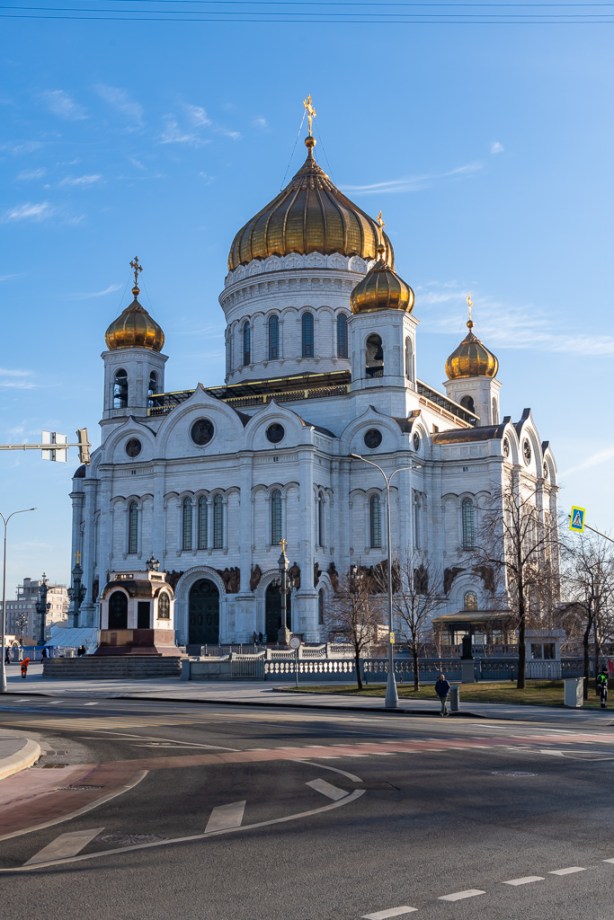
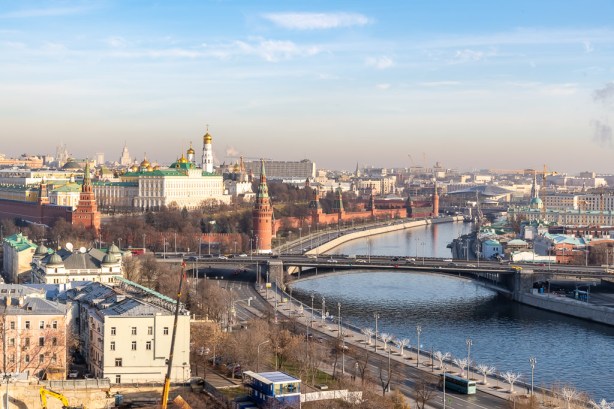
Next stop on the agenda was The Cathedral of Christ the Saviour. This church was built in the nineteenth century and was demolished in 1931 on the orders of Stalin. It was rebuilt between 1995 and 2000, after the fall of the USSR. It is an imposing building and stands right on the banks of the Moscow river. You can walk up to the terrace there are some very beautiful views of the Moscow city from there.


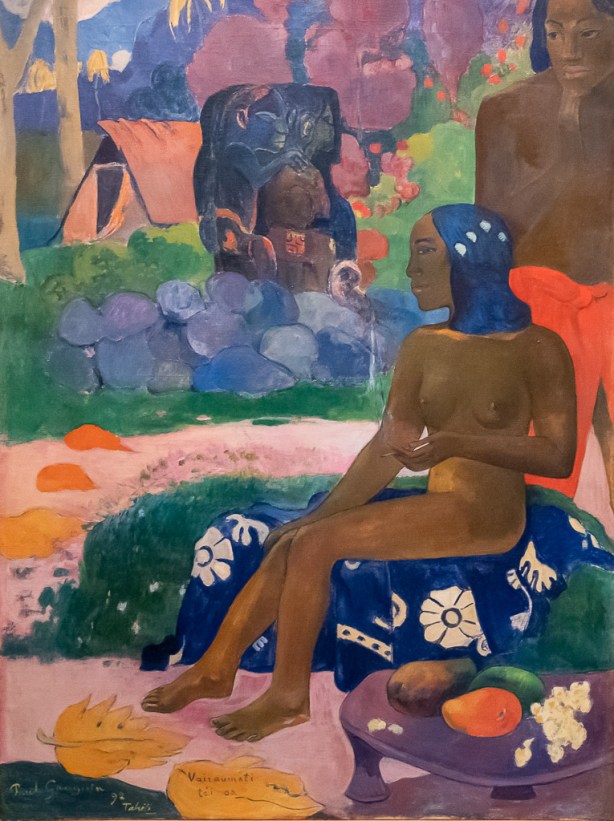
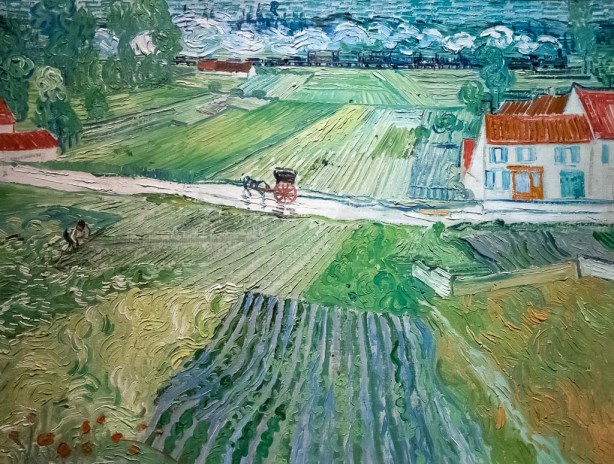
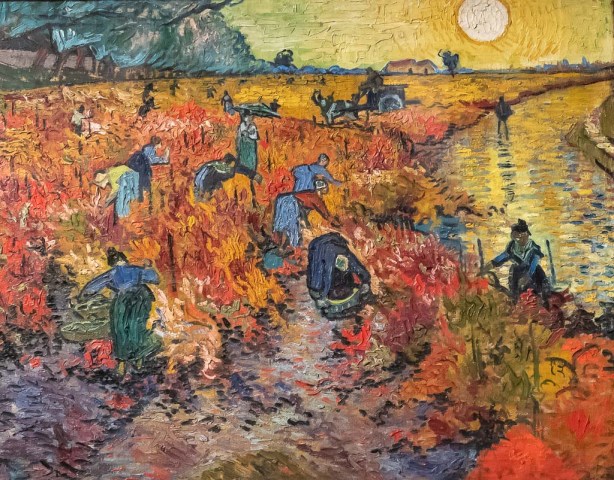
The Pushkin State Museum of Fine Arts is just a short walk from the Cathedral. It has the largest collection of European art in Moscow and is a visual treat. There were works by many masters like Van Gogh, Cezanne, Picasso, Monet, Gauguin etc.

Solomon and the Queen of Sheba: Hans Vredeman De Vries

View of the old market in Dresden: Bernardo Bellotto

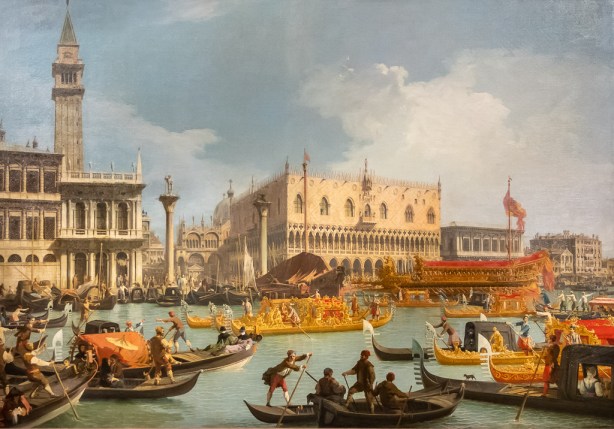
Bucentaur’s return to the pier by the Palazzo Ducale: Canaletto

View of the Grand Canal in Venice from the Fondamenta Del Vin: Michele Marieschi

The bridge across the Marne at Creteil: Paul Cezanne

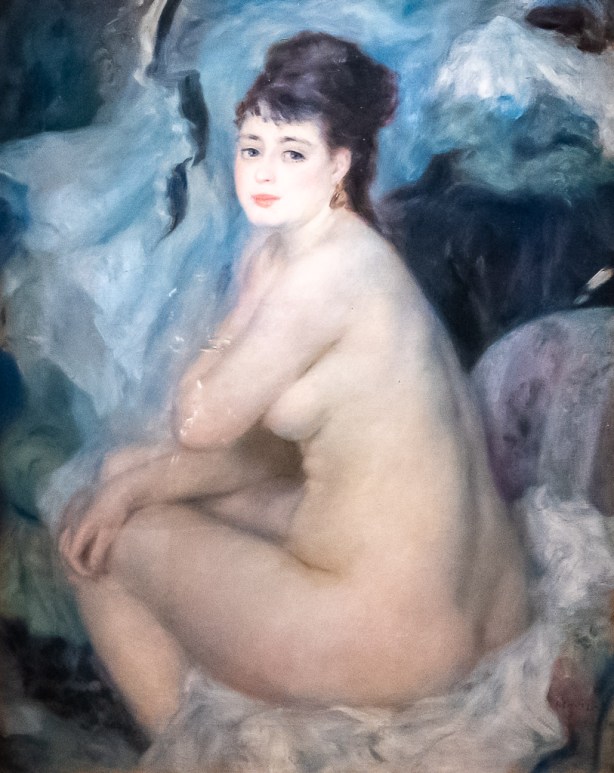
Nude woman sitting on a couch: Pierre Auguste Renoir

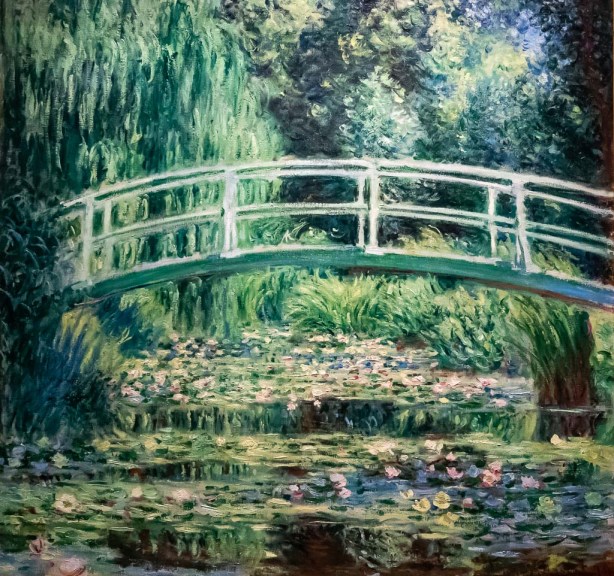
White water lilies: Claude Monet

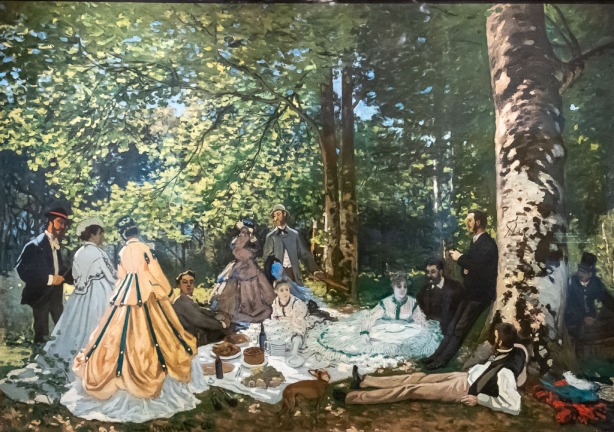
Luncheon on the grass: Claude Monet

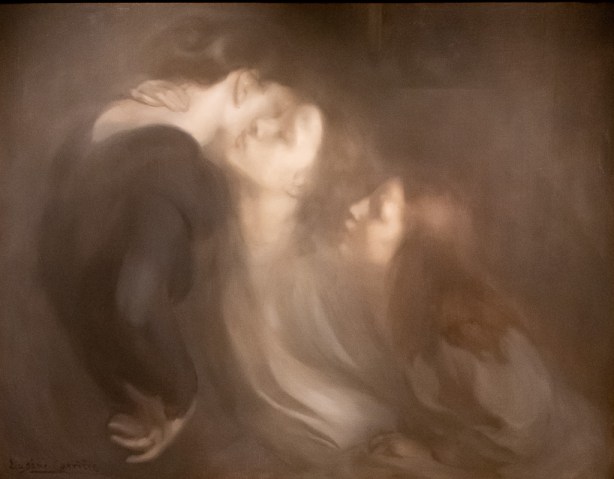
A mother’s kiss: Eugene Carriere

Girls on the bridge: Edvard Munch

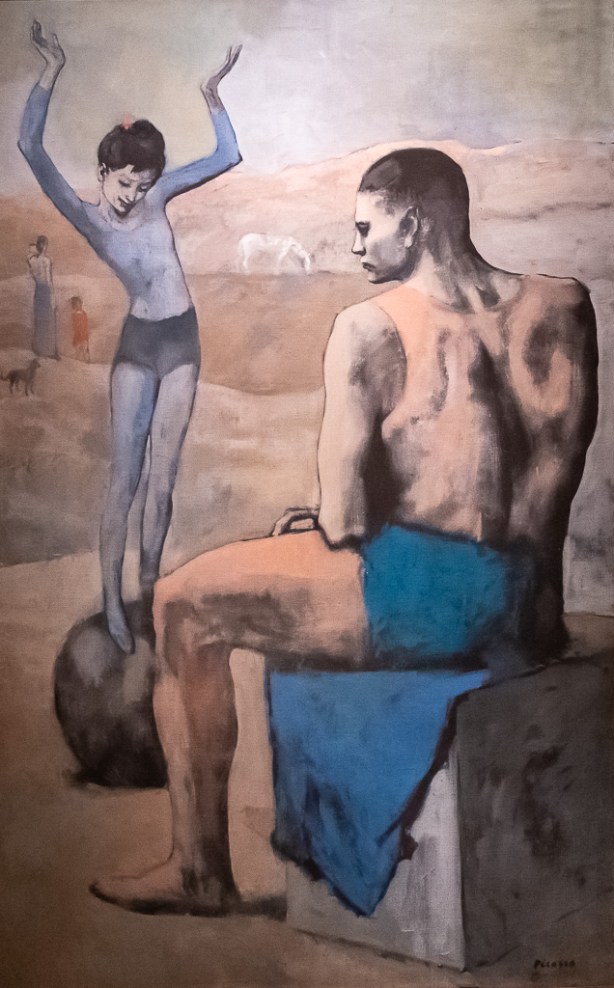
Young acrobat on a ball: Picasso

Spanish woman from Majorca: Picasso

Old jew and a boy: Picasso

Jaguar attacking a horse: Henri Rousseau

The muse inspiring the poet: Henri Rousseau

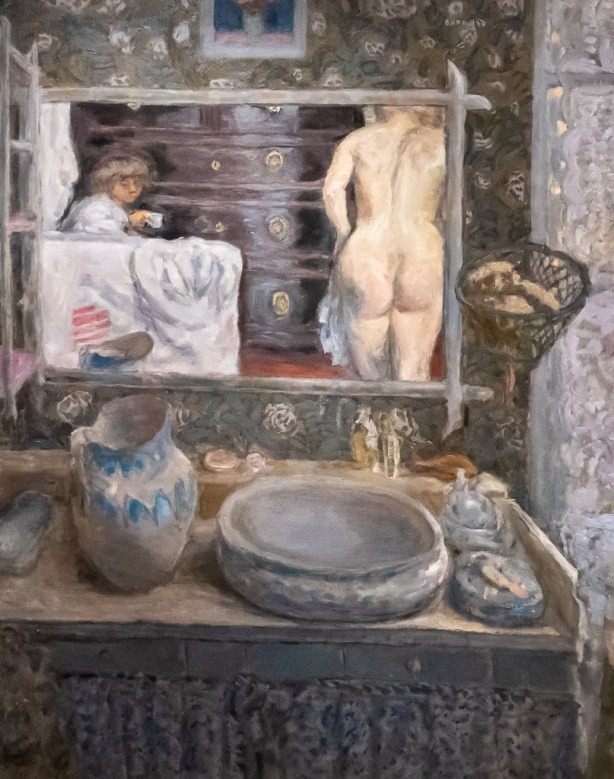
Mirror above a washstand: Pierre Bonnard

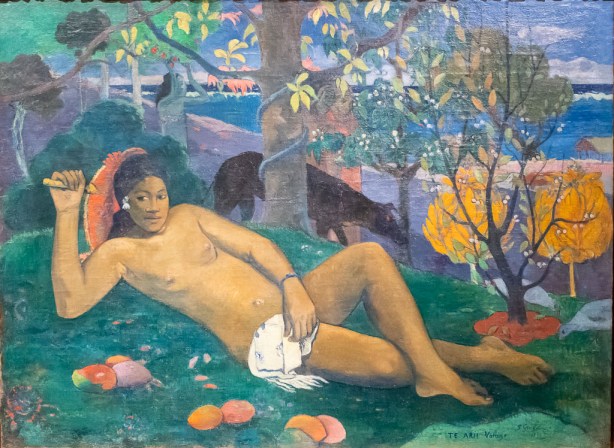
The King’s wife: Paul Gauguin

Her name was Vairaumati: Paul Gauguin

Gathering fruit: Paul Gauguin

What, are you jealous: Paul Gauguin

The ford: Paul Gauguin

Landscape at Auvers after the rain: Van Gogh

The red vineyard at Arles: Van Gogh

The prison courtyard: Van Gogh


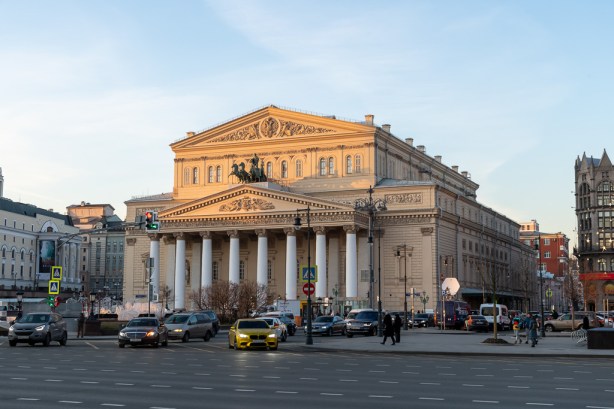
Bolshoi Theatre is a very well known Russian icon with the Bolshoi Theatre Company having been founded in 1776. The company operates in various cities in Russia and the building in Moscow itself is very well known and is even featured in the Russian One Hundred Ruble note. I was staying very near the Theatre and used the opportunity to watch a short performance. This was on one of the side stages and not the main one and was an orchestra. It lasted for about 40 minutes and was quite enjoyable.


The State Tretyakov Gallery has the best collection of Russian fine art and was started by a merchant from Moscow by name of Pavel Mikhailovich Tretyakov in 1856. Having seen some works by Nicholas Roerich in the gallery in Mysore; I was quite keen to visit this collection of Russian art. I found that many of the works from the 19th Century had very relevant and interesting social themes; especially those by an artist named Vasily Grigorevich Perov. Interestingly, the Gallery did not have many works from the Soviet era; not sure why.


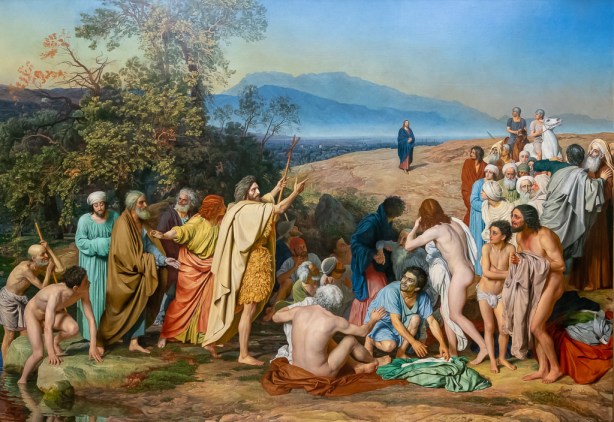
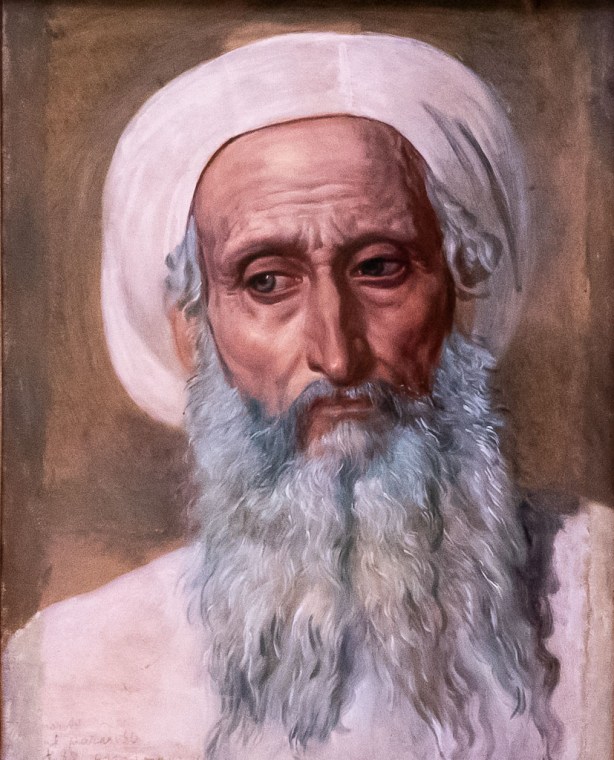
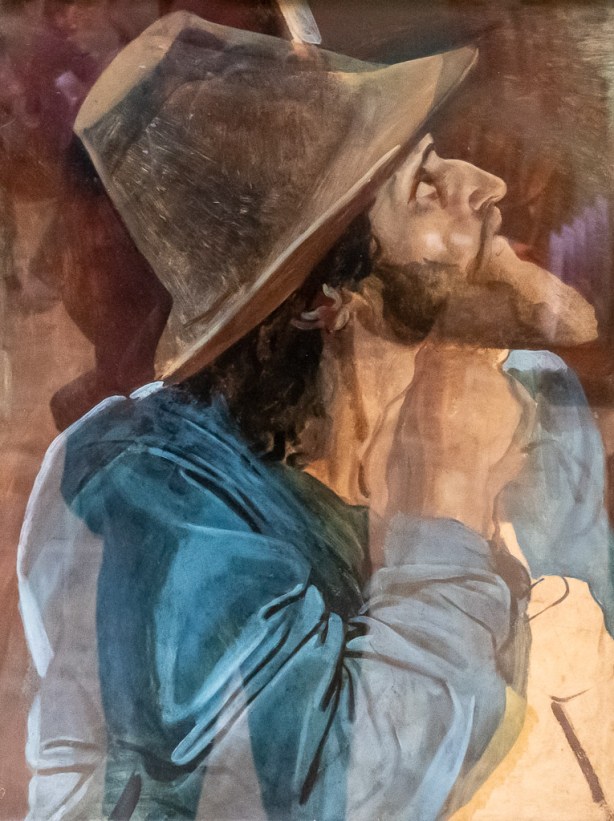
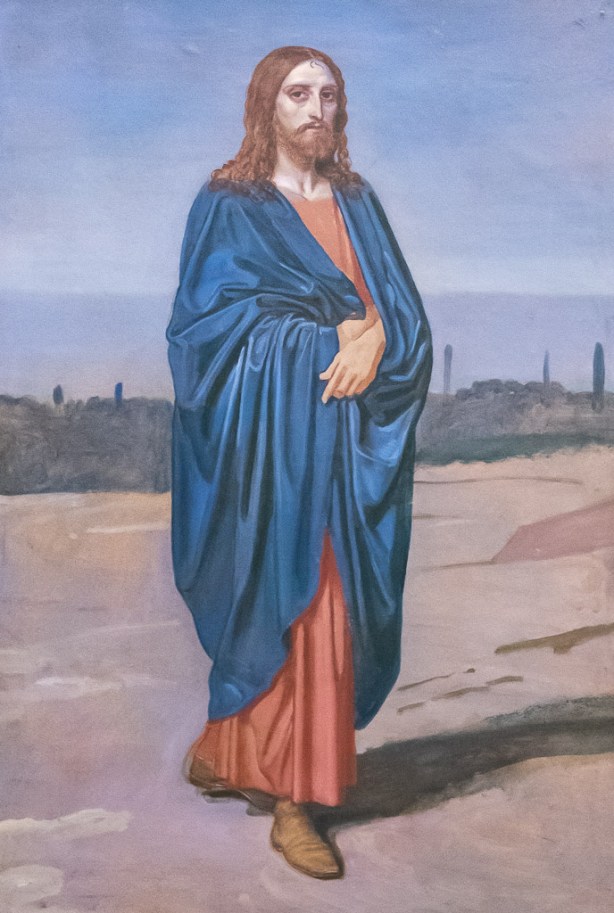
This painting is titled “The appearance of Christ to the people” by the artist Alexander Ivanov. It is a huge work measuring 5.40m x 7.50m and this was the most important work in the life of Ivanov. It took him twenty years to finish this painting and he died within a few months of finishing the painting. John the Baptist is the central figure in the painting (wearing an animal skin) and points to the Christ who appears in the distance. Ivanov has painted himself into the portrait as the wanderer with a staff, sitting right in front of John the Baptist. The artist made several small works, probably as studies for the painting, and these were also exhibited at the museum.


This piece by Konstantin Flavitsky is titled Princess Tarakanova and is based on the story of a young woman named Tarakanova from Italy, who claimed a right to the Russian throne. Catherine II lured her to Russia and imprisoned her in Petropavlovskaya fortress in a cell that was known to flood every time the waters in the nearby river rose. The painting shows a desperate Tarakanova standing up on her cot as the flood waters have reached almost up to the bed. There is no evidence of whether Tarakanova was indeed killed like this but the painting caused a lot of public outcry and Ivanov was later forced to announce that he had made up the subject from a novel.

I liked this painting (The Unequal Marriage by Vasily Pukirev) quite a lot and it seems it was received with a lot of enthusiasm when it was painted as it did not stick to conventional subjects used till then, but instead chose to show a social issue that was common at that time – old, rich men marrying young women who are unwilling, but are forced into the marriage. A young man, supposedly, the girl’s lover, looks on from the back.


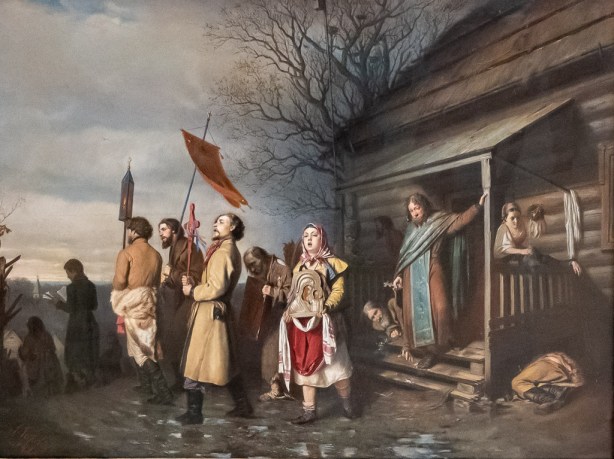
Painting titled “Easter Procession in a Village” by VG Perov. I quote from the description provided by the museum: “In the early 1860s, Perov created a series of anticlerical paintings. Its main theme was the clergy that forgot their duty. A bored and drunken procession carrying icons and gonfalons is passing by the viewer. The peasants with half-closed eyes are wading towards a precipice as if they were blind. Their leader, a drunken priest, who has crushed an Easter egg underfoot, has abandoned them. Not far from him we see a woman holding an icon whose image is effaced. Farther off there is a poor man carrying an icon upside down. But the All-Seeing eye on the gonfalon is there as a reminder that these people won’t escape the Supreme Judgment. The dull landscape, dissonant movements of the participants in the procession and bleak dawn emphasise the ugliness of the whole scene. The painting was removed from an exhibition of the Society for the Encouragement of Artists in St Petersburg on grounds of it being an “immoral” work. Its reproduction in the press was banned, and P.M. Tretyakov was advised not to show it to visitors.”


This painting titled “Troika” by Perov was the one that touched me the most. It was painted in 1865 and in those days, peasants used to migrate to the city in search of work, because of extreme poverty and their children used to work as apprentices. Perov used three such children as his models in this painting. The boy in the middle was living with his mother and he had no father; they were very poor as well. Shortly after modelling for the painting, the boy contracted some disease and died. The mother was distraught and heart broken and she sold all her belongings and took the meagre amount she had to Perov and asked for him to sell the painting to her as she wanted to be able to see her boy whenever she wanted. By that time, Perov had finished the painting and it was displayed at the The Tretyakov Gallery. Perov took the mother to the gallery and showed her painting.

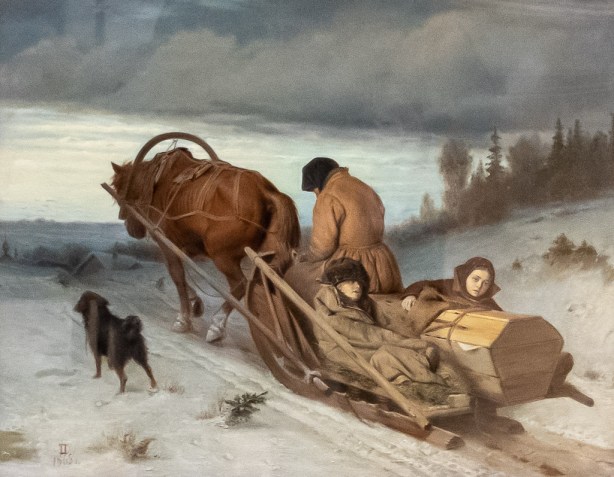
Funeral Procession: VG Perov


Yet another work by Perov that speaks about the social issues of the time: “Tea-party at Mytishchi near Moscow”. I quote from the description provided by the museum: “Ordinary on the face of it, the scene of tea drinking under the shade of a tree is transformed by Perov into an accusatory picture that deals with an acute social issue. The table turned cornerwise to the viewer with a samovar on it halves the small canvas, which is almost square-sized. The world of the painting’s characters also breaks into two parts: on one side, we see a fat, well-fed priest, on the other side – a poor old man and a boy. The impression of social drama is reinforced by the Order of the Hero of the Crimean War on the old man’s chest. At the same time, the idyllic background landscape and the circular rhythm of the painting’s composition embody the idea that justice and harmony lost should be restored in the world.”


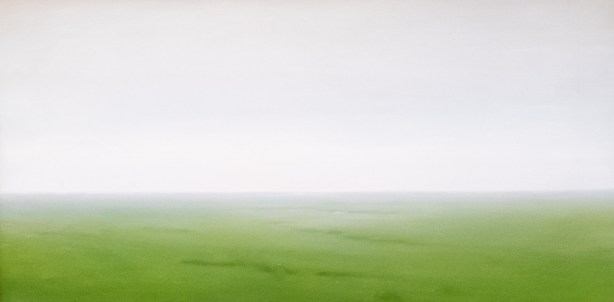
This painting is titled “Landscape Steppe” and is by an artist named Arkhip Kuindzhi. This work was so very different from the other paintings and I was curious to note that it was painted between 1890 and 1895. I am not sure whether there were many paintings in this style at that time. I was reminded of a photo by Andreas Gursky, which is among the most expensive photos ever sold, having fetched a sum of $4.3 Million in 2011.


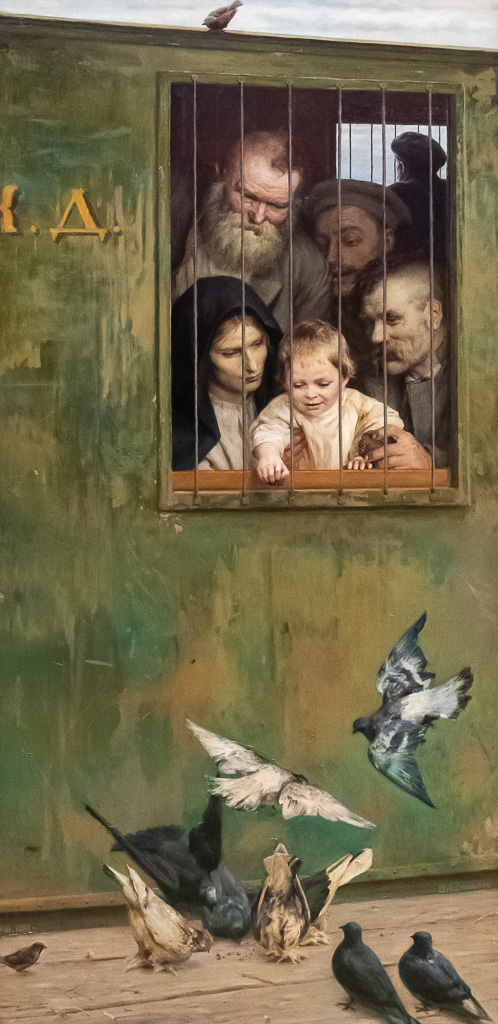
This work titled “There is Life Everywhere” by Nikolai Yaroshenko was yet another image that I liked a lot. I quote from the description provided by the museum: “ The topic of social contradictions was one of the most important for Yaroshenko. This painting was inspired by Leo Tolstoy’s story What Men Live By. The artist originally planned to title his work as Where There Is Love, There Is God. Prisoners have huddled up together at the window of a convict car to feed pigeons. The painting’s idea was to show humanity maintained in inhuman conditions. The central group reminds the Holy Family. Like many other Wanderers, Yaroshenko used parallels with the Gospel to enhance the social resonance of his canvas. “This speaks so much to the heart,” said Leo Tolstoy about this painting.”


This painting “Christ in the Wilderness” by Ivan Kramskoi immediately catches the eye because of the very desolate nature. I quote from the description provided by the museum: “The artist looks upon the Sacred history in the context of the issues of his day. Gospel themes and images served at the time as a way to express ideas of what was good and just. Christ’s personality was understood as the “perfect human being” embodiment; the life journey of a progressive person was a reflection of His earthly path. Kramskoi wrote: “…There is a moment in the life of every human being, who is created in the image of God however slightly or greatly, when they are in a quandary – whether to take the ruble and deny the Lord or not to yield a single step to the evil.” The painting took on a topical nature thanks to the resemblance of Christ’s pose on Kramskoi’s canvas to the pose of Fyodor Dostoevsky in the famous portrait by V.G. Perov. Both paintings were made in 1872 and both were shown at the very same travelling exhibition. Eternal, panhuman problems are the central theme of the painting.”


This is a huge work titled “The Princess of a Dream” by an artist named Mikhail Vrubel. It measures 7.5m x 14m and was painted in 1896 with the help of two others. It speaks about a love affair between Geoffroy Rudel and Princess Melisandre. Supposedly, Rudel heard about the beauty of the Princess and travelled across the sea to meet her. Unfortunately, he contracted some illness during his voyage and died at the time of their first meeting and with this, the Princess became a nun. I am not sure whether this is fiction or true story. I was not very exposed to Russian art in the past and Tretyakov definitely set that right. It was quite a beautiful experience.

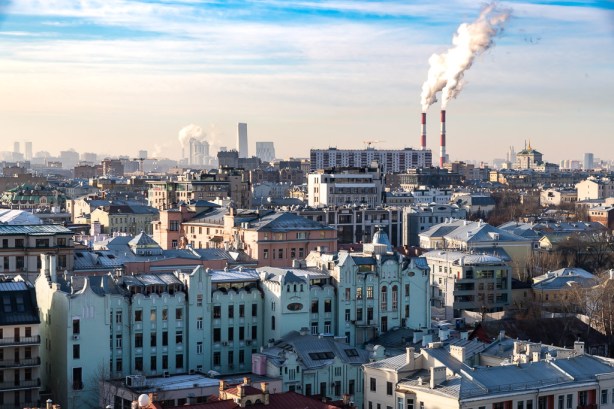
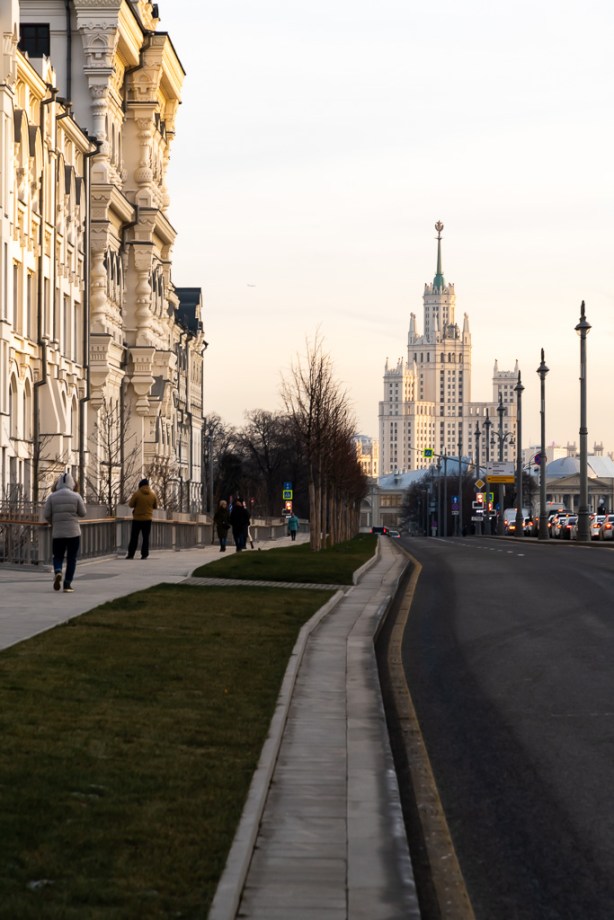
Moscow has very wide roads and walking around the city itself is a pleasure. I was staying close to the Red Square and many buildings around that area were very impressive. There is some more to see in Moscow and two days were not enough. I hope to be back one day.


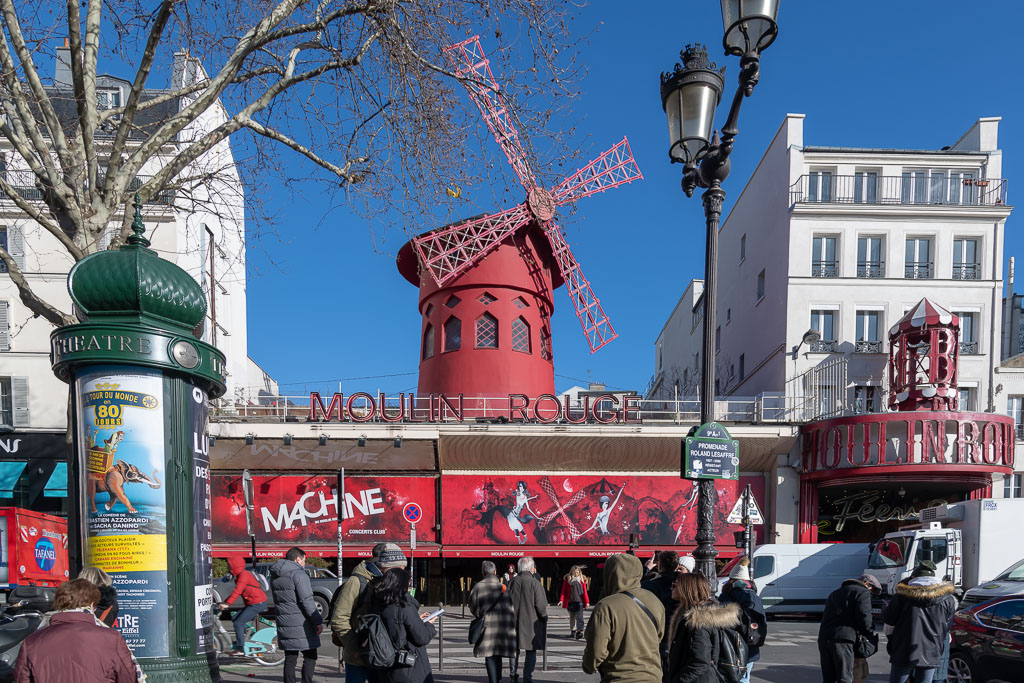
Montmartre has always had a romantic kind of appeal given its association with famous artists such as Van Gogh, Picasso etc. and because of its association with events like Paris Commune. I had not been able to visit Montmartre during any of my previous visits to Paris and this time, when the opportunity presented itself, I grabbed it and set off with my camera. The first sight that greets one as we get out of the metro is the famous Moulin Rouge. This iconic nightclub, which has even made it into celluloid, has been around for more than a hundred years and is often a prime destination for the partying crowd.

_DSC4953

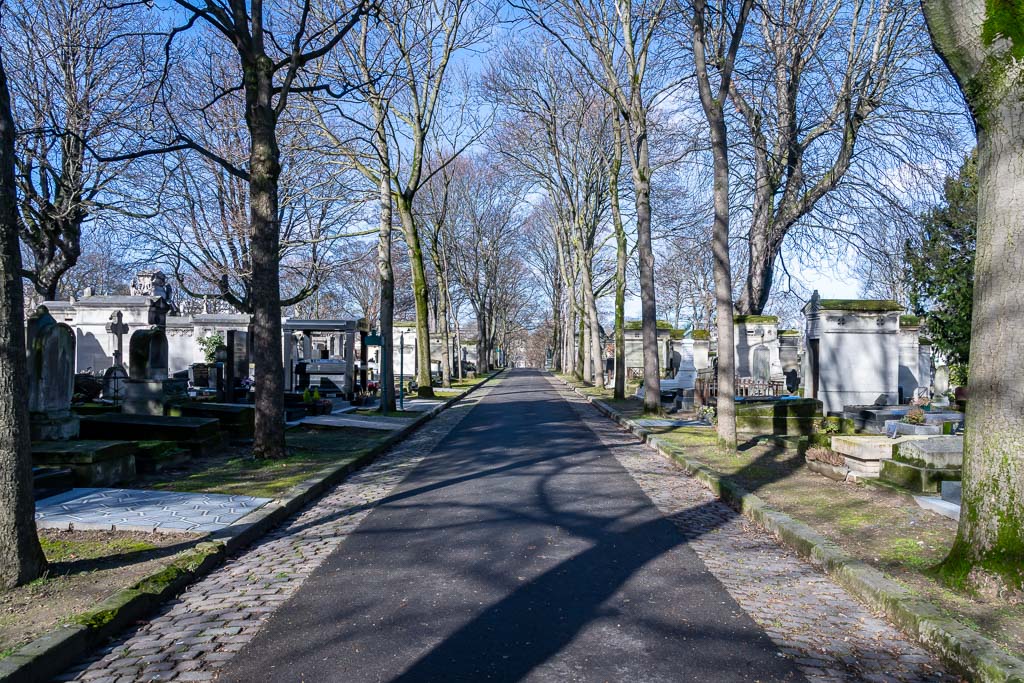
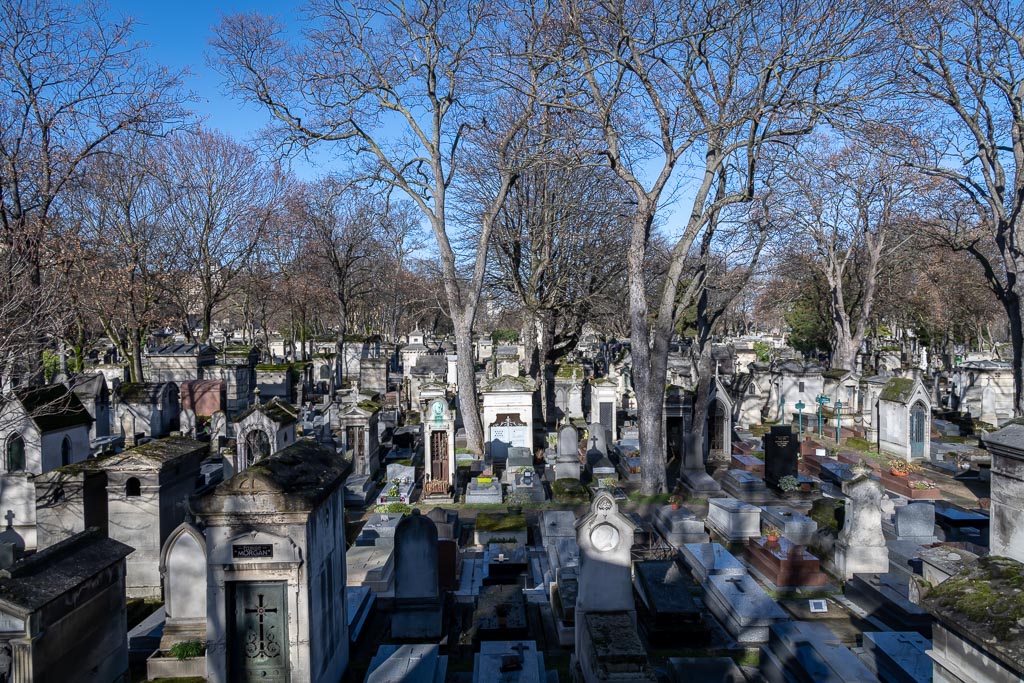
A short walk takes one to the Montmartre Cemetery. As odd as it may sound, I find it kind of peaceful to visit cemeteries, especially the old ones. One gets a strange feeling when looking at the resting places of the famous and the powerful, the dead. As Spring had not yet started in Paris, there were no leaves on the trees and that added to the ambience with the shadows and bare lines.

_DSC4969

_DSC4960

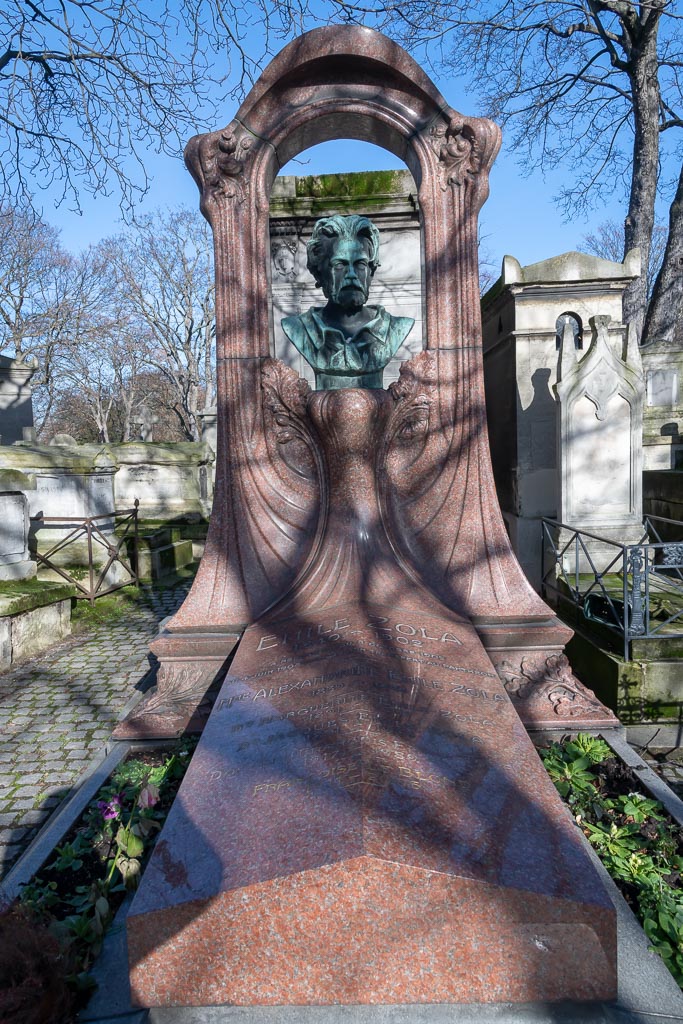
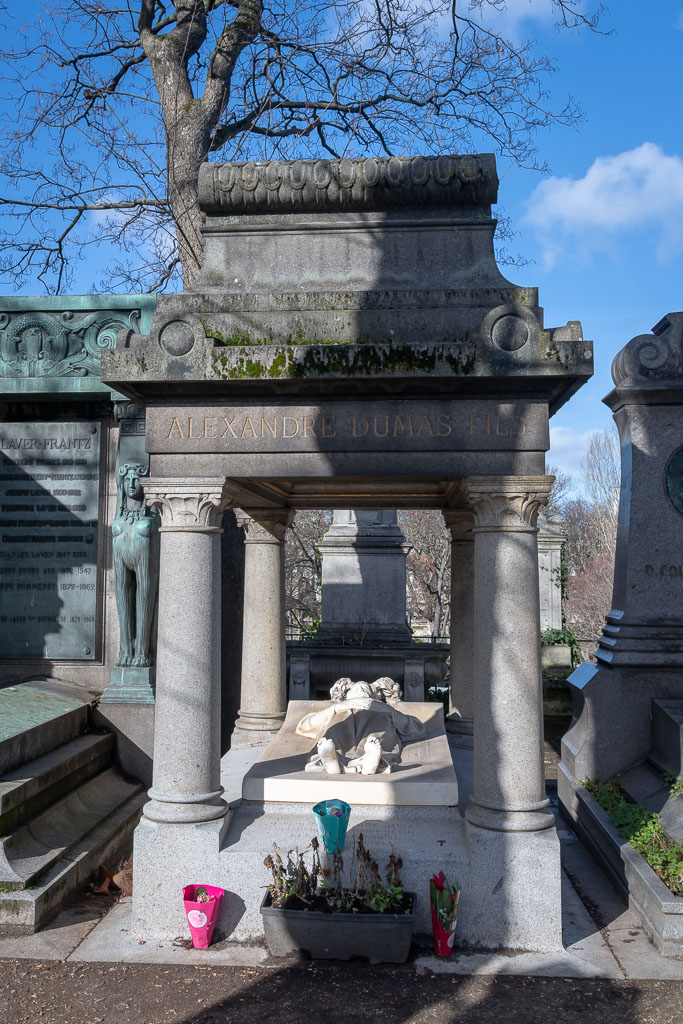
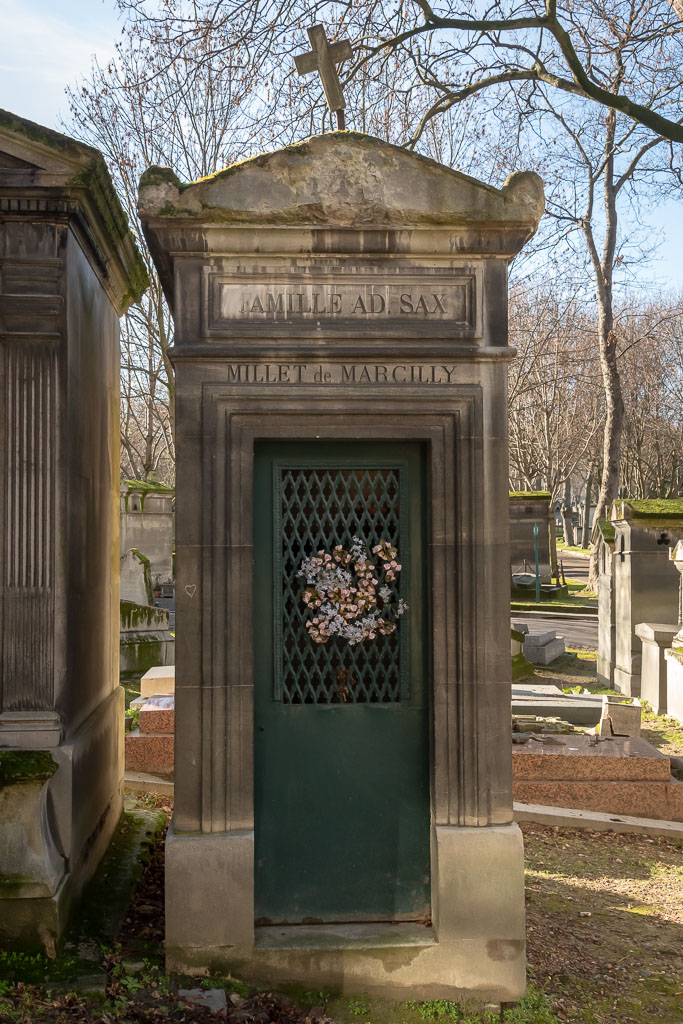
Montmartre Cemetery is quite large and was started in 1825 when Paris started running out of space to bury their dead. The government banned burying of corpses within the city limits and Montmartre, which was outside the city limits and also had abandoned quarries, proved to be the right setting for a cemetery. It has now become a place to visit in the map of Montmartre because of the numerous celebrities buried there like Emile Zola, Alexandre Dumas, Edgar Degas, Adolphe Sax etc. There was a detailed map available in the cemetery which showed the tombs of the famous people buried there but it was a bit confusing and I could not locate Degas.

_DSC4958

_DSC4970

_DSC4967

The next stop on my agenda was the Dali Museum though I was not very sure of how it might turn out to be as I suspected that there was an overtly commercial angle to it. The day was quite sunny and Montmartre presented interesting sights as one passed by.

_DSC4974

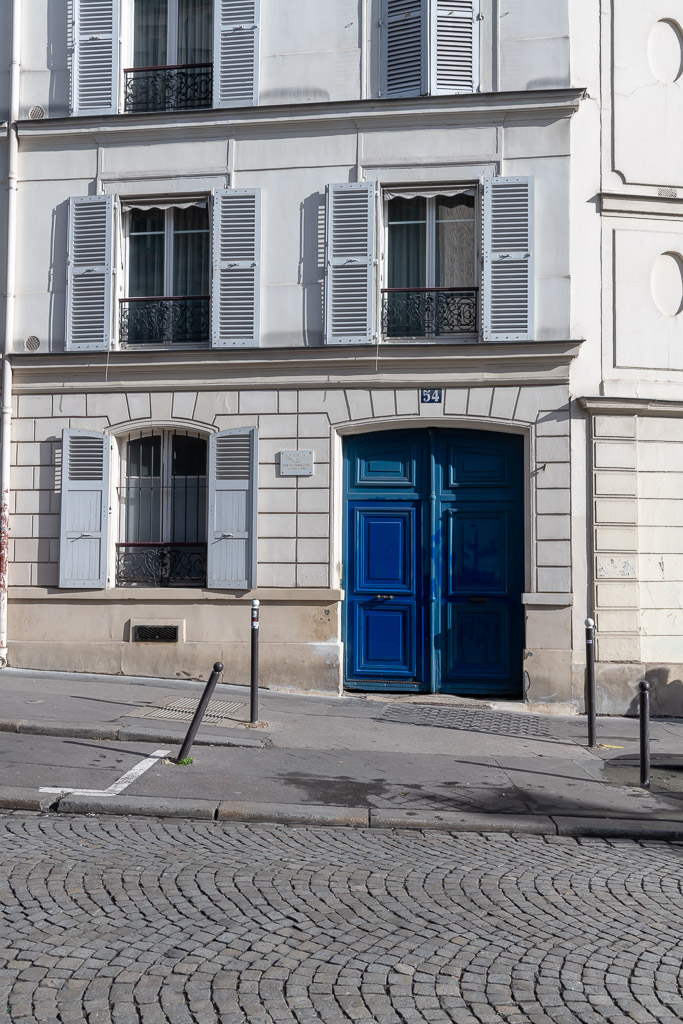
Vincent Van Gogh lived in this house in Rue Lepic with his brother Theo from 1886 to 1888. Theo owned this house and continued living here even after Vincent moved on.

_DSC4979

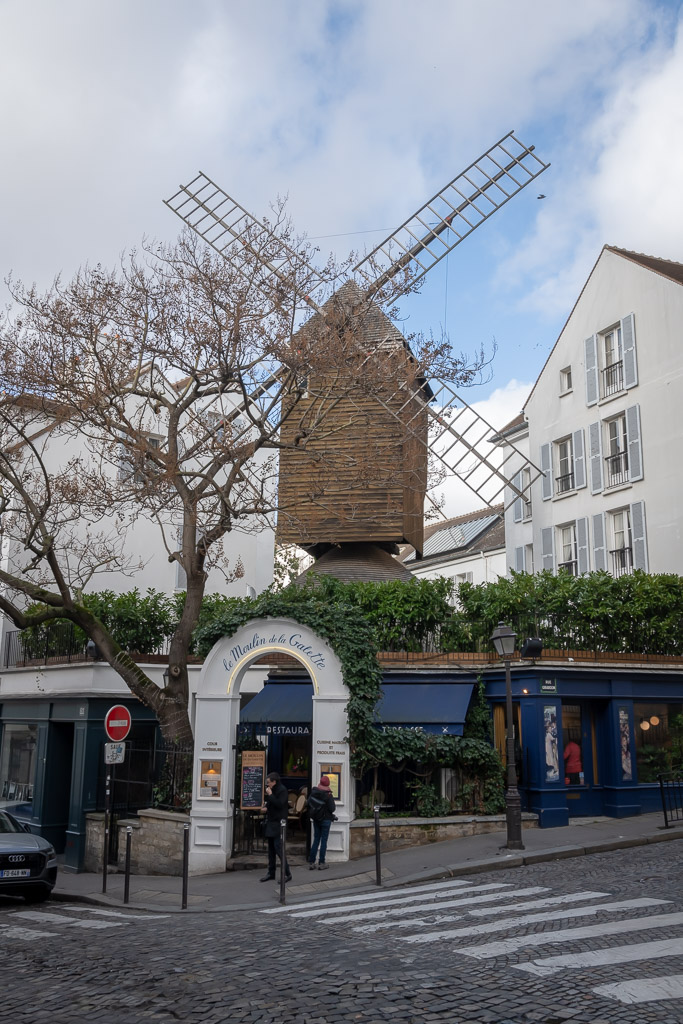
Montmartre once had thirty two functional windmills, of which only two have survived. These can be found at “Moulin de la Galette” and this was a popular subject for many artists like Van Gogh, Renoir, Corot etc.

_DSC4983

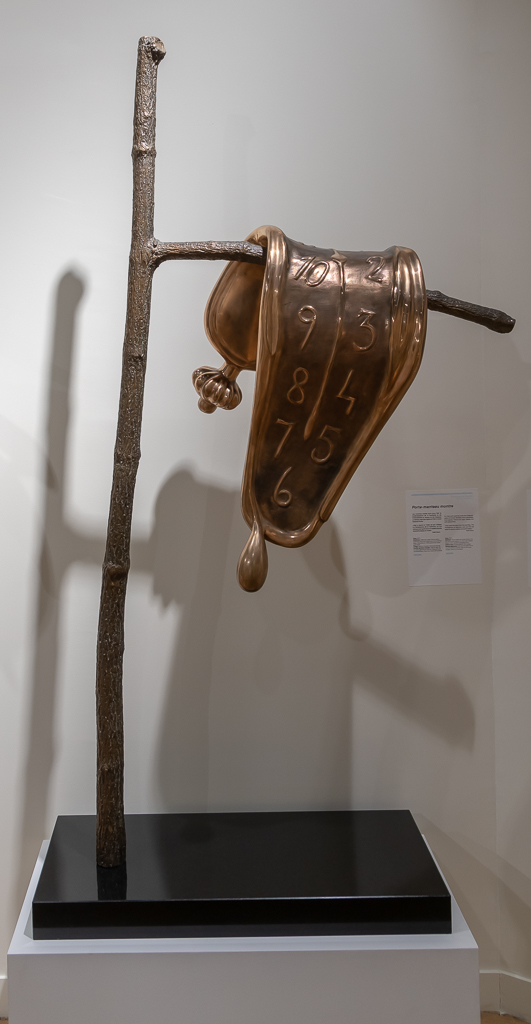
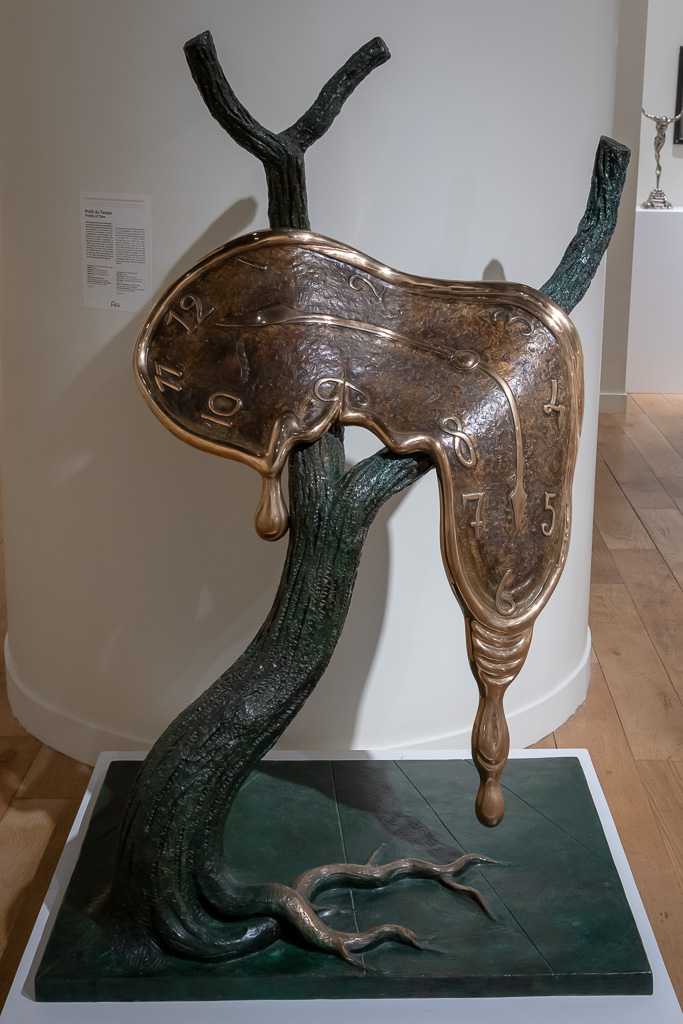
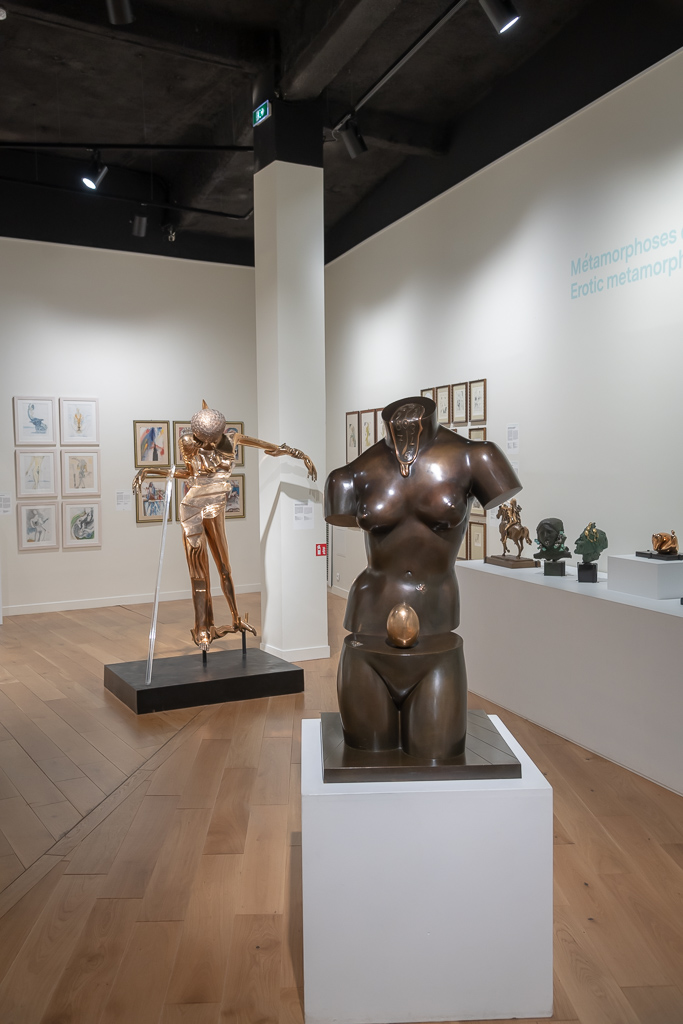
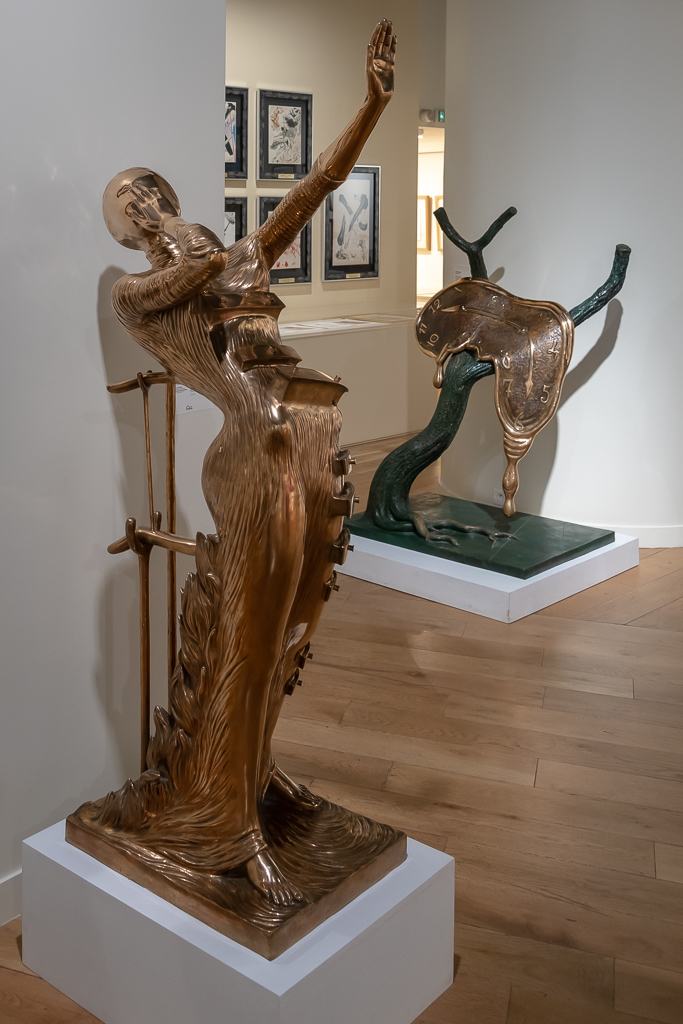
The Dali Museum, though small, turned out to be quite a treasure trove. There were many sketches done by Dali, sculptures etc. “The Persistence of Memory” inspired sculptures were quite fantastic. Dali had done many sketches based on Alice in Wonderland and also a famous comic strip.

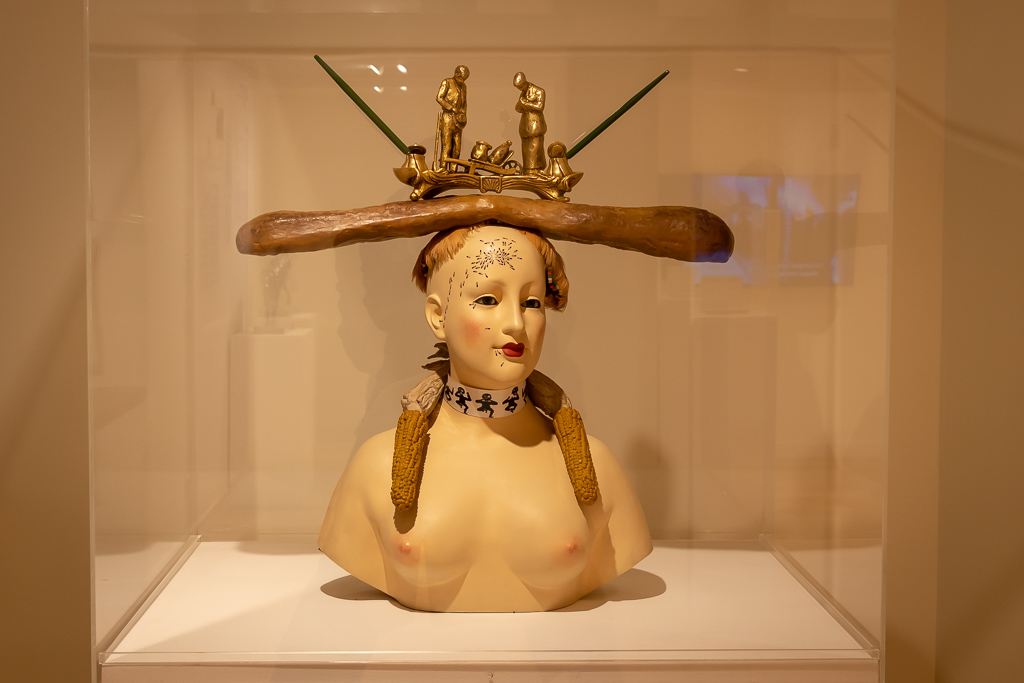
This work “Retrospective Bust of a Woman” was presented in Paris in 1933 with an actual baguette (which was then eaten by Picasso’s dog!) and it evoked mixed reactions as such objects as bread and corn had never appeared in art works before. Ants are an oft-used motif in Dali’s work, signifying decay.

_DSC4989

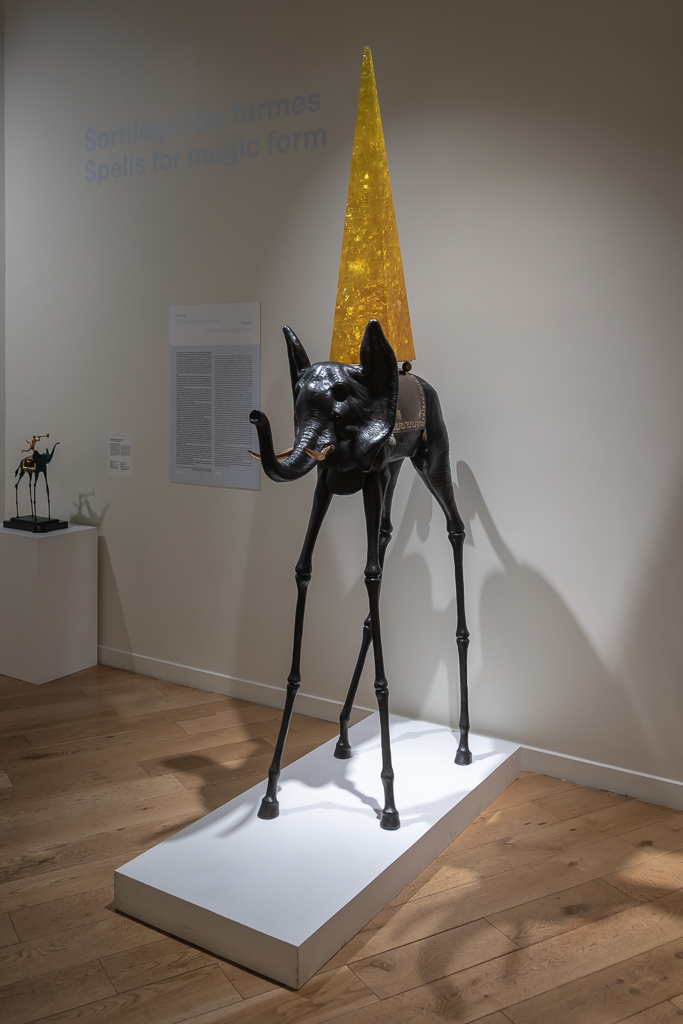
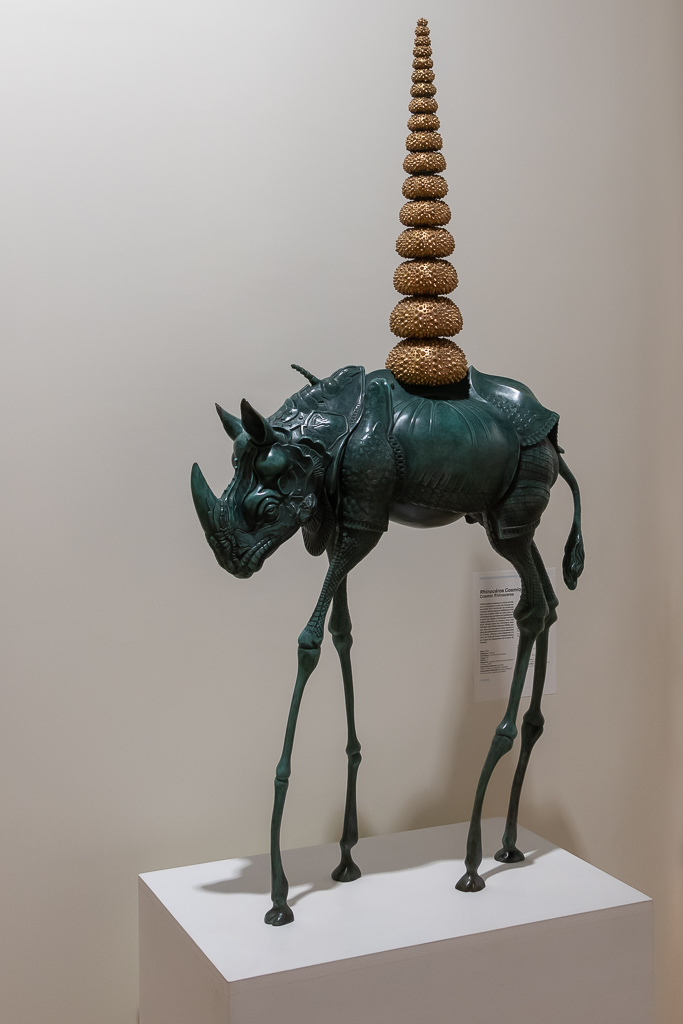
The Space Elephant is a sculpture motivated by Dali’s work “The Temptation of Saint Anthony” and the “Cosmic Rhinocerous” represents Dali’s fascination with objects that have a hard exterior and a soft interior.

_DSC4991

_DSC4993

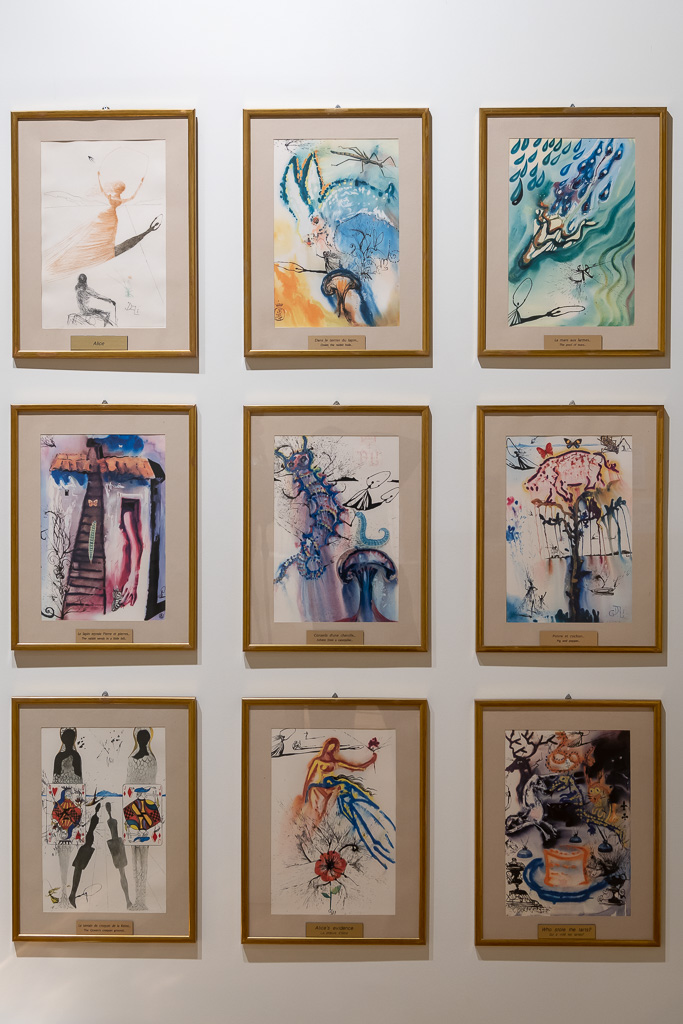
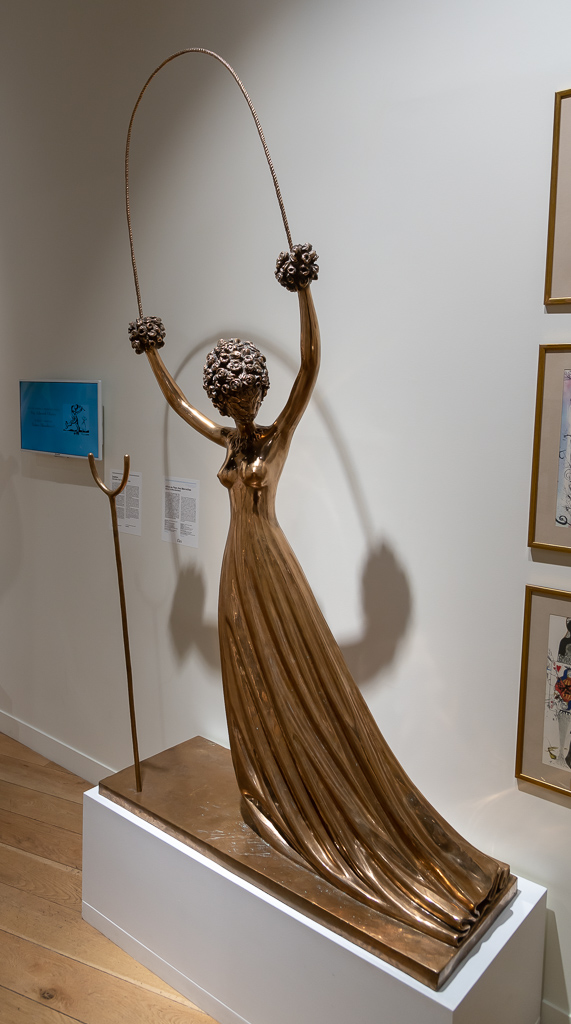
Alice in Wonderland was another favourite subject for Dali and here are a series of sketches that he did based on Lewis Carrolls’ book. In the sculpture, Alice is shown as a young woman, which kind of contrasts with the innocence that Carroll accorded to Alice, in his story.

_DSC4996

_DSC4998

There were many works based on The Persistence of Memory and I liked these the best.

_DSC5000

_DSC5022

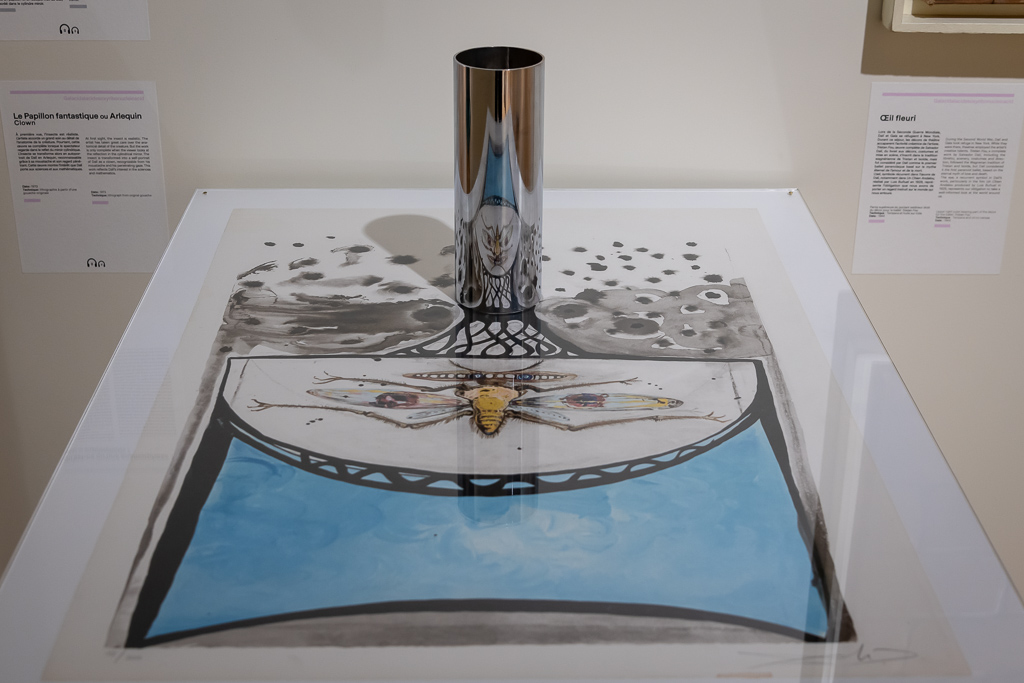
Next was a work that showed Dali’s interest in Anamorphosis. On one hand, it is the painting of an insect done in great detail but the work becomes complete when one looks at the cylindrical mirror where one can see the self-portrait of Dali, shown as a clown.

_DSC5002

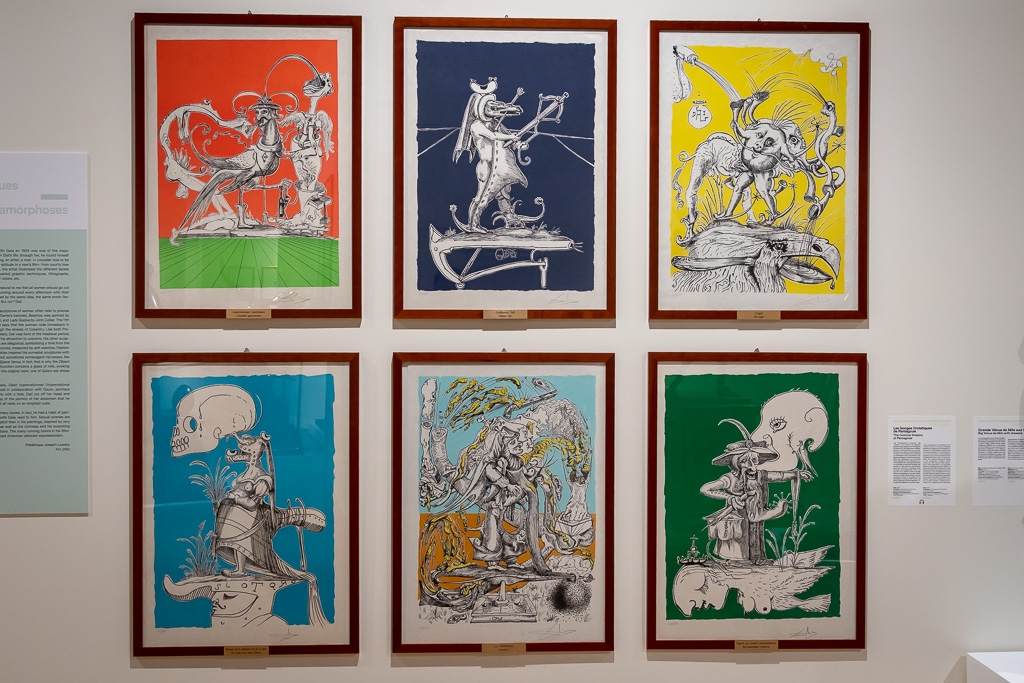
These are some sketches that Dali made for a Parisian publisher in 1971 based on some old engravings. These have been modified into Dali’s own style with grotesque figures.

_DSC5006

This is a work in a classic style but replete with Dalinian symbols like a watch, an egg, two ants and the divided torso.

_DSC5008

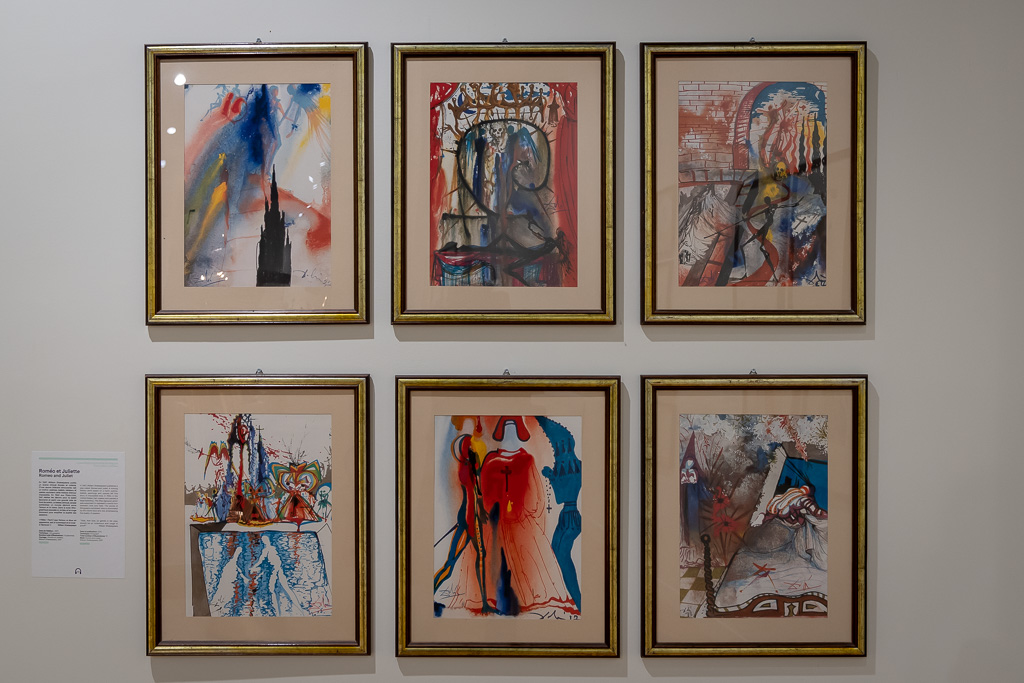
In 1942, Dali produced a backdrop “The Ship Aground” which was inspired by Shakespear’s Romeo and Juliet and its tory of impossible love. Dali tries to show a world torn between love and hate in the colours blue and red, emphasising the duality of passion.

_DSC5016

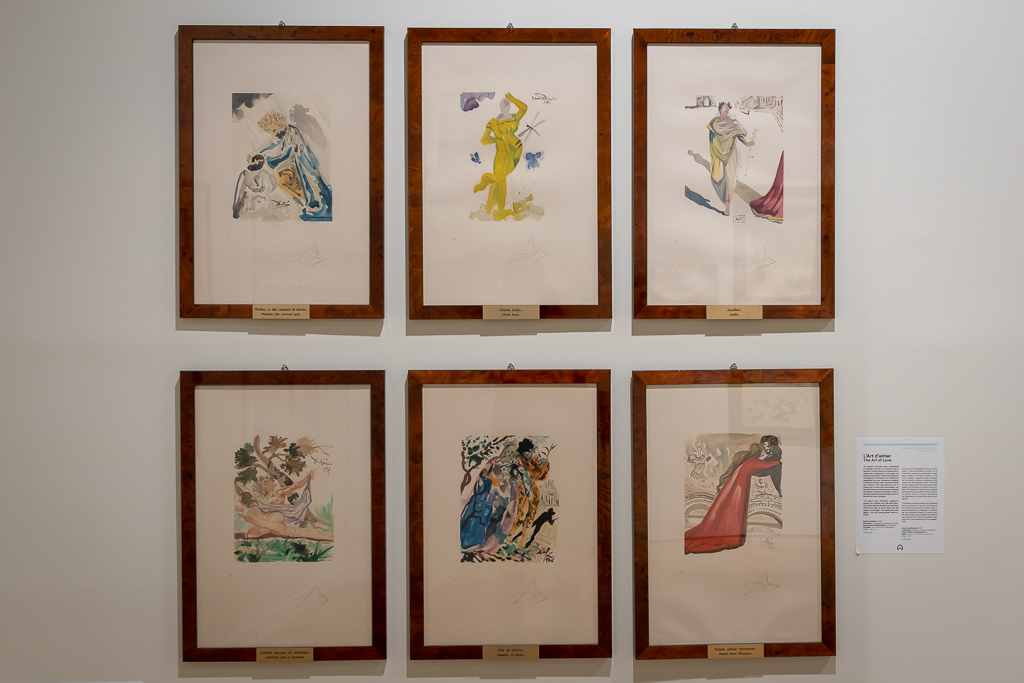
Roman poet Ovid, wrote a series of three books titled “The Art of Love” in the year 2 CE. This was supposed to be a series of instructions to men on how to attract women. Supposedly, this work so enraged Emperor Augustus that he exiled Ovid (censorship and moral policing seems to have been active even then). In any case, the work excited Dali and he produced these etchings based on it.

_DSC5018

“Woman Aflame” is famous work by Dali and I quote this interpretation from what was pasted alongside the work: “This work combines two of Dali’s obsessions: fire and a feminine figure with drawers. The flames coming from her back represent the hidden intensity of subconscious desire, while the drawers express the mystery of hidden secrets. Open drawers point to the private, subconscious of the human being. The flames are supported by crutches “generally used to support fragile soft structures” according to Dali. This faceless woman devoured by flames is the symbol of the mystery of femininity.”

_DSC5020

Next on my list was a visit to the Sacré-Coeur Basilica in the heart of Montmartre. Construction of this church started in 1875 (soon after the Paris Commune was crushed) and finished in 1914. It was consecrated in 1919 after the First World War finished. To many of the free spirited inhabitants of Montmartre, this church represented the last nail in the coffin of their freedom and they viewed this as an imposition of the will of the state.

En route to the church, I passed through the famous Place du Tertre, which was a haunt of artists in the heydays of Montmartre. Even today, one can see some artists with their tripods and easels offering to make portraits of tourists and selling their work.

_DSC5026

Maybe because I had an impression of Sacré-Coeur as a symbol of oppression, the first image I captured of the church was this – more like a picture from the sets of a horror film!

_DSC5027

The Basilica is quite impressive and it also offered some interesting views of Paris as it stands on a hilltop. Photography was not allowed inside the church and so I couldn’t capture any images there. It looked pretty much like other European Catholic churches with plush interiors. Entrance to the bell tower was closed and that was a pity as that would have offered some more interesting views of Paris.

_DSC5033

_DSC5039

_DSC5047

After you get down from hill, a few minutes’ walk takes you to the “I Love You” wall. This is set up in a small garden and has an area of about 430 sq. ft. The phrase “I Love You” is written all over the wall in about 250 languages. I could spot Malayalam, Tamil, Kannada, Hindi etc. on the wall. This seemed to be a must visit spot for the romantically inclined as I could find many people expressing their love in front of the wall.

_DSC5076

When you wander through Montmartre, you see plenty of buildings that were associated with artists – like this one which claims to have been frequented by Van Gogh, Picasso, Monet etc.

_DSC5088

One of the quaint little delights in Montmartre is the Le Clos Montmartre a tiny vineyard bang in the centre of town spread across an area of about 16,000 sq. ft. The produce from this vine yard (about 1000 bottles of wine) is auctioned off during the annual harvest festival and the proceeds used for development projects in the area. Supposedly, this vineyard was started in 1933 to stop real estate developers from grabbing the space – I wish we had similar projects in Bangalore.

_DSC5091

_DSC5097

_DSC5123

Just across the street from the vineyard is the oldest cabaret in Montmartre – “Au Lapin Agile”. It was started in 1860 under the name “Au rendez-vous des voleurs”. In 1875, artist Andre Gill painted the image of a rabbit jumping out of a saucepan and people started calling the place “Le Lapin à Gill”, meaning “Gill’s rabbit”, which later on evolved to the present name. This was also a popular haunt for artists, anarchists, students, writers etc. Picasso even made a painting titled “Au Lapin Agile”.

_DSC5099

_DSC5126

My last visit was Musee de Montmartre, which was the oldest house in Montmartre, having been constructed in the middle of the 17th century. Many artists lived here, including Suzanne Valadon and Renoir had painted in the gardens of the house. There were many works of art in the museum with many works from Valadon.

_DSC5109

_DSC5119

_DSC5130

Montmartre still retains a bit of its former anarchist spirit with graffiti to be seen in many areas.

_DSC4987

_DSC5134

_DSC5135

_DSC5086

Although I had spent a good many hours around Montmartre, I hadn’t covered all the sights. However, I could sense the spirit of Montmartre, that still lingers there – a heady mixture of art and anarchy. One could only wonder how it would have been in the twentieth century when Montmartre had its day in the sun. Just roaming around the place was great fun and I am sure I will be back here one day. For now, dusk had sent into Montmartre.

_DSC5137

21 May 2013

Seville, the land of flamenco and bull fighters, was also an important port with a river that connected it to the Atlantic, a 100 km away. It was from that Christopher Columbus set sail to East Indies and ended up discovering America. Immediately after the Moor invasion in the Eighth century, Seville was under the Caliphate of Cordoba. After Cordoba fell in AD 1031, Seville became a small kingdom by itself and was ruled by the Almohad dynasty. As with the rest of Andalusia, Seville also was under constant attack because of the Christian Reconquest and finally, it fell to Fernando III of Castille in AD 1248.

As per the guidebooks, the most important sight in Seville is the Cathedral and so that was our first stop for the day. The Cathedral is built on the location of an old mosque, which was demolished in AD 1401. The construction of the new church took more than a hundred years and was completed in AD 1507. The majestic minaret of the old mosque, called La Giralda, was kept intact and is part of the Cathedral. The building is huge and awe inspiring.

Spain_May13_ 001

Spain_May13_ 003

There was a queue to enter the Cathedral and joined up. The square around was already active with many buggies and such, available for fun rides around the town.

Spain_May13_ 010

The La Giralda got this name after a weathervane, in the shape of a statue, was installed on top of the minaret in the Sixteenth Century. This statue represents the victory of Christian faith and that must be why it was placed on top of the minaret that represented Islam. A replica of the status is displayed as one enters the yard of the Cathedral.

Spain_May13_ 018

This Cathedral was the largest in the world when it was commissioned and supposedly, the authorities wanted such an impressive building that everyone would think they were “mad”! In any case, it is a colossal structure with very many impressive chapels.

Spain_May13_ 029


Spain_May13_ 048

Spain_May13_ 125

What attracted me the most was the tomb of Christopher Columbus. This tomb is supposed to contain his mortal remains though there is controversy on the subject as he was originally buried in the Dominican Republic and it is said that most of his remains are still there. The four pall bearers represent the four kingdoms of Spain – Castile, Leon, Aragon and Navarre. The significance of Columbus in Spain’s history is borne out by the fact that the Catholic Monarch, Queen Isabella herself is shown as the pall bearer representing Leon (on the front left with the oar in hand). The other pall bearer in the front holds a spear with a pomegranate, showing the fall of Granada (Granada means pomegranate in Spanish). I was very attracted to this tomb and I spent a lot of time around it. That I was standing close to a man (even if it were the remains) who was such an adventurer and visionary, was a special feeling.

Spain_May13_ 065

Spain_May13_ 051

There are a good many chapels inside the Cathedral and many are very ornate. The one that attracted me the most was the Chapel of Saints Justa and Rufina. They were sisters who lived in Seville in the late Third Century and were ardent Christian believers. They refused to convert to pagan faith and the (pagan) authorities who ruled Seville at that time had the sisters tortured and killed them finally. During one of the pagan festivals, the pagans destroyed the utensils that the sisters had made and in retaliation, they broke a statue of Venus. According to legend, during their imprisonment, one of the sisters (Rufina) was thrown to the lions but the lions refused to attack her and licked her feet. These two incidents are represented in a painting placed in the altar of the chapel dedicated to them. I was wondering whether they would have thought that their story would be remembered 1200 years later and retold when a church was built. Supposedly, the resistance of the sisters represented the resistance of Seville. The La Giralda is also shown in the background in the picture.

Spain_May13_ 078

This Cathedral was meant to be a showpiece for Christianity and so is full of pomp and splendour. Many treasures that belong the Cathedral are also displayed. I guess this is to impress visitors as to glory of the faith. However, I could not help feeling that this was quite at loggerheads with what Jesus Christ had imagined.

Spain_May13_ 107

Spain_May13_ 115

Spain_May13_ 120

Spain_May13_ 096

The keys of the city of Seville were also to be seen. These were the keys handed over to the Christian conquerors in AD 1248 when the city was captured.

Spain_May13_ 112

The La Giralda is about 90 metres high and it is possible to climb up to the bell tower. As can be expected, the views from the tower are fantastic.

Spain_May13_ 194

Spain_May13_ 145

Spain_May13_ 157

Right next to the Cathedral is the Alcazar, residence of many generations of Kings and Caliphs. This ancient building was first constructed in the Tenth Century and then renovated and rebuilt. Even today, a portion of this palace is used as the official residence of the royal family when in Seville.

Spain_May13_ 201

As one steps past the impressive gate, the Alcazar soars in front of the eyes in all its majesty. The façade is very Islamic as care was taken by Pedro I (Peter the First) of Castille, who rebuilt the palace. Pedro I was a Christian king who seems to have been quite an interesting personality. For starters, he seems to be referred to as Peter the Just and Peter the Cruel. The nobility and the aristocracy called him Peter the Cruel whereas the common people called him Peter the Just. Given that he lived in the Fourteenth Century and the subsequent recording of history must have been quite influenced by the nobility, I am inclined to believe that Peter must have been a king who understood the sufferings of the poor and supported them. He also seems to be the only Christian king who exhibited religious tolerance. When he rebuilt the Alcazar, he made sure that he used artisans who were proponents of Islamic architecture and he also used perishable material such as wood and plaster (supposedly, Quran reserves eternal structures for Allah). In some of the doorways, there are Arabic inscriptions that mean: “None but Allah conquers”, “Happiness and prosperity are benefits of Allah” etc. He appreciated the Islamic culture that existed in Seville at the time and it was evidenced in his dress and food. Peter also gave permissions to the Jews to build a synagogue in Toledo. I was quite impressed, especially when I contrasted this against the religious intolerance fostered by the Catholic Monarchs, who were to come later, who ushered in the black period of Spanish Inquisition. Incidentally, a friend told me later that there is still an office of the Inquisition in Seville (it is called by a different name these days).

Spain_May13_ 215

Spain_May13_ 222

Spain_May13_ 226

This palace is Seville’s answer to the Alhambra of Granada. The rooms are decorated with rich carvings and highly ornate walls and ceilings. I was just lost in the beauty of the place as I wandered from room to room. It was here that the Catholic Monarchs, Ferdinand and Isabella, spent time while preparing for their conquest of Granada. They used to meet with Christopher Columbus in this palace to discuss his expedition. The beauty of the whole place is breath-taking.

Spain_May13_ 247

Spain_May13_ 249

Spain_May13_ 253

Spain_May13_ 260

Spain_May13_ 275

Spain_May13_ 289

Spain_May13_ 299

Spain_May13_ 310

Spain_May13_ 312

Spain_May13_ 332

Spain_May13_ 341

It was getting late by the time we finished the Alcazar and we decided to visit Plaza de Espana before calling it a day. Plaza de Espana is located in the Maria Luisa Park and was built in 1928 for the World Fair hosted by Seville in 1929. This is a beautiful semicircular building with many exquisite bridges and a very nice fountain in the centre.

Spain_May13_ 389

Spain_May13_ 404

We spent some time wandering around the Plaza and then headed back. Overall, it was a very satisfying day and the personality that stayed with me was Pedro I. He must have been an extraordinary man to have shown such tolerance in those days when everyone else seemed to be headed the other way. I was left wishing how better off we would be if only some of our current leaders could borrow a leaf from his book!

19 May 2013

There is great charm in taking a drive around the countryside and dropping in at various quaint towns you find on the way. I had heard of the white towns of Andalusia and was very interested to have a close look – I also remembered seeing them in some movie. The day being nice and sunny, we decided to explore white towns that day.

The white towns of Andalusia are located to the northern part of Malaga and Cadiz provinces and so we had an hour’s drive to the nearest one. During the Reconquest, the Moors started retreating up the mountains when their main cities in the plains fell to the Christians. They set up small villages in difficult to reach places and that allowed them to hold on much longer even after the major towns had all been captured. However, eventually, these villages were also captured and have now become towns. The walls of all buildings in these towns are white and hence the name “white towns”.

I had charted out a rough course and we set out accordingly. The first stop was planned to be Setenil de las Bodegas, a white town different from others. While others had set up their villages in hills and on the mountains, the people of Setenil had made their dwellings in the deep caves beneath the cliffs of the River Trejo. The drive along the countryside is very enjoyable, especially on a sunny day. The Andalusian countryside is fully utilised with olive plantations all across. We could also see a lot of wind mills on many of the hilltops.

Spain_May13_ 146

The drive, being through high country, is very enjoyable and you have great sights everywhere. I was in very good mood as I drove up to Setenil, little realizing the perils that lay ahead. As we approached the town centre, I noticed that the roads were getting narrower. Roads in old towns in Europe are generally narrow and I did not pay this much attention; nor did I notice that most cars on the road were small hatchbacks unlike the full sized sedan that we had rented. Soon, we found ourselves in a spot where the car could just pass and the road seemed to curve on ahead. It suddenly struck me that if the road narrows any further, our car would not pass. In a wave of panic, I had visions of the car being stuck and some recovery truck towing it away, the day wasted and the pocket a lot emptier. However, there was no option but to go ahead and so, we inched along and soon spied a plaza at the end of the road but as always, to get to that safe place, we had to go through a particularly narrow opening! Anyway, after losing much sweat and with the wing mirrors folded in and with great support from Sandhya and a few passersby, we finally passed through, albeit with a small scratch on one of the mirrors. A definite blow to my driver pride!

The effort was well worth it though, as the town was very beautiful with wonderful small walkways and tracks that led up and down various inclines. The cave dwellings have mostly been converted to bars and cafes. It was wonderful to walk around and we spent some time walking around. It was obvious to me that a gym would have no business in this town where you were climbing up or down all the time!

Setenil

Steneil_Street

After some more excitement, which included driving into a dead end in a cave and some hair raising reversing, we drove on to our next destination – Olvera. This one turned out to have slightly wider streets than Setenil and so my blood pressure was in check when we got to the town square. There is a very nice church and castle in Olvera but both were closed when we got there and so could not go in.

Spain_May13_ 100

Spain_May13_ 105

Spain_May13_ 110

Spain_May13_ 116

Next on the agenda was Zahara de la Sierra, a white town that seemed to be a must-visit based on what I read on the net. As we drove along, we passed some white towns and they are very beautiful to see, especially from a distance.

Spain_May13_ 214

As we approached Zahara, we could see it in the distance and the view was fantastic indeed.

Spain_May13_ 136

There is a reservoir in the valley beside the town. The drive was not so difficult as the roads were reasonably wide. There are some beautiful cafes in Zahara and it is a sheer please to relax by the roadside, drinking a coffee or beer. It was just great to wander around this small town and I was wondering how it would be to live in such a small town. The population must have been below one thousand.

Spain_May13_ 247

Spain_May13_ 175

Spain_May13_ 259

There is also a 12th century castle keep in Zahara and it is a steep 15 minute climb from the town centre. The views from this keep are simply out of the world, especially that of the reservoir.

Spain_May13_ 216

By this time, it was growing late and we headed back to our hotel. It was a delightful day and it would have been a great loss indeed, had we not done this drive around the white towns of Andalusia.