17 May 2013
My earliest memory of the name “Cordoba” is from the book “The Just Men of Cordova” by Edgar Wallace, which I had read as a child. Of course, I was not even sure whether such a city existed at that time but it came to my mind when I was planning our itinerary for this trip. Cordoba (or Cordova, as it is often referred to in English) was once a city of great prominence in Andalusia. It was the capital of the Roman province that engulfed most of Andalusia and was captured by the moors in AD 711 and thus began the golden period of Cordoba. The Moors made Cordoba their capital and it became a Caliphate by itself later. The ninth and tenth centuries saw Cordoba at the height of its glory. It was one of the most populous cities in Europe at that time and had more than half a million people living in the city (incidentally, the population today is also around that number). It was a centre of learning in Europe and made great strides in political, cultural and financial fields. I read that the library in Cordoba was one of the largest of those times and carried around a million volumes! Guess this must have been a smaller version of Nalanda.
Interestingly during this part of the Muslim rule (ninth and tenth centuries), Cordoba exhibited a high level of tolerance and all religions – Islam, Christianity and Judaism – flourished in this city of great learning. After the fall of the Caliphate in AD 1031, Cordoba became part of a small region and its decline started. Many such small regions, called taifas, had started to come up in Andalusia with the decline of the Caliphate. These were ruled by some Islamic clans and they all fell to the “Reconquest” of the Christian kings by and by. The Muslim rulers that controlled Cordoba after the fall of the Caliphate were not progressive or tolerant and soon forced conversions started happening. As often happens when fanaticism or fundamentalism takes over, a city loses all its learning, knowledge, grandeur and ultimately, it declines. This was true then and true now as well, as we see this happening around us even today. By AD 1236, Cordoba fell to the Christian King Ferdinand III of Castille and that was the end of its time in the limelight. Today, Cordoba is mostly a tourist destination because of its great mosque and palace but is merely a shadow of what it once was.
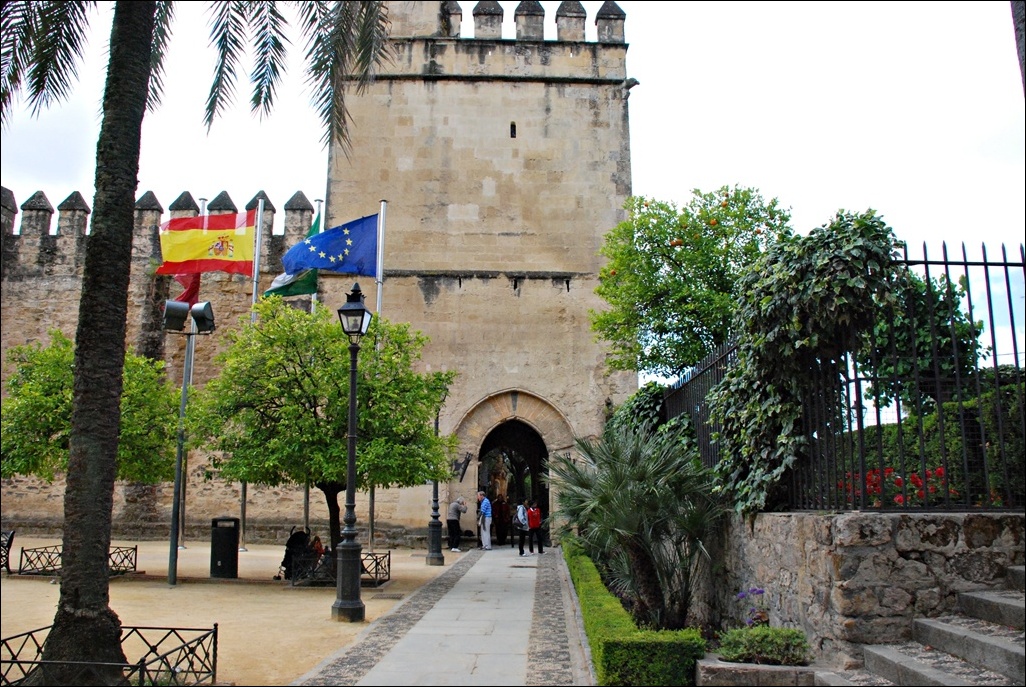
We were staying at a place called Loja, just about an hour and a half from Cordoba and drove to Cordoba in the morning. After some adventure, we found a parking garage and started off on foot. The weather was not very comfortable and it was a bit cold, though not raining. Our first stop was the Alcazar de los Reyes Christianos (Castle of the Christian Monarchs) built in AD 1328, on the site of an earlier, small Visigoth defensive structure and later the site of an Islamic fortress. Queen Isabella and King Ferdinand, the Catholic Monarchs, stayed in this castle for a long time when involved in the Reconquest, fighting against the Kingdom of Granada. Christopher Columbus used to visit them here, seeking financial support for his endeavour to discover India.
The castle became the headquarters of the Spanish Inquisition by the end of the fifteenth century and this meant that significant changes were made to the castle by converting rooms into cells, demolishing corridors etc. In the nineteenth century, it became a prison and in 1931, it was declared a protected monument. So, while the castle had four towers originally, there are only two that are in a condition to be visited now.
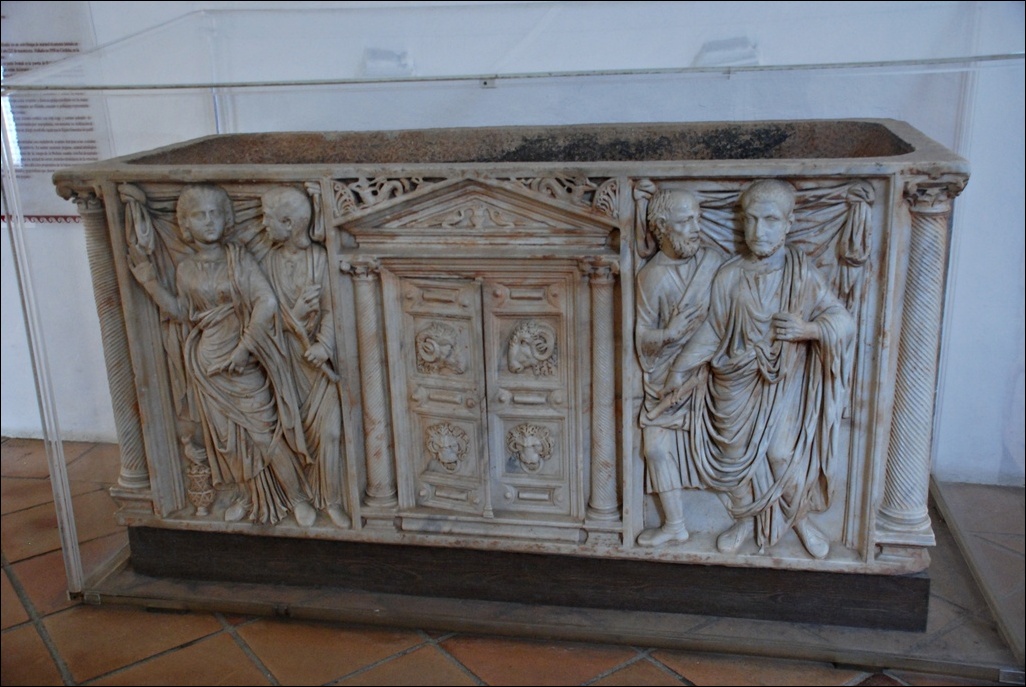
Entry to the building is through what is called the North Corridor and here we could see a third century Roman sarcophagus in remarkably good condition. The scene represented is that of the dead entering Hades (the nether world according to ancient Romans).
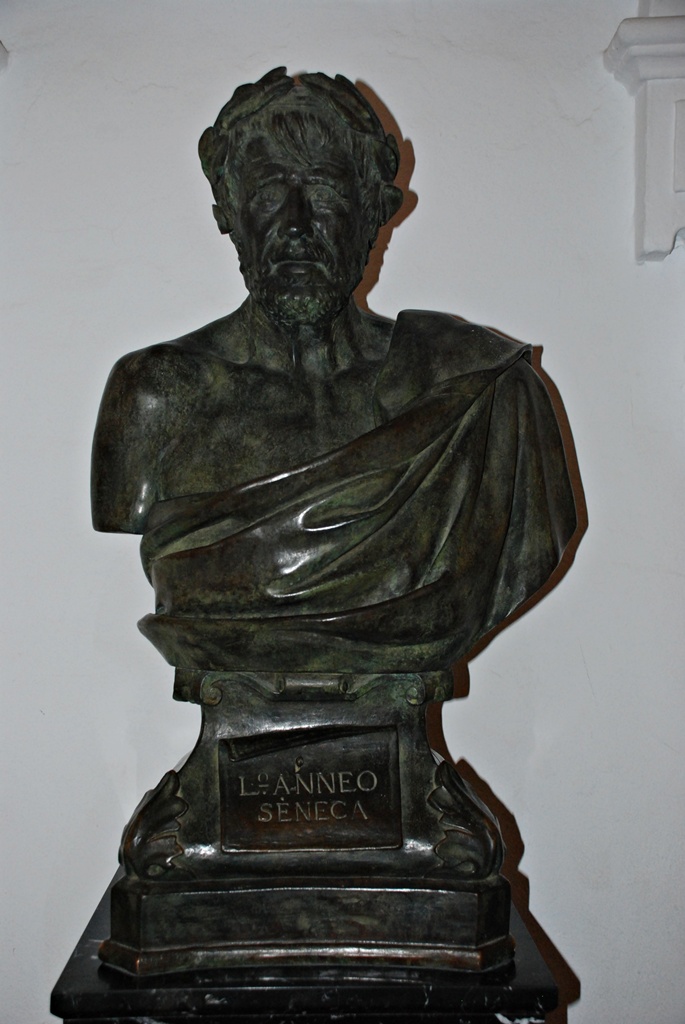
In the same corridor is also a statue of the philosopher Seneca, who was born in Cordoba.
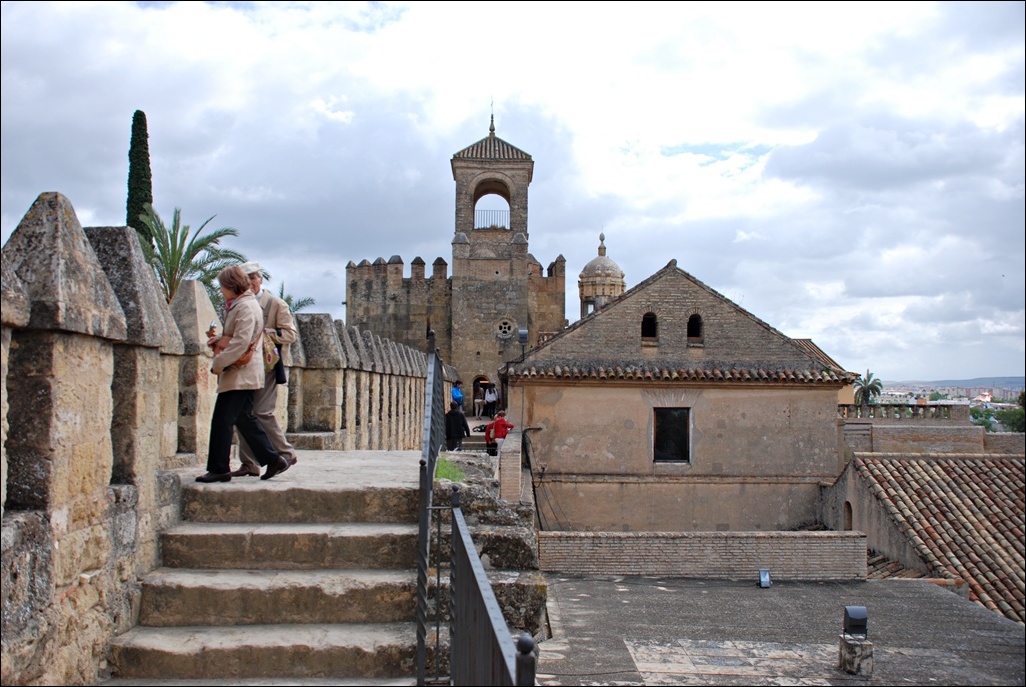
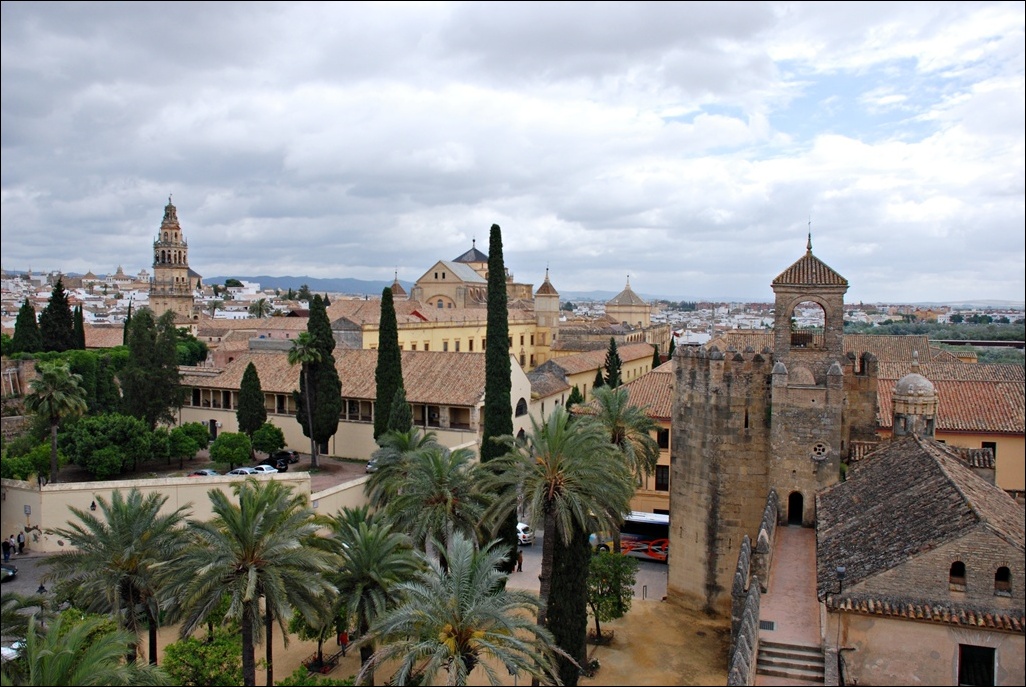
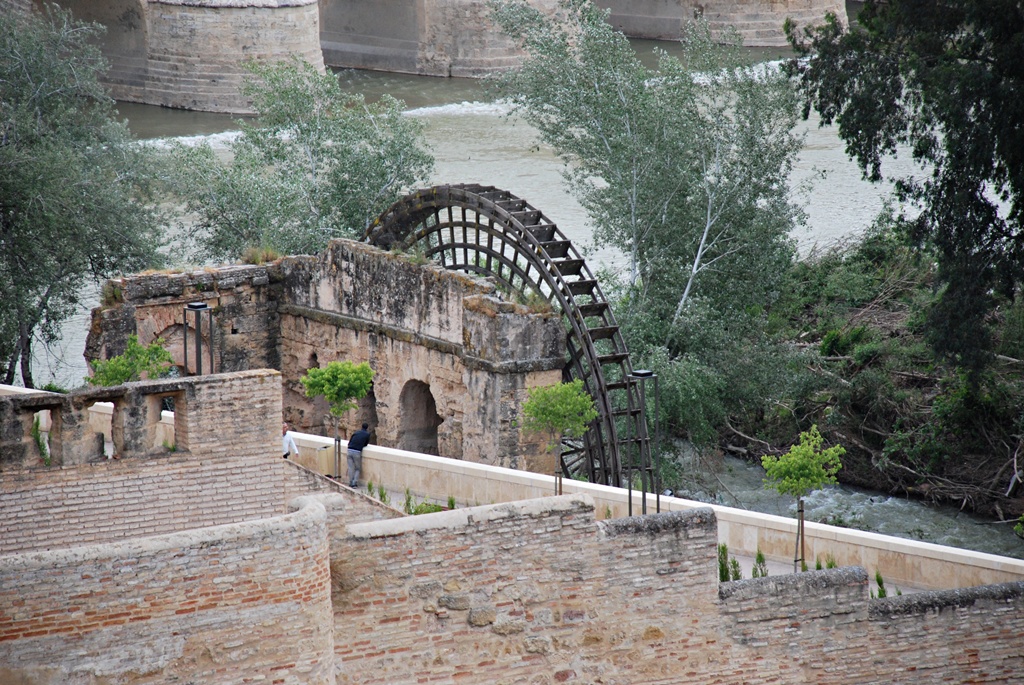
We climbed on top of one of the towers and there were beautiful view from there of the Cordoba city, especially of the tower of the Mezquita and other old buildings. We could also see the gardens of the Alcazar and the water wheel, which was used to water the vegetable gardens of the Alcazar.
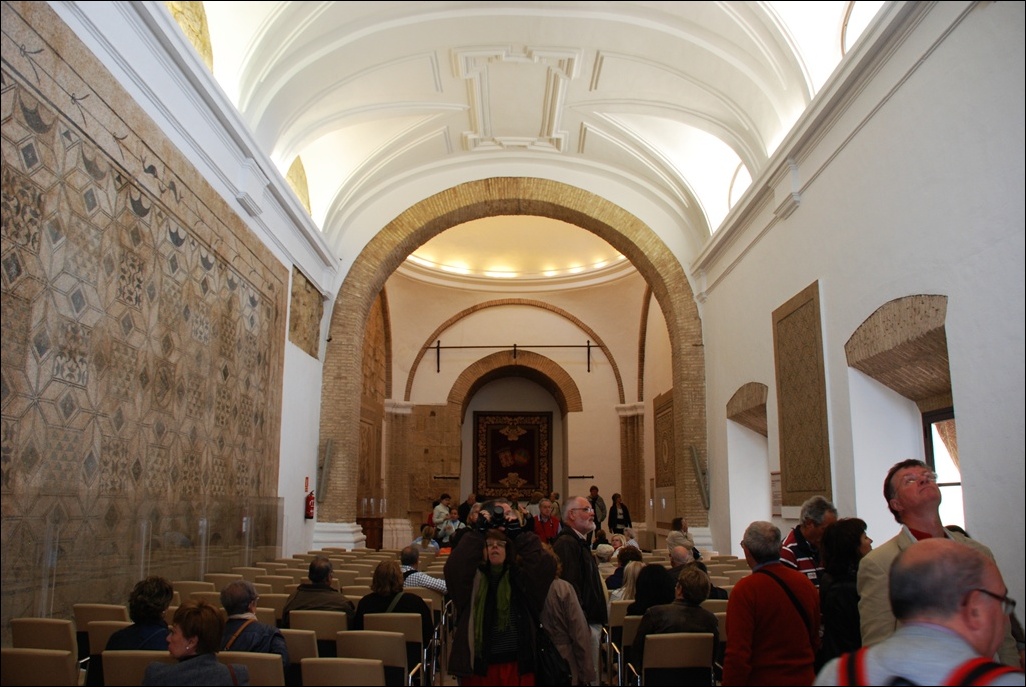
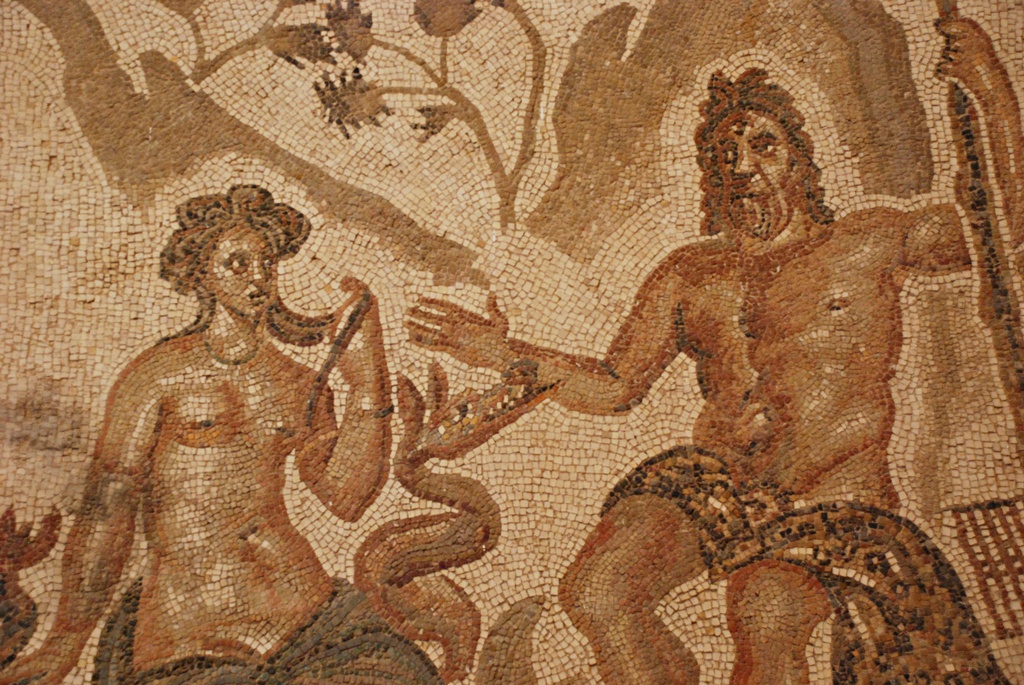
There is a chapel inside the castle and it now has a display of some beautiful Roman mosaics that date back to the second and third centuries. These are beautiful works of art, constructed using small pieces of stone and were part of the floors of Roman houses. It was quite amazing to think of the perfection in the work and commitment of the artists in assembling something like this, that too in those times.
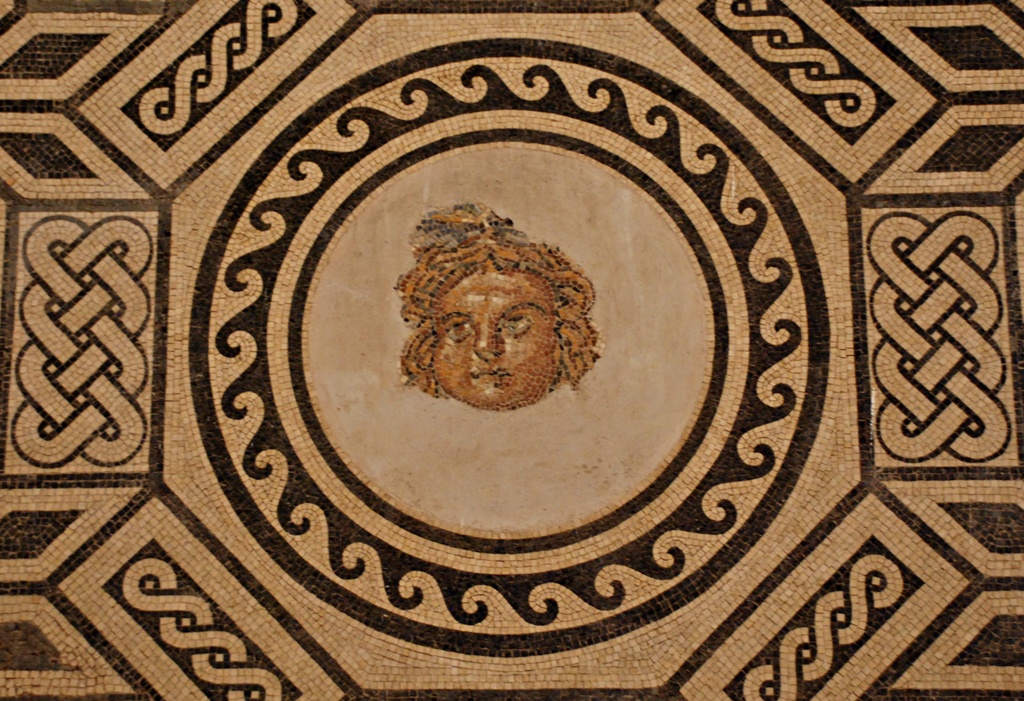
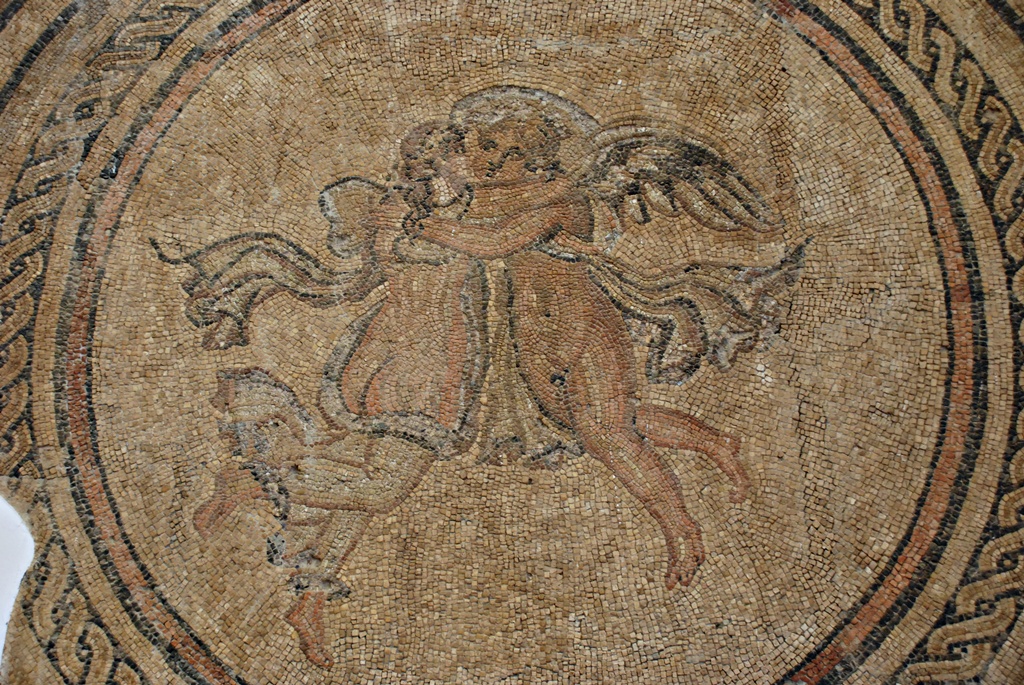
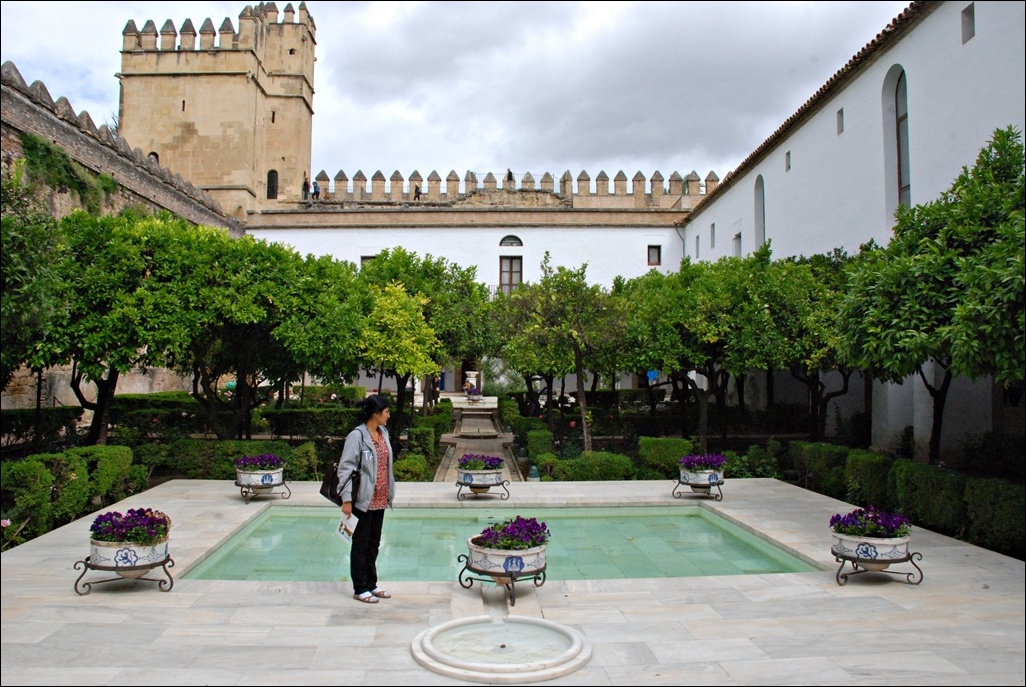
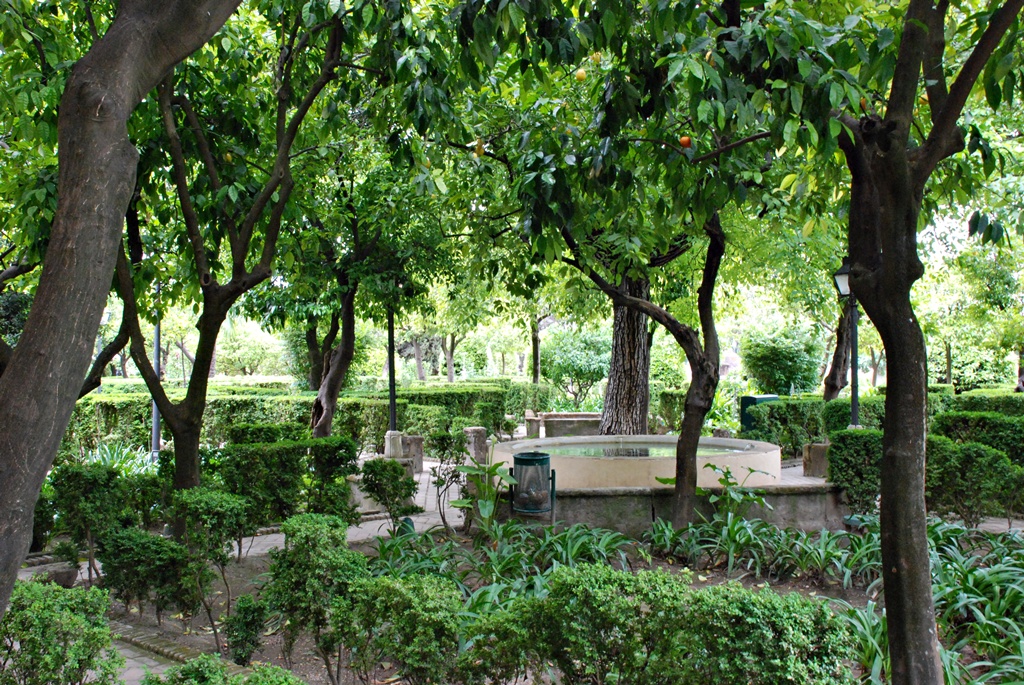
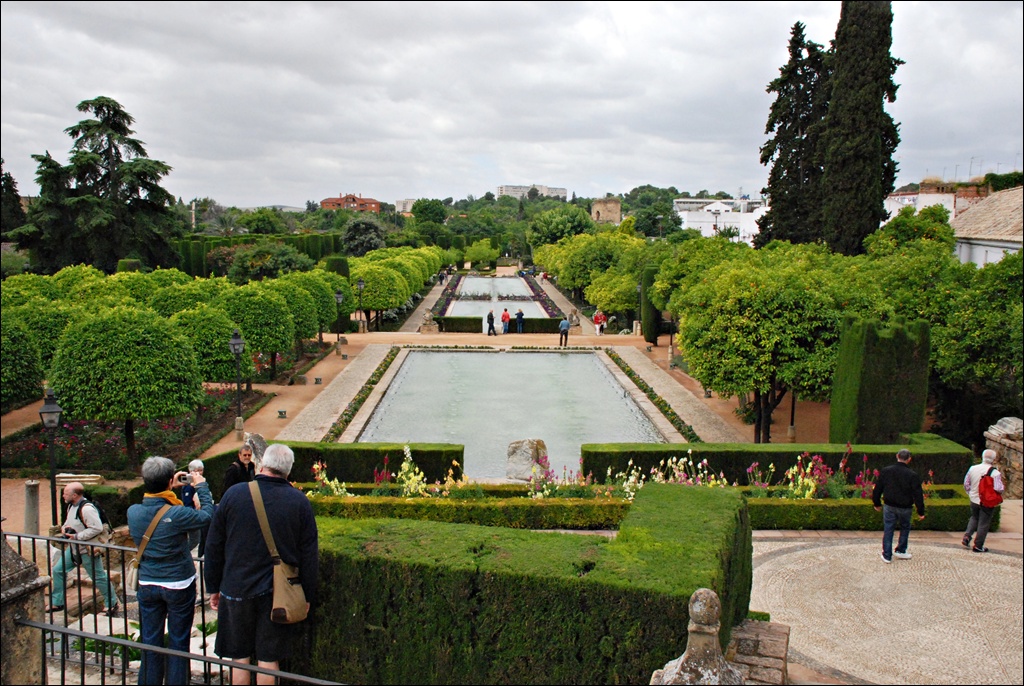
There is a beautiful courtyard and a very nice garden in the Alcazar and there were orange trees everywhere. The garden is very beautiful with a series of pools laid out. Life in this castle must have been good as it seems to have been built for comfortable living also and not just for warfare.
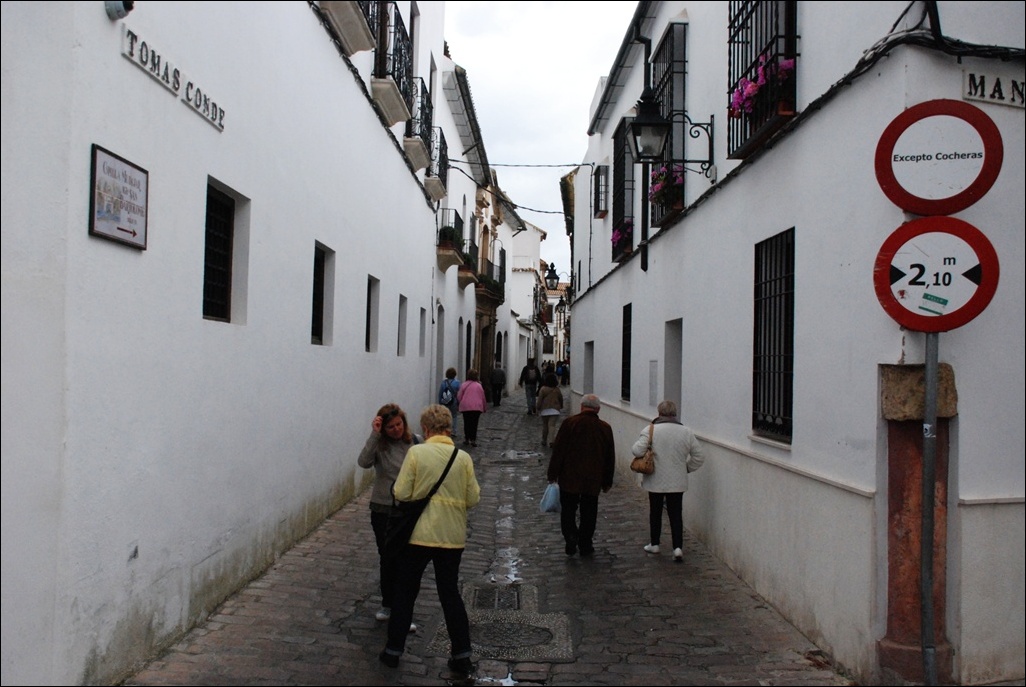
Since Cordoba was a thriving centre for Judaism, the existence of a Jew Town is but to be expected. This is a beautiful section of the town with narrow, winding streets with whitewashed houses. It is a wonderful feeling to wander through these narrow medieval streets and I have always enjoyed that experience. This Jew Town is well preserved and many houses had nice boxes of flowers on the windows.
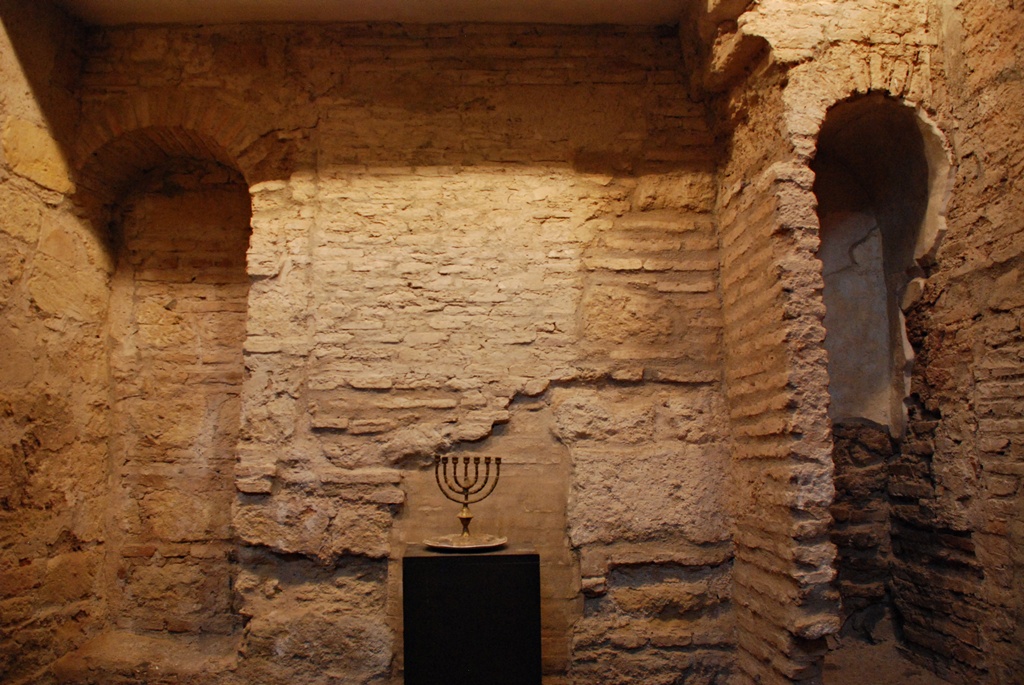
There is also a synagogue that dates back to medieval times – one of the only three surviving synagogues dating back to those times in Spain. There is a synagogue in Kochi and my two earlier efforts to visit that synagogue had come to naught as it was closed both times I went there. So, I was determined to visit this one. Unfortunately, it turned out to a little bit of a disappointment, with nothing much to see. The walls and the construction did look nice but there was nothing to indicate anything about the rituals, about which I was very curious; perhaps because this is not a practicing synagogue.

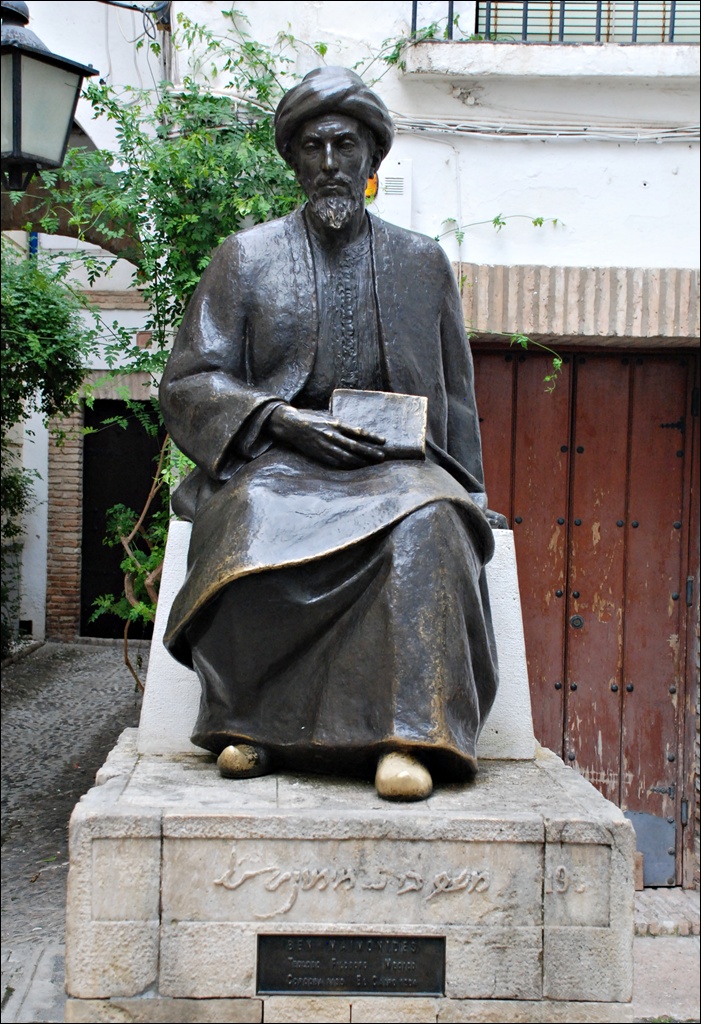
One of the greatest Jewish philosophers ever, was a teacher called Maimonides who was born in Cordoba in AD 1135. During the later period of Muslim rule, religious persecution forced many Jews to migrate from Cordoba and Maimonides also left Cordoba. Finally, he settled down in Egypt in AD 1166 and rose to prominence as the head of the Jewish community in Egypt. Interestingly, Egypt was under Muslim rule at that time! So, to be tolerant or not is an individual choice or mindset and not imposed by any religion. We came across a statue of Maimonides in the Jew Town.
Next stop was the star attraction of Cordoba – the Mezquita or the Mosque-Cathedral of Cordoba.
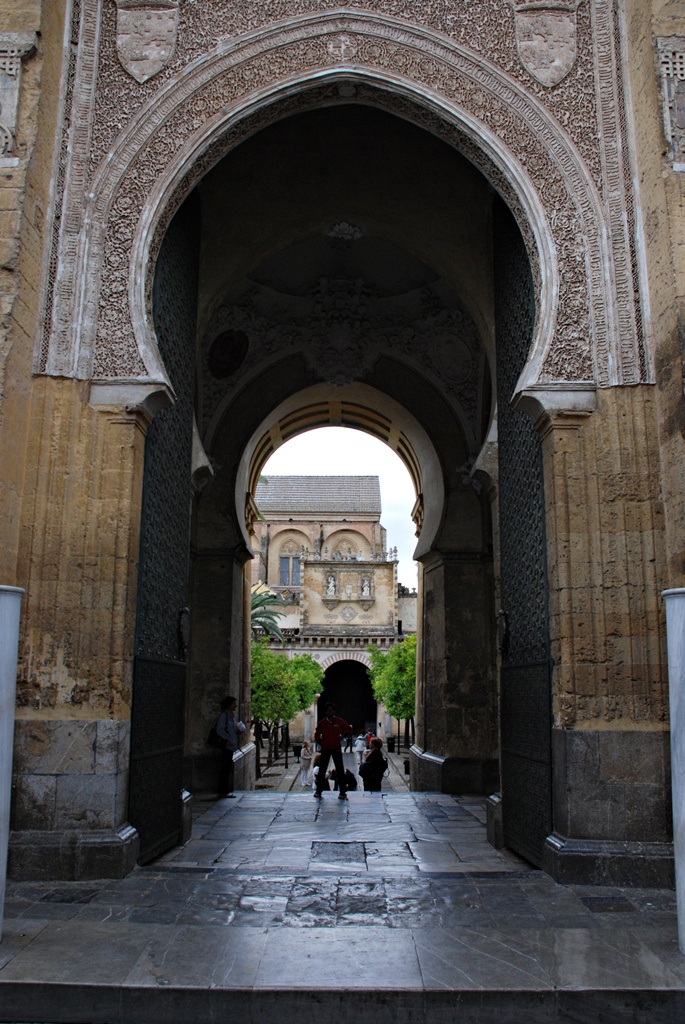
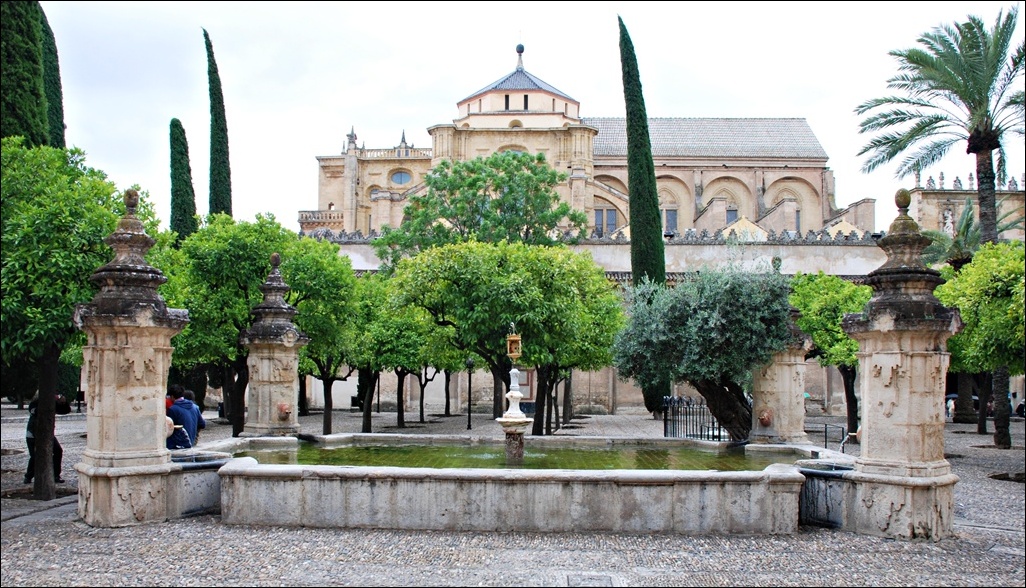
This was the site of a Visigoth church and the construction of a mosque started in AD 785. It is fascinating to see how each conqueror established the temples of his faith on the very site that the vanquished prayed. Damascus was the beacon for all Muslim kingdoms of that period and Cordoba was part of the Caliphate of Damascus before it became a Caliphate by itself. So, it was no wonder that this grand mosque was inspired by the great Umayyad Mosque of Damascus. When we visited the mosque I did feel a resemblance to another mosque I had seen before and when I read about this, I realized it must have been the Umayyad mosque as I had visited it a couple of years earlier. The mosque went through four stages of expansion, growing in prominence as Cordoba excelled as a centre of culture and learning. It was not only the most important mosque for Islam in the Western world, but also a place of social, cultural and political practice. After its fourth expansion, it was so large that it could accommodate 40,000 people!
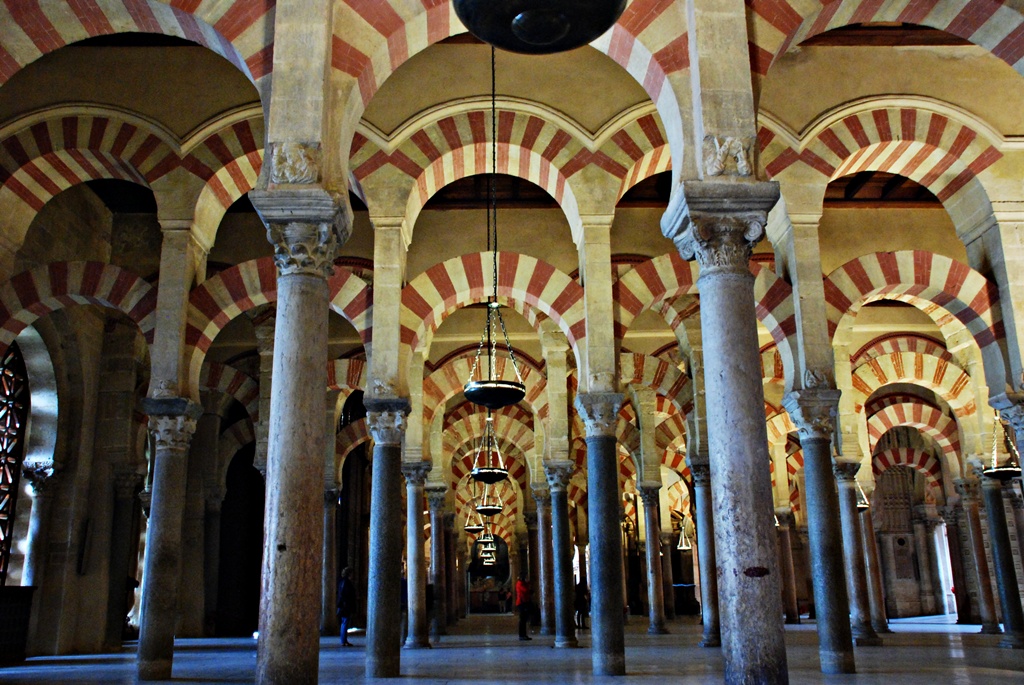
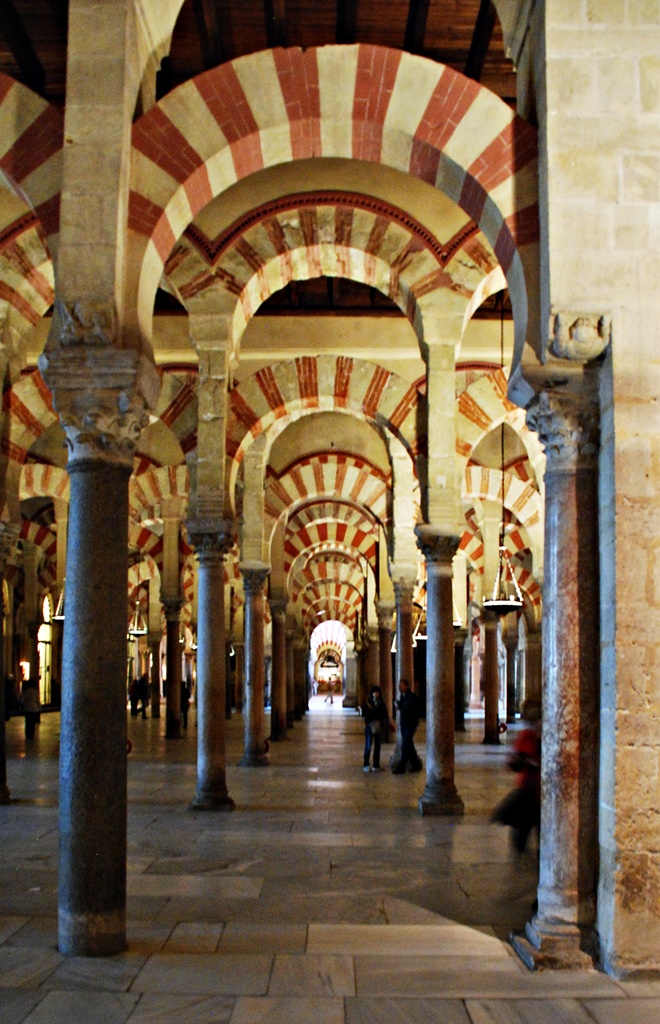
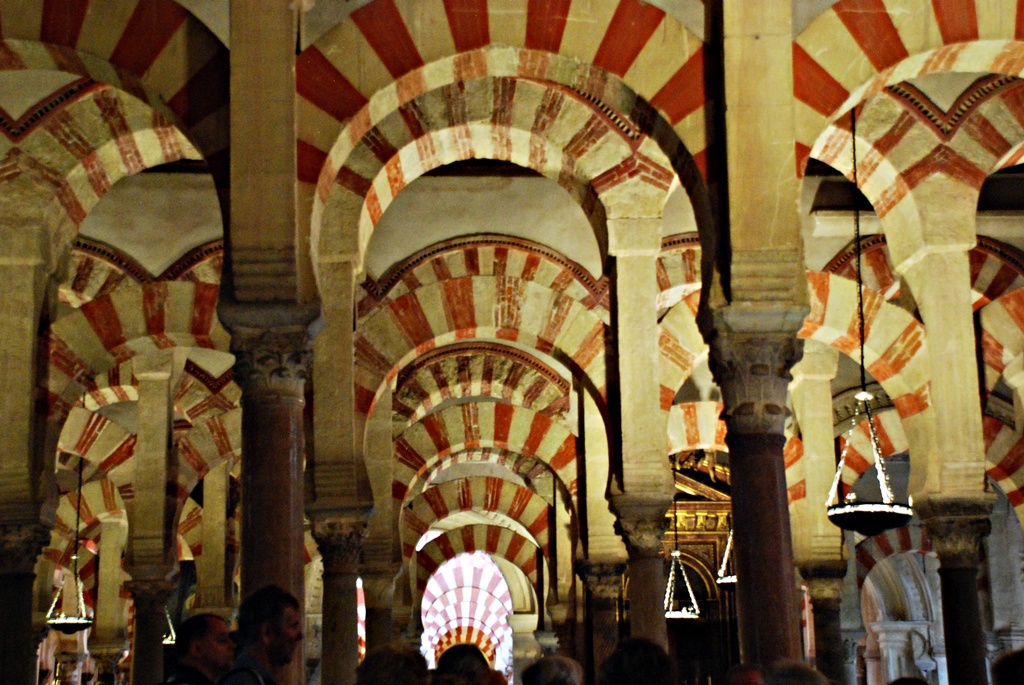
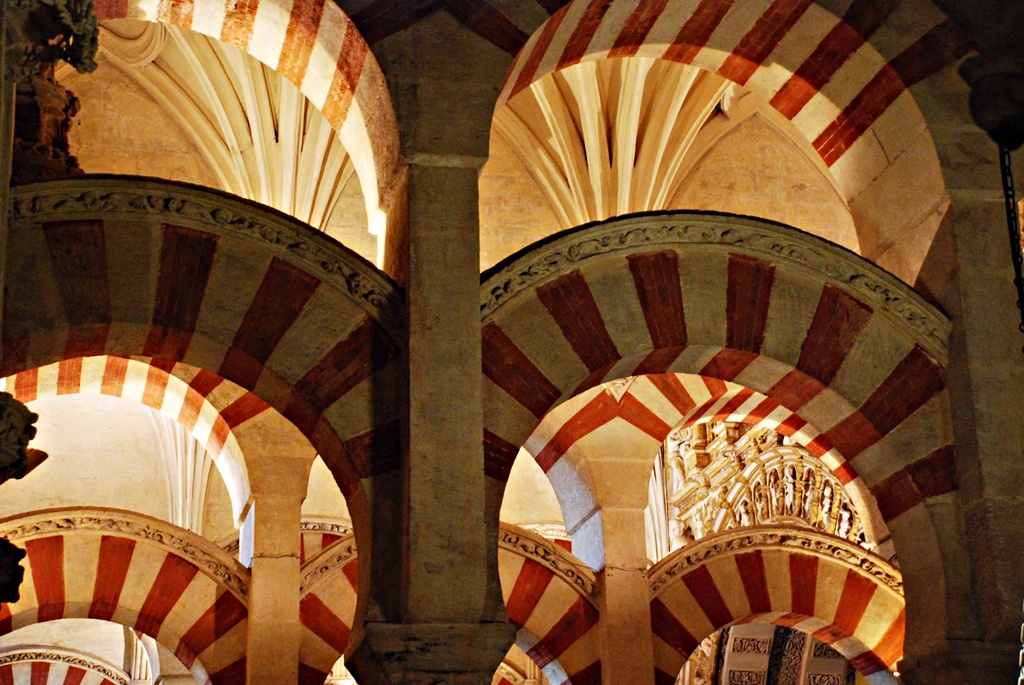
All this history is completely wiped off your mind as you enter the mosque, because you get blown away by the beauty and grandeur inside. It is made up of a series of columns and arches. There are 856 columns with two layers of arches of alternating sections of red and beige colour between these pillars. In the first phase of construction, red came from the use of brick and beige from stone but by the time it got to the last phase, paint was used. An overwhelming sense of awe struck me as I wandered through the mosque. It was so beautiful to look at with ornate wall work and colour everywhere. This is truly a very, very beautiful building and also very peaceful. Muslim architecture in its fullest glory and pomp is seen here. To anyone who is interested in photography, this place is at once a place of great excitement and great frustration. There are colours everywhere but light is very poor. I did not have a tripod but found a convenient bench, the backrest of which came in handy.
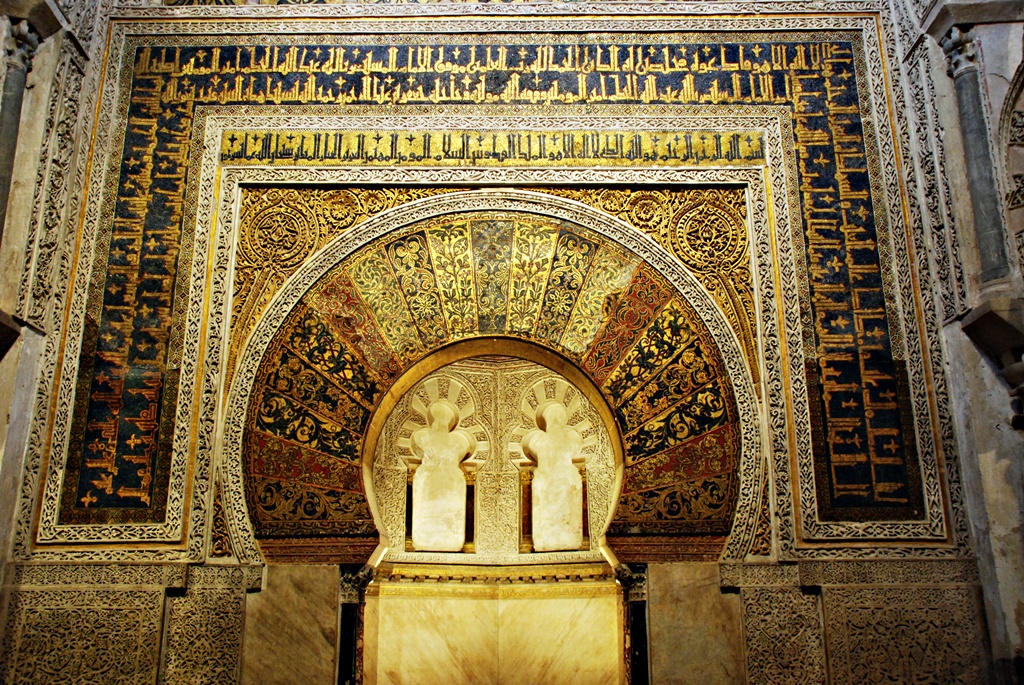
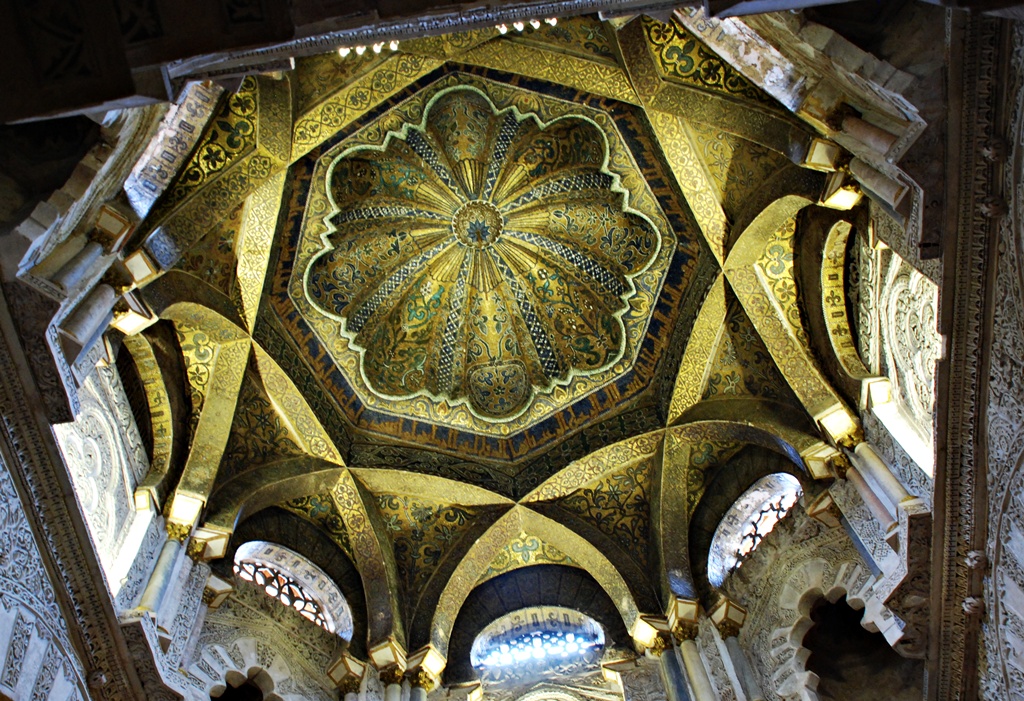
In all mosques, there is a semicircular niche in the wall, called mihrab, which indicates the direction of the Kaaba in Mecca. The mihrab in this mosque is beautifully done that it is breath taking. The roof about the mihrab is a dome with some fantastic ceiling work.
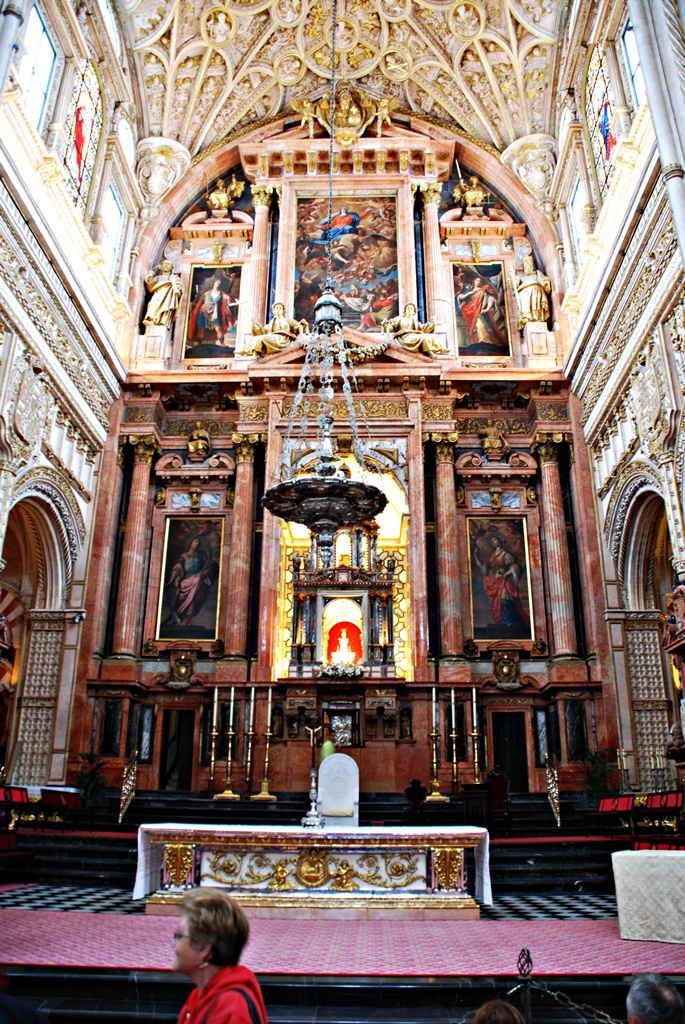
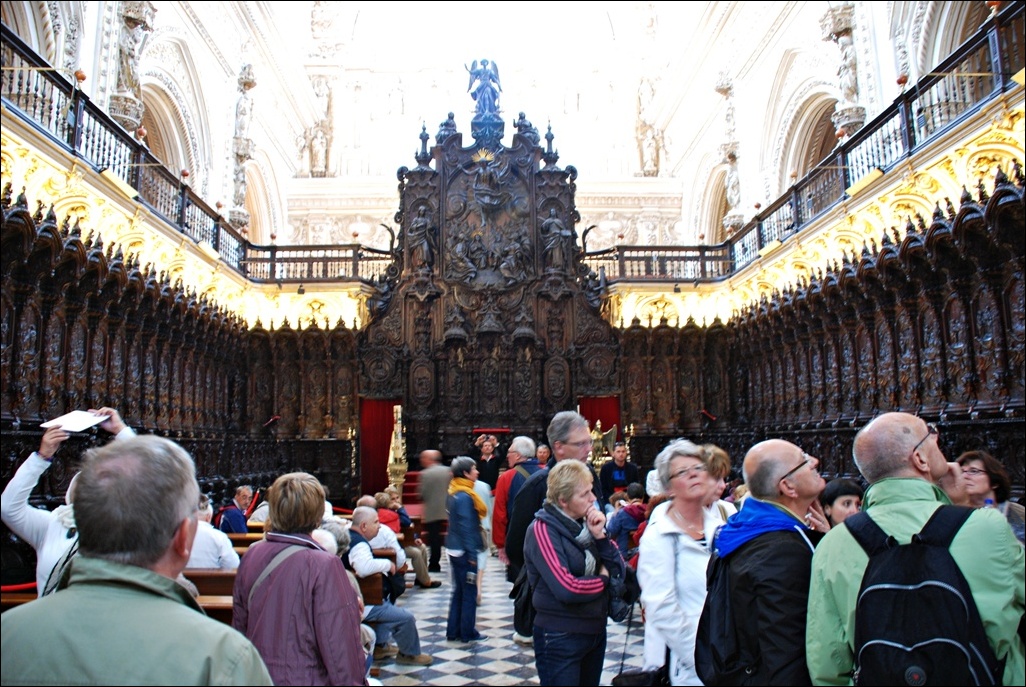
In AD 1236, after the Reconquest, the mosque was turned into a church. This led to various parts of the mosque being destroyed to accommodate Christian features; for instance, the minaret became the bell tower. Monarchs that followed added their own modifications with the most significant one being the insertion of a renaissance Cathedral nave installed right in the middle of the mosque with permission from the then King, Charles V. However, when the King actually saw the completed work, he was quite unhappy with the result and remarked: “they have taken something unique in all the world and destroyed it to build something you can find in any city”. Bang on! The altar and the choir look exactly like what you find in any Roman Catholic cathedral in Europe – ornate and rich.
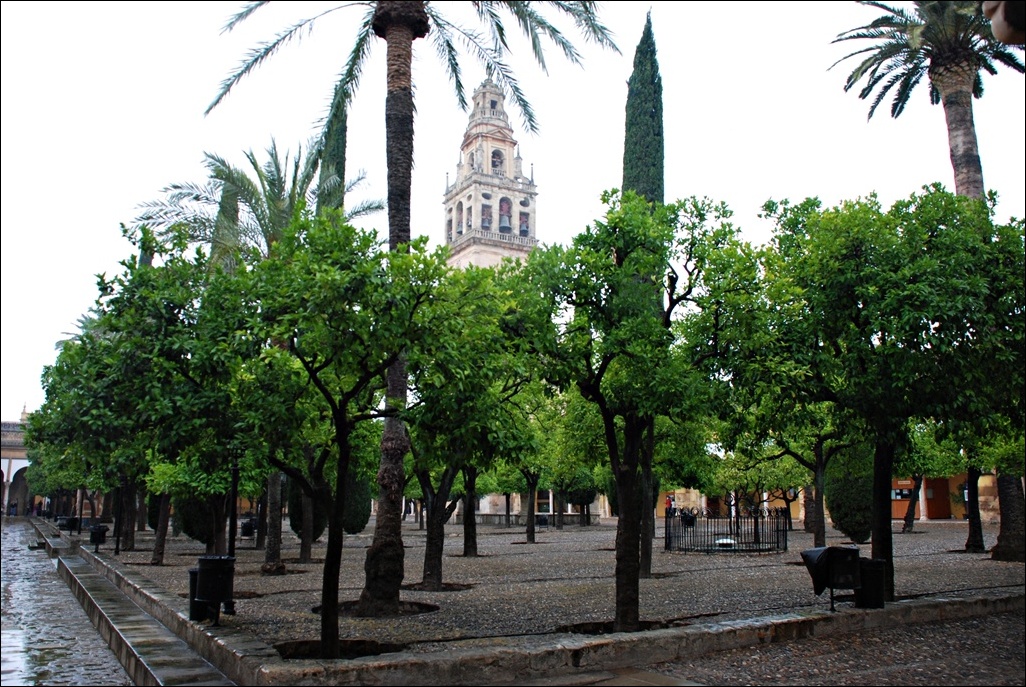
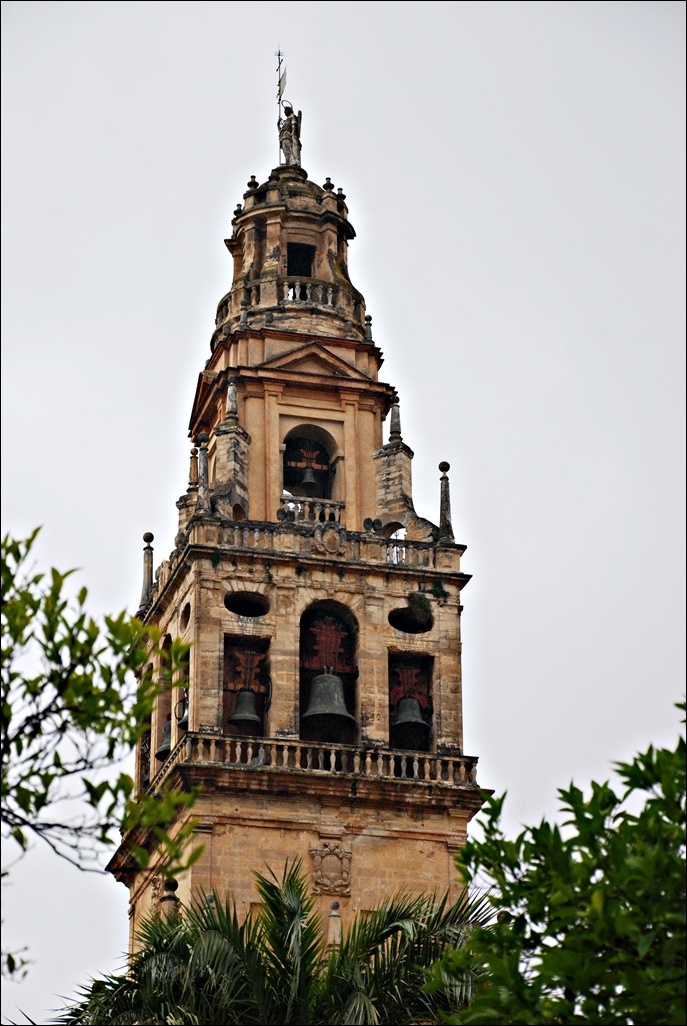
The courtyard used for ablutions by the faithful before they prayed in the mosque, has been converted into a courtyard with orange trees. The minaret could be seen from the courtyard but there was no access to the minaret itself.
As I stepped out of the mosque, I could not help feeling a sense of loss. A sense of loss for a brief period in time when men were tolerant and accommodative, when religion was understood to be path to salvation and not one to be used for spreading hatred and division. This exalted structure is a remnant of those times and then it fell as man’s morals fell. This fall was jarringly evident in the commentary provided in the audioguide that we had rented. The commentary consistently stressed the fact that the original location was that of a church (the Visigoth one) and that the mosque was an intrusion and the insertion of the current cathedral only set right the wrong (without saying it in so many words). The culmination was the comment when we got to the altar: “the roof was broken open to let in light as Christianity is all about light as compared to the shadows of Islam”. I may not have got the words exactly right but this was the clear message conveyed. What a sad state of affairs! No religion today is free of this evil as the high priests have all forgotten the fundamentals and are only focused on enhancing their power and strength.
The author of “Don Quixote”, Miguel de Cervantes, lived for sometime in Cordoba and there is an inn which actually figured in the novel. The inn exists even today and we had planned to visit it but rain gods had decided otherwise and we got back to the parking garage and drove back, still overwhelmed by the impressive Mezquita.
 Kaazhchakal