Well, not footloose really, as I had planned everything for the trip – cities to visit, what I would see, where to stay…and booked everything as well. You see, I am not the guy who would just pick up a backpack and figure out stuff as it comes. I have been told that the uncertainty is fun; perhaps it is. But to me, it is a bit stressful. So, I started out after charting out everything but with a willingness to change, if the need arose.
The focus of the trip was to visit some cities in Eastern European countries that I had not visited in the past (Prague, Bratislava, Budapest, Zagreb, Split, Ljubljana, Cesky Krumlov, Tallinn, Riga and Vilnius) as well as some cities in Northern Europe (Helsinki and Copenhagen) and then end with a drive in the Scottish wilderness. The expected duration was six weeks, and this would be the longest solo trip I had been on, so far. Of course, about 10 days after I started, Sri joined for a few days and then she left. Then Jay and Sri joined me in the last few days at Scotland. That was welcome as it broke the “monotony” of the solo trip.
I started my trip in Amsterdam as my SCHENGEN visa was issued by The Netherlands. A chance encounter in a tram sent me to the contemporary art museum there and that seemed to set the tone for the whole trip as I only visited contemporary art museums and photography museums in all the cities I visited and not a single museum that showed traditional or classical European art. In most museums I visited, I felt the art is evolving. To my untrained eye, it looks a bit behind the times, though each museum had some brilliant work or the other. Of course, the issues they are focused on, are different. In the countries that used to be within the Iron Curtain, they are coming to terms with freedom and the issues caused by Capitalism. In the Northern cities like Helsinki, climate change is a real existential issue. At the Helsinki Biennale, I watched a brilliant video titled “Teardrops of our grandmother” by Jenni Laiti & Carl-Johan Utsi, which clearly brings out the issue they face because of climate change and glaciers melting. A sentence from the film stuck with me – “we should not live at a pace faster than that of the land and the body”.
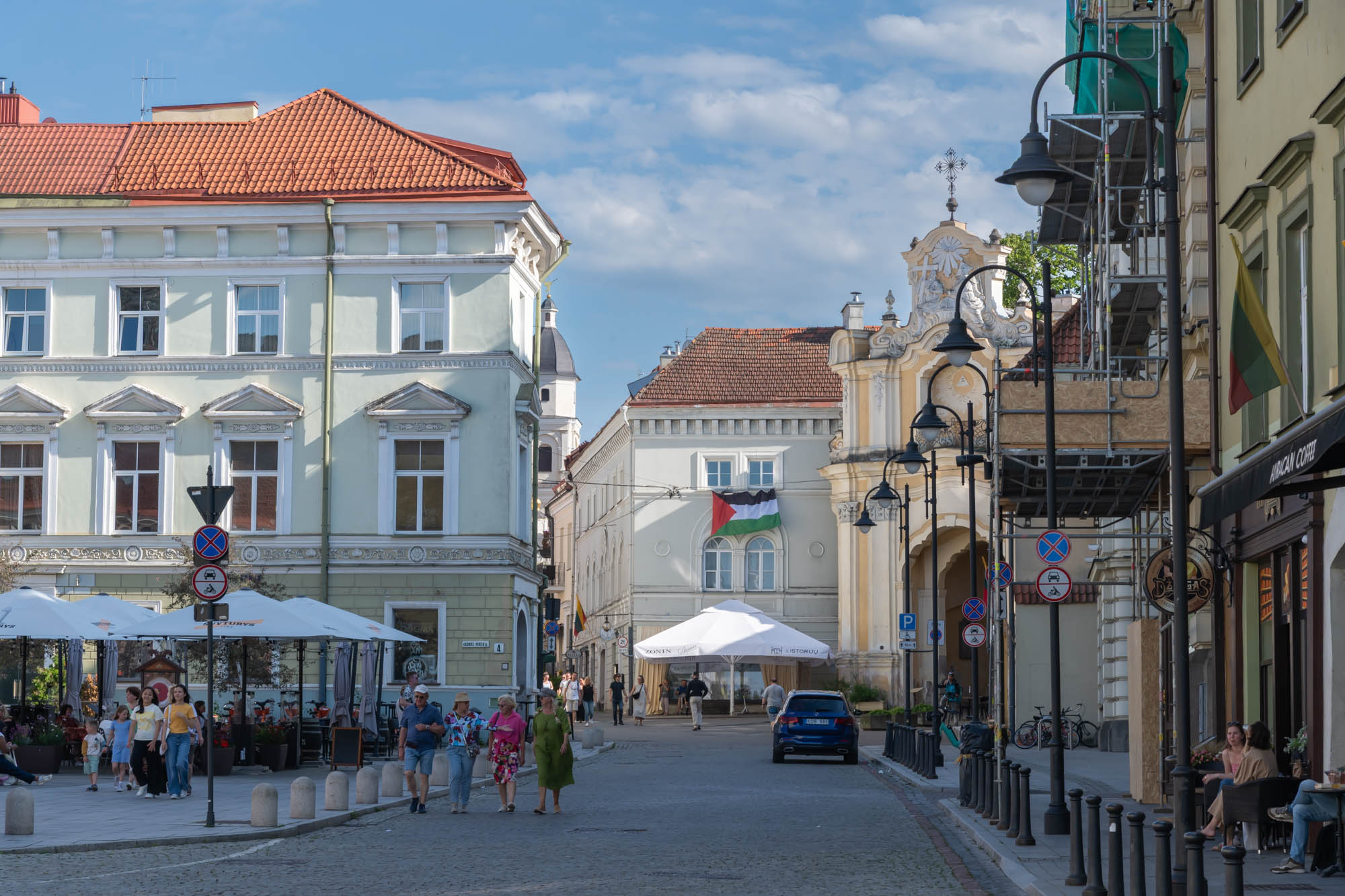
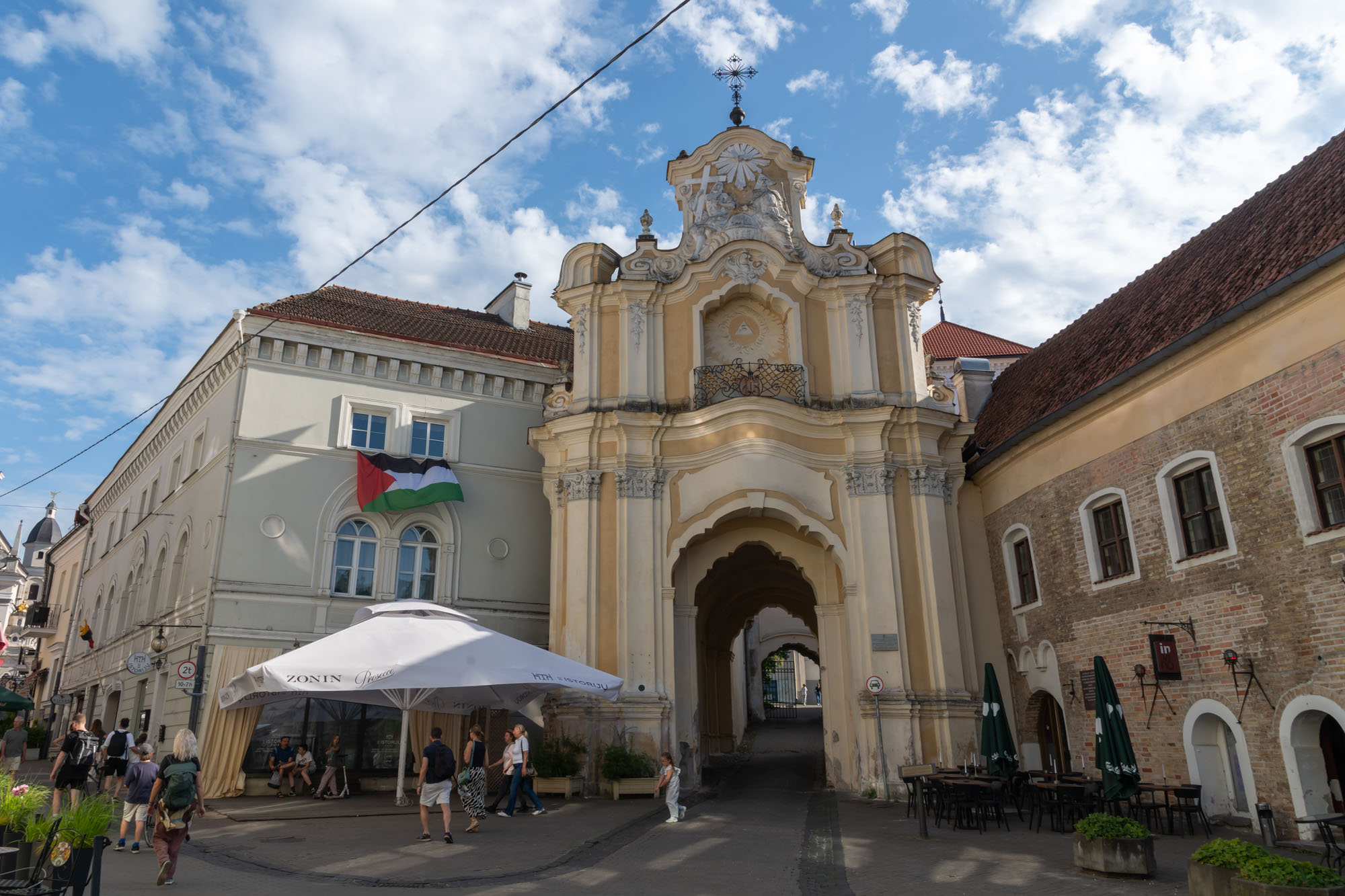
Europe’s official response to the Palestine issue has been downright deplorable and while you did find some instances of public support being displayed for the Palestinians (like the Ukranian church in Vilnius flying a Palestinian flag), the museums were noticeably silent on the issue, which is a shame.
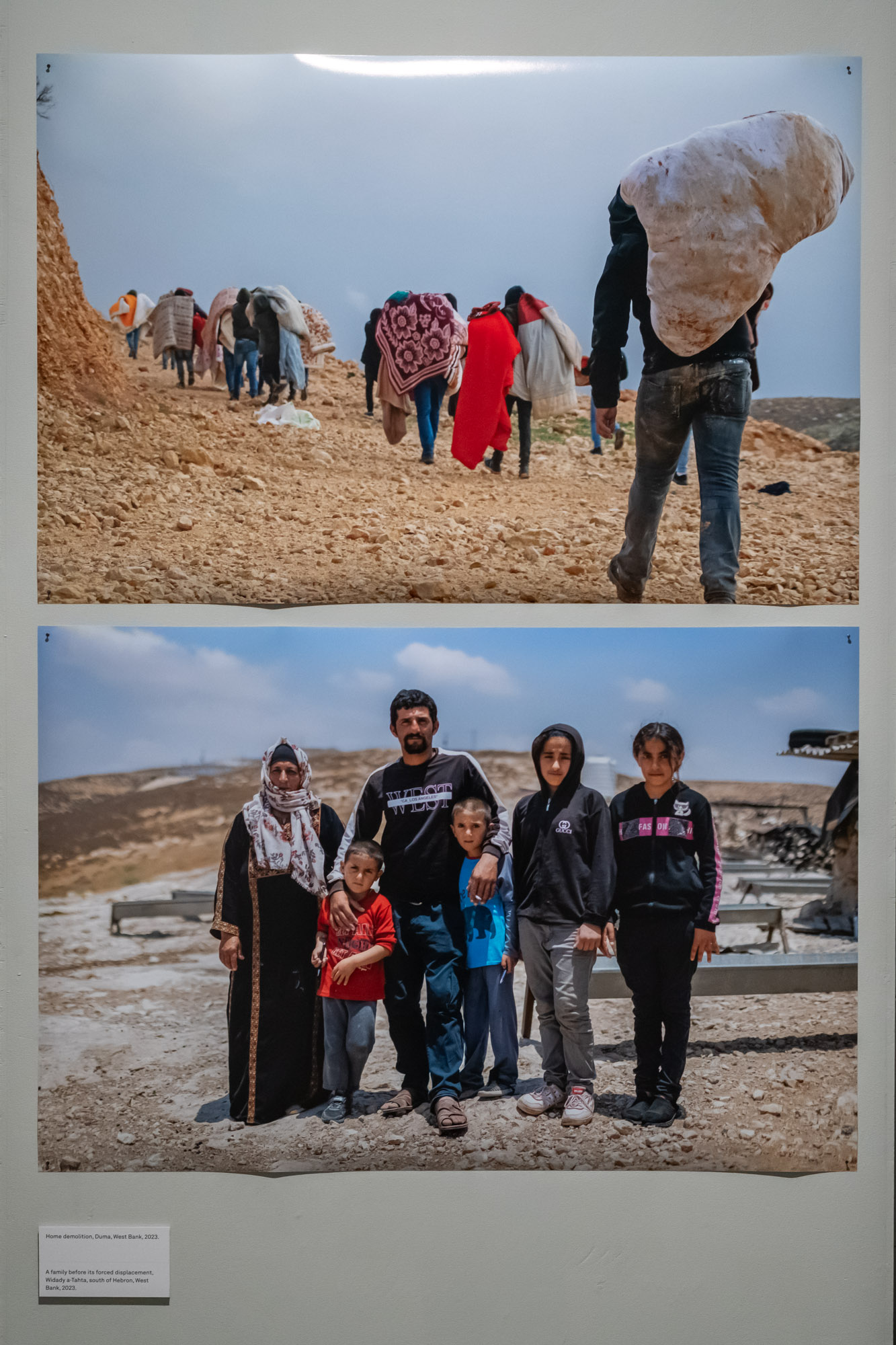
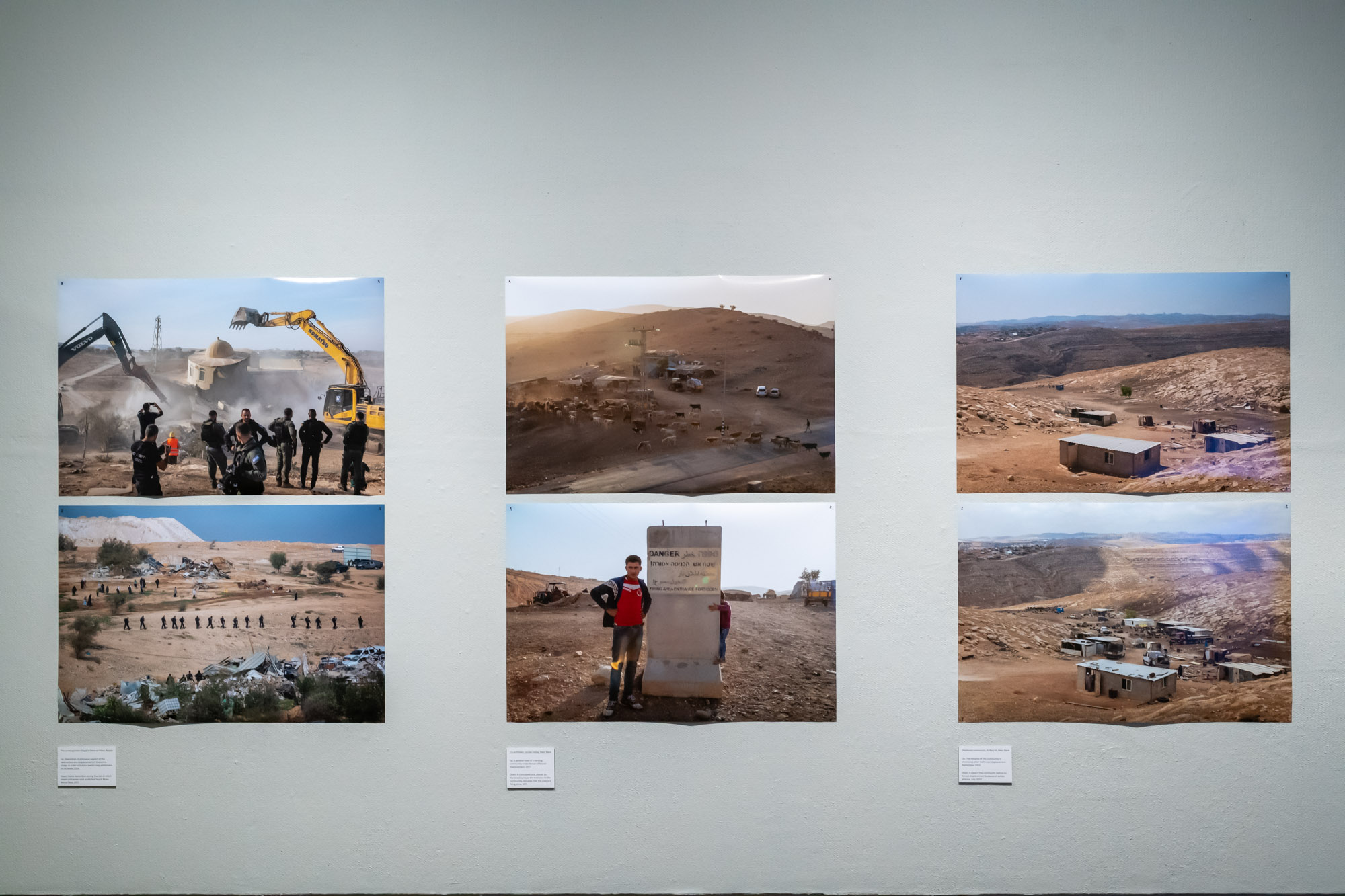
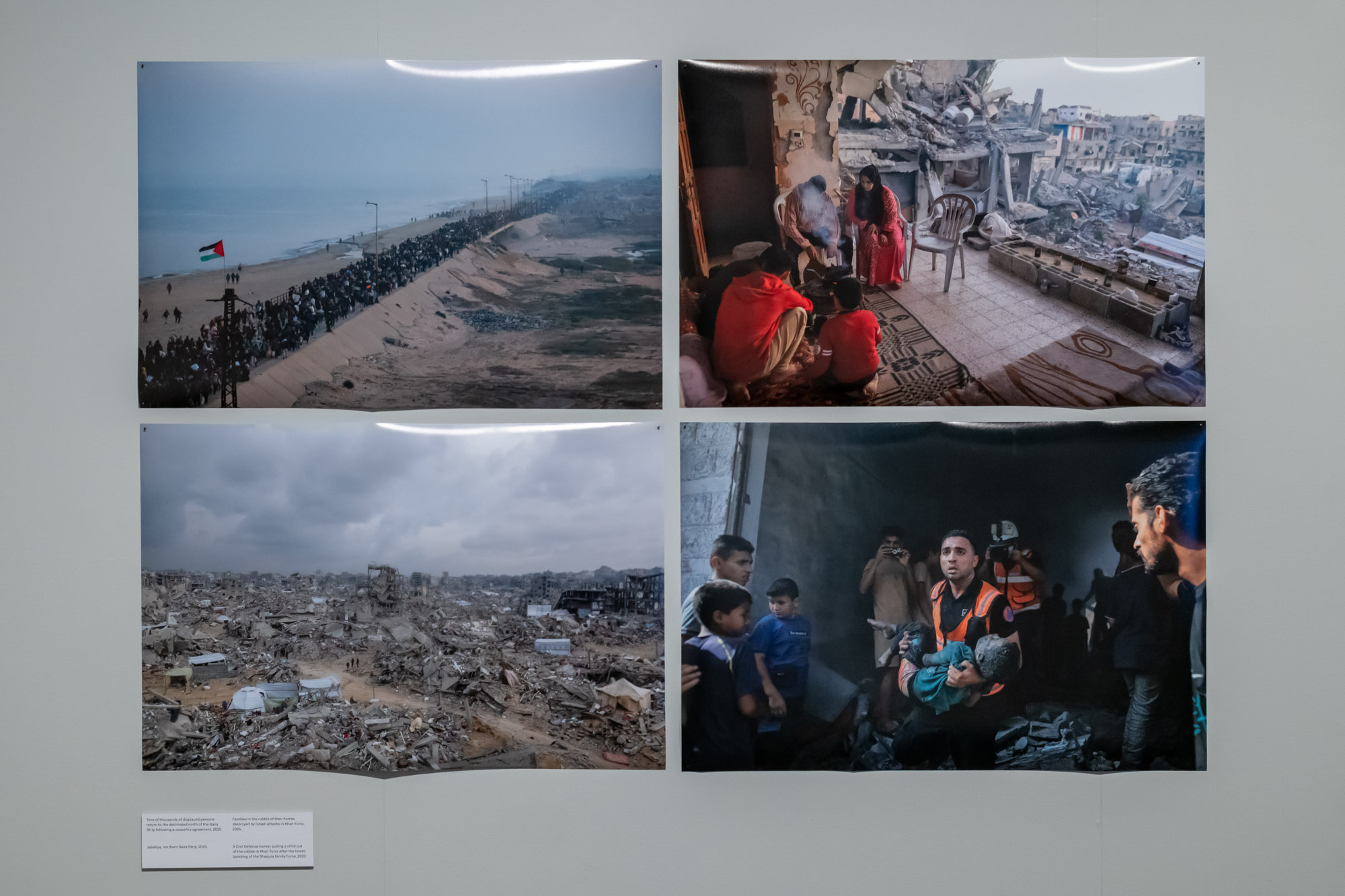
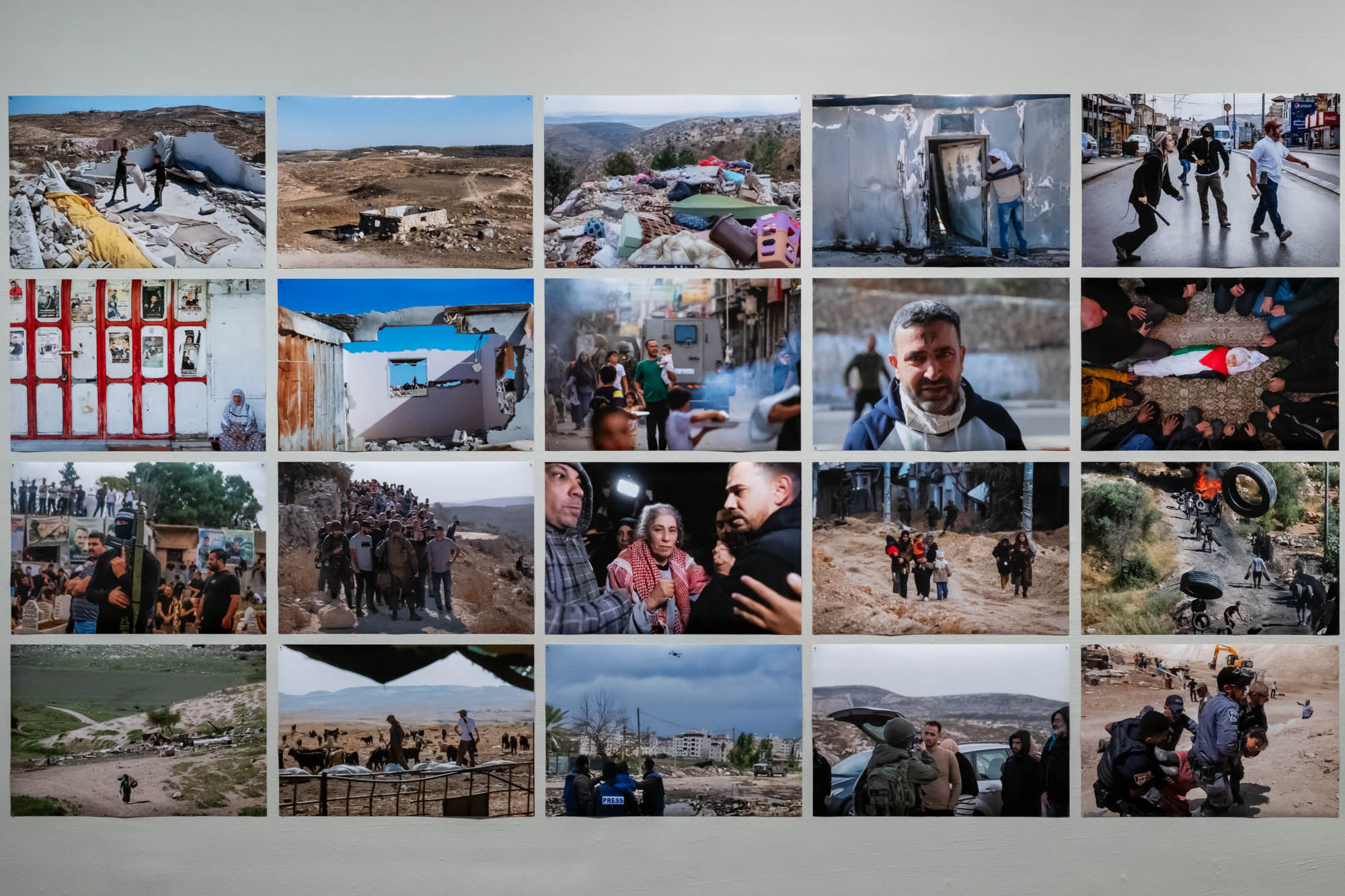
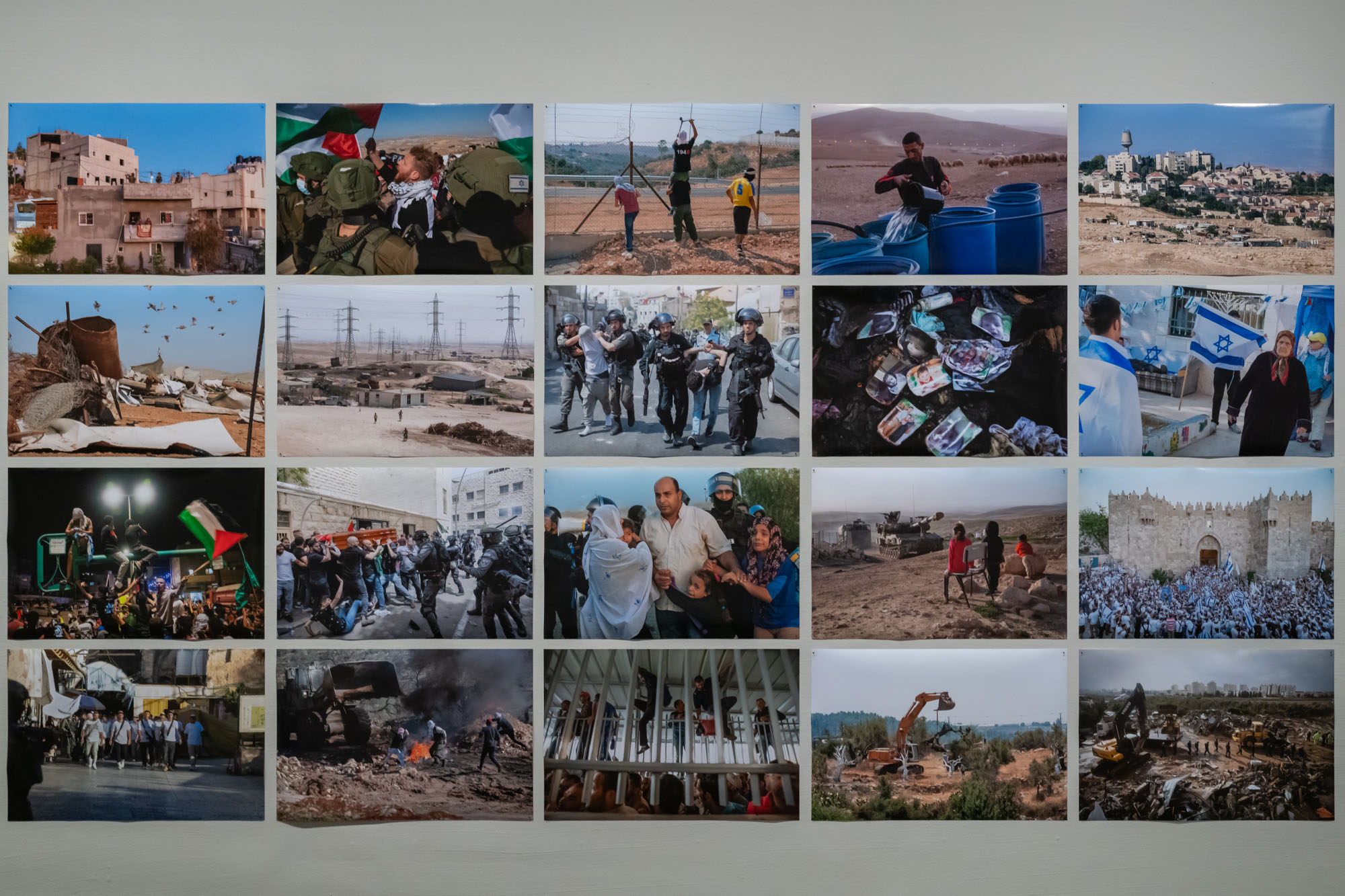
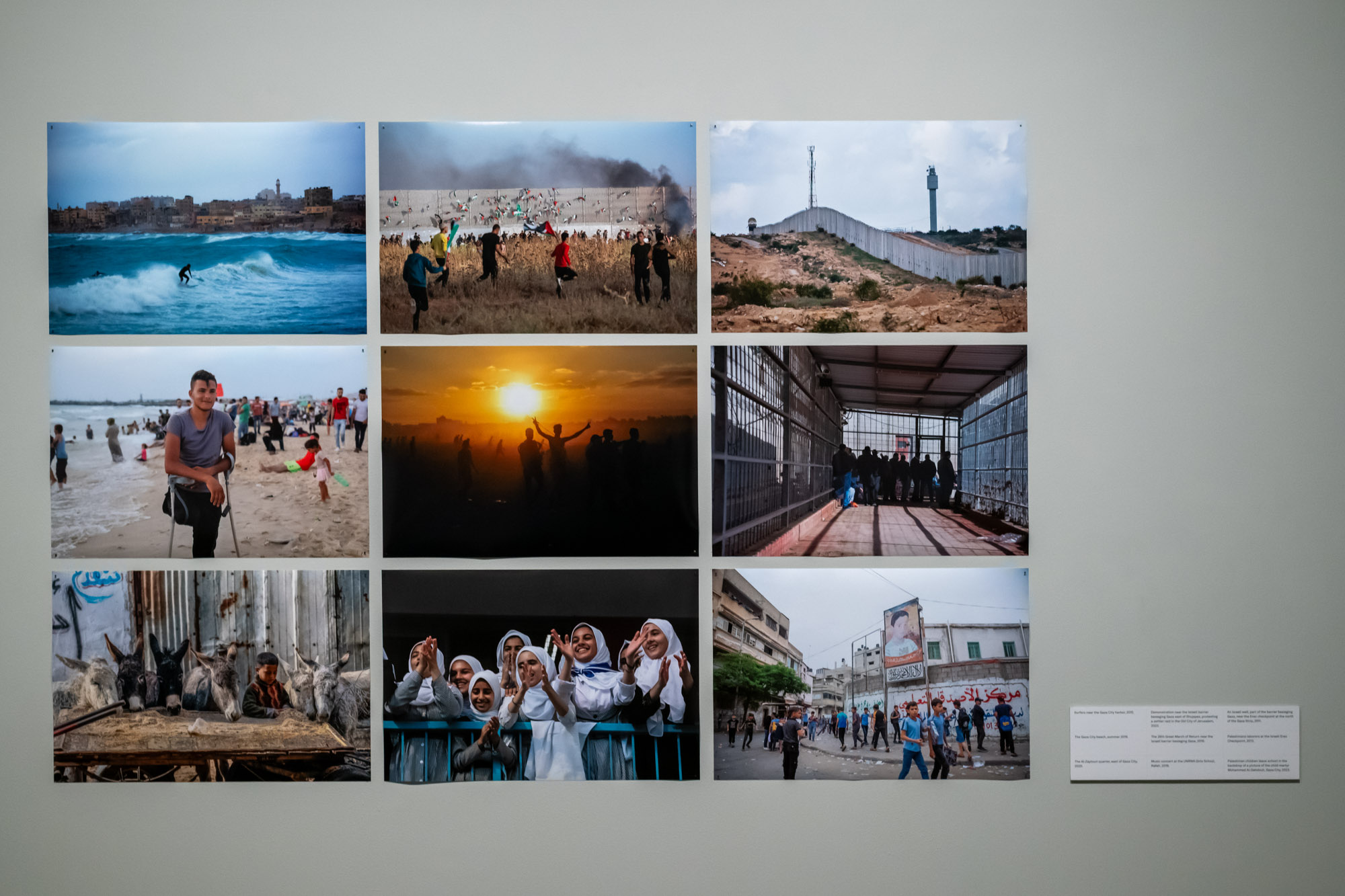
A welcome surprise was The Finnish Museum of Photography in Helsinki, which had organised an exhibition of photographs taken by a photography collective called “Activestills”. They have been documenting Israeli colonial violence and Palestinian resistance since 2005.
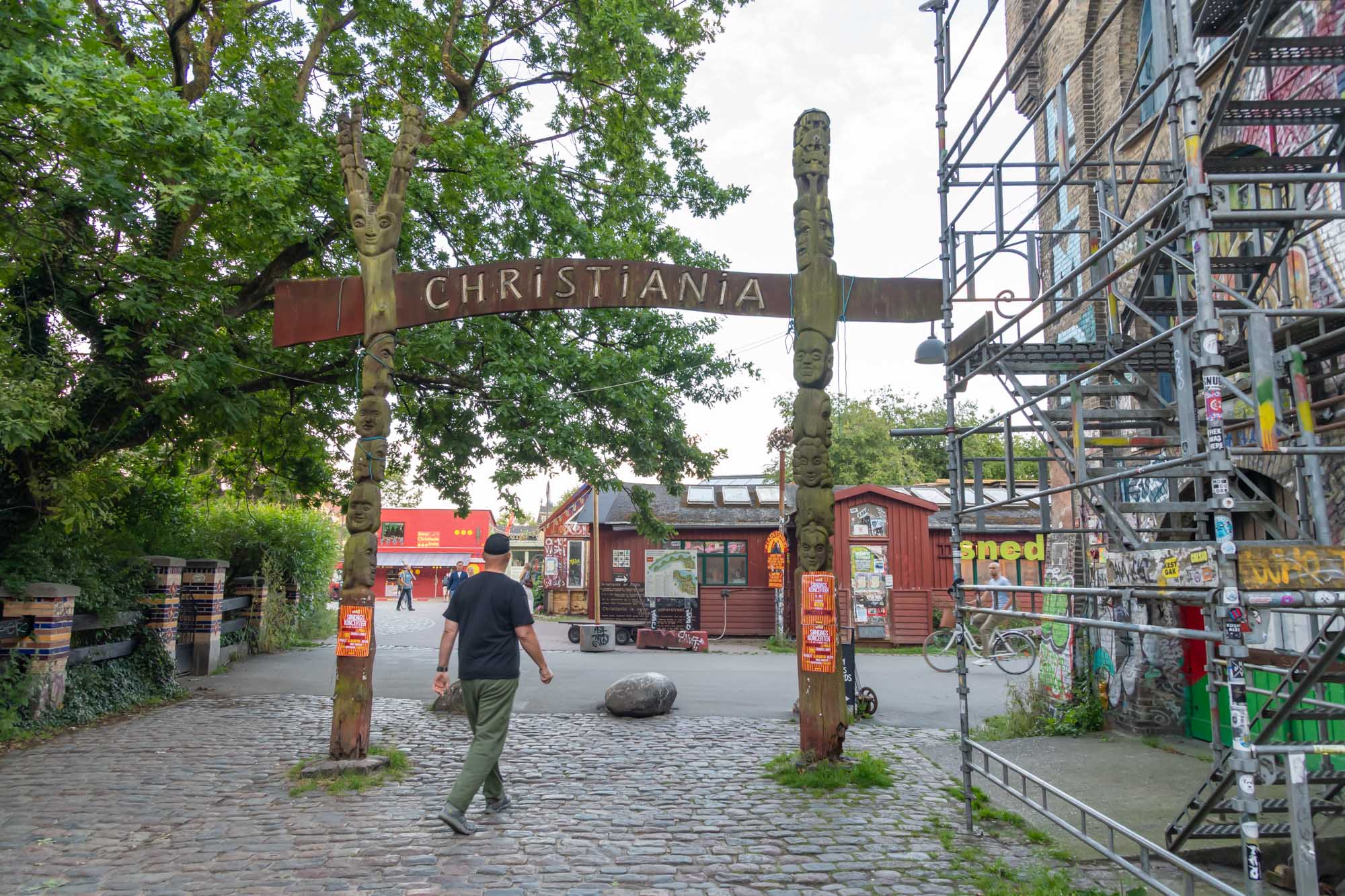
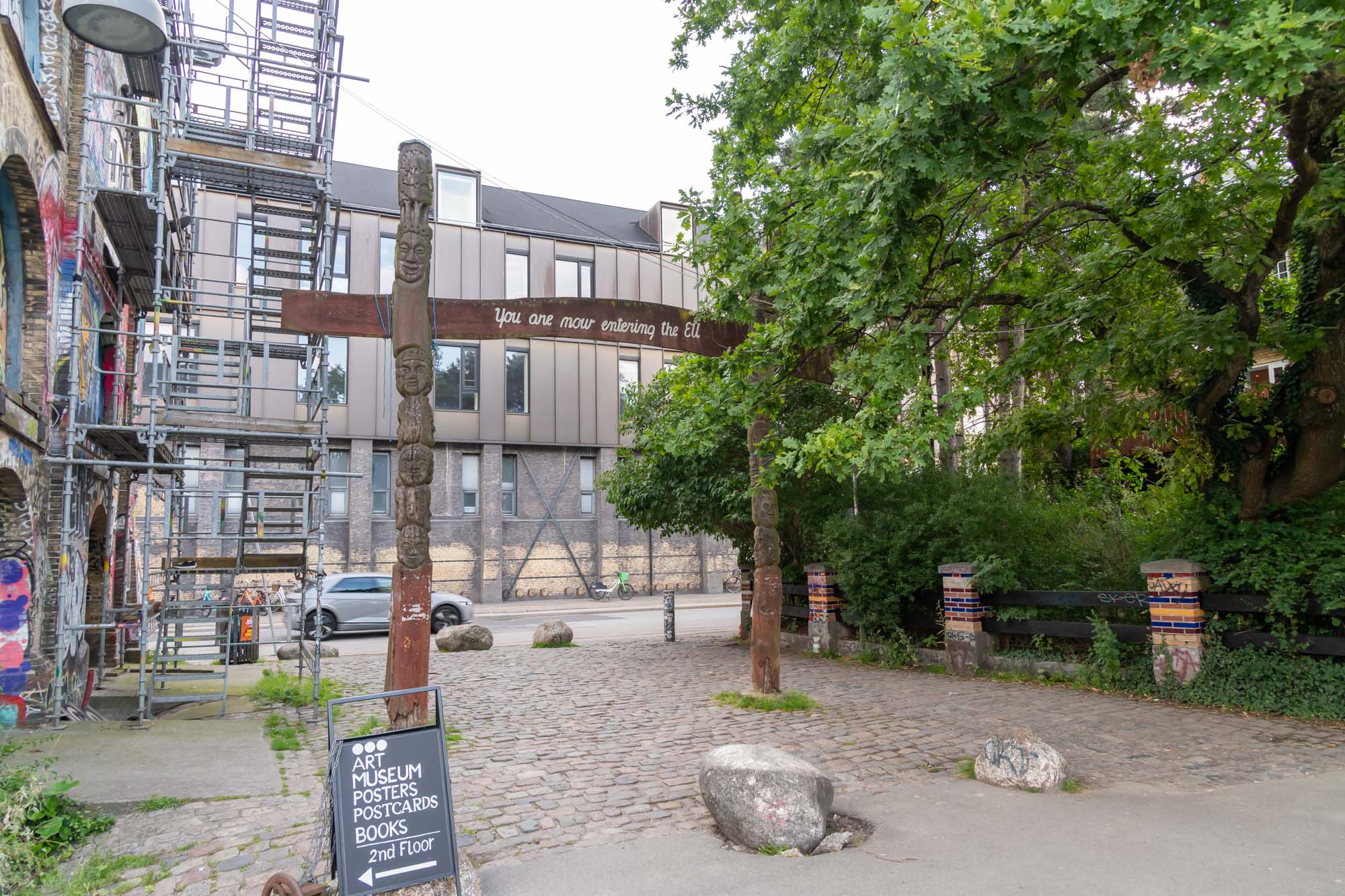
Later, when I was walking in the “independent region” of Christiania in Copenhagen, I met a gentleman with the Palestinian shawl Keffiyah draped around his shoulders. He said that he lives in Copenhagen and walks around like that quite often. It seems when he did that in Germany, he was warned by a friend to take it off as that could get him arrested. It seems he also got beaten by the police once during a protest, while he had the Keffiyah on him. He showed me various photos he had taken about protests in Denmark related to different issues. We talked a little bit about the rise of right-wing politics and such; two souls sharing their pain.
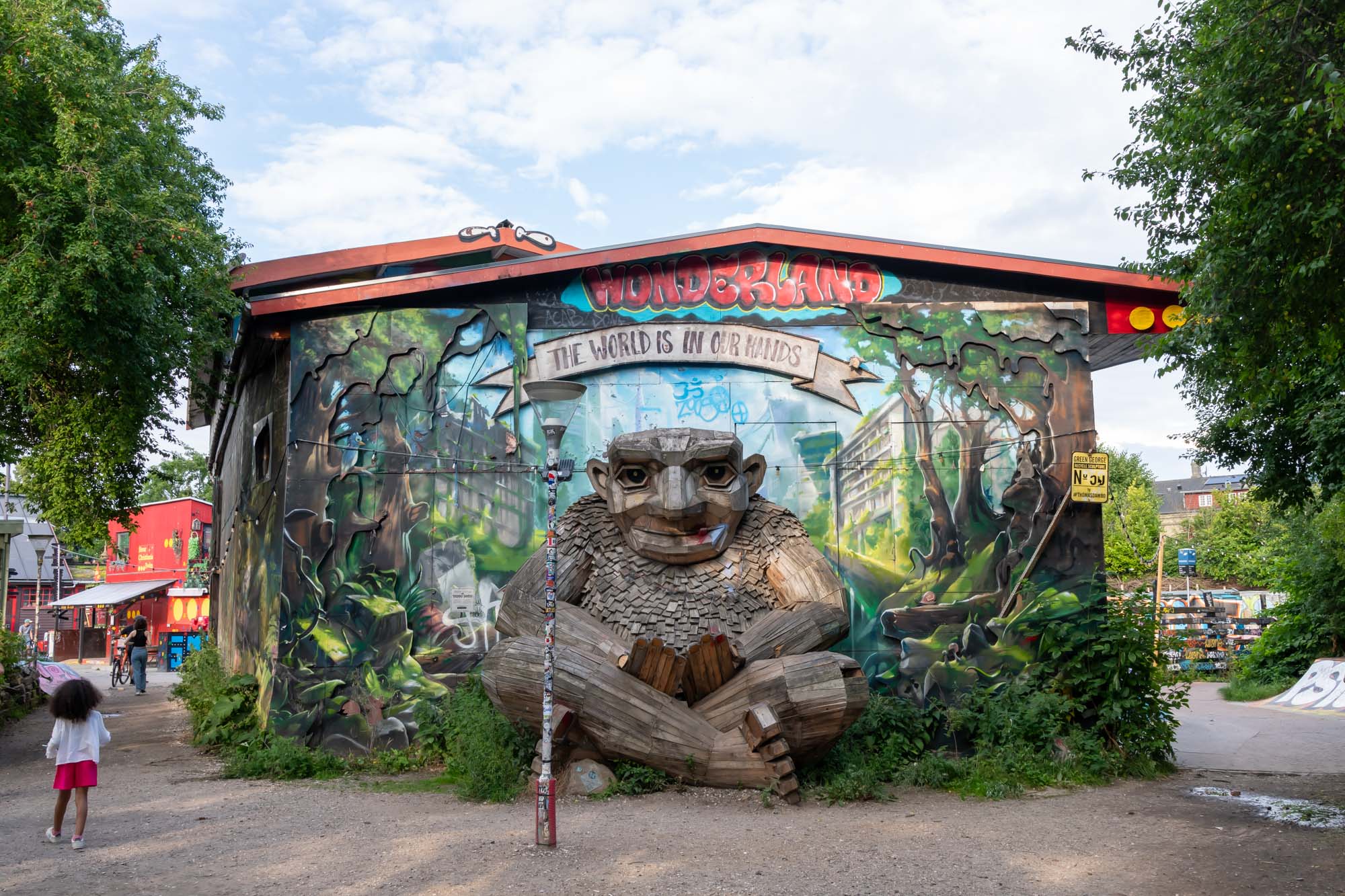
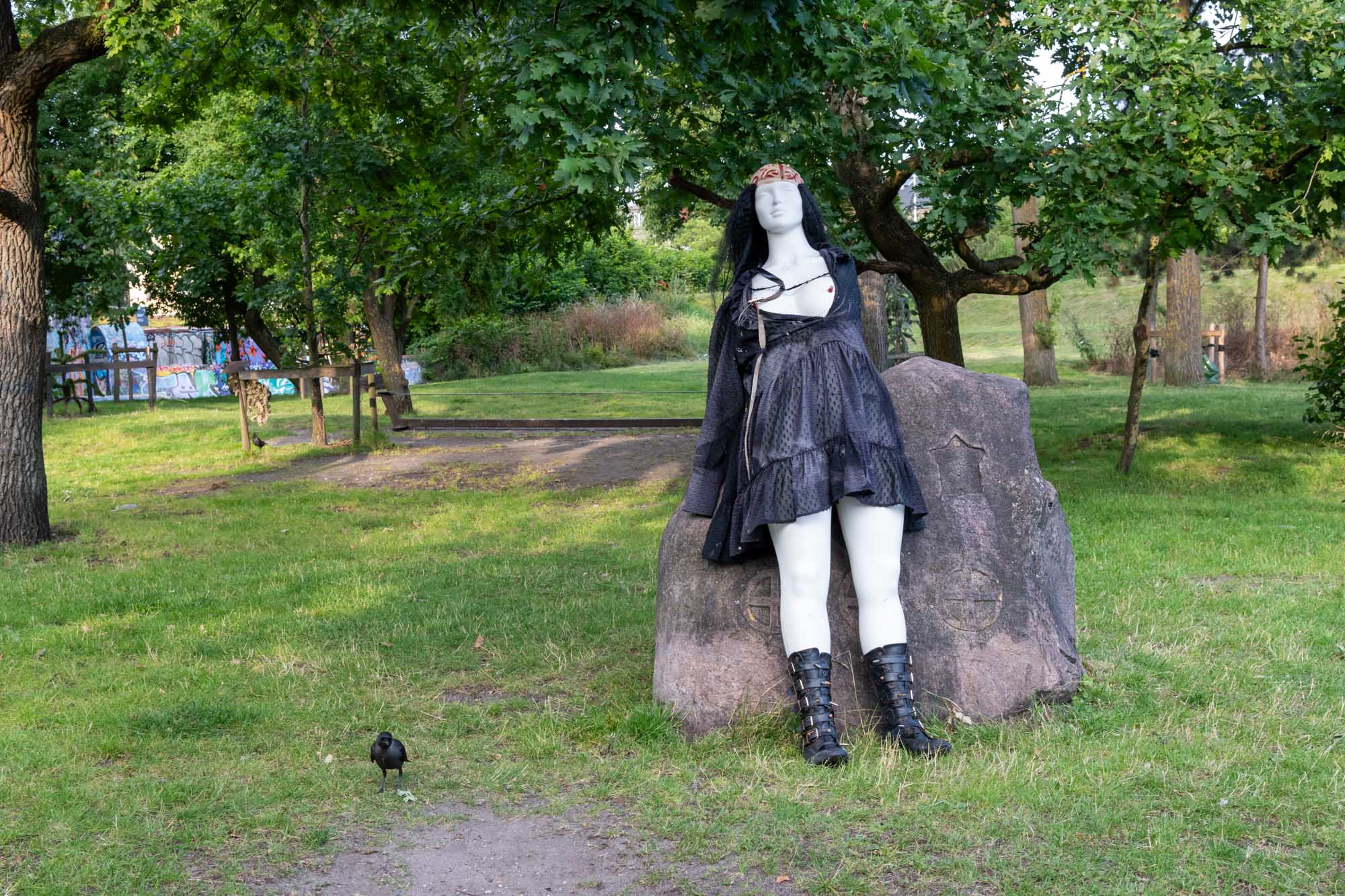
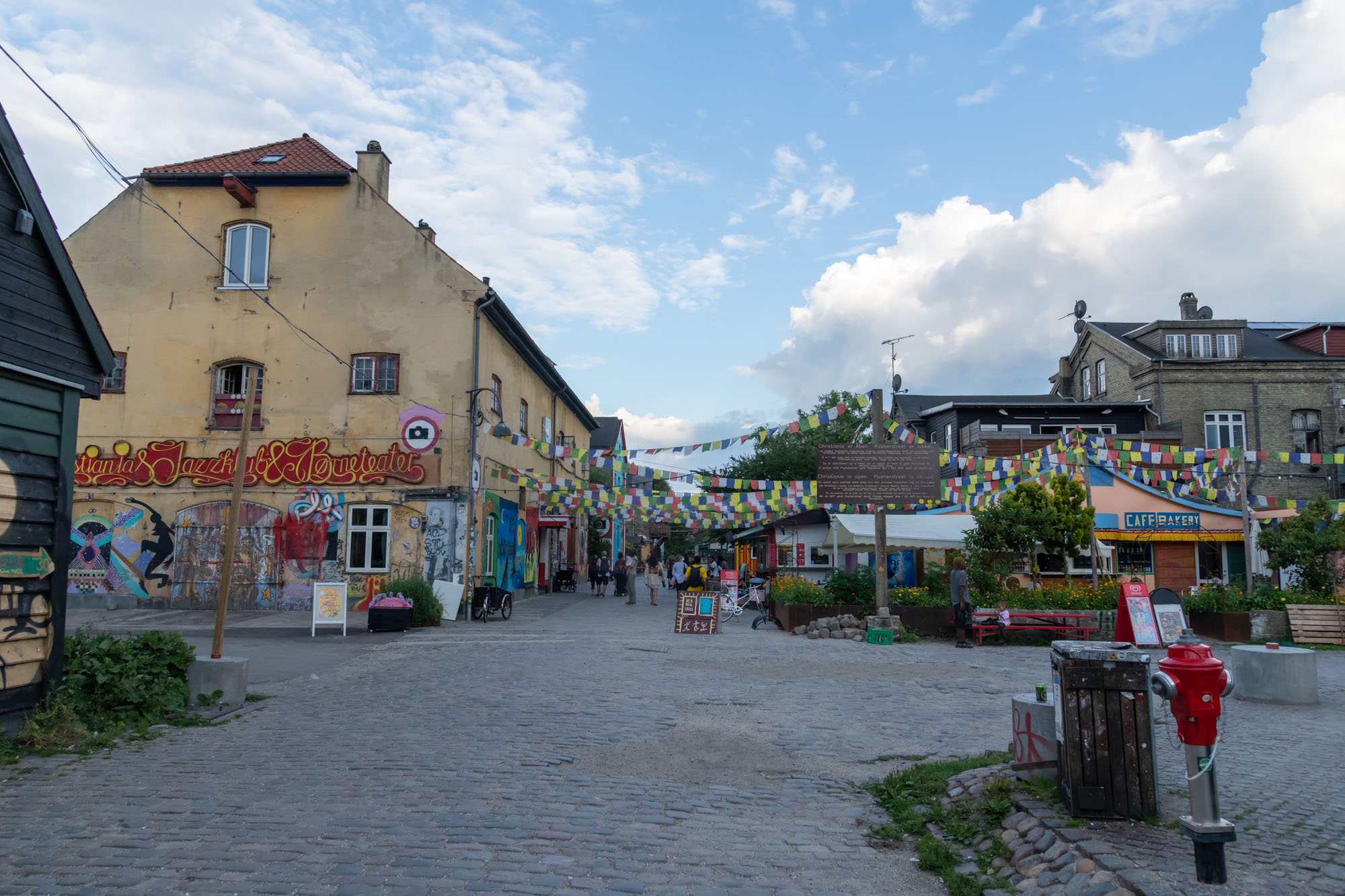
Christiania or Freetown Christiania is an anarchist commune that started in 1971, squatting on an old military base. It was a space for an alternate model of living and the place had its own currency and rules. The idea was to be a community that had space for all and be away from exploitation and discrimination. Over the years, some gangs started to dominate Christiania, and it became a paradise for drug peddlers with the main street being called Pusher Street. From the early 2000s the government started a push to bring Christiania under its control and now, it has more or less succeeded. Some of the erstwhile squatters in Christiania have bought their properties and now there is a move to evict all squatters. Cannabis and drug peddling is still going on, though much less visible now. There are about 800 to 1000 residents in Christiania now, spread over an area of about 19 acres.
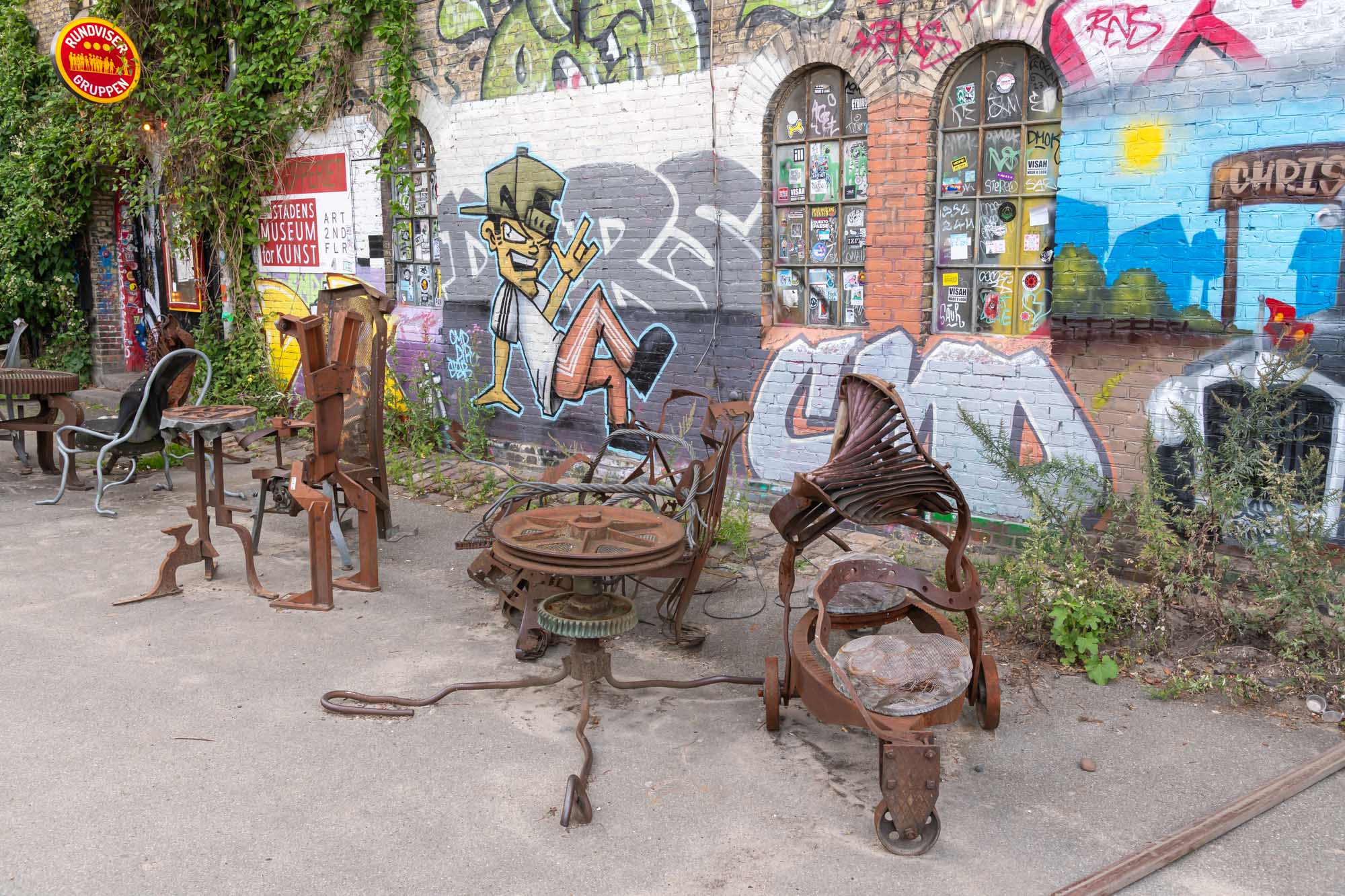
Today, Christiania has become a tourist attraction, and you find tourists walking around the place with little regard for the people that live there or their principles. These are people with an independent mindset and against the exploitative systems of capitalism and big corporations. Privacy is a very important concern for them. I had done my research before going there and so I was mindful that people would be wary of cameras there. I saw some furniture made of machine parts, which I wanted to photograph. There were a couple of people sitting near those and I asked one guy whether he was comfortable with me photographing the furniture. Something in the way I asked him, or my manner seemed to appeal to him, and he started talking to me. He told me that most of the tourists are a problem as they never spend anything in the place to support the local economy but were simply voyeuristic and looking at the residents as if they were some museum pieces. I agreed with him, and he told me he was speaking with me as he didn’t find that in me. Right then, an Indian family walked by with the man holding up a GoPro type camera and recording everything around him. Even I found it irritating and the gentleman I was speaking with (let us call him X), did not like it at all. However, he was polite in how he told the guy to not record. The man stopped his recording, but I found him doing it again later in another part of Christiania.
I spoke for quite some time with X and his friend, and he took me inside his workshop and showed me stuff he was working on. They told me that they are very sad at Christiania being gentrified and when I asked him whether the earlier model of a free town was workable, they were quite sure it was. They said the drug trade didn’t bother anybody, and people were using it on their freewill but then drugs weren’t the mainstay or the fundamental reason behind the commune. The idea was to have an alternate lifestyle, which was not dictated by the corporations. Christiania used to produce many goods that were consumed by the local people, and the economy was doing well. Sadly, corporations are taking over now and people who had been squatting there for 30-40 years are being kicked out. X himself has been staying there since the last forty years.
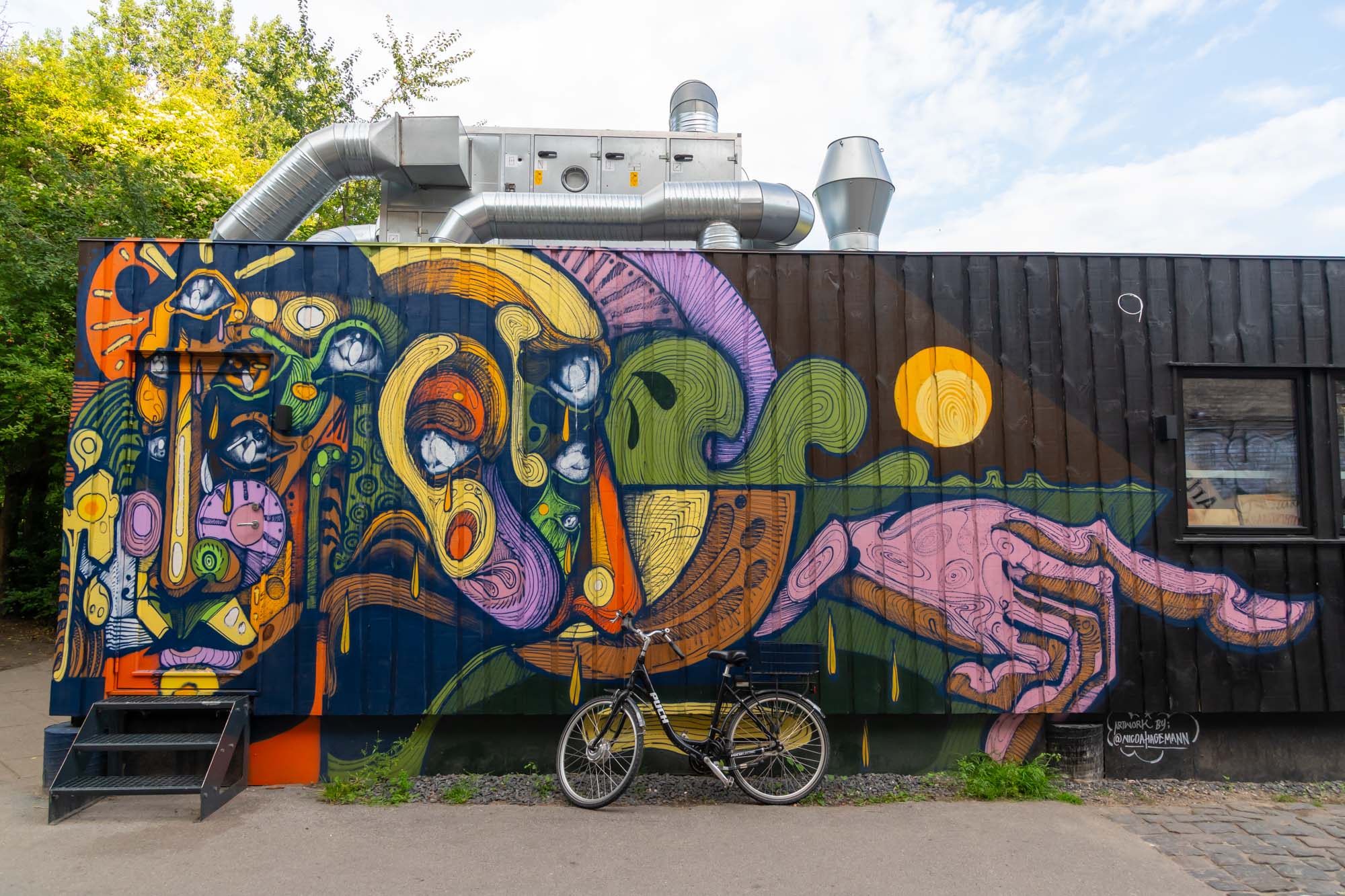
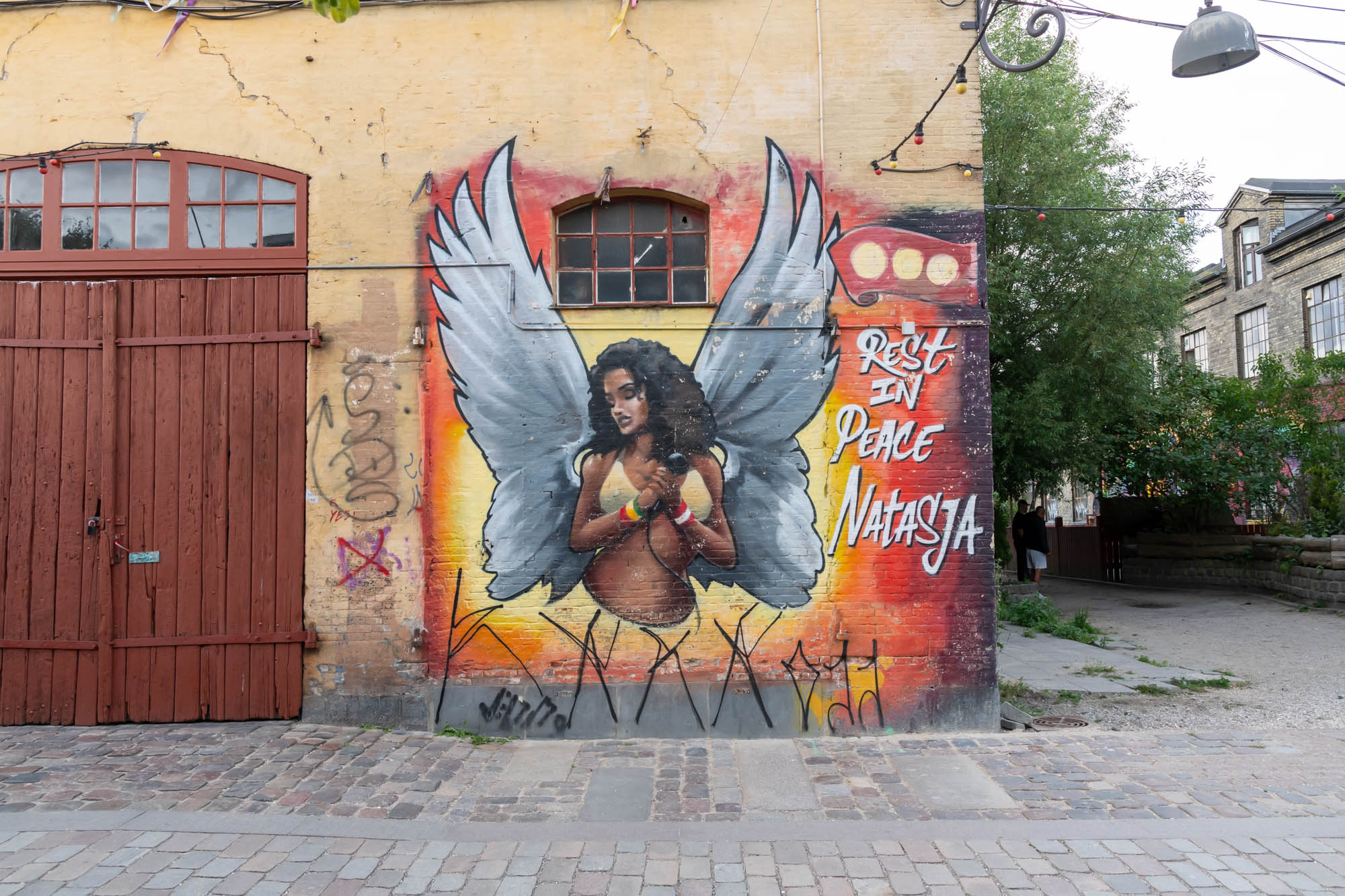
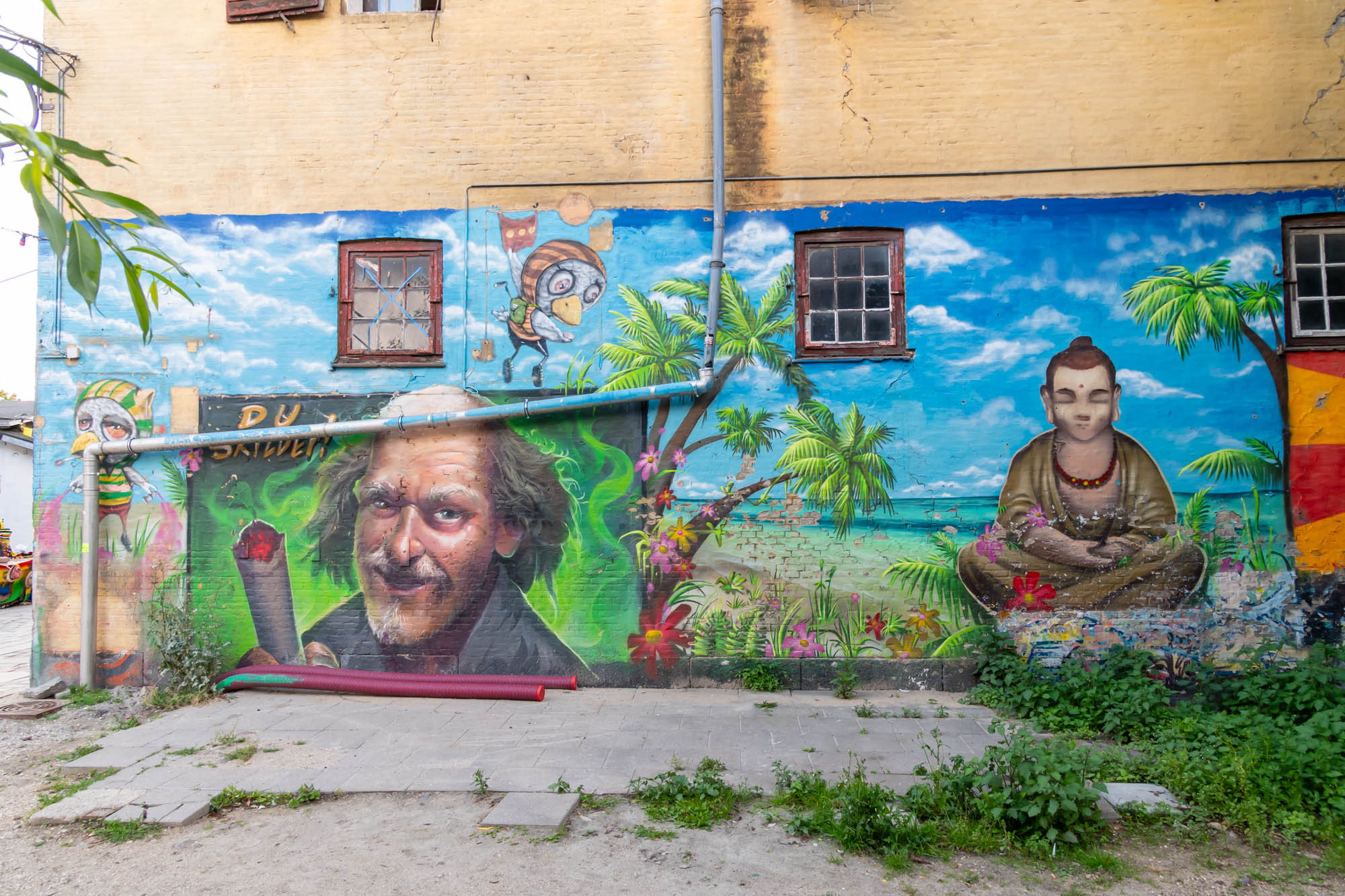
I had beer at their local brewery (yes, they brew their own, with hemp in it) and roamed around for a bit and left. As could be expected, there was a lot of graffiti and the whole place was interesting. I would have wanted to go back and spend more time there with more conversations, but I couldn’t find the time. Personally, my view is that communities like Christiania cannot hold on in these times.

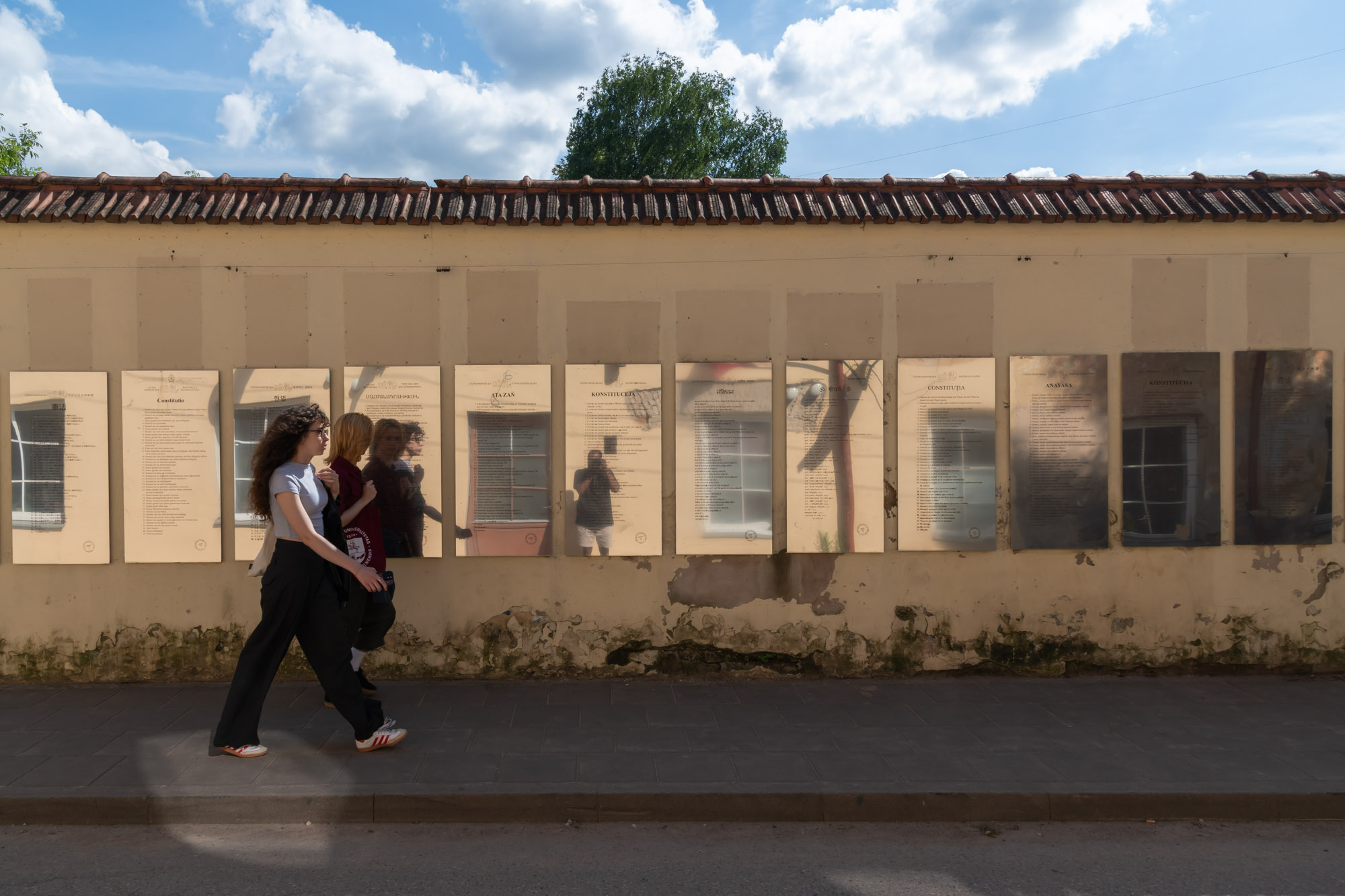
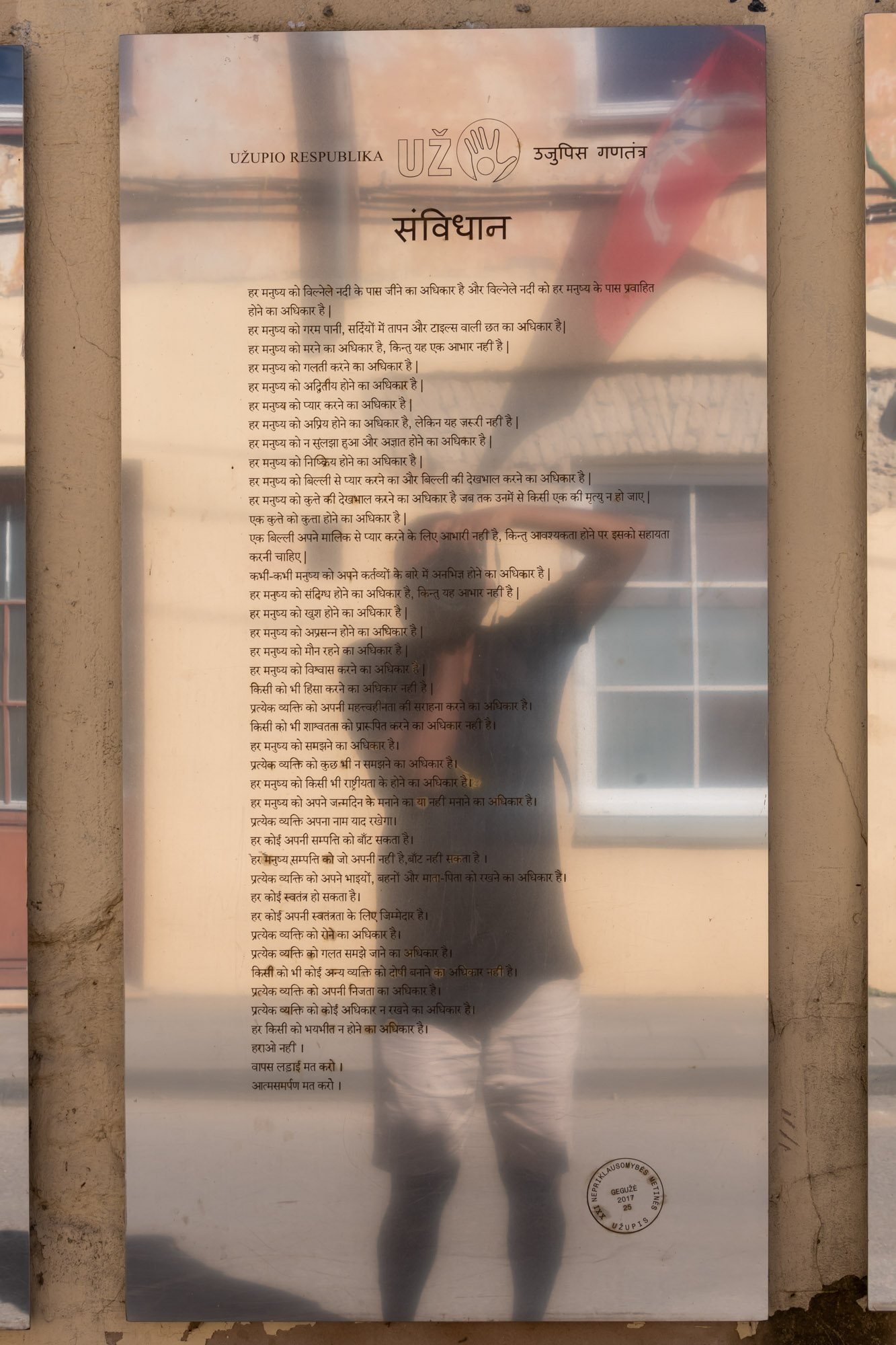
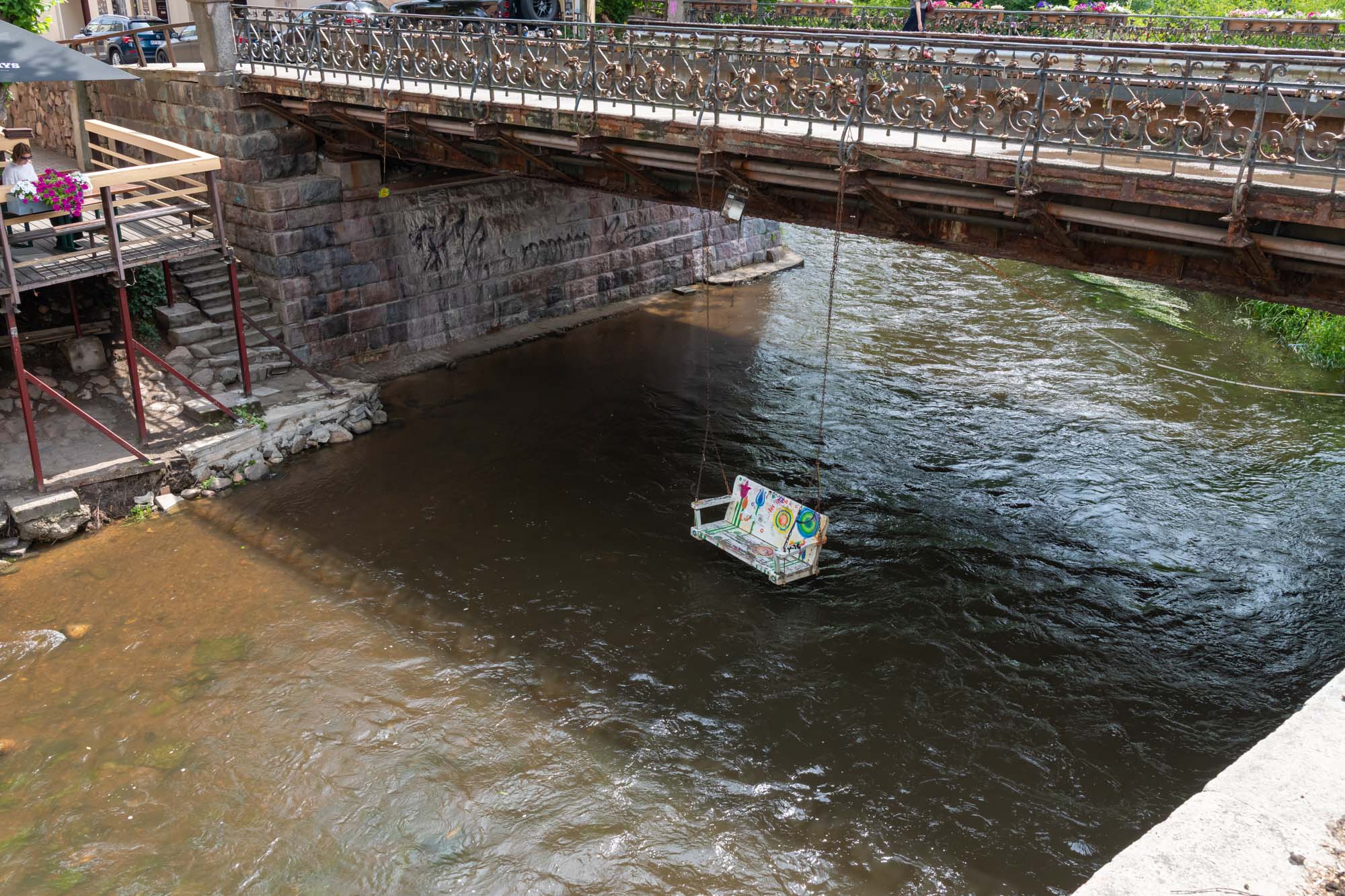
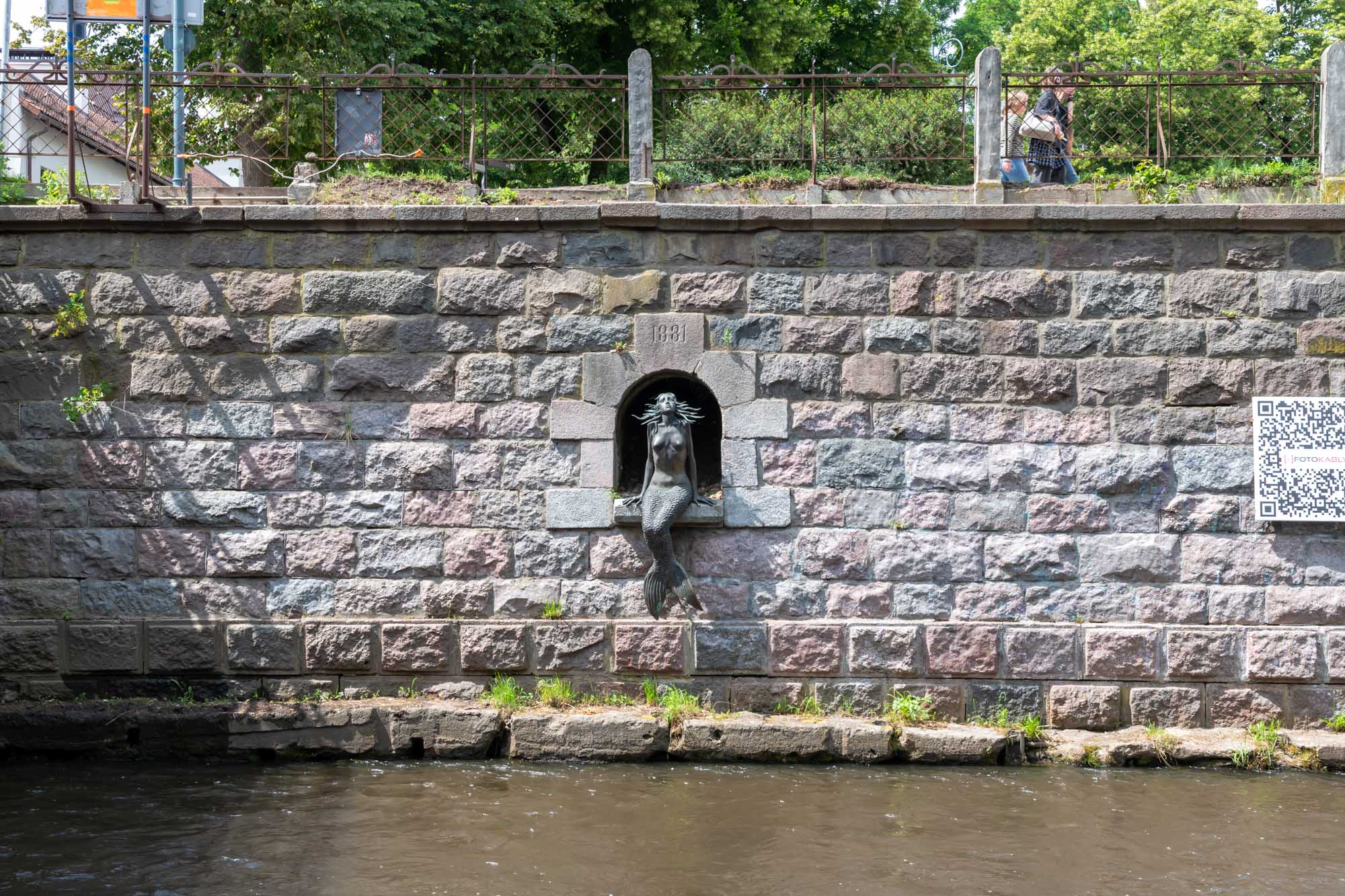
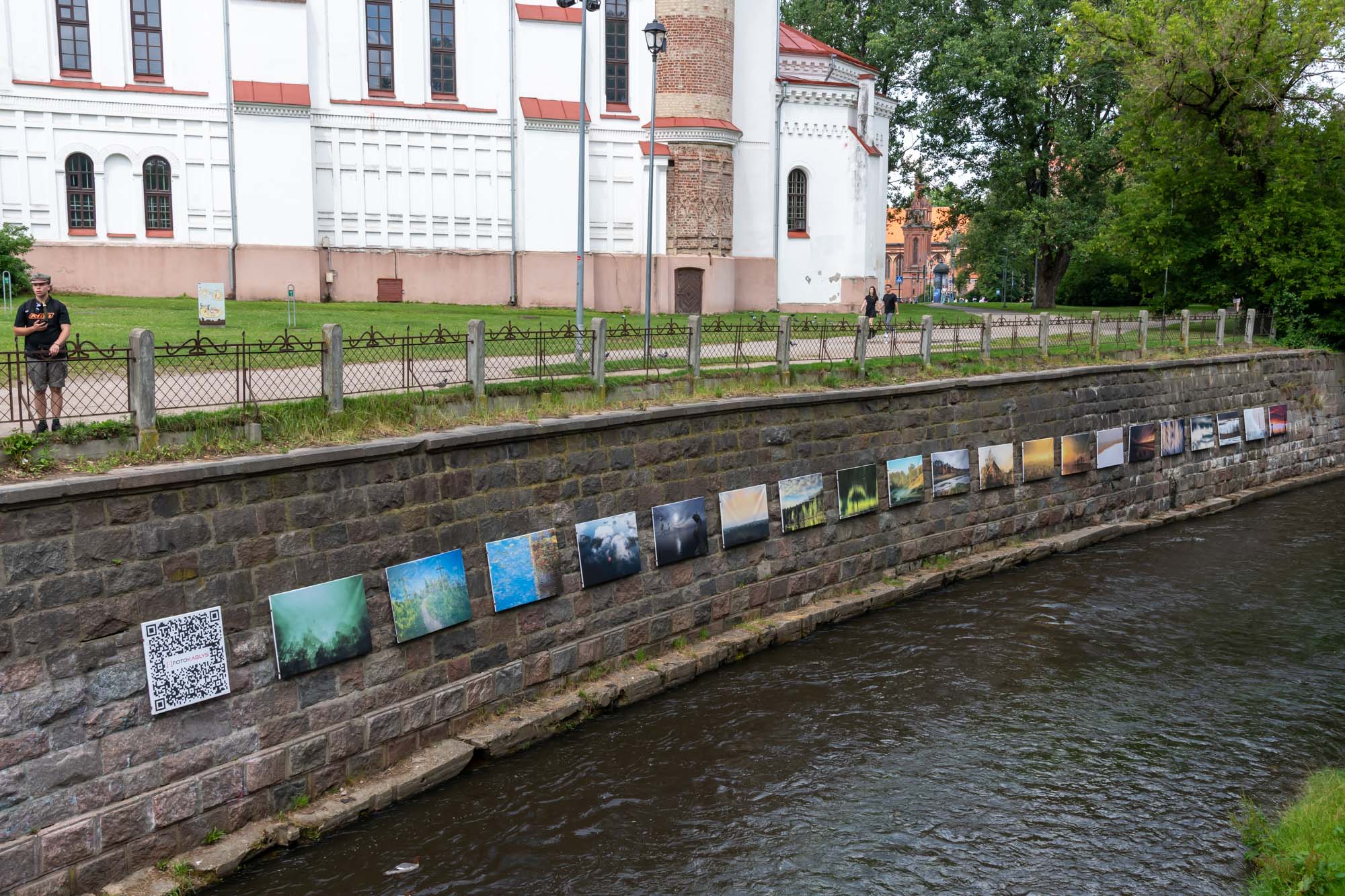
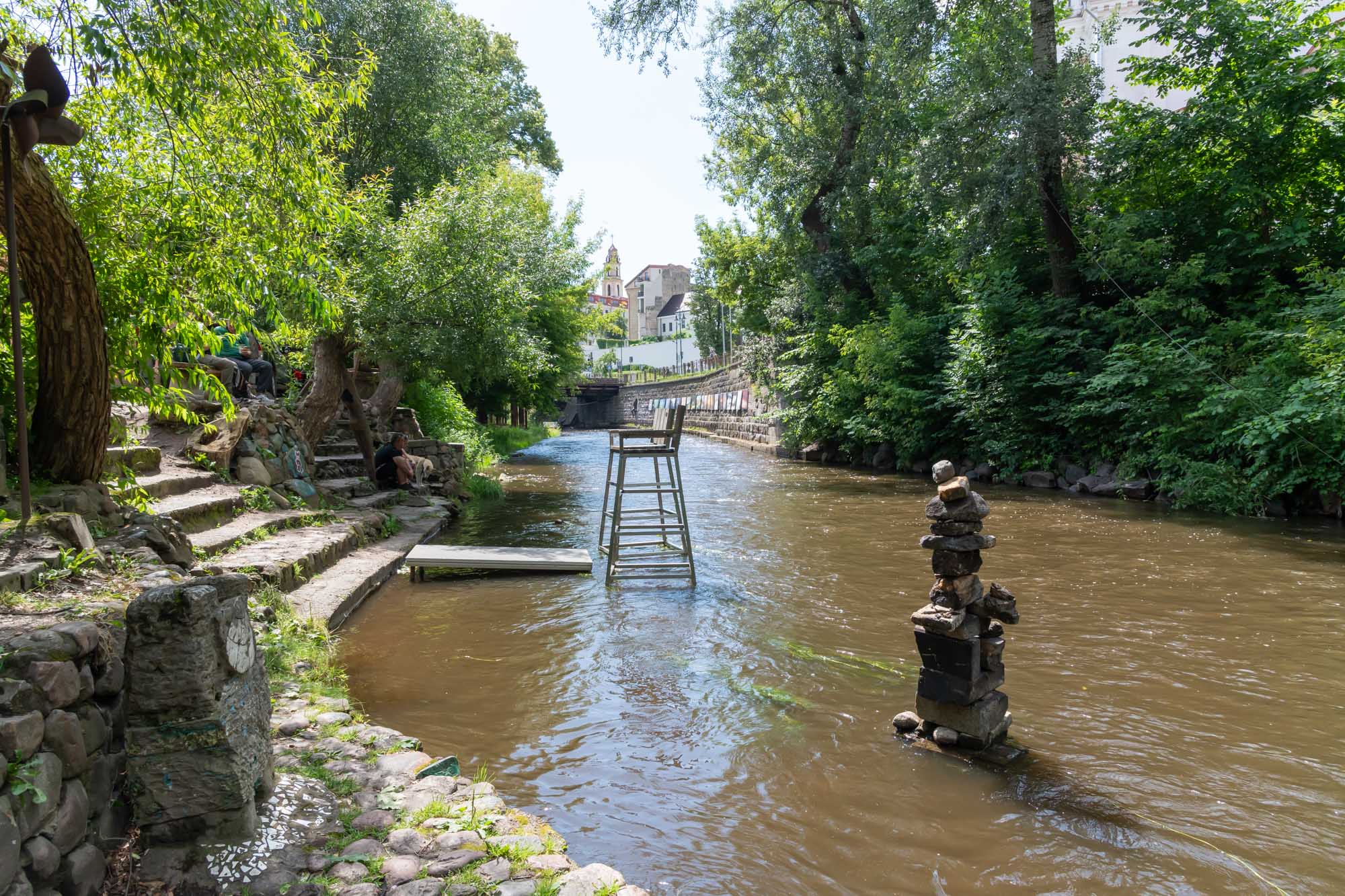
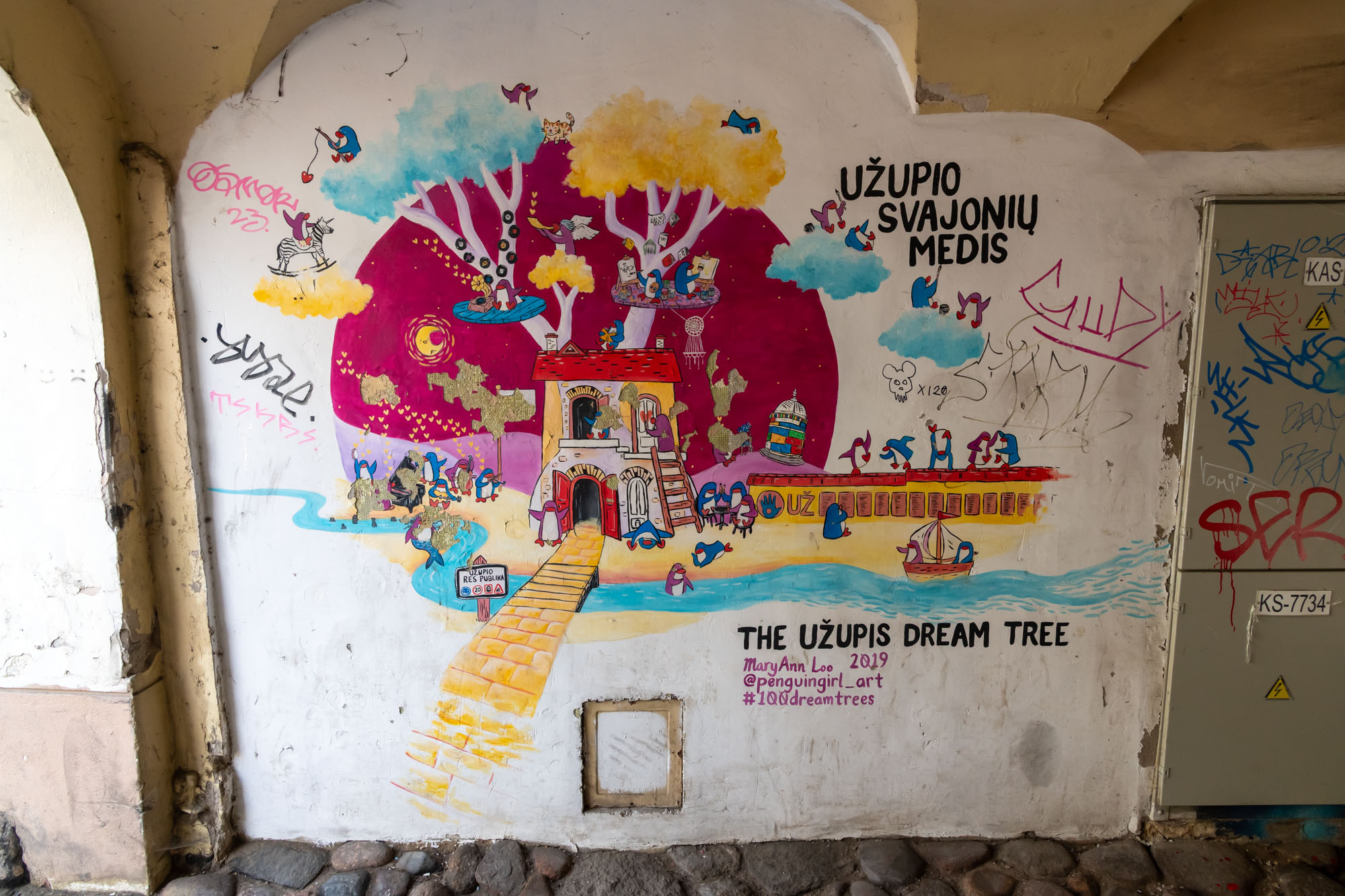
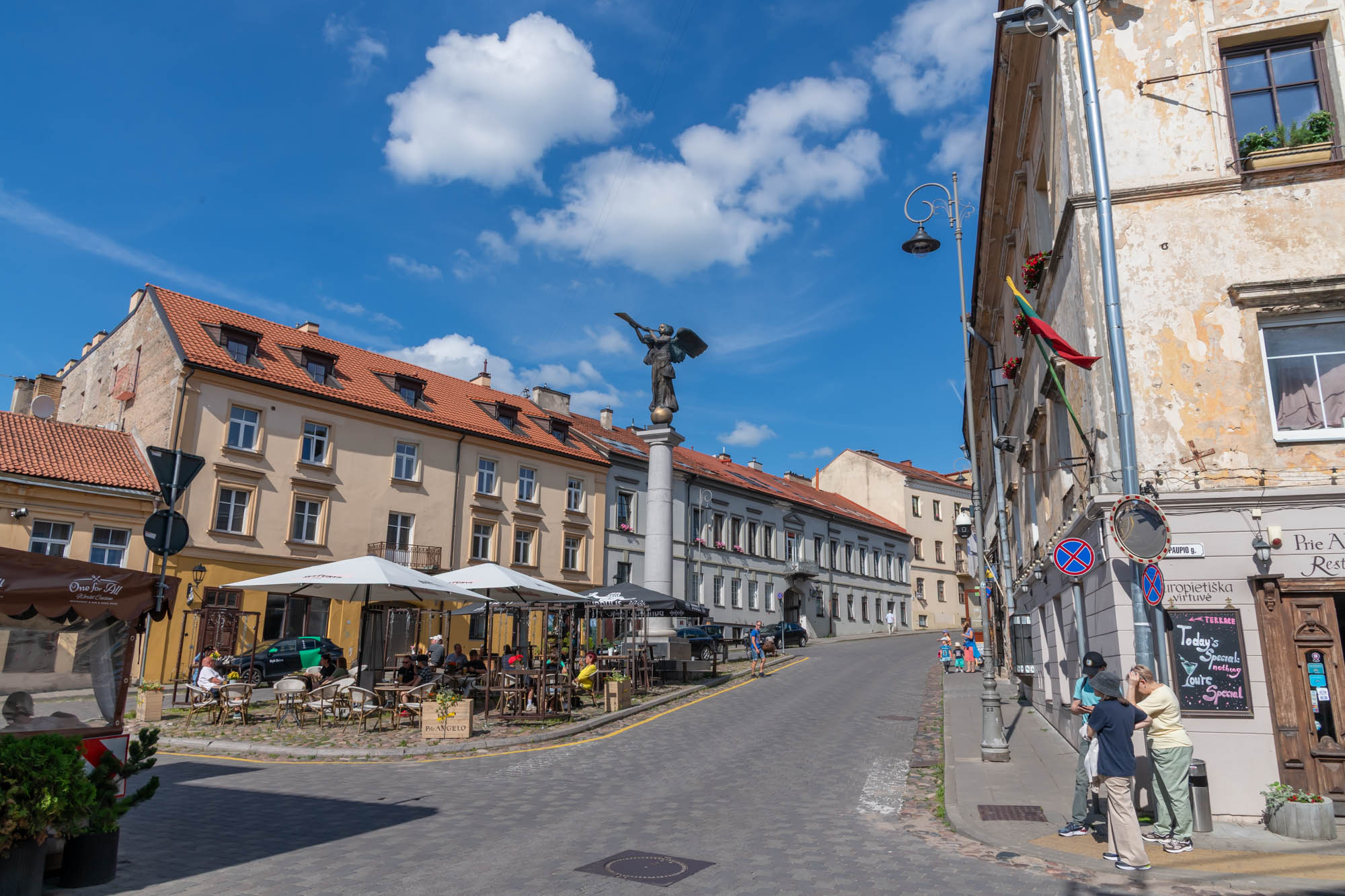
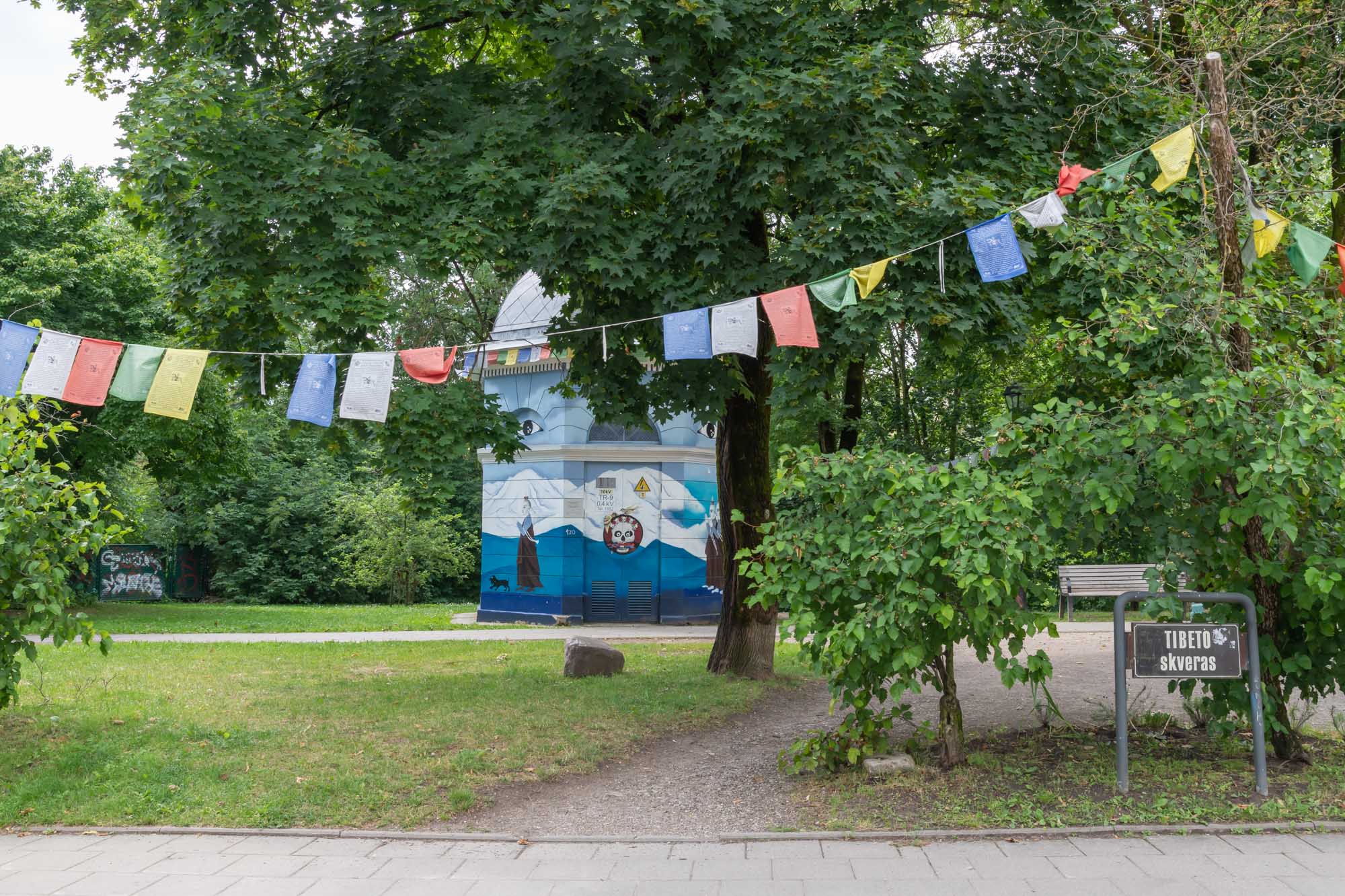
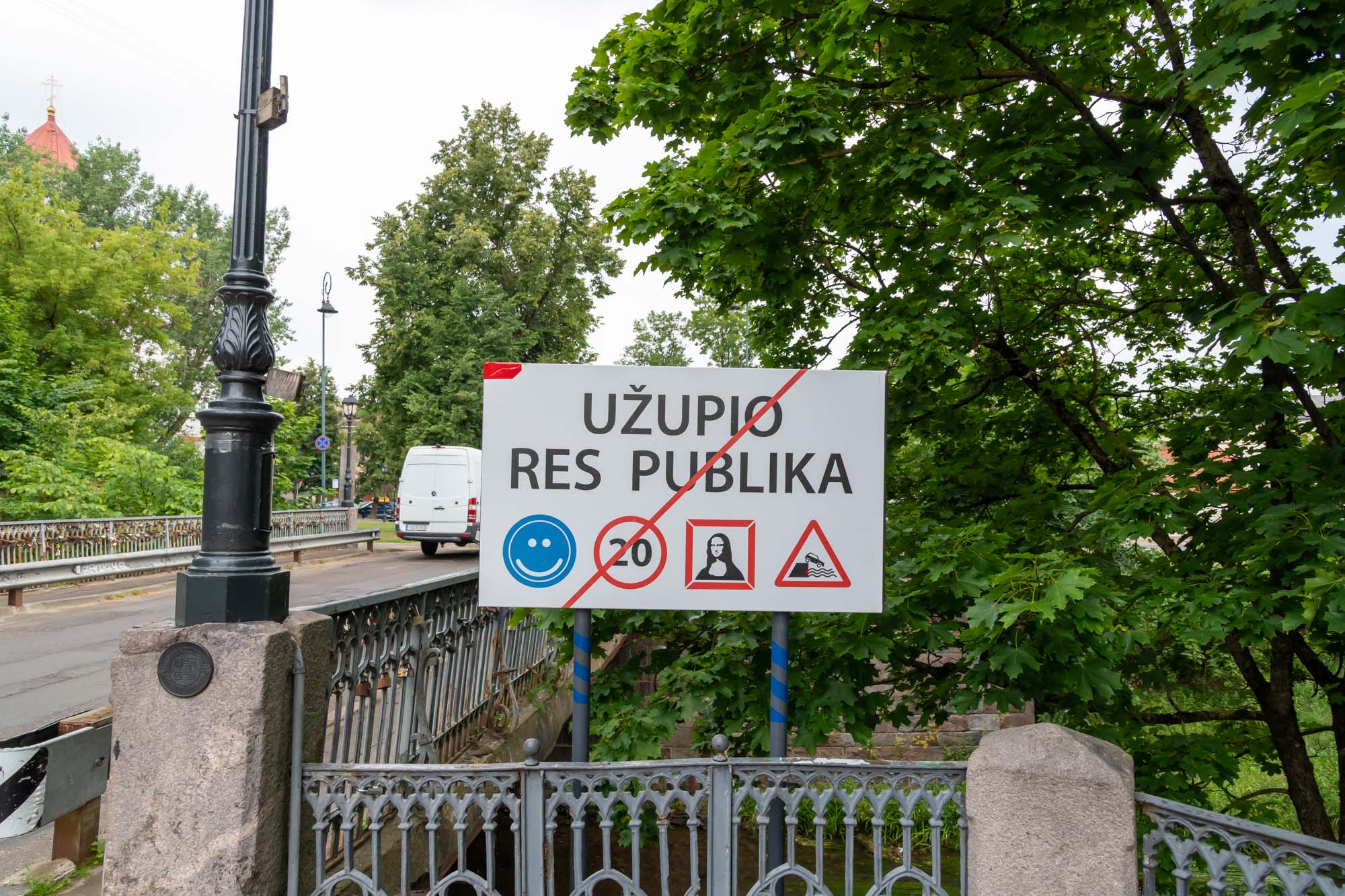
When I was in Christiania, I was reminded of the Republic of Uzupis, which I had visited just a week back. That was another free “country” with their own constitution and all, smack in the middle of Vilnius, the capital of Lithuania. The Constitution was displayed in many languages in a particular location, including in Hindi and Sanskrit!
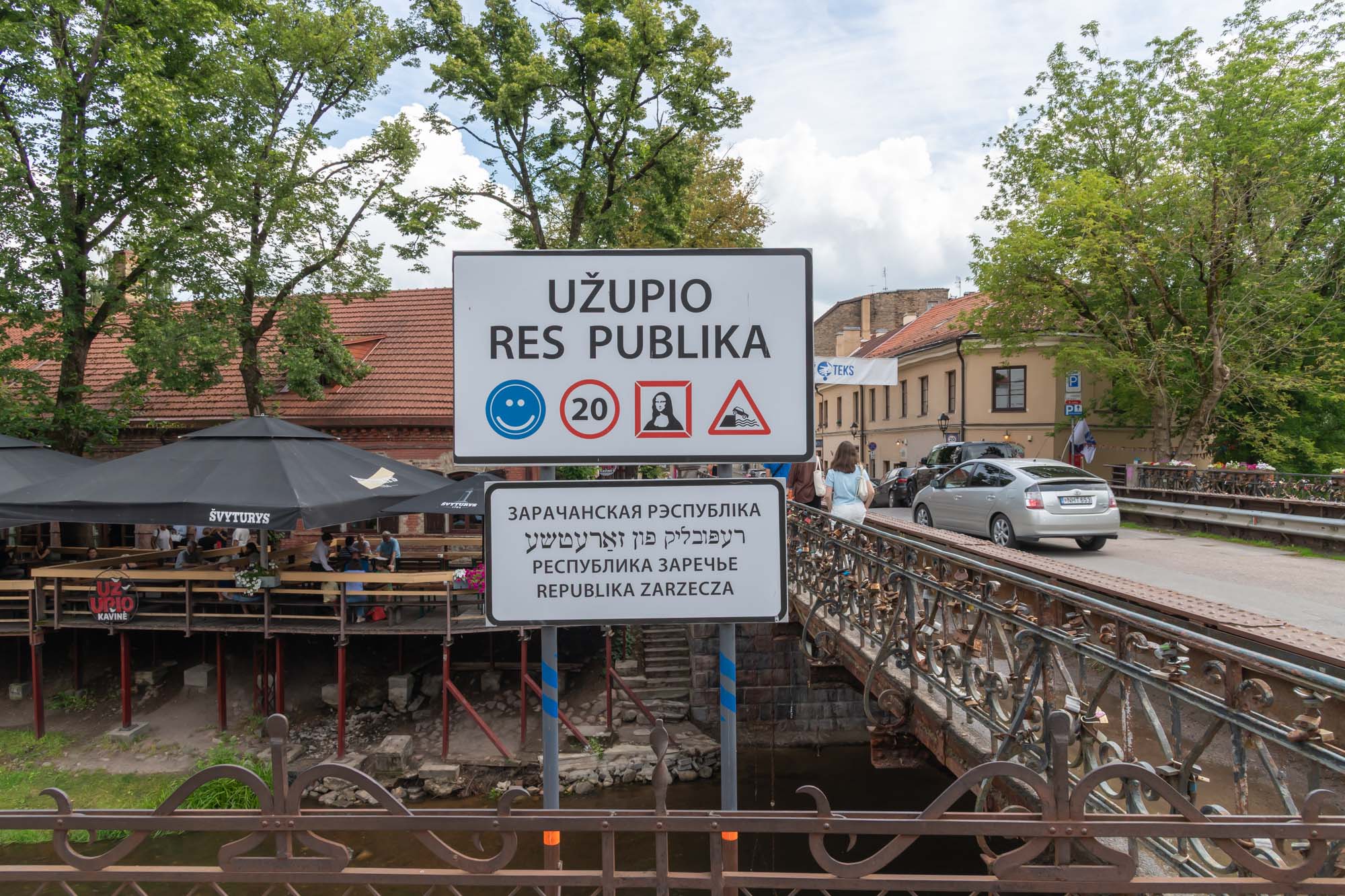
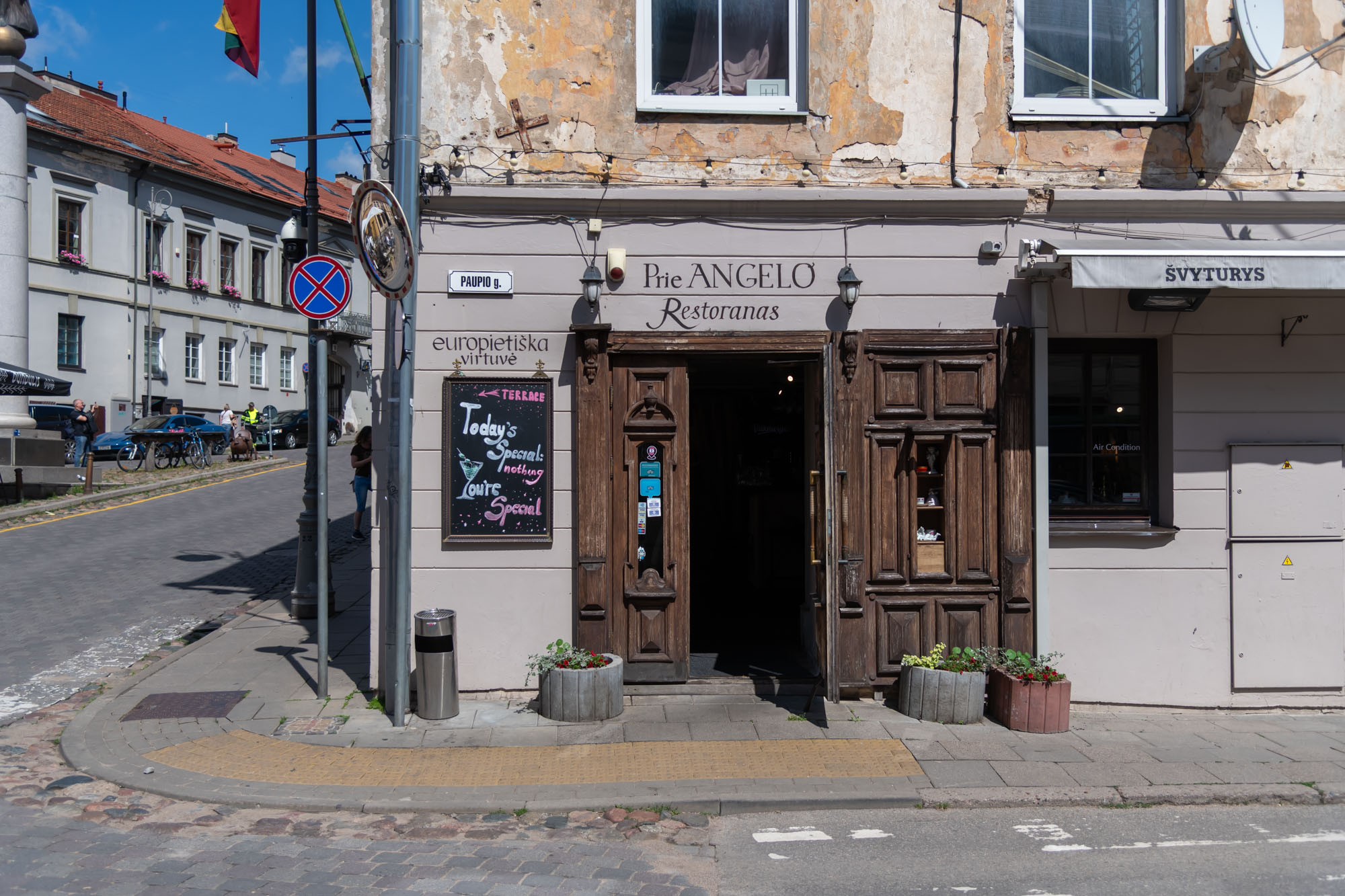
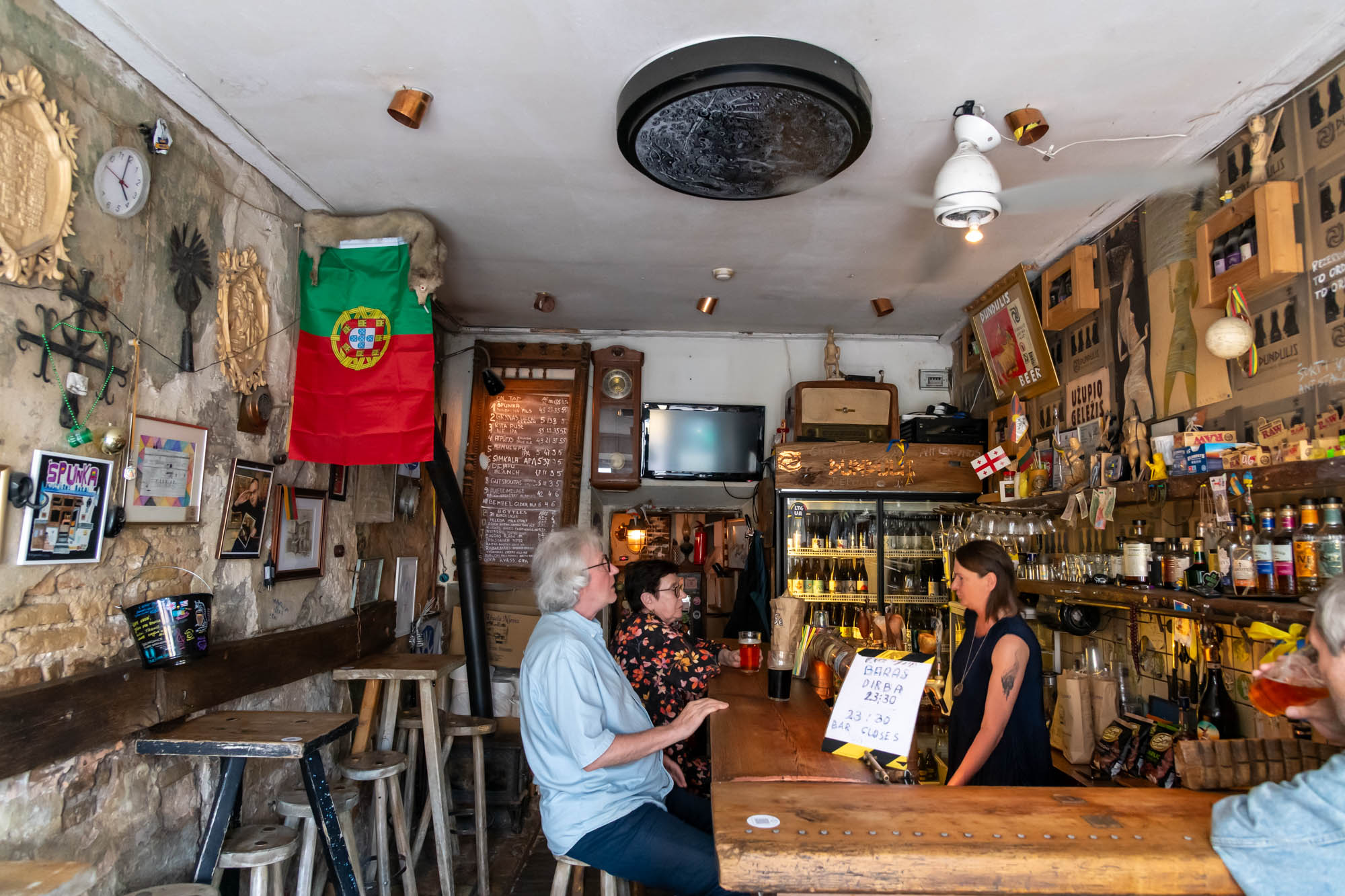
Uzupis too had its currency once and was an alternate community, mostly of artists. Nowadays, it is a proper touristy place, and I saw a lot of expensive cars around. It all looked very genteel and orderly – there was only one bar I found that looked like it was from the old times. That was a nice place and everyone who came there seemed to know each other.
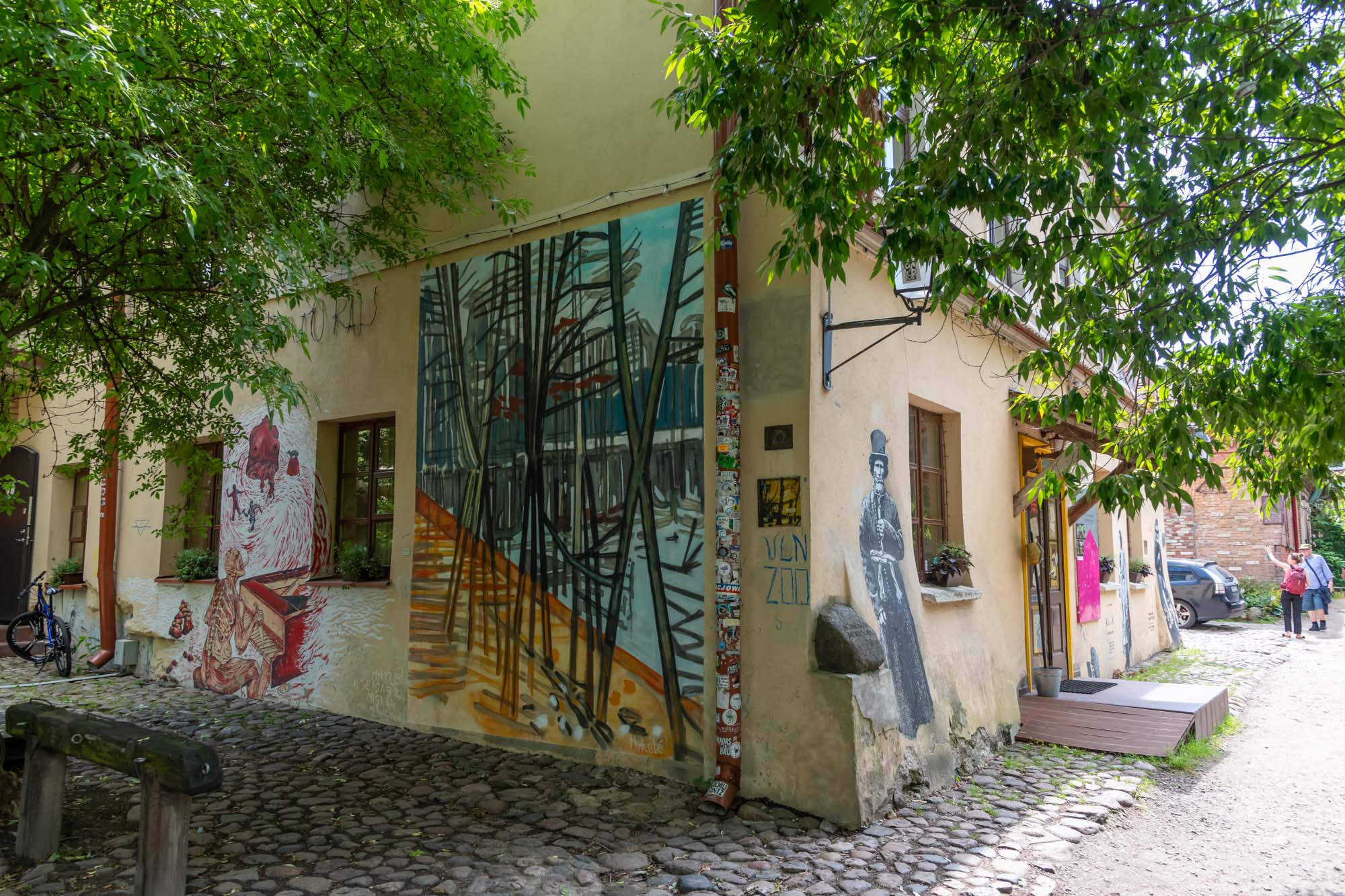
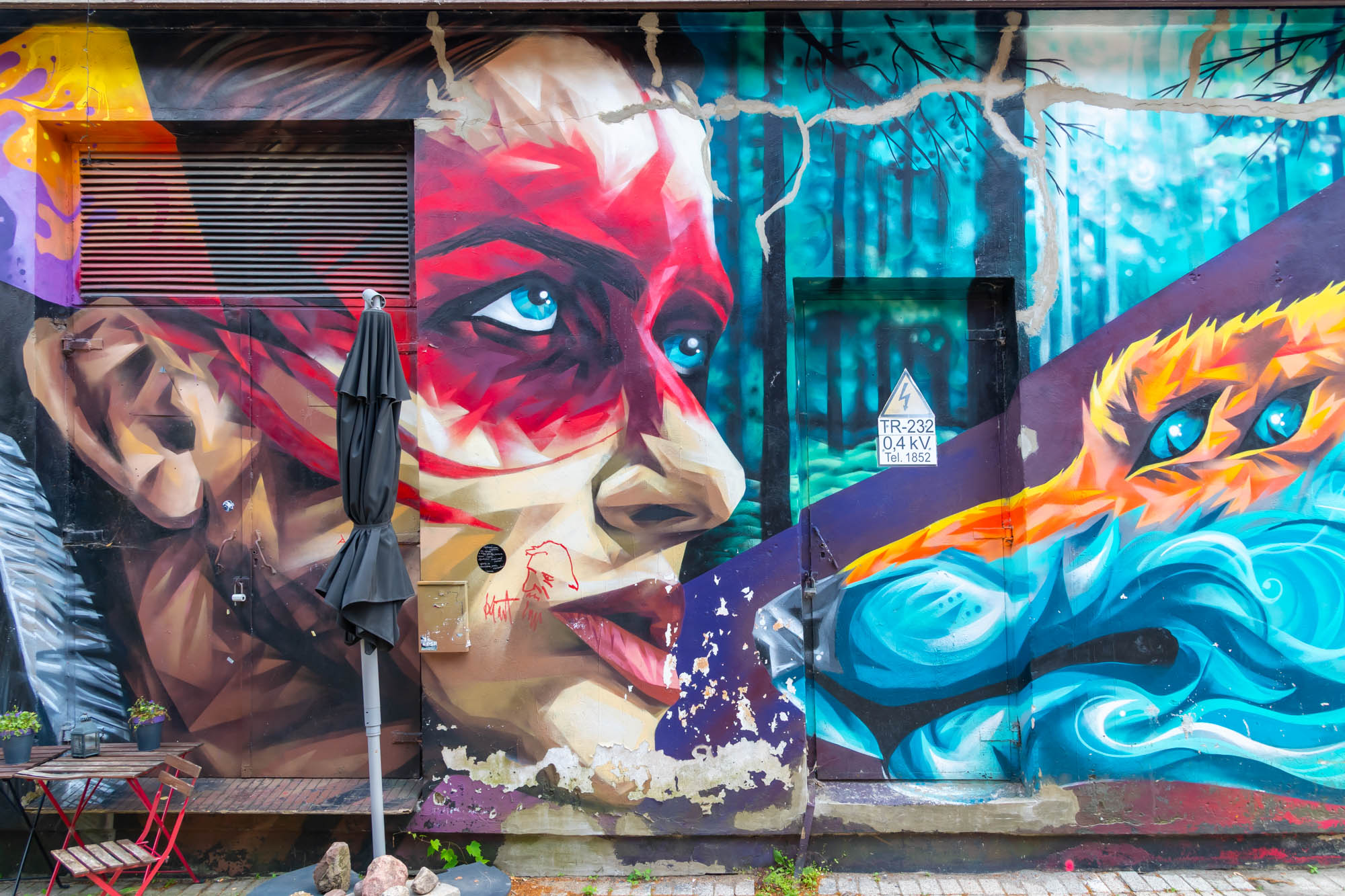

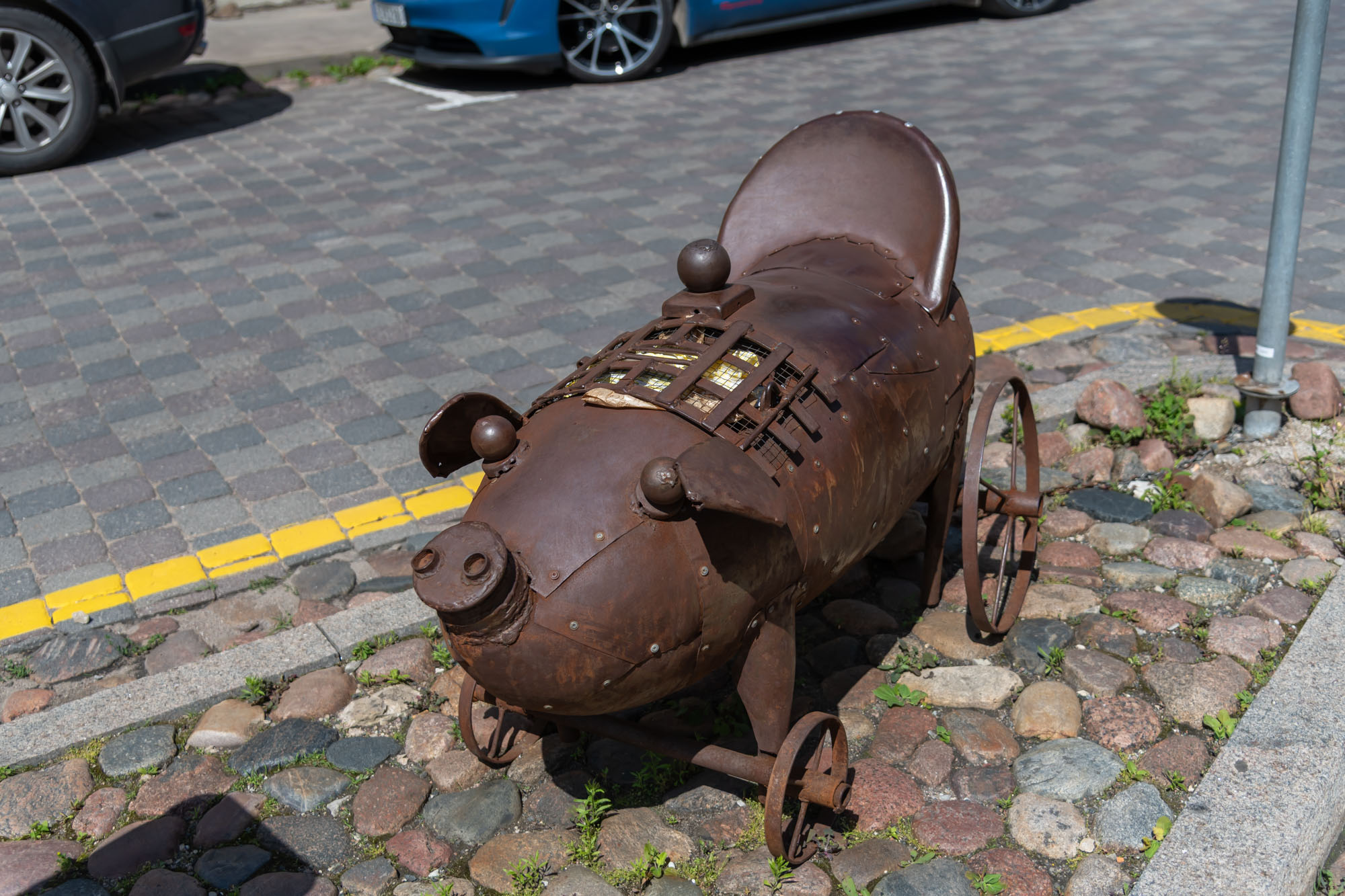
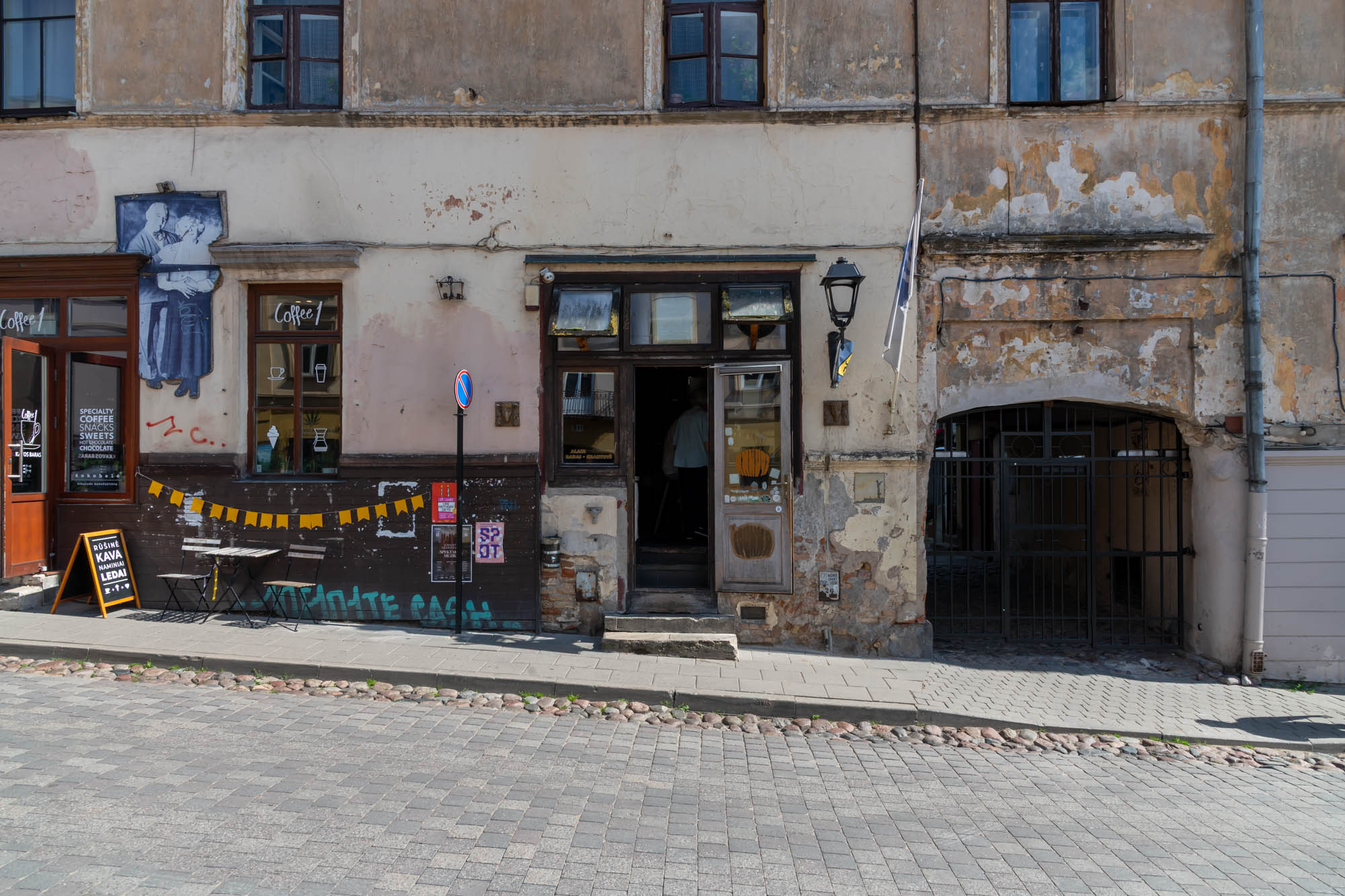
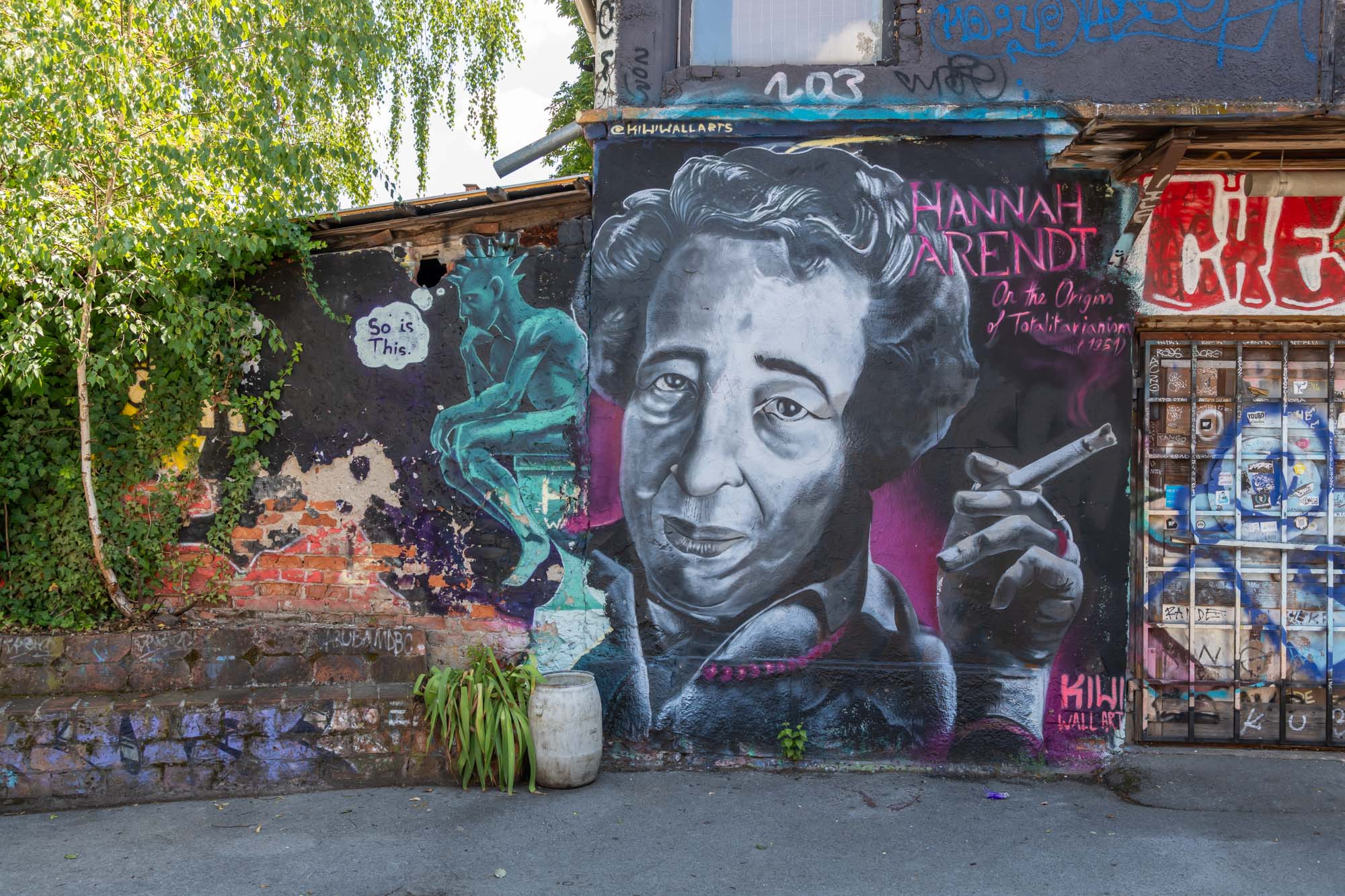
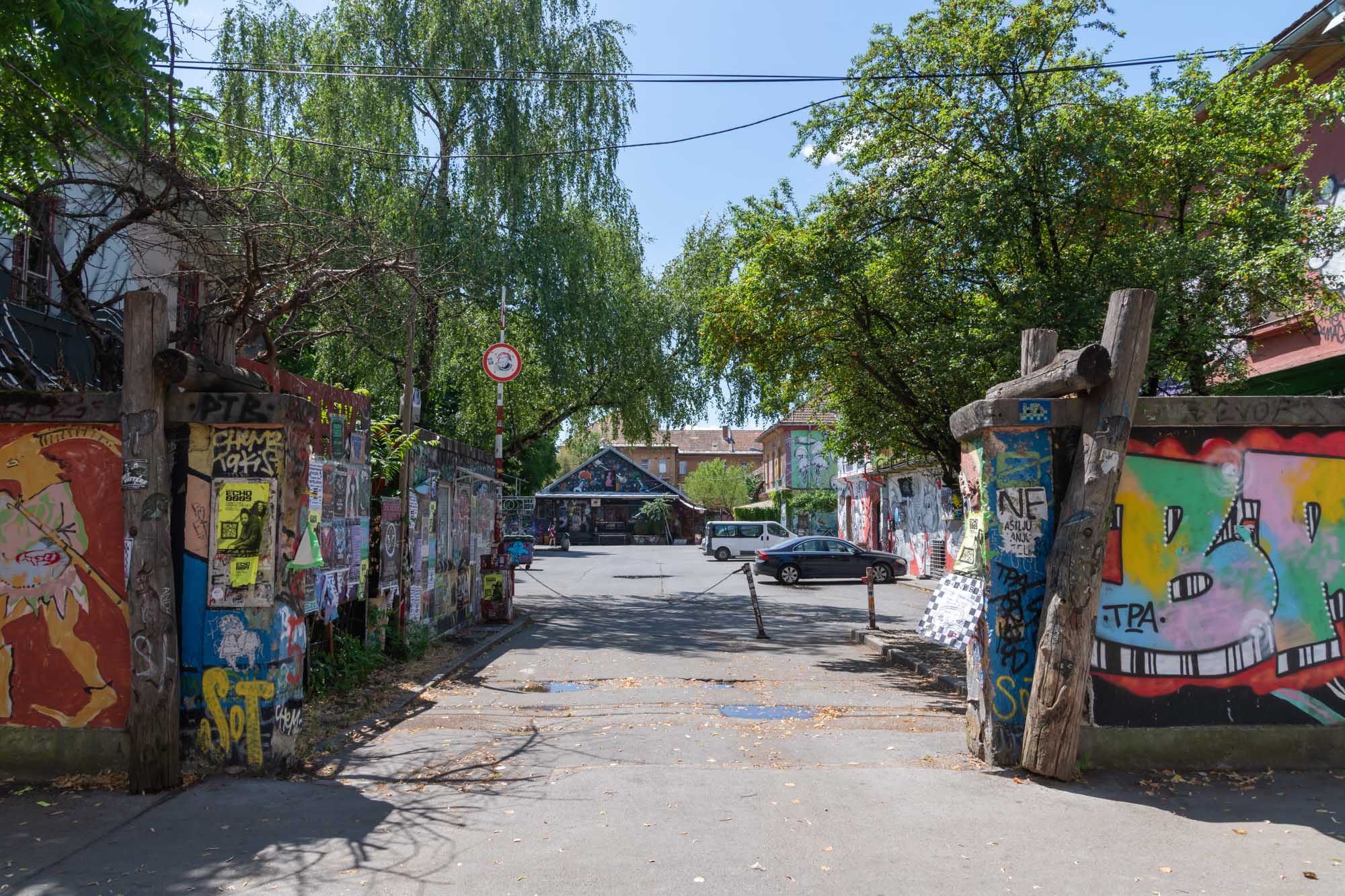
There is a similar, though much smaller, space in Ljubljana called AKC Metelkova mesto, which is an autonomous cultural centre. It is much smaller in size and is basically an old military site that squatters have taken over. It is still of dubious legal status though it has been recognised as a national heritage site since 2005. I spent some time there and the rebellious nature of the space is quite evident.



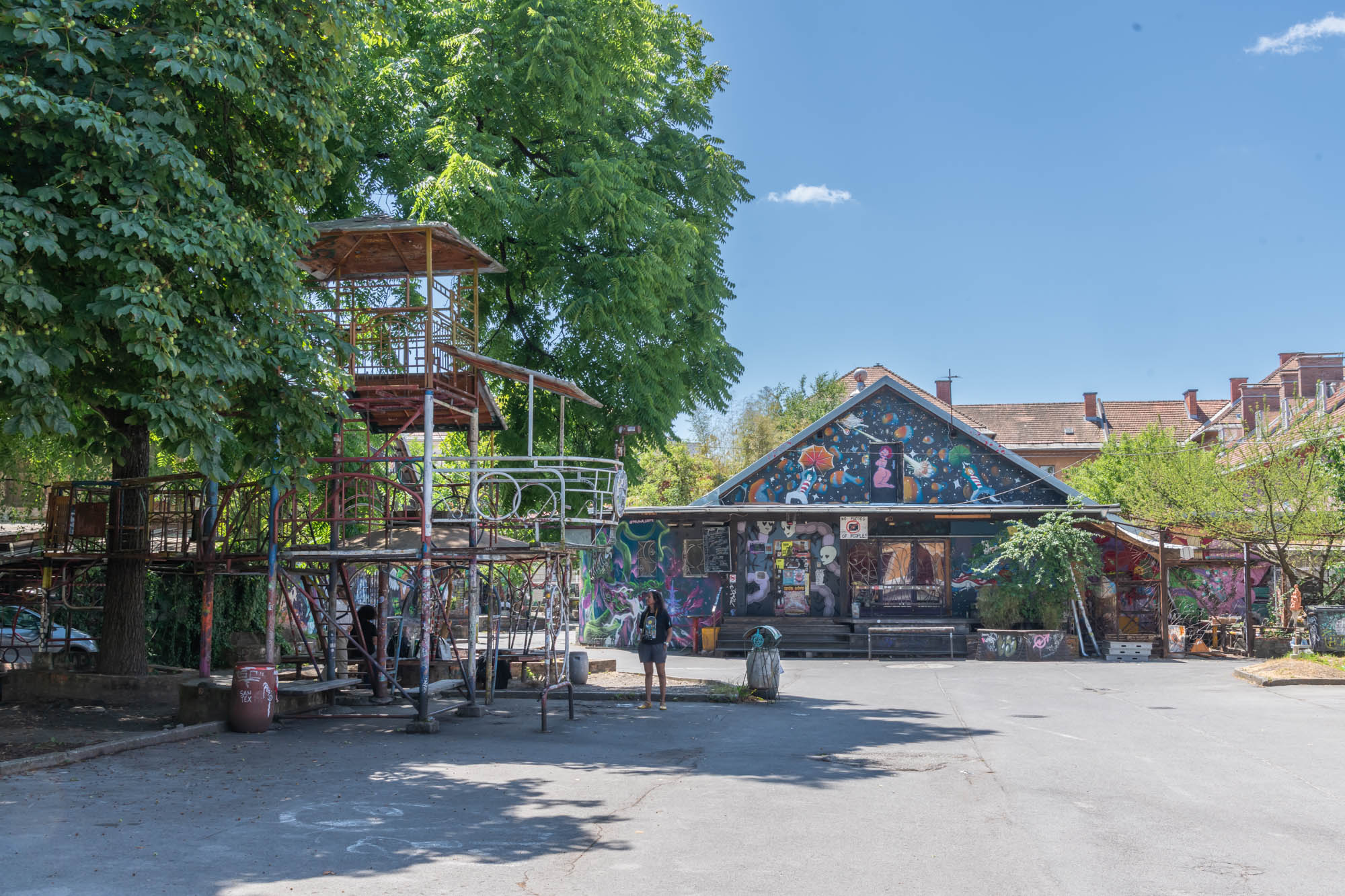
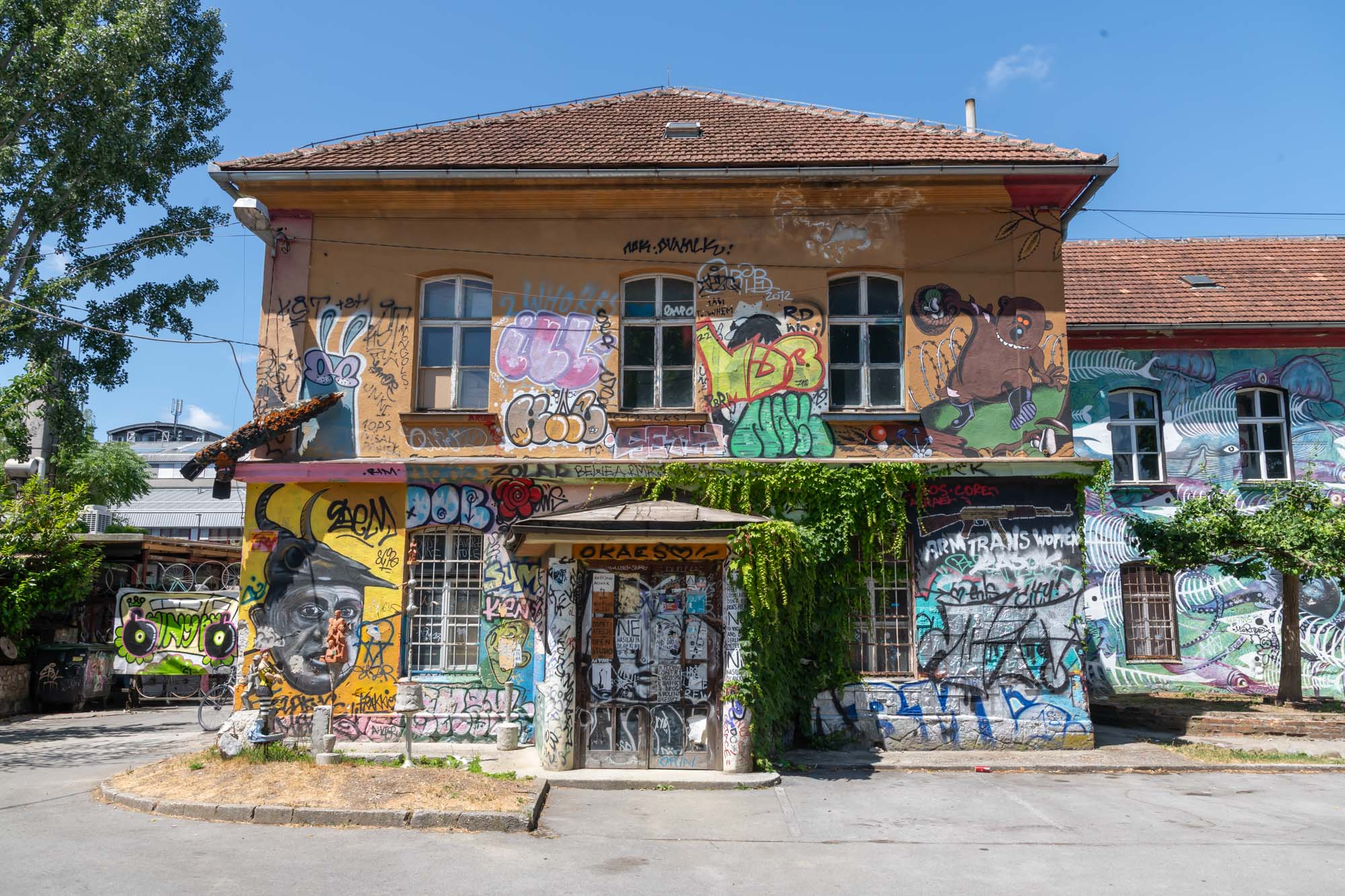
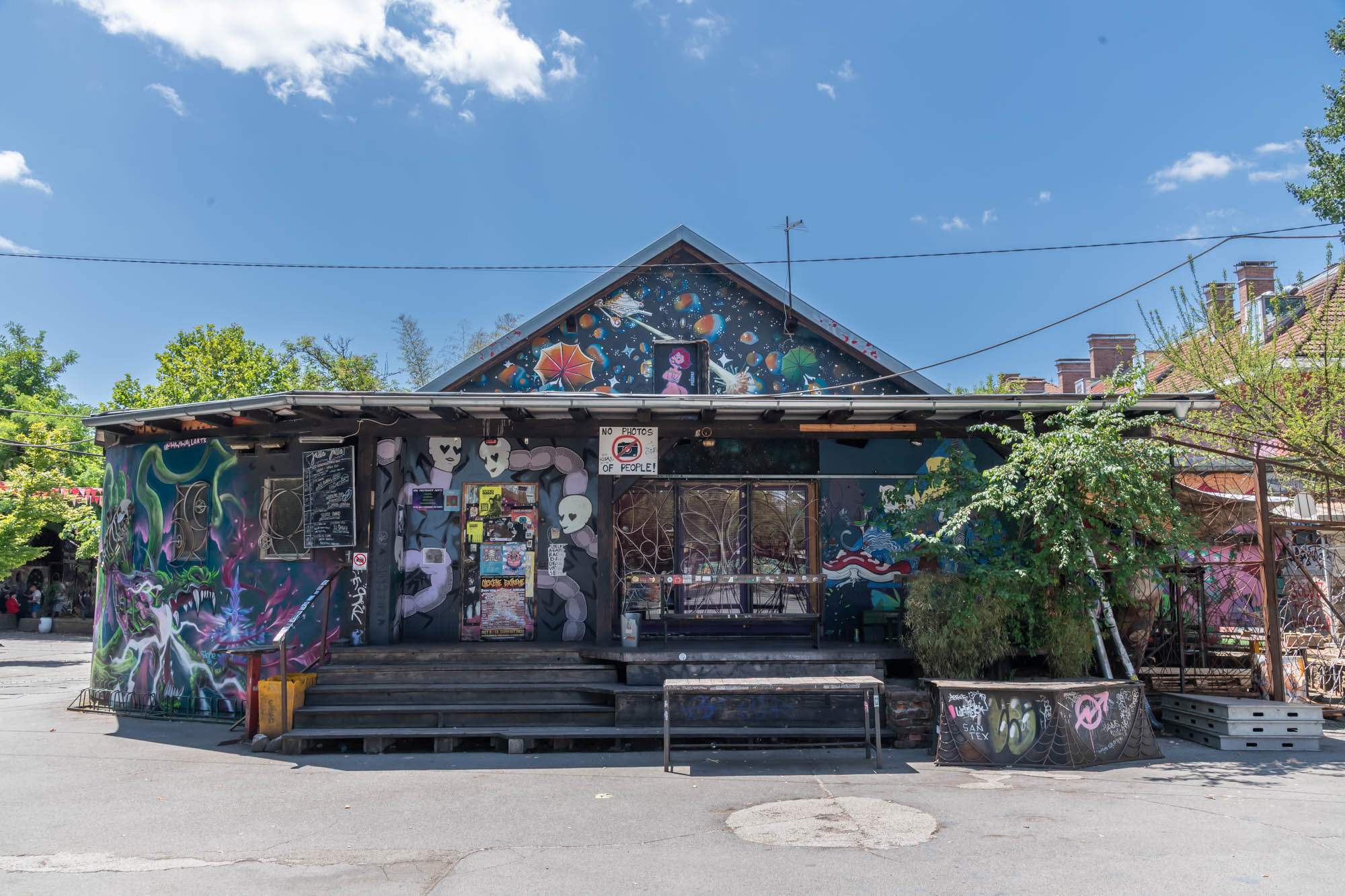
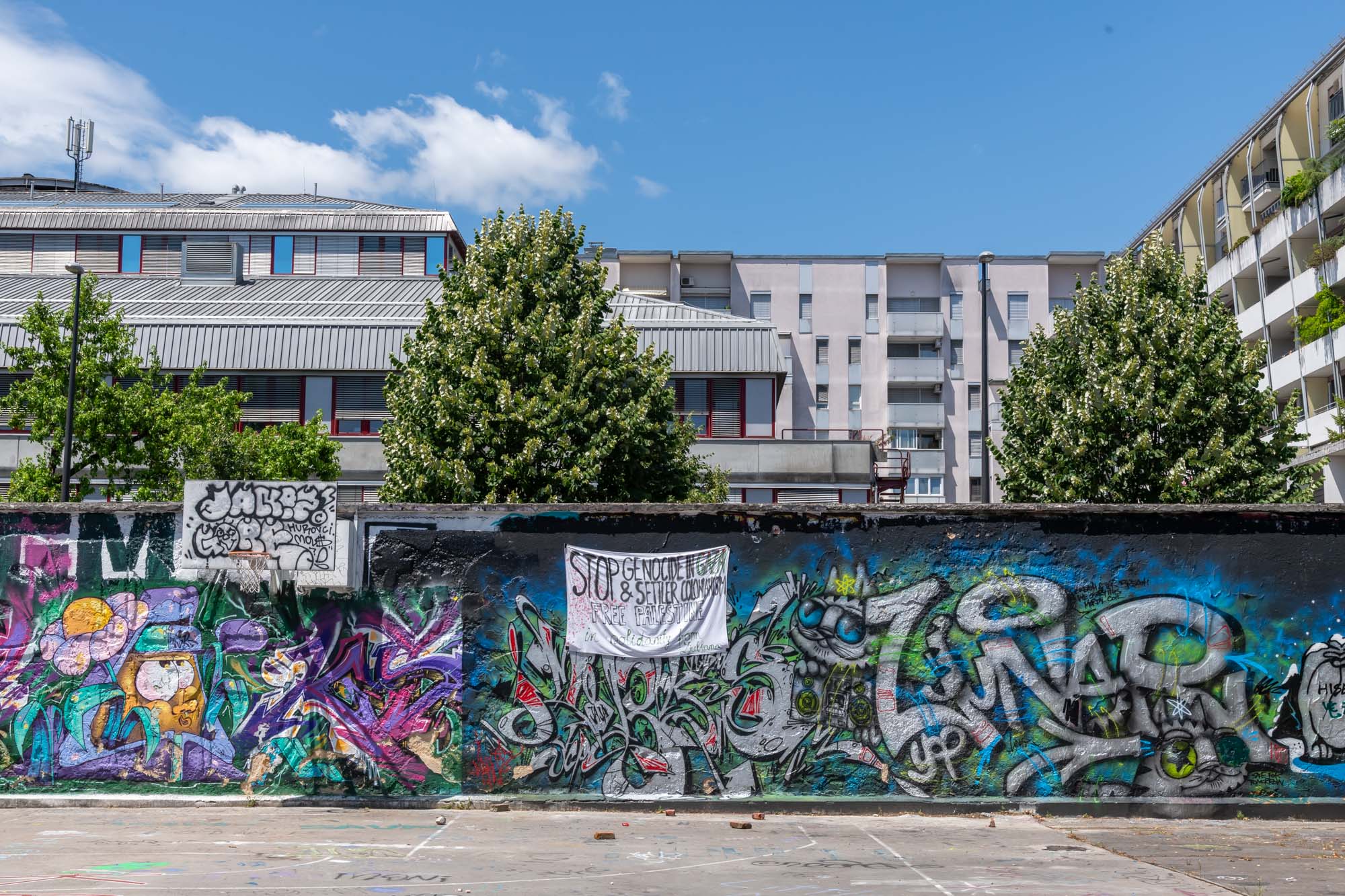
I wasn’t aware of these kinds of spaces and alternate communities before this trip. The hollowness and exploitative nature of Capitalism have spawned these initiatives. Not everybody is willing to go along with the flow, and some show the mettle to be different.
I was looking forward to visiting the Baltics ever since I read about their independence movement. Estonia, Latvia and Lithuania had won their independence when the Soviet Union crumbled. One of the key activities in that movement was the “Baltic Way” which was a human chain that was formed on 23 August 1989, which stretched for 690 kilometres, from Tallinn to Vilnius. The total population of these three countries at that time was about 8 million and it is estimated that 2 million of those participated in this! It was held to mark the 50thanniversary of the Molotov-Ribbentrop Pact wherein Poland, Finland, Estonia, Lativa, Lithuania and Romania were divided (illegally) between the Soviet Union and Nazi Germany and occupied.
In Tallinn, I met with a lady who had participated in the Baltic Way, as an eleven-year-old child. She remembers going on a bus with her parents and that there were big traffic jams and a lot of people. Estonia won its independence in a truly non-violent fashion with its Singing Revolution. People came together and sang songs and when I asked the lady why the Russians did not do anything violent, she said it was perhaps because the Soviet Union was crumbling and the Soviet soldiers in Estonia at that time were from places like Belarus, who had no particular affinity towards Russia or any stake in attacking Estonians fighting for their independence.
It seems matters got very tense just before the day independence was declared as Russian tanks moved into Tallinn and the borders that were open before were declared closed. There was much talk that the Soviet Union would regain control, and the situation would be back to what it was. So, there was much fear of retribution among those that were involved in the uprising. This lady’s brother had gone to Finland to take part in some competition and that was when the borders were closed, leaving him stranded. She said that was very traumatic and even now, tears started rolling down her cheeks when she narrated the story. She said she gets emotional every time she tells the story. Thankfully, the situation was resolved soon, and Estonia got its independence, and her brother was back home. I noticed that the family ties in Estonia are quite strong indeed and it can be understood from the story above. The weather was nice and there were a lot of people walking and relaxing in the gardens and most of them had kids around them.
When I was talking to this lady, I realized that there was a lot of fear around Russia. The trauma of the days under Soviet Union seems to be so strong that those memories make them quite fearful again. I sensed this in Riga when I was talking to a guy who runs a café. During the conversation, he mentioned that the people in Baltics keep to themselves and don’t talk to strangers. I asked him why this was so, and he said perhaps it was a habit they developed during the Soviet days. In those days, it was best not to stand out or be noticed and you never knew whether any given person was a snitch or not. Hence, people pretty much kept to themselves and was apprehensive of speaking their mind, even amongst friends.
In Tallinn, I came across a protest against Russian aggression. This was a kind of exhibition just outside the Russian Embassy in the old town.
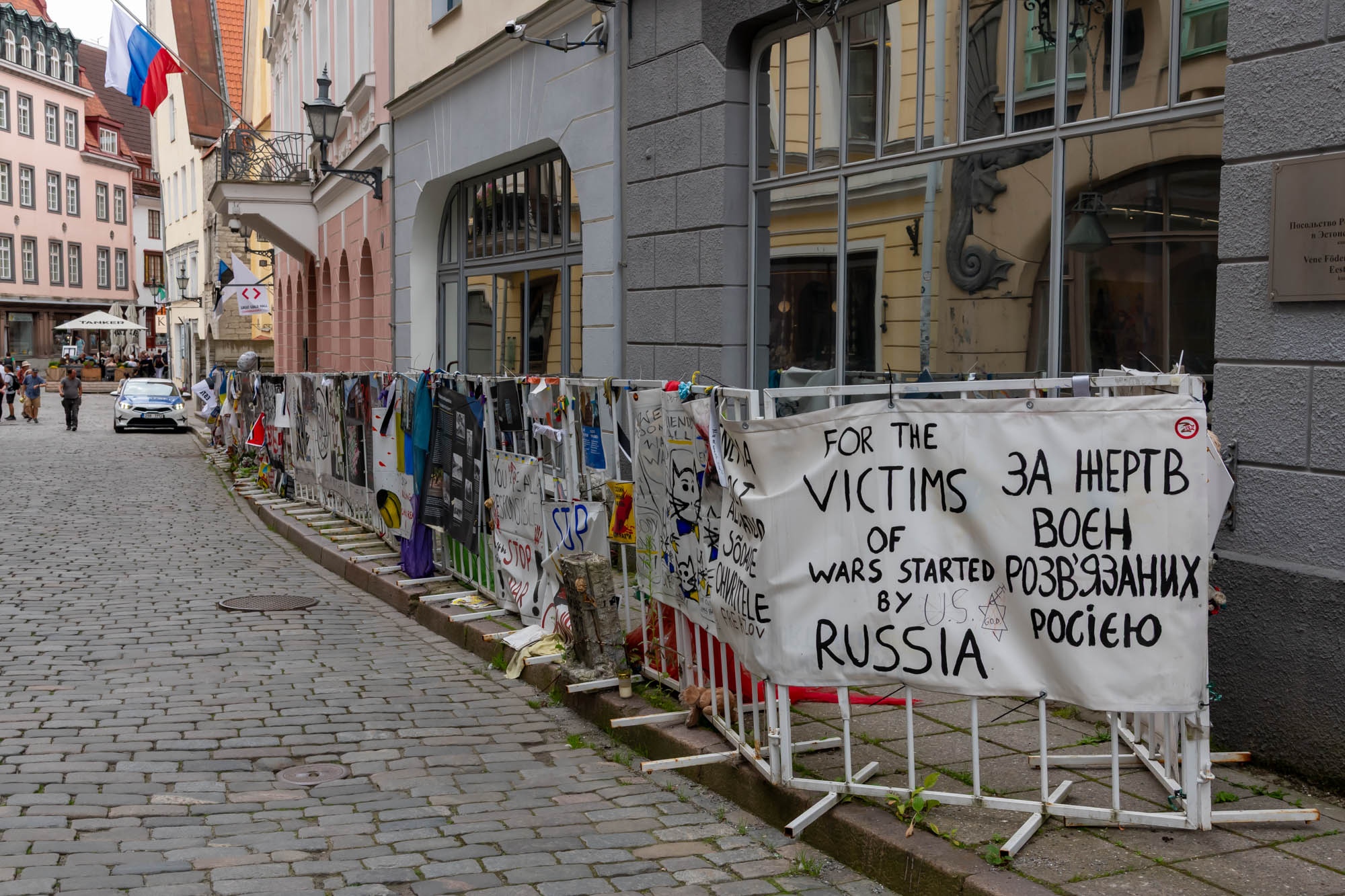
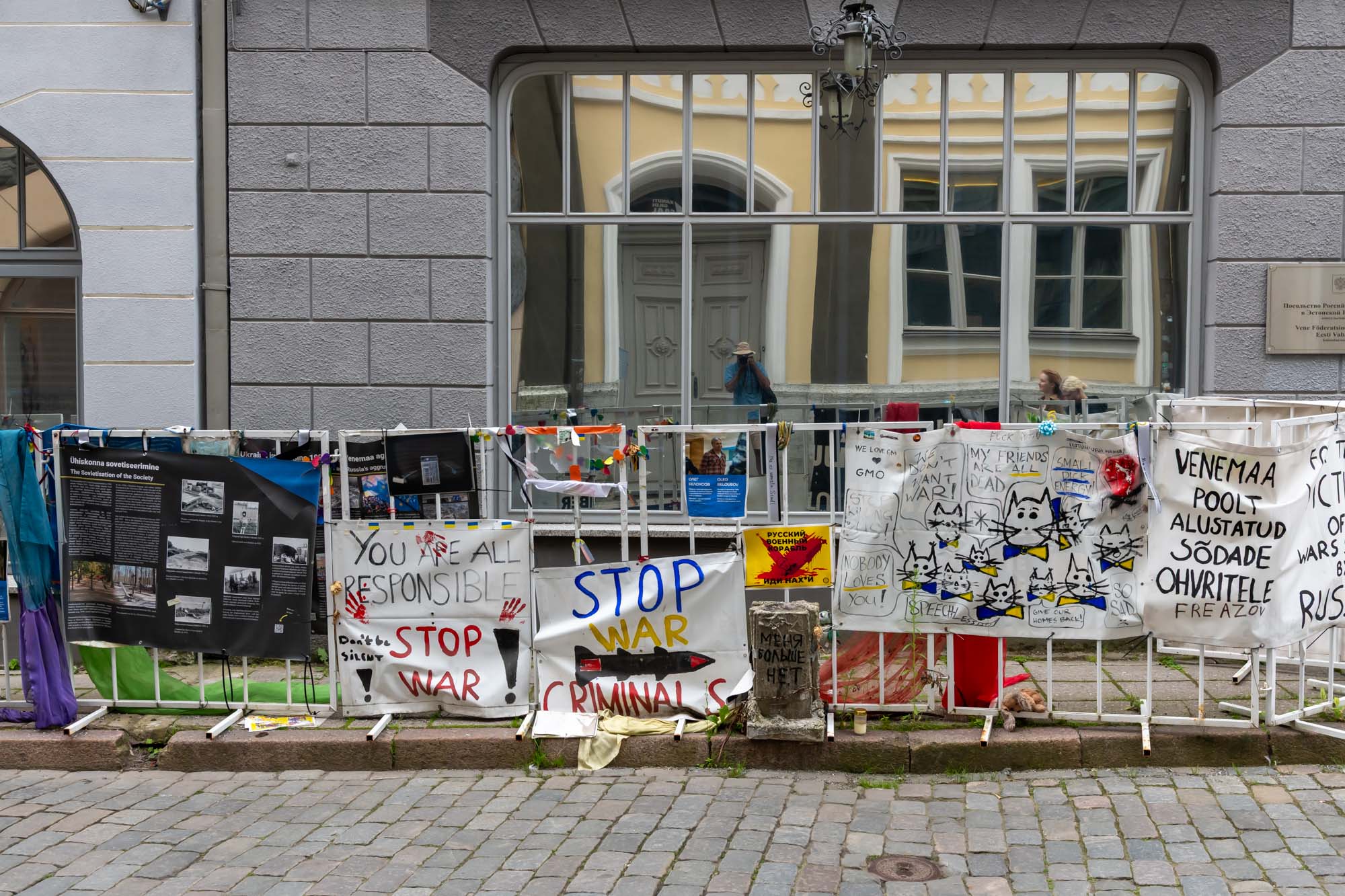
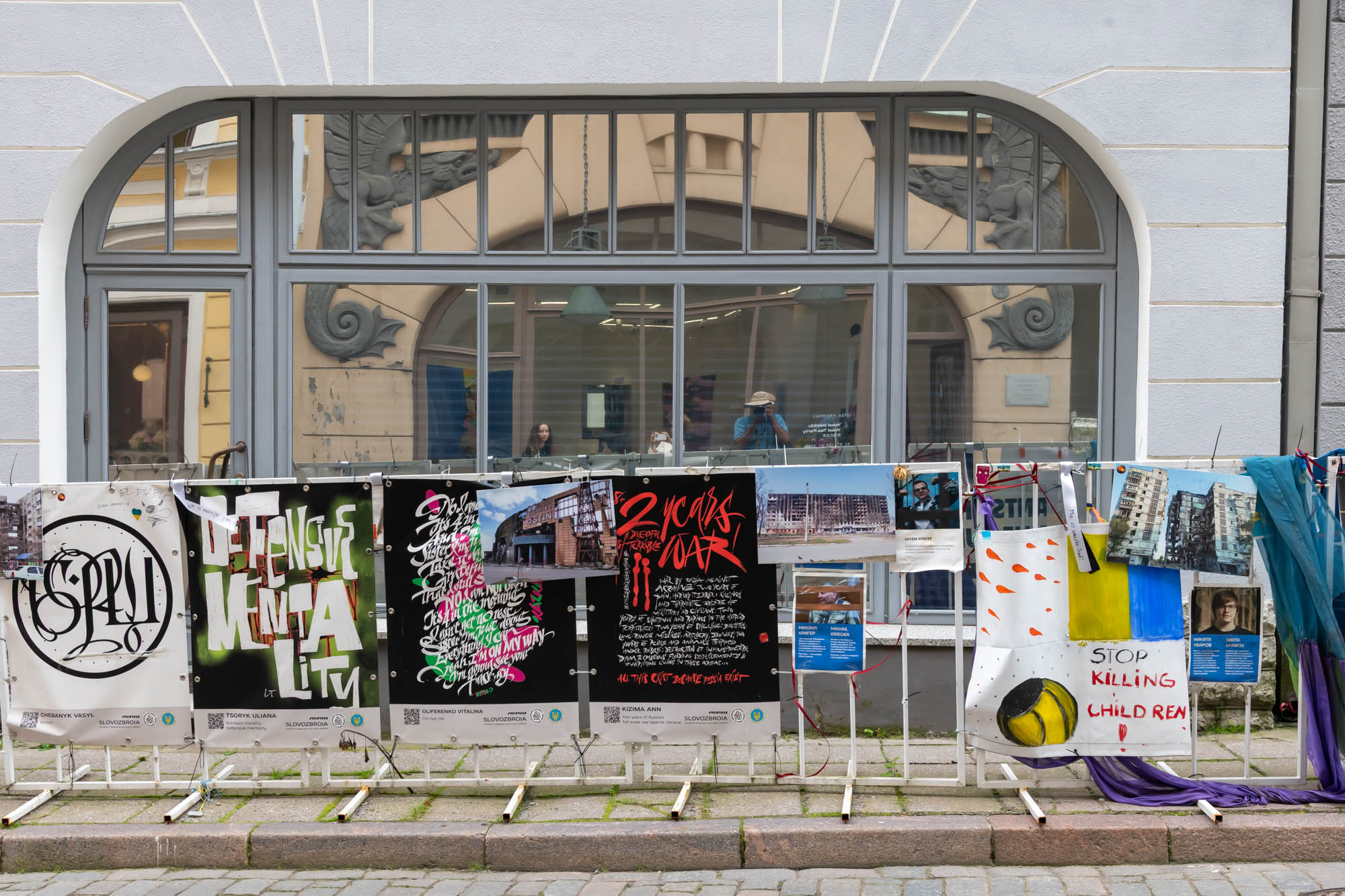
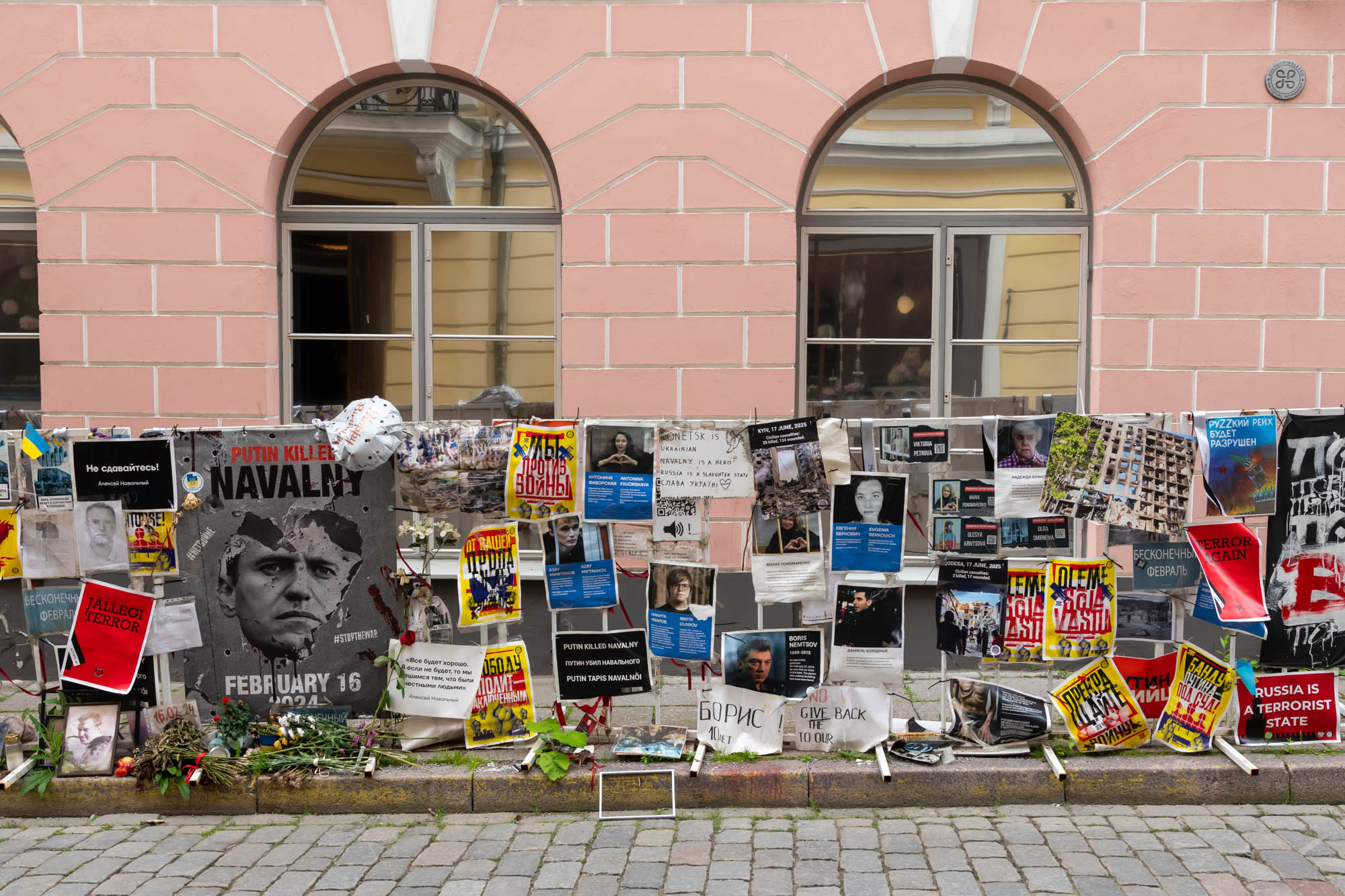
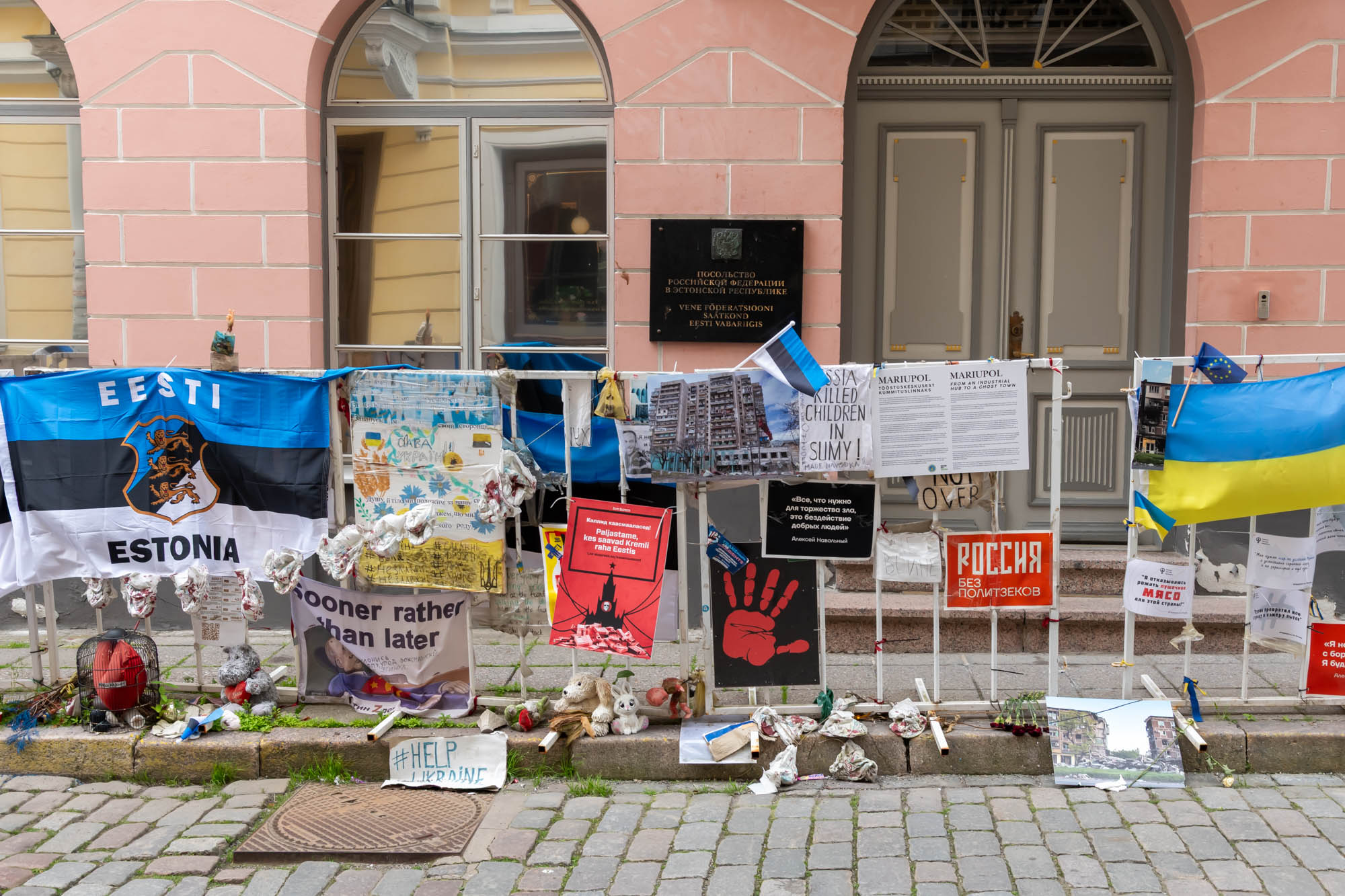
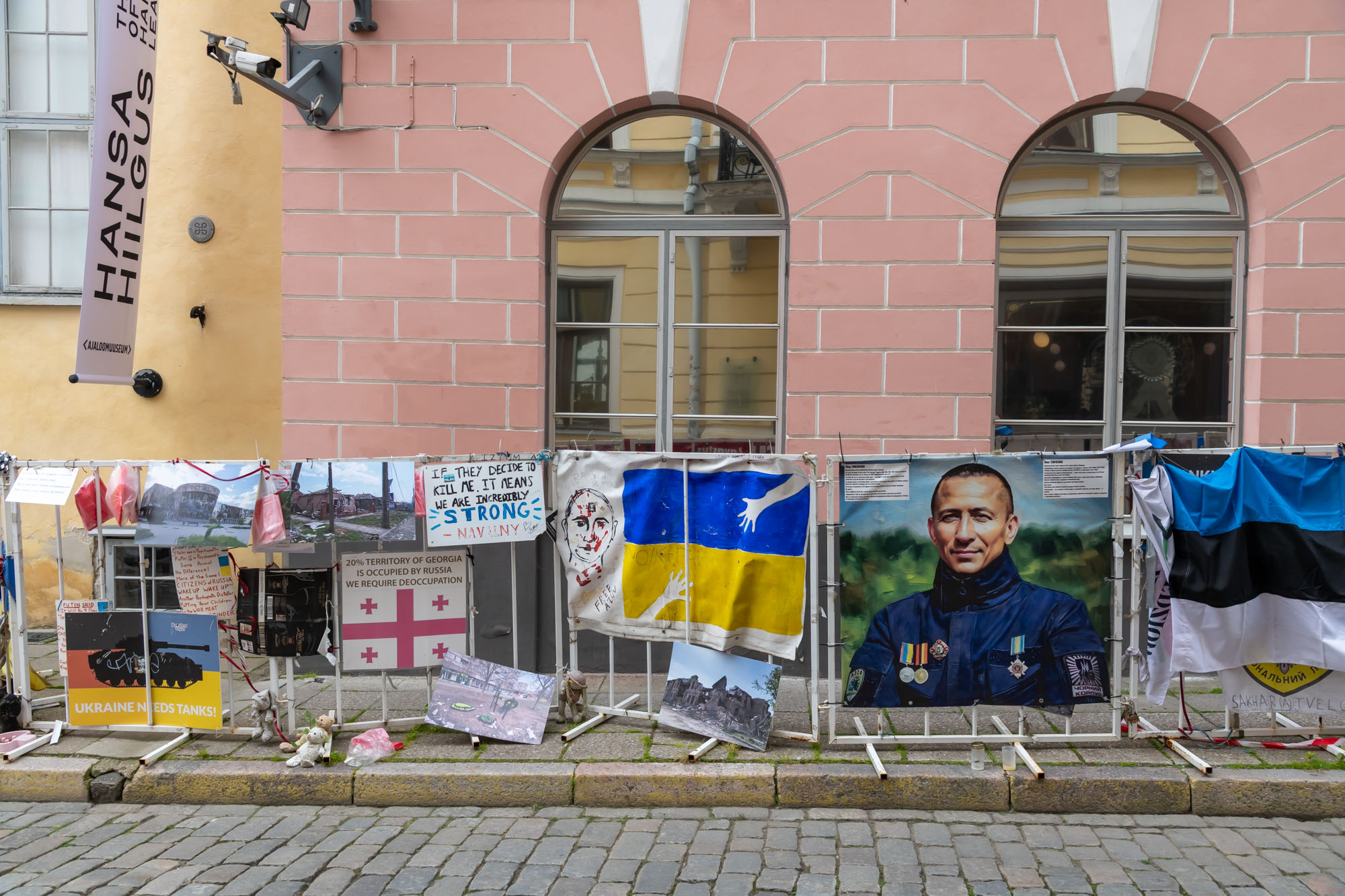
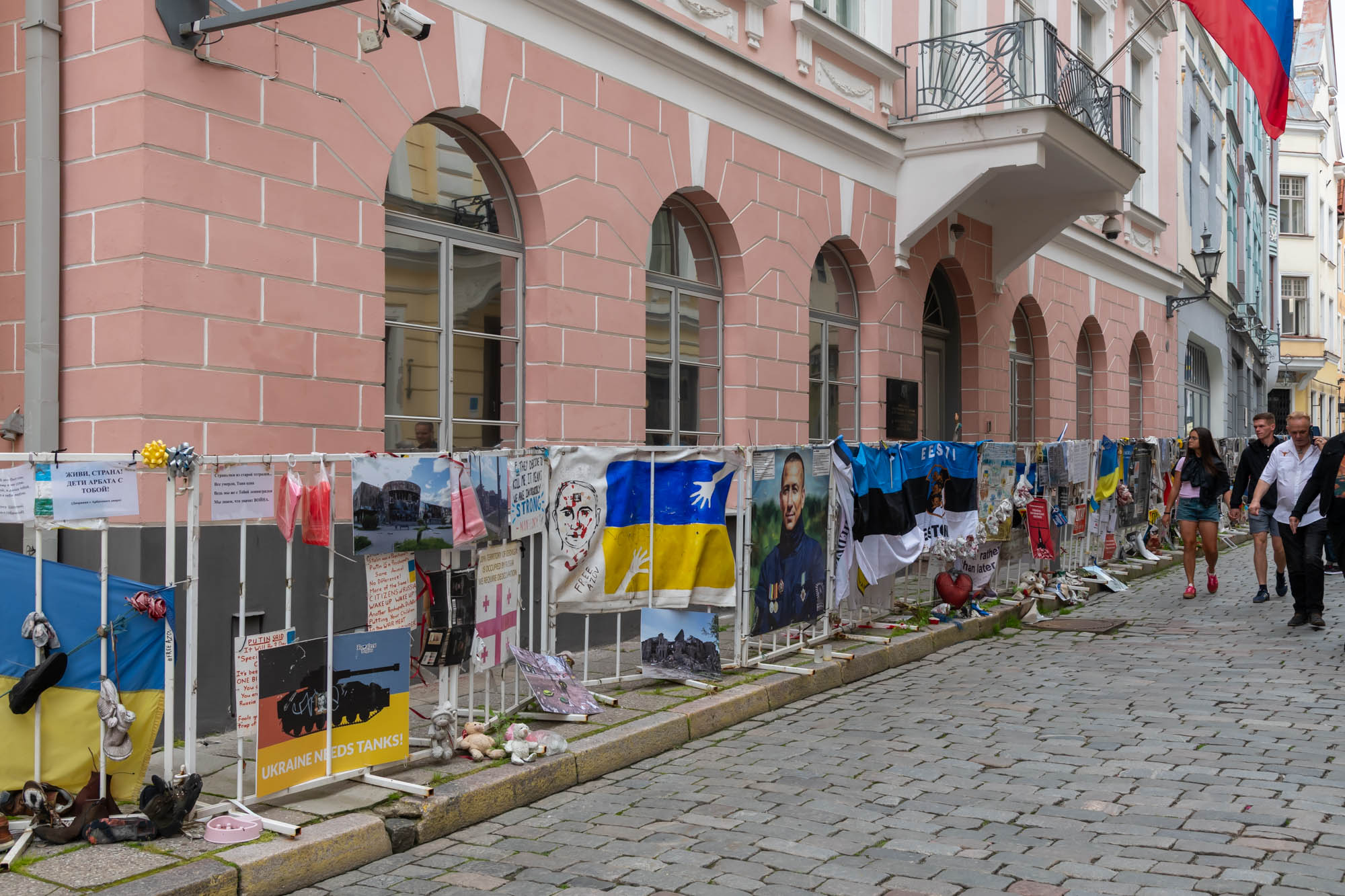
This fear seems to be burnt deeply into them and added to that, they say that the Russian psyche has always been an expansionist one, which believed in the superiority of Russia and everything Russian, right from the Czarist period. They view the current conflict in Ukraine as evidence of this expansionist mindset. When I was talking to a professor in the Czech Republic, she too expressed the same point, and she told me about how Finland was building a wall across the 2000 km long border with Russia. She was of the opinion that it was very likely that Russia would attack a small country like Estonia within a couple of years to see how far they could push NATO. The lady I met in Tallinn told me that investment into Estonia had slowed down because of this fear that Russia might attack them. I have no idea whether this was the opinion of just a few people but all the interactions I had with people seemed to support this view. This was kind of a surprise to me as I wasn’t aware that there was such a fear around current day Russia.
Music has been big in Estonia and as I mentioned before, even their independence movement was anchored on singing. They have a big music festival that is held in Tallinn every two or three years; unfortunately, I missed it by three or four days. The festival is held in the same ground where the Singing Revolution began and since there was tight security in place for the festival, I couldn’t get to see the ground. Musicians come from all over Estonia and a hundred thousand people were expected to come to watch them play – this is almost ten percent of the country’s population! In preparation for the festival some bands were performing in the main square in Tallinn’s old town. Their music was quite wonderful, and people were enjoying themselves.
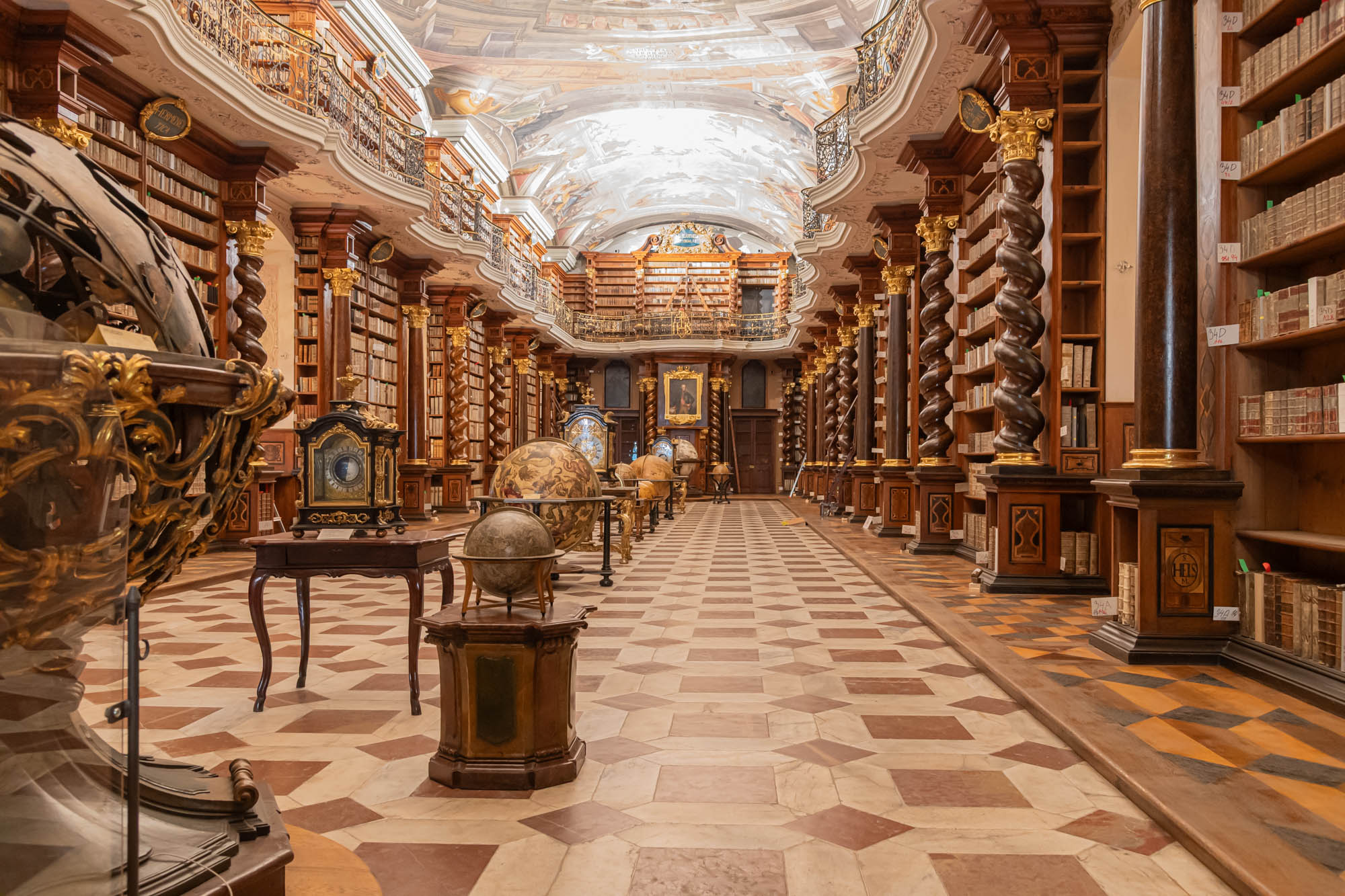
In Prague, a great attraction for me was the Clementium which had started as a Jesuit college in 1556. The college merged with the Charles University in 1654. It was well known for its astronomical research, and the tourism website says that Albert Einstein taught there. The Clementium today has a great old library with about 27,000 printed books. Arguably, it is one of the most beautiful libraries in the world with its wonderful Baroque styling. Public is not allowed inside the library for fear that the precious books may get damaged. We could get a peek through the door, and it was simply breathtaking.
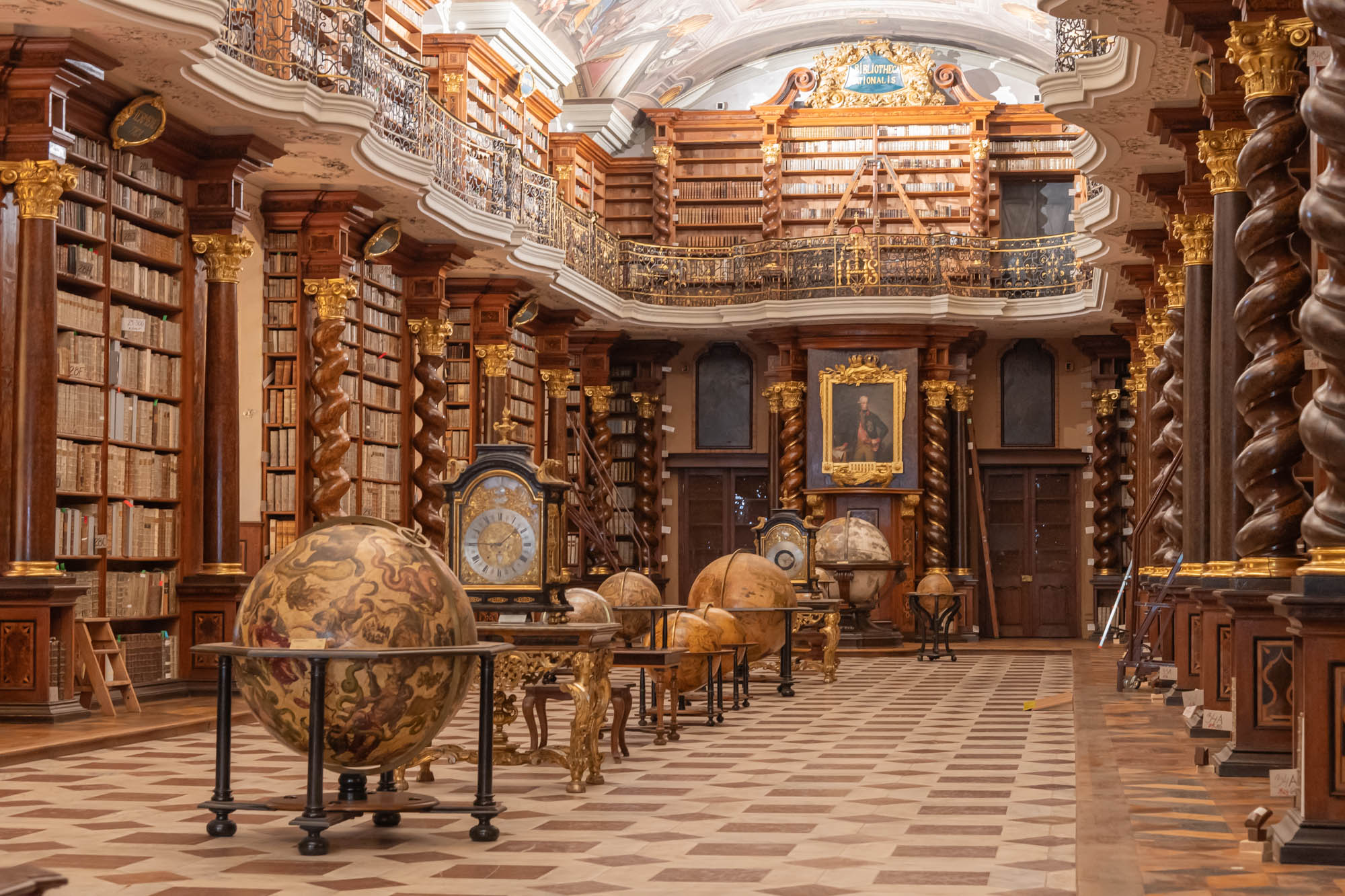
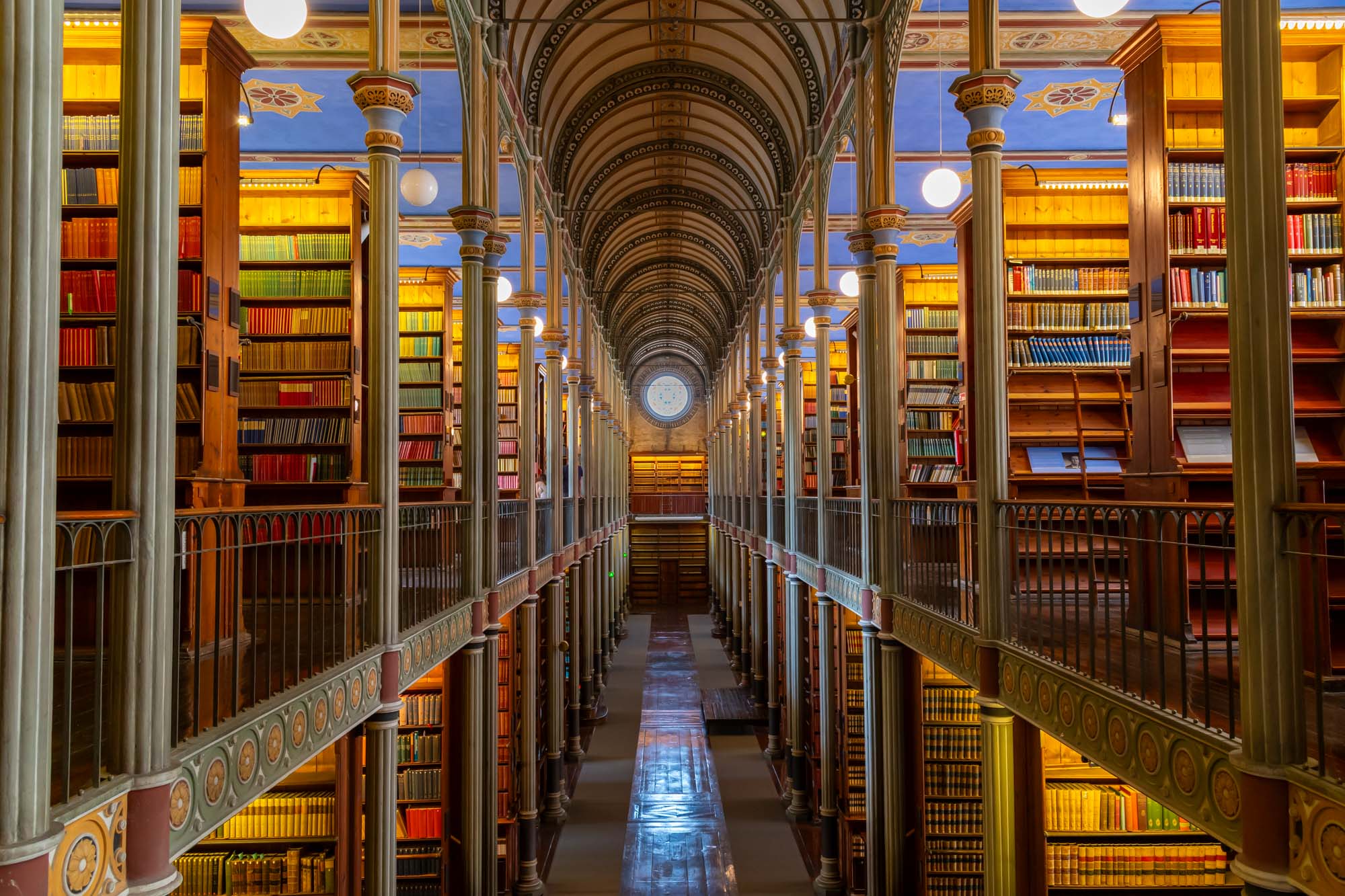
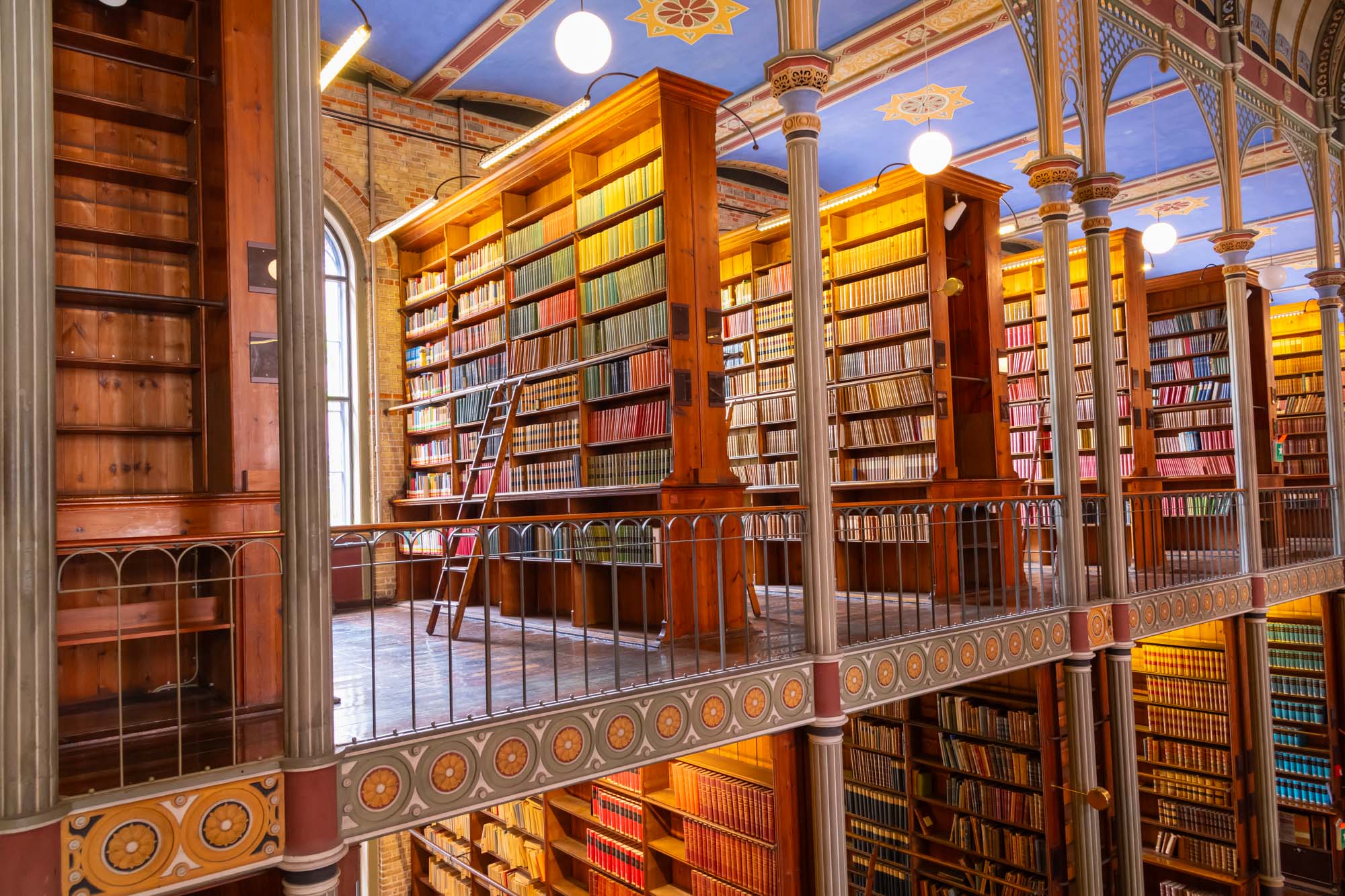
Copenhagen has understood that old libraries can be a big tourist attraction and so when the old University of Copenhagen library closed in 2009, after five hundred years of history, they decided to convert it to a kind of art installation. So, in this library, you have books arranged very aesthetically and it is quite a sight indeed. There are a hundred and twenty-five thousand books in this library now. One of the staff in the library conducts a guided tour and as she explained, the book covers have been designed to make them look attractive when displayed and the books per se are not of any great value. They are arranged kind of randomly as I found out, when I took down a couple of books. The visual impact is quite stunning, and you can happily send a couple of hours in this library, as I did.


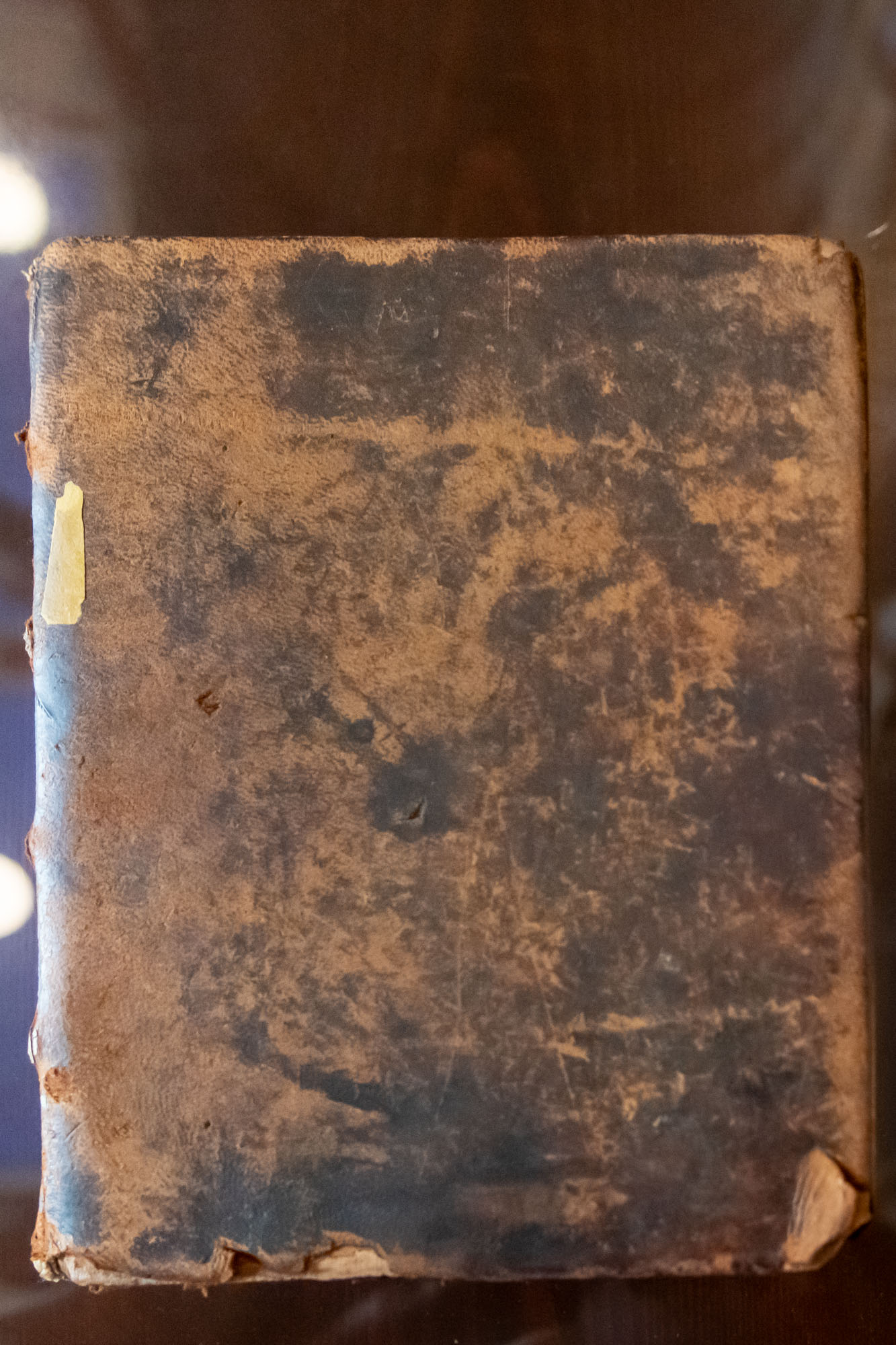
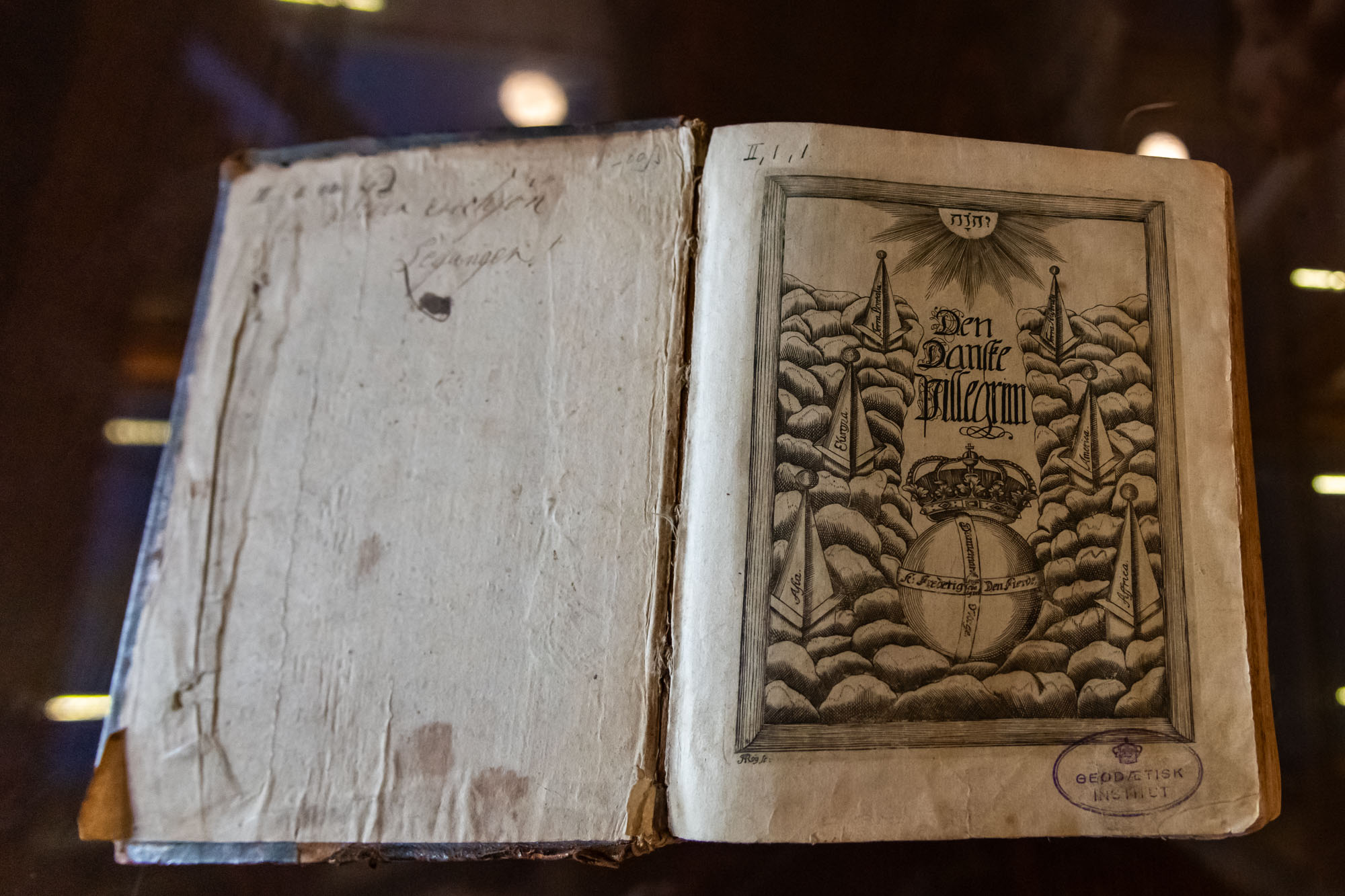
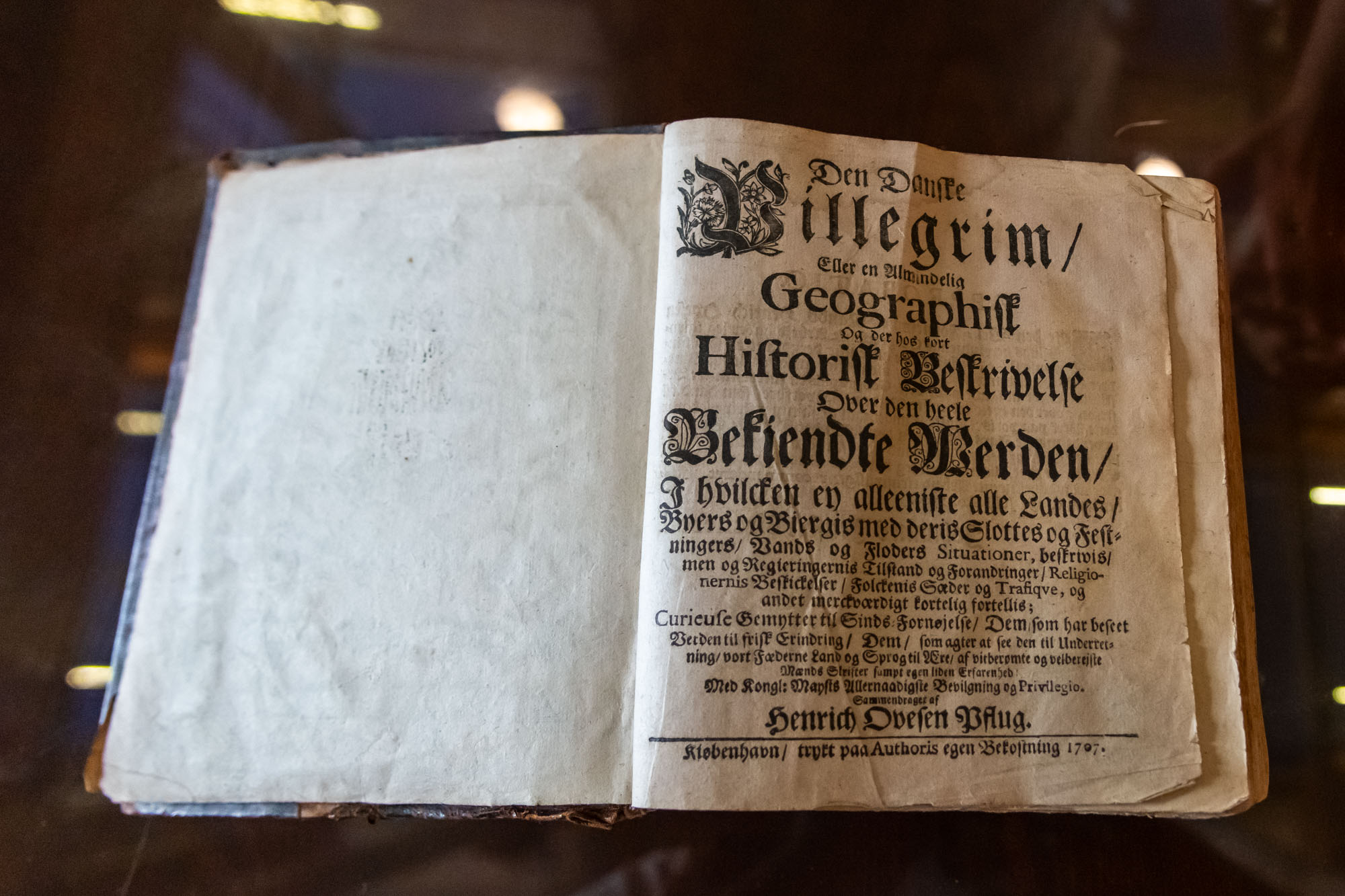
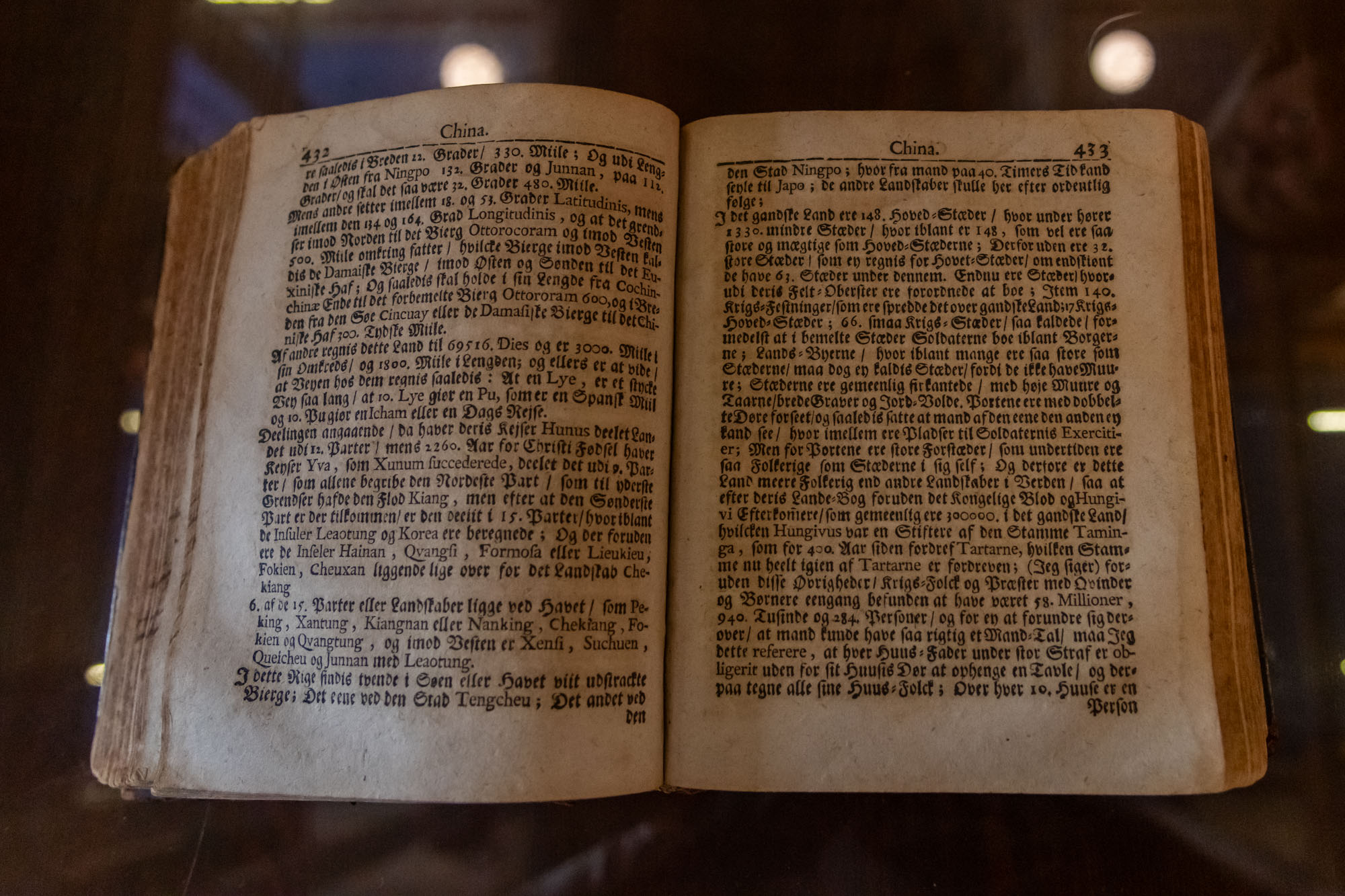
Perhaps because of my obvious interest in the library, the guide told me that she could show me the oldest book in the library. It is from 1707 and the title in the first page reads “Danish Pilgrim” and the one in the second page reads “Geographical and Political Description of the Whole Known World”. Supposedly, it is a collection of random details about various places. For instance, it might speak about the natural aspects of a location and be silent about its trade and commerce and vice versa about some other place. It seems this is a printed book and not a hand-written one. The guide handed over the book to me and when I leafed through the pages, I found a chapter on China but there was no information on India. The family of the person whose name is scribbled inside the cover did some research and found that he was the captain of a ship. This book must have belonged to him. This was a very special experience for me as this is the oldest book I have held in my hands! It was almost like touching history and going back three centuries!
One of the most interesting aspects of European cities is the presence of public spaces. You find squares large and small scattered everywhere across the cities. Some are old and some are new, but they are there, and everyone has access to those. They are maintained well with seating provided and people use them well. Since I was travelling in summer, I saw many people always gathered in these squares, especially in the evenings. They were friends and families, connecting and having a good time. Some of the squares are very large and would be ideal places for public gatherings and demonstrations. In Helsinki, I noticed that there would be a café selling drinks like beer, wine, coffee etc. in the square and I saw many people coming there to socialize, after dinner. In some places, there were free concerts and such other events. Overall, there was a lot of life around these public spaces, and I feel this is one significant thing we are missing in our cities. We used to have such spaces before but now with our uncontrolled “development” most of these have been lost. There would be a few parks here and there but that would be about it and even those won’t be available in the newer areas. In smaller towns, especially in Kerala, the athanis around temples or aaltharas, which play this role, are still present but they are mostly male dominated spaces and even these are changing in character today to become even more exclusive.
Getting around most of these cities is quite easy as the public transport is pretty good. I had a car with me in some cities like Budapest and I found that to be a liability as parking was a hassle and a bit expensive. Most cities seem to have made parking very expensive to discourage people from using cars; maybe it also an avenue for the city council to generate income. Buses, trams and metros were very convenient, and you could buy daily tickets or trip tickets. The whole experience of buying these tickets was also very, very seamless through their app or website or simply tapping your credit card on the machines inside the vehicles. In most cities, they seem to rely on people’s honesty in buying tickets as you could just hop in and hop out without having to present the ticket. There is random checking, of course, and the fines are quite hefty. Cars are needed if you want to go to the countryside but otherwise, in cities, the public transport was more than enough. Moreover, these days, with Google maps available, you really don’t need to be familiar with the city as the app will guide you perfectly. Of course, this means that you need to have mobile connectivity wherever you go.
One thing I noticed was that the use of taxis has come down drastically, over the years. Even when using taxis, people are using ride hailing apps like Uber or Bolt. I went to Helsinki from Tallinn by ferry and from the port, out of curiosity, I decided to take a taxi. I had seen that my hotel was only three or four kilometres from the port. Taxi drivers were calling out and competing for passengers and with that itself my antennae went up. Sure enough, even before the taxi and left the compound of the port, the meter was showing 25 Euros! I pointed this out to the driver and then the discussion started with us finally settling on 30 Euros for the whole drive; my feeling was that the correct rate would only have been 15 or 20 Euros.
This incident was the only negative experience in the whole trip that lasted 45 days and in general, travelling in Europe was a smooth experience. People were friendly and trusting. One day, in Ljubljana, we were eating at a temporary local market set up in a square and we wanted a glass of wine. The vendor had stepped out and his friend was minding the cart, and he didn’t know the price of the wine we wanted. He just poured us the wine and asked us to come back and pay later. We could have just walked away without paying but he trusted us. In interior Scotland the roads are very narrow and sometimes, you have to wait at a particular spot so that the vehicle coming against you can pass. People waited patiently and politely and waved at each other when they passed. There was no honking and light flashing. In fact, the attitude around flashing one’s headlight best describes the difference. In India, when we flash our headlight, we intend to convey to the other driver that we are going, and she or he should wait; it often is a contest of who flashed first. In Europe (and many other countries including US), when they flash their headlight at you, they are conveying that they will wait, and you can go ahead. One is about me, and the other is about you. Such small, everyday instances make or break your experience.
As mentioned, there is hardly any abrasive experience when travelling in Europe. This is not the situation when we travel around India. The traffic is violent, there is much haggling, pushing and shoving which basically leaves you exhausted. I was just wondering how Europe got to be like this. In the medieval times, Europe was one of the most violent places in Earth with their inhumane colonization and such. Even if you look at the nature of the punishments they handed out like “hung, drawn and quartered”, it was just horrible. In those times, violence was an everyday event as well, as I understood. I was curious on how such a violent people become so peaceful. This is not to say that there are no violent crimes in these places; there are. I am talking about the small incidents in everyday life.
Of course, I mean only the people in their everyday lives and not nation states, which continue to be violent as we can see from their behaviour in Iraq, Palestine, Ukraine and such other places across the world. I don’t have an answer to this question, and I did discuss this with a couple of people. The only theory I could come up with was that maybe the people have made the state the owners of violence and decided to move away from it in their individual capacity. Of course, it might only be a thin layer of veneer that covers the underlying violent nature. Whatever it be, it makes everyday interactions a bit less stressful. I guess it must have something to do with education and culture. For instance, every city, big or small, has museums, theatres and such other cultural institutions. They take care to ensure that school children have exposure to these from a very young age. I am not sure what they are doing right or whether it is intentional; but is sure seems to have an effect.
 Kaazhchakal