Posts Tagged ‘Amsterdam’

Yesterday, a chance encounter in the tram, enroute to the Van Gogh Museum resulted in me changing plans and heading to the Stedelijk Museum. This is a museum dedicated to modern art and is right next to the Van Gogh Museum, in Amsterdam. I have seen many Van Goghs in different museums and so I thought it would be good to check out what the Stedelijk had in store. 

They have three sections dedicated to period upto 1950, 1950-1980 and 1980 onwards. A large painting and an installation by Anselm Kiefer greet you as you enter the museum. These fantastic works speak about the futility of war and are just phenomenal. However, this piece is not about these works or the museum itself. There are many interesting pieces in the museum, and you can easily spend hours there. 

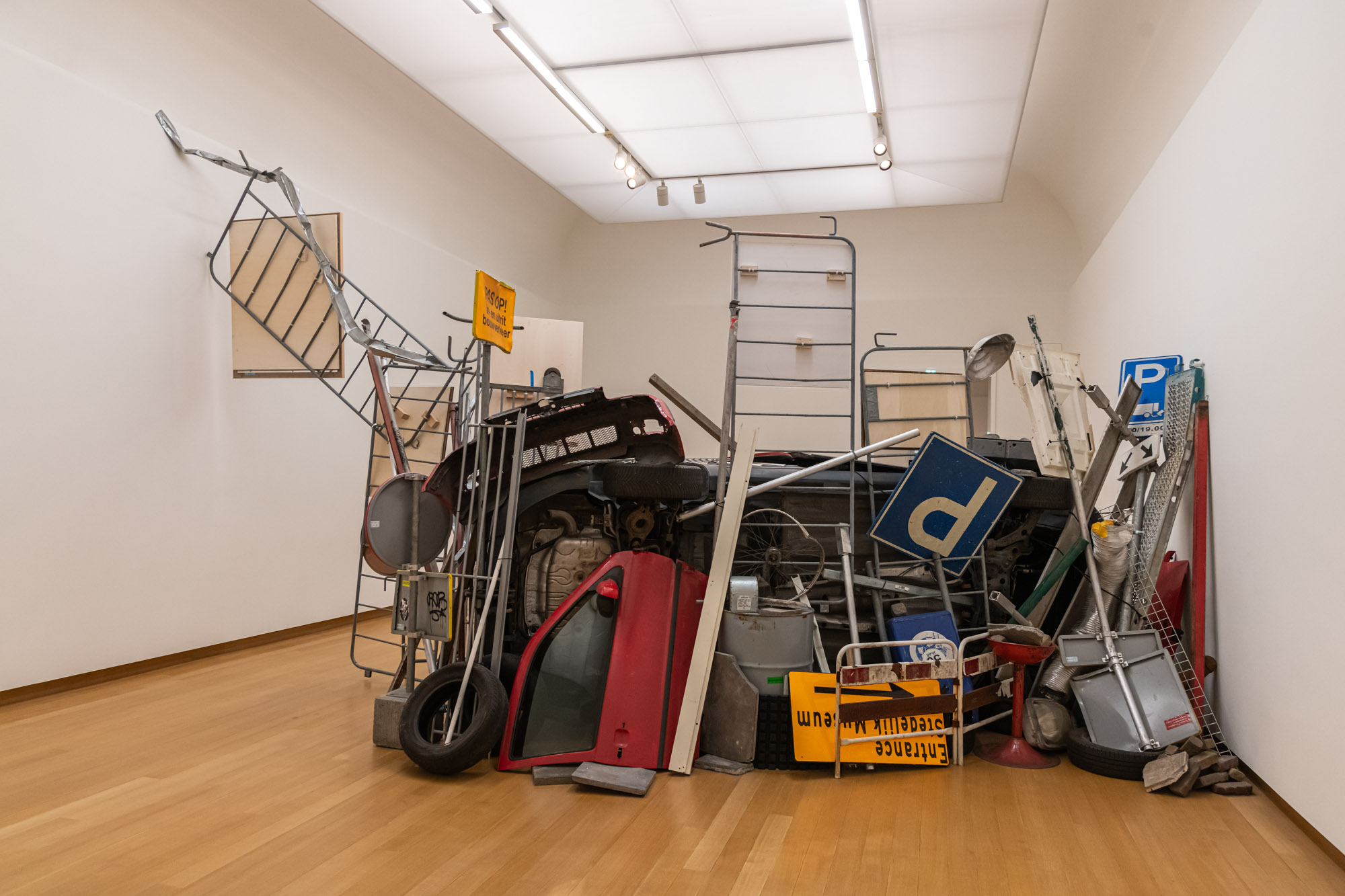
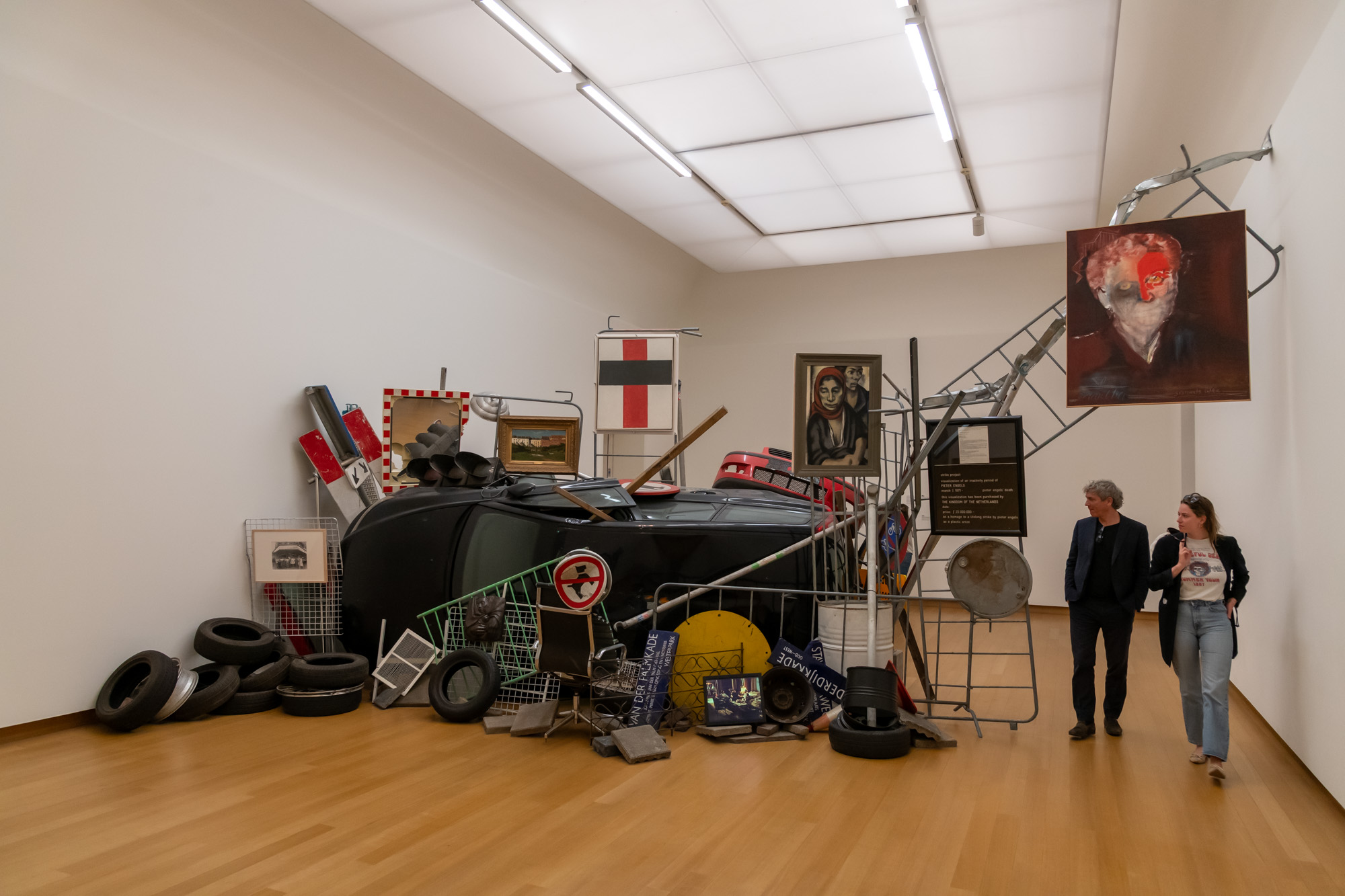
For me, one installation stood out and that was the central attraction for me in my visit to the museum. This was “Bakunin’s Barricade” by Ahmet Ogut. I wasn’t familiar with him, and a quick look on the internet made me realise that my lack of familiarity was clearly a pointer to my awareness about the art world. He is a Kurdish conceptual artist who studied art in Istanbul and Amsterdam and works mostly in Amsterdam now. 

In 1848, there were Socialist uprisings in German states and it spread to Dresden in May 1849. The Municipal councillors in Dresden revolted against the King and with the help of the Municipal Guards, prepared themselves to stop the expected Prussian intervention. About 108 barricades were set up across the town. Mikhail Bakunin, the famous Russian anarchist was involved in this uprising, and he came up with a suggestion that they could place paintings from the National Museum in front of the barricades to protect them. His theory was that the Prussian soldiers would not dare to destroy those important works of art. However, there was not much support for this idea, and it was not carried out. 

Ahmet Ogut has taken inspiration from this event and made his work, Bakunin’s Barricade, as part of an exhibition titled “In the Presence of Absence” in 2015. The Stedelijk Museum procured this artwork in 2020 and as part of the procurement, a contract was signed between the museum and Ogut, and in the contract, it was mandated that the installation should be permitted to be deployed outside the museum, should anyone ask for it. The installation is a barricade as one that would be made by protestors in the streets and in front of the barricade, are works from famous artists like Kazimir Malevich, Marlene Dumas, Nan Goldin, PINK de Thierry and others. Ogut has recreated Bakunin’s idea in this installation. 
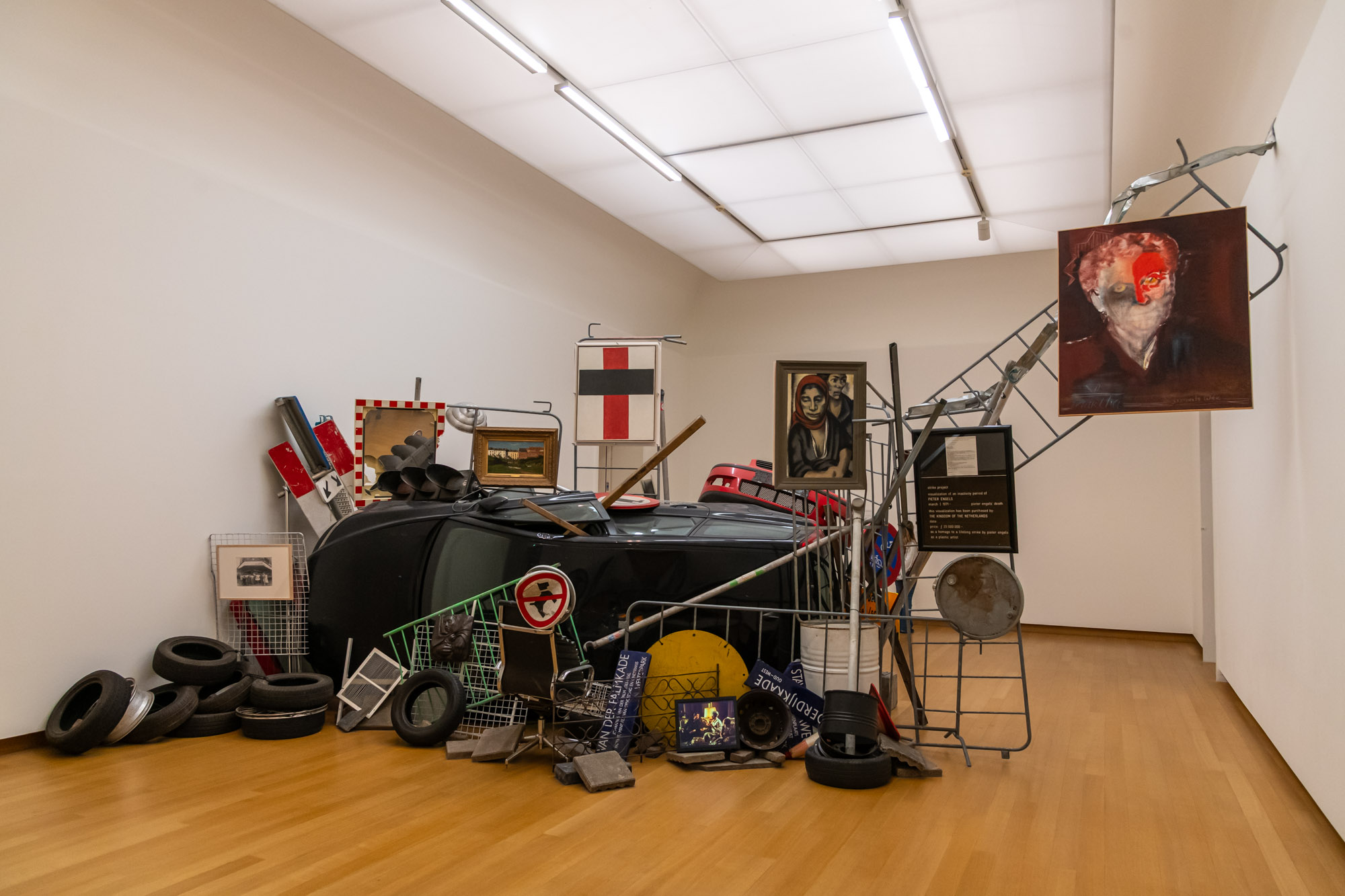
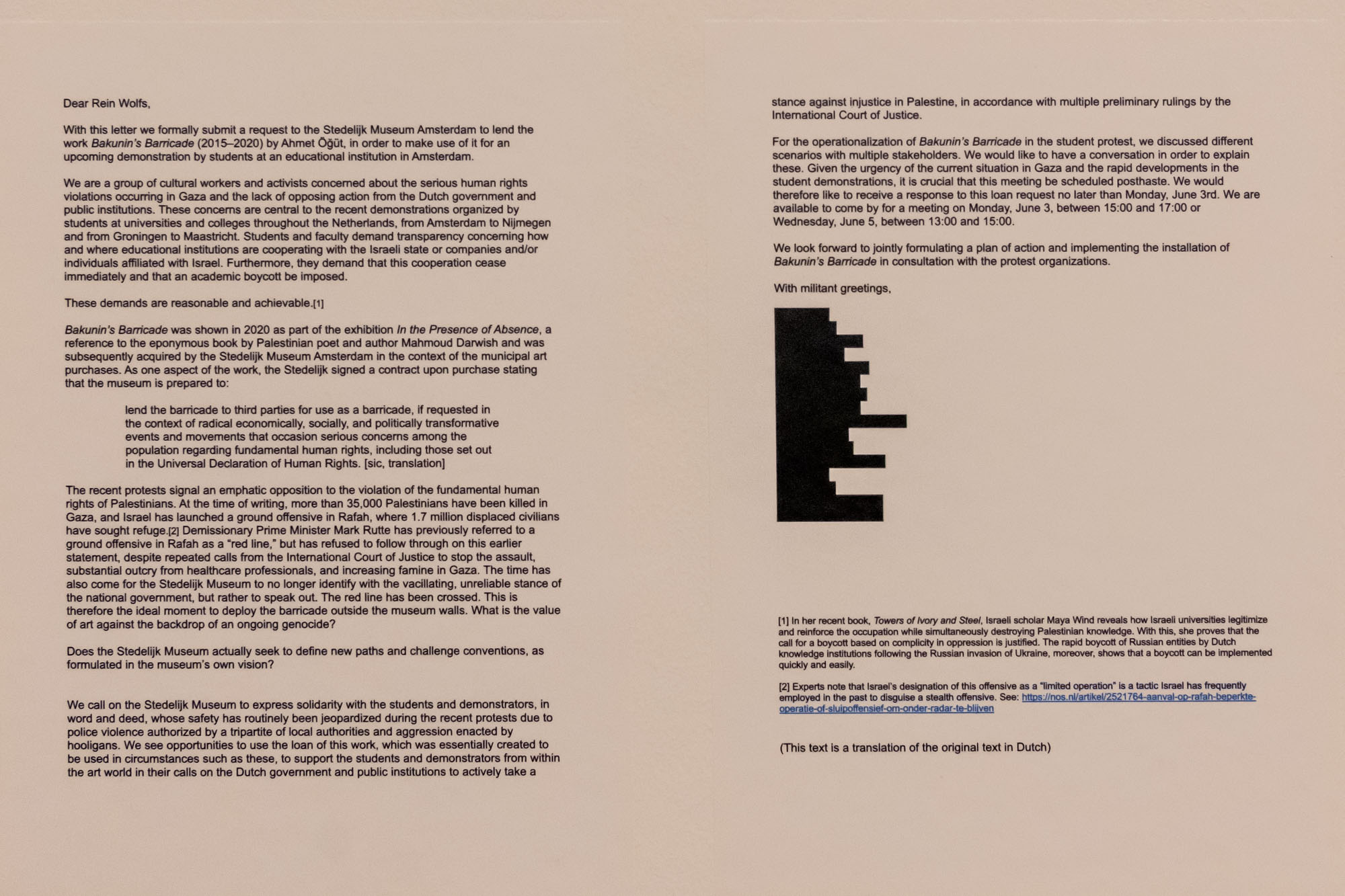
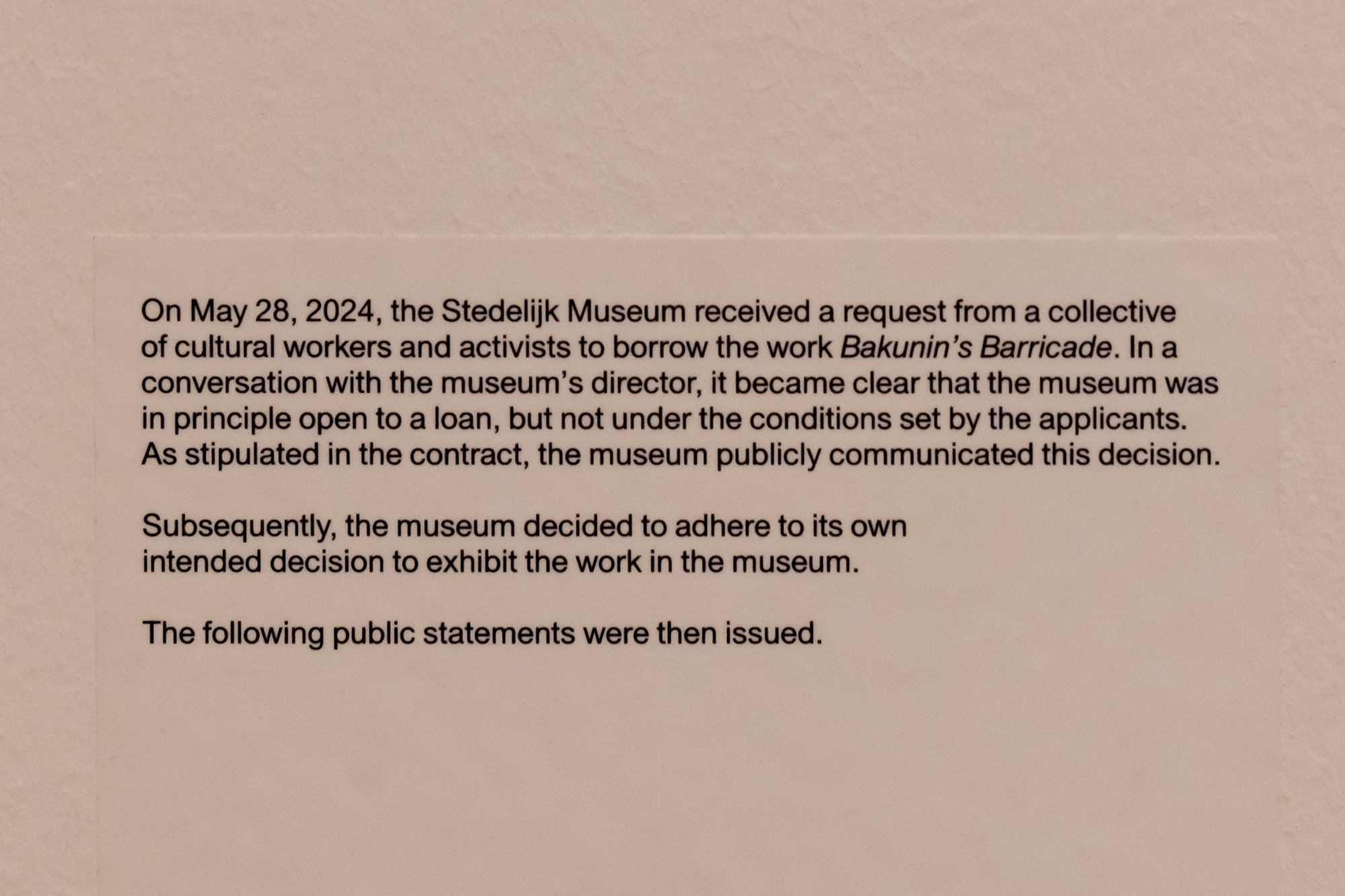
On 28 May 2024, a group of activists planning a protest against the human rights violations in Gaza, asked the museum to lend the artwork to them for using in a demonstration by students. They wanted Ogut’s artwork to play the role it was supposed to. The museum authorities were in a fix! They had signed a contract which specifically mandated that they should honour such requests, but it looks like they never expected anyone would actually make such a request. The contract also had a clause that the museum could decide, on a case-to-case basis, at their own discretion on whether a specific request was to be honoured or not. After mulling over the matter, they took a position that they could not take the risk of lending original artworks to be put on the barricade, as they might be damaged, but offered to provide replicas. Obviously, this was the same as refusing to lend the artworks as Bakunin’s whole premise was that government authorities would not destroy the barricades because the art works were original and thus precious. Nobody would have bothered about replicas. The museum authorities took the position that they had a responsibility to the people to protect original art works and could not jeopardise the safety of the art works by lending them to the protestors. 

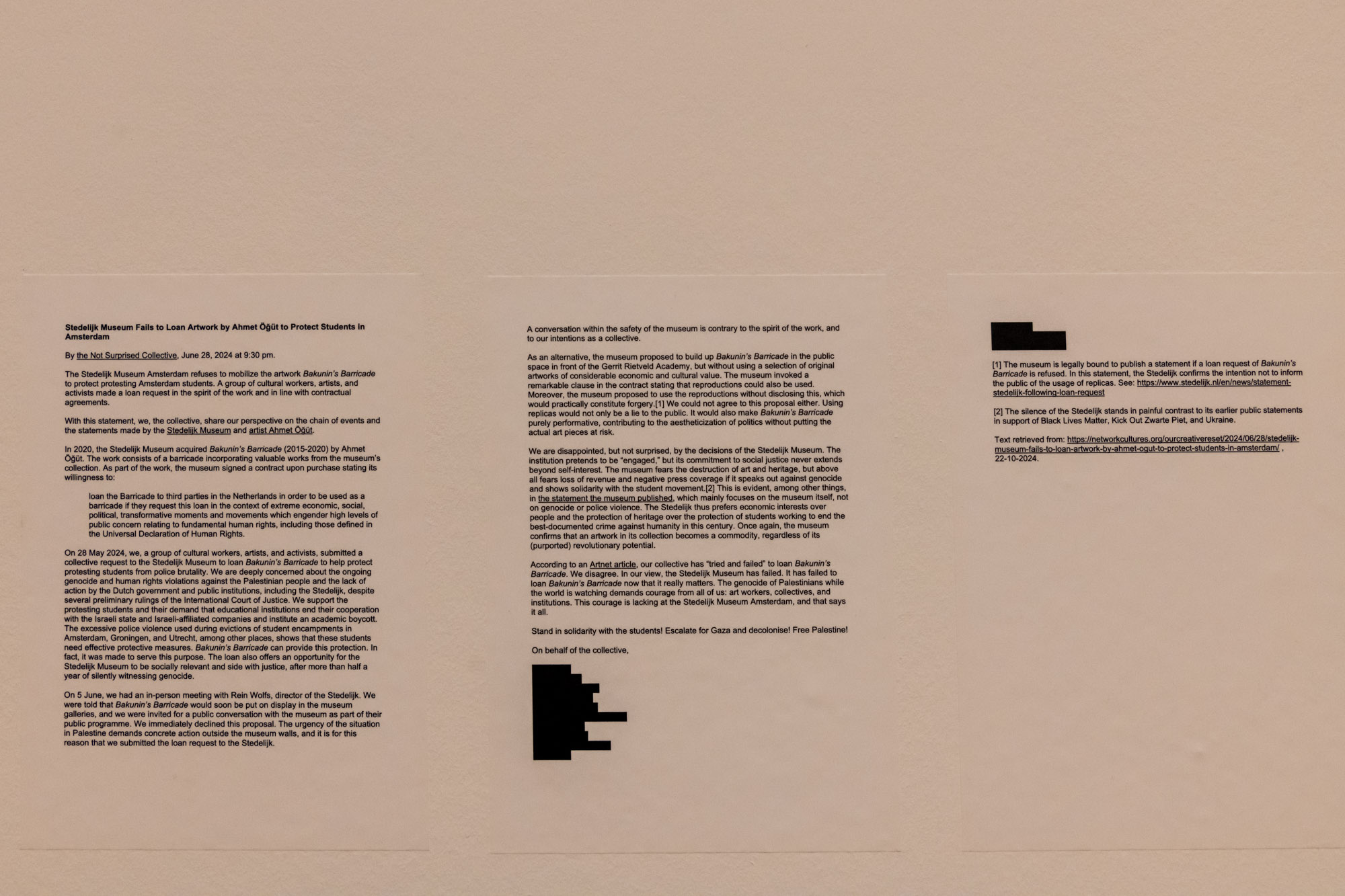
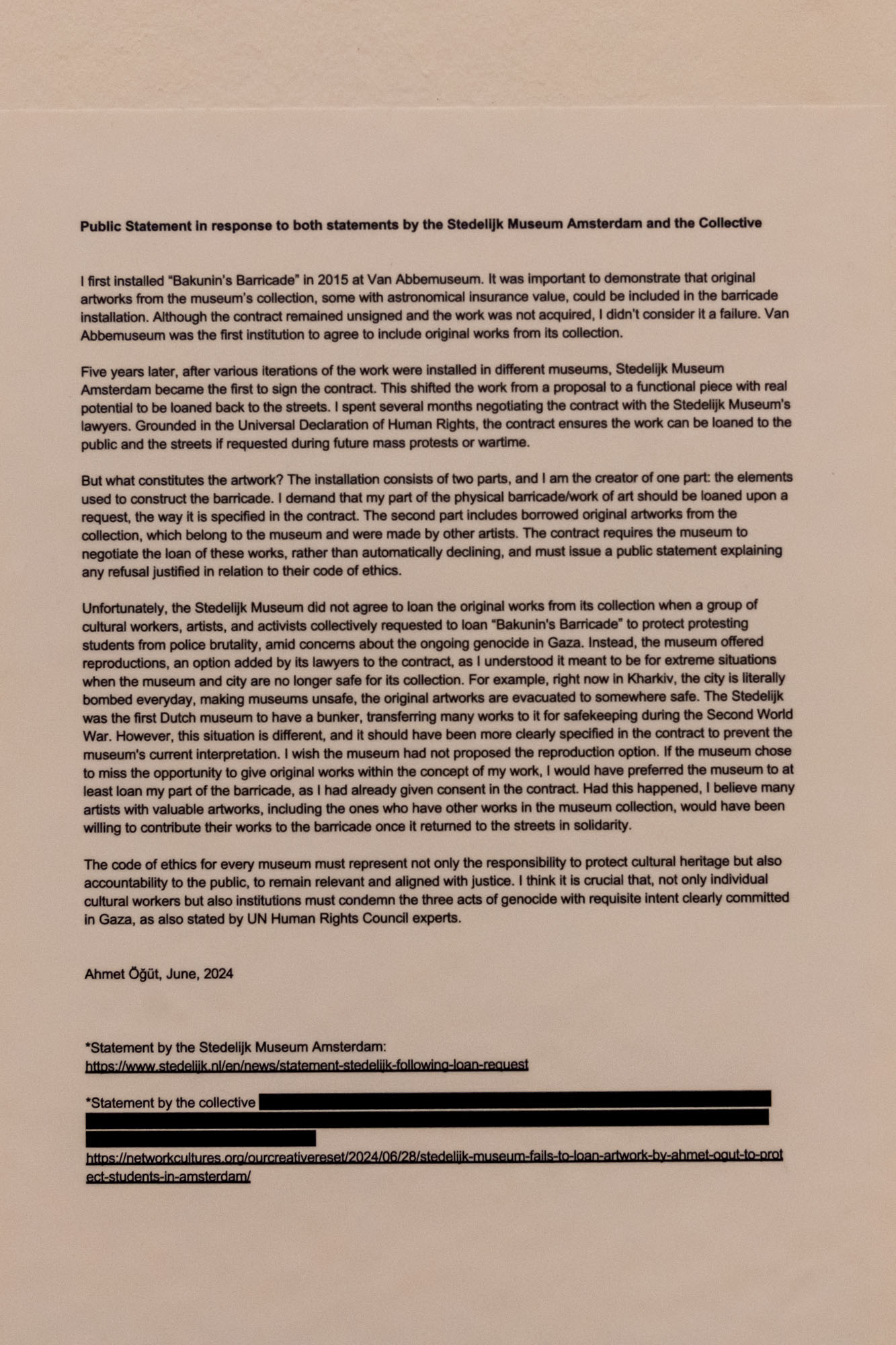
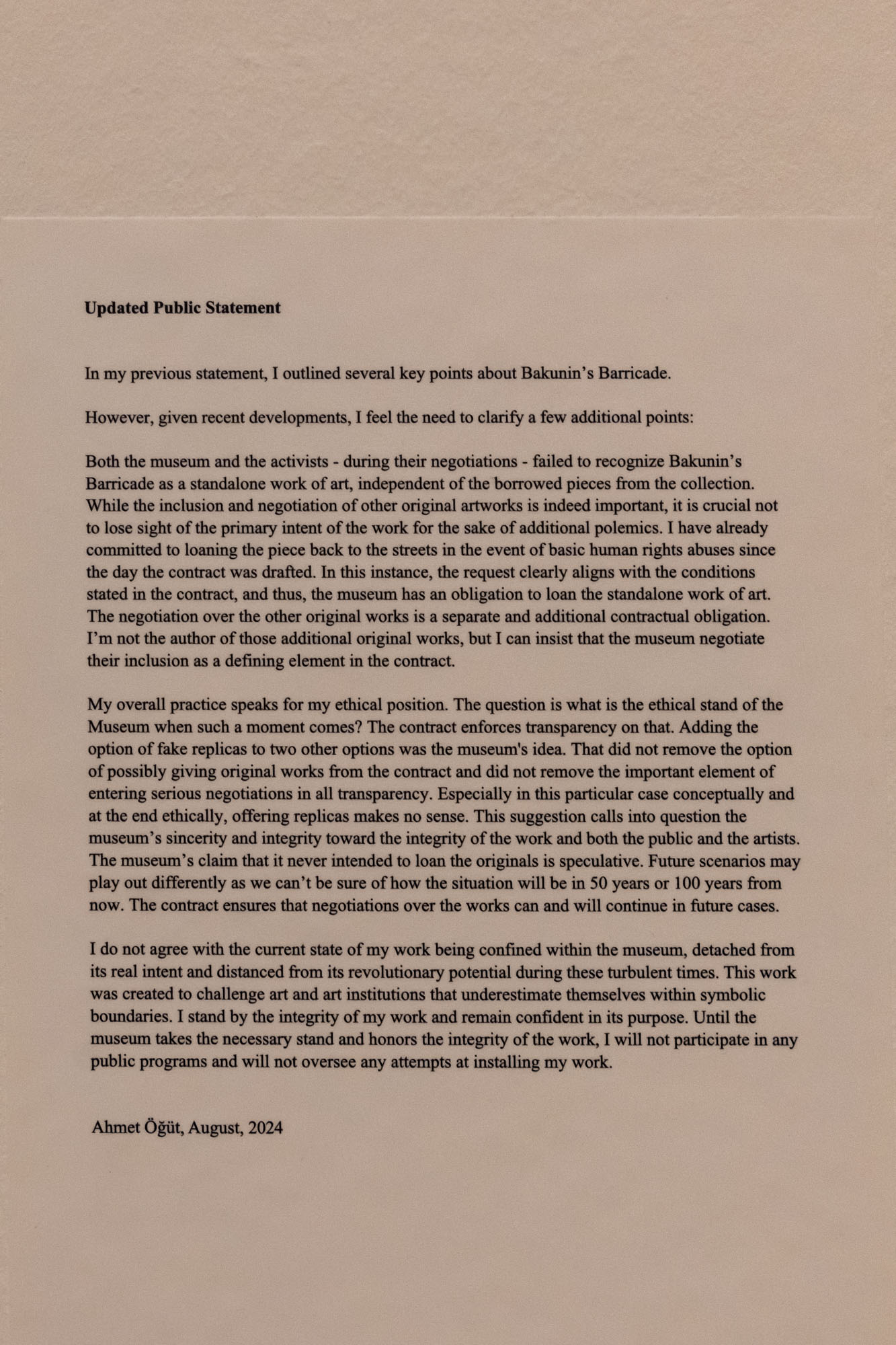
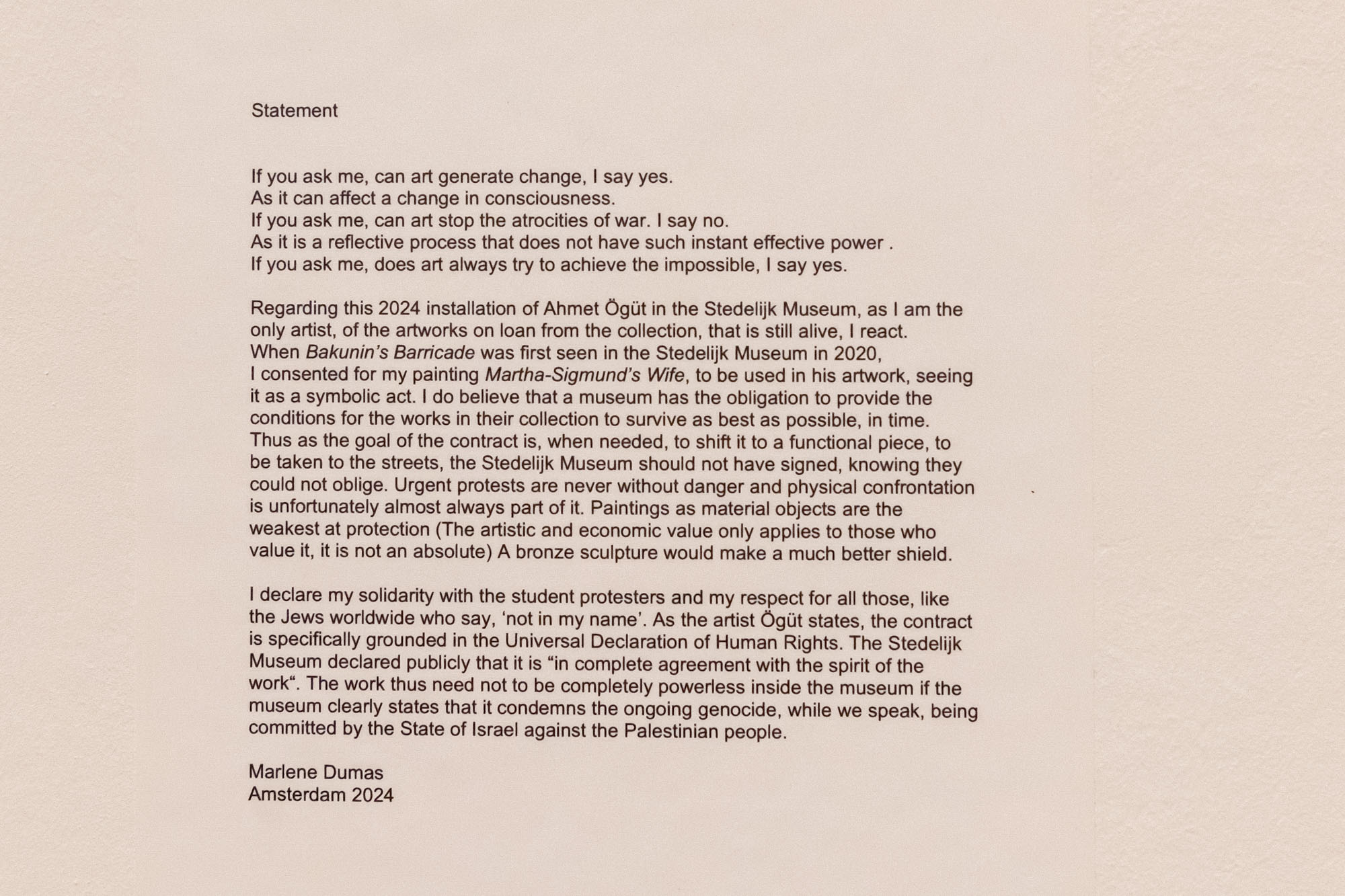
The protestors and Ahmet Ogut himself were not impressed; Marlene Dumas also was not convinced by the position taken by Stedelijk. The question that came up was why the museum had signed such a contract in the first place, if they had no intention of honouring it, especially when the request was made for an event to protest against the genocide in Palestine. Ogut contended that if the Museum did not want to lend artworks of others, they could have lent his work, just the Barricade. He felt that once other artists saw his Barricade being lent, they would have come forward and given their works as well. He condemned the position taken by Stedelijk and announced that he would not take part in any program nor oversee the installation of the Barricade elsewhere, till the museum changed its position. The group of activists didn’t mince their words and accused Stedelijk of preferring “economic interests over people”.

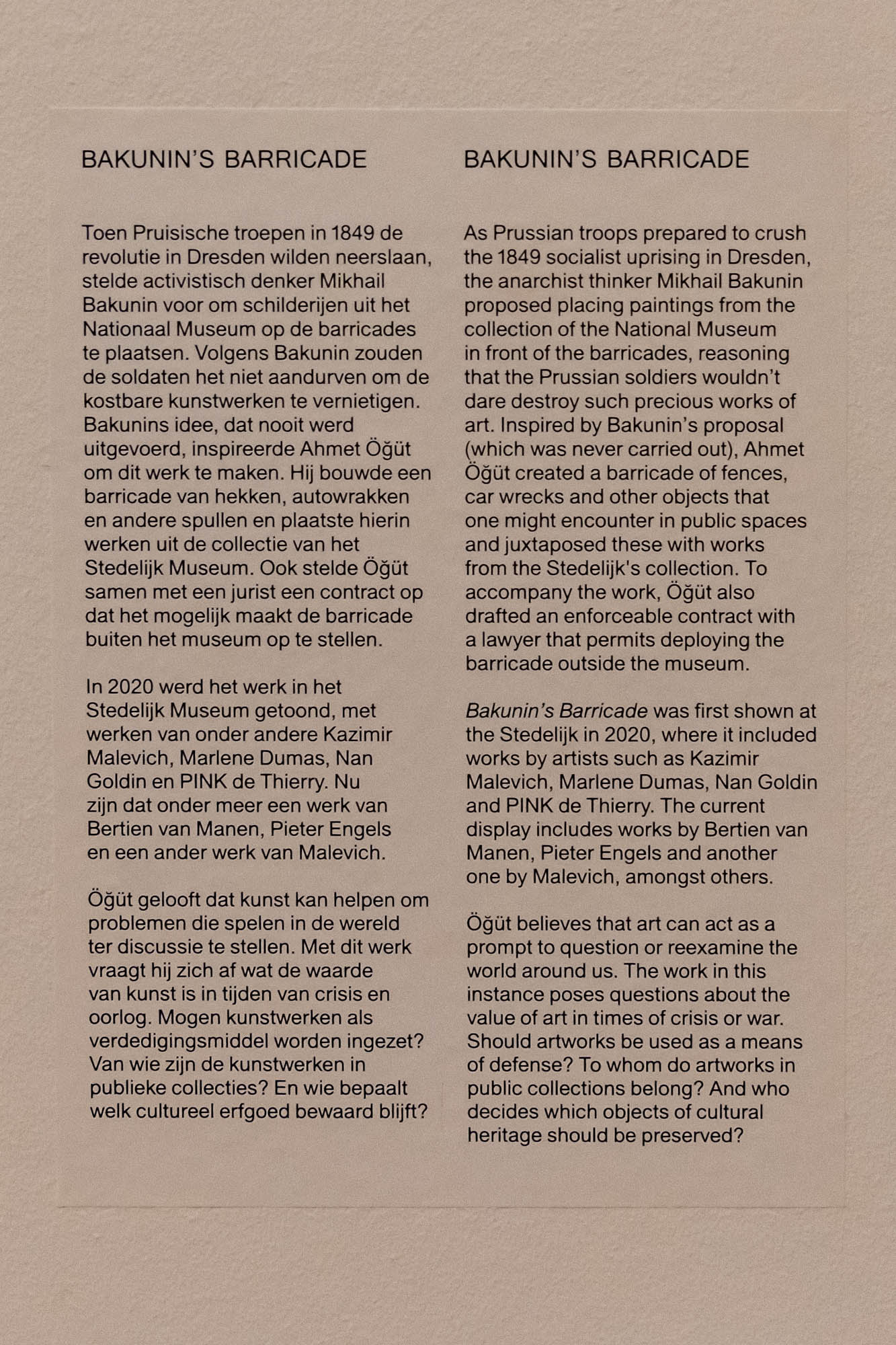
The museum authorities have now displayed all of this as part of the installation. The letters sent by the activists, the response by the museum, statements by Ahmet Ogut and Marlene Dumas are all displayed. In the audio commentary, the museum director asks a question to visitors on what they would have done, in this situation.
I found this to be a very remarkable artwork altogether. Firstly, the fact that an idea proposed and abandoned more than 175 years ago found relevance in a contemporary political action, is just astounding. Even more is the vision of Ahmet Ogut in coming up with this artwork and then inserting that clause in the contract. It speaks volumes of his genius and his politics. Clearly, the museum was caught totally unawares and I also suspect that the cause itself – that of protesting against Israel’s genocide – had something to do with the decision to not lend the artwork. 

The most intriguing aspect was the museum itself deciding to curate and present this issue in front of the public. In nine cases out of ten, museums would have just kept silent and hoped that the controversy would just die down over time and go away from public memory. However, in a very clever (or should I use the word cunning) move, the museum itself has chosen to project the issue and keep it in the public discourse. I found that quite unusual and interesting. I tend to agree with the position taken by Ahmet Ogut in this issue and the museum should have lent at least his work; but these days, integrity and justice are two concepts that are felt more by their absence than by their presence. 
26 October 2011

I got into Amsterdam little bit after lunch on the 26th. I was in town to meet with a customer and because of the flight timings  I had some time on my hands, which I planned to use for some exploration of the city. After finishing off a bit of work, I set off to walk around the city. My hotel was in the city centre and so most places were accessible by foot. My last visit to the city was a quick one in 2001 and since then, I had heard a lot about the city.

As most big cities, Amsterdam also started out as a small settlement on the banks of a river called Amstel. In its heydays, Amsterdam was a big commercial port with the city flourishing in finance and diamond trades. It seems that the first ever stock exchange in the world was the Amsterdam Stock Exchange and it was set up by the Dutch East India Company. It does not exist independently anymore as it has merged with the Euronext exchange. Amsterdam has also been overtaken by London and other cities on the business of finance.

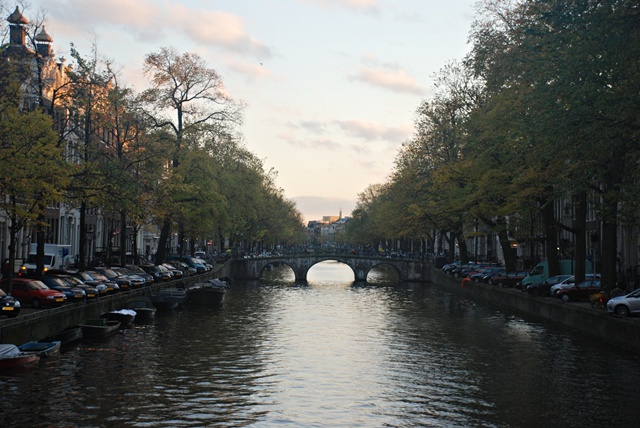
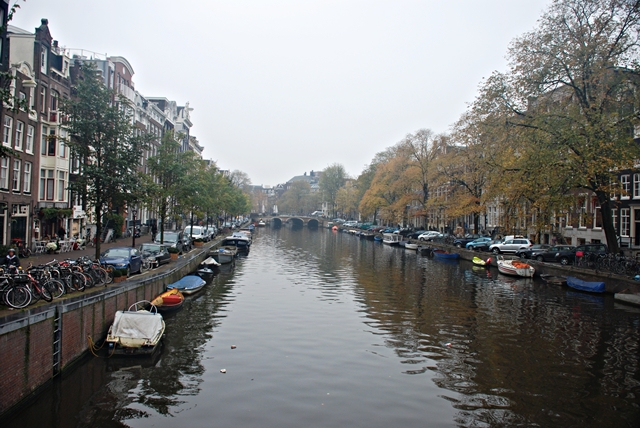
Today, the most significant feature of the city is the canal system. This dates back to a city planning activity undertaken in early 17th century and was mostly meant for transport. In the city centre, you cannot walk for more than 10 minutes in any direction without hitting a canal. However, I found that the canals are not used much for transport these days as the road system is very well developed with trams and other public transport available freely. I mostly found leisure craft plying on the canals unlike Venice, where the canals are more or less the only form of transportation. However, the canals in Amsterdam still do seem to have an all pervasive presence, which makes it difficult for one to think of the city without the canals.

Another aspect of Amsterdam is that this is a city that is more tolerant of the vices – it sells soft drugs like cannabis in it’s coffee shops and prostitution is legal. I was looking for my afternoon cuppa and wandered into one such coffee shop but only to realize that this one was more interested in selling cannabis than coffee. So, I finally ended up having coffee in a bar. The red light district in Amsterdam is quite famous and is a sight in itself with women framing themselves in full length glass windows. What was most striking was that people seemed to take these things in their stride; I found many homes and even a large church in the red light area, almost shoulder to shoulder with an establishment engaged in the oldest trade.

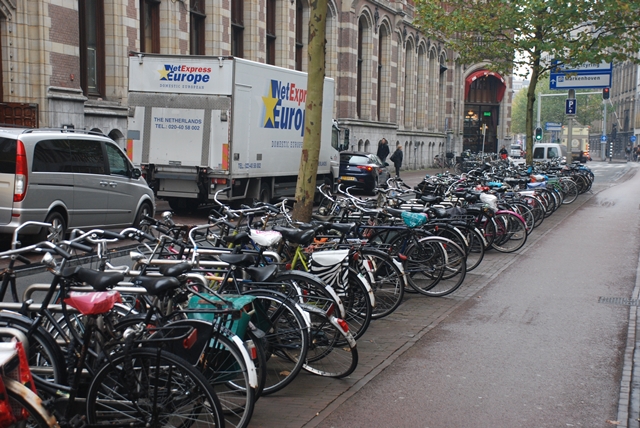
Another interesting point is the mode of transport that most people seem to rely on – bicycles. Anywhere you look, you see a lot of bicycles and it looked to me that a good many use bicycles for their daily commute and they looked like real “work” bicycles which looked very functional unlike the fancy machines used by people in other cities. I was tempted to hire one and ride around but the fact that I was not clothed warmly enough restricted me.

I spent the evening wandering around the city and ended the day with a nice dinner. The city was very picturesque, especially as the sun started going down.

27 October 2011

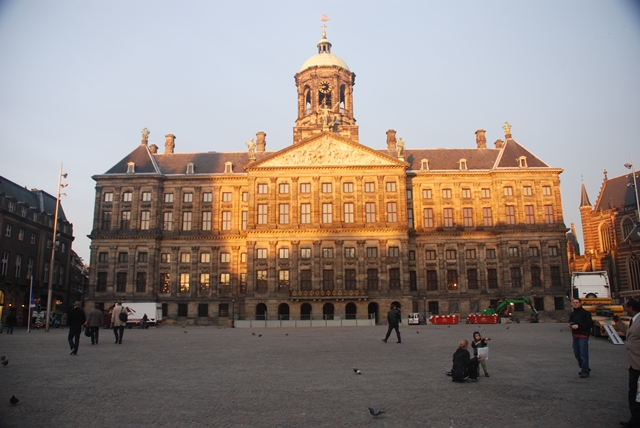
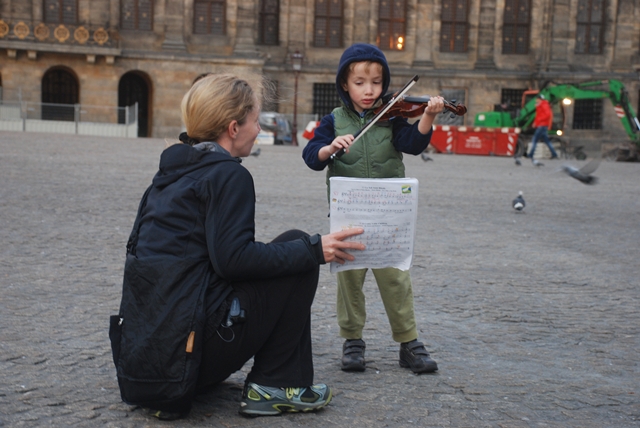
I went out for a stroll early in the morning. By early in the morning, I mean around half past seven but it was still dark. By and by, I arrived at a square near the palace, called Dam Square. The square was empty but for a lone construction worker and a mother and child. The kid was very young, probably six or seven, and playing a violin standing on the square while the mother was holding up the musical notes for him to see. There was no one listening or watching them. I was somehow taken up this and took a picture of the boy with the violin. Soon, another chap walked up with a camera and he also seemed impressed by the spectacle. The violin case was open in front of the child and both of us put in some coins. The other photographer said that this would probably be ice cream money for the kid. They seemed well off and did not seem to need the money. I was wondering what the mother was trying to teach the child. Could it be that every job has its own dignity and there is nothing wrong in taking money for entertaining people or that this was one method for him to earn a living as he grows up or to take away his fear of playing in an open square? Overall, I found it quite intriguing.

It was around five by the time I finished my meetings and I went to visit Anne Frank House. Anne wrote her world famous diary while hiding in this house. She lived here from 1942, when her father decided they had to go into hiding to save themselves from the Nazis, till 1944 when they were betrayed by an unknown person and taken into custody. There was a reasonably long line to enter the museum and I guess that itself is testimony to what a young girl achieved. Anne was a dreamer and she dreamt of making a mark in the world even when she spent her time cooped up inside a small house with no windows. I had read her diary and what had come through were her hopes about the future and her fervent belief in mankind, despite what she went through. To see the conditions in which she lived and then relate that to her diary was indeed touching. She must have been an extraordinary person or could it be that those extremely difficult circumstances made her more mature than her years? She started her diary when she was thirteen and was captured when she was fifteen. So, what we read are the musings of a youngster in her early teenage, yet some of the observations she made were far beyond her years. In particular, one of the most important statements that I remembered was how, despite everything she suffered, she still believed in the innate goodness of man. May be the diary was the companion she missed. It comprises of a series of letters addressed to “Kitty” and in one place, she says: “When I write I can shake off all my cares. My sorrow disappears, my spirits are free!” I could not but feel overawed and to an extent depressed as I walked through the rooms.

Photography is forbidden in the house and so I could not take any pictures. There are several quotes from Anne’s diary posted on the walls and also some replicas of the conditions in the house when they lived there. Anne’s father (Otto Frank) had foreseen the danger that Nazis posed as far back as 1933 and moved to Amsterdam from Frankfurt to escape the clutches of Hitler. However, he could not escape his fate as Holland fell to Germany in 1940 and in 1942 Otto Frank decided they had to go into hiding to escape deportation to concentration camps. He built a secret apartment behind his office and that is where the family hid till they were captured.

I find that individual tragedies often help to understand the depth and viciousness of events like Holocaust better and Anne’s diary is one such. She kept the diary and thought of publishing it after the war got over and had dreams of becoming a writer and a journalist. She wanted to live on even after her death and had hoped her books would help her achieve that. The diary was discovered by a friend who had helped the family and she gave it to Otto Frank when he (being the only survivor in the family) came back from the concentration camp. I doubt whether so many people would have read the diary had Anne been alive but the cruel, unjust dashing of a few young dreams made the world take notice. These are the sort of books that influence the world and I felt truly enriched to have been in the building where it was written.

28 October 2011

My flight was after lunch and so I had a couple of hours in the morning and I decided to visit the Van Gogh Museum. This museum has the largest number of Van Gogh’s works. While the paintings themselves were not as famous as what I had seen at some other museums, it was when I visited this museum that I got a better appreciation of Van Gogh. He lived only for 37 years and was a painter only for 10 of those; yet he finished more than 2000 works. The museum had also arranged his works in a chronological order and so one could appreciate his development as an artist.

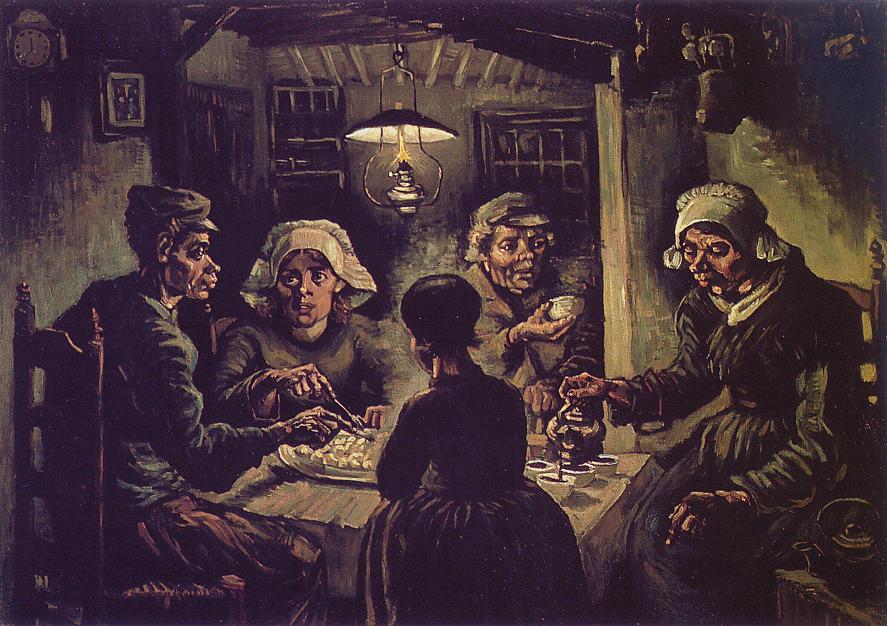
In an era when most artists were taken up by the gentry and such “beautiful people”, Van Gogh was intent upon painting farm labourers and actual scenes from life as he saw them. His first famous work was “The Potato Eaters”, which was painted mid-way into his artistic career and the subject was a poor family even though he expected to sell the painting in the Paris art market. The museum does not allow photography and the image (Potato Eaters) given below is downloaded from the Internet.

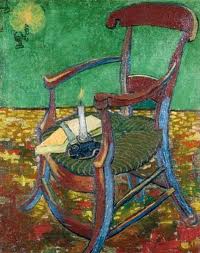
Van Gogh was quite obsessed with painting and that was why he was able to produce such a large quantity of work. However, he was also unstable in mind and was given to bouts of mental breakdowns. It was fascinating to look at the paintings knowing that the man was going through a tormented existence while he was painting those. Many of the paintings had hidden stories and meanings; for example, there is a painting of a chair which is supposed to represent another famous artist Paul Gauguin (image given below, downloaded from Internet). However, I could make that out only with the help of the audio guide.

Overall, it was a very good experience to go through his works and be witness to the evolution of the artist and the anguish of the man, which ended in his suicide.

Unfortunately, my time in Amsterdam ran out and I had to leave without visiting many other attractions like National museum, may be another time, another day!