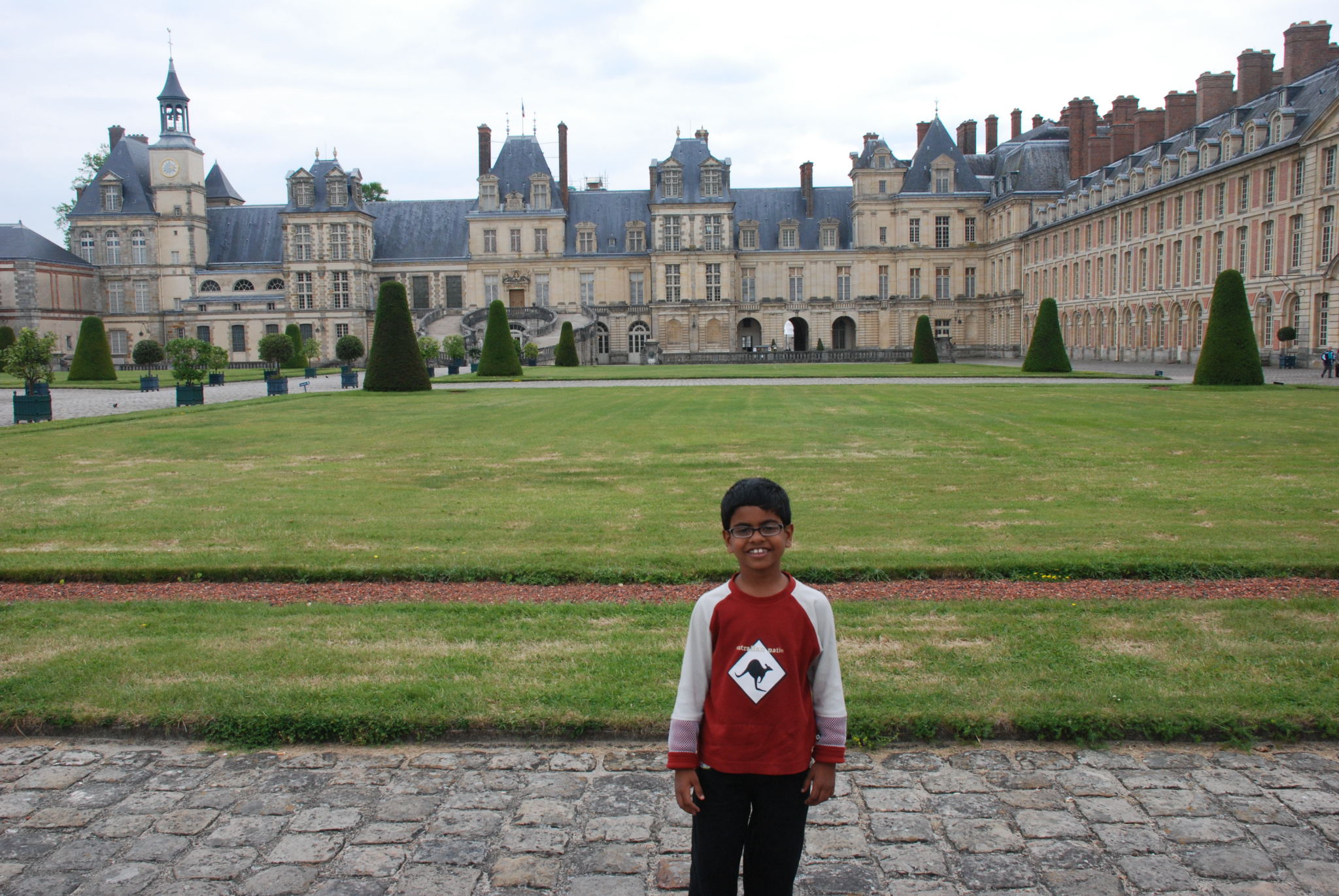
21 May 2010 

The work at Bern finished early and so I was able to catch an earlier flight into Milan and so was able to leave from Milan earlier than planned to Lake Como. I had booked a hotel in a village called Abbadia Lariana, which is on the eastern arm of the lake. I was hoping to get to the hotel by early evening so that I could take a look around when there was still some light. However, the GPS in the car ran out of power just after Milan and the car charger provided turned out to be faulty. Hence, I had to buy another charger and locating a shop proved quite tricky with no GPS, no map and no knowledge of Italian. Anyway, I managed to get one and arrived at Abbadia Lariana in due course of time. The hotel turned out to be quite okay and I was a bit apprehensive as I had done the booking in a hurry without much research.

Lake Como has an inverted Y shape with Como, at the base of the Western branch, being the most important town in the region. The lake itself is one of the three or four most important lakes in Italy and is 46 km long, 4.3 km at the widest point and has a surface area of 146 km. The town of Como is very ancient and was founded between 59 and 49 BC by Julius Ceasar.

Abbadia Lariana is very near a town called Lecco, which has a population of about 60,000. I went to Lecco for dinner and the weather being excellent, had it outside on the street in one of those European style places. The food was quite good and the wine and the ambience turned out to be even better. I like these European cafes where you can sit outside and eat or drink and watch people go by. Since there is hardly any dust or pollution, this is quite enjoyable.
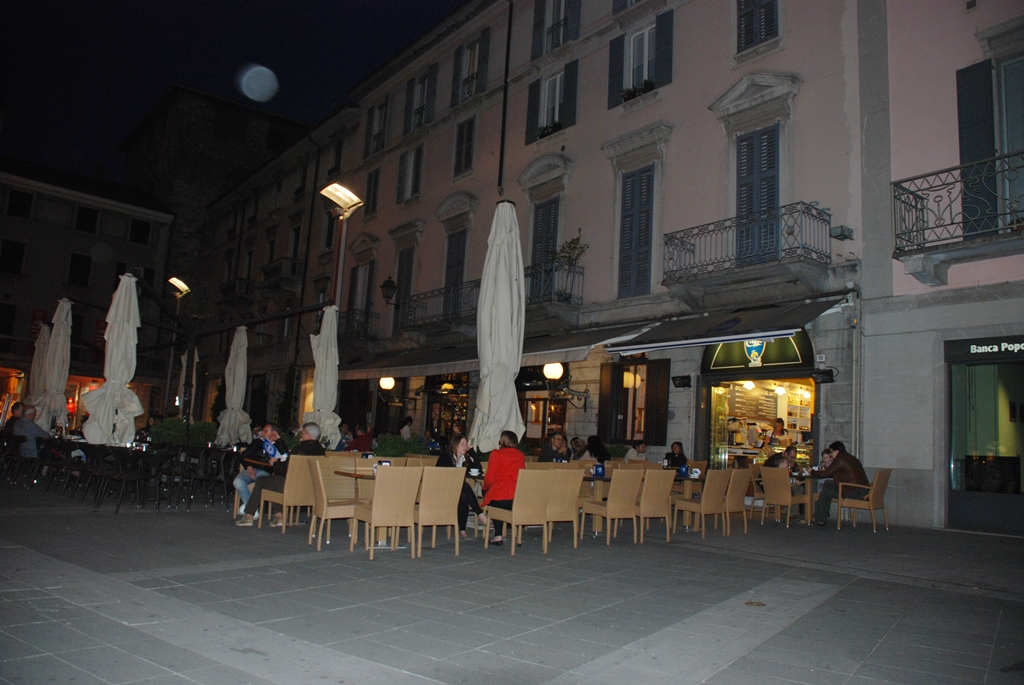
22 May 2010

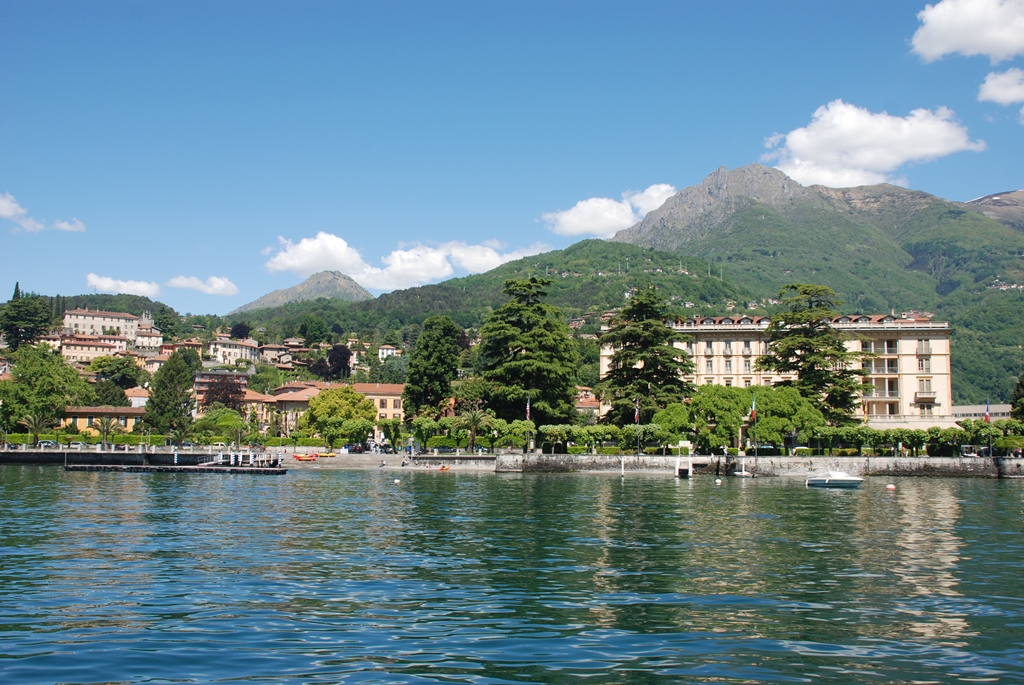
The hotel is on the lake shore and I awoke to a brilliant view. After breakfast, I checked with the receptionist on some suggestions of places to visit and she reeled out the normal touristy places like Como and Bellagio. However, I wanted to go to less crowded places the first day and luckily there was a good tourist guide provided by the district tourism authorities and that proved to be quite handy. I wanted to go up north to the top of the inverted Y and drive around the lake. The receptionist had no clue of what was up there as she had never gone there. Guess the story is the same everywhere; we never visit places close to where we stay!

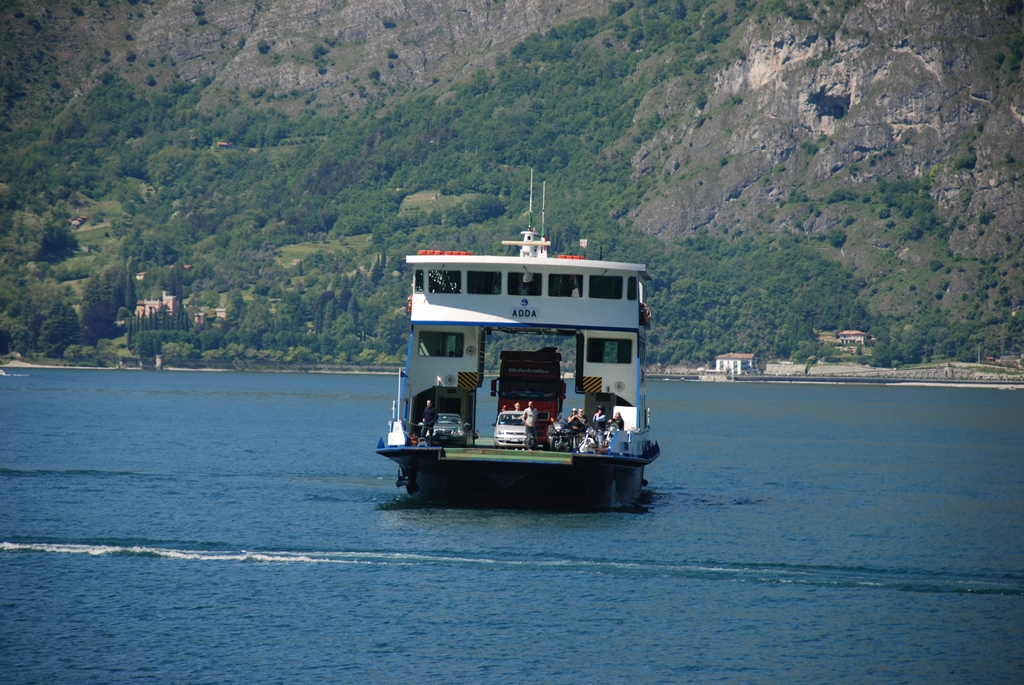
My plan for the day was to drive around, touching upon places like Dongo (where Mussolini was captured after World War II), Stazzona, Colico etc. The idea was to go to small hillside villages, look at old churches, houses etc. and then drive along the western bank of the lake, go round the top and get back to the eastern bank. This meant I had to cross the lake in a ferry and I caught one at a town called Varenna. The drive upto Varenna was stunning and breathtakingly beautiful.  The road hugged the mountainside and twisted and turned. At best, it had just enough space for two cars to pass and at some places not even that. So driving was quite interesting and challenging. The weather was just perfect and that itself brought cheer to the heart. I have never driven in Italy before and had not done much research on parking rules etc. As a result, I parked in a paid parking area in the ferry terminal without paying the parking fees and thus got a ticket. I have no idea on how to pay the ticket and I guess the car rental company will bill me. Anyway, I got into the ferry and had a pleasant ride across the ferry to a place called Menaggio.

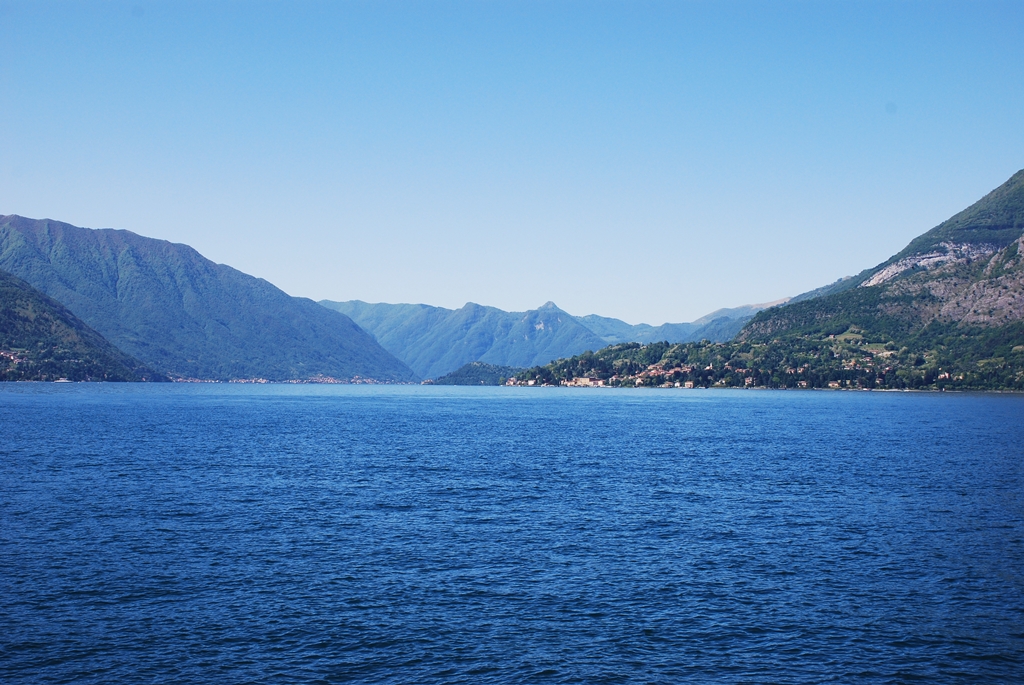
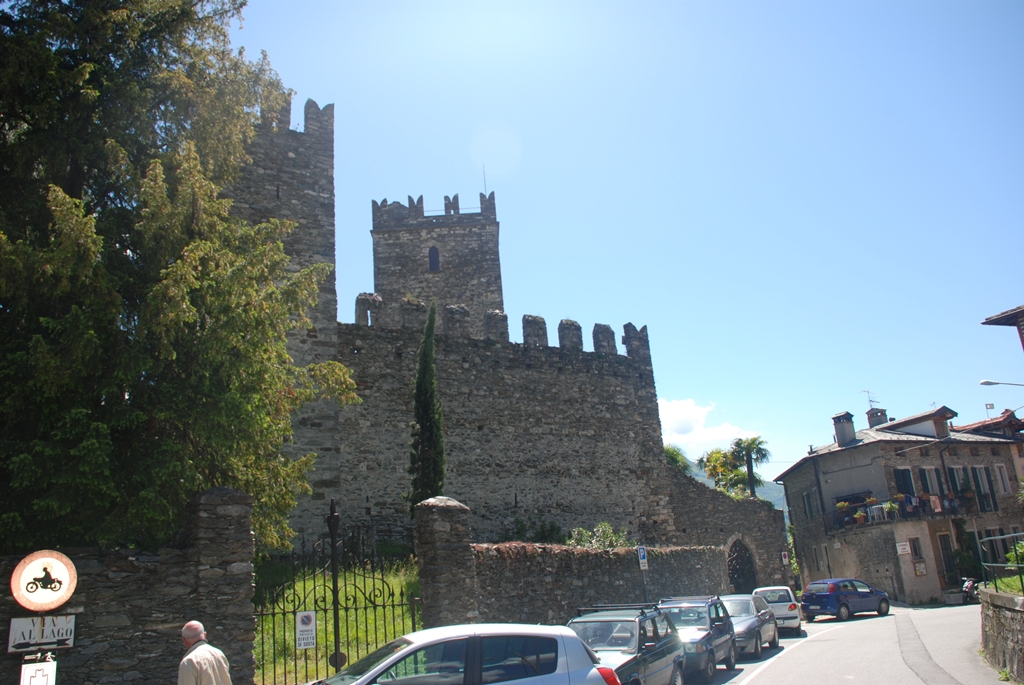
Menaggio turned out to be a nice little town but looked to be a bit too full of tourists for my liking and so, I continued on my way along the western bank of the lake. My immediate destination was the village of Rezzonico which had a very old castle built in the fourteenth century. When I arrived at the castle, I found out that it is a private residence now and hence not open to public. It looked impressive from outside, though not very big. I wonder how it will be to live in a medieval castle, in these times!
I decided to continue up the mountains and drove up to Stazzona. The tourist guide had mentioned that there were some restaurants in cave like surroundings called “Crotti”. I don’t know whether the restaurants had caved in or it was the imagination of the guy that wrote the guide or whether I missed it, I couldn’t find any. I stopped at a couple of other restaurants on the way but could not find out whether they were open or not as there was total misalignment on the lingua franca. I continued up the mountain and soon came to another delightful small town called Garzeno but could not find any open restaurant there. Soon thereafter, I came up on a small restaurant in the middle of nowhere; it was quite a way up the mountain. This turned out to be a very nice restaurant and more importantly, I could establish that they were open and willing to give me food. This place looked like a remote corner of Italy and I was sticking out like a sorethumb and was drawing curious glances. This was then it struck me as to how Westerners must be feeling when they visit remote places in Kerala. The menu was totally in Italian and for the people there, English did not seem to exist. So, I landed up with two huge dishes (one being a plate of cheese!) and a litre of wine; whereas I thought I was ordering a starter, main course and a glass of wine and cheese was nowhere in my mind. The wine was very nice and deceptive and served in a nice little jug. Hence, I was soon in a state of bliss and wondering why people wanted to stay in cities.

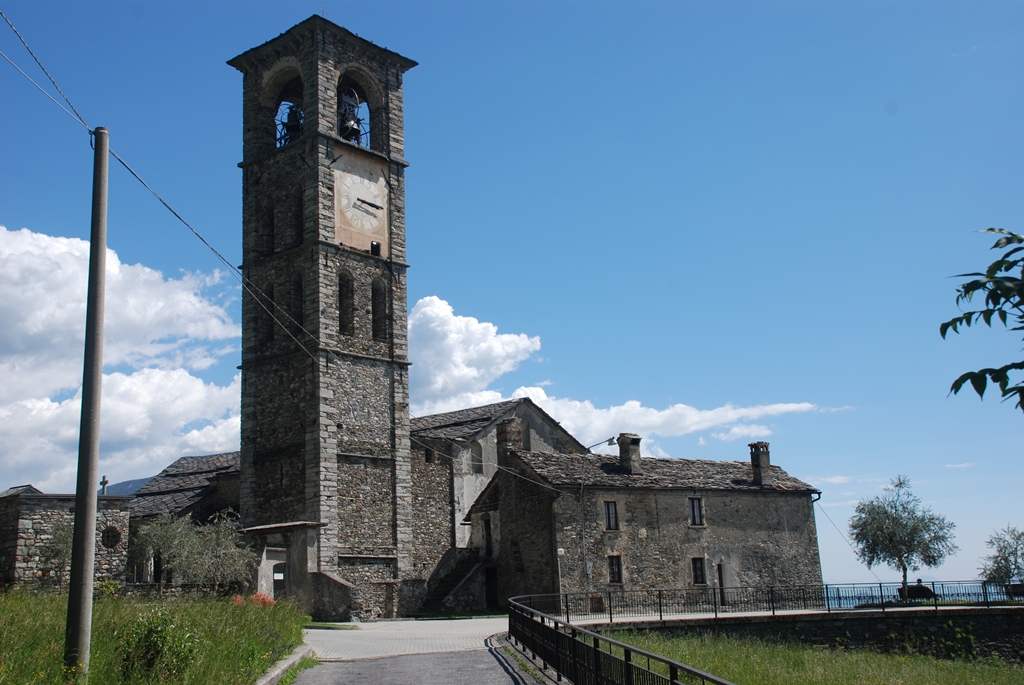
The thought of the difficult roads reined me in a bit and I decided not to finish the bliss inducing elixir. So, in due course of time, I parted company with the jug and drove to an Abbey called Abbazia di Piono. En route, I stopped at another nice little village called Peglio, which had an interesting complex of church, archway, assuary, rectory and cemetery. It was closed and so I could not go in. It was a very old building dating back to the VII Century.
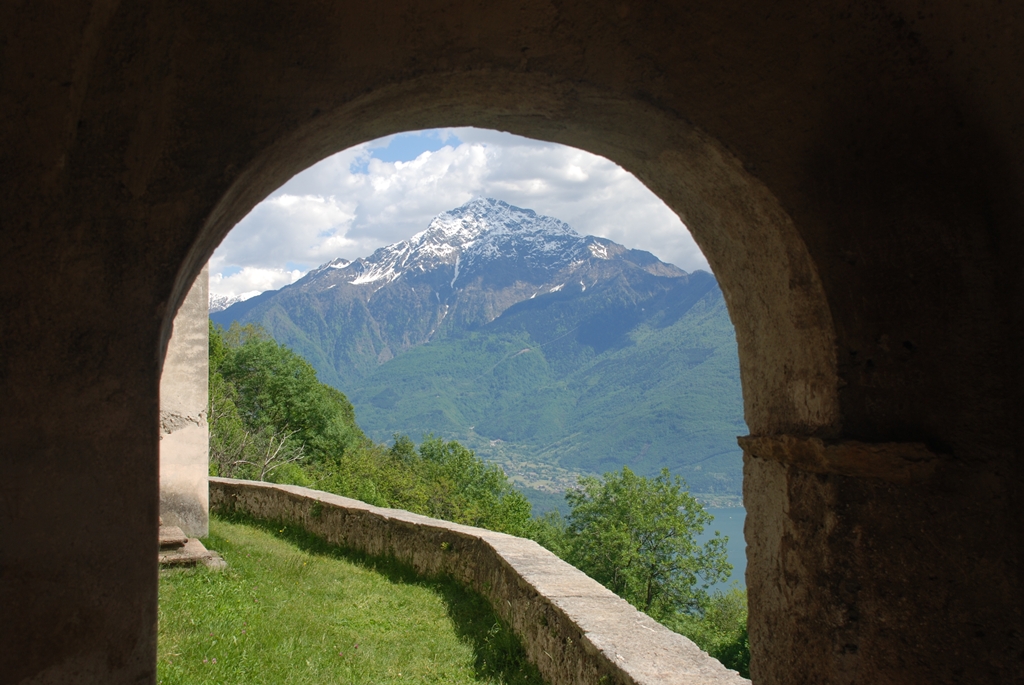
After another spectacular, and at times hair-raising, drive I arrived at Abbazzia di Piona. The history of the place started in 610 AD and the abbey was thriving till the 16th Century. In the 18th Century it became a private property and was used as a farm. In the 20th Century, a wealthy family bought it and gave it to the Benedictine Cistercian congregation of Casamari. The current Abbey started functioning in the sixties. Many parts of the building date back to the twelve hundreds and there are some nice wall paintings in the courtyard.

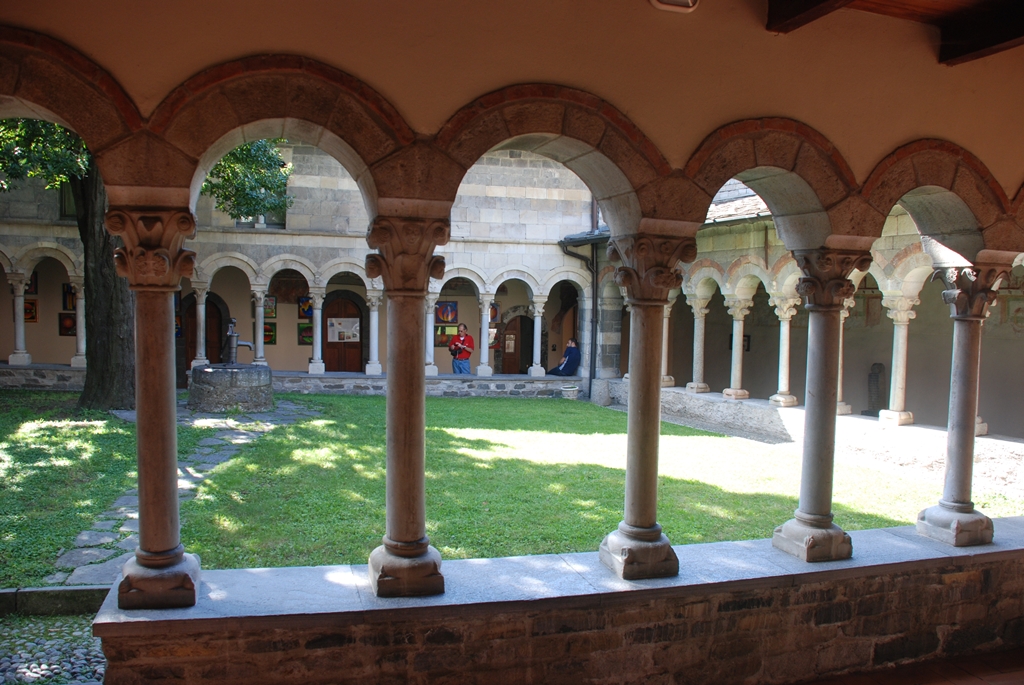
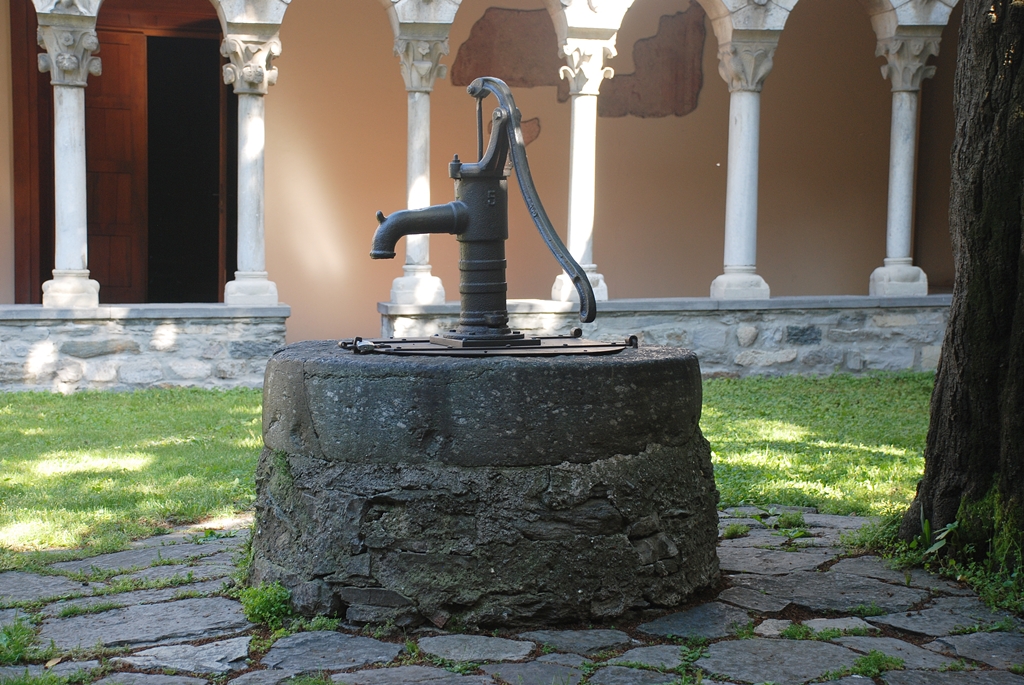
Inside the abbey, there is a very nice courtyard with a tree and a hand pump. The chapel smelt of sandalwood and may be the wood linings and furniture are made of sandalwood. For some reason, I had not expected that sandalwood would be popular in Italy as I had associated Sandalwood with India and the tropics. One interesting aspect of the Abbey is that the priests distill their own liqueur even today and it is available for sale. At the store, I was subjected to the oddity of a priest in robes packaging and handing out liqueur. My curiosity got the better of me and I too bought a bottle. The liqueur is supposed to have some minor medicinal qualities and there are many flavours. The view around the Abbey is very beautiful and it is on the lake. Life in medieval times must have moved at a very slow, calming pace here. Today, the loud sound of some fast boat on the lake lends a jarring note to the atmosphere. I had parked the car in the village square and the walk to the Abbey was more than a kilometre and I met a couple from Milan on the way. They were impressed that someone from India had thought of visiting such a remote place.
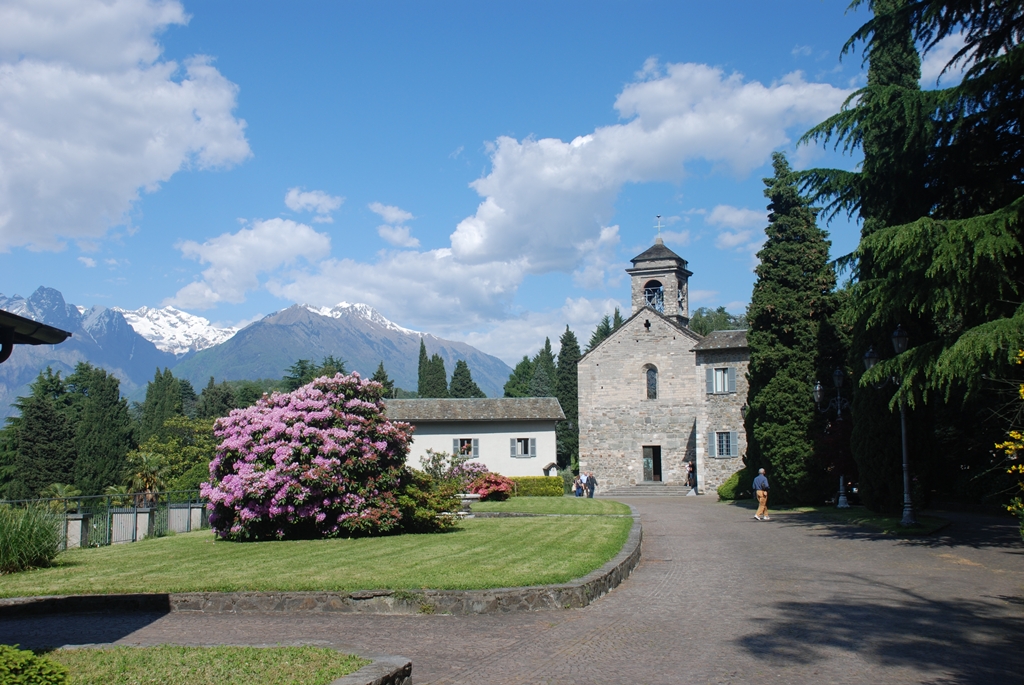
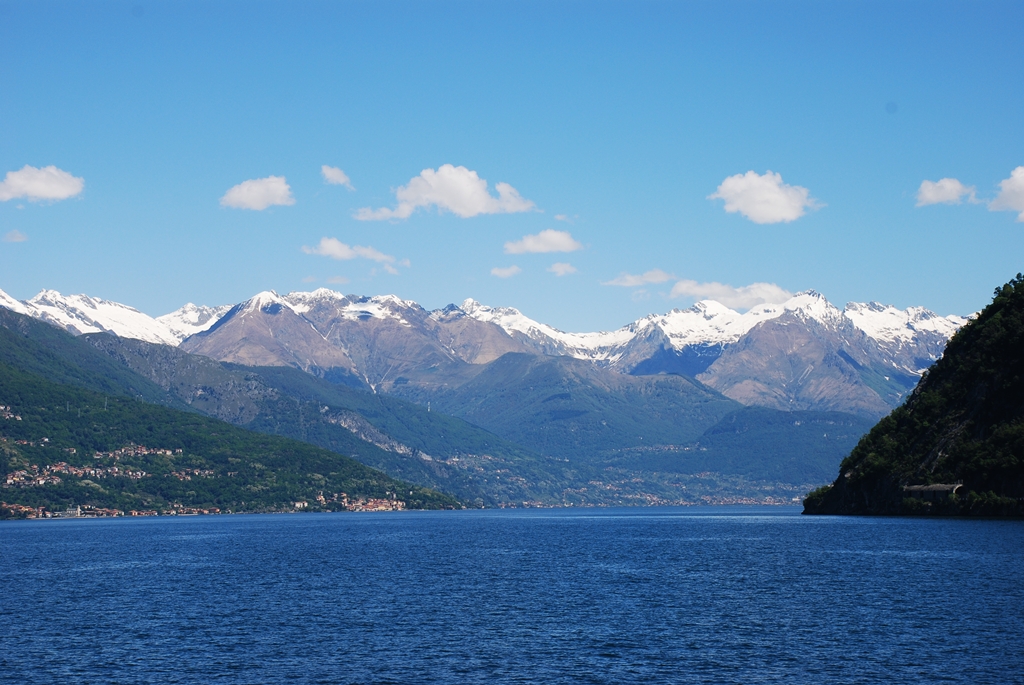
The most noticeable aspect of the day was the beautiful scenery. It was absolutely gorgeous and while I have seen other places that are very beautiful, I have not experienced a whole day of such fantastic views. I drove for the whole day and it was beautiful everywhere – be it the quaint little villages or the mountain sides or the lake or the far of snow-capped peaks; it was just glorious. It was as if you want to take pictures all the time and that is all you want to do.
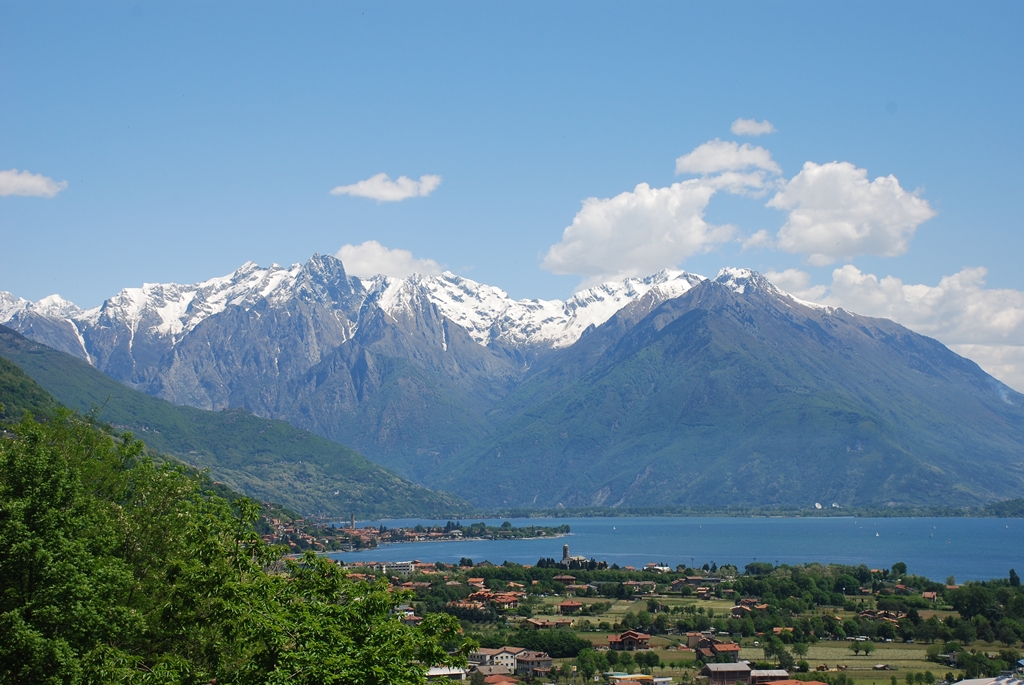
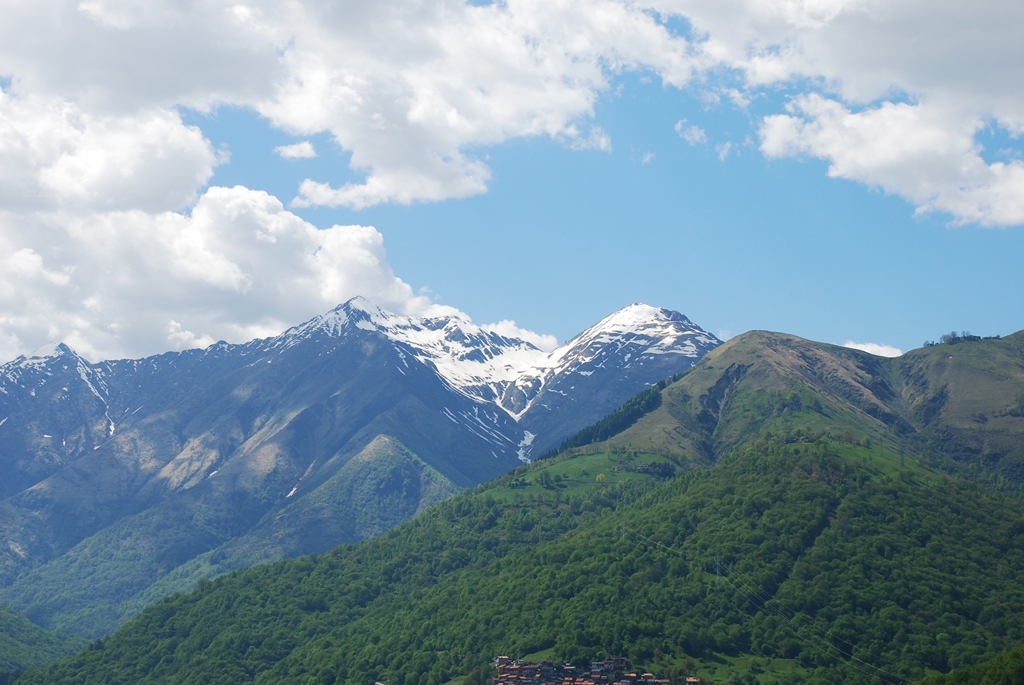
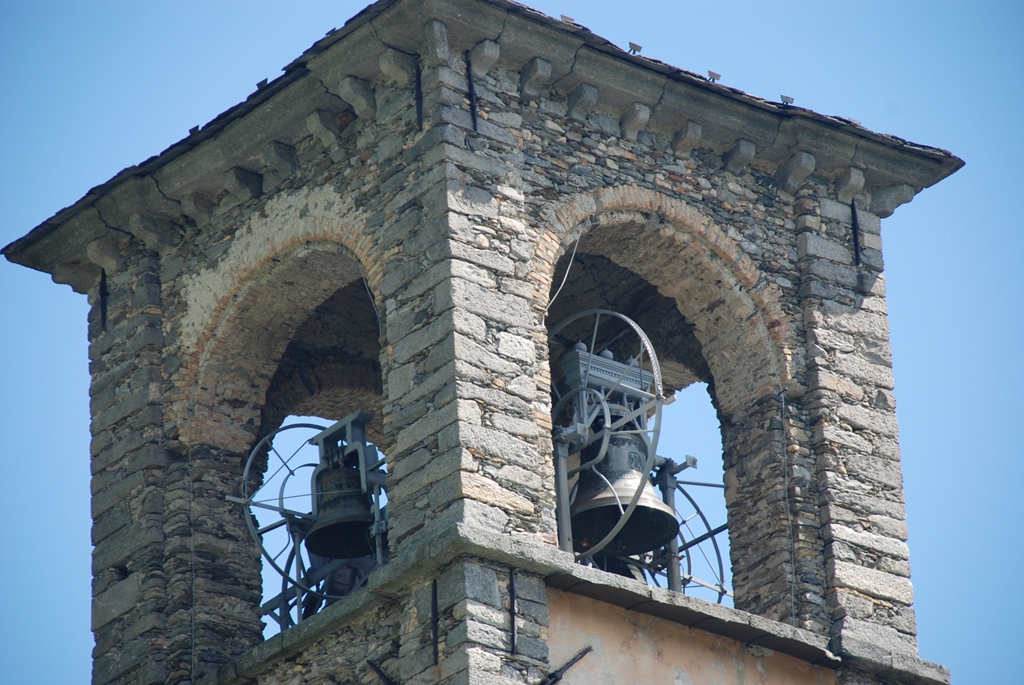
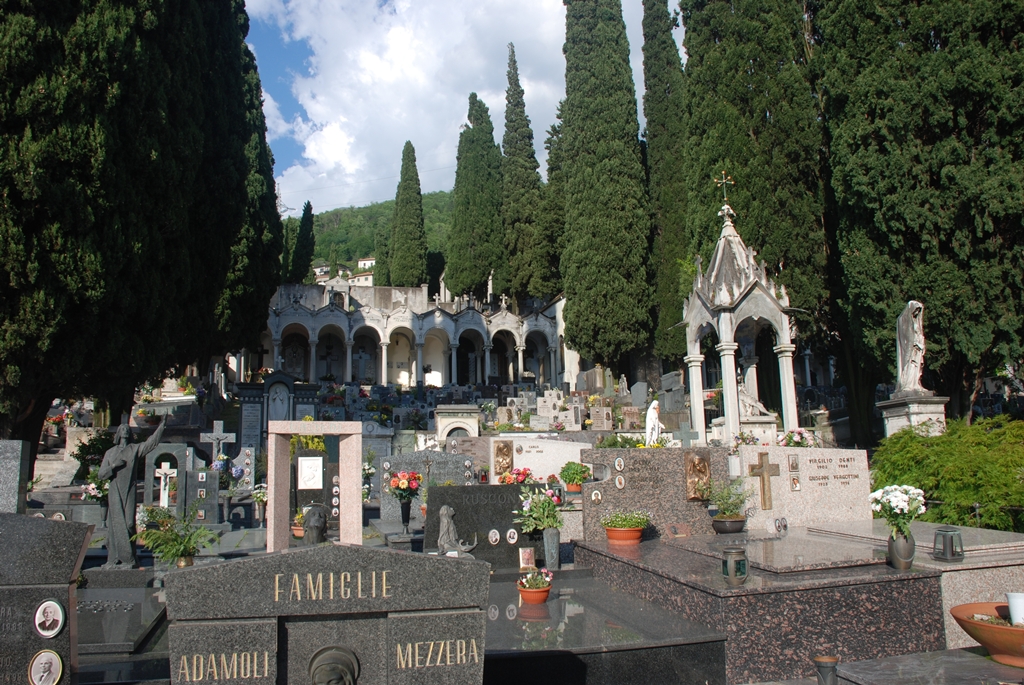
All the villages had a church in the centre and the churches were mostly medieval and built with stone – very, very nice. However, most of them were locked. I also noticed that many of these churches were built on hill tops – guess it was symbolic placement to show that God was above man! I have seen this approach in Indian temples too. Another aspect that struck me was about the cemeteries that were attached to these churches. All of them are maintained very well and have a peaceful, tranquil atmosphere. Having one’s loved ones being laid to rest in such surroundings seemed beautiful. Most graves had flowers on them and I guess one can feel the connection with those that have passed by, when there is a grave and in such calm environment. Another thing I noticed was that most tomb stones had pictures of the people buried there. I spent some time sitting in a cemetery and time seemed to stand still.

The night saw me at Lecco again and that was when I fully understood what madness football is for the Italians. Inter Milan were playing Bayern Munich in the European Champions League final and Inter Milan won the championship tonight. I was in Lecco when they won and soon the streets of Lecco were jammed full of people going around in their cars and walking around waving the Inter flags. They were honking incessantly and it was quite a cacophony and the traffic snarled up everywhere. The whole town seemed to go totally mad and it was quite an effort to get out!

23 May 2010

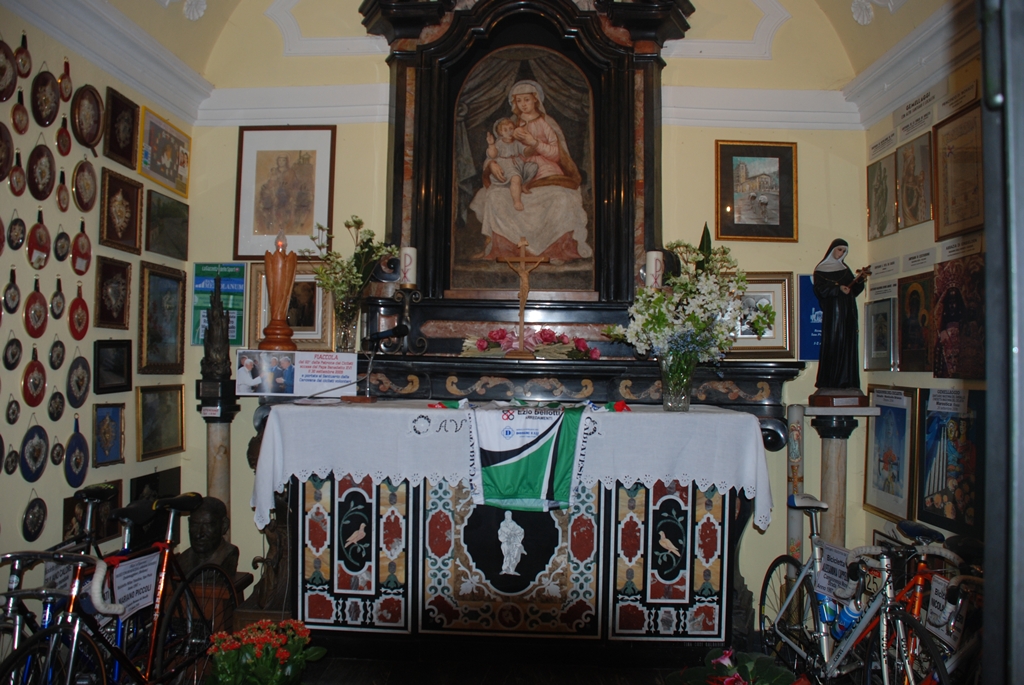
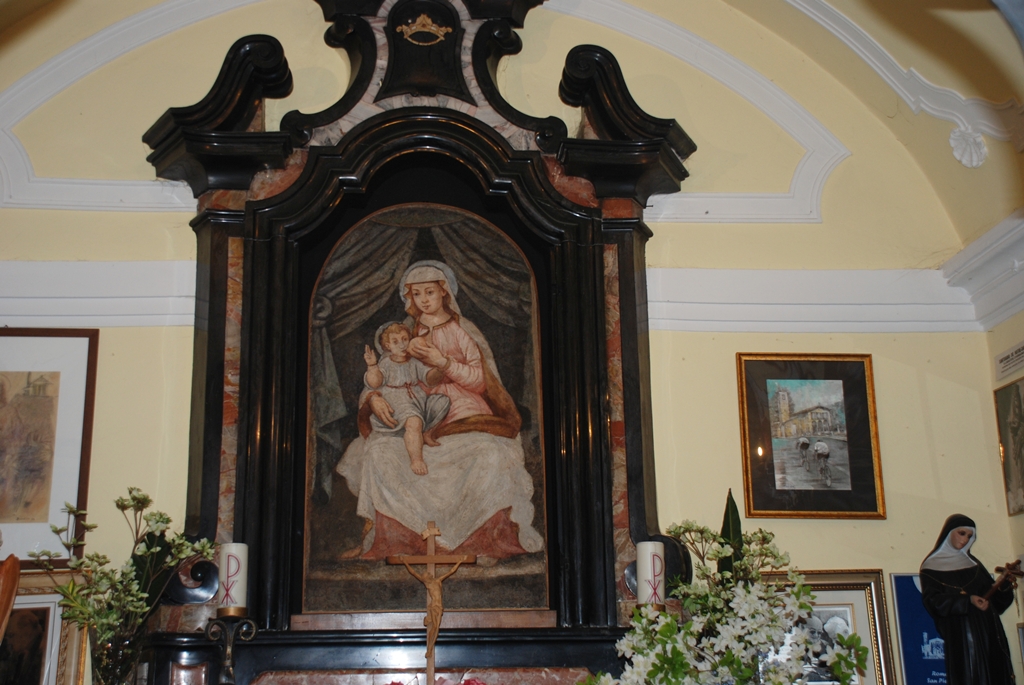
Today, my plans were to visit the tourist towns of Bellagio and Como and also take in some rural locales in between. Bellagio is located at the junction of the eastern and western branches and is quite an important point for tourists. Once again, the departure point of the ferry was from Varenna. Bellaggio looked very crowded and the streets that led to the town centre were very narrow, with space just enough for one car to pass. The receptionist had recommended some villa in Bellagio but after looking at the crowd, I decided to pass on it and went up the mountains to the village of Magreglio. Magreglio is interesting in that it has a church dedicated to cyclists, “Madonna del Ghisallo”. I had seen a lot of cyclists all around Lake Como and gathered that Italians were very keen on biking but I had not expected a patron saint and a church dedicated to cyclists. The church was built in the XVII century, which should be modern by the standards of the other churches I had seen! There is a picture of the virgin breast feeding above the altar and supposedly, it is greatly revered by the locals. What is most interesting is that the inside of the church is filled with medals, bicycles and other memorabilia donated by past champions. Most of the donors seem to be Italians and I could not find Lance Armstrong’s name there even though I looked for it – his was the only name I could readily recall!
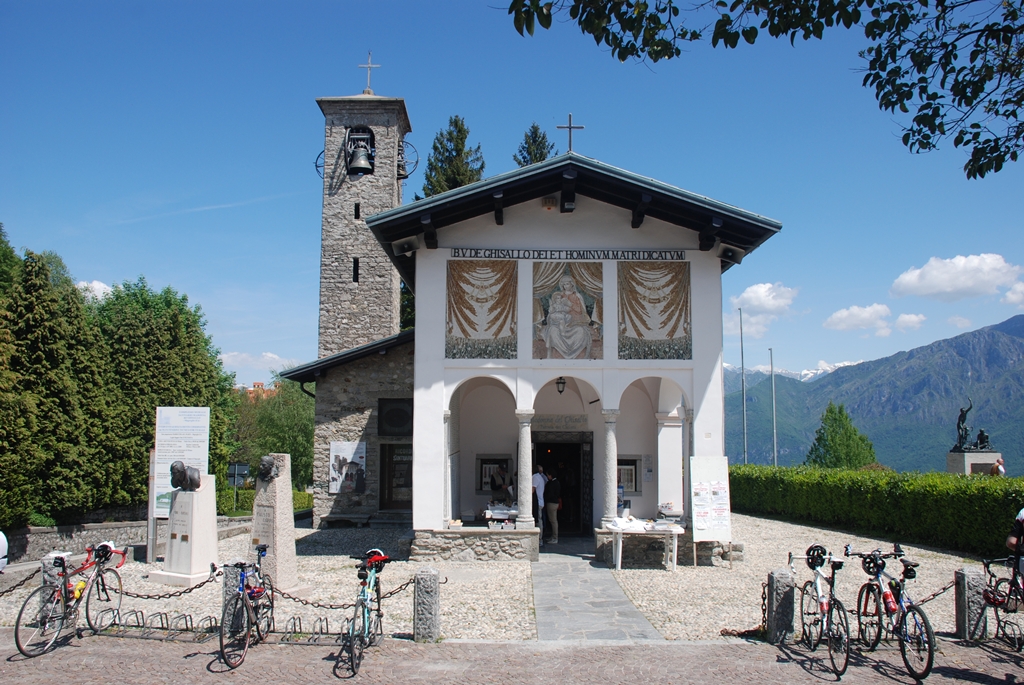
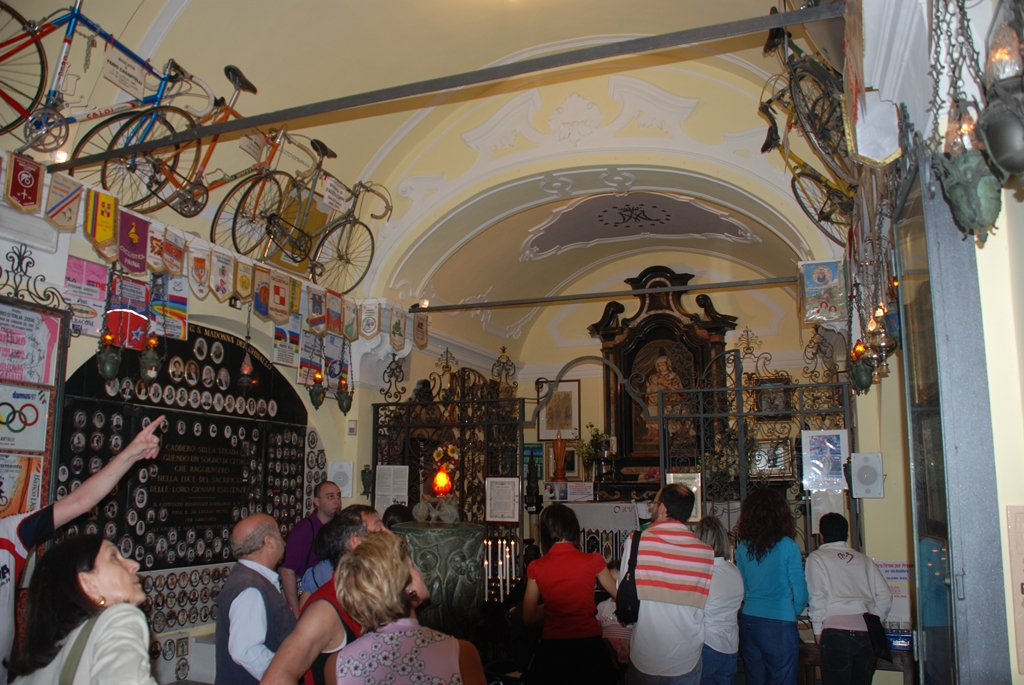
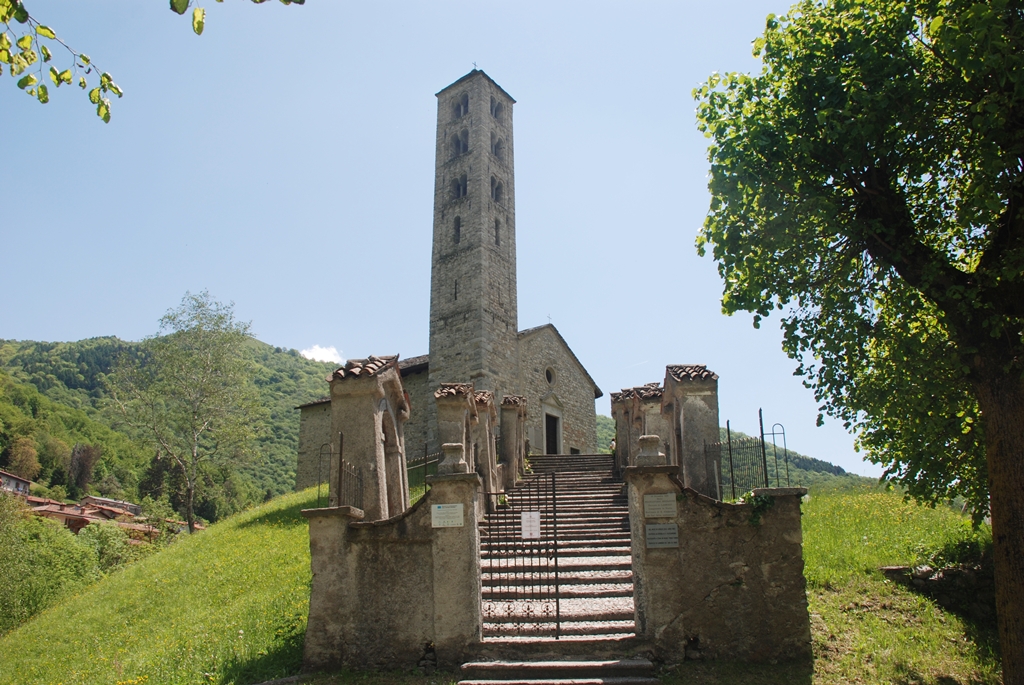
From Magreglio, I decided to go further up to Asso and Canzo, which were referred to as places of “great interest” in the guide. All these fall under the Valassina area and the spectacular natural beauty continued here as well. On the way, I happened upon a very delightful old church and I could not resist stopping there to take a look. These unexpected opportunities are indeed the essence of such freewheeling drives.
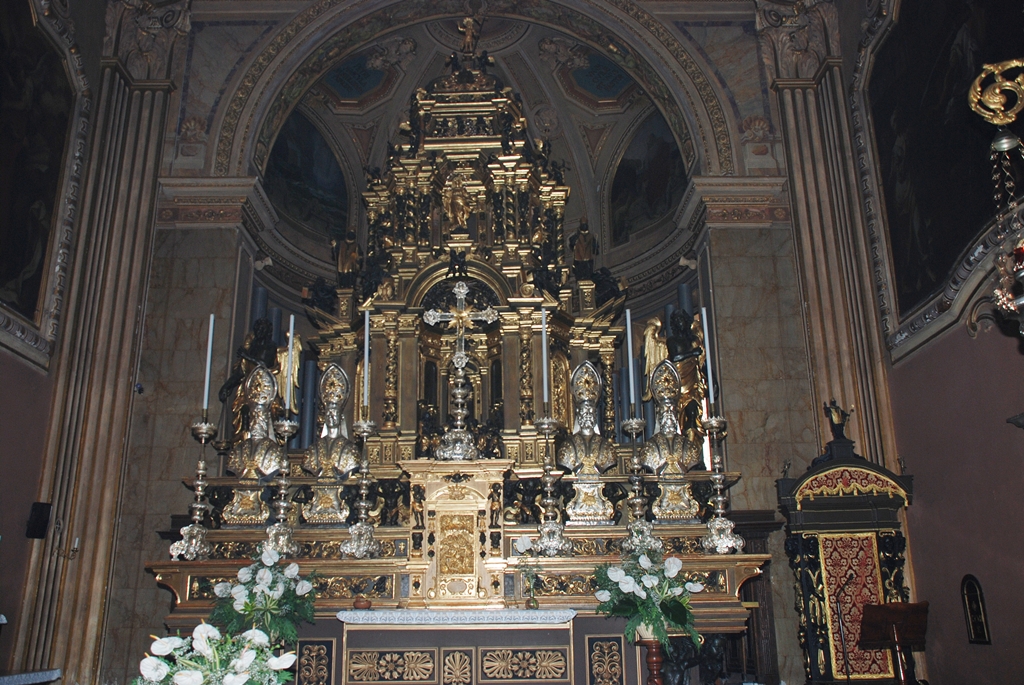
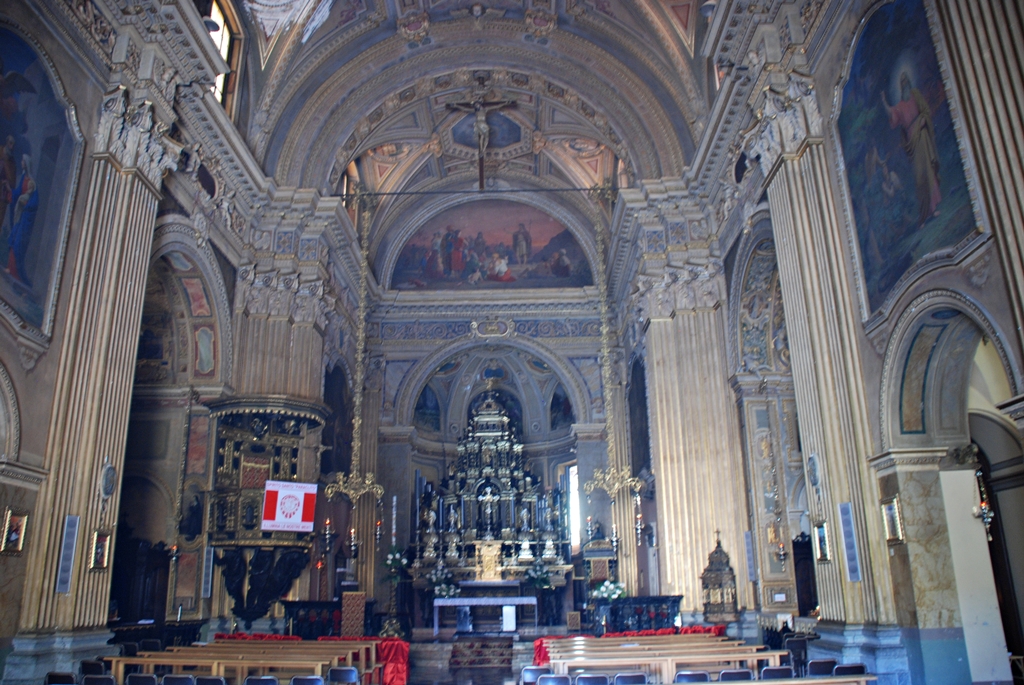
Asso and Canzo turned out to be nothing more than small villages and in Canzo I came upon another church, which was open for a change. The interior looked quite rich with a very nice altar and well done ceilings, panels, organ etc.
By this time, I had less than half tank of petrol in the car and I was getting a bit worried that I may not find petrol stations in the mountains and since it was a Sunday, most places were self-service. Hence, I decided to drive on to Como as that is the largest town in the area. At Como, I parked near the Duomo (Cathedral) and had lunch at a nice pizzeria. Being wiser this time, I stuck to beer and ordered only one dish. The Duomo was closed and I could not go in. The building was not very impressive from the outside, especially as the word Duomo had automatically raised my mental reference to the one I had seen in Milan. The Duomo is very close to a nice square, where there were a lot of activities going on like music, dance etc. The one place that I wanted to visit in Como was the Volta Temple, dedicated to Alessandro Volta. He was born in Como in 1745. The museum itself was quite small and housed in a nice looking building.
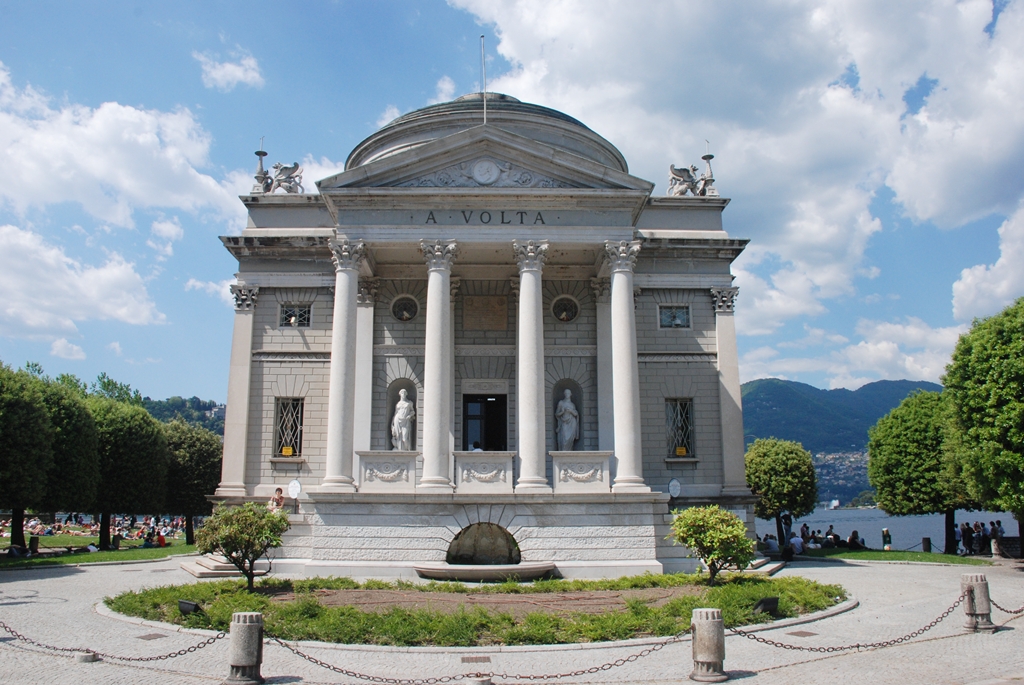
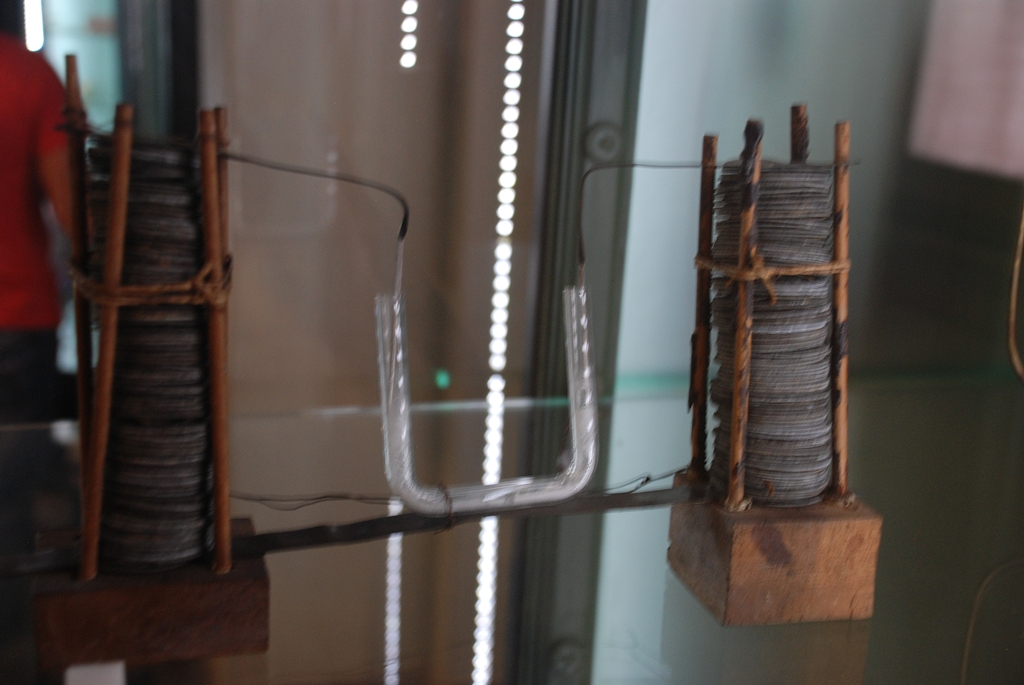
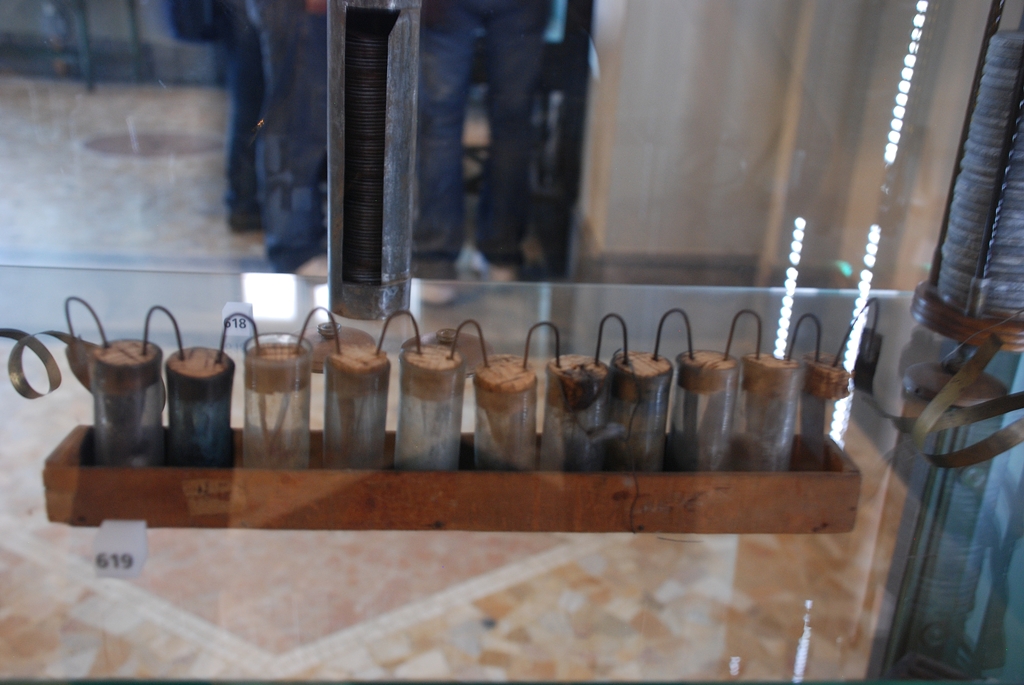
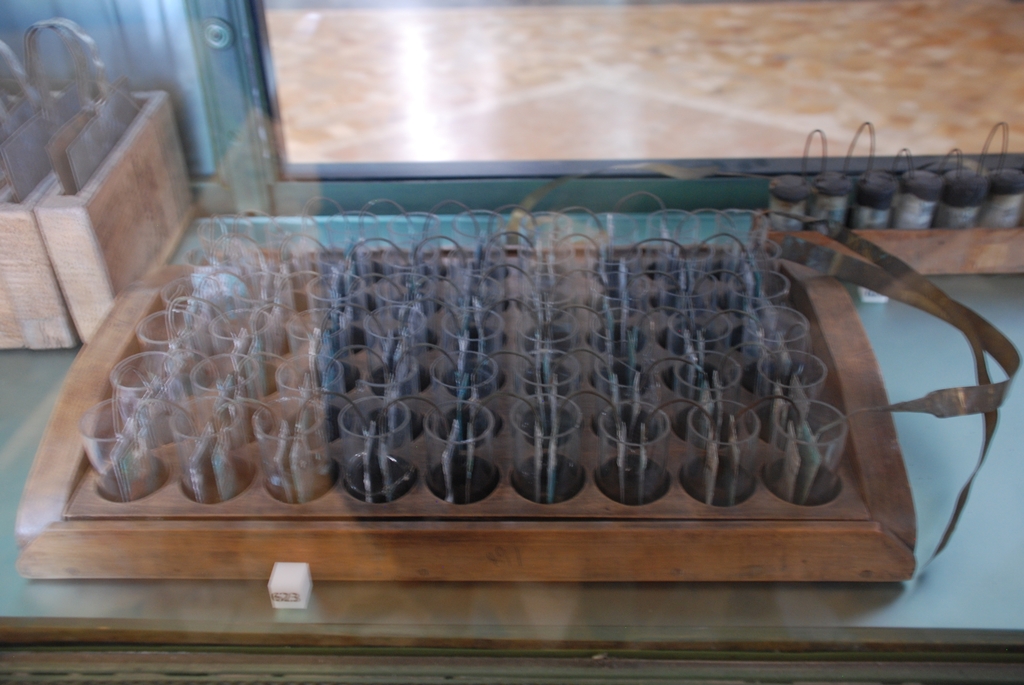
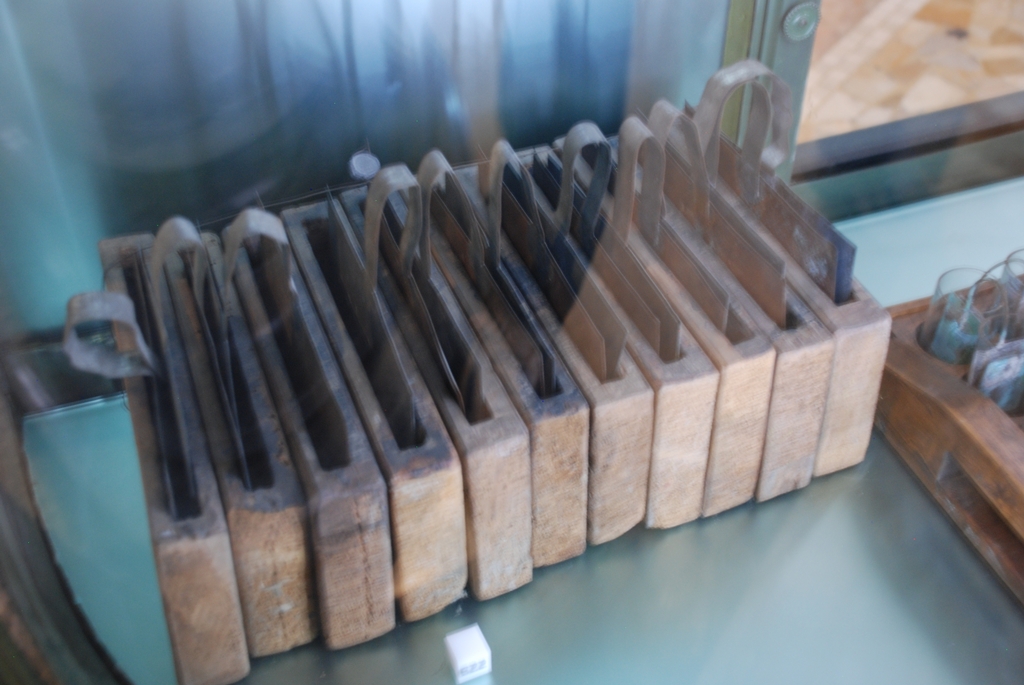
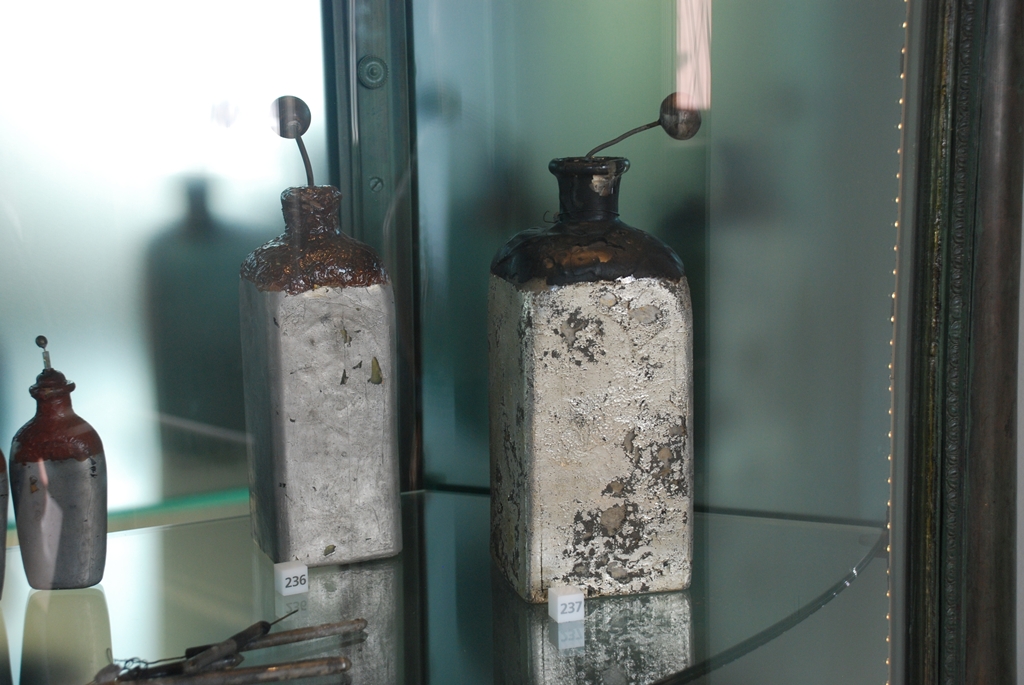
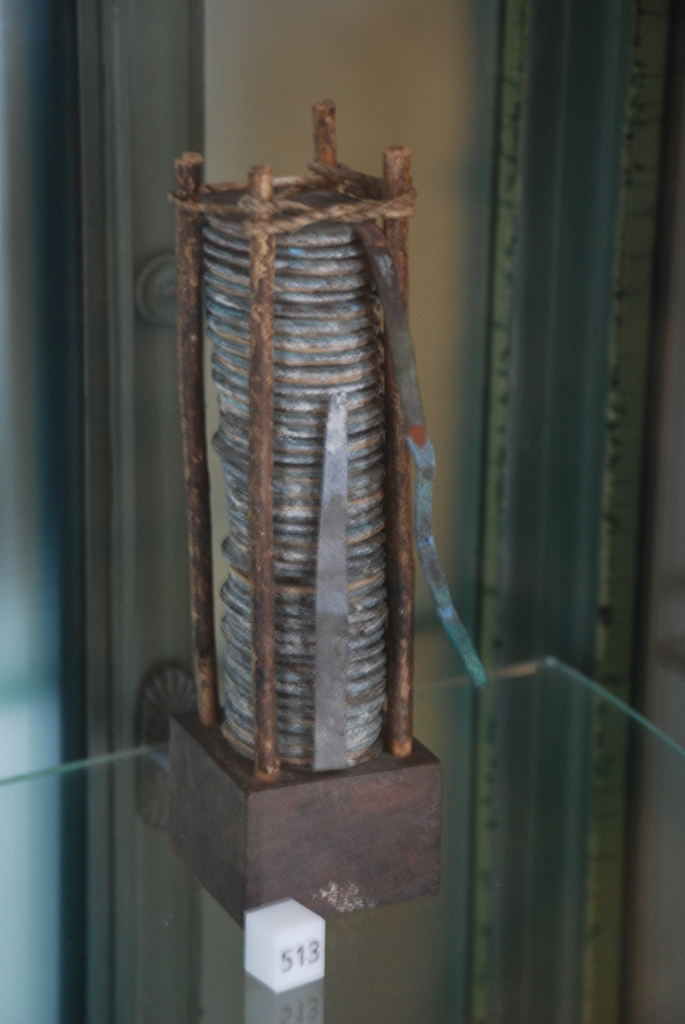
Inside there were all sort of instruments that were used by Volta and in his time and also samples of his inventions. The most impressive was the various phases in the invention and development of the electric battery. Looking at the artifacts and reading through the text, I could not but be impressed at the amount of innovation and creative thought he had come up with. How could he have identified the proper materials for electrode, electrolyte etc.; what challenges he must have faced – I was left wondering about all that. In school when we learnt that he invented the battery, one almost took it as an everyday occurrence and never gave it a second thought! Given below are the various phases of the battery that were on display. Unfortunately, the artifacts were inside a glass cage and not well lit and I could not do much justice to the photographs.
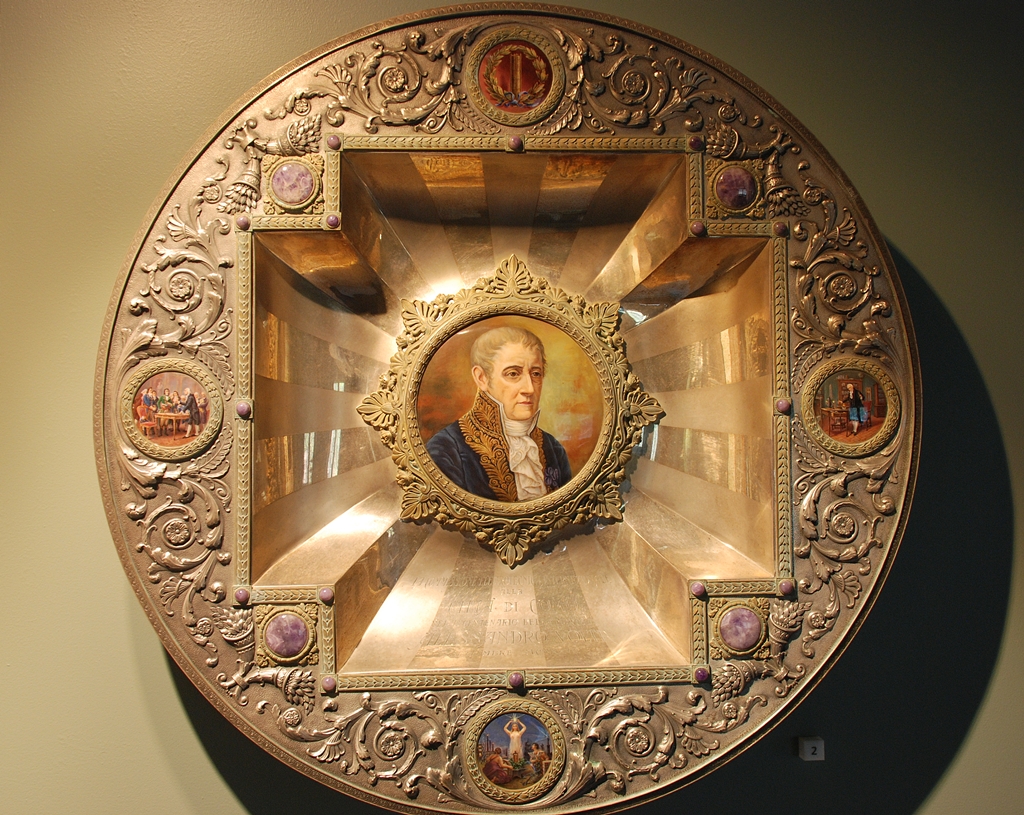
There were also a few photographs and certificates and other documents but all of it were in Italian and I could not understand anything. It was an impressive experience overall and one felt an increased appreciation of Alessandro Volta.
At Como, there was also an exhibition of paintings by the Dutch artist Rubens and I wanted to see that. Unfortunately, there was a big crowd with the same idea and hence I could not get any parking. With that, I left Como and headed in the direction of another small village in the mountains called Palanzo, the main interest being the scenic drive. En route, I stopped at various petrol stations. At the first one, I could not find petrol mentioned and instead, found the word “gasolio” and that sounded close enough to gasoline for me. Fortunately, I decided to use my Blackberry and get an online translation and it turned out that gasolio was diesel and petrol was benzina in Italian. However, in all the gas stations I stopped, I found no mention of benzina and there were three or four different types of fuel with little price difference among and gasolio was present everywhere. All these petrol stations were unmanned and I was starting to get a feeling that Italians were very partial to diesel. After Palanzo, I did not want to take any more chances and decided to head to the next big town in the region – Bellagio. In the morning when I saw the town centre, it had looked like a nice to stop for a leisurely stroll in the evening.

At Bellagio, I located a petrol station (or rather, the GPS navigation tool did it for me) and fortunately, there was a person attending to the pump. Here again, I found no mention of benzina and I asked the guy where I could get some petrol. He seemed surprised at my question and pointed to one of his pumps that Super NB or something like that. That was when I realized that I had seen that at all the petrol stations I had stopped and this is how they referred to petrol. In any case, it was in a much relieved frame of mind that I drove off from the petrol station to the town centre.

It was very nice to walk through the narrow, winding lanes and it reminded me of the old town (Gamlastan) in Stockholm. Ice cream seems to be a big favourite among the Italians and it is referred to as gelato. I also tried a couple along the way and it was quite good; may be also because the day was quite warm. As in most lake side towns, Bellagio also has got a nice promenade along the shore, dotted with restaurants and bars. It was quite enjoyable to sit there quietly and watch people go by. It was starting to get late and the ferries had stopped operating. It was not very far to Abbadia Lariana by road and I was soon back at my hotel.

The two days were quite enjoyable with the great sceneries, weather and good food and I found the experience very nice even if I was by myself. Such a great place at such proximity to Milan must be a boon for all those that live in Milan. An hour and you are in this scenic setting – I guess many must have week-end homes in the Lake Como area. I felt very happy that I had decided to take this excursion in the week-end and not spent it wandering around Milan; there was no way that could have been as rewarding as this.
12 Feb 2010

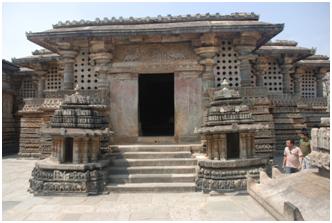
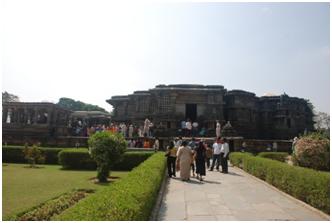
We started off on the drive to Chikmagalur bright and early in three cars. It took us more than an hour to get out of Bangalore and the drive was more peaceful after that. The first stop of the day was at Halebidu, which is about 170km from Bangalore. Halebidu means old city and in Halebidu the main attraction is the Hoysaleeswara temple, founded by the Hoysala kings. Halebidu was the capital of the Hoysala Empire in the 12th century.

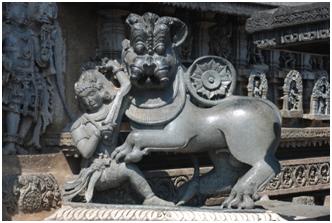
Legend has that in the 12th century, one day a teacher and his disciples were taking a walk in the forest when they came up on a tiger. All the students but a boy named Sala ran away. The teacher called out to Sala to kill (Hoy) the tiger – “Hoy Sala”! The boy killed the tiger and later founded the Hoysala dynasty. They ruled most of Karnataka between the 10th and 14th century and their emblem showcases the incident of Sala killing the tiger. I was impressed to note that an ordinary boy went on to become the king and founded a dynasty that ruled for about 5-6 generations and decided to look more into this after I got back to Bangalore. Wikipedia says that the Hoysalas were rulers of the hills who took advantage of the then political situation to expand their empire. Looks like the legend may not have been really true!

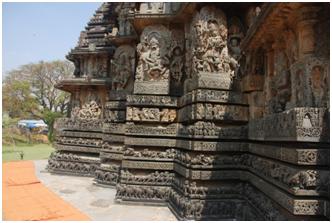
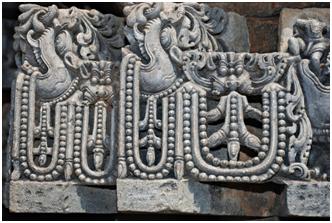
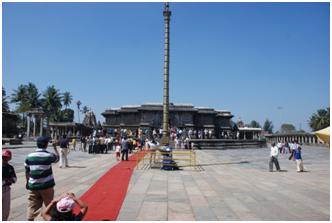
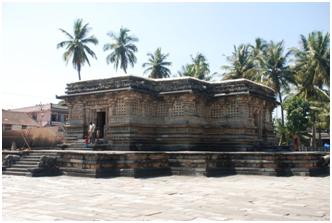
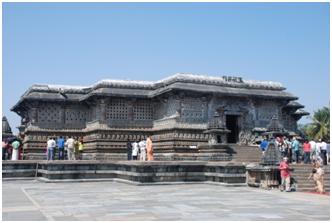
Belur and Halebidu are twin cities and boast of two temples built by the Hoysala kings, which are of note. The Hoysaleeswara temple complex in Halebidu actually consists of two temples – Hoysaleeswara and Kedareeswara. These temples took 195 years of work to build. The two temples are built on a single platform and have very intricate carvings, which show a lot of dedication and skill from the workers. The construction is of sandstone and so it must have been easier to work on, but the detail is amazing.

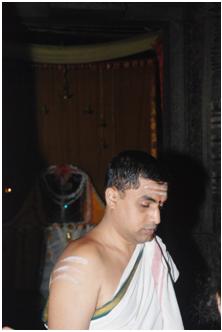
Stories from Mahabharata, Ramayana etc. are carved into these stones and the temple itself is built on a star shaped platform to provide more surface area for the carvings. The sun was fairly strong but thankfully, there were carpets all round the temple. The interior of the temple was very cool, dark and nice. These temples are dedicated to Siva and there are two idols there. There was a frame that caught my eye at the second sanctorum wherein the idol itself was kept in a poorly lit position whereas the priest was standing upfront in a very visible position to give blessings. It struck me as akin to today’s situation wherein the priests are more important than the gods! A mischievous thought I guess, but I captured it in the camera nevertheless.

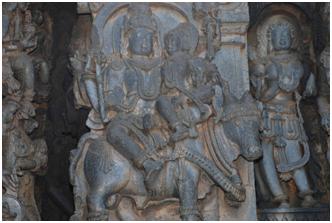
The guide we had was at pains to explain how the ancient Indian texts were the first to imagine such modern items as the submarine, missile etc. by pointing out some details from some carvings. It was fairly evident that the sculptors had a good sense of humour as well; or maybe it was the interpretation of the guide. There is one particular carving which shows Siva’s bull (Nandi) carrying both Siva and Parvati; supposedly Nandi is upset at carrying Parvati as he prides himself to be Siva’s vehicle and does not like carrying women around. Hence, he is shown in the sculpture with a slightly raised tail to denote his irritation. The guide was of the view that from ancient times man was above woman and hence this depiction. My view is that this must have been an impish sense of humour at work as ancient India definitely believed in man-woman equality as can be evidenced by the concept of the Ardhanaareeswara. In any case, the image is captured below.

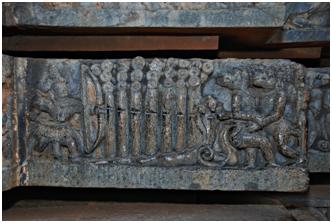
I have always believed that the texts of Mahabharata and Ramayana have tried to portray the world as is and the stories are designed to show that everyone has goodness and badness in them and that even the gods are not above this. Indeed there is no single character in these texts, be it god or man that is without any blemish.  One such incident is that of Rama, the personification of the Righteous Man, using devious means to kill Bali (the king of monkeys) so that his younger brother Sugreeva could become the king and help Rama. Rama is a great hero and an expert warrior; yet he shoots Bali with an arrow in the back, while the latter is engaged in a fist fight with Sugreeva. Clearly, this is not in line with the image of Rama as the epitome of goodness and valour but there has been enough cover provided through other stories (which came later, I feel) which talk about how Bali could be killed only from the back. I found it curious that the sculptors had deemed it fit to capture this image as well. See how Rama shoots an arrow through seven trees on to Bali’s back as he fights Sugreeva.
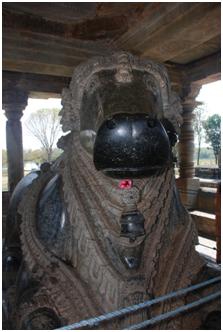
There are two large bulls also in the temple complex and according to the guide these are the sixth and seventh largest bulls in India. He went on to claim that the one dedicated to Parvati is the most beautiful one in India. I forgot to ask the guide as to why there is a bull dedicated to Parvati given Nandi’s clear displeasure in carrying her around!

The Halebidu temple complex leaves a lasting impression on one with the detail and the fine work on the sculptures.  It is simply amazing and one cannot but be impressed with the skill of the artisans in those days. They did not have the sophisticated tools of today but were able to carve out these masterpieces. The pillars look as if they were carved on a lathe but of course, there were no lathes in those days. You are left with a sense of total awe and wonder at the skill and dedication of these artists.

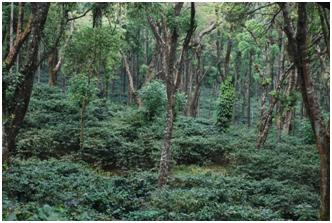
We left Halebidu with a sense of wonder and a clear feeling that it would have been a tremendous loss had we decided to drop it from the agenda and proceeded straight to Chikmagalur. The Chikmagalur town was about an hour’s drive from Halebidu and we got directions from there to the estate we were staying in. We had booked rooms in a working coffee estate owned by Tata Coffee and we got there in time for lunch with the last leg of the drive being over characteristically bad roads. The rooms were all in one bungalow and we had the whole place to ourselves. Lunch was very nice, especially given the hunger. The rooms were pretty large and very nice.

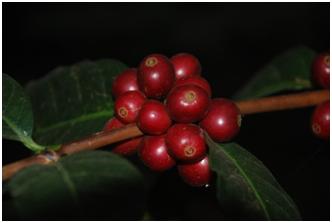
Towards evening, I went for a walk in the estate by myself. Earlier in the day, Vinod had seen a large snake and he had also added that snakes were very common in coffee estates; this made me extra careful in my walk! The silence was the first thing that came to you as you got away from the buildings of the estate. There were no artificial sounds and to an extent, it was even unsettling. It occurred to me that the busy life in the city might have built this need in me to have signs of human life around me all the time.  This was quite a disturbing thought indeed but nonetheless, I enjoyed my walk through the estate. I soon came upon a person named Nagaraja who was coming down the path. I conversed with him in my broken Kannada and learnt that the air gun he was carrying around was to shoot some bird (I thought it was peacock but I must have been wrong).  The scenery was beautiful even if the light was not very conducive for photography. Ripe coffee beans were a beautiful sight and I could capture some interesting shots.

13 Feb 2010

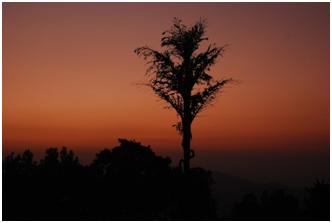
Early mornings in such locations are always very beautiful and this one was no exception either but I felt a bit lazy and did not venture out. The sit-out in the bungalow faced east and I got an interesting shot as I was playing around with the camera.

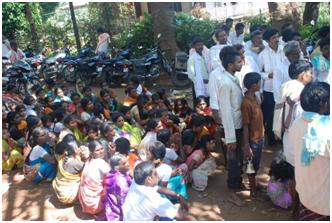
I suggested that we visit Kemmangundi and if possible, go to Baba Budanagiri that day. This turned out to be not-so-good an idea as I had not thought about the bad roads and the long journey times. We hired a vehicle that could accommodate all of us and set off for Kemmangundi. The first stop was Kalahatti Falls and we reached there after a tiring drive. The fall itself turned out to be a very small affair with a bridge constructed across. Local people believe that the waters have medicinal properties and can cure illnesses. I was not feeling very well when we got there and did not go near the falls. In addition, there was some local festival going on when we got there and a good sized crowd had gathered.

The festival reminded me of our “Mariyamman Pooja” back home as there were people with decorated idols on their head. The overall ambience was very unsophisticated and hence looked quite innocent and sincere. There were some musical instruments which were very basic and there was no apparent expertise in how they were played and that added to the feel of the event.

The villagers looked very rustic and were not elegantly clothed. Yet, their devotion was very apparent and it was clear that they had simple beliefs. At one point in time, all the ladies squatted down in front of the people carrying the idols and they broke a coconut on the ground. The people with the idols then went around the women sprinkling the water on their heads. It all looked very solemn and there was not much gaiety around. In particular, I noticed one woman who seemed totally lost in her prayer – she continued squatting even after the procession was moving out; she seemed immersed in her own world.

We then proceeded to Kemmangundi, which was another 10 km or so away. The road was pretty bad but the scenery made up for it. Kemmangundi is a small hilltop but the views are fantastic. We also saw several people trekking. We stayed for sometime soaking in the views and then turned back home as most people were played out by then. With the prospect of the long ride back, no one felt like going to Baba Budanagiri – later, I heard that it might have been better to skip Kemmangundi and go there. Rest of the day was spent at the estate in a relaxed fashion although there was a hilarious game of “Lakori” played in-between wherein the boys’ team beat the girls’ team hands down.

14 Feb 2010

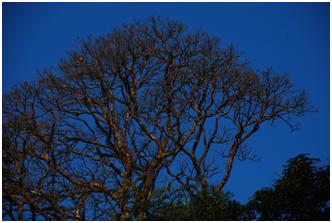
I got up early in the morning and went for a long walk and almost reached up to the end of the estate. Once again, the views were most exciting and I experimented with the exposure settings of my camera and got a beautiful shot.

We checked out of the estate after breakfast and proceeded to Belur. Belur was an about an hour’s time from the estate and our objective was to visit the Channakesava Temple, which is also built by the Hoysala kings. This is a smaller temple as compared to the one at Halebidu and took 95 years to complete. This is a temple which is under active use and has a nice courtyard. The temple was built by King Vishnuvardhana in the 12th century.

Interestingly, they first built a prototype of the temple and that took them about 20 years. After successful completion of the prototype, they launched the work on the real one. A picture of the prototype is given below.

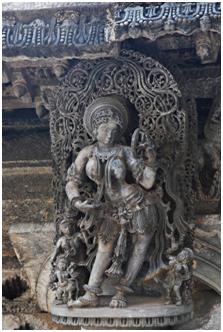
As is the case with Halebidu, this temple is also built of soapstone and is littered with intricate carvings. Once again, the detail and quality of work is amazing. The statues are very life like and many stories are told in the sculptures with great eye to details, including facial expressions. Inside the temple, there is a statue of an ideal woman with mathematical proportions – unfortunately, I could not get a photo of that statue due to light and space constraints.  Given below is the one of the most beautiful statues in the complex – a girl putting on ornaments. Parts of the statue are damaged but the quality of the work is pretty visible.

We left Belur with a feeling similar to what we had when we left from Halebidu – wonder and tremendous respect for the skills of those great artists that live in the years gone by and for the wonder that was India.

23 May 2008

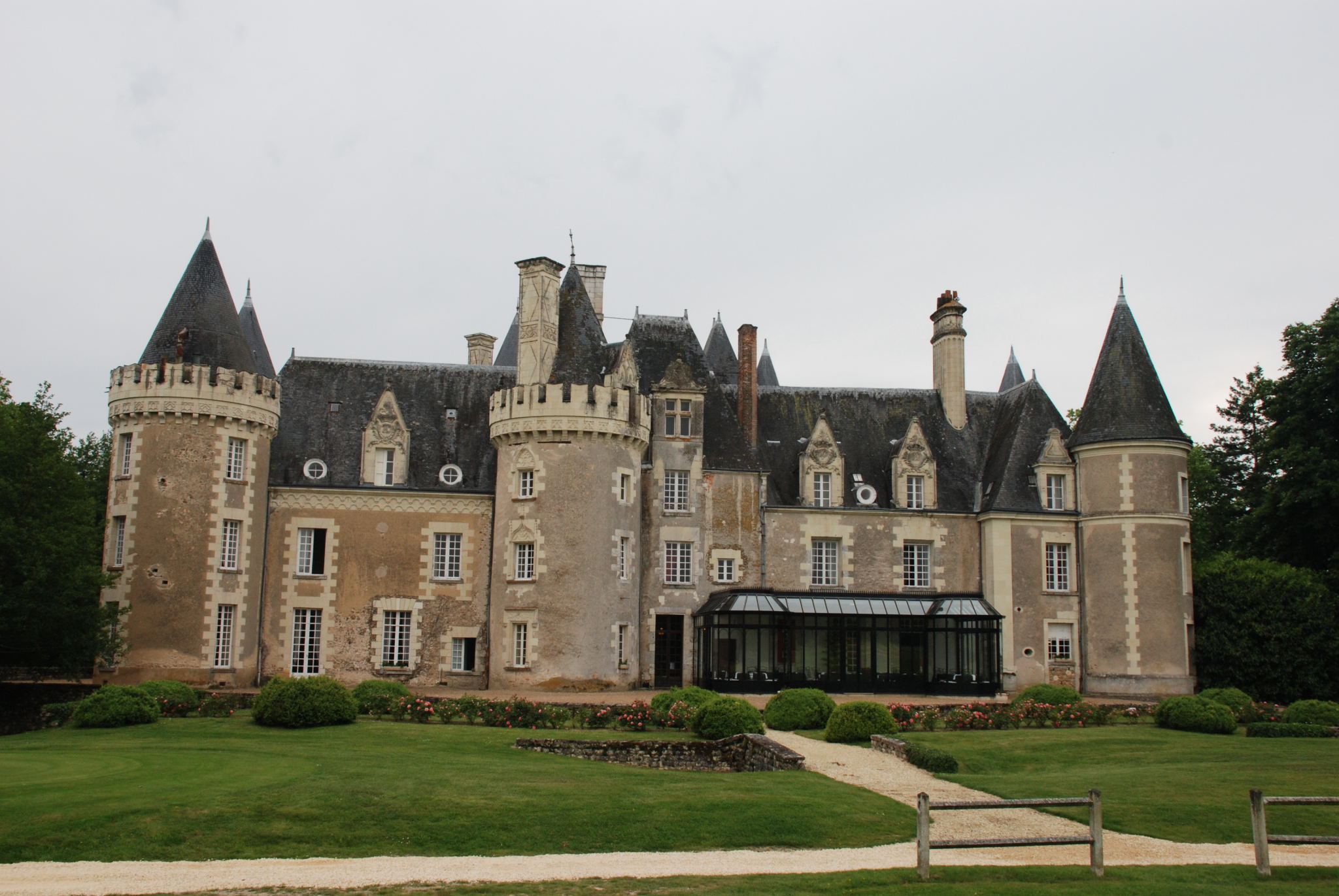
We rented out a car today and after some minor escapades with French roads and the GPS – which I was using for the first time – we started on our journey to the country side. The plan is to spend the first two nights in a chateau a few miles off the town called Tours in the Loire Valley. It took us about four hours to get to our hotel but all of us forgot about the drive when we saw the hotel. It is a chateau – the Chateau des Sept Tours – that dates back to the fifteenth century but well maintained and renovated. Its grounds stretch to seventy eight acres and there is a full, eighteen-hole golf course accommodated in it. The whole ambience was fantastic and we drove around a bit and walked the grounds taking in the majestic views. The hotel has two restaurants and by mistake, we ended up at the French “gastronomic” restaurant. The chefs here were experimenting with new types of French cuisine – I found the result to be palatable but I think I was a significant minority in expressing that view. Sandhya and Bharath were not impressed at all.

24 May 2008

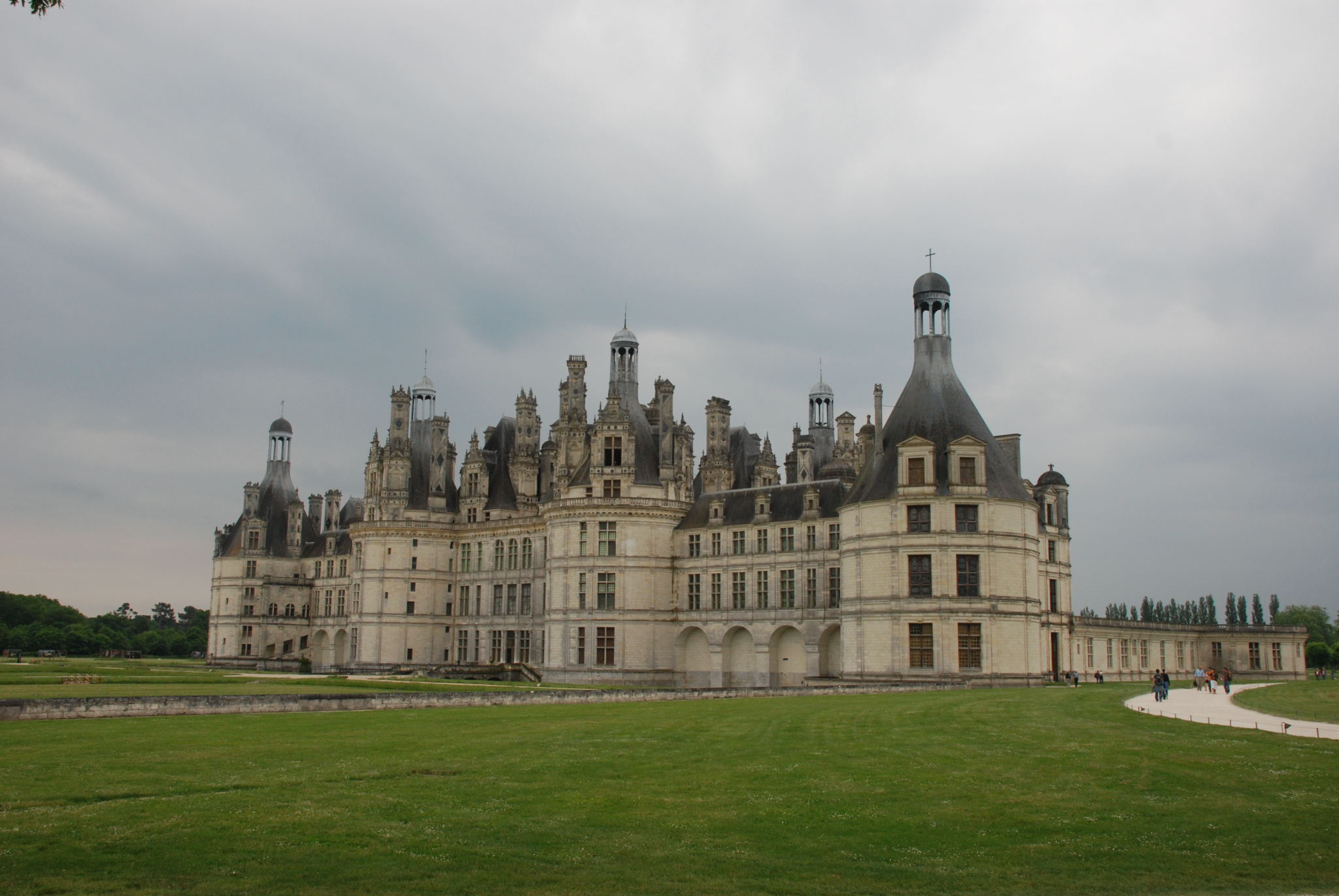
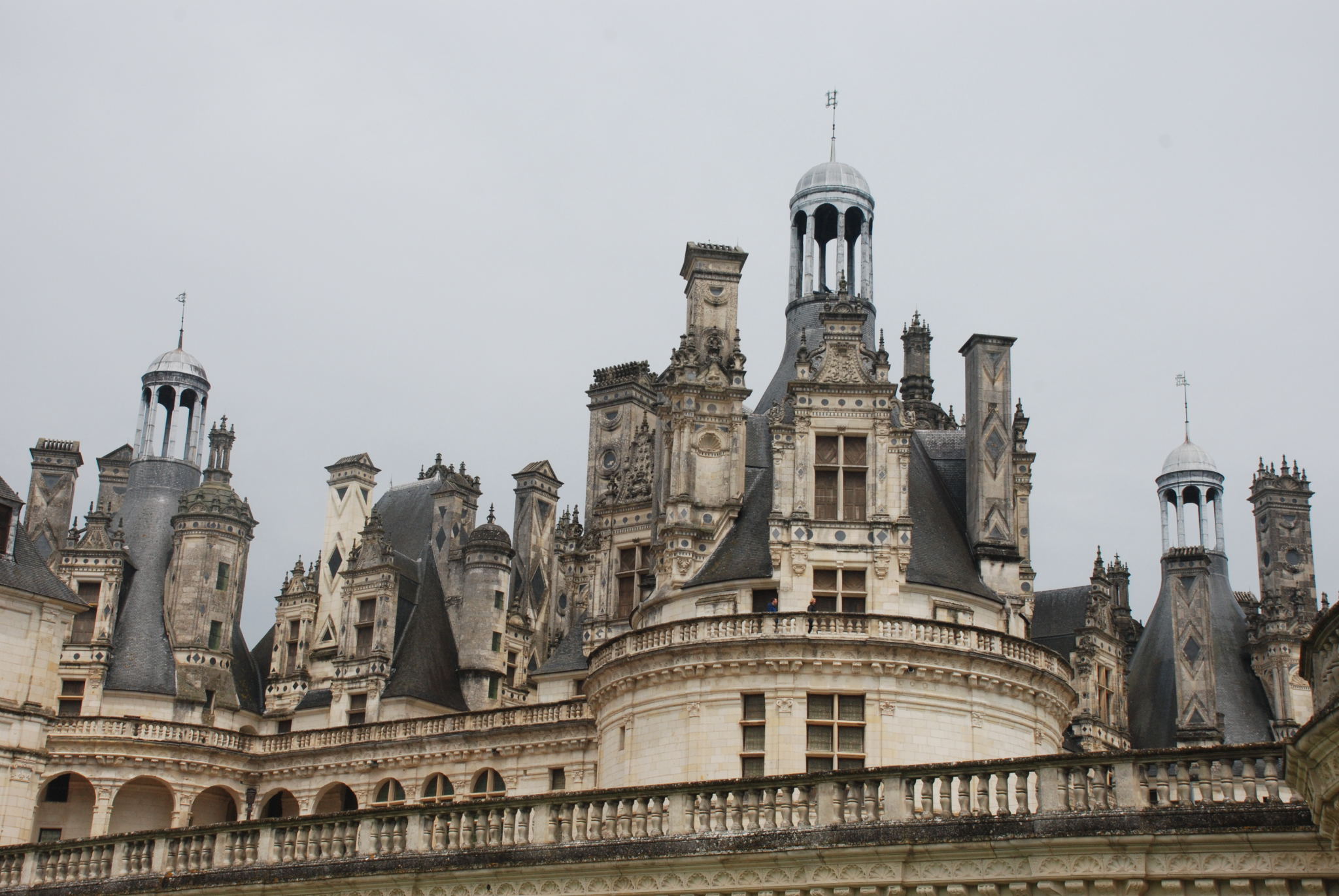
It was a bit of a rainy day today but we were not too badly affected. The Loire Valley is dotted with chateaus all around as it was quite a fashion in the Renaissance period for the Parisian rich to build a chateau in the Loire Valley. These chateaus were built more for comfort than for any military purpose. The first difficulty was in narrowing down which ones to visit as we did not want to have a hectic day and so we selected two – one which was supposed to be the best in the region and one in which Leonardo da Vinci spent his last days. The Chateau de Chambord is supposed to be the best Chateau in Loire Valley and may be rightfully so. The views of the chateau from the outside are stunning and it looks almost like a picture postcard with intricate architecture. The original part of the chateau is laid out like a cross with a double-helix staircase that takes up the centre portion. The two staircases wind around the central axis but never meet. This is rumoured to have been conceived by Leonardo da Vinci and that is quite possible as he was good friends with King Francois I who built the chateau.

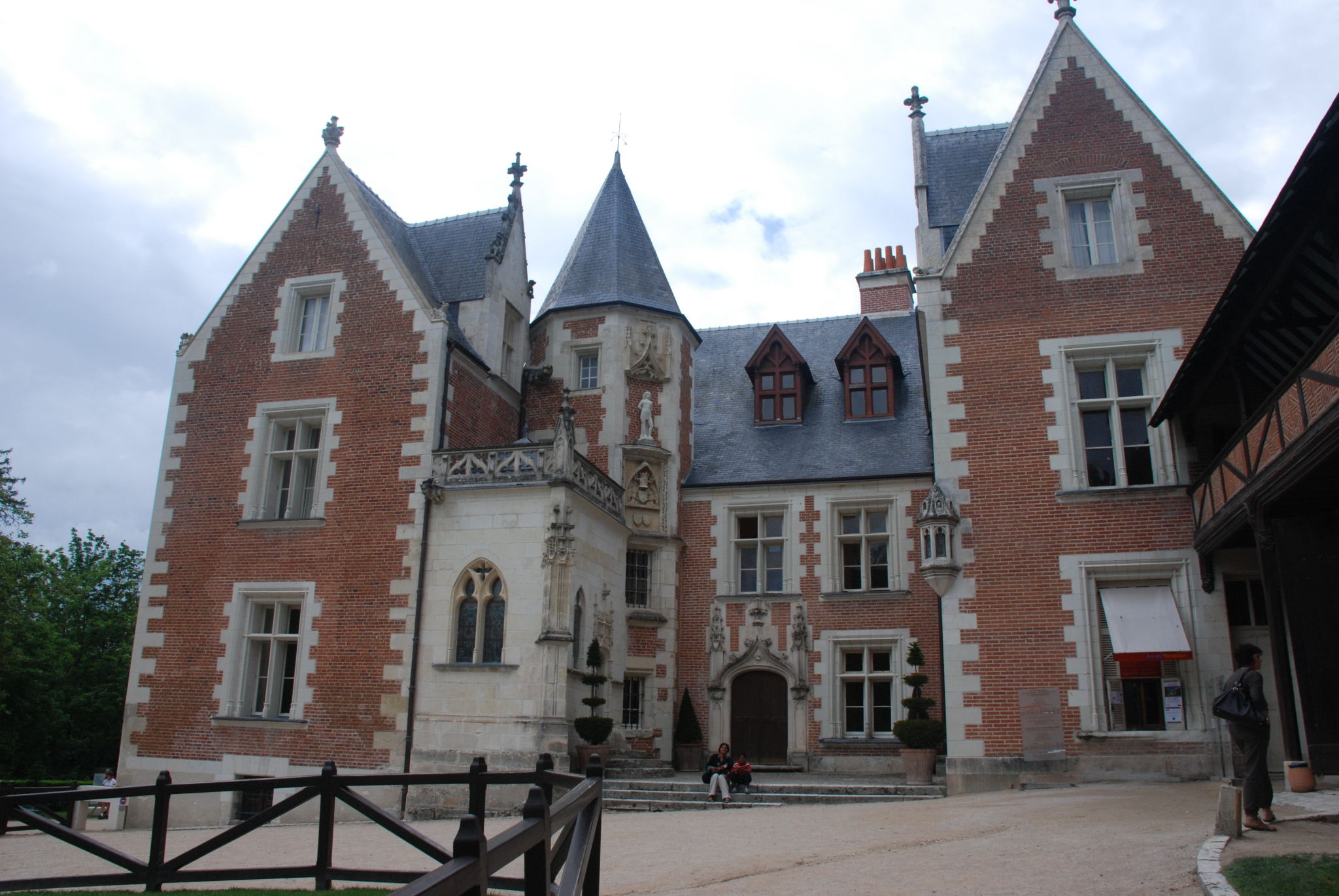
Next on the agenda was the house in which Leonardo da Vinci spent his last years – Le Clos Luce. The drive from Chambord to Amboise (where the house is located) brought out the full majesty of the Loire Valley scenery with some stunning views. We passed three or four very beautiful looking chateaus on the way. French countryside is very beautiful indeed and I am sure we will be treated to some very good views in the coming days. It is so green and lush. Da Vinci came over to France at the age of sixty four on the invitation of King Francois I. It is rumoured that he only brought three paintings with him – two unfinished works and the Mona Lisa. He lived for three years at Le Clos Luce before he passed away. The house has been maintained as a museum to his memory. While standing in his bed chamber, looking at the bed in which he breathed his last, I was struck by the relative simplicity of the room. Here died a man who had given so many beautiful things to the world and yet his room was very simple with only the odd painting or two. We saw his many drawings and models in the museum and it was really astonishing to see the range and versatility of the multi-faceted genius that was da Vinci – he was well versed in botany and human physiology in addition to his fantastic artistic and engineering abilities. He seemed to have dreamed up a lot of fantastic machines which became reality only a few centuries after he died; that he had detailed drawings of these bear testimony to his genius. There is a nice, large garden around the house and it seems the garden was a source of inspiration for da Vinci. He was very friendly with King Francois I and we also saw a tunnel that led right into a royal palace nearby. I was very happy that we had made this visit and not missed it by mistake – that would have been a loss indeed.

25 May 2008

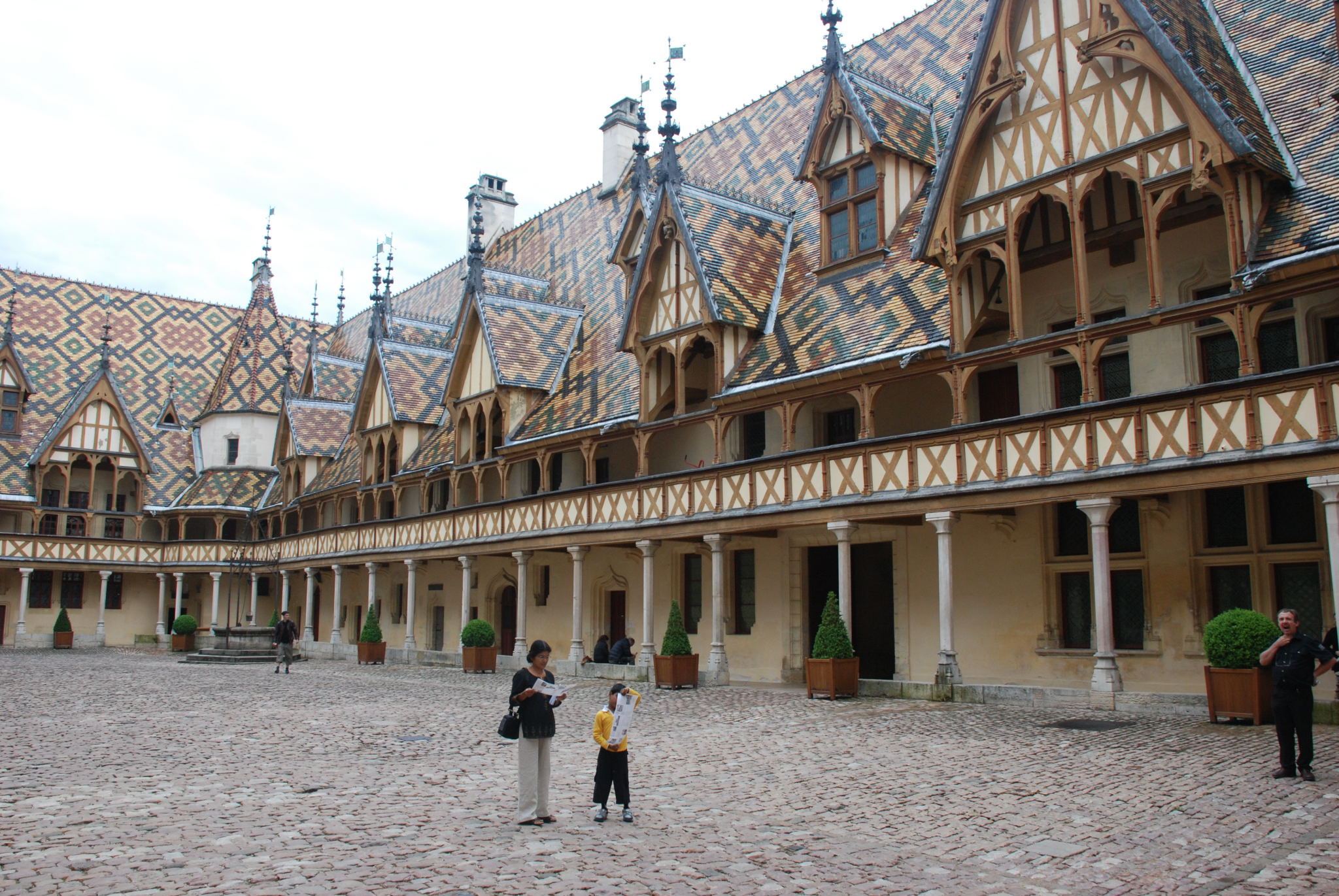
Another long drive took us to Beaune in Burgundy. Burgundy is an important wine region in France, in addition to Bordeaux and Champagne. I can personally vouch for that as I sit here drinking a glass of very fine red wine (the name escapes me). Wine regions generally have very good views and we hope to take in some of that tomorrow. I hope the weather will not be too much of a damper as they are calling for rain tomorrow. It was around four by the time we got to our hotel. This is also a nice, delightful old building right in the heart of town. Beaune is a very small town with a population of 22,000 or so. The main attraction in the town is an old hospital cum poor home – Hotel Dieu which was built in 1443. This was founded by the Chancellor and his wife to help the people who were stricken with famine and poverty after the Hundred Years’ War. The whole concept was quite appealing and the building is very elegant though simple and austere.

After that, we spent some time wandering around town and ended up in a Chinese restaurant for dinner. Sandhya and Bharath enjoyed themselves to the full in this oasis.

26 May 2008

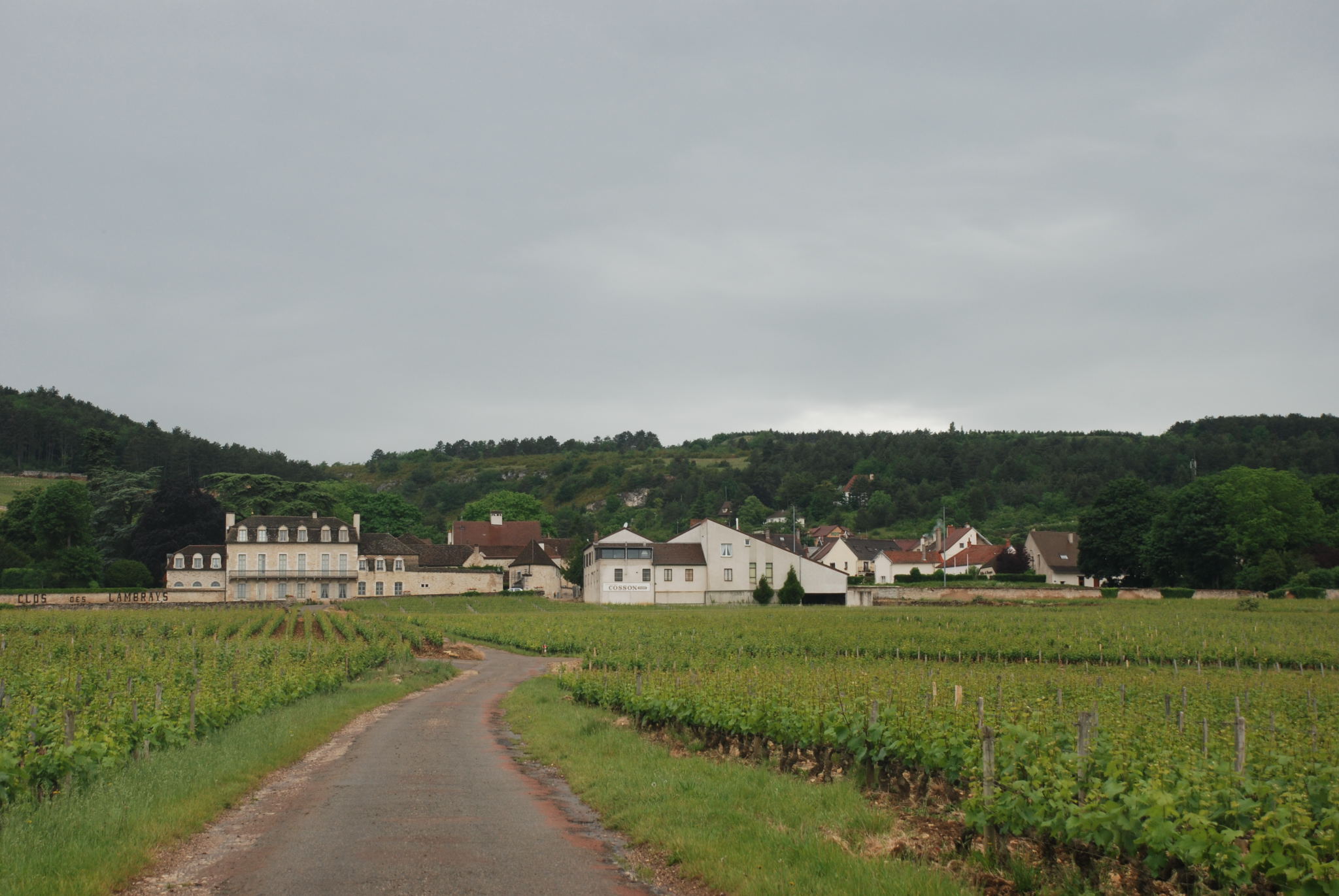
It was a cloudy day today and not sunny as I had hoped for but as in the previous days, the rain did not cause any discomfort to us. We spent most of the day driving around in the wine route, which is a stretch of road about 50 km long. The views were charming and the villages were absolutely fantastic with stone buildings, cobble stone roads and narrow winding roads.

Most villages look devoid of population even though there are people living there – life moves at a leisurely crawl, I presume. I often wonder how it would be to live in such small villages; in a small world. For me, it may well be a matter of grass being greener on the other side. We had great fun trying to locate some vineyards that would have a tour (like the one we had in Yerring) but could not find any such place. We learnt later that the land is held in small packets by vineyards and these packets are not contiguous – they are distributed across many villages and so there is no big central vineyard. They all have their cellars and that is where wine tasting is held. We dropped in at a winery in a town called Nuits St. Georges and visited their cellar. The vineyard was called Moillard and the cellar is about 200 years old. There was a charming girl in there who explained to us about the distributed land holding. Most French people we have come across have been quite friendly, contrary to what I had heard. She gave us a wine to taste and it was pretty goo. Sandhya declined; Bharath did taste it but was surprised that wine was actually sour tasting – he was expecting something sweet. Earlier we had stopped at a shop and picked up a couple of bottles and so did not buy anything from Moillard.

From there we moved on to a place called Meursault and visited the Chateau there, which is also a famous vineyard. Their cellars date back to the fourteenth century and are a grand sight. Here we learnt that the grapes that are planted in the Burgundy region are the Pinot Noir and the Chardonnay – the former for red wine and the later for white wine. At the end of the tour of the cellars, there was an extended wine tasting session and the person there explained that the quality and taste of the wine differed based on time of the year the grape is plucked, the soil etc. He gave me two wines of the same vintage and same maturity but from different places (they call it cru) and they tasted very different. I was introduced to some fine wines here and I could not resist buying three bottles from them. After we returned to Beaune, I used my new found knowledge to purchase a half-bottle of fine red wine and am now sipping it as I write about this day dedicated to wine.

In the evening, we spent some time wandering around on the streets of Beaune, looking up their church, some shops etc. Beaune is a very nice small town with medieval looks, which are so appealing. There is a central walled area surrounded by a moat. That must have been the old town centre and that is visible even today. We say good bye to wine country tomorrow and our next destination is Champagne.

27 May 2008

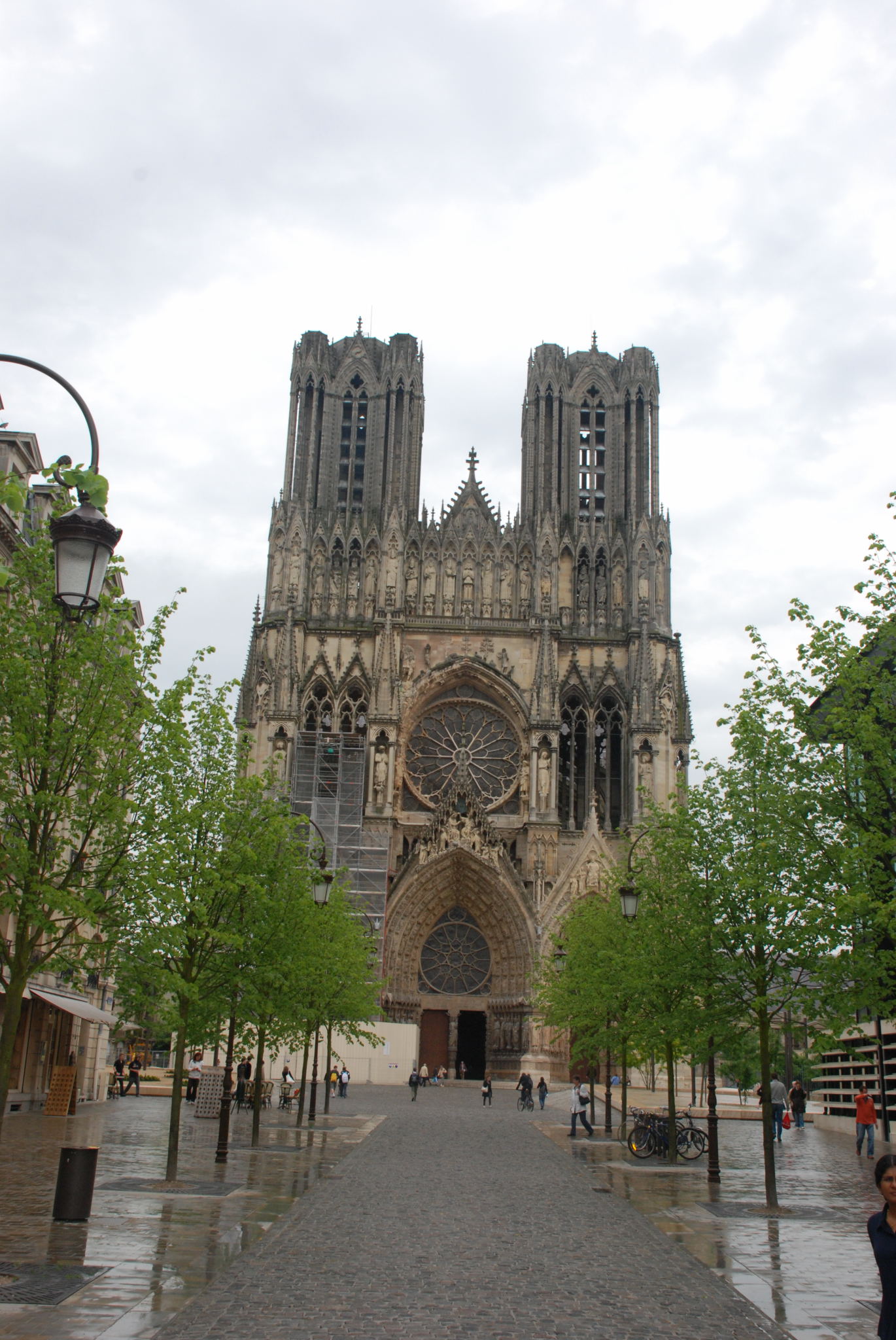
We drove from Beanue to Reims today. In between we dropped in at an entertainment park but that was closed, much to Bharath’s disappointment. It was drizzling for almost all the way and that set us all into a slightly gloomy mood. The hotel was also not very comfortable and so our first impression of Reims was not very favourable! Soon the sun came out and we found the town nice enough to wander through. We visited a church – called Notre Dame Cathedral – which was within walking distance of the hotel. This church was built in the 1200s and has a striking resemblance to the Notre Dame church in Paris. I found this point an interesting one – I think this church was built earlier and may be the one in Paris was set in the style of this one. (I saw that some other towns have also got churches named Notre Dame and when I looked up the meaning of “Notre Dame”, I found that it means “our Lady”). French kings used to have their coronation here and the last one was Charles VII who was crowned in the presence of Joan of Arc. There is also a statue of her in the church.

We then wandered about looking at some other buildings and soon our opinion of Reims improved – the discovery and subsequent visit to an Indian restaurant helping matters no end! Tomorrow, we intend to check out the Champagne route.

28 May 2008

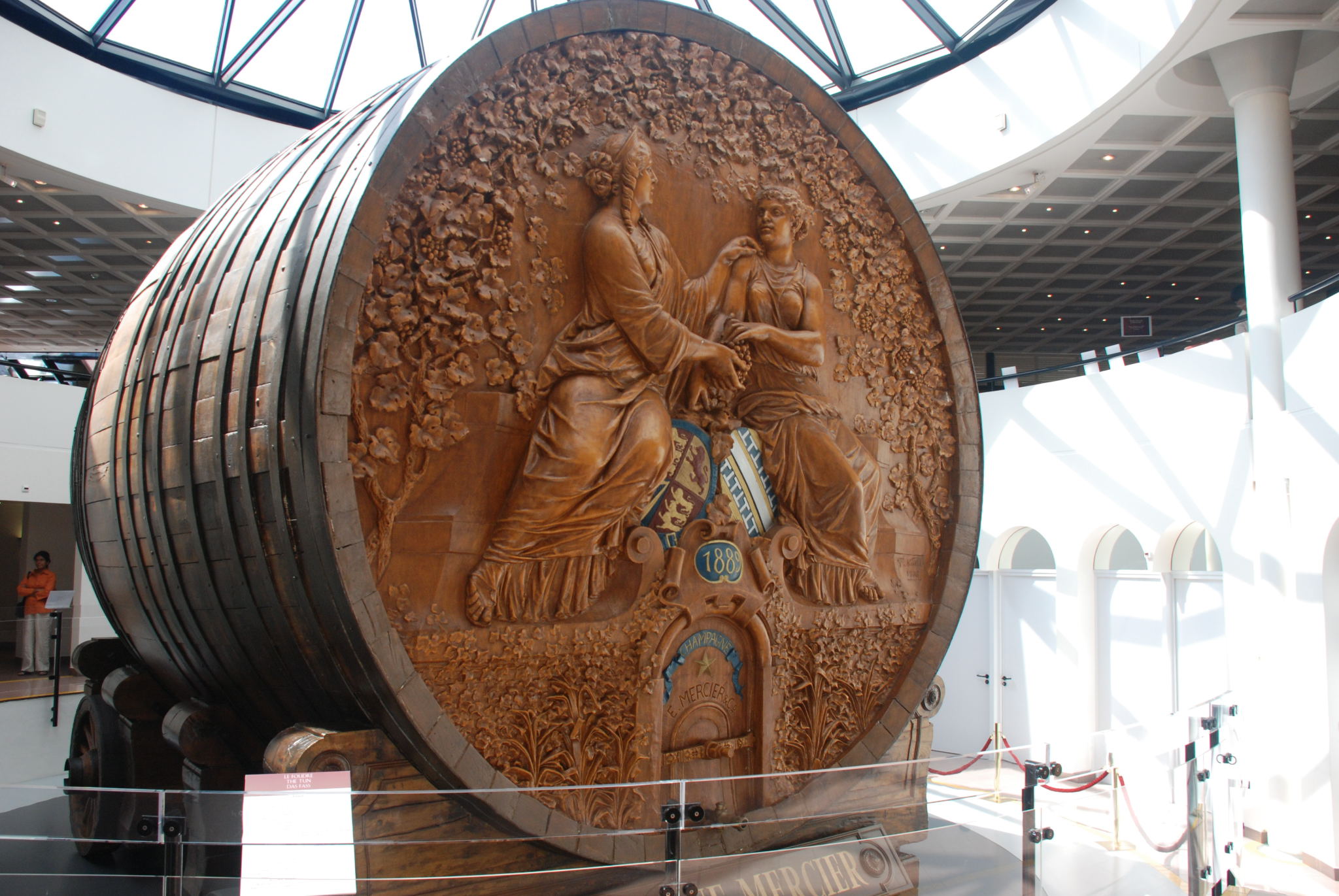
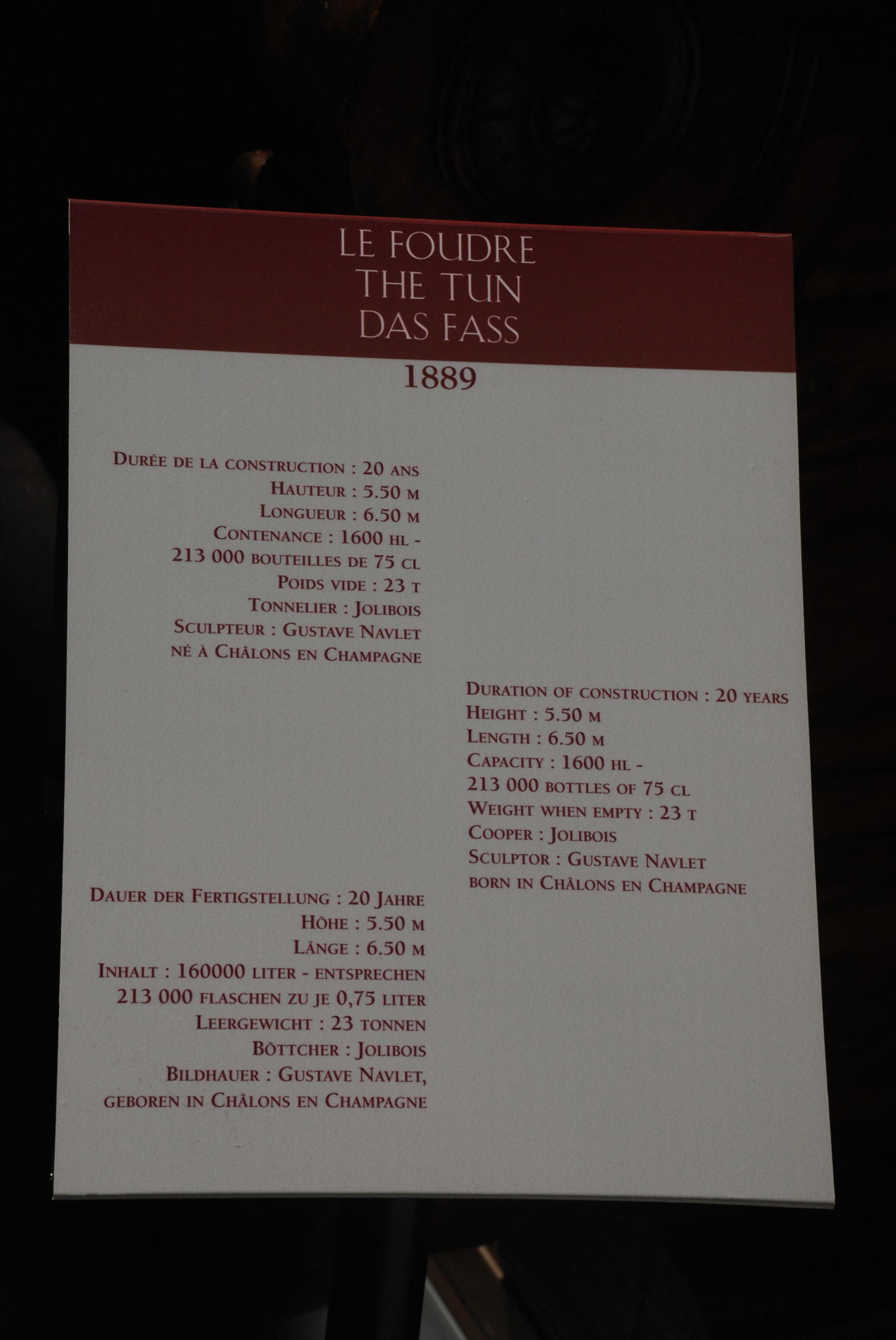
We started the day with a visit to the Mercier champagne house in Epernay. Epernayis at the centre of the champagne trade and has more than 100 km of cellars under its streets! The Mercier cellar is one of the most impressive and they have the largest cellar in the region.Champagneis produced by blending the juice from three varieties of grape that grow in the region – Pinot Noir, Pinot Meunier and Chardonnay. Mericer was started in 1858 by an enterprising young man called Eugene Mercier who was 20 at that time. He seems to have been quite a marketer with an eye for what would sell. In those days, champagne was made in regular sized oak barrels. The taste of champagne would differ from barrel to barrel because of the qualities of the wood. Mercier wanted to sell champagne that would taste the same and so he built one huge oak barrel with a capacity of 213,000 bottles. It took 20 years to build and weighed 23 tonnes when empty. It was finished in 1889 and Mercier took it to Paris to exhibit it in the World Exhibition in 1900. Getting the barrel to Paris was a Herculean task and it took eight days of toil with a team of 24 oxen assisted by 24 horses. It seems they had to buy and demolish some houses on the way for the barrel to pass. Any way, the effort seems to have been worth it as the Mercier barrel won the second price in the show, being upstaged only by the Eiffel Tower. This and similar other moves seem to have won Mercier a special place in the champagne business and success too. He must have been a bold and clever businessman – the investment in the huge barrel brings that out clearly.

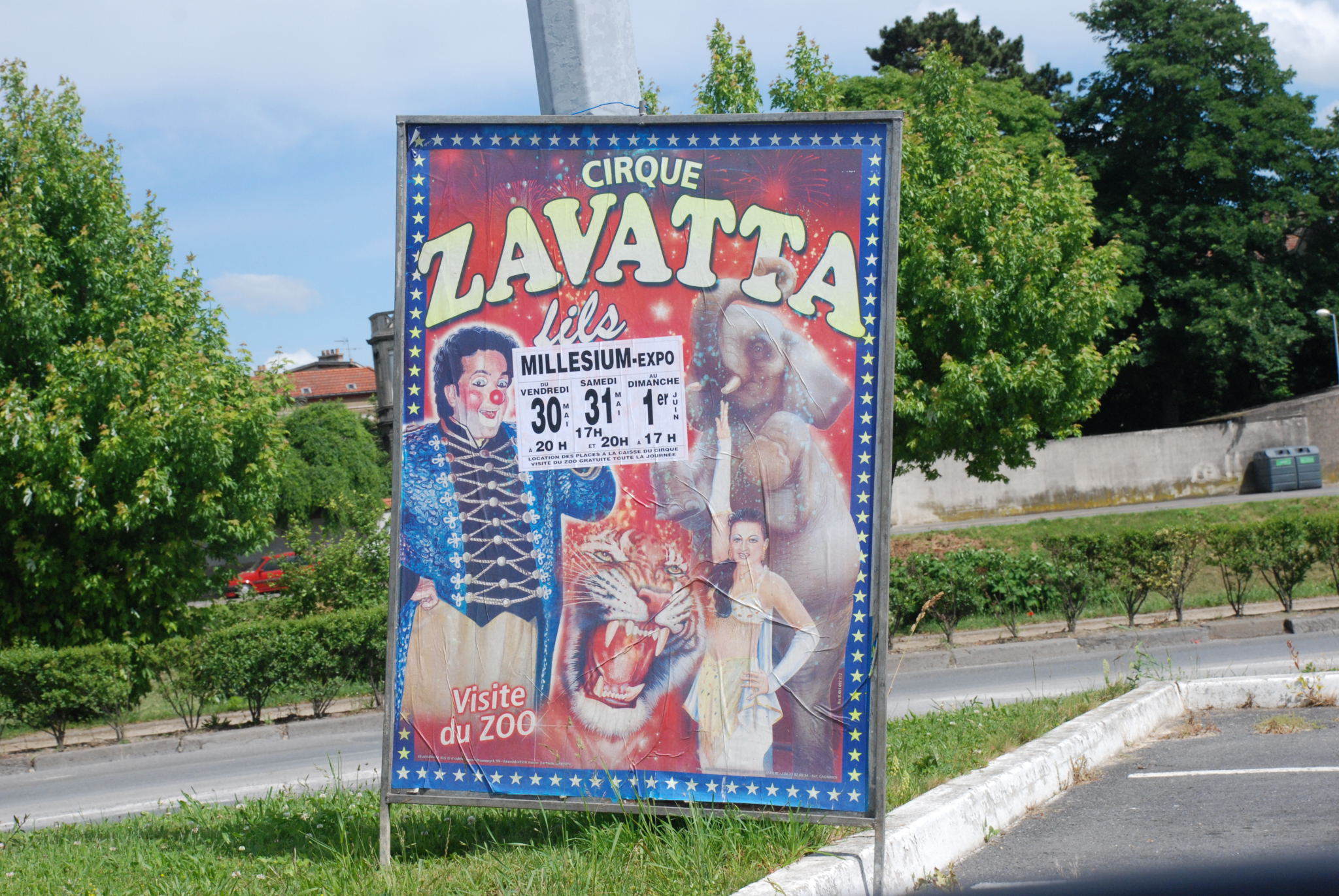
We then drove along the champagne route with no clear destination. The views were amazing and it was a perfect sunny day as well. So, our intention was to make the most of the beautiful scenery around. We also went to Hautvillers, which is a small village where a priest called Dom Perignon perfected the art of champagne making a couple of hundred years ago. Another interesting thing that we came across was a travelling circus. They had posters stuck in many of the small towns on the way. It was very similar to the posters we have in India and somehow, I found that amusing. A travelling circus, in a developed country like France, in this day and age of all sorts of modern entertainment was not something I had expected.

We got back to Reims in the evening and packed up. Needless to say, the Indian restaurant came in handy again!

29 May 2008

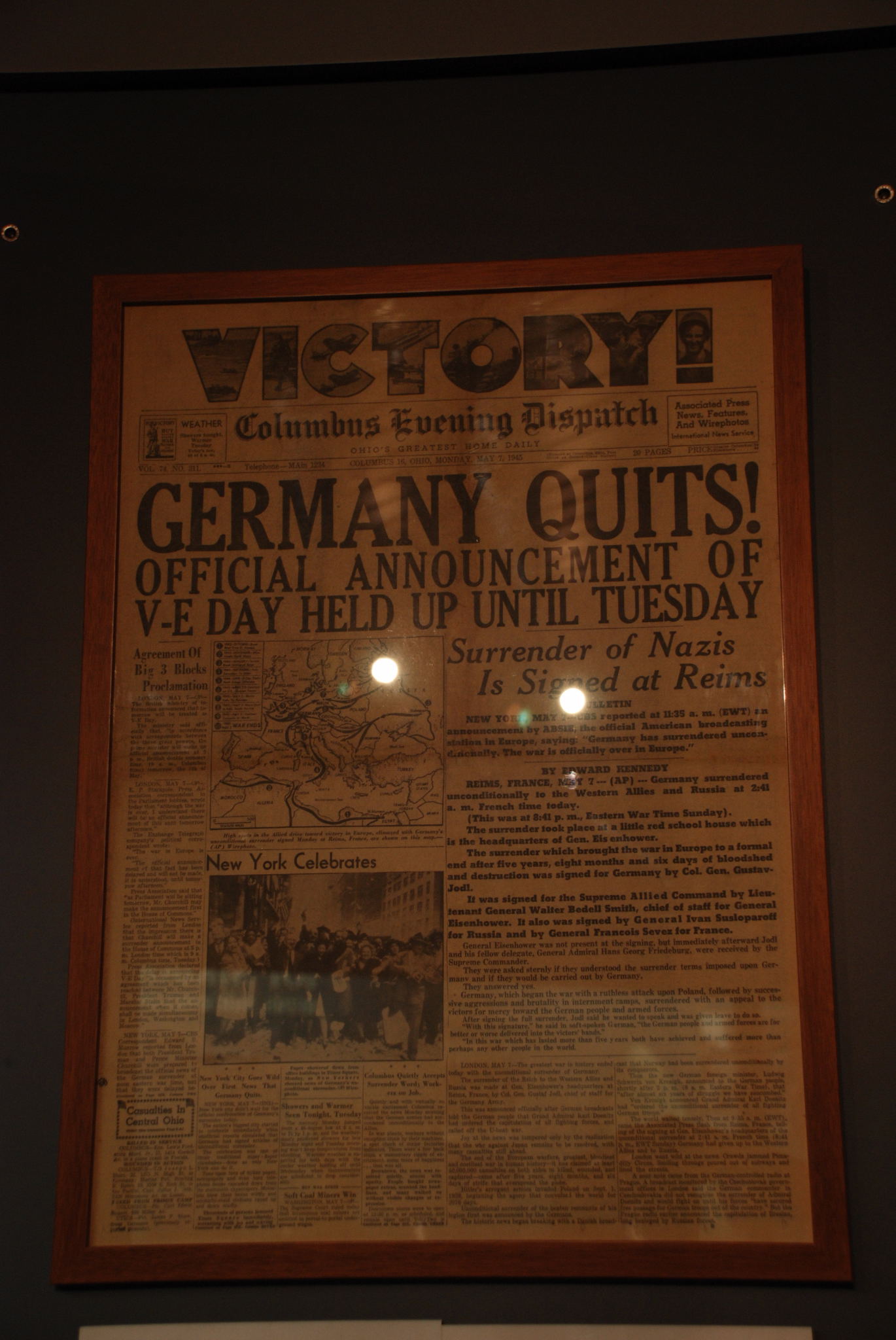
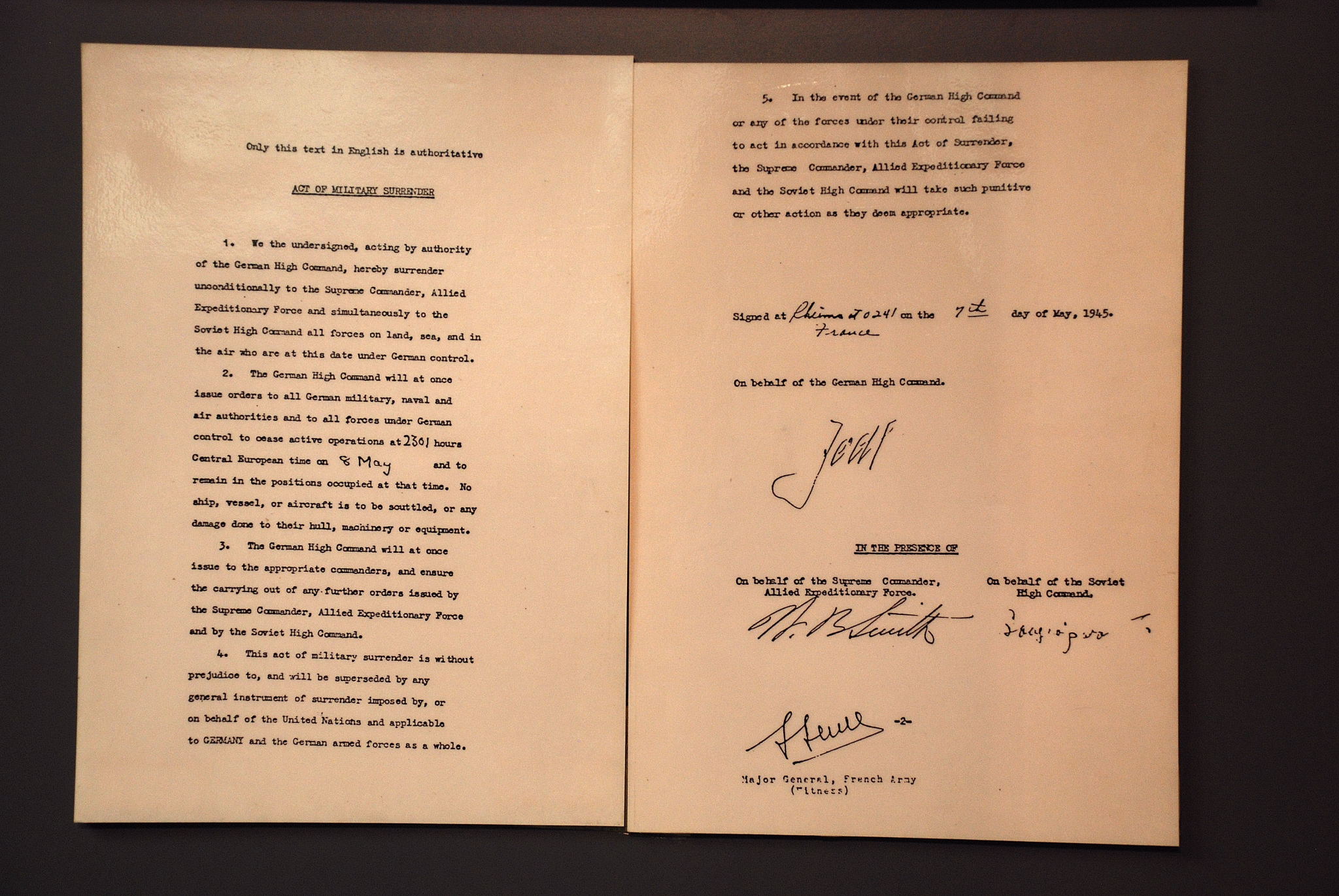
We have couple more hours of sight seeing left and that is it for this tour. The first stop was Musee de la Reddition or the Surrender Museum in Reims. General Eisenhower had his war room in this building (it was a schoolhouse in those days) and it is here that Germany signed its unconditional surrender in the Second World War on May 7, 1945.  It was signed by General Alfred Jodl on behalf of the Germans. The full text of the document is available for view and is typical of field originated documents that do not get to lawyers, it is short, crisp and to the point. One can only imagine the feelings that must have gone through the minds of all concerned when such a horrible war came to an end. Unfortunately, our memories seem short and we move on from conflict to the other. There were some newspaper clippings as well – from the papers that were published the next day. Interestingly, another surrender document was signed in Berlin after two days, on Stalin’s insistence.

The last stop of the tour was Musee des Beaux-Arts, once again in Reims. There were several nice paintings here, especially by a painter called Camille Corot, who seemed to specialise in landscapes. He must have been a reasonably famous painter. There was also another painting that is supposed to be famous, “Death of Marat” by a painter called Jacques-Louis David; again the inability to recognise the piece and the artist must have to do with my ignorance on these matters. We left soon thereafter to Paris – another nice holiday comes to an end! My impressions of France underwent a change because of this trip. People were quite friendly and were as friendly as you see anywhere else in the world;Paris is a great, beautiful city, the art is fantastic and the French countryside is very scenic – these are the memories I will carry with me.

18 May 2008

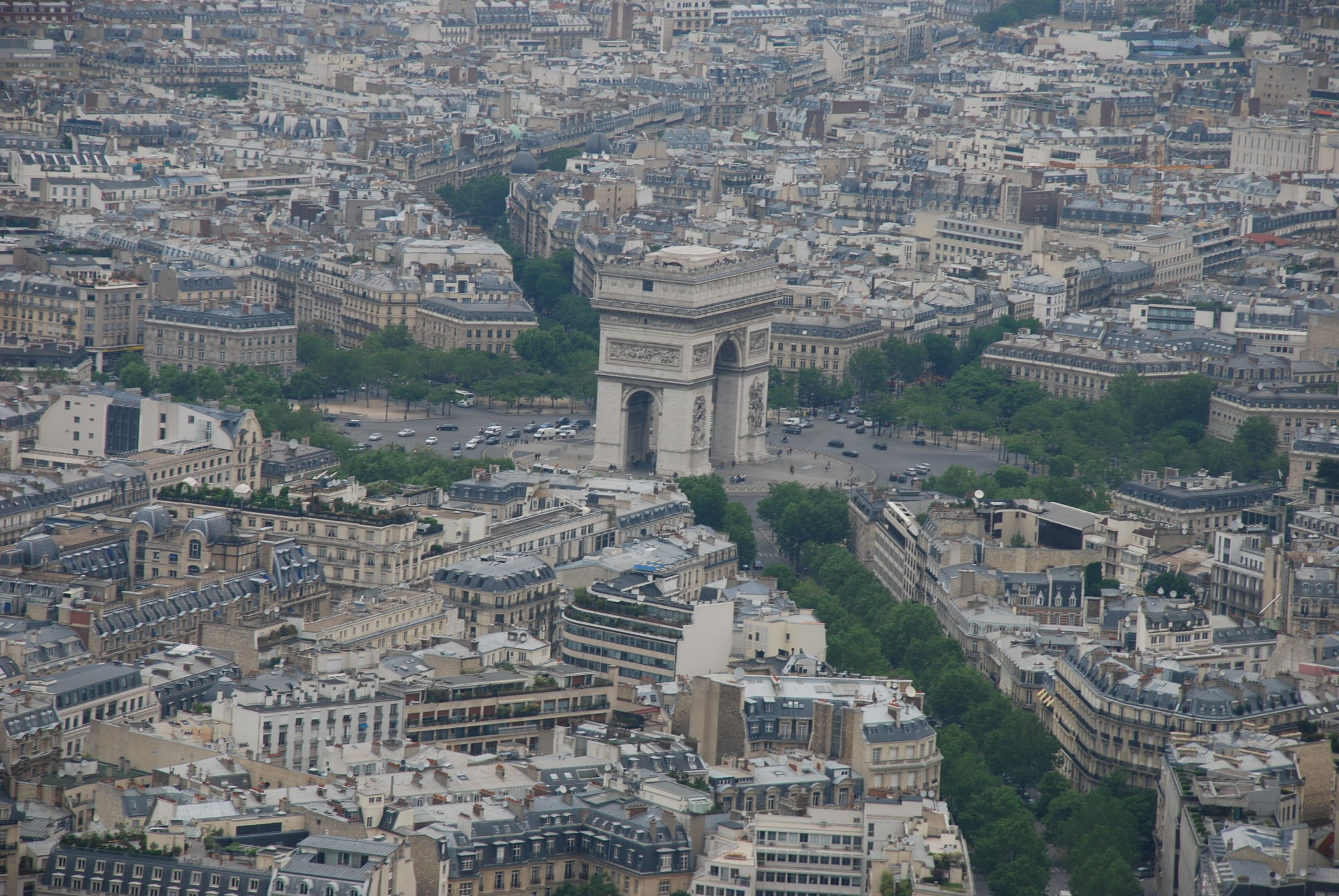
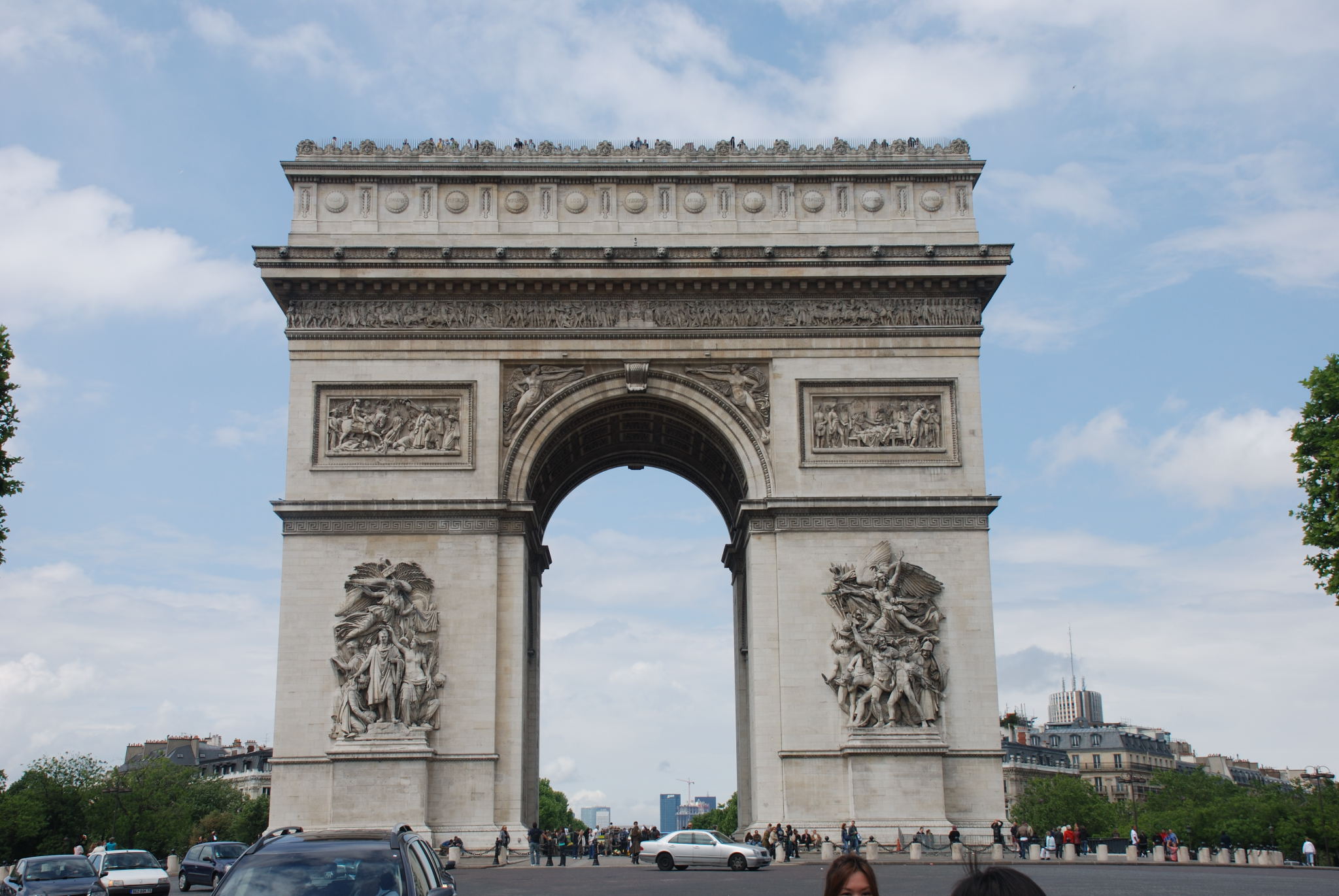
Our flight got in at 9 in the morning, an hour behind schedule. It was a cloudy morning with the sun venturing out timidly once in a while. The flight was quite comfortable and all of us could rest well. We showered and changed quickly and were soon off to some lunch and sight-seeing. We are staying very near to Champs Elysees, which is the most famous road in Paris, and are within walking distance of Arc de Triomphe and we wandered there after lunch. It was a nice walk and I quite enjoyed the weather, which was bracing. Sandhya and Bharath found it to be chilly and were soon in their jackets. We took several photos at the Arc de Triomphe and also went up the steps to its terrace. There are 284 steps to the top. Napoleon Bonaparte had started building this as memorial for his various victories but he did not finish it as he soon started losing some battles and even whole wars. It was later completed and dedicated as a memorial to an unknown soldier. It very much reminded me of India Gate, which is also dedicated to such a memory. Even the shape is a bit similar and the flame and wreaths are also there.

From the Arc, we walked to Petit Palais which is the smaller of the two palaces that stand on Champs Elysees. Petit Palais was built in 1900 and is a Municipal Museum now. There was exhibition of works by the French artist Goya who was born in the later 1700s. He seems to have been a versatile artist with lot of pencil sketches, lithographs etc. to his credit. The detail in most of his work is amazing. The exhibition did seem interesting but we did not spend too much time there as Bharath was exhausted by then.

19 May 2008

The first visit planned was Louvre and we used the metro rail system to get there. There were some initial difficulties in figuring out the French system but after it dawned on us that the error in our ways was in our persistence to use a credit card, it was smooth sailing all the way. There are not many officials around on the French subway system (may be an effort at controlling costs) and that worked in our favour when we entered another station through the wrong way and ended up boarding a train without a ticket!

The Louvre turned out to be an event that exceeded my expectations. The building is very large and hosts a huge number of paintings, sculptures, engravings etc. It seems that the museum has been open to the public for the last 200 years, since the French revolution, and that struck me as something very nice – a country that opened up art for its public such a long time ago and a public that could appreciate it. My impression has been that in those days most countries were rather elitist in their approach to art. The first part of the museum that we visited was the gallery, which is 450 feet long and is lined with portraits throughout. There is so much to see in the Louvre that I realised what a Frenchman I met on the flight to Paris had said was very true – that one needs four days for Louvre alone.

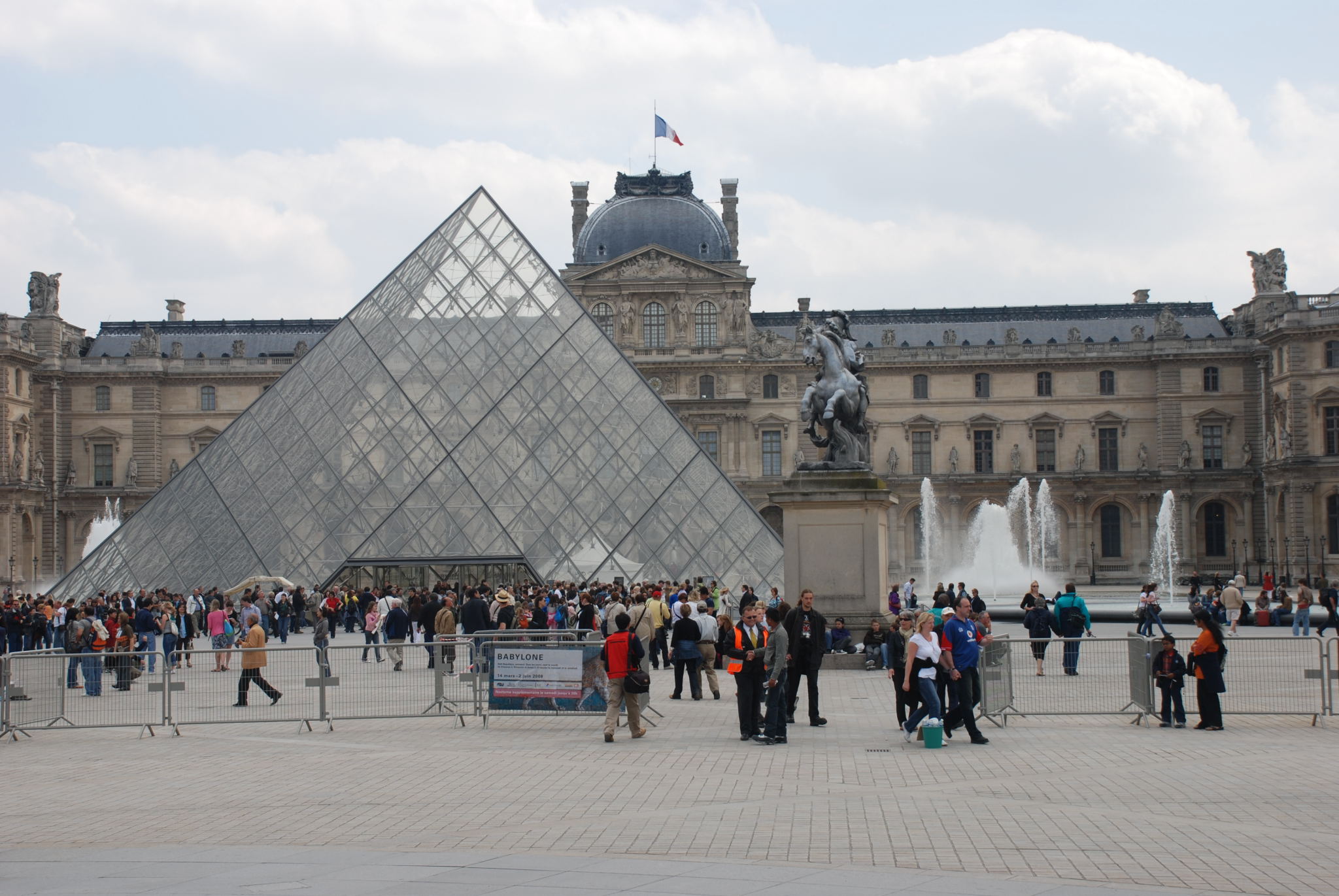
The museum is housed in a very large building enclosed within a large, beautiful compound. In the courtyard, at the entrance to the museum, is a glass pyramid constructed recently by an architect of Chinese origin. It is all glass and steel and in my opinion is an eye sore, which does not connect well with the rest of the architecture. I guess I am a bit of an oldie and cannot appreciate such fusion.

We were trying to compress as much as we could into the time available before Bharath’s patience ran out. So we focused on the paintings in the Denon wing, which housed Mona Lisa. There are three more such wings in Louvre and the Denon itself is spread over three floors, of which we only got to see one. One surprising point that I noticed was that all the explanations alongside of paintings were in French. For an international museum of Louvre’s standing, it would have been more becoming had they written the descriptions in English also. After all, English is the world language today – whether the French agree or not! Of course, we had rented out audio guides which were life savers in providing salient details about the more important works.

Some of the first paintings we saw were painted in the 1400s and were done on wood – even the Mona Lisa is painted on wood – and that was something new to me. I had kind of assumed that most of these paintings were done on canvas. We saw the largest painting in Louvre – 10 ft x 10 ft or some size like that, a huge one – depicting the first miracle that Jesus worked at the wedding feast in Cana. Thereafter we saw Mona Lisa; it is a wonderful painting indeed and it seems the greatness of this painting is in the manner in which it creates a dialogue with the viewer. Earlier portraits all had a space between the viewer and the model whereas in this, one does feel a connection with the model in the painting. Unfortunately, my picture of the Mona Lisa did not come off well as I was not using the flash (as instructed by the museum authorities) and did not adjust the ISO as needed.

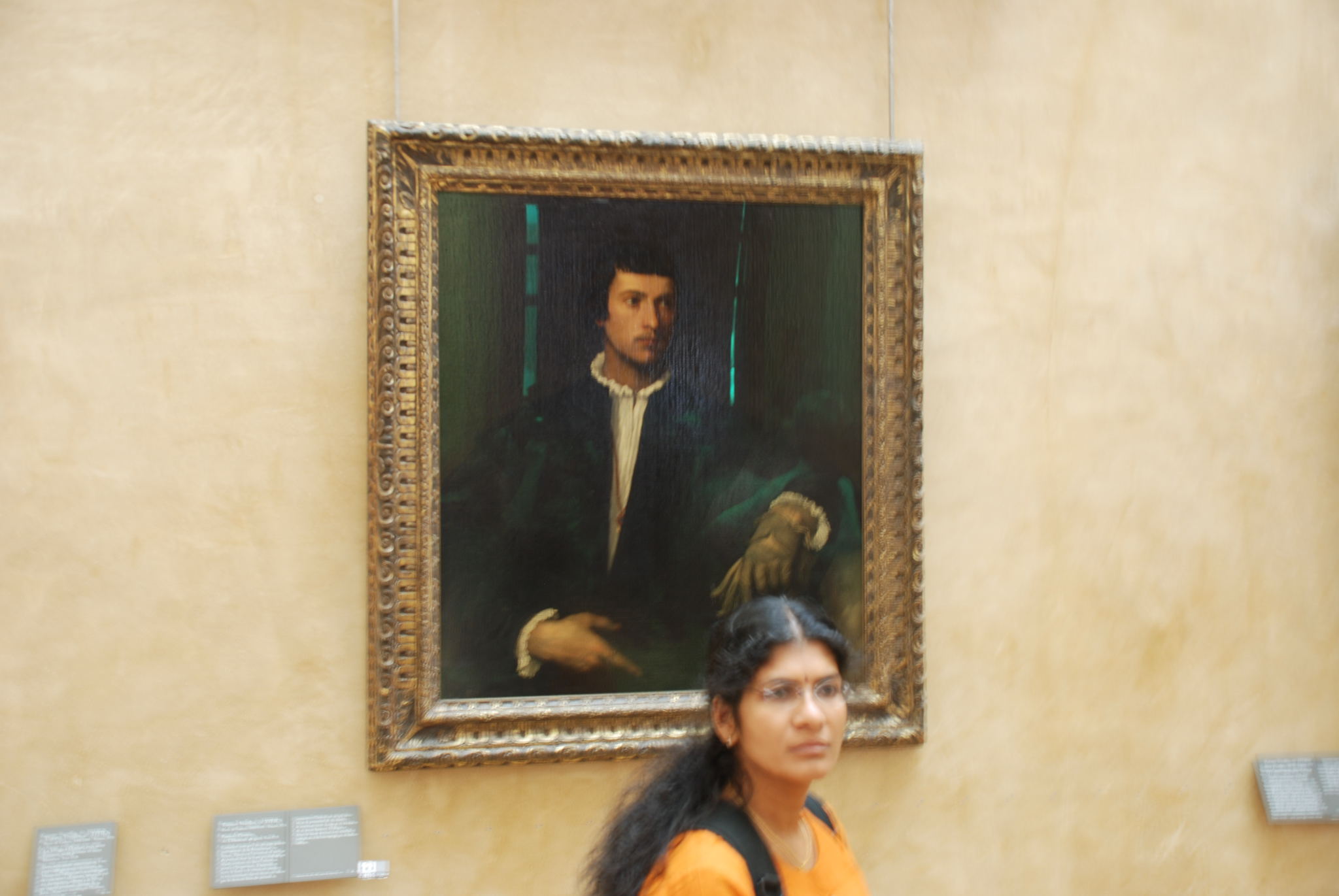
Next we saw a portrait that changed the style in which portraits were drawn and this was done by a painter called Titien. It was titled Man with a Glove and it was indeed very nice and one could feel the character of the model – strong, determined face – just by looking at the painting. It seems what was different about this portrait was that it brought out the character of the model rather than the wealth and standing of the model. The focus was on the individual and not on the social circumstances of the individual.

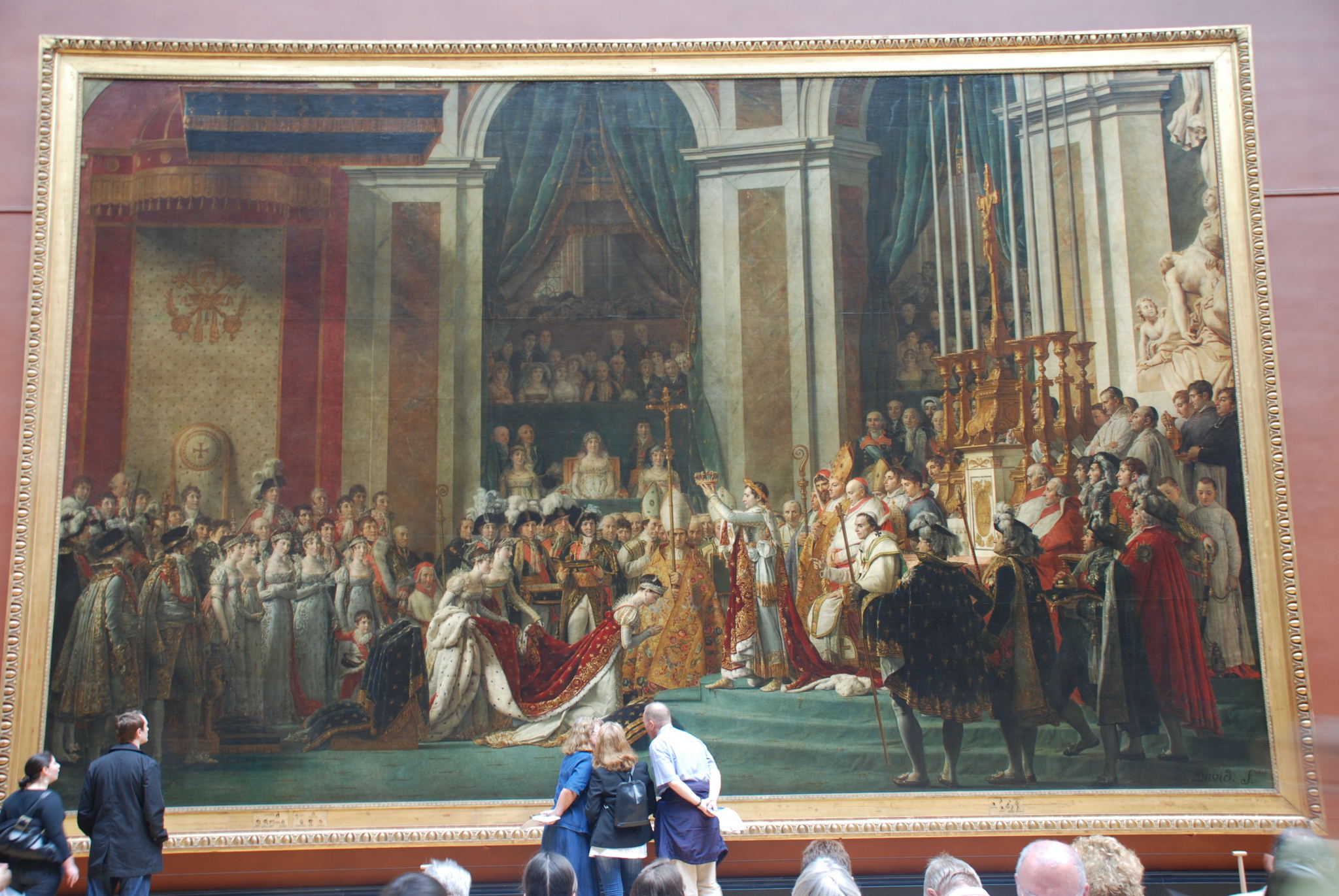
We then saw three paintings of note, one of which was a scene depicting the coronation of Napoleon at Notre Dame. This was commissioned by Napoleon himself and the interesting point was that the artist did not truthfully reproduce the scene – a prime example being the presence of Napoleon’s mother in the picture whereas she did not attend the ceremony in protest to her son calling himself an emperor and having a coronation and also as the ceremony included the coronation of Napoleon’s wife Josephine as well. I was impressed that Napoleon’s mother thought it unbecoming of her son to call himself emperor – a sure sign of how early democratic thought had started in France and to what depth it had penetrated. This is also drawn on a huge scale.

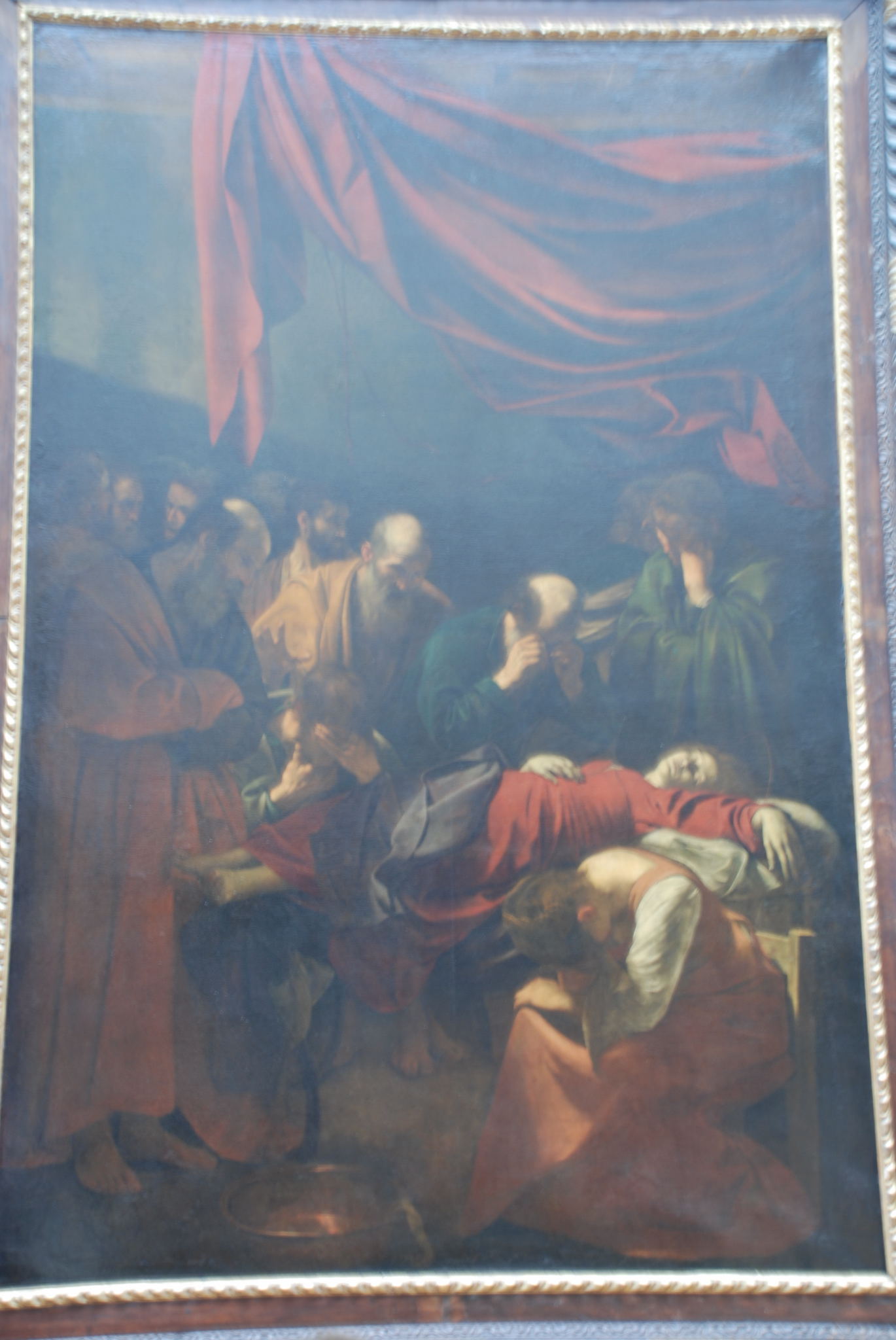
The next painting was one that caught my fancy and admiration – The Death of the Virgin by Caravaggio. Here the artist has depicted the scene of Holy Mary’s death – she is shown lying dead surrounded by some wise looking men. The beauty of the painting is that she is shown as a very normal and common woman, shorn of all divine trappings. In fact, the artist modeled the face off the corpse of a prostitute who had died around that time. The clergy had commissioned this painting and as can be easily understood, they did not appreciate the proletarian attitude of the painter and they rejected it outright. It seems it took the artist more than a decade to get back to public favour.

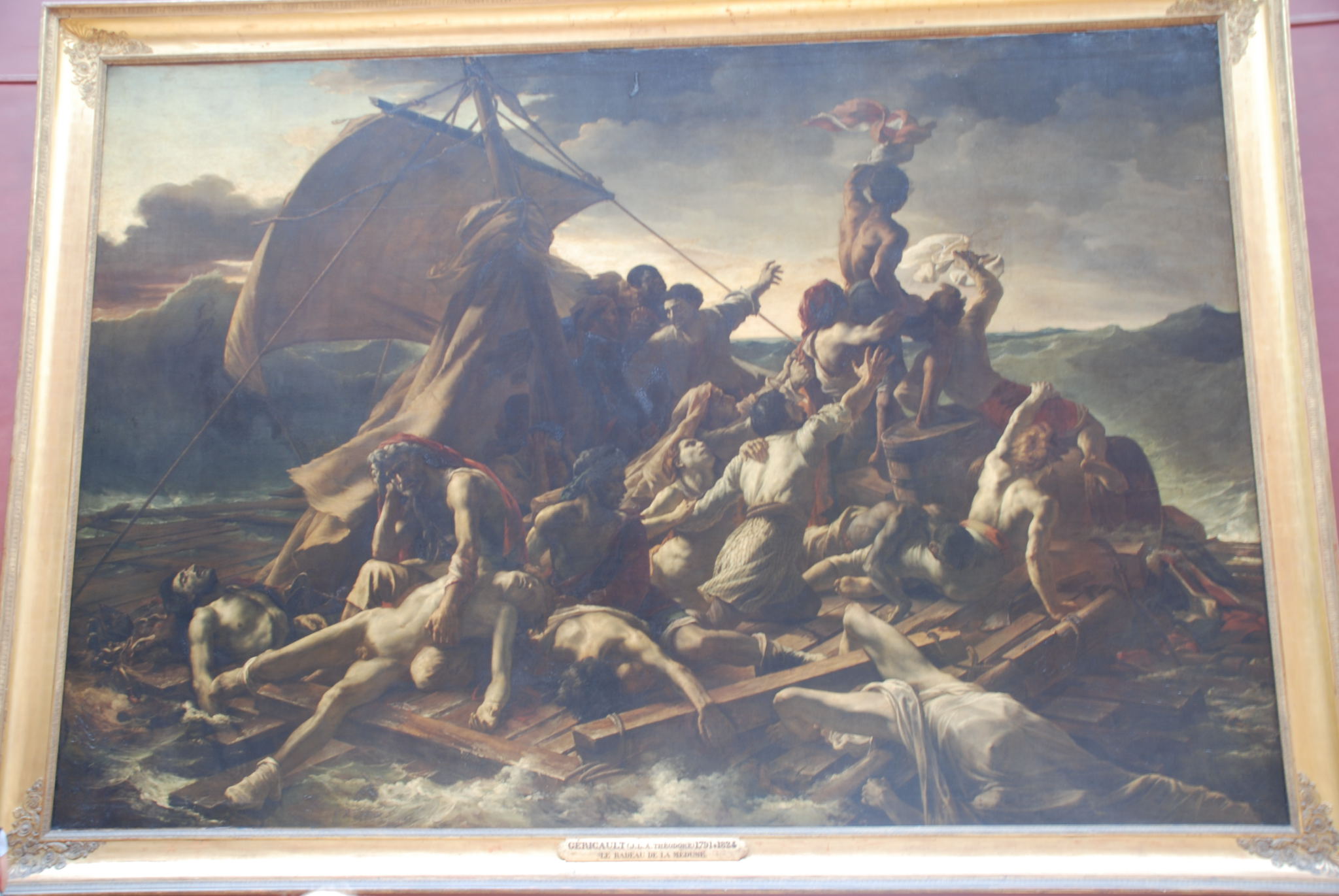
The last one was called “Raft on the Medusa” and showed a raft full of ship wrecked sailors sighting a distant sail. Here again, the artist has very skillfully brought out the sufferings and agonies of human beings in such conditions and supposedly, this was one of the first paintings that used commoners as subjects and not royals and such other important people. The theme was also unusual and the painting caused a lot of controversy when it was unveiled; fortunately wiser counsel prevailed and it is still available for viewing.

By this time, Bharath was really tired and we bid adieu to the Louvre. If I ever get back to Paris with some time on my hands, I know where to go!

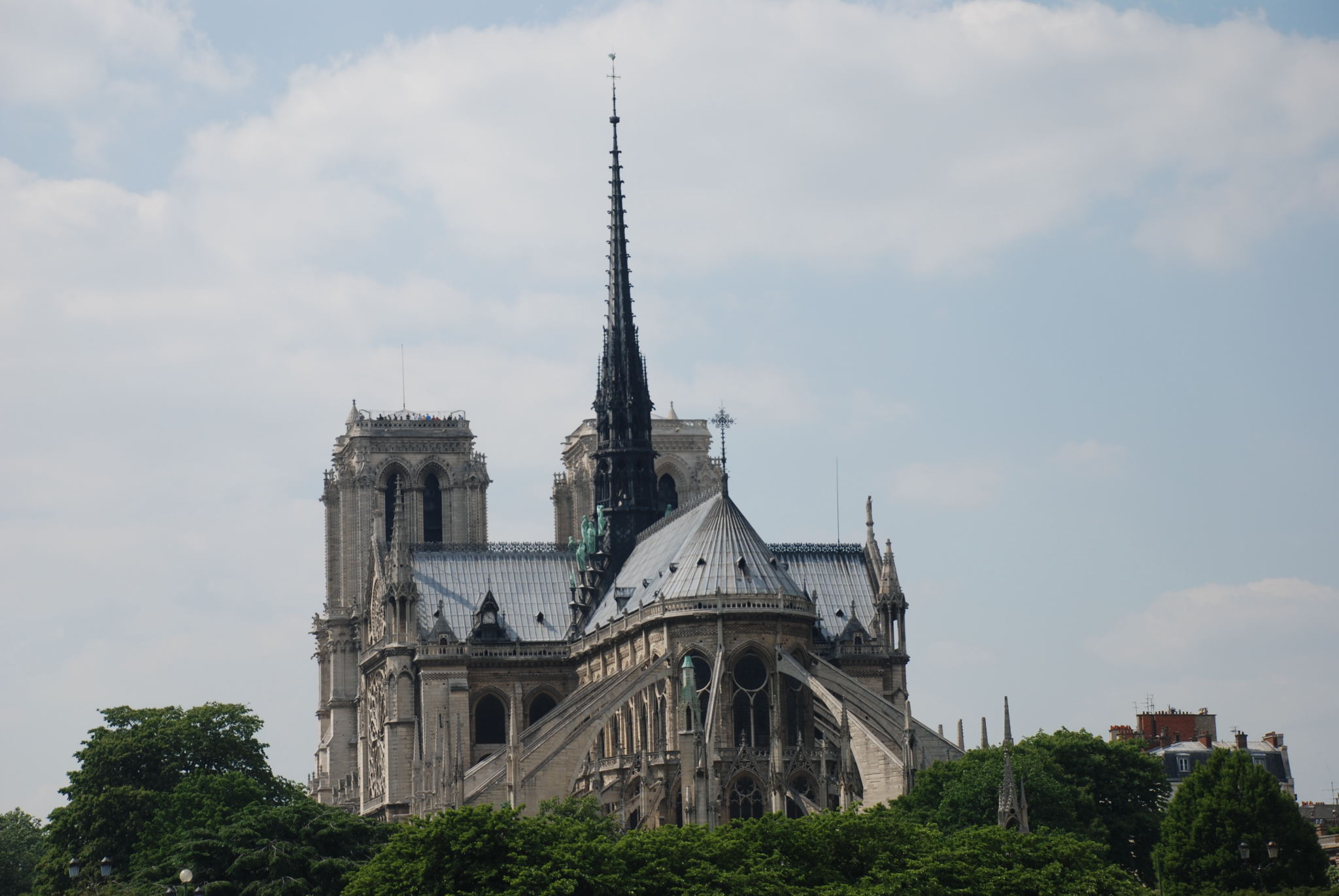
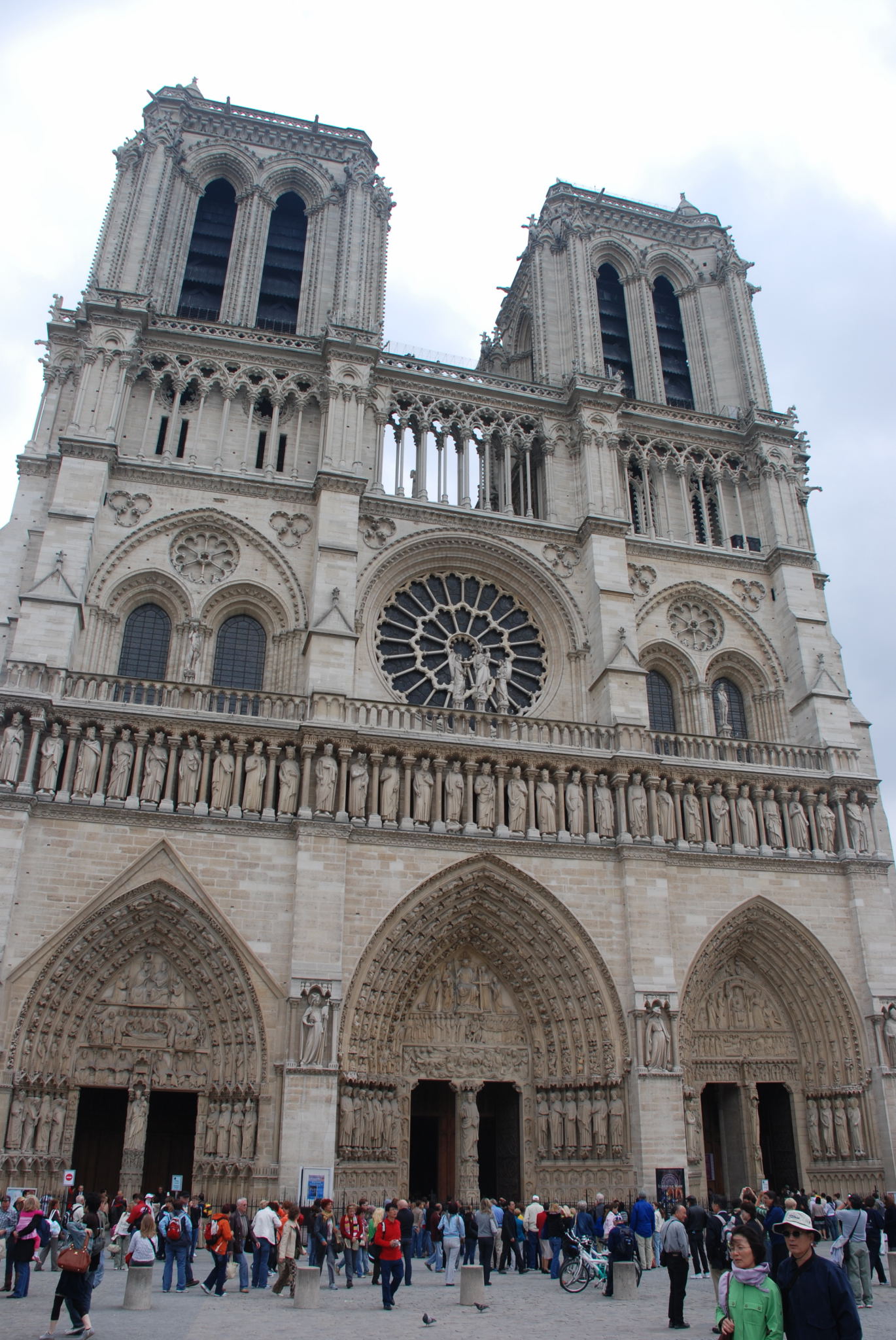
We then had lunch at a nearby restaurant and set off to Notre Dame. This is one of the most famous churches in France and construction was started in 1163 AD and took 200 years to complete. The coronation of Napoleon Bonaparte and his wife, Josephine, took place here. It is a most impressive building with a majestically rising high ceiling and many beautifully worked stained glass windows. Notre Dame is considered to the “point zero” for the road system in France and all distances expressed are as measured to Notre Dame. This church is still functioning and we saw confessions taking place in a couple of booths when we went there – they were glass doored rooms and the priest was facing the person who was talking. I had understood that there will always be a partition between the priest and the one confessing. As is the case with most churches, Notre Dame also appears to be a very rich church and they also had an exhibition of the treasures of the church. Unfortunately, all explanations were in French and I could not understand anything – there were some bones and some very rich looking stuff. Once again, one is left dumbfounded at how far the “flock” has strayed after their shepherd was gone. I am sure that Jesus would have been appalled at the wealth of the church and the positively garish and ornate costumes that some of the clergy wore. It seems that Notre Dame has in its custody, the original wreath of thorns that was placed on Jesus’ head before he was crucified. This is displayed on special occasions only and so we could not see it – that was a disappointment.

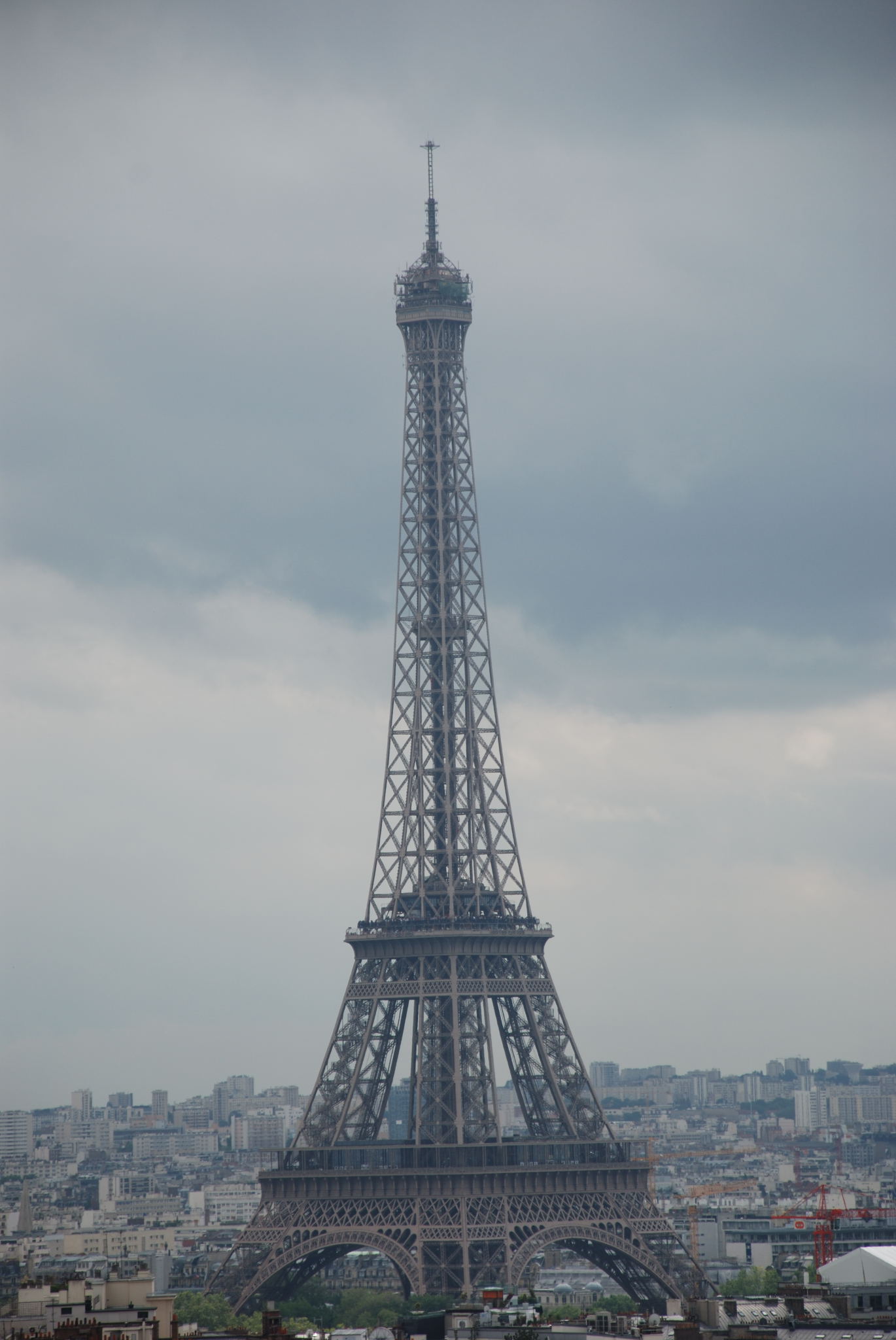
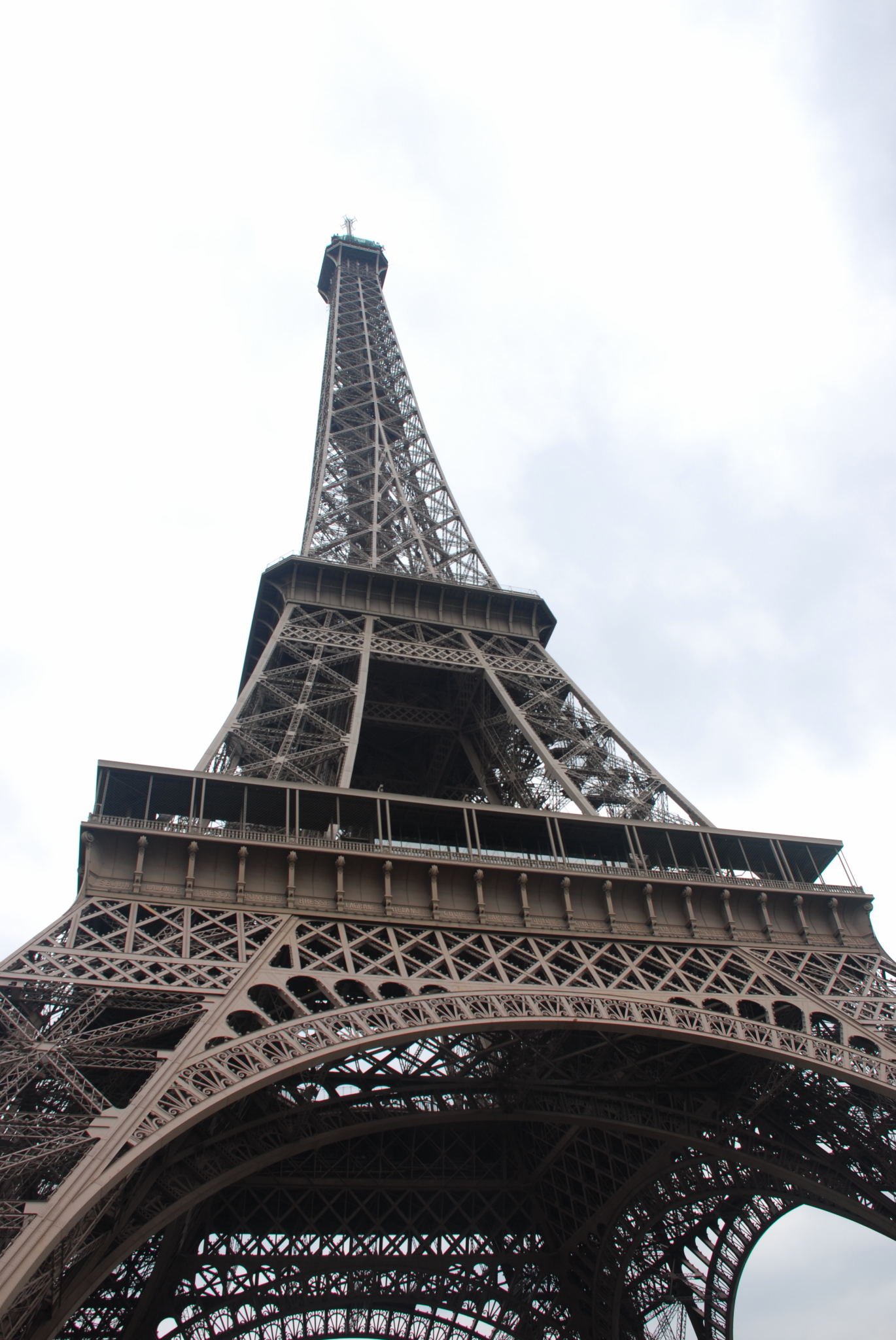
The next stop was Eiffel Tower. Prior to the visit, I had been fairly dismissive of the Tower, considering it a mere piece of structural engineering, commonplace today among the sky scrapers. The majesty of the Tower struck me in full force as I stood beneath it and looked up at its full 324 metres of height. The engineering is amazing, especially as you considered that the whole thing is mostly held together by rivets and it was erected in 1889 when they had no access to computer aided designing and complex weight calculations. All of that had to be done by hand; yet the tower was completed in 2 years and 2 months by a team of 50 engineers and 5300 workmen. This was made for the World Exhibition that was held in Paris in 1900 and won the first prize in the exhibition. All this really gave me a new perspective about the Eiffel Tower.

We went up in a lift, all the way up to the top from where we could get great views of the sprawling metropolis that is Paris. We travelled back by lift to the first floor and walked down the remaining part through steps. Overall, it was a very nice experience and that was our last visit of a hectic day.

Bharath had handled the day reasonably well and we were all tired towards the end. The evening had a joyous end as we were able to locate an Indian restaurant near our hotel. It is very doubtful whether we would ever have visited the place if it were in Bangalore but scarcity is a great magnifier of perceived quality and we were in there trying to get our fill. I am sure this will be where we will have all our dinners till we leave Paris.

20 May 2008

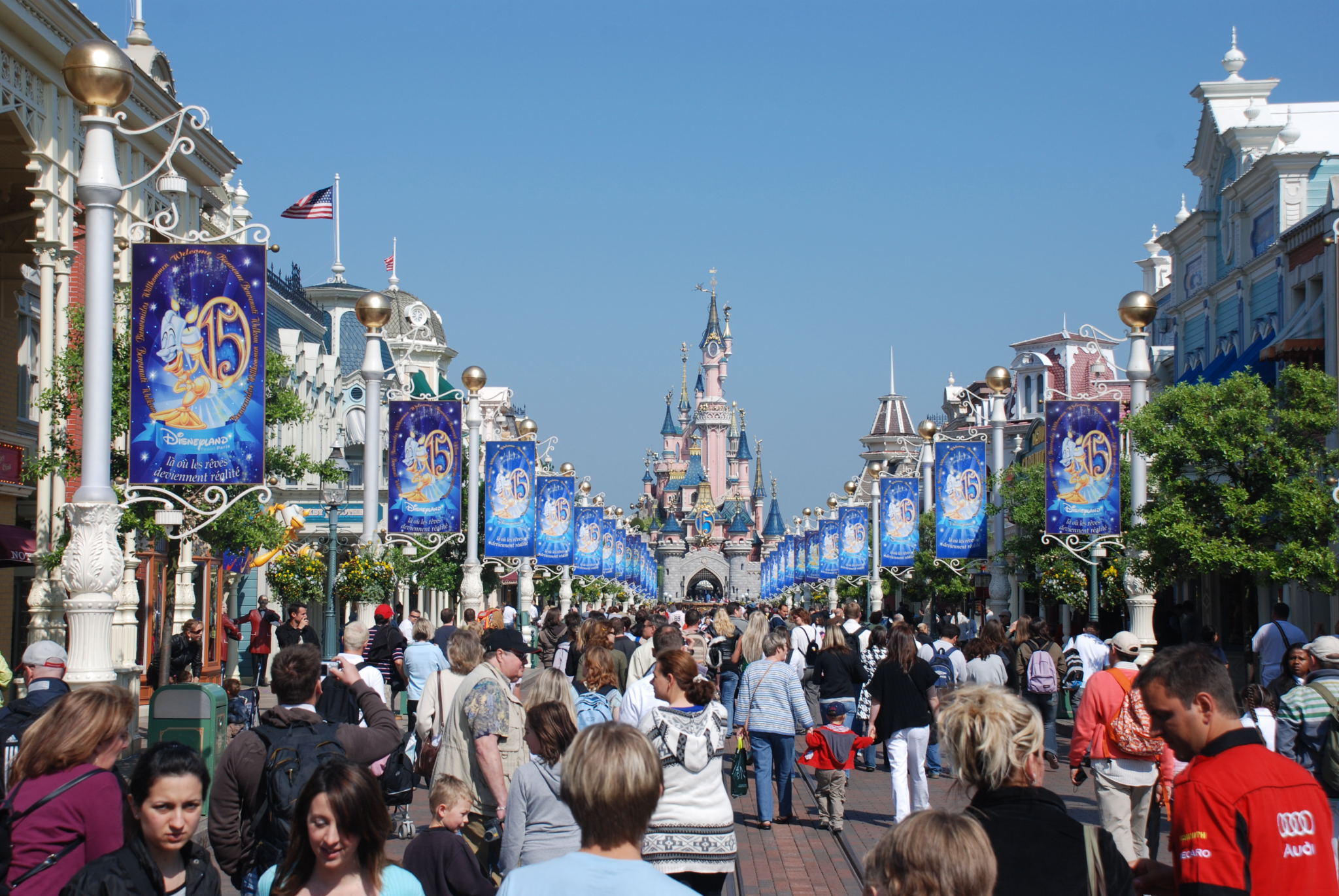
We went to the Disneyland Park today; it is located 32 km outside of Paris. It is a very nice place with well designed rides and well maintained attractions and great landscaping. Bharath was quite thrilled with the place and we spent the entire day there. However, there is nothing special to note as this was just another amusement park. What is most impressive is Disney’s ability to market all of the old tales including fairy tales, Aladdin etc. and make money of those.

21 May 2008

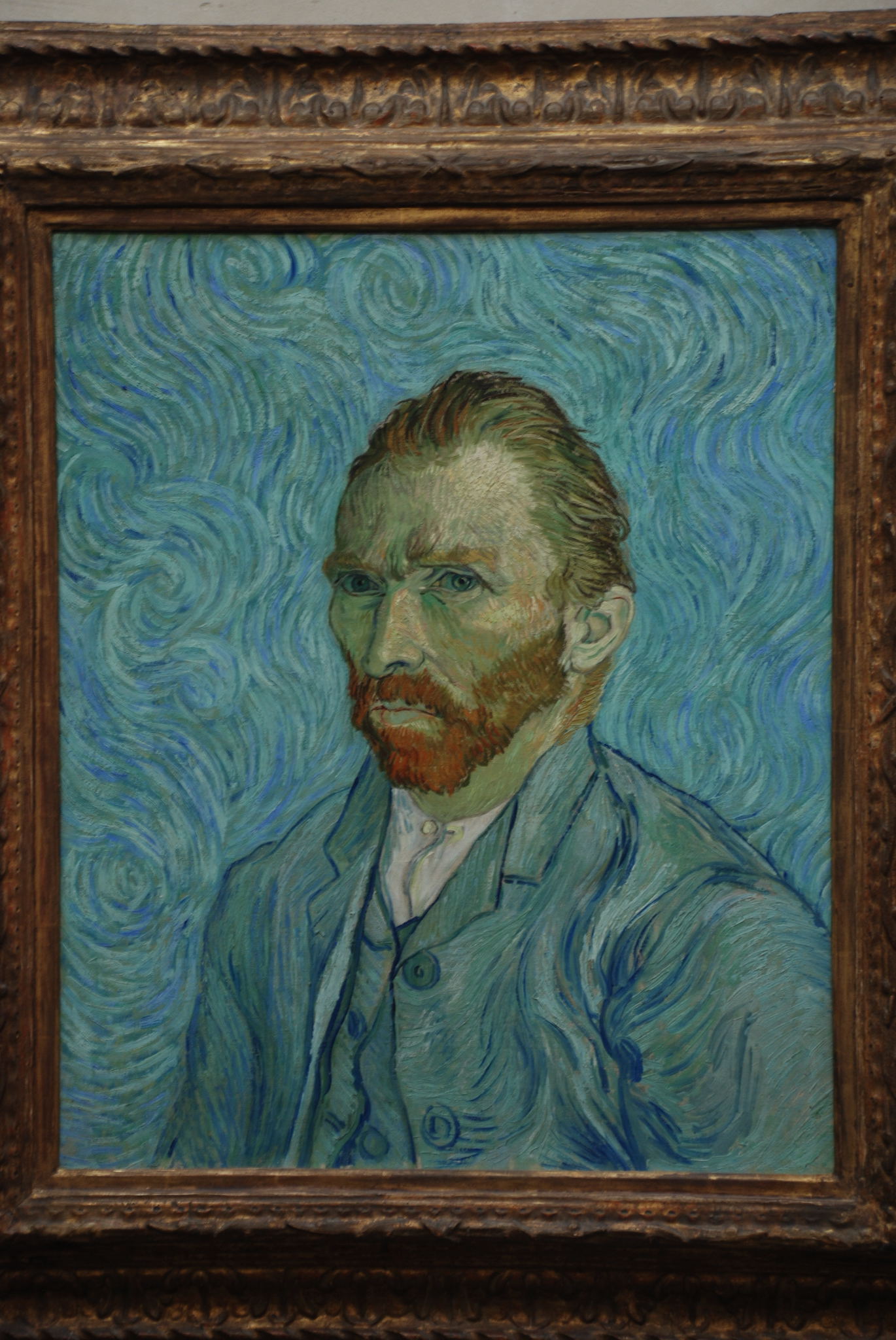
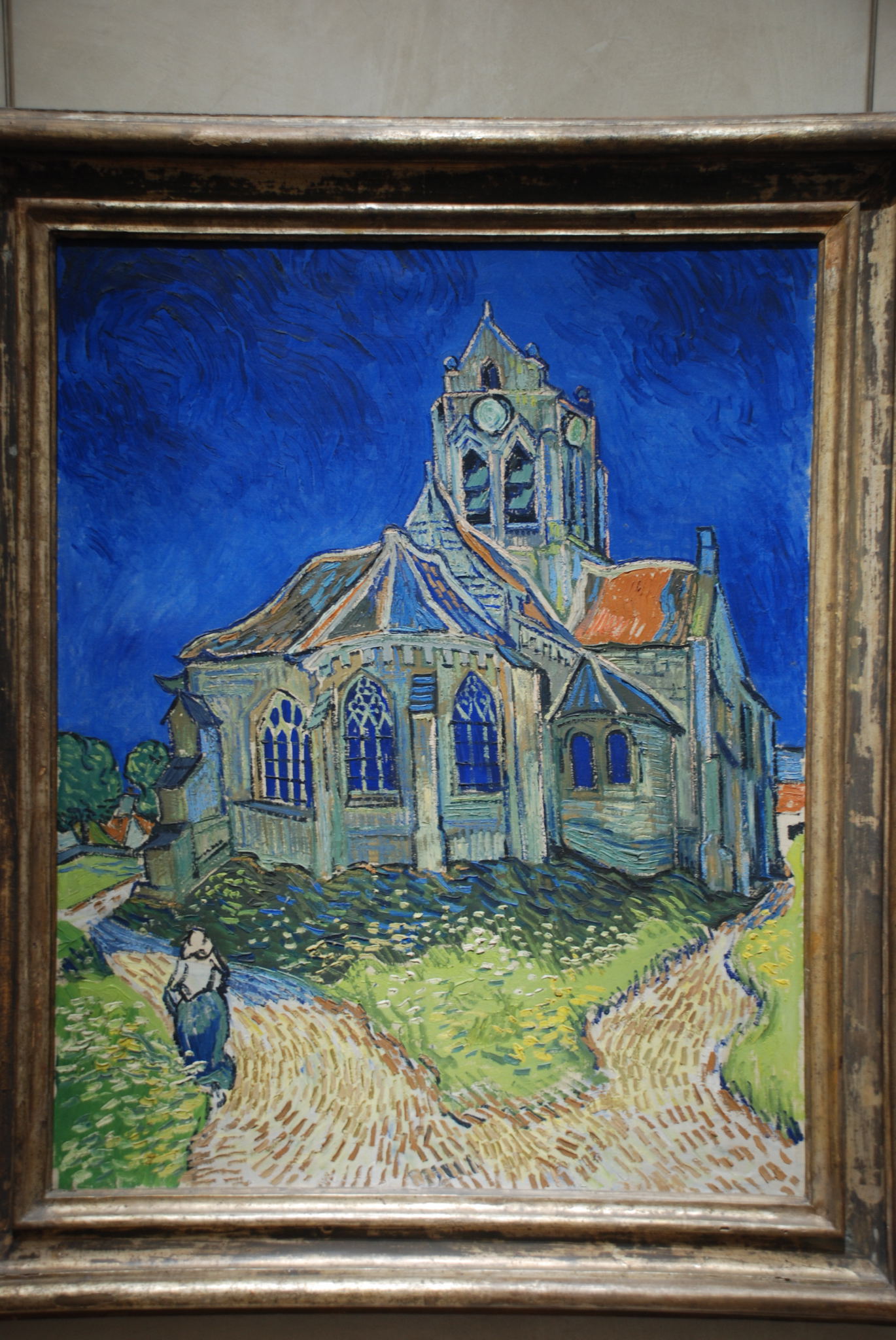
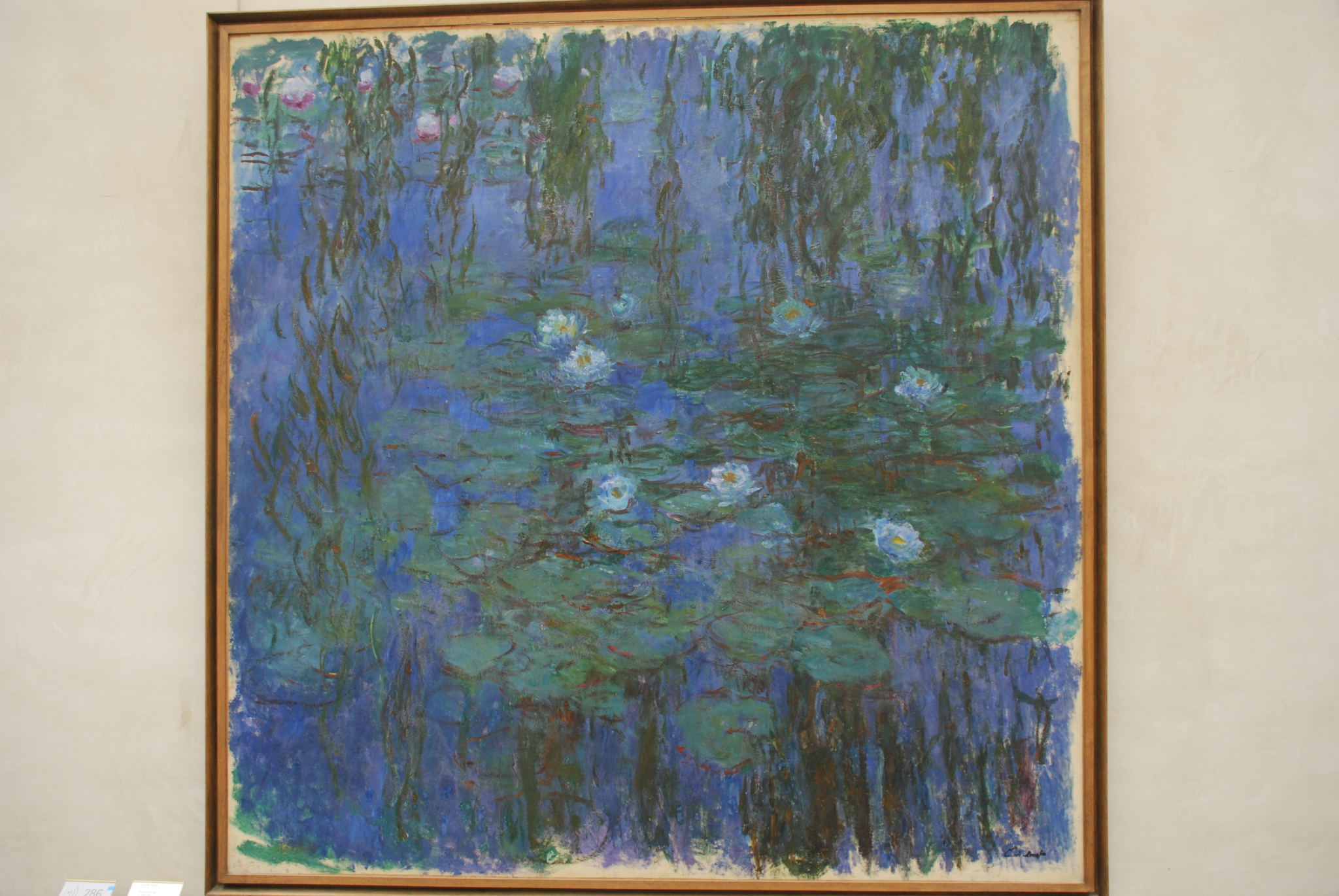
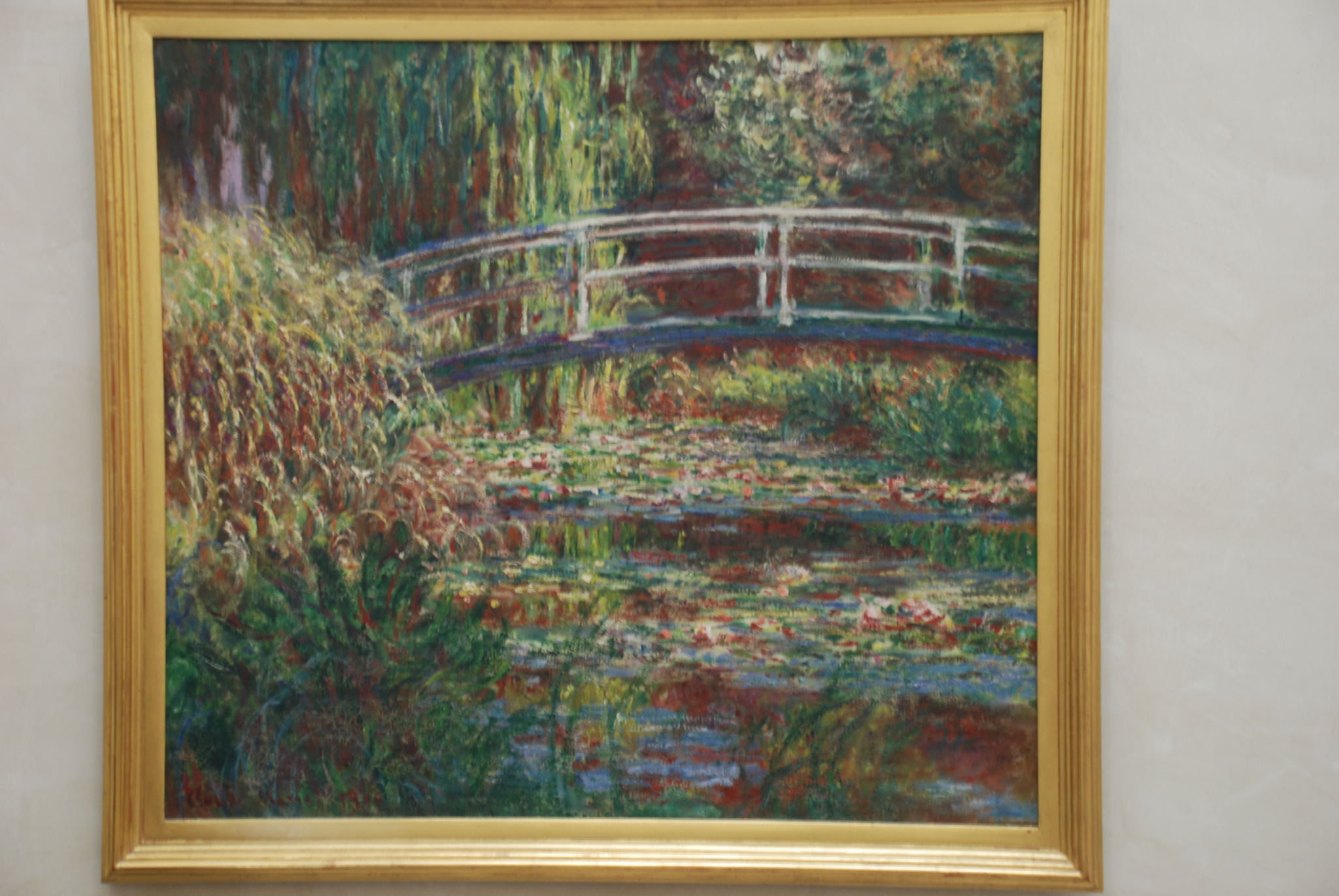
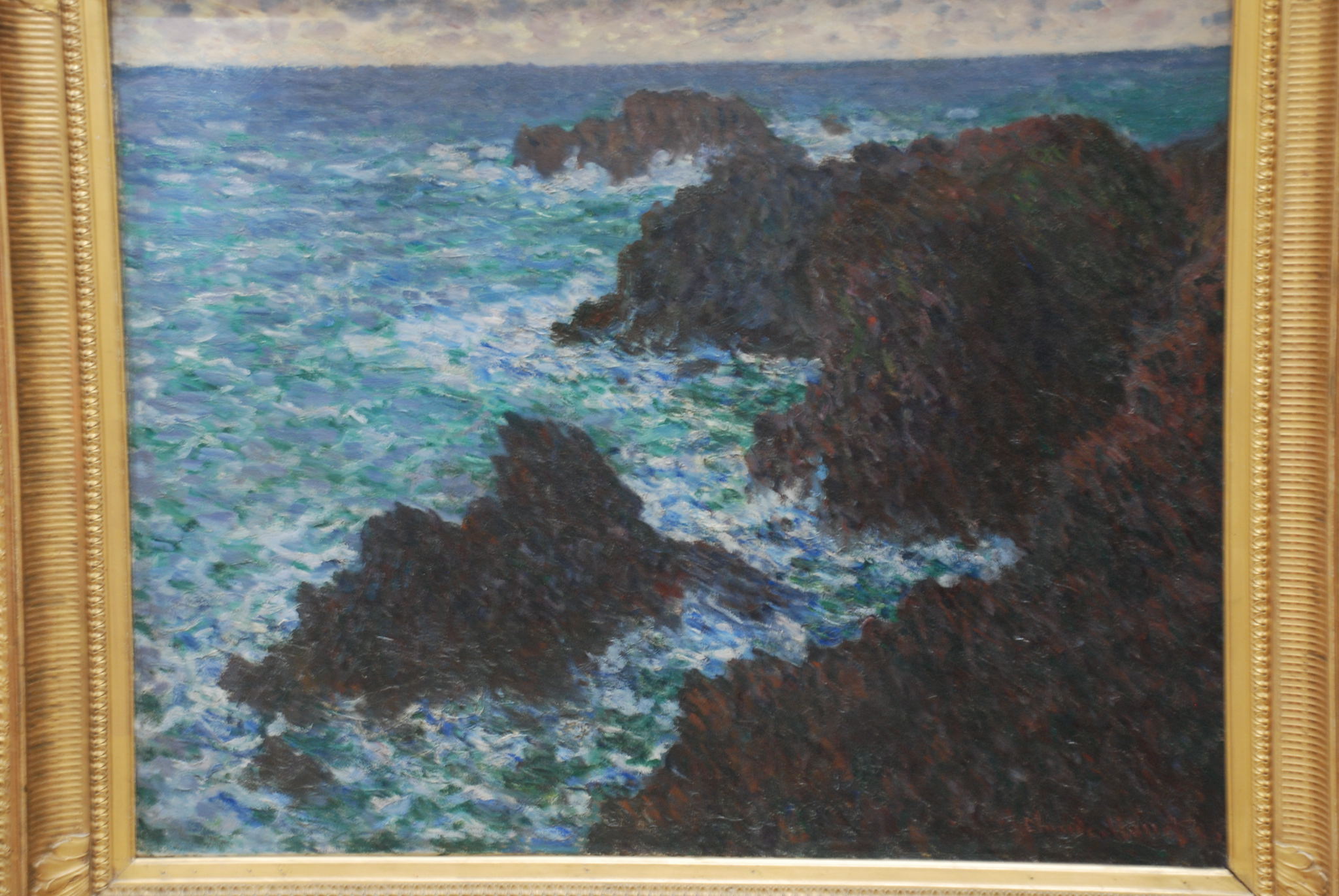
We had earmarked this day for some more museums in Paris and a cruise on the river Seine. The fist stop was Musee D’Orsay. This is a museum that exhibits paintings that come after the period of the paintings exhibited in Louvre. This is housed in an old train station but it looks quite impressive all the same. There are three floors of paintings and sculptures and is another wonderful location that can easily take up a day. There were paintings by a lot of masters and the names I could recognise included Paul Cezanne, Claude Monet, Vincent Van Gogh, Paul Gauguin, Manet etc. I guess these painters come under what is termed as “impressionist” painters. The colours and the life in the paintings were quite noticeable. Van Gogh’s self portrait (one among the several he has painted) is very striking and the artist has managed to inject a lot of life into the painting. He has certainly achieved his objective of “capturing more than what a photographer can do” as he remarked to his sister once. The paintings we saw were those that Van Gogh had painted after he recovered from his mental illness. He was under the care of a friend, who was also a Doctor. It seems he painted a lot in that period, averaging more than one work a day!

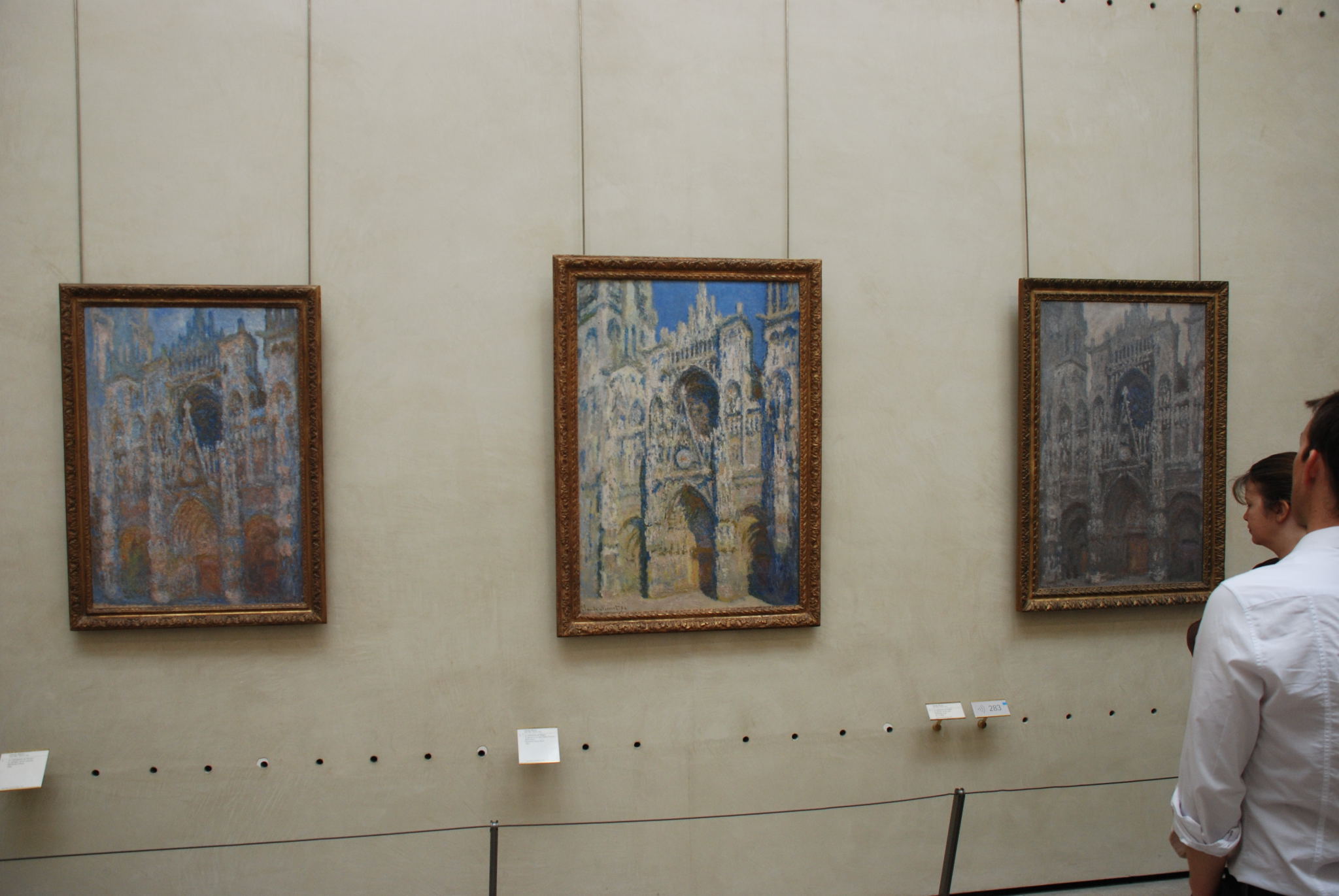
I had seen some reproductions of Monet’s rendering of his garden and lilies and it was very nice to see the originals. This artist spent a significant portion of his time in his garden and his garden is his most used theme. He was trying to capture the play of light and the difference it made to the perception of the object. We saw three paintings that he drew at the same time – it was of the same church but under different weather conditions and different lighting (morning, evening etc.). It seems he had all three canvases mounted in a room opposite the church for six months and chose the one to work on depending on the weather and time of the day.

There were a lot of other paintings also but we could not do full justice as time was running out and it would have been a bit taxing on Bharath to spend more than three hours in a museum. In fact, he has already started viewing museums as places best avoided. To be fair to him, I think he has put up with these challenges rather well. Once again, I left with a feeling that one must go back sometime. I had learnt from my mistakes on the photography front at Louvre and so could get some photos of the paintings.

All major cities with history and culture are situated by a river and Paris is no exception. The river Seine divides the city into what is referred to as the right bank and the left bank – that is if one stands facing west. We got into a boat that was doing a sixty minute cruise on Seine. There are two islands in Seine and it seems that Paris started out initially as just the larger island. It then expanded into the right and left banks with the building of some bridges. Notre Dame stands in this island. One can see the Grand Palais, Louvre, Notre Dame, Eiffel Tower etc. from the Seine. There is also a replica of the Statue of Liberty in one end of the smaller island. You can actually capture Eiffel Tower and this statue in one photo frame!

Our last stop was a museum that exhibits paintings starting from 1900 – National Museum of Modern Art. I was hoping to see some works of Picasso here and had skipped the Picasso Museum because of paucity of time. This museum is housed in a building called Centre Pompidou and the building itself is post-modern and is one with its “insides turned out”. I was reminded of an office building I had seen in London that had the same theme. In any case, the whole idea is revolting, if you ask me.

The exhibition itself turned out to be a serious disappointment for me and the less said about it, the better. They had only one painting of Picasso and all the paintings were “post modern”. I could not appreciate the vast majority of the paintings there and I felt that many had got in there just because the painters were famous (which begs the question as to how they got famous in the first place). The commentaries were totally ludicrous and I felt most of it was simply made up (for e.g., “the artist is exploring the perceptive subjectivity of the object”). May be these paintings are beyond me and may be these are really interesting works of art but I found myself agreeing with Bharath’s comment: “My paintings are much better than these”.

22 May 2008

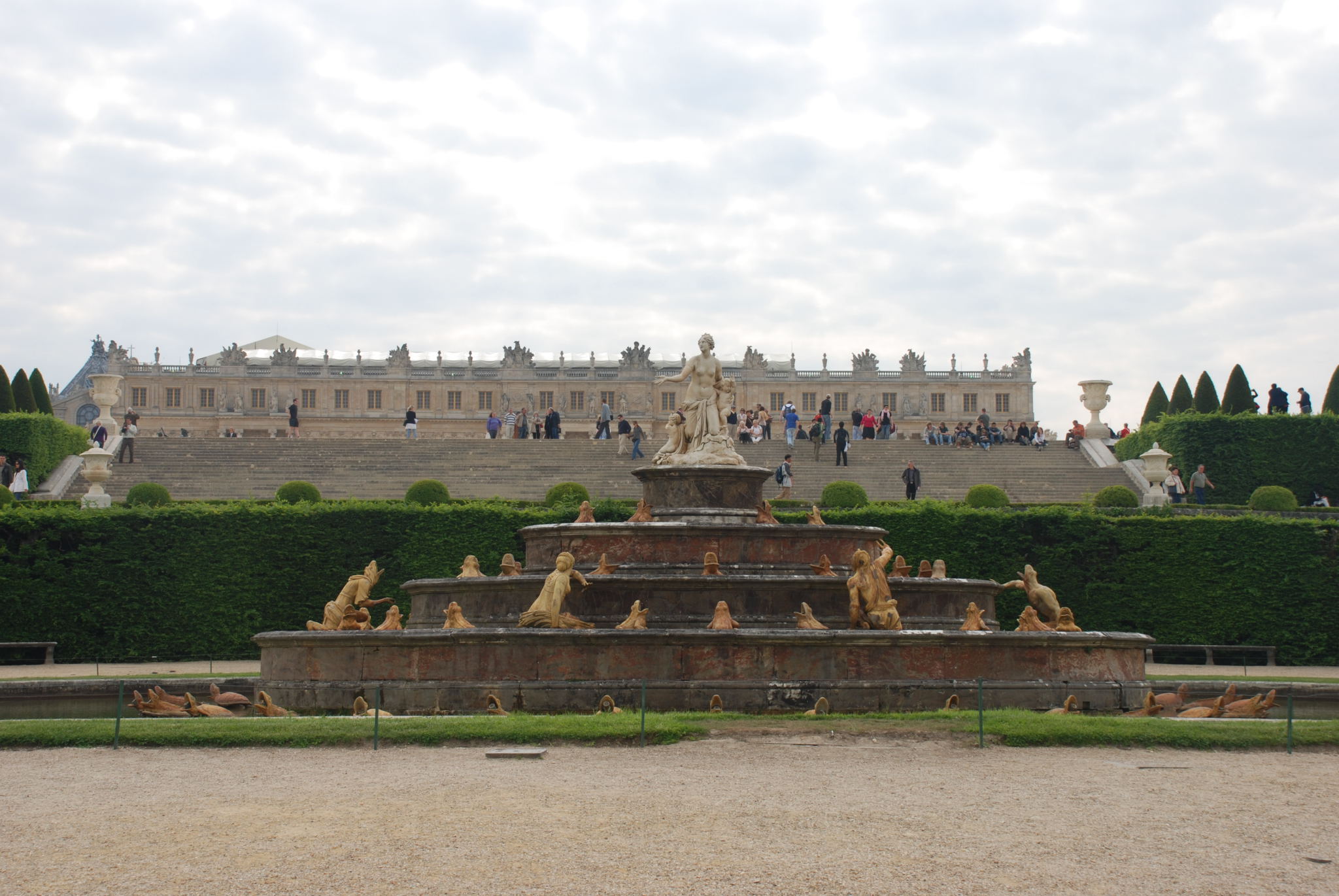
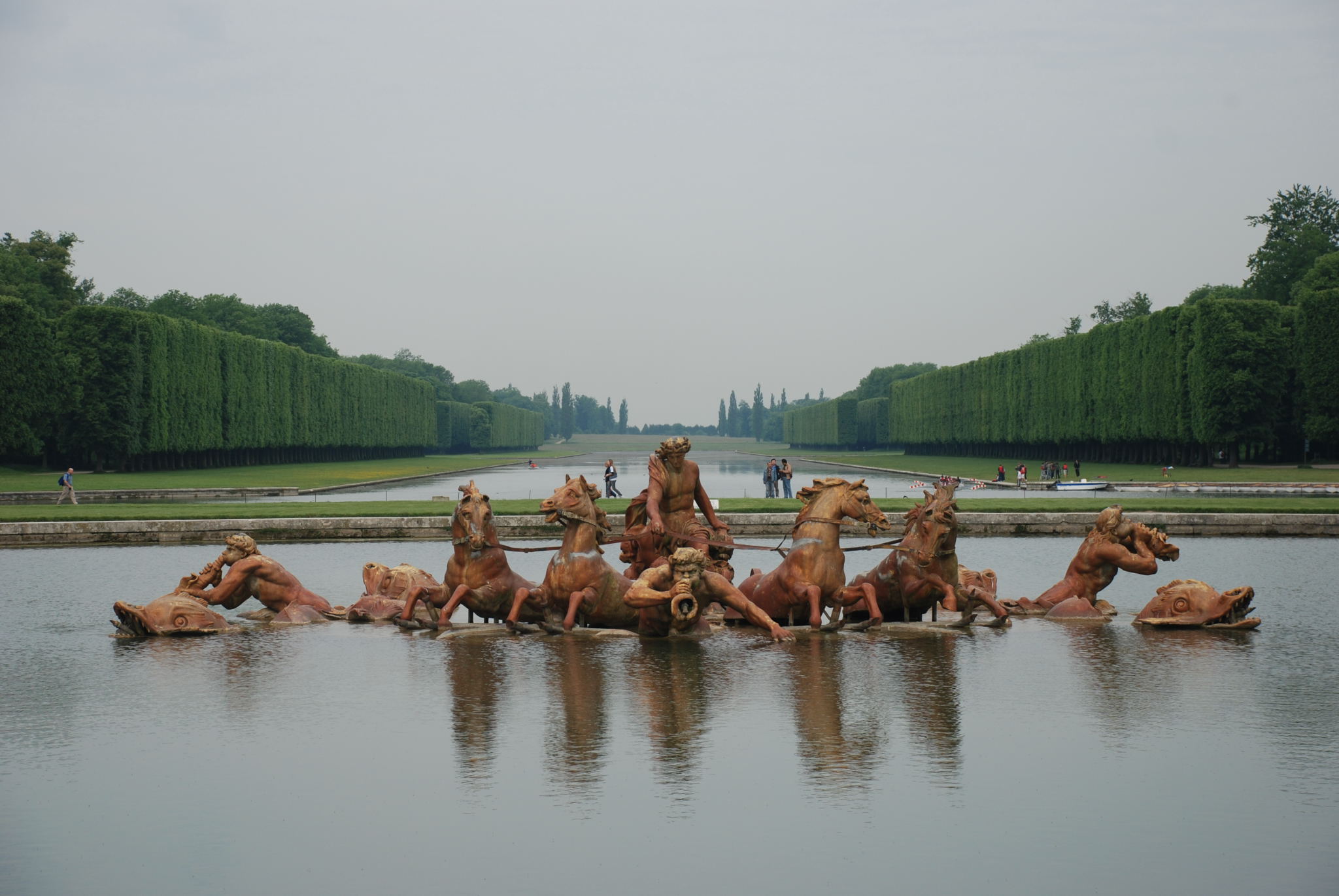
We visited Versailles and Fontainebleau today. Versailles Palace is about 30 km from Paris and is the grandest and the most famous chateau in France. It was built in the 17th century by Louis XIV, who was also known as the Sun King. There was a hunting lodge on this location and when Louis XIV went there for a hunt, he was so enchanted by the place that he decided to build a palace there and move his court. This is an enormous palace and has about 800 rooms and stands in a huge park with its own forest. There are about 78 fountains here and a big canal but the sad fact is that the builders could never manage to get enough water from the river, which was five kilometres away. As a result, all the fountains were shut down and were operated by a man walking ahead whenever the King was taking a stroll. The water scarcity may not have been a matter of grave consequence to the kings as Louis XVI is rumoured to have taken only 40 baths in his lifetime! Bharath was quite taken aback by this statistic. The palace and the grounds are most impressive and the rooms themselves are large and ornate. Not all rooms are open to the public but the most important ones like the King’s Chamber and the Queen’s Chamber are. A very interesting point is that the Queens of that time used to give birth in public to establish the authenticity of the heir’s claim! That must have been quite an ordeal. Marie Antoinette was in this palace when the French Revolution happened but managed to escape from the marauding crowds through a back door.

Marie Antoinette married Louis XVI when she was in her early teens and was brought to Versailles as that was the seat of the government. It seems she never got accustomed to the palace and so she never stayed at the palace – instead she stayed at a humble building nearby. She also built a small village nearby with ten houses or so. Nobody ever stayed at those houses but Marie and her friends spent time there for fun and frolic – so it was a kind of ghost village! It is said that the Treaty of Versailles, which ended the World War I (and whose harsh covenants were rumoured to have instigated World War II) was signed in this palace but there was no mention of it anywhere – which was a bit surprising.

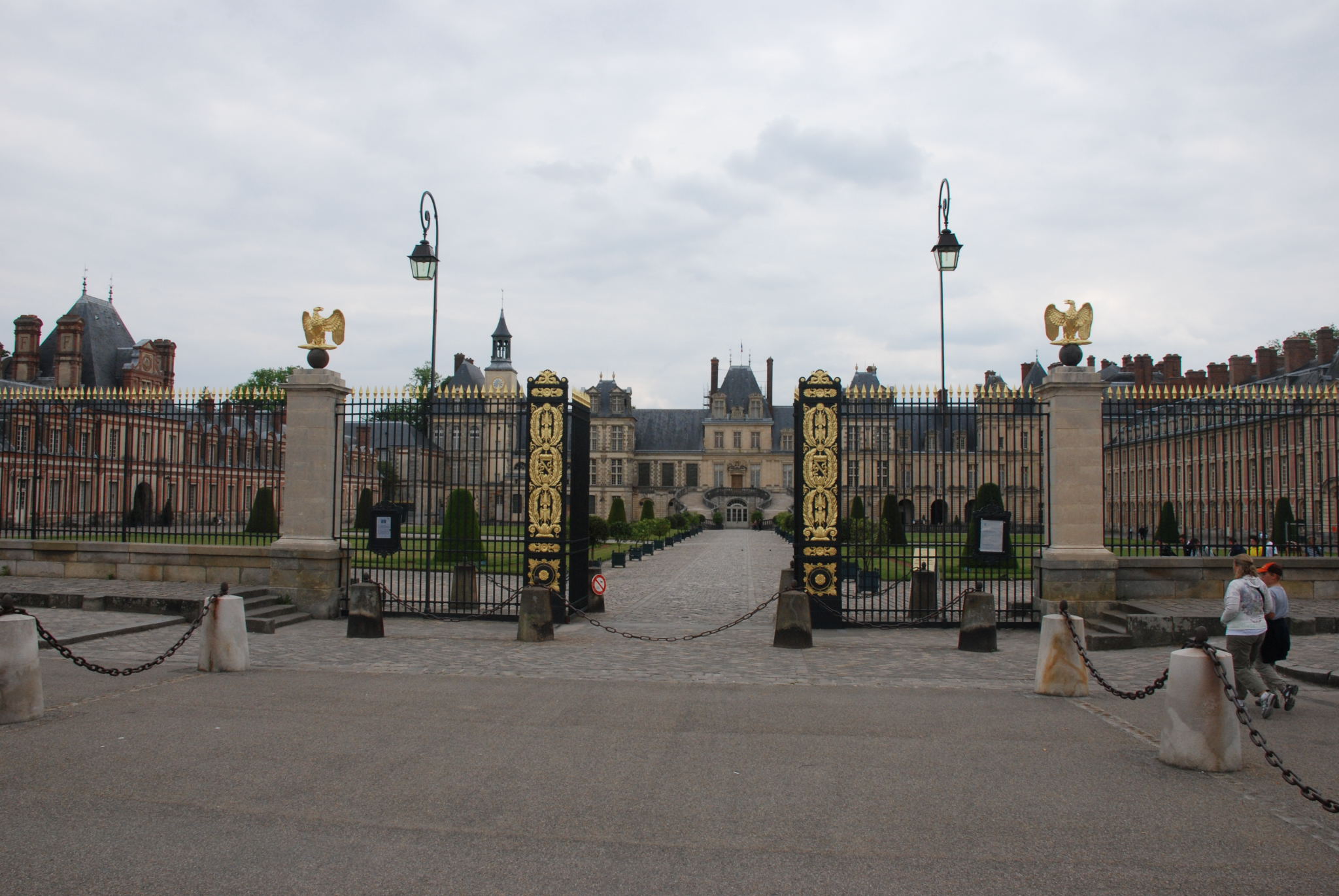
The next stop was Fontainebleau. This is another large palace – said to have about 1900 rooms but not as ornate as Versailles. This palace was first built-in twelfth century and then extensively remodelled in Renaissance style by Francois I. As seems to have been the style in those days, all of the walls are surrounded by wood panels, tapestries or wall papers. The most important point about this palace was the affection Napoleon Bonaparte had for the place. He used to refer to it as his home and it was here that he abdicated after he lost to the British. He bid good bye to his people from the steps of the horse-shoe staircase that leads to the entrance of the palace. Napoleon’s bed chamber was impressive but not overly ornate or decorated (compared with what used to be in style in those days) and it was a strange feeling to stand in that chamber and realise that the great Napoleon stood there once!Another interesting aspect of this palace is that the Mona Lisa (La Jaconde as the French call it) once hung here. This was also the “sorting office” for sending precious art pieces to secretive locations when war broke out in 1939. The curator at Louvre was responsible for keeping the precious art pieces, including Mona Lisa, safe throughout the years of war and he did this by secreting those away in far off chateaus.

We then moved on to a small village near the palace called Barbizon and it was an interesting place. A nice, quaint village in a very beautiful setting, it is home to some well known artists. We saw a house where Robert Louis Stevenson spent some time. I like these small villages that one comes across in Europe. I have always been fascinated by those that I have seen in England and I guess France has its fair share too. We are leaving Paris tomorrow and I am looking forward to the visit to the country – I hope it is as beautiful as the English countryside is in summer.Parisitself was a revelation to me. I had always considered London as the most beautiful city I have been to – because of the nice old buildings and the walks that one can do around the city – but I now think Paris is better. I guess what tilts the scale is the presence of so much beautiful art.

29 October 2005

We arrived at Sydney today after a rather long journey. We had taken a circuitous route through Korea because of the free tickets and so it took about thirty hours to get to Sydney after we started from Bangalore– almost like travelling to the US. Sandhya and Bharath handled the journey pretty well and we were not much jet lagged either – the fact that Sydney was only five and a half hours ahead of India being a definite help. We rested in the morning and went to see a Koala Park in the afternoon. This was like a zoo and we could see some of the Australian animals and birds there, like Koala, Kangaroos, Wombat, Emu, Cockatoo and many others. The Koalas are peculiar animals and they sleep twenty hours in a day. It seems they feed on leaves only and so they do not have much energy and that is why they sleep so long. They go up high on the trees and wedge themselves into the forks of branches and go to sleep. The Emu is supposed to be a dangerous bird that can kill a man by stomping on him. Needless to say, we kept a respectful distance. There was Peacock there and it had spread all its feathers and was walking around like that. Some of the birds are so colourful that they looked as if a child had painted them in his colouring book – very bright and stunning colours. There was also a demonstration of shearing of sheep. That was all we did that day and went to bed pretty early.

30 October 2005

We went to the Blue Mountains National Park in the morning. We left Bharath at home as he would not have enjoyed this. The Blue Mountains are just an hour and a half drive from Sydney and are a majestic sight with a very tall waterfall, forests and some nice small towns. It was not a day well suited for sight seeing as it was raining cats and dogs and we could not see much. We did go see the waterfall but the full majesty of it could not be seen because of mist and rain. We then drove to the city and visited a technical museum. Truth to say, I felt that it was no match to the Viswesarayya Technical Museum at Bangalore. The only interesting part was a display related to space and space travel.
31 October 2005

This was the day reserved for Sydney city. In the middle of the city, they have a Chinese Garden. This has been put up with assistance from the Chinese Government. It was beautifully landscaped and sculpted garden with some small lakes and nice flora. From there we went to the waterfront where they had an old destroyer, submarine and tall ship as museums. We toured through all of those. The submarine was intriguing and I cannot imagine how people spend months inside such a thing. Nowhere could I stand up straight and there were dials and controls and pipes all over the place. The cabins (even for the Captain) were so small with narrow bunks and small doors. It must be a strange feeling to be under the sea in a metal cage with no ability to see around oneself. The tall ship was also an interesting experience. This one was more decked out than the one we saw at Glasgow. This ship had been sunk off Queensland coast but was recovered and repaired. Seems a good portion of it has been retained from when it was built. The ship has been installed with a diesel engine also now and it sails on alternate Saturdays. That must be a nice experience – to go around in a sail ship and it must also be a wonderful sight to see the proud ship with all her sails out. I cannot imagine how it must have been to cross oceans in such ships when the seas were rough. I will never understand how people would gladly undertake such journeys, such risks. One must respect them indeed because the human race has progressed because of such adventurers who have seeked the unknown, to know what lay beyond and often perished in the task. Many are those unsung heroes who have gone to unknown deaths in unmarked graves. The next stop was the aquarium. They have a glass tunnel under tanks with sharks, rays and such. The last stop was the Sydney Opera House. It was a pretty tiring day. We then went to pick up the car for us and went home. We have rented a car for the next few days to drive to Canberra and Melbourne.

1 November 2005

We left Sydney early in the morning and drove to Canberra. It was raining very heavily most of the way and often the visibility was pretty limited. We arrived at Canberra at around ten after a three hour drive. The first stop was at the War Museum. They had a light and sound show that showed a heaving bombing sortie over Germany. That action involved 500 planes and over 50 were lost that night. It gave some understanding of how life must have been in those times of war. They had also several planes, tanks and guns from the First and Second World War periods. We then went to visit the New Parliament House. One could go inside and see the chambers were the lower and upper house representatives met to conduct business. The Parliament House was not an impressive sight at all and so we decided to skip the Old Parliament House. The only interesting display at the New Parliament House was a page of the Magna Carta. Seems it is a copy made in 1280 and it is the only surviving one of the four copies that were known to have been made. That took me back to the visit to Runnymede. The next stop was the Royal Australian Mint – one of the four or five mints in Australia. We pressed some coins for ourselves and then went to visit a miniature township. That was very exciting for Bharath. The township had houses from many different countries and that was a nice sight. Canberra is a very small town and driving around is pretty easy. The last visit was to the Telstra Tower and we could see all over Canberra. It was pretty cold and windy up the Tower. We ate at an Indian restaurant that night and it was quite good – a nice surprise that.

2 November 2005

Today, we drove to Melbourne from Canberra. We did not start very early and it took us about eight hours to get to Melbourne. Driving in the freeways in Australia is pretty easy as the roads are not crowded at all. It was past four by the time we got to our hotel. We tried to go to the beach in the evening but we lost our way in the town. We managed to get back to the hotel without much difficulty though.

3 November 2005

We visited the Yarra Valley, which is a place of great natural beauty with some very good wineries. We visited the oldest winery in the region – The Yerring Station – and I also bought a bottle of wine from there. We then drove down to a place called Dandenong Ranges and there we took a steam railway ride – resurrected from the 1900s – called Puffing Billy, which lasted for two hours. The views were stunning as we traveled through the forest. It was just after a shower and it was very beautiful. The trees looked fresh and all dressed up. It seems that this railway line is staffed by volunteers mostly. I was talking to one of the conductors and he told me that he reckons the volunteer work was worth about Two Million Dollars a year. He lives in a small town nearby and he said that it was good to live in a small town as it was peaceful and quiet. However, he noted that he was thankful that the town was still big enough to have a couple of Doctors and a school. The last stop was at a place called Philip Island where we could see some Little Penguins come off the sea at dusk. They came in groups, walking awkwardly and fearfully – seems they are afraid to come in the open because of predatory birds. Overall, it was a wonderful night and we went back to the hotel tired but satisfied.

4 November 2005

Today morning, we left Melbourne to drive to the Great Ocean Road. Midway, we stopped at Torquay at an airfield for some joy flights on an old Tiger Moth and an old Tiger Cat. The Tiger Moth dated back to 1930 and the other one was also pretty old. As the old planes could not carry all of us together, Sandhya and Bharath went up in the Tiger Cat and I went in the Tiger Moth. The flight lasted for about twenty five minutes and we went out over the sea. The pilots were pretty jolly and did some minor stunts. When I was in that plane, I somehow felt very free and liberated. I could get to know what Richard Bach meant when he wrote “One” – a great feeling indeed. That was the highlight of the day. We then drove down to a place called Apollo Bay where we are staying the night. We are staying in a Bread & Breakfast place which is right by a beach. We had a walk on the beach but the water was incredibly cold – Bharath had some fun with building sand caves and tunnels. I bought two small bottles of wine and am finishing off the last bottle as I write this. Food is a challenge for both Sandhya and Bharath and we have settled down for boil-and-eat-noodles and some fresh mango for the night. People in Australia are quite friendly and relaxed. They are willing to talk to you and I listened to a guy telling me that he had just bought the wine store a month back even as he was packing up the wine. The outdoors are wonderful and of all the countries I have seen, I think I like this the best – for its natural beauty – the only deterring thought being that of all the poisonous reptiles here. I was just getting eloquent with my writing when Sandhya barged in with dinner (noodles that I referred to earlier).
5 November 2005

We are following the Southern Touring Route as suggested by one of the tourism web sites for the state of Victoria. Today we drove from Apollo Bay to Port Fairy. On the way, we stopped to see the light house at Cape Otway. It was a good experience seeing a lighthouse as I have never been inside one. This one dates back to 1848 and as usual, I got that feeling of awe mixed with a sense of appreciation for the days gone by – a time when men were men and survival itself was an uphill task. I always get such a feeling when I visit places of historical significance, don’t know why! We moved on from there to a tree top walk inside a national reserve forest called Otway. This is a steel walkway which takes you to the height of tree tops – about forty seven metres – and that was a rare sight. It was a rainforest and most of the trees in the forest were very tall and went higher than fifty metres. These trees had no branches at the lower levels and had branches at the top only – so it was one straight, bare trunk that went down for 40 metres or so. Imagine that! This is supposed to be the highest and longest tree top walk anywhere in the world. The total walk was about two to three kilometres and Bharath handled that pretty well. The poor fellow was pretty tired but hung on. We drove on along the coast – we were on what is called the Great Ocean Roadand that covers a long stretch from a place called Torquay to another called Warrnambool – taking in breathtaking scenes as they came. This section of the cost is rather cruel and a forty kilometer stretch is supposed to have claimed about one hundred and forty ships in the days gone by. This was the first part of Australia that ships from England reached and many an immigrant ship went down in bad weather after hitting these razor sharp cliffs. Of particular interest is something called Twelve Apostles. These are twelve stones jutting out of the sea – cut out from the rest of the land due to constant erosion by the ocean. Not all the twelve apostles are visible but they are a very, very beautiful sight. There were helicopter rides that offered a view from the sky but we did not take that. Just past the Twelve Apostles is the site of the most talked about ship wreck of this coast – the site where the Loch Ard ran into grief and death. The Loch Ard was a Dublin registered clipper carrying some immigrants and merchandise from Dublin to Melbourne. She braved 91 days of gale and hot tropics and disease and rations and shortages before they sighted the Australian coast. Alas, it was a bad, dark night with the demonic winds waiting to destroy hapless ships and unfortunately, our Loch Ard could also do no better. She dashed against one of the cliffs and went down. Of the one hundred and forty people on board, only a passenger called Eva Carlisle and a sailor called Thomas Pearce survived. In the Warrnambool museum, they have a light and sound show that brings out this tragic tale very well. We saw this and it was well worth the late night effort. We stayed at a B&B today also, which turned out be a very charming house.

6 November 2005

We had a relatively light day today and we checked into our B&B by around five pm after finishing the sightseeing for the day – a drive from Port Fairy to Halls Gap. Halls Gap is a town that was founded by a person called Hall who actually found out a way (gap) through the Great Dividing Range. This is a relatively important town in this region (according to descriptions in the tour books) and I was dumbstruck by the appearance of it – all it has is one street with exactly five merchant establishments! Anyway, I could get some wine there – unfortunately, they had big bottles only and I bought one and am on my third or fourth (I’ve lost count) glass as I write this. Earlier in the day we visited some scenic sites in the Grampian mountains. Once again, it involved some walking – total distance of about four km – and Bharath managed that quite well. We could also see a waterfall –MacKenzie Falls – in the Grampians. There were views from a distance, taking in the whole falls, and one could also go to the foot of the falls. We did not go down to the foot of the falls as that involved some steep climbing on the way back. It was a majestic sight with water falling in sheets. This was here that I learned that waterfalls shift their position every year – by a few centrimetres. It has something to do with water following the path of least resistance.
7 November 2005

We visited a site which had some aboriginal art painting. So deserted were the country roads that we saw only two cars as we drove from Halls Gap to the Bunjils Shelter, to view the painting. The painting was drawn by the Koori aborigines. This was pretty old but the age of the painting has not been ascertained. It shows Bunjil (a creator figure) with two dogs. The colours used were brown and white. We were the only visitors here and that was an eerie feeling. From there, we drove to a town called Ballarat, which was a gold mining boomtown. Ballarat came up in the 1850s and people came from far and near to seek their fortunes. They have a chart showing the places that immigrants came from and I could also see that there were forty six Britishers that came from India and nineteen Indians in Ballarat in 1861; pretty interesting statistic! The two largest gold nuggets in eth world have been found at Ballarat. In fact Ballarat has figured in a Sherlock Holmes story also. The museum brought out the hardships that people went through to get some of the yellow metal. I will continue to be amazed at how much we humans value this seemingly useless thing. They have a wonderful outdoor museum called Soverign Hill there and they have recreated a significant portion of the old boomtown there, complete with people walking around in period costumes. It was like being in one of the towns out of a Louis L’Amour novel – very interesting. We went down into a fake mine and also saw a gold bar being poured. There were also some hansom carriage rides and altogether it was a jolly good experience. It rained a bit and took away some of the fun but it was enjoyable all the same.

8 November 2005

We flew back to Sydney today and packed for our departure the next day. Overall it has been a wonderful trip. All the effort that went into the planning was fruitful. I think it was more enjoyable because we took it easy and went around in a relaxed manner instead of rushing to see one sight after the other. Back to the grind now!

The wake-up call rings and up I go. There has to be something wrong – it cannot be 6 so quickly. After all, I just went to bed a few minutes back. Unfortunately, my watch seems not to agree with me. May be an hour doesn’t have 60 minutes at night. This should be the subject for a focused and disciplined scientific research. I stumble to the washroom and brush my teeth. There is a coffee maker in the room. The thing is an ingeniously devised devilish contraption designed to test the intellectual abilities of the average man. I finally figure out how to get it going. I congratulate myself on my ability to rise above the average man’s intellect and think gratefully of my Thermodynamics teacher. No doubt, my in-depth knowledge of Thermodynamics helped me solve this vexing issue of everyday existence. Mind you, in Bangalore, I have only to think about human psychology and its workings to get a coffee, as the issue at hand is only to persuade my wife that she should get up and make me the said beverage. No Thermodynamics is called for.

Breakfast is bacon and eggs – I had eggs and bacon yesterday. I engage in wishful thinking about idlies and stew. Doesn’t help any – the bacon and eggs still taste as bacon and eggs. With a deep sigh, I ask for a glass of water. The waitress sets a glass full of ice before me. I cannot understand – may be this is the custom here, they serve ice before they give you water. Five minutes pass, no sign of my glass of the life sustaining liquid. I make timid enquiries and she points to the glass of ice. Aha! There is some water in the glass – the only point being that it is 99% ice and 1% water. This is the way Americans (apologies, Canadians – I am reminded of Bruce’s comment about Canada not being the 52nd state in the US of A) drink anything. Any way, the fundamental reality called hunger helps me in getting over these minor obstacles and soon I am chucking it away as fast as I can.

Office is quite close from the hotel – ten minutes’ walk. I grab the monstrosity that is called my laptop and trudge towards the office. There are no other pedestrians – only cars of varying sizes and shapes. Nobody walks in this place. I get suggestive looks from people driving by in their cars and I alternate between feeling like a madman and a pauper. The Subex slogan comes to my mind and so I persevere and reach the office. It is 8.30 and most of our colleagues are already in. They say coming in early helps them to beat the traffic. Every year they have to come a little bit earlier than the previous year to keep beating the traffic. The other guys are catching on, you know. May be at this rate, they will soon start working nights to keep beating the traffic. In any case, this is good – an early start is a good start. I get to my room and settle down. A few hours pass.  I get a sneaking suspicion, is anybody in the office really or have they all left? Have they started working nights already? I cannot hear any sound, neither has anybody come to my room. I make a round of the office. All is in order – people are still in their rooms and they stick to their workplaces. I think of Bangalore where I spend most of my time in the canteen (under the guise of bond building – Management by Walking Around).

My diary reminds me that I need to phone a business contact.  I phone him and reach his voice mail. You see, one never expects to get a human being at the other end of the line when you make a phone call in North America. You always get the voice mail and you leave a message. When you are in Rome, do as the Romans do and the same holds good for North America. So I leave a message. After 10 minutes, my phone rings. I ignore it, as the custom demands that the caller should reach voice mail only. After the caller disconnects, I check my voice mail. It is the business contact returning the call. He has left a message in response to my message. I call him back and leave another message in response to the message he left, which was in response to my earlier message and so the game goes on. I am informed that this game is called telephone tag. It is really very simple. You transact business the same way you would, using e-mails; the only difference being that you speak instead of typing. No need of MS Spell Check.

By and by, we get to 4 in the afternoon and it is time to go home. We have a few short meetings. Most of the tasks have been accomplished and they have been done well. I am impressed. The output is very good.

We go out for dinner to a Greek restaurant. Such impressive names as “Soulakis” (don’t know whether I got it right) mean nothing to me. I am as dumb as a doorbell in this situation. Through the haze, I hear the word chicken and latch on to it. We order wine. It is only now that I have fully understood the meaning of the phrase “washing it down”. No wonder wine and beer play such an important role here. Finally, I get to bed. I reflect on the day and surprisingly enough, come to the conclusion that it had been a rather nice day!