Archive for the ‘Uncategorized’ Category

A trip down memory lane….

Posted: October 18, 2012 in Uncategorized
Tags:

18 October 2012

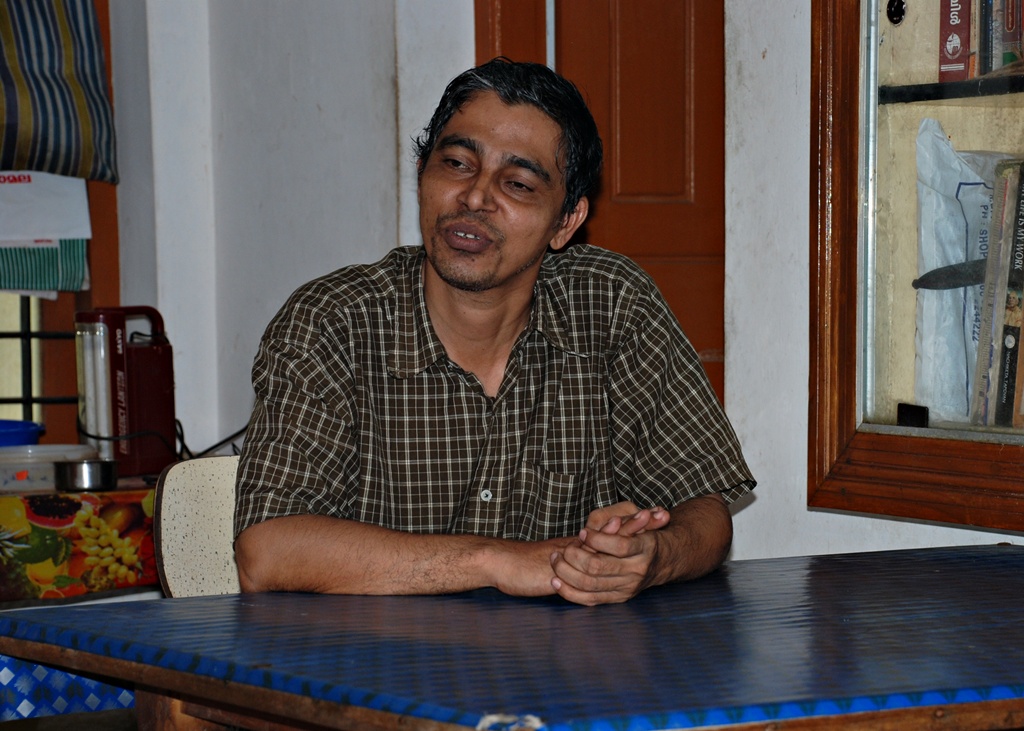
It is strange how our association with the past increases as the years go by. Last month, I heard that one of my teachers from Engineering was retiring and that brought up some old memories; long forgotten conversations, comments that guided and moulded. Radhakrishnan Sir had been a favourite with us as he came through as a genuine individual who cared for our future. When I heard of his retirement, I phoned him up and I was very pleasantly surprised when he recalled me even after all these years. It was also a matter of personal pride that he recalled me by my association with Panchajanyam Library. When we talked, he invited me to his house and I promised to visit whenever I was in Kerala next.

Accordingly, I set off yesterday along with two of my friends – Madhu and Murali. As we were driving there, I kept thinking about how the meeting would be and whether we could get back into the easy conversations we used to have on difficult subjects like philosophy. A long twenty three years had flown by and we had gone different ways. I had grown wiser in the ways of the world and had, to an extent, managed to utilize, benefit from and compromise with the base ways of the world. On the other hand, Radhakrishnan Sir had steadfastedly declined to compromise and had withdrawn bit by bit; the wheelings and dealings of the “worldly wise” were not for him. His was an outlook derived from the strength of Indian philosophical thought and wisdom and that was how he approached engineering and physics. I remembered him as a simple soul with simple needs but with strong conviction and awareness of what really matters.

I have to admit that I was a bit anxious when I walked up the steps of his house. All my concerns were blown away when he appeared. My friends, who expected an “engineer” were totally floored by the dhoti clad, smiling individual who welcomed us with folded hands. No grandeur, no pompous words and we started off exactly as we had left off more than two decades ago. We talked about the college and what he is doing currently and about his very famous ancestor, Kunchan Nambiar. The talk soon turned to values and life and sure enough we soon got into Vedas and Upanishads. His father was also present in the room and he is an expert in Sanskrit and Vedas. Once again, I was a student and for a brief while, I had the good fortune to be transported back in time. Recently, I had heard a couple of students say that Radhakrishnan Sir did not teach well and I could only feel sorry for their ignorance; it is surely their loss. It is not often that you have an opportunity to listen to a pure soul, a person with nothing to hide, but has a lot to share. This was what we had seen in this unique teacher when we were in his class – a pity that the later generations seem to have missed out on that.

An hour and a half passed like a few minutes. As we left, we were all silent for a few minutes. As I sit down to write this, I find that my writing skills are totally inadequate for this task. What do you say about someone who is only bothered about being a good human being, someone while being brilliant in his own field never bothered to chase commercial success, someone who is deeply concerned that his students should imbibe the right values that will help them in life? He did not ask me how successful I was in my career or otherwise, he was only interested in how I am as an individual. He gave me a gift of a book and some writings. I was humbled, impressed and touched by this very genuine person who only wants to make this world a better place to live in. I salute and bow my head in respect to my teacher, who practices what he preaches. To me, he is a great teacher and I know that many of my class mates feel so too. The mark that this teacher has left is valued and cherished even after a quarter century has passed. If this is not success, what is?

4 June 2012

My business in Geneva got over early and I decided to use the opportunity to have a look around. Geneva is a very tourist friendly city. In fact, the city authorities provides all those that stay in hotels with a pass that allows free transport in public transport like trams and buses. This is the first first time I have seen such an arrangement in any city and I have to say that once you get used to the transport systems, this is very convenient especially  as taxis are very expensive.

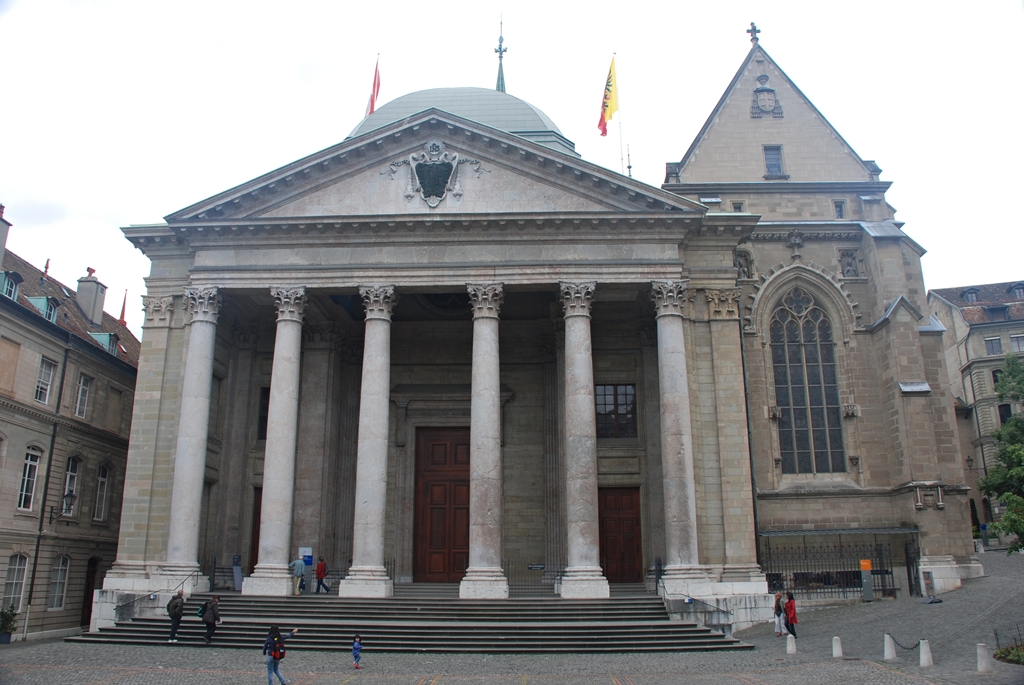
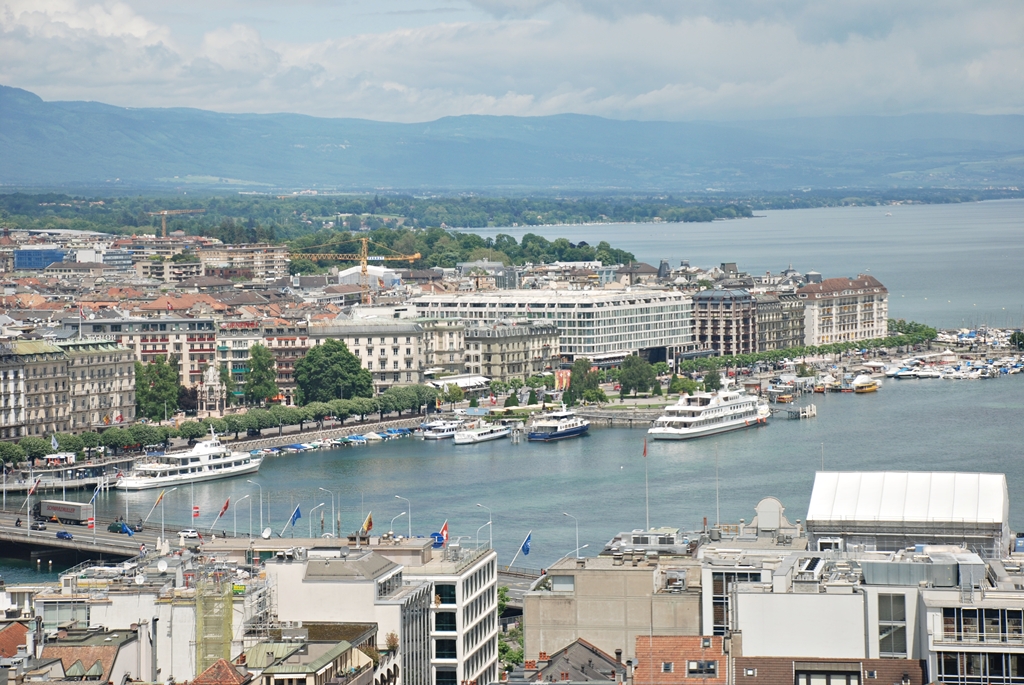
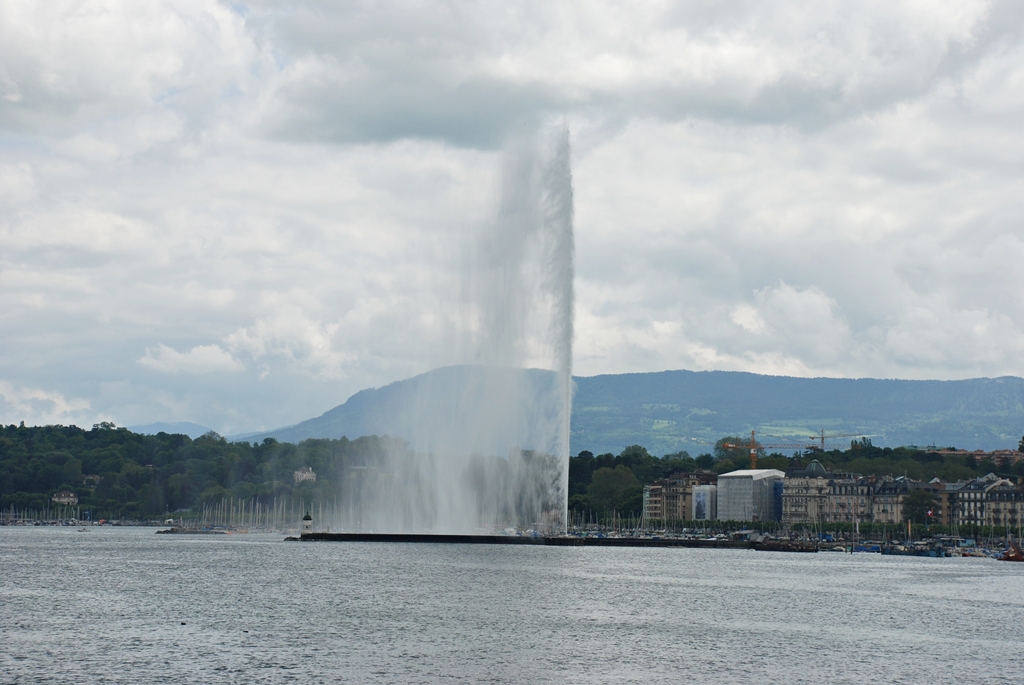
I have found that the cathedrals in most cities have good stories and so my first port of call was the Saint Peter’s Cathedral. It was within walking distance of my hotel and so I decided to walk there. On the way I passed by Lake Geneva with its iconic fountain that rises 140 metres into the air. It pumps out water at the rate of 500 litres per second.
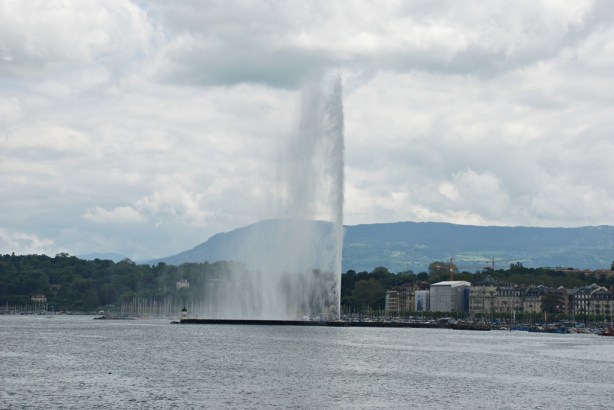
Geneva itself looks like any other Western European city – quite organised and orderly.

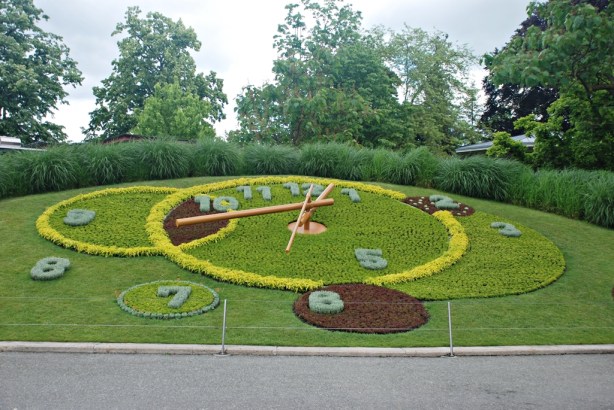
Just past the lake is the famous flower clock, which is a symbol of the great watch making traditions of Geneva. It was rather busy with many tourists (including Indians) posing in front of the clock. It was a bit of a wait to get a moment with no one blocking the view!
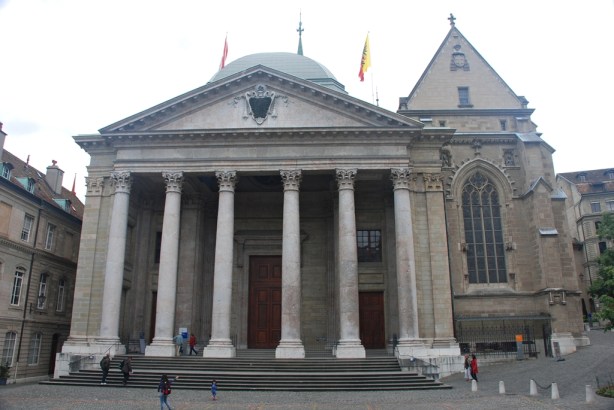
I was particularly interested in the Cathedral as Geneva has a history of having been the protestant equivalent of Catholic Rome. In 1536, a person named John Galvin arrived in Geneva. He was fleeing the persecution of Protestants in France. St. Peter’s at Geneva has been a Christian place of devotion since 4th Century and John Galvin tried to bring in Protestantism but was expelled from Geneva in 1536. However, he made a triumphant return in 1541 and Protestantism ruled in Geneva till 18th Century. The French influence won over then and Geneva returned to Catholicism. Geneva is a city that speaks French even now and all the road signs are in French.

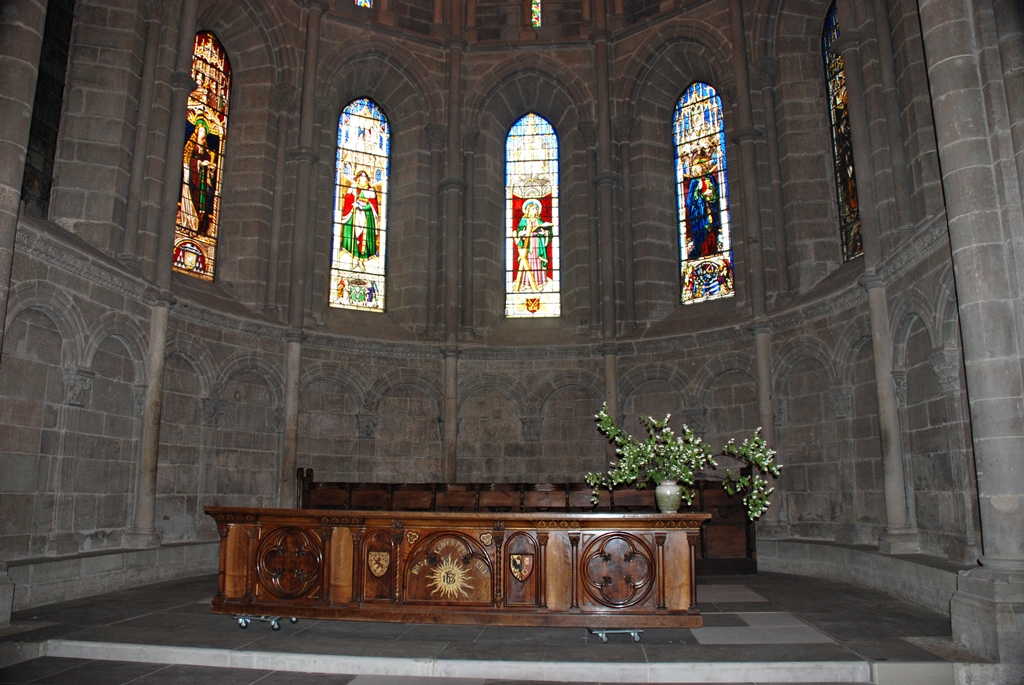
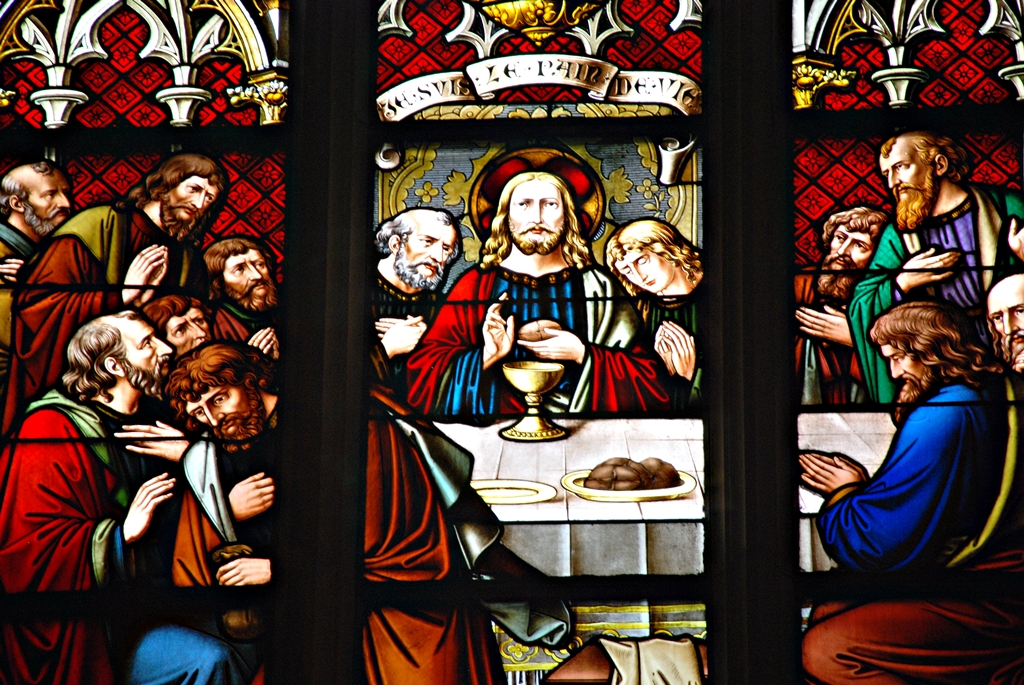
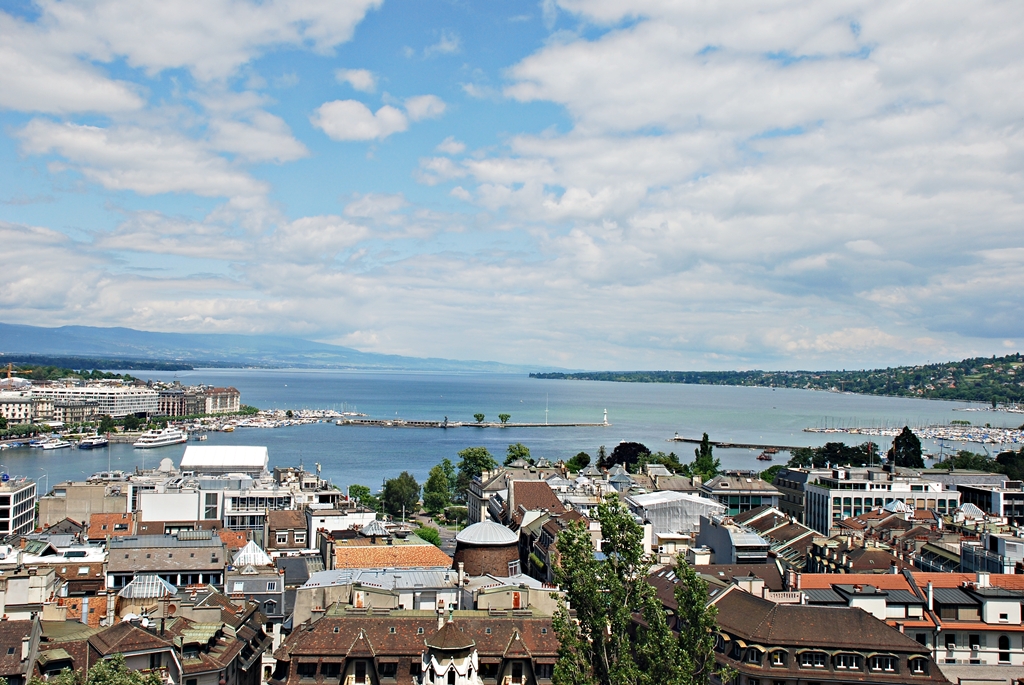
St. Peter’s Cathedral stands on a hill, as is the case with most places of worship. I have noticed this with Hindu temples as well; devotees have an urge to build the edifices for their gods at the highest points in their settlements. The Cathedral itself is a Gothic style building and resembles many others that I have seen in France and Italy. However, the interiors are not very rich, probably because of its Protestant past.
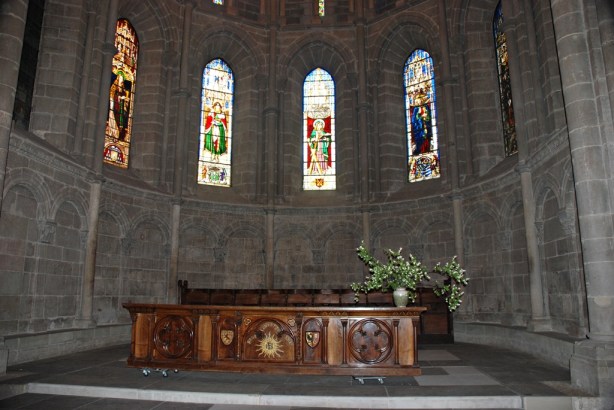
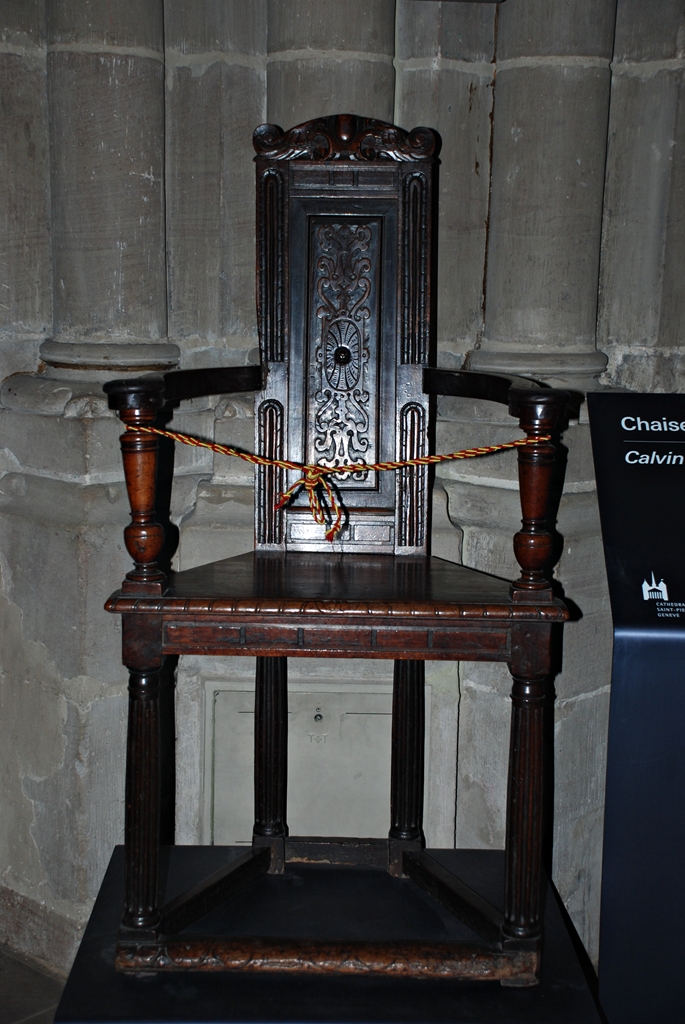
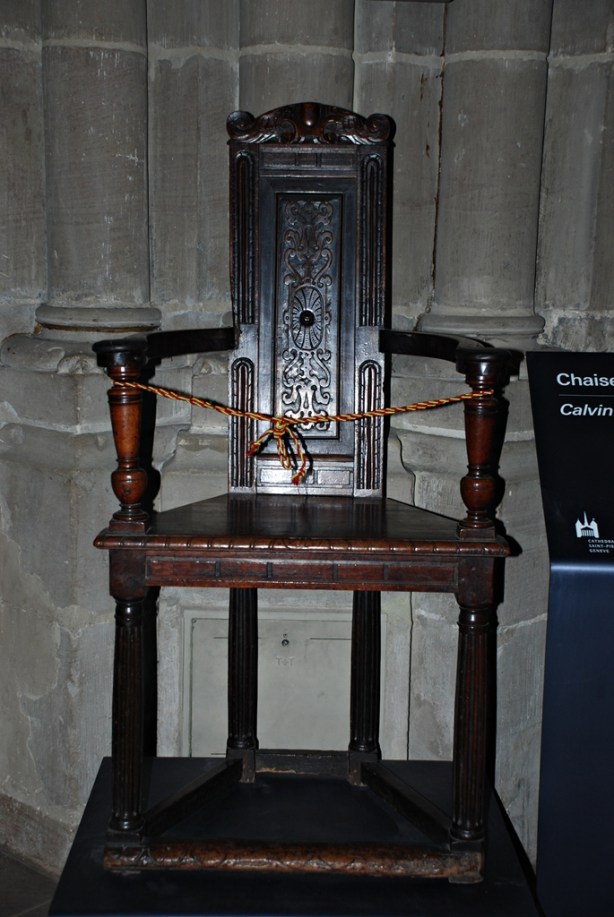
John Galvin preached from this Cathedral and the chair he used is still kept here. In keeping with the Protestant traditions, it is a simple, practical chair with no decorations.
There are two towers in the Cathedral – the North tower and the South tower. The North Tower offers panoramic views and is accessed through a steep flight of steps and you can then cross over to the South Tower. There are two big bells in The North Tower called “La Clemence” and “La Bellerive” and the former is rung for significant events in the city. These are very big bells and there are five smaller bells in the South Tower.
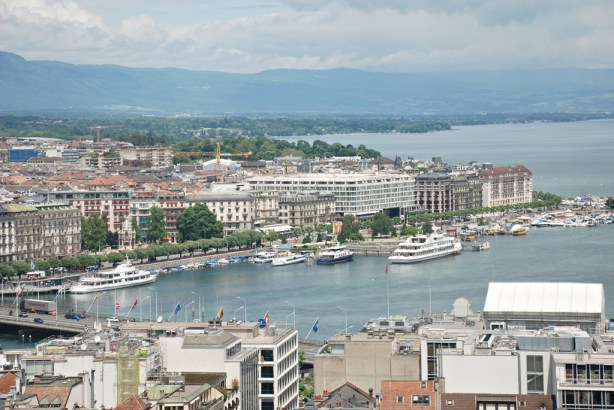
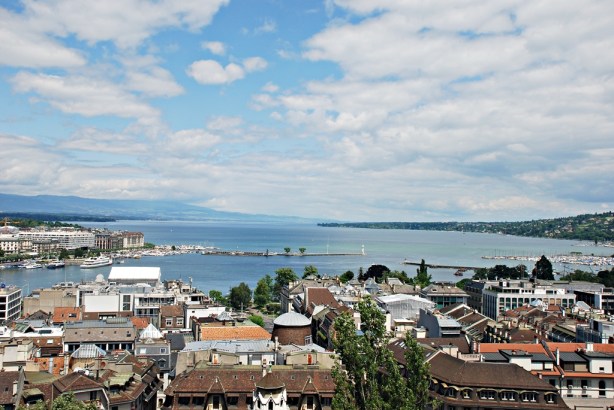
Until this time, I was not very impressed with the Cathedral as it was rather spartan because of the Calvinist influence. It looked like any other large church but not as ornate as one finds in places like Italy. I had read that there was an archaeological site which had been excavated under the church. I was in two minds on whether to look this up or not as I felt I may be squeezed for time for the next item on the agenda, a visit to the United Nations building in Geneva. In the end, I decided to give it a shot, especially as I was finished with the cathedral rather quickly; what a fortunate decision that was!

In 1976, the Cantonal Archaeological Service started excavating the site under and around the cathedral. This provided a wealth of information about the city and the site on which the current cathedral stands. This information is arranged as an exhibition, spread over 3,000 square metres.

Geneva first started as a settlement on the shores of Lake Geneva and the first traces of human presence go back to 11,000 BC in the Palaeolithic period. The Allobroges (Celts) ruled Geneva from around 330 BC till they were over thrown by Julius Caesar in 58 BC during his Gallic campaign. From then on, Geneva remained a Roman town till about 400 AD and then became a Christian community.

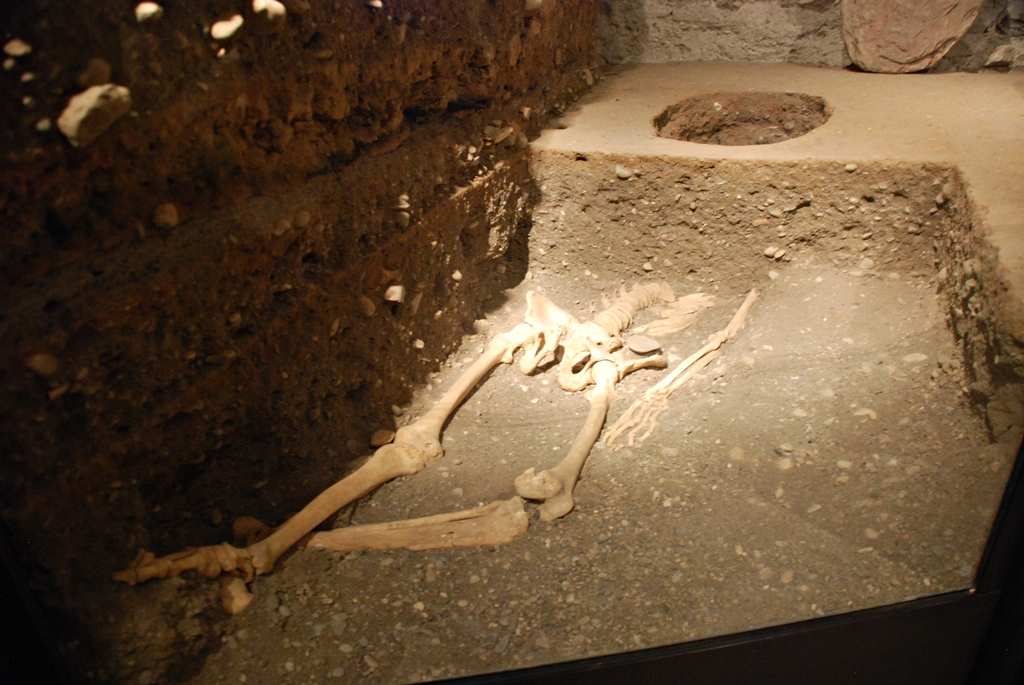
The site on which the cathedral stands today became a sacred spot at around 100 BC when an important Allobrogian chieftain was buried here in this site overlooking the lake, the port and the bridge over the  river Rhone. He must have been an important chieftain and that must have been why a monument was built for him. The skeleton can be seen even today and it was a strange feeling to look at the skeleton of a person that lived more than two thousand years ago. It was also interesting to think that the same spot remained a place of worship despite it having passed through different belief systems – the Allobrogians, Romans and the Christians. The skeleton does not have a head as that must have been removed to take to another place of worship.
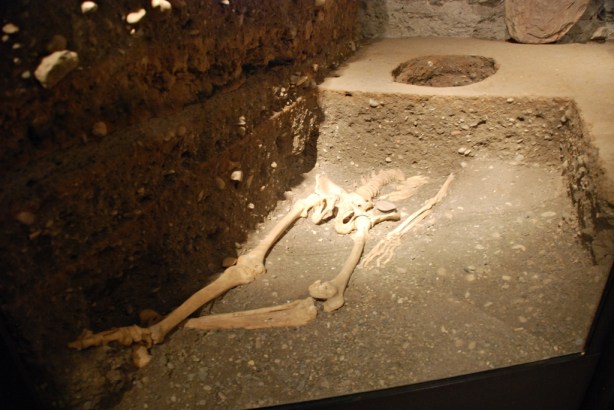
I have always been curious about the practice of burying the bodies of famous people in churches. This site started out as the burial ground of an Allobrogian chieftain and later on, a Roman crypt was built here. Later on, when Christianity arrived, there was a cult of relics and more bodies were buried here. So, I guess this interest to bury their important people in places of worship or converting the tombs into places of worship was something that was carried over from Pagan beliefs to modern day religions.

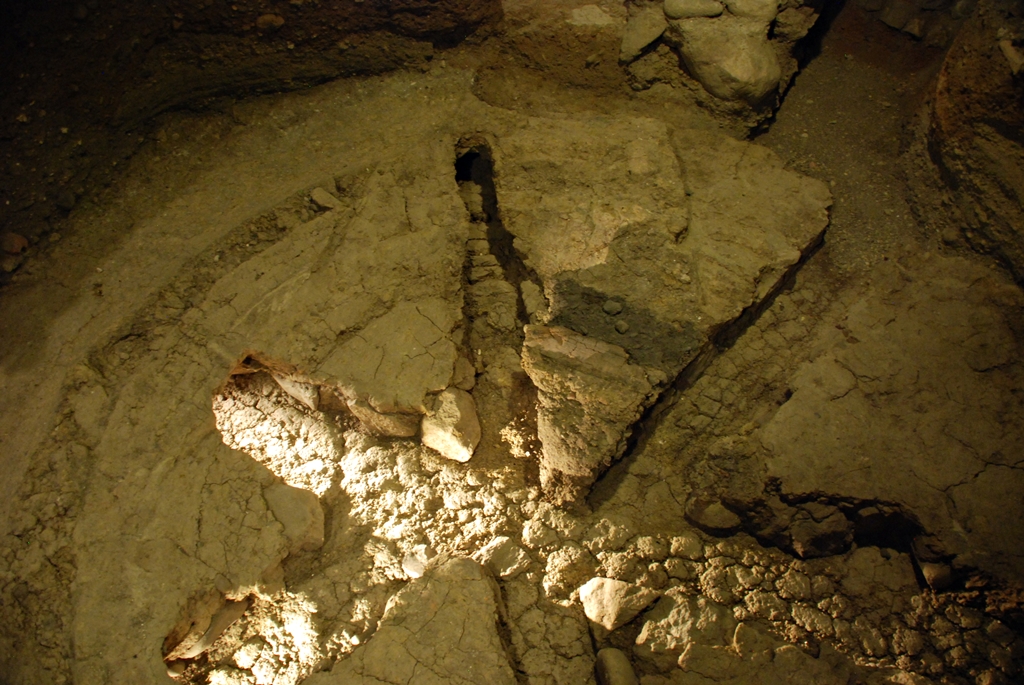
The excavations themselves were quite interesting. The site started out as a single small building and developed later on into a complex with multiple buildings meant for different purposes like worship, living etc. Over a period of time, these all finally got incorporated into the very large building we see today. Given below are some of the interesting sights from the excavations.
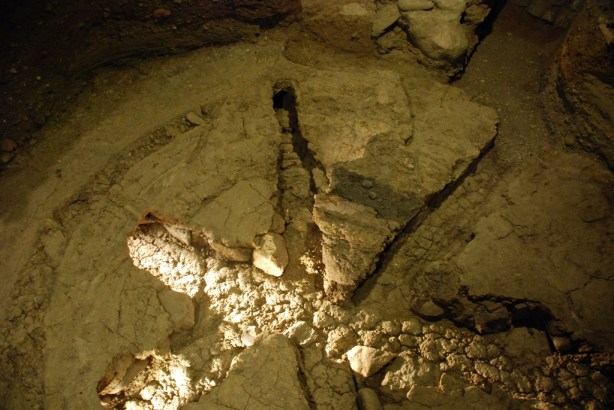
Mould used for making the “La Clemence” bell, fifteenth century
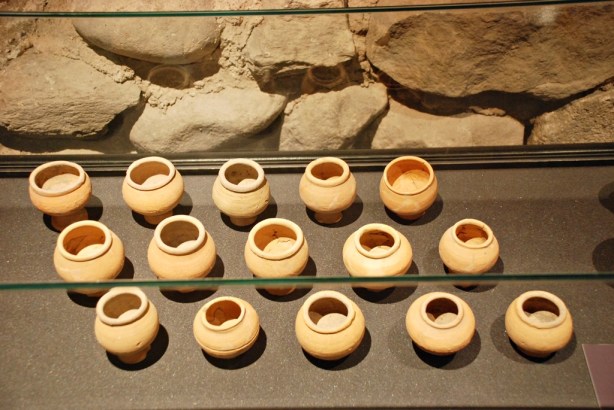
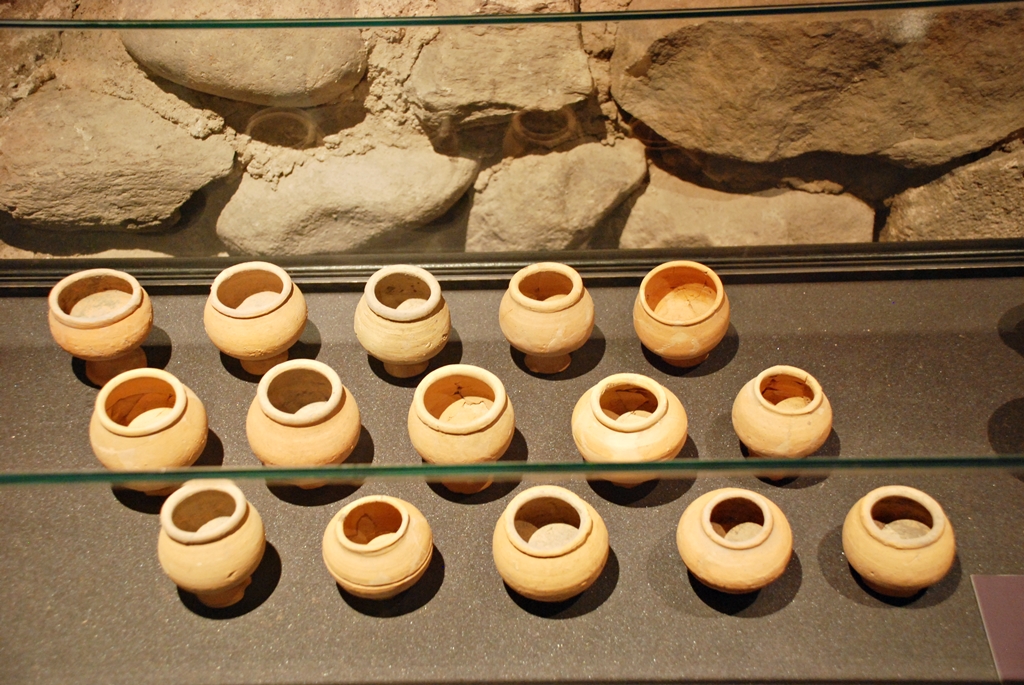
Pots from second century
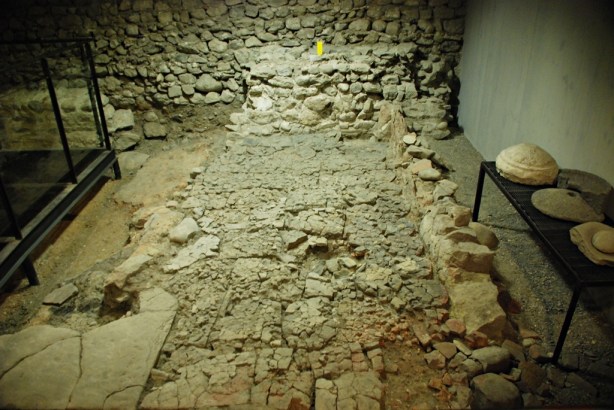
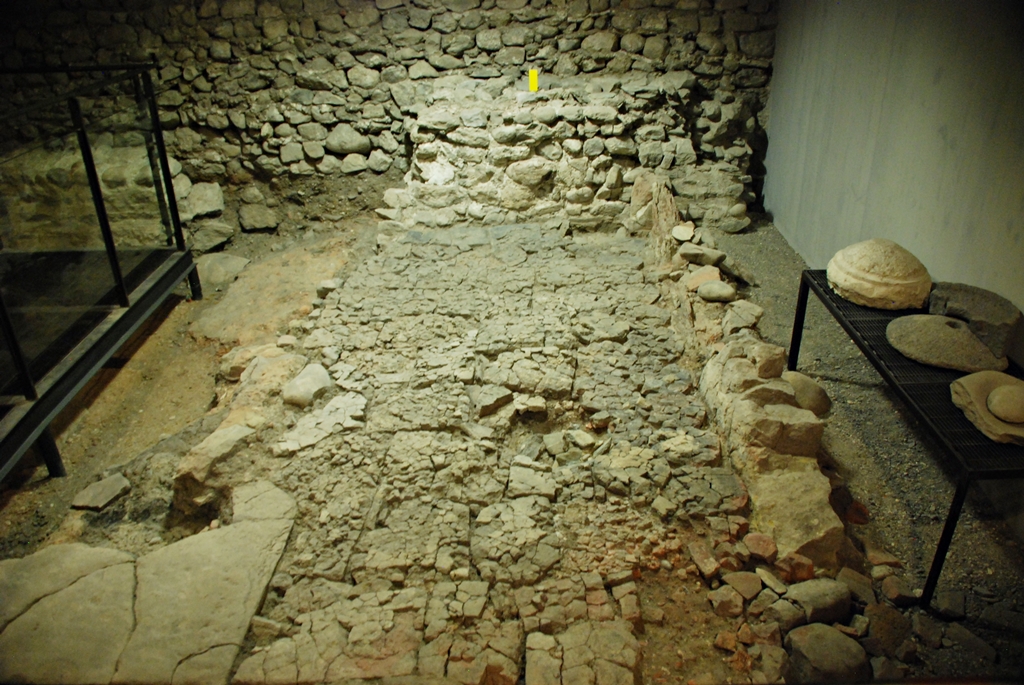
Heating room for corn processing, third or fourth century
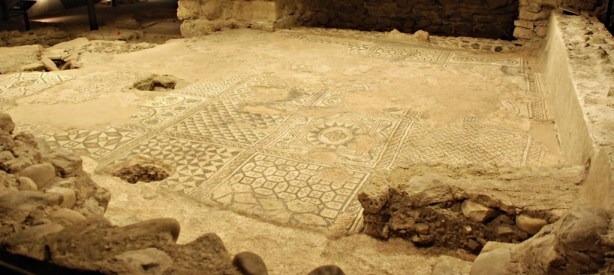
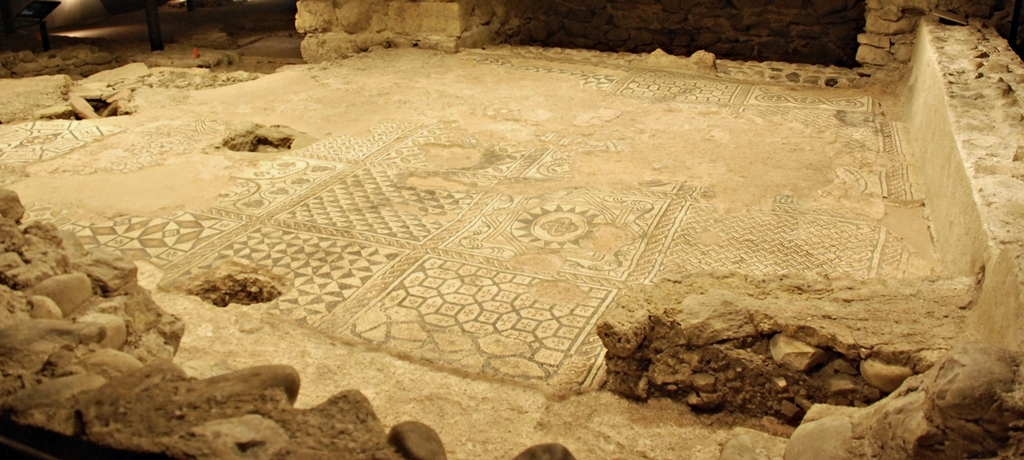
Mosaic on the floor of the reception hall dating back to AD 400
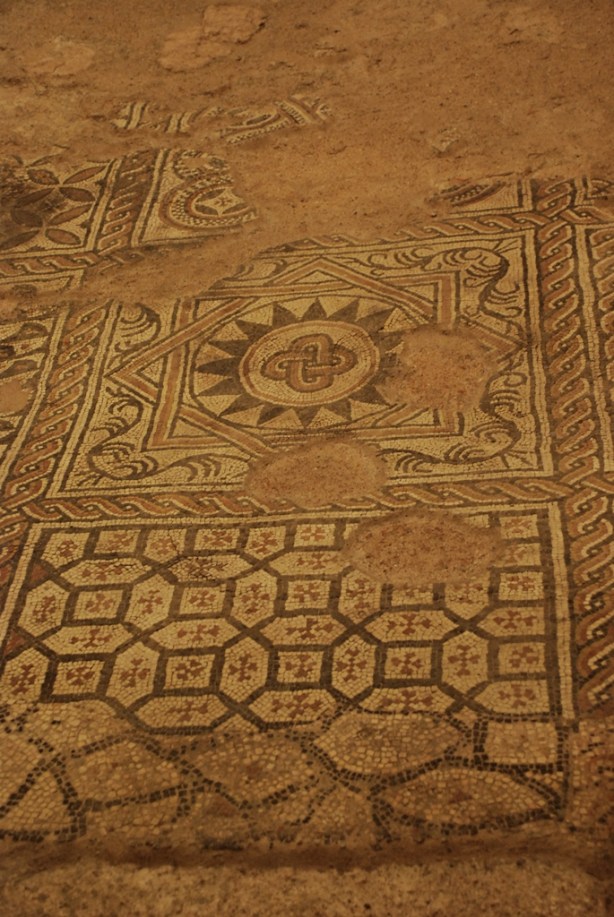
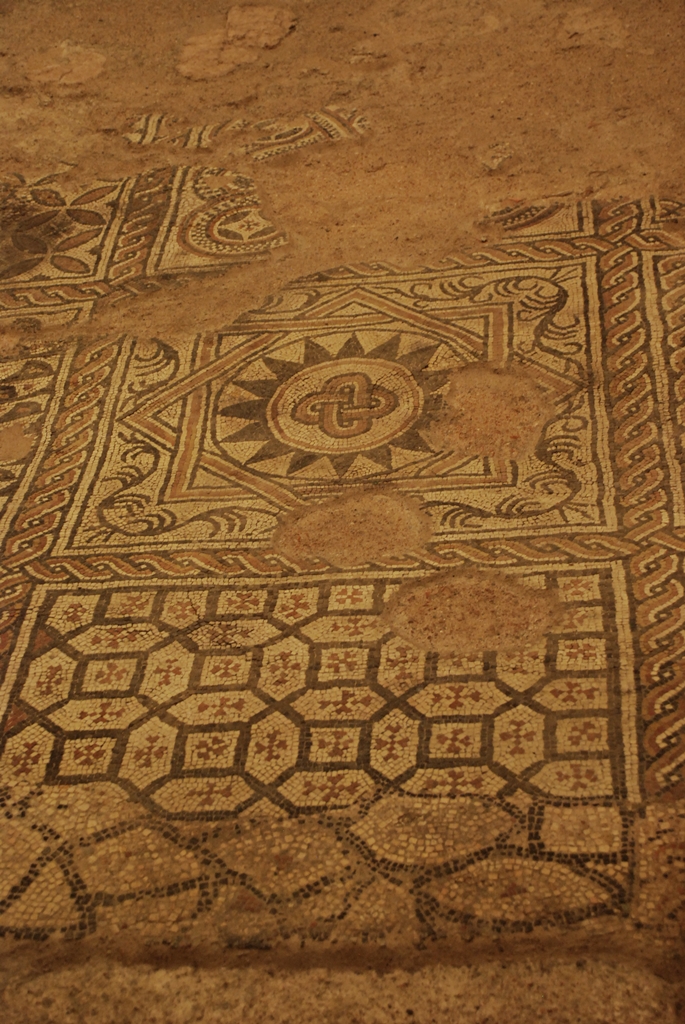
Mosaic on the floor of the reception hall dating back to AD 400

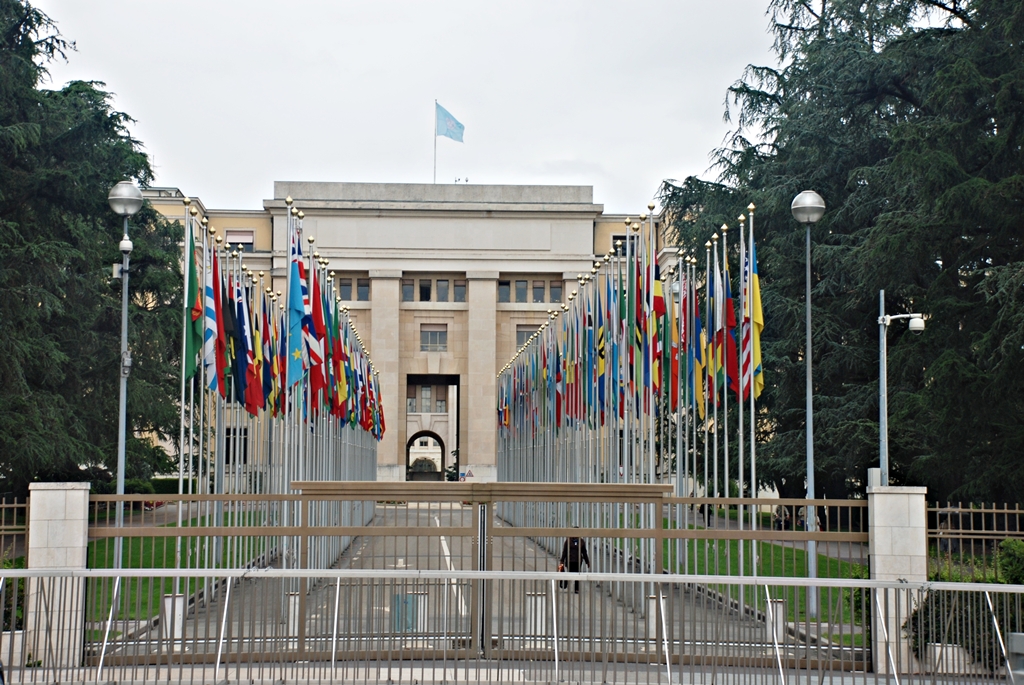
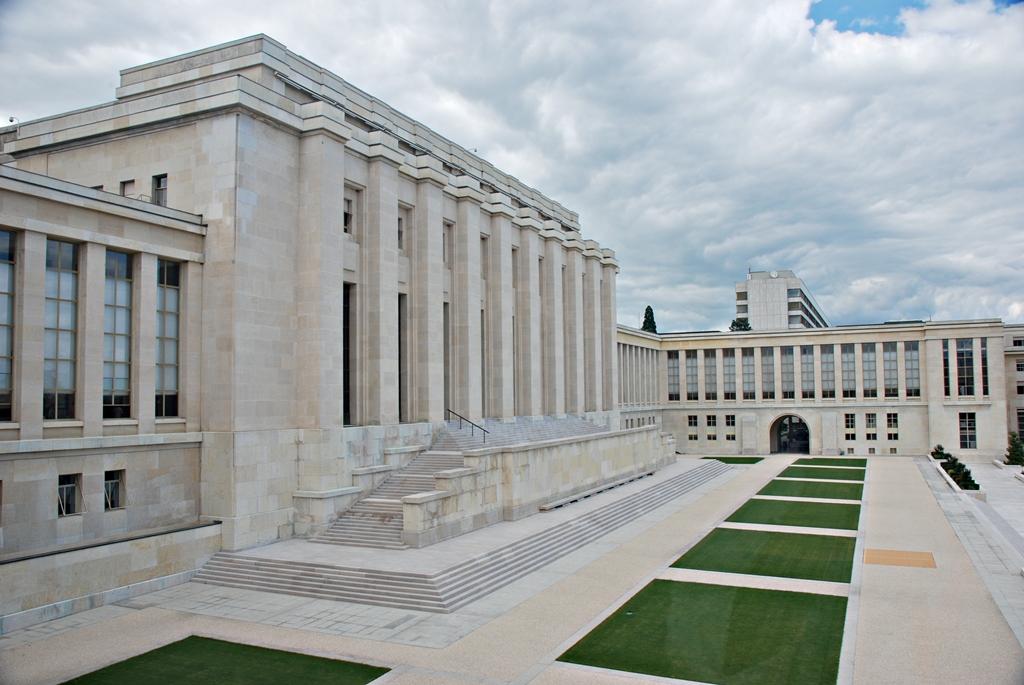
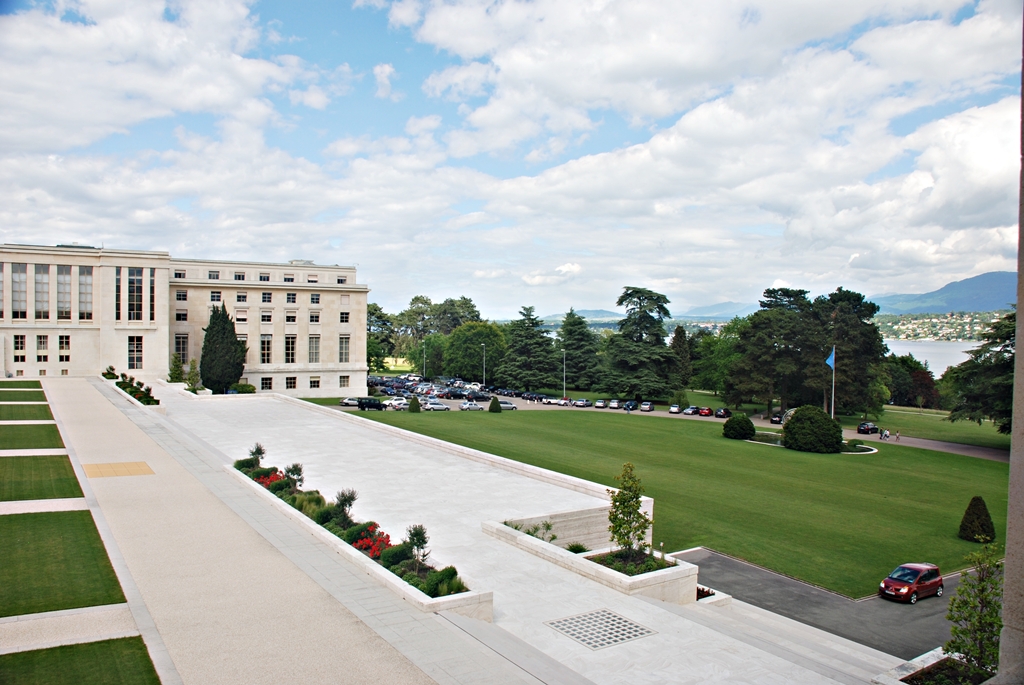
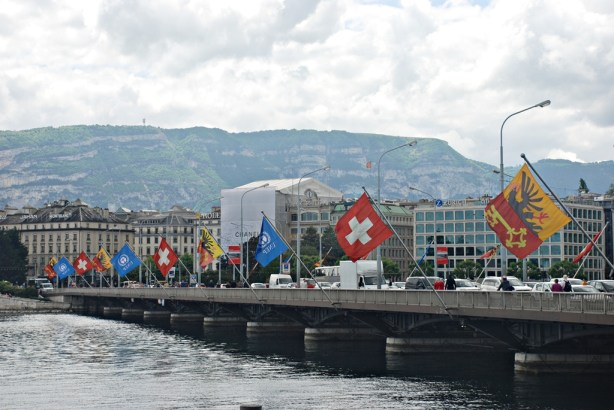
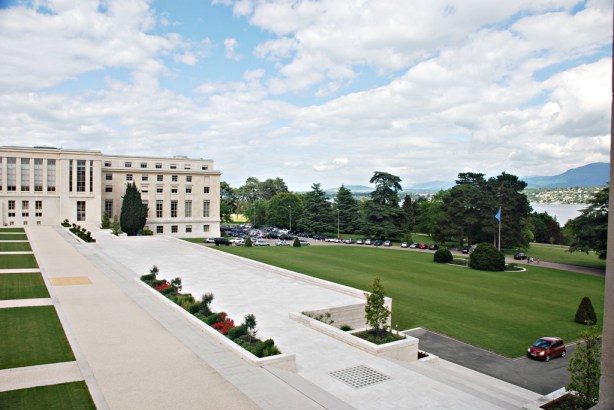
My next stop was the United Nations building. This building was originally built for League of Nations between 1929 and 1938 and is called Palais des Nations. It was expanded in 50s and 60s and there are two parts to the building now. The building itself looks impressive form the outside. The view with the flags all lined up was very nice indeed.
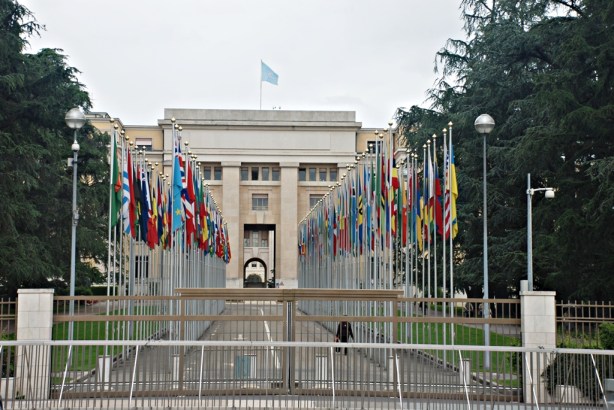
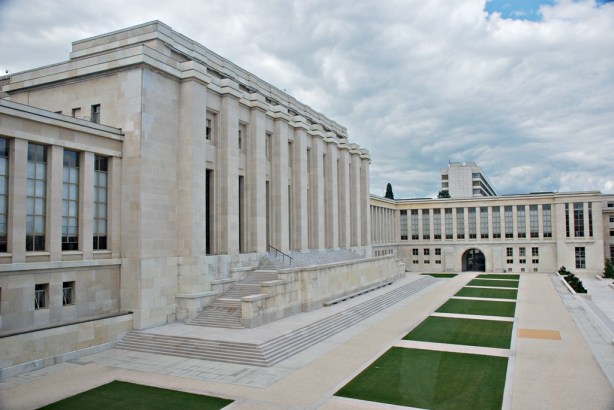
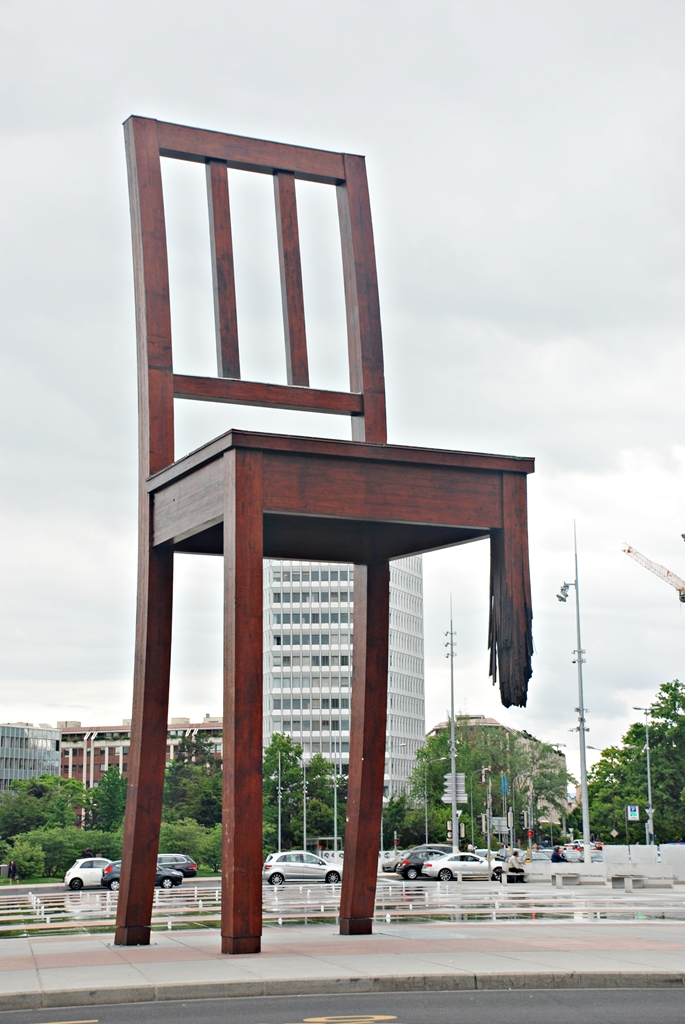
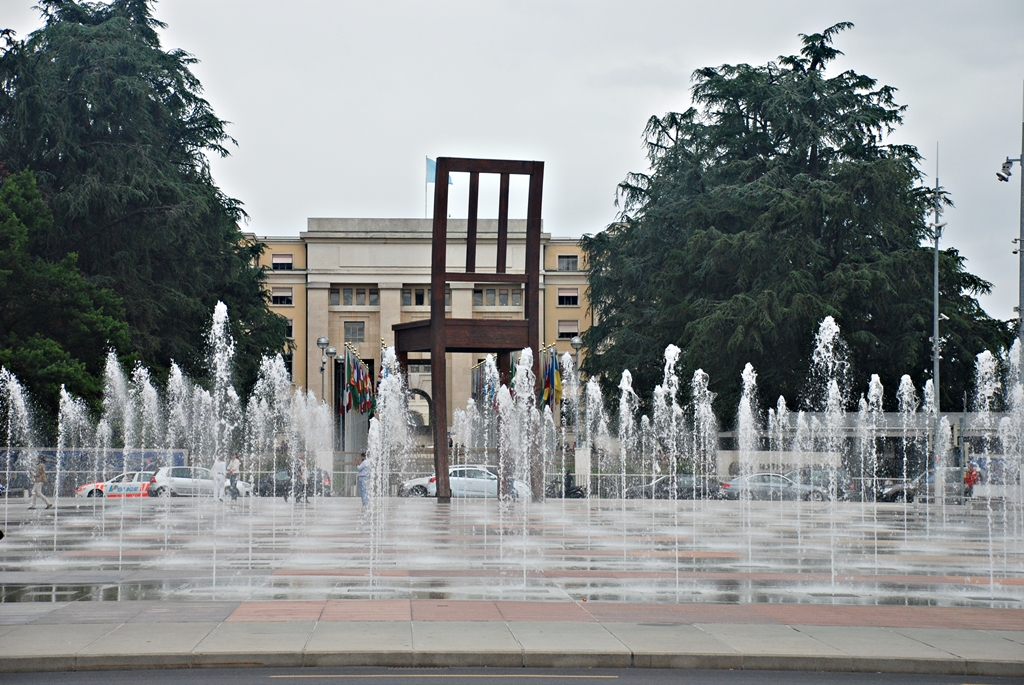
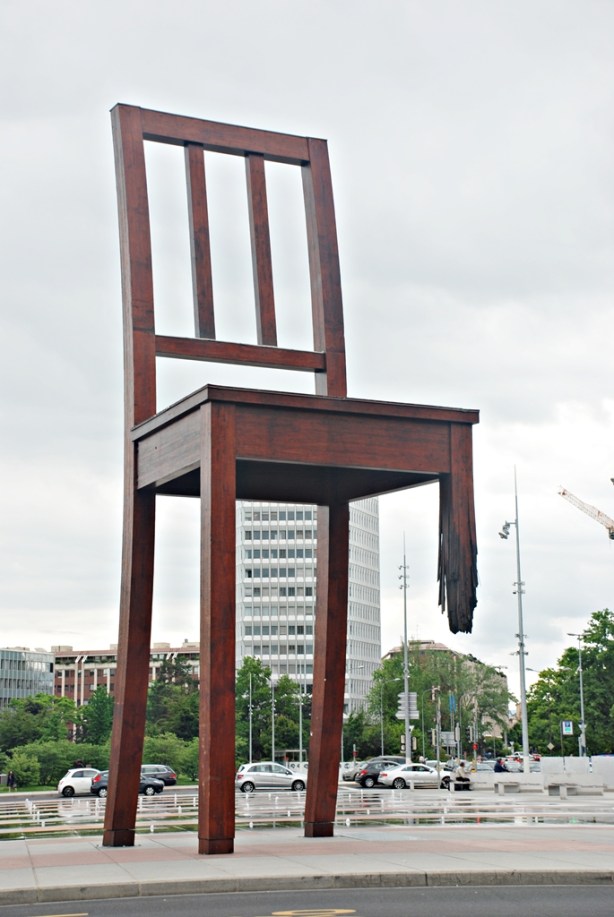
Right outside the main entrance to the Palais des Nations is a huge sculpture of a broken chair. This is a huge wooden chair with a broken leg, constructed out of 5.5 tons of wood and is 12 metres high. Swiss artist Daniel Berset was the sculptor. It was a project of Handicap International and was conceived as a reminder to the devastating effects of land mines and cluster bombs. It was first erected in 1997 and was intended to remain for three months till the signature of the Ottawa Treaty. However, as is often the case with UN, the signing of the treaty got delayed and about 34 countries including India are yet to sign it. The sculpture became very popular with the public and it remains there even today, even after having been temporarily removed in 2005 to allow remodeling of the Palais des nations.

I felt that this was a very aptly conceived sculpture which effectively conveyed the damage that land mines cause. These mines are often using during a war and rarely removed after the war is over and these lethal devices stay active and trigger off when some unsuspecting soul steps on those. The damage that results is often the loss of a limb. The broken chair conveys this message very strongly.
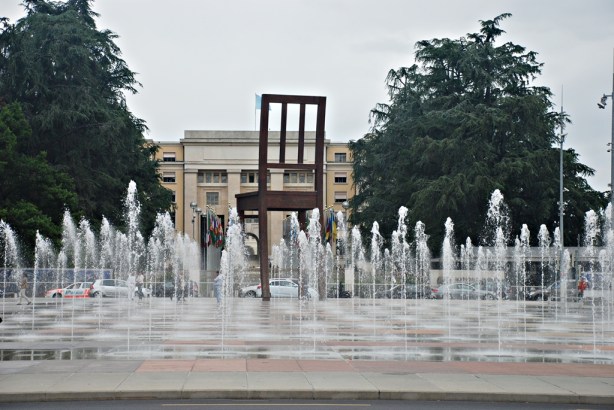
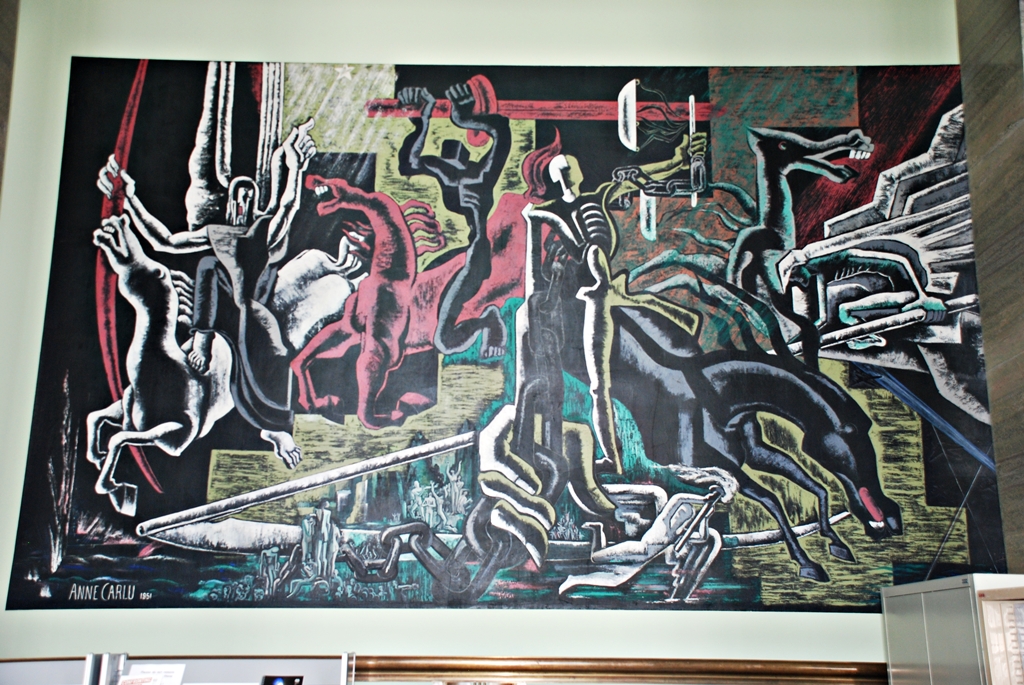
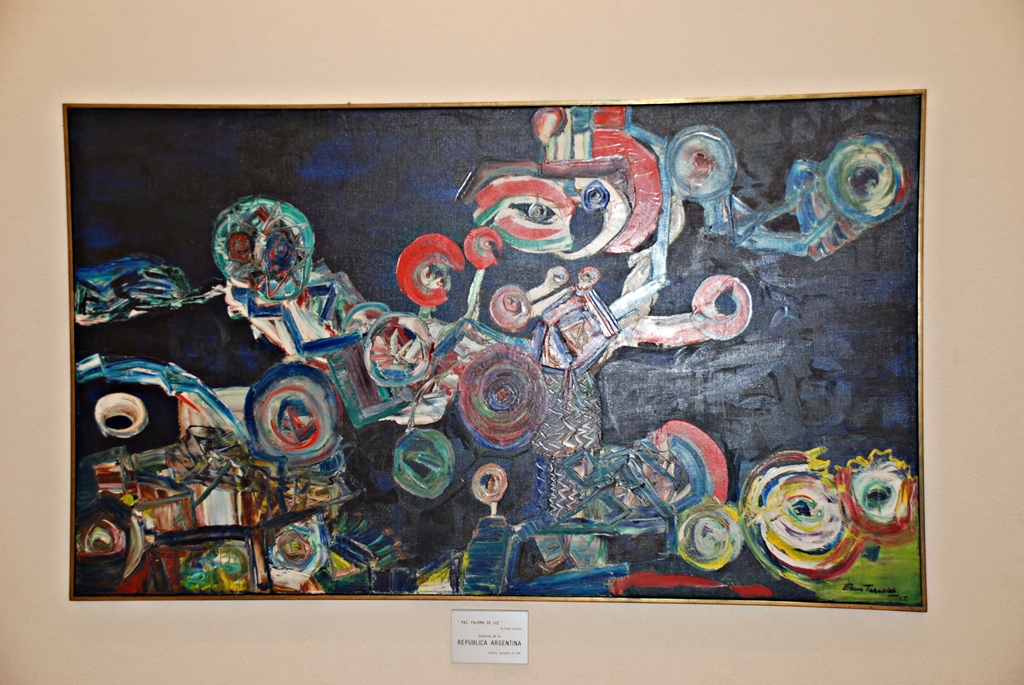
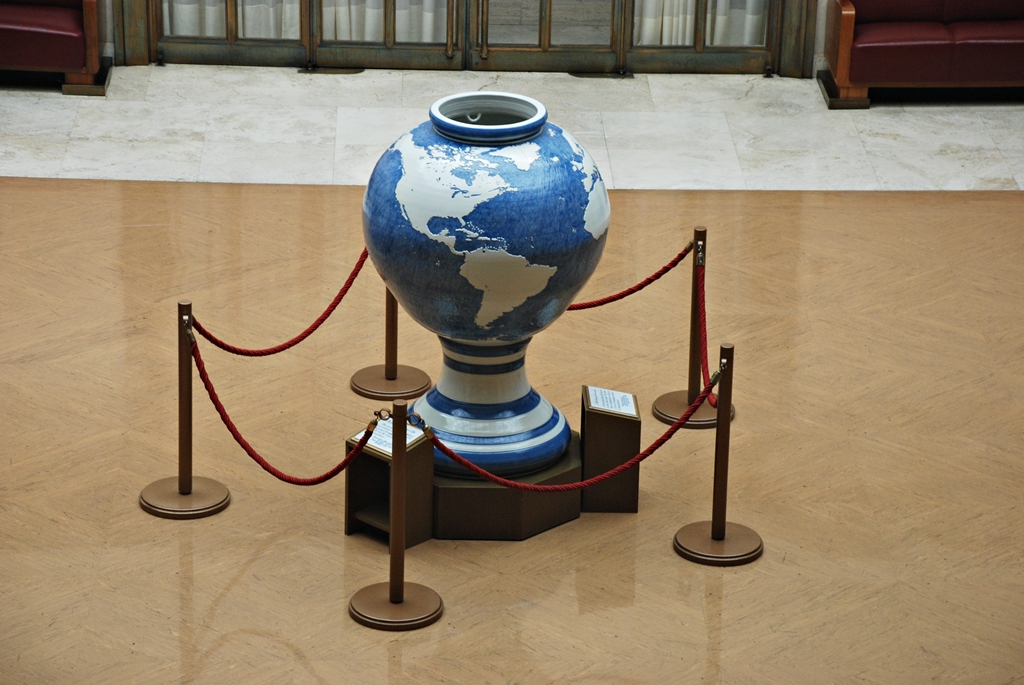
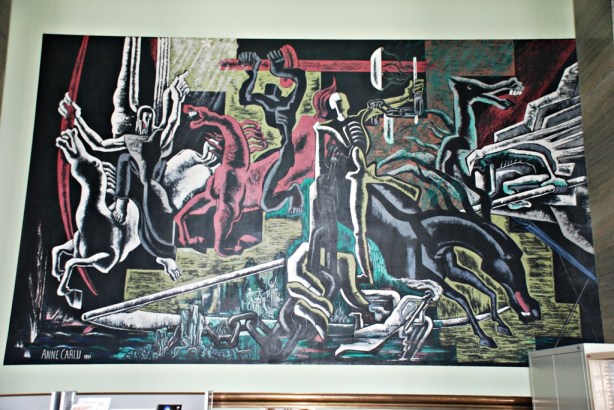
Access to the building was reasonably easy and I was in time to join the guided tour. We started off by seeing a couple of meeting rooms and the walking through some corridors that were filled with a lot of art work. All of those have been donated by various countries.

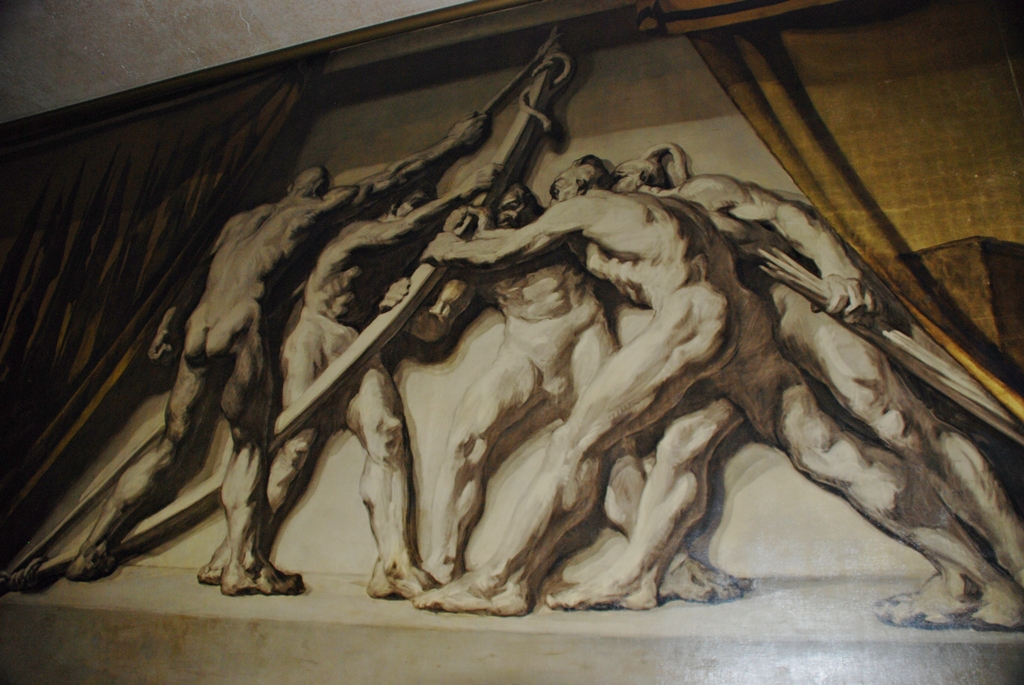
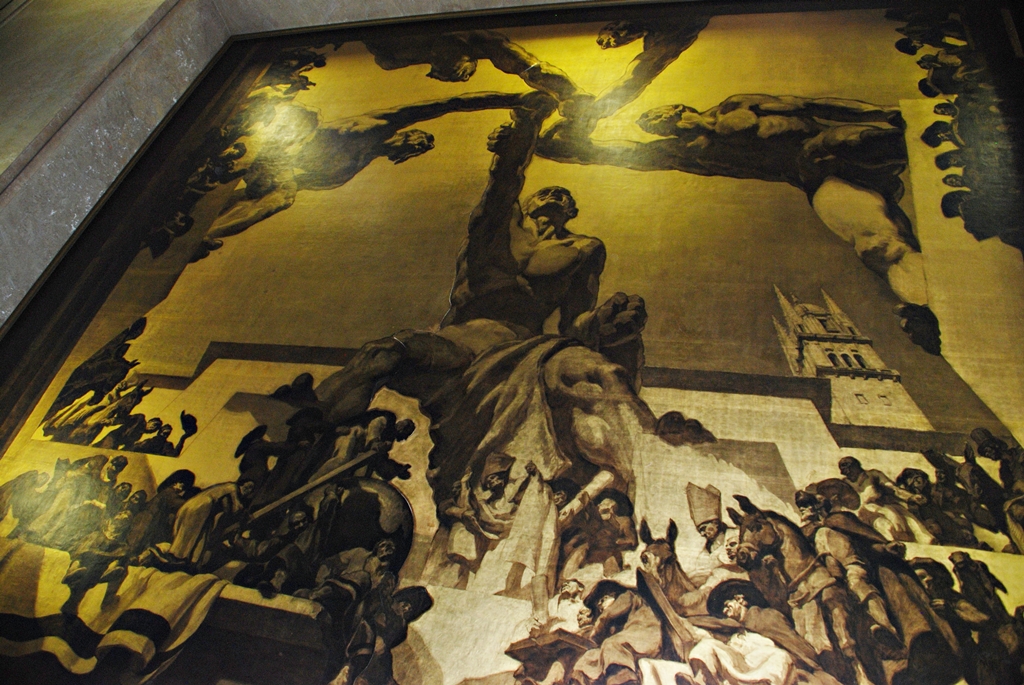
The League of Nations part was more impressive than the sections added later. The main attraction was the Council Chamber of League of Nations. The most impressive aspect of the room is the gold and sepia murals painted on the walls and ceiling. This was a gift from the Spanish government and was painted by the famous Catalan artist Jose Maria Cert between March 1935 and May 1936. It depicts the progress of mankind through health, technology freedom and space. The guide explained it as a series and pointed to a picture as the culmination of the series. This shows five muscular men, representing five continents (wonder which one of the inhabited continents they left out), coming together and holding a weapon (a bow).
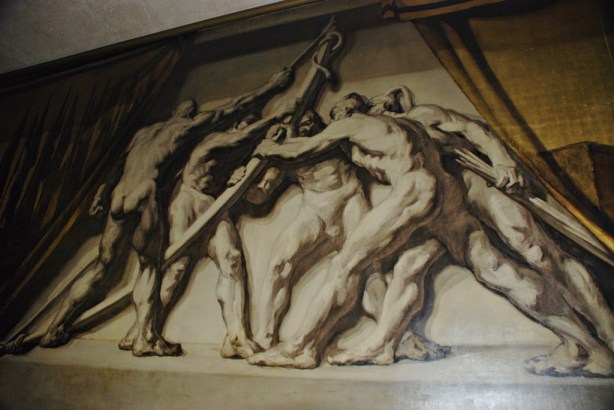
I felt it rather odd that a room dedicated to the promotion of peace would have people holding a weapon together instead of destroying it. So, I looked it up on the web and found that the culmination of the series is actually that of the five giants holds their hands together in triumph.
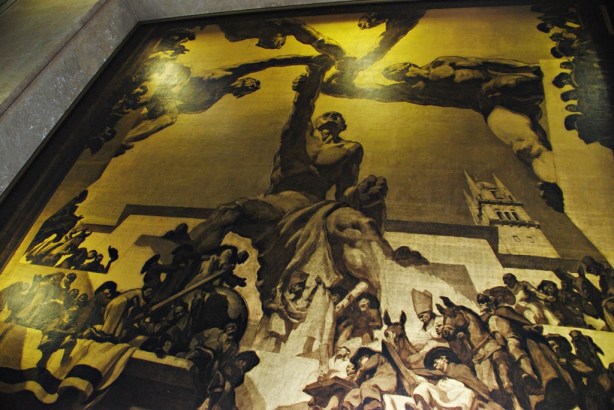
Interestingly, one person in the tour asked the guide whether the diplomats that sit in this room and take decisions know the meaning of this art work. She was at a loss for a proper response on that one and after a momentary silence, said that she expected them to know as they were diplomats!

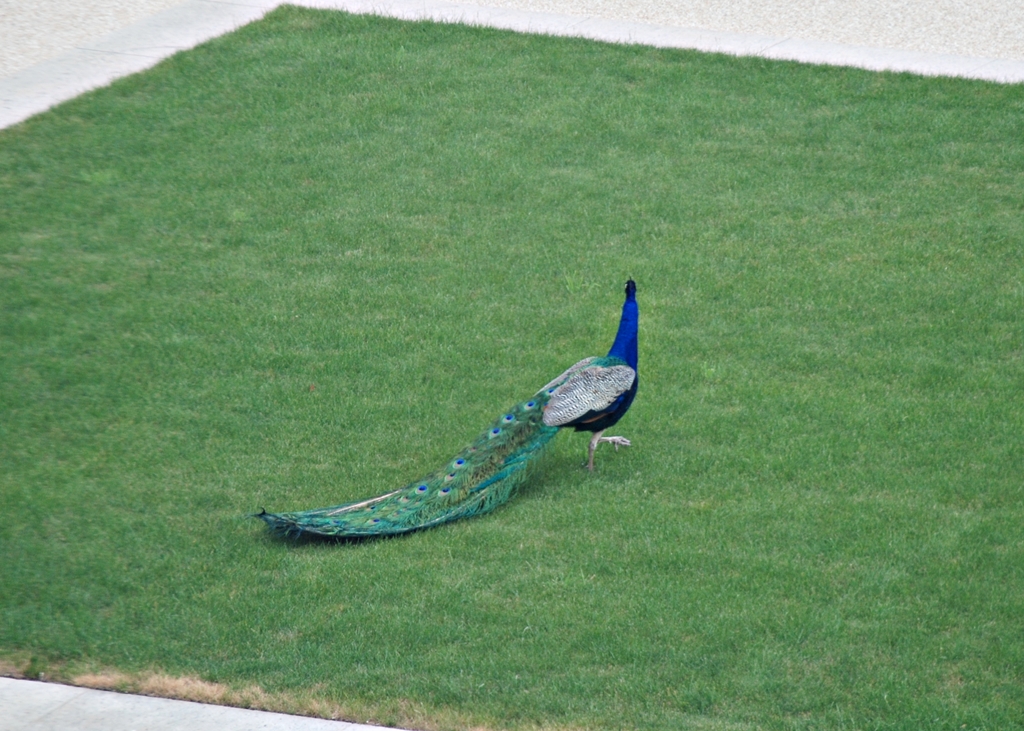
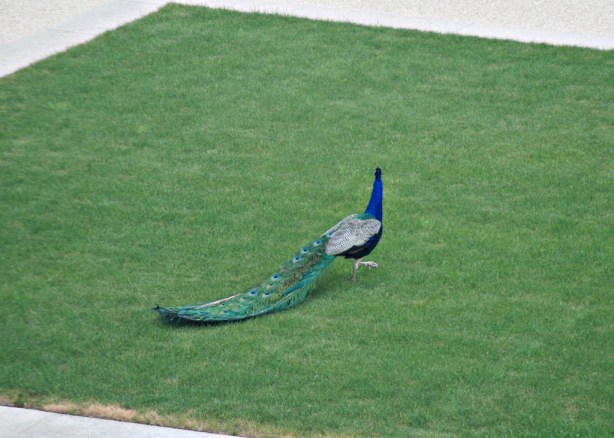
The views as one looked out of the corridor connecting the League of Nations building to the new building were very good. We also a saw a peacock on the lawns and that elicited a lot of excitement from the group.
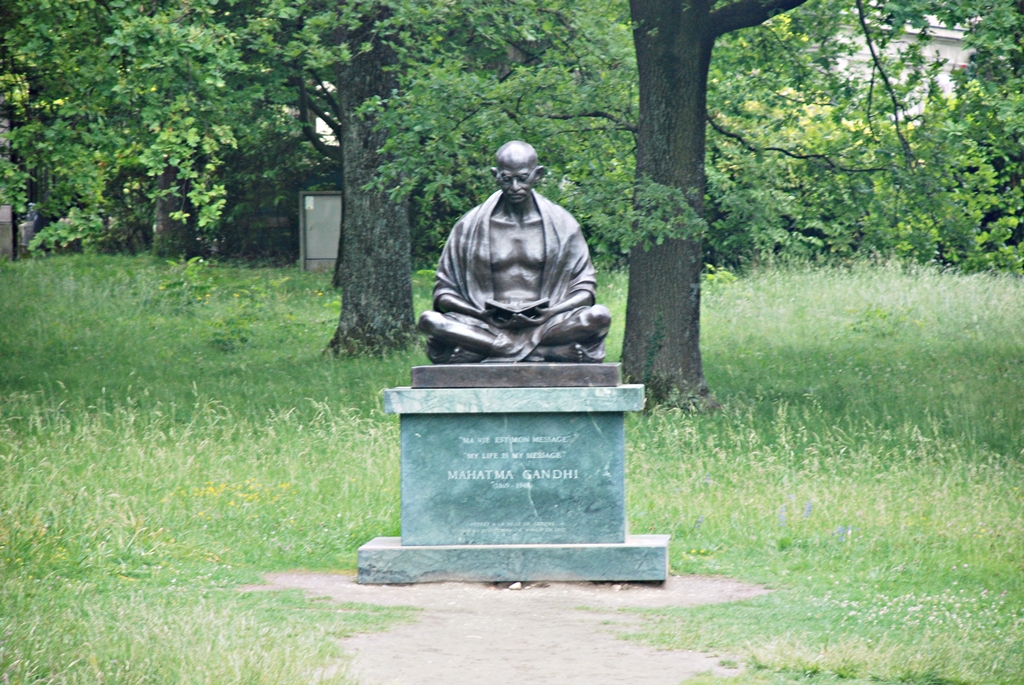
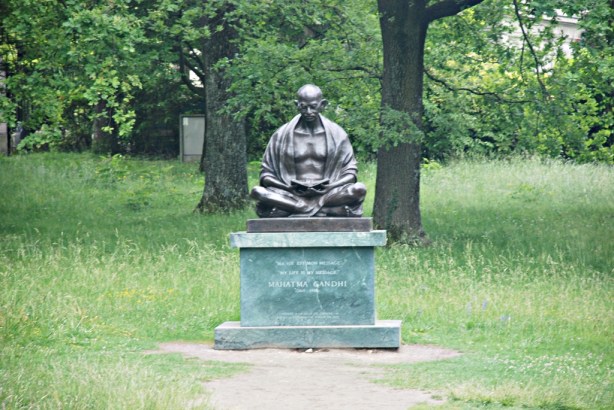
The tour was soon over and I walked back to the entrance to catch a bus. I was walking past the park that surrounds the building and suddenly, I saw a statue of Gandhi. It was a solitary statue in the midst of nothing – looked forgotten and lost. This struck me a bit and I stood there for a few moments looking at it. Gandhi, arguably the biggest promoter of peace ever, the man who showed that empires could be defeated without resorting to violence, the man whose messages are perhaps the most relevant today in a world tottering on the brink because of greed and hatred, sits forgotten in the very place that supposedly works towards promotion of world peace!
As in any old city, there is an old town in Geneva too and that is around the Cathedral area. I went back there to have a walk around the place. After sauntering around a bit, I dropped into an English pub. There were not many customers there and I struck up a conversation with the bartender, Phil. A couple I had met at the UN building had told me that they had just come from a visit to CERN (European Organisation for Nuclear Research), where the research on the Higgs-Boson particle was progressing. When we were talking, I told Phil that I would have liked to visit CERN. He then told me that he was doing his research for his Ph.D. thesis at CERN! He is from Boston and having finished his Masters there, is doing research at CERN. He was not on the Higgs-Boson project and was involved in research on metrics and measurement, related to nuclear particles. It was nice to talk with Phil and as I left I could not but be impressed with this chap who was working as a bartender to fund his studies.
3 June 2012

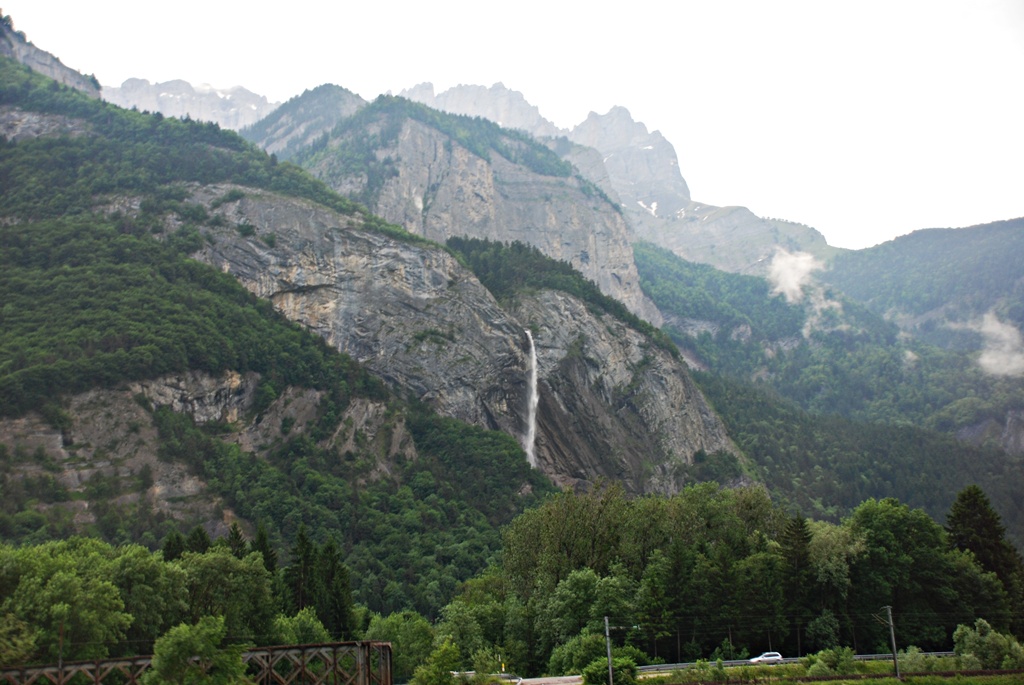
As my business tour extended over a couple of weekends, I was searching for ideas on places to go near Geneva, when a colleague suggested Chamonix and a close look at the Mont Blanc peak in French Alps. I looked it up on the web and found the place interesting as there was the easy option available of seeing the Alps at close range! So, off I set off on a coach from Geneva to Chamonix on a Sunday morning, a journey of about 90 minutes. Within 20 minutes of setting off from the bus station, we crossed into France. I was thinking that this border must have seen a lot of action during World War II with prisoners escaping from France and other countries trying to get into neutral Switzerland. With the SCHENGEN visa norms, the bus did not even stop at the border crossing.

The road itself was quite scenic and we passed some nice looking farms and soon started getting glimpses of the mountains.

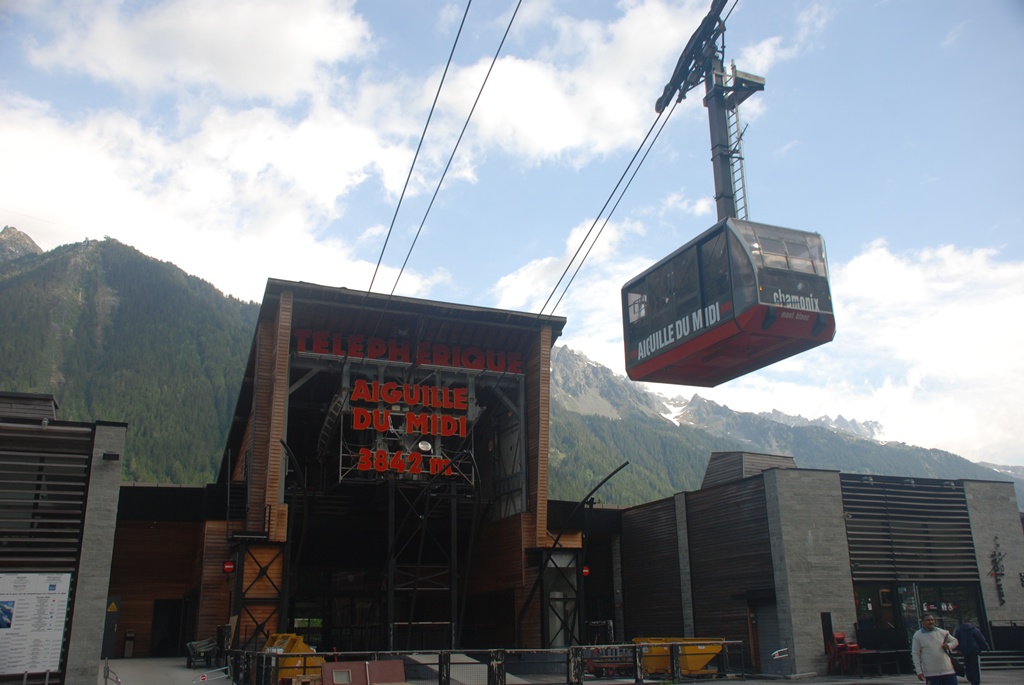
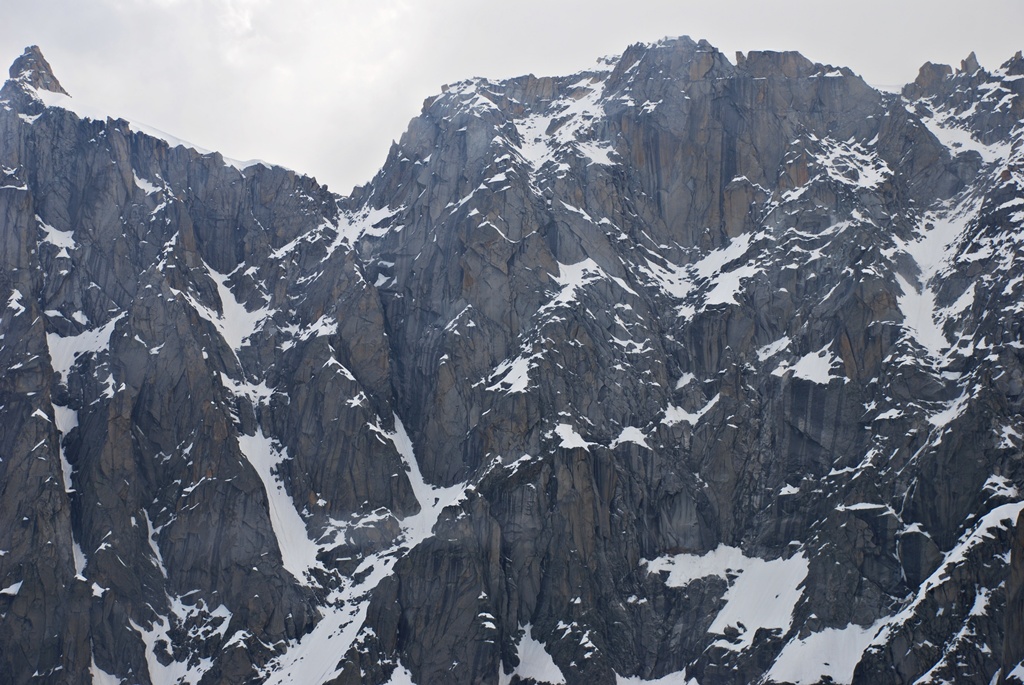
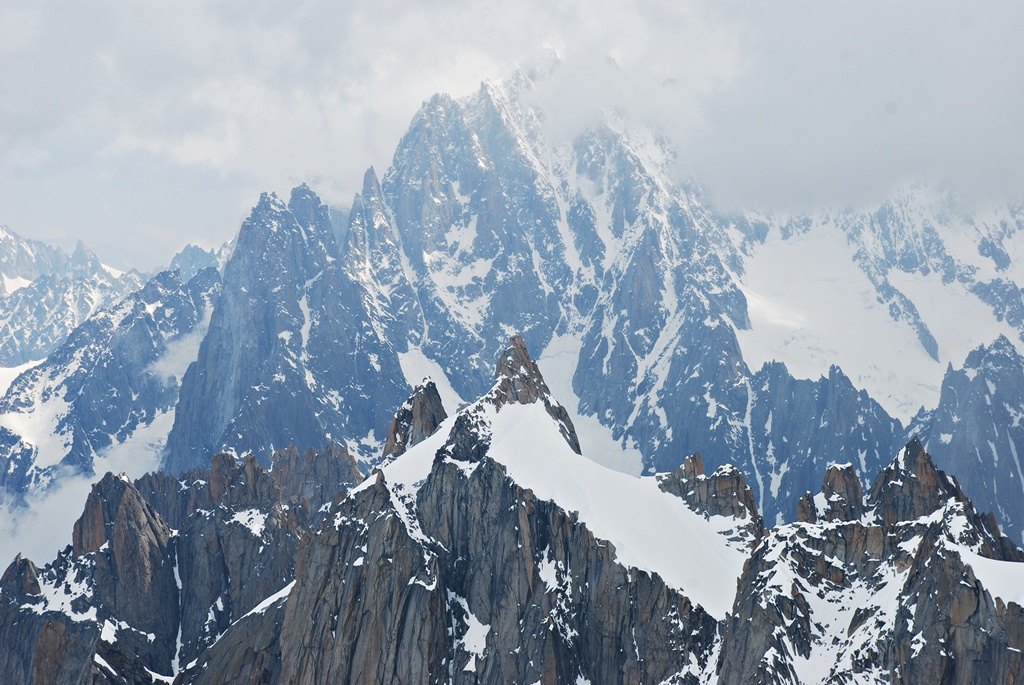
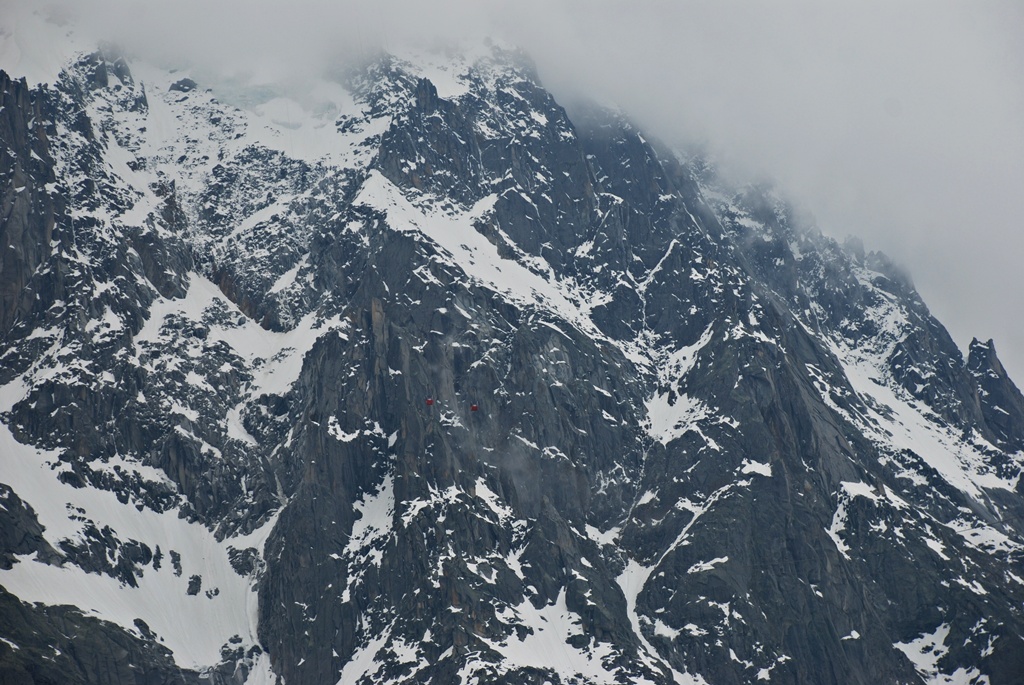
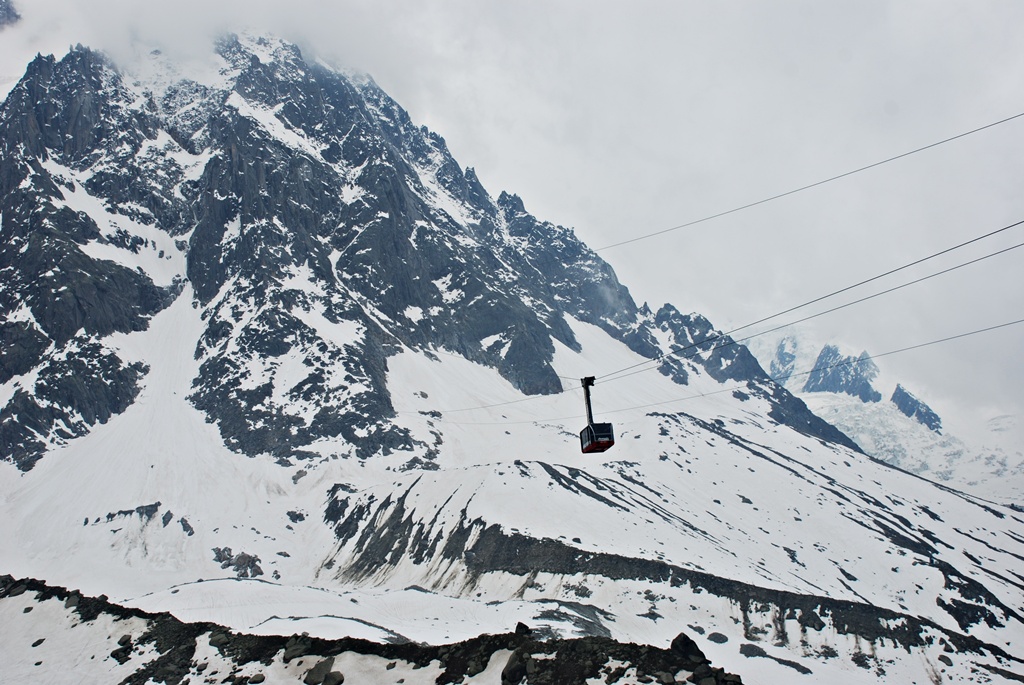
The plan was to get to Chamonix and then take a cable car upto the top of a peak called the Aiguille du Midi, which is at a height of 3842 metres. The cable car was built in 1955 and at that time, was the highest cable car (or Téléphérique as the French call it) in the world. The ride is completed in two sections – first to an interim point and then on to Aiguille du Midi; the second section has no support pillars in between.

There were good many tourists that day and we were a bit squeezed in the cable car. As soon as we left the ground, fantastic views started opening up and cameras were clicking away regardless of the fact that most of us only got reflections of the flash from the glass walls of the cable car!

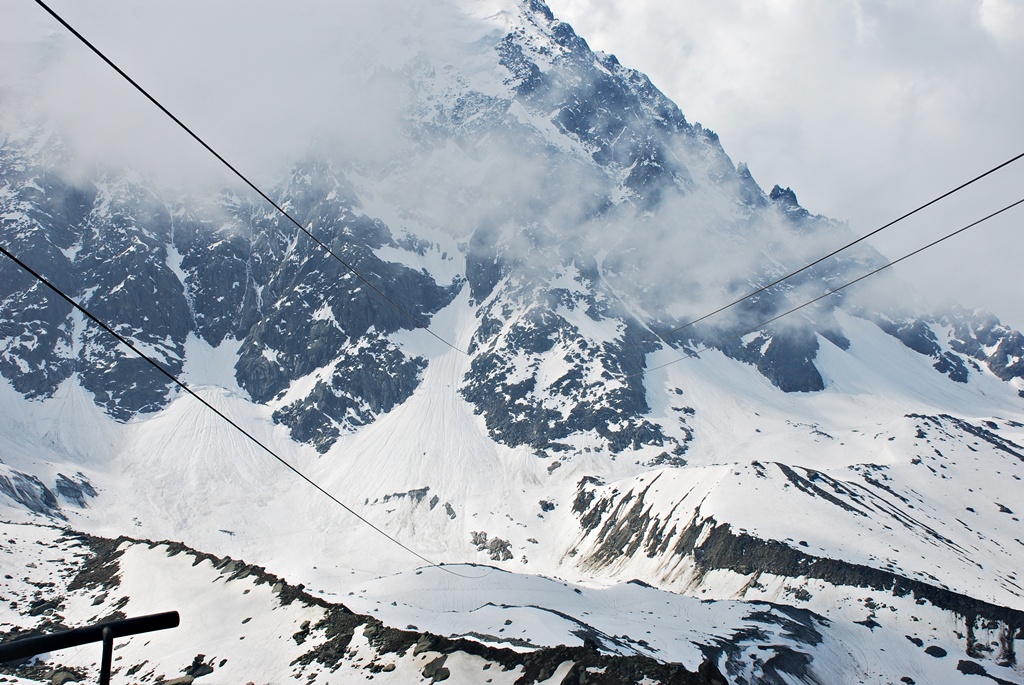
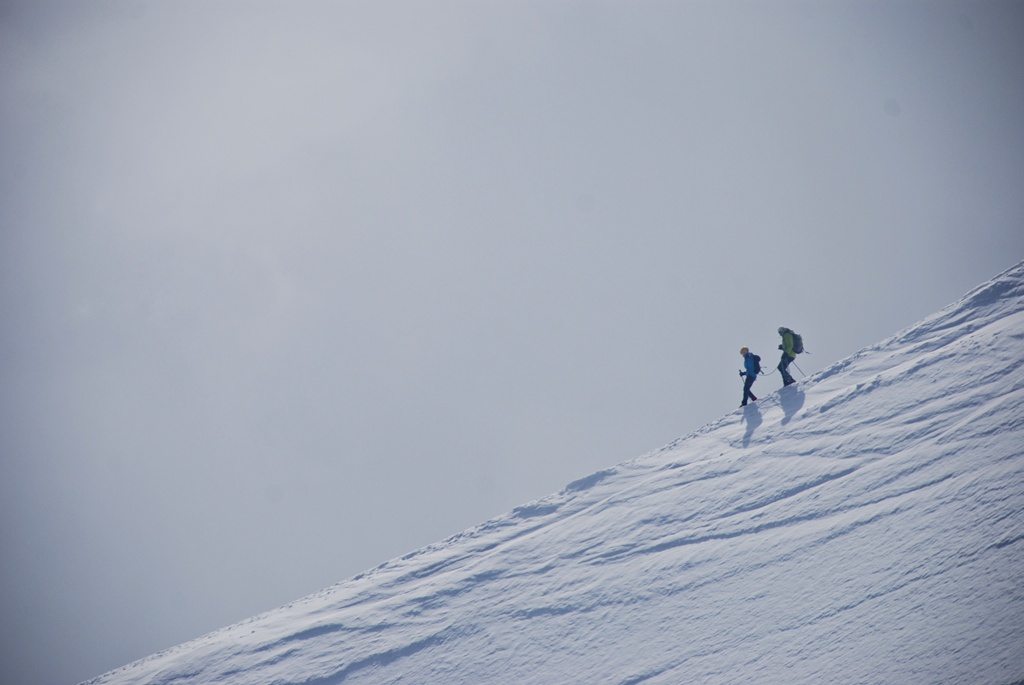
As we approached the summit, we saw two climbers starting off on a trek. It was an awesome sight to see two lonely figures on the vast expanse of snow.

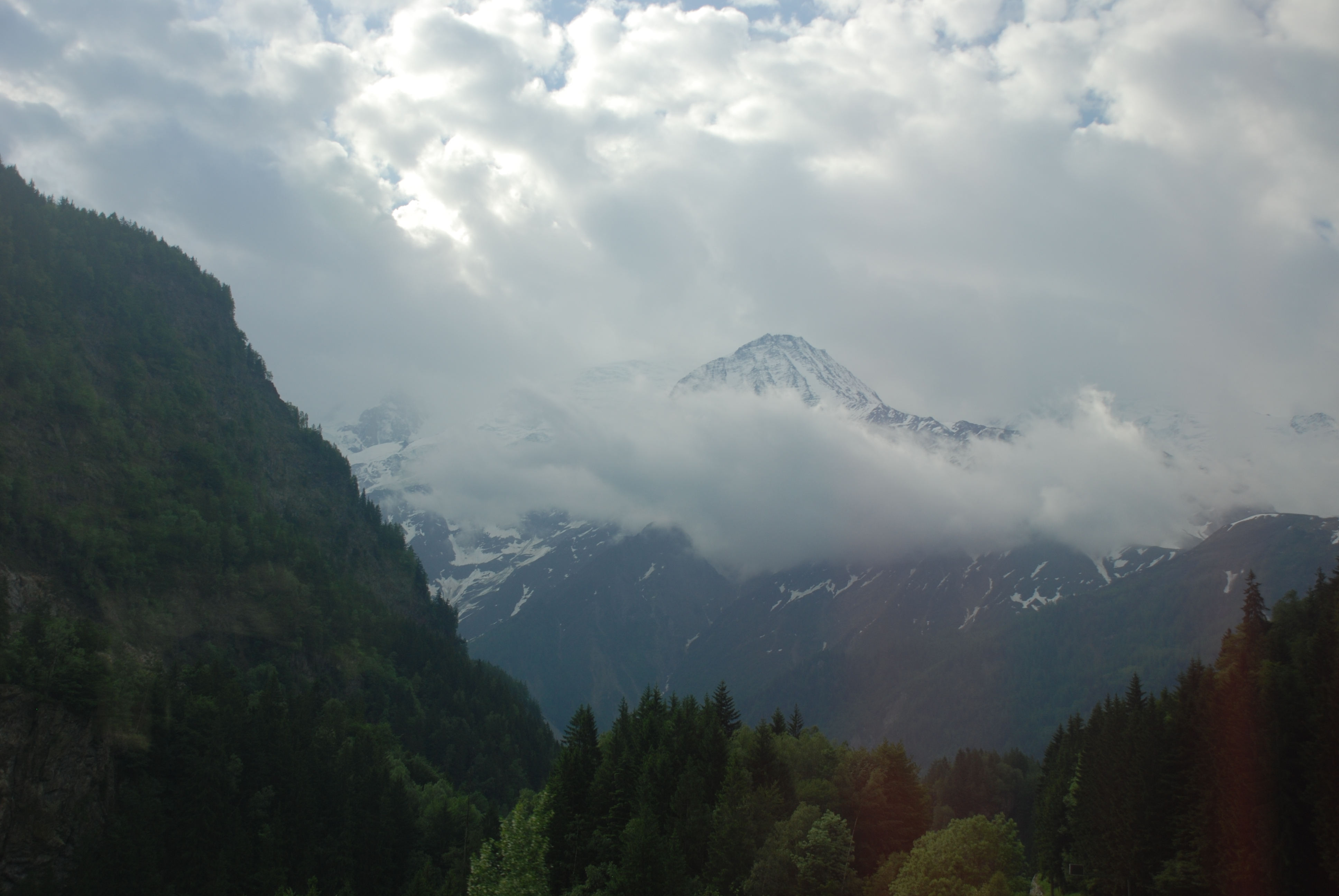
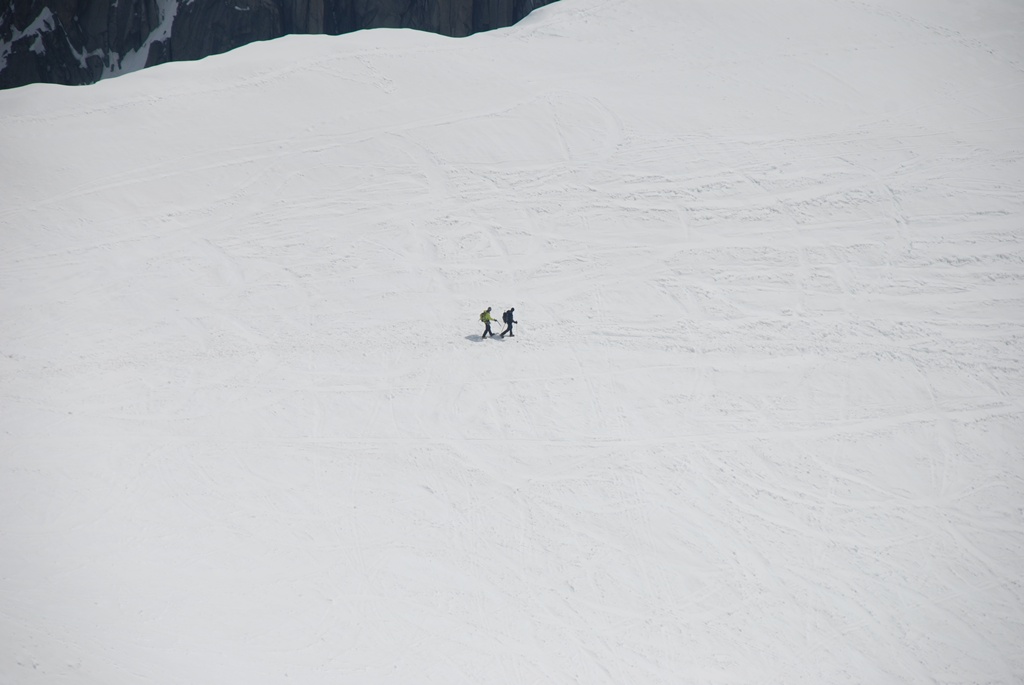
At the summit of Aiguille du Midi, there is a cafeteria and various viewing decks. It was very windy and the weather was not very good. Mont Blanc itself was shrouded in clouds and so we could not get a view of that but still the views all around were just fantastic. I moved out to a platform all by myself and as I stood there taking the views, I spied the two trekkers down below – two specs on a snow shelf.

I had never understood what made people want to climb mountains and trek across them; someone in the cable car had called them as “adrenaline junkies”. However, as I stood there in the Alps with all its majesty, I also wanted to go on such a trek, camp out and lose myself in this beauty; and I am no adrenaline junky. I could sense the excitement and fun and challenge of the climb; there is a sheer exhilaration in this. These mountains are such a draw!

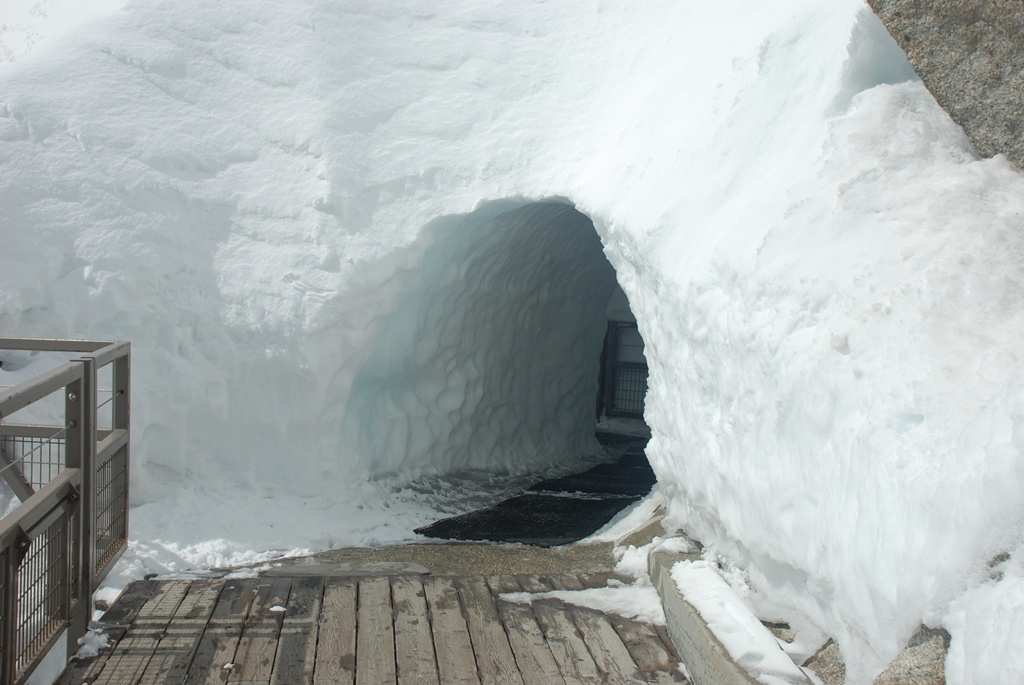
Vallee Blanche is a famous ski route in Chamonix and many trekkers start their journey to Valle Blanche from Aiguille du Midi. There is a short tunnel dug out of ice that leads onto a ridge on the face of the peak and the trek starts from there.

When I went through the tunnel and on to the ridge, I met two climbers who were about to set off on a trek to Vallee Blanche. I wanted to have a chat with them to understand how they would figure out the route, where they would stay the night, how they would locate crevasses and steer clear etc. Unfortunately, I found out that all my English was of no use in this remote corner of France. I understood that they were going to Vallee Blanche and planning to stay the night in a tent. They seemed very enthusiastic and were quite friendly. I waved them off on their trek and went back through the tunnel.

Later on, I mentioned this incident to the colleague who had referred this site to me and he narrated an incident of how he had gone on this very same climb sometime ago and how they had a narrow escape after one of them fell into a crevasse. That was scary stuff indeed and I toned down my climbing ambitions to a more gentle trek – maybe I can do that one day!

I went to another of the viewing terraces to try and have a look at Mont Blanc but it was still clouded over. I kept clicking away but was once again reminded of my acute lack of photographic skills as I looked at the results.

On the way back, I stopped at the midway point and walked around. As I sat on a rock looking at the Aiguille du Midi, I thought how it might have been when the first climb was done in 1818. What hardships and challenges must they have gone through! The mountain was very imposing and even looked a bit ominous; it somehow reminded me of a strong beast. The cable car was coming down and it so tiny against the backdrop of the massive mountain and was, in a way, a reminder of how puny we are when pitted against nature.

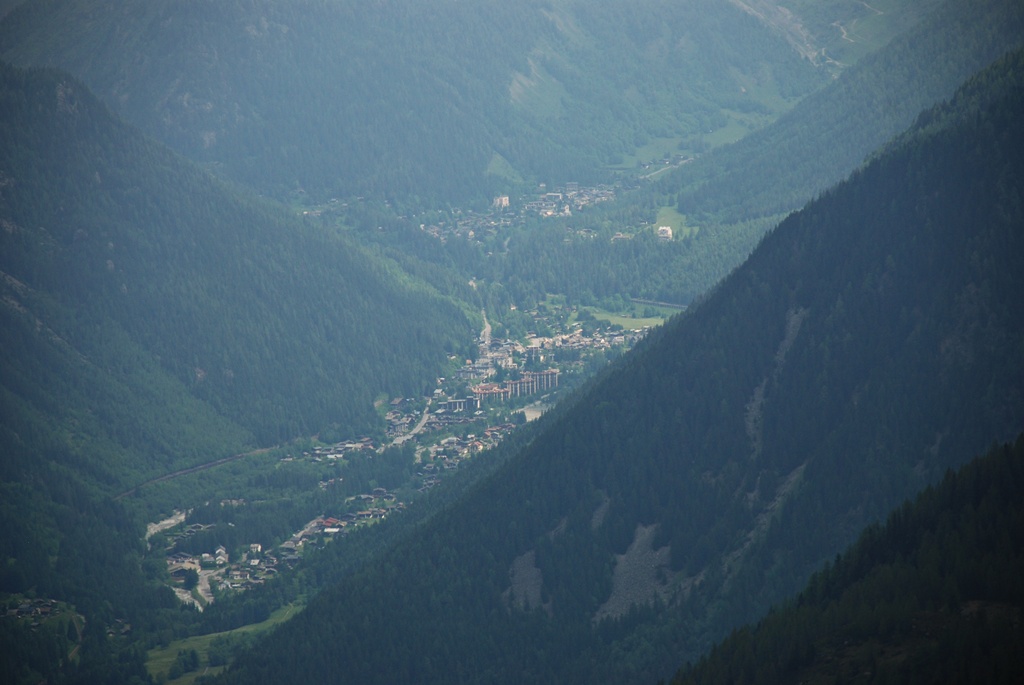
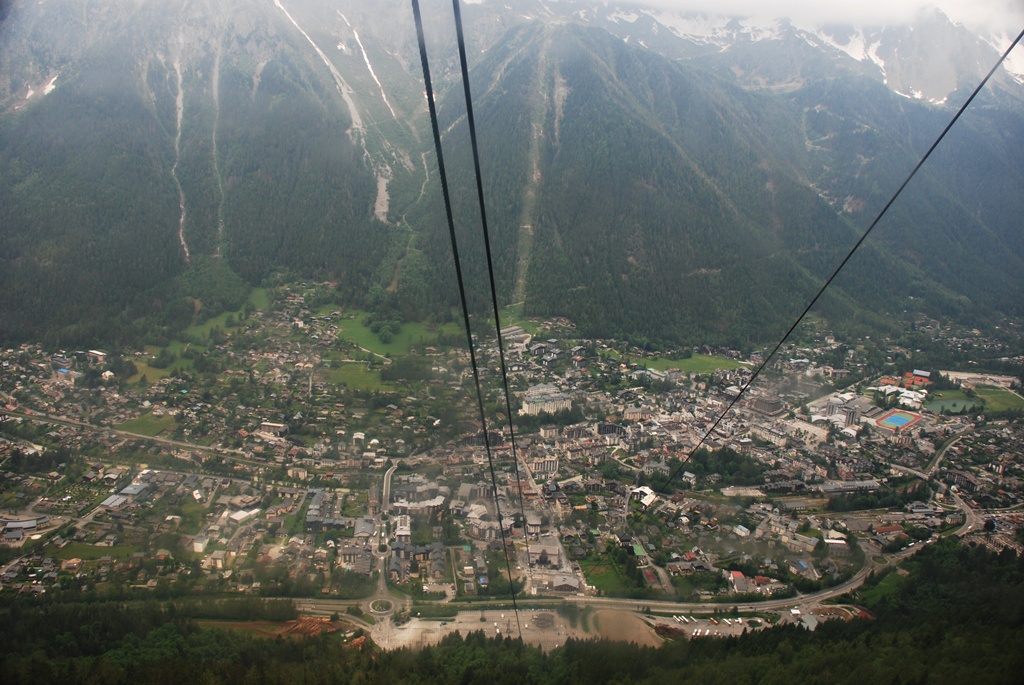
Chamonix is in a valley with mountains on both sides and we had a good view of it as we came down in the cable car.

The village itself is fairly small and is nice and cozy. It has quite a long history and the first mention of the valley dates back to 1091. Early settlers were some Benedictine monks but the living conditions were so harsh that the valley was very sparsely populated. In the 1700s, interest picked up in Alpine climbing and with that Chamonix started to grow. In 1760, a Swiss aristocrat named Horace-Benedict de Saussure offered a reward to the first person to scale Mont Blanc and he himself made an unsuccessful attempt in 1785. In 1786, two Chamonix men, Michel Paccard and Jacques Balmat achieved the climb and Chamonix was established firmly on the Alpine map. Winter Olympics was conducted at Chamonix in 1924.

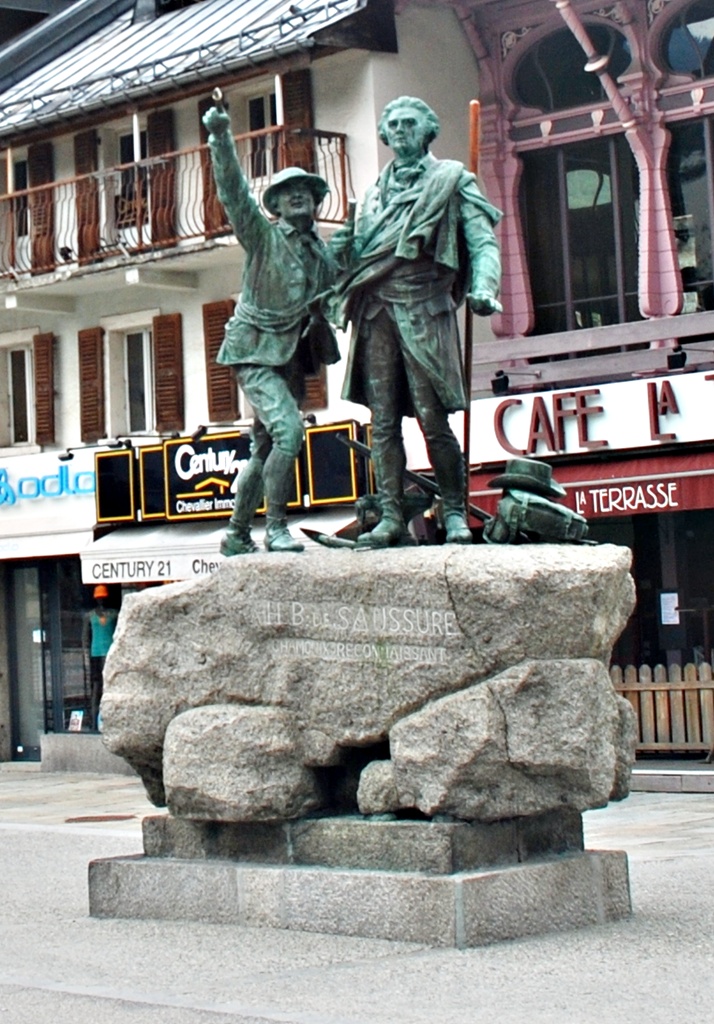
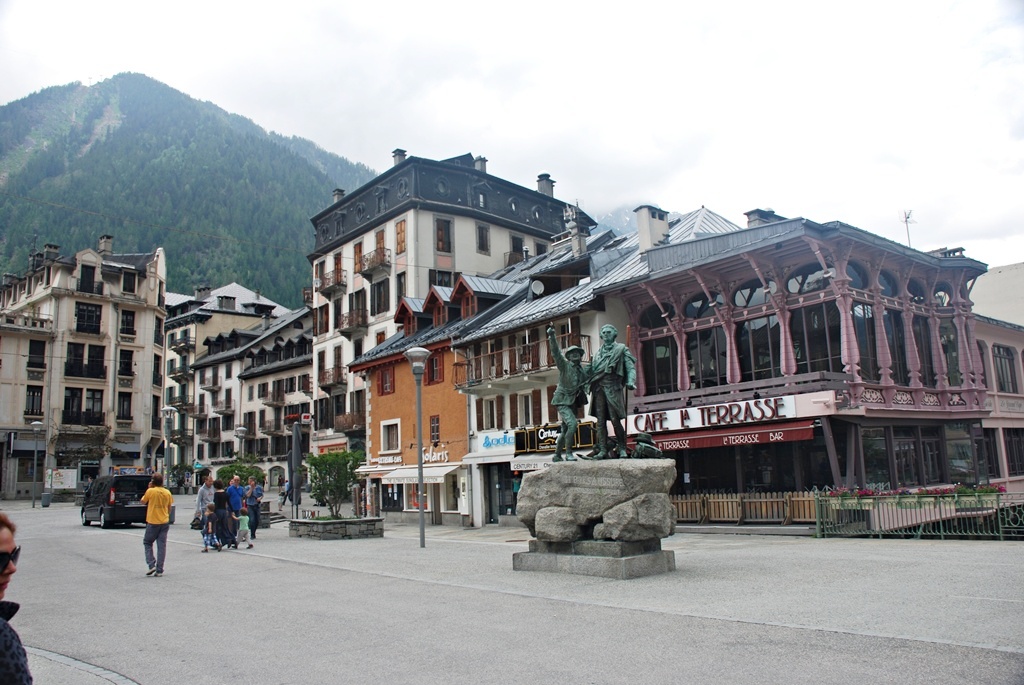
In the square in the town, there is a monument to Horace-Benedict de Saussure, with Jacques Balmat next to him, pointing to Mont Blanc.

There is a river called Arve that passes through Chamonix. This fast flowing river receives it water mostly from Alpine glaciers like the Mer de Glace (which was the next item in my itinerary) and flows right onto Geneva. In my mind, I had thought that rivers and streams that are fed by melting snow would be pristine and clear and I was surprised to learn that the water is generally very muddy when the snow melts and true enough, the water looked anything but clear.

We had planned to have lunch in the village and I found myself looking forward to it. A Hungarian lady from our group was seated next to me. Her name was Catalin and we fell to talking about Hungary and I used the opportunity to ask her about life during the Communist regime and now. She was about 35 when the regime fell and she remembered that time very well. Her view was that they are better off now, even if they are exposed to the perils of globalization and the attendant issues like unemployment, depression etc. When I asked her what the main difference is, she said it is the freedom they enjoy now, which was never the case earlier. I was reminded of a very similar comment made by a taxi driver in Bucharest when I asked him a similar question.

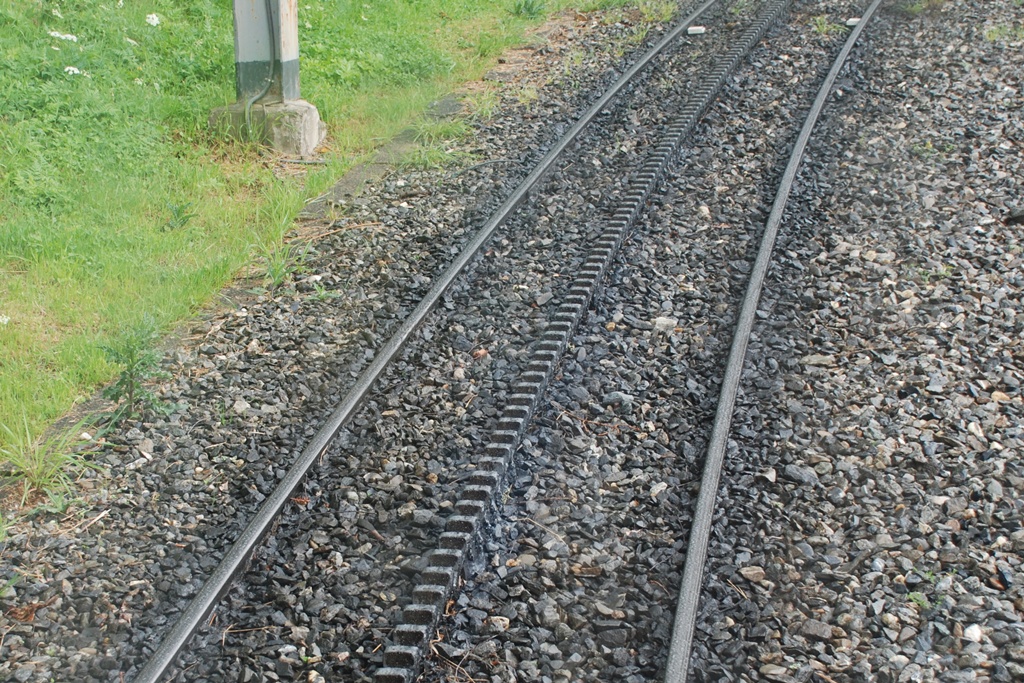
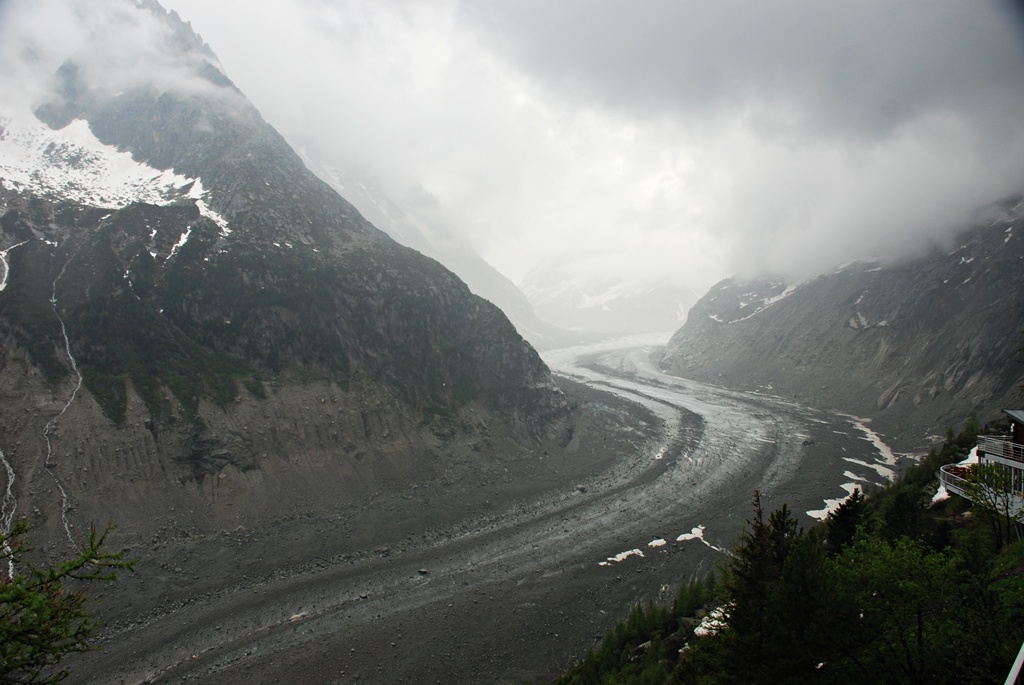
Right near Chamonix is the biggest glacier in France, called Mer de Glace. This glacier can be viewed from a place called Montenvers, which is at a height of 1,000m from Chamonix. The glacier has a surface area of 40 square kilometres and a length of 7 km. A rack and pinion train takes you upto Montenvers and the distance is covered in 20 minutes. The rack runs between the tracks and this helps the train to make the steep climb.

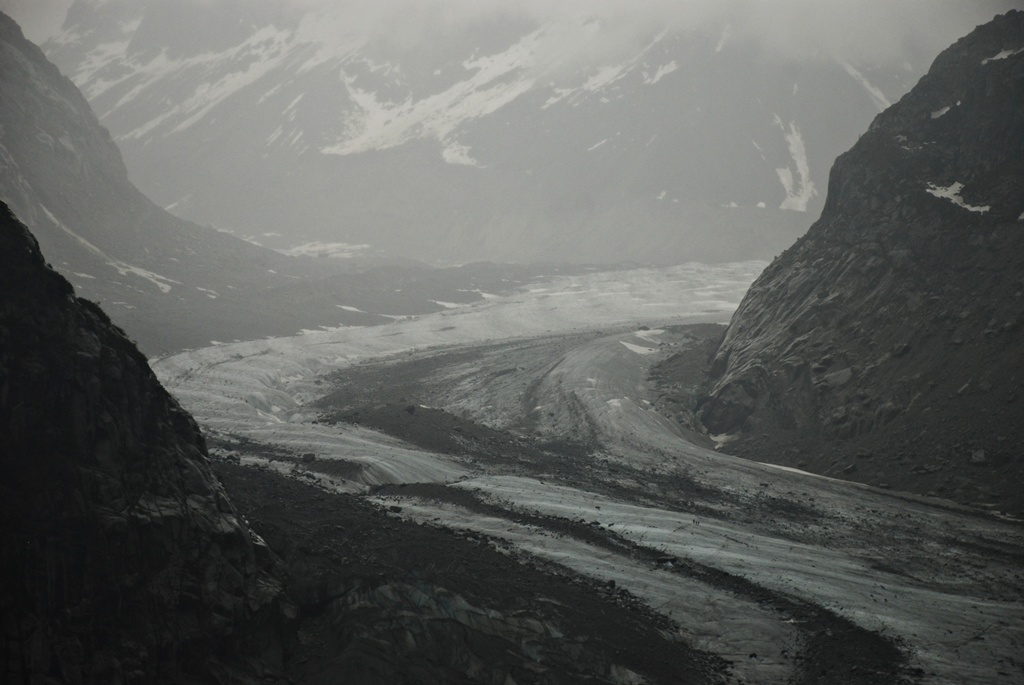
The train moves up the mountainside through pine trees and tunnels carved out of rock. It was conceived in 1892 and became a reality when the first train steamed into the station at Montenvers, in 1909. A slight drizzle had started by the time we got to Montenvers and so, I did not get much time to look at the glacier. Here again, I was surprised as I was expecting an expanse of sheer white but was greeted by something that looked more grey than white.

There is an ice cave that leads into the innards of the glacier but that was closed for some maintenance. Here also I met a few people who had just come after trekking the glacier. They were part of a group that was going to scale a peak and this trek on the glacier was a kind of training in preparation for that climb.

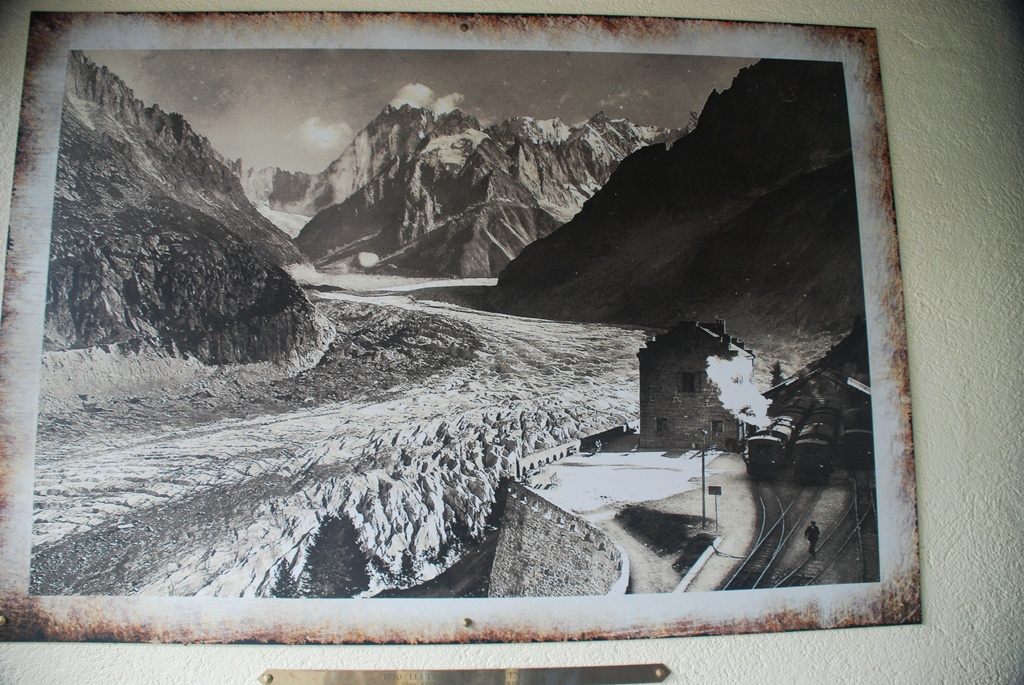
The glacier has a thickness of 120m at its centre but has been reducing in thickness by about 3 to 4m every year since 1988. The glacier is advancing at a pace of 120m every year but shrinking by 125m each year as well. So, it is shrinking faster than it is growing. It was sad to think that this glacier might be gone in the near future; such are the effects of global warming. There is a photo at the station which shows the position of the glacier in 1909 and one can easily make out the difference in height between then and now.

With that somber thought, we trained down and got on to the coach to get back to Geneva.

27 May 2012

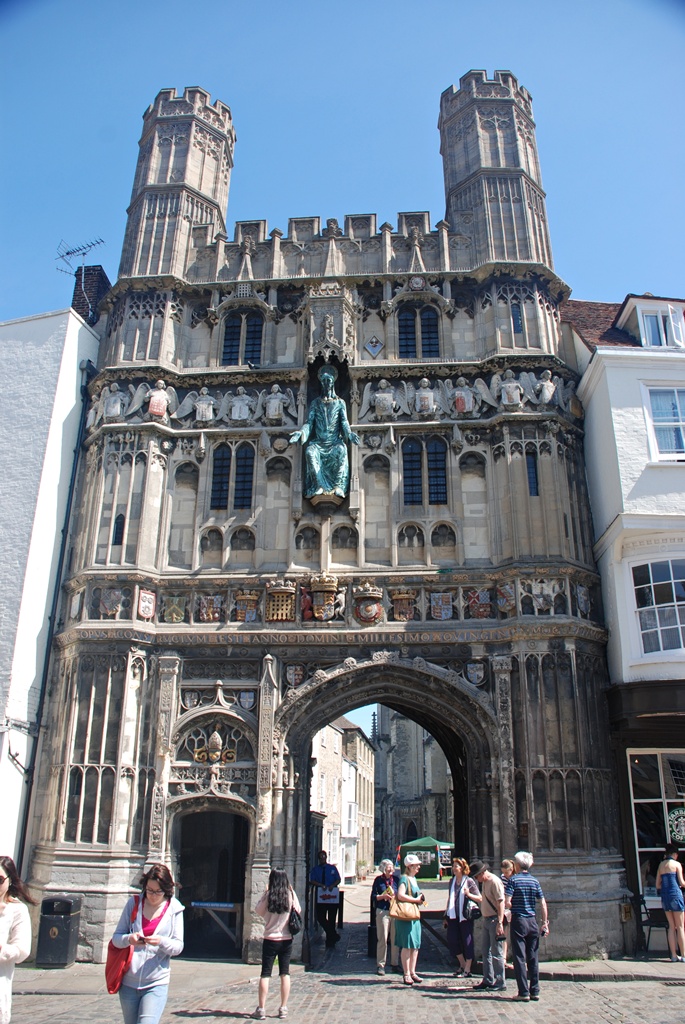
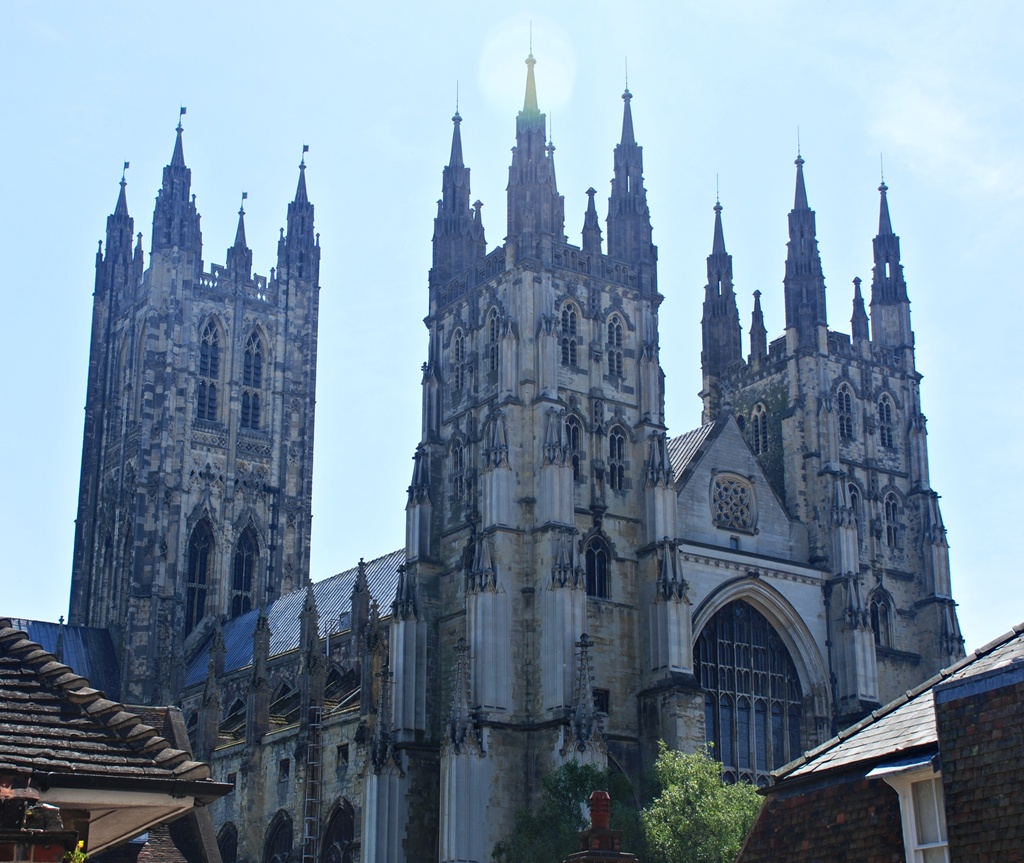
The sun was shining nice and bright as we set off for Dover. As I was already familiar with the GPS from the day before, we got on to the motorway without much incident. The scenes along the road were quite pleasing with nice pastures and farms. A bit into the journey, we saw the signboard to Canterbury and decided to stop there on the way. Canterbury is very famous for its cathedral and held an intrigue because of Canterbury Tales, even if I have not read it. Unfortunately, when we arrived at the Cathedral, it turned out that access to most parts of the Cathedral was closed due to some service going on and would open only after lunch. However, that would have interfered with our Dover plans and so we decided to give that a miss and I could just a couple of shots from the outside.

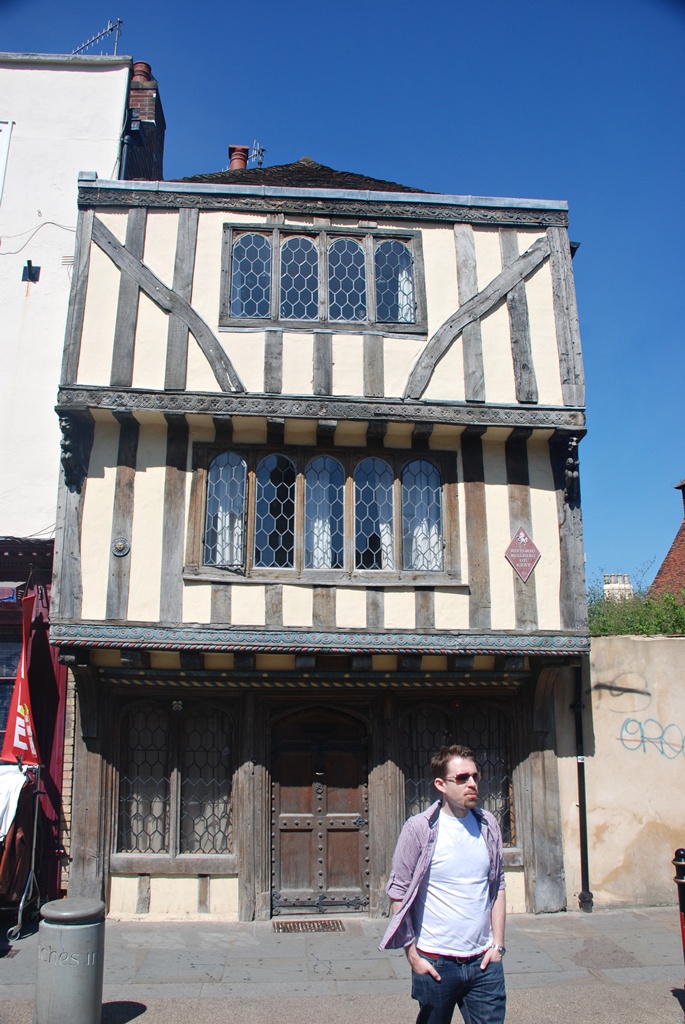
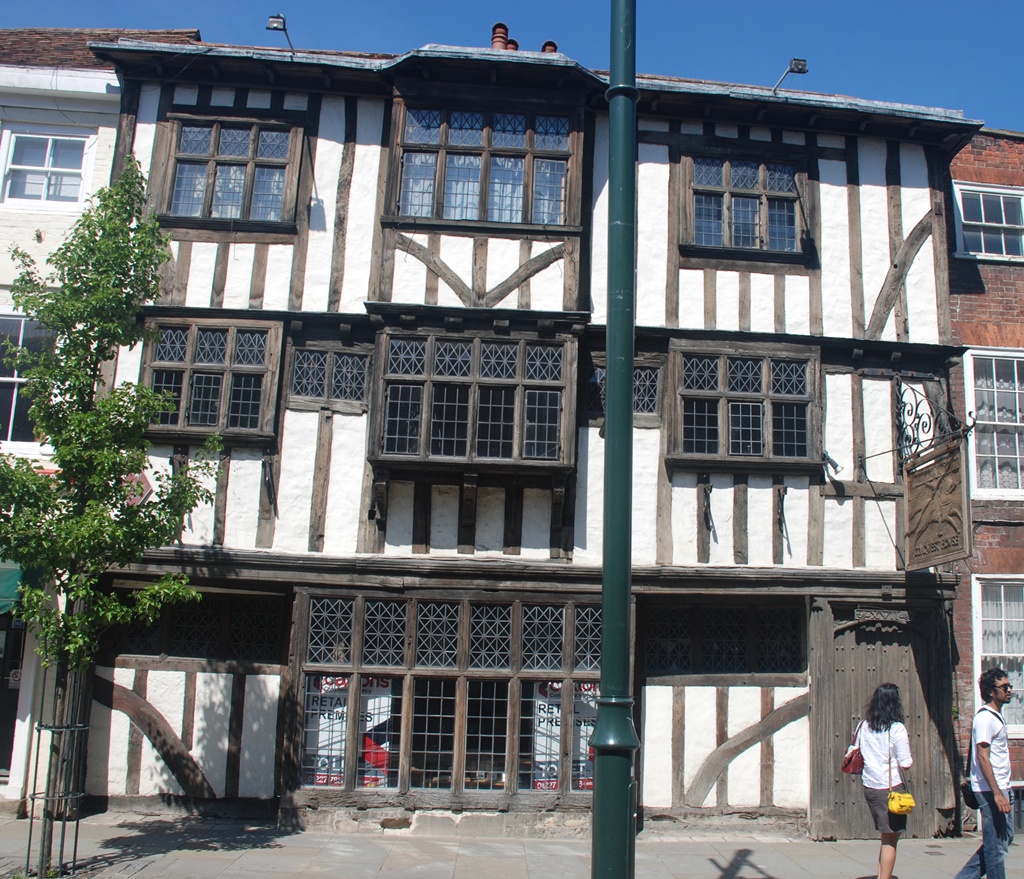
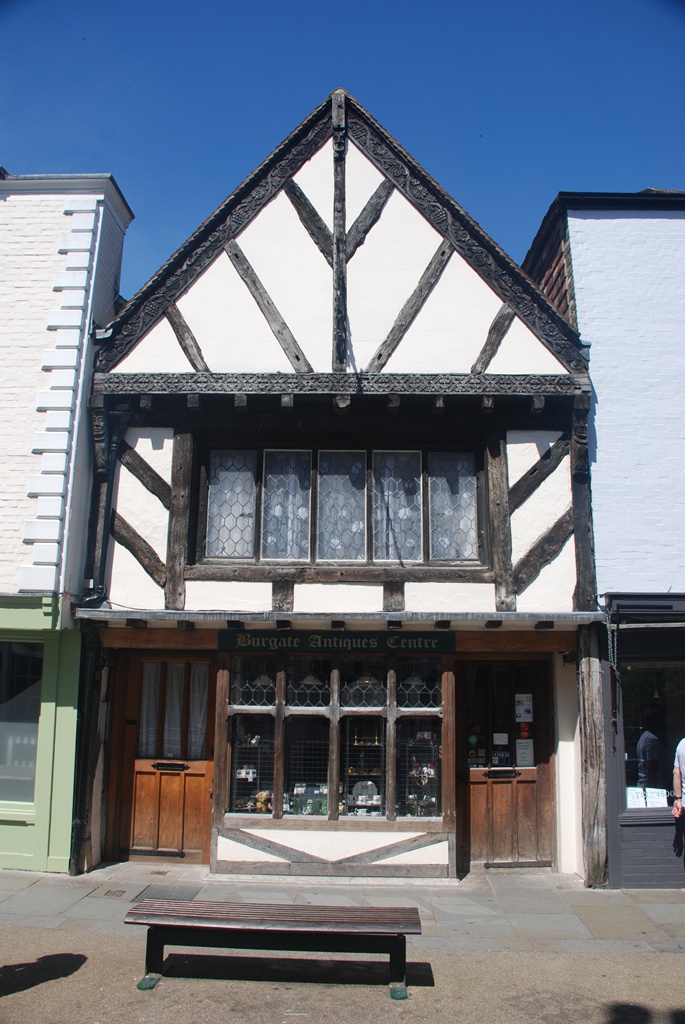
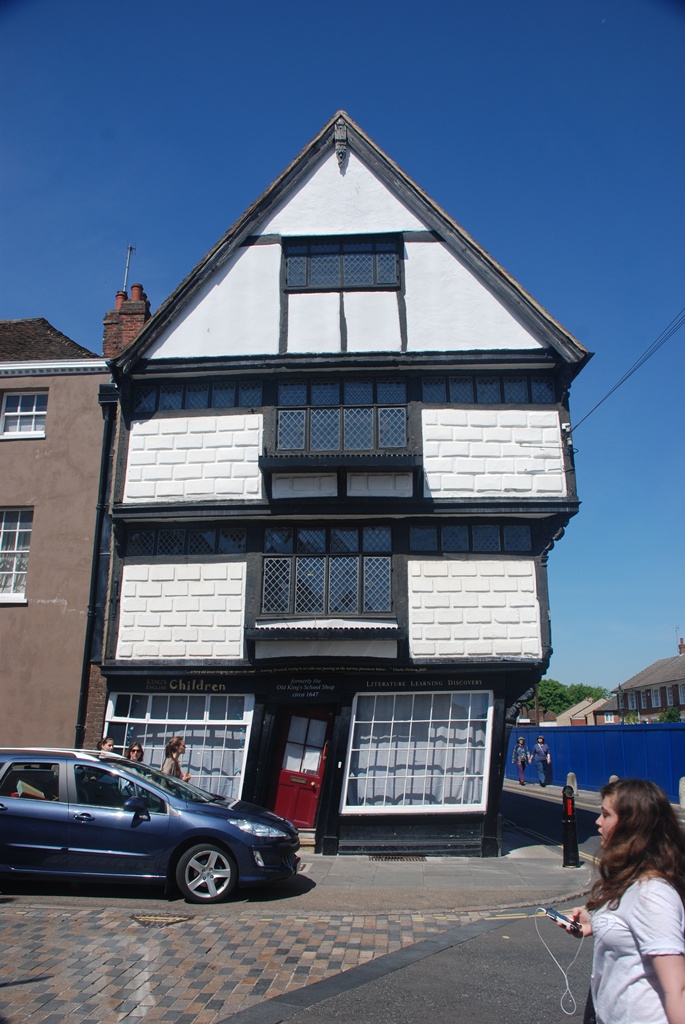
We walked around the town and it was obvious that most of the shops catered to tourist trade. However, the walk itself was interesting as there were many nice looking old houses in the town.

There was one particular house that was tilted to one side and my friends who are experts in architecture told me that this would have happened with age and it seems this happens with many old houses. If I were not with them, I would have thought that the house was constructed so!

After a refreshing cup of coffee, we were soon hurtling towards Dover. Dover is on the seaside and I had read about the white cliffs of Dover when I was young. In one of the books we had on the Second World War, I had also read of the evacuation of Dunkirk and the role Dover played in that. Hence, I was very eager to get to the castle.

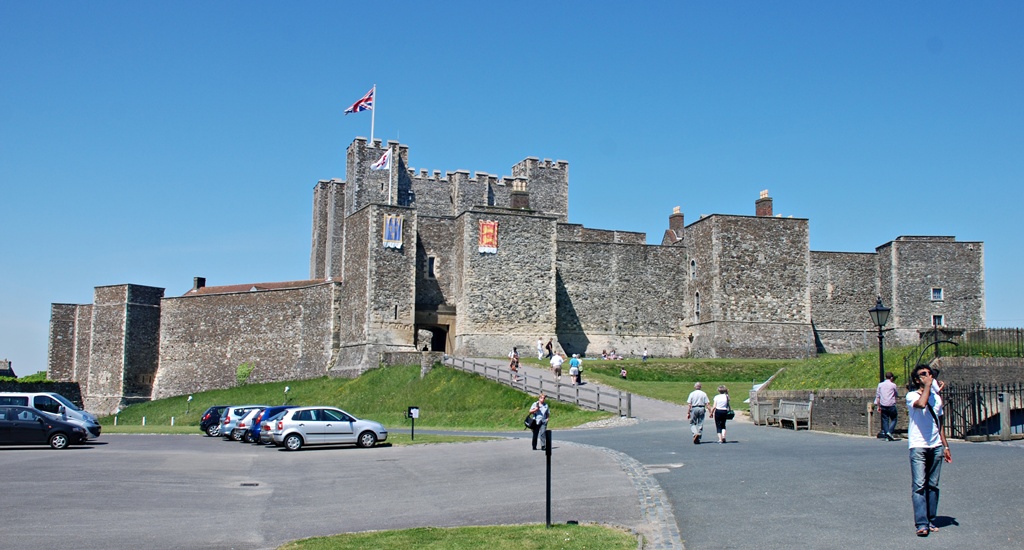
The castle was built between 1179 and 1189 by one of the most powerful monarchs in Europe at that time, Henry II. The castle has since expanded and covers a large area now. The castle itself stands on an old Roman location where they built a lighthouse in the first century and it can be seen even today. Dover itself was seen as the “key to England” and withstood many attacks from the Romans, Normans, French and finally the Germans. The French coast is just 60 kilometres away, across the channel, and is visible on a clear day from the castle. It seems that all it took for a shell that was fired from Calais in the French coast to reach Dover was 70 seconds!

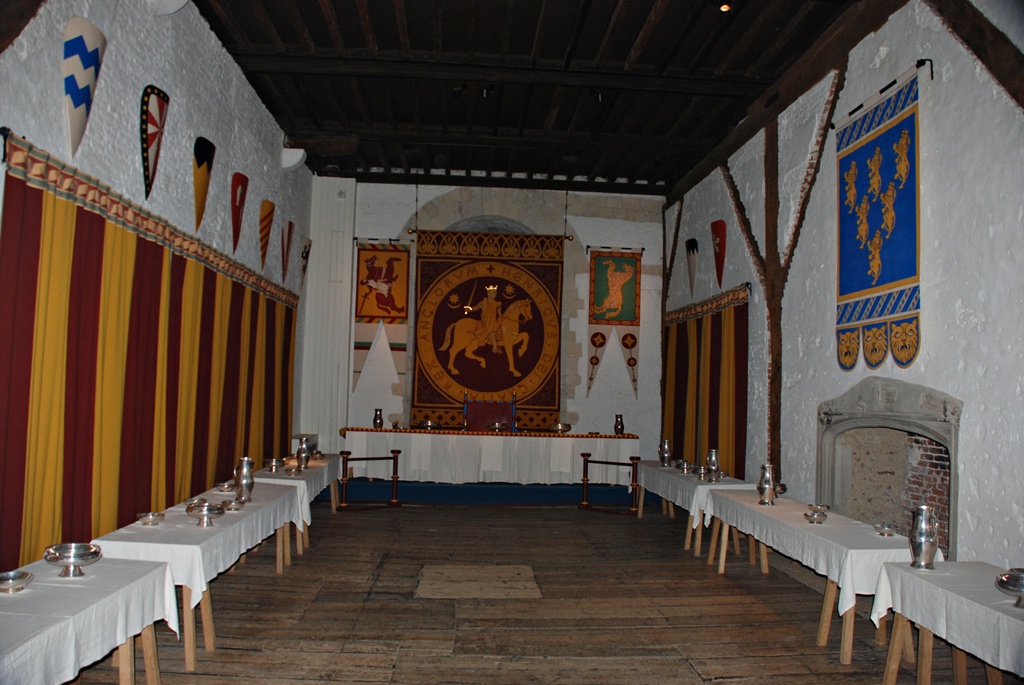
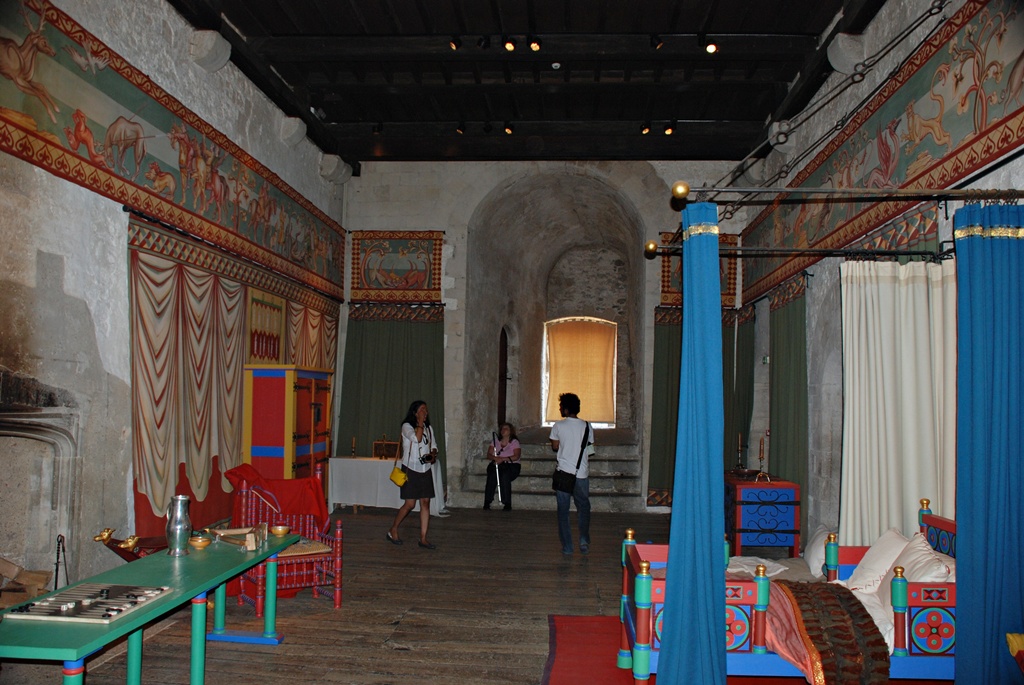
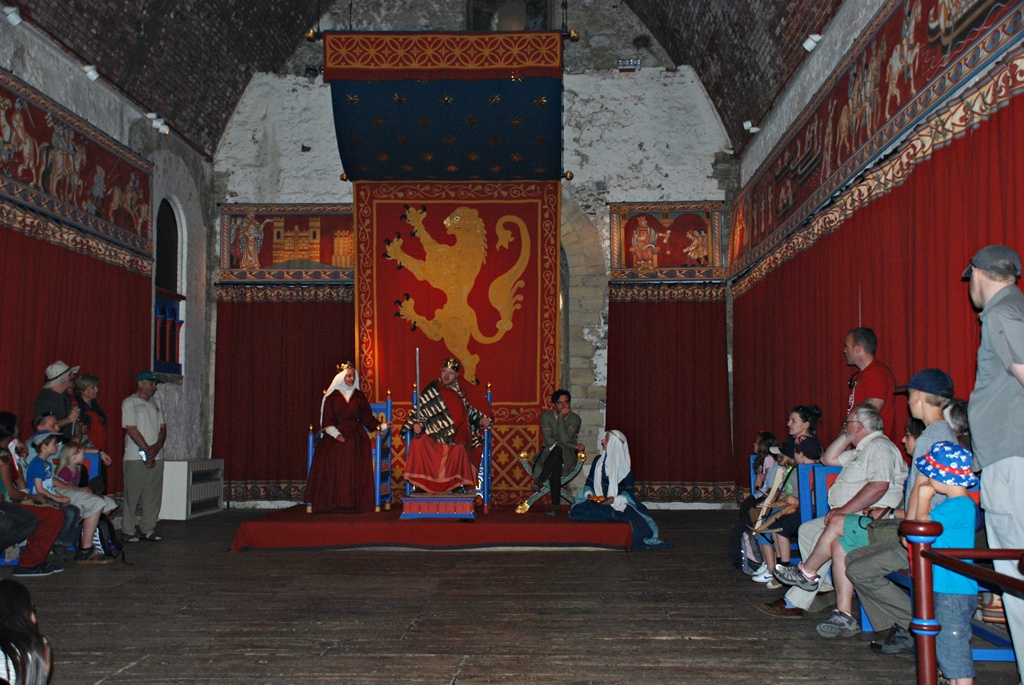
The castle itself is preserved pretty well and the building called the Great Tower forms the core of the castle – it has multiple levels with a hall for gatherings, living area of the King, a small chapel etc. The rooms are very colourfully decorated and I am not sure whether this is a modification of the modern times or whether this was so in the early days. Generally, I have seen that Europe is rather drab in its colours and lack the vibrancy that we see in India. There were a couple of actors dressed up as the King and the Queen, conducting a mock court for the tourists and I thought that was rather tacky.

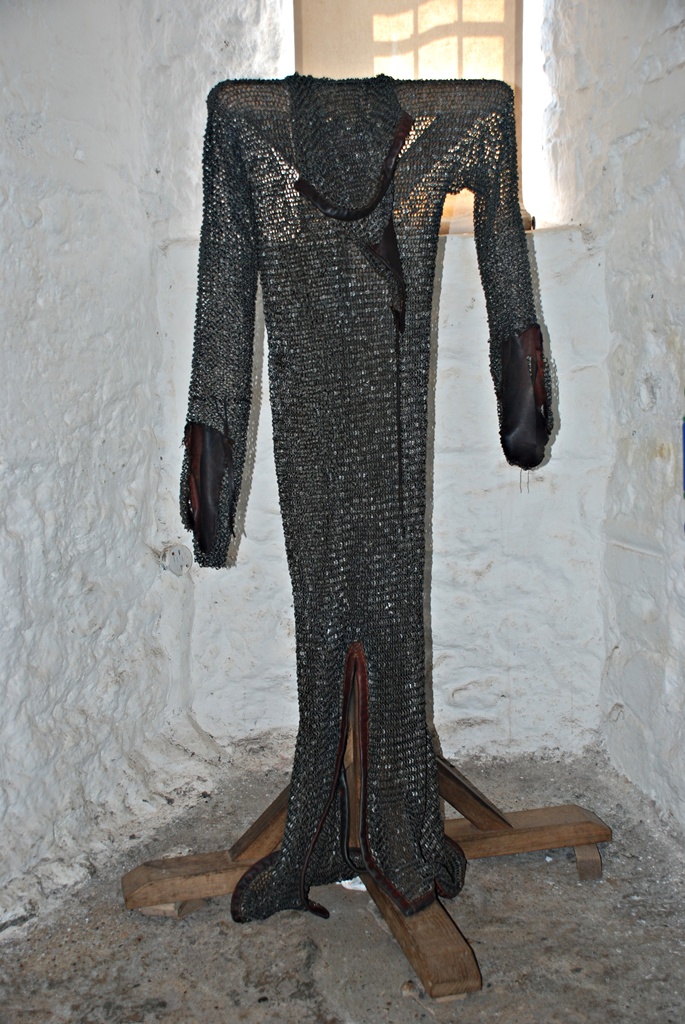
In one of the rooms, I saw a coat of mail, shield and a sword. All this was so very heavy that I was quite surprised at the strength of the men that would have worn those. I lifted up one arm of the coat of mail and that itself was too heavy for me. Someone said that the knights had to be lifted on to the top of their horses after they had worn all this armour, as it was impossible for them to get up there by themselves!

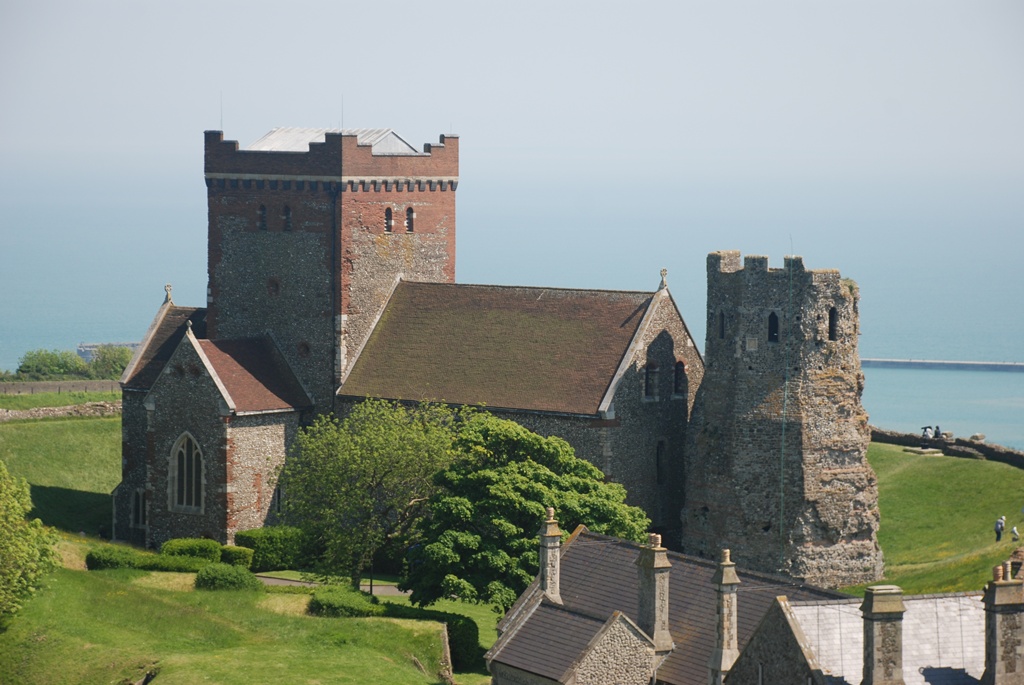
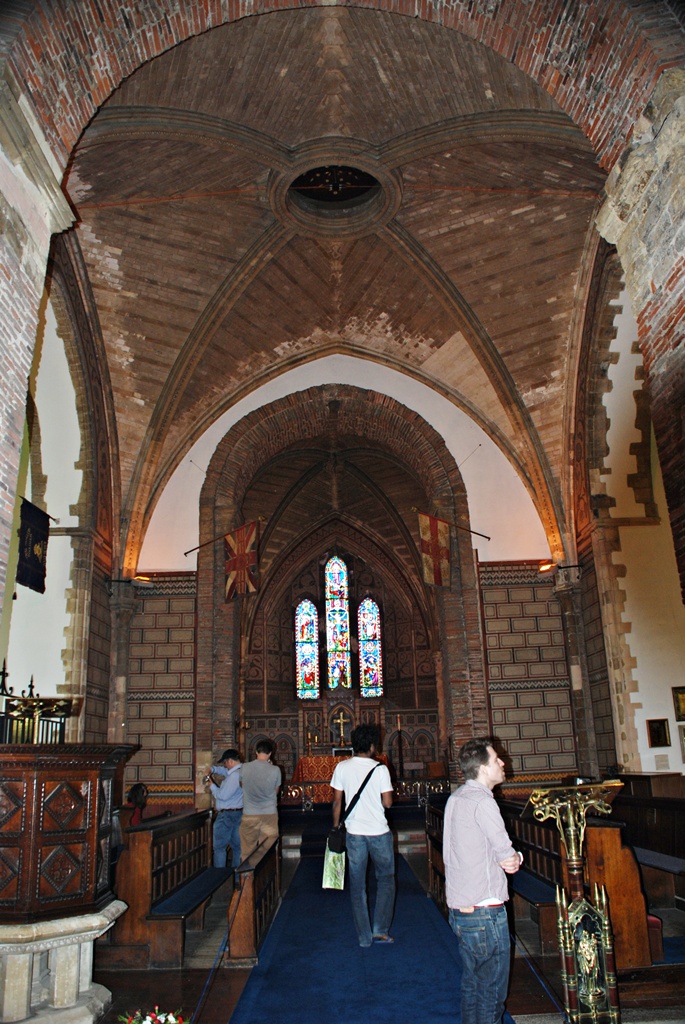
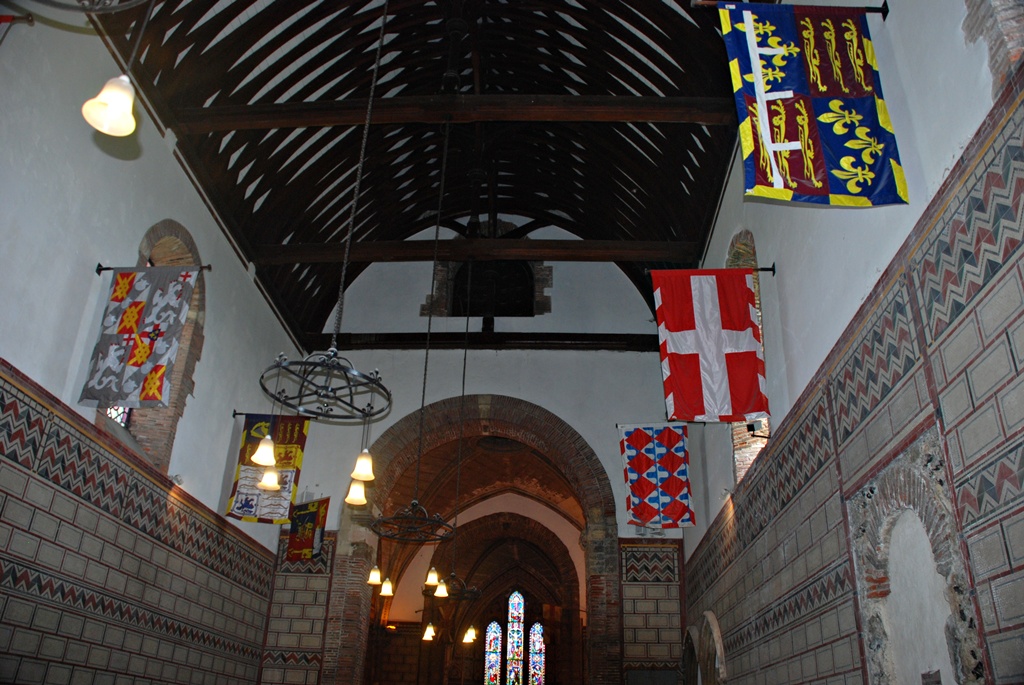
Right outside the main castle is the old Roman lighthouse and a small church alongside it. It is an old church that has served the military for many years. The interiors of the church were quite sparse and there were many flags inside.

Given the strategic significance of Dover, it was but natural that it became an important military location. In 1940, when France fell, about 400,000 Allied forces got stranded at Dunkirk in France; they had the Germans behind them and the English Channel ahead of them. Speaking at the House of Commons, Winston Churchill said that the “whole root and core and brain of the British Army” was stuck at Dunkirk and they faced death or capture by the Germans. An evacuation was ordered and it started on May 27, 1940 and ended early in the morning on June 4, with the rescue of 338,226 soldiers. While it was an evacuation and so a retreat, Dunkirk was still regarded as a victory as the British Army would have been crushed had they failed to rescue those troops.  Many German commanders considered that Germany’s biggest mistake in the Western Front was its’ inability to stop the Dunkirk evacuation.  It was on June 4th, after the evacuation, that Churchill made his famous “We shall fight on the beaches” speech.

Vice Admiral Bertram Ramsay lead the whole exercise from the dynamo room (hence the operation was called Operation Dynamo) in the naval headquarters, located in the tunnels under the Dover Castle. It was a large scale logistics operation conducted under extremely dangerous conditions. The whole nation was focused on Dunkirk and many civilian ships and even small fishing boats (it seems the smallest one was but 18 feet long) took part in the exercise and that was why it was successful.

The tunnel system under the castle is very extensive and Admiral Ramsay had his headquarters there. We took a conducted tour through the tunnels and saw office rooms, living quarters, telephone equipment room, repeater station etc. It must have been quite an effort to spend days in there with a war going on. Unfortunately, they do not allow any photography in the tunnels as the fire sensors are supposed to be quite sensitive and might give off alarms when the camera flashes go off. As we walked through those tunnels, exactly 72 years after the day the evacuation started, I could not but feel the tension and the pressure that must have gripped the people that lived there at that time. War causes so much suffering and sorrow – yet, we are forever in wars!

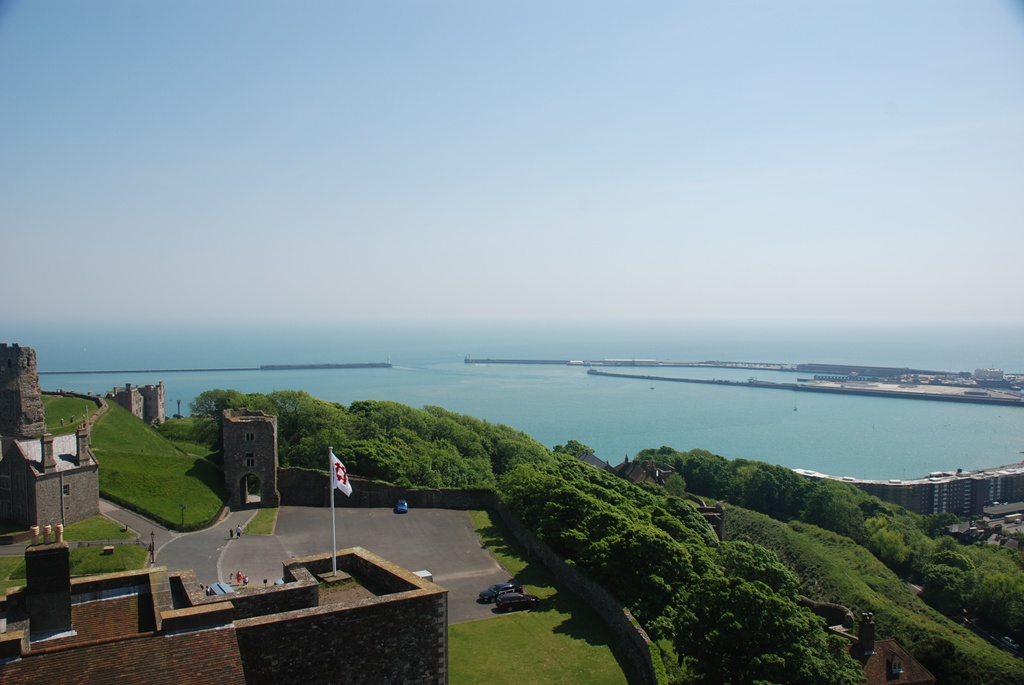
The view of the sea from the battlements was quite nice and we could indeed, see France in the distance. Dover castle is quite different from the many other castles I have seen as it looks very functional; probably because it was used even as close as fifty years back.

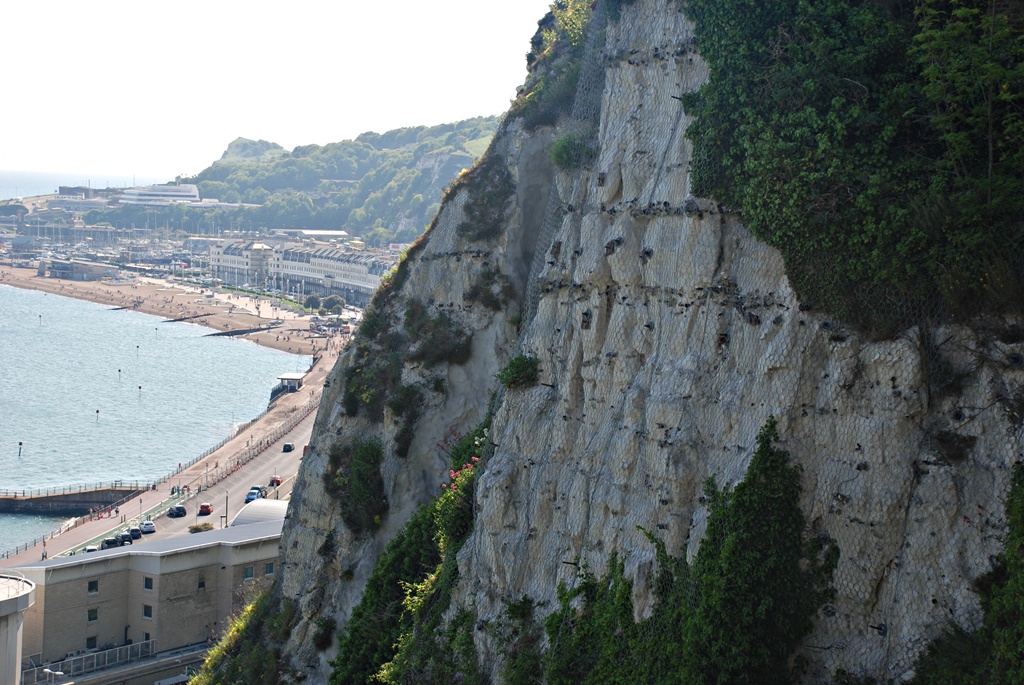
Since we were standing on the cliffs themselves, we could not see much of the white cliffs except what we could see by looking up. These cliffs are largely of chalk. During the cold war period, the British Government equipped the tunnels to be a base and retreat for the leadership, in case of a nuclear attack. However, it was found later that radiation would have seeped in through the chalk cliffs and hence the location was abandoned.

21 May 2012

As it often happens, the places that are the closest are often the ones that are farthest! This has been so with me, in the case of Tippu’s Fort which is located at Palakkad. Palakkad is but 15 Kim’s from my hometown, Chittur, but I have never visited the fort after my schooldays; which, admittedly, was way back. So, I had decided that I would make it to the fort this time around when I went to Chittur.

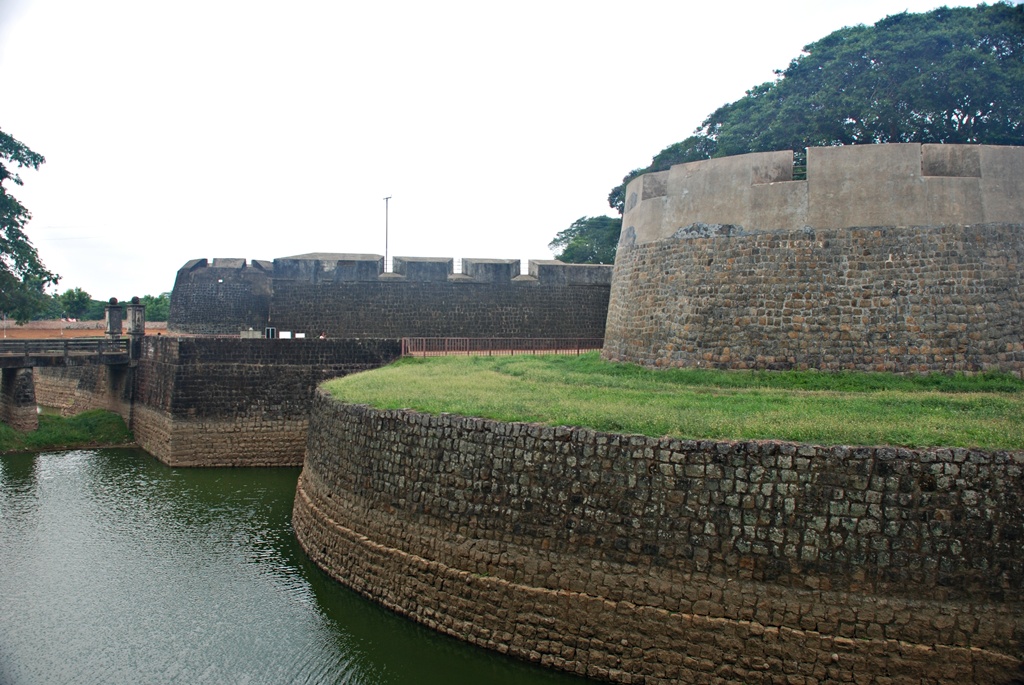
The fort has been restored quite recently and some of the ramparts that had fallen down have been rebuilt. It dates back to medieval times and was renovated by Hyder Ali (Sultan of Mysore) in 1766, when he was invited there by the king of Palakad to help against an invasion threatened by the Zamorin, the king based in Calicut. Hyder took advantage of the opportunity, realizing the strategic significance of Palakkad. The fort changed hands a few times between the British, Hyder Ali and his son, Tippu Sultan till 1790. The British controlled the fort from 1790 onwards and used it as their base. Even today, the fort is known as “Tippu’s fort” even if Tippu held the fort only for a few years and was not the one that built it. When I thought about it, I was happy that there were at least some monuments left as remembrance for this brave and patriotic son of India.

I have felt that Tippu Sultan has often been sidelined and his role in history underplayed, by vested interests. He was one of the very few kings in South India that realised the threat the East India Company and the British posed. His wars with the British have been well chronicled and even though he succumbed in the end, he remained a thorn in the side of the mighty British for many a year and that too when all the rulers of the neighbouring kingdoms had meekly surrendered, out of cowardice and for personal gains. He had the vision of free India and fought for it, ultimately giving his life. As a true hero, he fell in battle, fighting till the very end.

Yet, he is painted as a religious fanatic, one who was only interested in converting Hindus to Islam. No matter that the first sight that greets you as you walk into his fort in Palakkad is a Hanuman temple – one of the most powerful Hindu gods. This temple is a big favourite with devotees even today. It also does not seem to matter that the very famous Srirangam Temple stands within Tippu’s fort and stronghold at Srirangapatnam and I cannot imagine that it would have been a huge effort for him to mow it down. It is obviously of no significance that it was Tippu that sent money to help the Kanchi Mutt after that Hindu monastery was ransacked by the Hindu Maratha rulers. The list goes on and I am just writing what I have seen and heard and by no means am I an expert. I am sure that his armies would have raped and plundered as is the wont of victorious armies but then, which victor has ever held his forces back after a battle? Even today, in our “cultured” ways, the spoils of war go to the victor.

The fort itself stands on a small hill and there is a large moat surrounding it. In my childhood, I had heard stories that only Tippu’s horse could leap over the moat and when I looked at the size of the moat, I realised that it was just that, a story, given the size of the moat.

There is very little water in the moat today and you enter the fort through a small bridge.

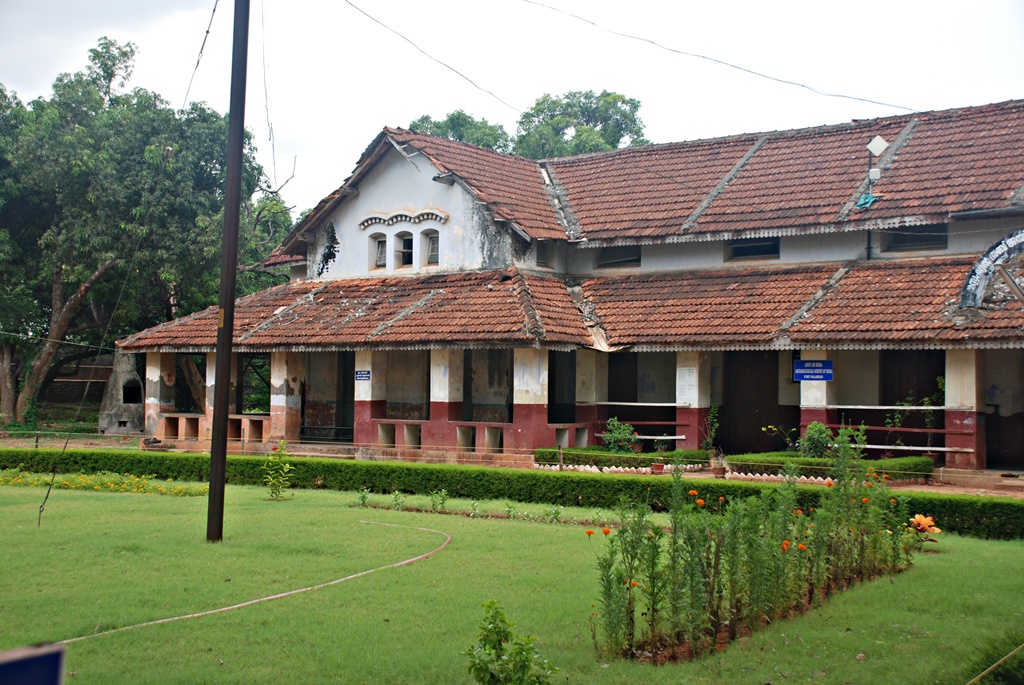
The fort itself is very functional and is built with large granite boulders and limestone. It is of rhomboidal shape shape and has seven bastions with very thick walls. There does not seem to have been much effort spent to make it beautiful in any way. At the main entrance, I saw some decorations on the wall above the door and that was pretty much the only decorative piece I saw in the entire fort.

As you enter, on the right, there is a small idol of Hanuman set into the wall. This has now become a very famous temple and there were many devotees even at mid-morning, when we went in. I was not allowed to photograph the temple itself, in keeping with the recent form of intolerance which denies entry to non-Hindus to temples. I also noticed that the temple itself had a “saffronised” look with the imagery and colours used and even with name of Ram, written in Hindi. Perhaps this is a good indication of who controls this temple and I felt one could easily transport this temple to North India and it would fit in there very well.

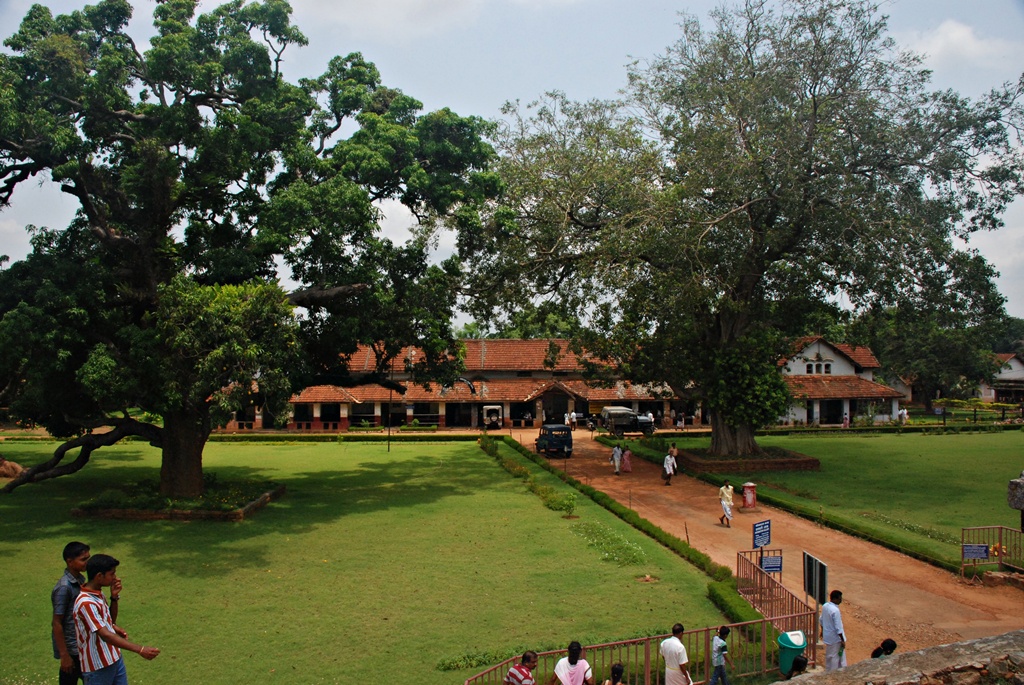
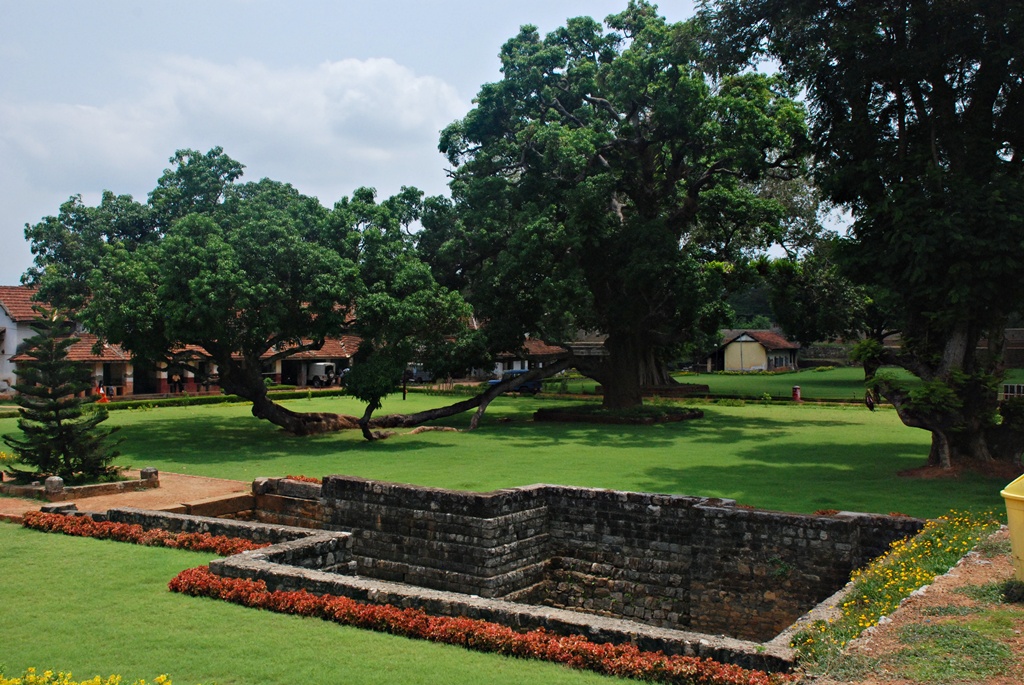
In the centre of the fort, there are a few buildings and this must have been where the people that stayed in the fort lived. The buildings do not look as old as the fort and must have been constructed during the times of the British. There is a very well maintained lawn with a couple of large trees.

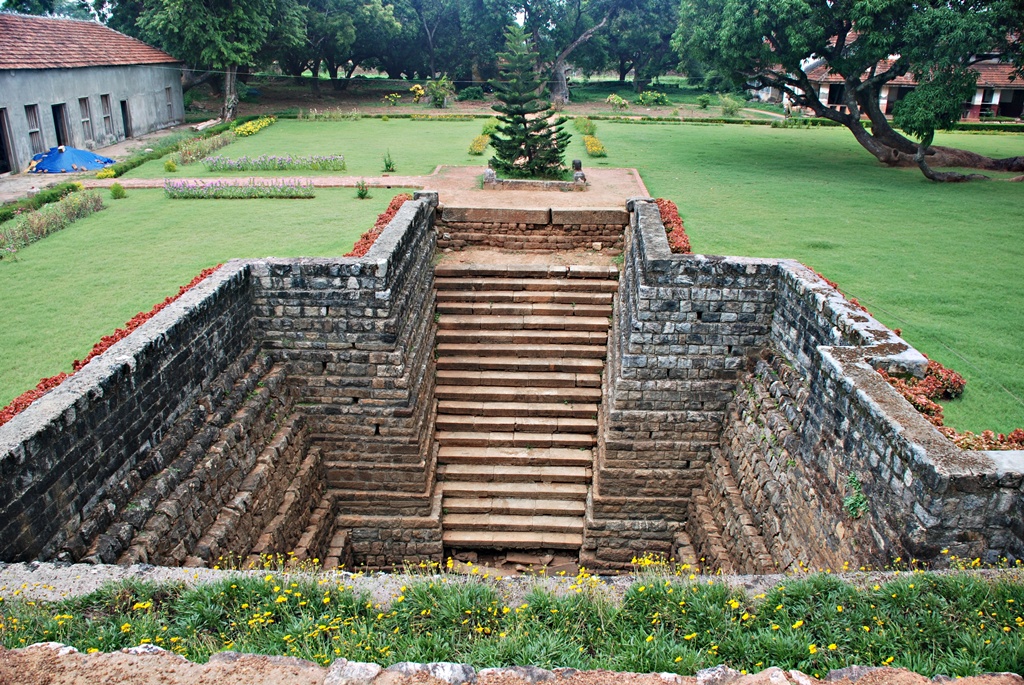
There is also a stepped well on one side of the courtyard and I learnt from the Information Centre that this well was dug later.

The Information Centre is hosted in an interesting stone building with 28 pillars, which was also constructed later. Unfortunately, there is not much information provided about the fort or the battles that were fought there or the people that lived there. There are some photographs of the restoration and of other places of tourist interest in Kerala.

One of the buildings houses a jail and that was of personal interest to me as my father was imprisoned here for two weeks in 1961 when they were agitating for the implementation of the Land Reforms Act in Kerala. I guess the jail must have been in the same old shabby condition even 50 years back.

There is a walkway that takes you around the wall of the fort and there were some good views all around. One could see that the fort offered a very good defensive position. I was quite disappointed that there were no markings or indications of any of the places of interest within the fort or any details provided about its history. There is a small board at the entrance with a few lines on it but that hardly does justice to the place. It was equally disappointing that there was no mention of Tippu or Hyder or anyone else that lived there. But, the people of Palakkad still honour that valiant son who was the first to rise against the British in South India and call it Tippu’s Fort…..


I started off a little before lunch in the Jeep and the destination was the Pegasus camp about 60 km away from Bangalore. This was the first time that I had dared to take my 1967 model Jeep outside the city since I bought it. So, it was with some apprehension that I set off and it looked others too had the same apprehension as Sandhya kept calling me in between to check whether all was fine. In the end, I felt I should have been more confident of the Jeep – it was a smooth drive all the way through. Driving on the countryside with a Jeep, which is partially open is so much more fun even in the summer. You felt a bit more in touch with the surroundings and not cocooned.

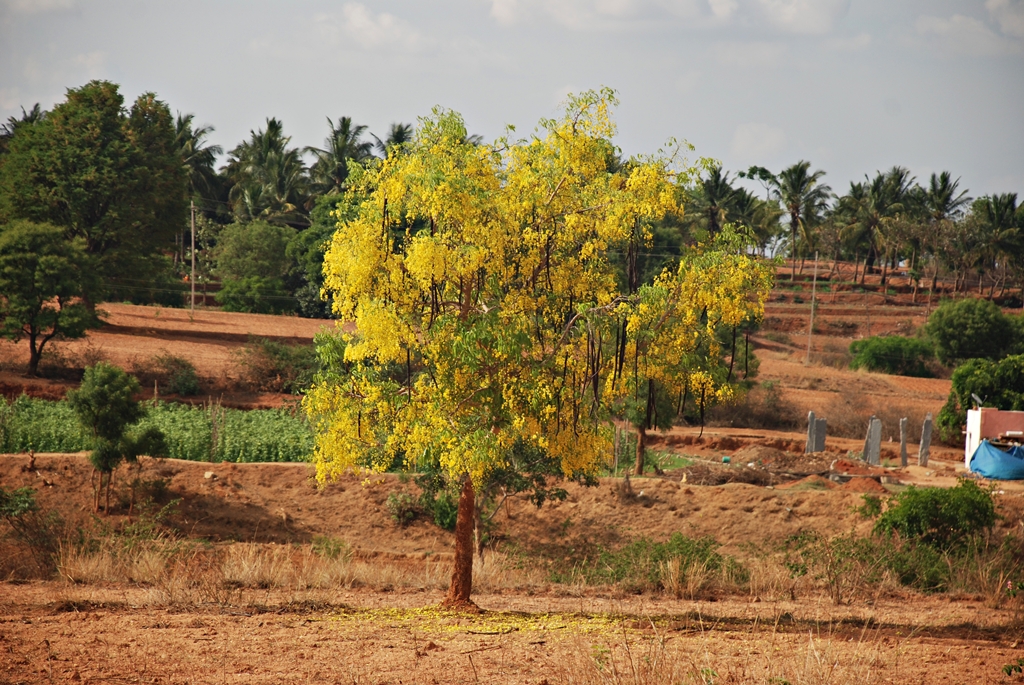
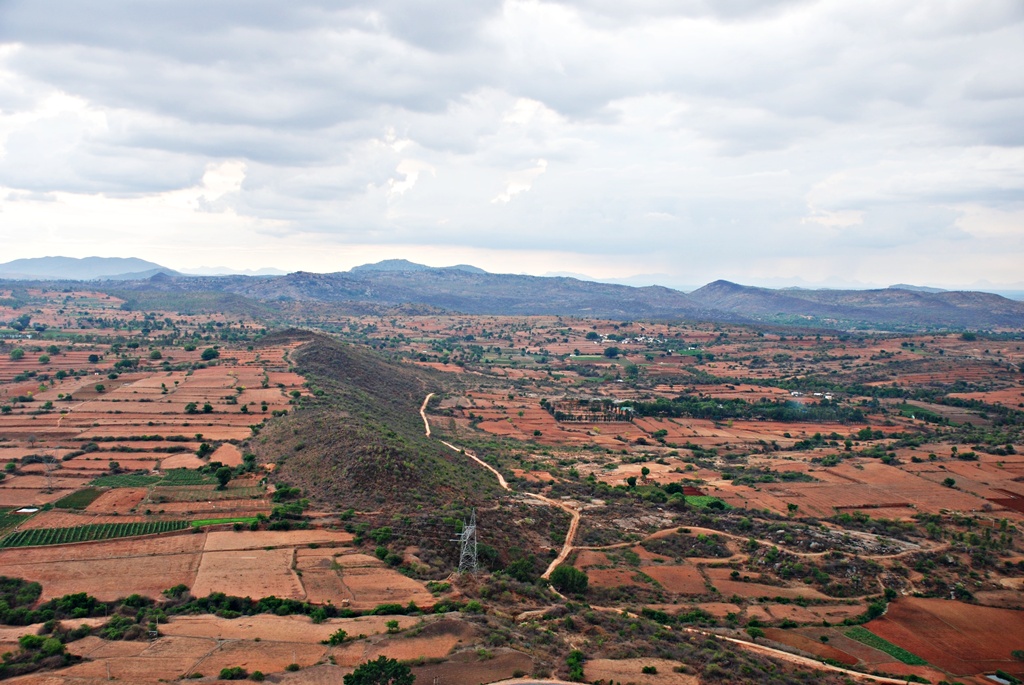
The camp is in the middle of nowhere with the nearest village being a small one called Kallukote. I have always been struck by how pronounced the change is between Bangalore and the rural areas surrounding it. Just 50 km off Bangalore and you are in real rural heartland. Probably I feel this more because in Kerala there is not that much difference between cities and the rural areas.

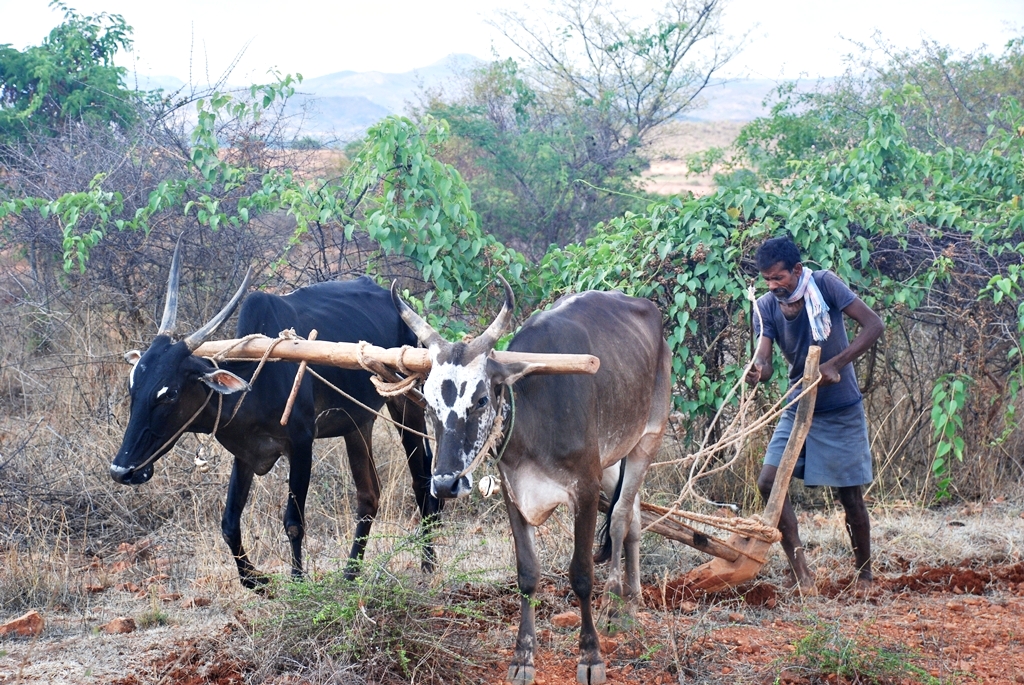
I was driving along in good cheer and stopping to take photographs once in a while. The land looked well irrigated and most of it was under cultivation. It was good to see land being put to good use and not being barren. As I stopped for one such photo break, I saw a sight that I had not seen since early childhood – a man ploughing his land using bullocks. He was kind enough to allow me to take photos of him. His name was Vasanthappa and he said he grows maize in his fields. It was quite amazing that within 50 km of one of the largest cities in one of the largest economies of the world, a man was still ploughing his land using a technique which was centuries old. I guess a tractor must have been beyond his means.

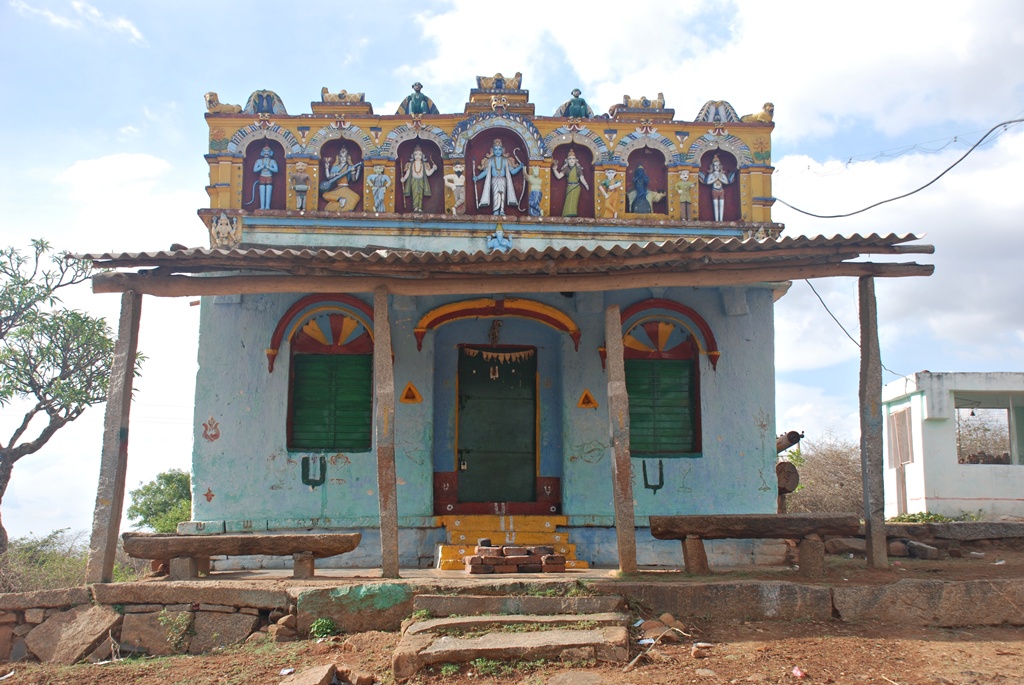
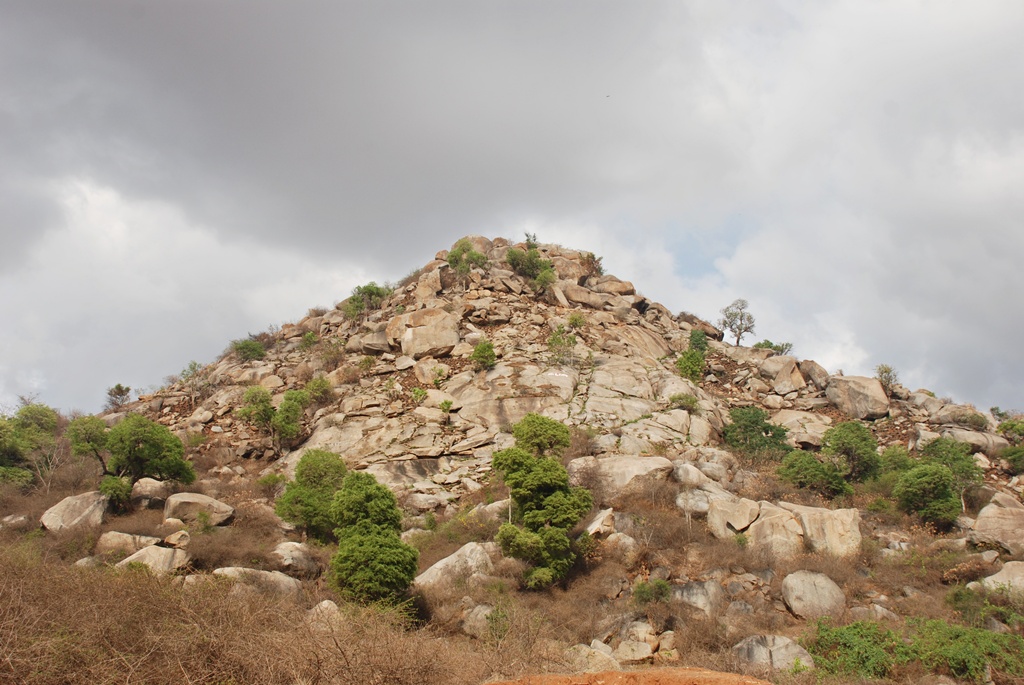
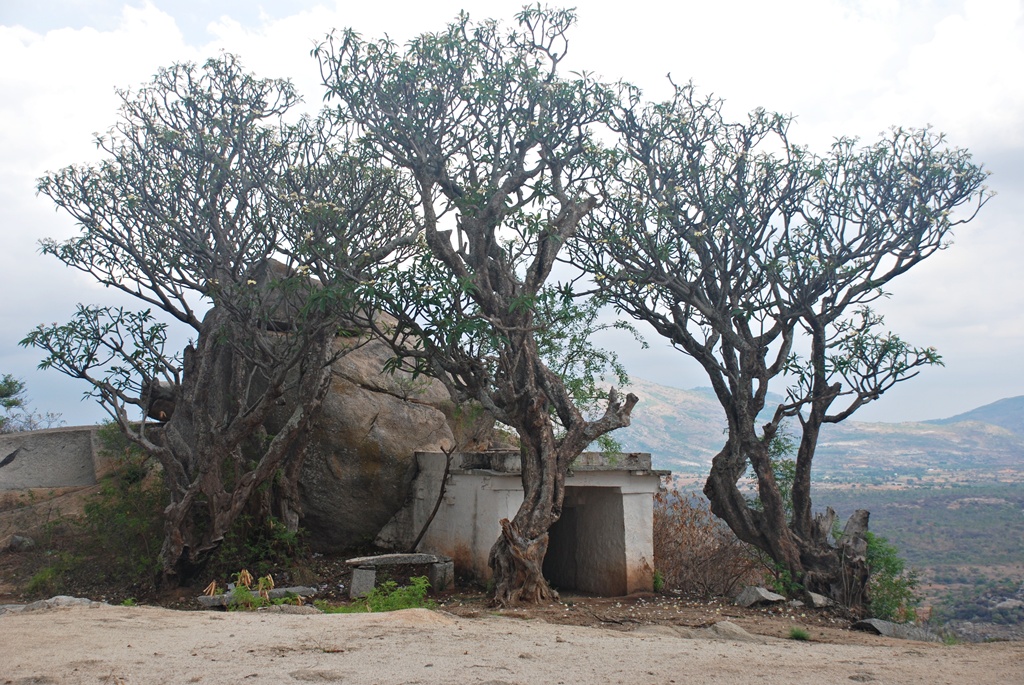
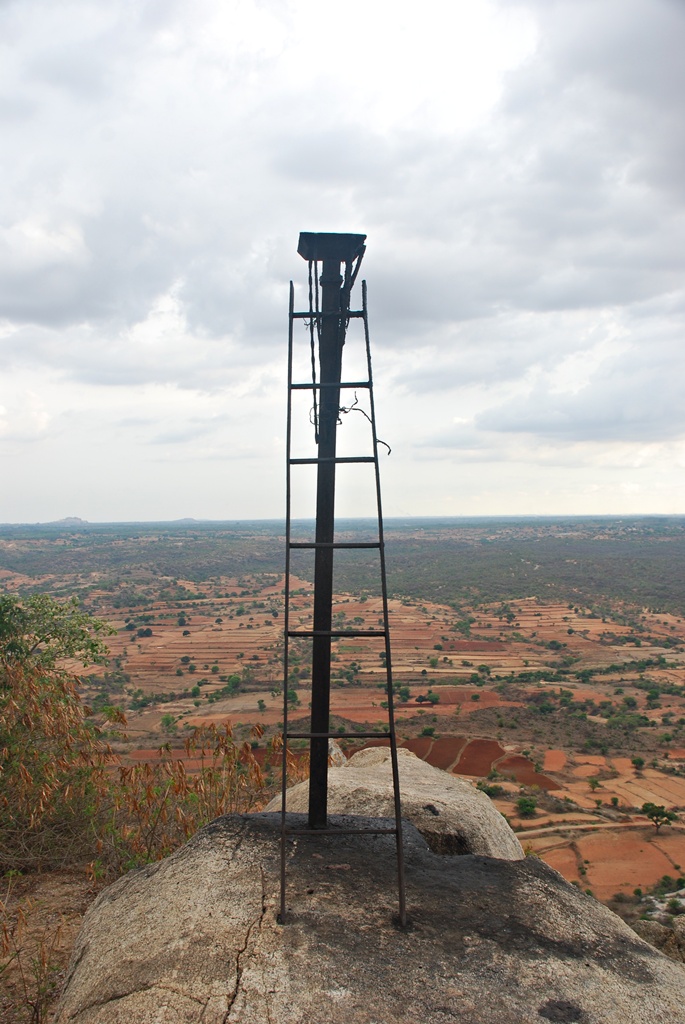
Very near the camp is a Lakshmi Narasimha temple and there is a medium size hill (about 700-800 ft high) right beside it. There was a villager standing near the temple and he told me that they had another temple right on top of the hill. He showed me a post right on the top where he said a lamp was lit on particular days. I was curious and wanted to go up the hill.

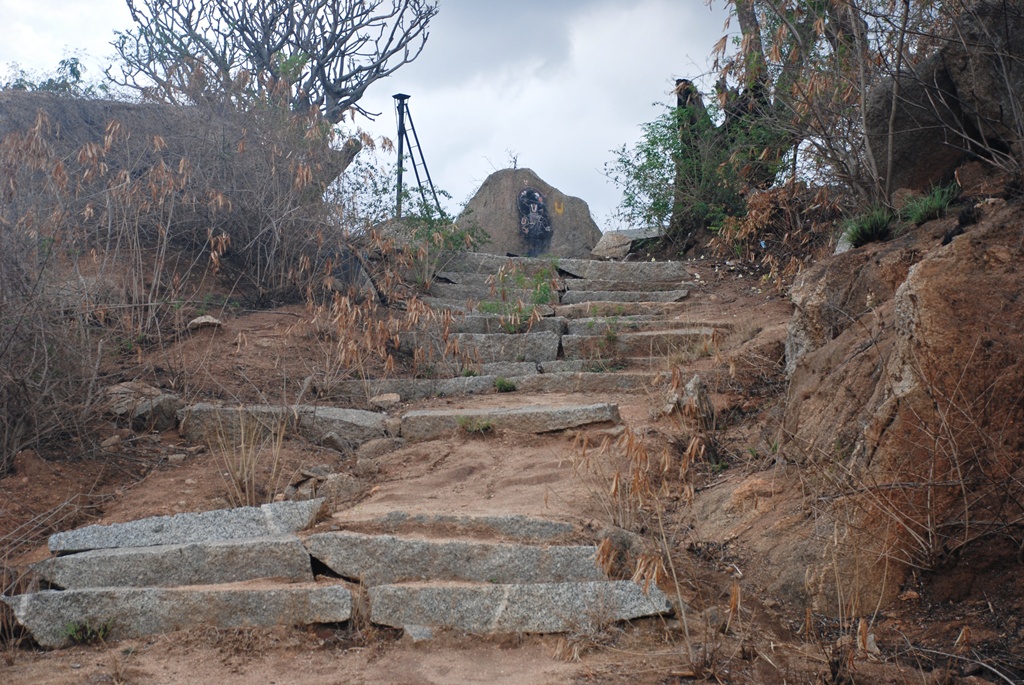
So, I went to the camp, freshened up and came right back. There was a rough, rocky road cut into the hill side and my Jeep would have gone up that track, steep as it was. However, since I have no experience with such riding and as I was aapprehensive of causing some damage to the vehicle, I parked it near the temple and proceeded up the hill on foot. As I started walking, I realised that I was alone on the hill. It was a bit of an odd feeling, it was so silent and still all around. The path was reasonably easy, though a bit steep and I was at the top in about 20 minutes and what a sight it was!

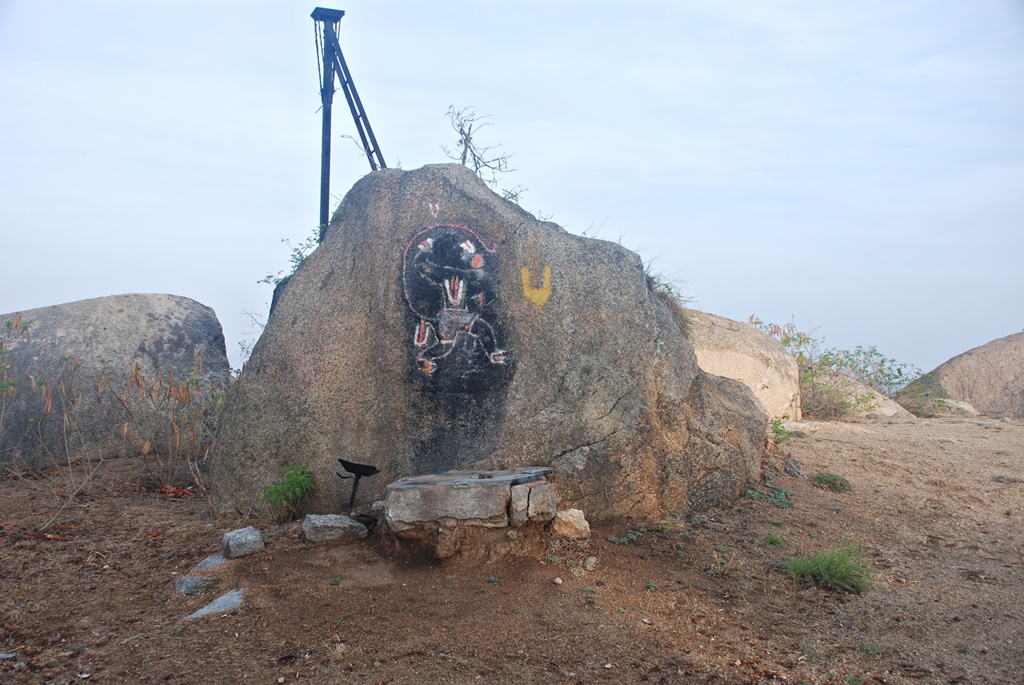
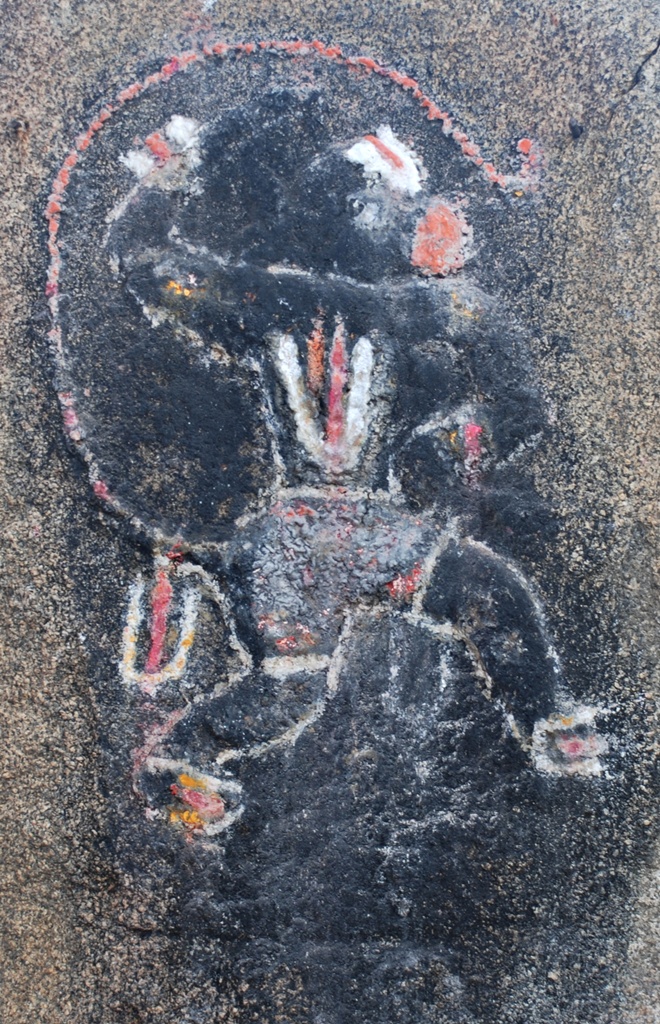
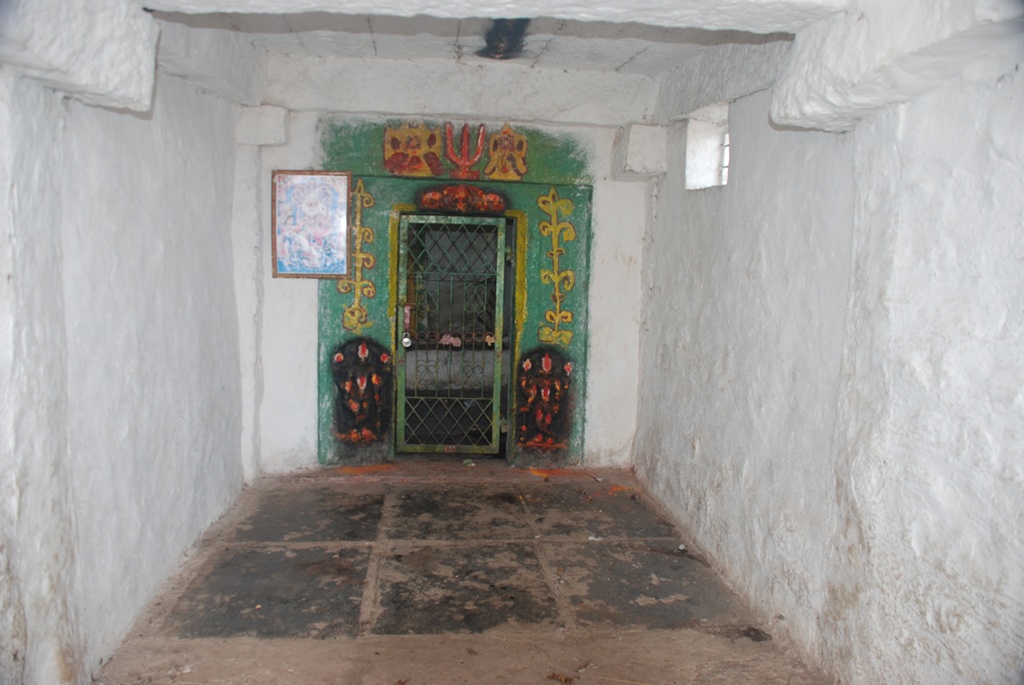
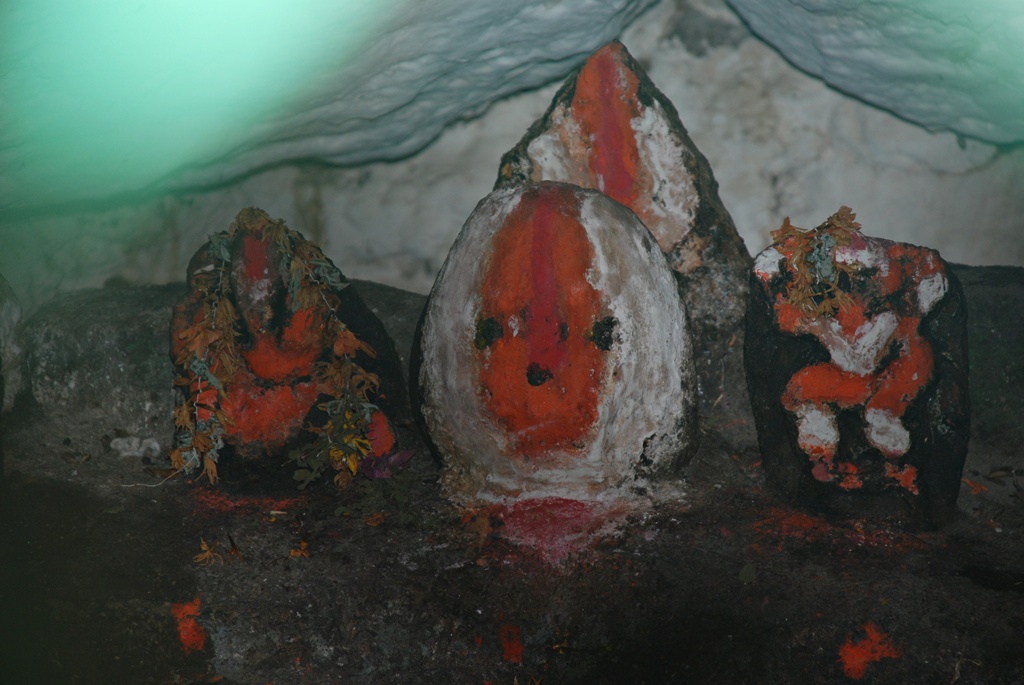
The temple itself was a very small but what attracted me more were the steps that led up to it and a drawing of Hanuman done with charcoal or something like that, on a rock. The image, the steps and the tree beside it all combined to provide a nice ambience. The highlight of the whole experience was, of course, the simplicity of everything. Simple lives, simple beliefs, simple temples, simple gods…..

The post that the villager had shown me was driven into a rock and was almost at the highest point.

The views all around were fantastic with majestic hills looming in the distance. There were many small villages to be seen but most of it was agriculture land.

I sat there for sometime absorbing the stillness and the quiet. It actually takes effort to get used to that. One is far more comfortable with all the noise that one is surrounded with, in the city. It was a bit eerie to think that I was all alone on that hill. It was a very nice feeling and needless to say, was the highpoint of the day. I will be back here soon….

15 March 2012

It was a bright day awash with sunlight when we landed in Brunei (or more properly, Brunei Darussalam), which is located on the north western tip of the island of Borneo. This was a my first trip to this country, one which had made me curious for a long time because of its much talked about wealth. Bandar Seri Begawan is the capital of the country and is a small town and so we reached the hotel very quickly from the airport.

Brunei was once a much larger country, which also included the provinces of Sabah and Sarawak which are now in Malaysia. It was ruled by the British as a protectorate and became a free country in 1984. It is now ruled by the Sultan and its rich petroleum resources have made the Sultan one of the wealthiest men in the world. The population is around 400,000 with more than half of the population living in the capital. Brunei is considered a developed country and ranks fifth among the countries of the world when measured by GDP per capita.

I had a couple of hours free between lunch and dinner meetings and decided to take a walk around town. The hotel was smack in the middle of town and so access was easy. My first impression of the city was that it looked like a mini version of Kuala Lumpur with smaller buildings and lesser crowds; possibly the language being Malay also contributed to this feeling of similarity. There were good many cars on the roads but very few people. In fact, I got a feeling that there are more cars in BSB than people; later, I was told that Brunei ranks first on number of cars per capita (but a quick look in Wikipedia puts Brunei in the 8th spot). I shudder to think what this must be doing to the environment. However, one has to also admit that they have done a very good job in maintaining the green cover in the city and one could see trees everywhere.

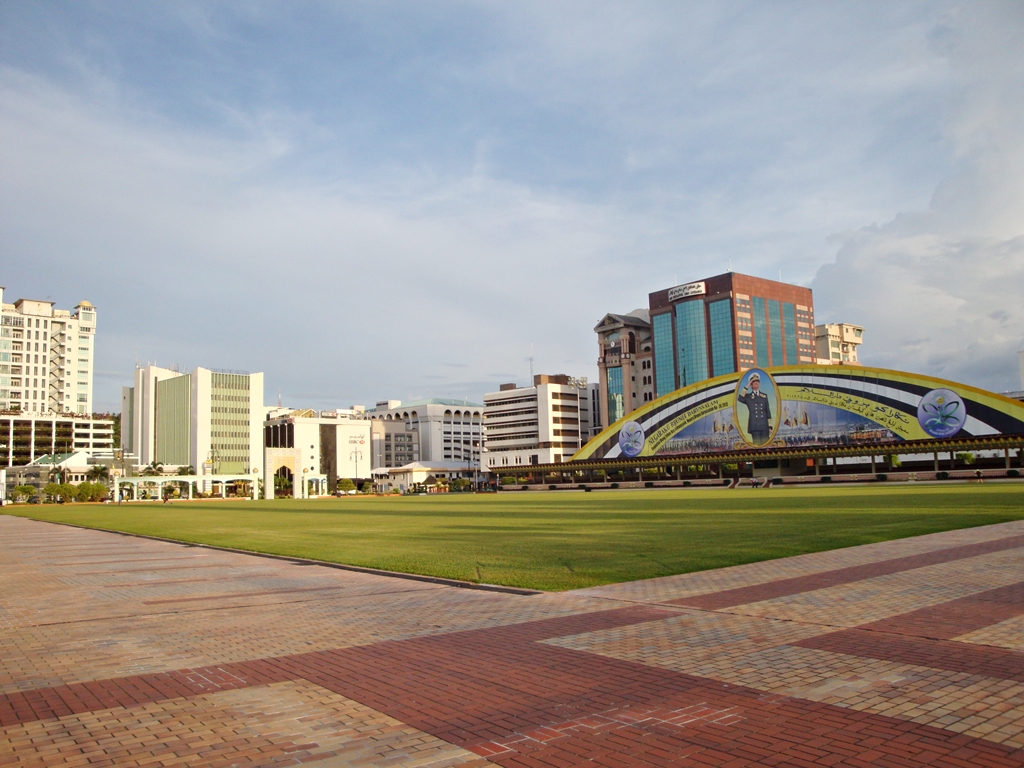
The city itself was very clean and it was a pleasure to walk around. The first location I got to was the Independence Square. This is where official functions are held and it is bigger than a football field. There is a lovely grass field in the centre and I saw a few people using the facility for catching up on their exercise.

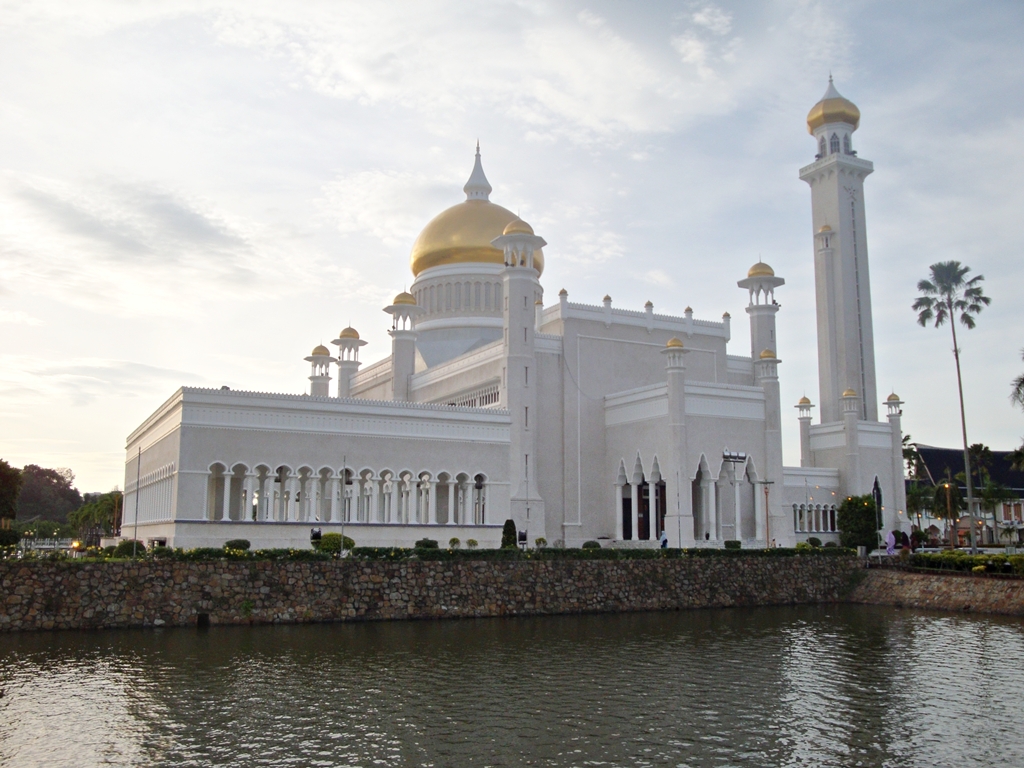
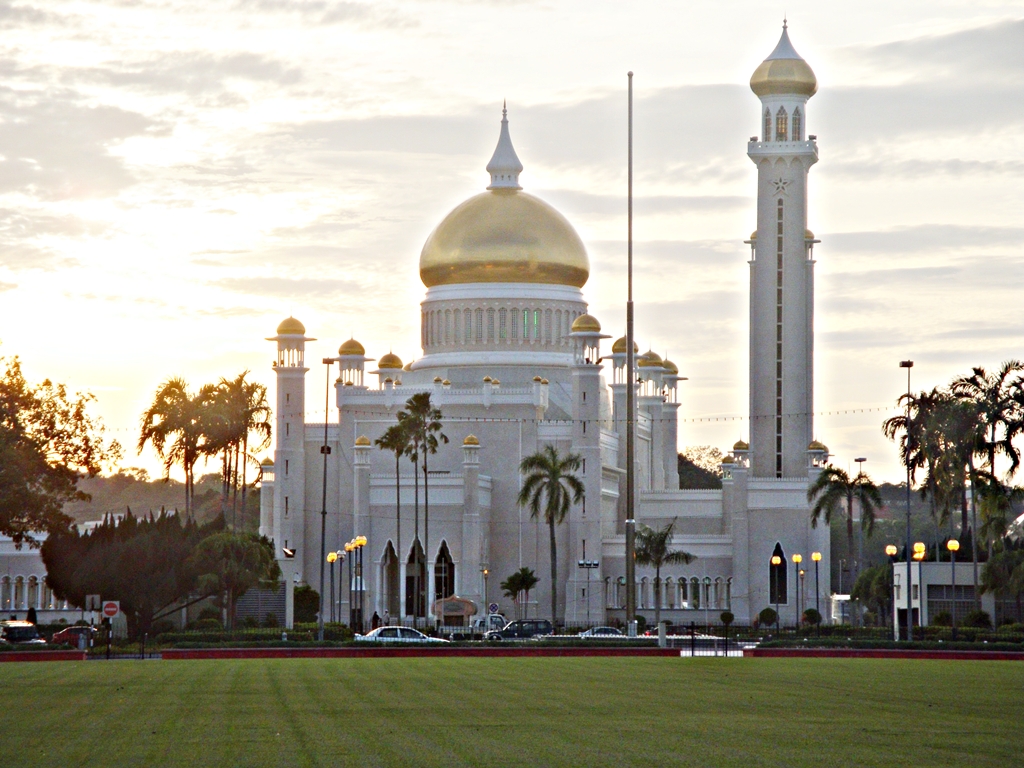
A short walk from there brought me to the Omar Ali Saifuddien Mosque. This is named after the 28th Sultan and the hotel web site claimed it to be one of the most magnificent mosques in South East Asia. Unfortunately, I could not go in and take a look as it was closed to tourists on Thursdays and Fridays. The mosque does look quite beautiful from the outside.

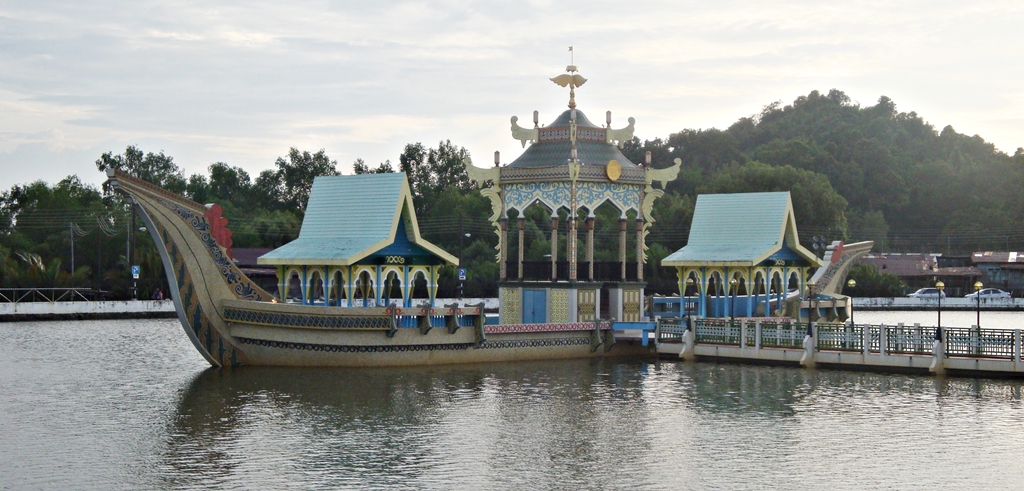
Alongside the mosque is a lagoon and on it is a replica of a 16th century barge and there is a walkway between the mosque and the boat. It looked quite beautiful and I was curious about why there is a boat attached to a mosque but I could not ask anyone and so that remains unanswered.

My hotel was situated right next to a small canal and when one crossed the bridge, there was a market selling various items such as vegetables, fruits etc. I had noticed this when I set out from the hotel and had planned to visit it on the way back. On the way back, I popped in there and was surprised to find that most of the stalls had closed down even if it was still broad daylight. Even as I walked through the market, no one made any effort to sell anything to me; I mean even the stalls that were open. There were some water taxis available from near the market and they offered to take me to the Water Village, which, it seems, is called the Venice of the East. I was a bit suspicious of this claim based on what I had read on the internet and so declined the offer.

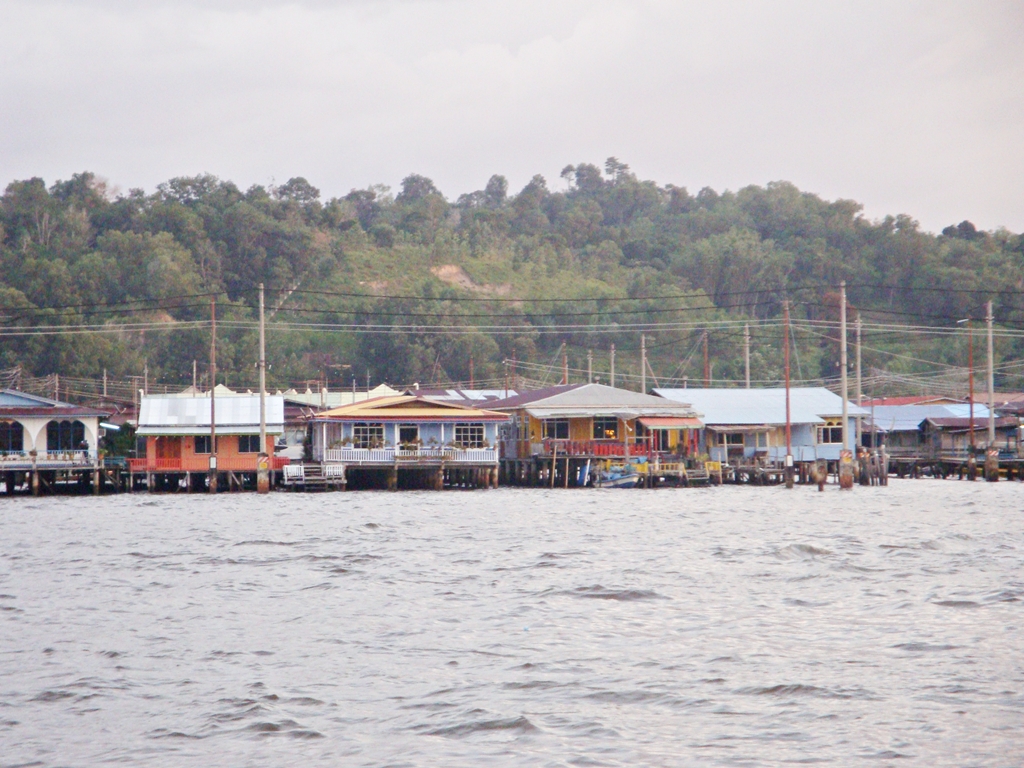
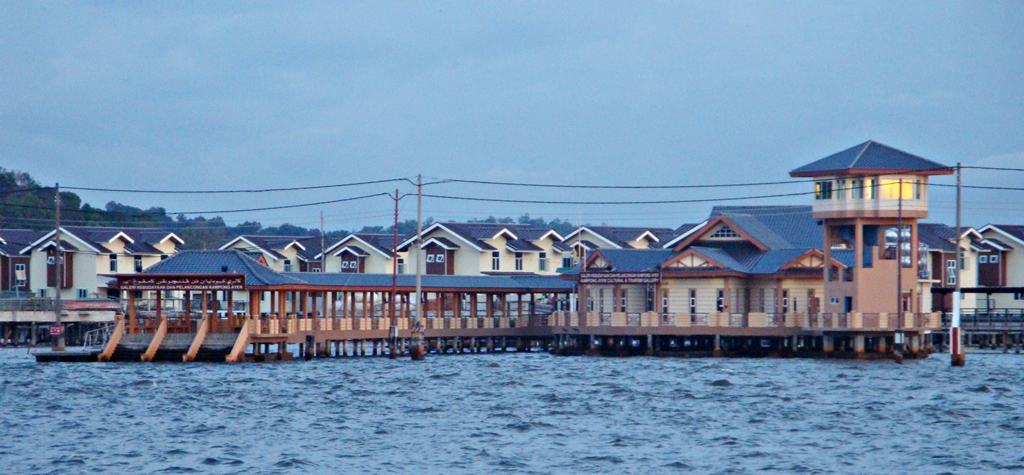
I wandered around a bit more and came to what seems to have been the old customs house and a jetty. The water village (called Kampong Ayer) was visible across the lagoon and it consists of small shops built on stilts. It reminded me of the sea village I had seen in Phukhet, but that was on a much larger scale than this.

By this time, dusk was setting in and I strolled back to my hotel. There were still many other points of interests like the National Mosque, Museum etc. but those will have wait for another day and another trip.

One point that struck me about the city was that it was very quiet and relaxed. There was no hustle and bustle and nobody seemed to be in any hurry. Everyone seemed relaxed and contented. Later on, when we went out to dinner with our host, Chin Toon, he told me that he found the quality of life in Brunei to be superb. He is a Malaysian businessman but likes the life in Brunei as it offers him “the best balance between work and family”. I could understand his point perfectly and anyone that visits Bandar Seri Begawan would have no difficulty in agreeing with Chin Toon.


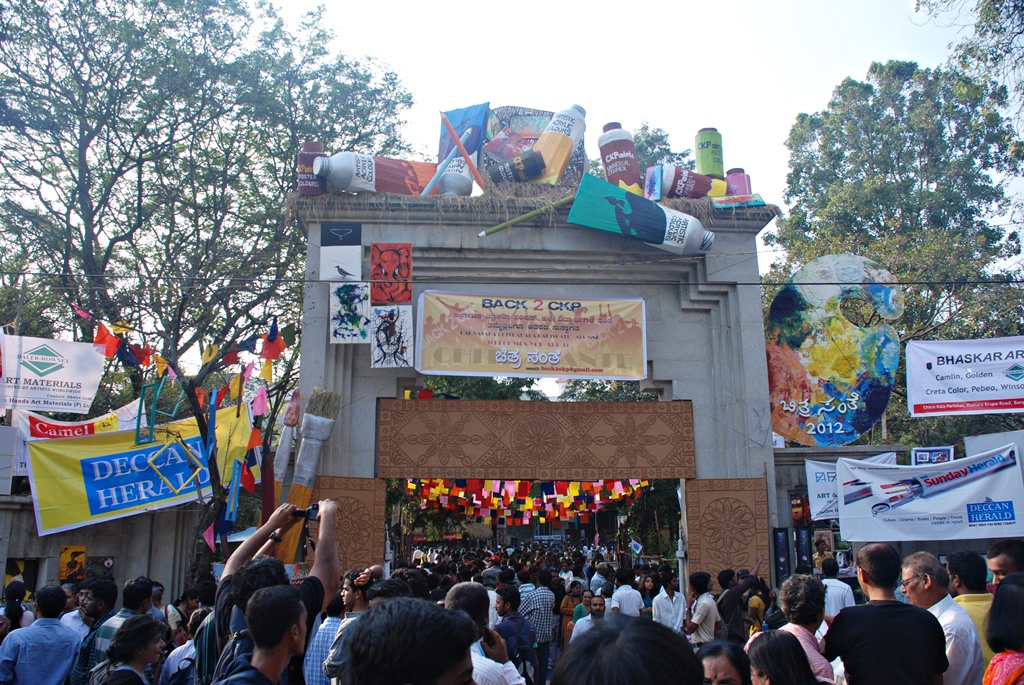
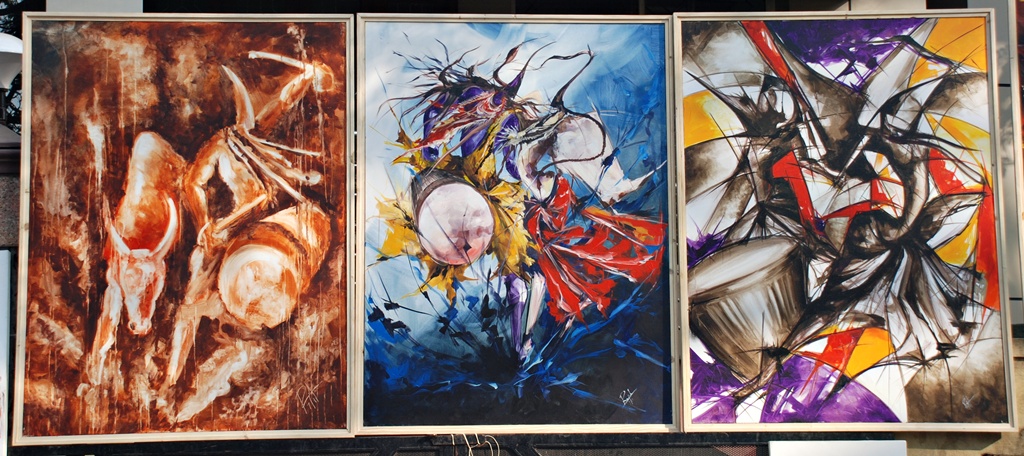
Art is often the preserve of the elite and most art related organizations also continue in that vein; but the Karnataka Chithra Kala Parishath (CKP) strives to be different by organizing an event called “Chithra Santhe” every year. A literal translation of Chithra Santhe means Picture Market and CKP calls it “Art for All”. This is the ninth such event happening at Bangalore. While we had heard about this a couple of years back, we had never visited it and so we were determined to go this time.

The event itself lasts for just one day and is organized in the road (Kumara Krupa Road) where CKP is located. The road, which is about a kilometre and a half long, is closed off for the day and art works are exhibited on pavements on both sides of the road. This road, incidentally, is where the Chief Minister has his official residence and it is all the more impressive that they manage to hold this event here.

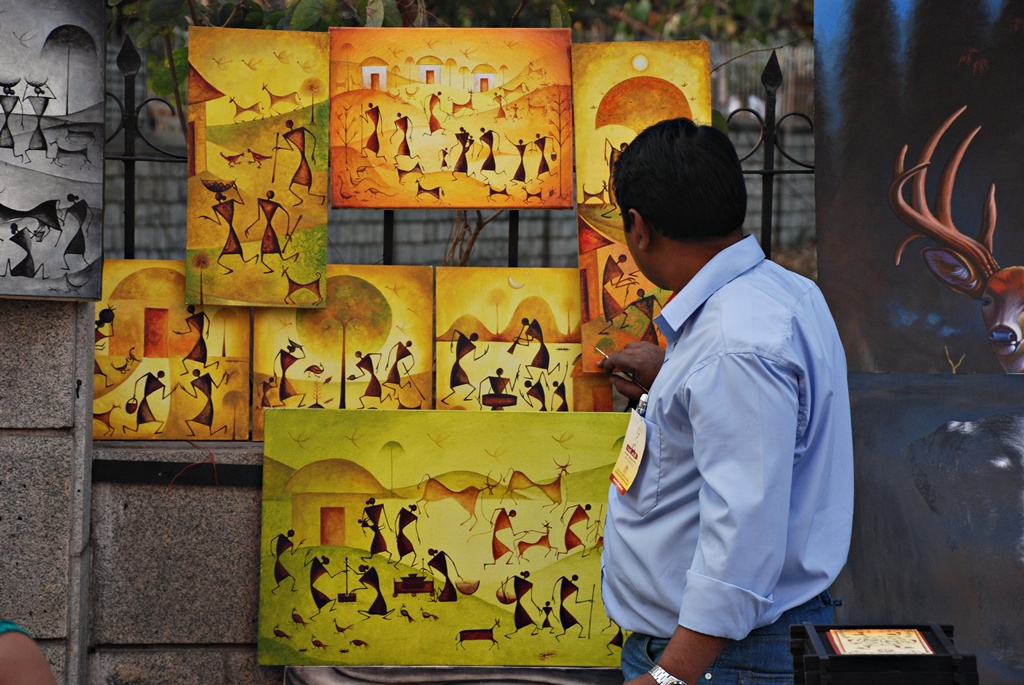
The first thing that struck me as we arrived at Kumara Krupa Road was the crowd. The road was quite packed and I could well believe the press report that I had read in the morning which had said that the organisers were expecting around 200,000 people to turn up. There were people everywhere – some were buying, some just looking or some posing for portraits. I could also see some people with cameras. The most important aspect I noticed was that the crowd consisted mostly of ordinary people and not the elite or intelligentsia; so the event seems to have met the objective of the organisers.

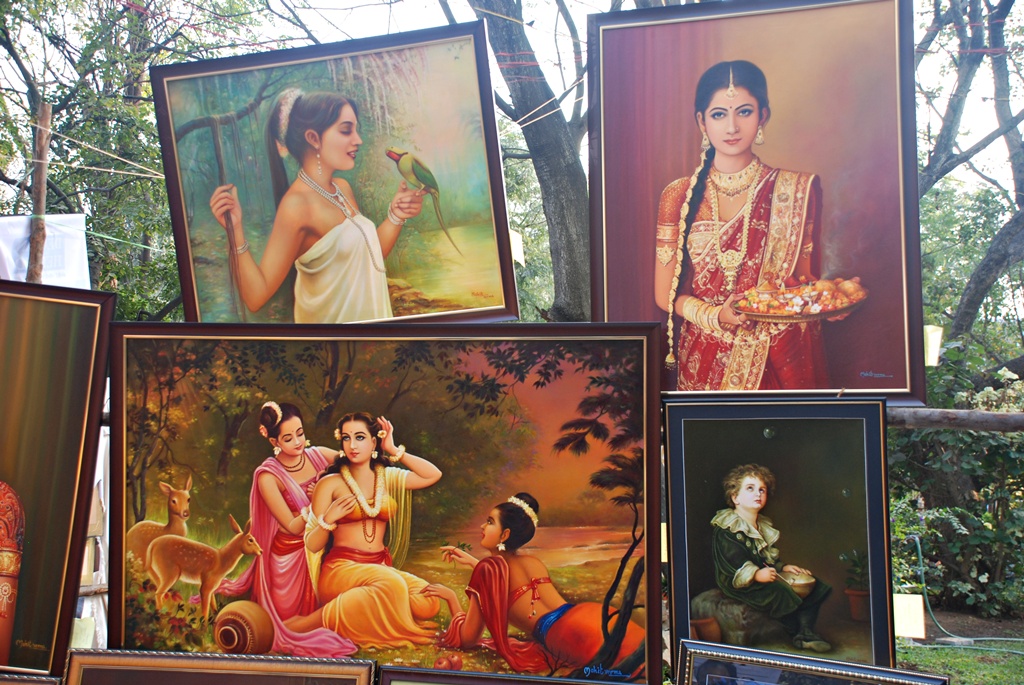
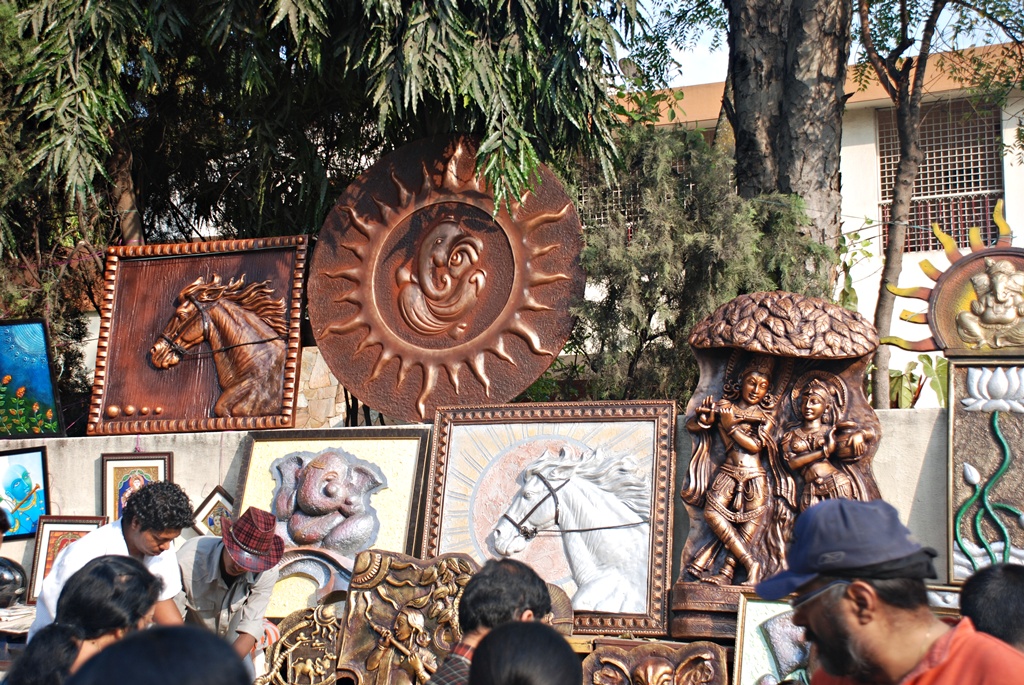
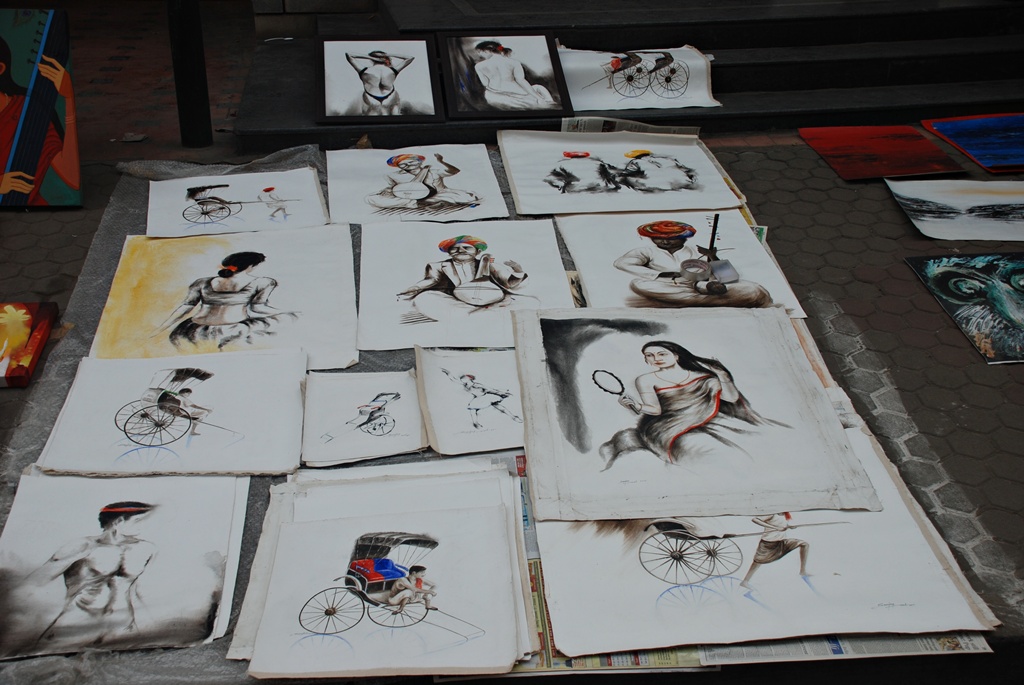
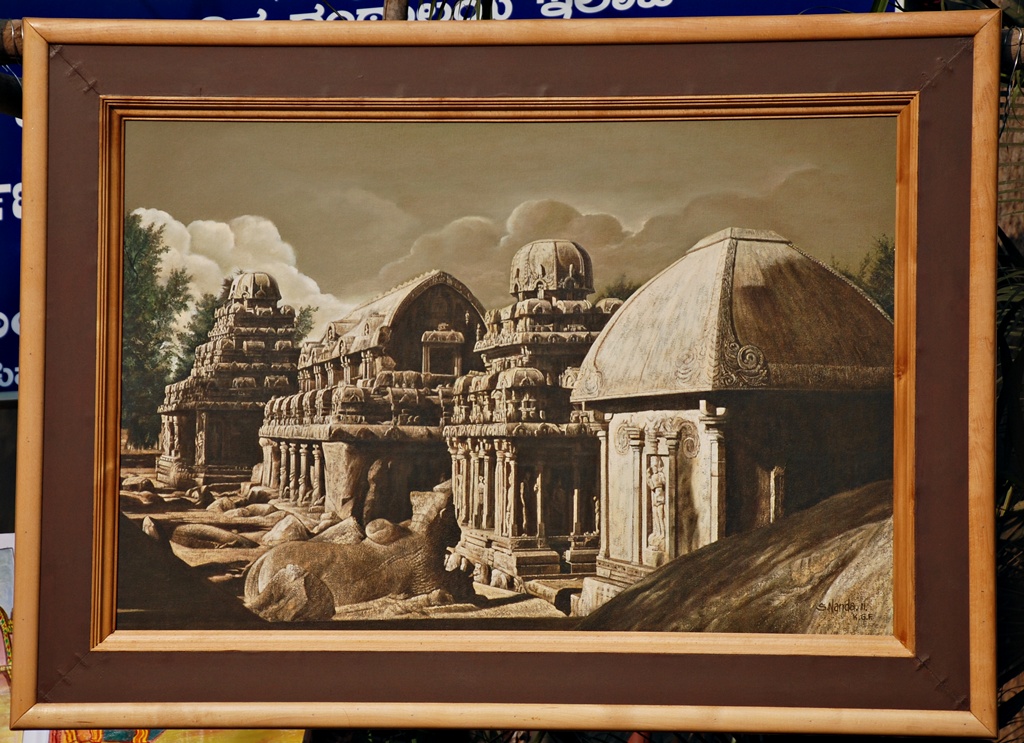
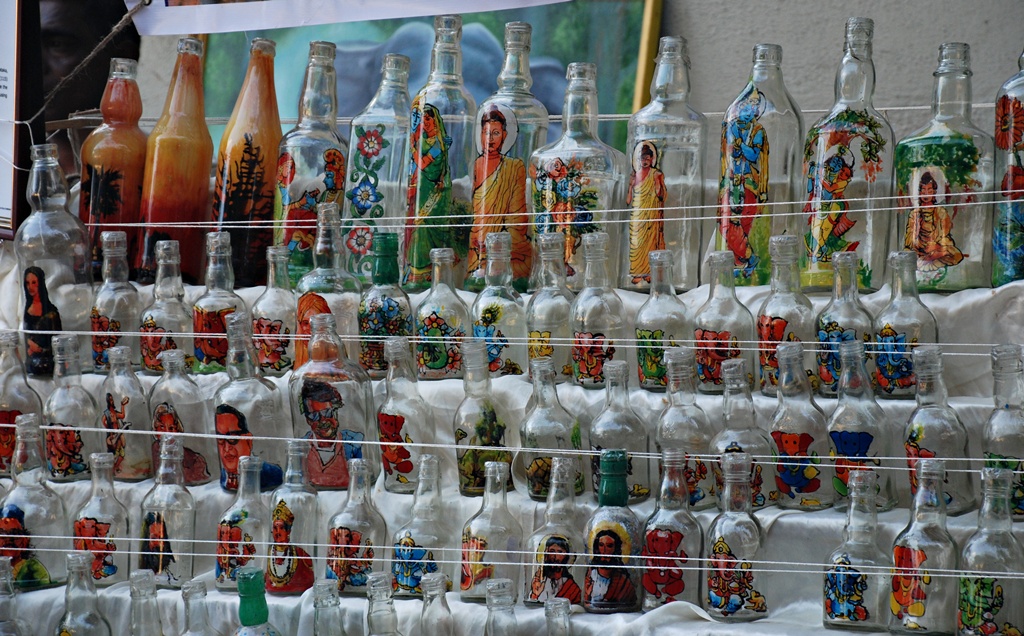
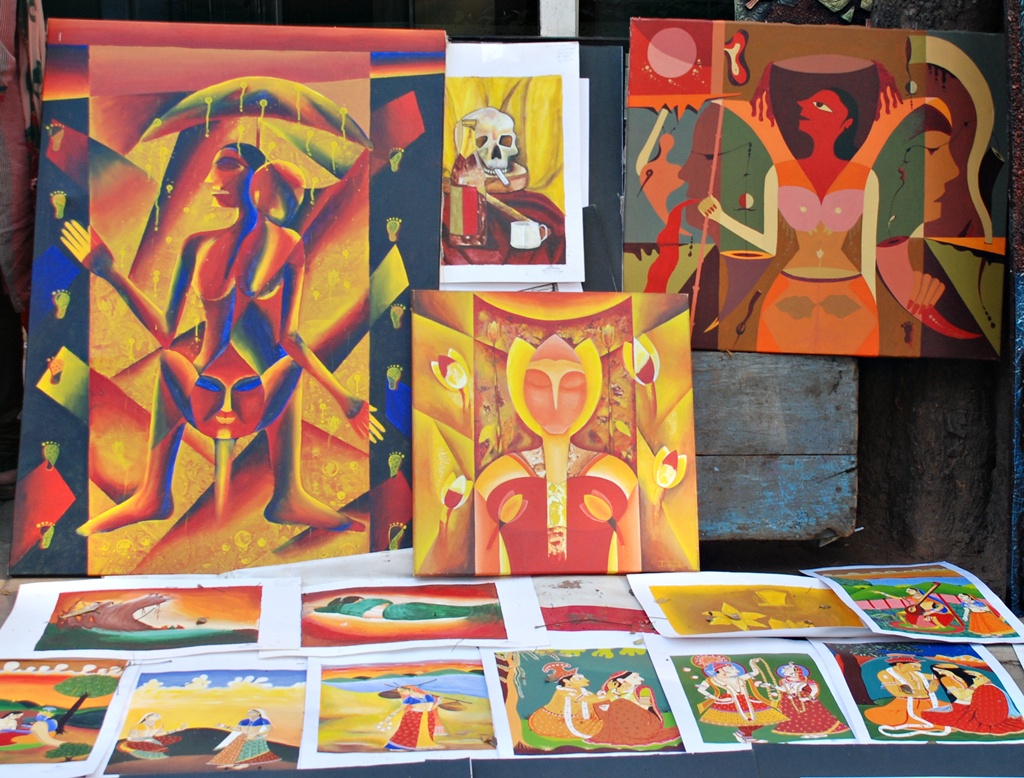
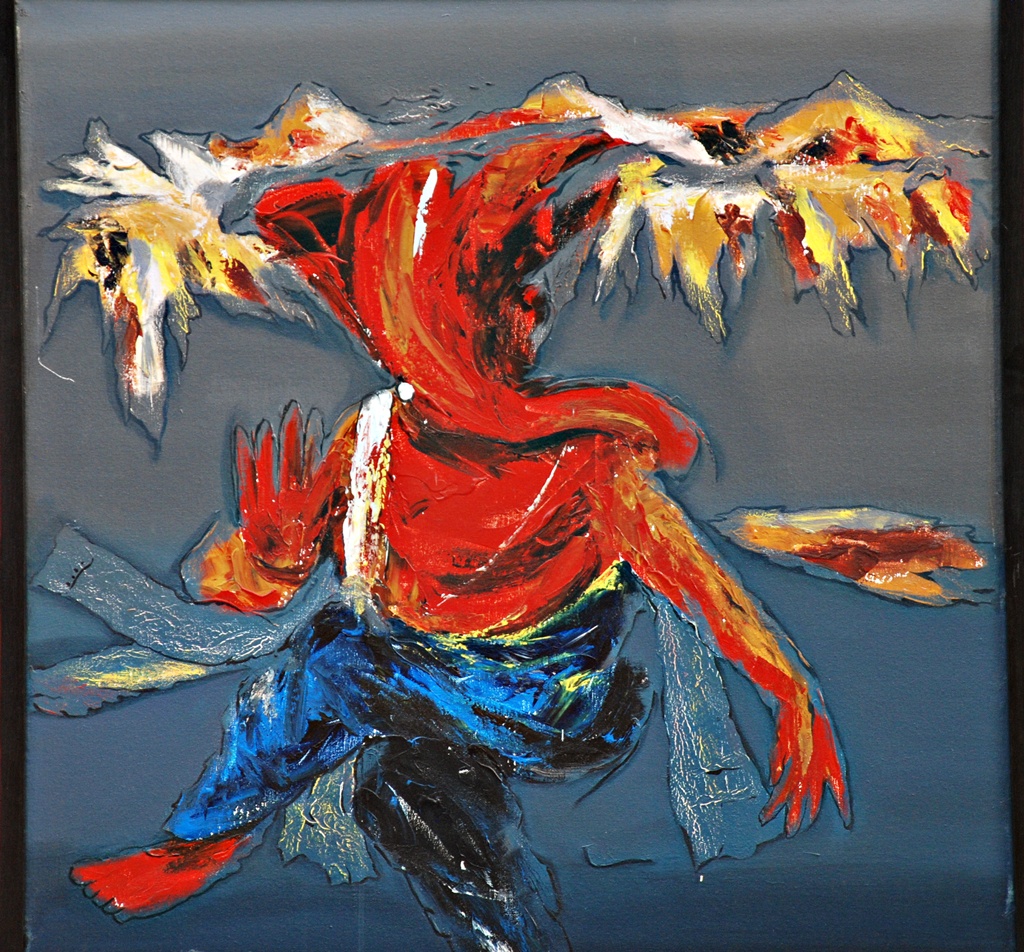
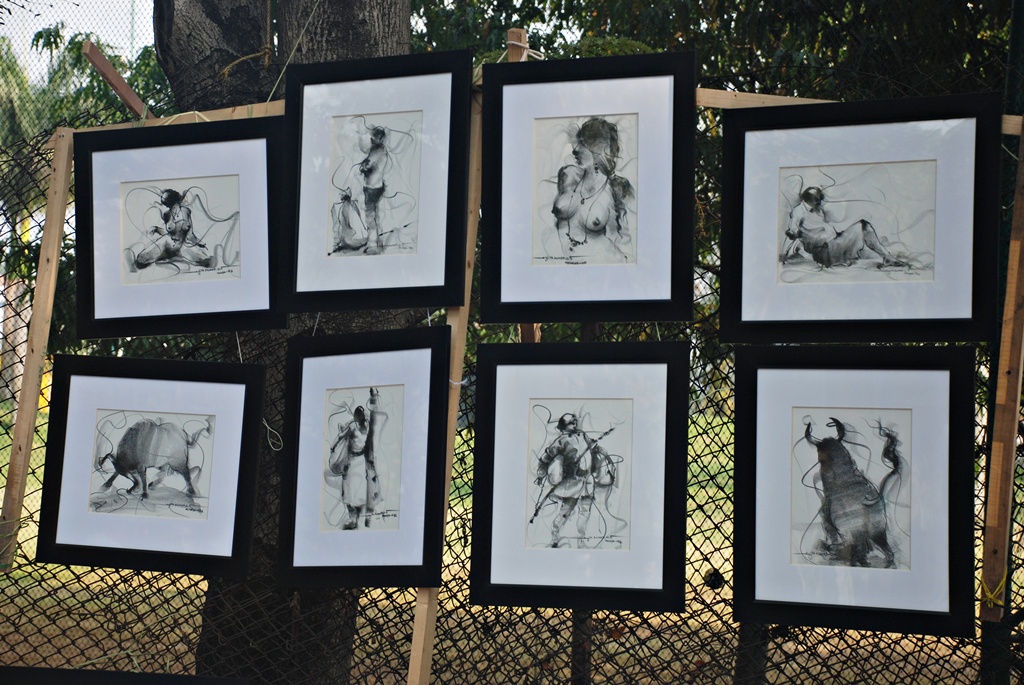
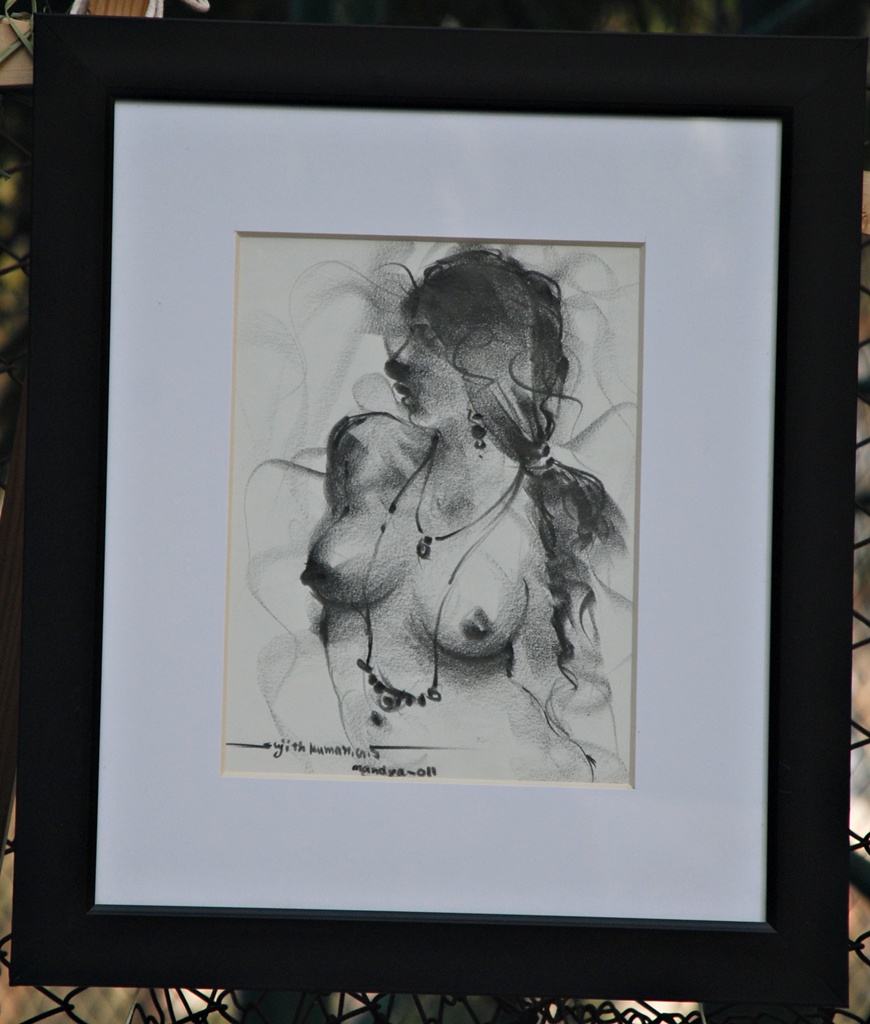
The whole event was a riot of colours and was dominated by paintings. There were some handicraft items as well but those were very few. The paintings themselves were of many different types with sceneries and life-like depictions making up for the bulk of the works on display. An interesting item was a display of bottles with paintings on them. There were works from 800 artists or so and many seem to have come from places outside Karnataka as well. Sale prices for the paintings were very varied as well with a range from Rs. 300 to 75,000.

There were some abstract works also on display and some of them were quite eye catching. In particular, I like some pencil drawings and a couple of paintings – some of the themes were quite bold indeed.

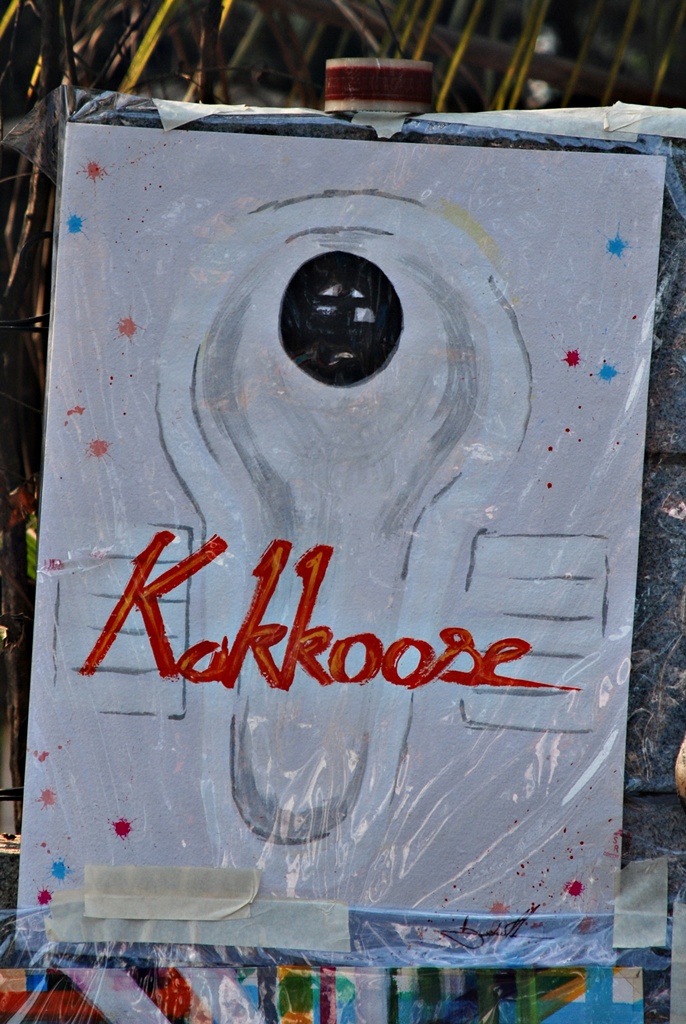
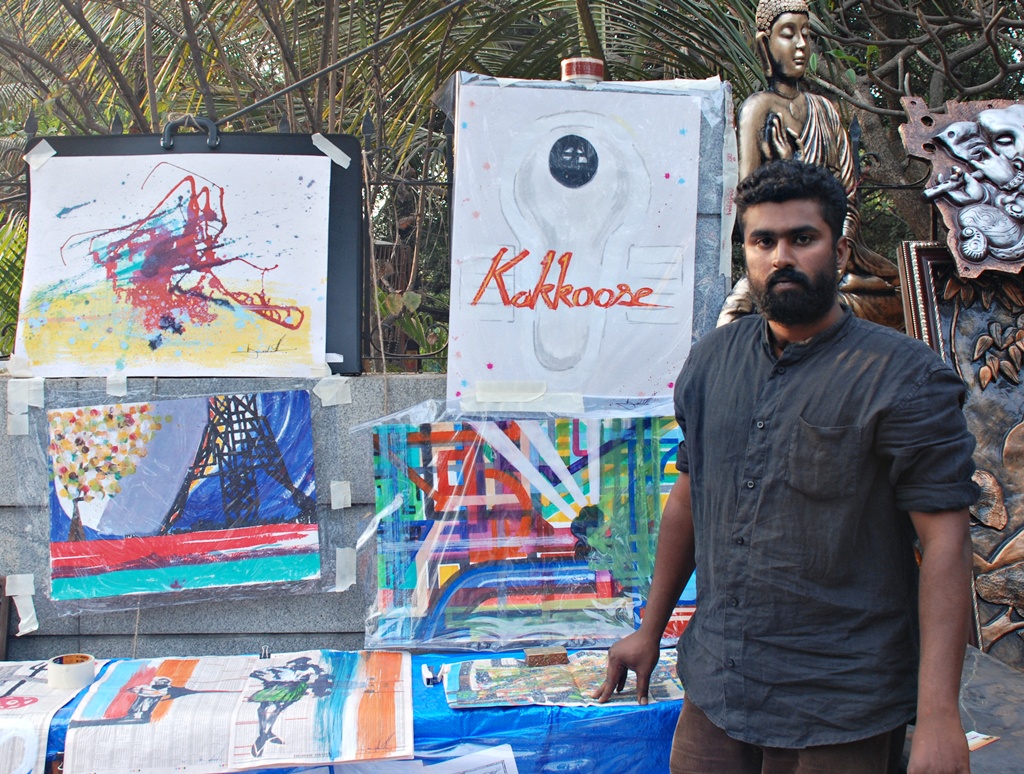
One artist and his work stood out and I had a brief chat with him. His name was Bharath and what caught my eye was that his work was quite different from all others. The most prominent piece was the painting of a toilet and that reminded me of Duchamp’s work. I asked Bharath about the idea behind the painting and he said that he drew it today morning as he wanted to “shock” the spectators that come for the event. He had not heard of Duchamp’s exhibition of the inverted urinal and if he is to be believed, this is original thought from him. Another painting he had was done on a page of “The Economic Times” and this was done because he found it interesting that a businessman could use it to check his stocks while a street vendor could use it to pack “pakodas”. Brief as it was, I enjoyed the conversation with him.

Overall, the event was quite enjoyable and Sandhya and I left with a sense of satisfaction after spending a couple of hours. This initiative from CKP is quite commendable and I hope they keep this up!

24 December 2011

The ride from airport to the hotel was uneventful, but for me feeling worried about Bharath. He had hurt his leg a few days back and it had developed an infection. The leg had swollen up since we left Bangalore and he could hardly walk. It looked like we would not be seeing any sights even if the weather gods permitted. At the hotel, we consulted a Doctor and she did some work on Bharath. Later we went to the beach, the sea was very peaceful and the waves quite gentle. The beach was very clean and the sand nice and white. It was quite nice to lie down on the beach chairs and listen to the sea.

25 December 2011

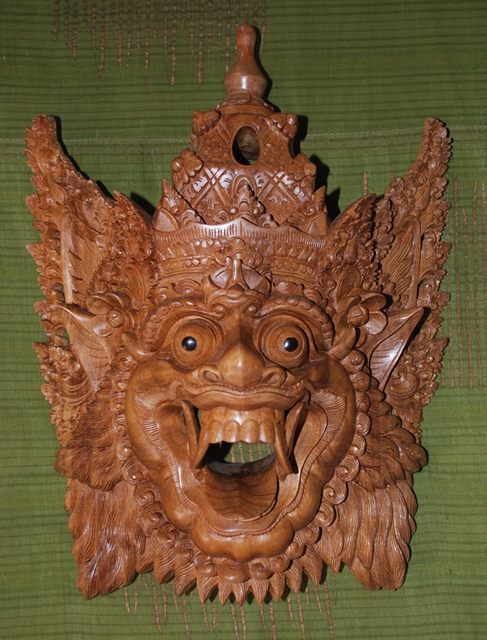
After yet another consultation with the Doctor, we set out mid-morning to take in some sights. The first stop was a shop that sold handicraft items. Most of items were from Hindu mythology but many had rather demonic faces, even the likes of Hanuman and Varunan. The workmanship was quite intricate and I liked some of the stuff there. After some tough bargaining, I bought three masks.

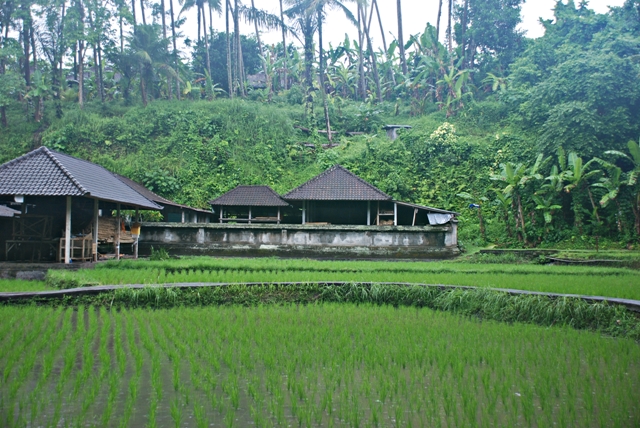
The scenery in Bali is very much like Kerala with greenery all around, especially as this is the rainy season. There are very many small temples all along the road, which resemble the small “kavu” in Kerala. It seems there are more than a thousand temples in Bali and the predominant religion is Hinduism. Rice is cultivated throughout and one felt right at home while driving around.

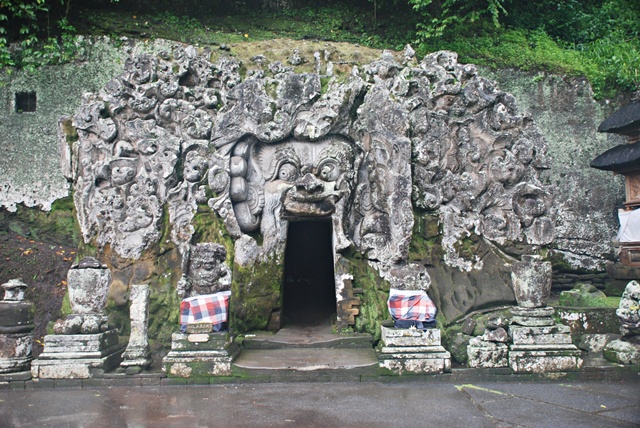
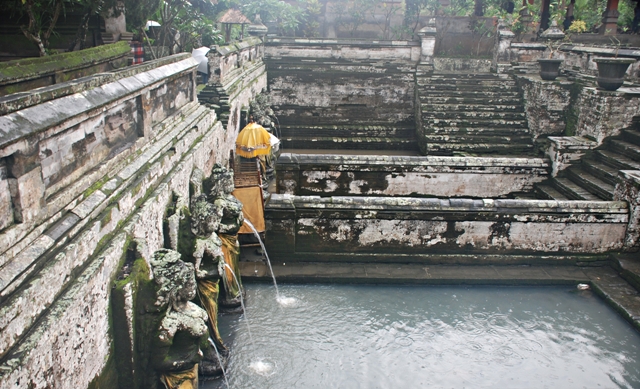
The next stop was a temple called Goa Gajah, where we arrived amidst a drizzle. This is a temple which is about 1100 years old and the main god here is Ganesha. It is set into a small cave.

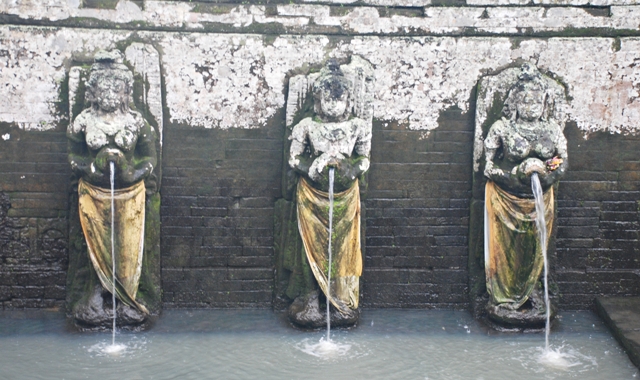
In front of the cave, there is a small pond like the ones we have in temples in South India. On the side of the pond, there are seven statutes that sprout water, called Saptha Ganga. One of the statues has fallen down.

The opening into the cave is carved out in stone and the guide was of the view that the five fingers of the “Dwarapalaka” symbolised the five tenets of Hinduism that one is supposed to believe in – God, Karma, Moksha, Nirvana and Reincarnation. However, I must admit that this was the first I had heard of such tenets in Hinduism. The entrance to the cave opened out into a slightly large rectangular cave, with Ganesha at one end and the tri-murtis (Shiva, Vishnu & Brahma) at the other. There is also a small alcove for one to sit in and meditate. An interesting point was that the tri-murtis were symbolised by three sivalingams and this is the first I am seeing Vishnu and Brahma represented in such form.

A few steps further down, we got to a small stream which had swollen up because of the rain. We crossed the stream and went up to another temple, this one being dedicated to Buddha. It seems that Buddhism and Hinduism co-exist in Goa Gajah with Balinese people considering Buddha as an incarnation of Vishnu. I do not recall seeing this in any location in India. Could it be because Adi Sankaran never got here to concretise the divide between the two religions? The guide showed us the spot where a big statue of Buddha had stood once; it has fallen into the stream now.

We were then led back through a paddy field back to the front side of the temple. The guide said that they took three crops a year from these fields. The whole setting was very much like what you find in any farm in Kerala.

As we were leaving, I noticed that some devotees had left some offerings for the gods. The offerings themselves seemed very nature friendly as the containers were made of materials like palm leaves. The temple and surroundings were very clean and I noticed that there was no pollution from plastic anywhere – a far cry from the temples in India. I wonder whether the temples are so clean because they are more of tourist locations than places of worship. But then, Bali itself is quite clean overall; so it must have something to do with the people and their civic consciousness.

The rain had strengthened by then and we dropped our plans for any further visits and drove back to the hotel. Spent another quiet evening by the beach, looking up at stars and clouds. There were also some fireworks going off because of Christmas and those looked very nice as they went up over the sea.

26 December 2011

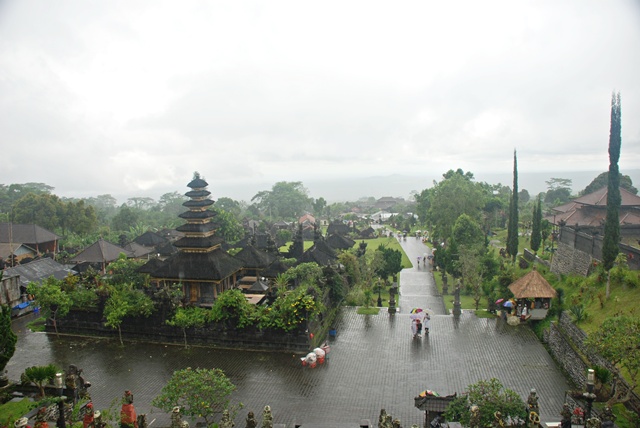
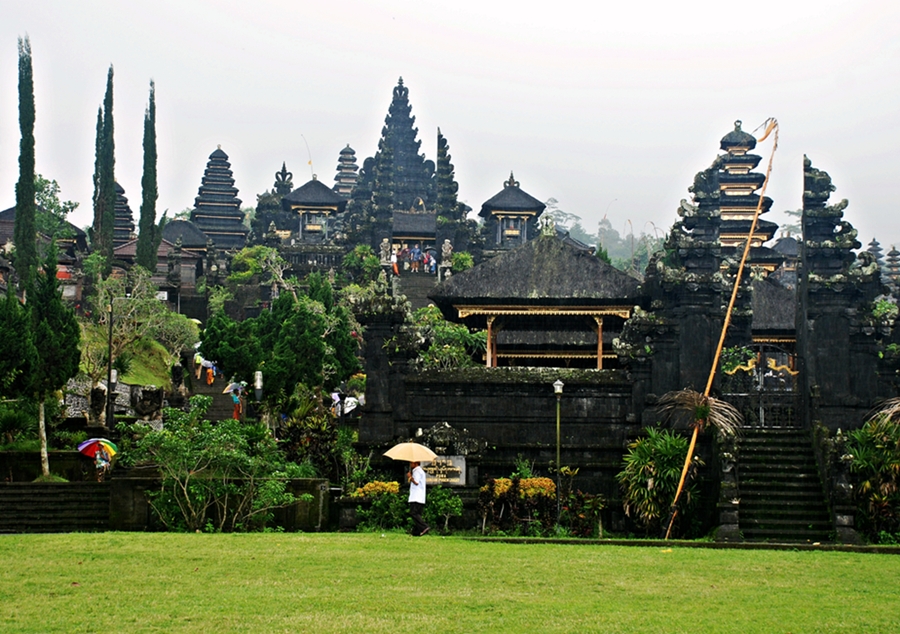
Bharath’s leg was in much better condition and so we set off soon after breakfast – our destination being the most important temple in Bali, called Pura Basakih. This is called as the “mother temple” and is the most revered. Yet again, rain was on when we arrived at the temple. This was a pity because the sights are quite beautiful and the temples have very ornate carvings but photography was difficult in such weather. However, the overall visual effect was quite nice with misty hills in the background.

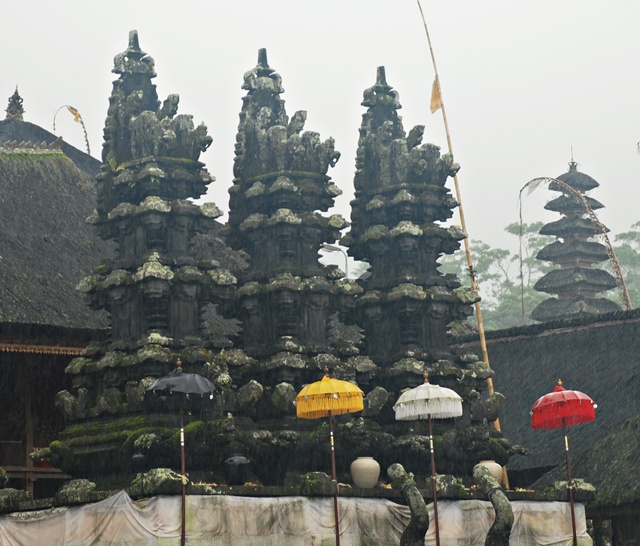
This is a very large temple built in the 8th Century and is built on a hillock. It covers an area of more than four acres and is in fact a complex of about 55 small temples (Wikipedia says 22). One came across a very interest concept of a Supreme God called “Sayang Viddhi”; it seems this Supreme Being is above the tri-murtis. Pura Basahih had Sayang Viddhi and tri-murtis as the main deities. the temple is beautifully made with very ornate carvings, statues etc. the courtyard itself was very neat and when we arrived some worshippers were making some offering to the gods and our guide said they called this as “thirtha yathra”.
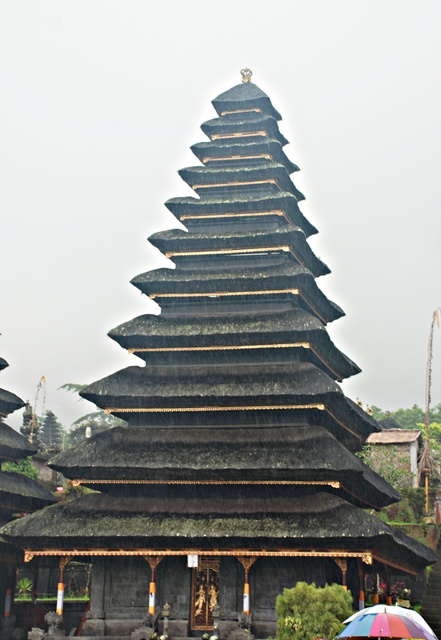
The structure of the roofs of the temples resembles Chinese Pagodas. It seems such construction is called “Meru” in Indonesian language. These can have multiple, odd numbered tiers and most important temple, that of Sayang Viddhi, has nine tiers, with those of Shiva, Vishnu, Brahma etc. having lesser numbers. In Bali, Shiva is associated with Fire, while Vishnu is associated with Water and Brahma with Air.

The ills of Hinduism like the caste system seems to have to made its way across the seas and in the complex, we could see temples dedicated for the four castes. Some others like blacksmiths also have their own temples. Another interesting point that I noticed was the presence of large umbrellas like the ones used in Kerala to decorate elephants when they are taken out in a procession. I could not see any elephants and for some reason I felt that elephants are not part of the tradition here.
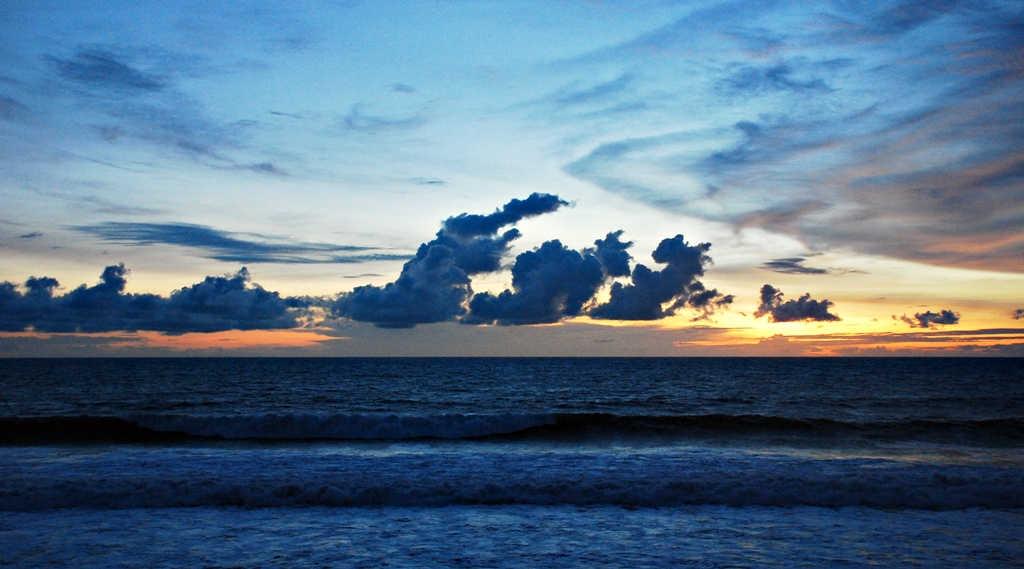
I had read that the sunset over a temple called Tanah Lot is a very spectacular sight and we planned to cover that in the evening. Unfortunately, the drivers in Bali seem to have a very relaxed view on time and so we arrived a bit late. The driver had said it would take us forty five minutes from the hotel whereas it took us almost double that time. While we could still catch the sunset, we missed the temple. The scene itself was quite fantastic and we watched it from the terrace of a restaurant.

There is also a small temple which can accessed through a natural bridge over the sea. I am not sure how long the bridge will last as the sea has hollowed out a good portion of the supporting structure. The main temple, Tanah Lot, can only be accessed during low tide as the crossing gets flooded during high tide. We had arrived at high tide and so we could only see it from a distance and that too in the dark. This would be a great place to walk around and then sit down and have a quiet drink while watching the sun go down. So very peaceful and serene.

27 December 2011

The people in Bali seem very friendly and genuinely service oriented. I was woken up in the morning by an SMS from the driver we had used for the two days, apologizing for not being on duty that day to take us to the airport and wishing us a safe journey back home. This was a followed by a call from the Doctor who had examined Bharath the first day, asking whether he is fine and again wishing us a safe journey. I was very pleasantly surprised as this was not something I had expected at all. Overall, Bali is a great place with lots to see and experience. We could not do any justice at all this time because of the weather. Bharath and I both felt that we need to come back with Sandhya and spend at least a week here. Till then….

26 October 2011

I got into Amsterdam little bit after lunch on the 26th. I was in town to meet with a customer and because of the flight timings  I had some time on my hands, which I planned to use for some exploration of the city. After finishing off a bit of work, I set off to walk around the city. My hotel was in the city centre and so most places were accessible by foot. My last visit to the city was a quick one in 2001 and since then, I had heard a lot about the city.

As most big cities, Amsterdam also started out as a small settlement on the banks of a river called Amstel. In its heydays, Amsterdam was a big commercial port with the city flourishing in finance and diamond trades. It seems that the first ever stock exchange in the world was the Amsterdam Stock Exchange and it was set up by the Dutch East India Company. It does not exist independently anymore as it has merged with the Euronext exchange. Amsterdam has also been overtaken by London and other cities on the business of finance.

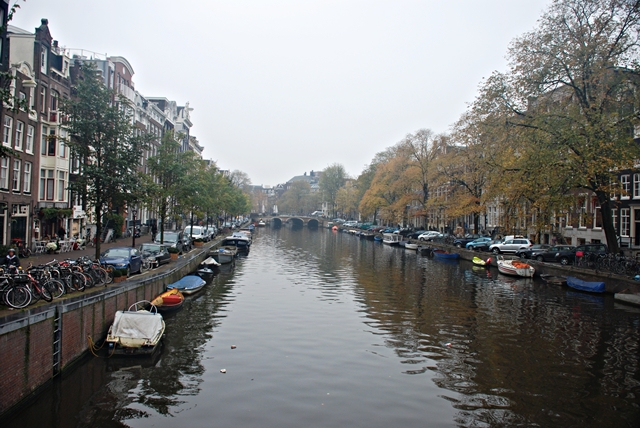
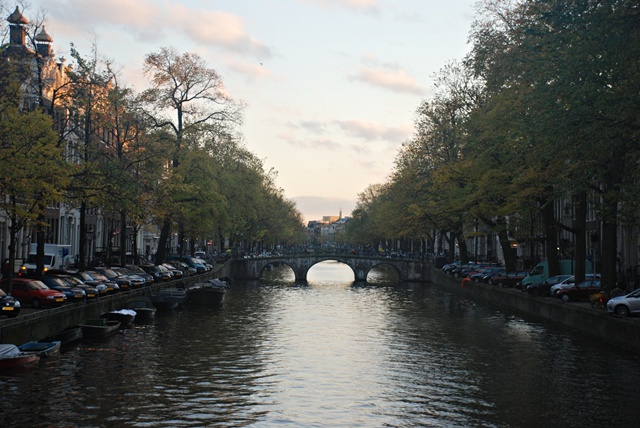
Today, the most significant feature of the city is the canal system. This dates back to a city planning activity undertaken in early 17th century and was mostly meant for transport. In the city centre, you cannot walk for more than 10 minutes in any direction without hitting a canal. However, I found that the canals are not used much for transport these days as the road system is very well developed with trams and other public transport available freely. I mostly found leisure craft plying on the canals unlike Venice, where the canals are more or less the only form of transportation. However, the canals in Amsterdam still do seem to have an all pervasive presence, which makes it difficult for one to think of the city without the canals.

Another aspect of Amsterdam is that this is a city that is more tolerant of the vices – it sells soft drugs like cannabis in it’s coffee shops and prostitution is legal. I was looking for my afternoon cuppa and wandered into one such coffee shop but only to realize that this one was more interested in selling cannabis than coffee. So, I finally ended up having coffee in a bar. The red light district in Amsterdam is quite famous and is a sight in itself with women framing themselves in full length glass windows. What was most striking was that people seemed to take these things in their stride; I found many homes and even a large church in the red light area, almost shoulder to shoulder with an establishment engaged in the oldest trade.

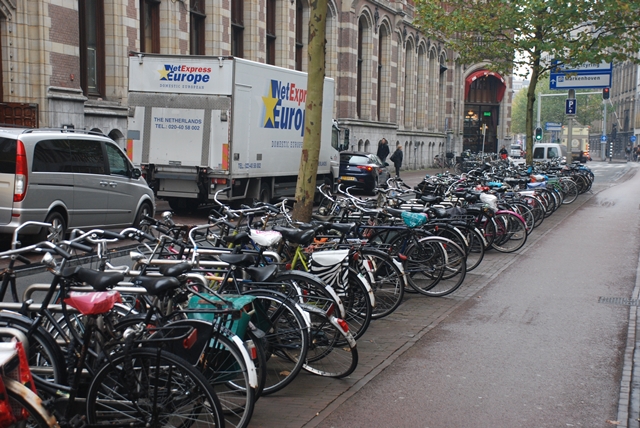
Another interesting point is the mode of transport that most people seem to rely on – bicycles. Anywhere you look, you see a lot of bicycles and it looked to me that a good many use bicycles for their daily commute and they looked like real “work” bicycles which looked very functional unlike the fancy machines used by people in other cities. I was tempted to hire one and ride around but the fact that I was not clothed warmly enough restricted me.
I spent the evening wandering around the city and ended the day with a nice dinner. The city was very picturesque, especially as the sun started going down.

27 October 2011

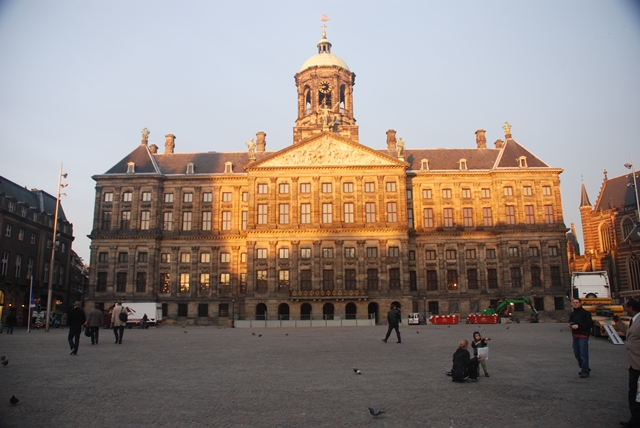
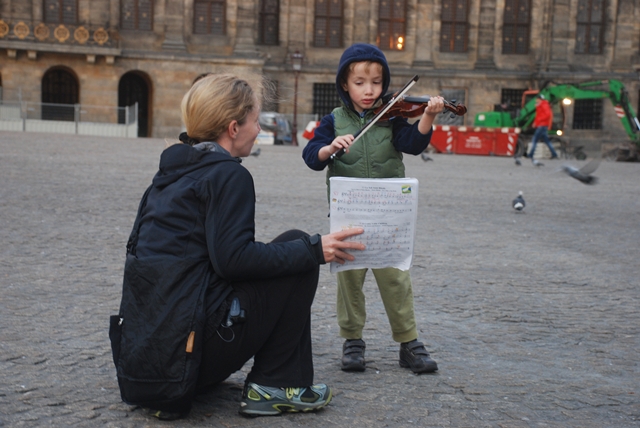
I went out for a stroll early in the morning. By early in the morning, I mean around half past seven but it was still dark. By and by, I arrived at a square near the palace, called Dam Square. The square was empty but for a lone construction worker and a mother and child. The kid was very young, probably six or seven, and playing a violin standing on the square while the mother was holding up the musical notes for him to see. There was no one listening or watching them. I was somehow taken up this and took a picture of the boy with the violin. Soon, another chap walked up with a camera and he also seemed impressed by the spectacle. The violin case was open in front of the child and both of us put in some coins. The other photographer said that this would probably be ice cream money for the kid. They seemed well off and did not seem to need the money. I was wondering what the mother was trying to teach the child. Could it be that every job has its own dignity and there is nothing wrong in taking money for entertaining people or that this was one method for him to earn a living as he grows up or to take away his fear of playing in an open square? Overall, I found it quite intriguing.

It was around five by the time I finished my meetings and I went to visit Anne Frank House. Anne wrote her world famous diary while hiding in this house. She lived here from 1942, when her father decided they had to go into hiding to save themselves from the Nazis, till 1944 when they were betrayed by an unknown person and taken into custody. There was a reasonably long line to enter the museum and I guess that itself is testimony to what a young girl achieved. Anne was a dreamer and she dreamt of making a mark in the world even when she spent her time cooped up inside a small house with no windows. I had read her diary and what had come through were her hopes about the future and her fervent belief in mankind, despite what she went through. To see the conditions in which she lived and then relate that to her diary was indeed touching. She must have been an extraordinary person or could it be that those extremely difficult circumstances made her more mature than her years? She started her diary when she was thirteen and was captured when she was fifteen. So, what we read are the musings of a youngster in her early teenage, yet some of the observations she made were far beyond her years. In particular, one of the most important statements that I remembered was how, despite everything she suffered, she still believed in the innate goodness of man. May be the diary was the companion she missed. It comprises of a series of letters addressed to “Kitty” and in one place, she says: “When I write I can shake off all my cares. My sorrow disappears, my spirits are free!” I could not but feel overawed and to an extent depressed as I walked through the rooms.
Photography is forbidden in the house and so I could not take any pictures. There are several quotes from Anne’s diary posted on the walls and also some replicas of the conditions in the house when they lived there. Anne’s father (Otto Frank) had foreseen the danger that Nazis posed as far back as 1933 and moved to Amsterdam from Frankfurt to escape the clutches of Hitler. However, he could not escape his fate as Holland fell to Germany in 1940 and in 1942 Otto Frank decided they had to go into hiding to escape deportation to concentration camps. He built a secret apartment behind his office and that is where the family hid till they were captured.
I find that individual tragedies often help to understand the depth and viciousness of events like Holocaust better and Anne’s diary is one such. She kept the diary and thought of publishing it after the war got over and had dreams of becoming a writer and a journalist. She wanted to live on even after her death and had hoped her books would help her achieve that. The diary was discovered by a friend who had helped the family and she gave it to Otto Frank when he (being the only survivor in the family) came back from the concentration camp. I doubt whether so many people would have read the diary had Anne been alive but the cruel, unjust dashing of a few young dreams made the world take notice. These are the sort of books that influence the world and I felt truly enriched to have been in the building where it was written.

28 October 2011

My flight was after lunch and so I had a couple of hours in the morning and I decided to visit the Van Gogh Museum. This museum has the largest number of Van Gogh’s works. While the paintings themselves were not as famous as what I had seen at some other museums, it was when I visited this museum that I got a better appreciation of Van Gogh. He lived only for 37 years and was a painter only for 10 of those; yet he finished more than 2000 works. The museum had also arranged his works in a chronological order and so one could appreciate his development as an artist.

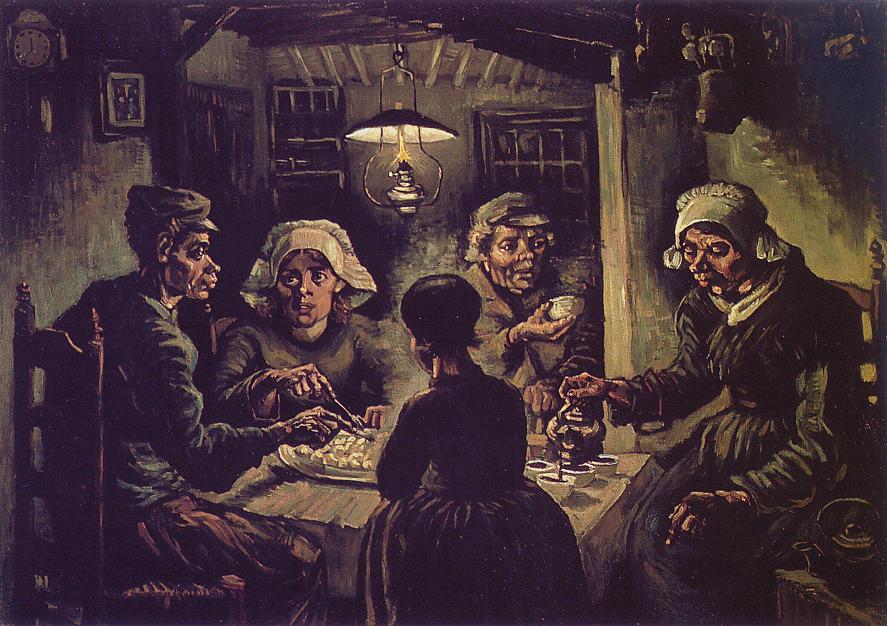
In an era when most artists were taken up by the gentry and such “beautiful people”, Van Gogh was intent upon painting farm labourers and actual scenes from life as he saw them. His first famous work was “The Potato Eaters”, which was painted mid-way into his artistic career and the subject was a poor family even though he expected to sell the painting in the Paris art market. The museum does not allow photography and the image (Potato Eaters) given below is downloaded from the Internet.

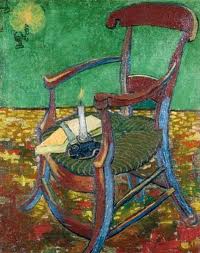
Van Gogh was quite obsessed with painting and that was why he was able to produce such a large quantity of work. However, he was also unstable in mind and was given to bouts of mental breakdowns. It was fascinating to look at the paintings knowing that the man was going through a tormented existence while he was painting those. Many of the paintings had hidden stories and meanings; for example, there is a painting of a chair which is supposed to represent another famous artist Paul Gauguin (image given below, downloaded from Internet). However, I could make that out only with the help of the audio guide.

Overall, it was a very good experience to go through his works and be witness to the evolution of the artist and the anguish of the man, which ended in his suicide.

Unfortunately, my time in Amsterdam ran out and I had to leave without visiting many other attractions like National museum, may be another time, another day!