A country that has intrigued me for years but one I have had no reason to visit in any official capacity – Bhutan. Suddenly the stars aligned, and Sandhya and I set off to visit Bhutan in the last week of April; 26th, to be precise. As first-time visitors, we planned a leisurely itinerary and limited our trip to the oft-visited touristy districts of Thimphu, Punakha and Paro.
The first visual that comes up when one thinks of Bhutan is the Tiger’s Nest monastery and indeed Bhutan is all about monasteries and the wonderful natural beauty of the Himalayan countryside. As Sonam (our guide) mentioned on the first day itself, if you are looking for nice cities and modern amenities, Bhutan is not for you; nor will you find art galleries and such or locations with deep historical significance (except monasteries). Yet, the overall charm that Bhutan weaves over you is just exquisite.
It is indeed well known that Bhutan accords greater priority to quality of life than mere economic progress and so they track Gross National Happiness as their Key Performance Indicator than GDP, as almost all other countries do. I was curious, and a wee bit skeptical, on the applicability of this concept on the ground. Just a few days there, even as a tourist, helped me understand what a difference it has made for the country just because they kept GNH as their most important focus from the 1970s. This is not to say that Bhutan has not seen its fair share of repression, human rights violation and ethnic cleansing and that too, as close as the nineties. The Lhotshampa people who constituted between 25-35% of the population had been uprooted and most of them expelled from Bhutan as part of the ethnic cleaning in the nineties. Bhutan is a monarchy still even though they have been transitioning slowly to a democracy with a Parliament and a Constitution. The King is the most powerful political figure even now and is the final authority in matters like national security. The day-to-day administration is handled by the Parliament, and I understood that the King could be impeached with a two-thirds majority in the Parliament. The King seems to be very well respected, and you can see his photographs everywhere; the next most visible person being the Jé Khenpo (Chief Abbot), the highest religious post in Bhutan. I was a bit cautious in my discussions with Sonam on Royalty and politics, especially as he seemed very loyal to the King, and I need to mention the caveat that we didn’t go into Southern Bhutan (where the Lhotshampa issue happened) or have exchanges with many local people. Yet, overall, people looked happy and content.
This could be because of their significant to commitment to Buddhism (people are very religious) and also because the government follows policies to ensure that everyone gets a chance to come up. For instance, free education and health are provided by the government and that too at all levels (not just schools). Sonam said there is not a single beggar (and we didn’t see any) in Bhutan and that if someone doesn’t have land or a house or children to look after them, the King will provide for them. Wherever we went, people looked quite happy and friendly. They were courteous and happy to pose for photos and all, the only hurdle being that of language as elderly people didn’t seem to know English. Another indicator of being content and patient was seen on the roads where people drive with consideration for others and there was almost no honking or disrespectful behaviour and this even though the roads are twisting and turning all the time because of the terrain. We didn’t see many bikes around even in the city and Sonam said most people have cars. Of course, it is not overcrowded like Kerala or most of the Indian cities as there are just seven hundred thousand people in Bhutan, which has an area of about 38,000 square kilometres.
If there is any significant wealth inequality in Bhutan, it isn’t evident. Sonam said that there are not many people in Bhutan who are very rich and nor are there who are very poor; most people are in the average bucket, he said. By the look of the towns we visited, it looked to be true. The whole country is very clean and well maintained but you do not see many swanky buildings around. Restaurants are all kind of in the mid-range and you don’t see very expensive ones and even the five stars (food, not accommodation) weren’t expensive as compared to India. Similarly, the cars are mostly Maruti or Kia or Honda or the odd Toyota and I probably saw only one BMW and one Mercedes during the entire trip and those two were both Government owned cars. Going from India where inequality is so evident and in your face, this is a wonderful change and the awareness, that no one is deprived, itself lifts you up. In addition, the Bhutanese are quite connected with nature, and they are quite tuned into environment protection. Bhutan is a carbon negative country, and it seems their Constitution stipulates that sixty percent of the land area of the country must be under forest cover all the time – the current cover being 71%. To me, this kind of summed up why the Bhutanese are happy, and I attribute that to the policies of their King and the Government and to how the people practice their religion. The operative word being “practice” as I have seen other Buddhist countries that are totally strife torn and nothing like Bhutan.
Bhutan’s policy is to make tourists spend money and not on increasing the number of tourists. Hence, the 50-minute flight from Calcutta to Paro costs 4-5 times the amount you spend for a similar flight between two Indian cities. Of course, there are only two airlines that are allowed to fly into Bhutan – one owned by Bhutanese government and the other by a Bhutanese businessman. Every visitor to Bhutan must be accompanied by a guide and they must hire their own transport. I felt these restrictions have been devised to generate local employment. Further, every Indian tourist must pay a tax of Rs. 1,200/- per day and this goes up steeply to USD 200 for people from other nationalities. Same is the story with hotels where Indians get a preferential rate (which itself is much higher than what you spend in India for similar class hotels) as compared to other nationalities.
We landed in Bhutan on a bright sunny day after a short flight from Calcutta. We were greeted in traditional style by our guide and the driver by draping the “khadar’ on us. It is a long piece of white cloth made of silk measuring about 6 ft by 1 ft. This seemed to be a very touristy thing and we were greeted similarly in all hotels that we stayed. Paro Airport is the only international airport in Bhutan, and it is a nice and small airport and so you are out of the place in a jiffy. As per our itinerary, our plan was to go to Thimphu from the airport, a drive of about an hour and a half. Our first port of call was a coffee shop, and that building was our initiation into traditional Bhutanese architecture. Straightaway, I fell in love with the buildings in Bhutan. One of the items on offer was butter tea and I pounced on the opportunity to taste it since I have read about it many times in travelogues of Himalayan travellers. Sonam had warned that it might taste like soup, and I didn’t believe him; turned out he was right.

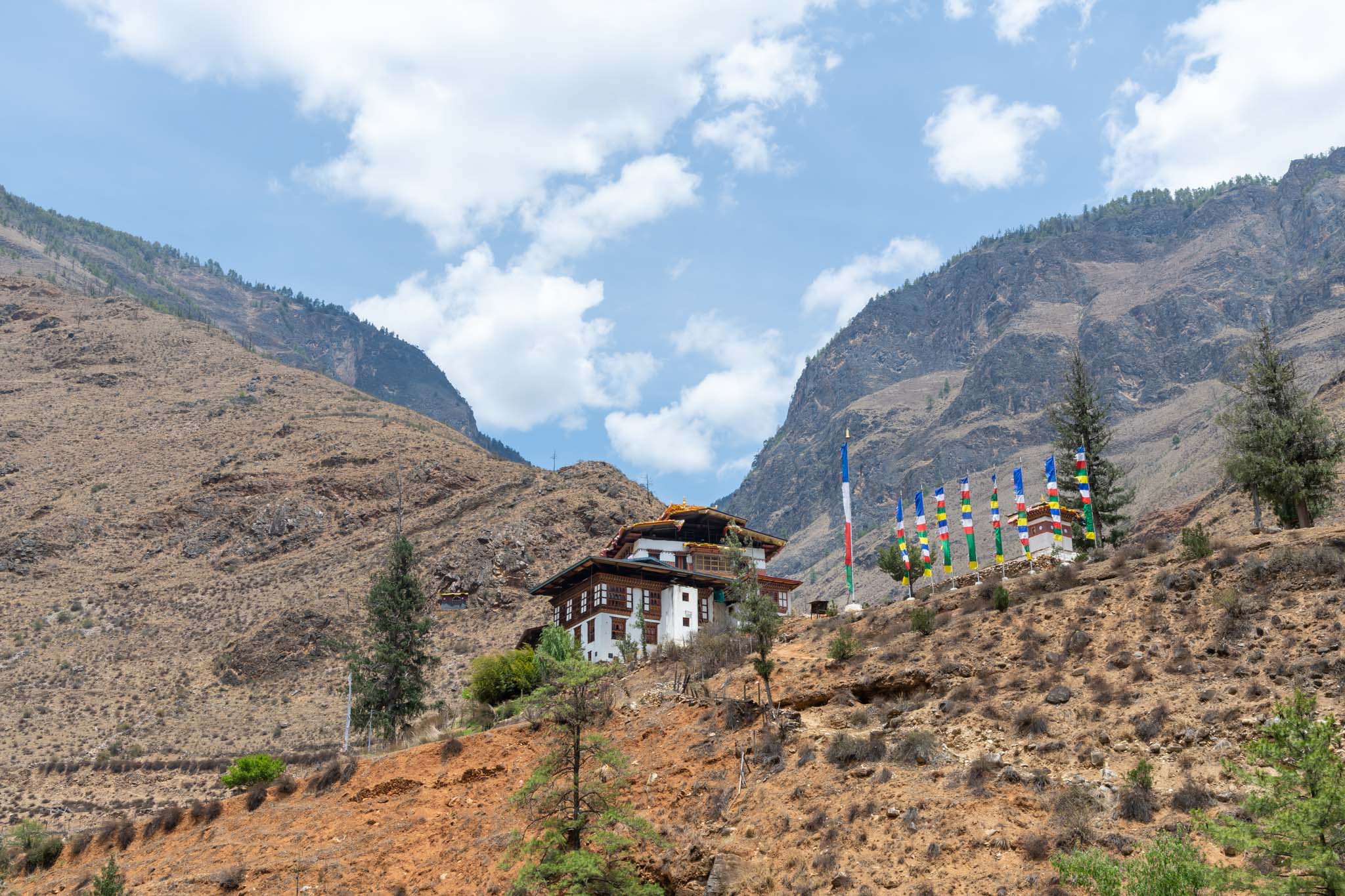
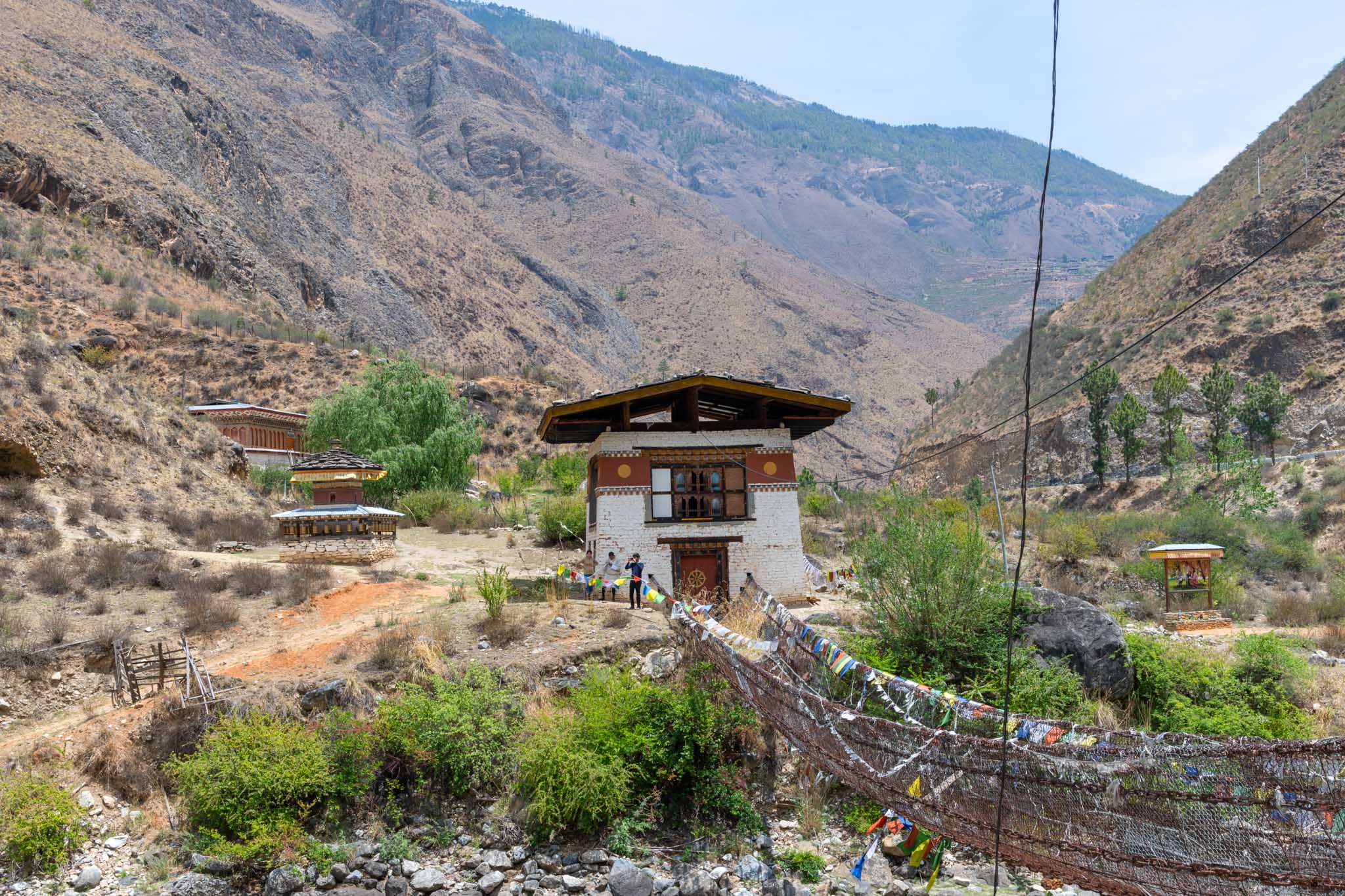
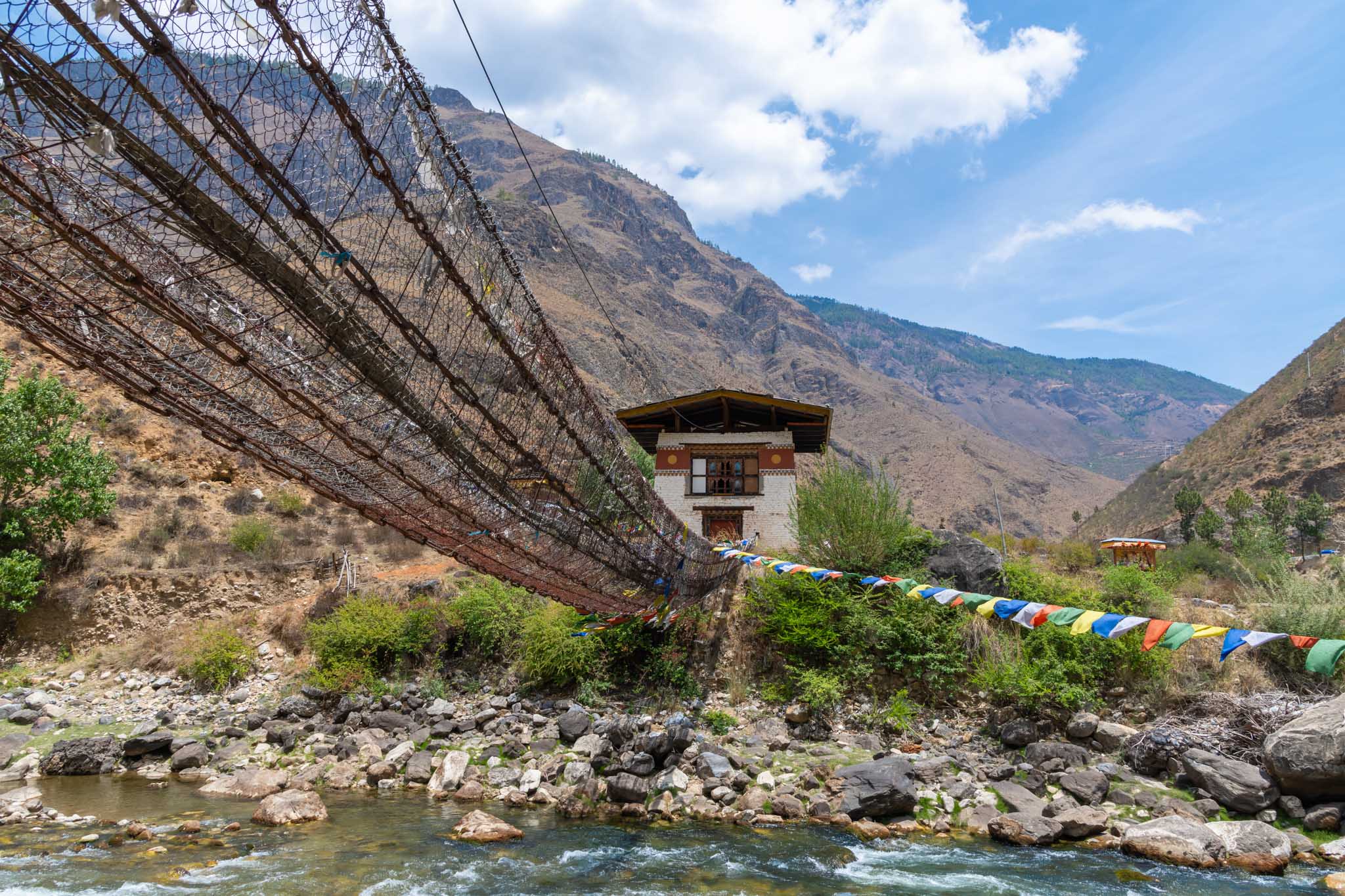
Within half an hour of leaving the café, we reached Tamchog Lhakhang – a temple dedicated to the 13thcentury Tibetan saint Thangthong Gyalpo. It seems that travellers were finding it difficult to cross the river and so Thangthong Gyalpo built a bridge using hand wrought iron chain links. The iron used was very durable and the bridge survived till 1969, when it was washed away in floods. The current bridge that we see was rebuilt in 2005 using some of the old materials. Gyalpo was a blacksmith and an architect, and he built many such bridges in different places in Bhutan. The iron chain link bridge cannot be used anymore and there is a foot suspension bridge that can be used to cross the river, to go the temple located on the other side. This is a private temple, and we did not visit as Sonam said we would visit enough and more temples in the days to come!

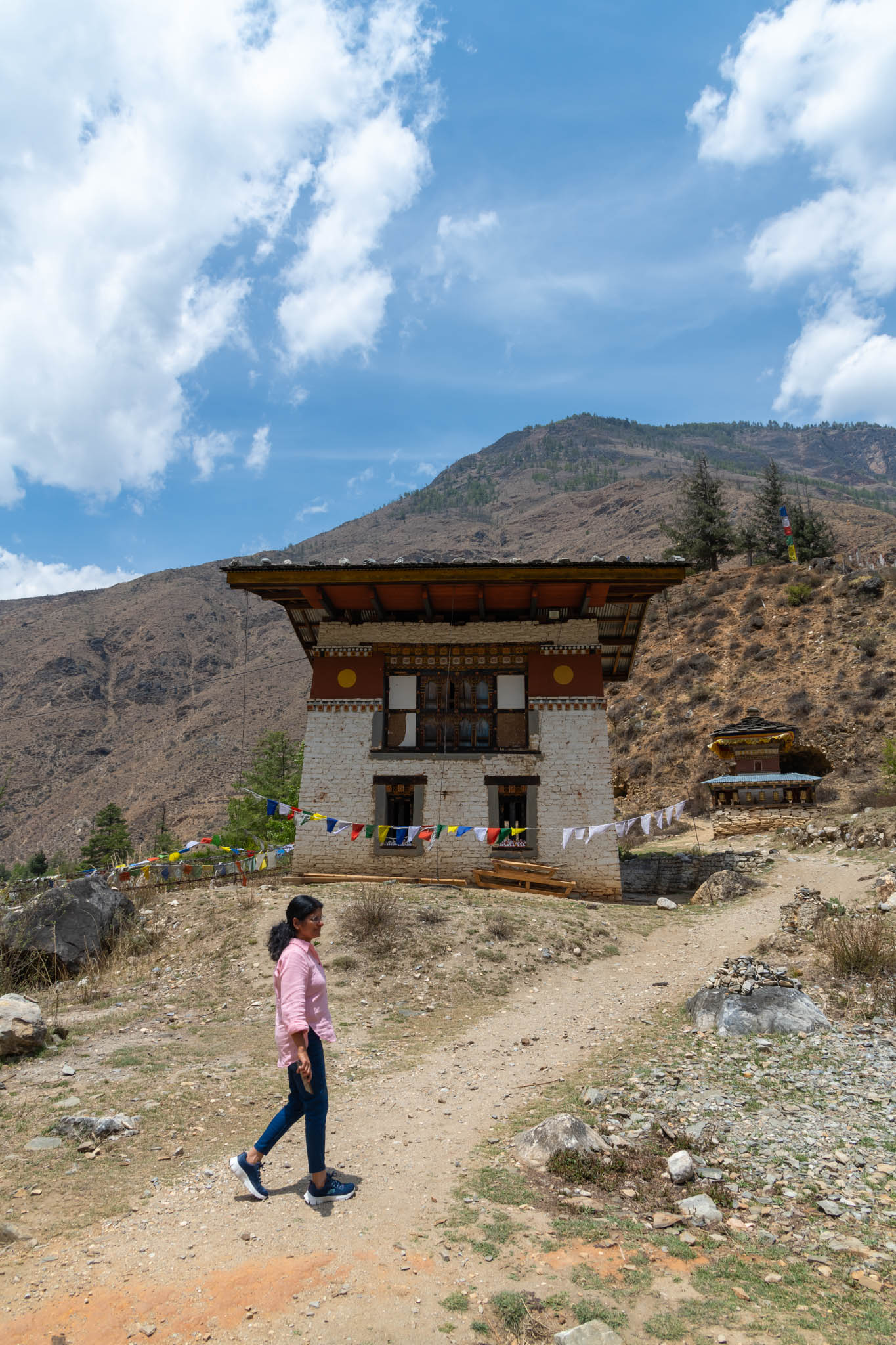
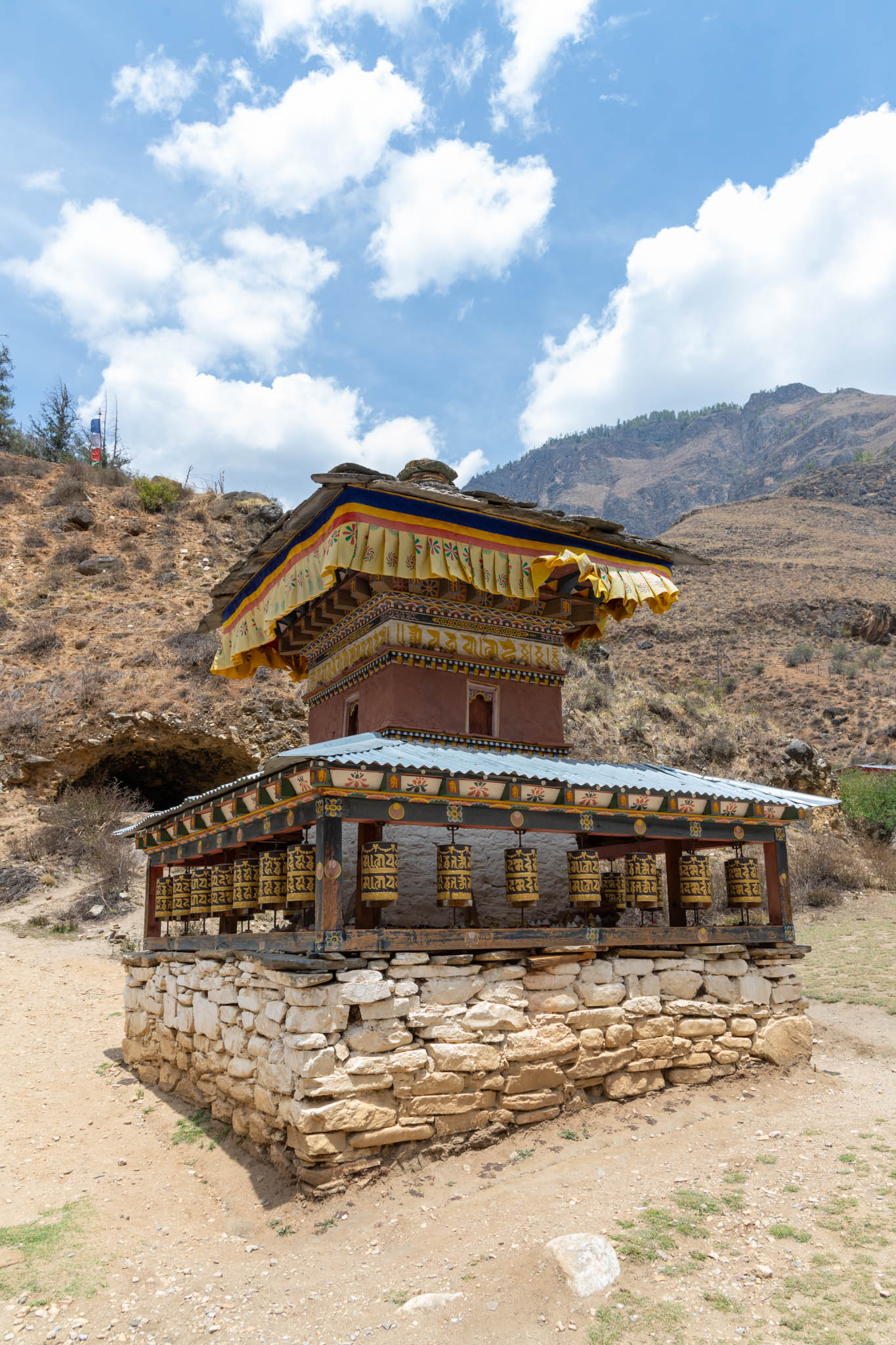
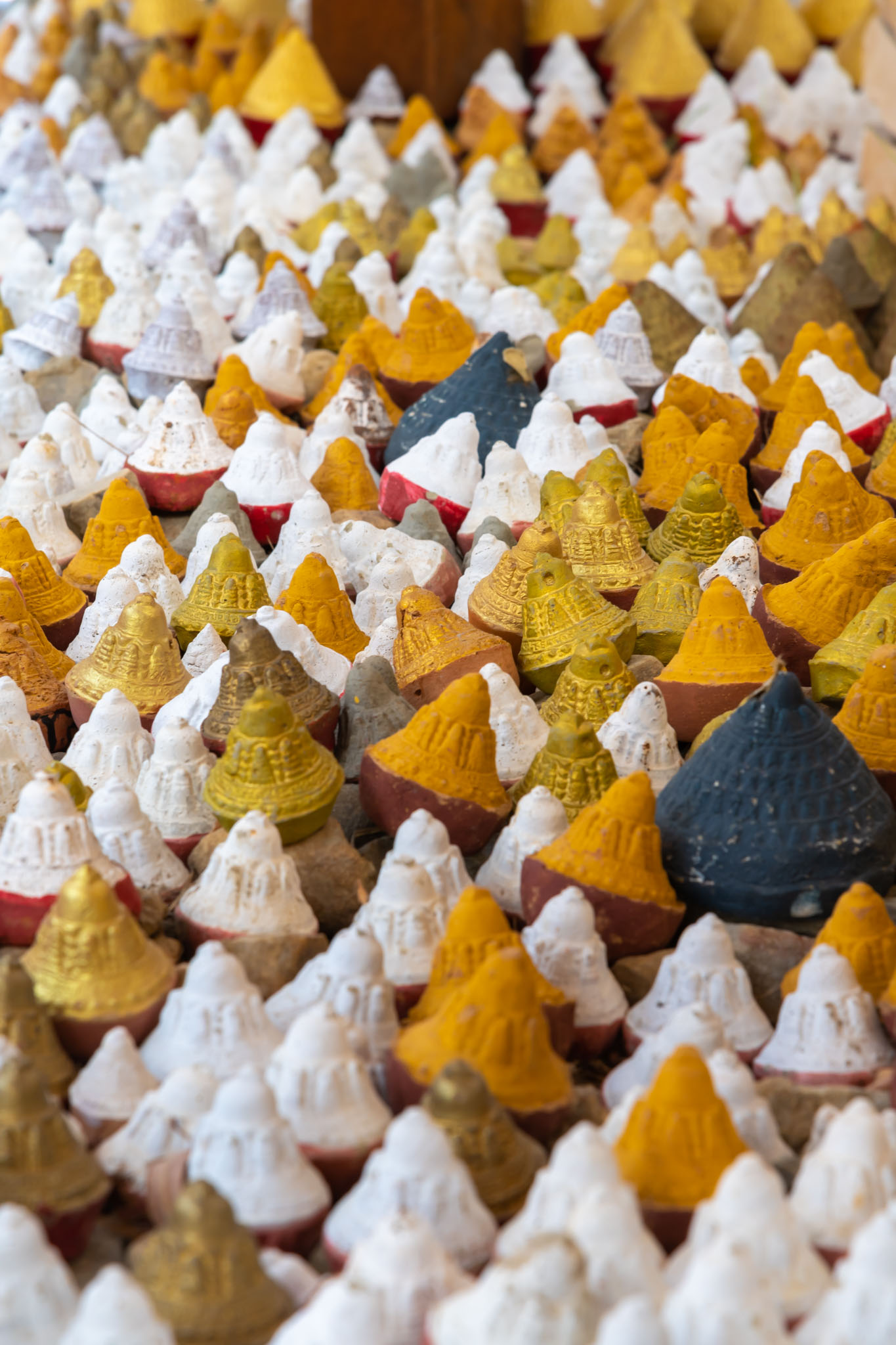
Near the temple there is a small room with some prayer wheels. On the floor, we found a lot of cone shaped objects. Sonam told us that in their version of Buddhism, there are a lot of rituals to be conducted after death. One of those is to create 108 such small cones (he referred to them as tcha tcha) which are made by mixing the ash after cremation with clay and then these votives are placed in different locations that have positive energy – for instance, a cave overlooking a river. The number 108 is special for Buddhists as that represents the 108 negative characters in humans – such as greed, anger etc.

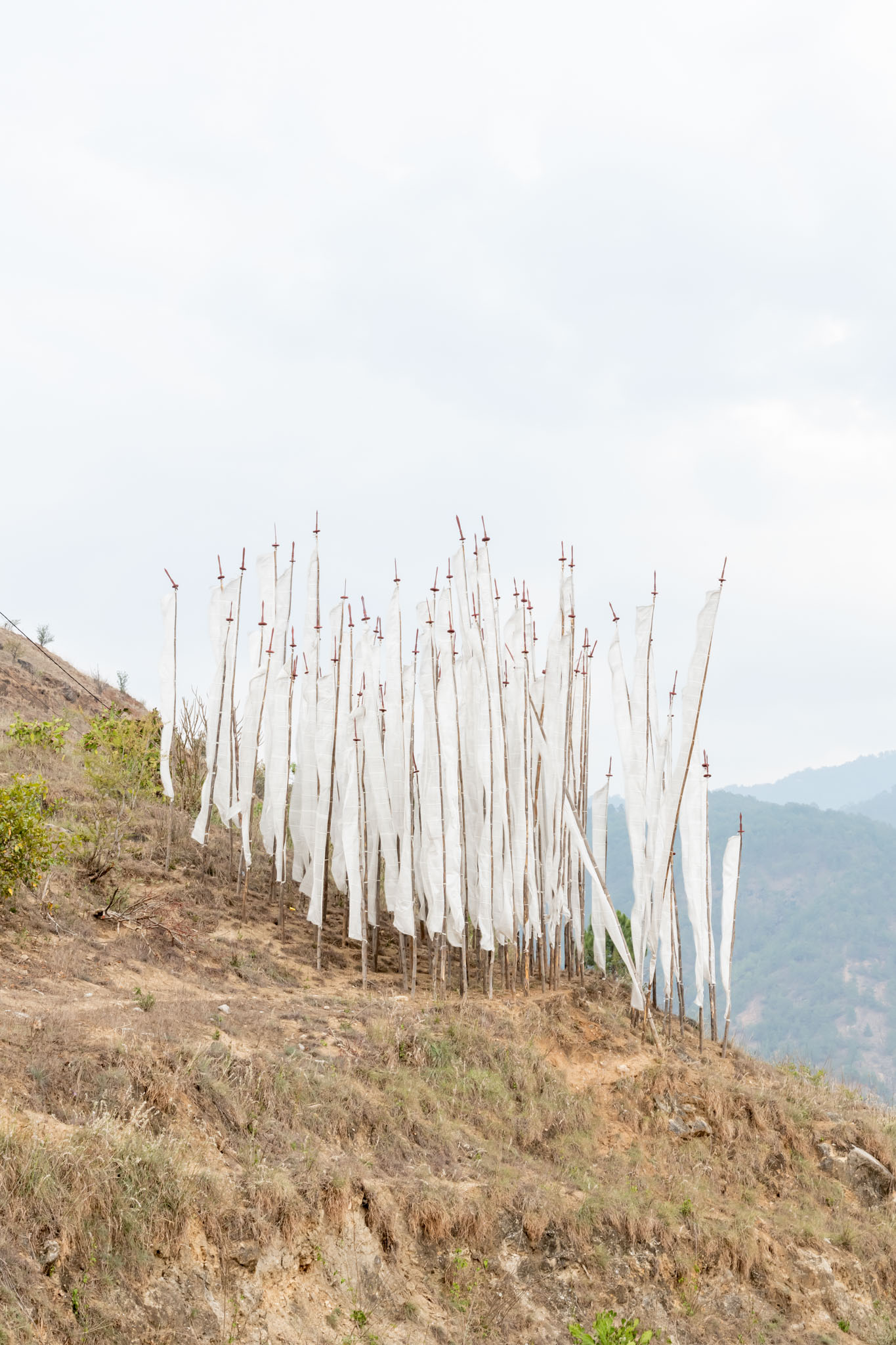
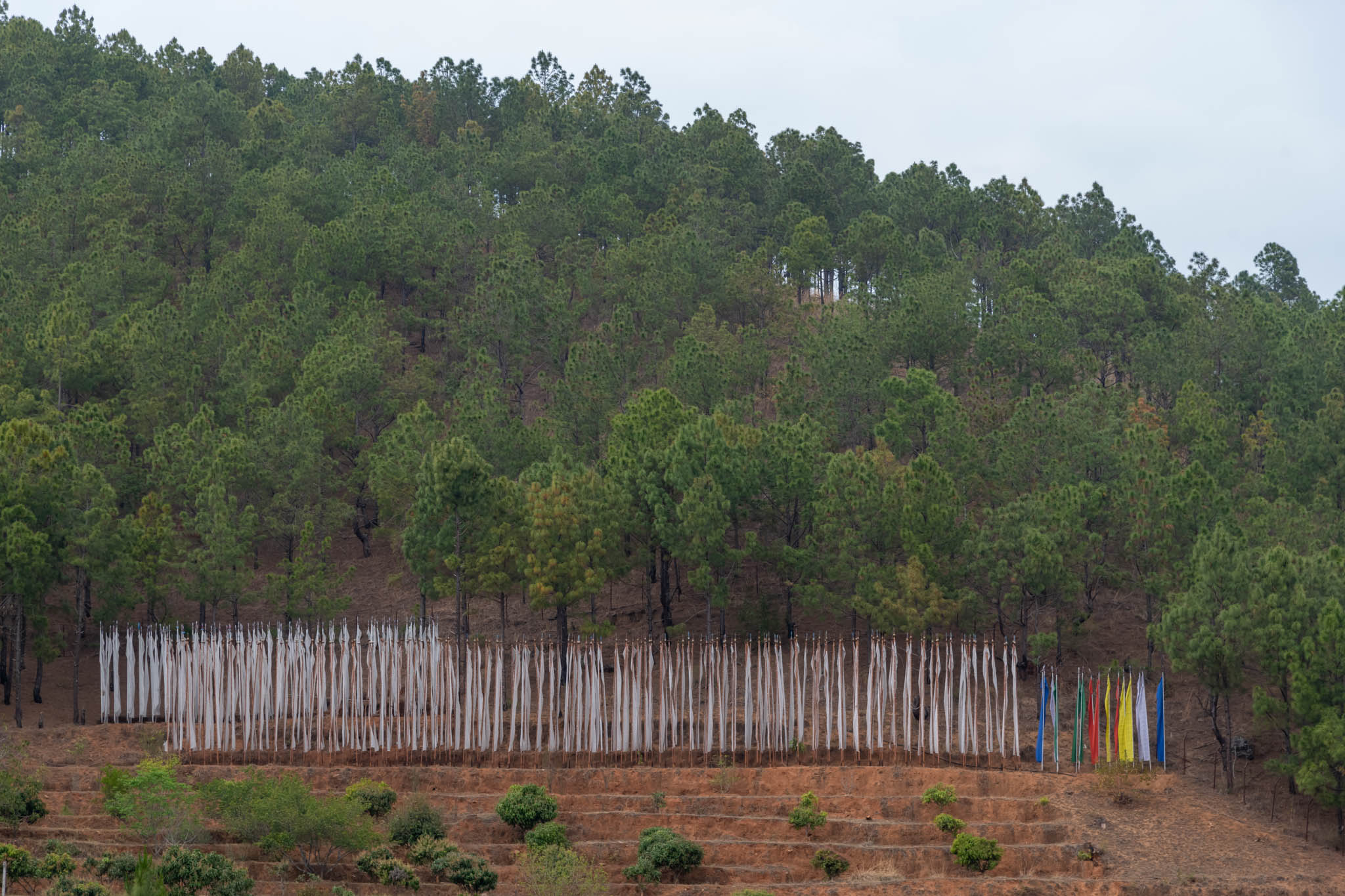
It seems another practice is to make 108 white prayer flags and place these, in memory of the dead person, in a site overlooking the river, mostly in hill sides. You can see such memorial prayer flags in many different places of Bhutan. Once the flags start to tear, they are taken away.
Sonam told me that Buddhism has too many rituals to be followed after death and that it is very expensive. He was even opining that some people are becoming Christians because of this exorbitant expense! Currently 85% of the population are Buddhists, with 12% Hindus and 3% Christians, with freedom of religion being guaranteed by the King. The version of Buddhism followed in Bhutan is Vajrayana Buddhism.
By and by we reached Thimphu and after the usual welcome ceremony, we headed out for lunch. There we discovered a Bhutanese curry Emadatshi – made with chilli and cheese – which was just wonderful with red rice. Red rice is grown in the Thimphu area, and it is a bit smaller and tastier than the variety we get in Kerala.
After lunch, we visited the Memorial Stupa in Thimphu, which is also known as Thimphu Chorten. This was built in 1974 in memory of the third King of Bhutan who passed away in 1972, and it was renovated in 2008. Most stupas contain relics of holy men but this one doesn’t, and it only has a framed photograph of the third King. The building is quite beautiful and nicely decorated.


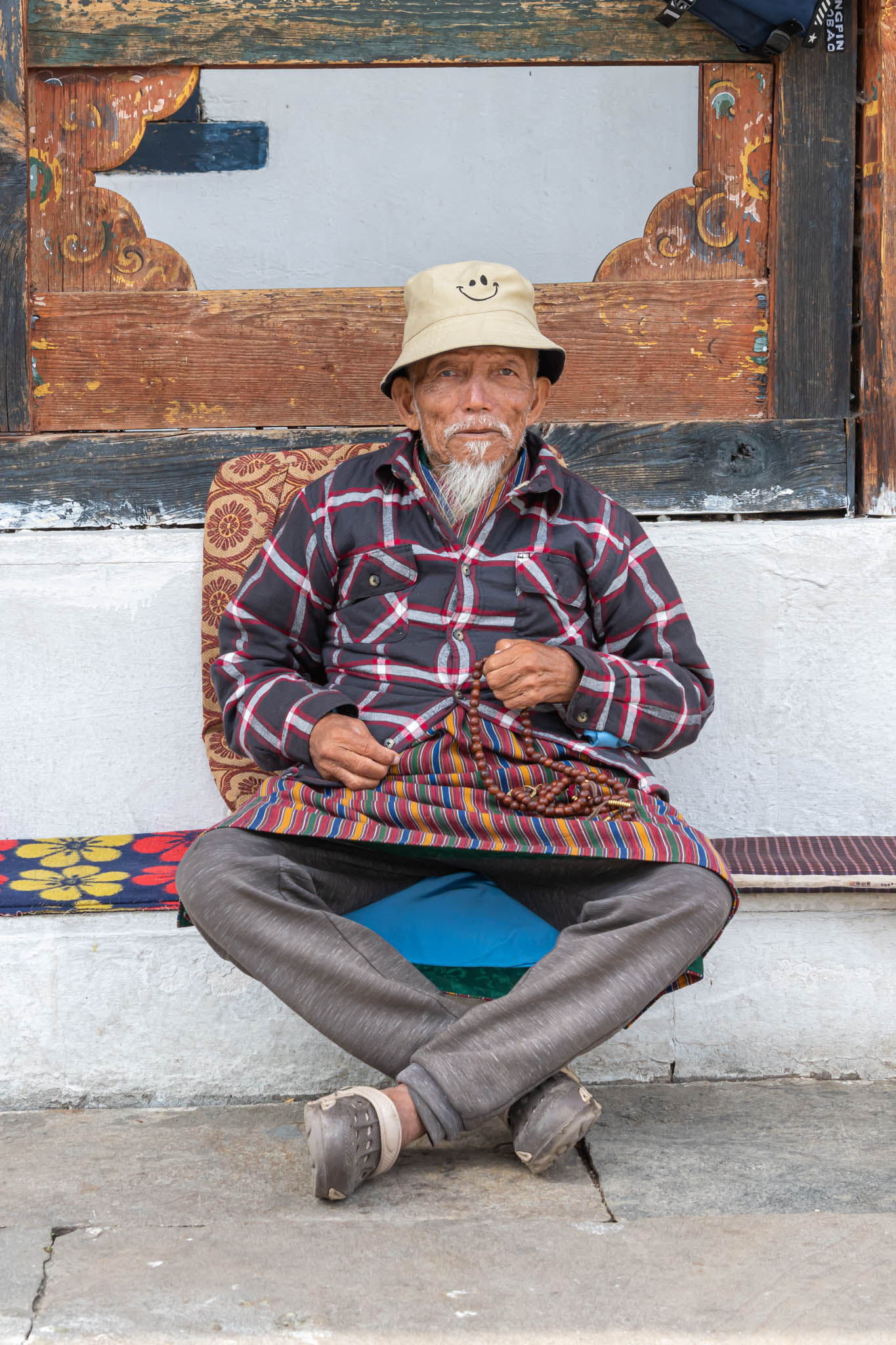
It is located centrally within the city and so accessible to all. It seems that old people spend a lot of their time in this place, praying and prostrating before the idol.

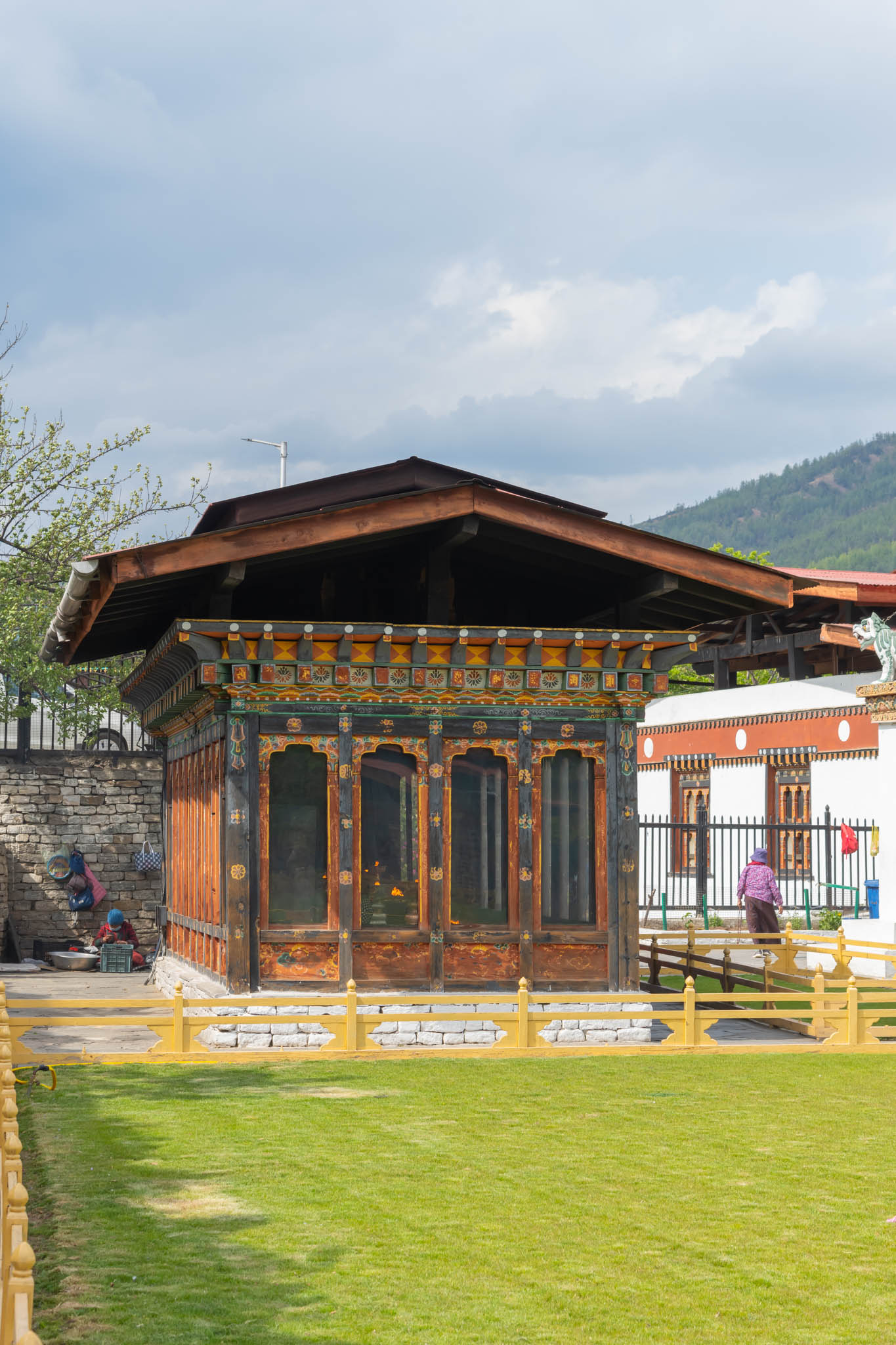
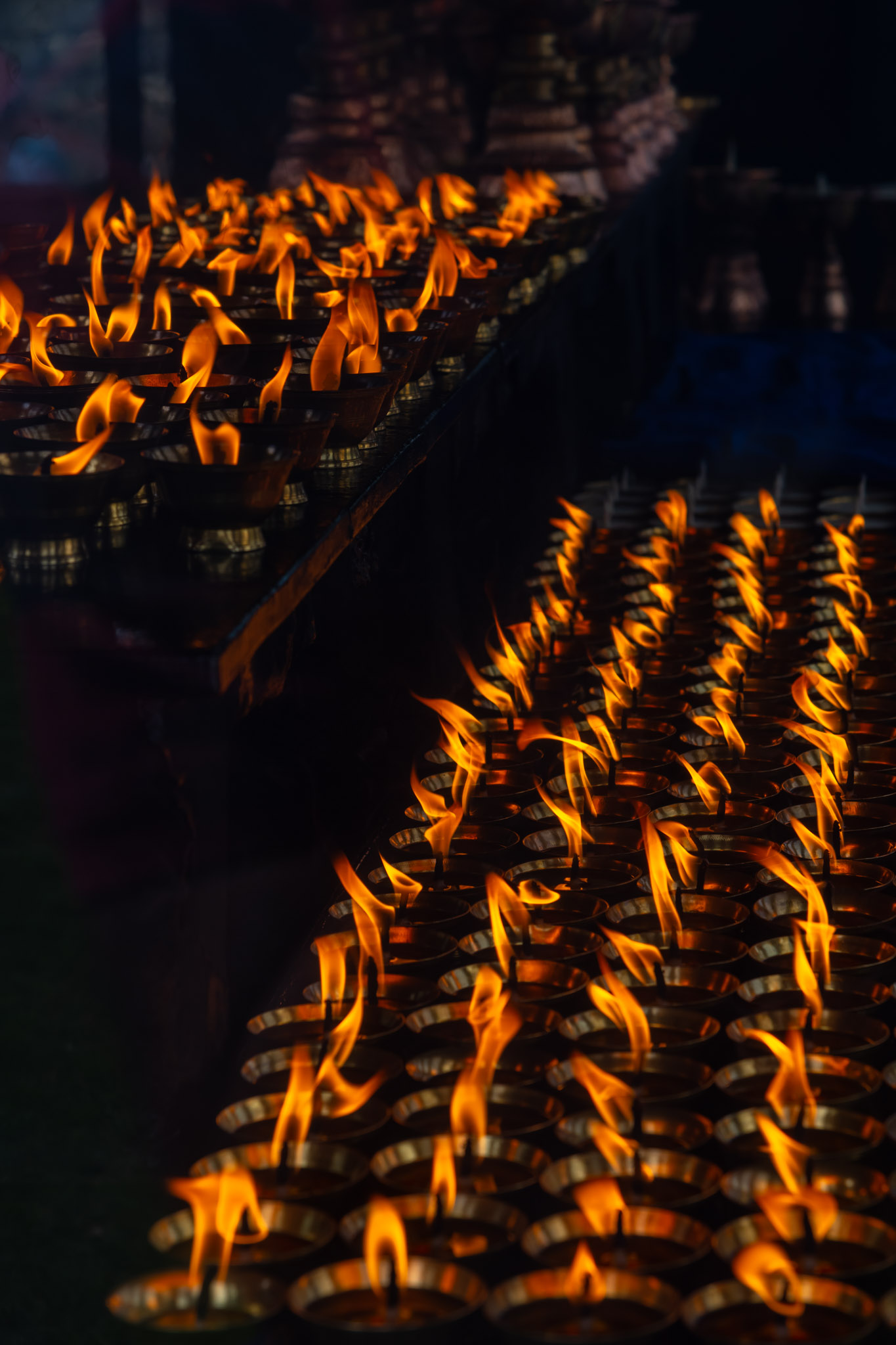
There is a room with giant prayer wheels and another glass walled room for butter lamps. Lighting butter lamps is an important part of worship, and you can see butter lamps in most monasteries and temples and often, these cause fires resulting in extensive damage to the building itself.
Photography is not permitted inside any temple and so we couldn’t capture any of the nice idols or paintings inside. The inside walls of temples are decorated with good many paintings depicting important incidents and people associated with the faith. The main idol and other idols take up a lot of space and is generally tall. The main idol inside this Chorten is that of Padmasambhava who brought Buddhism to Bhutan in the 8th Century. He is shown in many forms and good many are the ‘wrathful’ forms that he took on, to fight evil spirits. It is interesting that each male idol has a female figurine sitting on its lap, in what is almost a position of coitus. Sonam explained that the male is not complete without the female and that is why they are always shown as a pair.
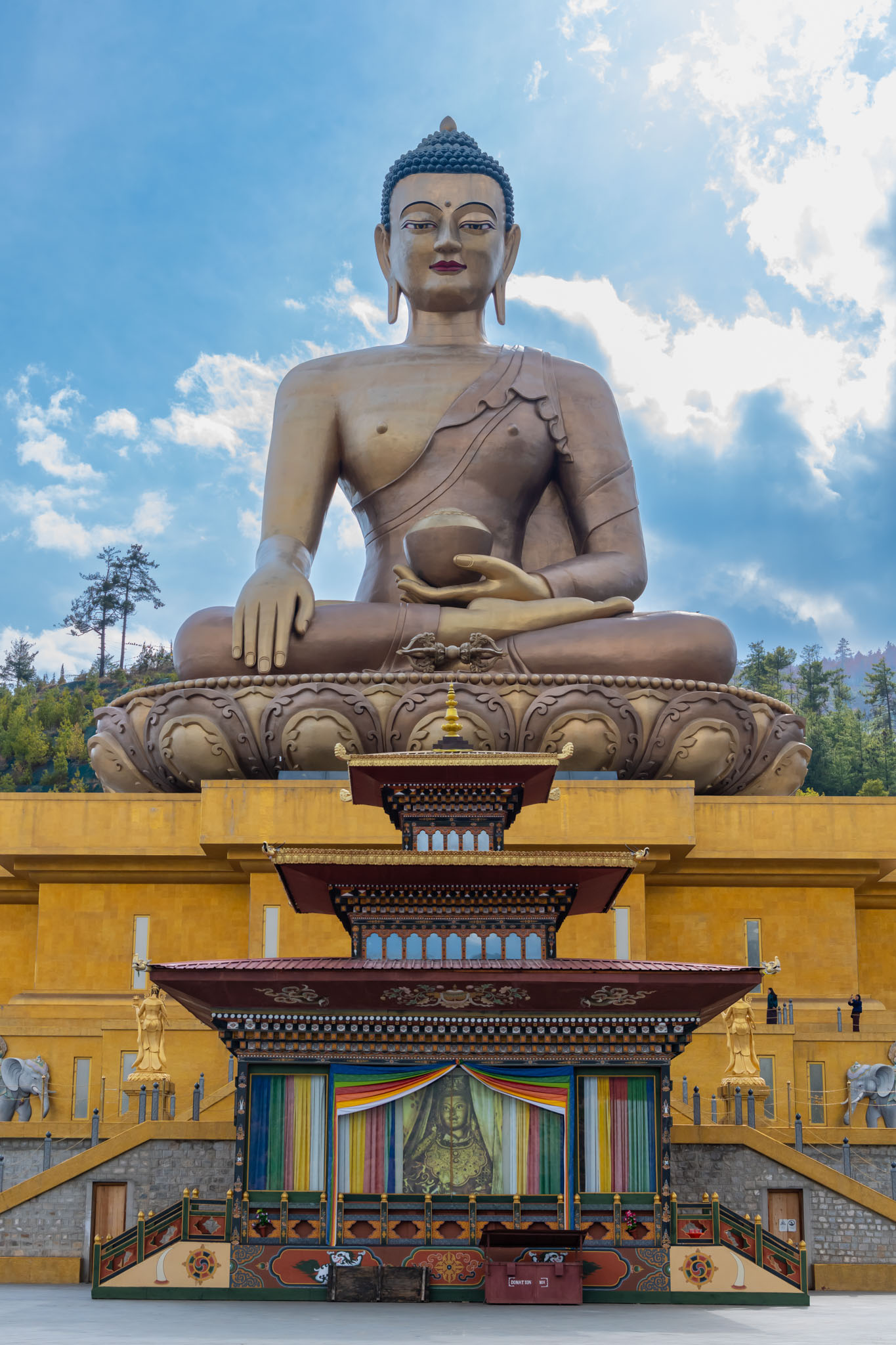
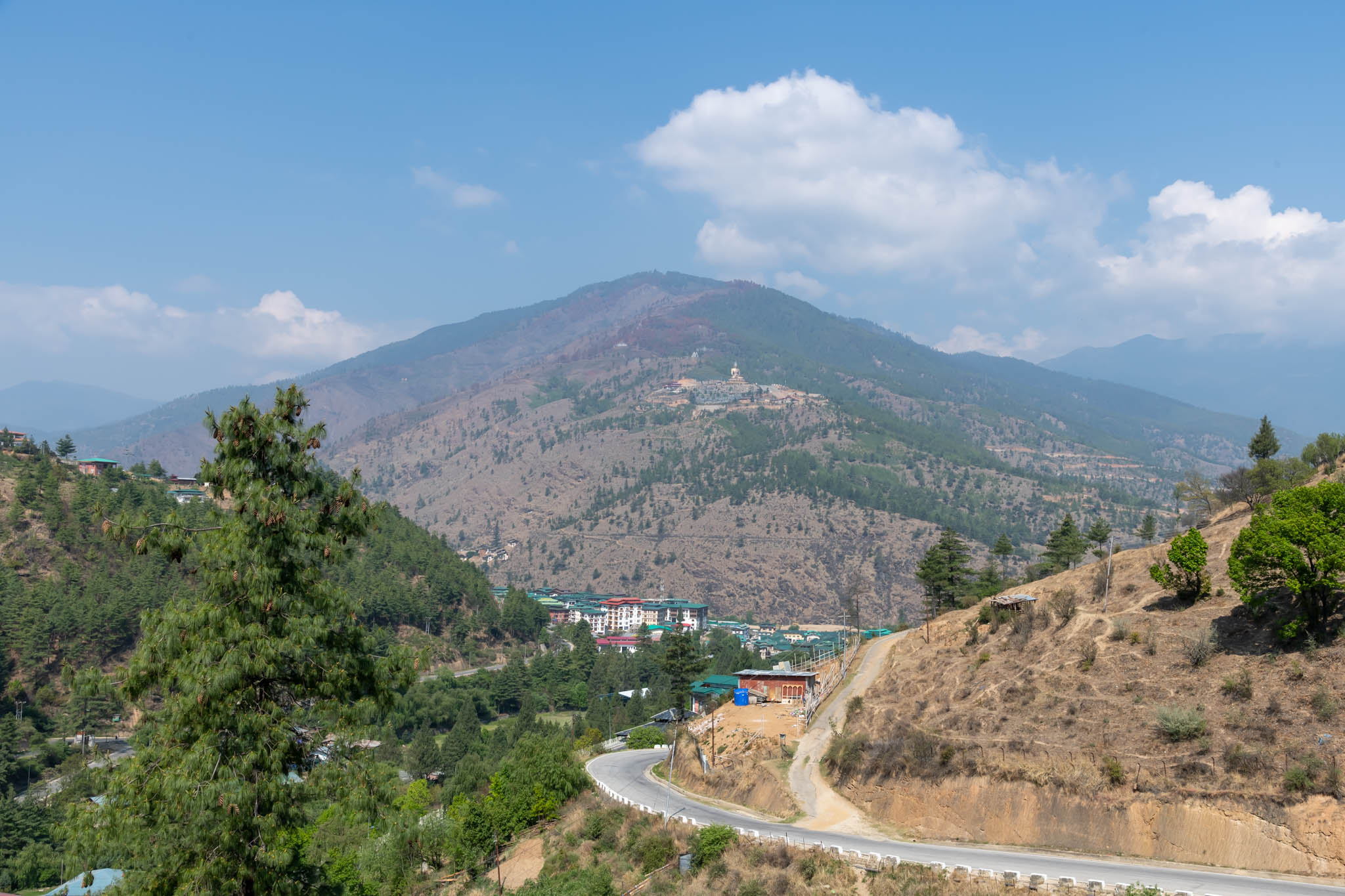
Next was a visit to the Buddha Dordenma statue, said to be the largest Buddha in a sitting posture, located on a hill that overlooks the Southern approach to Thimphu. This statue is made in bronze and inside it there are 100,000 smaller statues that are 8-inch tall and another 25,000 that are 12-inch tall. The statue was made in China and the whole project that started in 2006 and finished in 2015 and is said to have costed about USD 100 million. The statue towers over Thimphu and you can see it even from the road to Punakha.
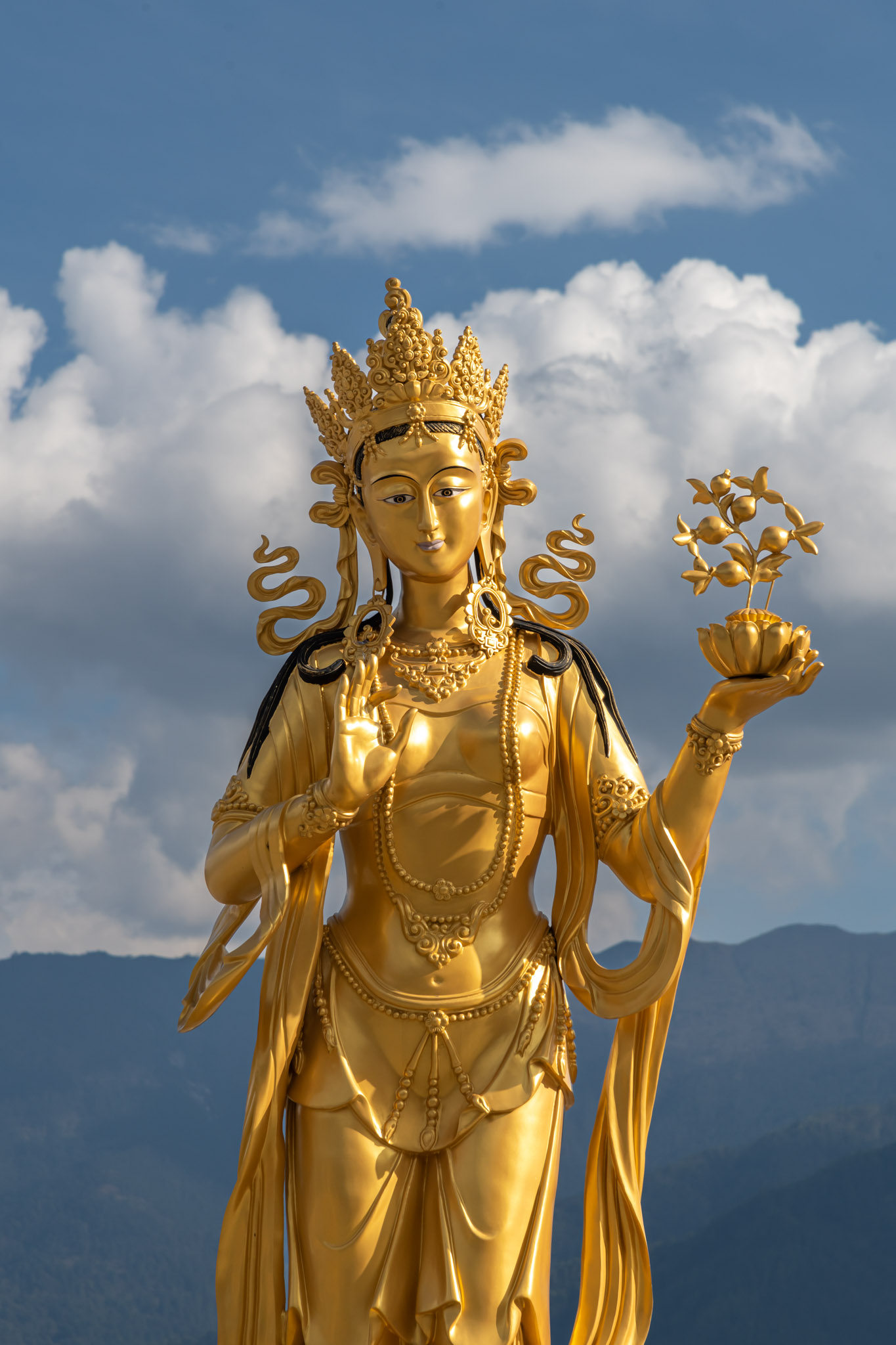
On the top of the hill the structure stands tall and, on the courtyard, there are statues of many Taras (angels). The views from the courtyard are quite nice and on a clear day, it is simply breathtaking.

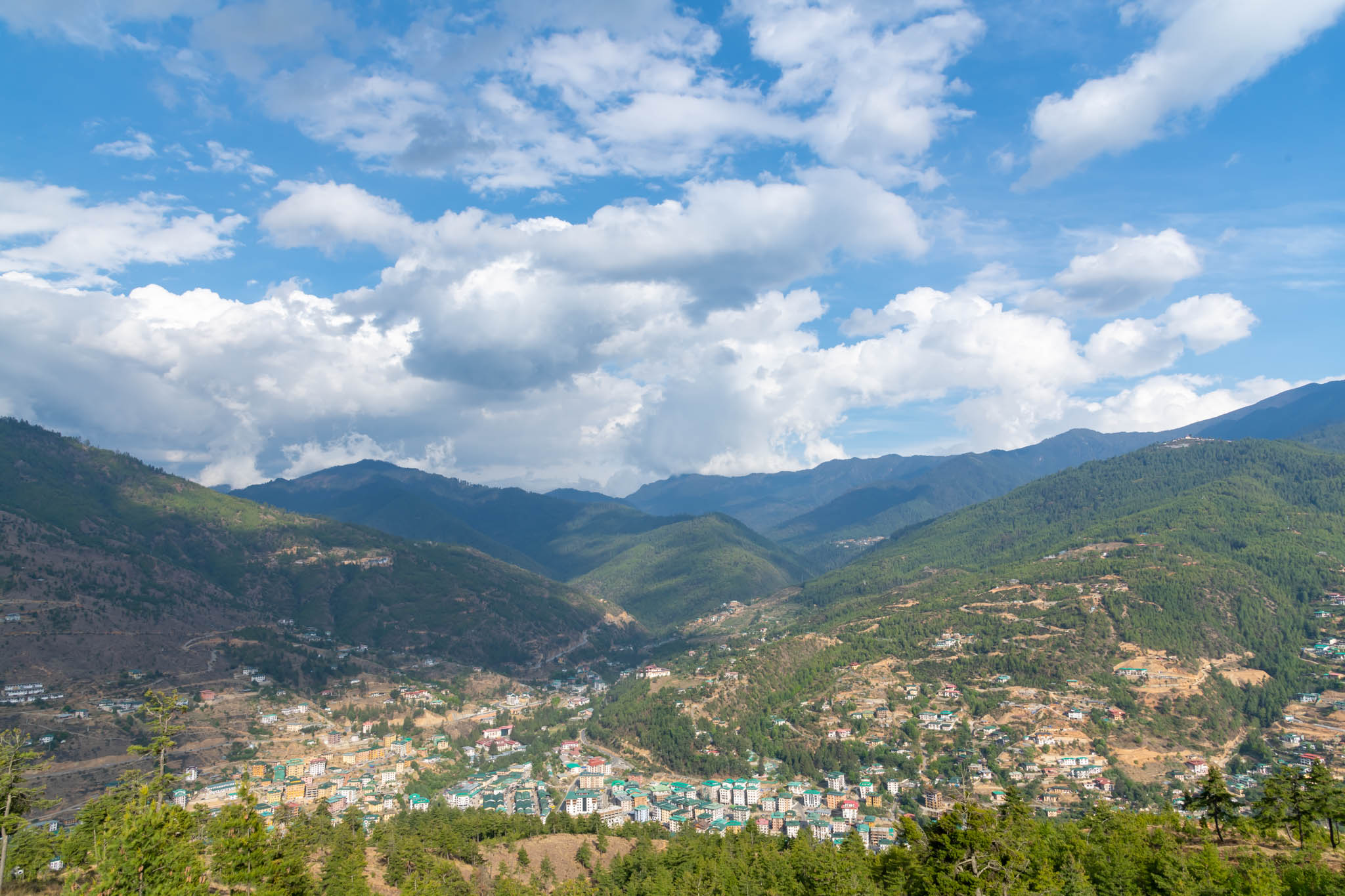
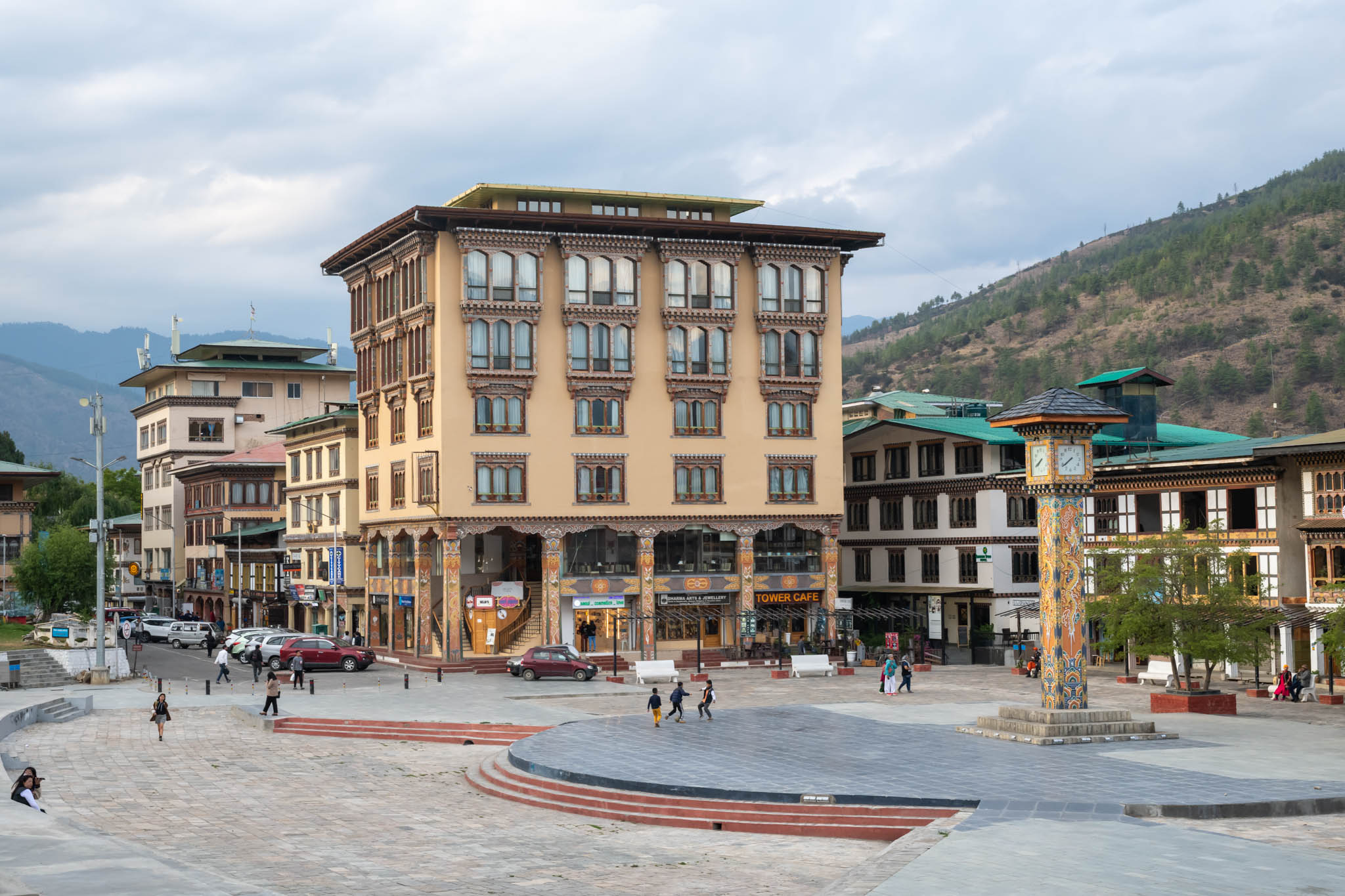
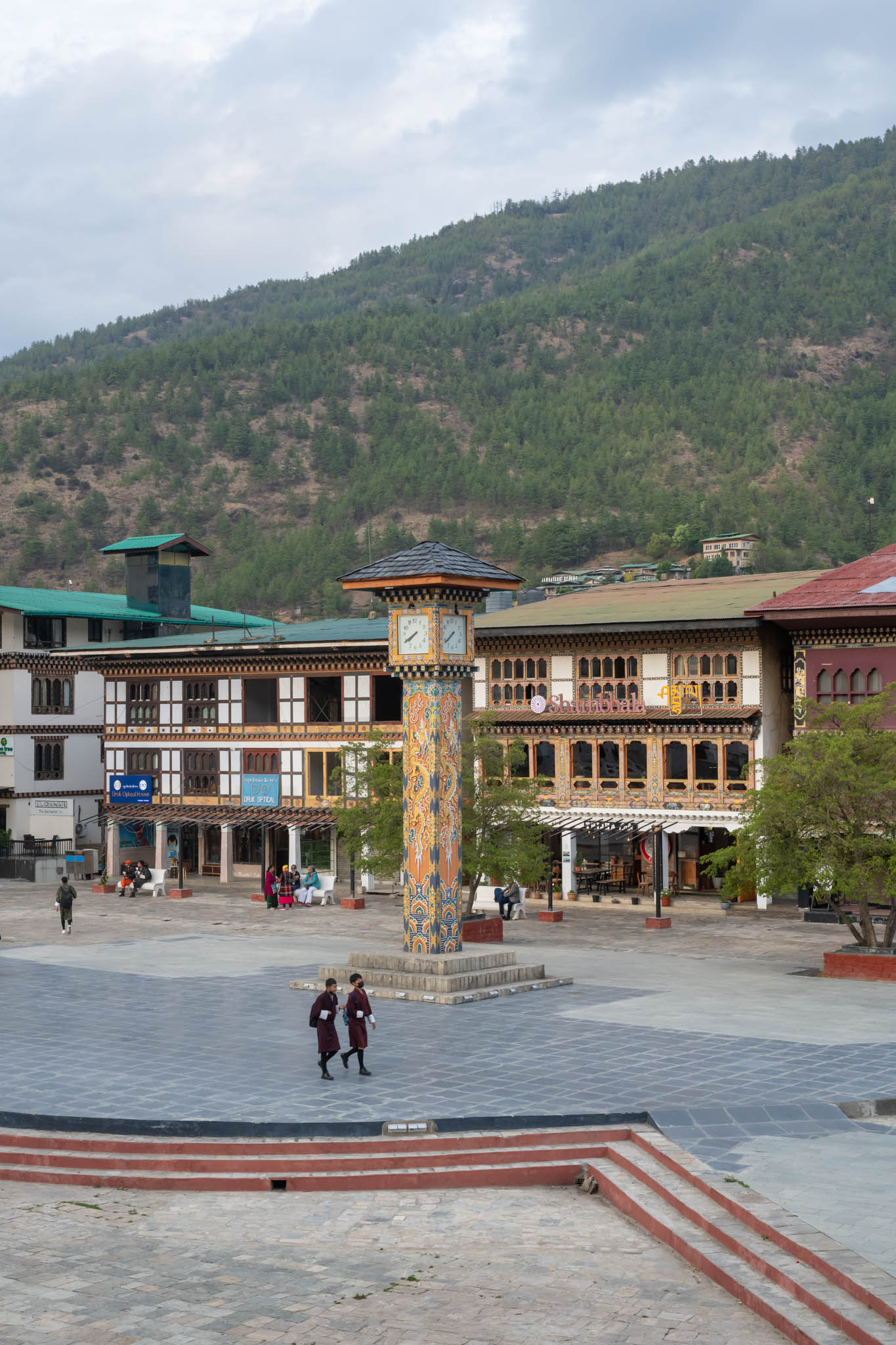
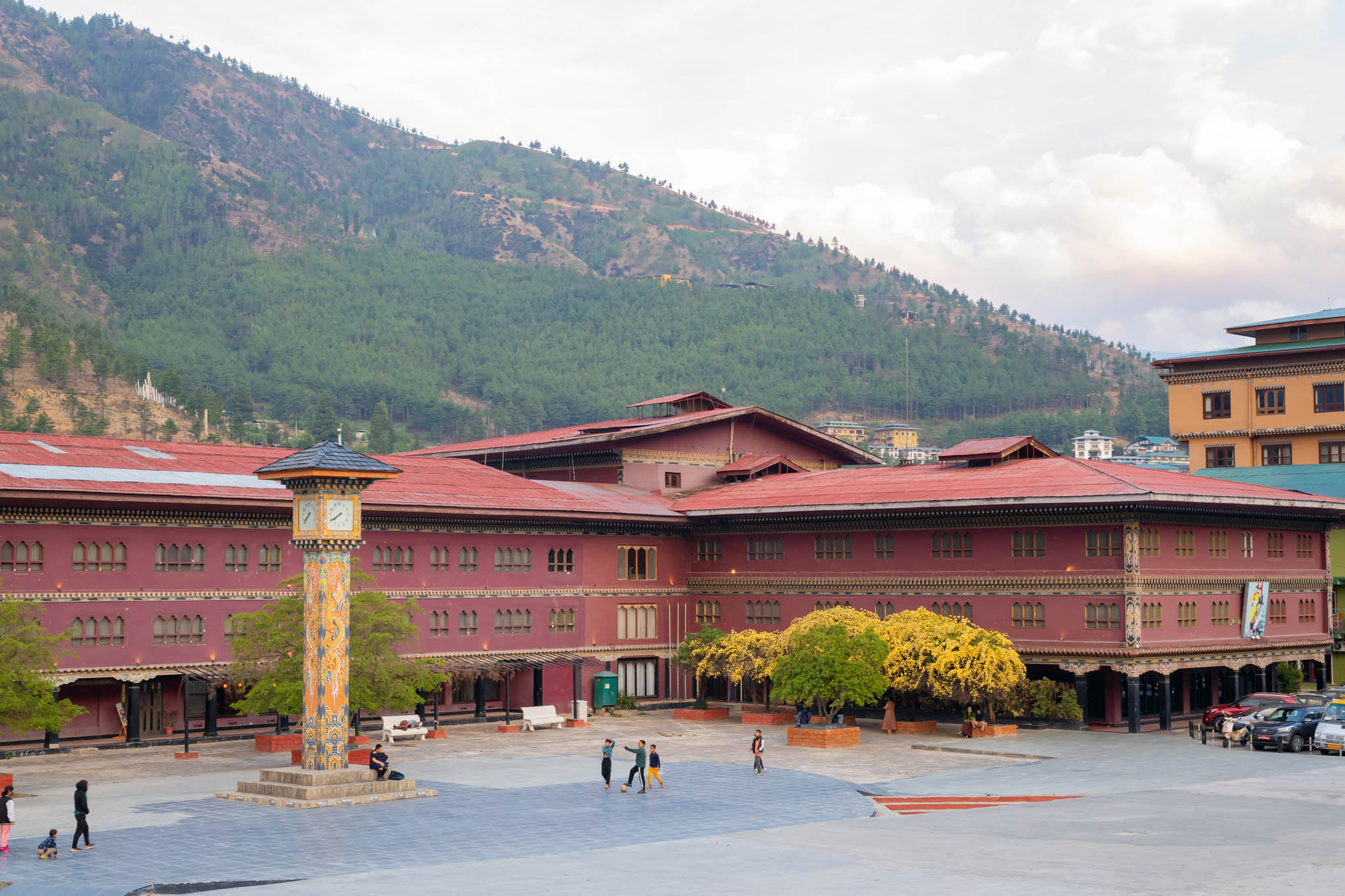
With that we ended sightseeing for the day and came back to the hotel. Since our hotel was centrally located in the city, we ventured out a bit later to see the town. Thimphu is a very quiet place with hardly any sound of traffic as the number of cars are quite low to start with and Bhutanese obviously do not labour under the misapprehension that the horn is some sort of a communication device and entertainment piece all rolled into one, as Indians do. There are no traffic lights in Thimphu (and so the whole country) and there was only one traffic island with a policeman whose gestures were more like that of a dancer. There is a central square called the Clock Tower Square which is very beautiful and there are some cafes which are ideal locations to drink a leisurely coffee and watch life go by.



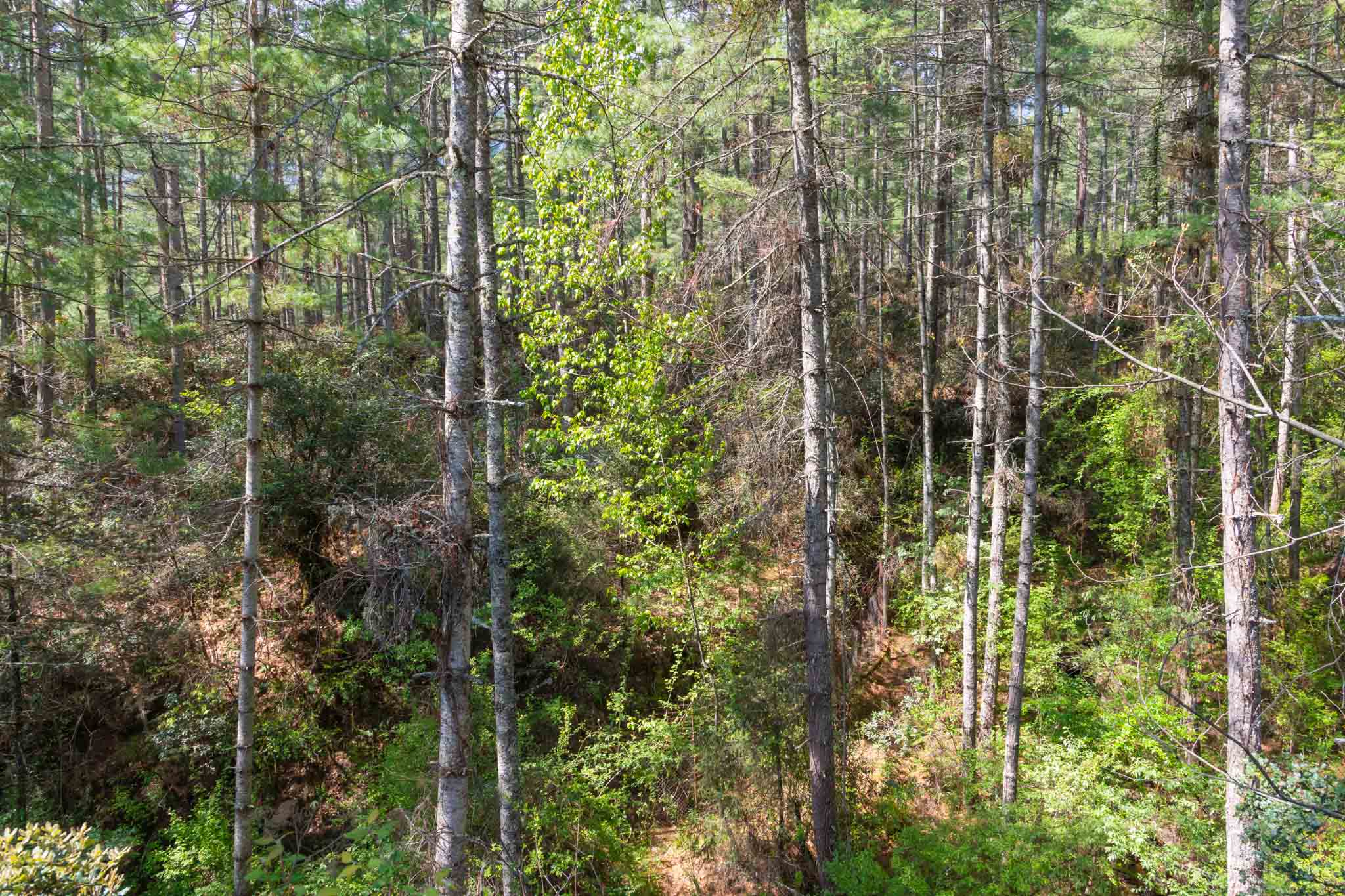
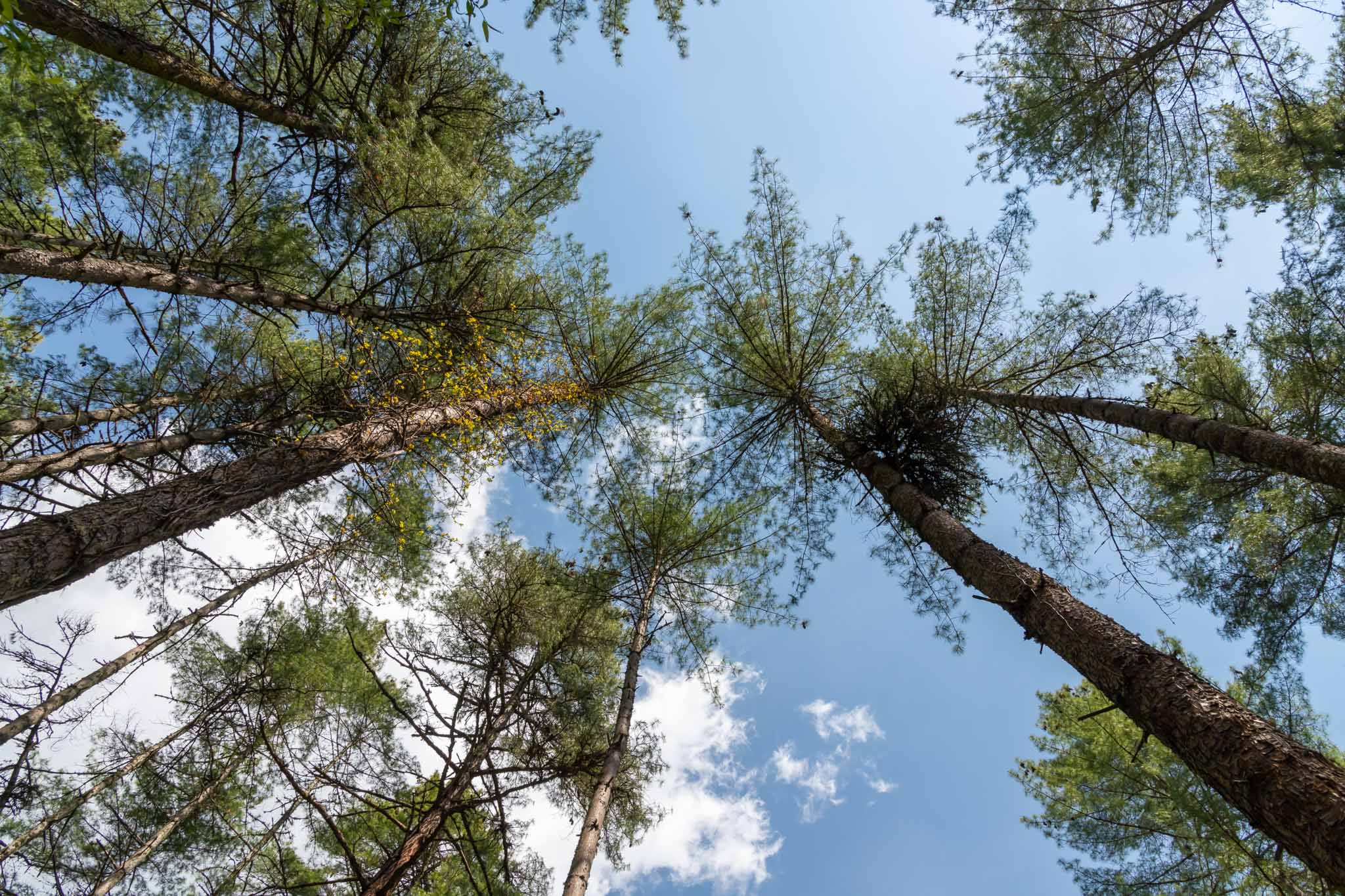
Next day started with a visit to a Takin reserve. Takin is the national animal of Bhutan and Bhutanese believe that this animal (that resembles a cross between a goat and an antelope) was created by the Divine Madman (more on him later) to convince other monks about his powers. The reserve itself is not much to write about and what I found interesting were the pine trees and that grew abundantly in the reserve. I didn’t take any photos of the Takin but did take a few of the pines!

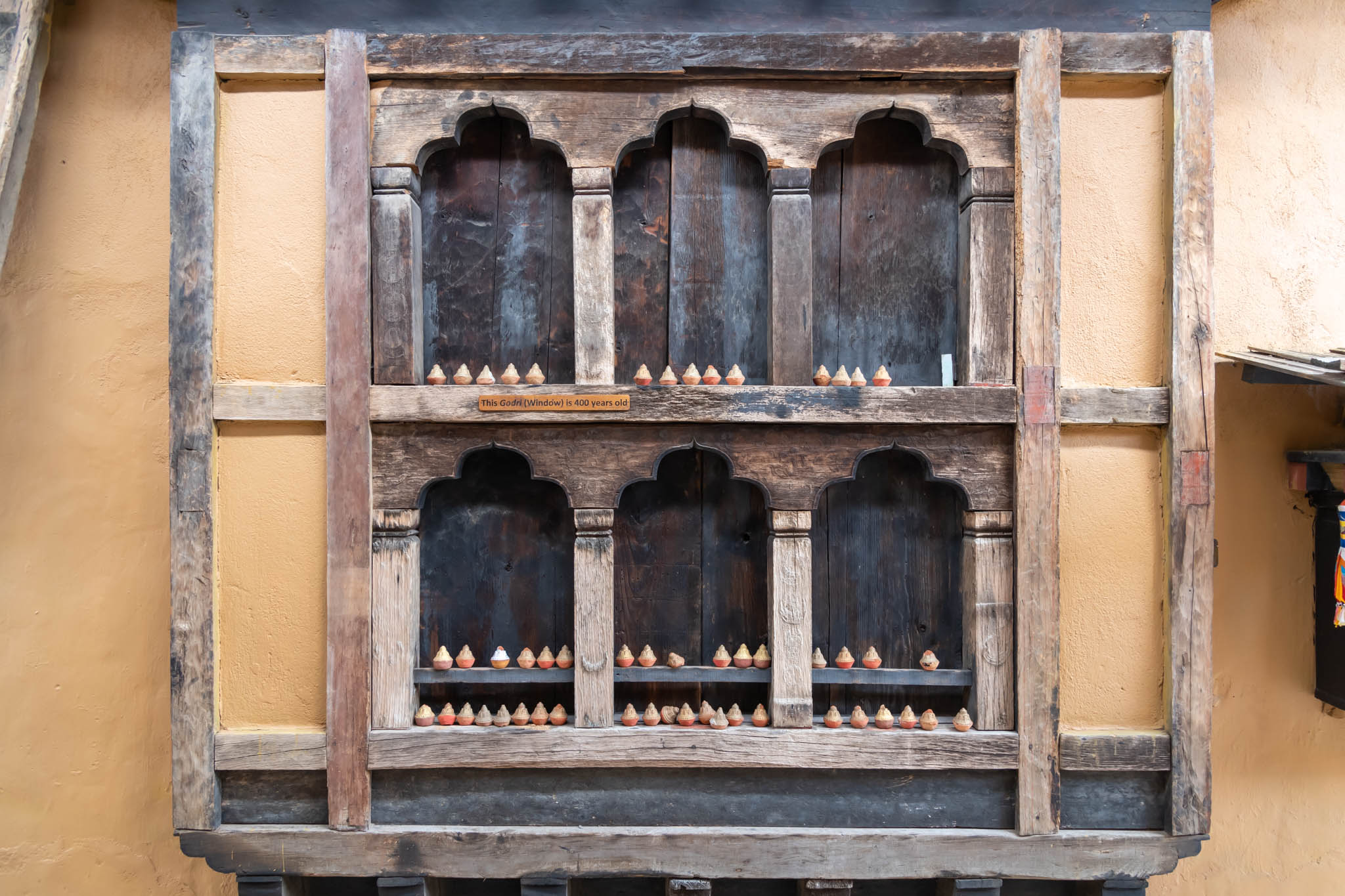
Next, we visited a place called Simply Bhutan where they gave us a taste of the local liquor (Ara) and Bhutanese lunch. Since this was a complete tourist trap, I don’t think there was anything genuine about the whole experience there. The only thing of interest is a four-hundred-year-old window that had a nice feel to it.
We also visited the National Institute for ZorioChusum, where they teach the thirteen traditional arts and crafts in Bhutan, Folk Heritage Museum (where a traditional house is preserved as such) and the Royal Textile Academy. There was nothing of great significance in these places. At the traditional house, I noticed that the prayer room is as big as the only other room they have in the house. When I asked Sonam, he said that every Bhutanese house has an altar and a temple kind of room in their house and if it is a two-bedroom flat, one bedroom is dedicated for this; such is the importane they accord to that room. They pray every day and on holidays, people visit monasteries and temples. In short, they are a very religious people. I was a bit surprised to note that even young people are as religious, given that they are comfortable to be in relations like living together as opposed to traditional marriage.
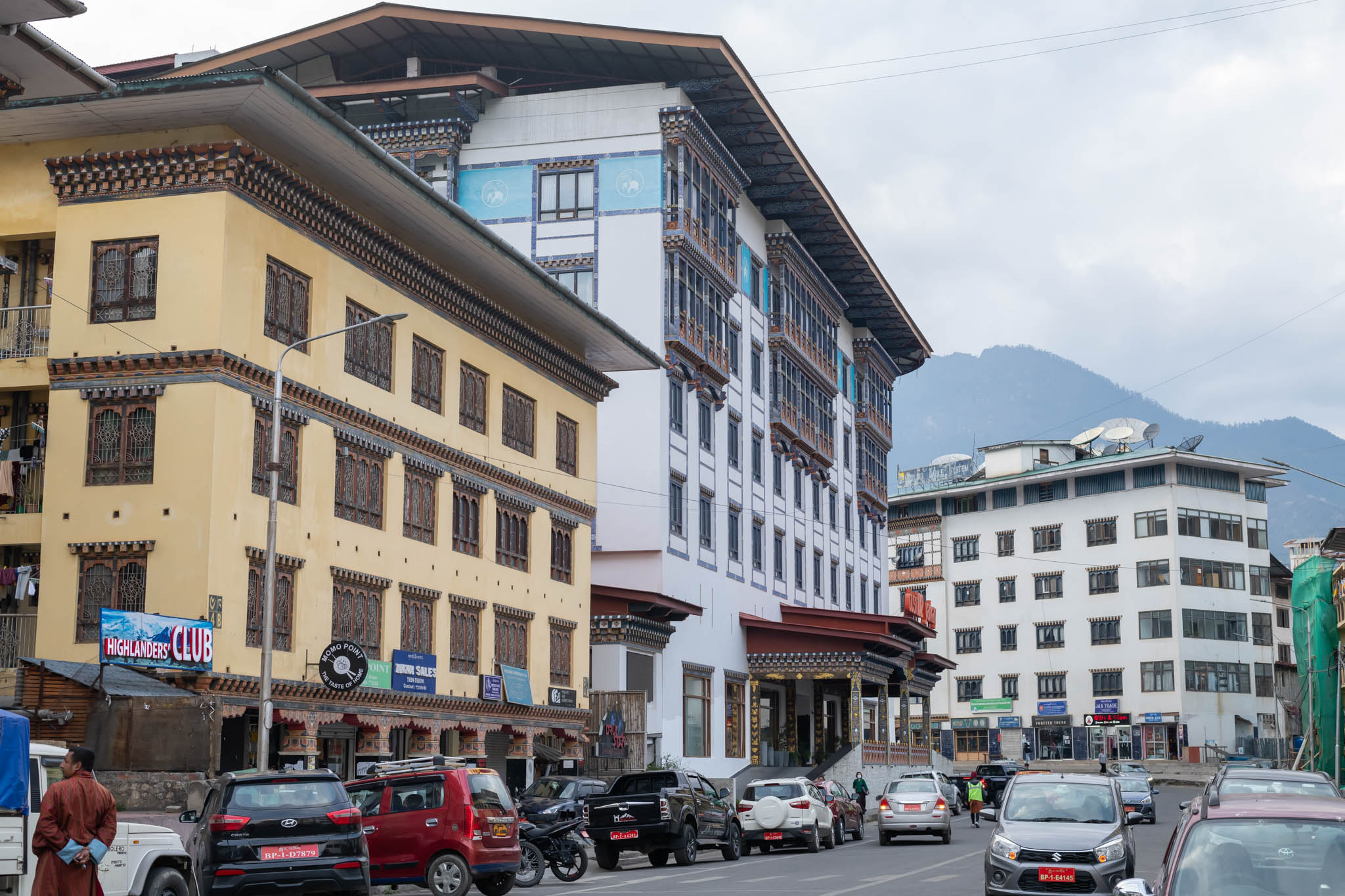
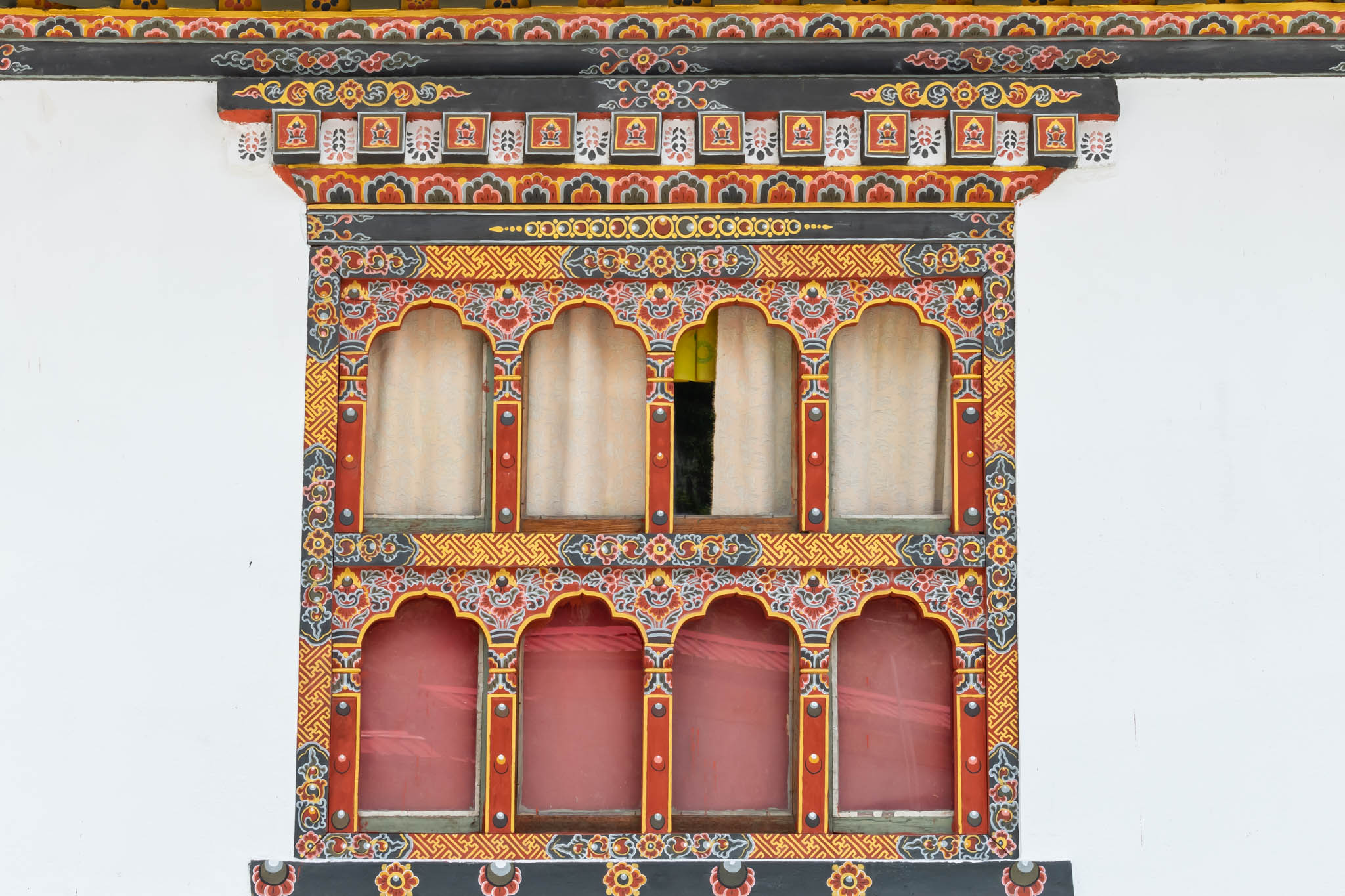
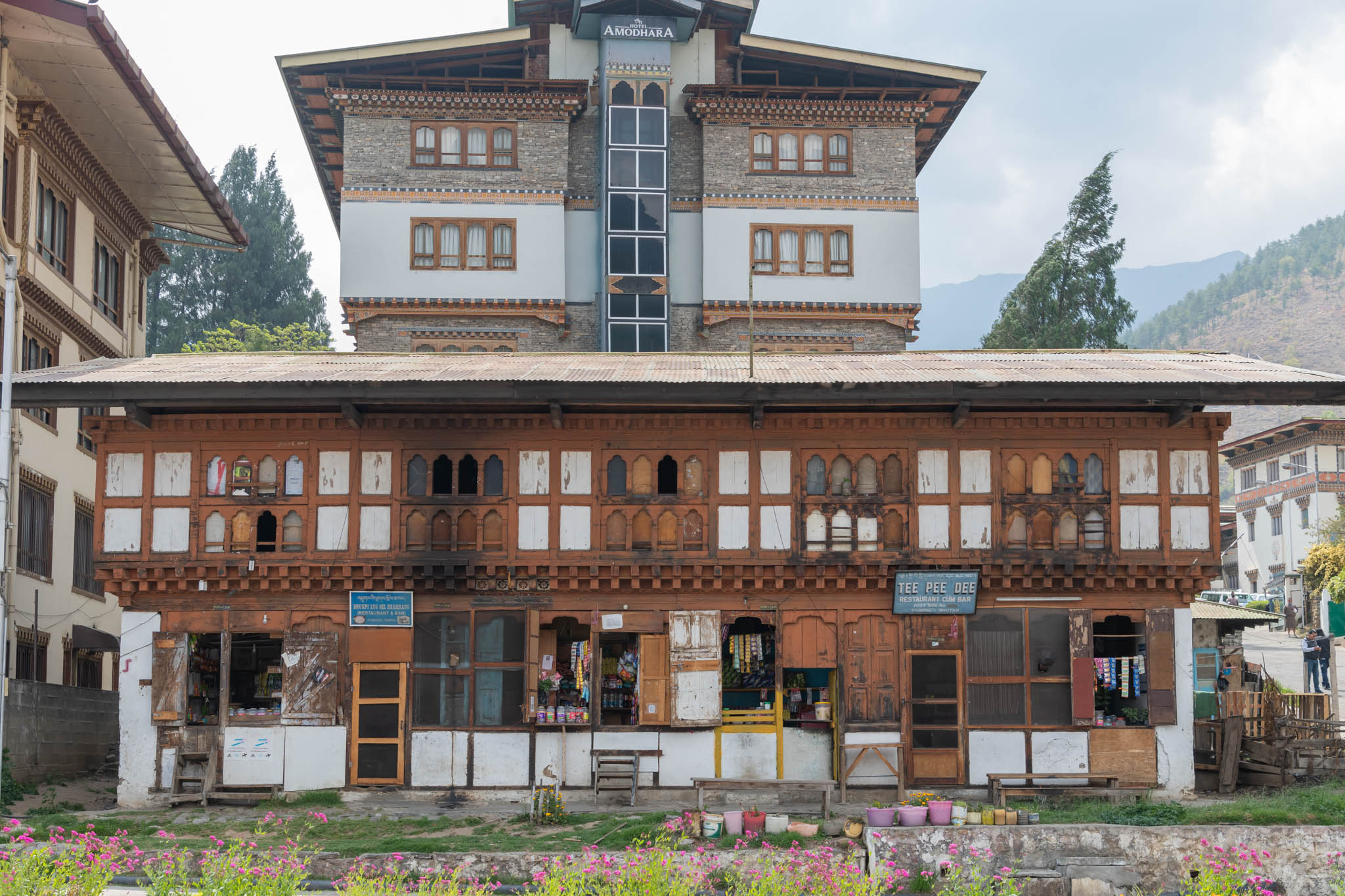
Windows in Bhutan are very beautifully and intricately painted. It seems that houses have to maintain a particular exterior design as per building rules. So, everywhere you turn, you are greeted with beautiful buildings with wonderful windows. Even the roof colour is regulated with government buildings having red roof and others having blue or green colour. The courtyard inside the Royal Textile Academy is just brilliant with windows set out in blue.

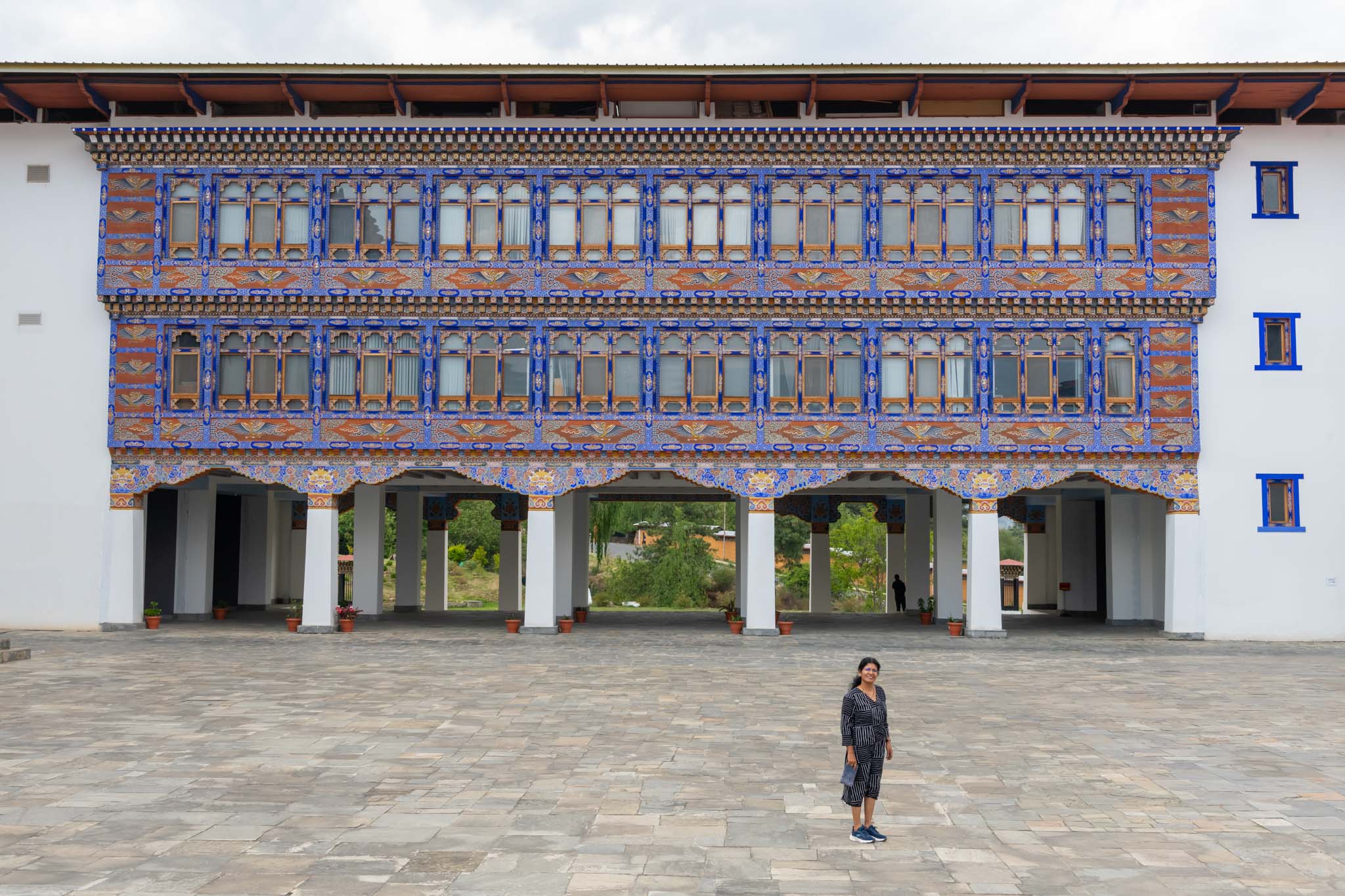
On Sonam’s advice, we skipped the Tashichho Dzong (seat of the government and King’s Palace) as he felt it was not worth the time and effort. We were also a bit tired with the not-so-interesting visits that day. Overall, Thimphu could have been finished in a day as there is nothing much to see there. However, the leisurely pace was relaxing.












































 Kaazhchakal