Having travelled around Prague, Budapest, Ljubljana and all and after having looked at many castles and churches, I was contemplating whether I should give Český Krumlov a miss and spend an extra day in Prague. I had read that the main attraction in Český Krumlov was the castle and that it is the second most visited destination in Czech Republic after Prague. In the end, I decided to go to Český Krumlov and what good fortune that I took that call!
Český Krumlov is about 2 hours’ drive, South of Prague. However, I went to Český Krumlov from Ljubljana. The sky was a bit overcast when I arrived, but the sun started shining soon. The old town and the castle looked so beautiful. The old town has been preserved very well with help from UNESCO. During the Communist times, the heritage had been ignored and good amount of it had fallen into disrepair. But now, the town looks like something out of a fairy tale; well, most of it.
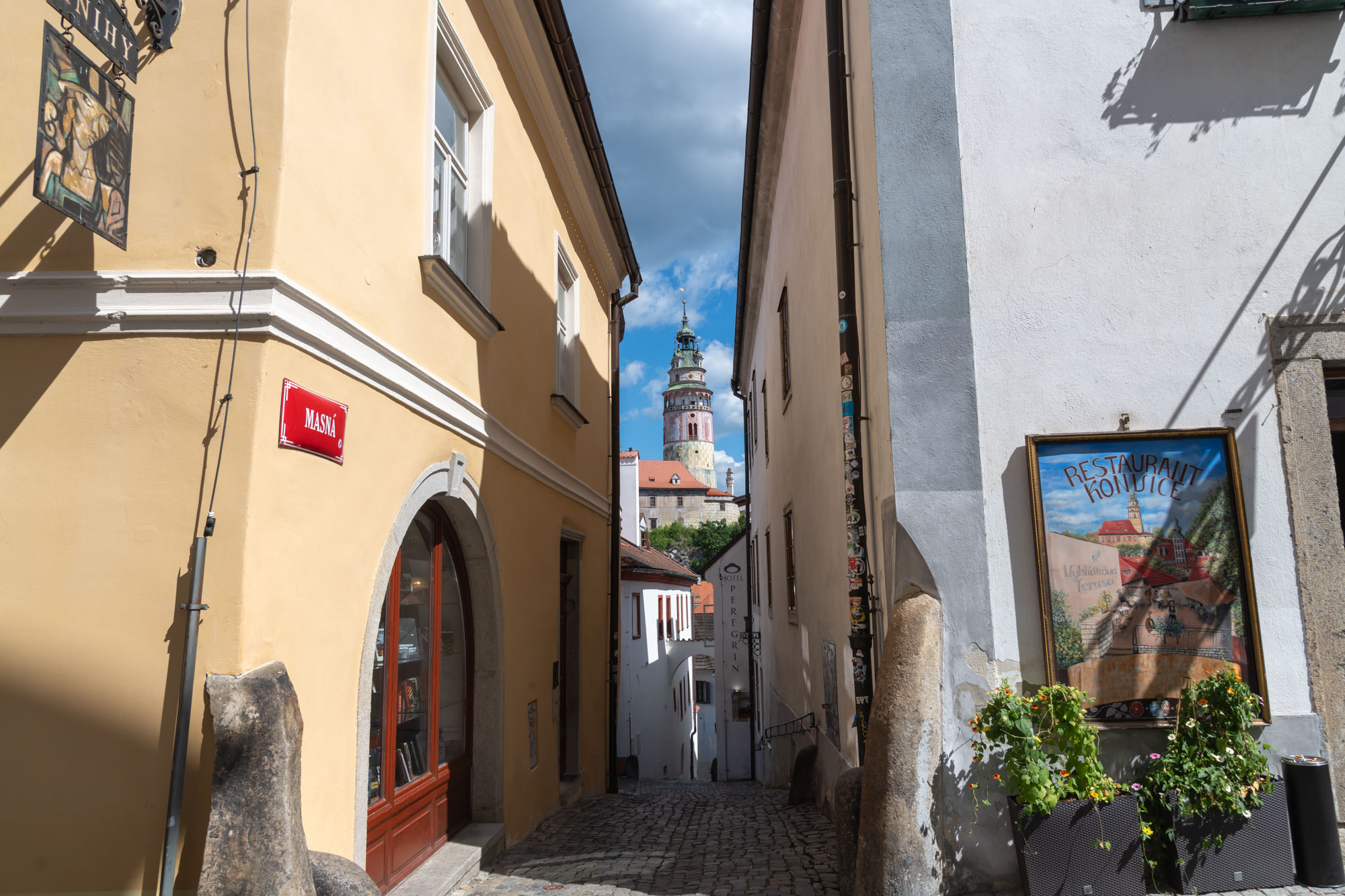
As you walk into the cobble stone paved old town of Český Krumlov, you get a view of the castle tower and from then on, you are in love with this little town!
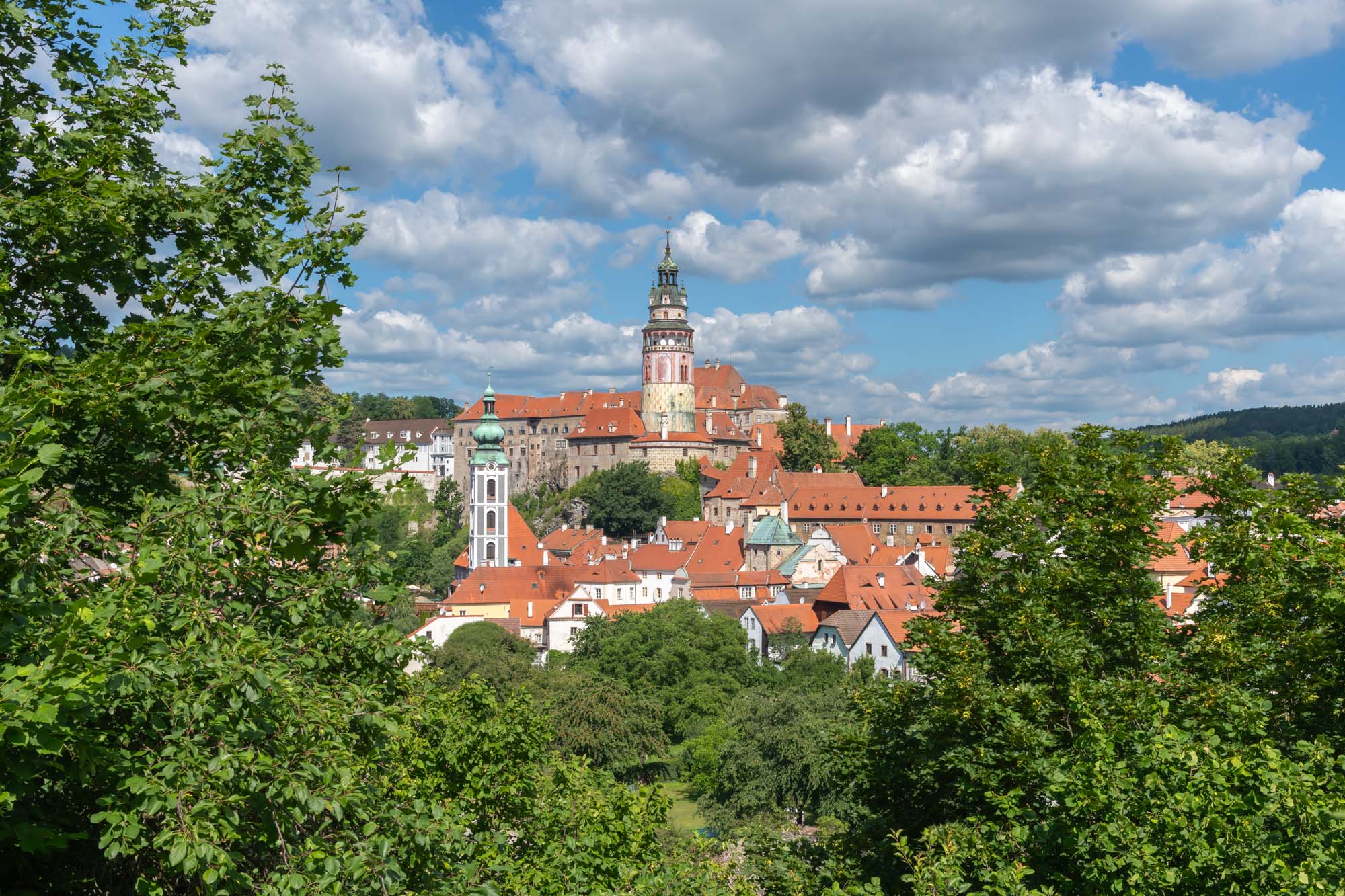
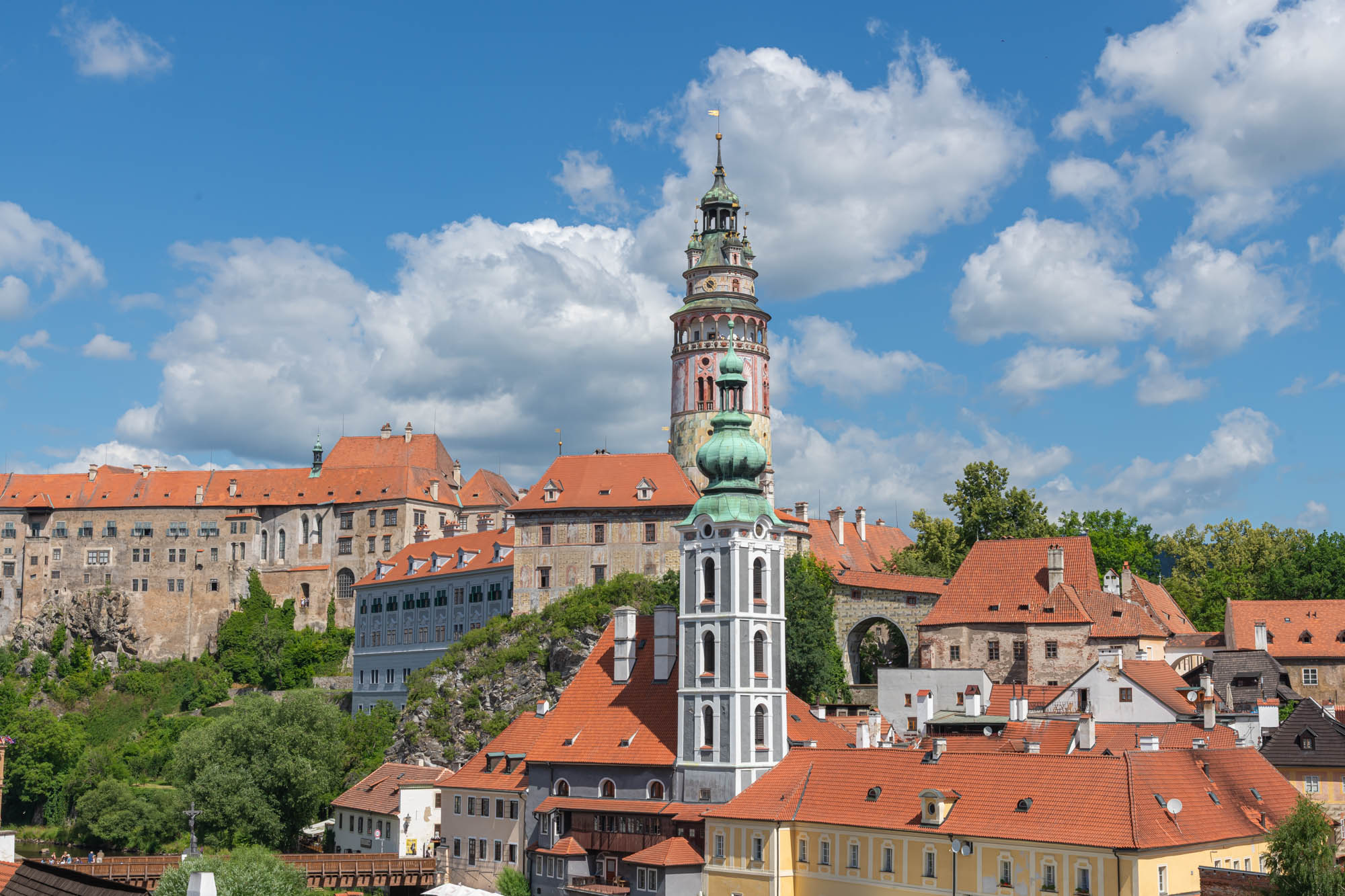
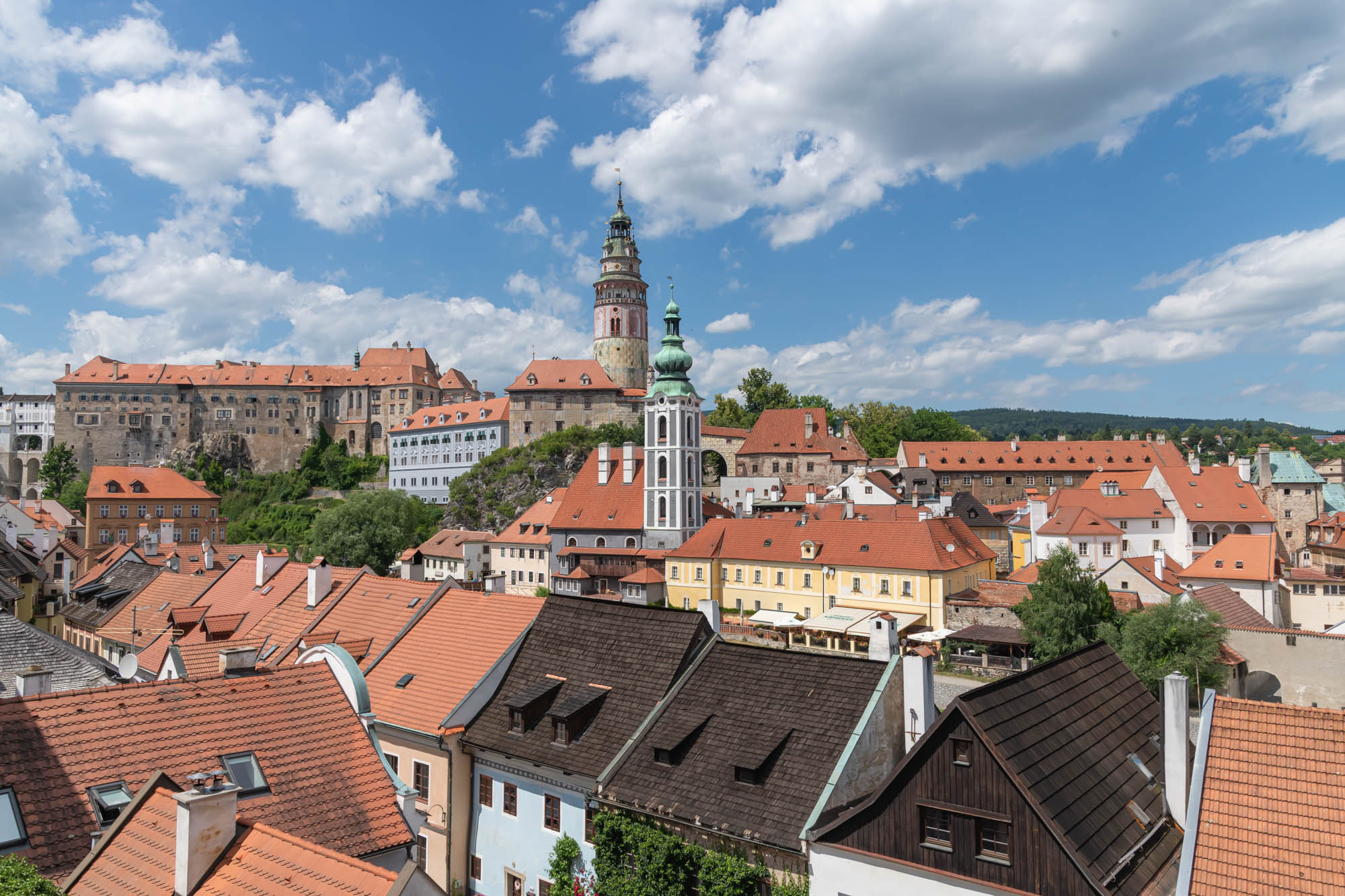
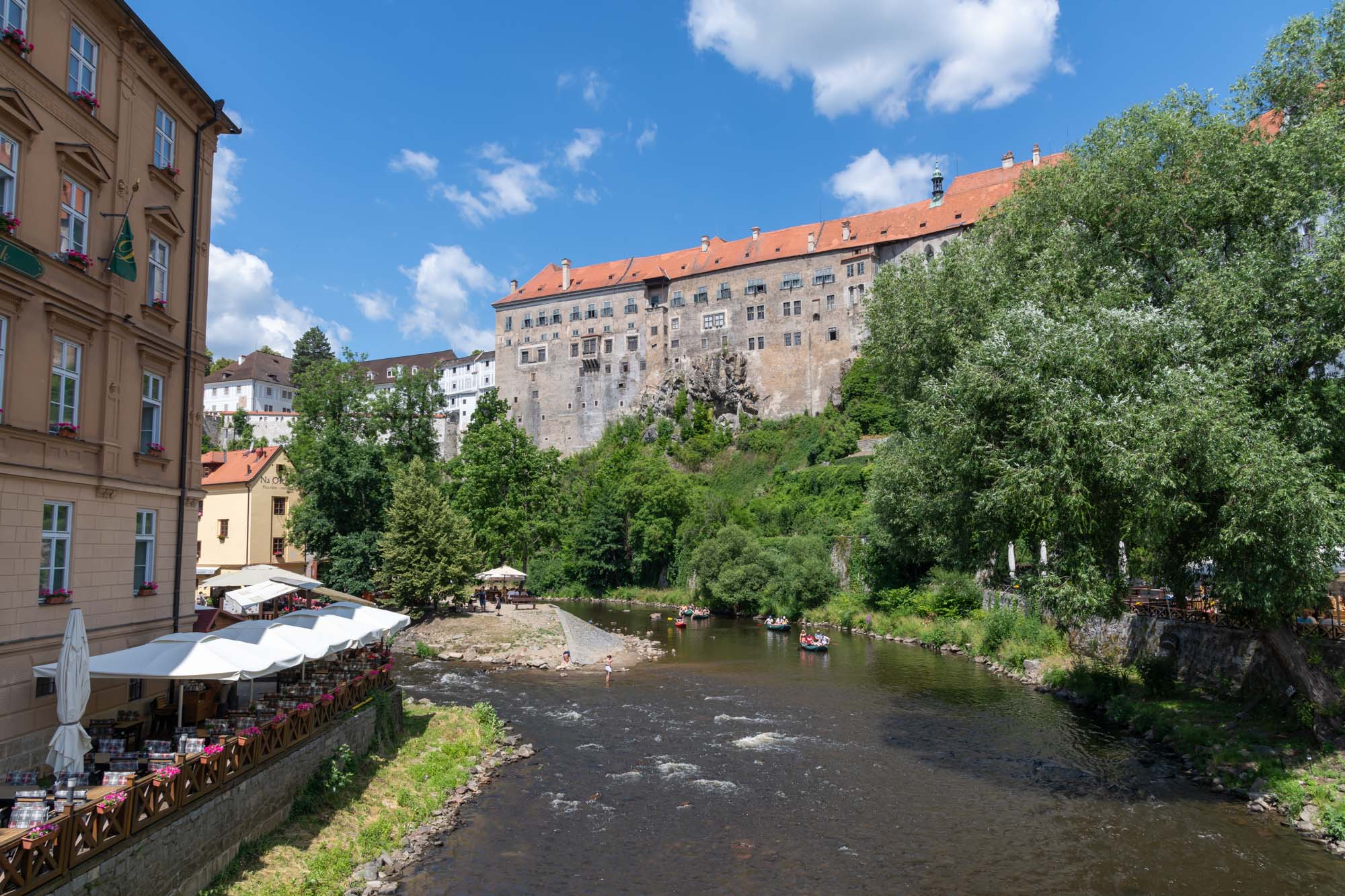
It is located on the banks of the Vlatava river, just like Prague is. Given its location by the river, this area has been permanently inhabited since the Older Stone Age and it seems the river was given its name by the Celtic settlers who were here in the 4th century BC. The castle was founded around 1250 AD by a local noble family called Vitkovci. There are records of the presence of Czech and German nationalities from that time on. In AD 1302, the Vitkovci family became extinct, and the castle was passed on to the Rosenberg family. They promoted trade (carp being a major export) and Český Krumlov was flourishing as gold was also found nearby. From 1719 to 1947, the castle was with the House of Schwarzenberg. In 1938, it was annexed by Nazi Germany and after the Second World War, it was part of the Communist Czecholsovakia. In 1992, after the Velvet Revolution, Czech Republic was born, and Český Krumlov is one of its crown jewels in the Bohemian region.
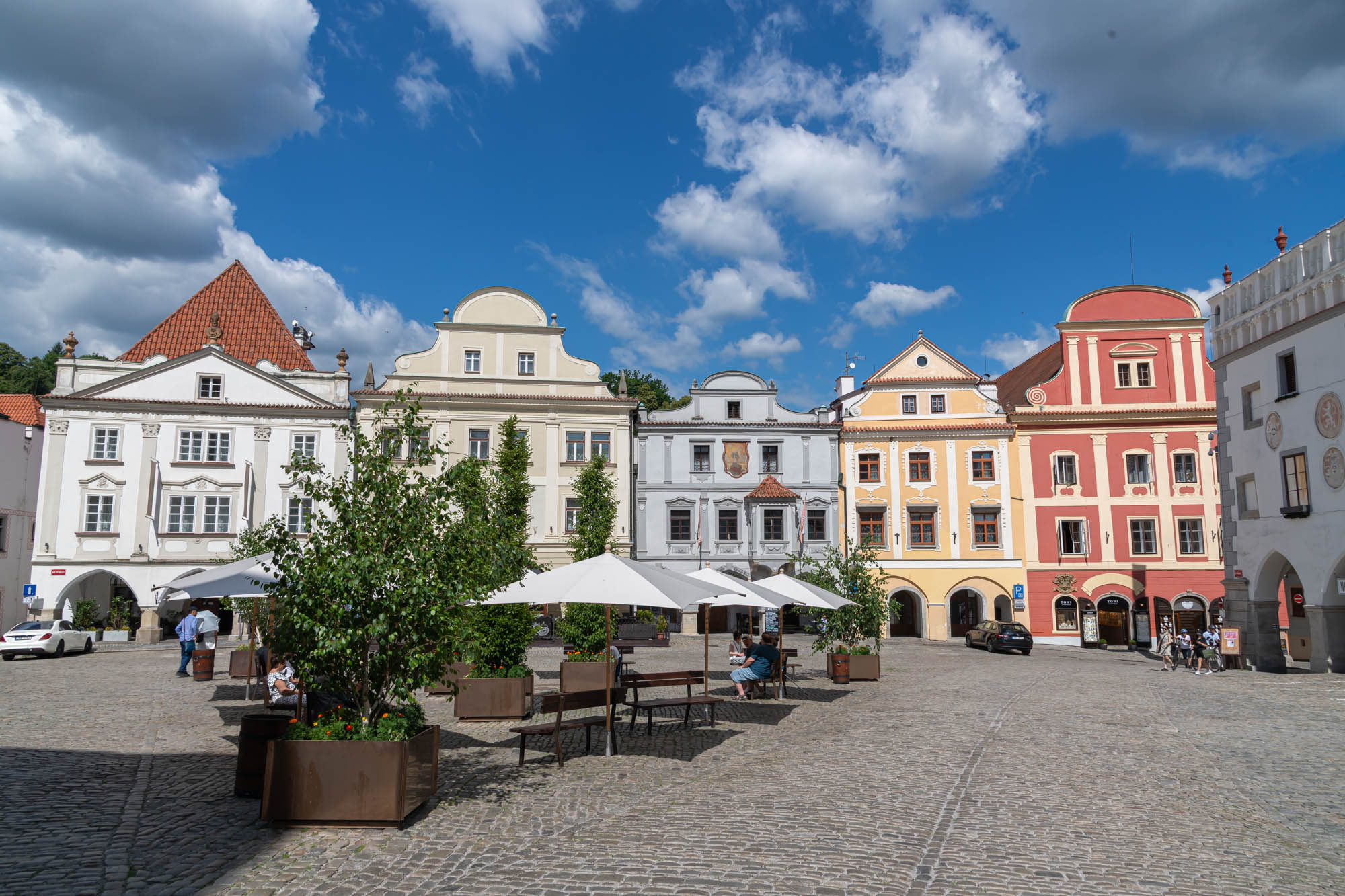
The entire old town area is paved with cobble stones and wonderful buildings line the street. The square is just amazing and when the light was proper, it was glowing!
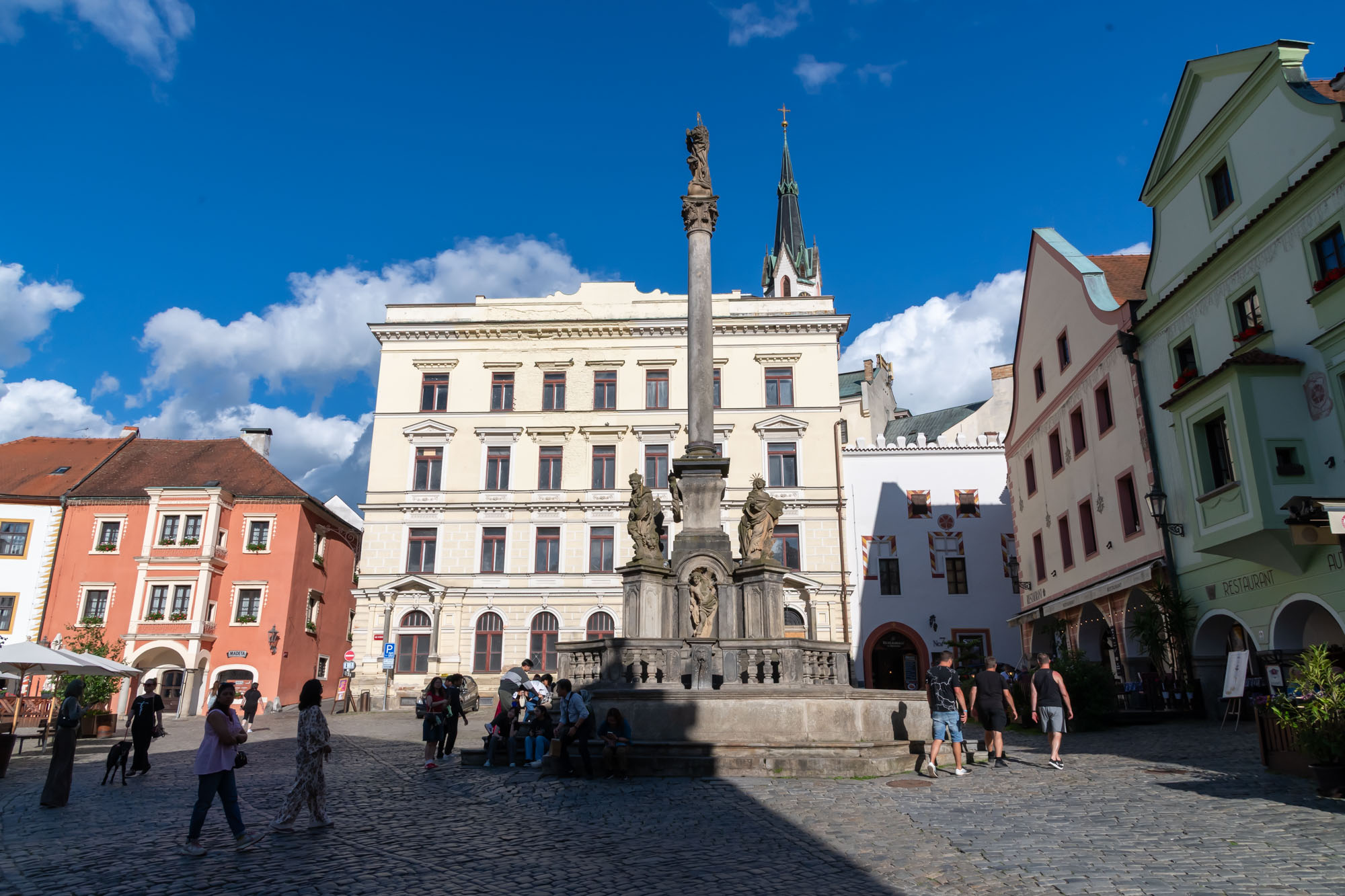
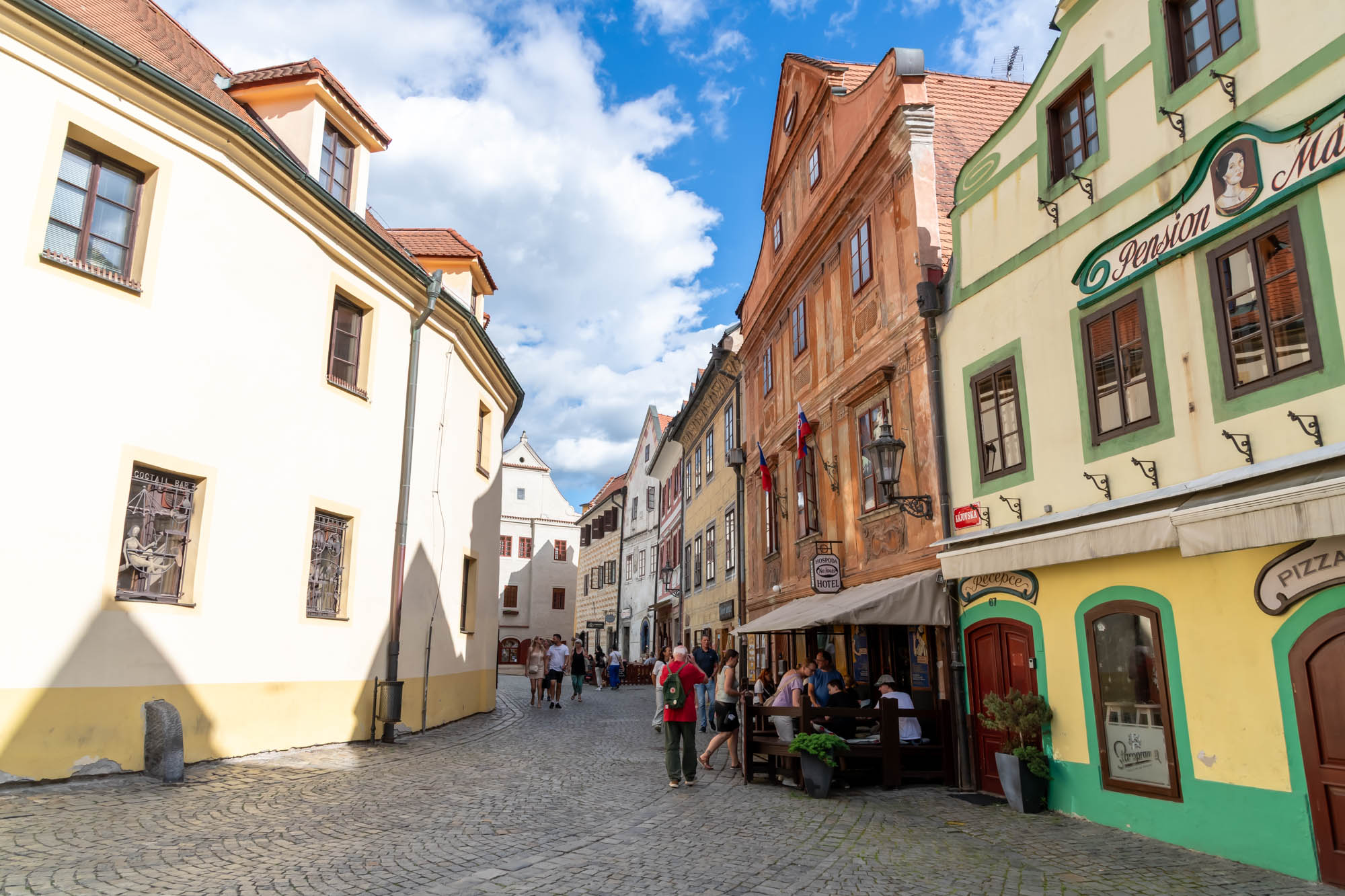
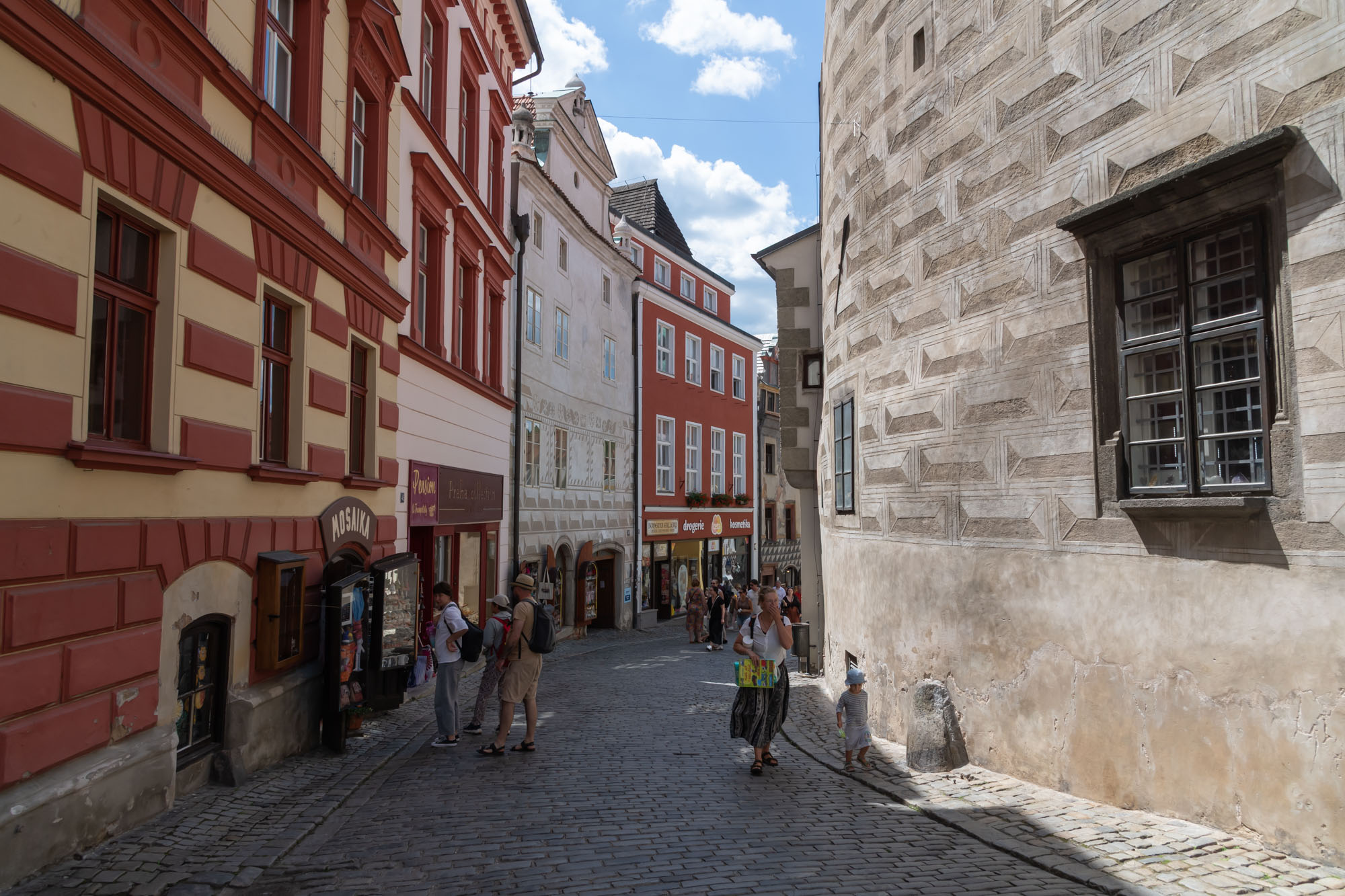
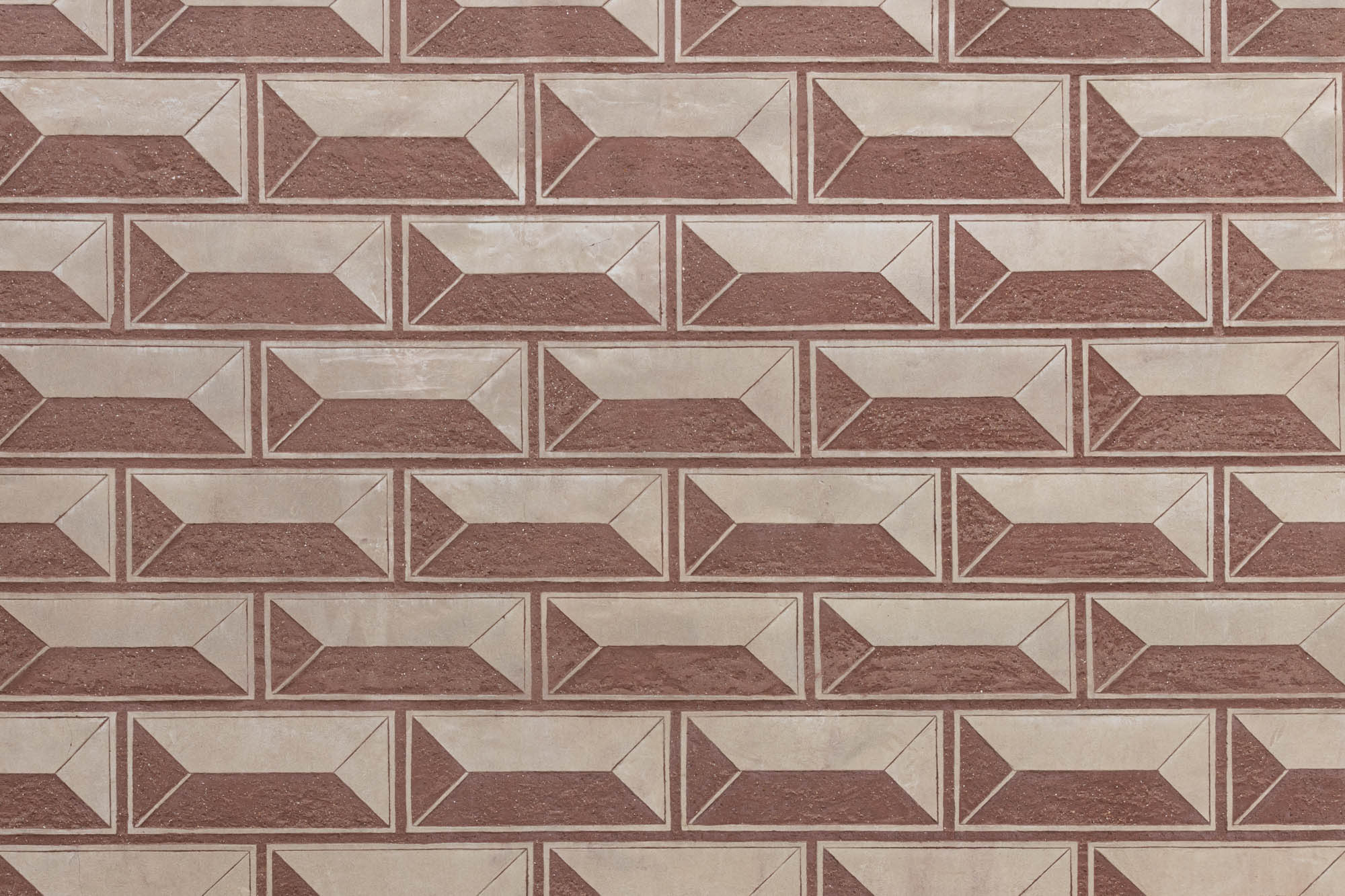
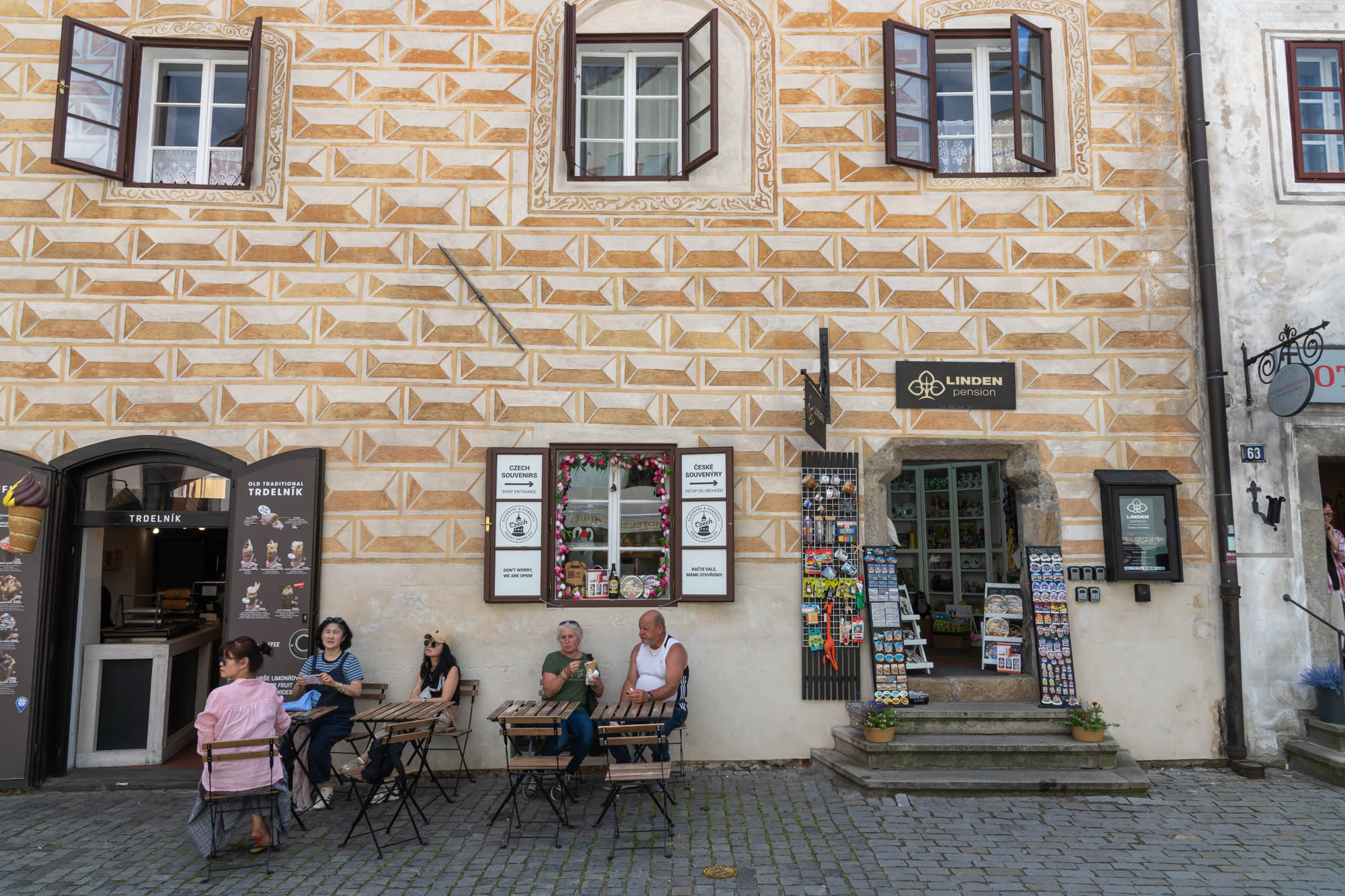
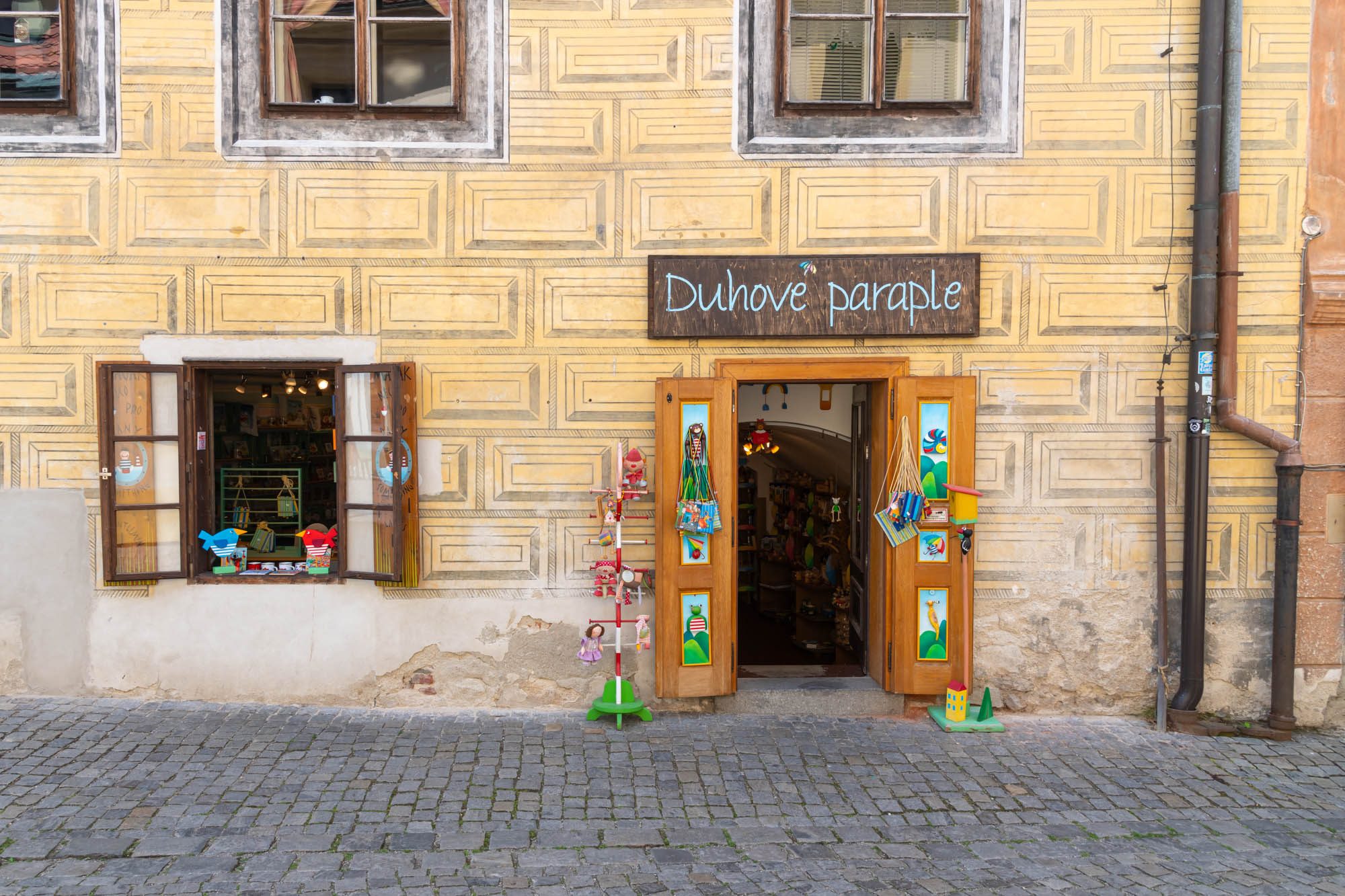
I had signed up for a walking tour and the guide explained that there are two styles of architecture (or more precisely, wall décor) used in the buildings in town. One is called the “sgraffiti” in which two layers are plastered on to the wall and then parts of the top layer are scratched off to make a design. This was a labour intensive and thus expensive affair. I could see this style in numerous buildings across town.
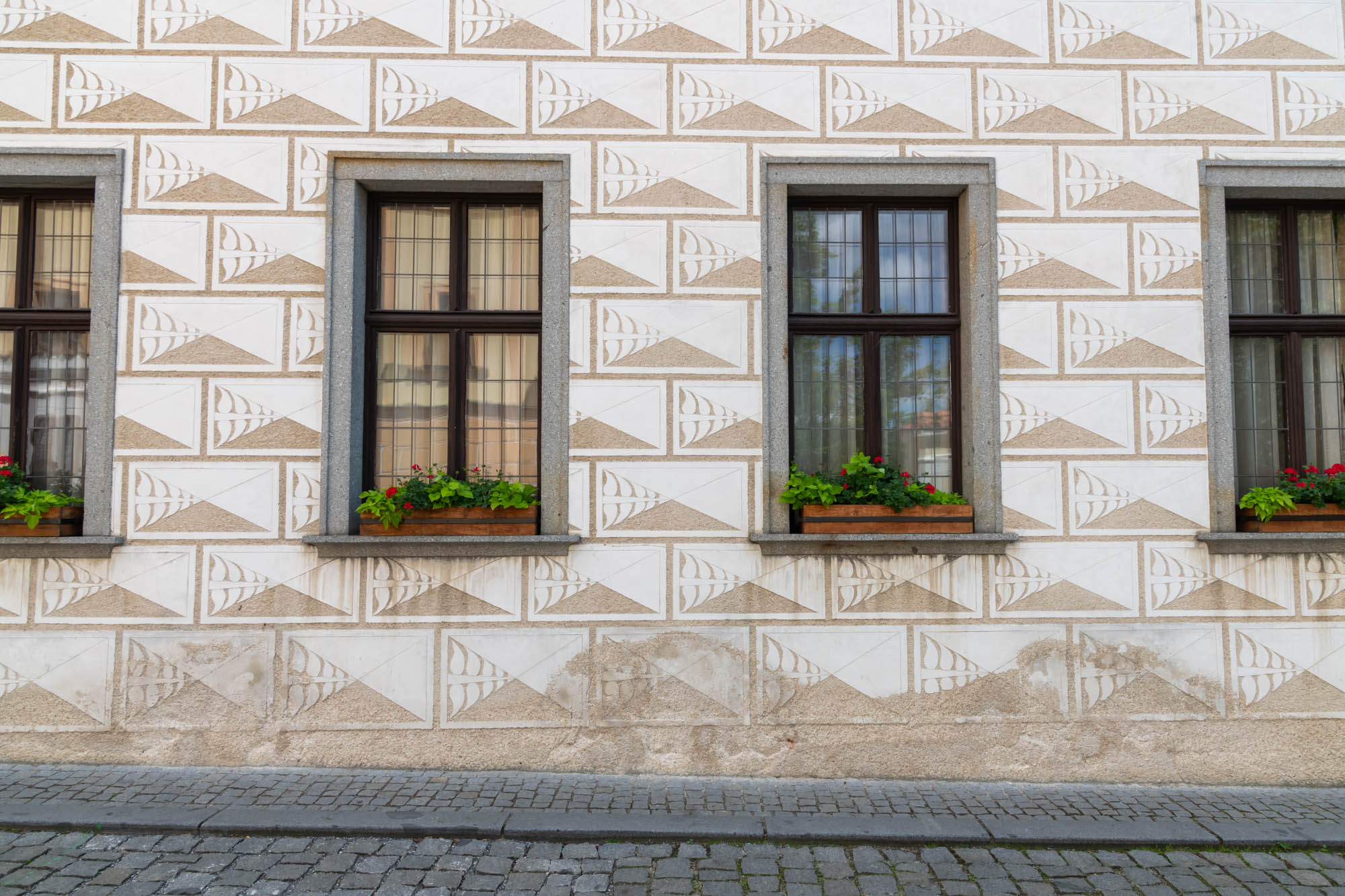
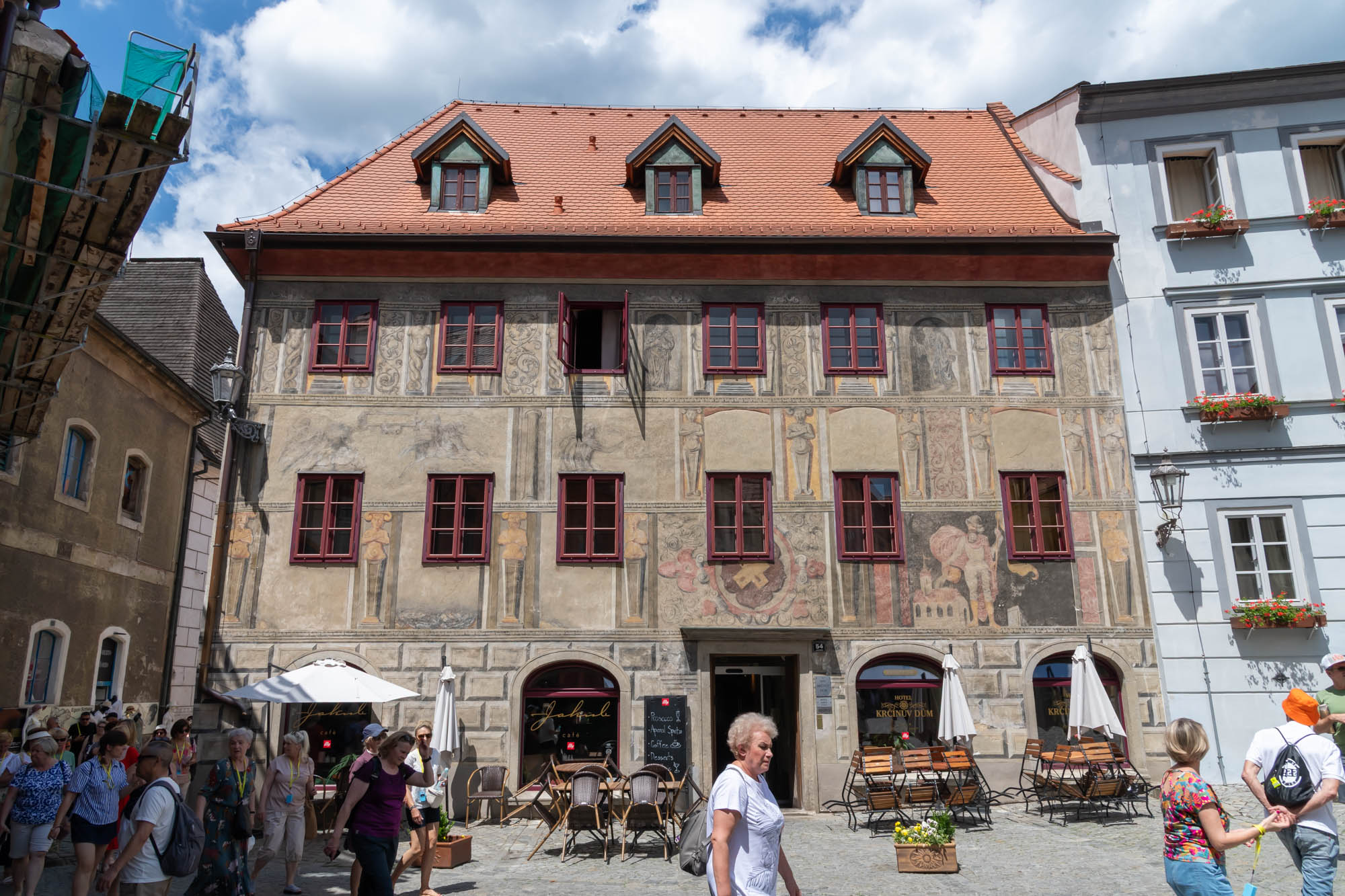
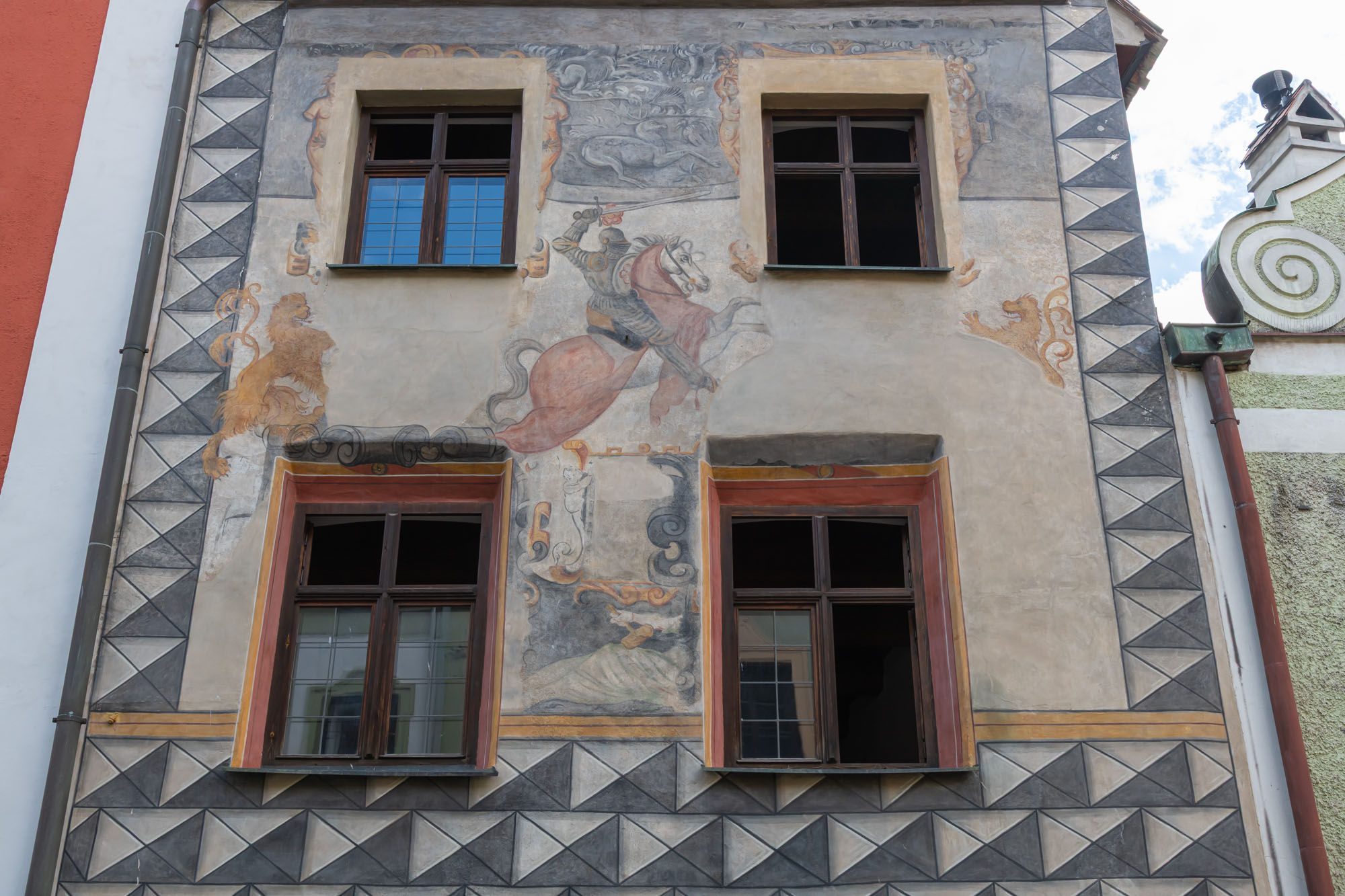
The other style is called “fresco” wherein the paint is applied while the plaster is still wet so that the colours penetrate the plaster and become permanent. An example of this is given below.
The St. Vitus Church in Český Krumlov dates back to the 14th century though the present building is from the 15th century. Since it stands on a narrow street, I could not get a proper picture of it.
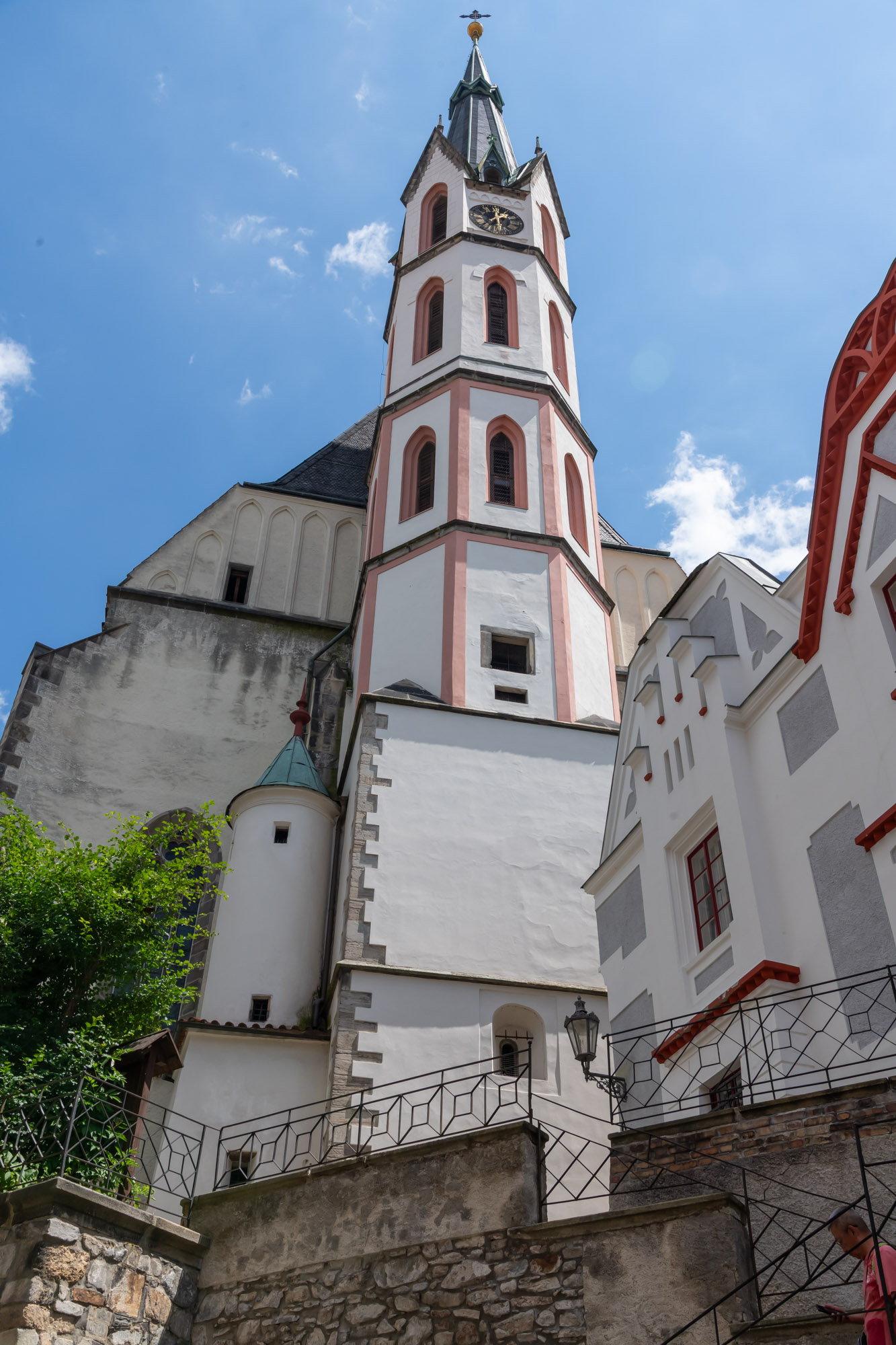
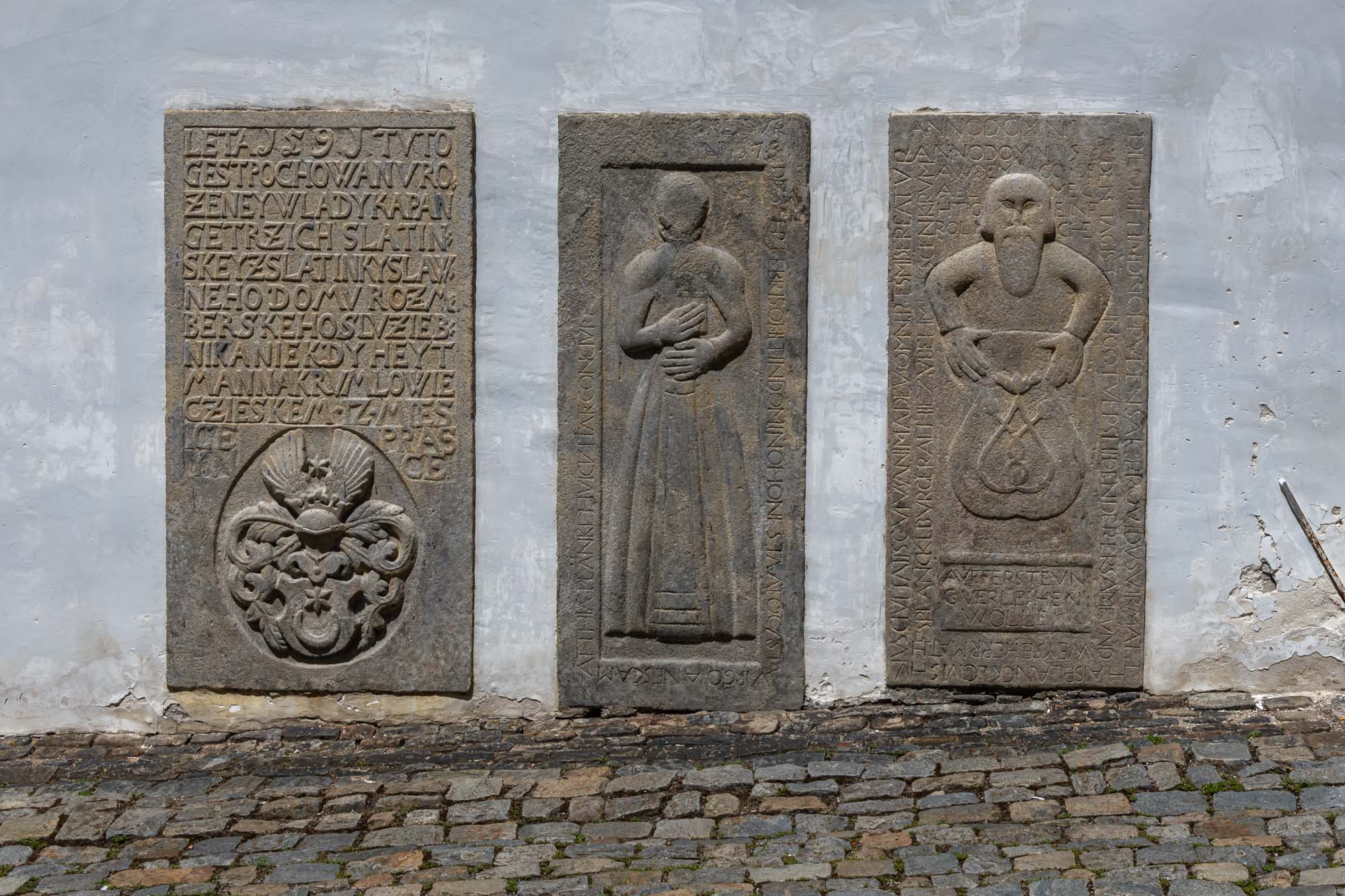
The guide told us an interesting story about the church. Supposedly, the church was built on a location where a baker lived with his family, and he was not willing to give up his house for the church. After much negotiation, he agreed, under the condition that a mass be said every week for him and his wife, after their death. The priest did this religiously after the baker died but the new priest that came when the old priest died, wasn’t aware of the contract and didn’t continue this mass for the baker and his wife. The baker’s ghost was none too impressed with this breach of contract and started causing all sorts of troubles. This caused the priest to conduct some research into old documents, and the contract was unearthed. He restarted the mass and lo and behold, the ghost was pleased, and all was back to normal. For good measure, a tablet of the baker and his wife was also erected near the church.
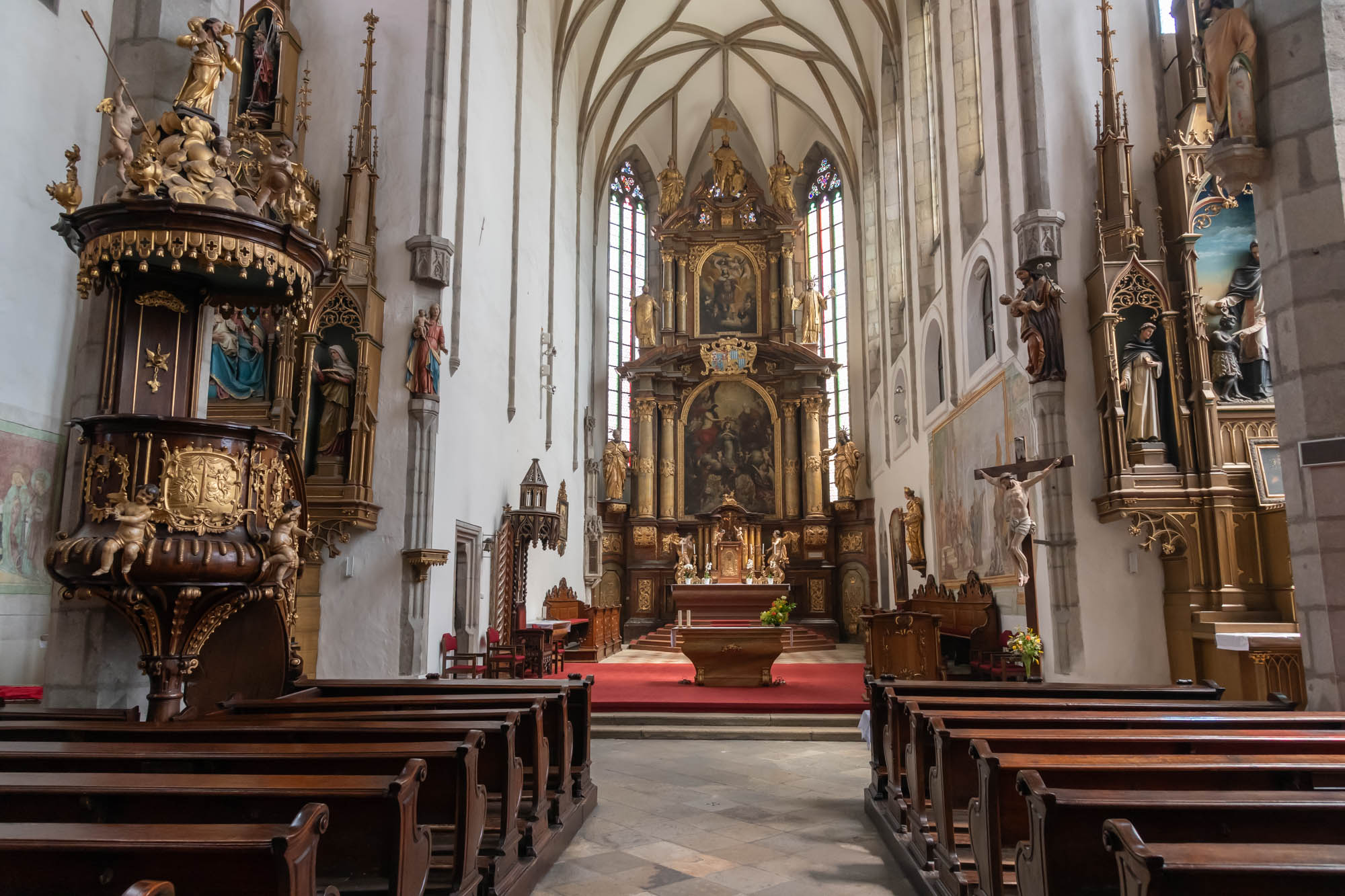
The interior of the church is quite simple and you can see a fresco there which dates back to the 15th century.

The guide pointed out that in the image, the cross was more like a “T” and not a real cross. Someone from the group asked her as to why that is so, and she said that she believes the whole idea of the cross was something invented by the Christians much later. Czech Republic is not very religious, and the guide seems to be a representative sample indeed. I mentioned to her privately that in Kerala we have images of the cross from 6th or 7th century.
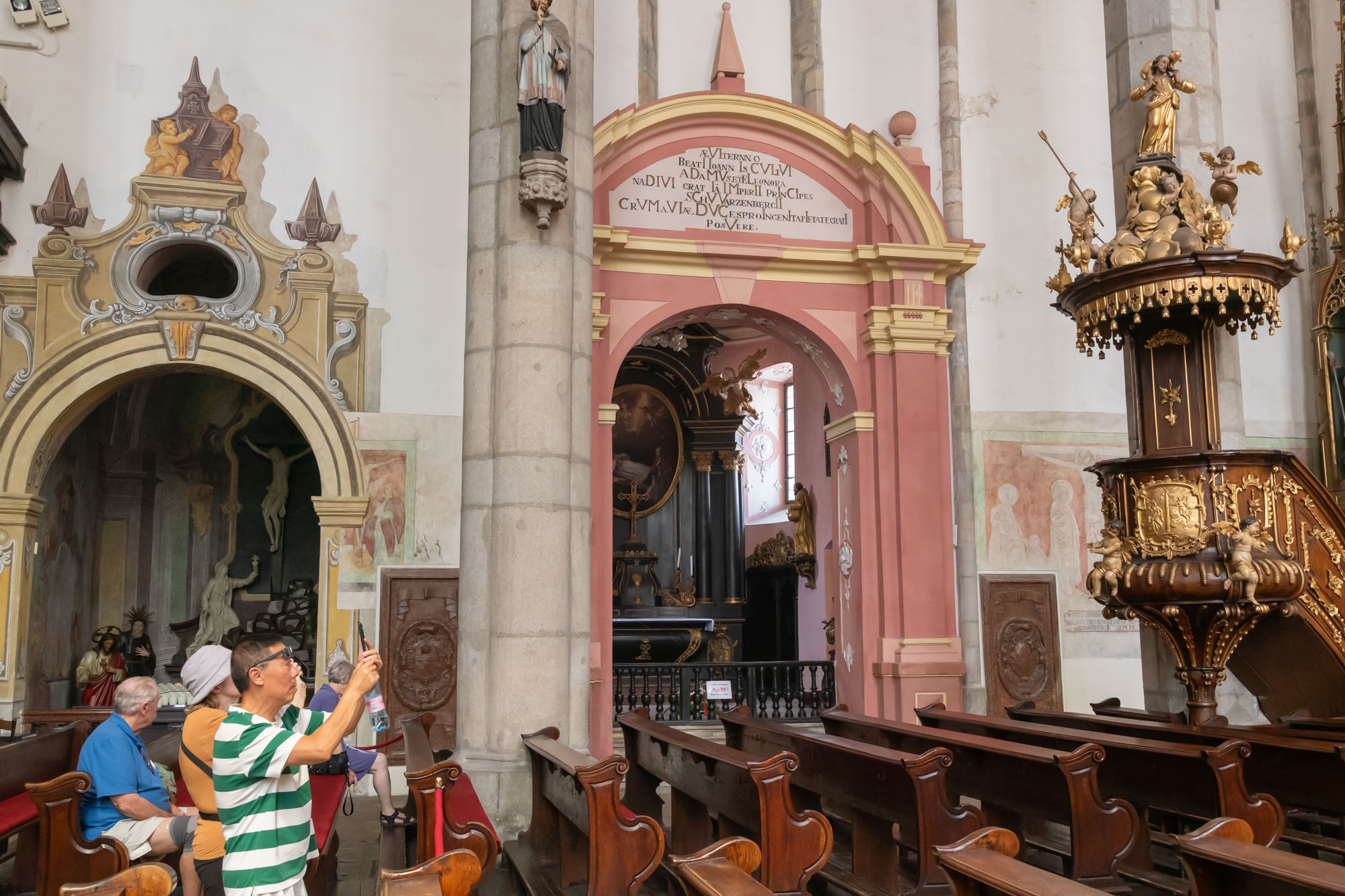
Inside the church there are a couple of chapels, and the guide told us that the Schwarzenberg family had a practice of extracting the hearts when someone from the family died and then burying the heart in the pink-coloured chapel. The guide also told us that the only body buried in the chapel was that of the “Vampire Princess” of the Schwarzenberg family – Eleonora von Schwarzenberg. It seems she used to keep wolves in the castle with her, as she thought wolf milk would help her to get pregnant. These wolves used to howl at night, and the locals connected this to her being a vampire. To top it all, when she died and they did an autopsy on her body they found that she was pregnant with a “vampire” child. The guide said that this was basically a tumour and since people weren’t familiar with such things at that time, they thought it was a vampire child. Her heart was also buried in the chapel and in addition, the body was also buried in the same chapel “deep under heavy stones” so that the vampire would not come out!
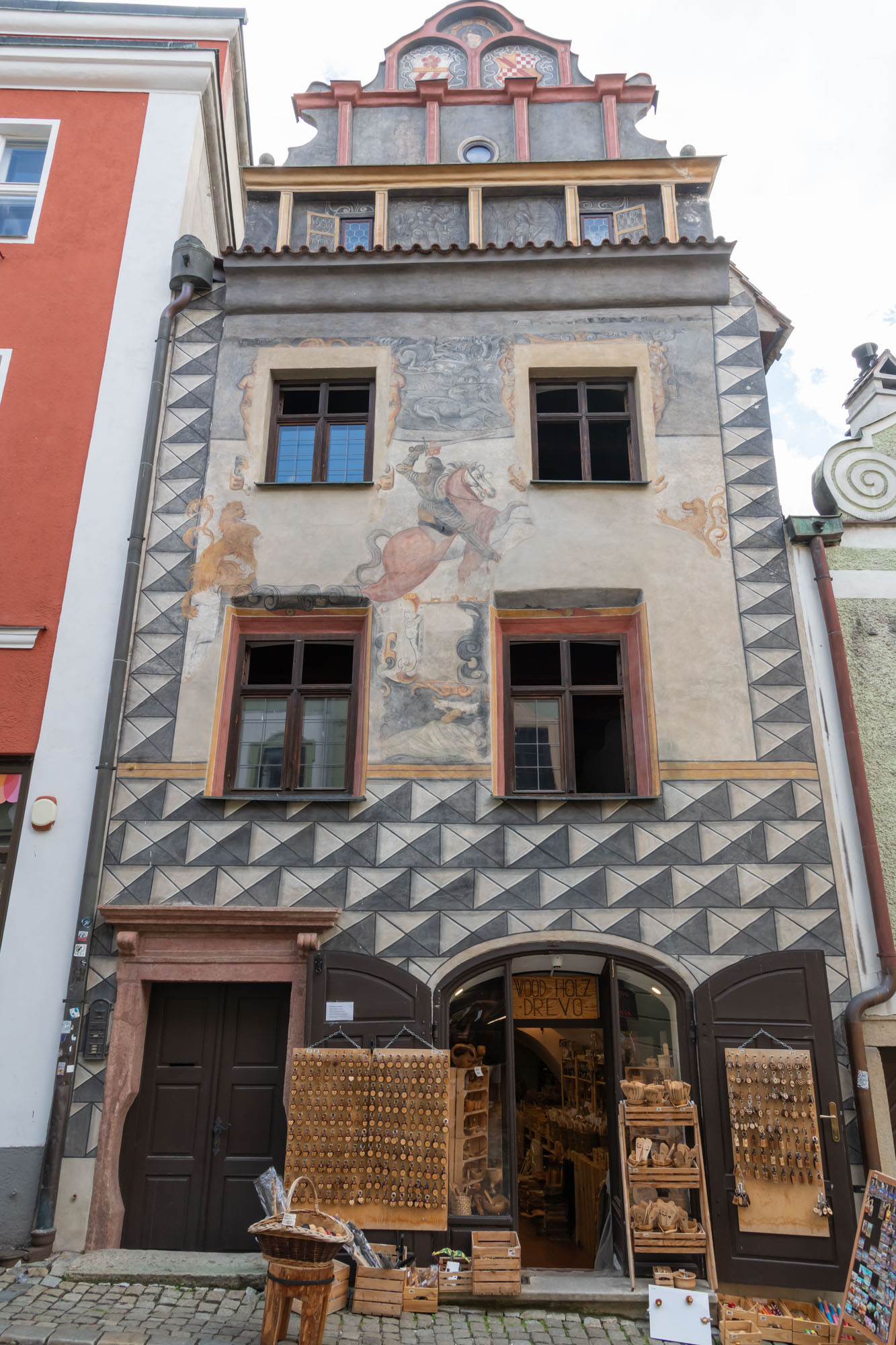
The whole town was rebuilt in the Renaissance style in the 16th Century by one of the most prominent members of the Rosenberg family – William. He was very much in love with Renaissance and everything connected with it. It seems he also brought a trumpet player from Italy and the trumpet player has been reproduced on the wall of one of the buildings in town.

William was very influential, and he married four times but remained childless. For his third marriage to Anna Maria of Baden, he invited guests from all over Europe. They were so many that all could not be accommodated at the castle, big as it was. Hence, some houses nearby were used to accommodate some guests, and these houses were painted afresh. One such original fresco is surviving even now. During the Communist times, there was no attention paid to maintaining these heritage sites and often they were painted grey. You can see that some parts of the fresco have been damaged beyond repair.
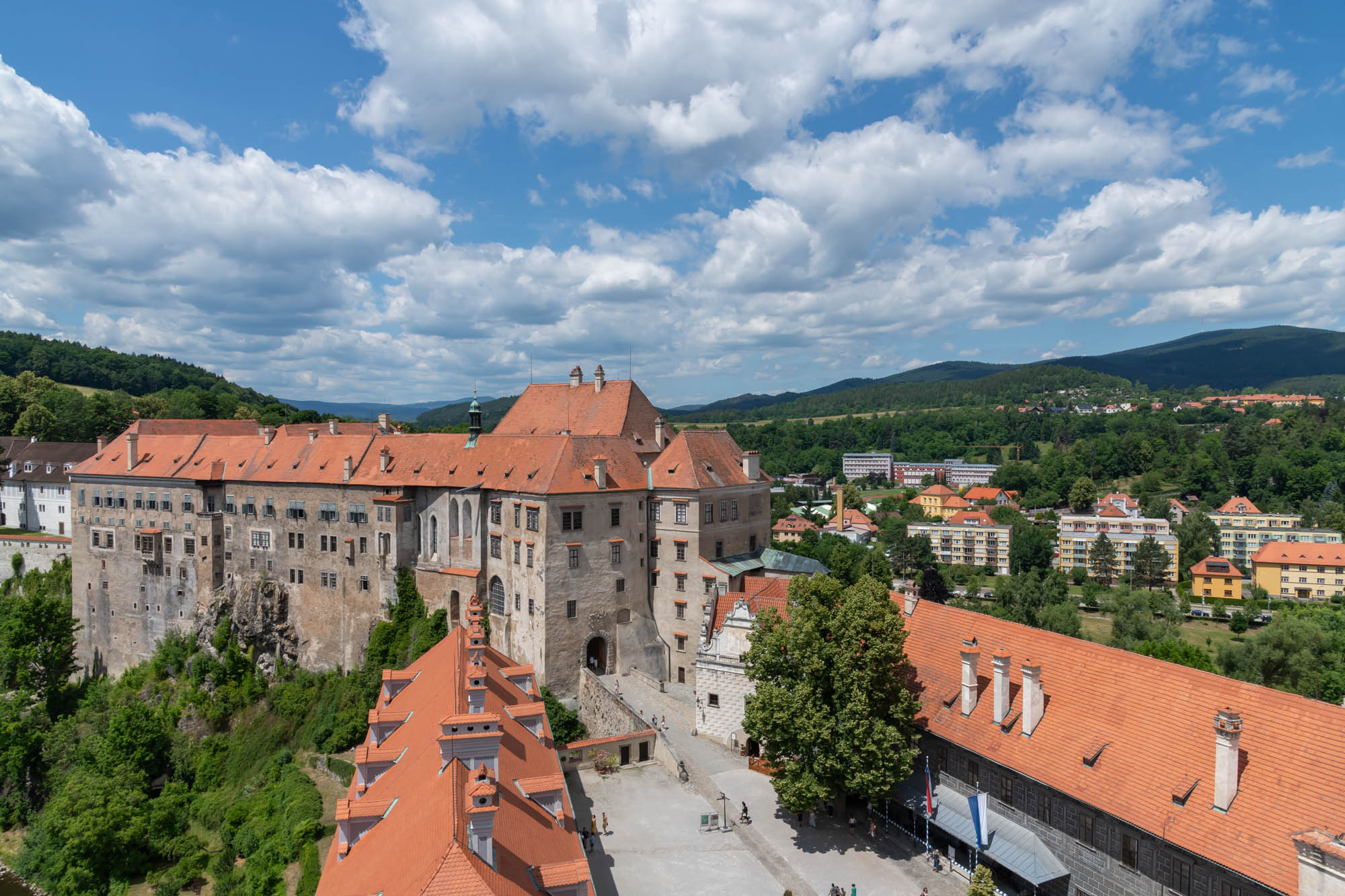
The castle stands on a small hill (as it the case with most medieval castles) and it is so big that the family that owned it at the end found it too expensive to maintain or modernize. So, they built a smaller palace a few kilometres away and settled there, at the beginning of the twentieth century.
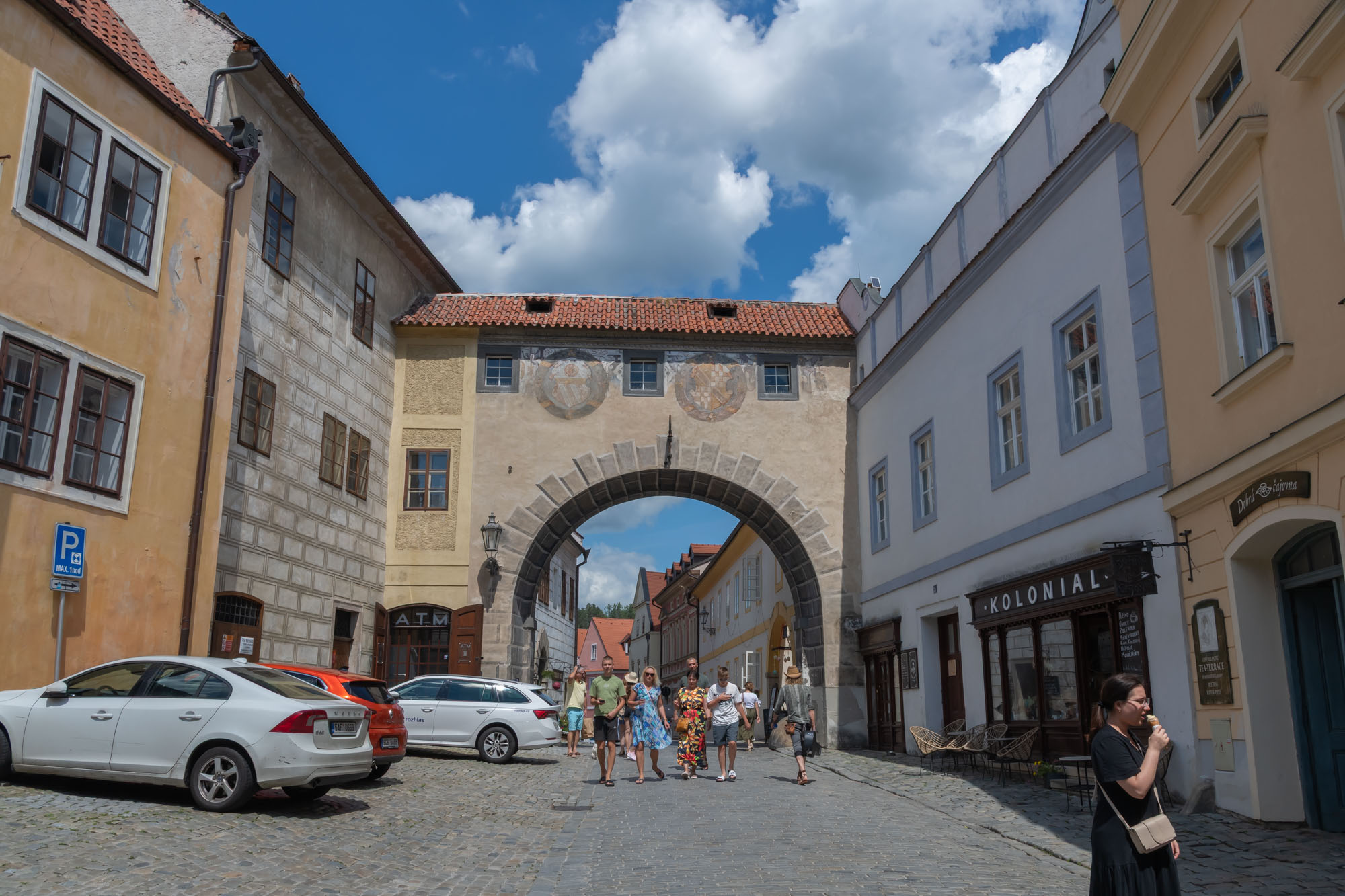
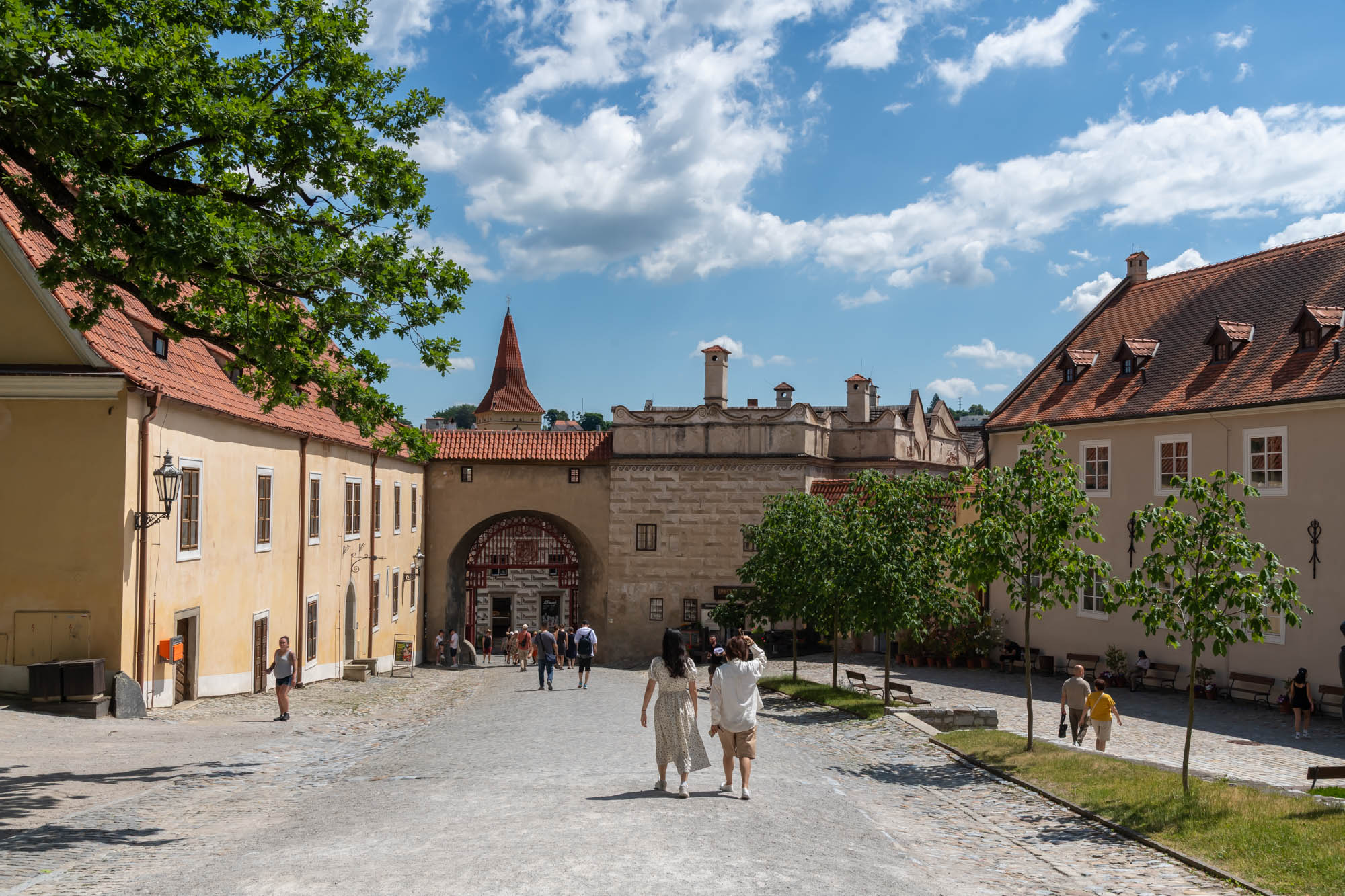
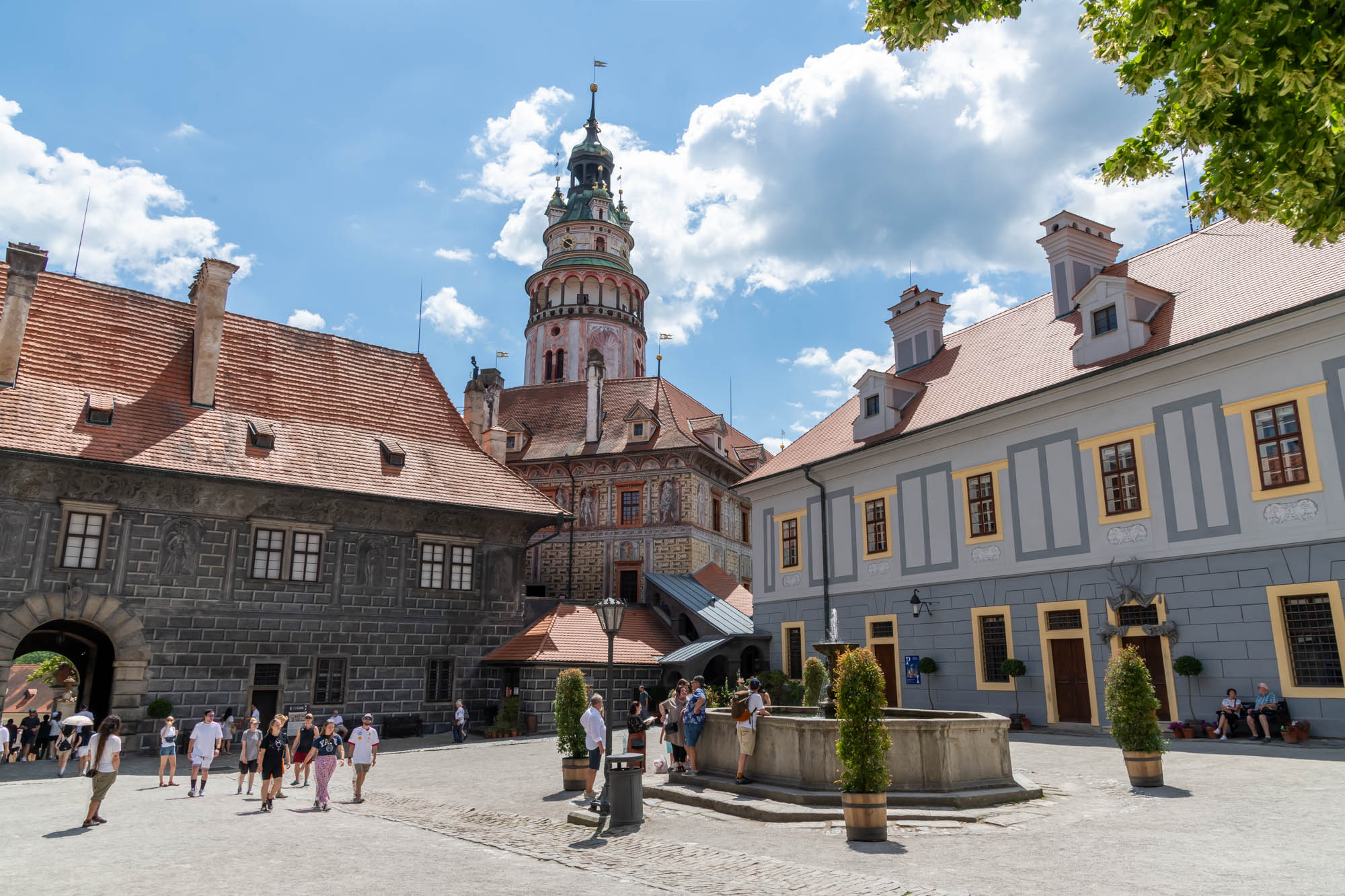

You can see that the walls are just painted normally as the family didn’t have the money to have it done in the sgraffiti style, according to the guide.
It seems there is a Baroque theatre inside the castle, but I couldn’t see it as you can visit it only as part of a tour and the timings didn’t suit me. This is one of the only surviving Baroque theatres in Europe, where plays are still conducted. There is a very nice sundial on one of the walls of the castle.

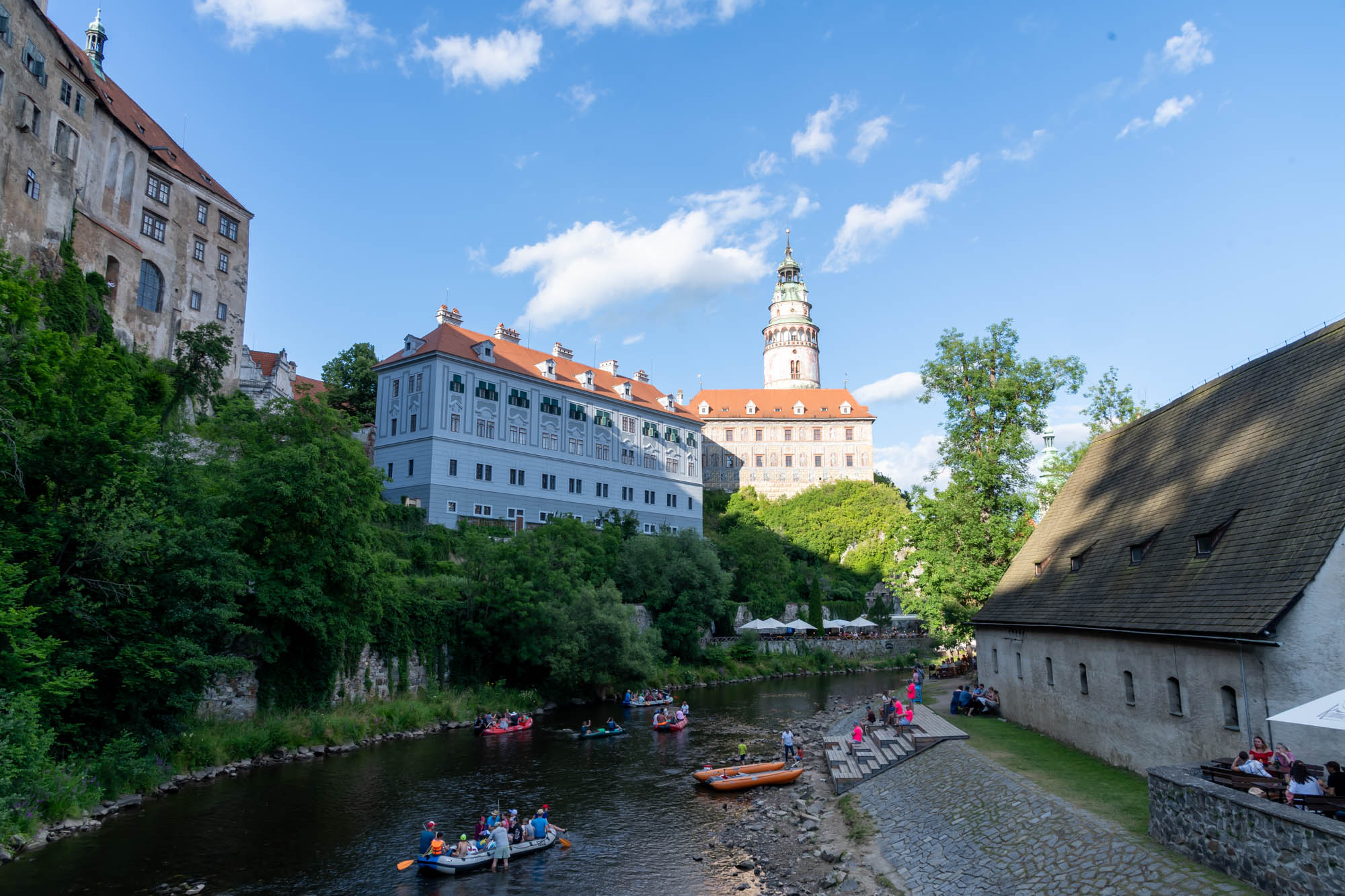
The views of the old town from the castle are quite stunning.
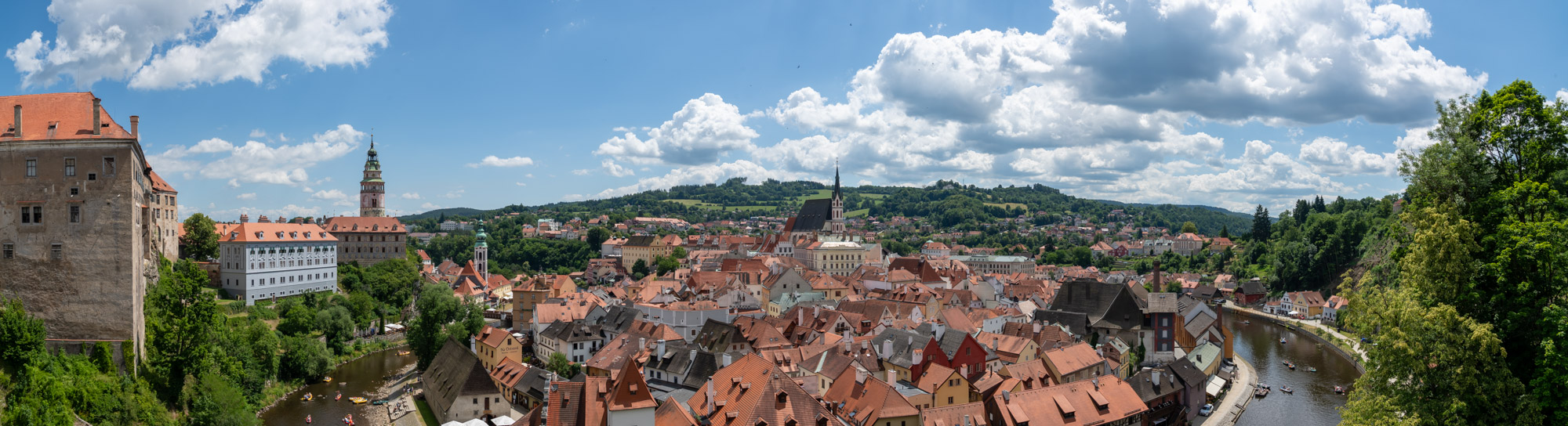
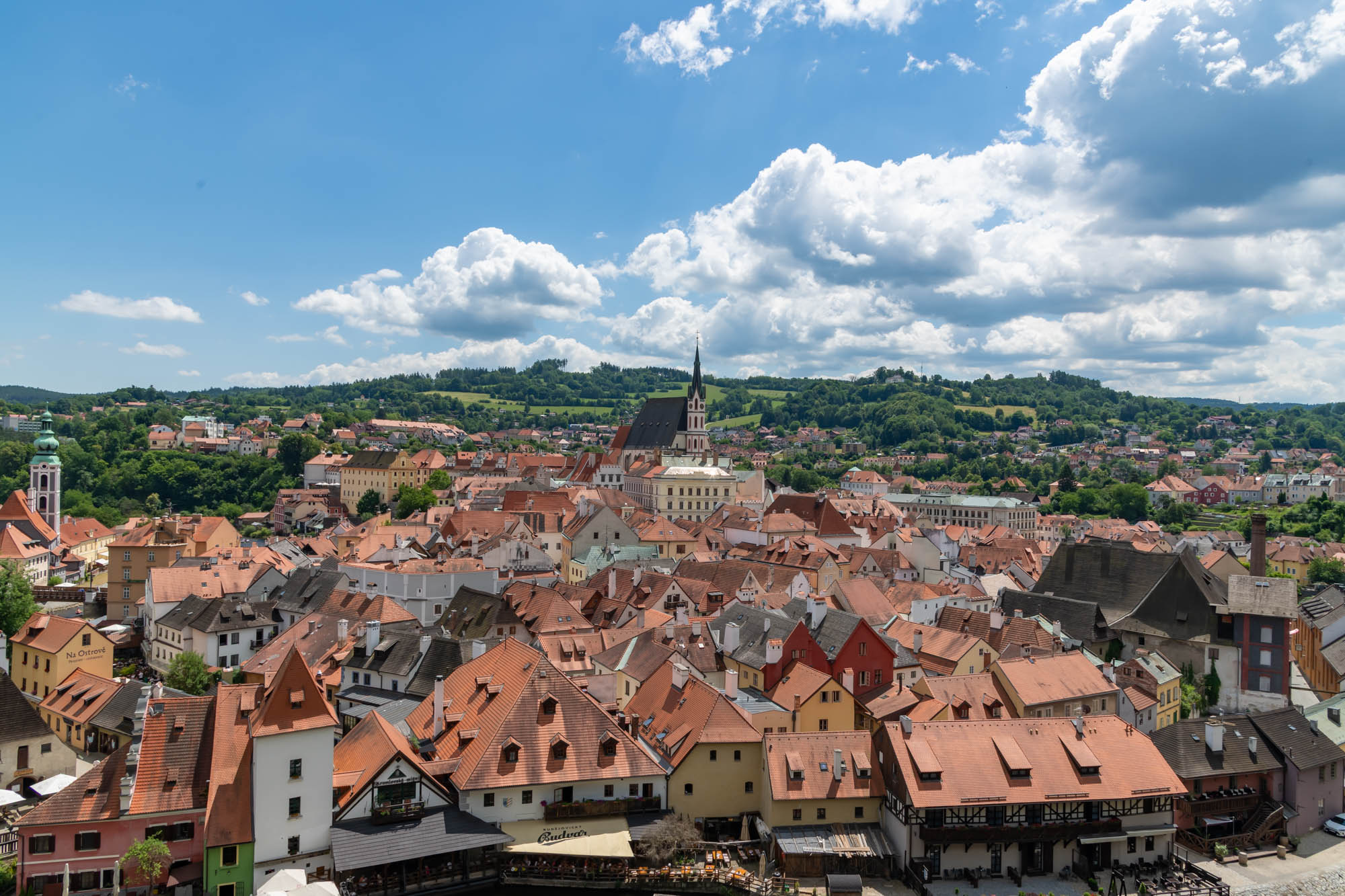
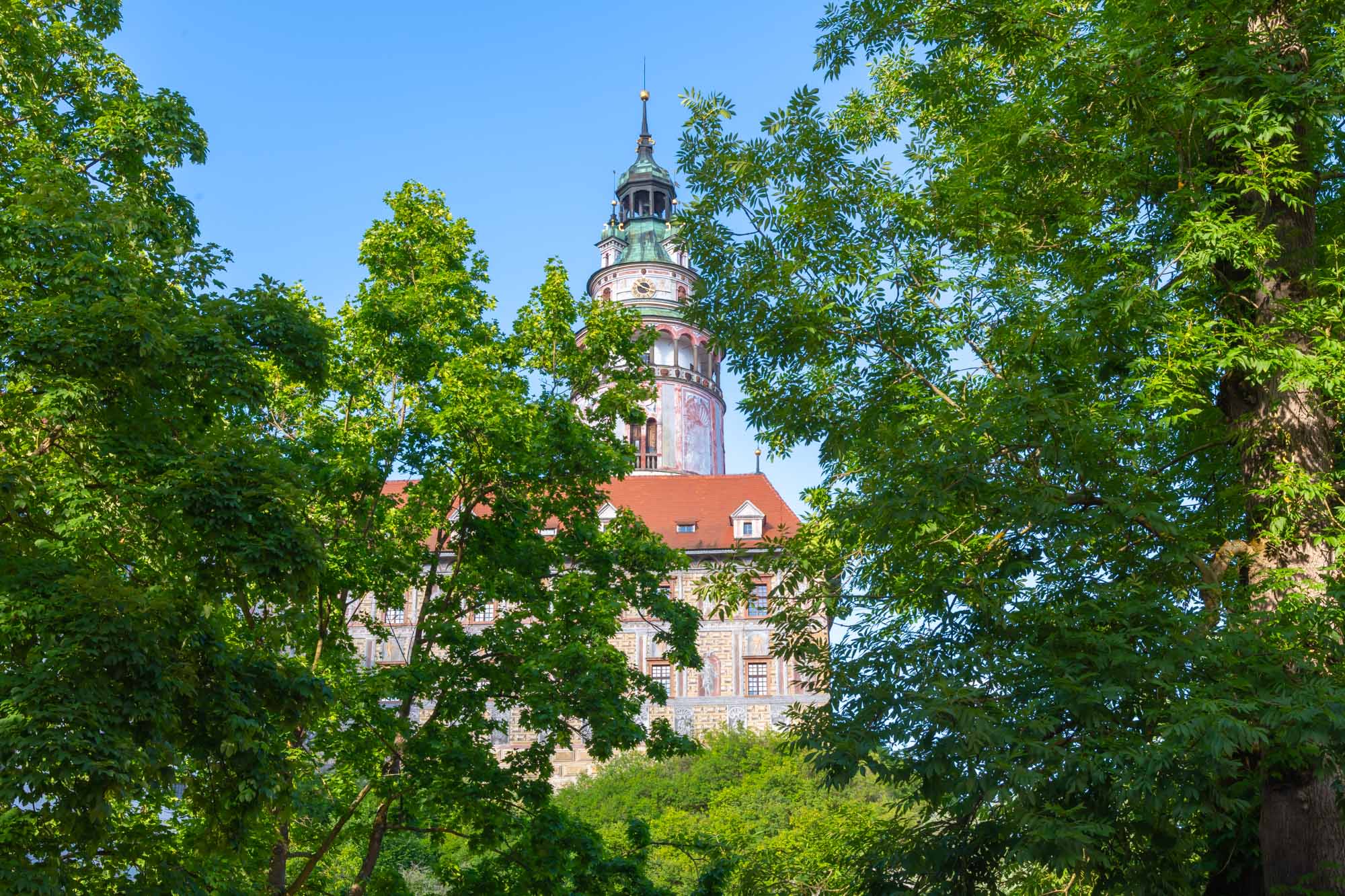
There is a tower in the castle, which provides some great views of the castle itself.

As mentioned, Český Krumlov lost its sheen during the Communist times and the buildings were not maintained properly. After the gold mines ran out, graphite was discovered, and pencil factories were functioning in the area (they still are). After the formation of Czech Republic in 1992, UNESCO stepped in to help revive the buildings and the town became a very popular tourist destination and tourism provides sustenance for the town now. However, it also seems to have brought its own tension between locals and the effects of tourism. I could sense a level of bitterness in the comments of our guide, who said it is impossible for locals to live in Český Krumlov now, as everything has become more expensive because of tourism and UNESCO has so many stipulations that they cannot make even very minor modifications to their houses to make them more comfortable. I have seen such tension in other places as well and tourism often has a very disastrous effect on locals, while it also helps their economy – the balance is very fine and difficult.
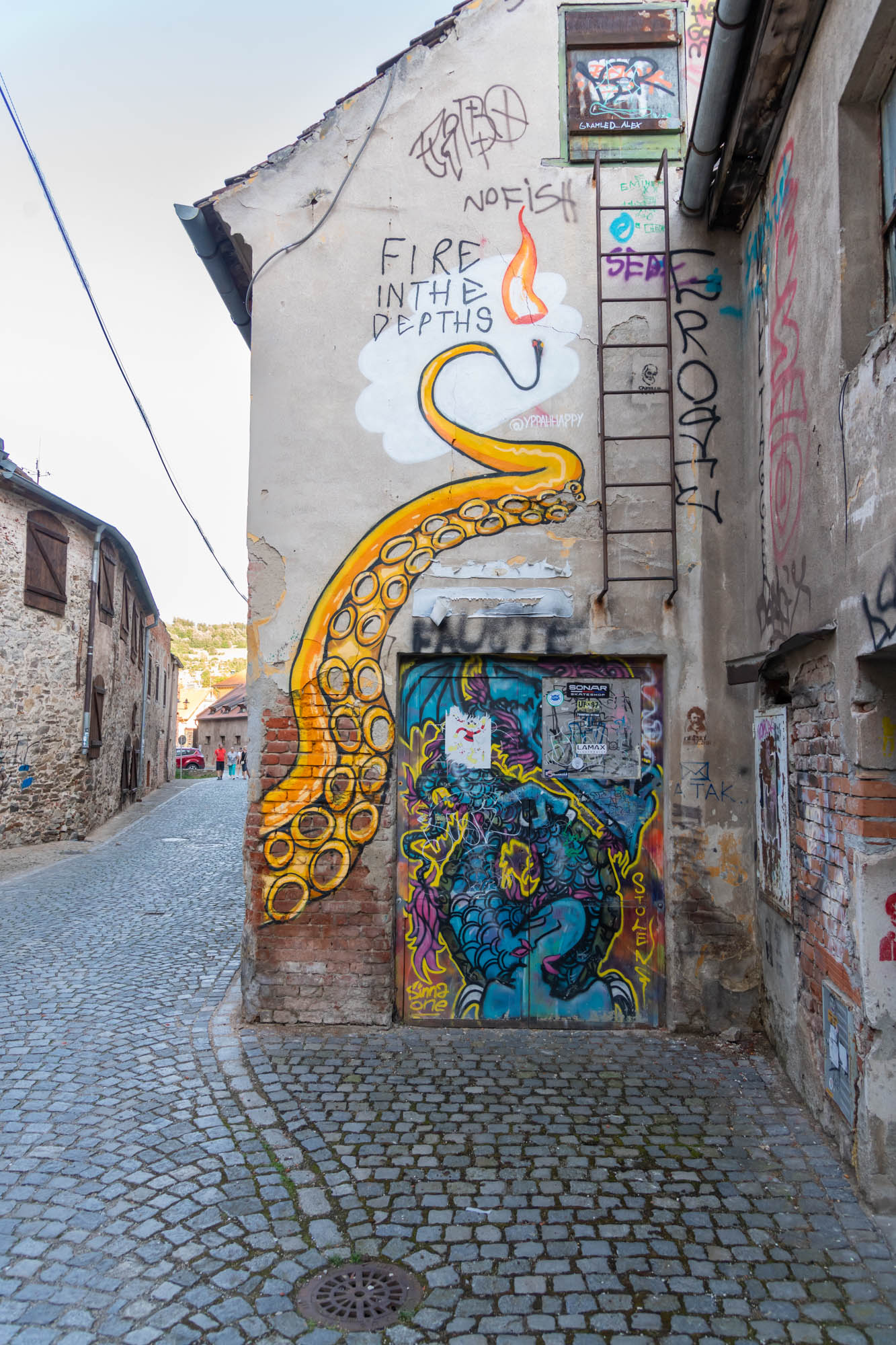
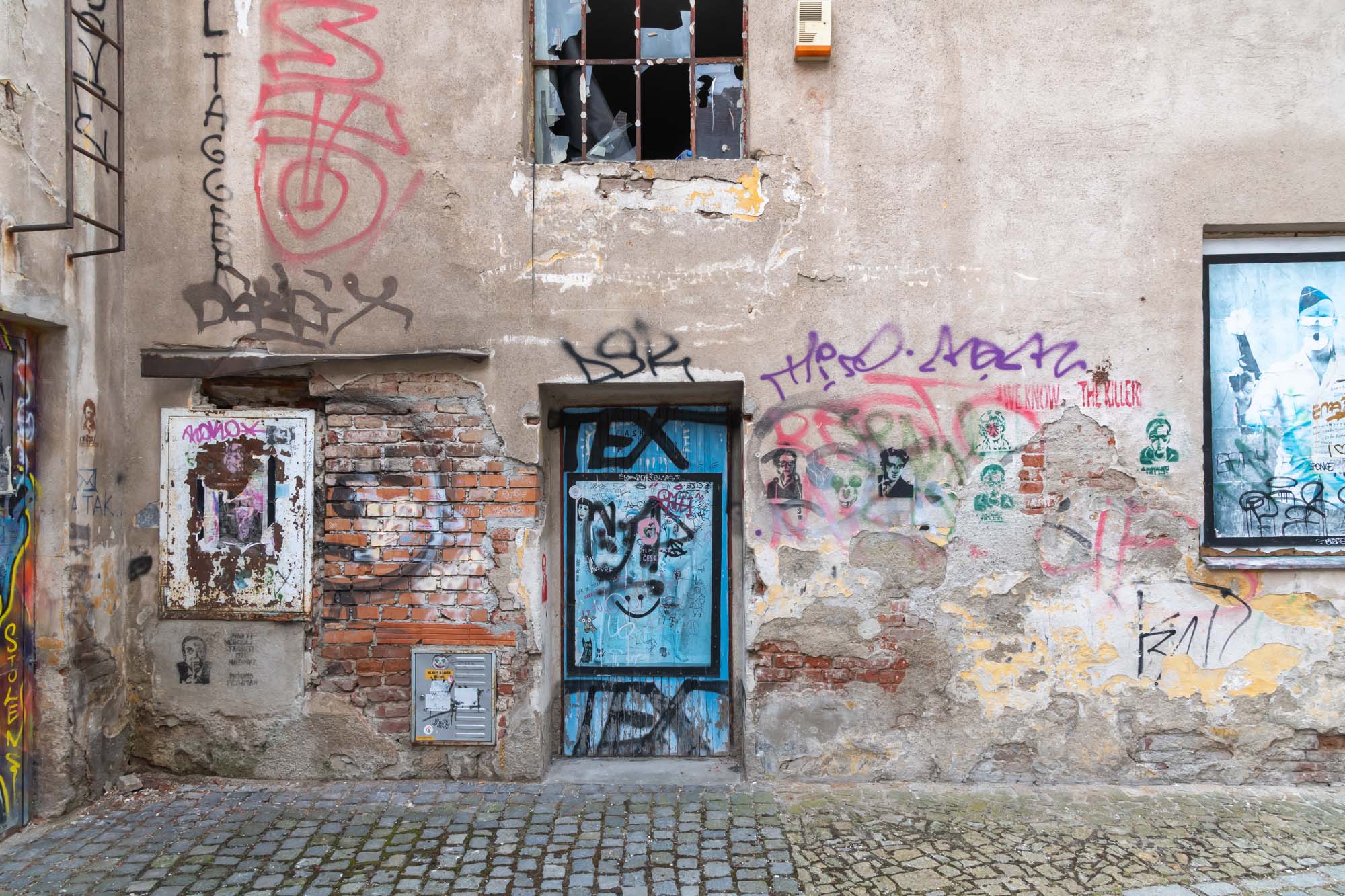
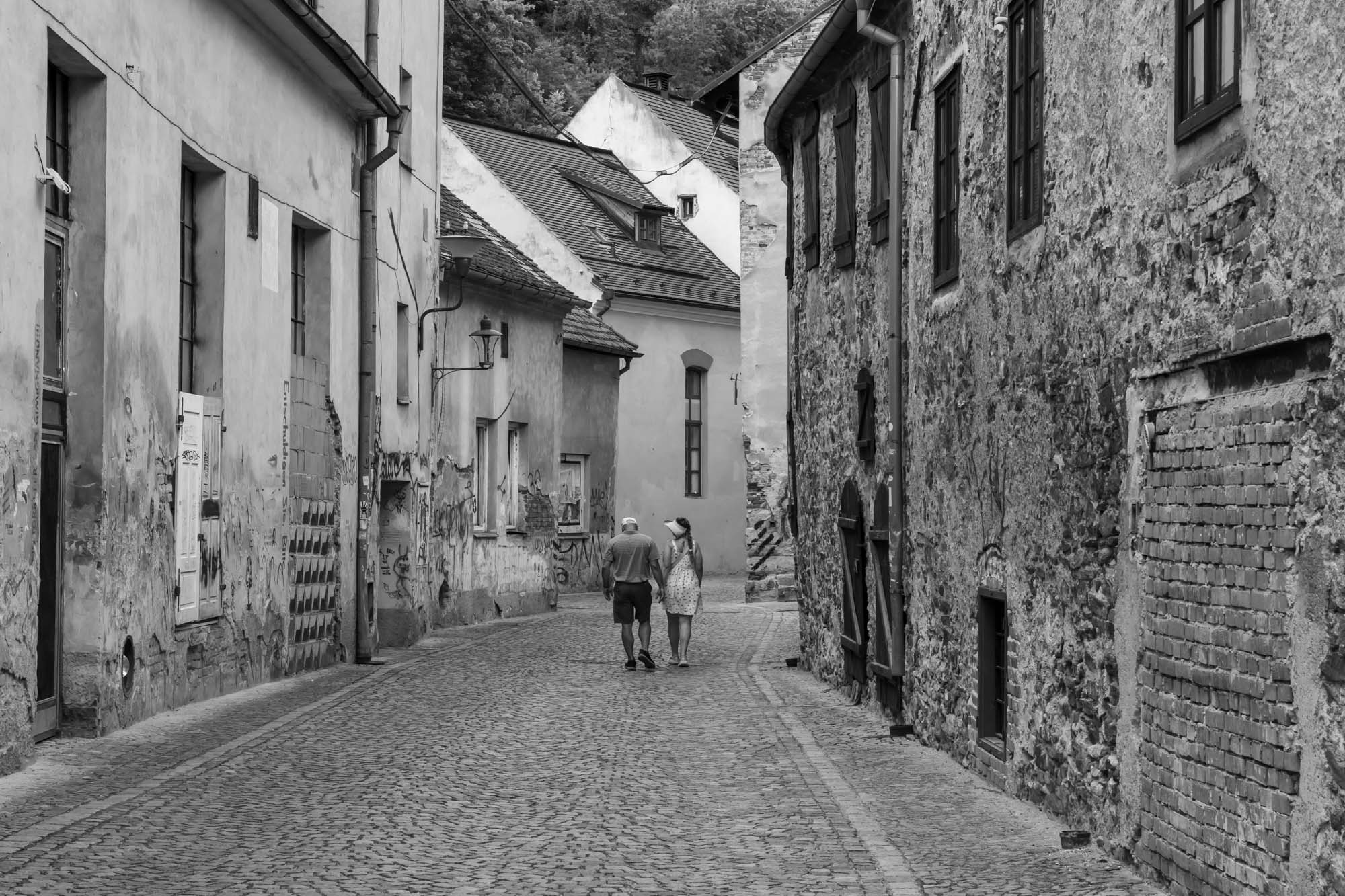
Understandably, the walking tour took us only to the touristy parts of the town and when I was wandering around, I found an area filled with graffiti.
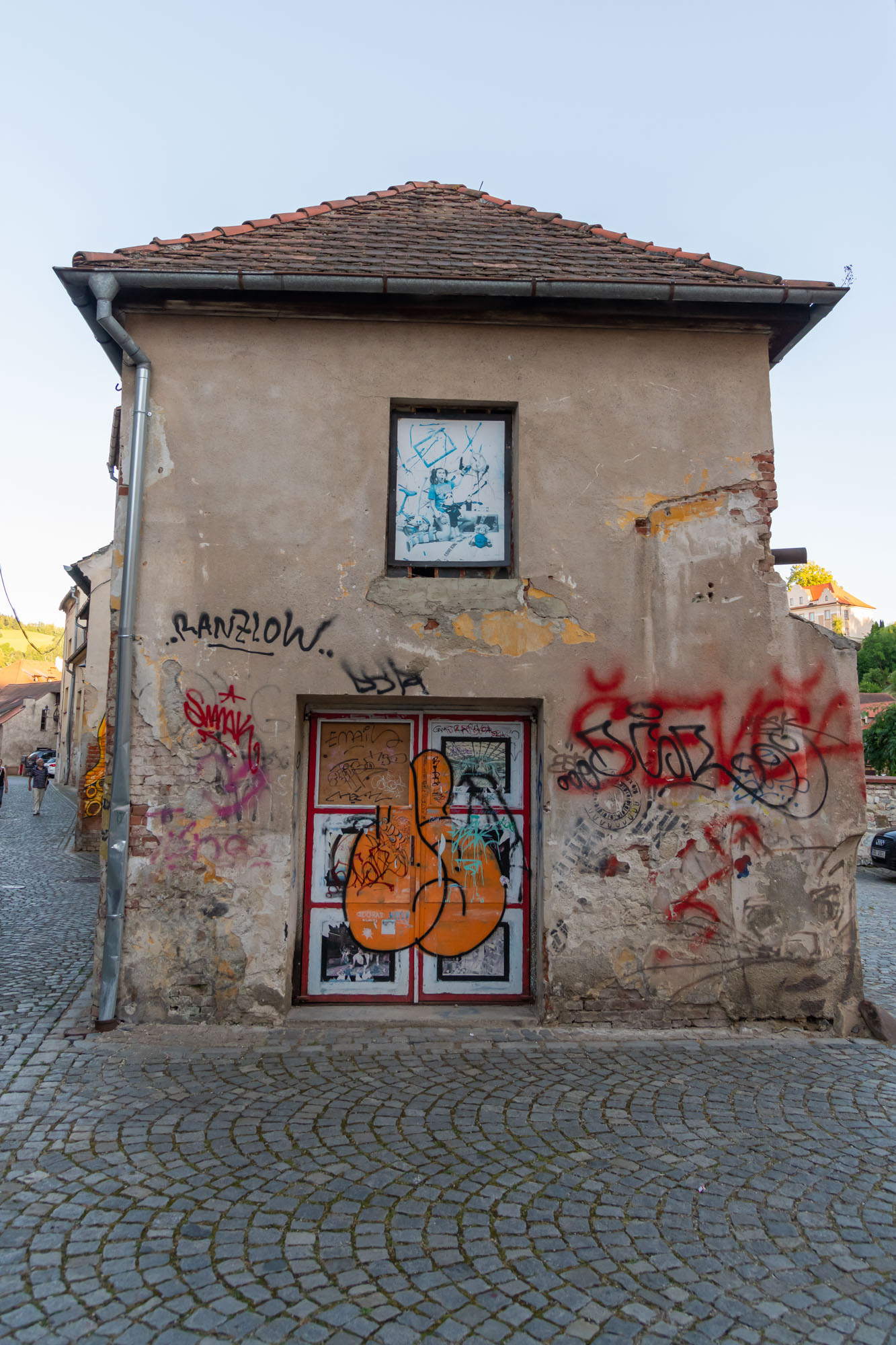
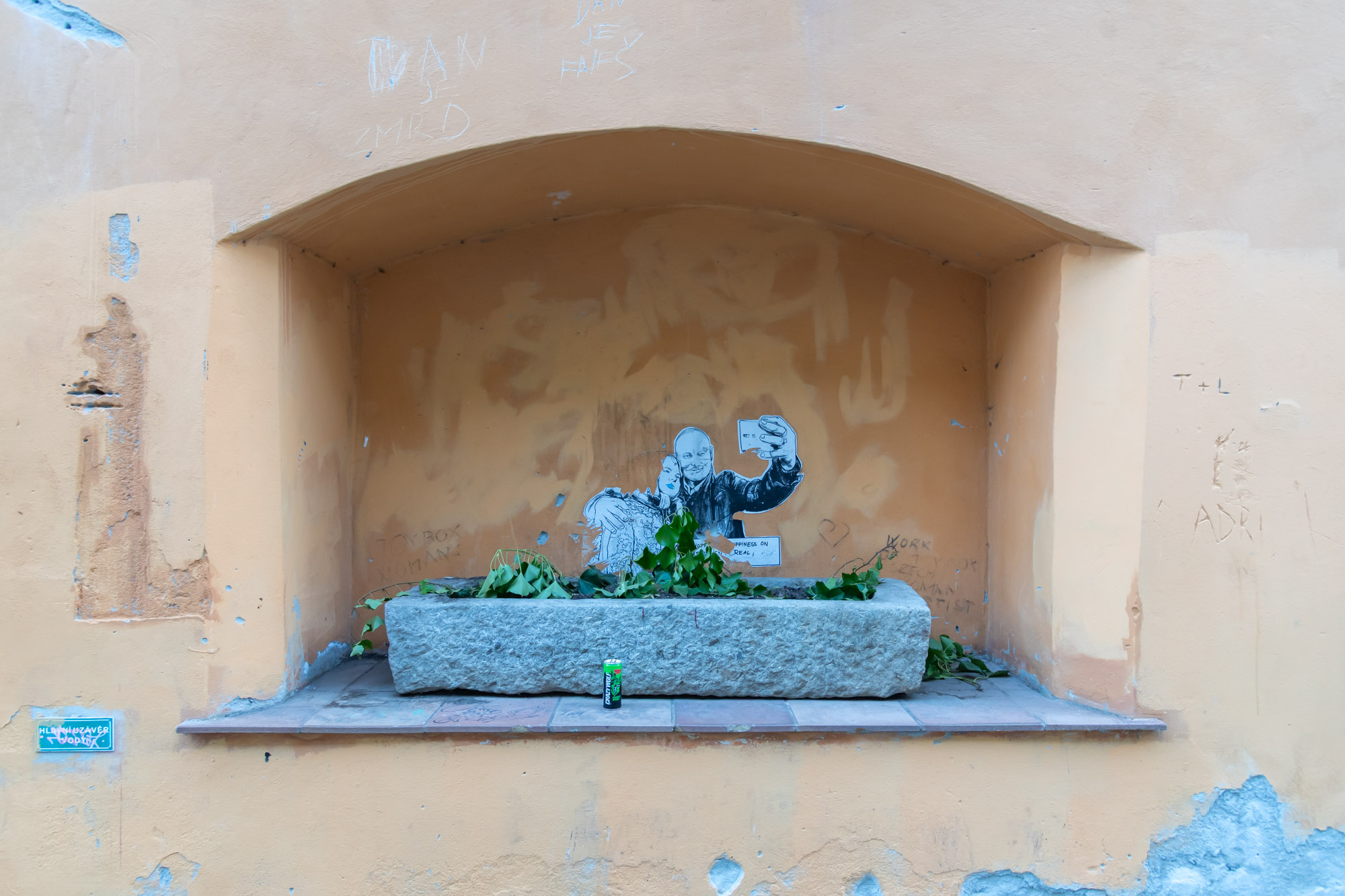
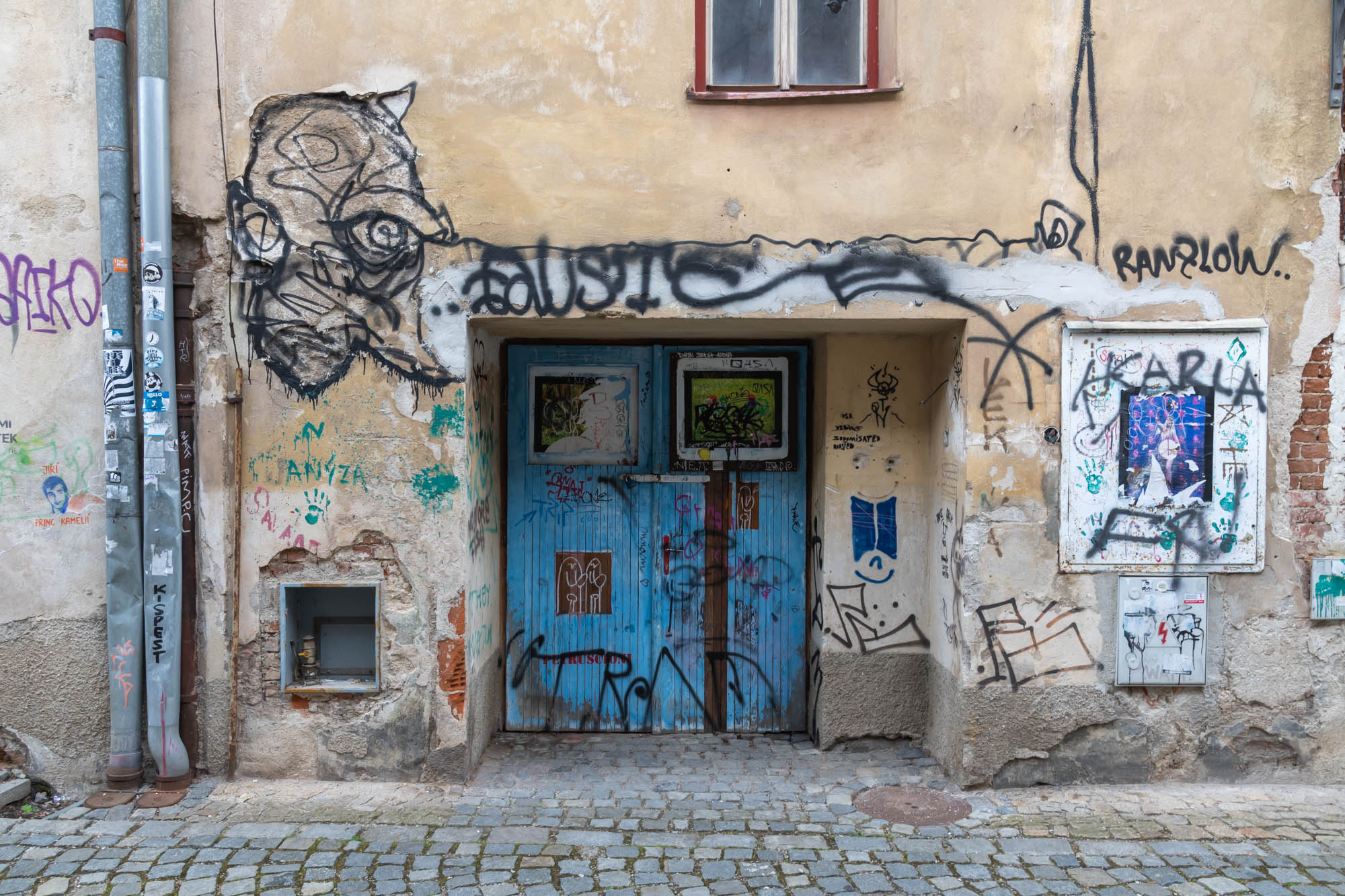

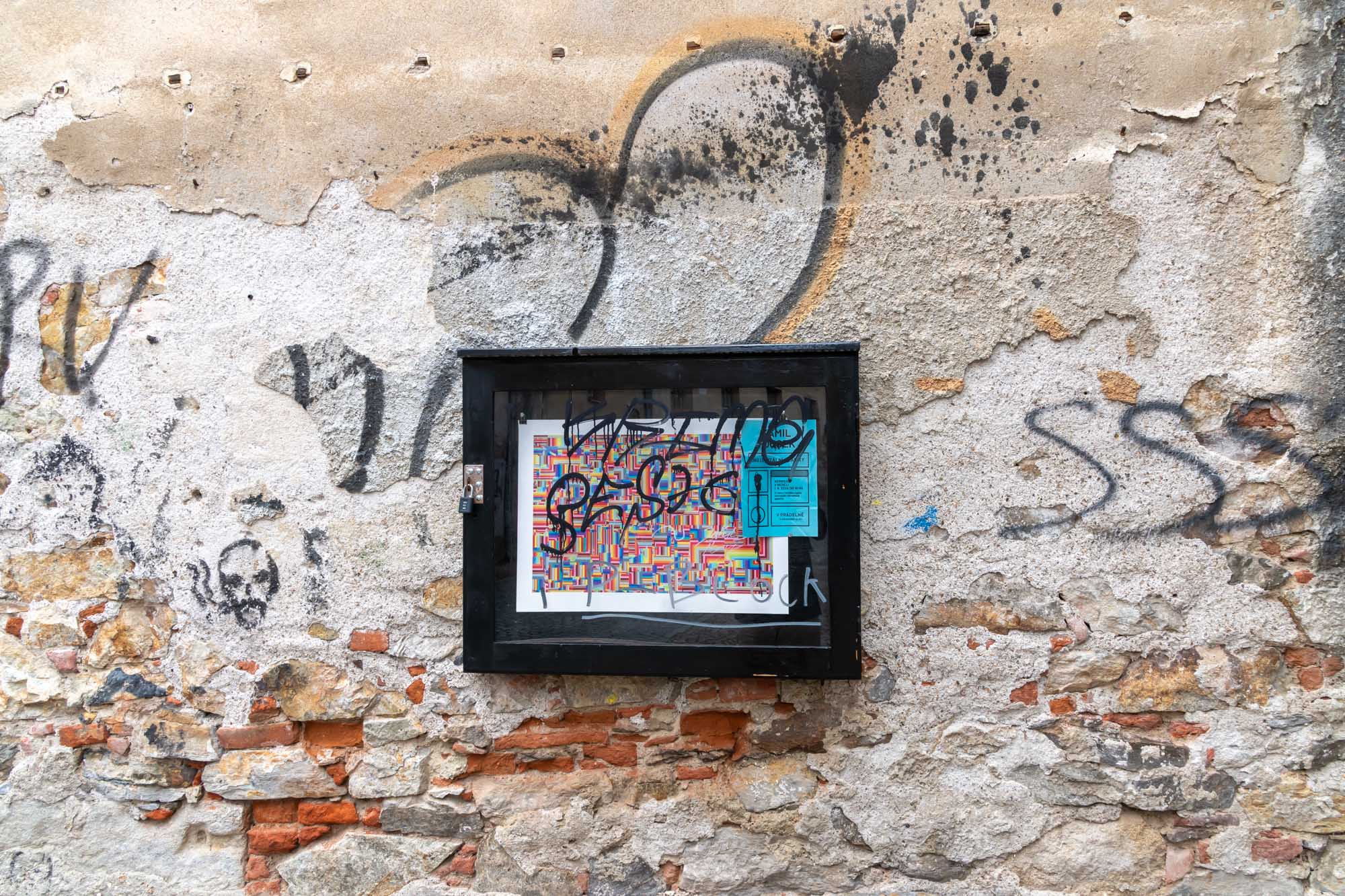
There are a couple of museums also in town, including an Egon Schiele Museum, but I did not get the time to visit those. I spent only one night in the area and ideally, I should have spent two days there. The beauty of this town is really captivating!
 Kaazhchakal
What a gorgeous place! Straight out of a fairy tale, as you said. And your photos have done justice! Looking forward to more.
sgraffiti and fresco ❤️