Yesterday, a chance encounter in the tram, enroute to the Van Gogh Museum resulted in me changing plans and heading to the Stedelijk Museum. This is a museum dedicated to modern art and is right next to the Van Gogh Museum, in Amsterdam. I have seen many Van Goghs in different museums and so I thought it would be good to check out what the Stedelijk had in store.
They have three sections dedicated to period upto 1950, 1950-1980 and 1980 onwards. A large painting and an installation by Anselm Kiefer greet you as you enter the museum. These fantastic works speak about the futility of war and are just phenomenal. However, this piece is not about these works or the museum itself. There are many interesting pieces in the museum, and you can easily spend hours there.
For me, one installation stood out and that was the central attraction for me in my visit to the museum. This was “Bakunin’s Barricade” by Ahmet Ogut. I wasn’t familiar with him, and a quick look on the internet made me realise that my lack of familiarity was clearly a pointer to my awareness about the art world. He is a Kurdish conceptual artist who studied art in Istanbul and Amsterdam and works mostly in Amsterdam now.
In 1848, there were Socialist uprisings in German states and it spread to Dresden in May 1849. The Municipal councillors in Dresden revolted against the King and with the help of the Municipal Guards, prepared themselves to stop the expected Prussian intervention. About 108 barricades were set up across the town. Mikhail Bakunin, the famous Russian anarchist was involved in this uprising, and he came up with a suggestion that they could place paintings from the National Museum in front of the barricades to protect them. His theory was that the Prussian soldiers would not dare to destroy those important works of art. However, there was not much support for this idea, and it was not carried out.
Ahmet Ogut has taken inspiration from this event and made his work, Bakunin’s Barricade, as part of an exhibition titled “In the Presence of Absence” in 2015. The Stedelijk Museum procured this artwork in 2020 and as part of the procurement, a contract was signed between the museum and Ogut, and in the contract, it was mandated that the installation should be permitted to be deployed outside the museum, should anyone ask for it. The installation is a barricade as one that would be made by protestors in the streets and in front of the barricade, are works from famous artists like Kazimir Malevich, Marlene Dumas, Nan Goldin, PINK de Thierry and others. Ogut has recreated Bakunin’s idea in this installation.
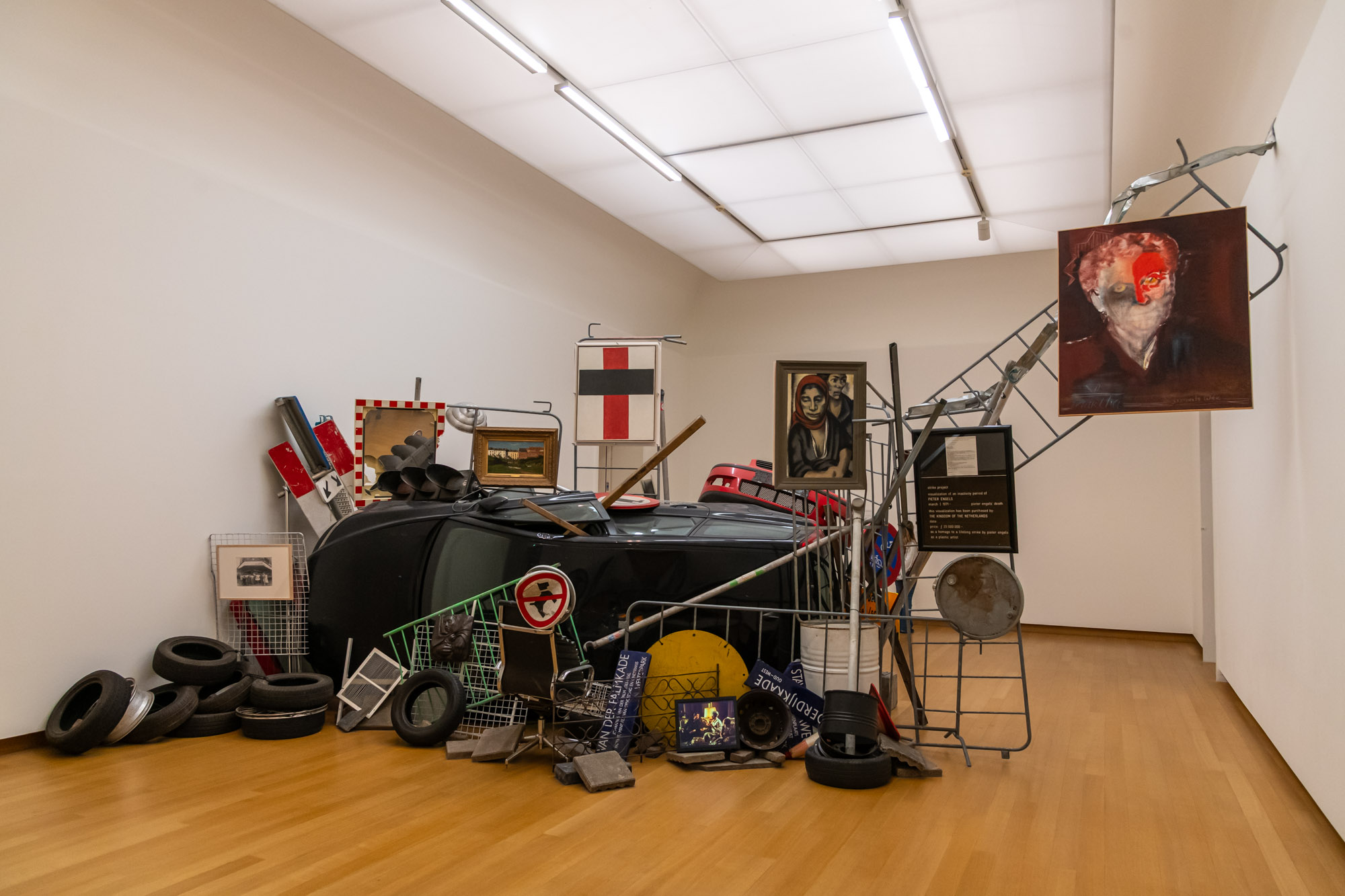
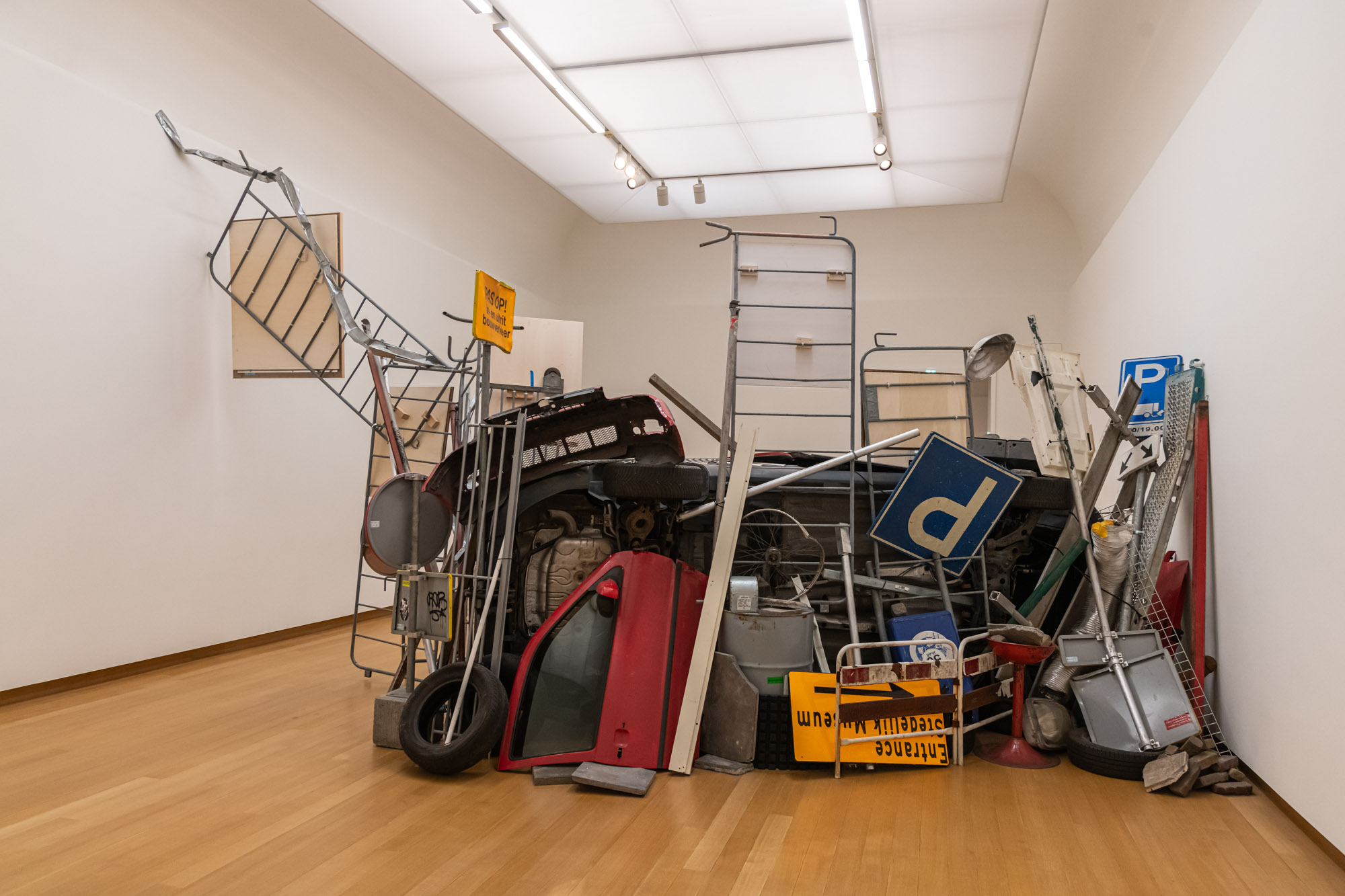
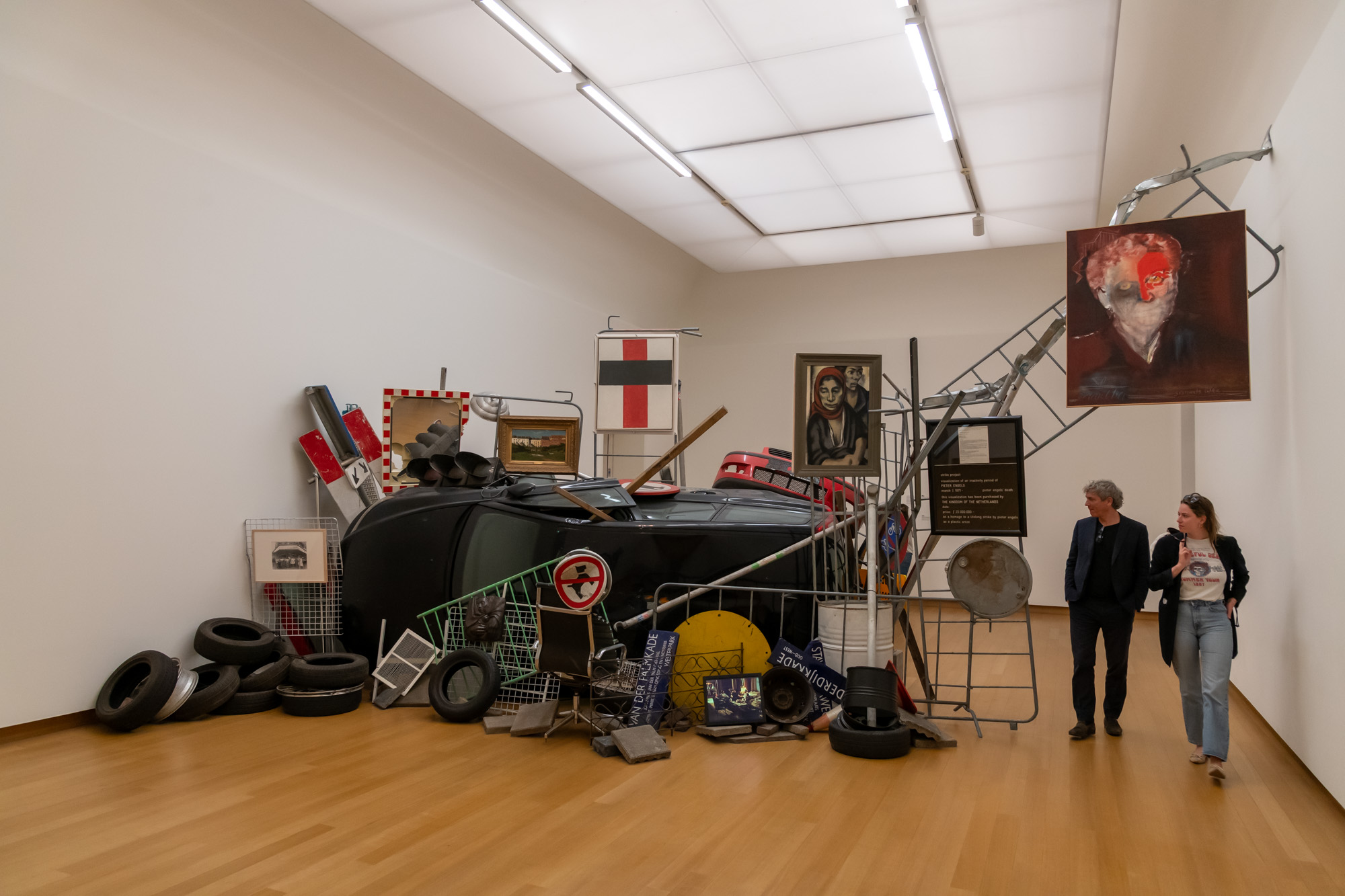
On 28 May 2024, a group of activists planning a protest against the human rights violations in Gaza, asked the museum to lend the artwork to them for using in a demonstration by students. They wanted Ogut’s artwork to play the role it was supposed to. The museum authorities were in a fix! They had signed a contract which specifically mandated that they should honour such requests, but it looks like they never expected anyone would actually make such a request. The contract also had a clause that the museum could decide, on a case-to-case basis, at their own discretion on whether a specific request was to be honoured or not. After mulling over the matter, they took a position that they could not take the risk of lending original artworks to be put on the barricade, as they might be damaged, but offered to provide replicas. Obviously, this was the same as refusing to lend the artworks as Bakunin’s whole premise was that government authorities would not destroy the barricades because the art works were original and thus precious. Nobody would have bothered about replicas. The museum authorities took the position that they had a responsibility to the people to protect original art works and could not jeopardise the safety of the art works by lending them to the protestors.
The protestors and Ahmet Ogut himself were not impressed; Marlene Dumas also was not convinced by the position taken by Stedelijk. The question that came up was why the museum had signed such a contract in the first place, if they had no intention of honouring it, especially when the request was made for an event to protest against the genocide in Palestine. Ogut contended that if the Museum did not want to lend artworks of others, they could have lent his work, just the Barricade. He felt that once other artists saw his Barricade being lent, they would have come forward and given their works as well. He condemned the position taken by Stedelijk and announced that he would not take part in any program nor oversee the installation of the Barricade elsewhere, till the museum changed its position. The group of activists didn’t mince their words and accused Stedelijk of preferring “economic interests over people”.
The museum authorities have now displayed all of this as part of the installation. The letters sent by the activists, the response by the museum, statements by Ahmet Ogut and Marlene Dumas are all displayed. In the audio commentary, the museum director asks a question to visitors on what they would have done, in this situation.
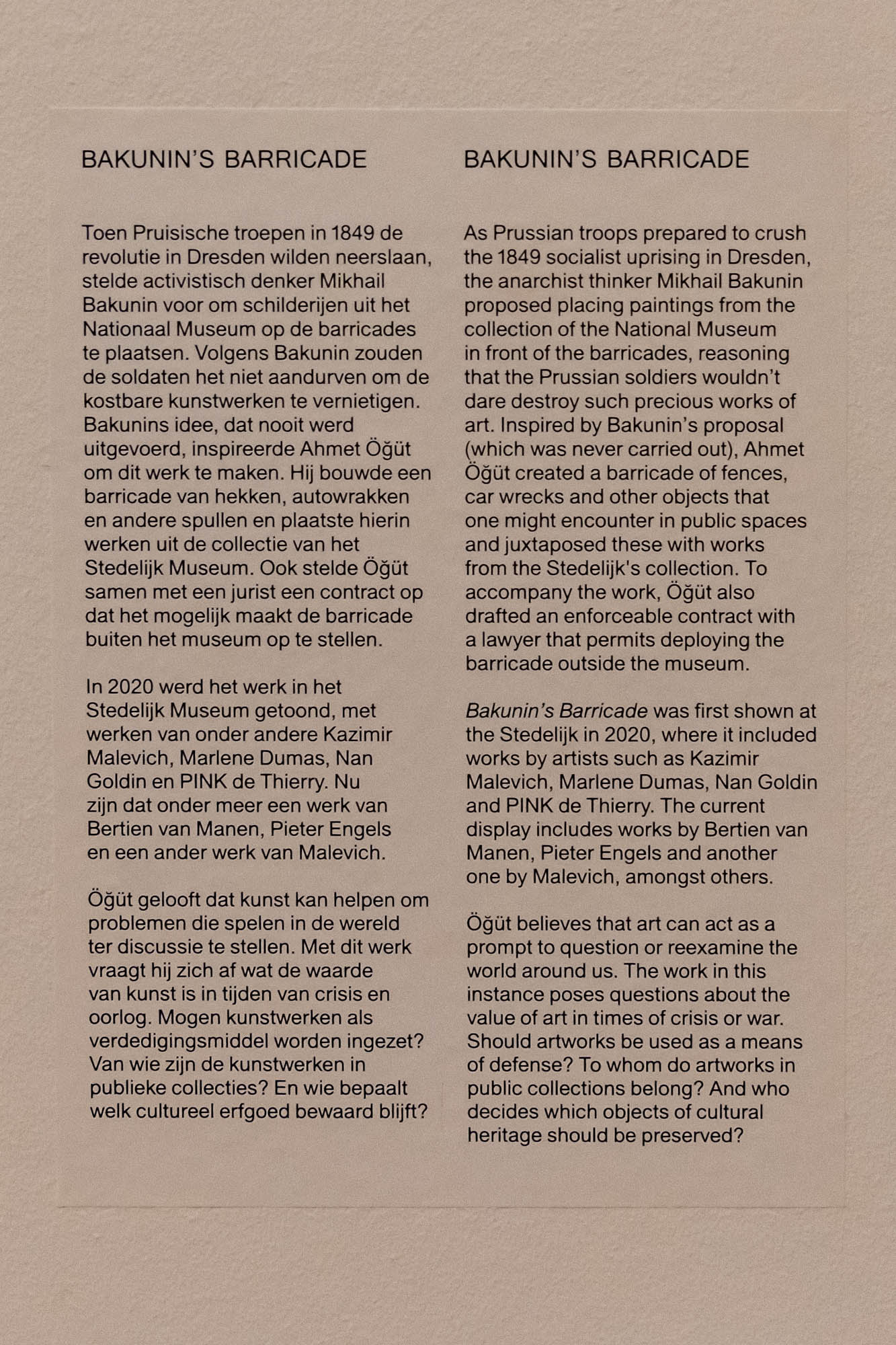
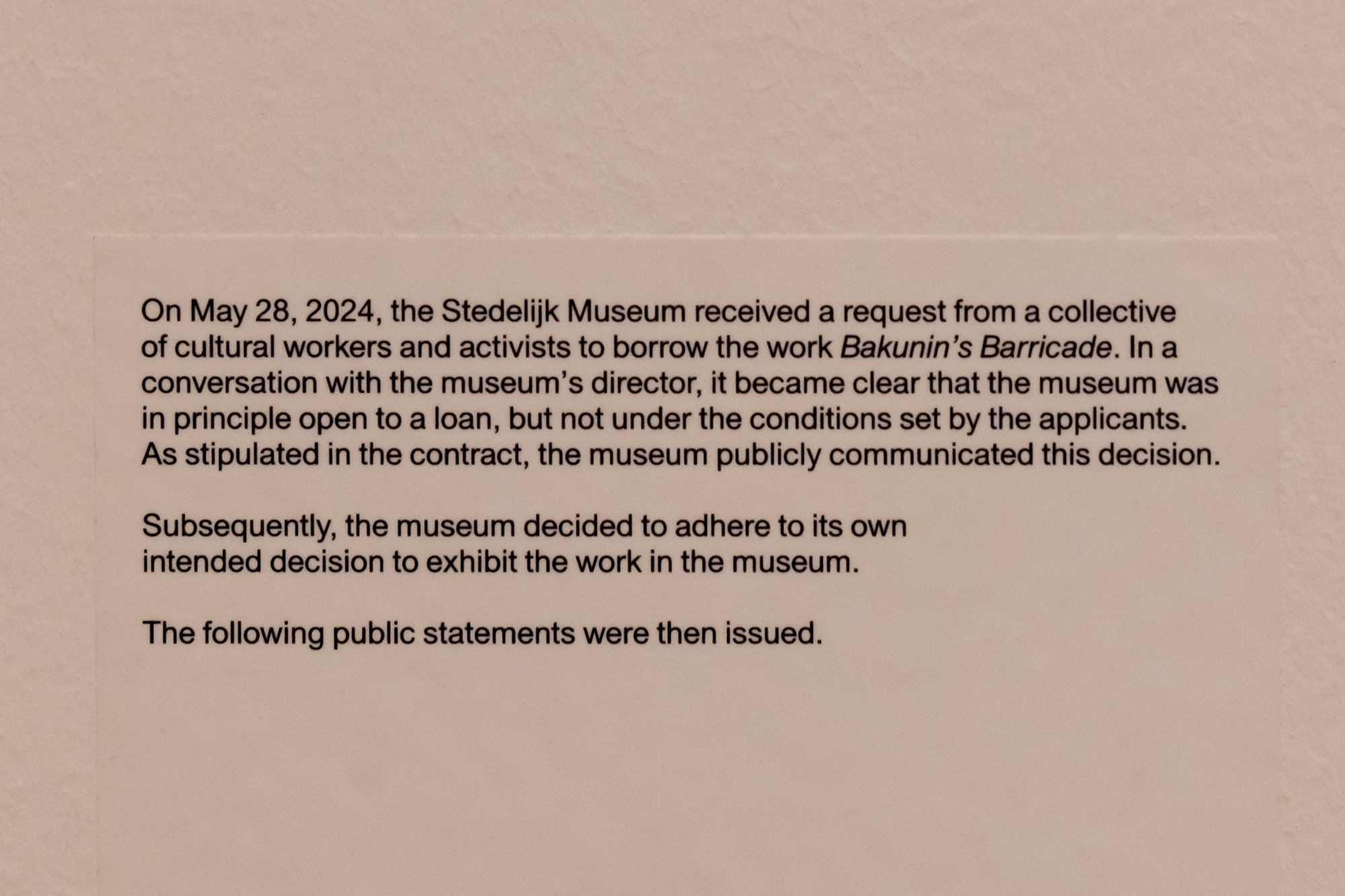
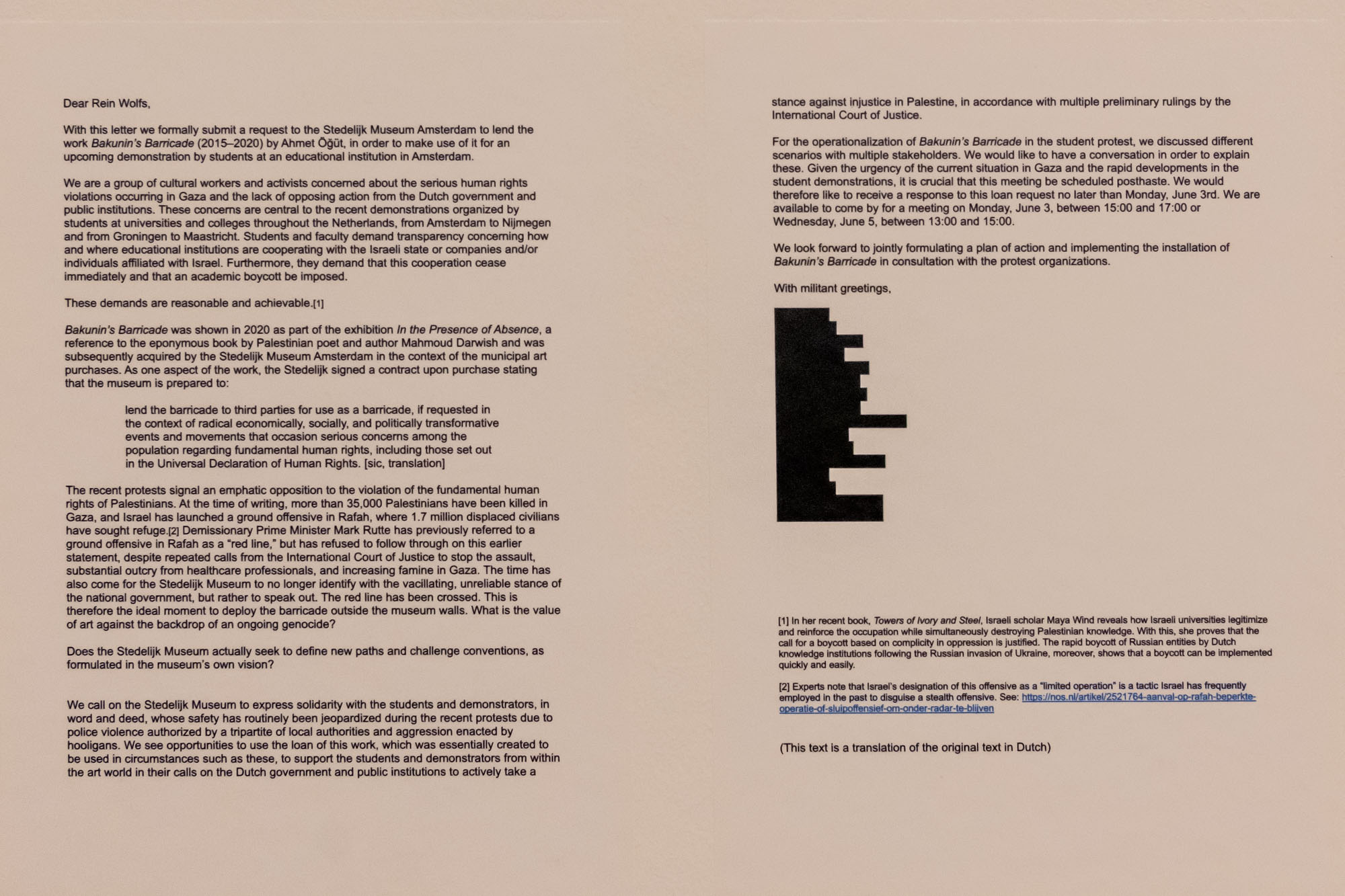

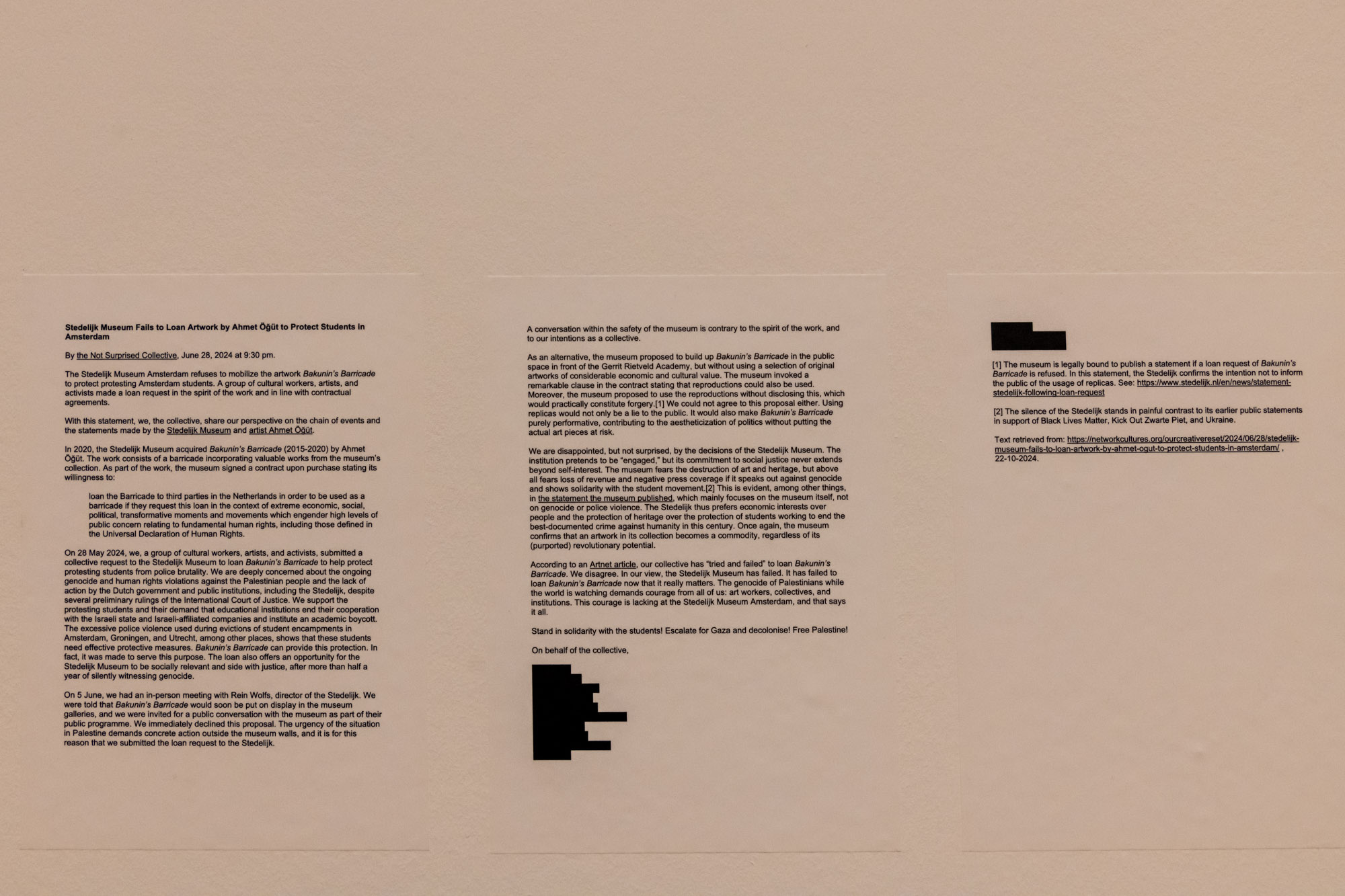
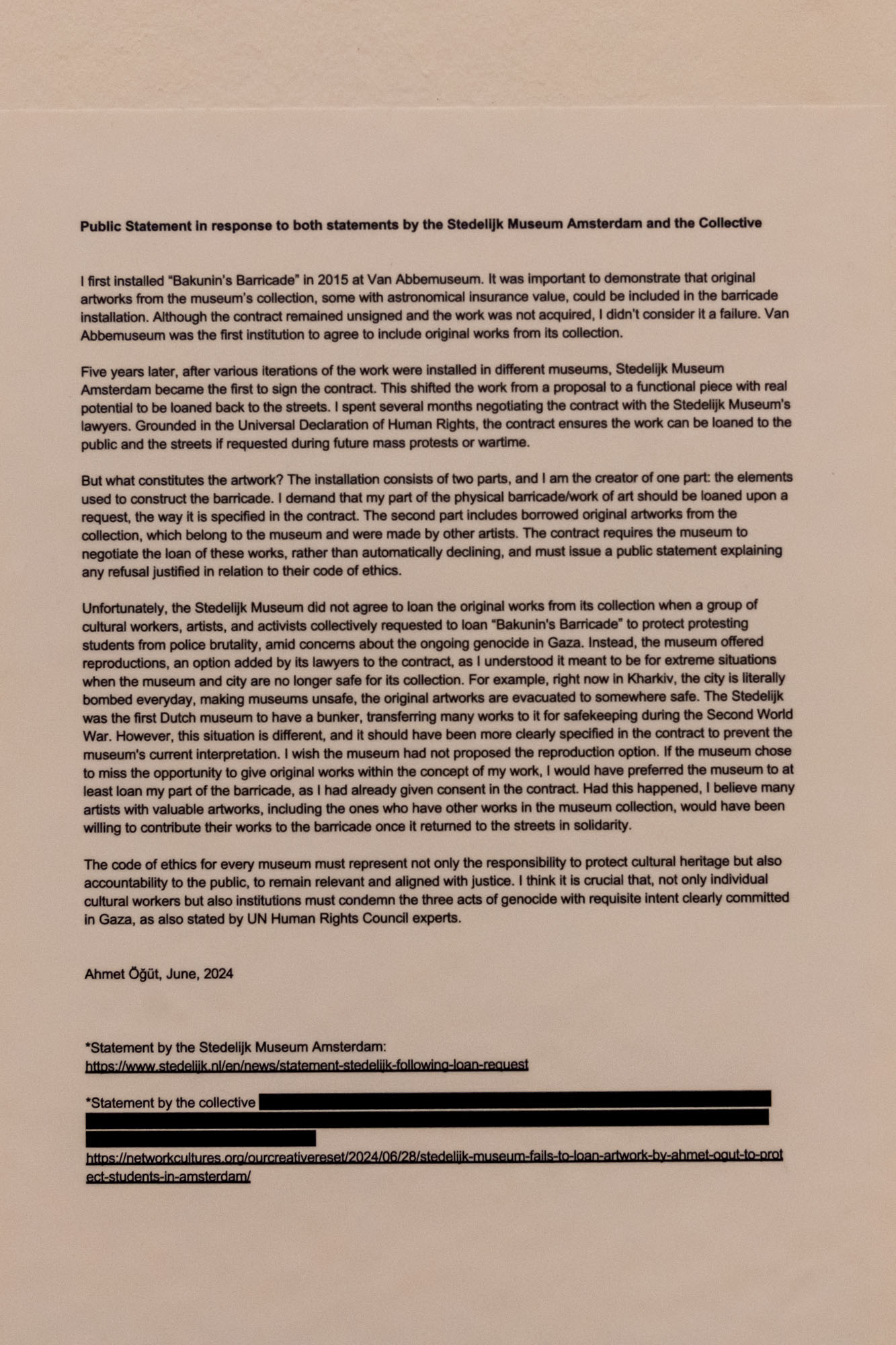
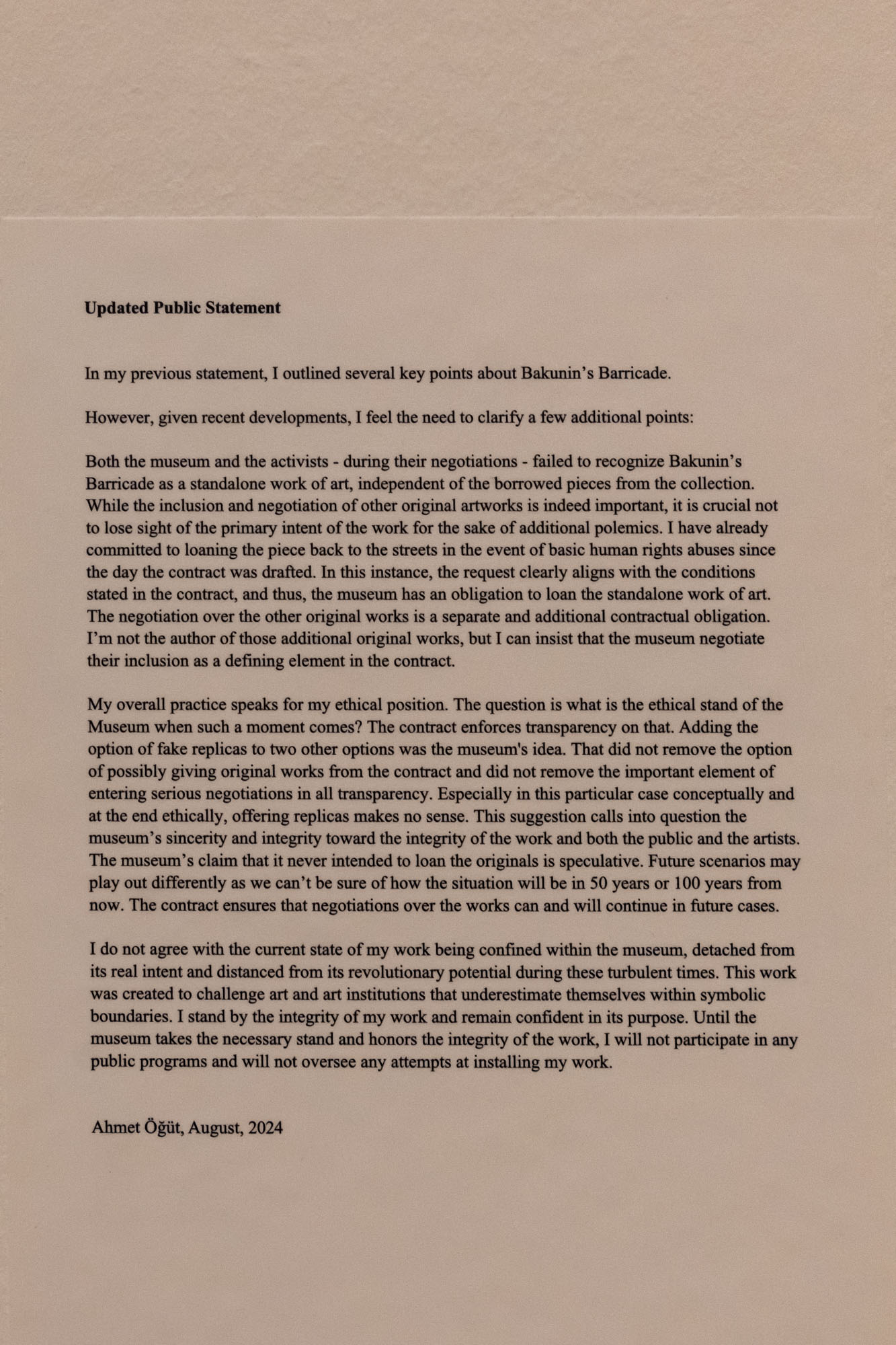
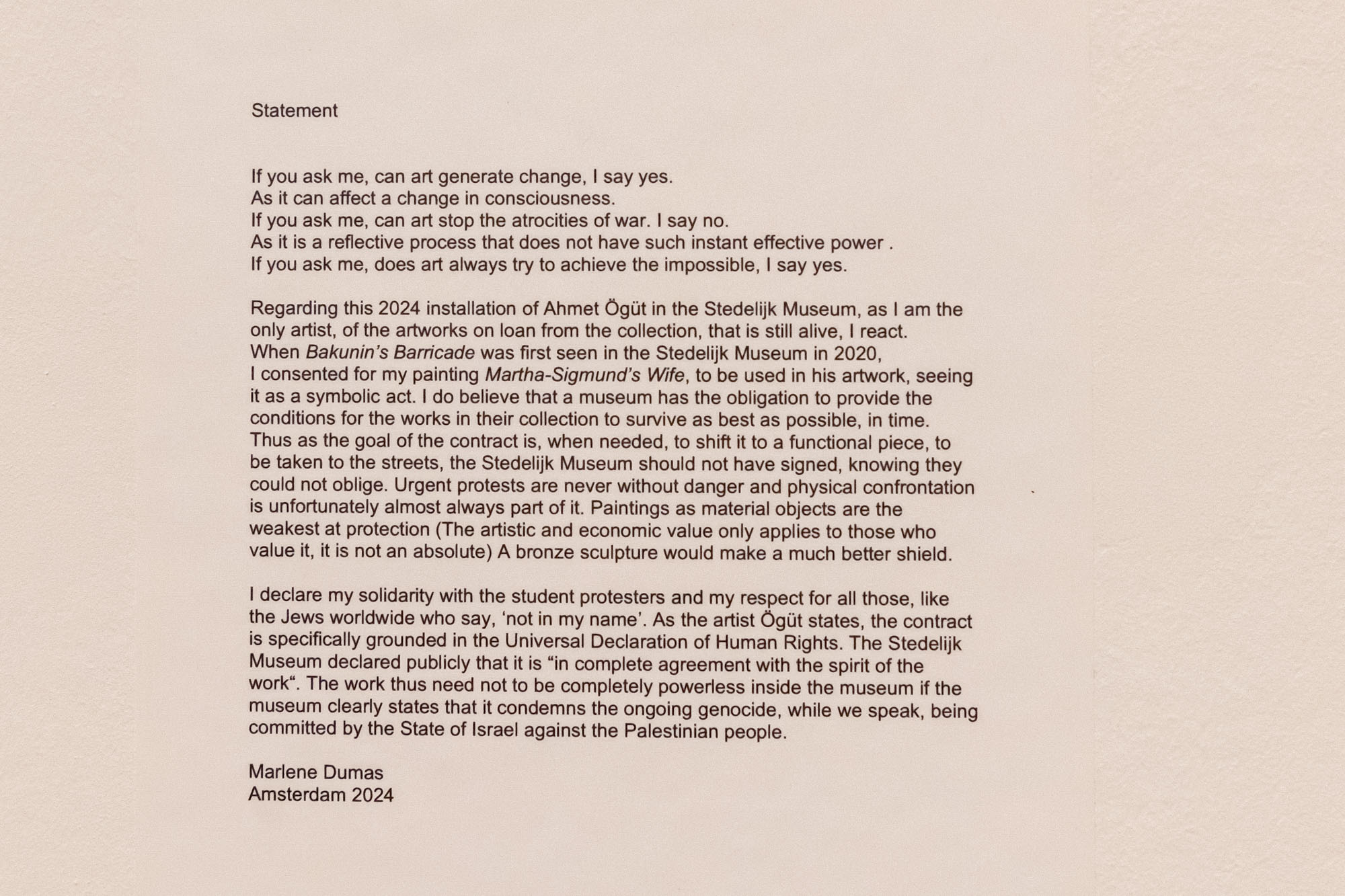
I found this to be a very remarkable artwork altogether. Firstly, the fact that an idea proposed and abandoned more than 175 years ago found relevance in a contemporary political action, is just astounding. Even more is the vision of Ahmet Ogut in coming up with this artwork and then inserting that clause in the contract. It speaks volumes of his genius and his politics. Clearly, the museum was caught totally unawares and I also suspect that the cause itself – that of protesting against Israel’s genocide – had something to do with the decision to not lend the artwork.
The most intriguing aspect was the museum itself deciding to curate and present this issue in front of the public. In nine cases out of ten, museums would have just kept silent and hoped that the controversy would just die down over time and go away from public memory. However, in a very clever (or should I use the word cunning) move, the museum itself has chosen to project the issue and keep it in the public discourse. I found that quite unusual and interesting. I tend to agree with the position taken by Ahmet Ogut in this issue and the museum should have lent at least his work; but these days, integrity and justice are two concepts that are felt more by their absence than by their presence.
 Kaazhchakal
Interesting and nice narration.. but don’t you think the position taken (of publishing their setback) by the museum is entirely in line with the elitist dishonesty?
KC,
Yes, quite possible. That is why I said it could be “cunning” in the last para.